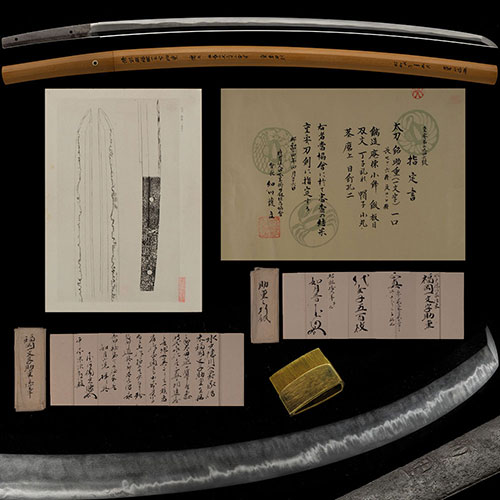
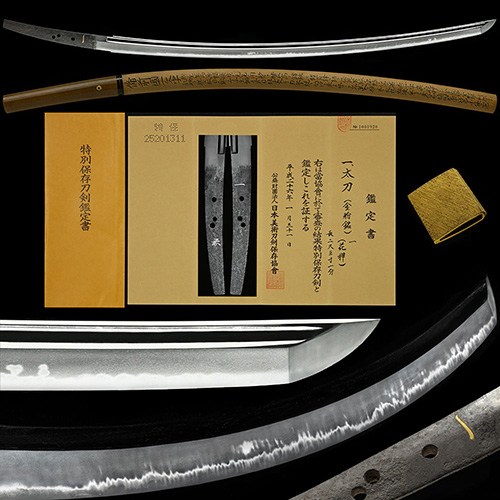
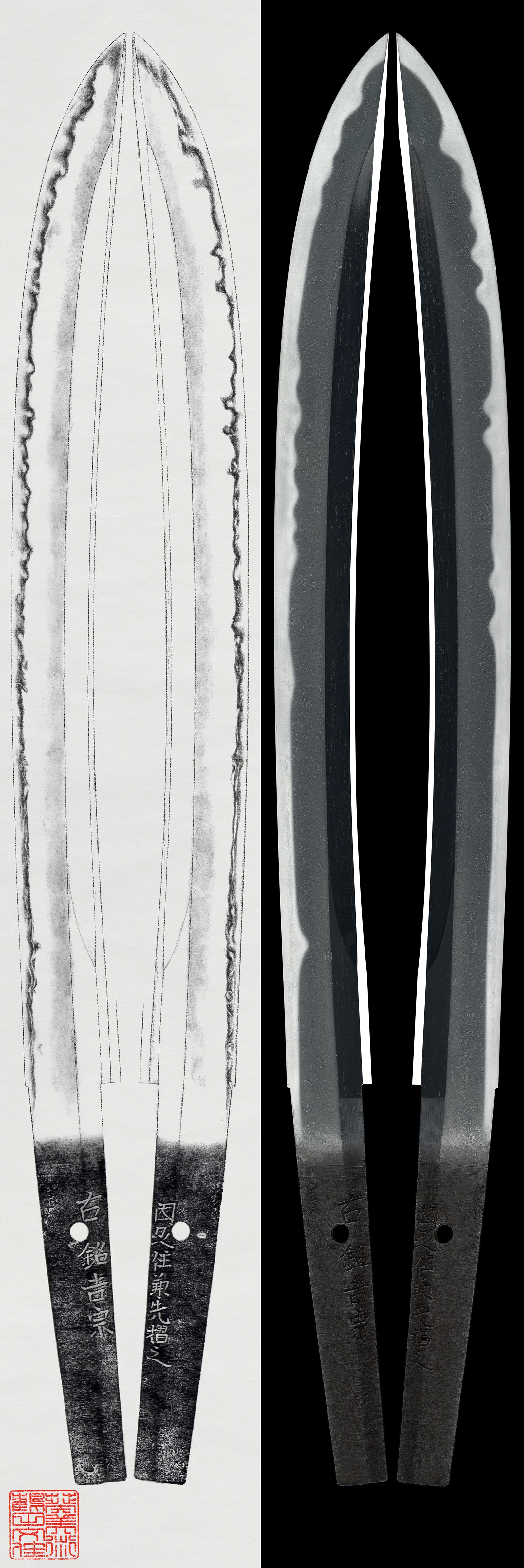
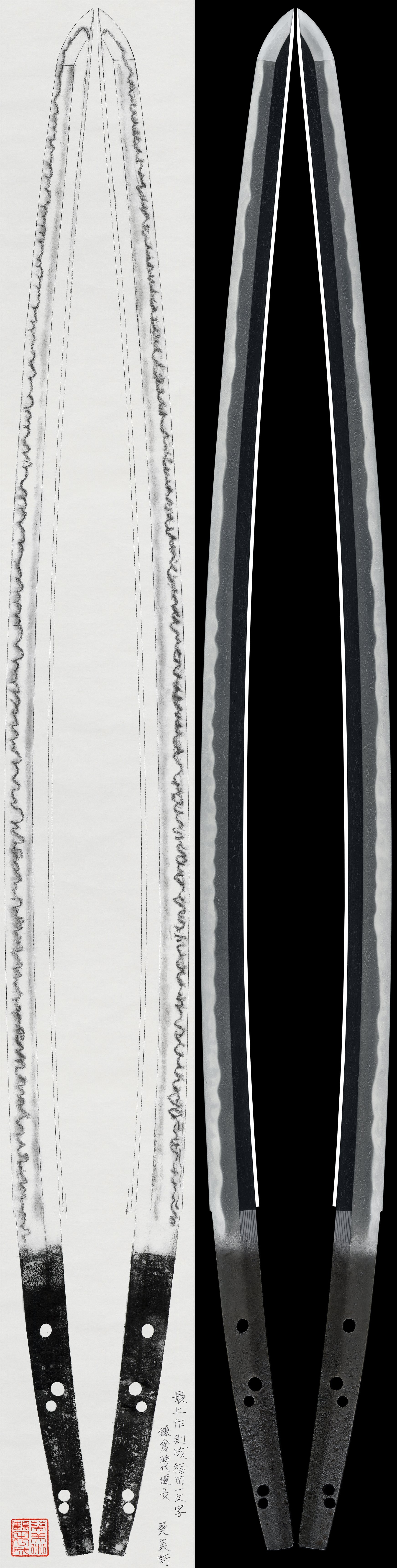
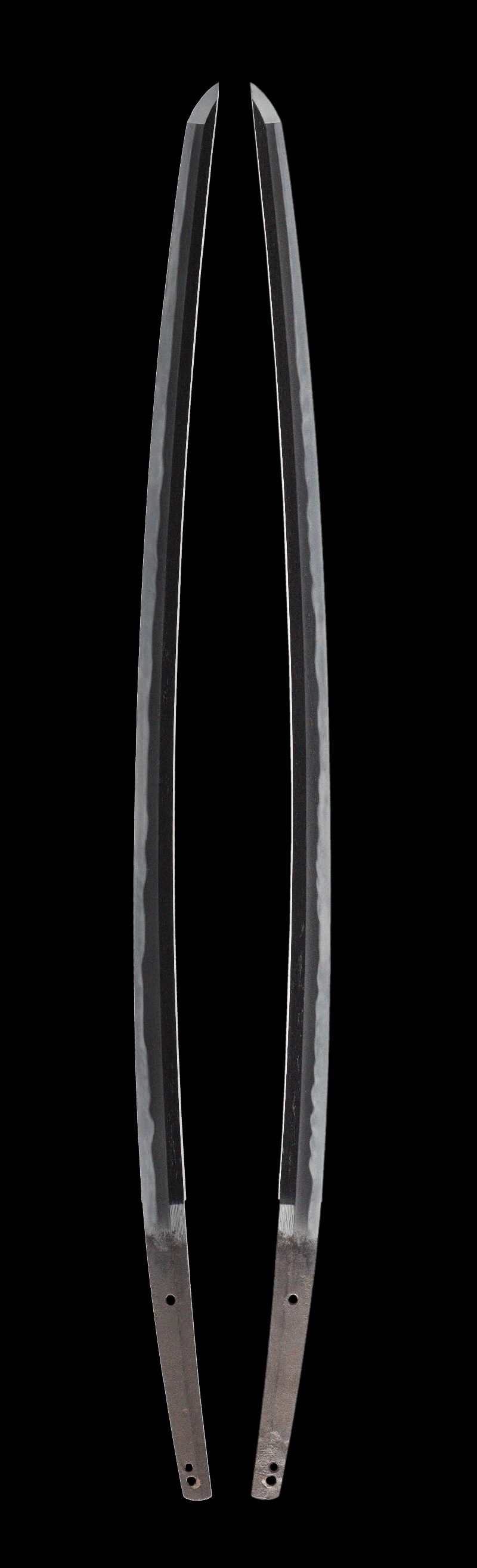
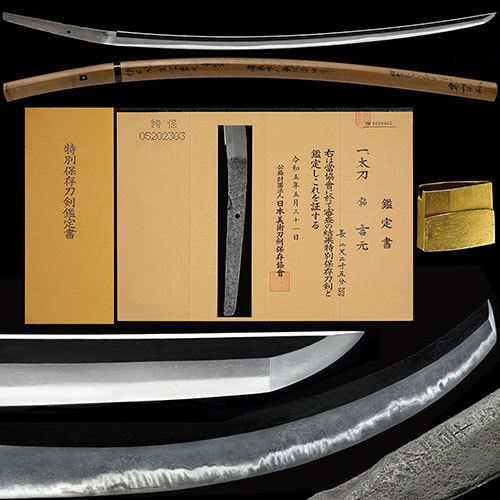
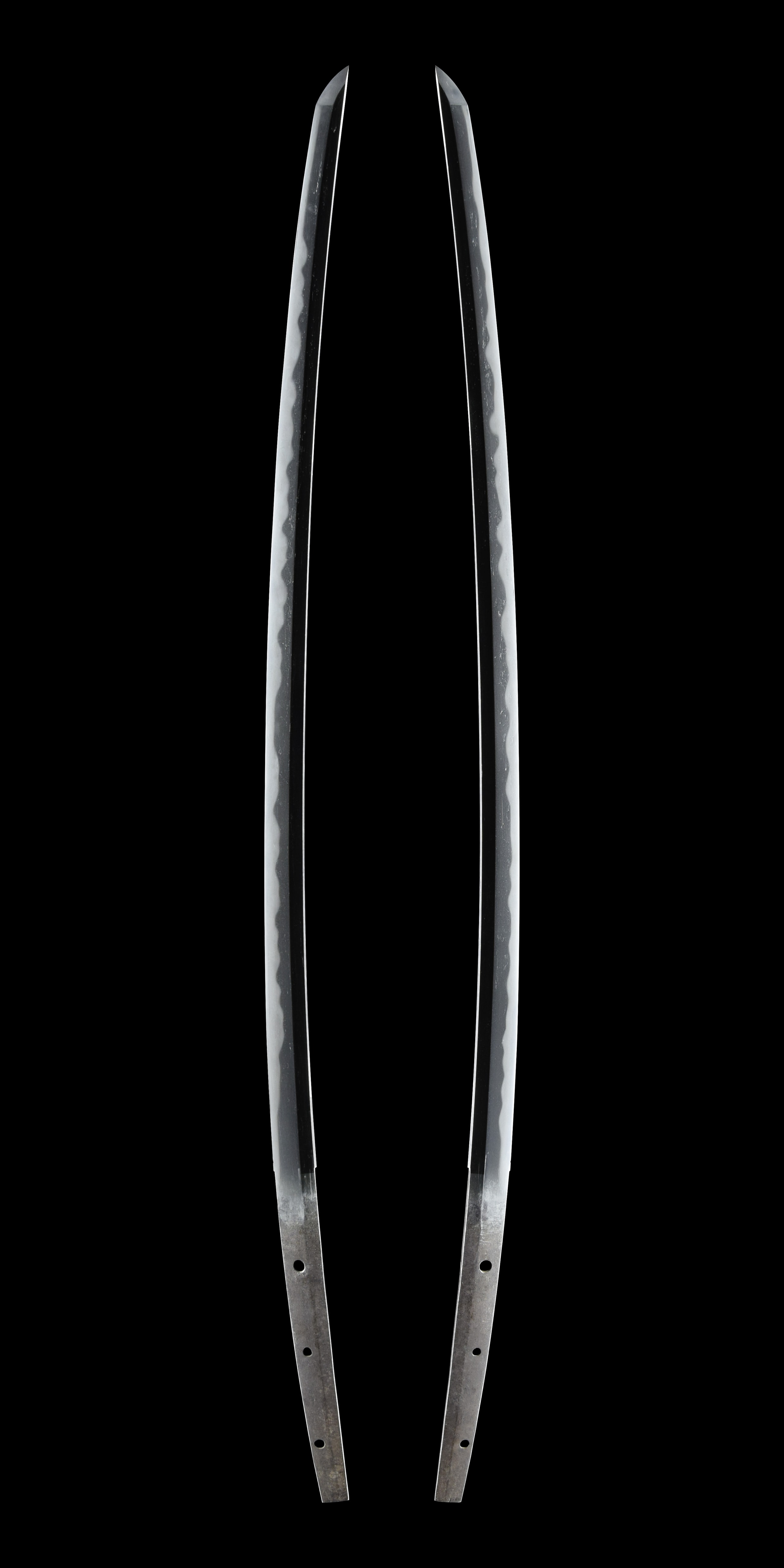
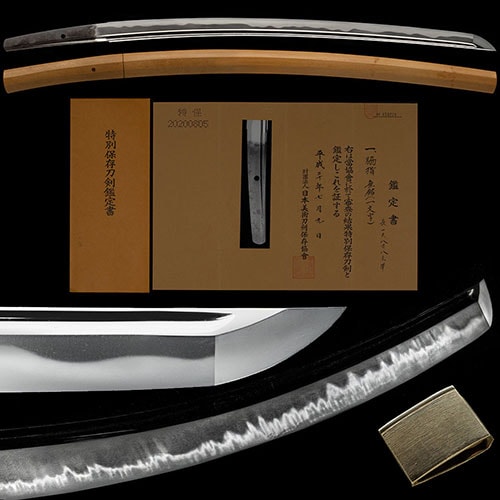
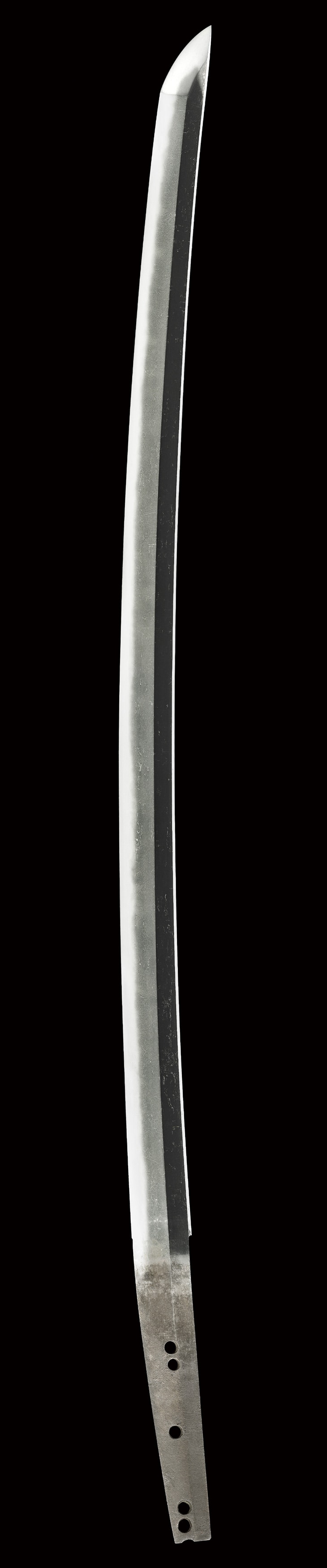
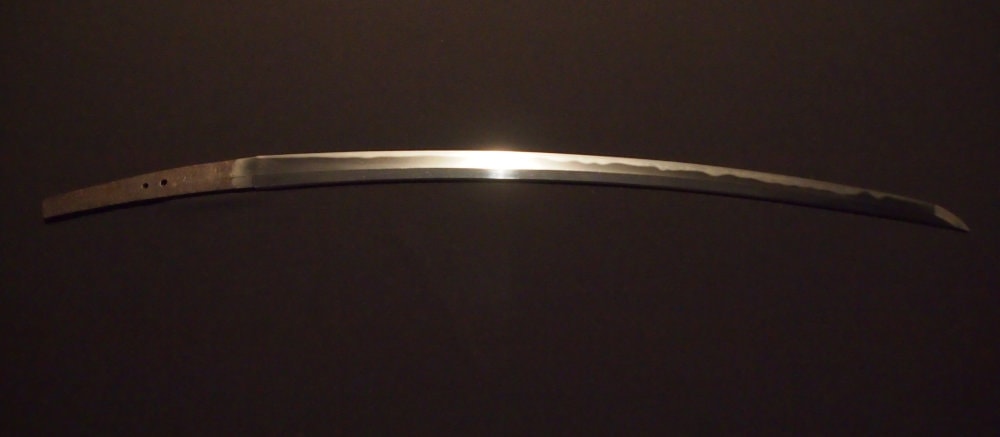
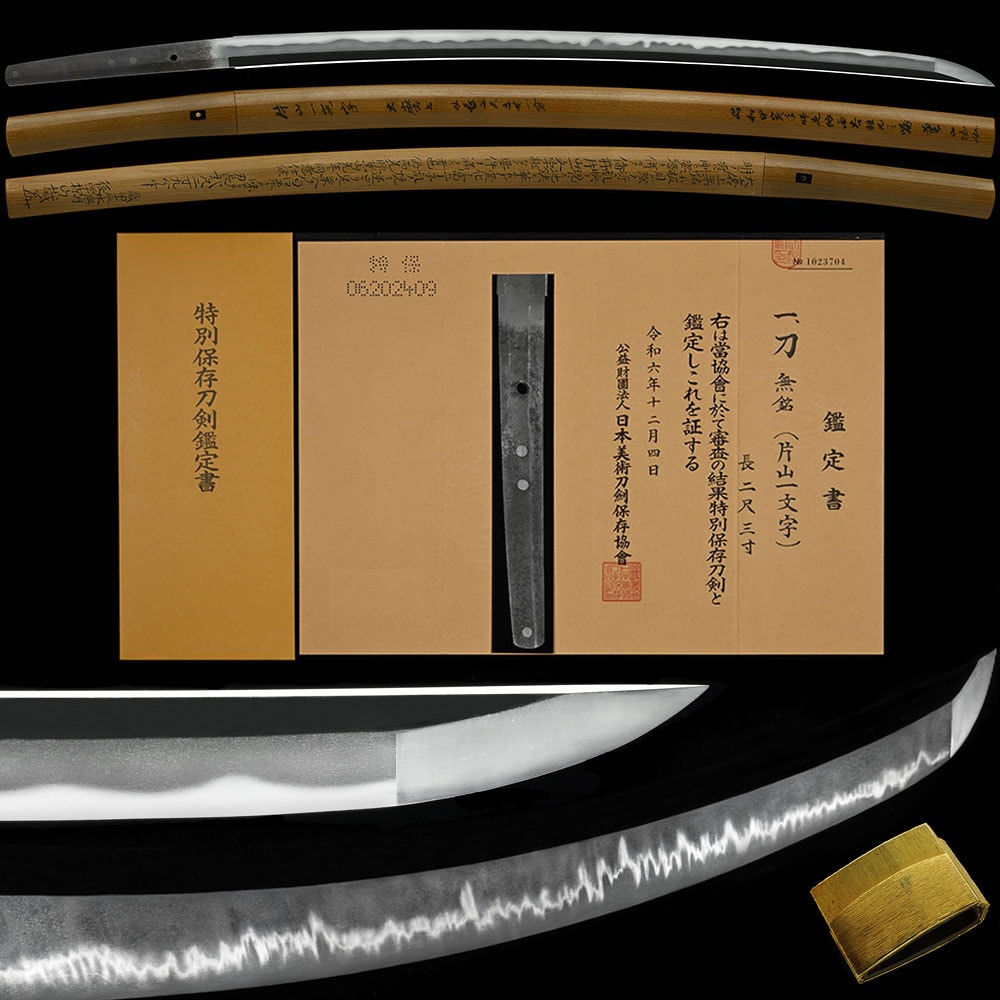
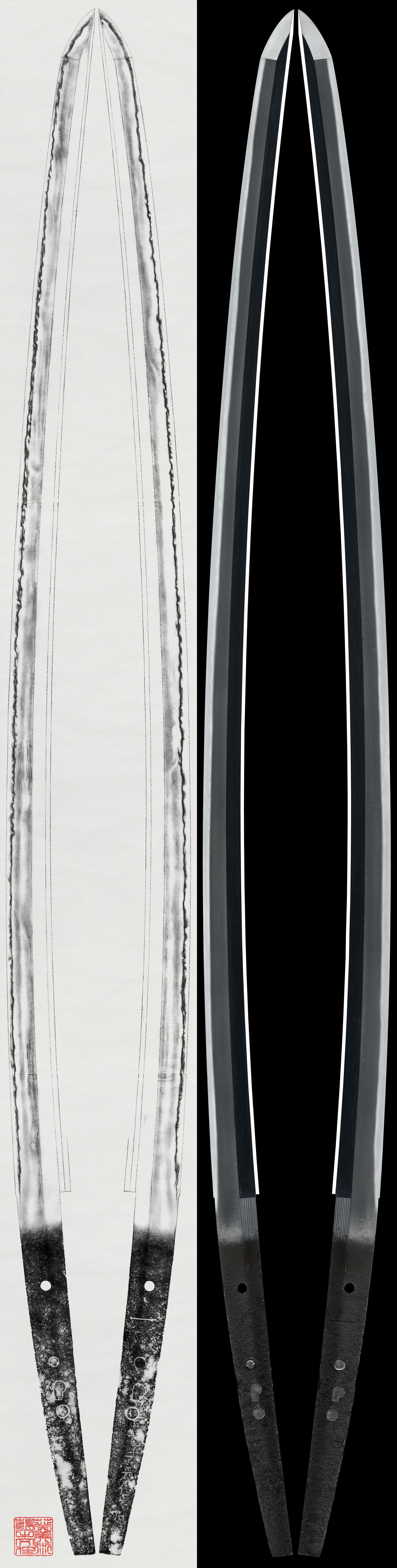
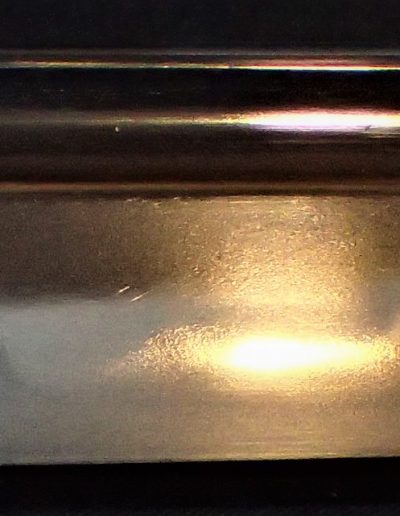
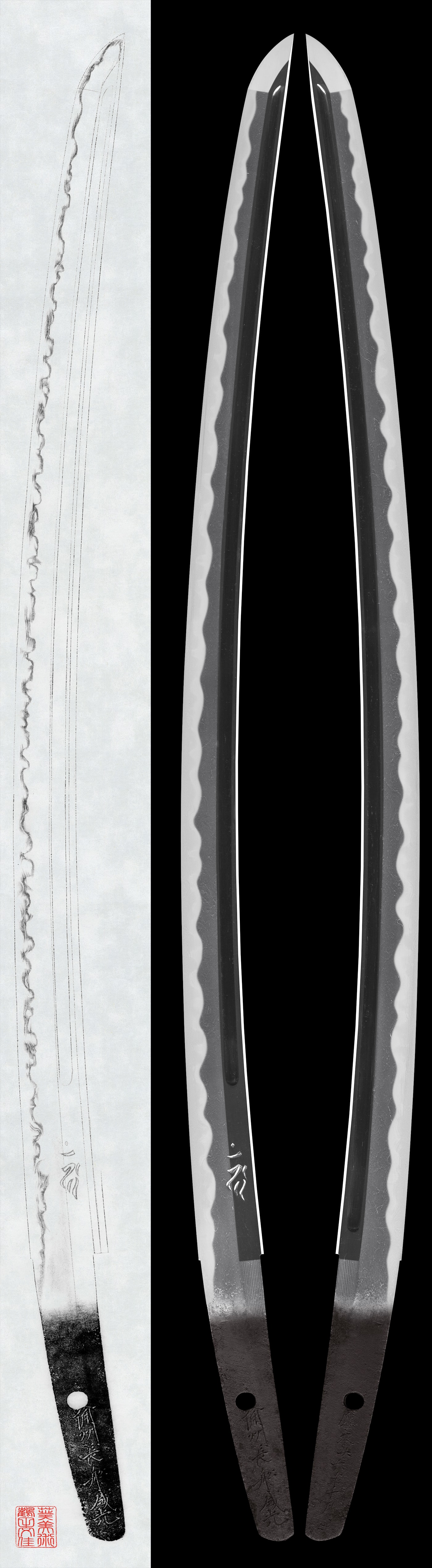
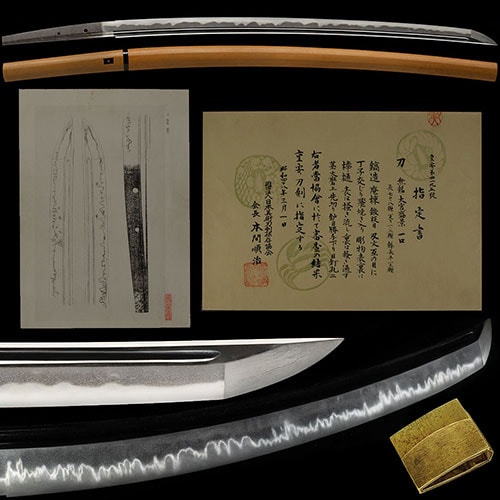
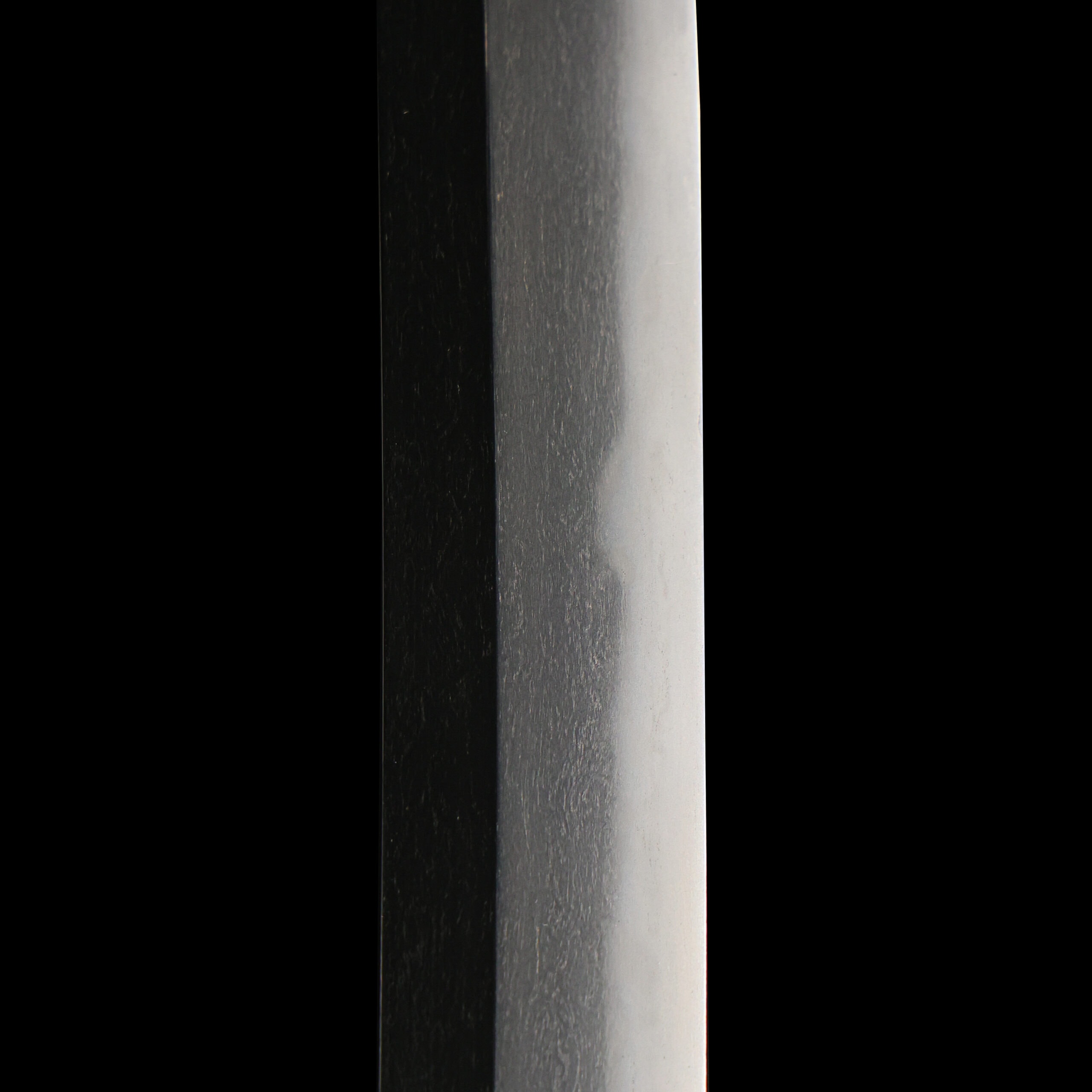
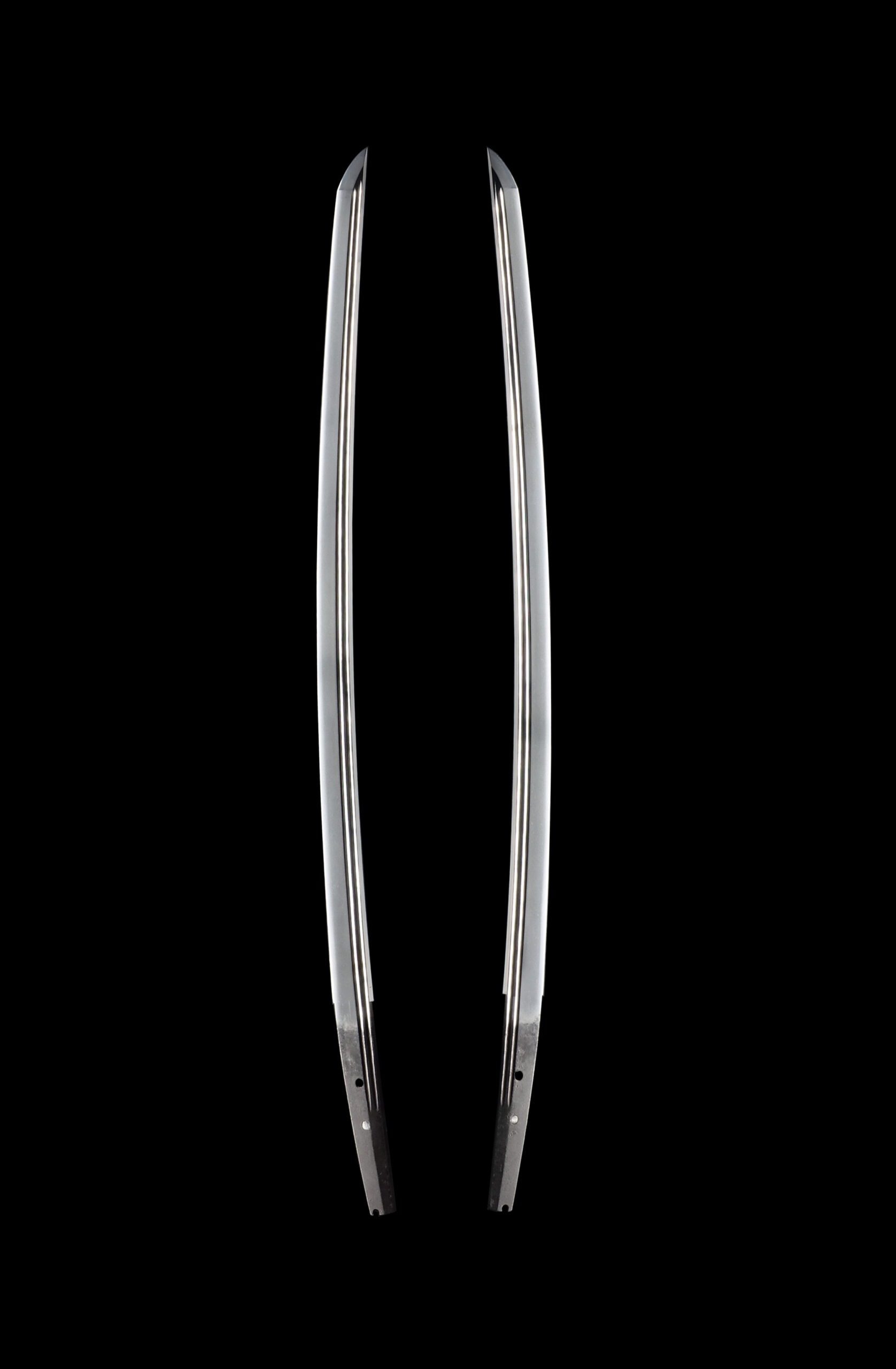
Centered at Fukuoka in Bizen across the middle Kamakura decades, this window is the loud heart of the Ichimonji school, the moment when the ichi-mark workshops pushed their chōji tempering to its showiest extreme. The setsumei repeatedly name the same triad as its representative hands: Norifusa, Sukezane, and Yoshifusa, a grouping cited again and again as the smiths who forged the most flamboyant chōji-midare of the period. Around them work Sukefusa, recorded as a two-character-signature smith from whom Yoshifusa, Norifusa, and Sukezane are transmitted as sons, together with Sukemori, Sukehide, Hirotoshi, Narichika, and a Fukuoka Yoshiie whose two-character blades are at times hard to separate from the Sanjō line. Norifusa, son of Sukefusa, later relocated to a place called Katayama and so came to be styled Katayama Ichimonji, a branch reading often left an open question between Bitchū and a Katayama near Fukuoka itself. Where the earlier Ko-Ichimonji generations still carried a Ko-Bizen character, with ko-midare more prominent than chōji, this phase resolves that older quietness into full, deliberate spectacle as Bizen rose to supply the Kamakura warrior demand. The defining temper here is chōji-midare worked at large scale: ō-chōji, layered jūka-chōji, and tadpole-shaped kawazu-ko chōji that climb and drop in tall waists across the ha. The blades named Norifusa show wide mihaba, high deep koshizori, retained funbari, and a generous chū-kissaki, the broad mid-Kamakura sugata that carries such a busy temper. The ground is a well-packed ko-itame, sometimes standing into hada-dachi with mixed mokume, carrying densely applied ji-nie, fine chikei, and a vivid midare-utsuri that rises clearly against the steel; the jigane reads bright and clear.
Ashi and yō enter in profusion, the nioiguchi runs soft and nioi-dominant with ko-nie, and kinsuji and sunagashi play through the hardening. This separates the phase on both sides. Against the calmer Ko-Ichimonji ko-midare, the Fukuoka work is taller and more exuberant; against the later Yoshioka Ichimonji, whose temper narrows into smaller-motif chōji-midare with conspicuous gunome and a frequent saka-gakari lean, the Fukuoka temper is broader, deeper, and less regular. The Katayama-attributed blades within this phase already foreshadow that reverse tendency, hardening flamboyant but reverse-inclined chōji. For kantei, the combination to read is wide mid-Kamakura sugata, large undulating chōji-midare with jūka and kawazu-ko mixed in, a soft nioi-dominant nioiguchi, and standing midare-utsuri over bright ko-itame. Two-character signatures cut boldly with a thick chisel recur across Norifusa, Sukemori, Sukehide, and Norinawa, and many surviving blades are suriage or ō-suriage tachi. The named masters carry weight beyond style: a Narichika tachi descends through the Date family of Sendai, a Norifusa passed through the Yanagisawa family, and Hon'ami appraisals by Kōtsune and Kōchū accompany Sukemori and Norifusa works. One den Norifusa katana bears a kinpun-mei reading Tenka Daiichi, "Best Under Heaven," a measure of how the connoisseurs of later centuries ranked this Fukuoka peak among Bizen production. Learn more →