美濃伝は、伝えによれば移住者が開いた。大和手掻系の出と伝えられる兼氏が志津に住し、新しい相州風で鍛えて、後世の鑑定家にその最上作は誰よりも正宗に近いと言わしめている。
 NihontoWatchNihontoWatch
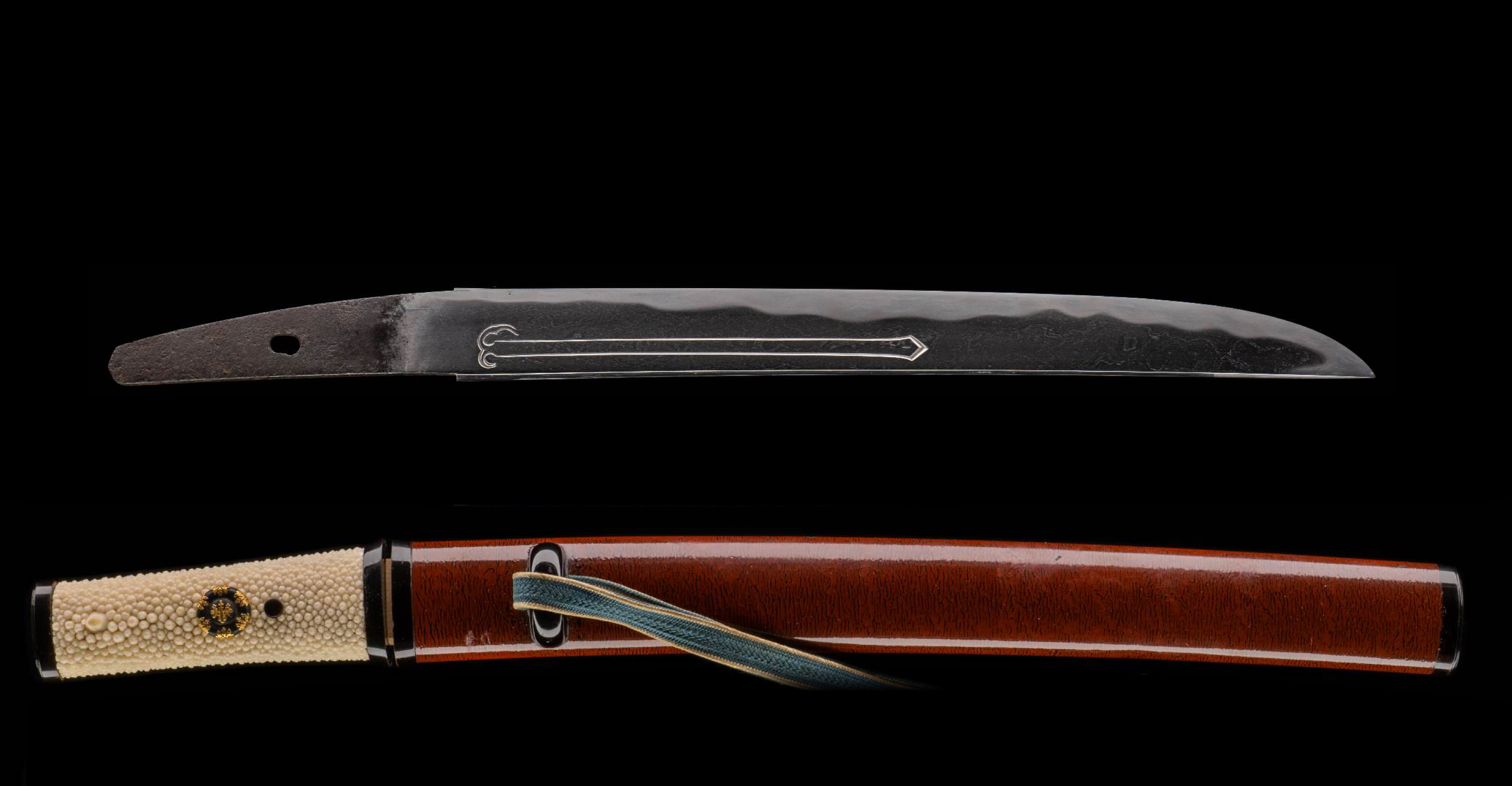
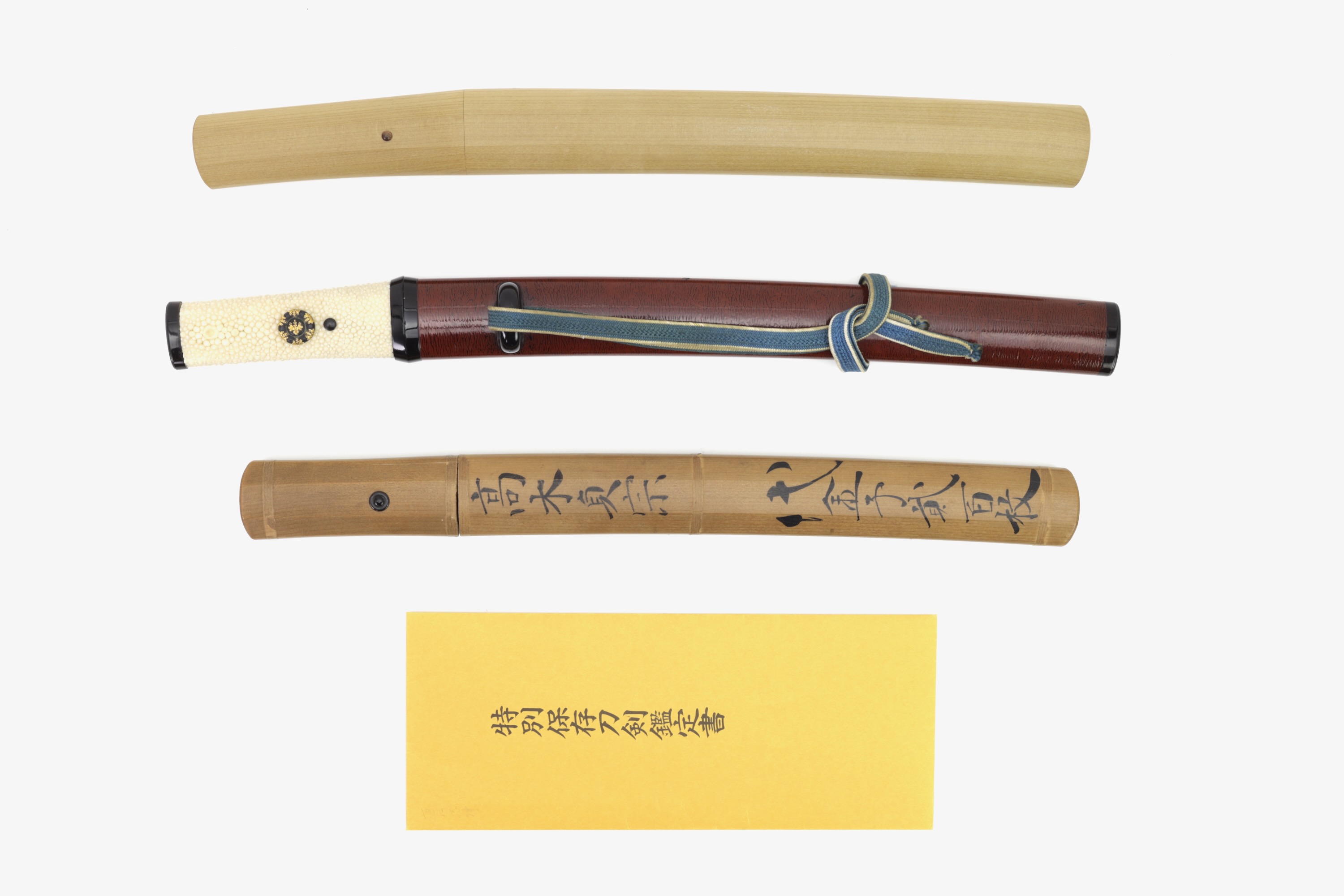
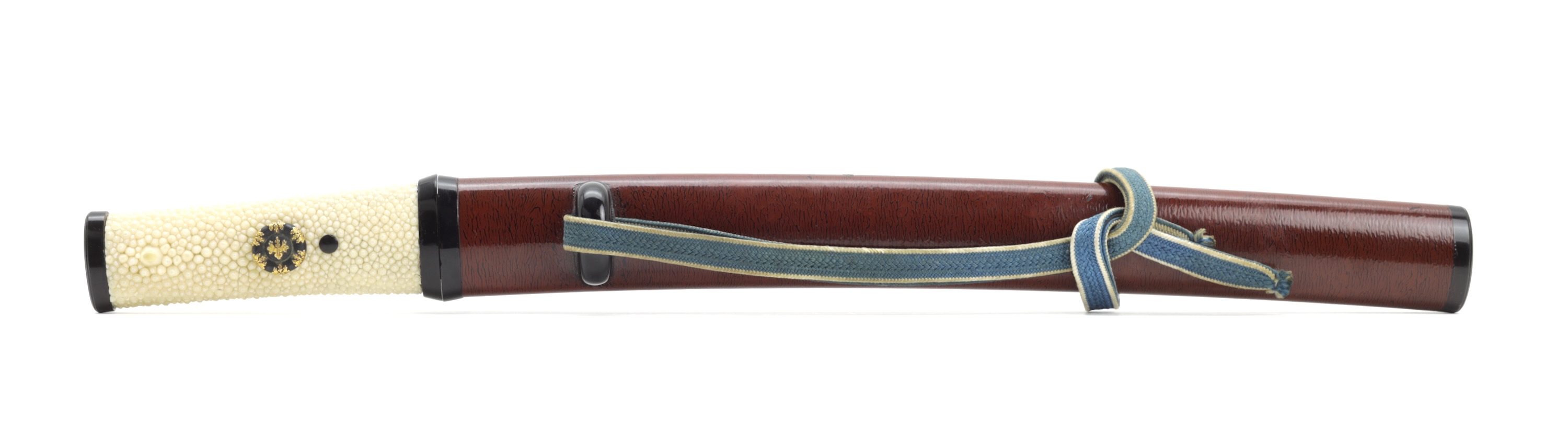
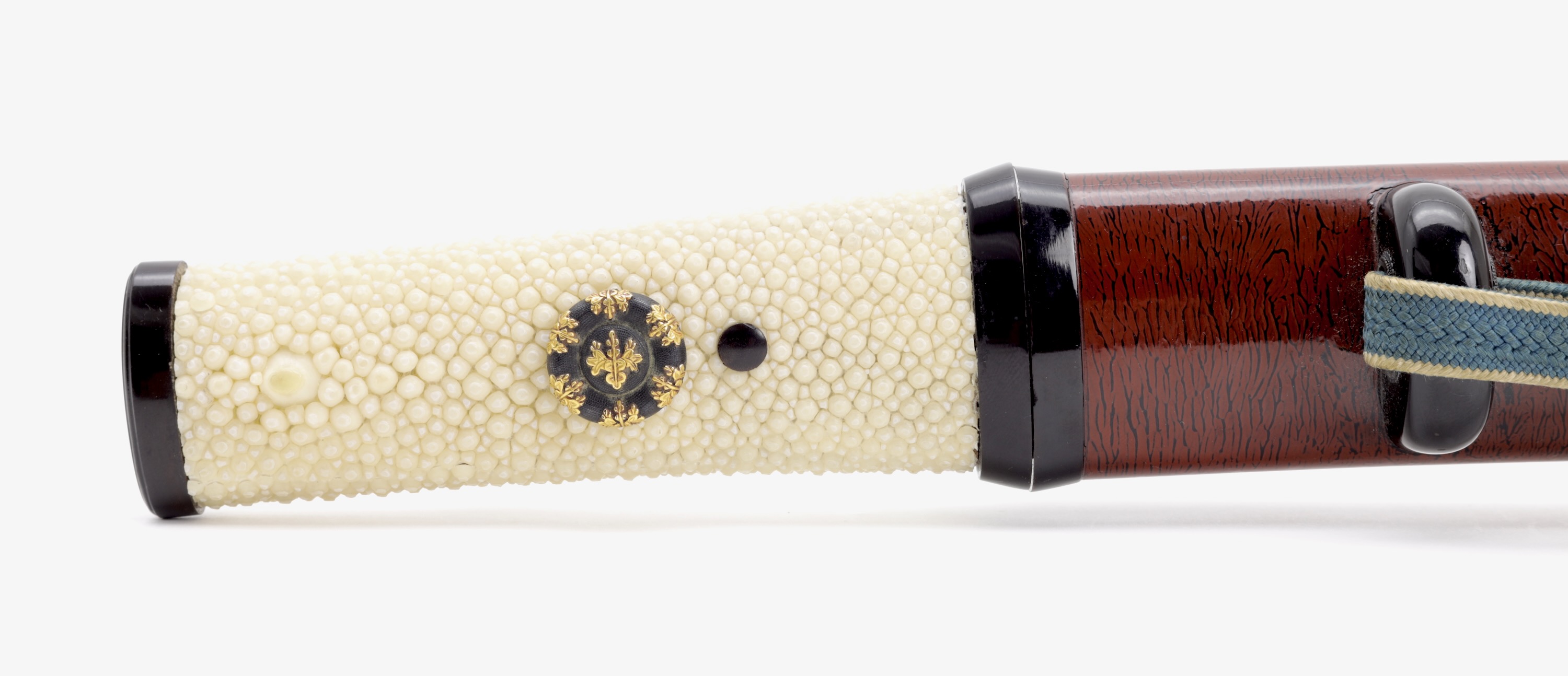
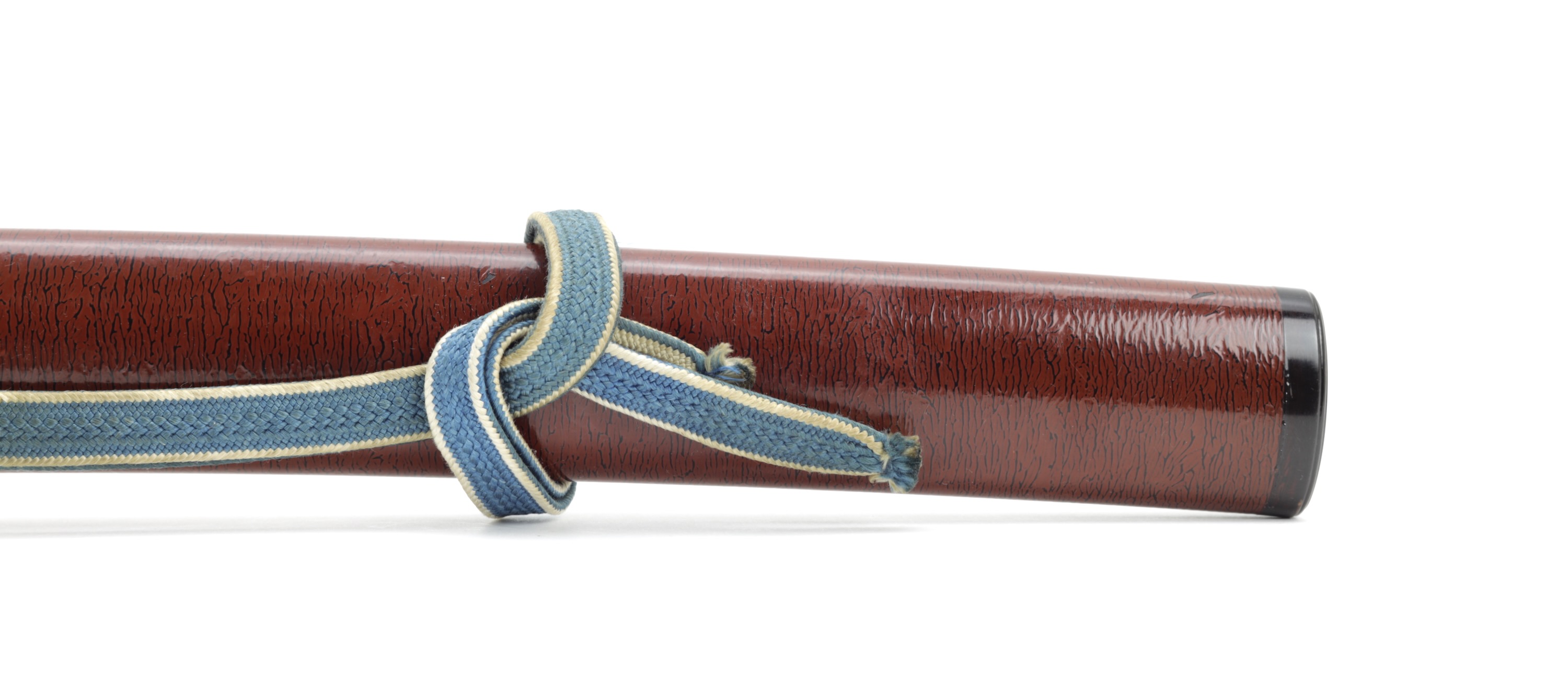
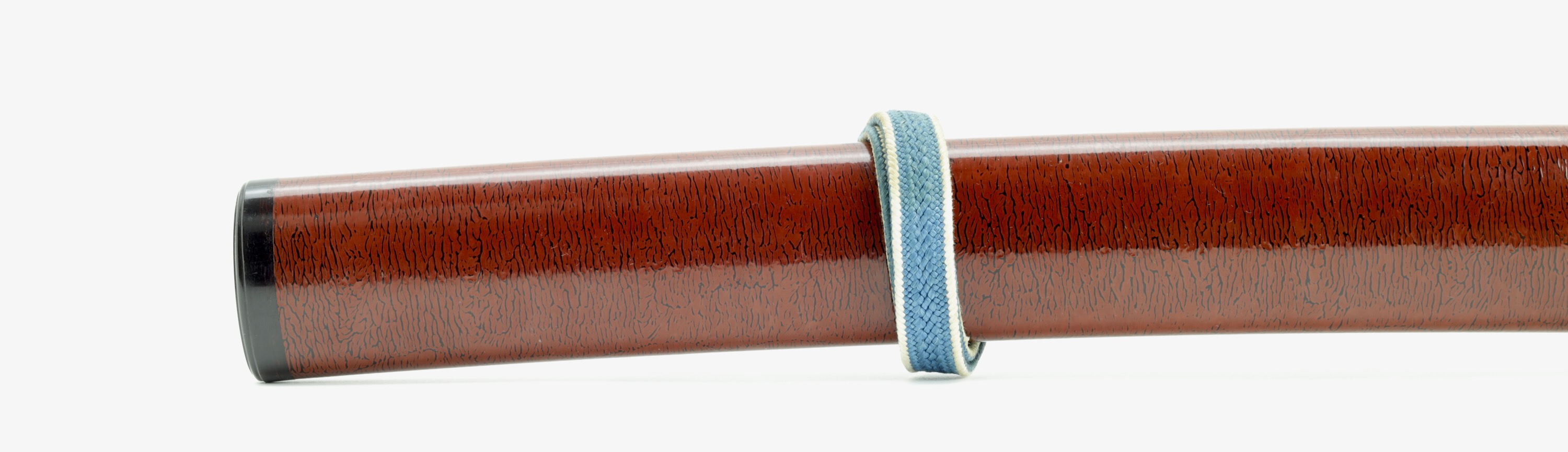
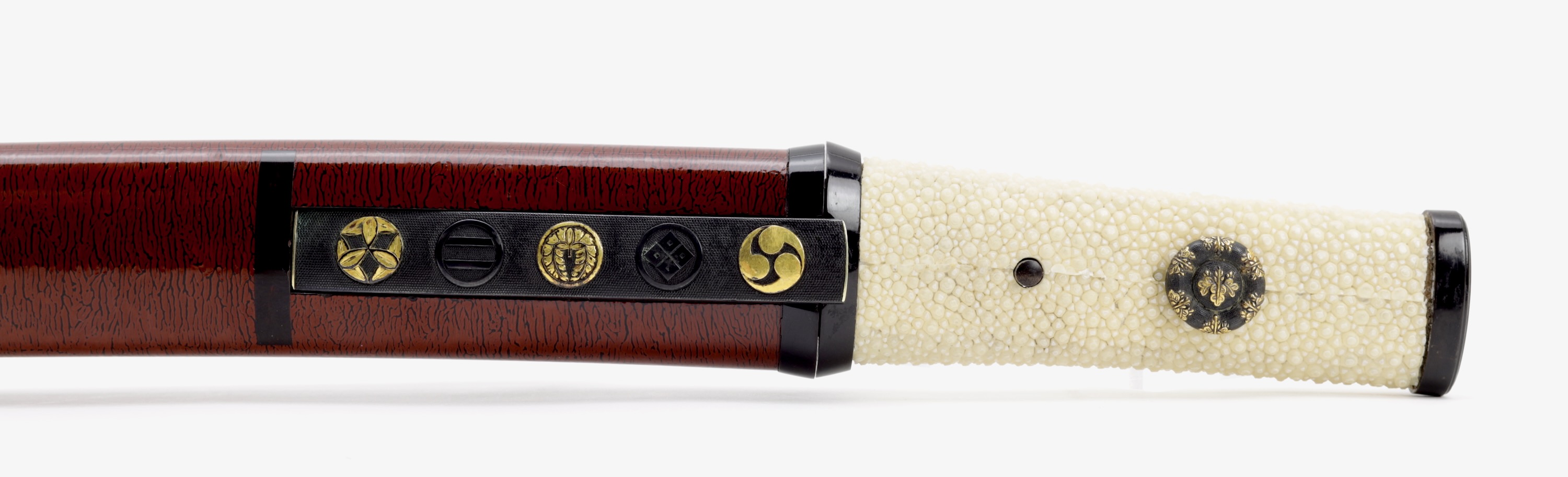
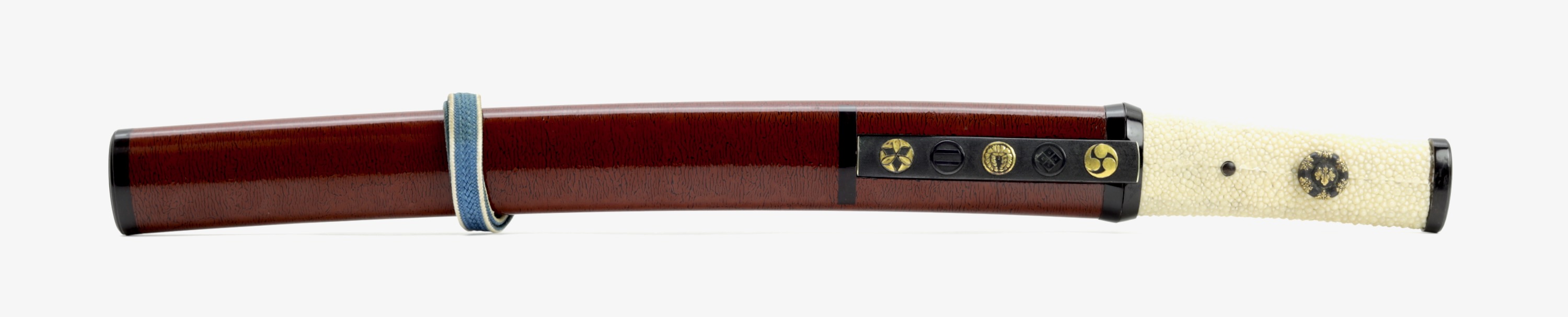
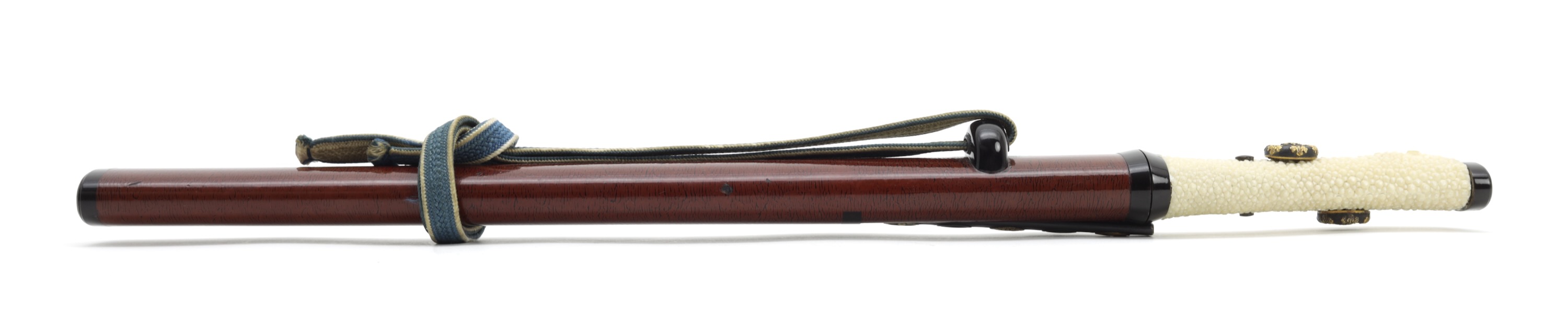
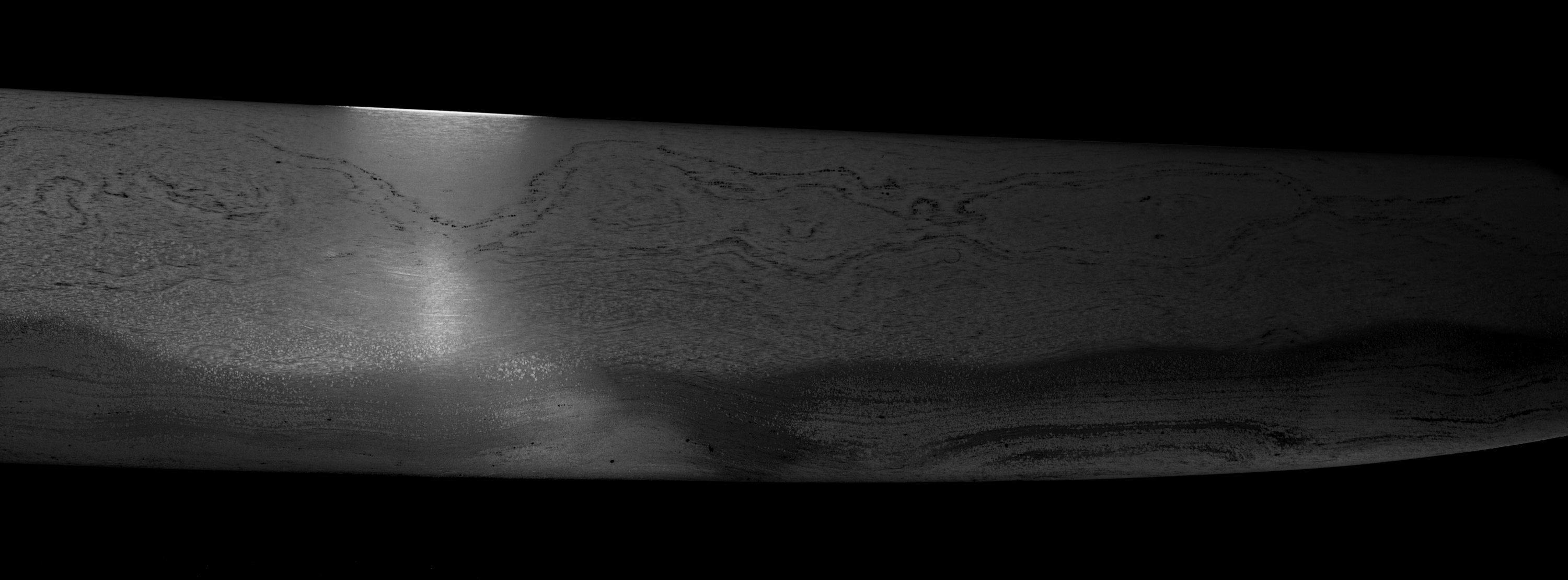
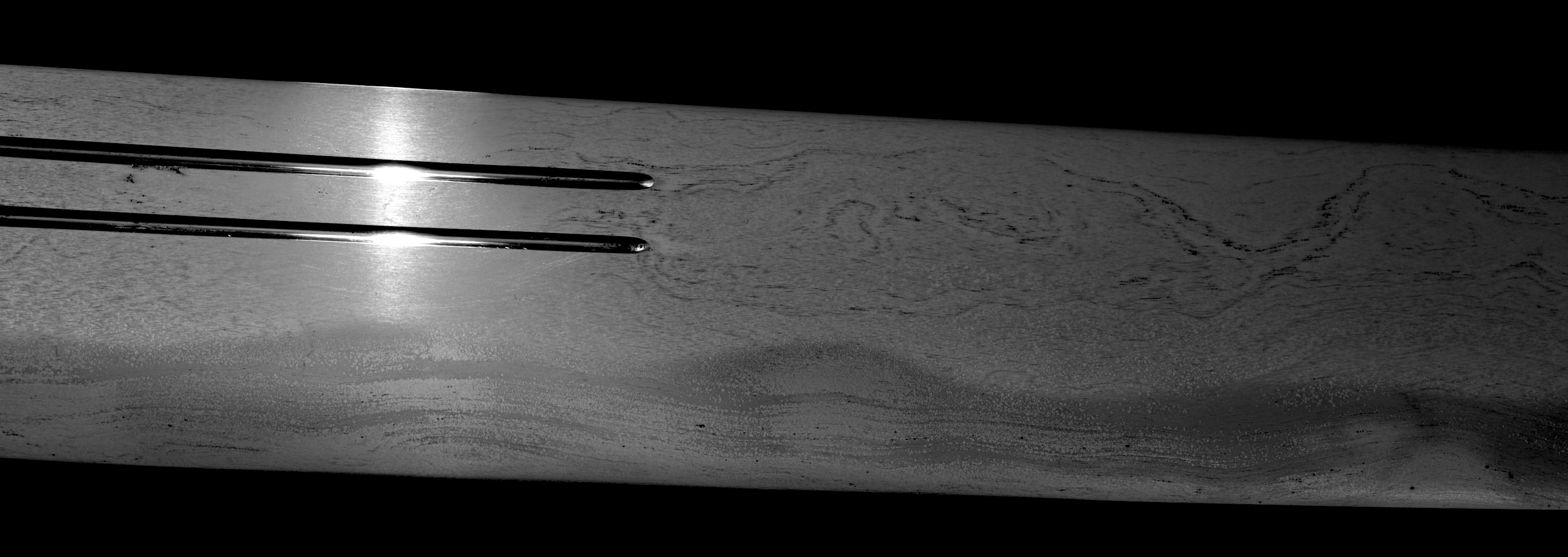
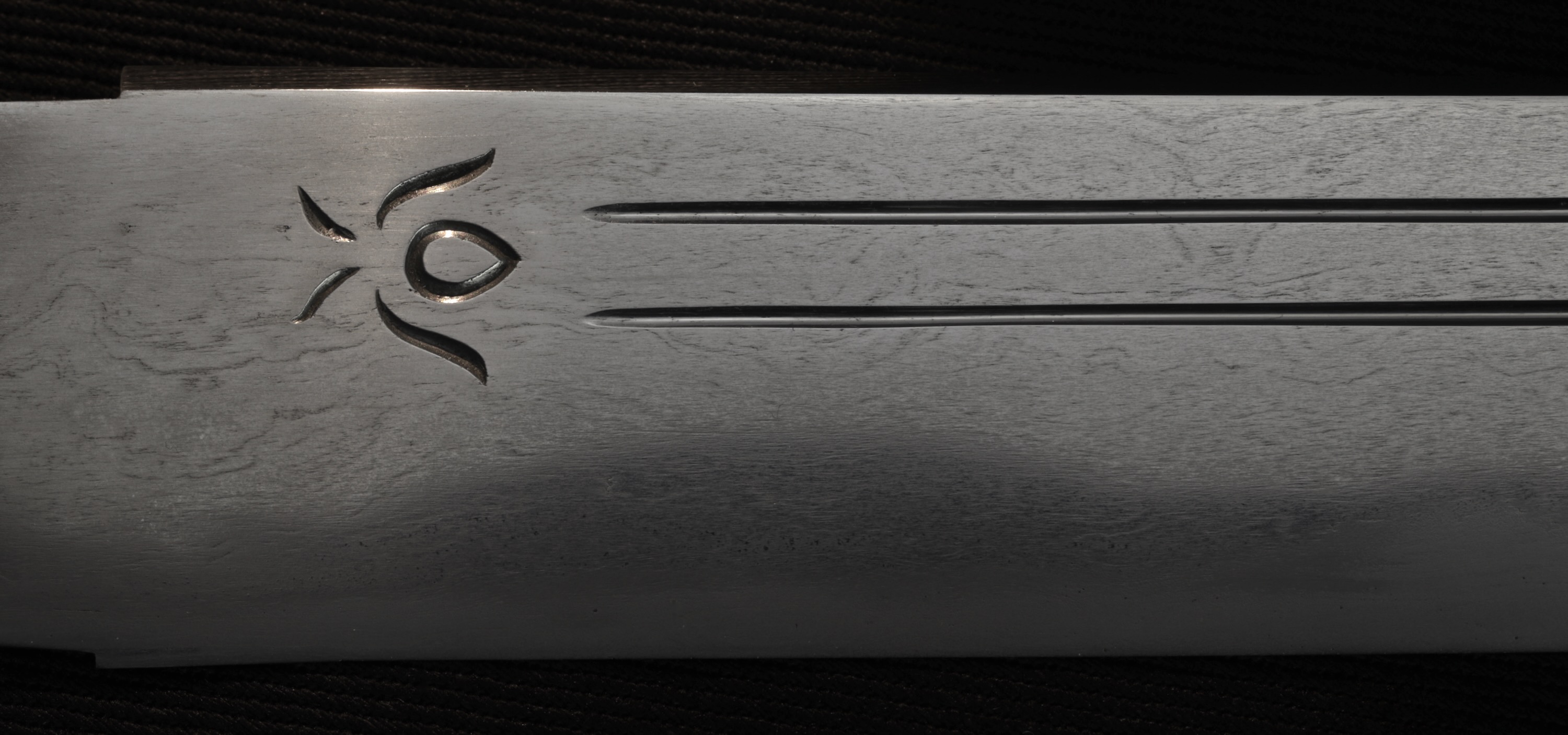
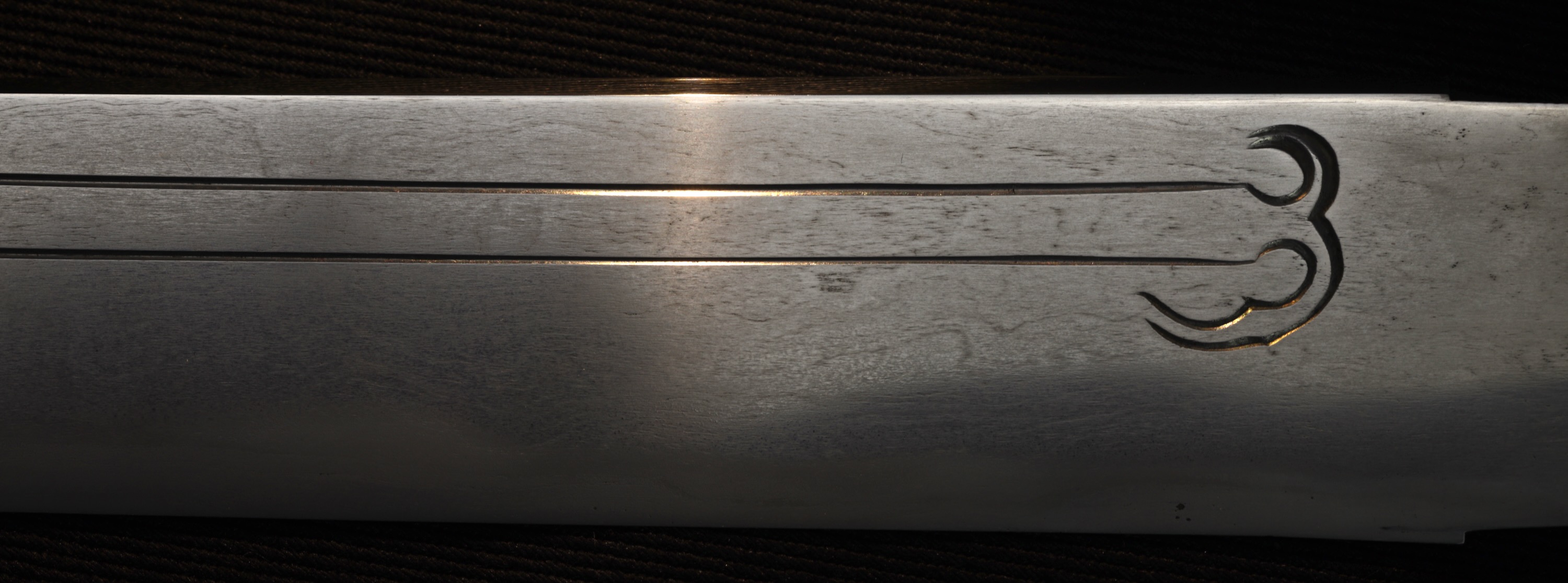
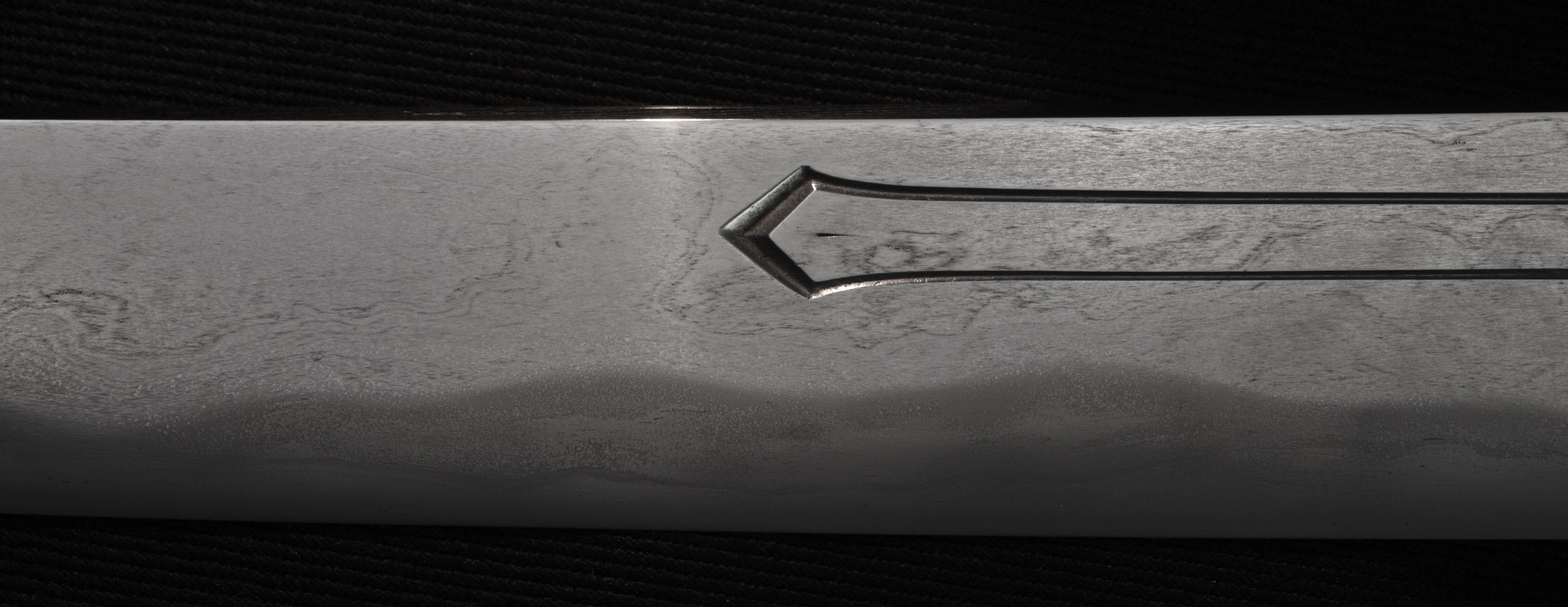
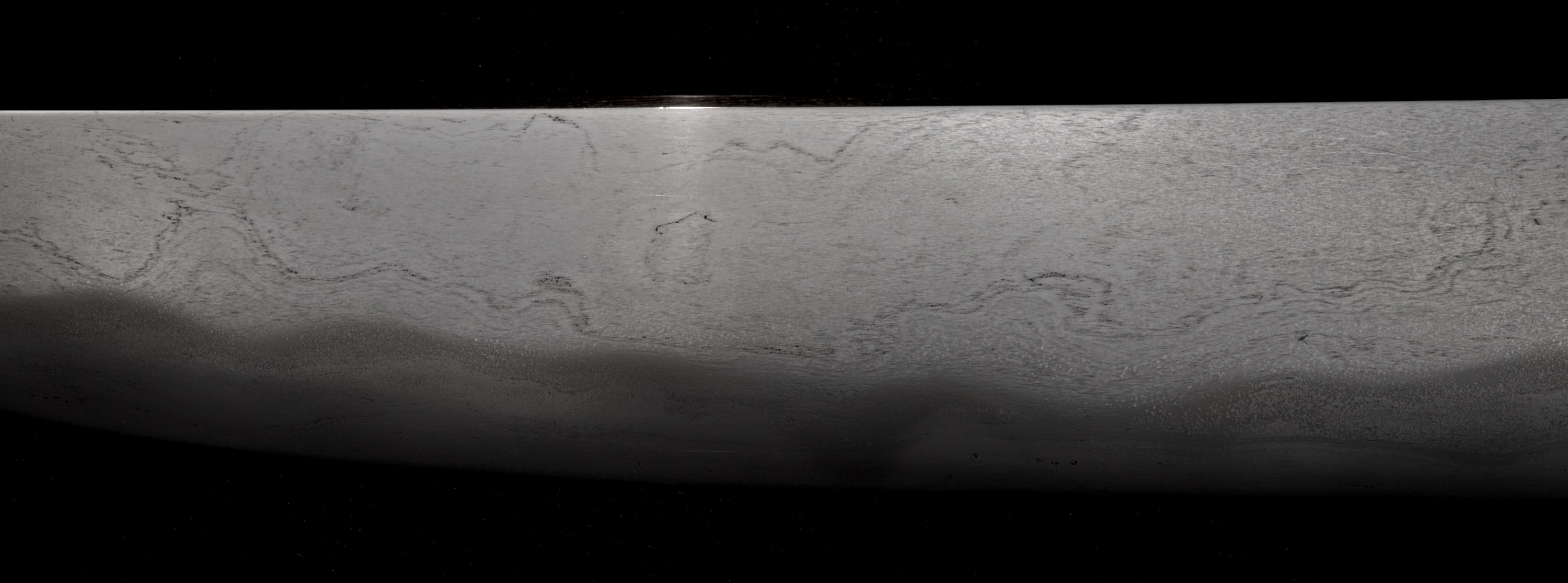
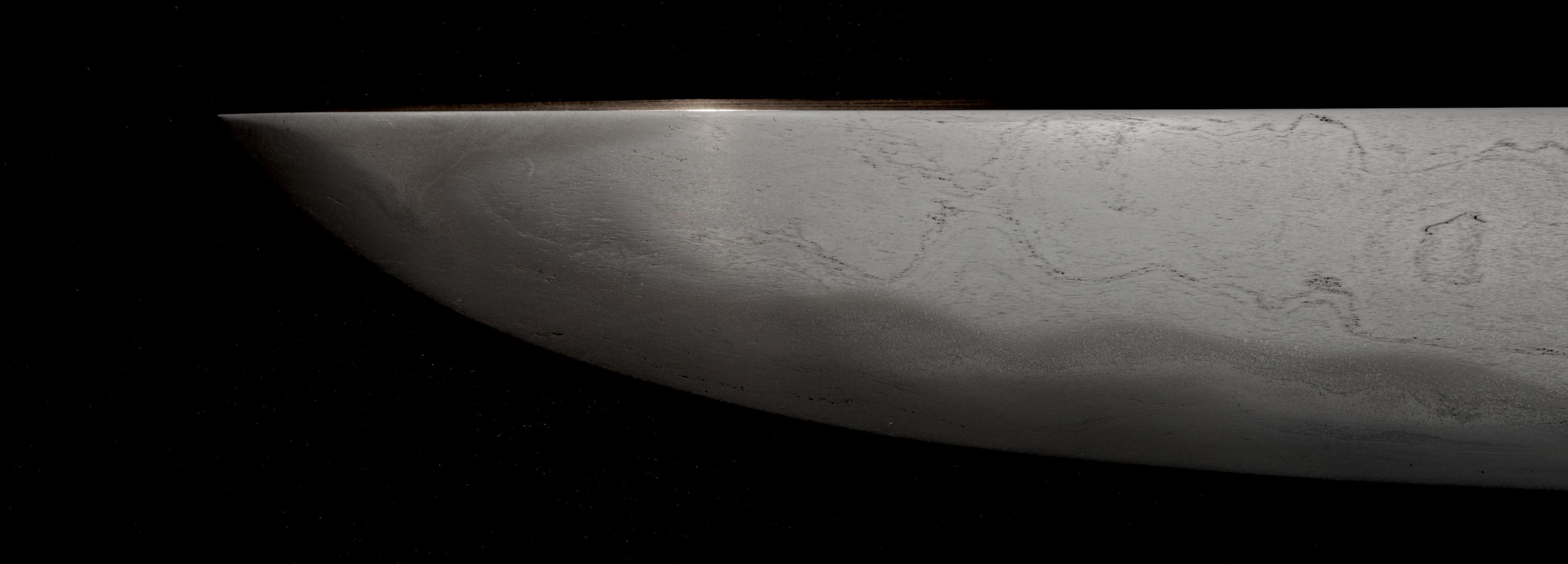
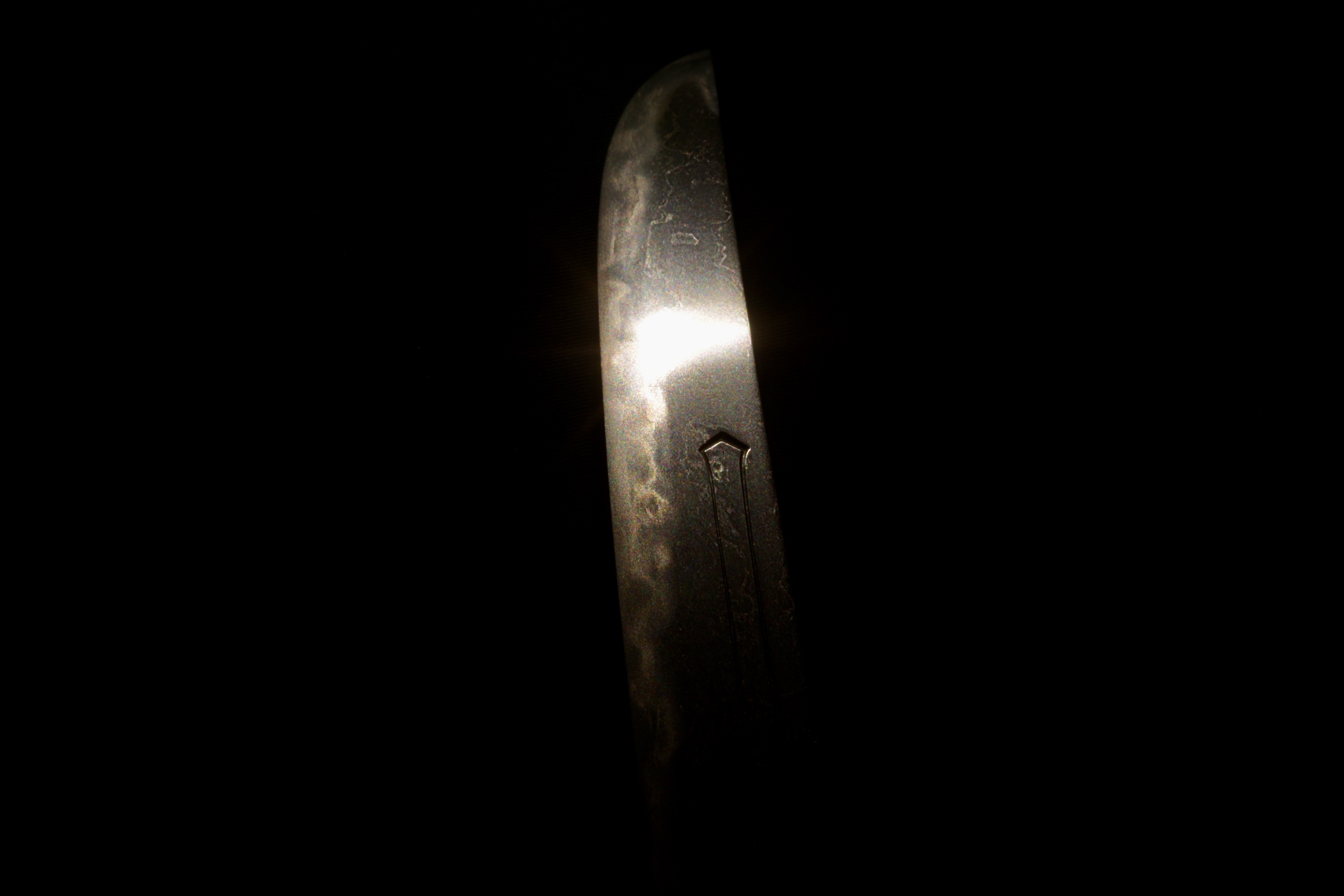
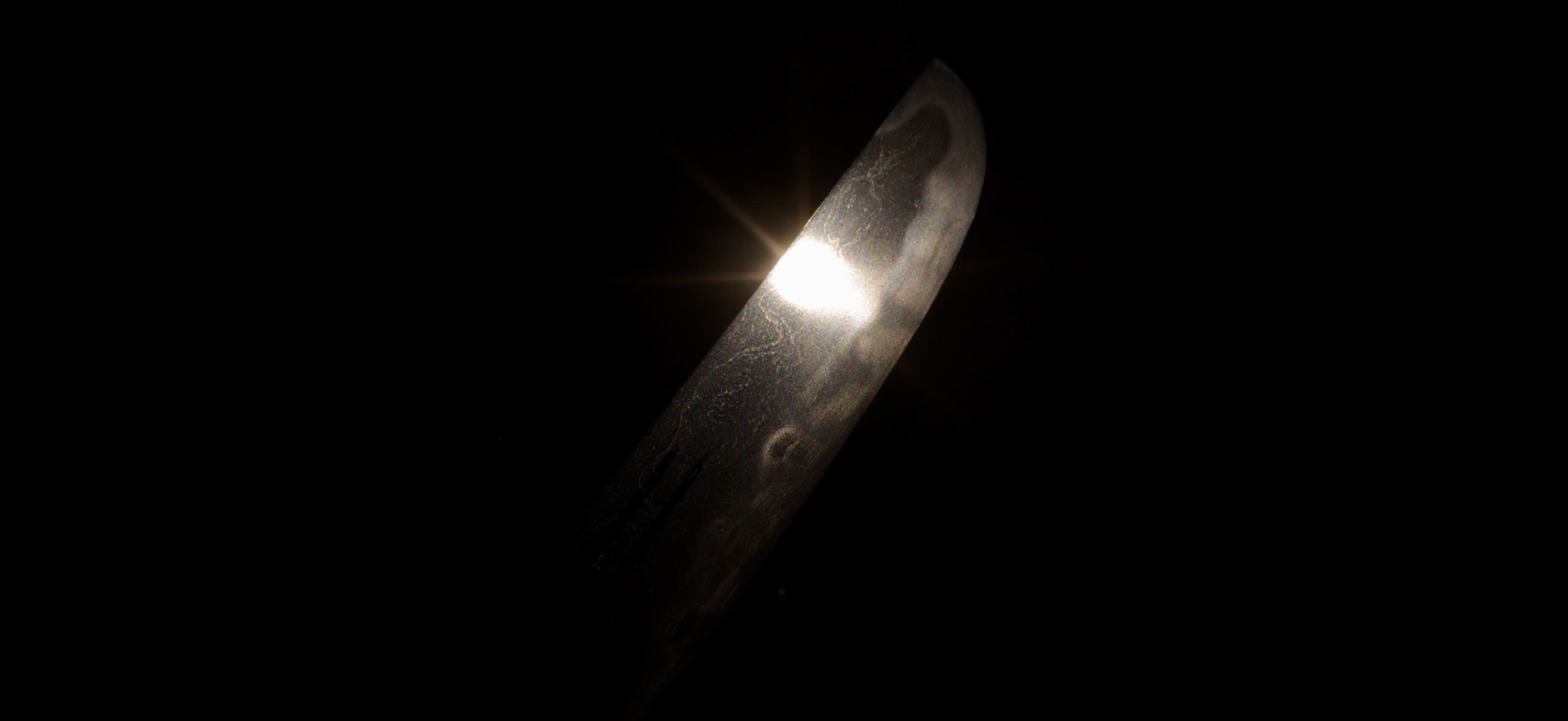
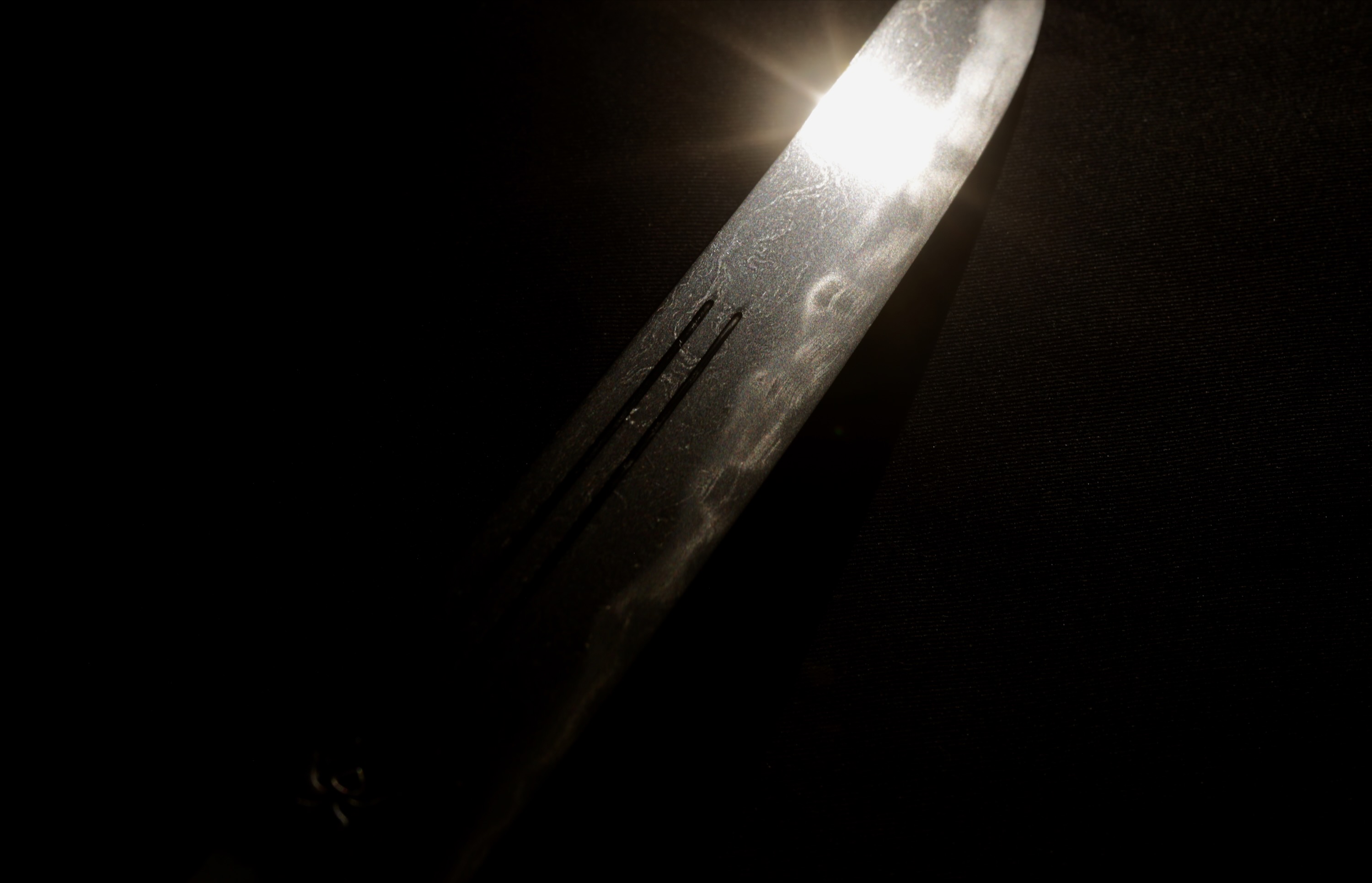
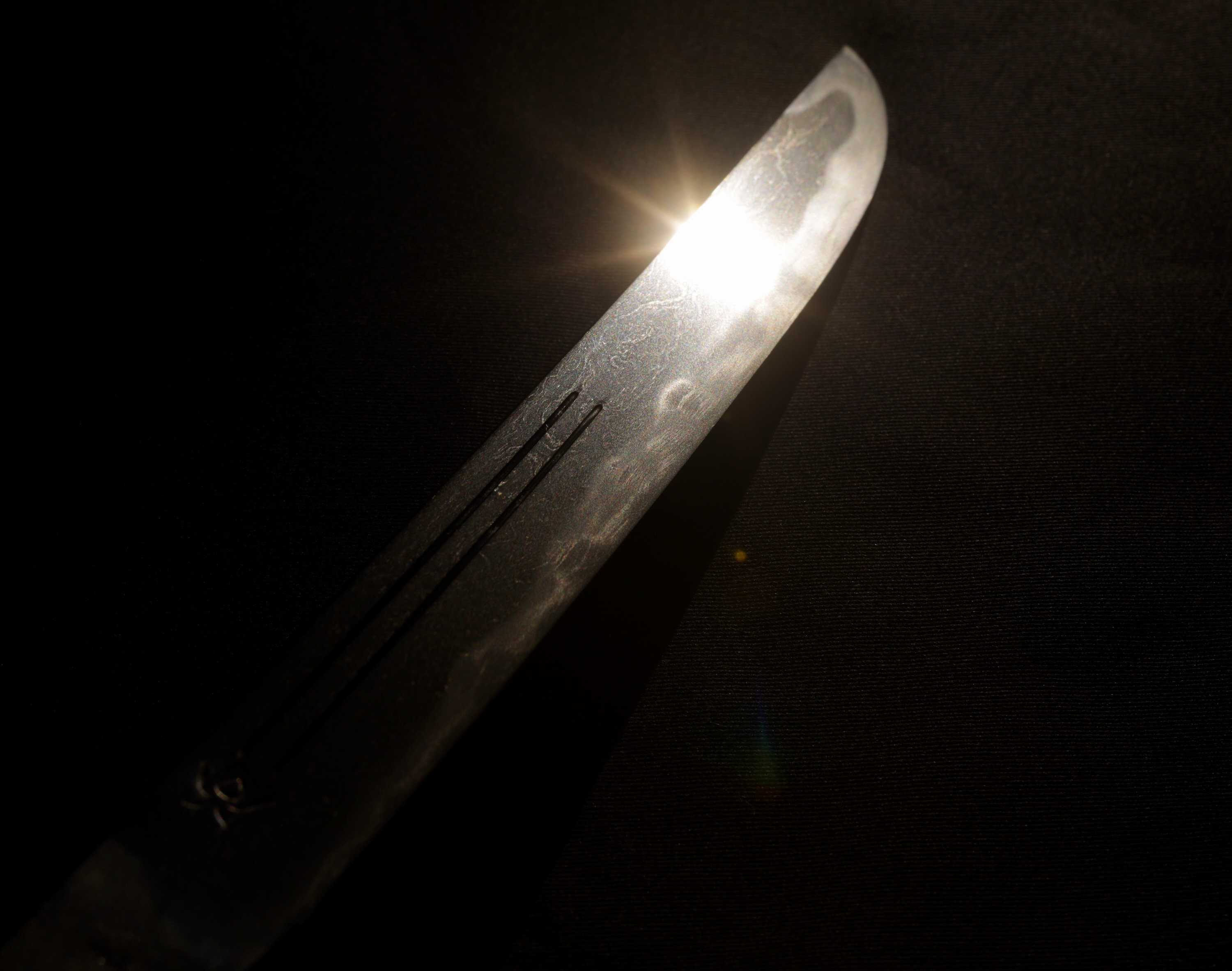
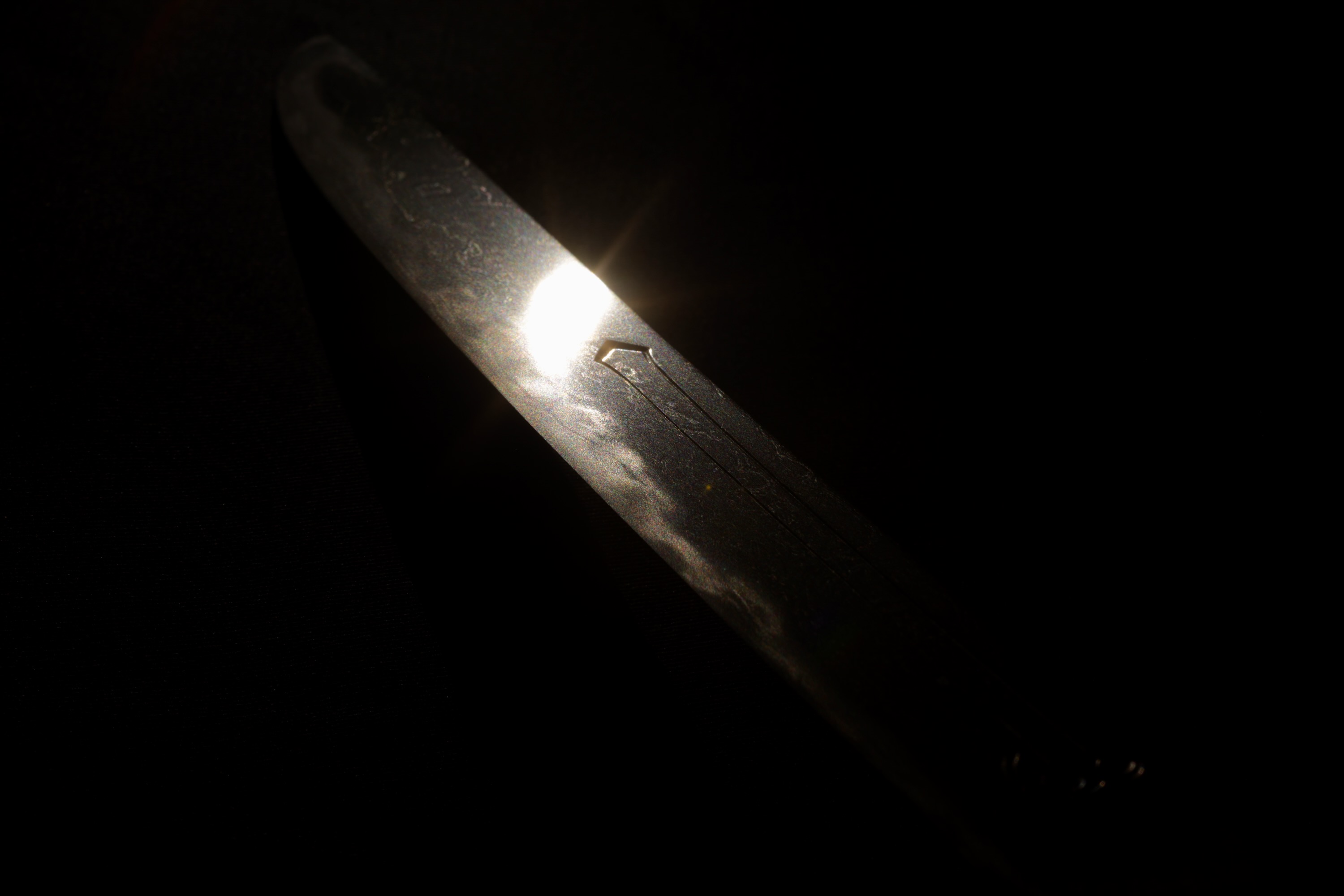
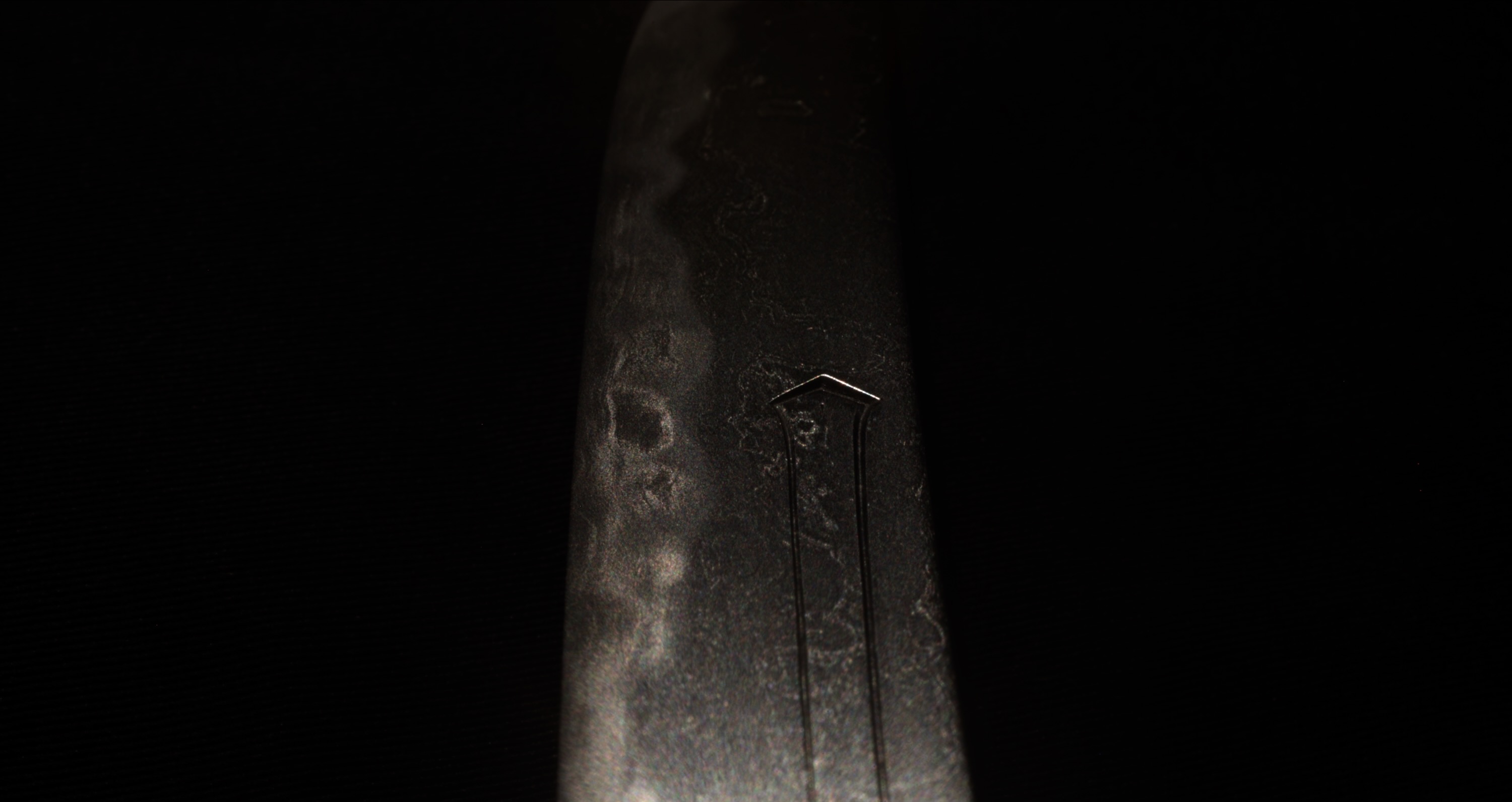
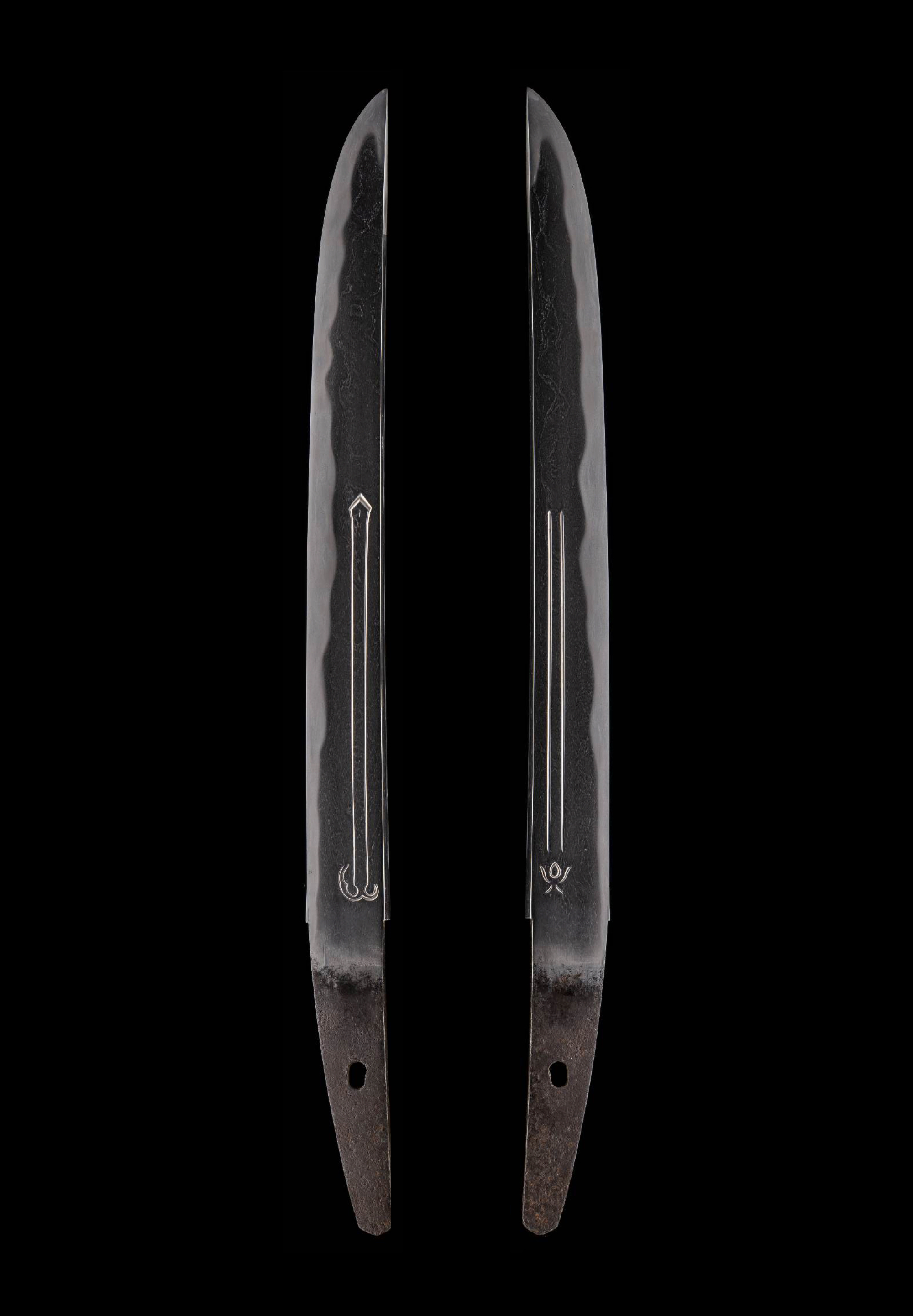
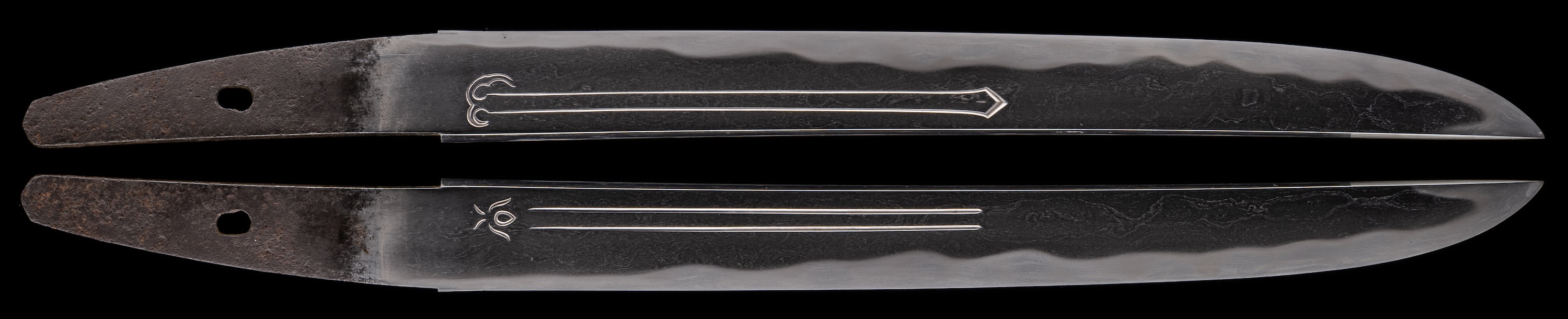
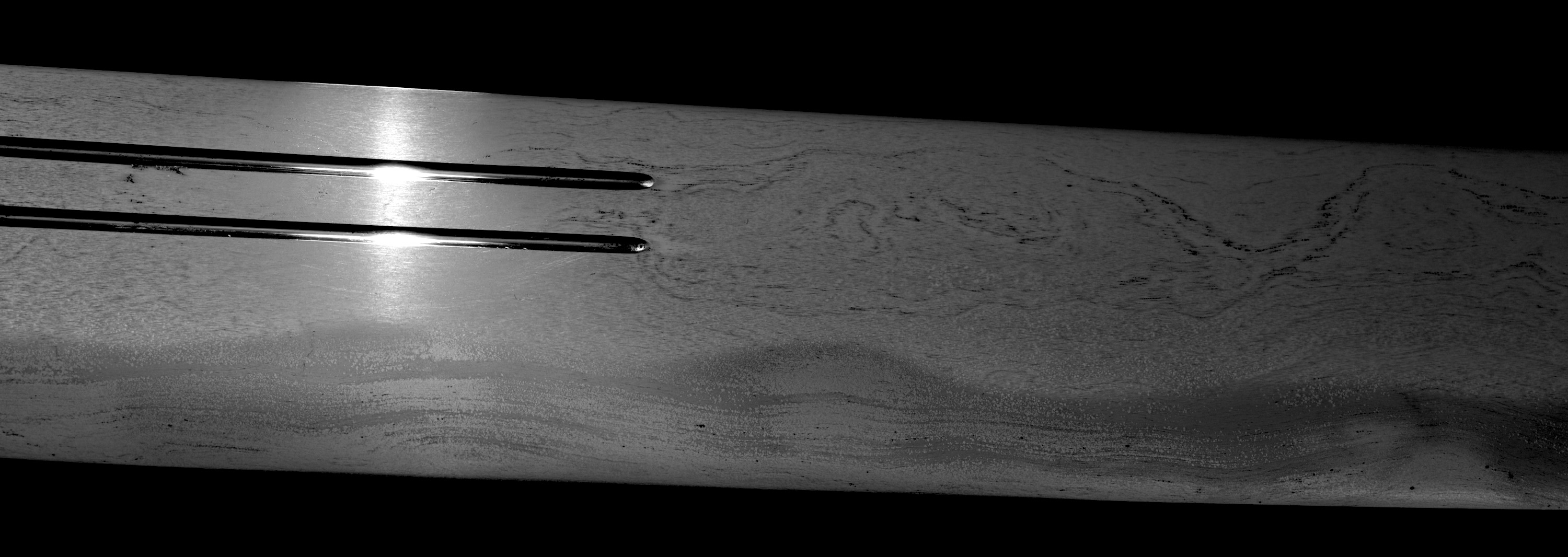
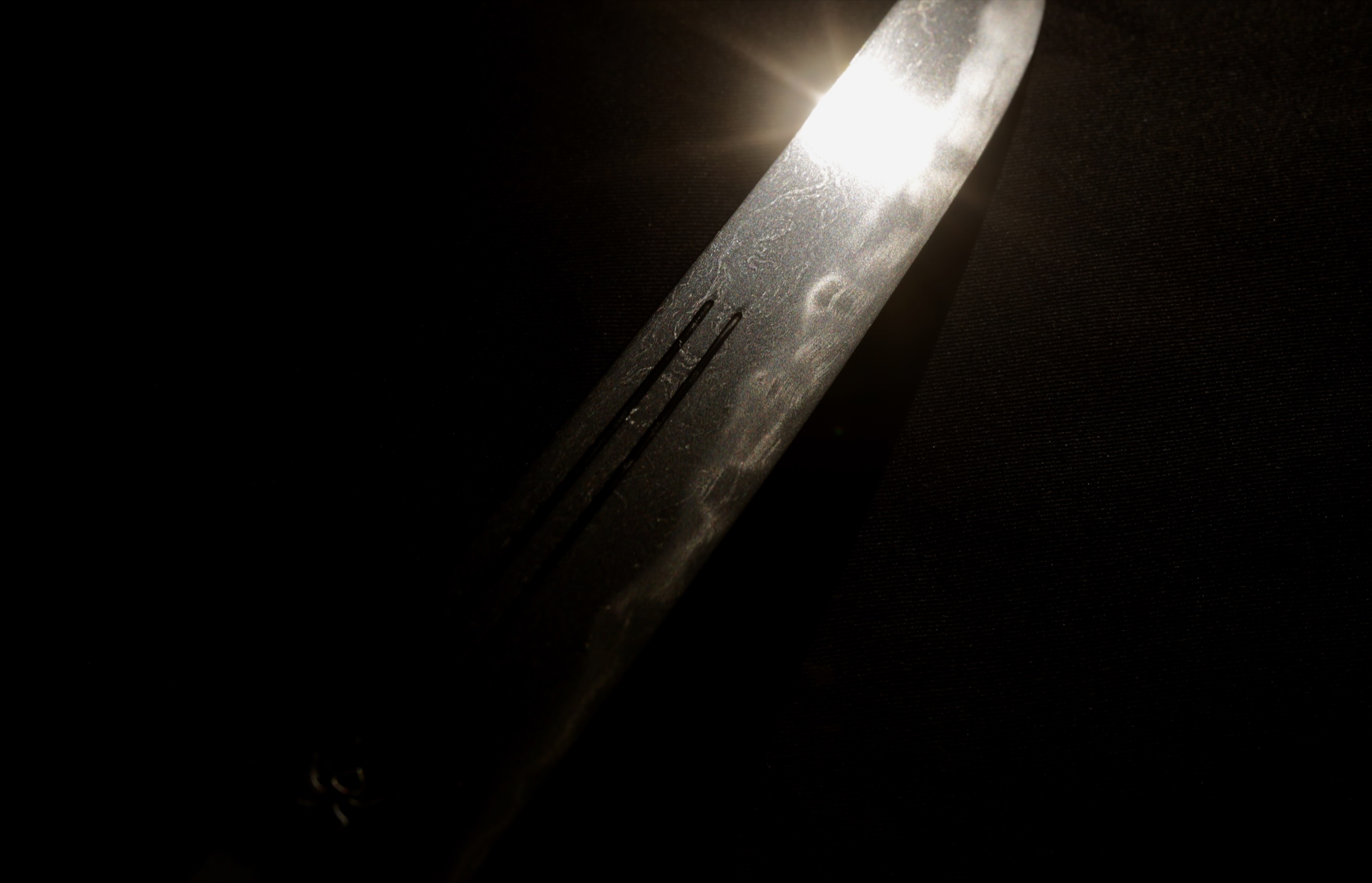
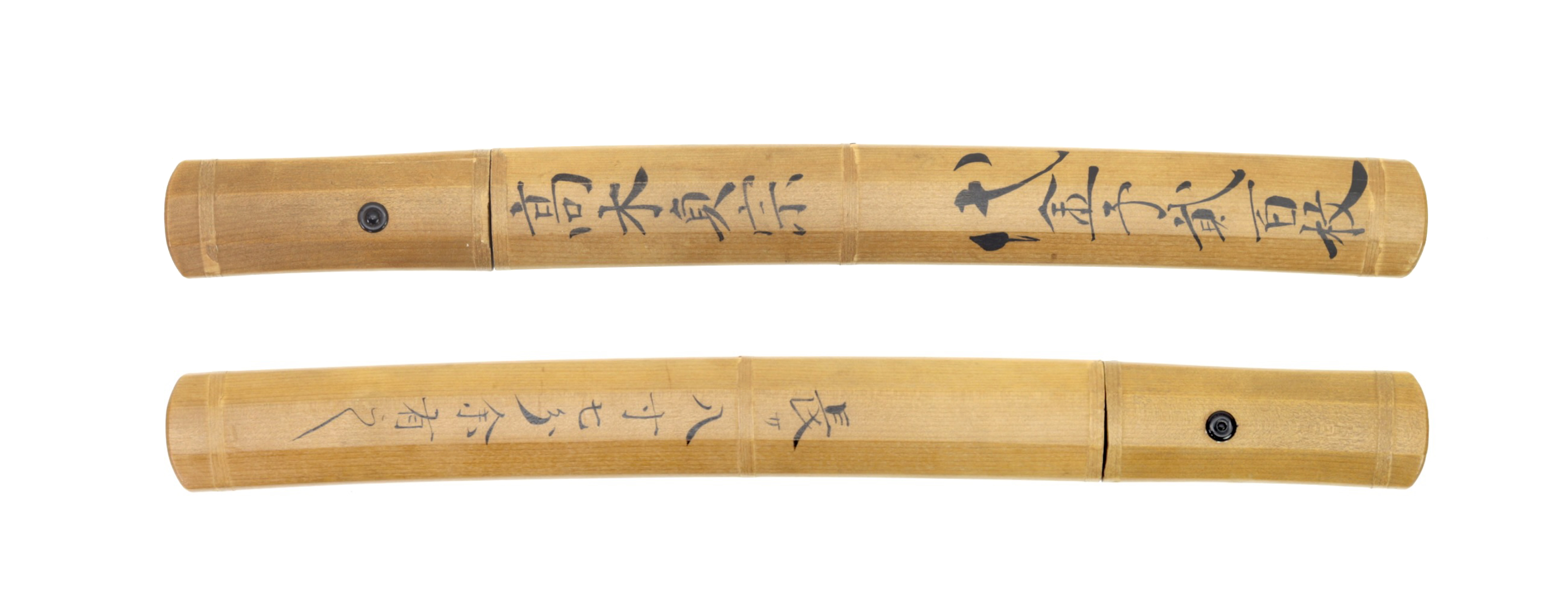
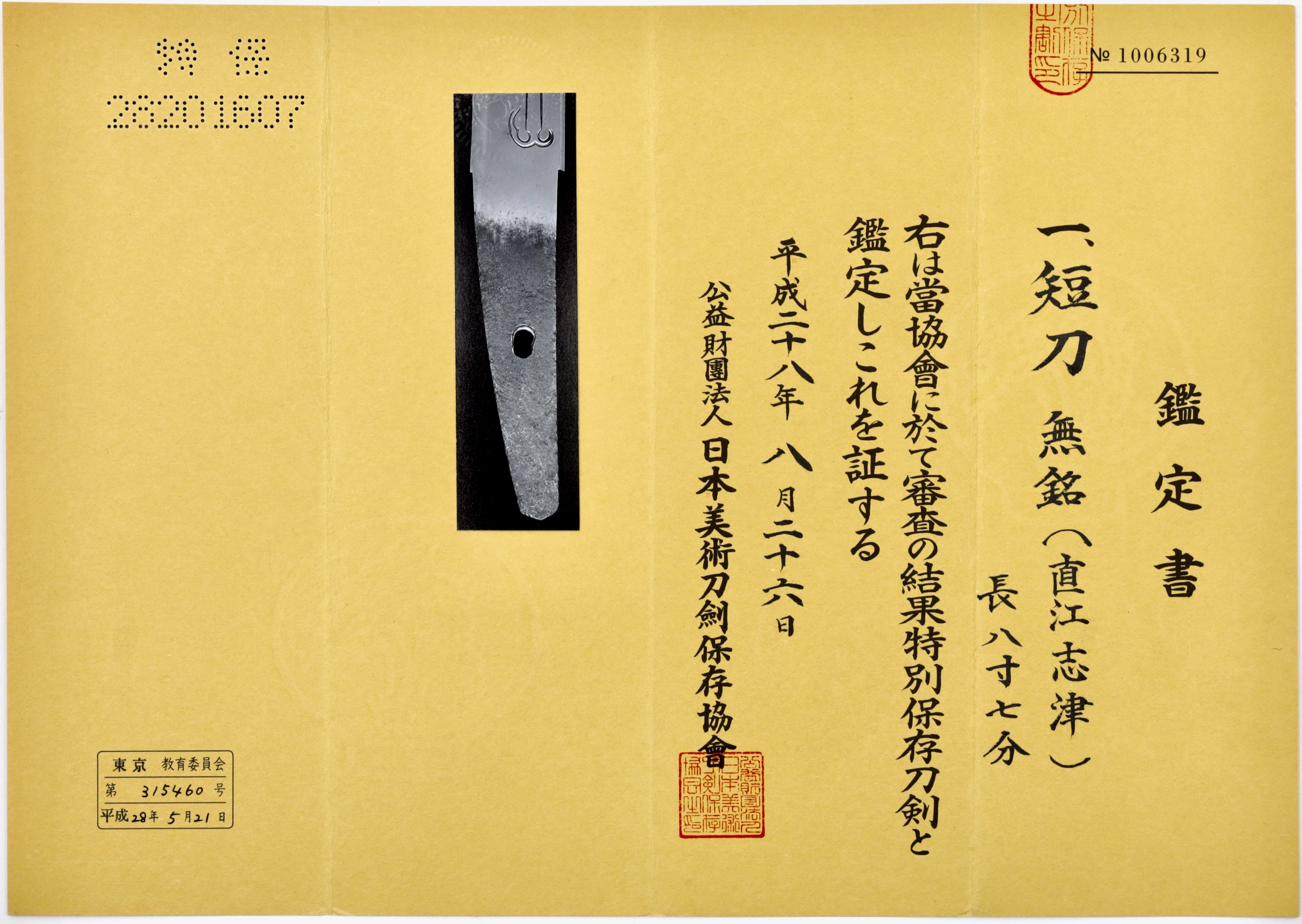
Introduction Following the Genpei war, Minamoto no Yoritomo established himself as a shōgun and made Kamakura in Sagami (a.k.a. Sōshū) his capital. Kamakura at the time attracted some of the best smiths of Japan, who set up shop in the new capital in order to serve the new samurai elite. Their interaction and innovation created a new and exciting style that is now known as the Sōshū school of Japanese bladesmithing. This is the school from which grandmaster Masamune emerged, widely regarded as Japan's best smith. The Kamakura period would last from 1185-1333 and is seen as the golden age of Japanese bladesmithing. Many great smiths emerged at the time. For example, Yukimitsu, who tradition has it was Masamune's biological or adoptive father; Norishige, who was Masamune's peer under Shintogo Kunimitsu; and Sadamune, Masamune's biological or adopted son. Masamune is said to have had ten students. The composition of this list varies, but Go-Yoshihiro and Kaneuji are almost always mentioned. Blades by the Sōshū masters were prized possessions then and now. They have been passed down among Japanese shōgun and daimyo, forming the highlights of their collections and, in modern times, of private and museum collections. A fine Sōshū tantō Presented here is a very good, representative example of a Sōshū tantō of the second half of the 14th century. Blade attributes (With plain English below) Nakago: Ubu. Mumei. Funa-gata with iriyamagata-jiri with slight katte-sagari yasurime. Nasu-hisago mekugi ana. (Tang: Unaltered. Unsigned. "Ship shaped" with V-shaped end. Finished with slightly slanting file marks from upper left to lower right. Two overlapping peg holes in the form of an eggplant.) Sugata: Hira-zukuri with wide mihaba. Mitsu mune. (Overall form: Blade with flat sides and relatively wide base. Spine finished with three facets.) Jigane: Standing out itame with masame along the ha. (Steel: Mainly wood grain with straight grain in the hardened zone.) Hamon: Ko-notare nie-deki with gunome, lots of sunagashi and kinsuji. (Temperline: Undulating temperline executed in large, visible martensite crystals, with round elements and effects reminding of brush sand and black gleaming lines running through them.) Boshi: Ko-maru with short kaeri. (Temperline at tip: small circle turning point with short temperline along the back.) It follows the classic design elements of the Sōshū school, including a mitsu-mune and the funa-gata ("ship shaped") nakago with kengyō-jiri tip that was first done by Masamune and then passed down to his students. The horimono consists of a Buddhist sword (ken) on the left and a lotus and chopsticks on the right side, representing the opposites of forgiveness and punishment. Horimono like this were first carved into blades by Sadamune and were adopted by several other Sōshū smiths. Seen in the gleaming light, the wild hamon resembles that of Masamune but is slightly toned down. Clear dark chickei and sprays of ji nie are seen just above the hamon line. Attributions The tantō comes with two attributions: Takagi Sadamune and Naoe Shizu. Attribution #1: Takagi Sadamune (by Hon'ami Koson) Takagi Sadamune is found on an older shirasaya. Although not signed with his name, the format and handwriting are that of Hon'ami Kōson (1879-1955), Hon'ami sword polisher and appraiser and "father" of the Gokaden ("Five Traditions") classification system. Thanks to Dmitry Pechalov for pointing this out in personal communication. Another sayagaki by the same hand, this time signed by Hon'ami Kōson and dated to 1928 is found in his book: Japanese Swords, Sōshū Den Masterpieces, 2019. Page 95. It is signed: 高木貞宗 Takagi Sadamune 代金子貮百枚 Dai kinsu nihyaku-mai "Valued at 200 gold coins" 長サ八寸七分有之 Nagasa hachisun nanabu ari more "The length is 8 sun 7 bu" (26.4 cm) On average, a gold coin was equivalent to a ryō, which was traditionally roughly the value of one Koku, the amount of rice needed to feed a person for a year. Thus, the blade was valued at the cost of food for 200 people for one year. Takagi Sadamune was the successor of Sōshū Sadamune, one of Masamune's best students, adopted son, and the heir to the main line. Attribution #2: Naoe Shizu (by the NBTHK) The attribution to Naoe Shizu comes from the NBTHK's Tokubetsu Hozon papers, dated 26 of August in the 28th year of Heisei (2016): Naoe Shizu is the Mino-based school of Kaneuji, another one of Masamune's top students. It shows that attributions of unsigned blades are not an exact science, and opinions can vary on who the exact maker was. Far less variety is seen in the estimation of the quality of the work, and so both attributions suggest the blade was made by a student of someone who was directly trained by Masamune himself. Takagi Sadamune (高木住貞宗) Masamune's best student is considered to have been Sadamune, which is perhaps why he adopted him as his son. Takagi Sadamune, in turn, is believed to have been Sōshu Sadamune's son and thus Masamune's legal grandson. According to the Kotō Meizhukushi Taizen of 1792, Takagi Sadamune also trained directly with Masamune and became his disciple at age 35. He later trained and traveled with Sadamune. He took the name Takagi Sadamune when he became the head of his lineage after his father's passing. Sōshu Sadamune forged an incredibly fine hada with lots of very fine ji nie. Takagi Sadamune worked in the style of Sōshū Sadamune, but his hada is less fine. Extant works appear primarily in the form of tantō, just like this one, and appear to date from around the 1360s. His works are extremely rare, with only about 34 blades on record. A juyō Takagi Sadamune tantō is in the collection of Dmitry Pechalov and published in his Soshu Den Masterpieces. A tantō, now juyō bijutsuhin ("Important Work of Art") was once in the possession of Toyotomi Hideyoshi. Sources: Markus Sesko; Swordsmiths of Japan. Lulu Publishing, 2014. Pages 889-890. Kotō Meizhukushi Taizen of 1792. Dmitry Pechalov; Japanese Swords; Soshu Den Masterpieces. 2019. Pages 140-141 & 156-159 Naoe Shizu (直江志津) Naoe Shizu is the school of Kaneuji (兼氏), one of Masamune's main students, and a saijo saku (grandmaster) rated smith. His real name was Shizu Saburō (志津三郎), he lived from 1284-1344. Originally from Yurugi town in Yamato province, where he was trained in the Yamato Tegai school of bladesmithing by Tegai founder Kanenaga. He then moved to Nokami town, Fuwa district of Mino province, and became what is widely accepted as the founder of the Mino tradition. In between Yamato and Mino, he is thought to have resided in Sagami, although no records of this exist. He is listed as one of Masamune's Jittetsu ("Ten Students"). Among them, he was considered the best, along with Norishige and Go Yoshihiro. (It is important to know that Sōshū Sadamune was not on this list of students because he is the successor.) He finally moved to Shizu (志津) in the Tagi district of Mino 1335. Kaneuji's pupils moved to the village of Naoe (直江), and so the school became known as the Naoe-Shizu school. The main smiths of this group were: Kanetomo (兼友), son of Kaneuji. Ō-wazamono, jōjō-saku. Kanetsugu (兼次), son or student of Kaneuji. Jō-saku. Kanenobu (兼信), son of Kaneuji. Chū-jō-saku. Kanetoshi (兼俊). Jō-saku. Sources: Markus Sesko; Swordsmiths of Japan. Lulu Publishing, 2014. Pages 294-295. Kotō Meizhukushi Taizen of 1792. Dmitry Pechalov; Japanese Swords; Soshu Den Masterpieces. 2019. Pages 346-350 Further thoughts on attribution This tantō was previously in the possession of the late Darcy Brockbank, a notable Japanese sword expert who sadly left our world prematurely. He felt that the Naoe Shizu designation was conservative, a safe call. He wrote: "This blade was made unsigned and is ubu, but the condition of the end of the nakago jiri being kengyo is consistent with an older attribution to Soshu Sadamune. The blade does have a sayagaki on it which is unsigned attributing it to Takagi Sadamune. Takagi Sadamune was either the second generation Soshu Sadamune or else his son, as there are many stories of Sadamune moving to Goshu (Takagi) at the end of his career. Old oshigata books have many clean examples of this Takagi Sadamune mei but only one blade has survived to the present day. The sayagaki also values the blade very highly at 200 gold coins. Given the nakago, an attribution to Takagi Sadamune or Soshu Sadamune is not out of the question, but Takagi Sadamune's work tends to be a bit bigger and the hamon is more in keeping with Shizu Kaneuji. The Imagawa Shizu which had this same structure had some contesting opinions about it being Shizu or Naoe Shizu, and in this case as Tanobe sensei would say “Naoe Shizu is safe harbor” meaning that it is a conservative call. I personally think that these very vivid works are more likely to be Kaneuji than they are to be his students. Especially in this case with the signed reference piece having such a strong resemblance in the hamon, it makes a strong argument. I put up the Kaneuji reference as well as a signed example of one of his students, Kanetomo, which is very typical for the Naoe Shizu school. In case you want to check my text, you can do so very easily with your eyes and judge which you think matches this work best. The Kanetomo in this case is Juyo Bijutsuhin and is itself a masterpiece. Even so the activity is not as intense as Shizu Kaneuji." Shizu Kanetomo Juyō Bijutsuhin tantō Kaneuji, Tokubetsu Juyō Published in Tokubetsu Juyō Tōken Nado Zufu 10, 1987 Takagi Sadamune, Important Artwork Formerly owned by Toyotomi Hideyoshi Published in Nihontō Jūyō Bijutsuhin Zenshū, vol 2, 1985, page 292 Nobukuni, Important Artwork Student of Sōshū Sadamune Published in Nihontō Jūyō Bijutsuhin Zenshū, vol 1, 1985, page 313 Sōshū Sadamune, National Treasure Published in Kokuho Token Zufu, 1936 Sōshū tantō, unsigned The subject of this article I personally erred more towards the direction of Sadamune's school, as indicated by the old sayagaki. This is mainly by virtue of the horimono and the shape of the nakago with the kengyō-jiri, which you don't often see among the works of Kaneuji and his Naoe Shizu school. In fact, even among the main Sōshū smiths, Masamune and Sadamune were the only ones to consistently work such a nakago jiri and through Sadamune, it was passed down to what are believed to be his sons, Hiromitsu and Tekagi Sadamune. Tempering the hamon requires strict temperature control and timing, yet there is little so deliberate as filing a nakago to shape or carve a horimono. These elements point towards the Sadamune line, mainly Takagi Sadamune, and the workmanship on hada and hamon do not speak strongly against that. Sadamune also taught a smith named Nobukuni. A tantō signed Nobukuni was awarded Jūyō Bijutsuhin (important artwork) in 1933 that again bears resemblance to our tantō. (Also compare our blade to a Juyō Tekagi Sadamune at www.seikeido.com.) Darcy toyed with the thought of taking the blade to Tanobe Michihiro for his expert opinion, and sending it in for a Juyō session to see if it would pass and if the attribution would change. When I got the tantō I followed up on that and sent it to Tanobe san who wrote a sayagaki. Tanobe sayagaki "Naoe-Shizu from Mino Province With its nagasa of ca. 26.3 cm, the blade is not prominently large-dimensioned, but the haba being wide and the kasane being thin in proportion to the nagasa result in a shape that does date it to the Nanbokuchō period. Written by Tanzan [Tanobe Michihiro] in May in the year of the dragon (2024) + monogram. The jiba is nie-laden and the hardening is a ko-notare that is mixed with roundish gunome, also featuring plenty of sunagashi and yubashiri, and with the bōshi and its ko-maru-kaeri and hakikake, the overall interpretation suggests the hand of one of the best students of Kaneuji, whereupon I am in agreement with the period attribution to Naoe-Shizu." Translation by Markus Sesko Koshirae It comes in a fine set of tantō koshirae, its austere design is typical for fine tantō in notable Edo period collections. It features a red lacquered saya with buffalo horn throat- and endpieces. The wooden hilt is wrapped with white stingray skin, and with black buffalo horn pommel. Some small chips off the scabbard lacquer. Ray-skin on the grip may be more recent. It carries a shakudō menuki with golden Paulownia mon on either side. This is the family crest of the Tokugawa ruling house of Japan at the time. The workmanship suggests it was probably done by their in-house metalworkers of the Gotō family. A very similar koshirae with identical menuki holds a fine tantō by Yukimitsu, Masamune's father, in the Pechalov collection. See Dmitry Pechalov; Japanese Swords, Sōshu Den Masterpieces. 2019. Page 77. The kogatana carried in the saya has a fine shakudō kozuka with five Japanese mon. The mon are, from top to bottom: 1. Kyumai sasa ("9 bamboo leaves"), Takenaka clan. 2. Marunouchi ni Futatsubiki ("two bars in a circle"), Ashikaga-clan vassals like the Hatakeyama, Imagawa and Hosokawa clans. 3. Marunisagarifuji "(wysteria in a circle"), Fujiwara clan. 4. Yotsume ("four eyes"), Okuyama clan. 5. Maru Migimitsu Domoe (three thunders counter-clockwise), among others Ryukyu. Conclusion This tantō is a very good representative example of Nanbokucho era (1336-1392) Sōshū work. It comes with two attributions, one to Takagi Sadamune and one to Naoe Shizu. Both, in essence, are students of grandmasters trained directly by Masamune and who appear in the top lists of Sōshū smiths. Although the wear on the horimono suggests the blade has seen some polishing, the blade has retained its very lively hada and hamon and is by all means healthy and in excellent condition, especially considering it is probably about 650 years old. A testament to how well it has been cared for since the day it was made. It comes in a classic formal tantō koshirae of the type that was used during official duties and ceremonies.



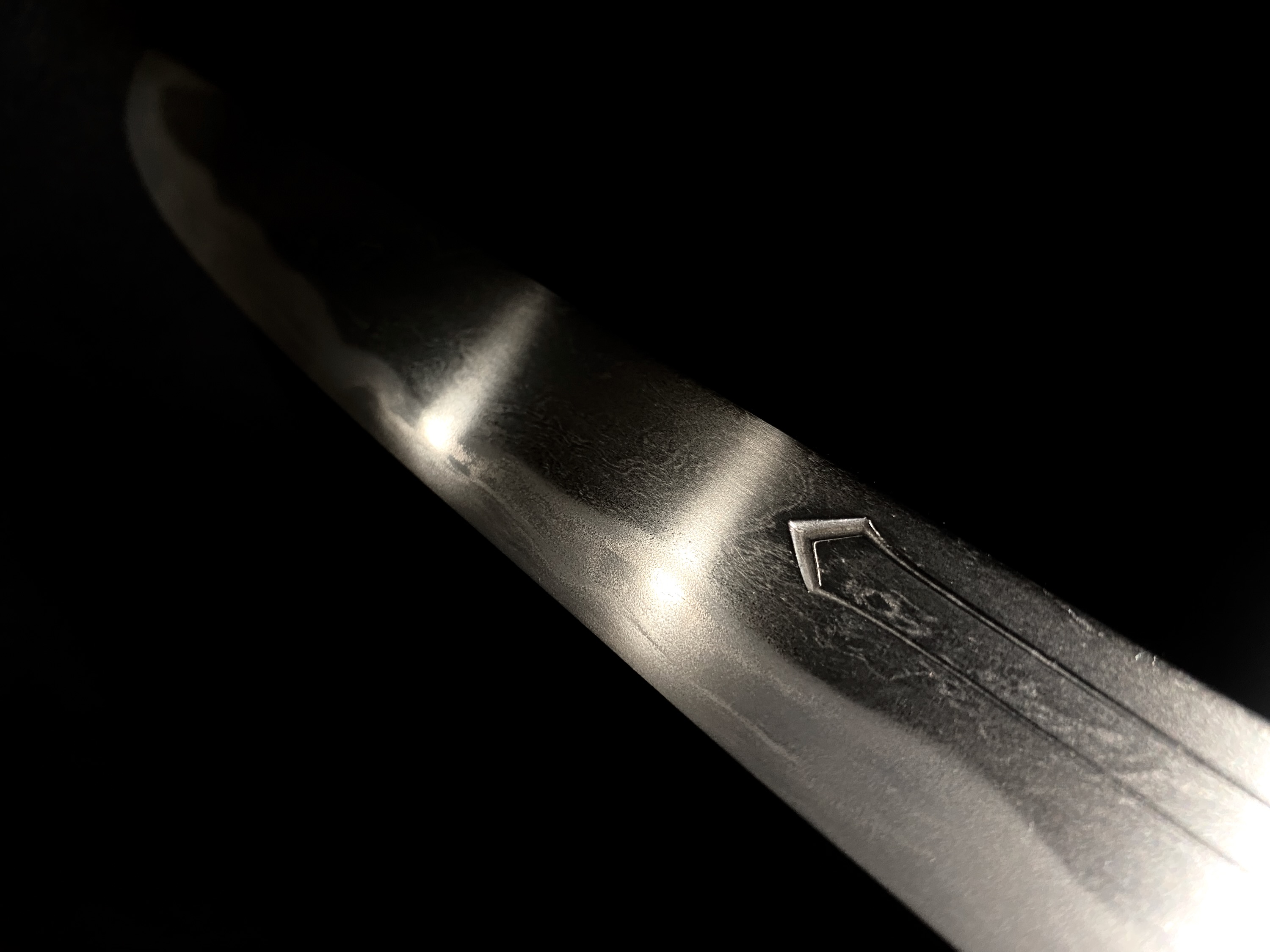
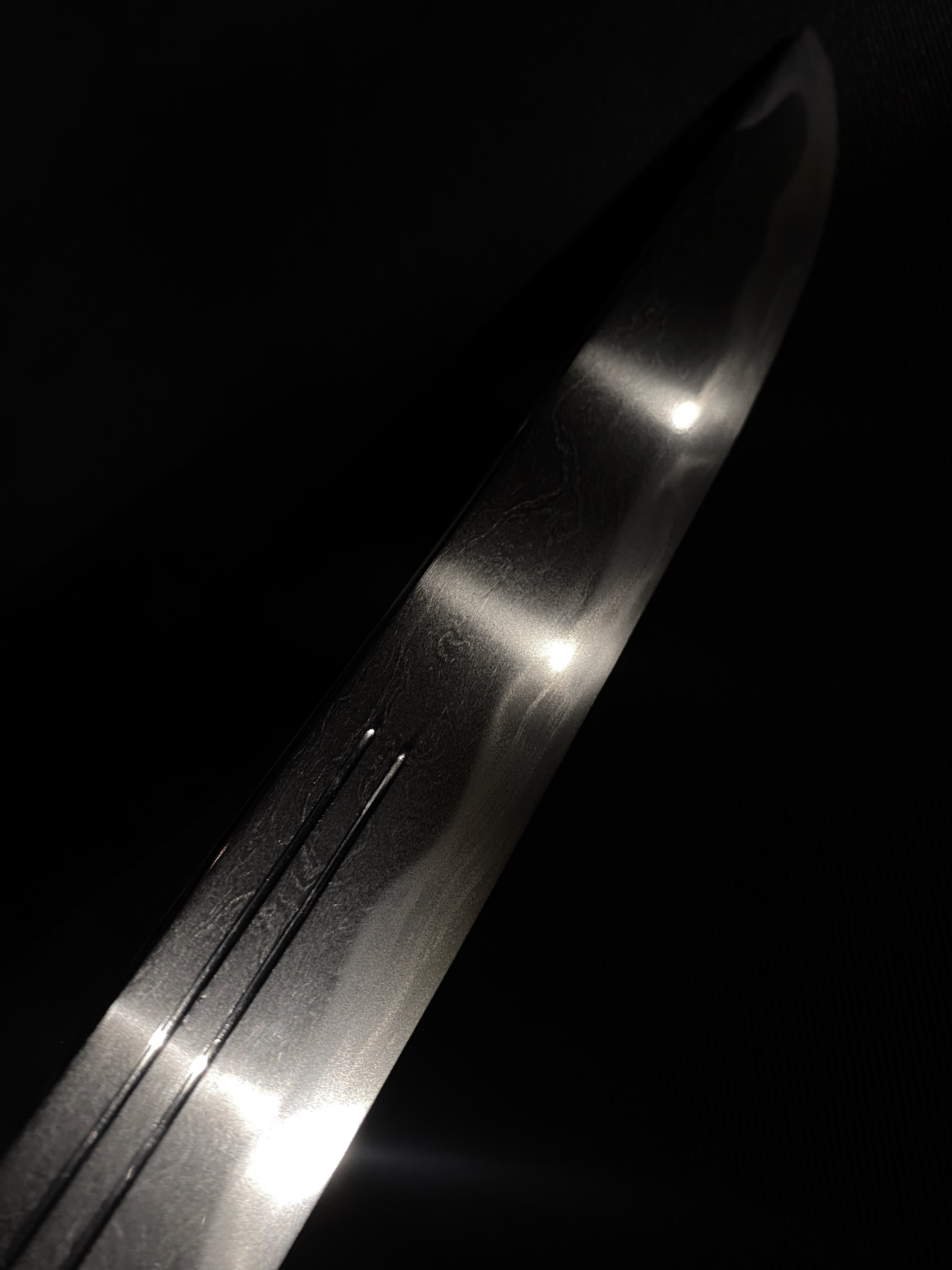
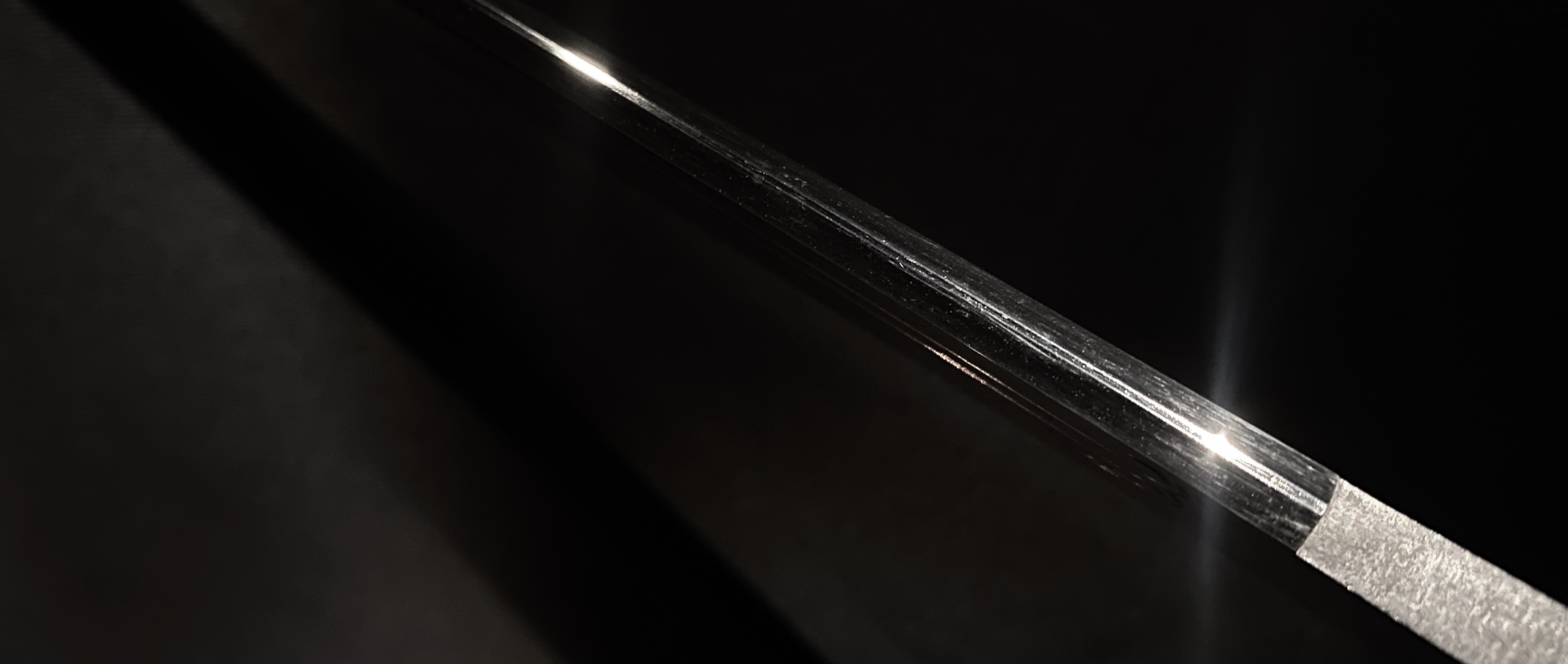
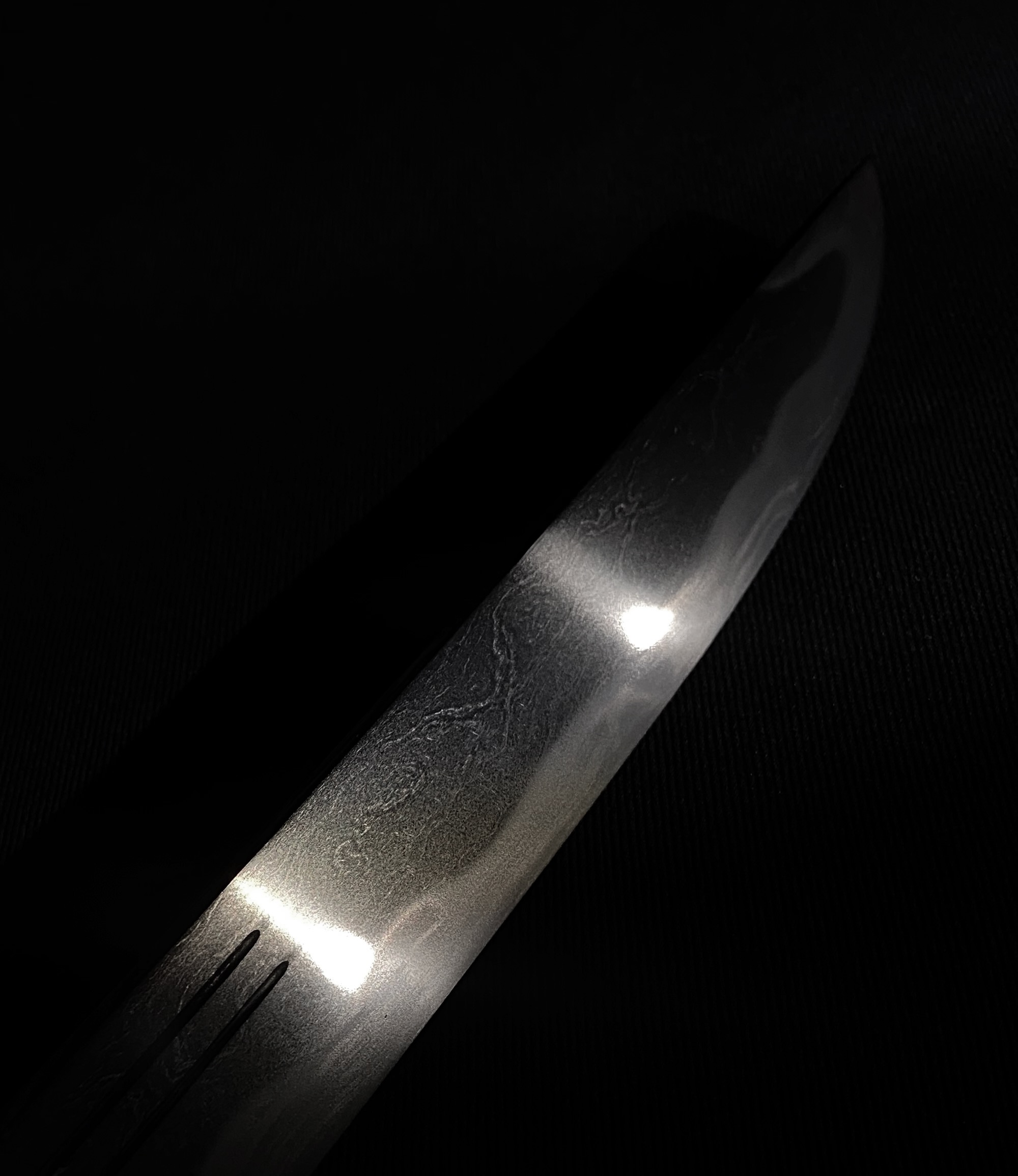
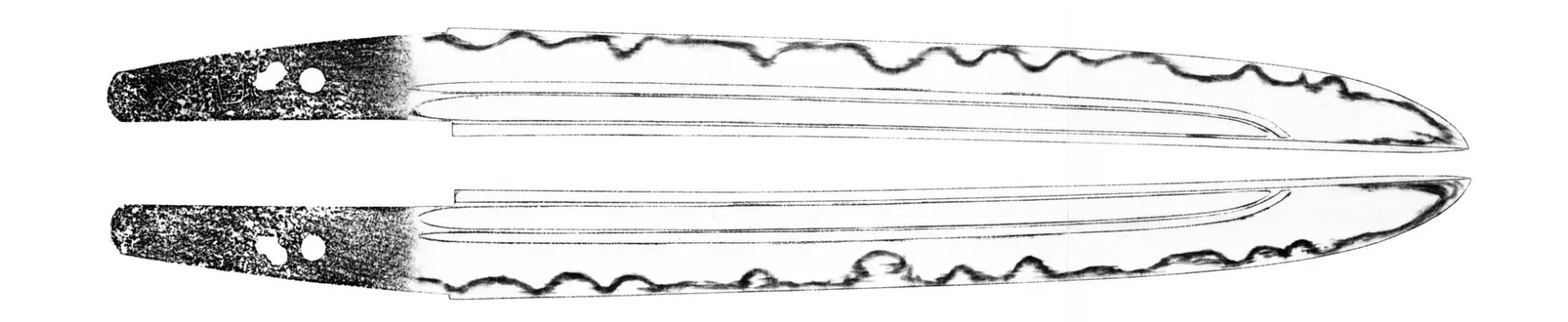





販売店の記載のまま
美濃伝 · 美濃
現在13点販売中
美濃国直江の地に興った一門で、その名は移住に由来する。元来、志津は美濃の地名であり、ここに大和より正宗の門人たる兼氏が来住して鍛えたことから、地名をとって志津三郎兼氏と呼ばれた。正宗十哲の一に数えられる兼氏は、相州伝を基調としつつ大和手掻の血を負い、尖りごころの互の目に走る乱調をもって美濃伝のいま一つの根をなした工である。その門人たち、兼友・兼信・兼次らは、はじめ志津に作り、後に同国直江に移って鍛えたため、この一門を直江志津と総称する。年代は南北朝の延文・貞治より応安頃に及び、本流は兼氏に発する志津の血を一代を隔てて承けた工の群である。同時代に越中呉服郷の江則重の流れを北陸道より美濃に運んだ為継のごとき手も加わって、相州伝が内陸へ運ばれ美濃の地鉄に根を下ろした姿を、この一門は最もよく伝える。 直江志津を貫くのは、工の差を越えて繰り返される共通の語法である。地鉄は板目に杢を交え、処々流れて柾がかり、肌立ちごころとなって地沸厚くつき、地景がよく入って鉄を縫い、北国の趣濃く黒みをおびる。その地に立つ刃文は、相州伝の影響を負った浅いのたれ・小のたれに、美濃の尖り刃を交えた互の目を連ね、沸は強く深く、砂流しが頻りにかかって長く金筋を伴う。匂口は深く、優品では明るく冴え、激しめの作では迫力を、穏やかな作では穏雅な作位を示す。帽子は乱れ込んで掃きかけ、小丸に返るか焼詰め風となる。同じ型のうちに各工の手が読み分けられ、為継は則重風の湿ったのたれに美濃の鋭い尖りを与えて黒く沸豊かな地に焼き、兼友は頭の丸い互の目を連れて小沸出来に穏やかに焼き、兼次は逆がかった小のたれ調の互の目を匂深く焼く。大和・相州・美濃を融合したこの地刃が一門の背骨であり、師たる兼氏その人と比べれば、より穏やかで実直に、また地肌の冴えにおいて控えめに収まる点が、門流の手を分かつ。 鑑定にあっては、まず黒ずむ板目に地沸厚く沸出来で匂口の沈む地刃をもって直江志津と読み、本流に直刃がないことを否定の見どころとする。次に、より大きく揺れるのたれ乱れと頭の丸い互の目の連れる態をもって、これを志津・金重の手から、また下る末関の同名工から分かつ。主要工の格は説明書の評にそのまま現れ、為継は江則重に直結する黒い沸の手として藤代の上工に列し、兼友は鍛えの質によって上々作に位置づけられて、いずれも国宝・重要文化財を持たぬ南北朝の名である。現存の大半は作風から極められた大磨上無銘の刀であり、在銘・年紀作は極めて稀で、説明書はこれを頗る貴重とし、無銘極めにこそよい出来が多いと率直に評する。為継には応安年紀の作、兼友・兼次には在銘の短刀が伝承の拠り所として立つ。所伝は乏しいながら確かで、熱田神宮に伝わる作や、戦前の蒐集を経て今に伝わる短刀が記録される。極められた無銘の一刀が市に現れるのは折にふれ、忍耐をもってのことであって、在銘・年紀の作はそれとは別格の、名を定める証として遇される。 詳しく見る →
南北朝時代の美濃
美濃伝は、伝えによれば移住者が開いた。大和手掻系の出と伝えられる兼氏が志津に住し、新しい相州風で鍛えて、後世の鑑定家にその最上作は誰よりも正宗に近いと言わしめている。
保存刀剣のうち、出来が一層優れ、保存状態も良好と認められたものです。再刃や、室町・江戸期の多くの無銘作は対象外となり、保存刀剣より高い基準が課されます。
日本美術刀剣保存協会(日刀保)は、1948年に設立され、文化庁の監督を受ける公益財団法人で、東京・刀剣博物館に本部を置きます。専門の審査員が出品作を直接審査し、美術的・歴史的価値に応じた鑑定書を発行します。日刀保の鑑定書は、日本刀および刀装具の真正性を示す最も広く認知された基準です。
日刀保公式サイト
当サイトでご注文いただいた商品が、掲載されている画像や説明と異なる場合、返品を承ります。返品をご希望の際は、商品到着後7日以内にメールにてご連絡ください。返金額は、購入代金から送料、銀行手数料、および通貨換算にかかる費用を差し引いた金額となります。分割払いで購入された商品、および現物を確認された商品の返品・交換は一切お受けできません。