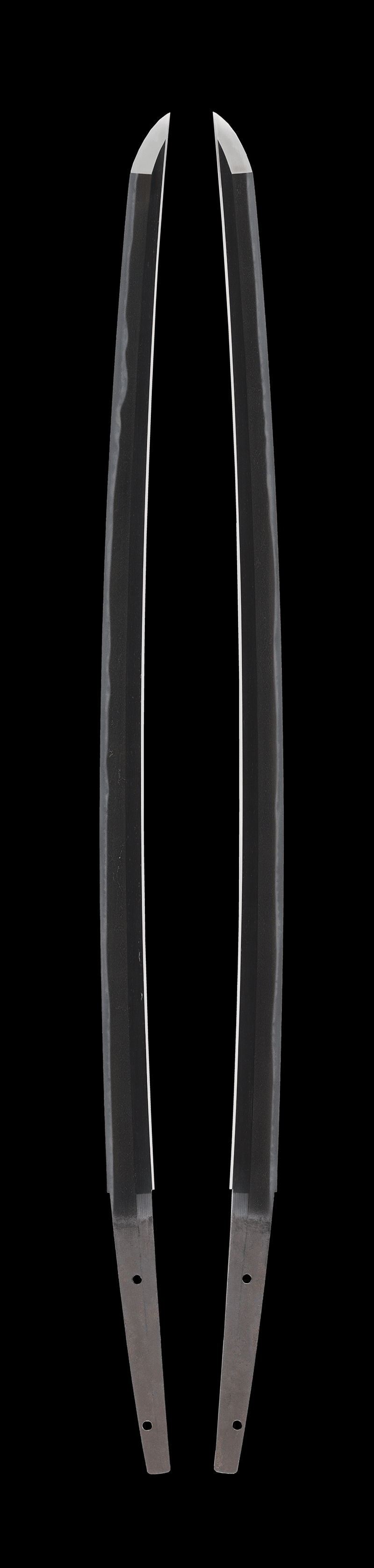
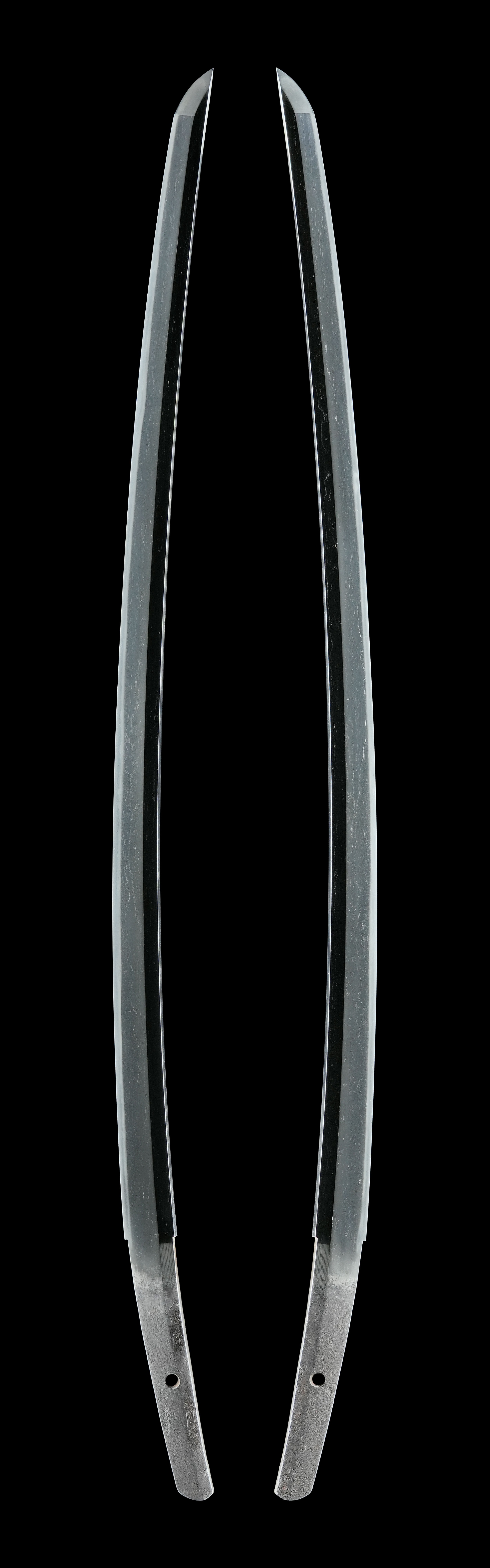
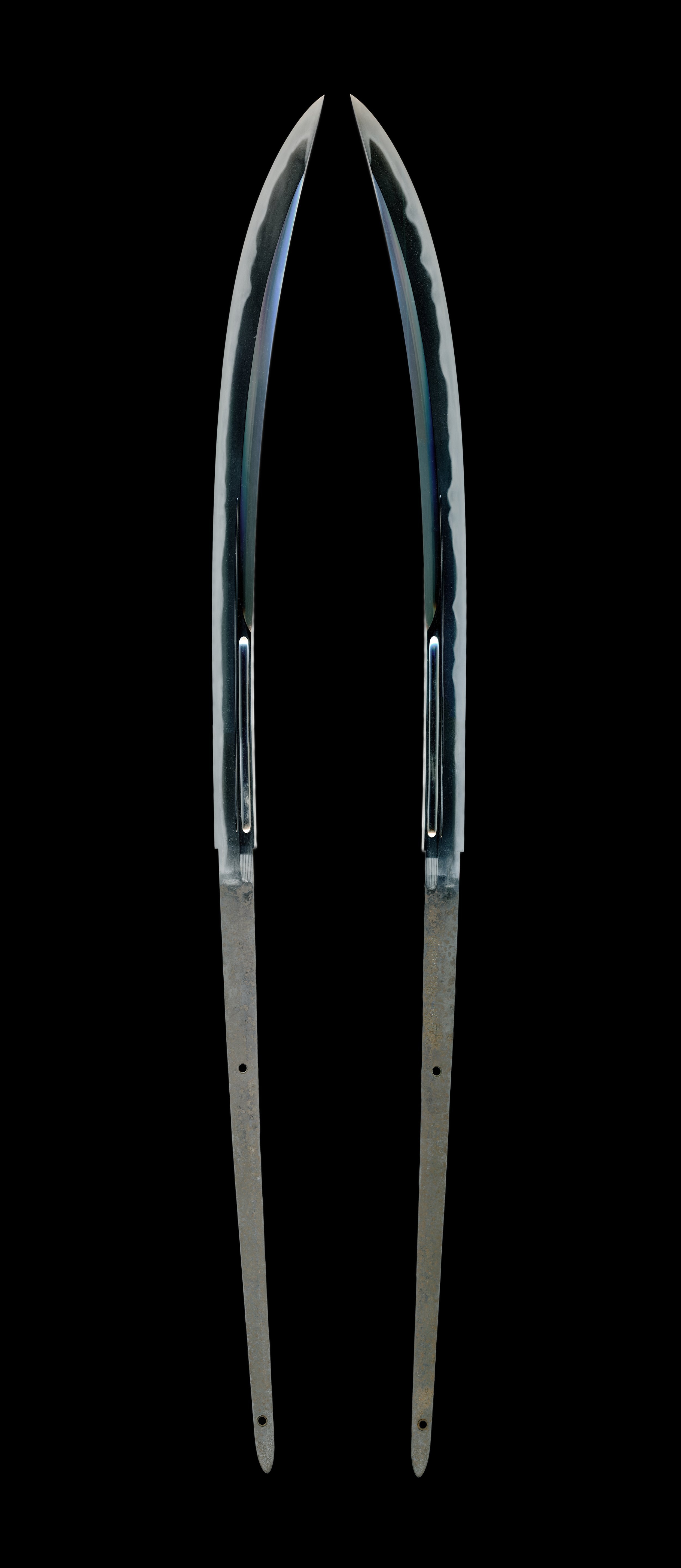
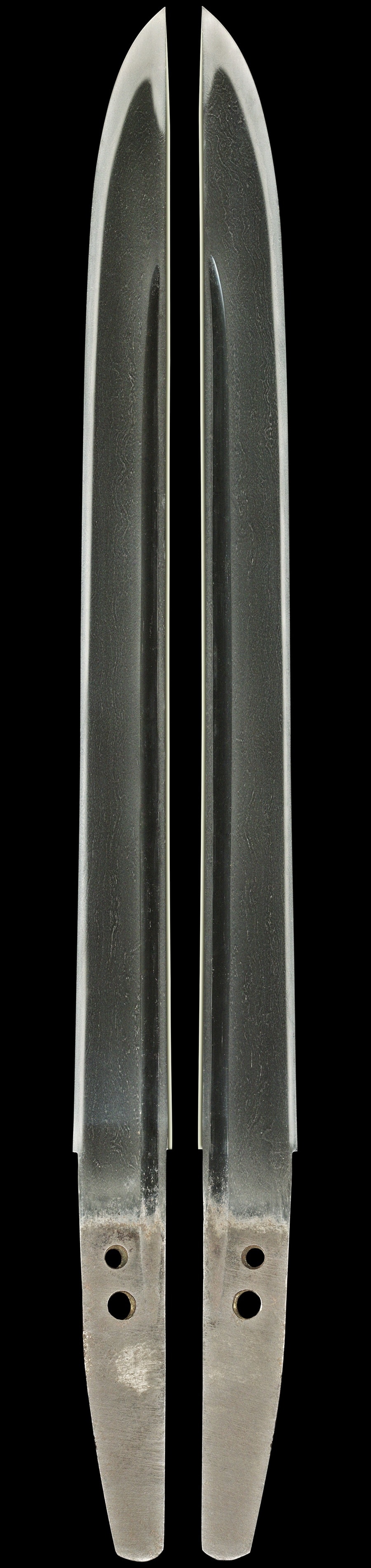
Kanetomo of Naoe is recorded in the published sources as one of the disciples of the first-generation Kaneuji, the master received from the tradition and counted among the Ten Disciples of Masamune. The lineage took its name from a move: Kaneuji and his pupils, Kanetomo among them, worked first at in and then relocated within the province to Naoe, where they forged, and the smiths of that group came to be called Naoe . The places Kanetomo among the representative artisans of the line, naming him Naoe wo daihyo suru toko no hitori, one of the smiths who represent Naoe . The name itself ran across several generations from the early period into the , and the reference works accordingly list more than one Kanetomo, around the era and again around Oei. The smith on record here is the master whose typical production the published record dates to the Enbun and Joji eras of the mid fourteenth century, whose and carry the Naoe manner at its most characteristic.
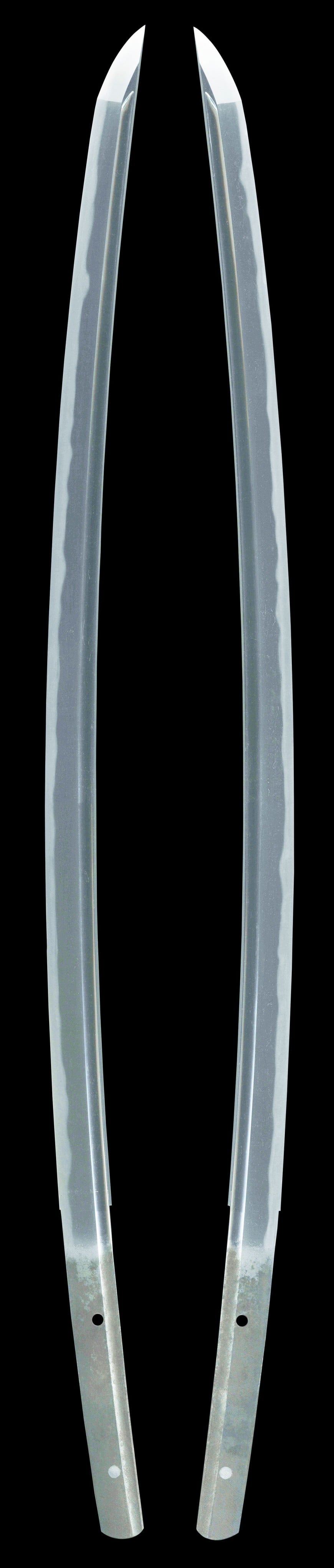
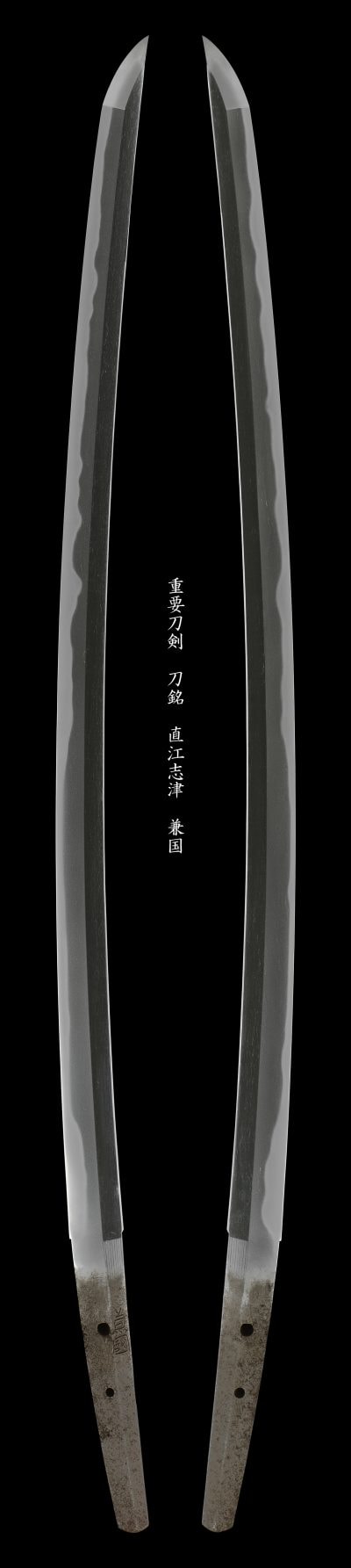
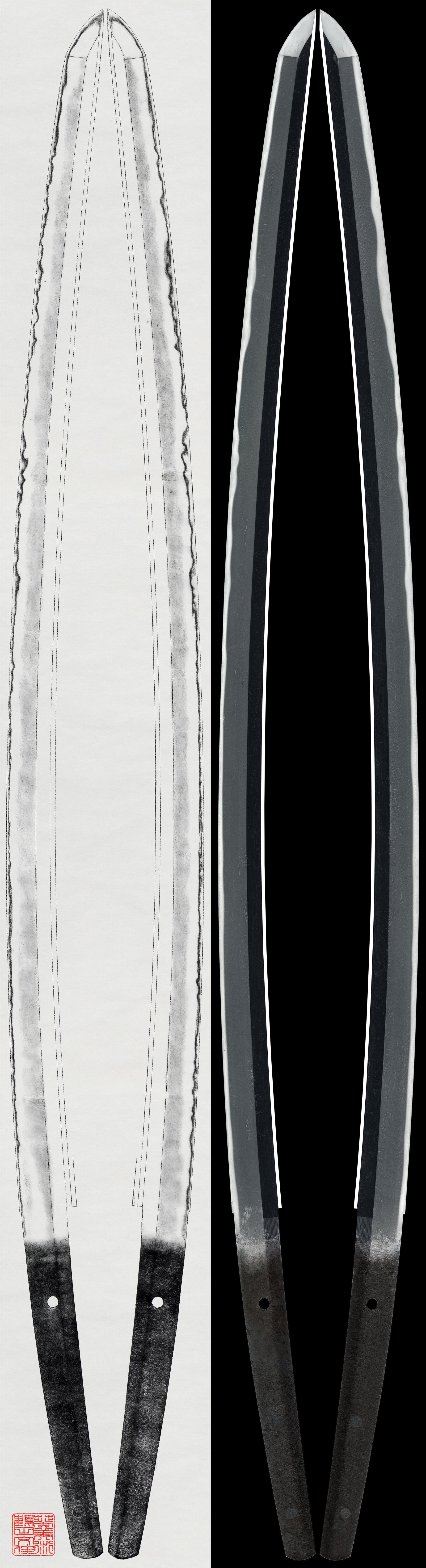
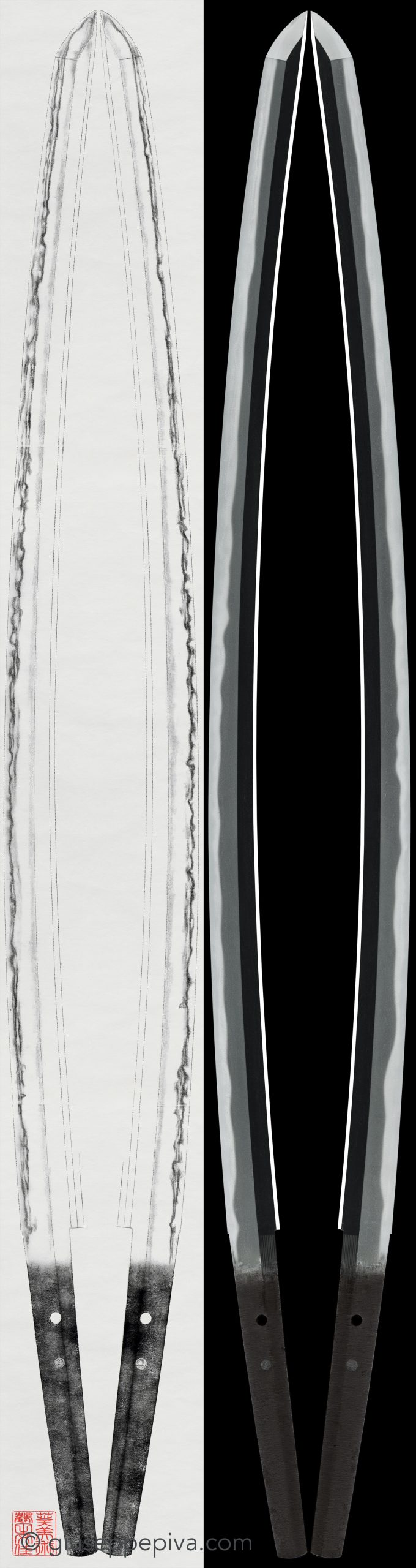
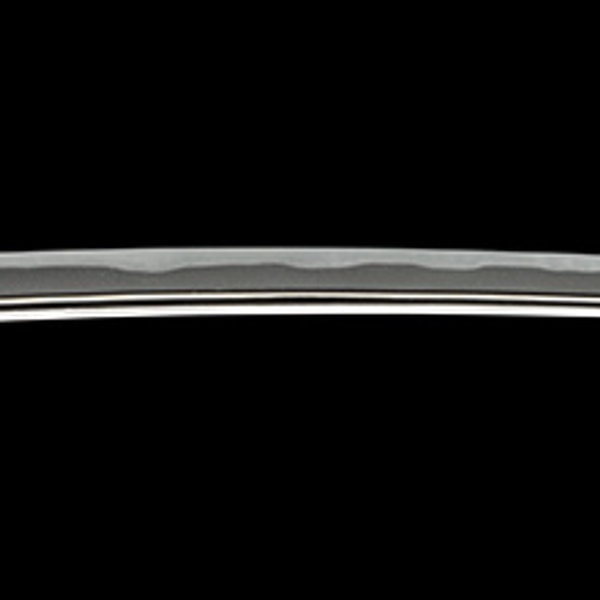
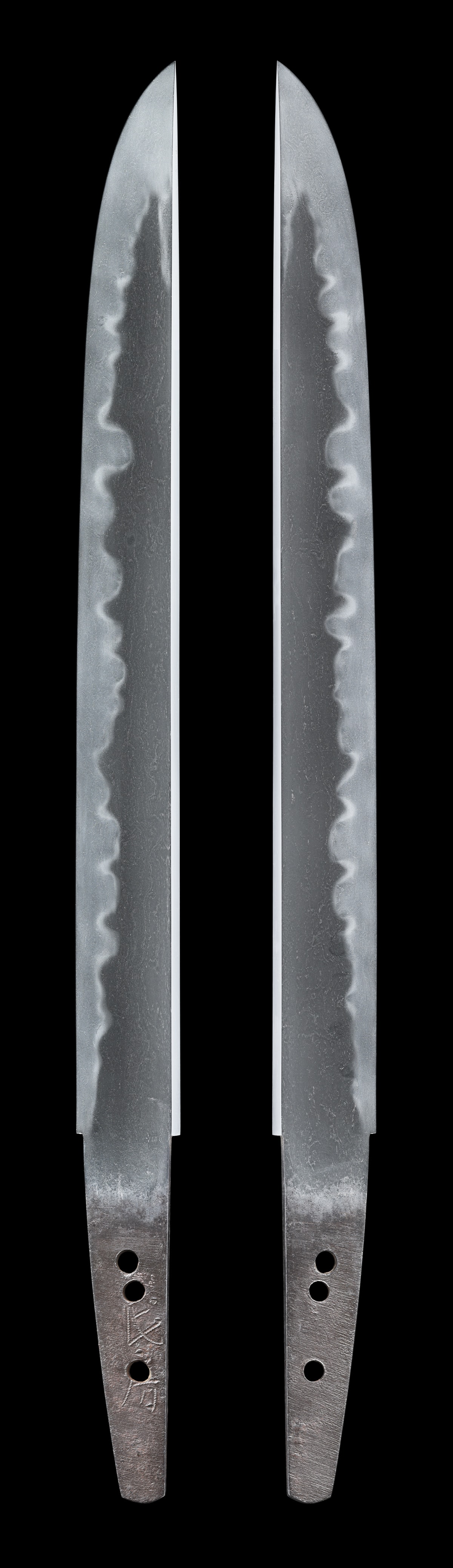
His hand is read from the few signed pieces and then carried onto the unsigned majority. The defining axis is a rounded combined with or a small , tempered in , the manner the published sources single out as the one in which Kanetomo is most proficient among the Naoe smiths. The round-headed link together in sequence, and this linking of the is the feature the papers return to when they tie an unsigned blade back to his signed work. runs frequently through the , often in concert with , the streaming -lines and bright lightning-lines that on the more intense pieces give the temper a somewhat vigorous ; on the calmer signed pieces the elements are held in a quieter register. enter the temper, gathers in places, and the is deep, brightening at the best examples into something clear and lucid. The answers the : or turning back in a , the point frequently swept into .
The is the translation of the - manner. He forges an mixed with , the grain flowing in places and at times standing a little, over which a thick settles and enter well, the dark grain-lines threading the steel. On the finest this forging is what the published sources praise above all, judging the superior and the and alike thickly covered with . The reflection a smith would carry as a is absent here, the speaking instead through the depth of its and the run of its . The rule across his work is the open, well-forged Naoe , sometimes tending to on the wider , the steel clear and the activity legible.
The published record draws two registers within the typical manner and separates a third away from it. The signed register is the scarce spine of his oeuvre, for almost all of his surviving work is and is attributed to him by resemblance to those signed pieces; the sources stress that signed examples are extremely valuable, yumei wa sukoburu . The anchor they cite again and again is a signed designated an Important Art Object, in which the forging is mixed with flowing in places and the temper a rounded with , becoming partially linked, executed in and conveying a calm and elegant air; every attribution the papers affirm is measured against it. Set apart from this is a single signed that the reads away from the customary Naoe workmanship: its well-forged is tempered in with a whitish tone, and the papers judge it from the workmanship of the and the manner of the inscription to be early , reading it toward the Zensada line, Zenjo- no sakufu, rather than the later , and surmising that a smith of the Zenjo school may have borne the name Kanetomo in that period. It is a reminder that the name spans several lineages, and that a Kanetomo with is a different hand from the master.
Within the tradition Kanetomo stands directly below Kaneuji, the smith who carried the manner of Masamune into the province. His foundation is that manner translated into steel, milder and more workmanlike than Kaneuji's own: the - with thick and , the temper of and carrying and . The published sources separate his work both from the orthodox of his master above and from the homonyms below, and they distinguish it within the school by its own characteristic tells rather than by borrowed comparison: the linking of round-headed , the frequent and , the bright deep , and a of with . Carving is rare among Naoe works, so that the with , the , the and that appear on a handful of his blades are noted as noteworthy, the published sources observing that wa mare, such carvings on a Kanetomo are uncommon.
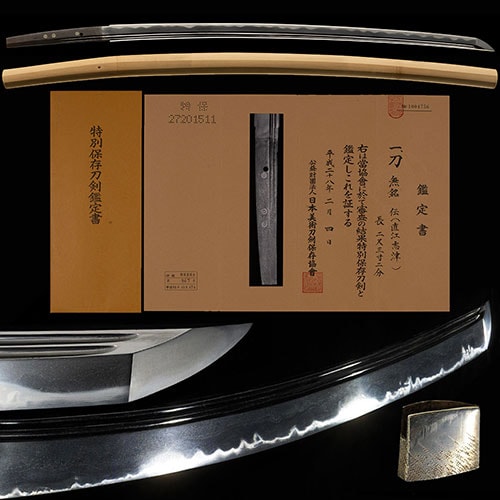
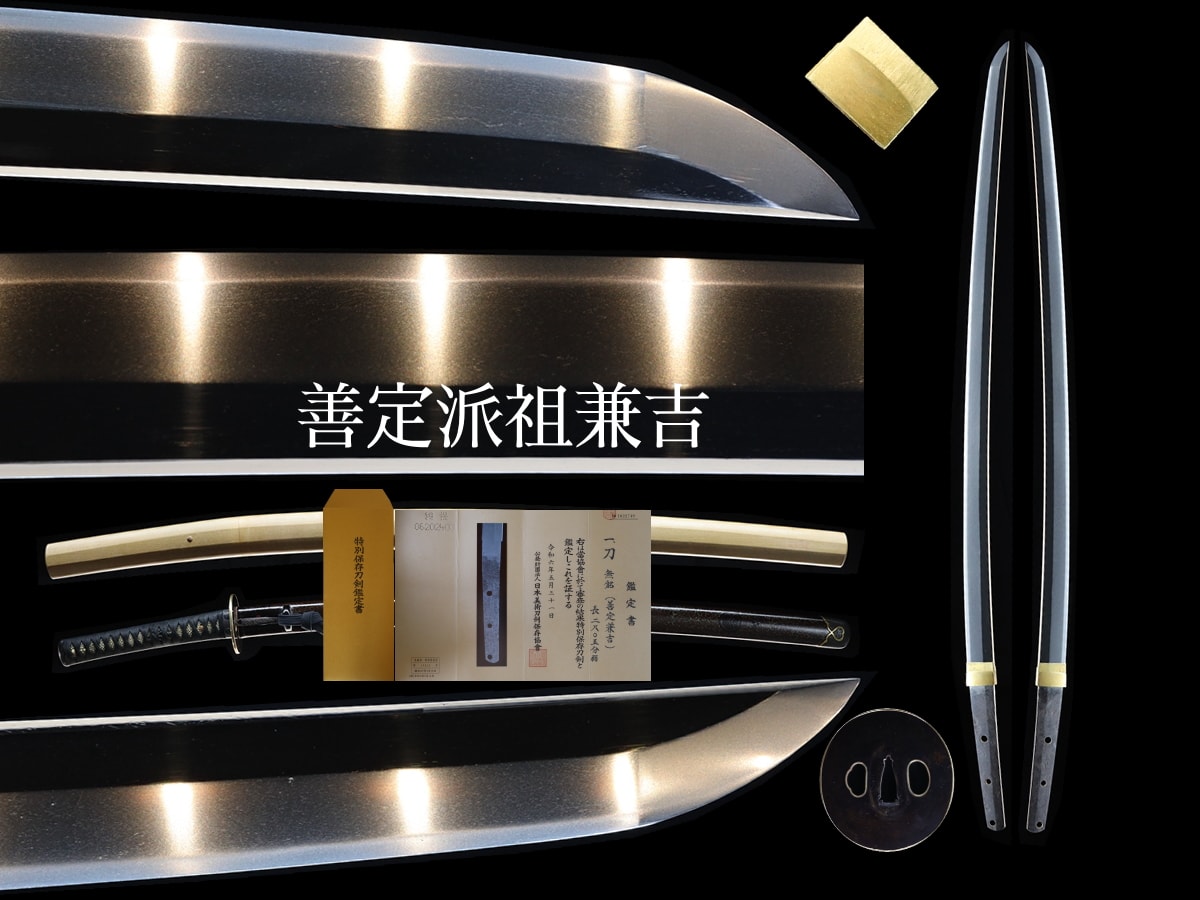
Kanetomo is rated Jo-jo by Fujishiro for the quality of his workmanship. On record stand nine - blades together with two prewar -Bijutsuhin , almost all of them and , the signed pieces a small and prized minority. He has no National Treasure and no Important Cultural Property; the weight of his record sits in the tier and in those two Important Art Object whose signatures anchor the attributions. Provenance is thin but real: one of the Jubi descended through Naruse Yoshio of Aichi and is now held by the , another passed through Kajimura Shigeru of Osaka, and a further blade is recorded with Atsuta Jingu. A privately held Naoe Kanetomo, signed above all, comes to the market only from time to time and with patience; the and appear more often than the rare signed pieces, but a Kanetomo of any kind is a work of standing, not a routine acquisition. The published sources reserve their highest words for the small in which the , and run from base to tip with power despite the scale, and the bright, clear and the tight, unrelaxed grain combine into what they call shoyo subeki yuhin, an excellent piece worthy of high praise.