二つの朝廷が争った六十年、刀身は長大化し、長船がその需要に応えた。兼光と長義の工房は実際に戦う国人層の武士に仕え、軍勢とともに相州風が届いて相伝備前が生まれた。
 NihontoWatchNihontoWatch
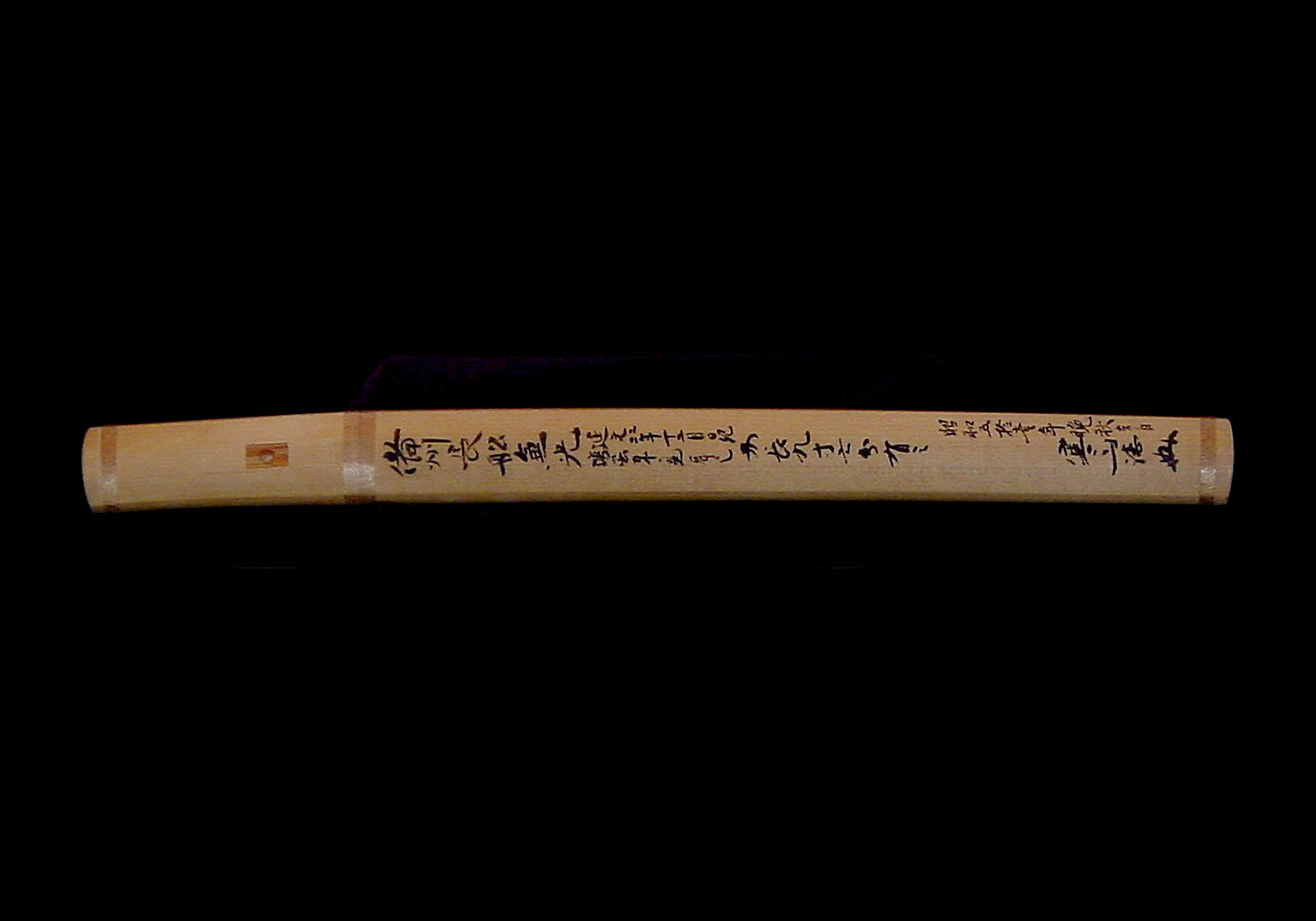
I am pleased to offer this beautiful tantô by the famous Bizen Osafune smith, Okanemitsu. It passed Jûyô Tôken in the September of 2015. The Jûyô zufu has the following description: Bizen Kanemitsu (備前兼光) was the son of Bizen Kagemitsu (備前景光) who was the son of Bizen Nagamitsu (備前長光). He was also the great-grandson of the founder of the Bizen Osafune School, Mitsutada (光忠). Because of the long working period of this smith, there are two schools of thought about whether there were one or two generations of smiths who used the name Kanemitsu (兼光). Those who subscribe to the two-generation theory refer to the first generation as O-Kanemitsu (大兼光)and the second generation as Enbun Kanemitsu (延文兼光). A blade dated 1331 is the oldest dated example of the work of Kanemitsu (兼光). His works from this period until the Koei era (1342-1344) resembled those of his father, Kagemitsu (景光), whose sugata shows features typical of the late Kamakura period with hamon that are uniformly kataochi gunome consisting of nioi with a mixing in of square-shaped gunome, and there are such activities as minute ashi and yo. Beginning around the Koei era (1342-1344), the workmanship of Kanemitsu (兼光) changed markedly. After this period, tachi with prolonged kissaki, tanto, and wakizashi with markedly stretched width and length came into existence. The notare hamon that was first introduced about this time came to gain popularity by the Bunwa and Enbun days (1352-1360). The works produced in and after the Kano (1350-1351) days began to show elements of Soshu influence mixed with the native Bizen style. Since the mid 1980’s the thinking of many sword experts, including Tanobe sensei has reverted back to believing in a single generation of Kanemitsu (兼光). After all, if there were two generations of smiths by this name, they worked in a very close time frame with no clear chronological line established to distinguish two generations. For this reason, it is not beyond the realm of possibility that there was only one generation and he changed his sword making characteristics to comply with the changing times as the Nanbokucho Era came into being. Tomomitsu (倫光), Yoshimitsu(義光, Yoshikage (義景), Hidemitsu (秀光), Motomitsu (基光), Masamitsu (政光), Toshimitsu (利光), and Shigemitsu (重光) belonged to the school headed by Kanemitsu (兼光). This tantô comes in an old shirasaya with a sayagaki by the famous sword expert Kanzan Sato. It also comes with a beautiful and tasteful koshirae of the Edo Era. The Jûyô zufu has the following description: Designated Juyo Token at the 61st shinsa held on the 20th of October 2015. Tanto: Bishu Osafune Kanemitsu; Enbun yonen juni-gatsu hi (a day in the 12th month, the 4th year of Enbun, 1359). Dimensions: Length: 29.1 centimeters; Sori: 0.1 centimeters; Width at the Base: 2.4 centimeters; Nakago Length: 9.6; Nakago Curvature: 0.1 centimeters. The construction is hira-zukuri with an iori-mune. The blade is somewhat wide, and in comparison, to the width, the blade is long. The blade is thin, and the curvature is shallow. The kitae is itame-hada mixed with mokume that is covered in minute ji-nie. The jigane contains abundant chikei and faint utsuri. The hamon is shallow notare based with ko-notare and a mixing in of ko-gunome. There is ko-ashi activity, and the nioiguchi is somewhat thick. The habuchi is well covered in ko-nie, and there is kinsuji activity with streaks of sunagashi. The boshi is notare-komi with a ko-maru and somewhat long kaeri. From the base of the koshi on the omote, there is a gomabashi carving that extents onto the nakago, and on the ura there is a carving of a koshi-bi with a soe-bi that similarly taper off onto the nakago. The nakago is ubu, and the tip is an extremely shallow ha-agari-kurijiri. The yasuri are sujikai, and there are three mekugi-ana, of which two are filled. Running down the center of the sashi-omote is a long signature that is interrupted here and there by the second and third mekugi-ana. There is a date similarly placed on the ura. Description: Kanemitsu succeeded Kagemitsu as the direct descendant in the Osafune School. His extant dated works begin from the late Kamakura period during the first year of Genkô (1321) to Joji (1362-1368) during the Nanbokucho period, amounting to an extended length of about 45 years. Regarding the works made up to Koei (1342-1345) during the early part of Nanbokucho, both the tachi and tanto have average shapes, and the hamon are sugu in style with a mixing in of gunome, or, he tempered in a kataochi style gunome, which gives them a feeling of entirely following in the footsteps of his father, Kagemtsu’s style of workmanship. However, from around Jowa and Kanô (1345-1352), the shapes become large patterned, and hamon that had not been seen up until now become essentially notare. During circa Bunwa and Enbun (1352-1361), such hamon are often seen. As for this tanto, the kitae is itame mixed with mokume that is covered in minute ji-nie. The jigane contains an abundance of chikei, and there is faint utsuri. The hamon is essentially shallow notare with ko-notare and a mixing in of ko-gunome. There is ko-ashi activity, and the nioiguchi is rather thick. The habuchi is well covered in ko-nie, and there is kinsuji activity with streaks of sunagashi. The appearance of this style of workmanship clearly displays the entire style of workmanship in Kanemitsu’s late period works. The excellence of the very well worked kitae with its thick covering in minute ji-nie is in addition to the excellent state of preservation, making this a masterpiece among similar works.

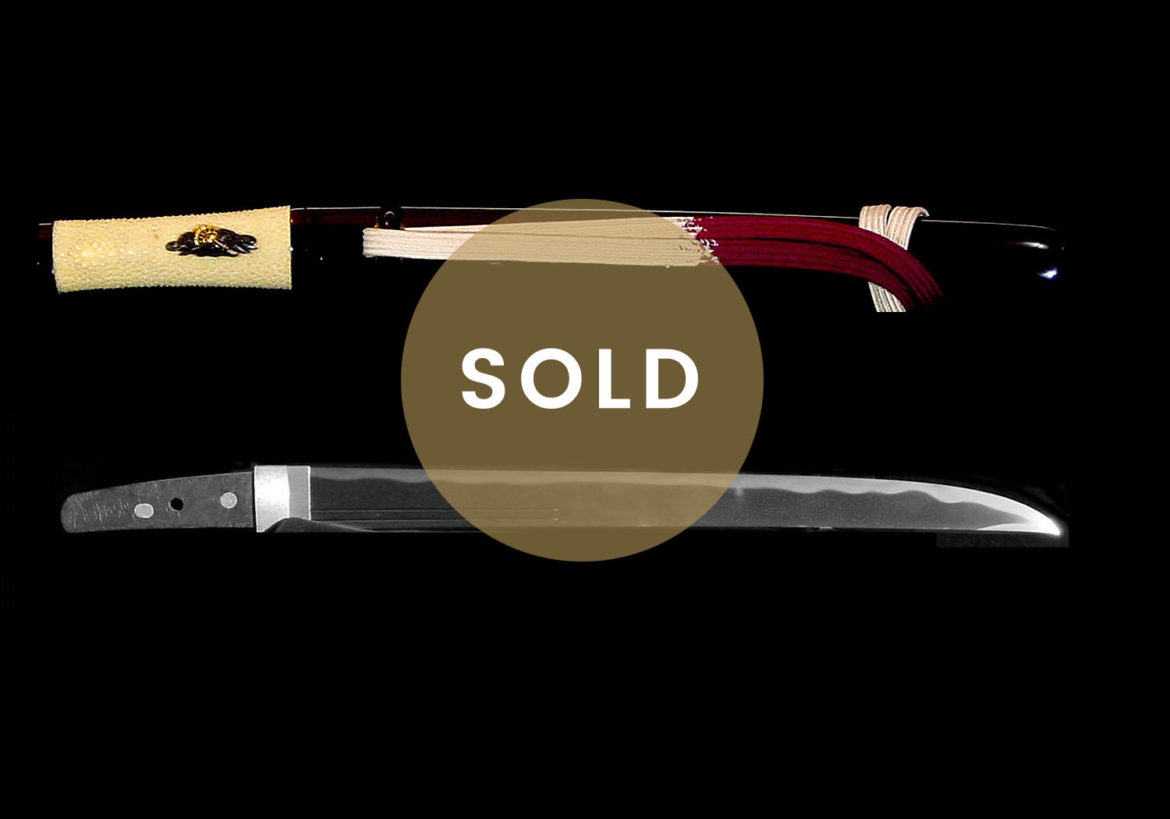
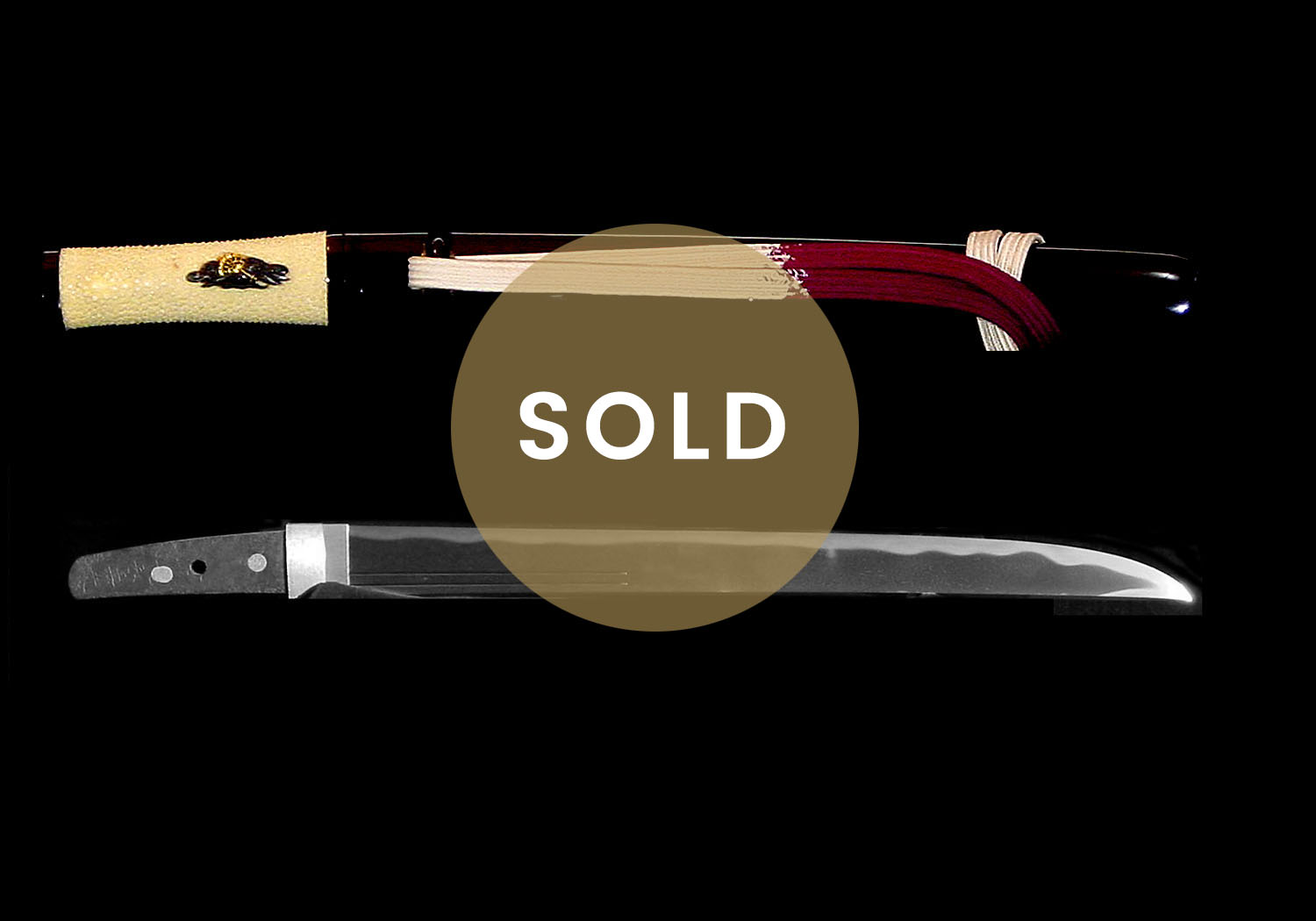
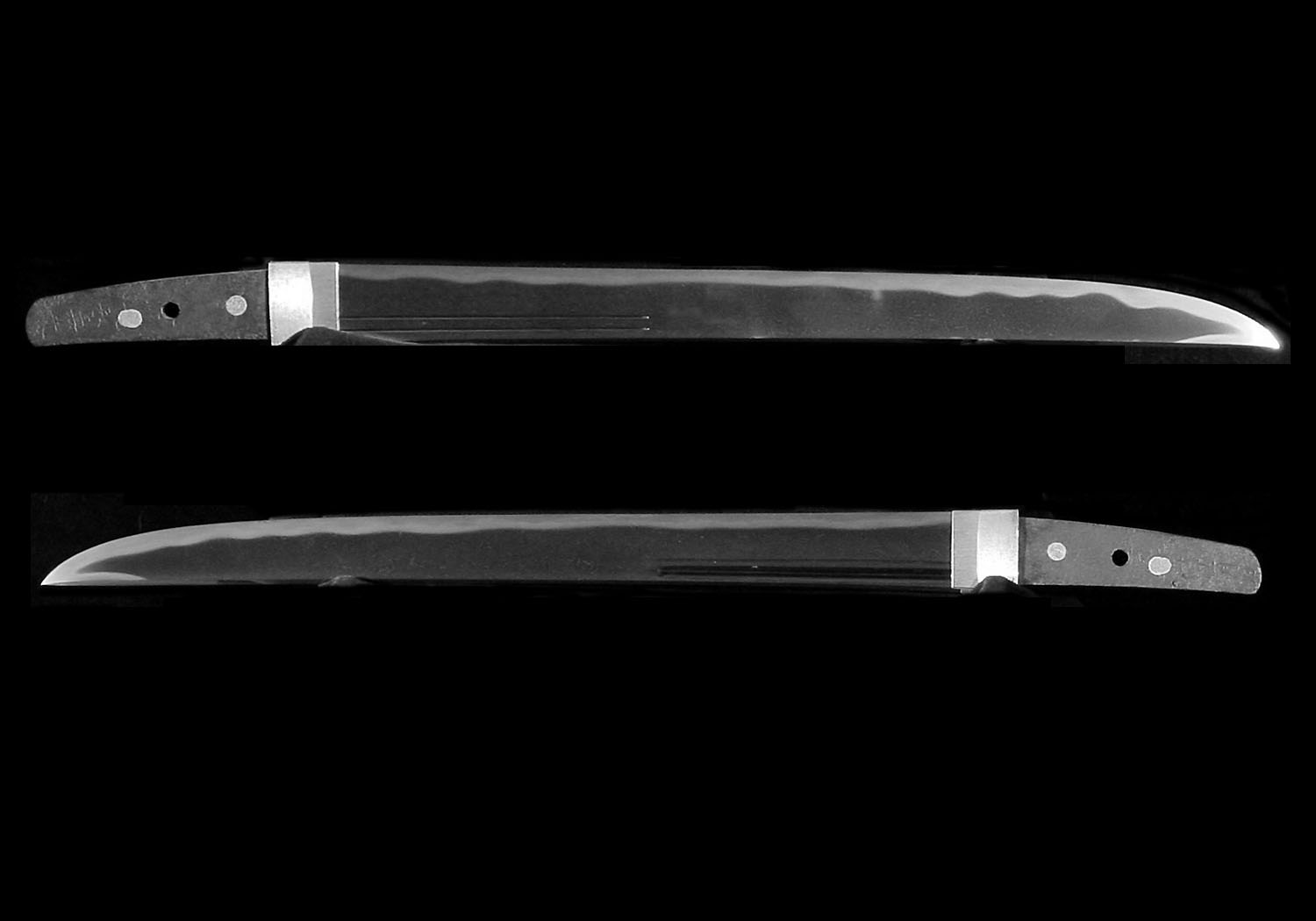
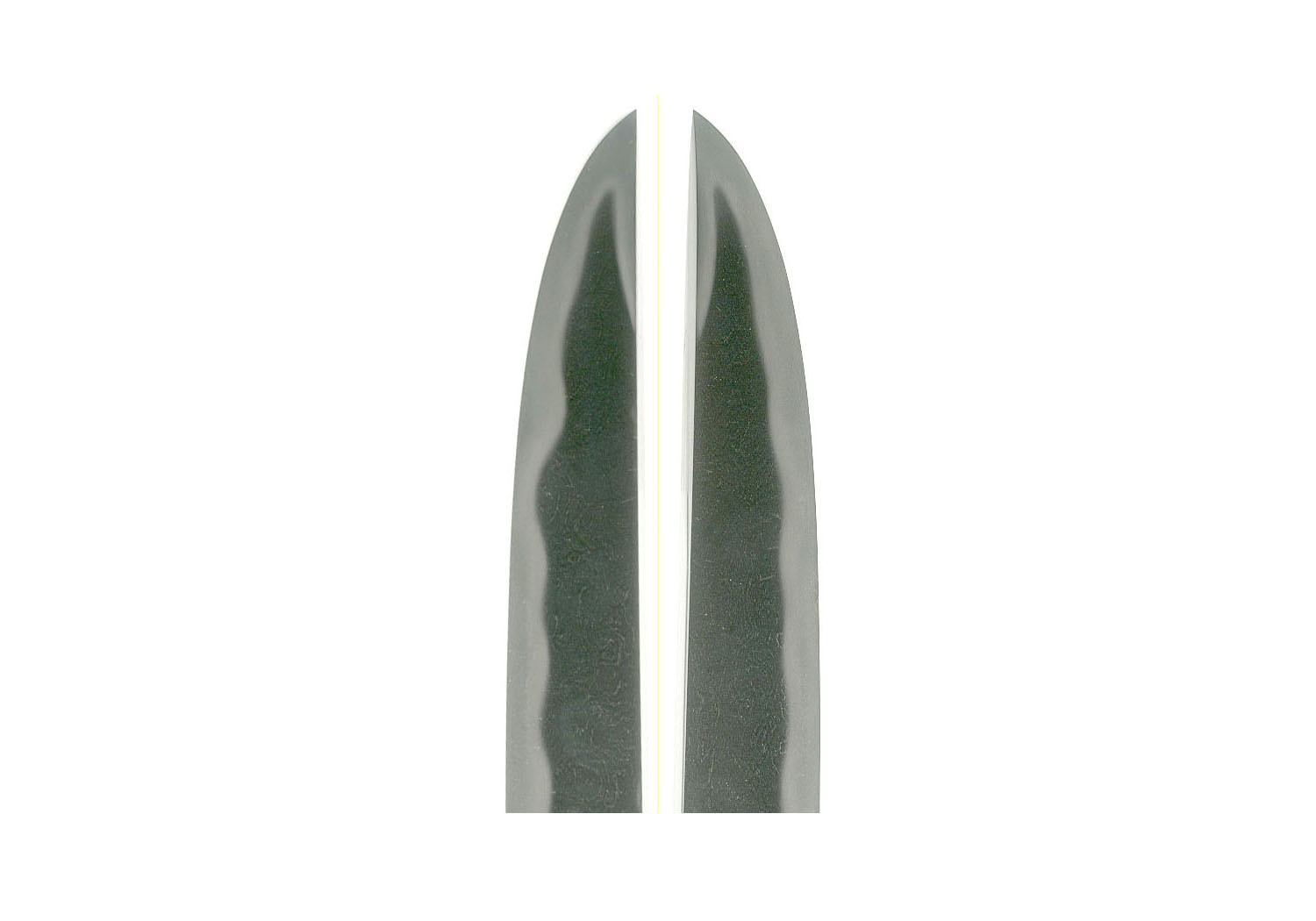
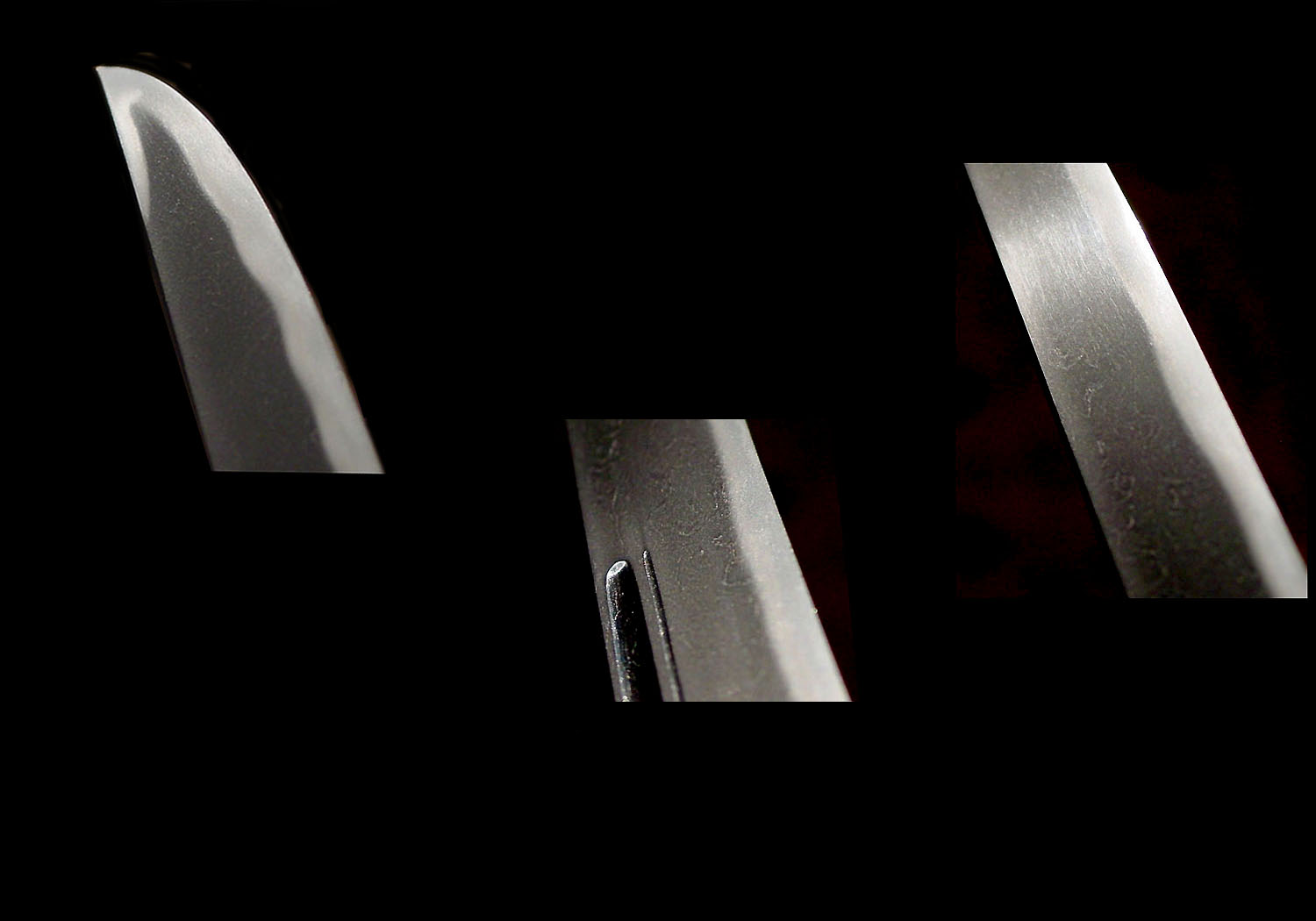
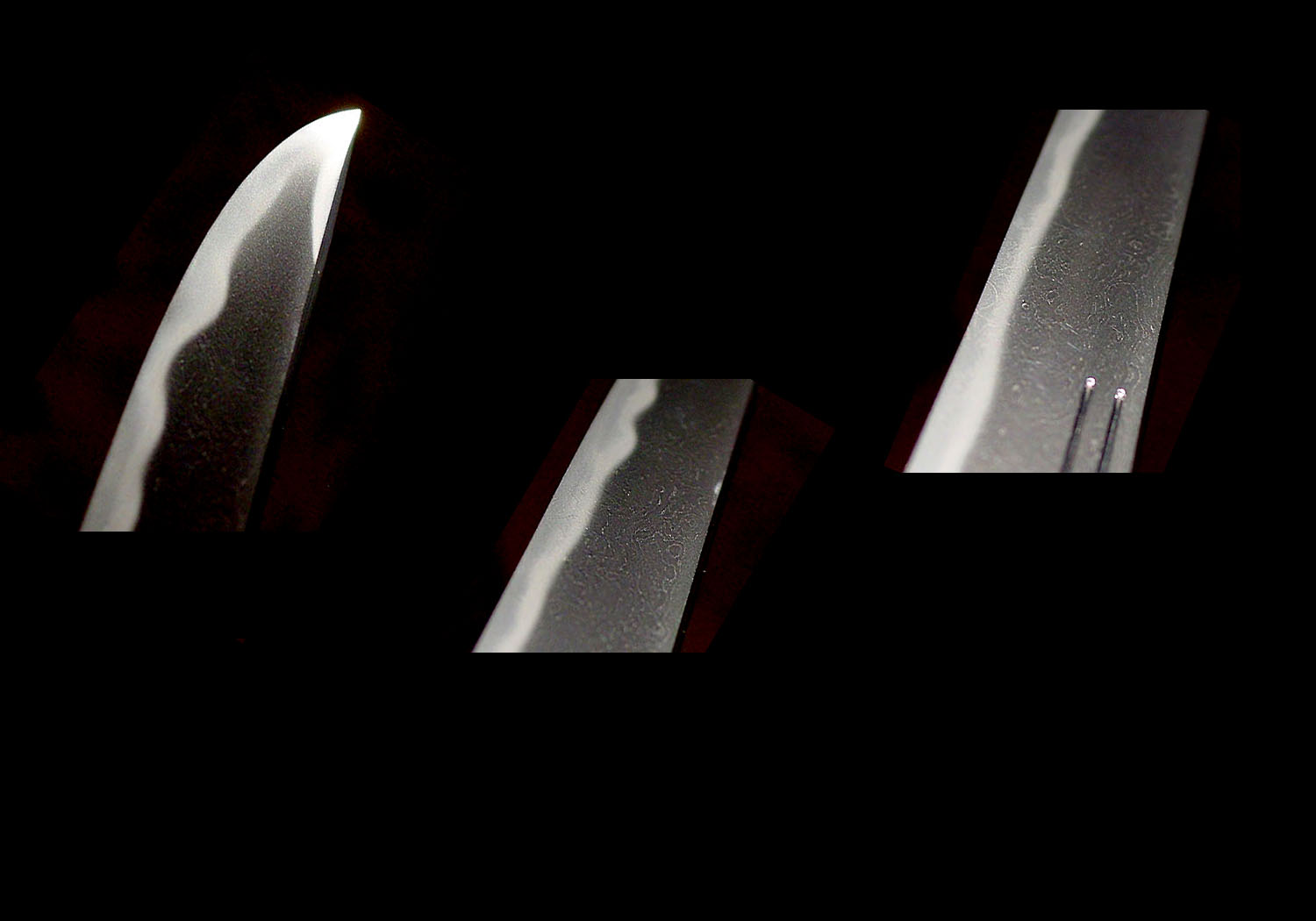
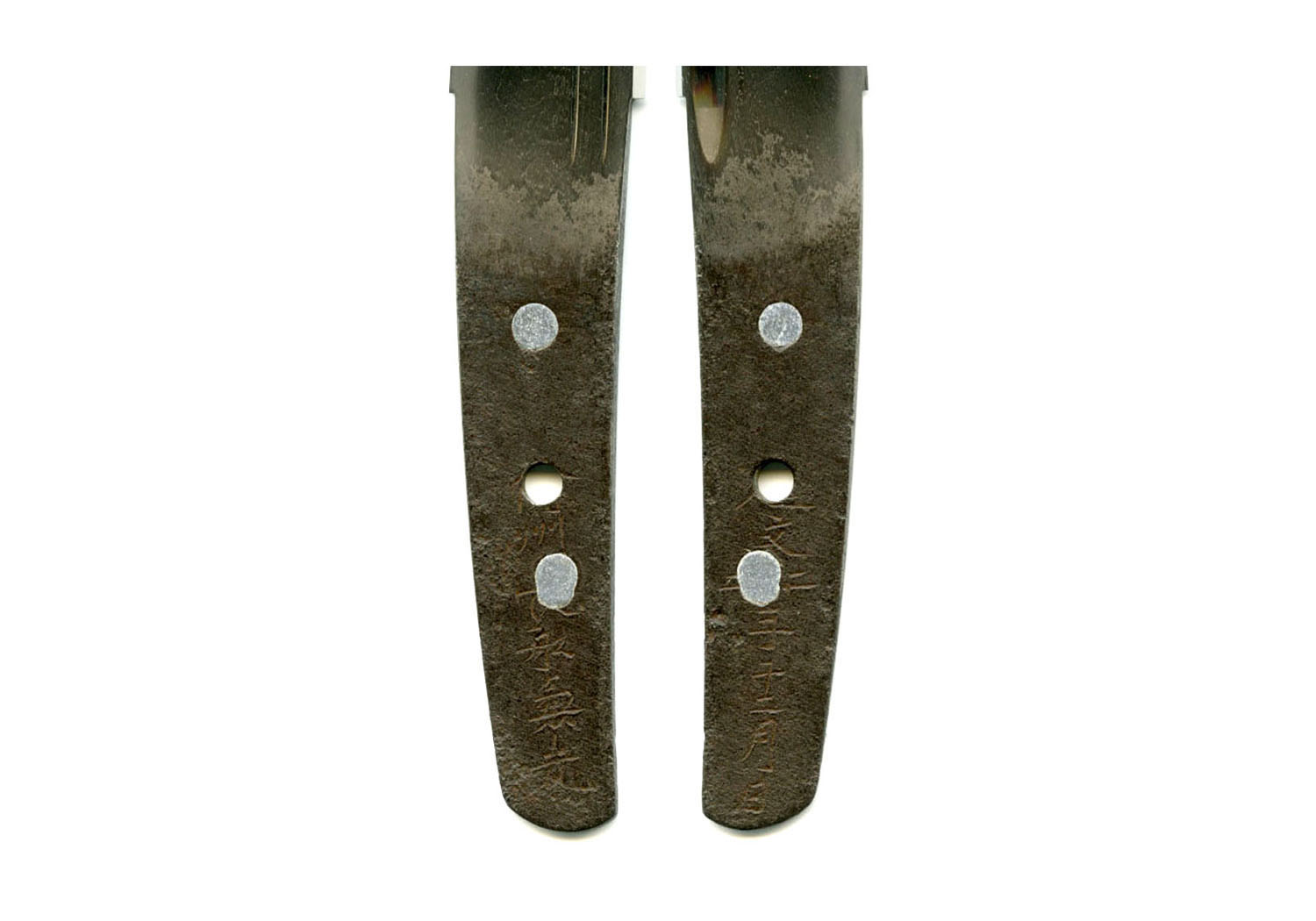
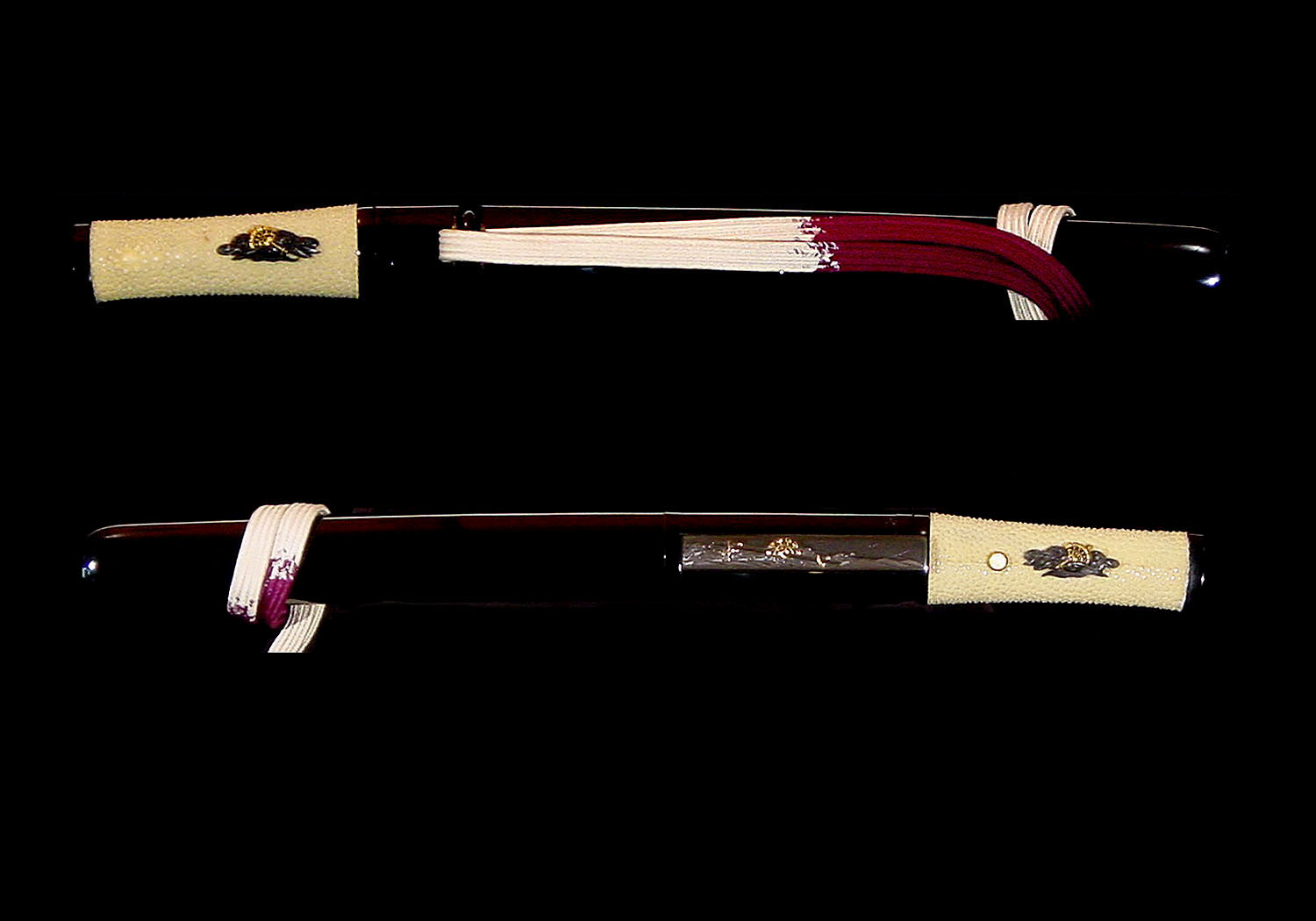
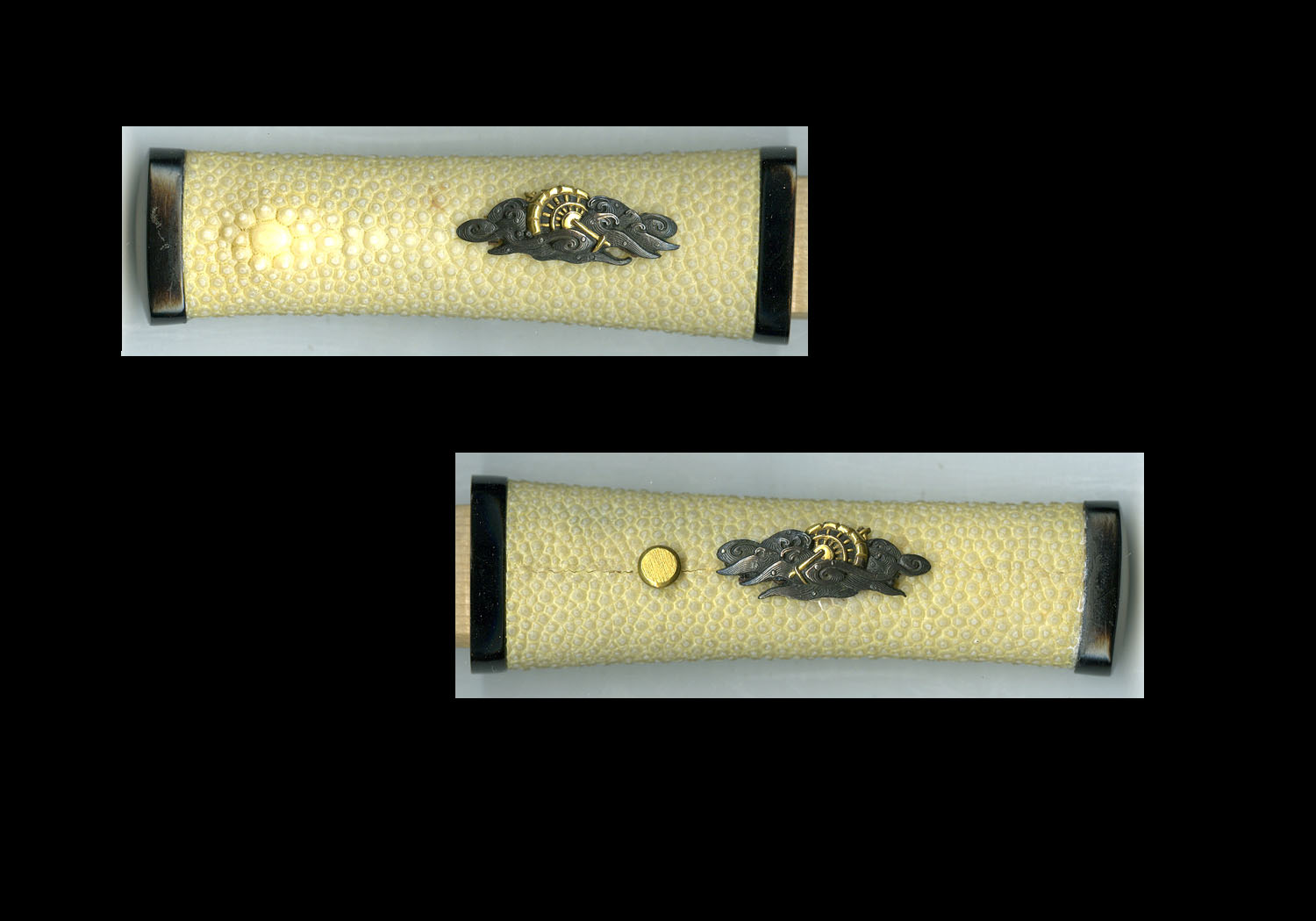
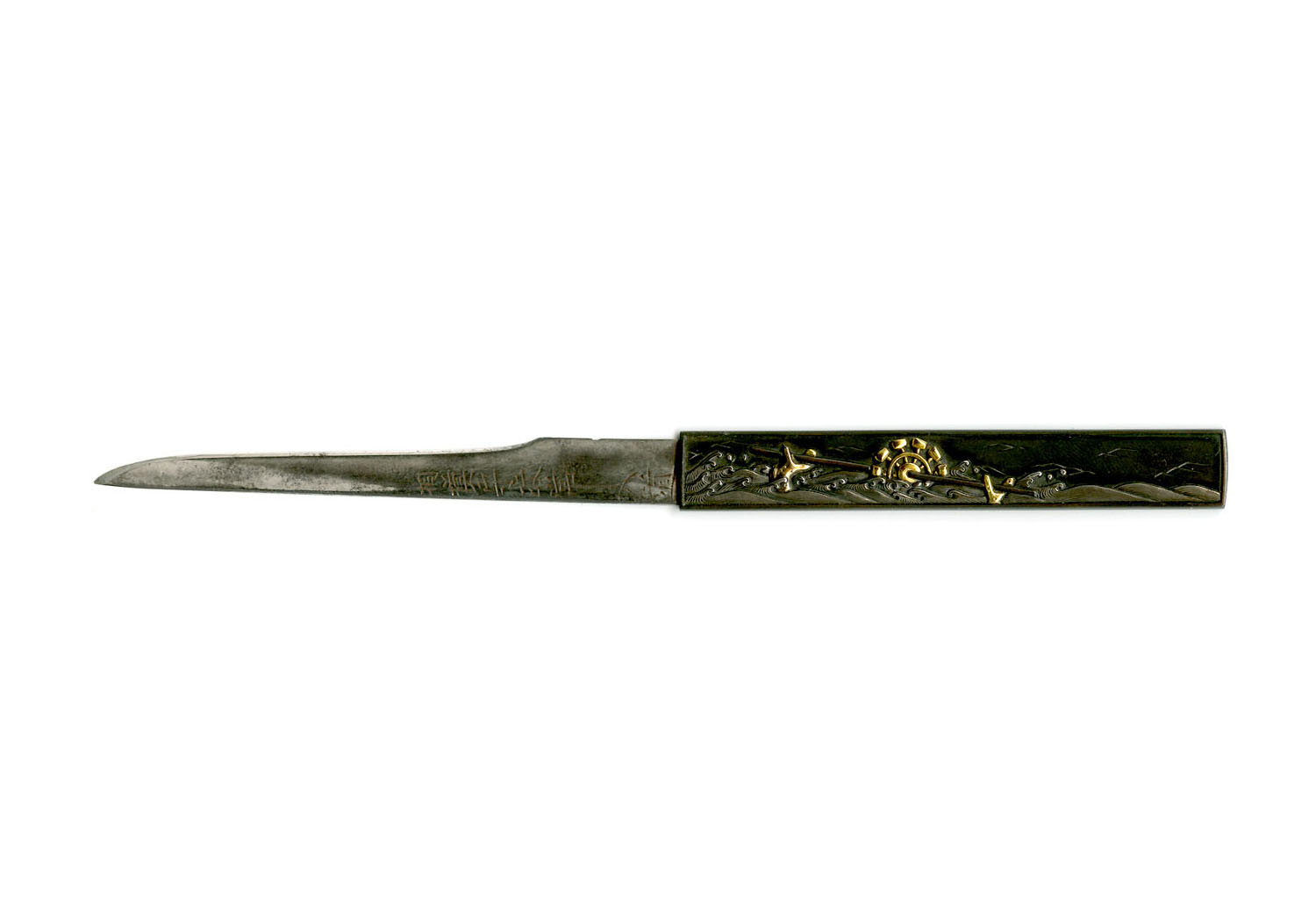
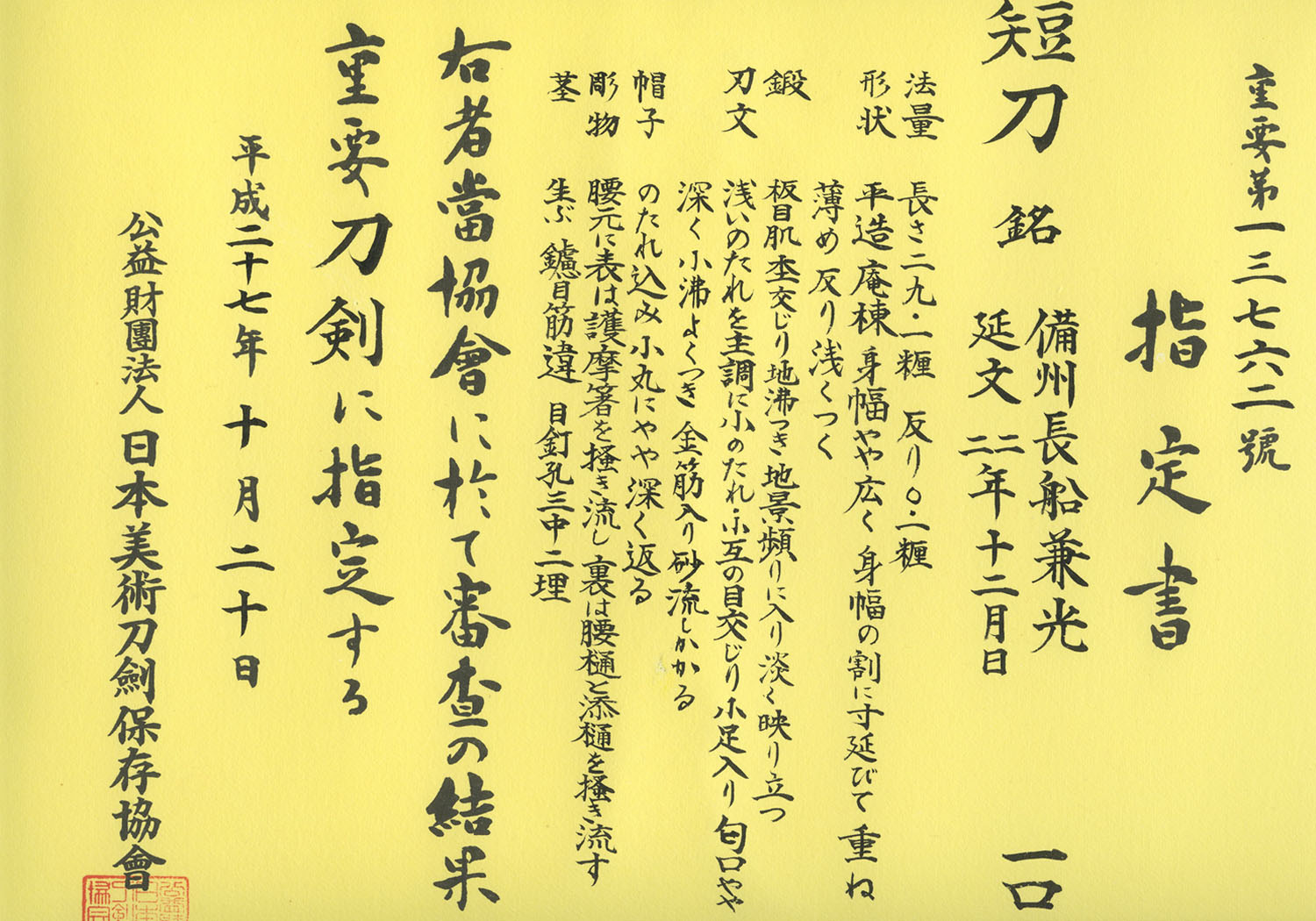
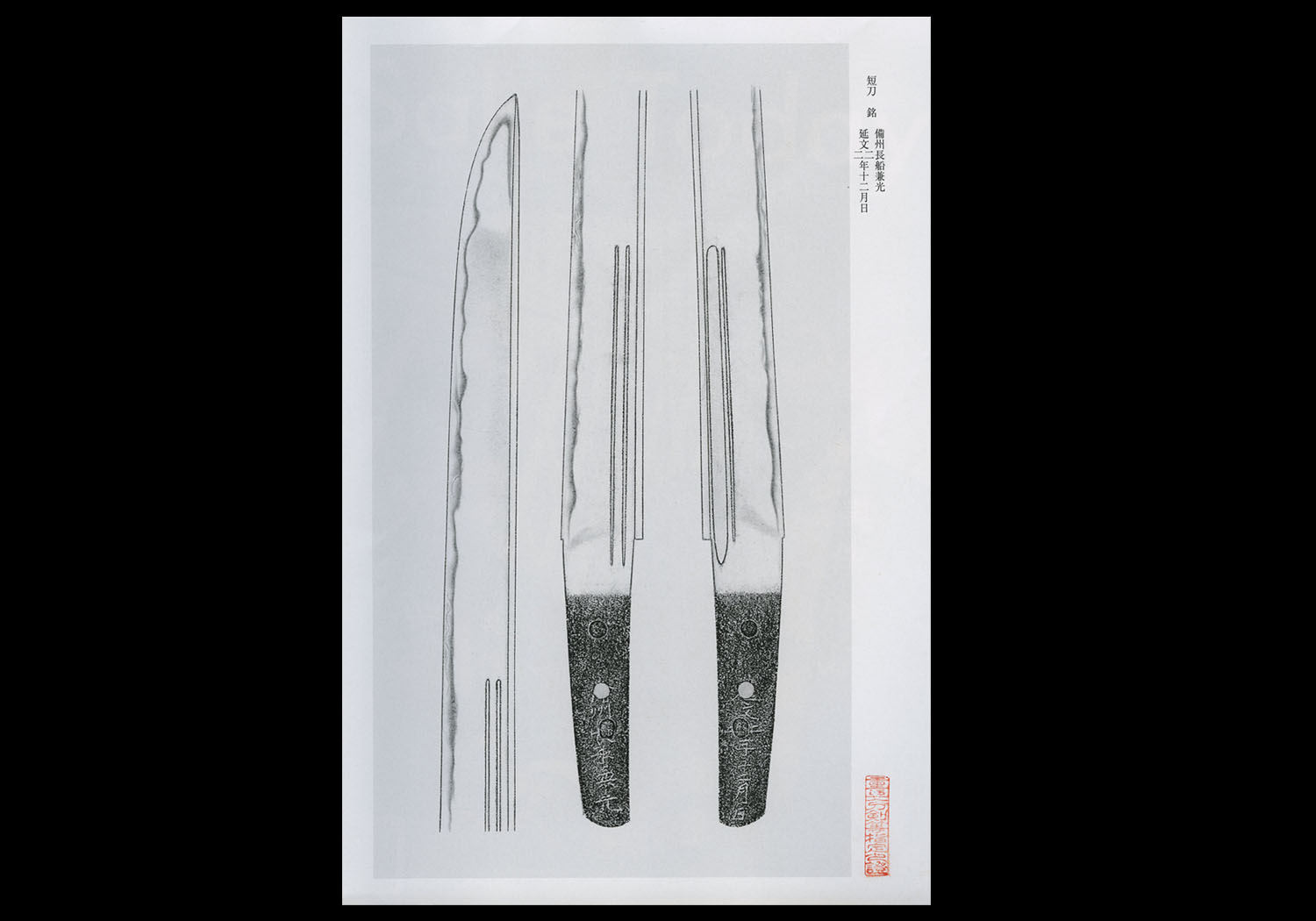
兼光は、景光に続く長船派の嫡流である。現存する年紀作は鎌倉時代末期の元享元年から南北朝期の貞治に及ぶ約四十五年の長きに亘っている。彼の南北朝時代初期の康永頃までの作品は、太刀・短刀共に姿が尋常で、直刃調に互の目を交えたものか、或は片落ち風の互の目を焼いて、総じて父景光風を踏襲した感のものであるが、貞和・観応頃から姿が大柄となり、それまでに無かったのたれ主調の刃文が出現し、 文和・延文頃にこれが多く見られる。 この短刀は、板目に杢が交じる鍛えに地沸が微塵につき、地景が頻りに入り、淡く映りが立ち、刃文は、浅いのたれを主調に小のたれ・小互の目交じり、小足入り、匂口やや深く、小沸よくつき、金筋・砂流しがかかる出来口を示すなど、総じて兼光の後期の作風がよく表示されている。地沸が微塵に厚くついてよく錬れた鍛えよさは特筆され、加うるに保存状態も良好な同作中の優品である。
長船 · 備前 · 1323-1370頃
藤代 最上作
現在4点販売中
説明書は兼光の項を常に一つの定文で起こす。すなわち「景光に続く長船派の嫡流である」[[c:1]]と。光忠・長光・景光と続く長船嫡流の四代、景光の子であり、南北朝期の備前を代表する刀工である。現存する年紀作は鎌倉時代末期の元亨元年(一三二一)から南北朝期の貞治に及ぶ約四十五年の長きに亘り、応安に及ぶとして約五十年と数える記載もある。あまりに長いこの作刀期間から、初代・二代の存在を考える説が古くから提起され、その分岐点には定説がない。後代の作者は世に「延文兼光」と称される。
作風は貞和・観応(一三四五〜五二)を境に二分される。康永頃までの作品は太刀・短刀共に姿が尋常で、直刃調に互の目を交えるか、父より継いだ片落ち互の目を焼き、指定書の繰り返す評語のとおり「総じて父景光風を踏襲した感」[[c:3]]のものである。貞和・観応頃から姿が大柄となり、以後はほとんどの指定書が同じ一文を繰り返す。「それまでになかったのたれ主調の刃文が出現し、文和・延文頃にこれが多く見られる」[[c:4]]と。大どかなのたれと角互の目は共に「兼光の得意とするところ」[[c:5]]とされ、ある特別重要刀剣の説明は角互の目を主体とした焼刃を「兼光が終始得意とした構成」[[c:6]]と記す。前代までの丸く返る帽子に対し、本工の帽子は乱れ込み、しばしば突き上げて先が尖る。
大柄の作においても鍛えは崩れない。地鉄は板目に杢を交え、元から先まで肌のゆるみや荒れを見せず、地沸が微塵に厚くつき、細かな地景が入り、乱れ映りが鮮明に立って鉄が冴える。初期の生ぶ在銘作では、よくつんだ小板目に直ぐ映りや棒映りが立つ。刃文は総じて匂勝ちに小沸がつき、腰元に金筋・砂流しがかかり、処々に小さな飛焼や湯走り風の働きを交え、足・葉がよく入る。彫物もまた本工の見どころで、梵字・護摩箸・素剣に加え、とりわけ「草の倶利伽羅」は兼光と倫光の作にまま見られる独特の構図と記される。
後期作の現存の多くは大磨上無銘の刀である。身幅広く元先の幅差が目立たず、大鋒に結ぶ延文・貞治型の体配がそれで、傍らに身幅広く重ね薄い寸延び平造の短刀・小脇指が立ち、さらに指表に銘を切り当初から打刀として造られた平造長寸の作があって、上杉家伝来の「水神切」がその記録に残る例である。大磨上の多い作域としては在銘が存外に多く、ここに集う指定作では在銘百七口に対し無銘九十五口、長銘は「備前国長船住兼光」[[c:9]]「備州長船住兼光」と切り、年紀を添えるものが多い。後期の強い沸について説明書は留保を付して「相州伝の影響を受けてか」[[c:11]]と記し、「沸も強調していることから、世に相伝備前と称されている」[[c:12]]と続ける。古い指定書はさらに一歩を、ただし問いとしてのみ進める。のたれへの転換に「相州正宗との関係と、初・二代の交替が考えられる」[[c:13]]と。正宗門人の伝は課題として開かれたまま、事実としては断じられていない。本間による御物台帳も年紀作からこの問いを立て、康永年紀の短刀は殆ど景光を見るような穏かな出来であるのに対し、文和年紀の脇指は既に相州伝を思わせる豪壮な平造で湾を主調とし、文和年紀のものに既にこうした作刀が現存する以上、「初二代の区別を果してどこにおくかが問題」[[c:14]]とする。大磨上無銘の多くには本阿弥光徳・光遜らの金象嵌極めが付され、審査はその多くを首肯している。
備前のうちでの位置は、継いだものと開いたものとで定まる。片落ち互の目は長船嫡流中、景光から兼光へとのみ受け継がれた軸であり、のたれは本工自身の加えたもの、備前鍛冶として本工が切り開いた大どかな乱れである。その盛期の作風は門下・周辺を通じて長船後期に伝わり、説明書は関連作を兼光周辺の作刀と読み、本工の好んだ草の倶利迦羅は倫光に再び現れる。
藤代の格付は最上作。指定を受けた作は二百三十五口に上り、うち四口は本間による御物台帳に所載される。国宝はないが重要文化財は十三口を数え、名のある作はそこに集まる。説明書に「名物大兼光や上杉景勝御手選び三十五腰の太刀」[[c:15]]と挙げられる二口(共に重要文化財)、そして金象嵌に羽柴岡山中納言秀詮すなわち小早川秀秋の所持を伝える名物「波游兼光」である。特別重要刀剣は四十口で刀工中最多、重要刀剣を合わせれば二百二口に達する。伝来も深く、六十四口に来歴が録され、足利尊氏・上杉謙信・上杉景勝・豊臣秀吉・藤堂高虎、黒田家・伊達家・細川家・前田家・尾張徳川家の名が連なる。杉原伯耆守重長の遺物として徳川家光に納められた一口、長州藩永代家老の益田家に伝来した一口もあり、御物台帳所載の観応の短刀は談山神社の旧蔵である。重要文化財・重要美術品の諸作は神社・美術館・旧家に文化財として収まり、徳川美術館・佐野美術館・永青文庫が記録上の所蔵者に見える。蒐集家にとってこの工は、同位の名工に比べれば全く手の届かぬ存在ではなく、特別重要・重要の諸作は時に市場に現れる。しかしその多くは秘蔵されて動かず、在銘年紀の一口が現れることは稀であって、現れれば刮目すべき機会となる。
兼光の位置づけを、日本刀全体および伝法・時代・時期ごとに示します。各区分(随一・屈指・有数・著名)は、NBTHK および文化庁による指定に加え、三作や名物帳などの歴史的栄誉を加味したものです。
各項目を選ぶと評価方法が表示されます。
在銘年紀作が示す、確実に活動していた年代
備前伝 · 備前
現在189点販売中
備前国邑久郡長船の地に興り、鎌倉時代中期から室町時代末期に至るまで連綿と鍛刀を続けた、刀剣史上最大の流派である。事実上の祖は光忠で、近忠の子と伝えるが近忠の作刀が知られないため、長船本流の起点はこの工に置かれる。古伝はその源を古備前正恒の一類が長船に移り住んだことに求め、光忠はその流れを承けて一門を興したと説く。すなわち本流派は、古備前の地盤の上に、丁子を主調とする華麗な作風をもって自立した備前鍛冶の本系である。光忠の下に長光、真長、景光らが輩出し、以後、相伝備前の兼光・長義・元重、室町初期の応永備前を経て末備前に至るまで、備前伝の中核を担い続けた。 作風は備前伝を基盤とし、よく錬れて杢を交えた板目に地沸が微塵につき、地景が細かに入り、地に乱れ映りが鮮明に立つ鍛えを共通の地とする。この乱れ映りこそ、在銘無銘を問わず一門の作を備前へ繋ぎ止める最も確かな標である。刃文には世代ごとの軸がある。草創の古長船にあって光忠は蛙子丁子を看どころとし、子の長光は頭の丸いふくらみのある丁子を加え、孫の景光は片落ち互の目を完成して逆がかりの足を看どころとした。この光忠、長光、景光の三代が長船嫡流の背骨をなし、近景がその影として景光をほぼ完璧に映し、真長は同じ地に締まる匂口の直刃を得意とした。南北朝期に入ると兼光が嫡流を承けつつのたれ主調の大模様を加え、相州伝を摂取した相伝備前の作風が現れる。長義は耳形の刃を看どころに兼光以上に相州伝を強調し、長重と兼長がこれに連なり、義景は匂口の沈むところに、元重は焼頭の揃った角ばる刃と青江気質に、それぞれ別系の個性を示した。体配もまた時代を映し、鎌倉の腰反り高い太刀から、南北朝の身幅広く大鋒の延文貞治型へ、さらに応永備前では古作への復古を志して優美な太刀姿と丁子刃が甦る。康光と盛光を双璧とする応永備前は、腰の広く開いた互の目とローソクの芯と称する尖り返る帽子を看どころとし、その腰開き互の目と棒映りは末備前へと受け継がれた。長光景光以来の梵字、三鈷剣、倶利迦羅、八幡大菩薩などの刀身彫もまた、末備前まで絶えず継承された一門の標である。 鑑定にあっては、まず鮮明な乱れ映りで一門を備前と読み、次に世代と系統の看どころで工を分かつ。蛙子丁子は光忠、丸い頭の丁子は長光、逆がかる片落ち互の目は景光、のたれと角互の目は兼光、耳形の刃は長義、角ばり逆がかる刃と蝉の羽根の肌は元重、ローソクの芯の帽子は応永備前という具合に、看どころが系統と時代を指し示す。嫡流の光忠、長光、景光、兼光は藤代の最上作に列し、なかでも長光は重要文化財の指定数が全刀工中最多で、嫡流の作には名物大般若長光や小龍景光をはじめ、織田信長、徳川家康、上杉謙信ら天下を握った者の手を経た作が多い。相伝備前の長義や兼長、応永備前の康光や盛光もそれぞれ重きをなし、別系の元重もまた南北朝備前の大きな名を保つ。嫡流の在銘作が市に現れることは稀で、大半は大磨上無銘の極めとして伝わるが、長光のごとく銘を惜しまなかった工の作はなお蒐集家の手の届く範囲にある。後世への影響は計り知れず、本流派の作風と刀身彫の伝統は末備前を通じて室町備前の主流をなし、備前伝そのものの規範となった。 詳しく見る →
南北朝時代の備前
二つの朝廷が争った六十年、刀身は長大化し、長船がその需要に応えた。兼光と長義の工房は実際に戦う国人層の武士に仕え、軍勢とともに相州風が届いて相伝備前が生まれた。
特別保存刀剣の中から、特に出来が優れ、国認定の重要美術品に準ずると判断された名品です。年に一度の重要刀剣審査で選ばれます。
極めて選別的で、日本に登録された約250万口の刀剣のうち、重要刀剣に達したものは12,348口(約202口に1口)にすぎません。
日本美術刀剣保存協会(NBTHK)は、1948年に設立され、文化庁の監督を受ける公益財団法人で、東京・刀剣博物館に本部を置きます。専門の審査員が出品作を直接審査し、美術的・歴史的価値に応じた鑑定書を発行します。NBTHKの鑑定書は、日本刀および刀装具の真正性を示す最も広く認知された基準です。
NBTHK公式サイトThree-day inspection period and seven-day return period; buyer notifies by email within three days of receipt, no reason needed; full refund once item returned undamaged and unaltered.
兼光は、景光に続く長船派の嫡流である。現存する年紀作は鎌倉時代末期の元享元年から南北朝期の貞治に及ぶ約四十五年の長きに亘って いる。彼の南北朝時代初期の康永頃までの作品は、太刀・短刀共に姿が尋常で、直刃調に互の目を交えたものか、或は片落ち風の互の目を焼い て、総じて父景光風を踏襲した感のものであるが、貞和・観応頃から姿が大柄となり、それまでに無かったのたれ主調の刃文が出現し、 文和・ 延文頃にこれが多く見られる。 この短刀は、板目に杢が交じる鍛えに地沸が微塵につき、地景が頻りに入り、淡く映りが立ち、刃文は、浅いのたれを主調に小のたれ・小互 の目交じり、小足入り、匂口やや深く、小沸よくつき、金筋・砂流しがかかる出来口を示すなど、総じて兼光の後期の作風がよく表示されてい る。地沸が微塵に厚くついてよく錬れた鍛えよさは特筆され、加うるに保存状態も良好な同作中の優品である。