室町の長船は輸出産業であった。明との勘合貿易はおよそ十二万八千振の日本刀を海の彼方へ運び、国内では戦国の軍勢が買い手となった。注文主の俗名を銘に刻む注文打ちが、兵卒用の数打ち物と並んで鍛えられている。
 NihontoWatchNihontoWatch
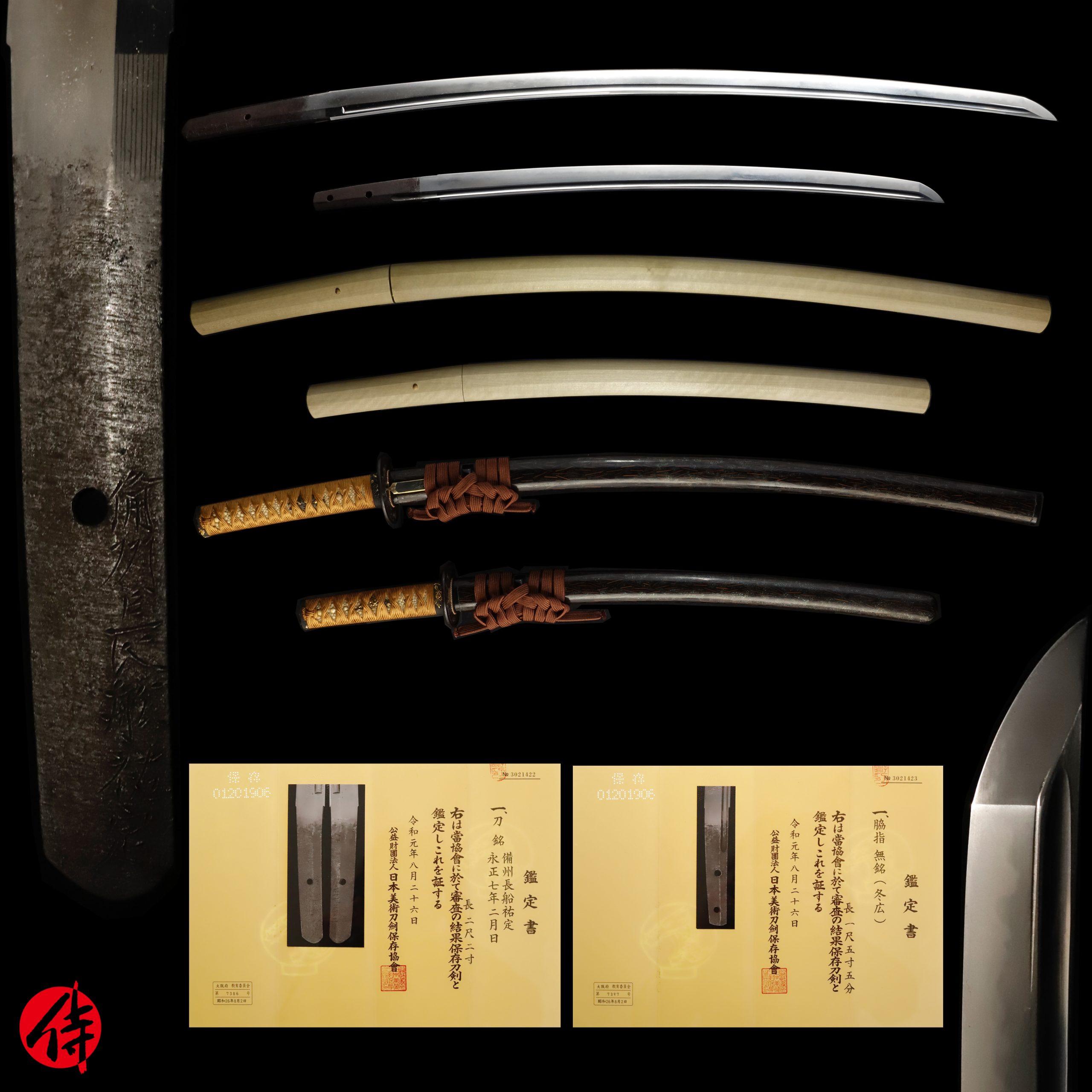
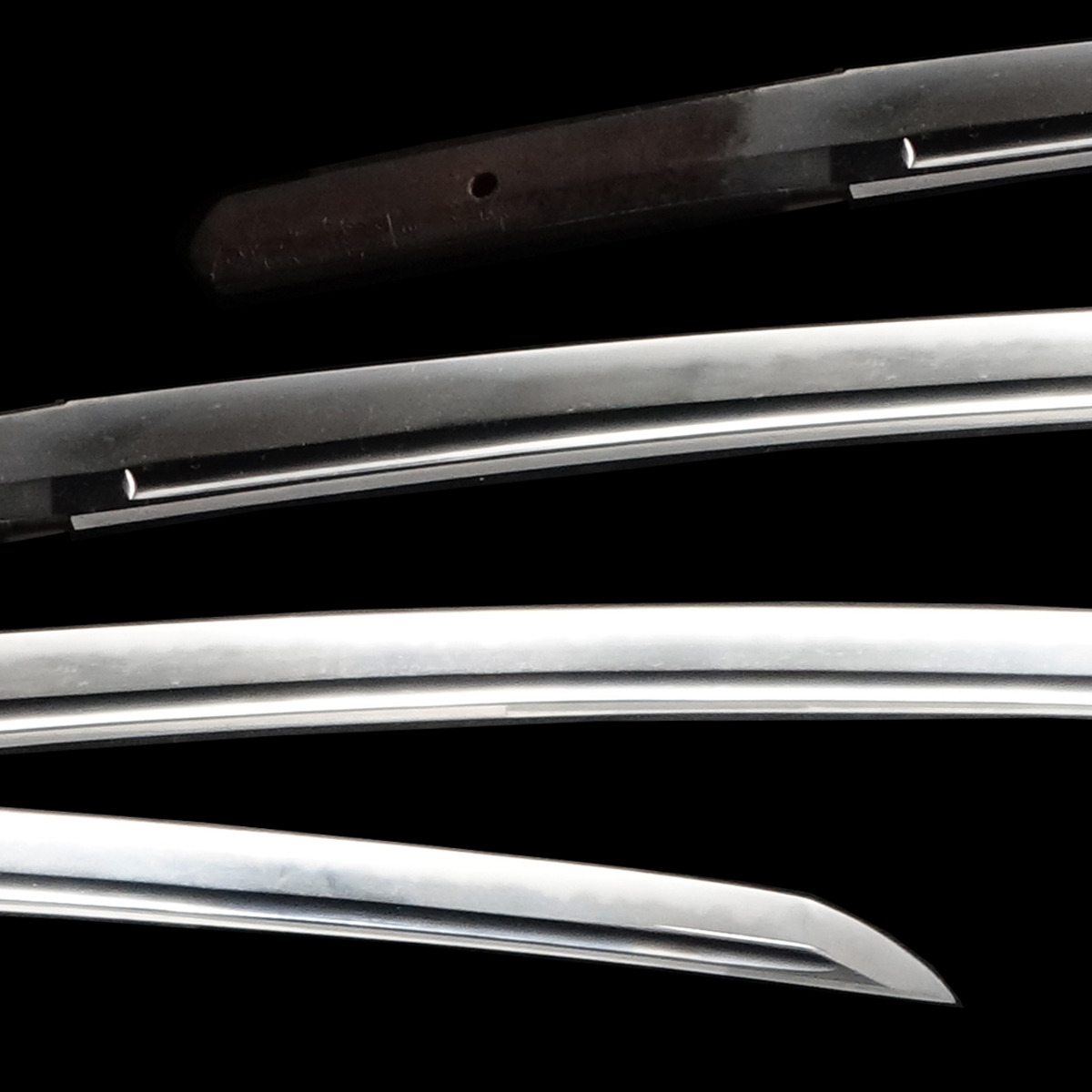
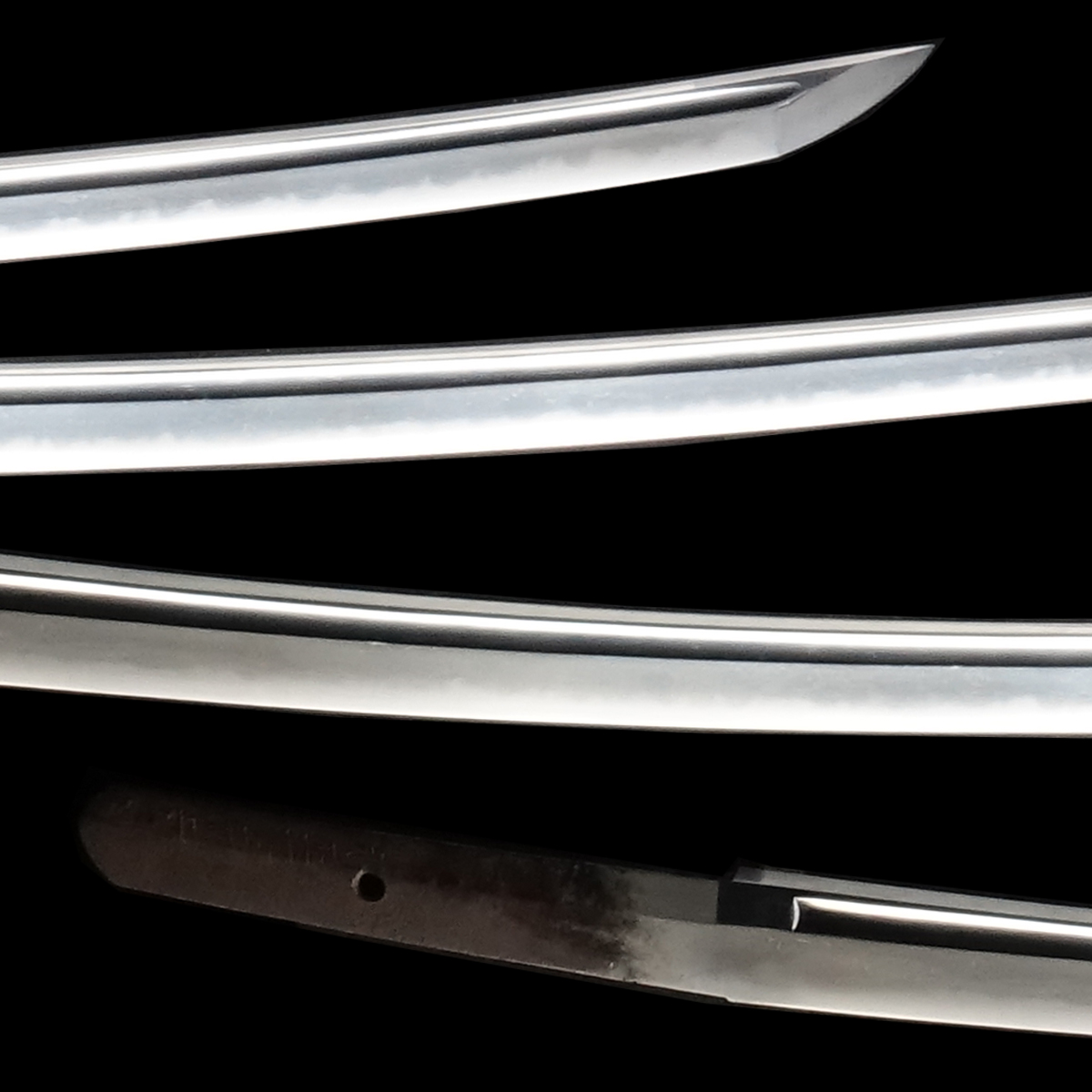
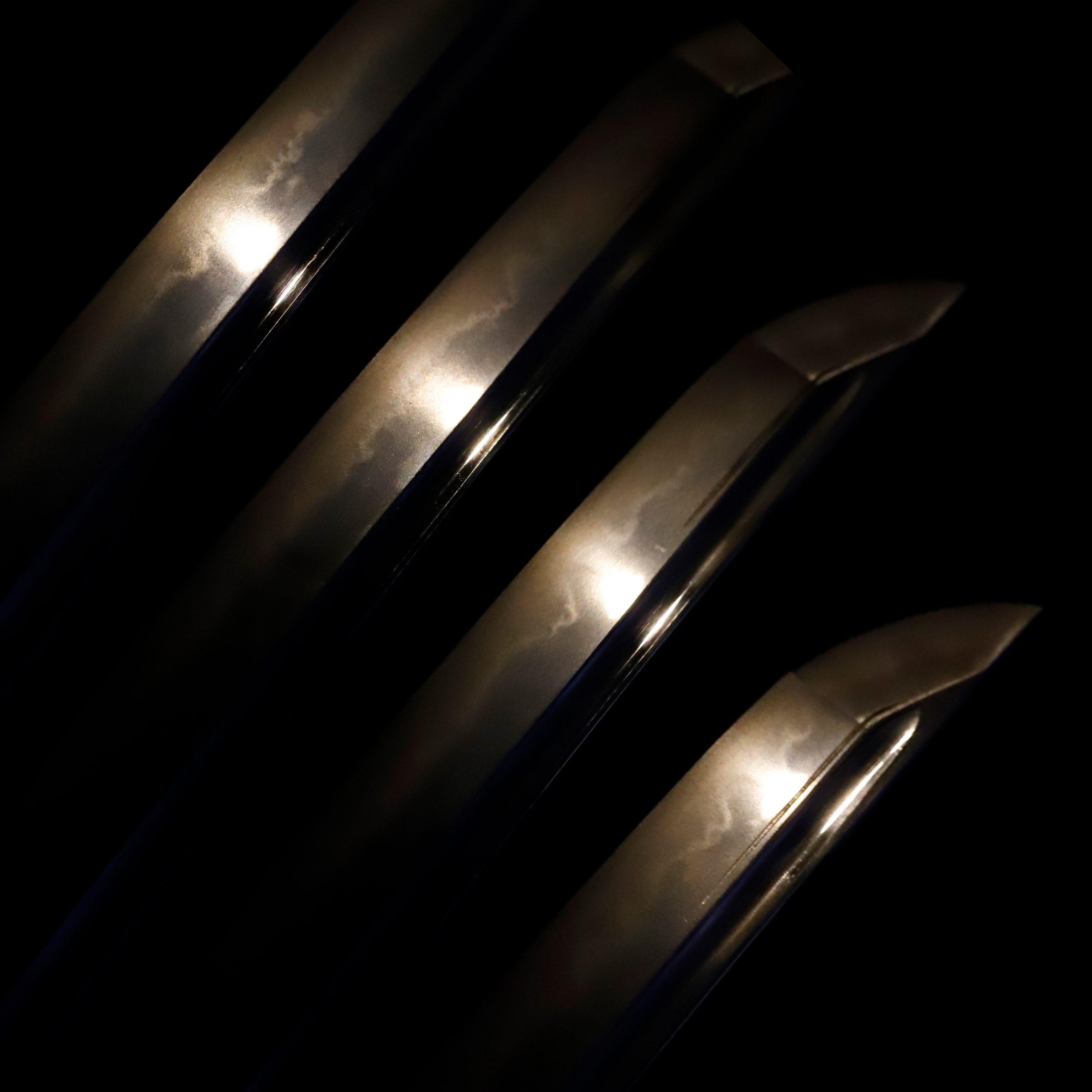
Katana This blade has a signature of Bizen Osafune Sukesada(備前長船祐定) on the front and Feb, in 7th year of Eisei era(永正七年二月日) on the back. NBTHK, one of the most reliable Japanese sword appraising committees, validated the signature is authentic. It was forged in 1510, which is categorized as the late Muromachi period. Those who forged swords in the Bizen province(Okayama prefecture) at the end of the Muromachi Period(1492-1569 A.D) are called Matsu Bizen(Matsu means the end). Sukesada school was one of the most famous schools, and it flourished for generations among Osafune schools(The head branch). There were various styles forged by the generations of Sukesada during this period. There were about 60 swordsmiths who used Sukesada as his maker’s name in Samurai history. Bizen is the birthplace of Bizen Den, one of the most famous Japanese sword traditions (sword forging-technique) along with Yamashiro Den, Soshu Den, Mino Den, and Yamato Den. The swordsmiths in Bizen produced many swords during the Muromachi period as it was in the middle of the Sengoku period(Warring state period), and the demand for blades increased among strong feudal lords. It would be nice to have a piece forged in the warring state period when there was so much rivalry between warlords. Wakizashi This blade was attributed to the work of Fuyuhiro in the late Muromachi period(450-500 years old) by NBTHK, which authenticated this blade. The authentication paper doesn’t mention the age, but we called NBTHK to confirm it was forged around that period. It is said that the first generation Fuyuhiro was the son of the third-gen Soshu Hirotsugu, one of the most well-known swordsmiths in the Soshu region(today’s Kanagawa prefecture). The first-gen, Fuyuhiro, moved to Wakasa province(today’s Fukui prefecture) after learning sword forging techniques/tradition from his master. According to historical documents, the swordsmith’s name Fuyuhiro lasted 17 generations from the Muromachi period(1460-)to the Edo period(-1868). During the Sengoku period(Warring state period), Fuyuhiro forged swords for high-class Samurai or feudal lords because of his popularity and the high demand for weapons. While we can’t conclude which gen of Fuyuhiro forged this blade, it was made in the middle of the warring state period. That implies a prominent Samurai warrior might have ordered this blade and used it on a battlefield. What is Daisho? Daisho is a pair of two Japanese swords Samurai carried. During the Edo period, having Daisho in public places was considered social status for Samurai. Furthermore, Samurai were required to wear them under the law back then. Daisho is written as 大=Big and 小=Small. Dai part means Katana, and Sho part means Wakizashi. While different swordsmiths forged these two swords, they come with a pair of Daisho Koshirae(sword mountings). Koshirae also got appraised by NBTHK. That means Samurai back then carried these pair of Daisho. They have such a fancy appearance that we believe a high-ranked Samurai owned them. Appraisal These blades are appraised as a Hozon certificate issued by NBTHK. This authentication paper was only given to Japanese swords, worth preserving by Nihon Bijutsu Touken Hozon Kyokai(the Society for the Preservation of the Japan Art Sword). This Daisho is accompanied by the gorgeous sword mounting whose theme is peony flowers. -Katana Jimon(Jihada) -Katana -Wakizashi Fuchi-Kashira Peonies are designed for these Fuchi Kashiras and were engraved semi three-dimensionally. It seems each flower was initially colored with gold. Peony represents happiness, wealth, nobleness, and gorgeousness. This flower pattern has been treated as a kind of good-omen motifs that become a rich harvest sign. Peony is called “Botan” in Japanese. When we write this flower’s name in Japanese, its second letter means mountain hermit medicine believed it would give us eternal youth. By the meaning of this letter, the peony pattern symbolizes eternal youth and longevity. Tsuka and Menuki Same as Fuchi Kashira, the peony is the motif of these Menukis. Large flowers bloom and give a gorgeous look for Tsuka. You would enjoy how carefully engraved each petal or leave by its maker’s high skill. Tsuba and Habaki Circle-shaped antique Tsubas that have Kozuka and Kougai holes. The edges were made of durable metal by layering the same metal as the main bodies. And, the peony is designed for these Tsubas, same as other sword mountings. By using the same motif, the entire of the Koshirae has unity. Besides, the elegances of peony give graceful appearance for works. Kougai It might be the Karajishi (唐獅子) that is designed for this Menuki. Shishi (獅子) means a lion in Japanese, and Karajishi is a lion brought from China to Japan in the Toh period (唐, Tang dynasty, 618-907). The Karajishi typically has curly hair for its head, neck, body, and the tale. In Buddhism, Karajishi is regarded as a symbol of wisdom, and Monju Bosatu (文殊菩薩, Manjushri Bodhisattva) rides lions. According to a theory, the Karajishi is the origin of Komainu (狛犬, stone guardian dogs that exorcize evil spirits). Kozuka Kozuka is a small knife stored in Koduka Hitsu(groove of the sheath of the Japanese sword). Same as Kougai, the Karajishi is the motif of this Kozuka. Two Karajishis are engraved semi three-dimensionally. Authentication Paper They authenticated these two blades on August 26th in the first year of Reiwa (2019). They appraised them as Hozon Touken, the blade worth preserving for Japanese society. The sword mountings for these swords were also appraised by NBTHK as Tokubetsu Kicho Kodogu in 1960.

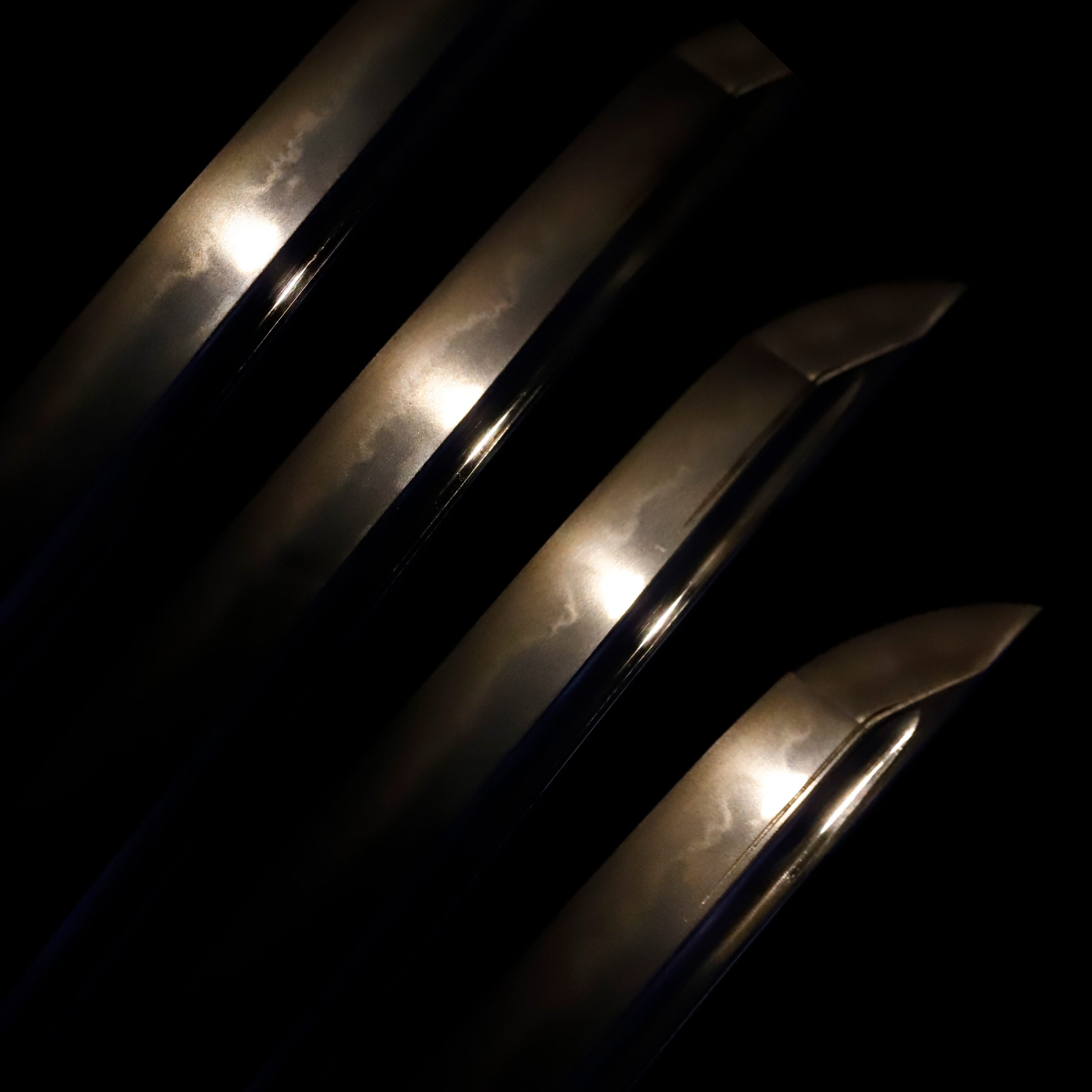
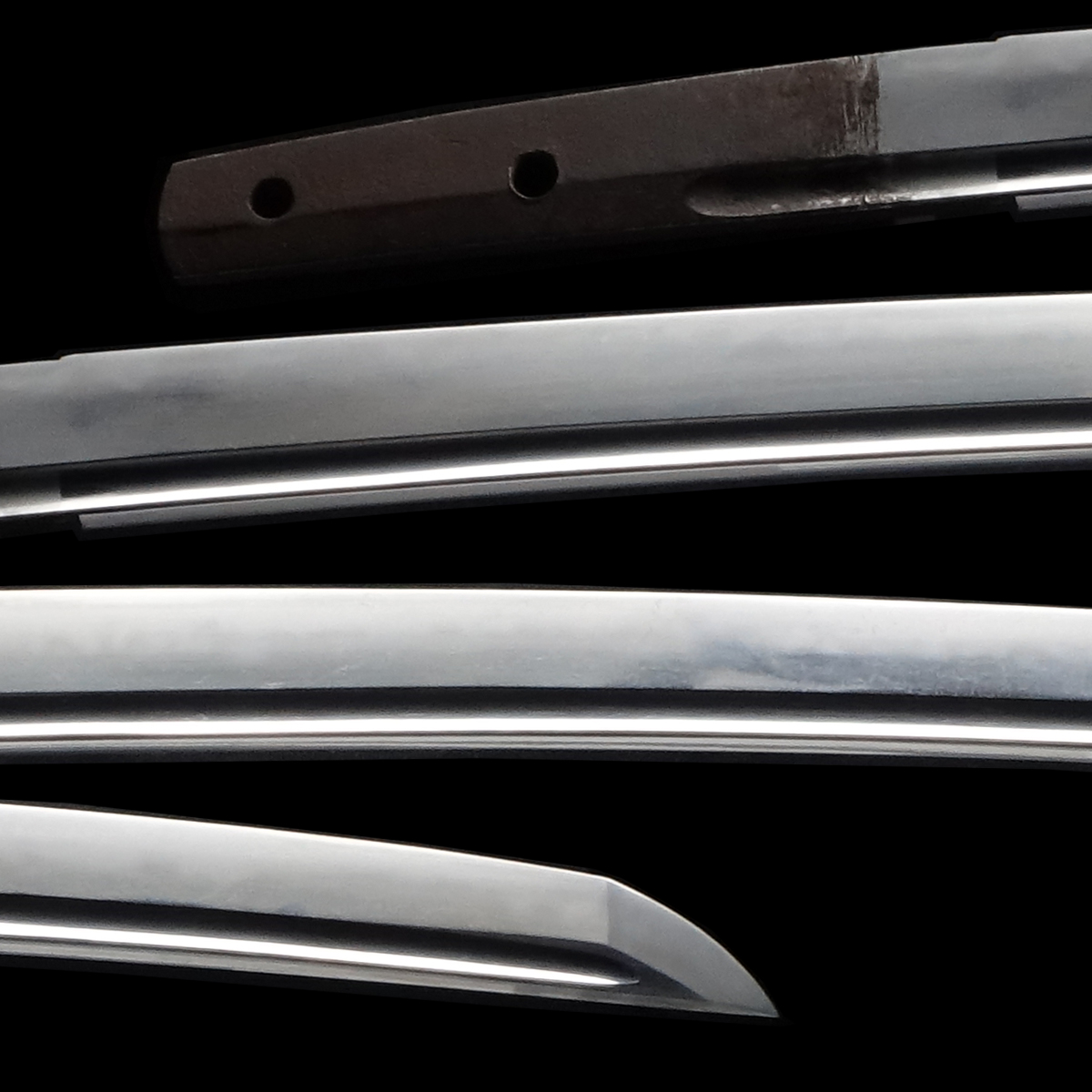
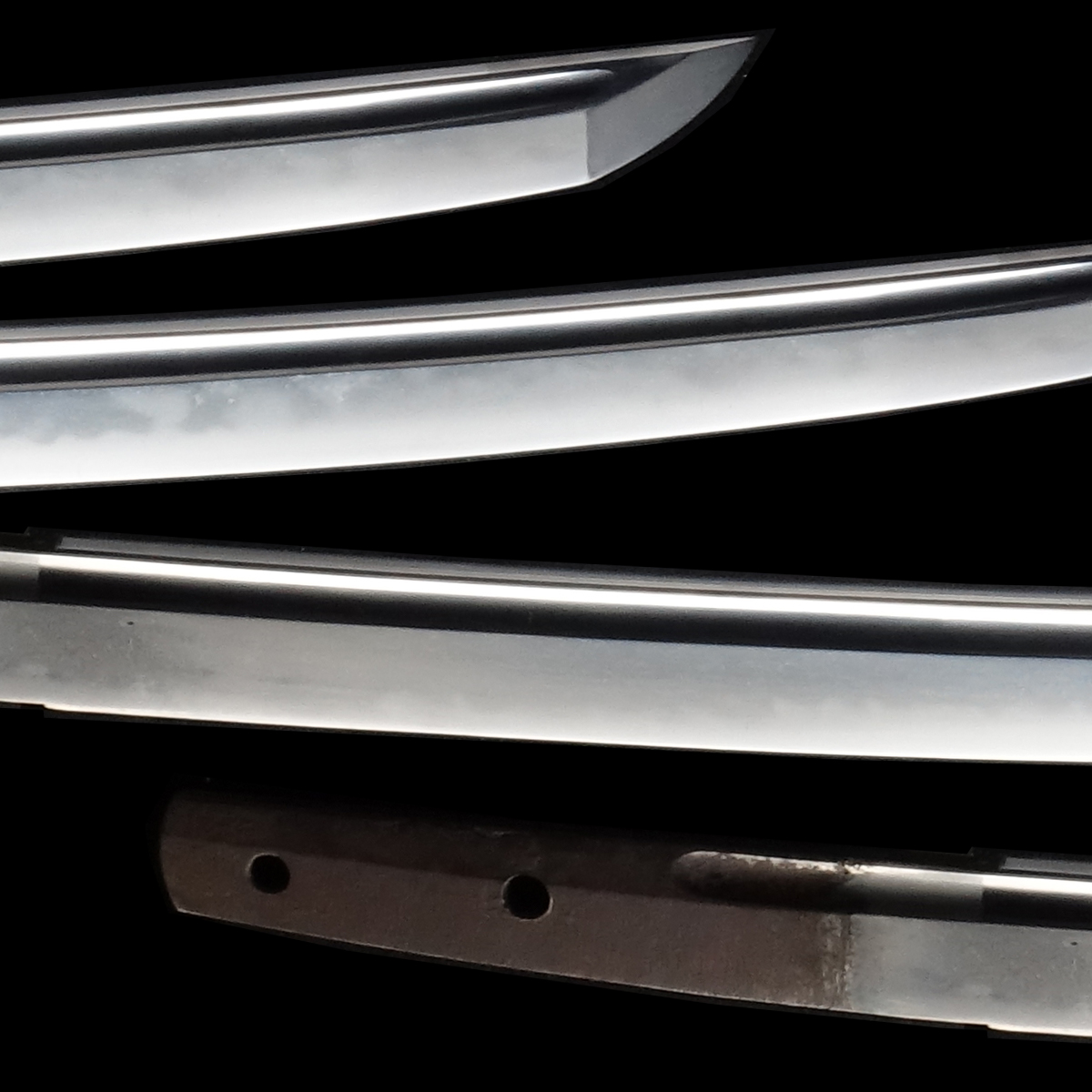
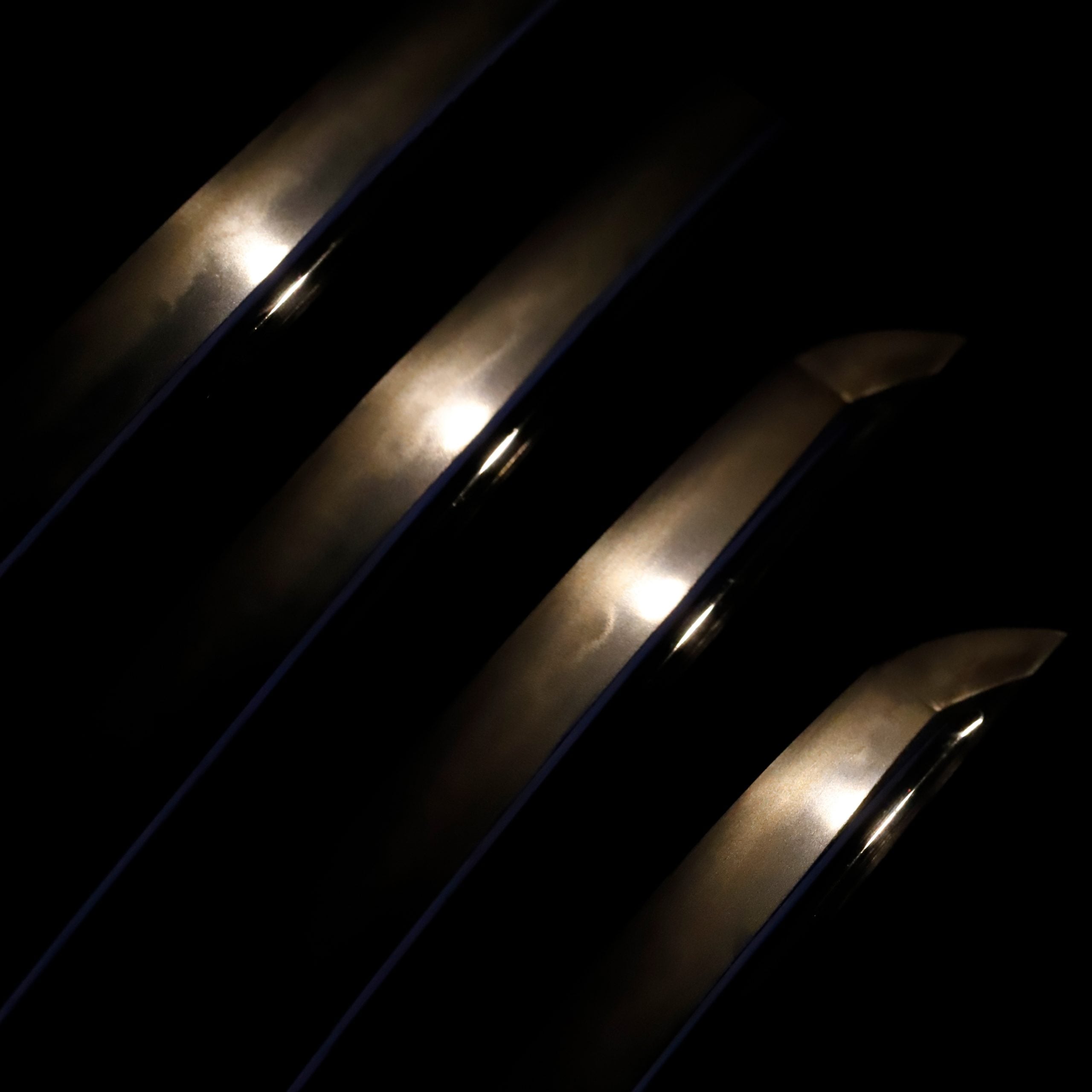
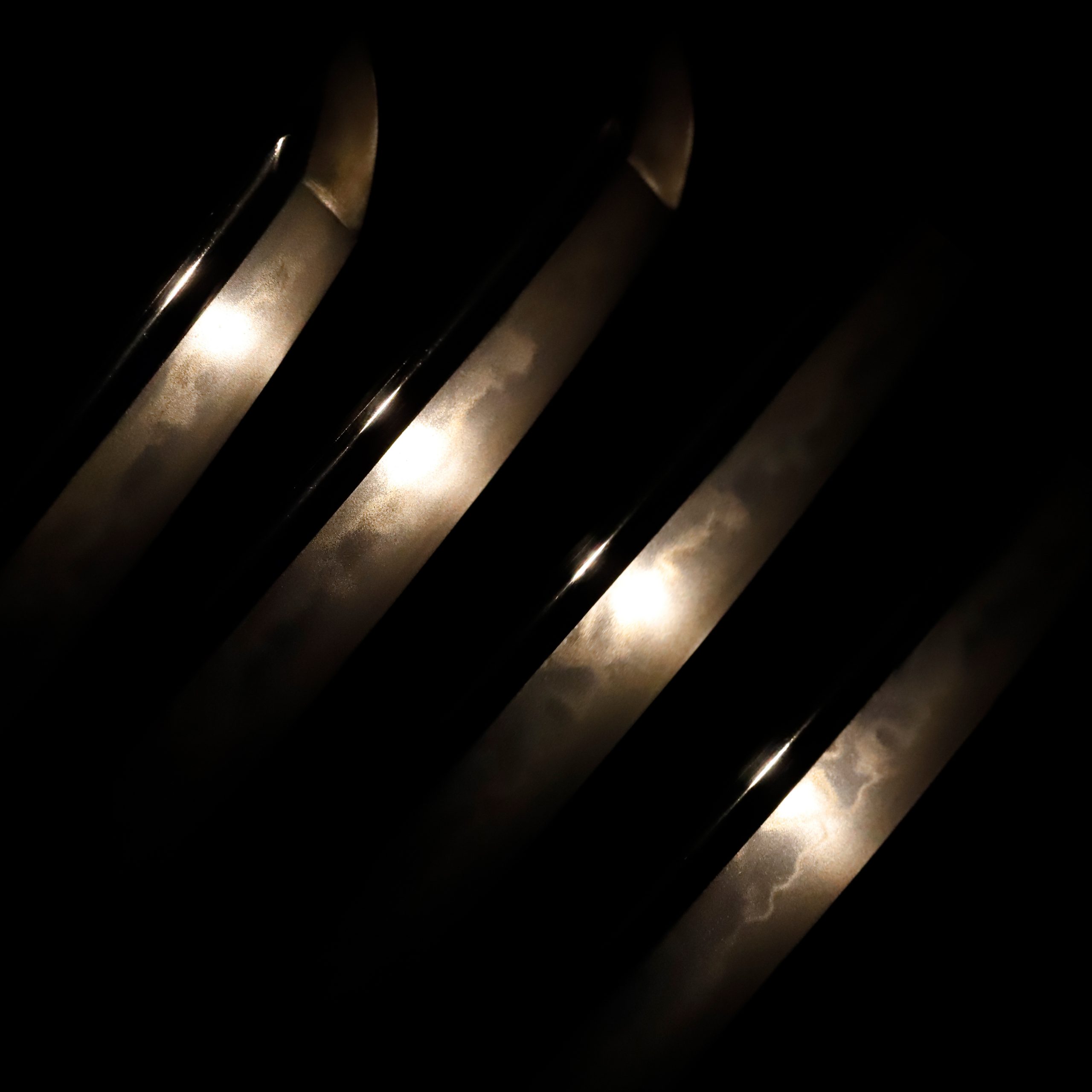
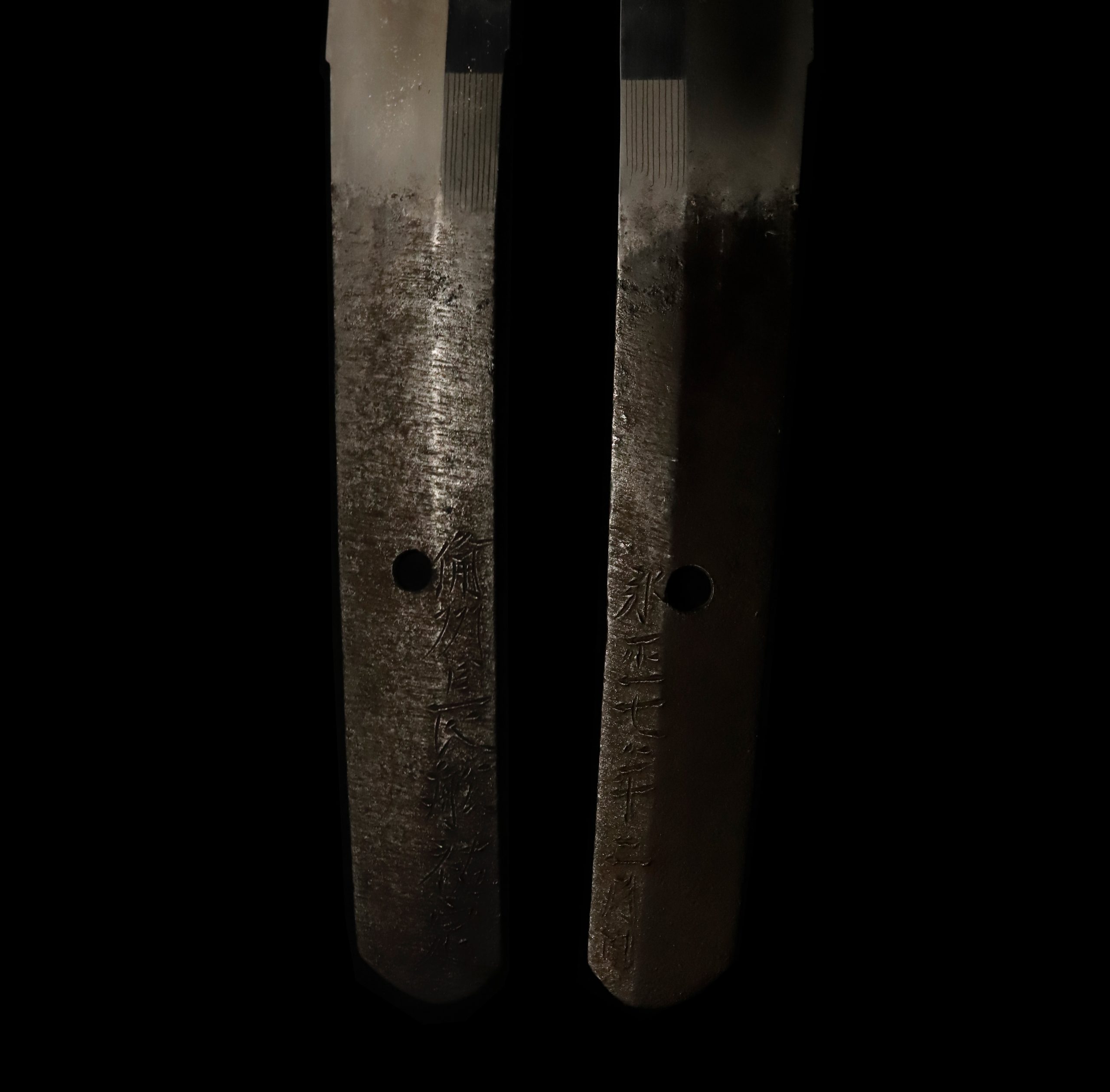
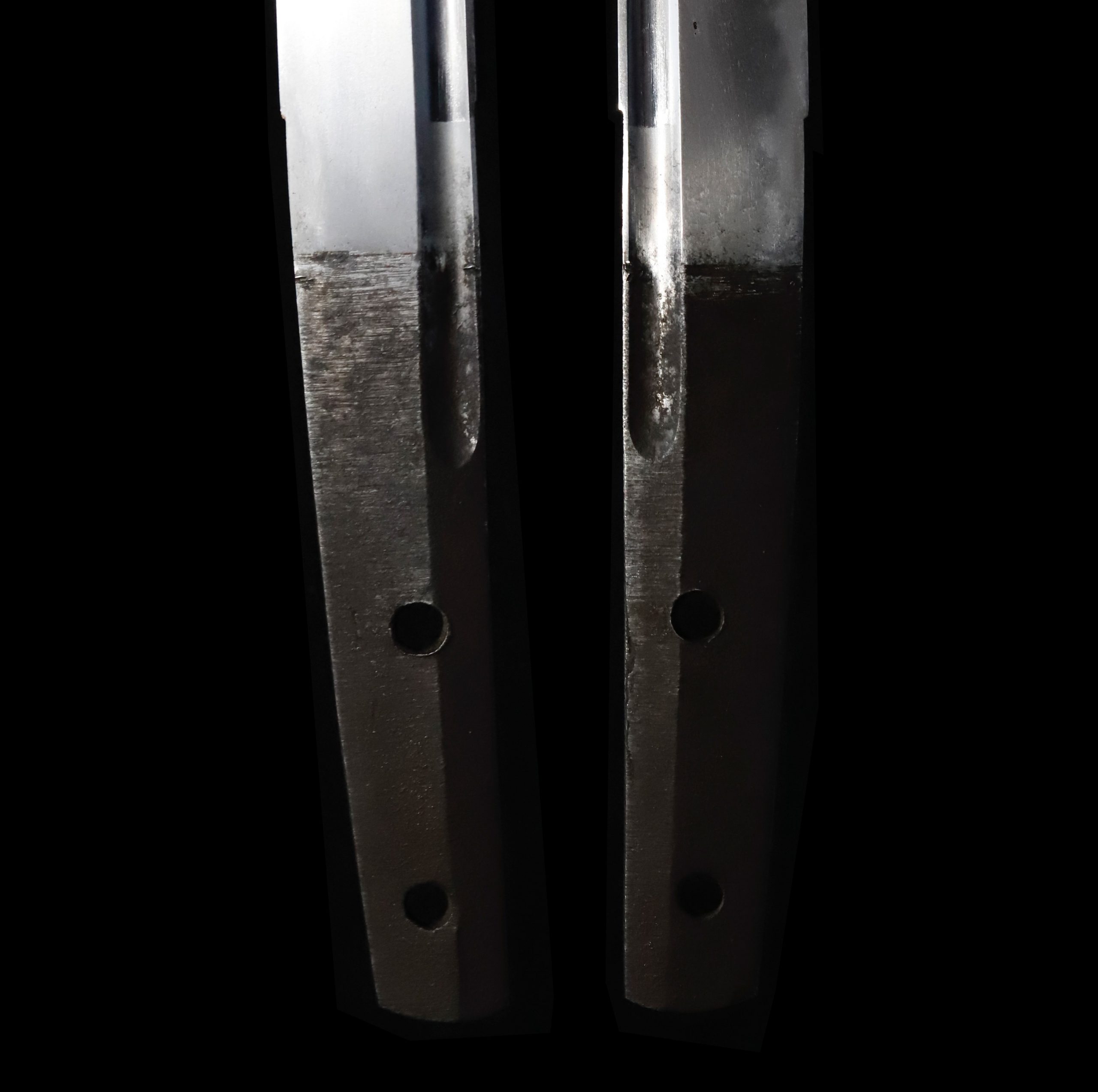
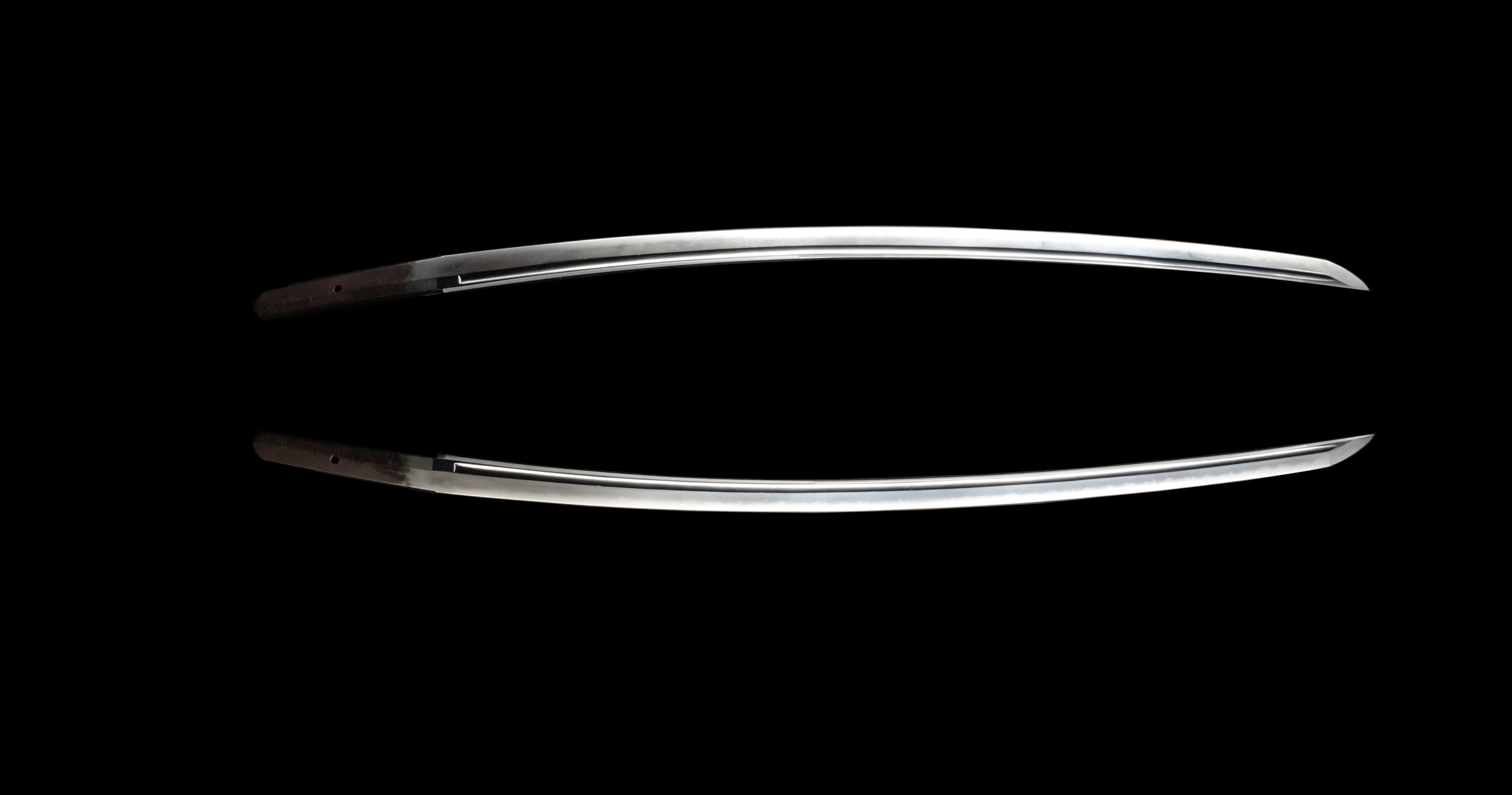
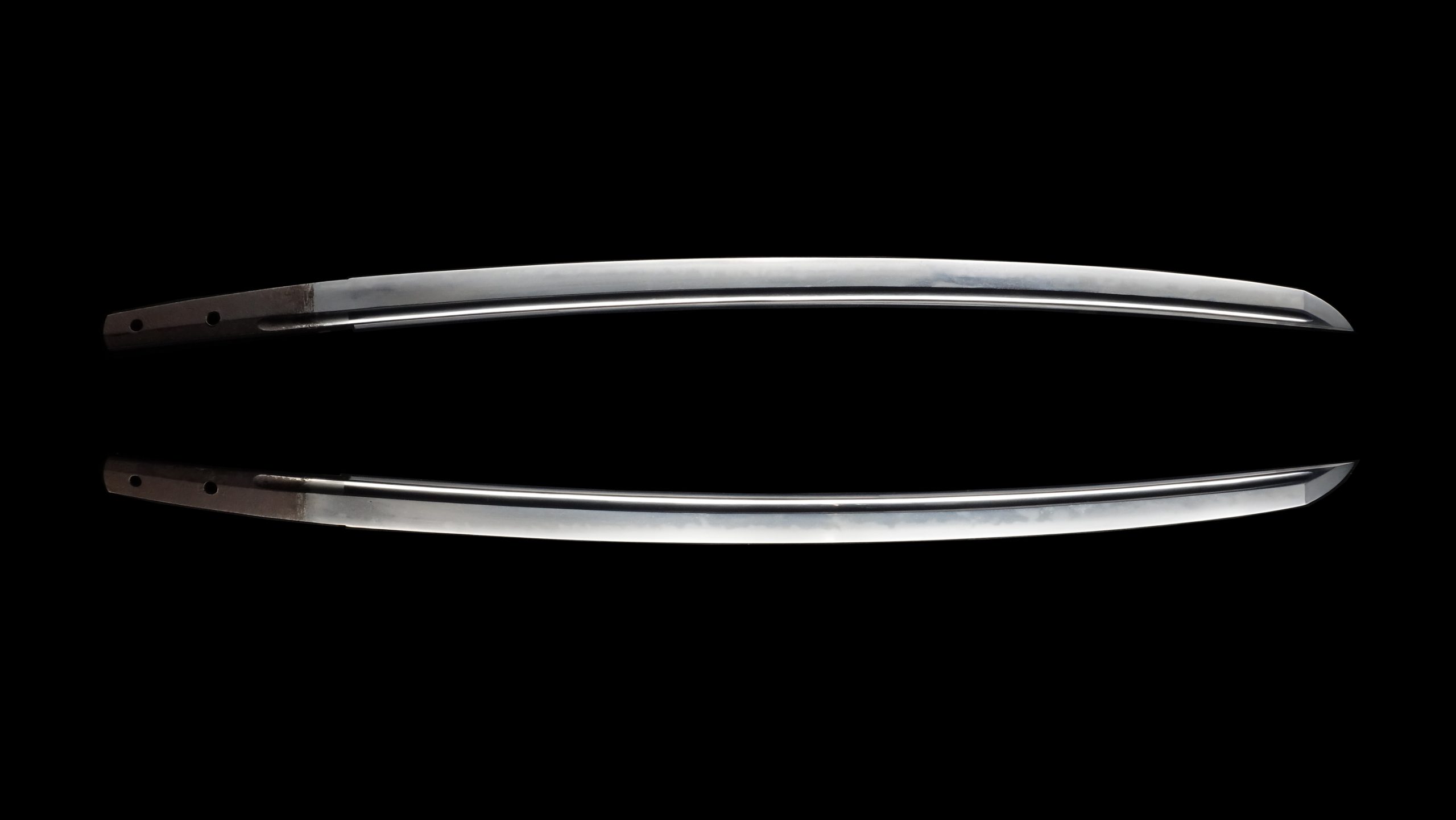
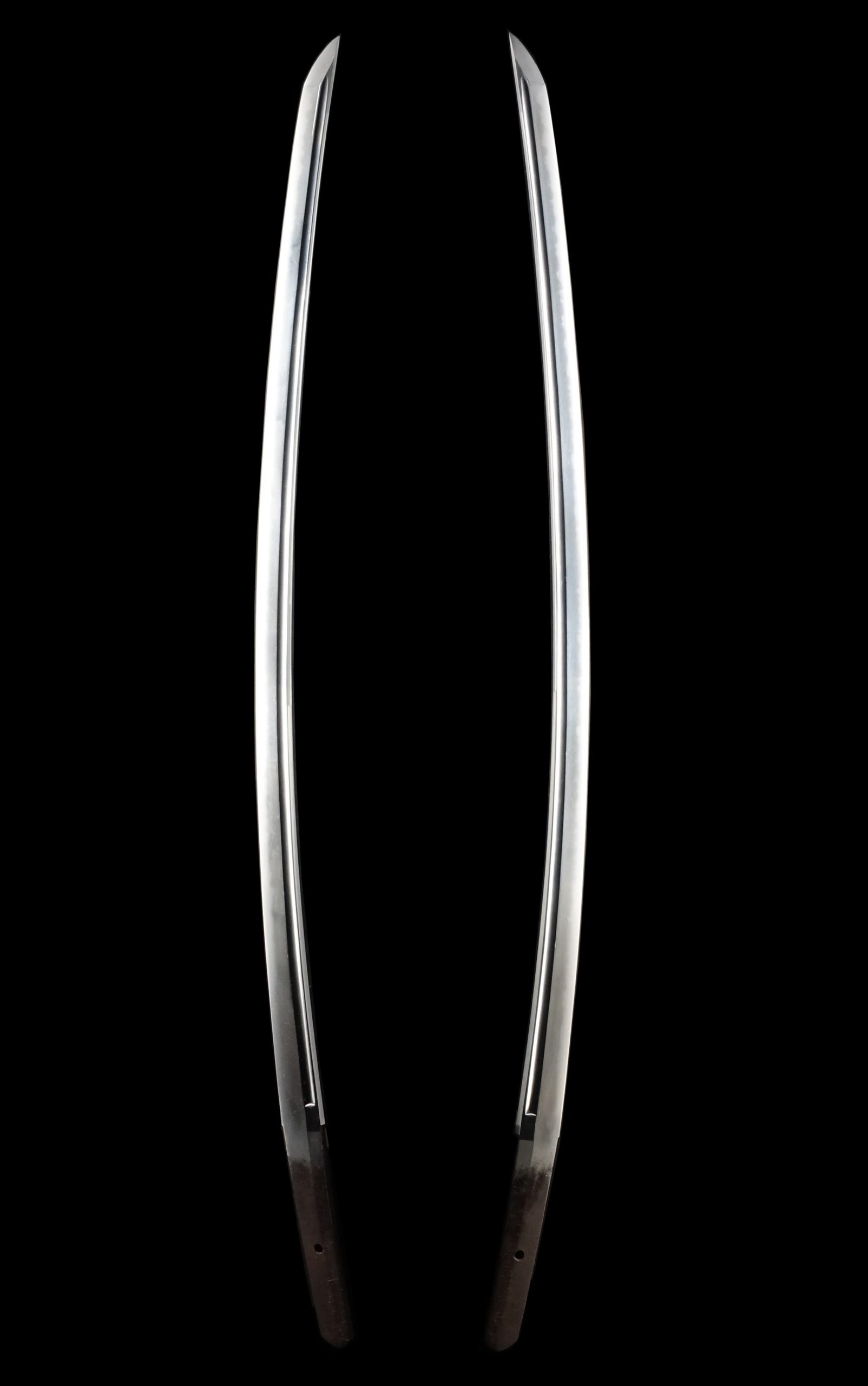
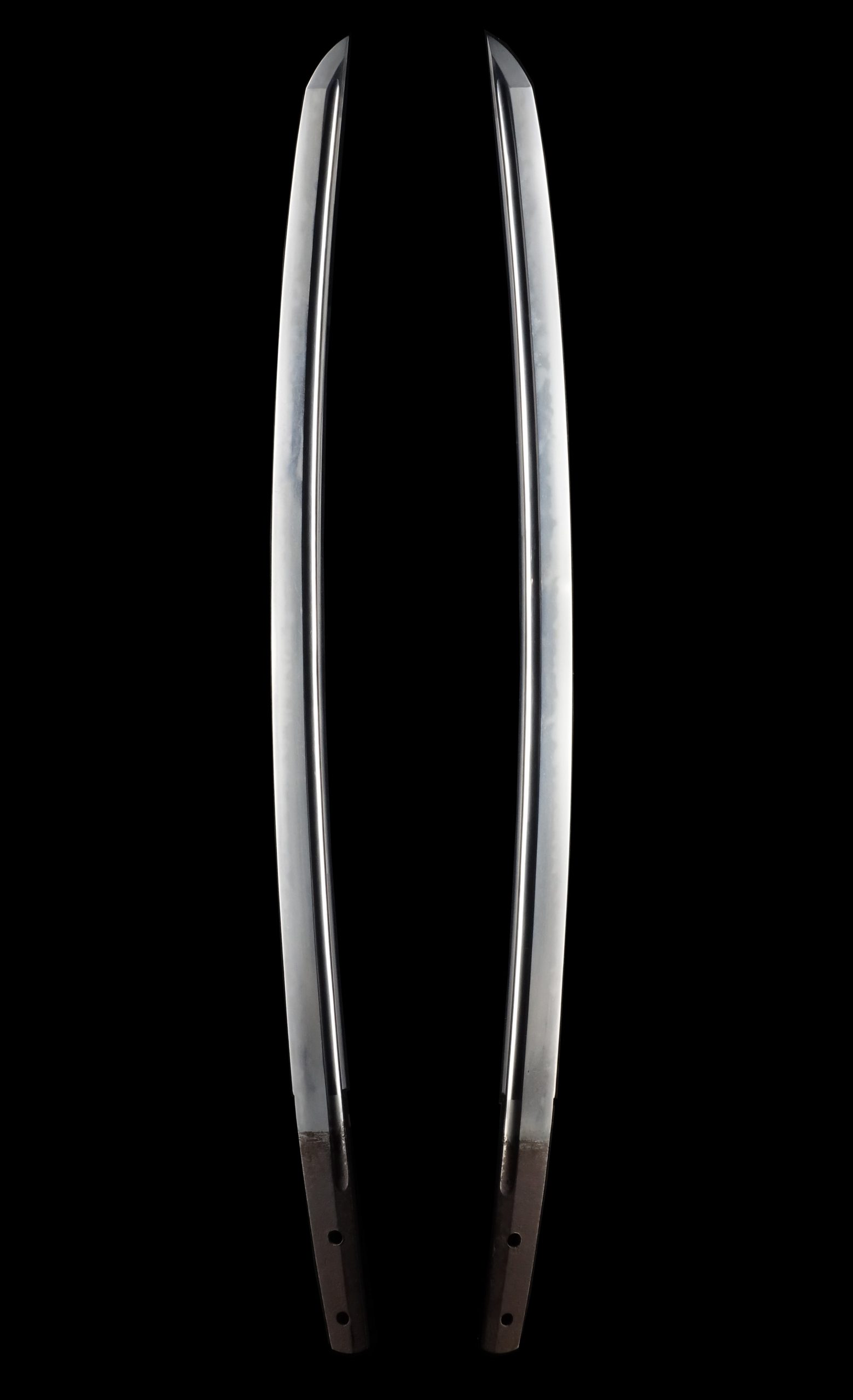
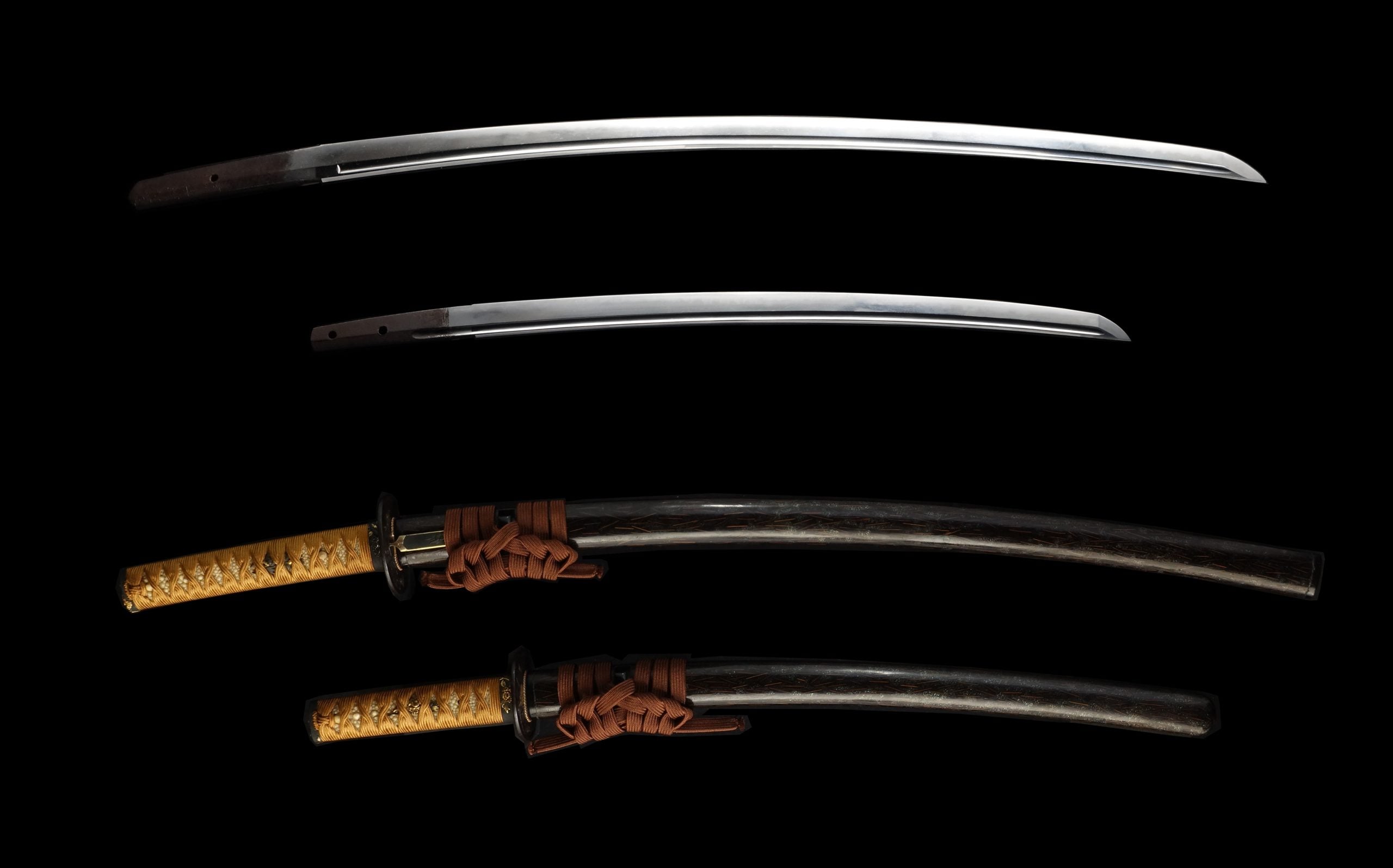
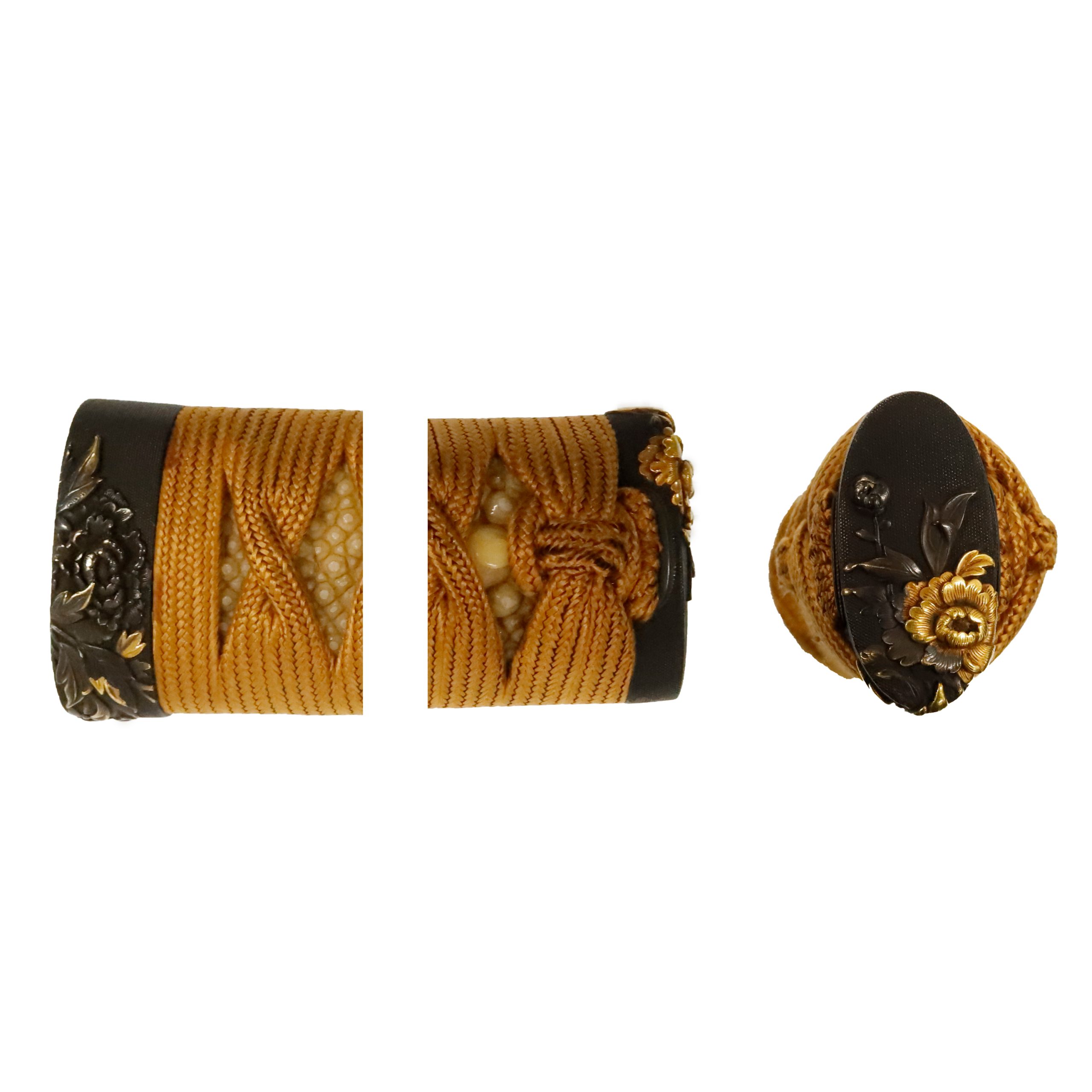
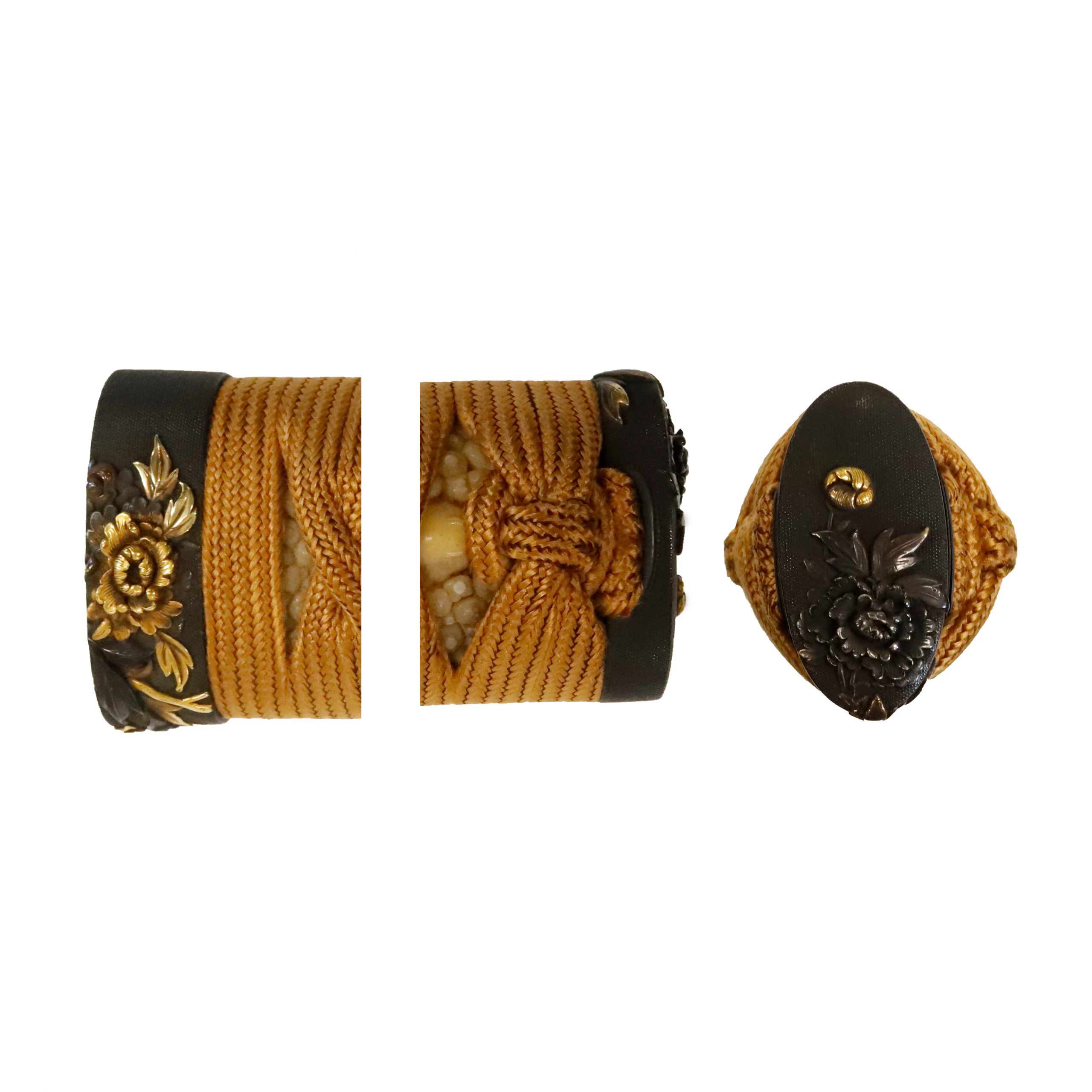
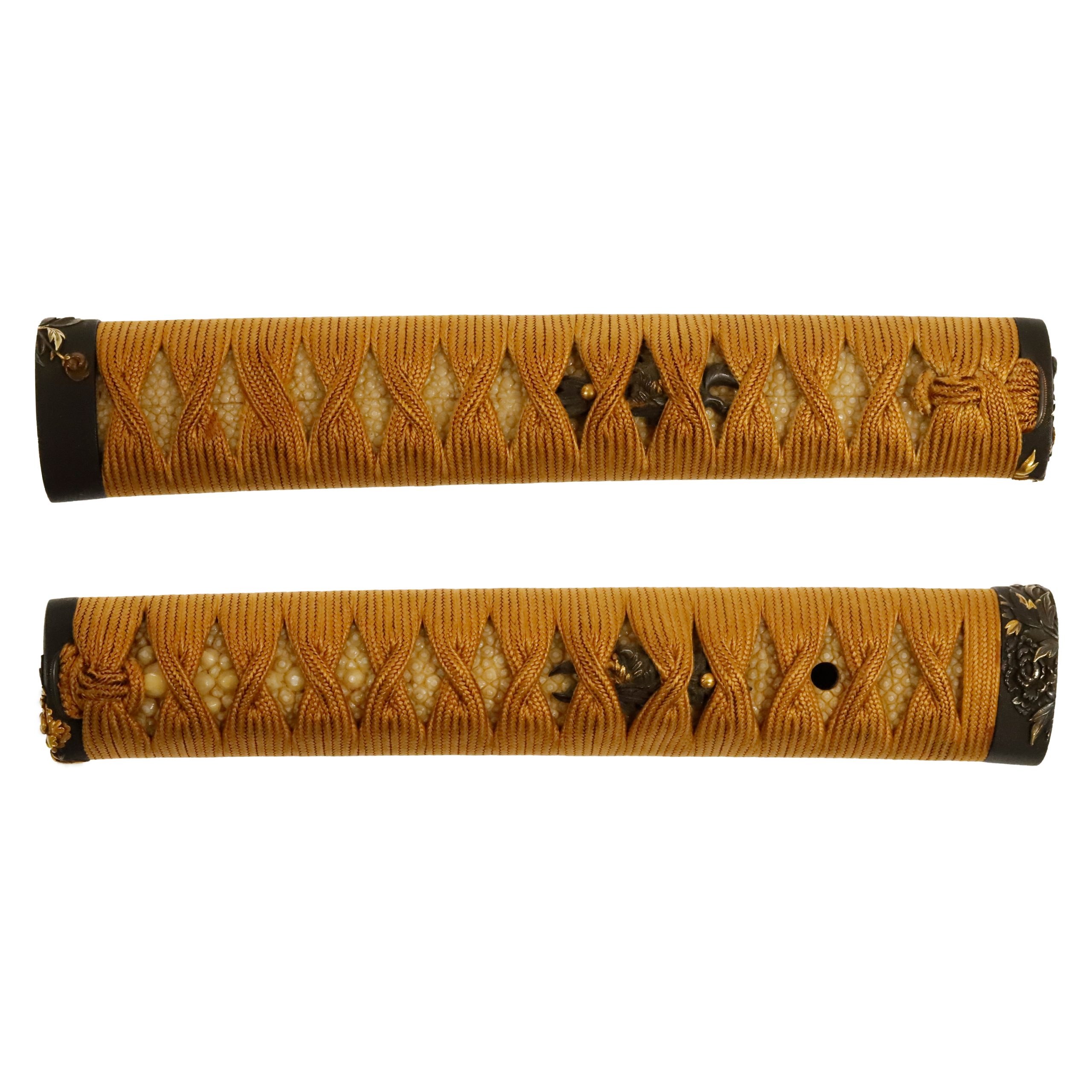
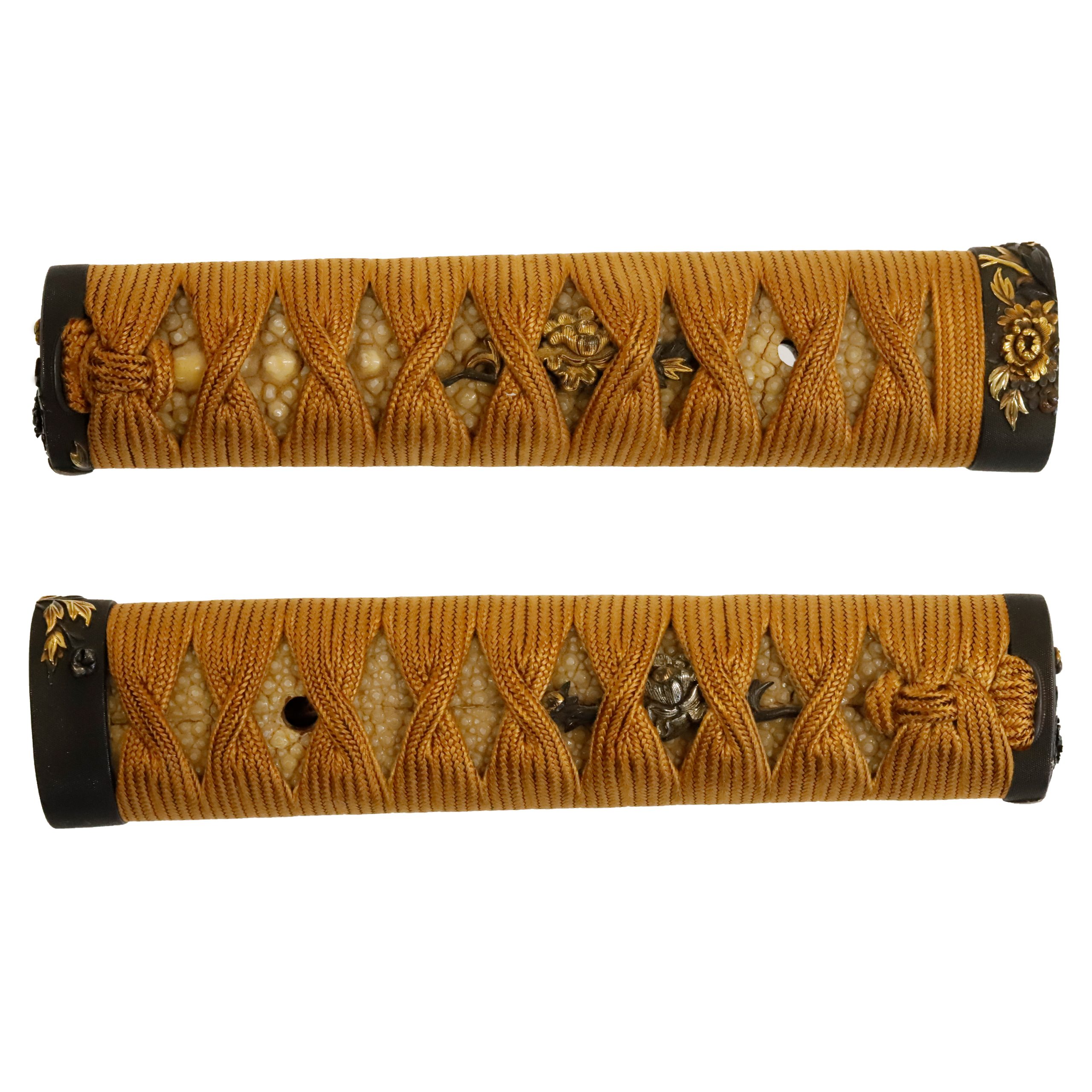
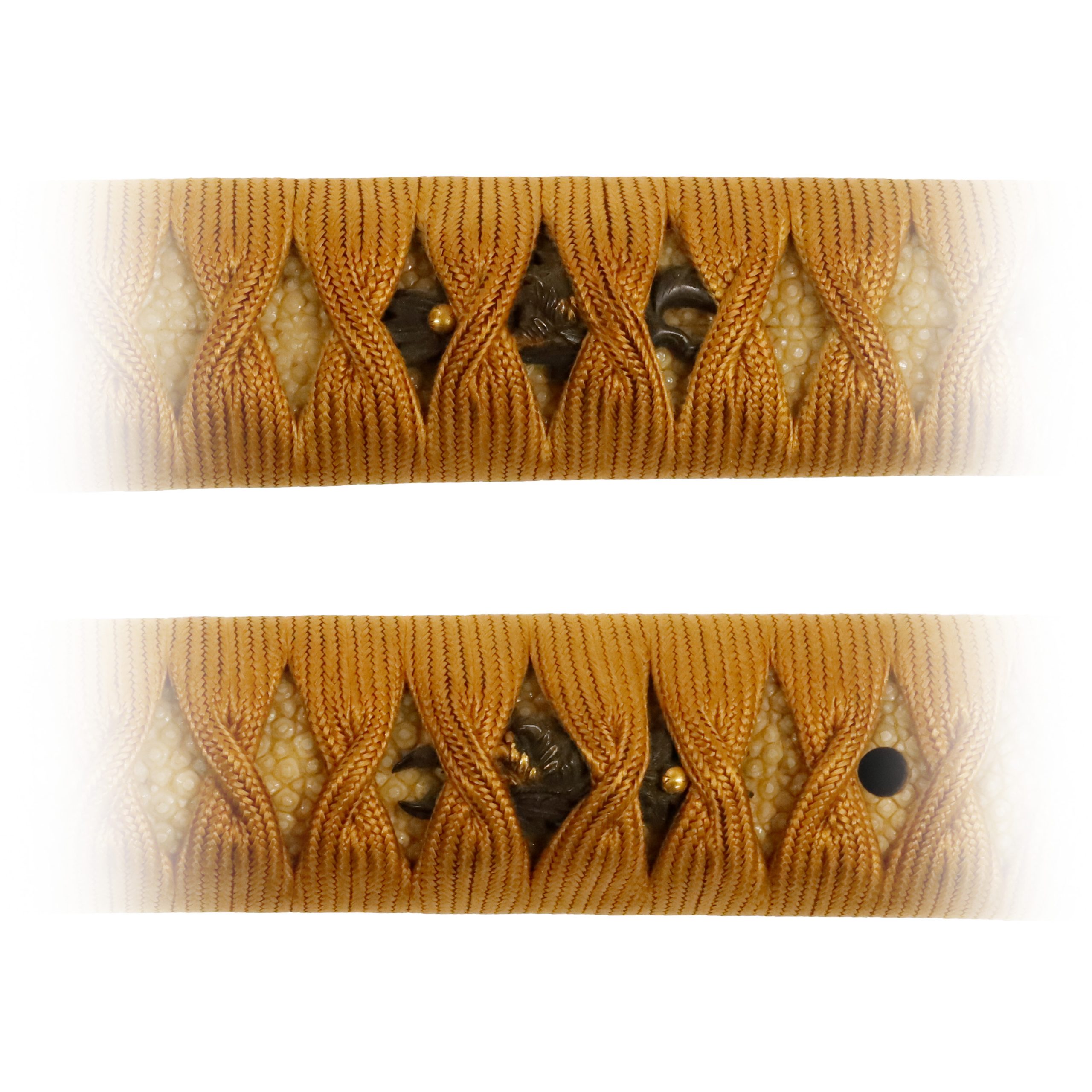
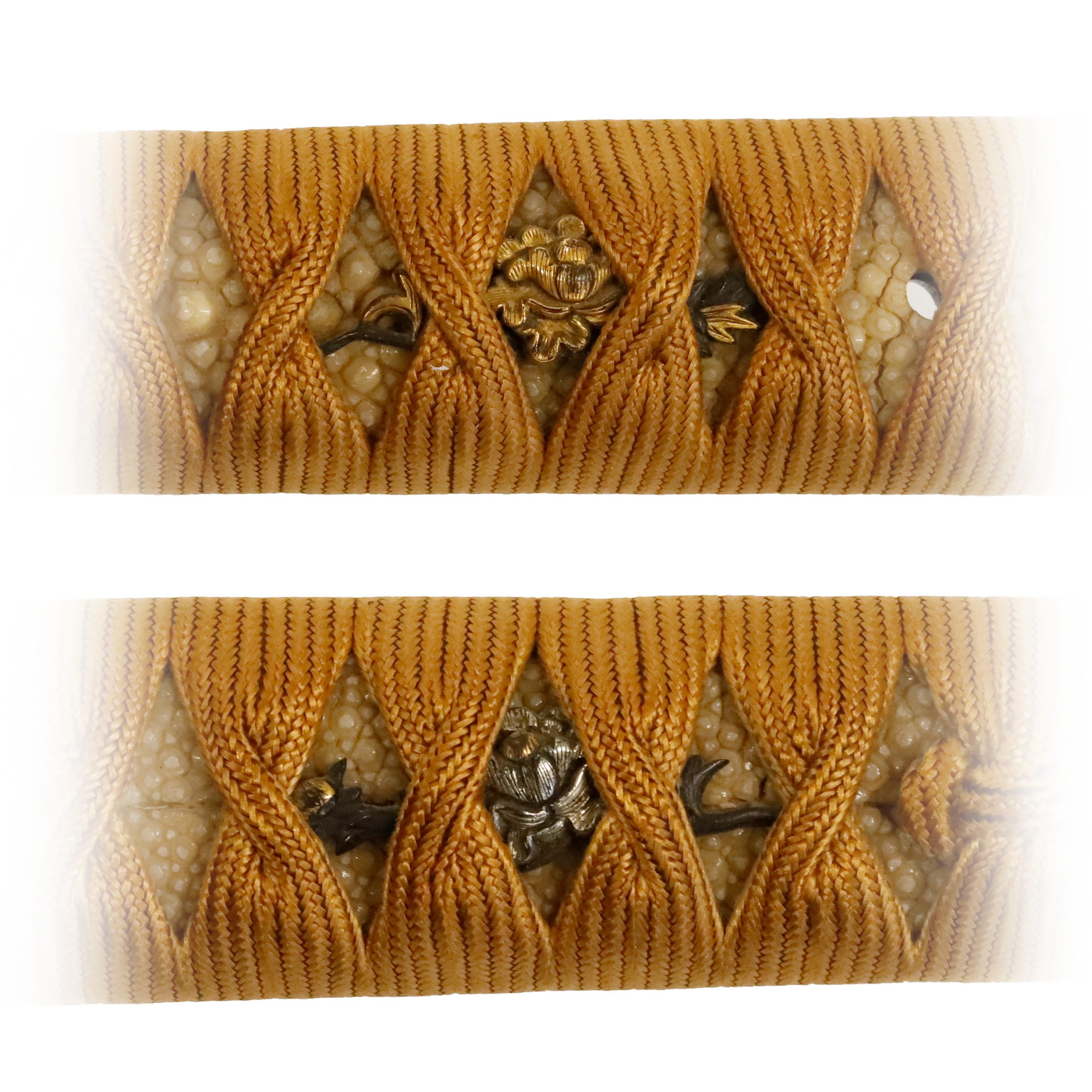
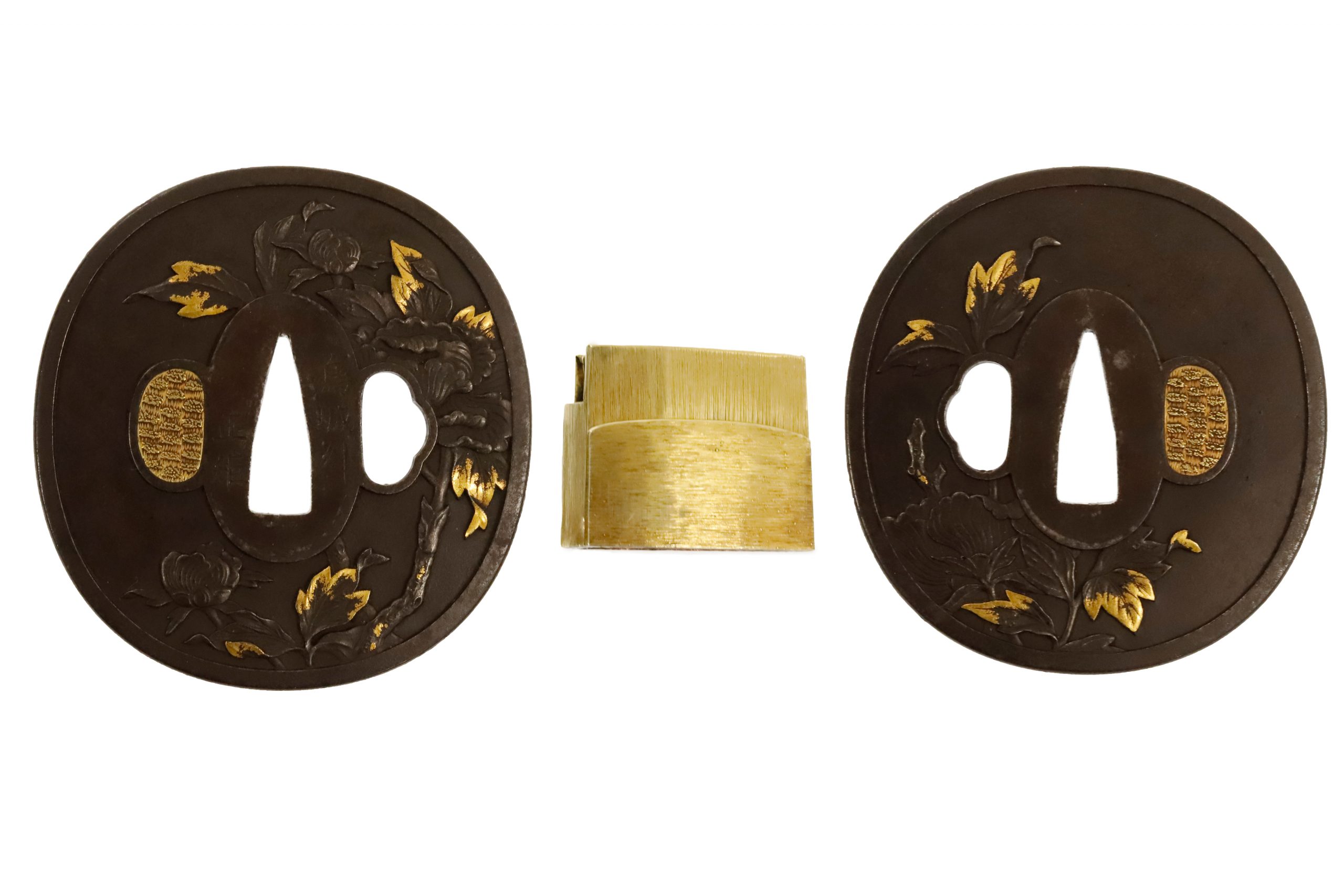
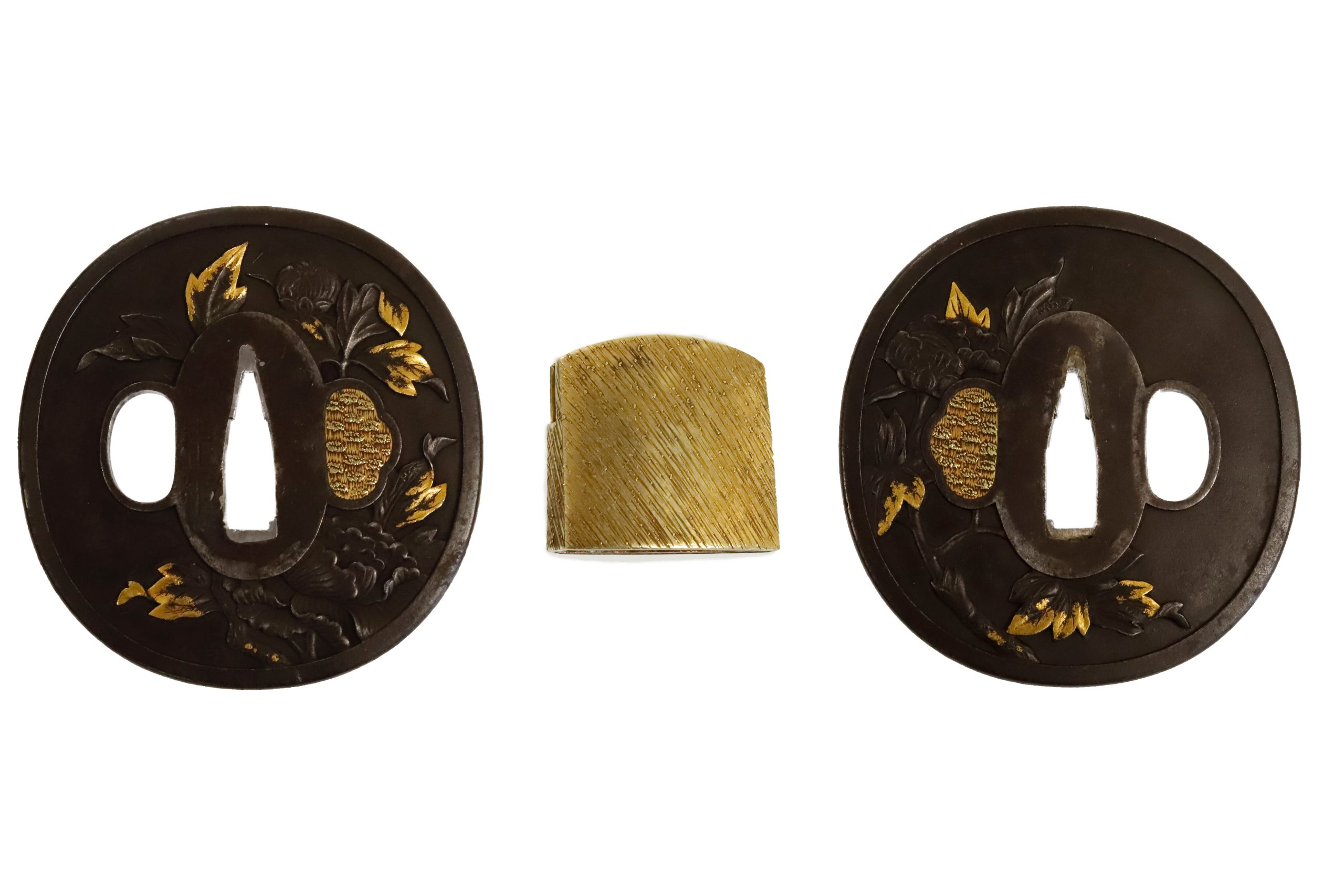
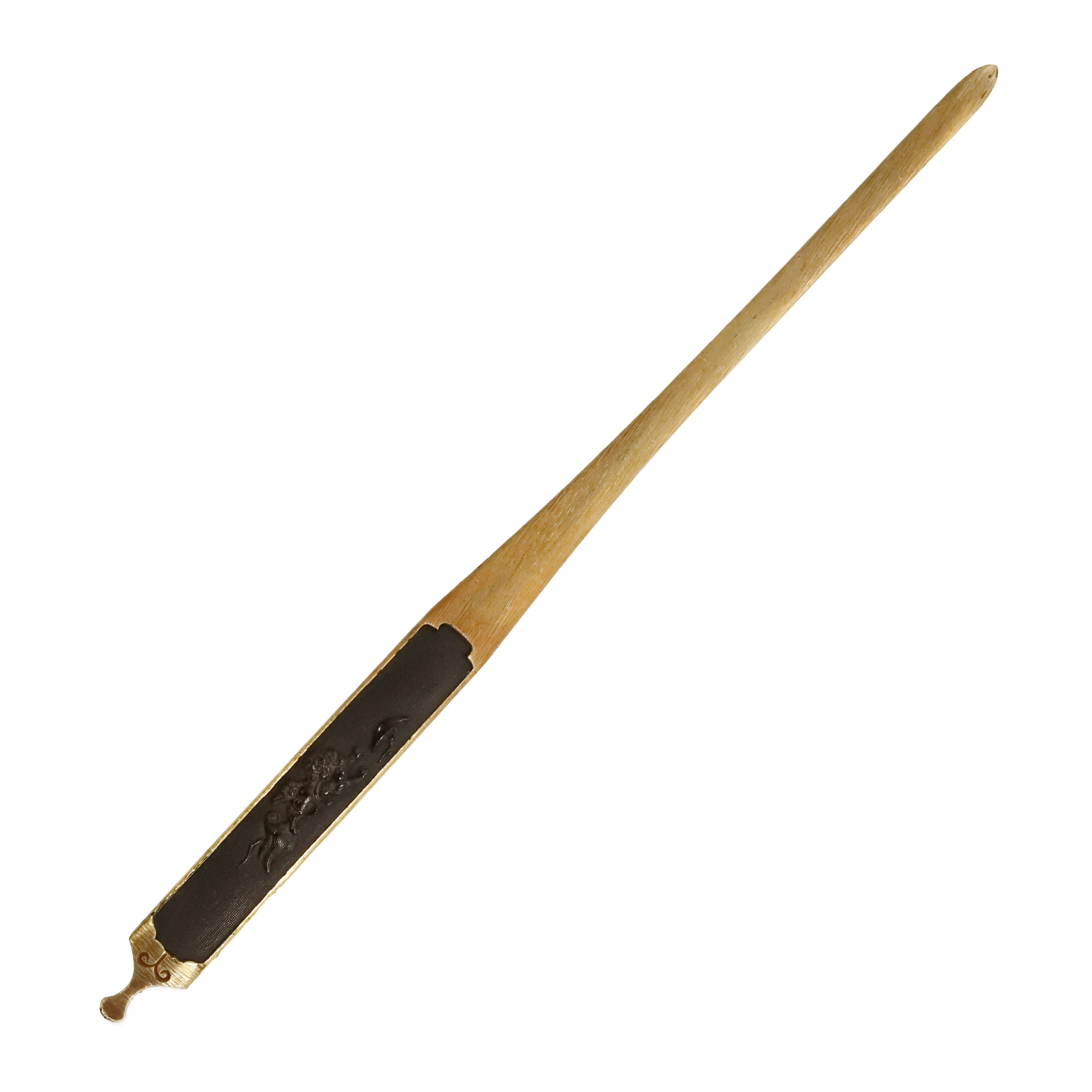
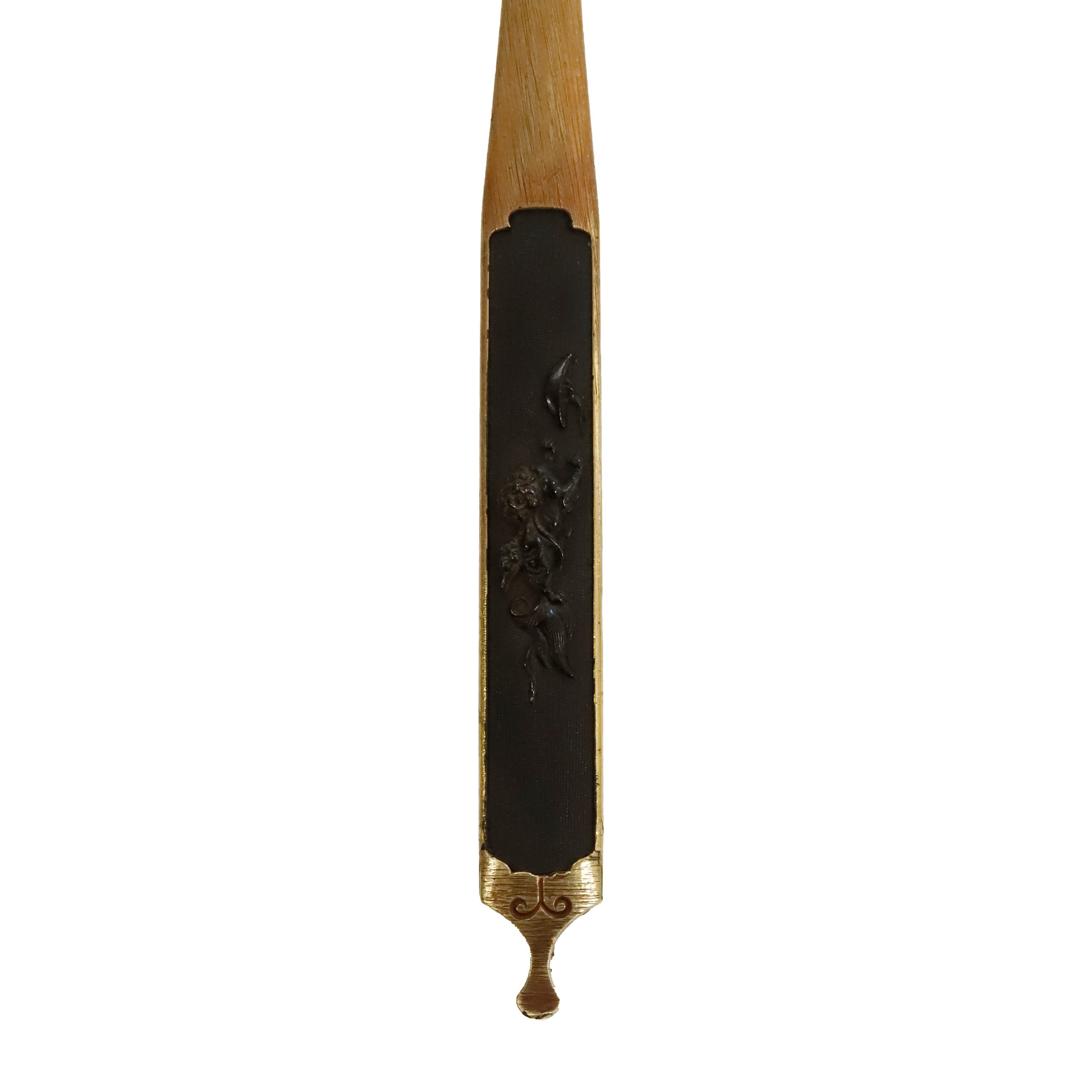
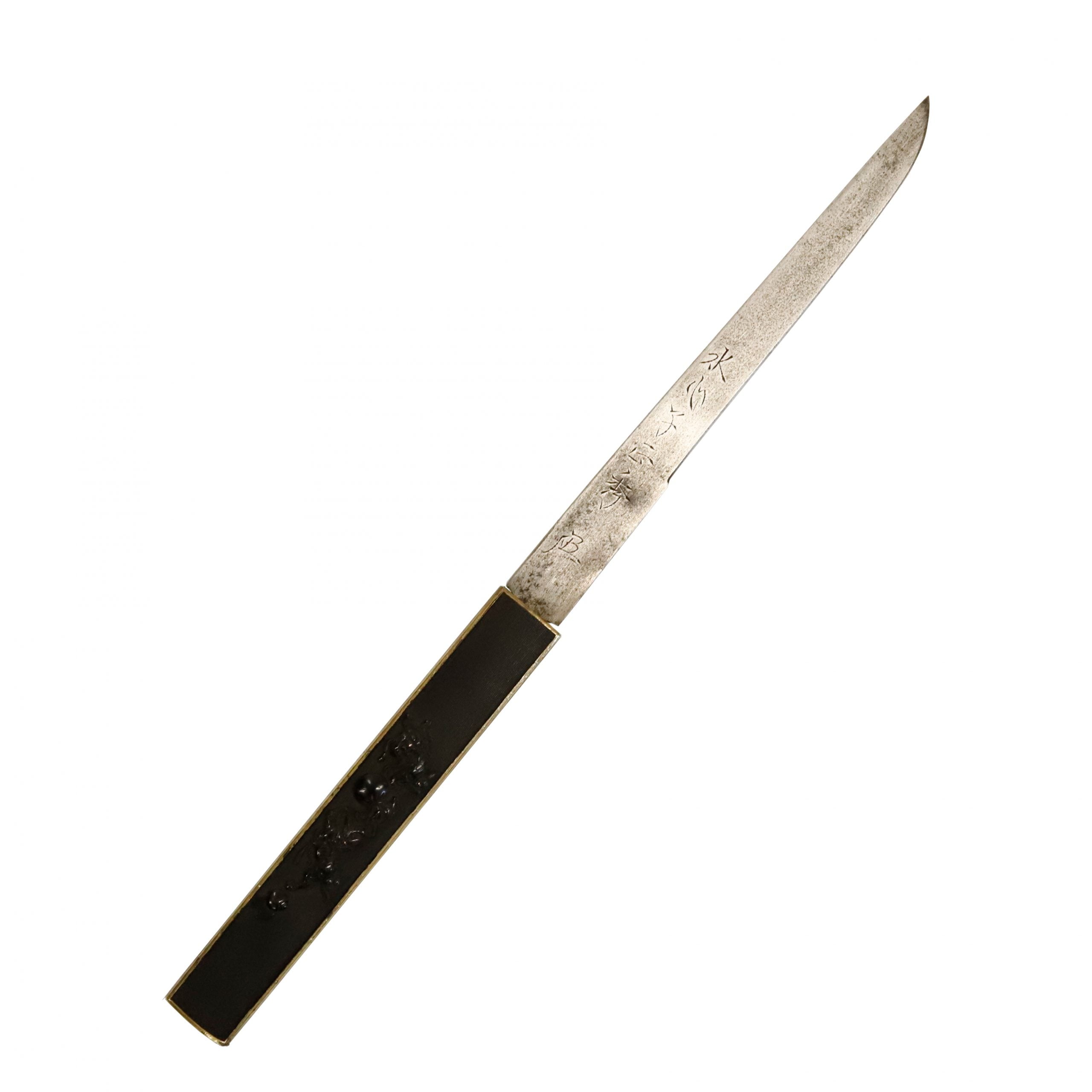
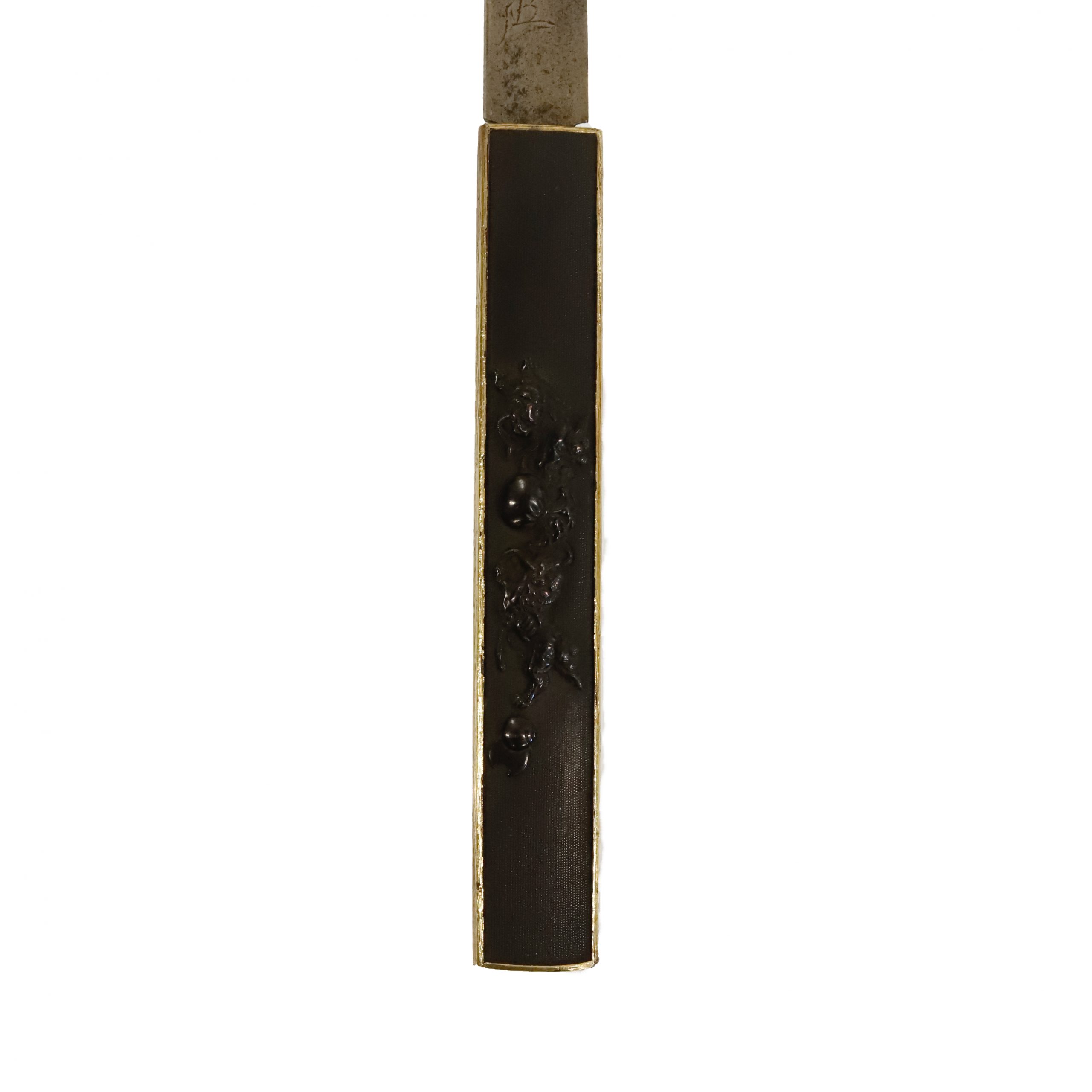
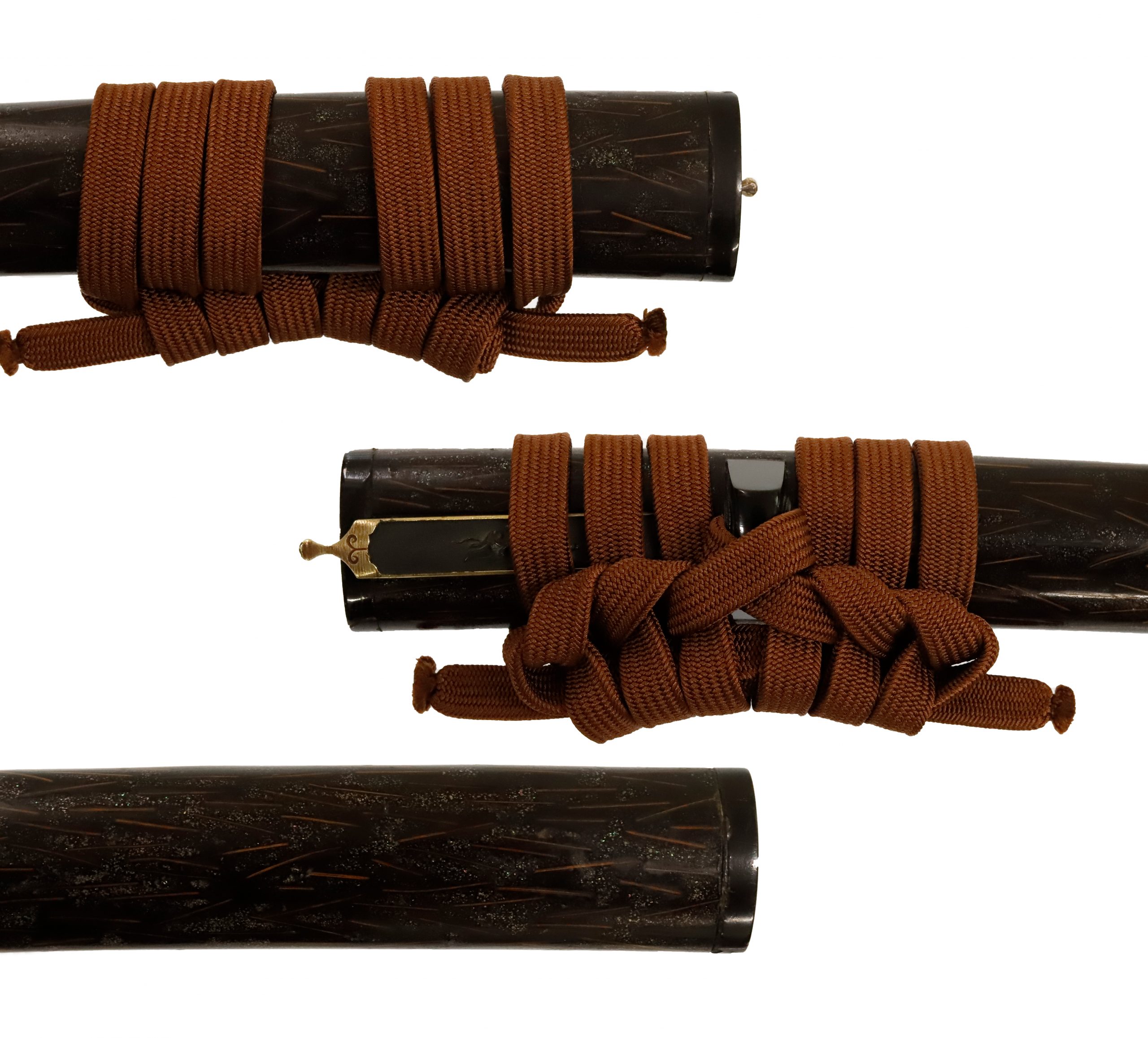
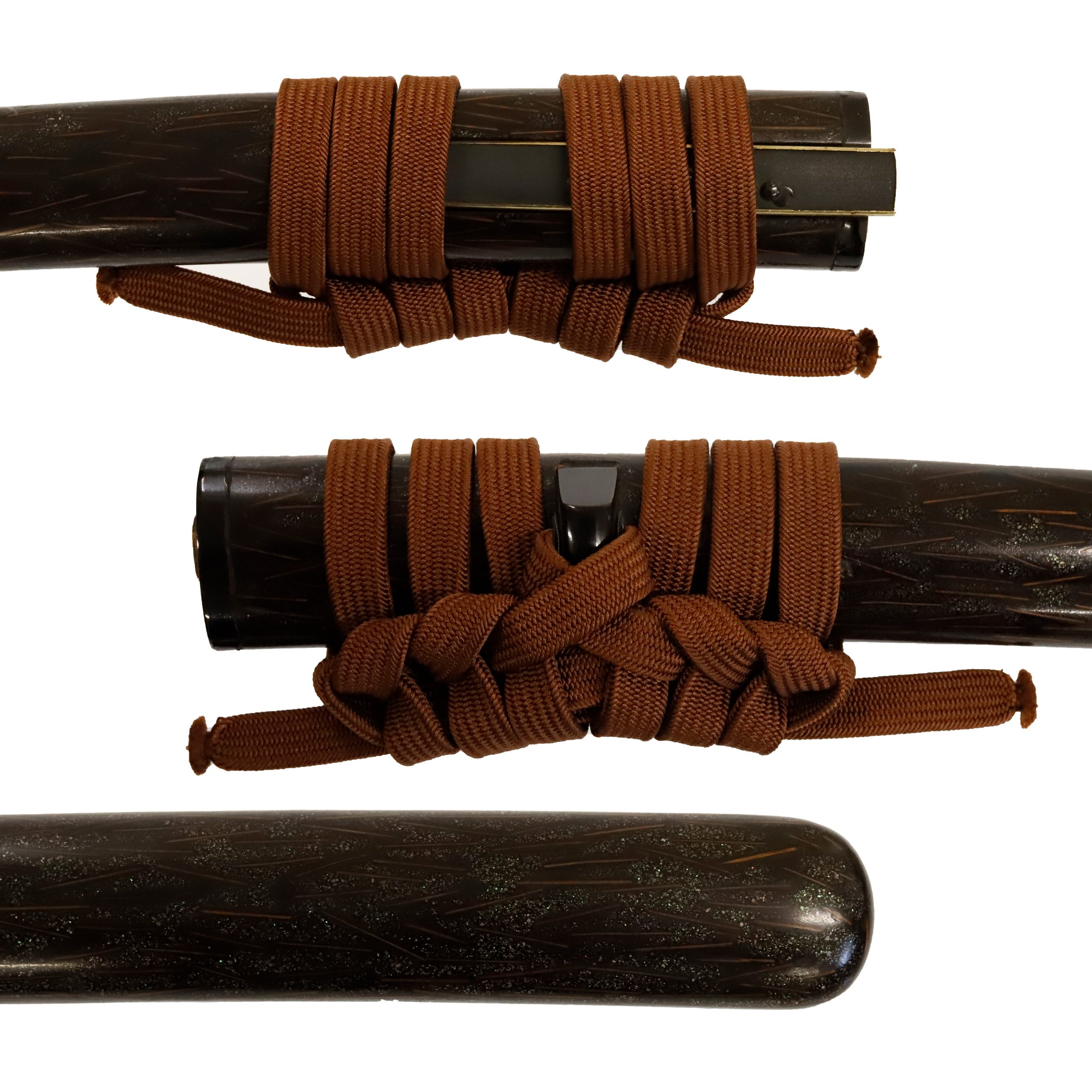
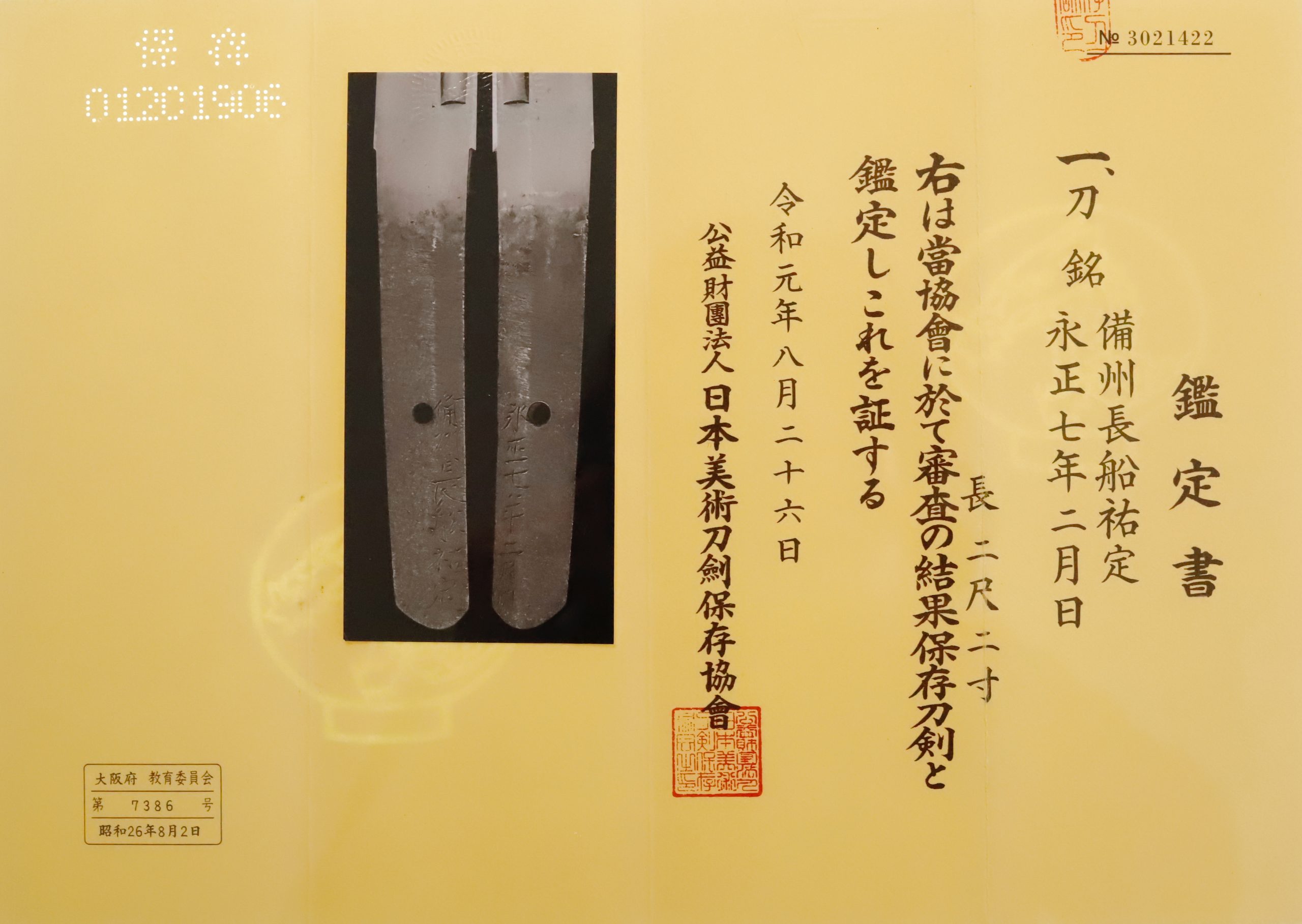
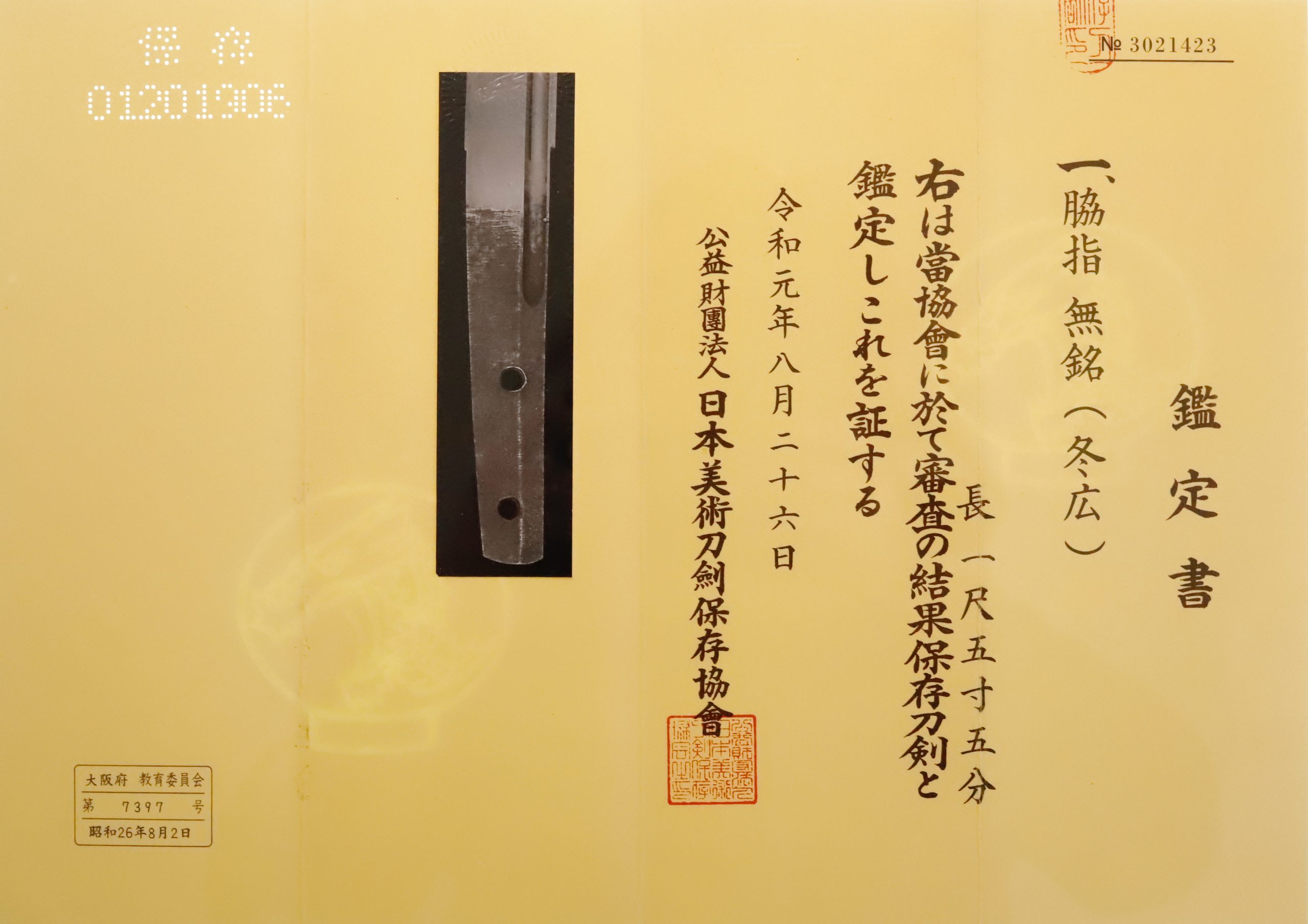
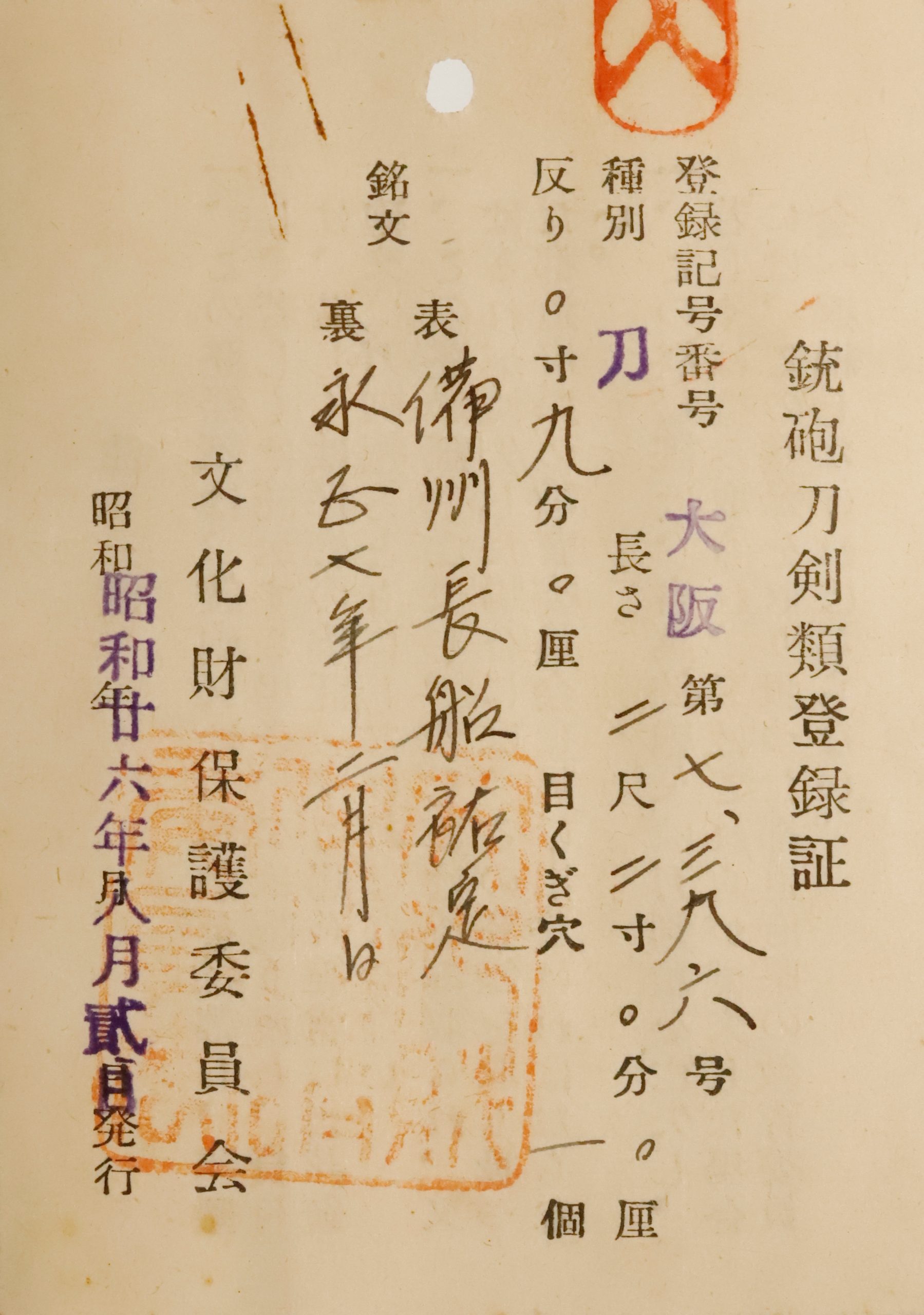
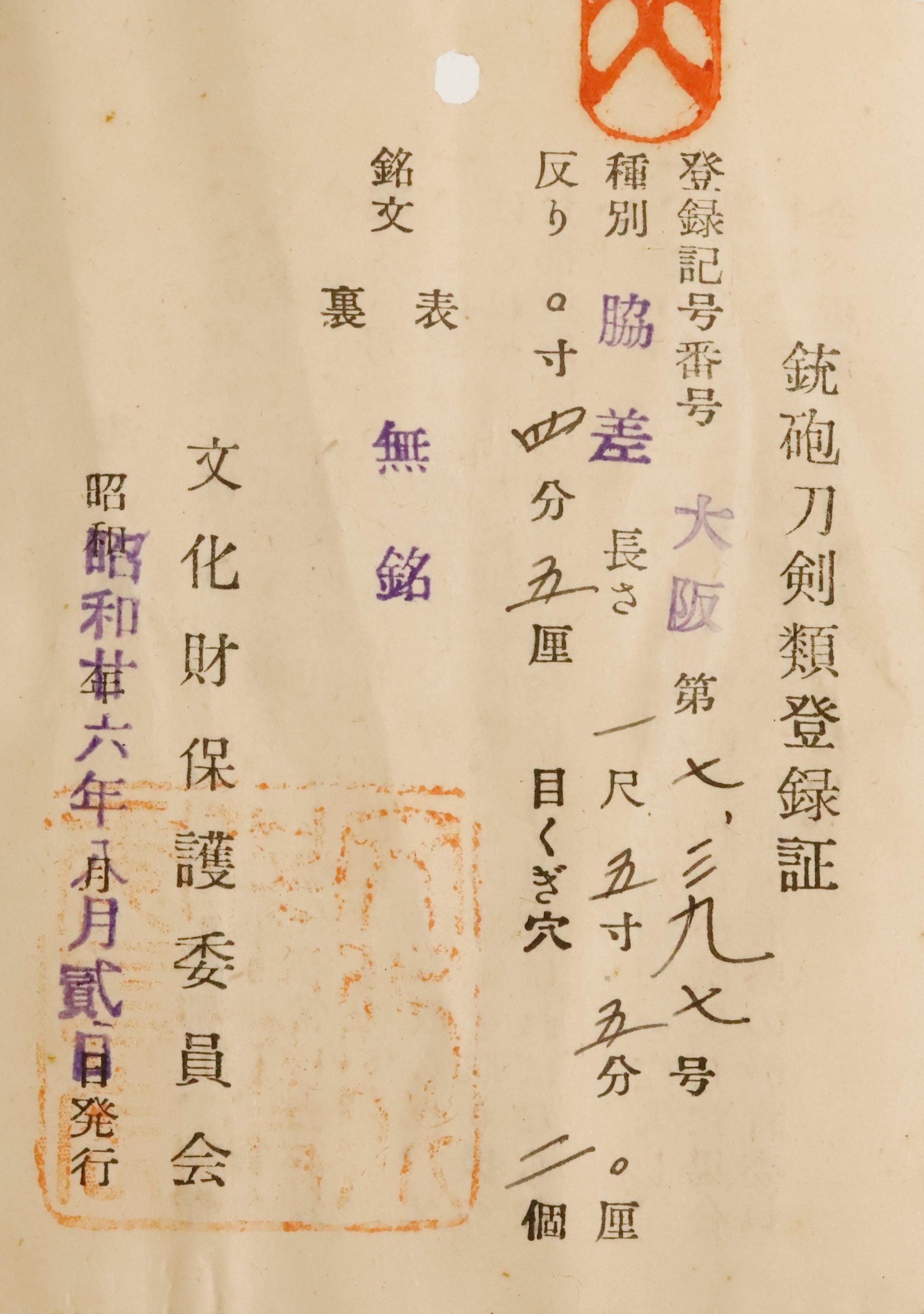
販売店の記載のまま
Sue-Bizen Osafune (Sukesada) · 備前 · 1487-1521頃
藤代 上々作 · 刀剣大鑑 上位18%
彦兵衛尉祐定は、室町後期に祐定と銘した末備前長船の数多い刀工群の中から、説明が特に挙げる三工の一人であり、その指定作五口はいずれも明応七年(一四九八)から永正十四年(一五一七)に及ぶ年紀のある刀である。室町末期の長船で祐定を名乗る刀工は数多いが、NBTHKの説明は俗名の冠を持つ与三左衛門尉・源兵衛尉及びこの彦兵衛尉を冠するものが「とりわけ技術が高い」[[c:1]]と繰り返し、同時代同派の中でも優れているとする。説明はさらに彼の家中での位置を定める一事を伝える。すなわち彼は年長であり、「与三左衛門尉祐定の父と伝え」[[c:2]]、末備前祐定の中で最も著名な与三左衛門尉祐定の父であったとする。彼は太刀が廃れて長い打刀を用いた長船最後の隆盛期の、最も傑出した一脈の頭に立つ。
その得意とする作域は静かなものである。説明は彼の作風を概ね直刃と読み、その佳作はこの域にあるとして、「作風は概ね直刃で、この手のものに佳作を見る」[[c:3]]と要約する。永正十年(一五一三)の刀がその静かな域を最もよく示す。焼幅を広めに取った直刃基調の中に互の目・小互の目が交じり、足が入り葉が目立ち、小沸が habuchi に付いて処々ほつれと僅かな湯走りを交え、細かな砂流しが通り、長めの金筋が刃を横切る。帽子は焼深く、表は浅くのたれて尖りごころに、裏は直ぐに大丸風となり、返りを共に長く焼き下げ掃きかける。線の中に多くの働きを抱えた抑えた一口で、説明が同工のものとする精緻な直刃調である。
もう一つの極は全く備前本来のもので、NBTHKはこれにも劣らず上手とすることを明記する。「本作のような備前本来の乱れ刃もまた上手である」[[c:4]]。ここでは丁子に互の目を交えたものを主調とし、乱れの腰が開いて腰びらきの形となり、小丁子・小互の目・尖りごころの刃を交え、処々重花風・複式風の乱れに発展する。下の地鉄はよくつんだ小板目から板目で、地沸つき、地景細かに入り、その上を幽かから明瞭まで乱れ映りが立ち、古備前の鉄の照り返す斑の映りを見せる。最も賑やかな作では沸が強くなり、金筋と砂流しが刃中に働き、小さな玉状の飛焼が地に入り、匂口は総体に明るく冴える。五口中最も古い明応七年(一四九八)の刀がこの作風の極で、説明は多種の刃・重花・複式風の乱れの豊かな働きを読み、「彦兵衛尉祐定の本領が遺憾無く発揮された」[[c:5]]一口とする。
二様は別々の時期ではなく一つの作域であり、指定作は華やかな方を主としつつ、説明は直刃をその地とし続ける。銘の枠は一貫しており、収集家はまずここで彼を読む。五口はいずれも生ぶ茎の刀で、指表に長銘、指裏に年紀があり、数口は細鏨で二行にわたる。最も明示的な明応七年と永正六年の刀は俗名を備えて備前国住長船彦兵衛尉祐定作と切り、俗名のない長船祐定銘のものは銘振りより彦兵衛尉と極められ、永正十四年・永正十年の説明はそれを明言する。永正の一口は「尉」の字を切らず彦兵衛祐定と銘し、説明は珍しいが僅かに経眼する形とする。彫物は一群の特色をよく示して繰り返し、棒樋に連樋または添樋を掻通しまたは丸止めにし、腰元に梵字・倶利迦羅・「南無八幡大菩薩」の陰刻を配する。
祐定の一群の中で彼を分かつのは、対比ではなく彼自身の備わった作位によって読まれる。彼の作は末備前の高品質の極で、最良の作では地刃共に明るく冴え、直刃調は肌目細かく、乱れも最も賑やかな所でさえ整っており、NBTHKは倶利迦羅と「南無八幡大菩薩」を彫る永正六年の刀を末備前の特色のよく表れたものとする。広い名への関係は系譜的で直接的であり、与三左衛門尉の父として、説明により源兵衛尉と並ぶ、技術が一群の上に立つ三工の一人とされる。より著名な子からも、数多い通常の祐定からも、彼を分かつのは一つの奇矯な見どころではなく、作位の均質さ、静かな直刃から複式の乱れに及ぶ作域の広さ、彫物と銘の丁寧さである。
彼の作は五口が重要刀剣に合格し、五口はすべてその一域に在って、より上位の指定には上がっておらず、これが原則として取引され得る指定作の全体である。藤代は上々作と評し、刀工大鑑の評価は末備前の主要な名の中に置くが、一派の頂には達しない。五口のいずれも公刊の記録に伝来や旧蔵者の名を持たず、伝えるより使うために打たれた打刀工にふさわしい。私的な収集家にとって彼は傑出した長船の名の中ではより手の届く一人であり、年紀と銘のある彦兵衛尉祐定は時に市場に現れ、一口の中に彼の精緻な直刃と、公刊の記録が末備前の作の頂に置く明るい備前の乱れの両方を備える。
祐定の位置づけを、日本刀全体および伝法・時代・時期ごとに示します。各区分(随一・屈指・有数・著名)は、NBTHK および文化庁による指定に加え、三作や名物帳などの歴史的栄誉を加味したものです。
各項目を選ぶと評価方法が表示されます。
在銘年紀作が示す、確実に活動していた年代
備前伝 · 備前
時期区分: 末備前· 1441–1596
現在53点販売中
嘉吉から文禄に及ぶ室町時代後期、長船派の最末期を画するのが末備前である。応永備前が古作への復古を志して優美な太刀姿と丁子刃を甦らせたのに続き、この期の長船鍛冶は戦国の世の旺盛な武器需要に応じて作刀の規模を一段と広げ、長船の名のもとに膨大な数の刀剣を世に送り出した。説示にあらわれる主要工は、勝光、宗光、貞光、治光、忠光、清光、春光、祐定の一群である。勝光は宗光・忠光と並ぶ巧者で、右京亮・次郎左衛門尉・修理亮など様々な俗名を冠する同名工を擁し、貞光や子の治光との合作銘も伝わる。祐定にあっては与三左衛門尉・源兵衛尉・彦兵衛尉を冠する者がとりわけ技術が高く、与三左衛門尉祐定は名品の数多くその筆頭に挙げられ、彦兵衛尉はその父と伝えて慶長まで数代を数える。清光は五郎左衛門尉と孫右衛門尉が筆頭格、春光は文明から文禄に及ぶ長期に同名数工があって十郎左衛門が最も知られる。この期には播磨・備前・美作の守護赤松政則が宗光・勝光の一党を陣中に招いて鍛刀の技を学び為打を遺したことも説示に見え、注文打と数打物とが併存した末期の様相をよく伝えている。 体配はまず時代を映す。身幅広く寸のつまり、重ね一段と厚く、踏張りがあって先反りつき、中鋒、茎は片手打に適した短いものとなる、室町後期特有の打刀姿である。鍛えは小板目肌がよくつみ、地沸が微塵につき、地景が細かに入って、淡くあるいは鮮明に乱れ映りが立つ。刃文の中心をなすのは末備前固有の腰の開いた互の目で、焼頭が割れて複式に乱れる複式互の目を基調に、尖り刃・尖りごころの互の目・小互の目を交え、足・葉頻りに入り、匂勝ちに小沸がつき、金筋・砂流しがかかり、処々に小さな飛焼を交える。さらに飛焼・棟焼が頻りにかかって皆焼風となる作もあり、帽子は乱れ込んで先小丸に長く返る。これは光忠の蛙子丁子、長光の丸い頭の丁子、景光の片落ち互の目といった古長船・相伝備前の整然たる丁子主調とは趣を異にし、応永備前の腰開き互の目をさらに崩して量感と変化に向かわせた戦国期の姿である。同時に勝光のように乱れの中へ丁子を多く交えて一段と華やかに焼き、忠光や清光のように直刃の上手として定評を得る工もあり、作域は広い。 鑑定にあっては、まず乱れ映りで備前と読み、つまった寸と厚い重ね、先反り強き打刀姿で時代を末備前に定める。次に俗名と作風で工を分かつ。乱れの中に丁子を多く交えた華やかな出来は勝光、複式風の互の目に飛焼を交えてやや皆焼がかるは与三左衛門尉祐定、板目に杢を交えてやや肌立つ直刃は孫右衛門尉清光、直刃に佳作多きは彦兵衛尉祐定、というように看どころが工を指し示す。表裏に施された梵字・蓮台や棒樋連樋の刀身彫もまた末備前の特色をよく示し、長光景光以来の彫の伝統がこの期まで継承されたことを物語る。代表作には、勝光・貞光合作の明応八年紀の薙刀、勝光・治光父子合作の大永七年紀の短刀、与三左衛門尉二代の元亀元年紀の刀があり、合作銘や所持銘・添銘を伴う注文打は、末備前とそれを支えた三宅氏のごとき在地の氏族を知る上でも資料性が高い。 詳しく見る →
室町時代の備前
室町の長船は輸出産業であった。明との勘合貿易はおよそ十二万八千振の日本刀を海の彼方へ運び、国内では戦国の軍勢が買い手となった。注文主の俗名を銘に刻む注文打ちが、兵卒用の数打ち物と並んで鍛えられている。
銘が正しい、または無銘でも年代・国・系統を確実に指摘できる、保存に値する真正の作と鑑定されたものです。
日本美術刀剣保存協会(NBTHK)は、1948年に設立され、文化庁の監督を受ける公益財団法人で、東京・刀剣博物館に本部を置きます。専門の審査員が出品作を直接審査し、美術的・歴史的価値に応じた鑑定書を発行します。NBTHKの鑑定書は、日本刀および刀装具の真正性を示す最も広く認知された基準です。
NBTHK公式サイトReturns/exchanges limited to defects caused by shipping (except willful misconduct or gross negligence by the company); customers must contact within 72 hours of receiving the product.