NihontoWatch MonNihontoWatchBETA
MarketEncyclopedia
NihontoWatch Mon

NihontoWatchBETA

Market
Encyclopedia
Overview·Kantei·Designations·Blade Forms·Signatures·Lineage·School
OverviewKanteiDesignationsBlade FormsSignaturesLineageSchool
  1. Schools
  2. Osafune
  3. Sue-Bizen
  4. Sukesada

Sukesada

祐定

Jūyō
Vol. 50, No. 114 · Katana

Sukesada

祐定

5 ranked works

ProvinceBizenEraChōkyō–Eishō (1487–1521)PeriodMuromachiSchoolOsafune>SukesadaTraditionBizen-denGeneration1stFujishiroJo-jo sakuToko Taikan650(top 18%)TypeSwordsmithCodeSUK783
5Jūyō Tōken

Overview

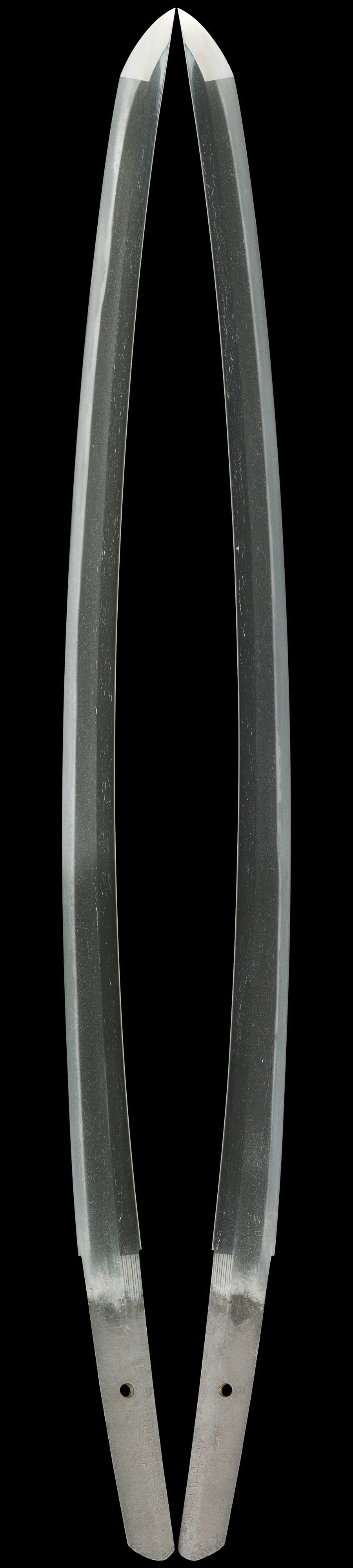
Hikobei-no-jo Sukesada is one of three smiths the published sources lift out of the crowded body of masters who signed Sukesada in the late , his five designated works all signed dated between Meio 7 (1498) and Eisho 14 (1517). Among the many smiths who used the name Sukesada in late- , the 's commentary repeats that those bearing the common-name titles Yosozaemon-no-jo, Genbei-no-jo, and this Hikobei-no-jo are 「とりわけ技術が高い」, the most accomplished of the line even within the period and school. The published sources transmit a further fact that fixes his place in the family: he was the elder, 「与三左衛門尉祐定の父と伝え」, the father of Yosozaemon-no-jo Sukesada, the most celebrated of all the Sukesada. He sits, then, at the head of the most distinguished branch of the last great phase of the line, the generation that worked the long as the fell out of use.

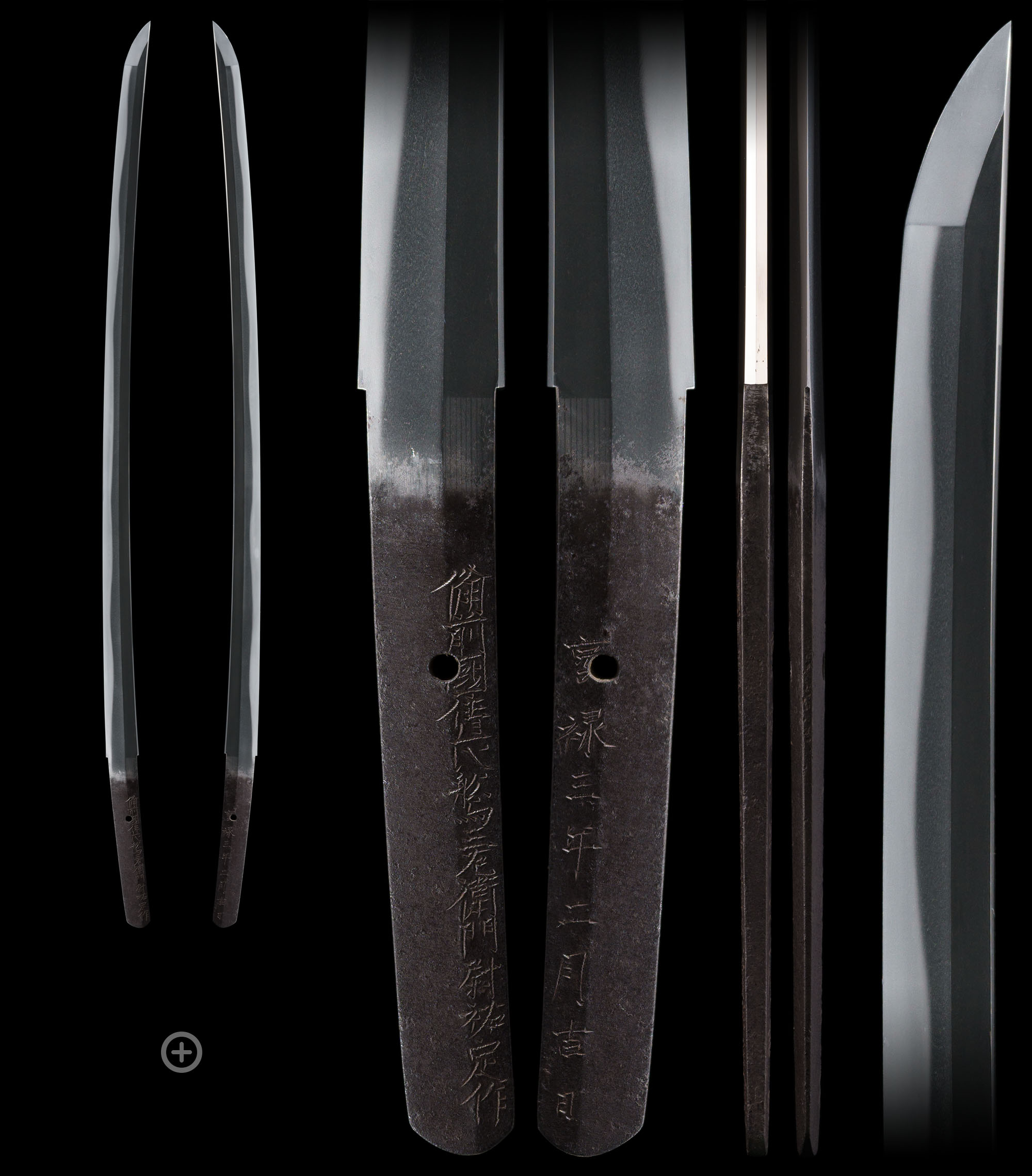
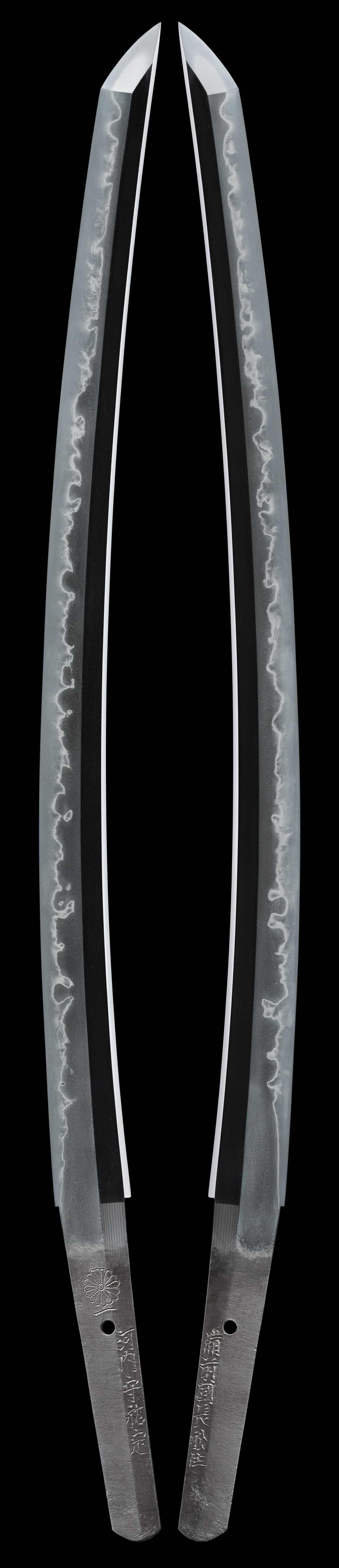
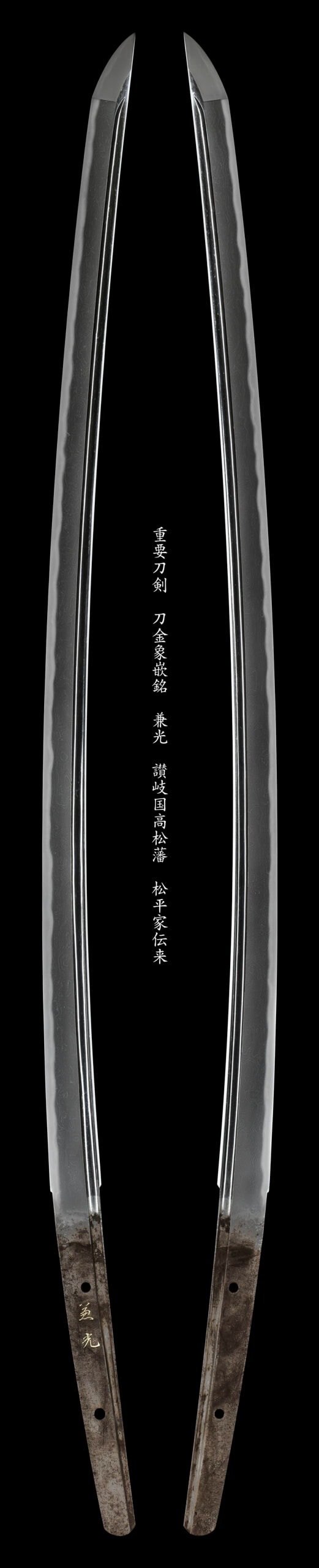
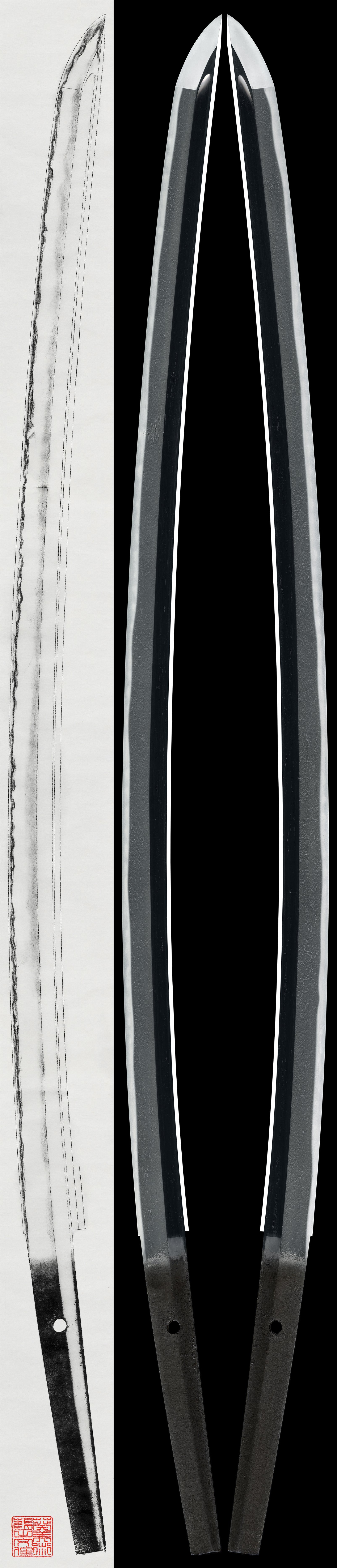
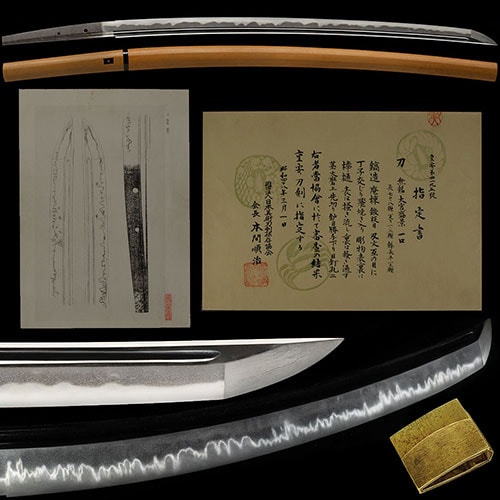
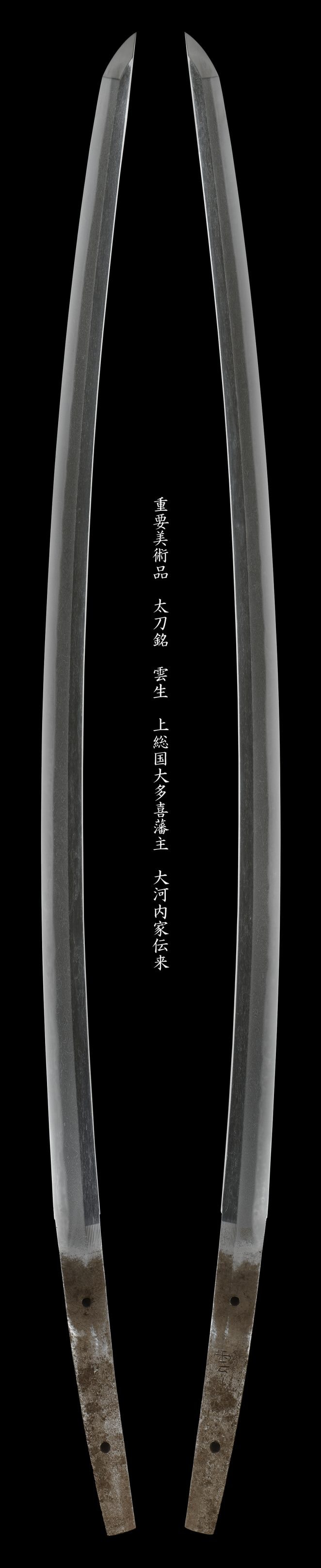
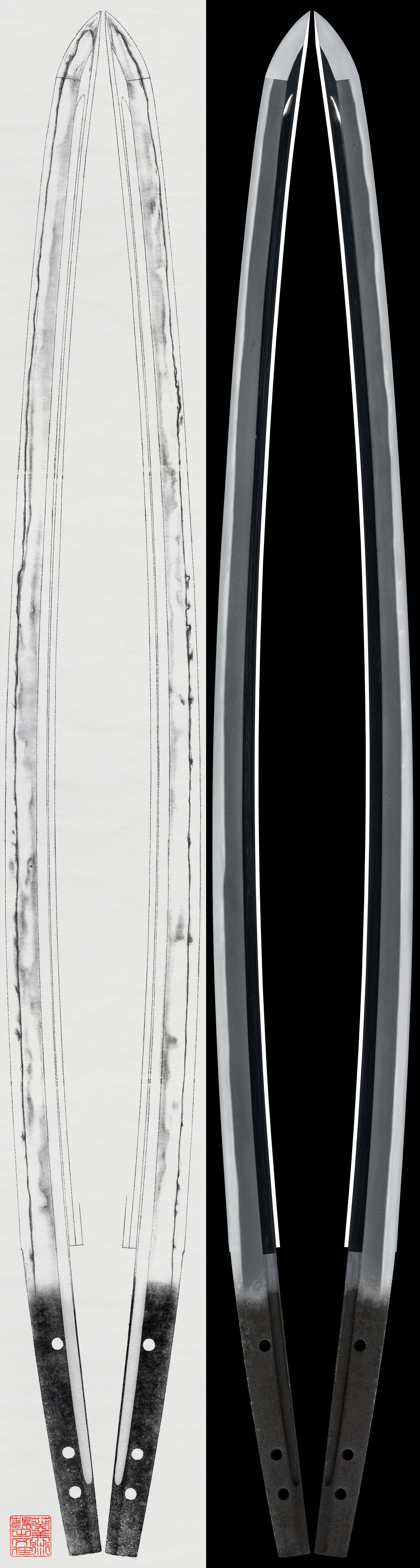
His declared specialty is a calm one. The published sources read his manner as broadly , the register in which his fine pieces are found, his hand summarised as 「作風は概ね直刃で、この手のものに佳作を見る」. The Eisho 10 of 1513 shows that quiet domain at its best. The is taken deliberately broad on a base, into which and enter, the present and the conspicuous, clinging along a that here and there drifts into faint and a little , fine running through and long striking across the temper. The is tempered deep, shallow and -leaning into a pointed cast on the , straight to a large on the , the brushed down long on both sides. It is a restrained blade carrying a great deal of incident within the line, the kind of finely controlled the published sources name his own.

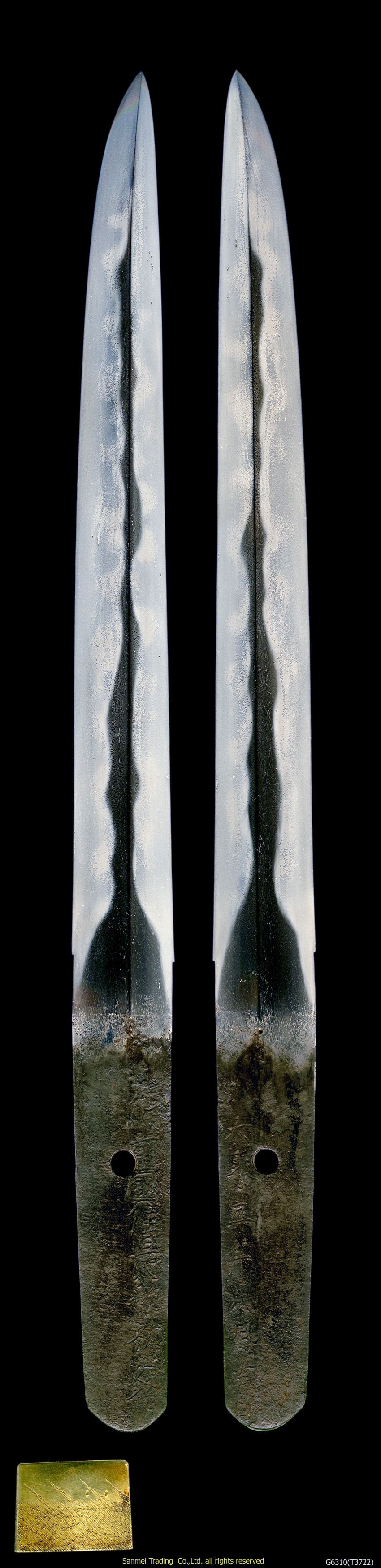
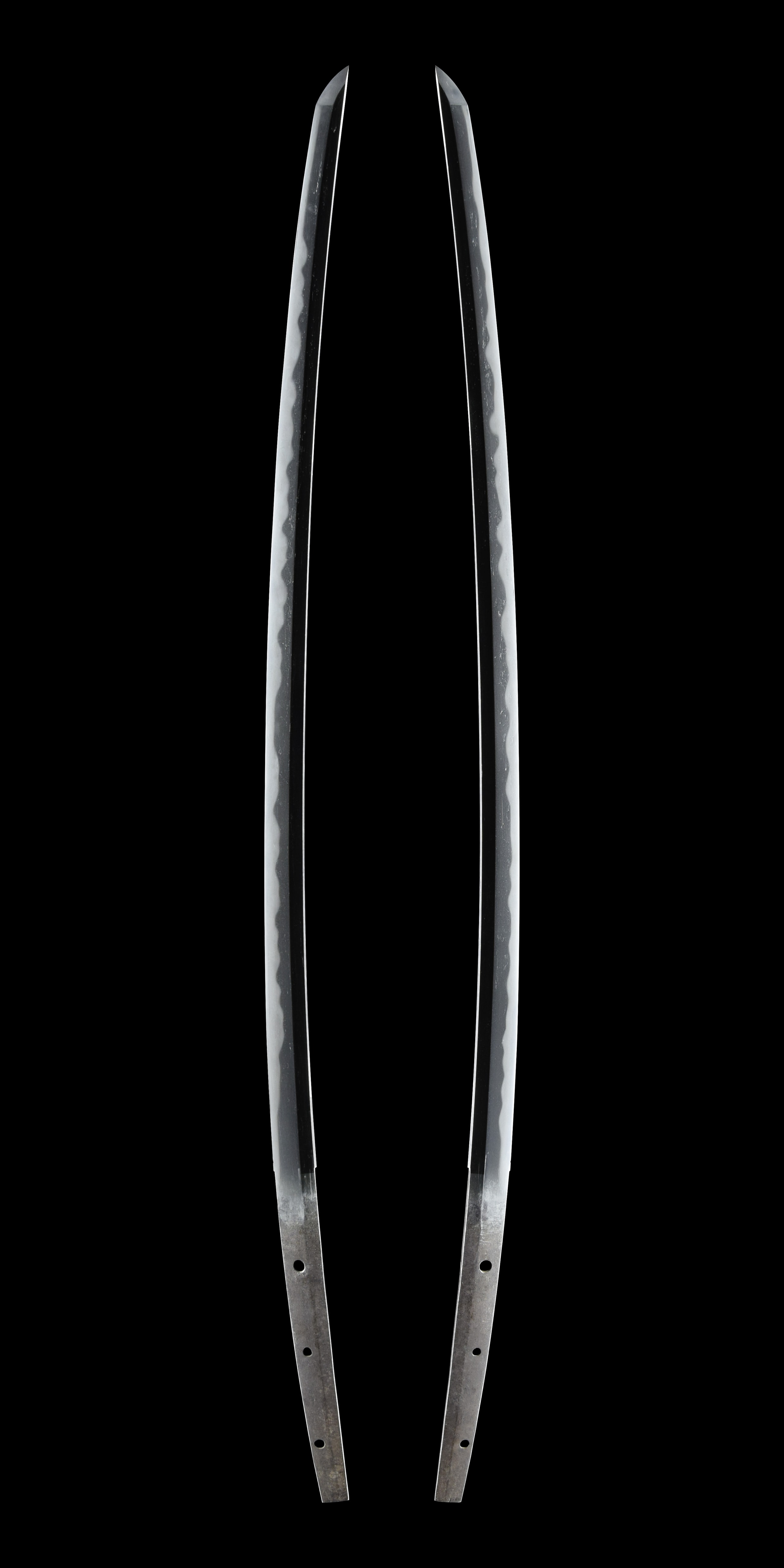
The other pole of his range is fully native , and the is explicit that he is no less skilled in it: 「本作のような備前本来の乱れ刃もまた上手である」. Here the keynote is mixed with , the valleys of the opening at the base into a waist-spread form, and and pointed folded in, the pattern in places building into a double-flower juka and a compound . The beneath is a tight to itame, closely packed and clear, attaching, fine entering, and across it a that runs from faint to fully risen, the speckled reflection the old steel throws back. On his most exuberant work the thickens, and play through the , small bead-like drop into the , and the stays bright and clear over the whole. The Meio 7 of 1498, the earliest dated of the five, is the apex of this manner, a tall flamboyant in which the published sources read the full play of multiple kinds of teeth, juka and forms together, and judge it a piece in which 「彦兵衛尉祐定の本領が遺憾無く発揮された」.

The two manners are not separate periods but one working range, and the designated blades favour the flamboyant pole while the commentary keeps naming the as his proper domain. The signature register is consistent and is where a collector reads him first. All five are on , a long signature cut on the and a date on the , several of them in fine chisel run over two columns. The most explicit, the Meio 7 and the Eisho 6 , carry the full common name, no Hikobei-no-jo Sukesada ; the pieces that sign only Sukesada without the title are appraised as Hikobei-no-jo from the manner of the , as the Eisho 14 and Eisho 10 commentaries say outright. One of the Eisho-dated blades drops the jo character to read simply Hikobei Sukesada, a form the published sources note is unusual but occasionally seen. The carvings deepen the picture and recur across the group: paired with a companion or , run through or stopped in , and at the base a religious motif, on different blades a Sanskrit , a dragon, or the carved invocation Namu cut in intaglio.

What sets him apart within the Sukesada body is read by his own affirmed traits rather than by contrast. His is the high-quality end of production, the and both bright and clear on his best pieces, the finely grained and the disciplined even at its most lively, and the calls one Eisho 6 , with its and Namu carving, a work in which the character is well displayed. His relationship to the wider name is genealogical and direct: father of Yosozaemon-no-jo, set by the published sources beside Genbei-no-jo as one of the three masters whose technique stands above the rest of the line. He is distinguished from his more famous son and from the many ordinary Sukesada not by a single eccentric tell but by the evenness of his quality, the breadth of his range from quiet to compound , and the care of his carving and signature.

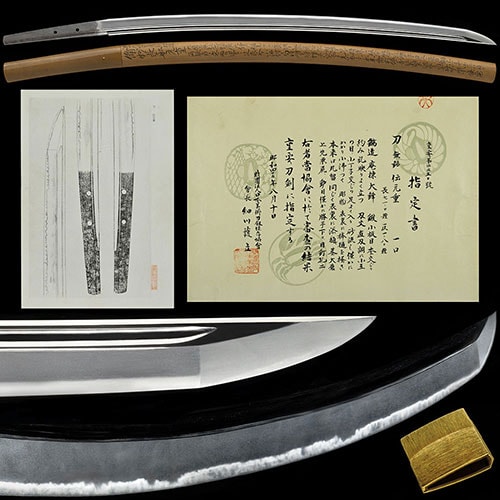
Five of his works have passed , and all five sit in that one register, none raised to a higher designation, so they form the body of his designated work that can in principle change hands. Fujishiro rates him Jo-jo , an upper-grade ranking, and his Toko Taikan valuation places him among the substantial names without reaching the top of the school. None of the five carries a recorded line of provenance or a named former owner in the published record, which is in keeping with a working smith whose blades were made to be used rather than handed down through a house. For a private collector he is among the more attainable of the distinguished masters, a dated and signed Hikobei-no-jo Sukesada coming to market from time to time and offering, in a single blade, both his finely controlled and the bright the published record places at the height of late work.

Kantei

the two-mode reading the published sources draw for this smith: his manner is broadly suguha-cho, the register in which the sources say his fine pieces lie, but a native Bizen choji-and-gunome midare that opens at the waist into juka and compound forms is equally accomplished, and the present designated blades favour that flamboyant pole; orthogonal to the style axis runs the signature itself, every blade an ubu, dated, long-signature katana, several cut in fine chisel, the unsigned-by-common-name pieces attributed to Hikobei-no-jo off the manner of the mei.

Sukesada is the great late- name borne by a body of smiths, of whom the published sources single out three as especially skilled and ranked above their contemporaries: Yosozaemon-no-jo, Genbei-no-jo, and the Hikobei-no-jo whose blades make up this corpus. Every designated work here is a signed and dated running from Meio 7 (1498) to Eisho 14 (1517), most carrying the long signature no Hikobei-no-jo Sukesada on an , the unsigned-by-common-name pieces read as Hikobei-no-jo from the manner of the signature. The published sources transmit that Hikobei-no-jo Sukesada was the father of Yosozaemon-no-jo Sukesada, and that his working manner is broadly , in which his fine pieces are found, though a native like the present blades is also accomplished. The hand is the mature : a of late- cast, body width ordinary to broad, thick in , strong and a , on the heaviest a sturdy two-handed feel. Over a tight to itame ground with and a faint to risen , the temper runs from a carrying and to a flamboyant -and- that opens at the base and builds into juka and compound () forms, and abundant, with and , the bright and clear.

Diagnostic discriminators

20% of his works

on the Meio 7 katana the temper reaches its most agitated, the published sources reading multiple kinds of teeth, juka and fukushiki forms, deep yaki, tobiyaki and the full play of ashi, yo, kinsuji and sunagashi as the apex of the smith's flamboyant manner

40% of his works

長銘

100% of his works

Observation by phase

The suguha-cho mode, the smith's own specialty

The published sources state plainly that Hikobei-no-jo's manner is broadly and that his fine pieces are found in this hand. The Eisho 10 (1513) shows it: over a tight with dust-fine , fine and a faint , the is taken broad on a base into which and enter, present and prominent, attaching, and lightly mixed, fine and long, the bright. The runs deep, on the a shallow turning to , on the straight into an , both with a long brushed turnback. The published sources judge this calm register, with its finely-grained ground, his characteristic domain.

Jigane 地鉄
Hamon 刃文
Bōshi 帽子

The flamboyant Bizen choji-and-gunome midare

The published sources call this -native hand also accomplished, and the present designated blades favour it. The Meio 7 (1498) is the most exuberant: over a tight with dust-fine , fine and a faint , the runs high with and as the keynote, , , waist-opened (koshi-hiraki) and pointed mixed in, here and there a double-flower juka form and a compound , and entering well, laid in with , and , small round dropped in, the bright. The Eisho 6 (1509) carries the -and- with the waist opening, and frequent, -dominant with , the risen and the and both bright. The here is turning in or with a pointed cast and a brushed tip.

Jigane 地鉄
Hamon 刃文
Bōshi 帽子

The signature register: ubu, dated, long-signature katana

Orthogonal to the two style modes runs the signature itself, the register collectors read first on this smith. Every blade is a on an , the carrying a long signature and the a date; on several the chisel is fine (hosotagane), the long signature run in two columns. Two of the five give the full common name, no Hikobei-no-jo Sukesada , dated Meio 7 (1498) and Eisho 6 (1509); the others sign Sukesada without the common name and are read as Hikobei-no-jo off the manner of the . One Eisho 6 drops the jo character to read Hikobei Sukesada, a rare form the published sources note is occasionally seen. The carvings are characteristic of the group: paired with or run through or stopped round, and at the base a religious motif, on different blades a Sanskrit , a dragon, or the carved characters Namu , the last a shingo invocation.

Sugata 姿
Scholarship

The published sources state the ranking nearly verbatim across the corpus: among the many smiths signing Sukesada in late-Muromachi Osafune, those bearing the common names Yosozaemon-no-jo, Genbei-no-jo, and Hikobei-no-jo are especially skilled, their technique high even within the same period and school.

The published sources transmit the genealogy directly, that Hikobei-no-jo Sukesada was the father of Yosozaemon-no-jo Sukesada, and read his manner as broadly suguha, the register in which his fine pieces are found, while judging a native Bizen midare like the present blades equally accomplished.

Designations

Kokuhō—
Jūyō Bunkazai—
Jūyō Bijutsuhin—
Gyobutsu—
Tokubetsu Jūyō—
Jūyō Tōken5

Elite Standing

0.03 across 5 designated works

Top 25% among smiths

Blade Forms

Distribution across 5 ranked works

Signatures

Signature types across 5 ranked works

Currently Available

Lineage

Sukesada
Students (4)
  1. 1.Sukesada祐定6 for sale73designated
  2. 2.Katsumitsu勝光1 for sale3designated
  3. 3.Norimitsu法光2 for sale2designated
  4. 4.Sukesada祐定1designated

Sukesada School

Other artisans of the Sukesada school

  1. 1.Sukesada祐定6 for sale73designated
  2. 2.Sukesada祐定18designated
  3. 3.Sukesada祐定3 for sale8designated
  4. 4.Sukesada祐定1 for sale2designated
  5. 5.Sukesada祐定1designated
  6. 6.Sukesada祐定9 for sale2designated
  7. 7.Sukesada祐定3 for sale1designated
  8. 8.Sukesada祐定2designated
  9. 9.Sukesada祐定1designated
  10. 10.Sukesada祐定3 for sale2designated