説明
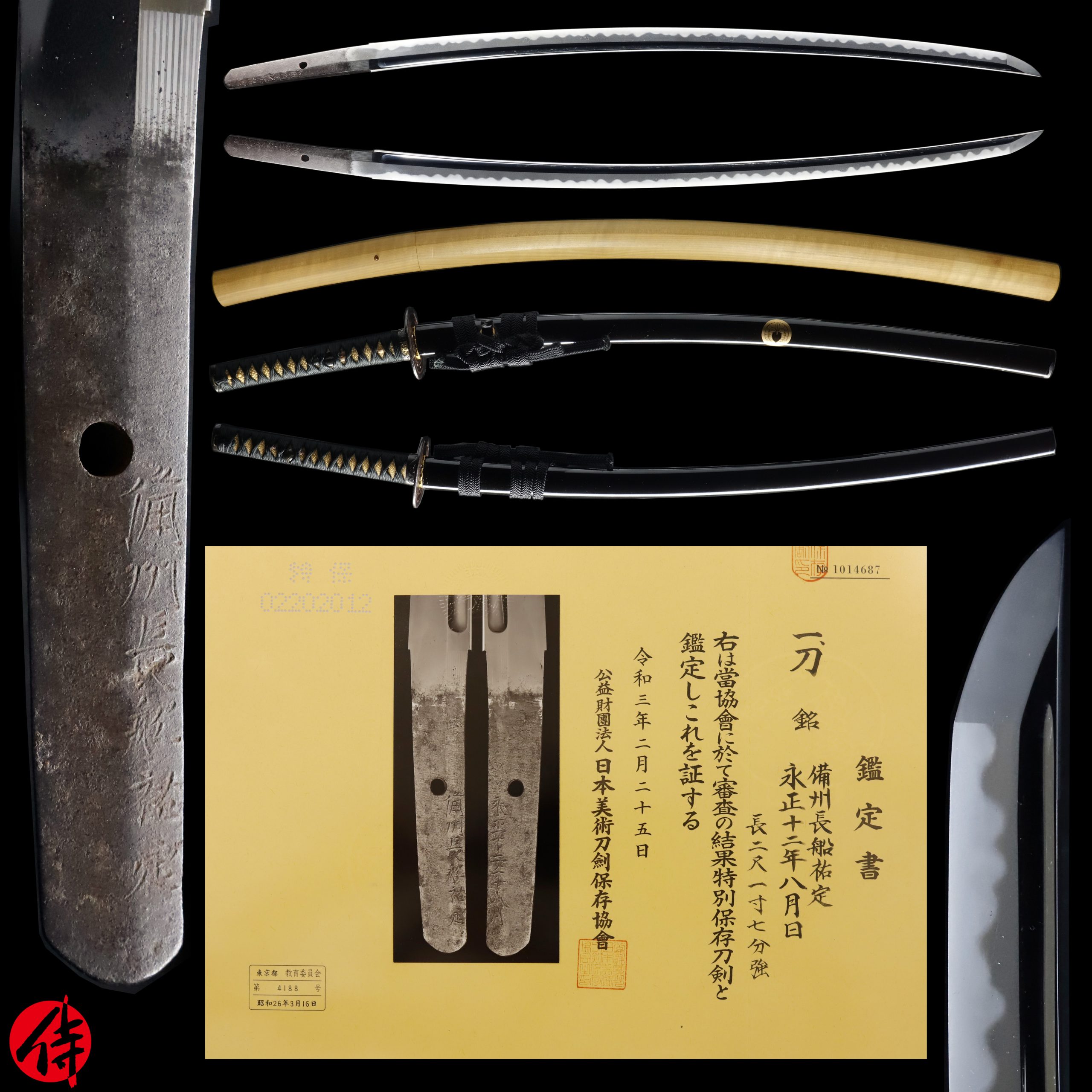
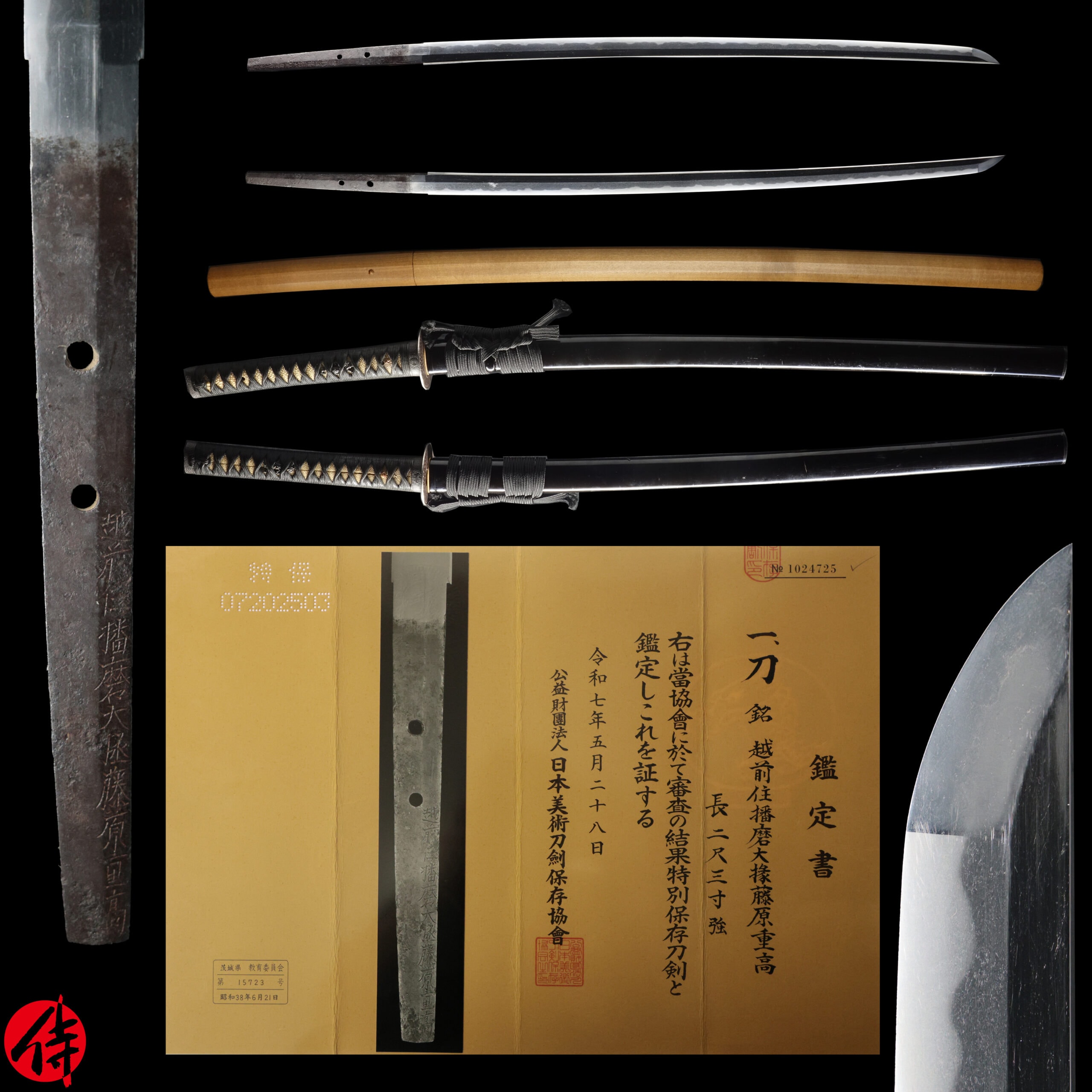
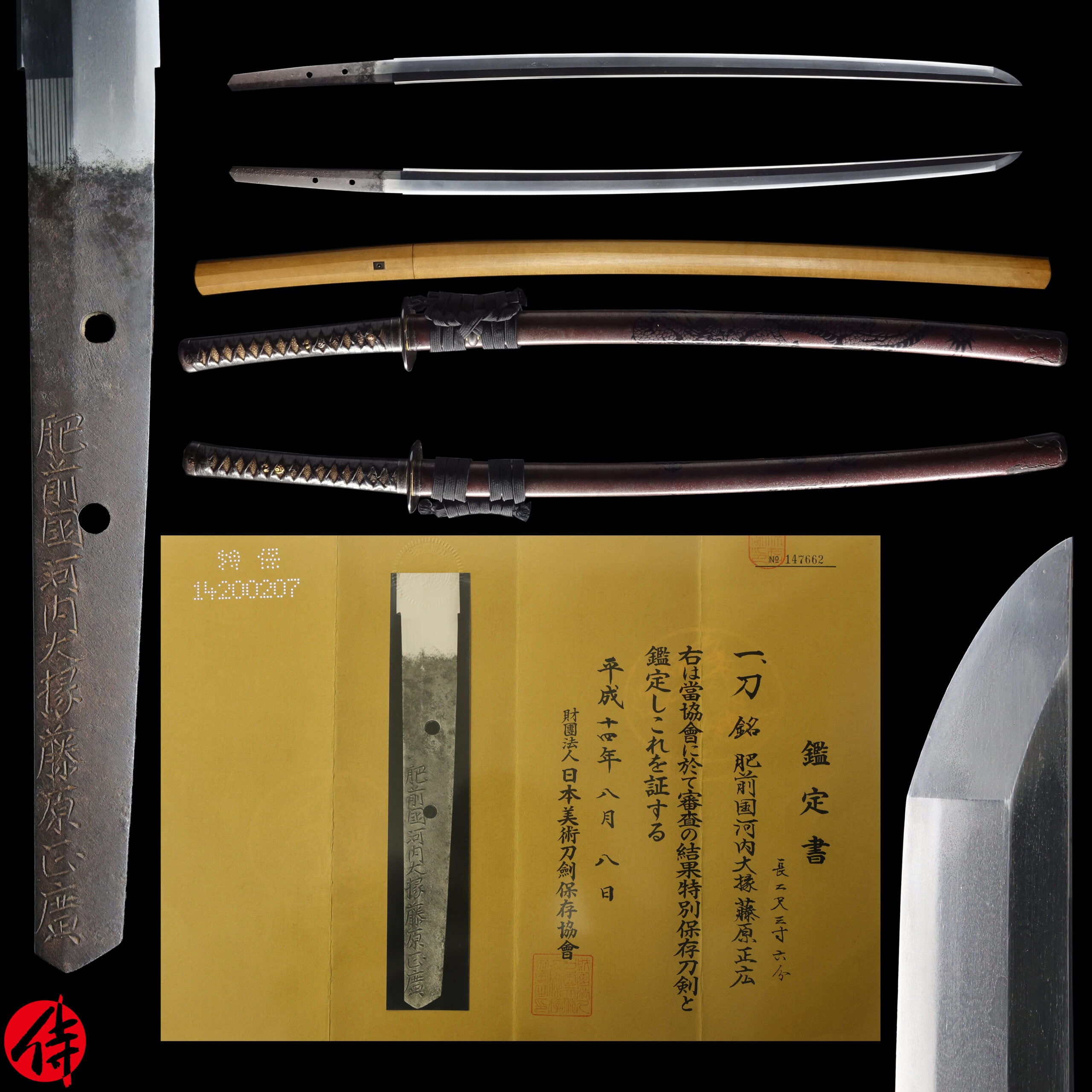
Antique Japanese Sword Katana Signed by Bishu Osafune Sukesada with
Tokubetsu Hozon
Certificate
【Description】
This blade was signed by Bishu Osafune Sukesada (備州長船祐定) in August, the 12th year of the Eisho era (
1515: Late Muromachi period
). Bishu(備州)is a larger area in today’s Okayama&Hiroshima prefecture. Bishu consists of Bizen(備前), Bitchu(備中) and Bingo (備後). Osafune is the school’s name located in Bizen province. Sukesada is his maker’s name.
Those who forged swords in the Bizen province(Okayama prefecture) at the end of the Muromachi Period(1492-1569 A.D) are called Matsu Bizen(Matsu means the end). Sukesada school was one of the most famous schools, and it flourished for generations among Osafune sch
ools(The head branch). There were various styles forged by the generations of Sukesada during this period. Approximately 60 swordsmiths used Sukesada as his maker’s name in the Samurai history. In that sense, the swordsmith’s name “Sukesada” worked as a kind of brand that attracted many Samurai.
The swordsmiths in Bizen produced many swords during the Muromachi period as it was in the middle of the Sengoku period(Warring state period). The demand for weapons increased among strong feudal lords. It would be nice to have a piece forged in the warring state period when there was so much rivalry between warlords. It was possible that this blade was ordered by a high-class Samurai and he might have carried it in a battlefield.
BIZEN is located near the Chugoku Mountains, where iron sands, one of the essential materials for making Japanese swords, were abundant. Furthermore, BIZEN swordsmiths had close access to Yoshi River, where they could find water and charcoal. This geological location contributed to the swordsmiths to forge high-quality refined blades. We presume BIZEN was quite active in sword-forging from ancient times. It is said that BIZEN DEN was created by groups of swordsmiths there after the late Heian era(Late 12th century ).
This blade is relatively short but has no trace of getting shortened (Suriage) in the past. Considering these facts, we believe this blade was primarily made for one-hand combat. The user could hold this sword with one hand, a popular way to fight during the late Muromachi period.
This blade is appraised as a
Tokubetsu Hozon Token
(特別保存刀剣) issued by NBTHK(Nihon Bijutsu Touken Hozon Kyokai:日本美術刀剣保存協会). This authentication paper was only given to authentic Japanese swords, especially well preserved and high quality with artistic value.
*Please keep in mind that there are a couple of minor Kitae Kizu on this blade. If you like to know the detailed condition, please feel free to contact us.
【 Blade】
Cutting Edge Length(Nagasa)
:
66.0 cm( 26.0 inches)
Curvature(Sori)
:
2.27 cm( 0.89 inches)
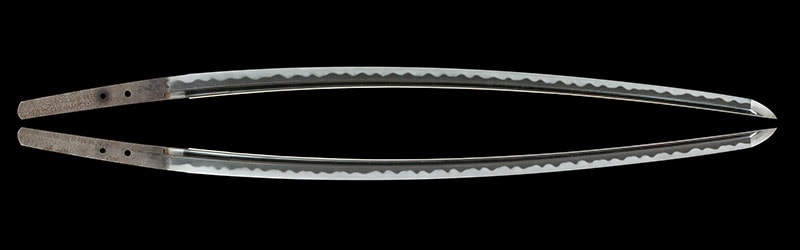
Hamon
:
The crystalline structure which forms along the cutting edge of a blade as a result of the hardening process
Jimon(Jihada)
:
visible steel surface pattern created by folding and hammering during forging process
Nakago
:
Nakago is the tang of the Japanese sword.
Japanese swordsmiths left the black rust on the tang because it prevents red rust while the tang is in its handle. And the discoloration of the tang was created over time, and it is a great indicator for a Japanese sword specialist to estimate when the sword was forged.
Koshirae:
Koshirae is the mounting of the Japanese sword. There are several parts that consist of Koshirae such as Saya(Scabbard), Tsuka(Handle), Tsuba(Handguard).
Fuchi-Kashira
:
A pair of matching sword fittings that cover the upper and bottom parts of its sword hilt.
Peonies are designed on this Fuchi Kashira, and golden paint is applied to these flowers. This coloring adds decorativeness to this work. Each flower is engraved carefully, and its elegant figure is depicted gorgeouslly. Peony represents happiness, wealth, nobleness, and gorgeousness. This flower pattern has been treated as a kind of good-omen motif; people regarded it as a rich harvest sign. Peony is called “Botan”