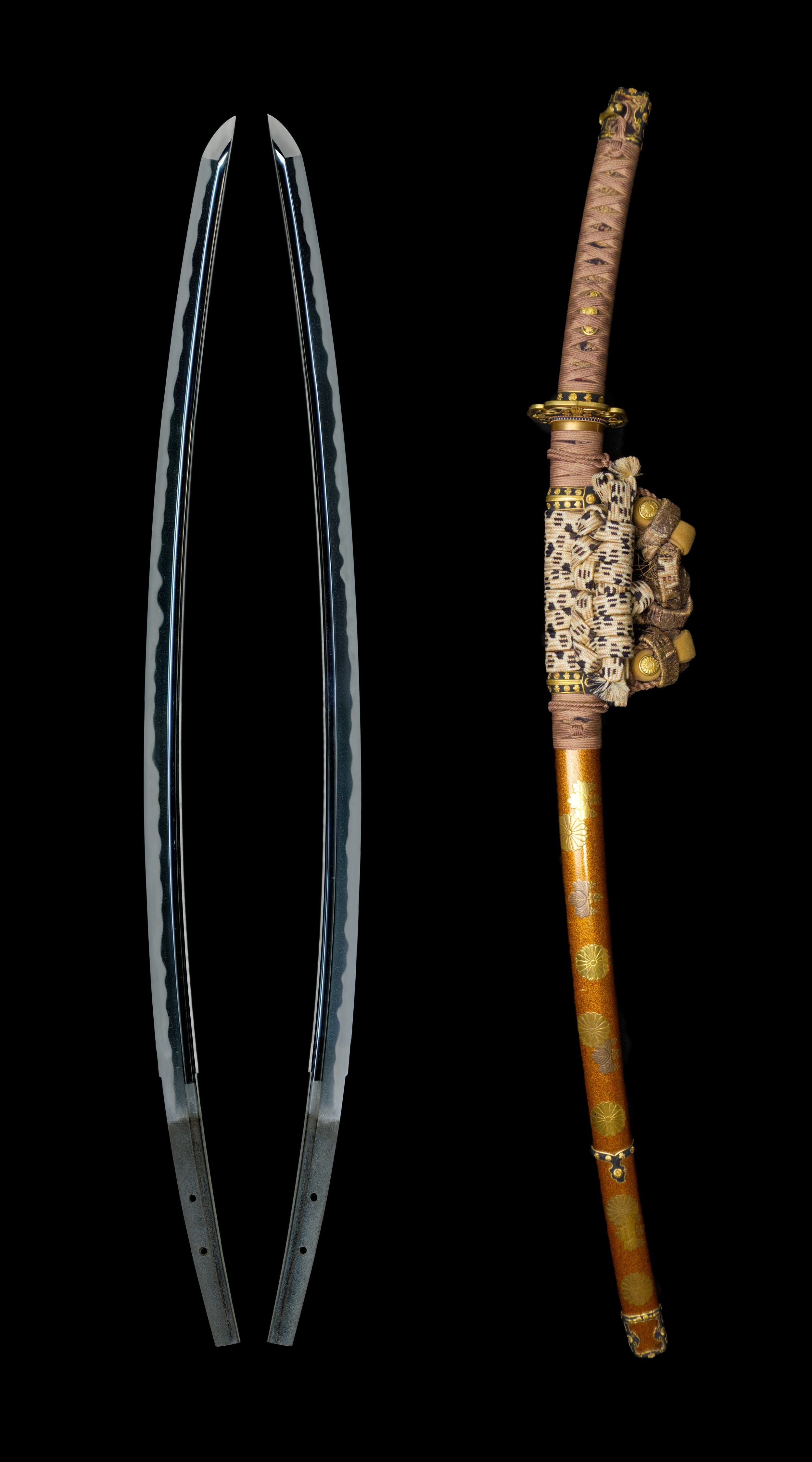
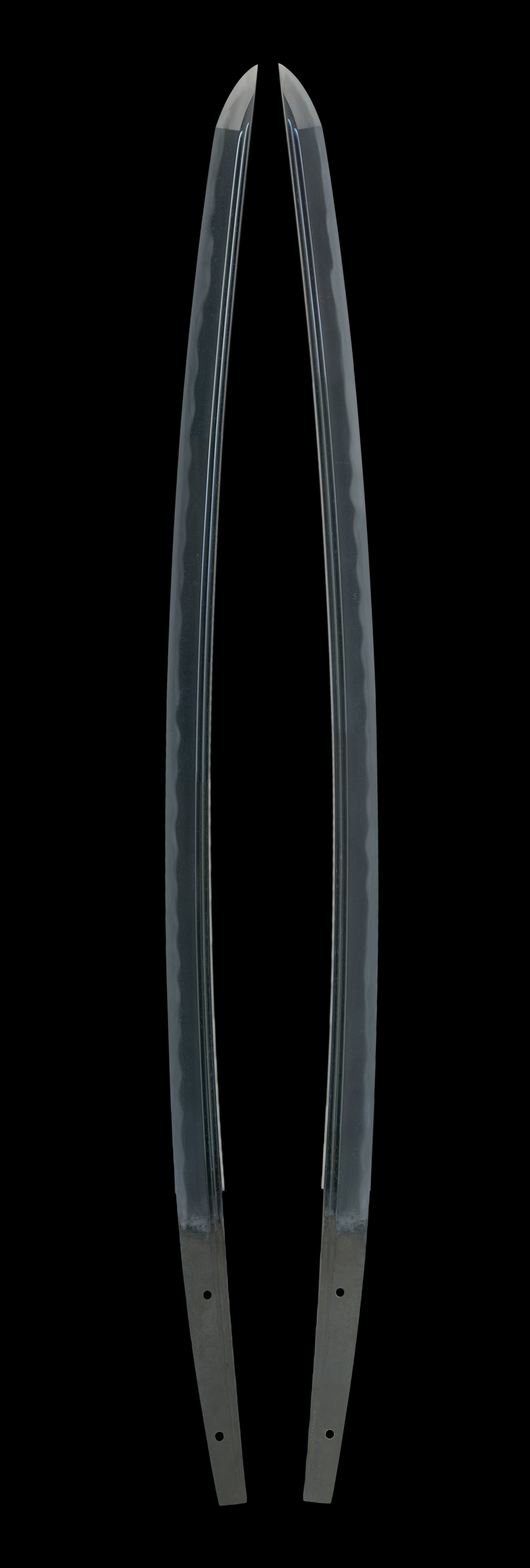
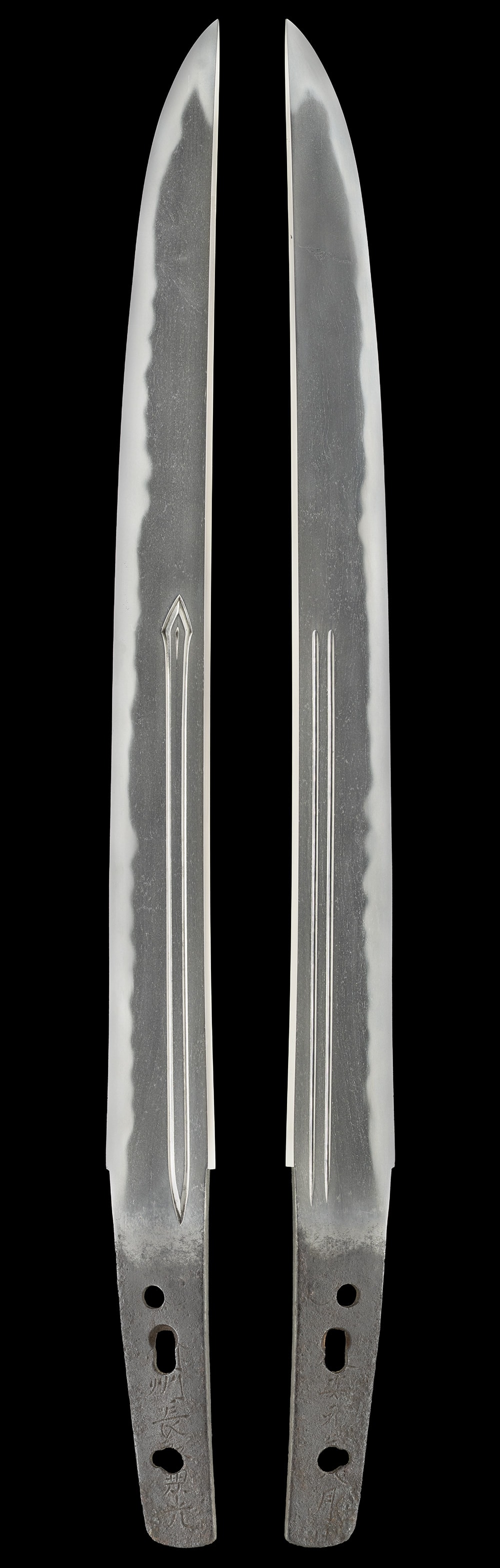
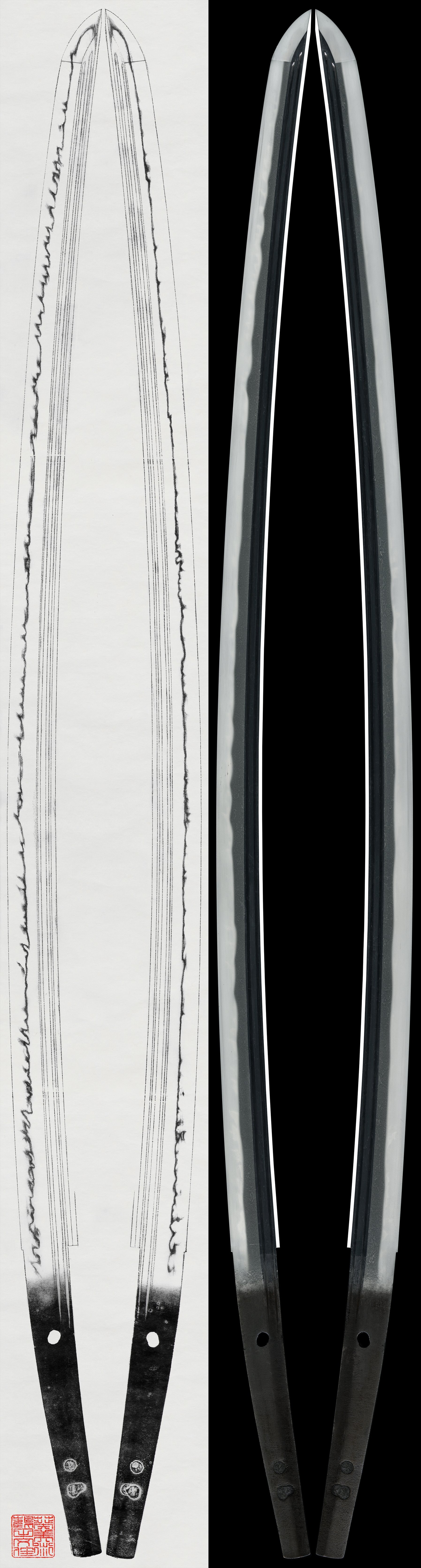
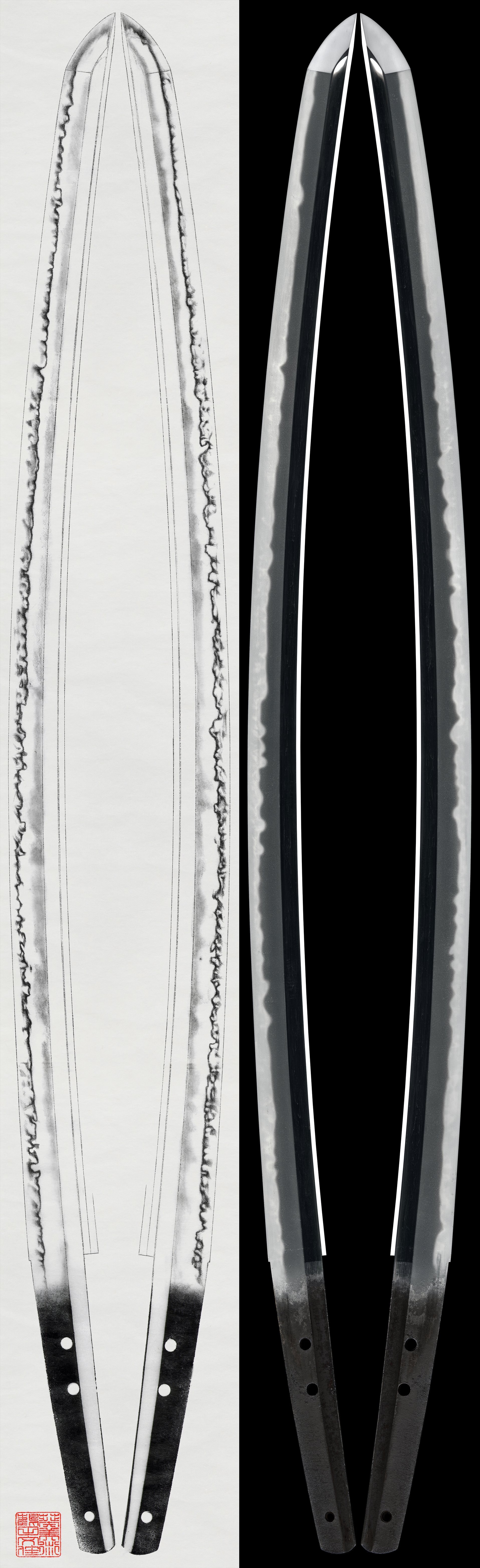
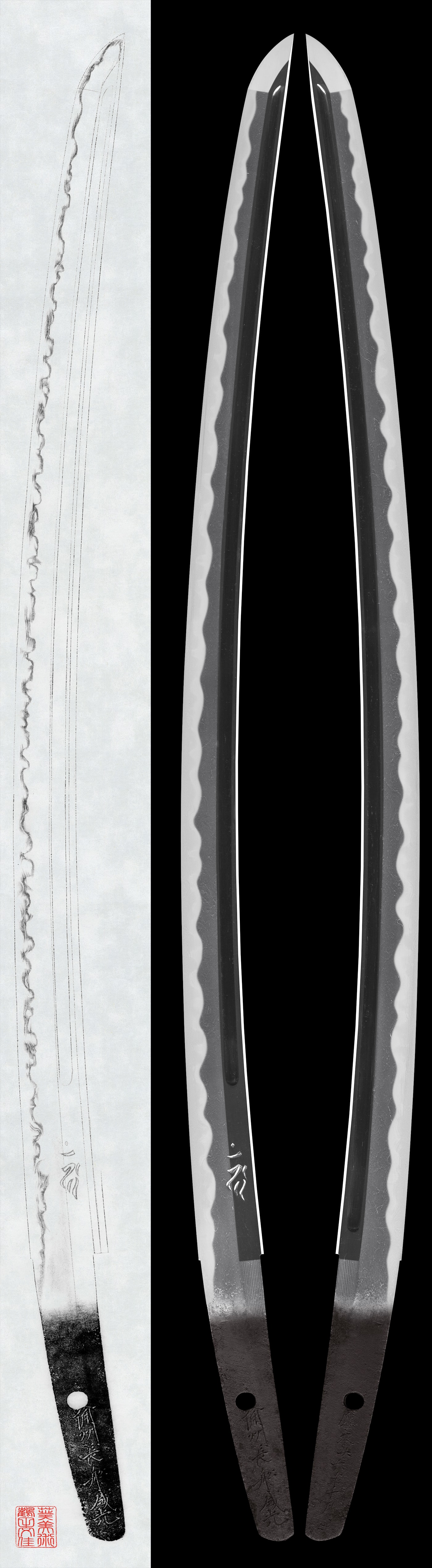
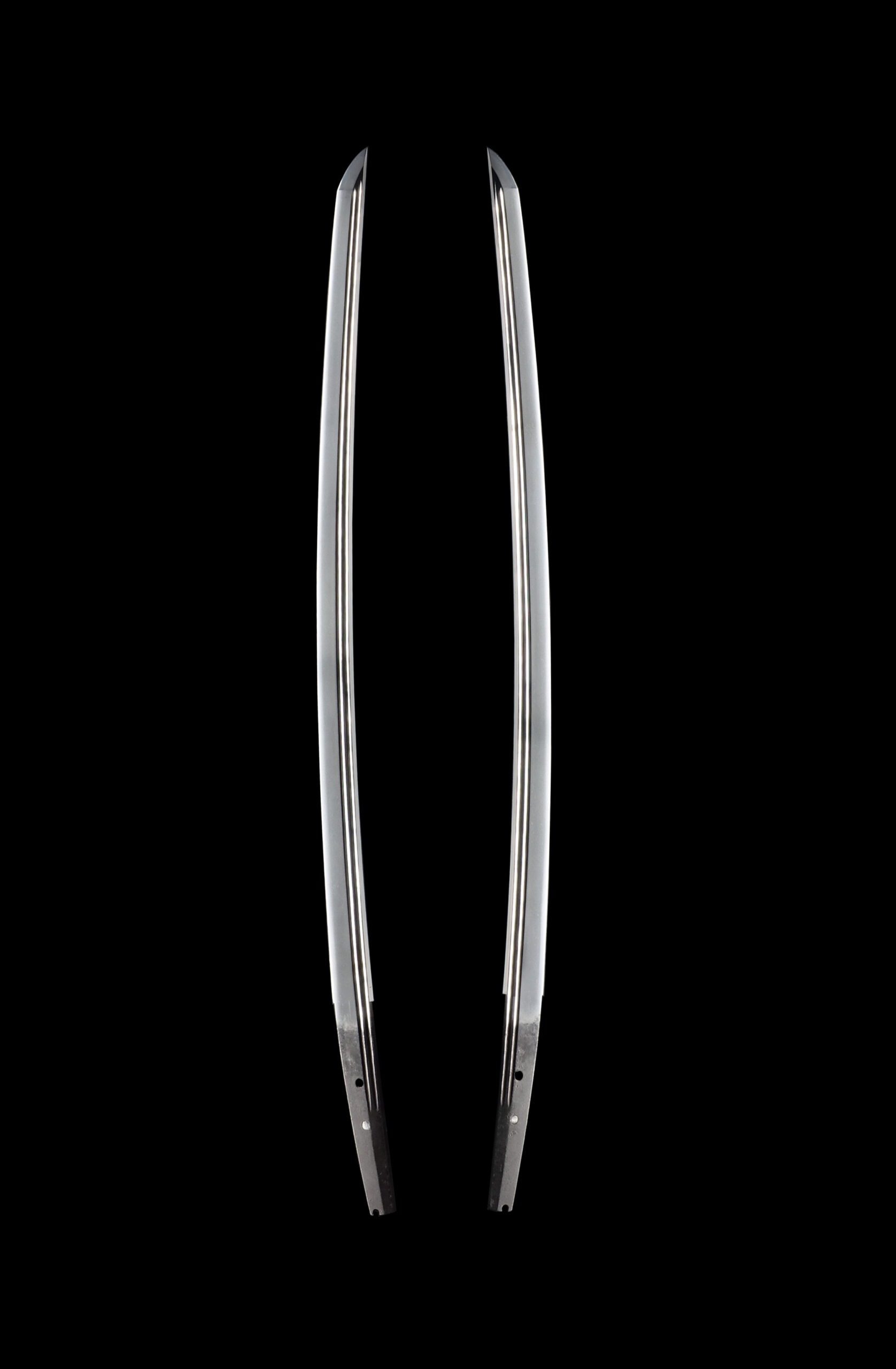
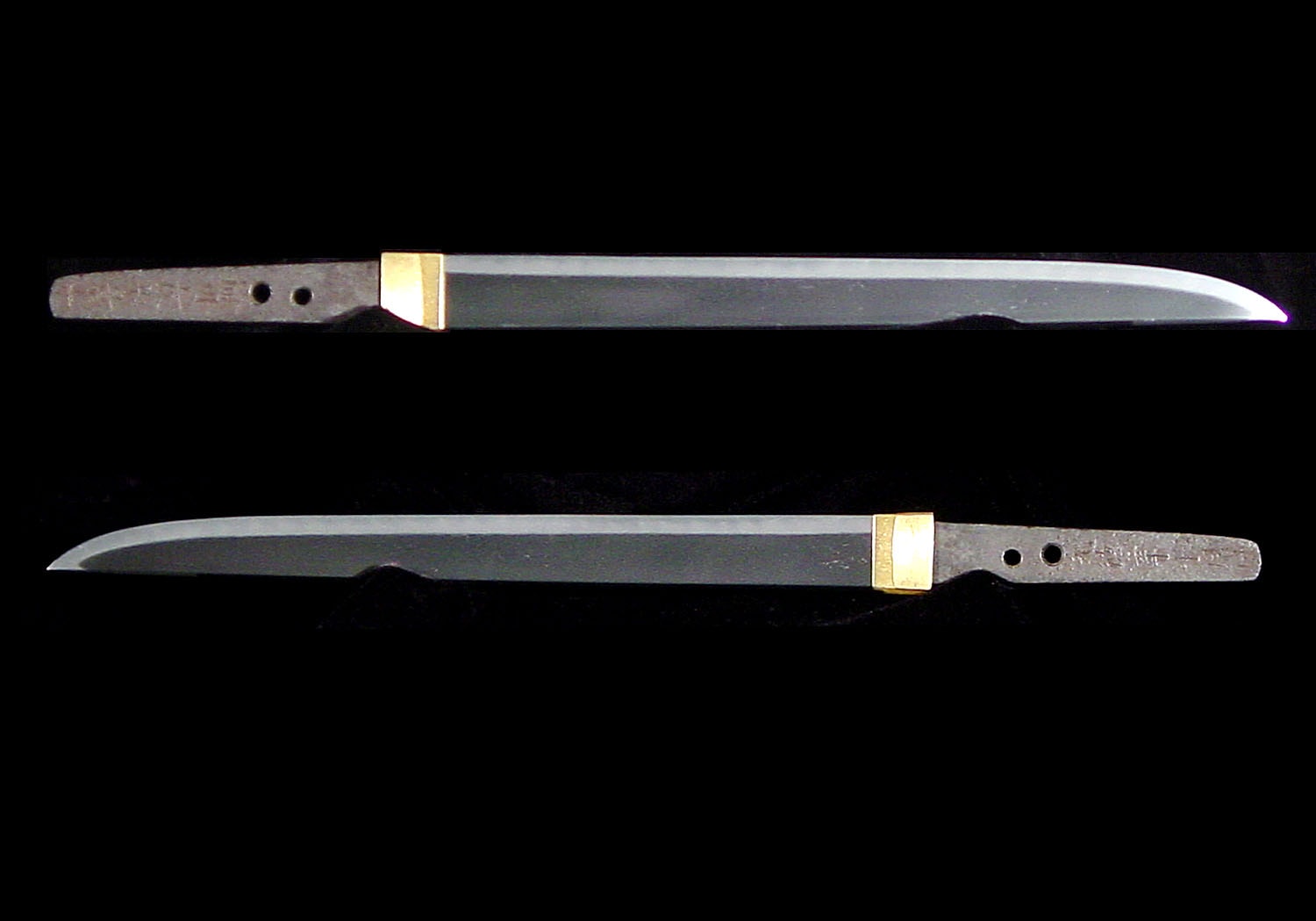
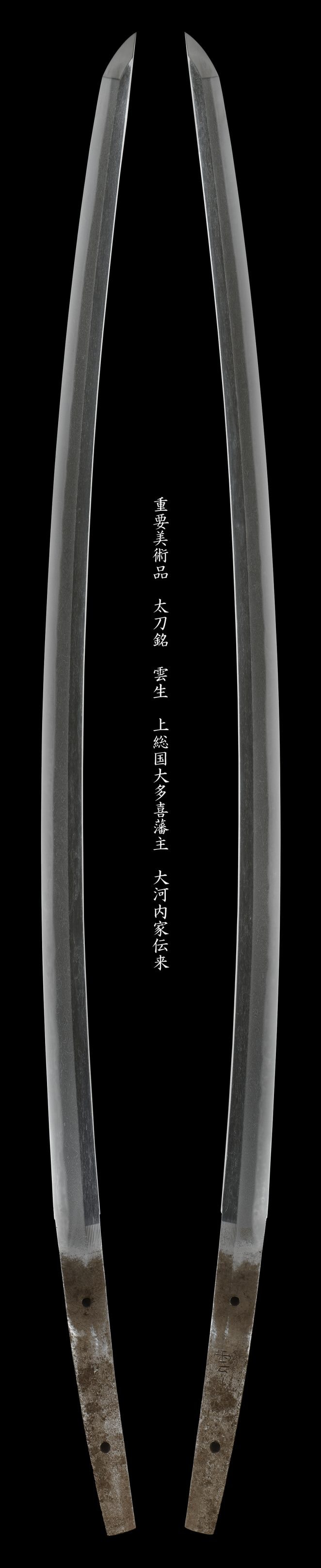
二つの朝廷が争った六十年、刀身は長大化し、長船がその需要に応えた。兼光と長義の工房は実際に戦う国人層の武士に仕え、軍勢とともに相州風が届いて相伝備前が生まれた。
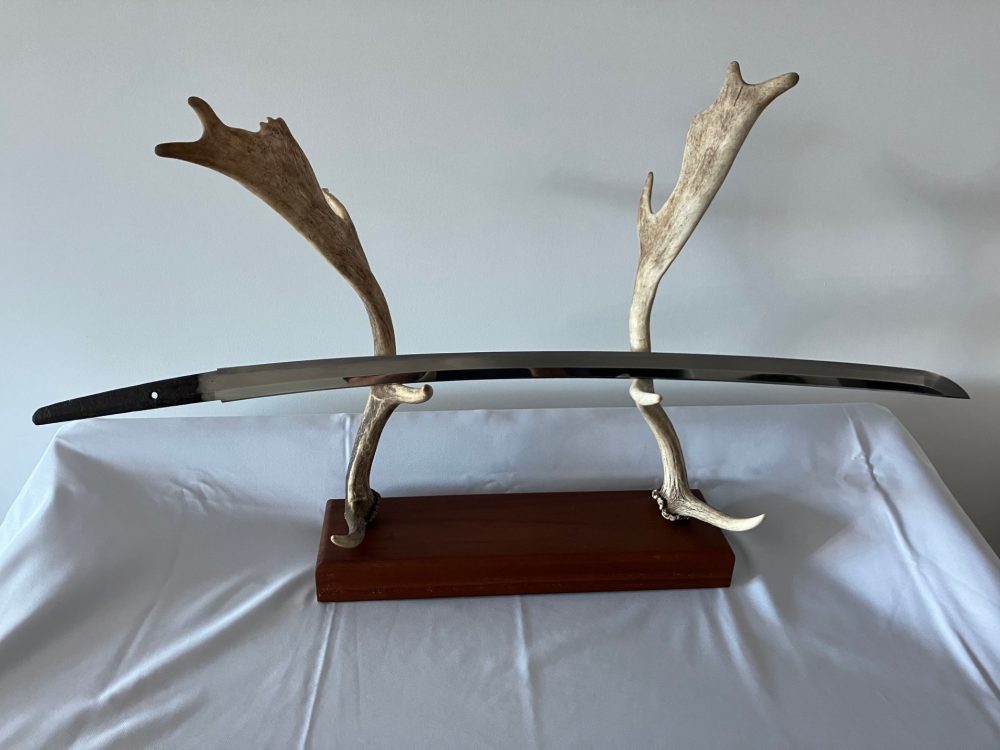
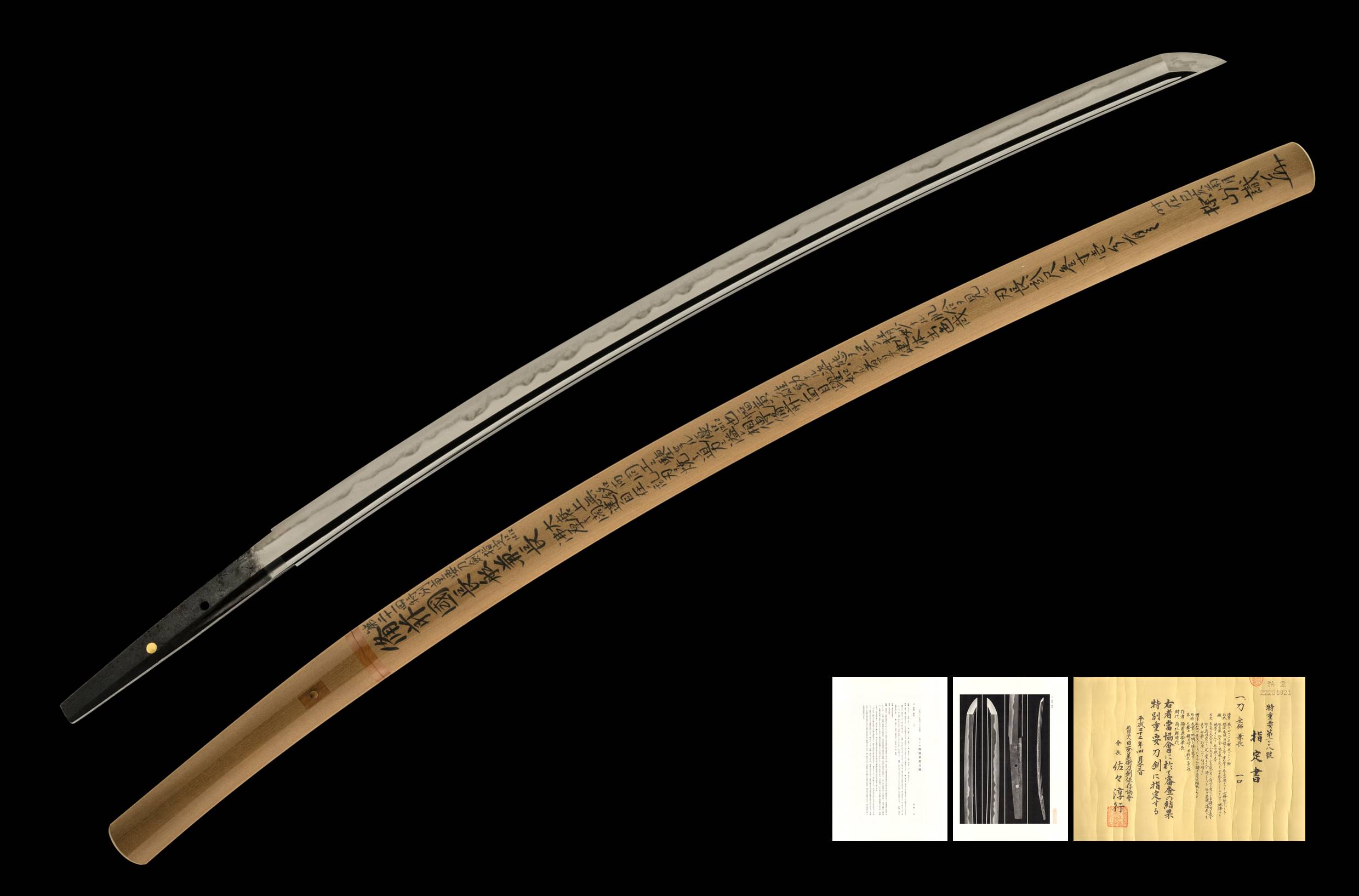
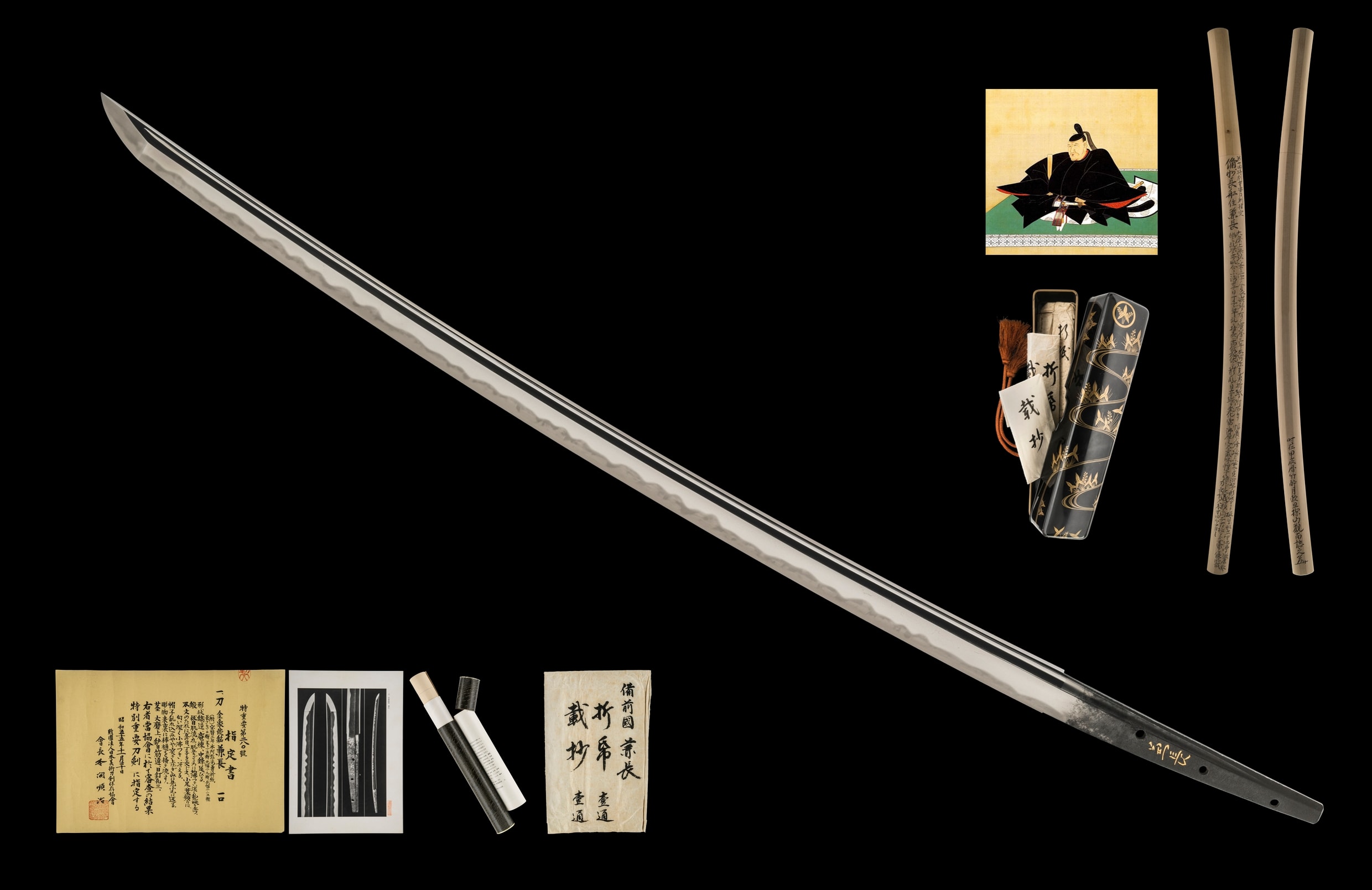
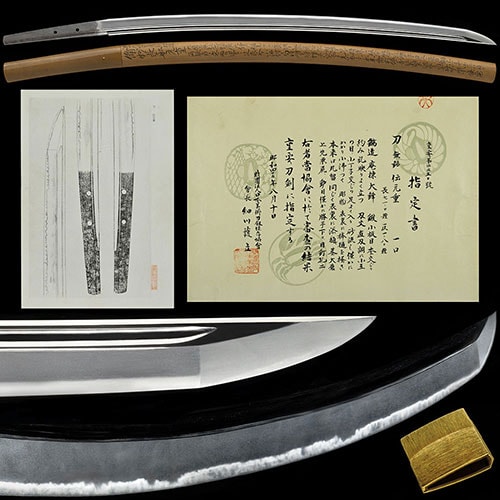
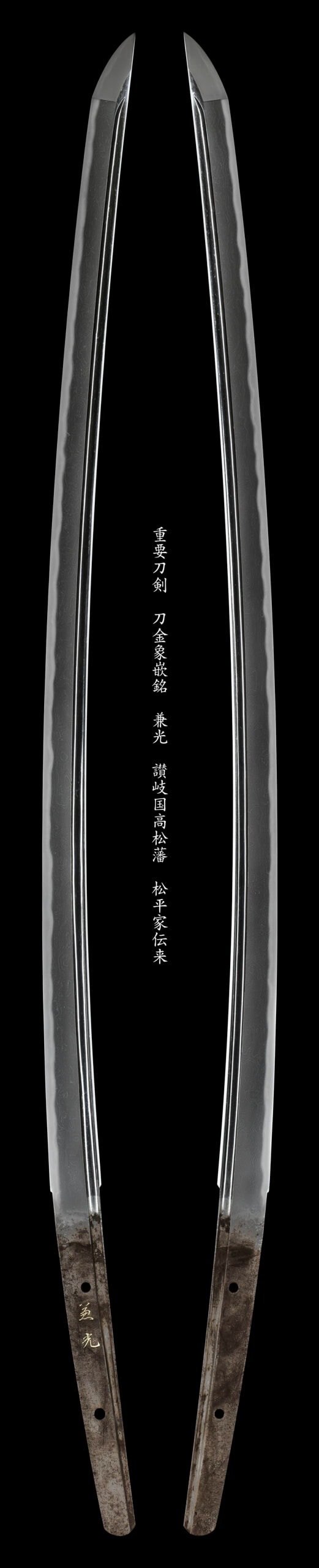
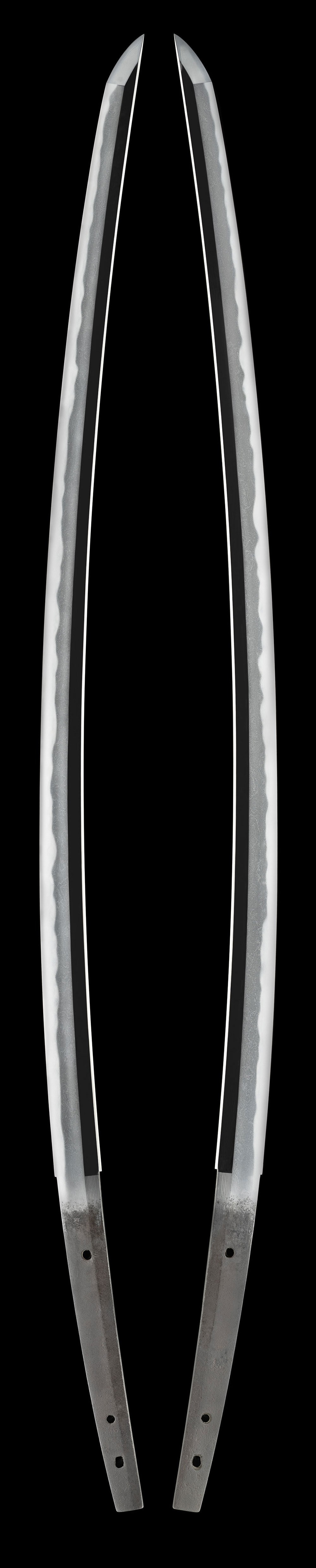
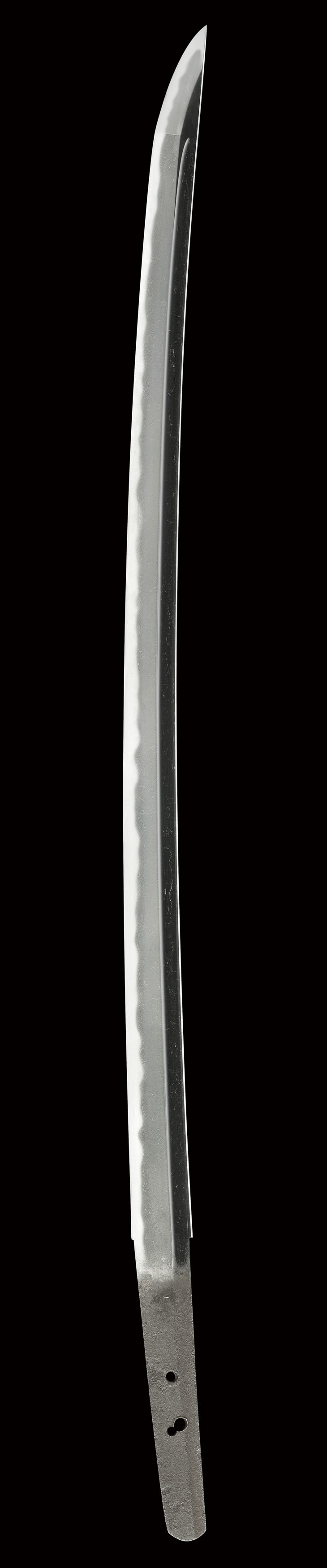
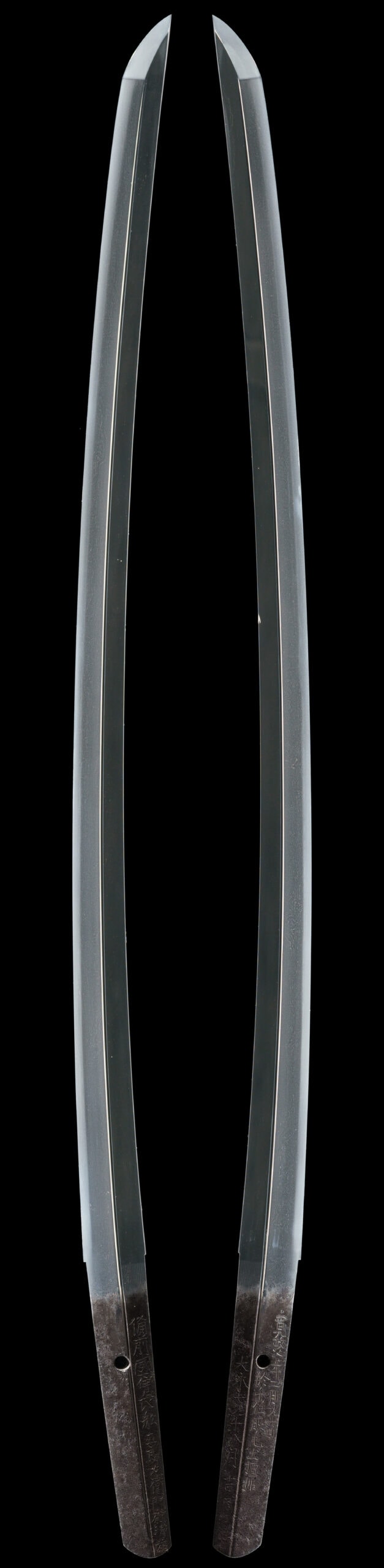
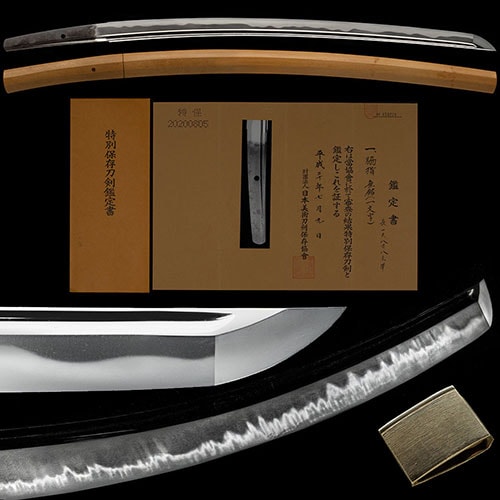
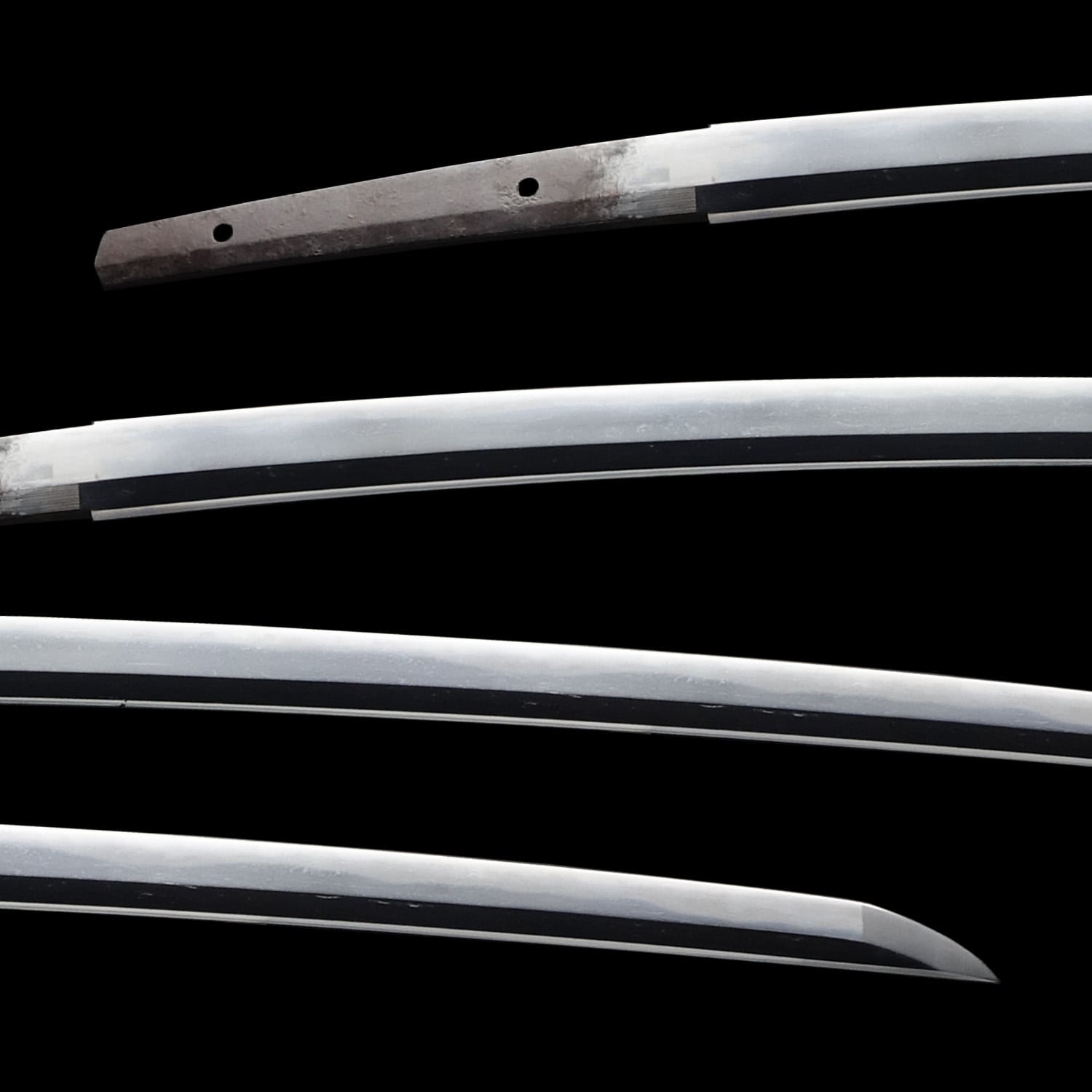
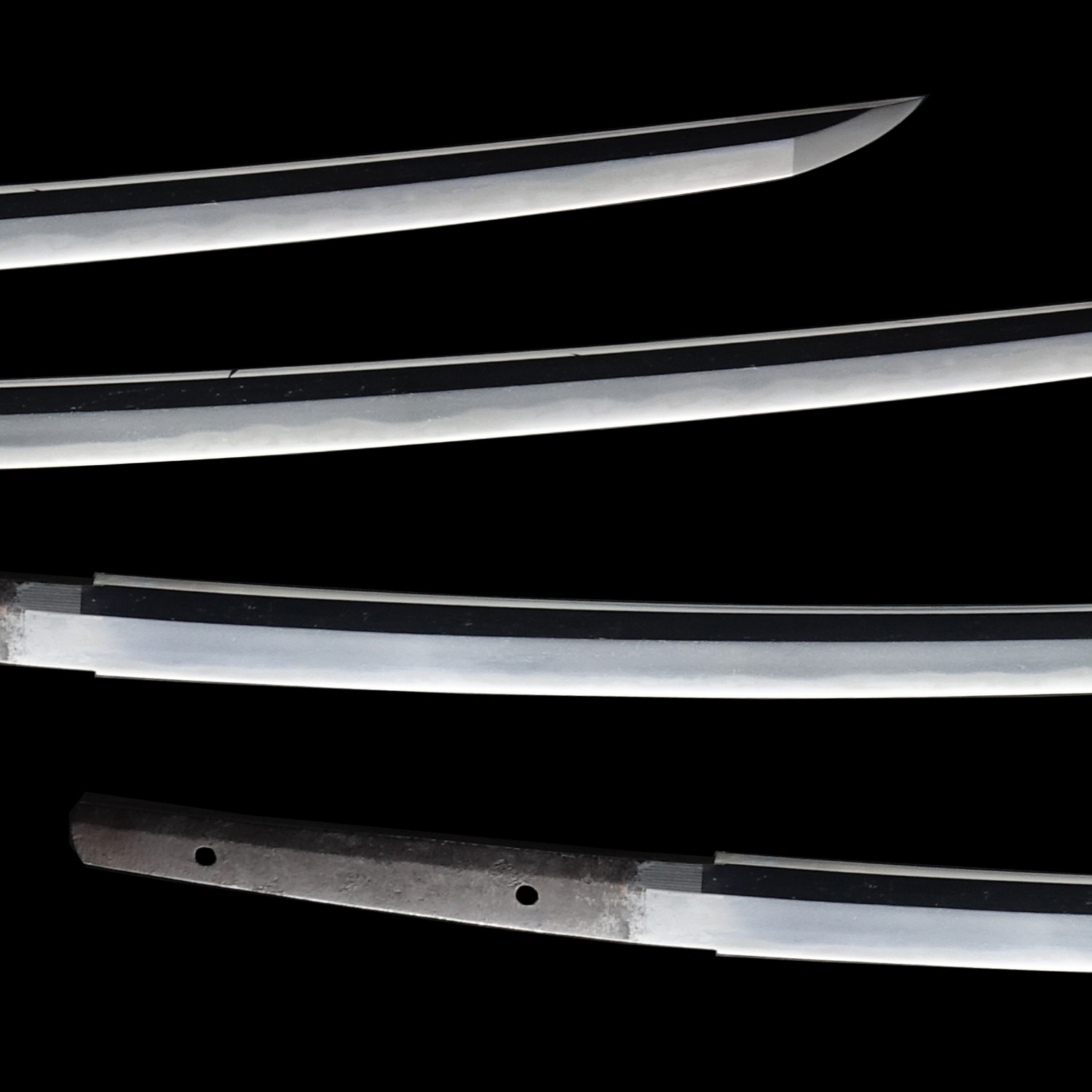
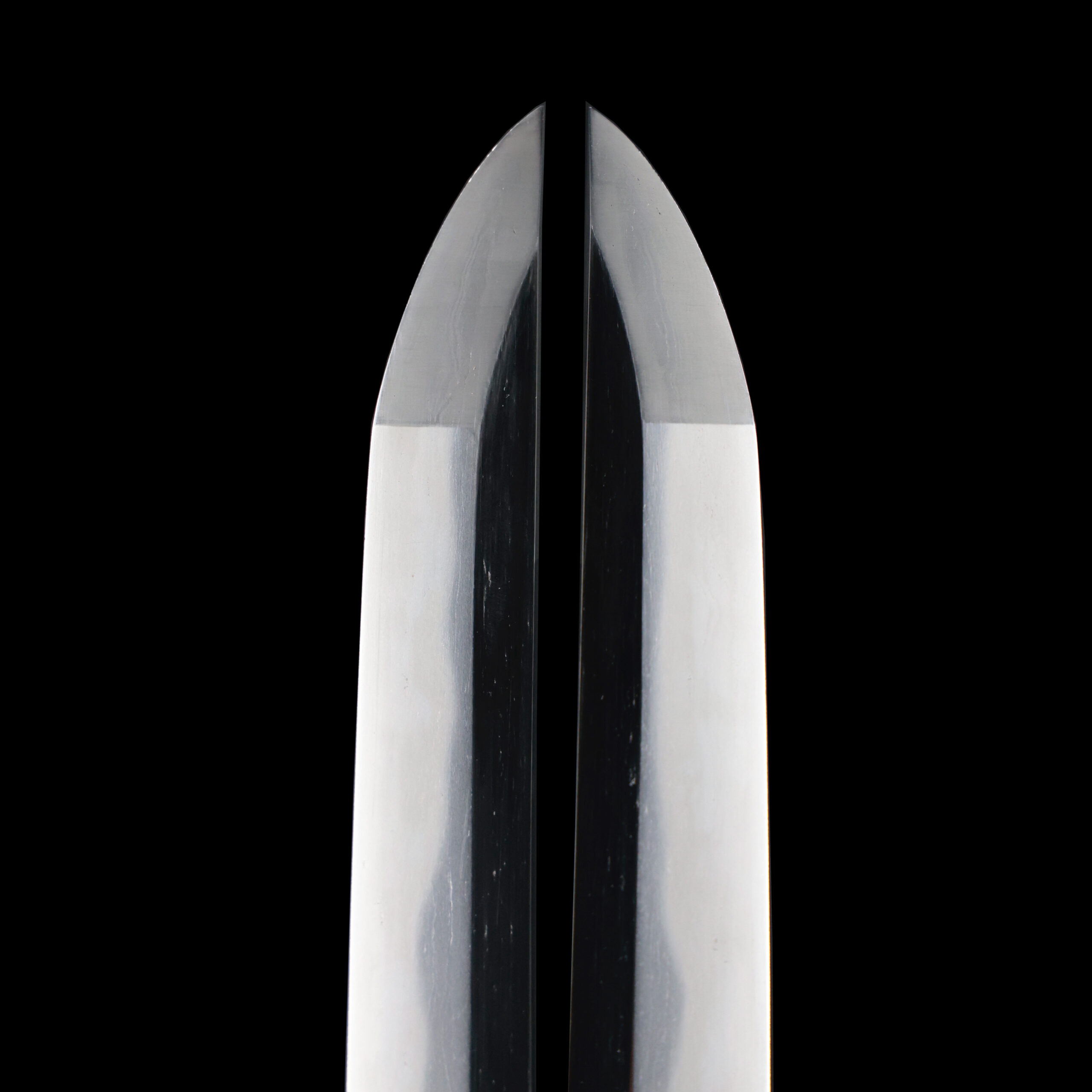
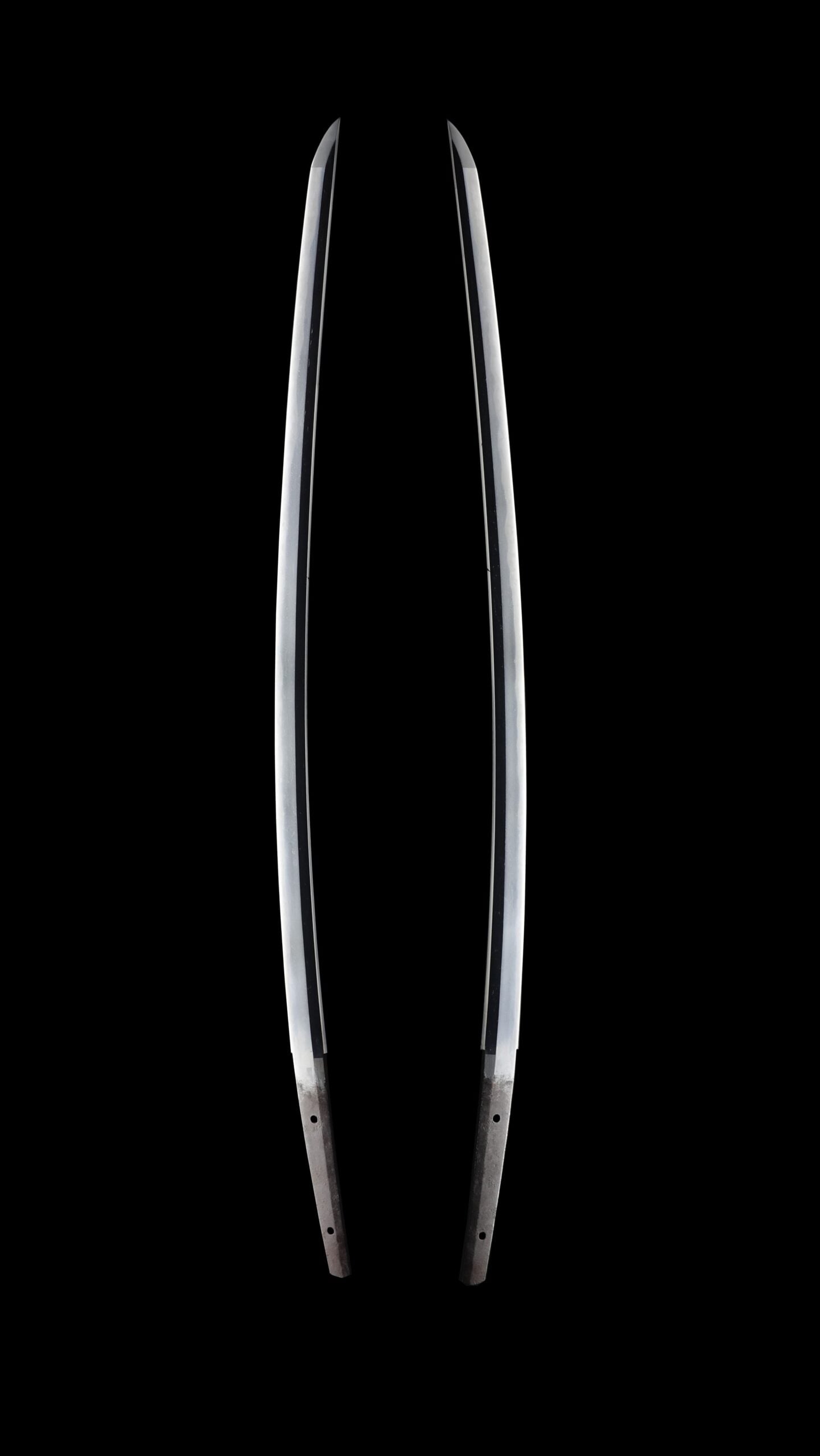
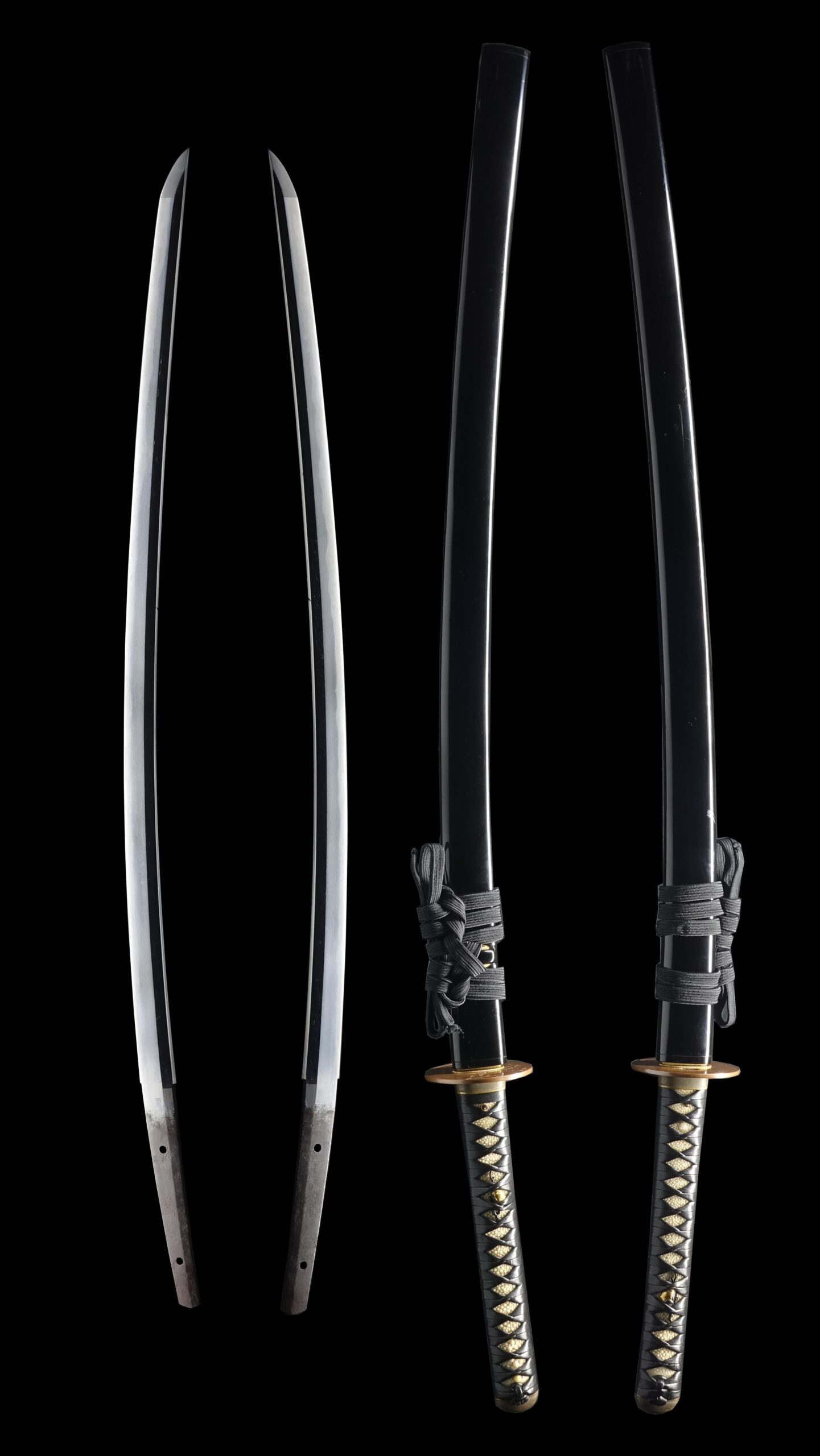
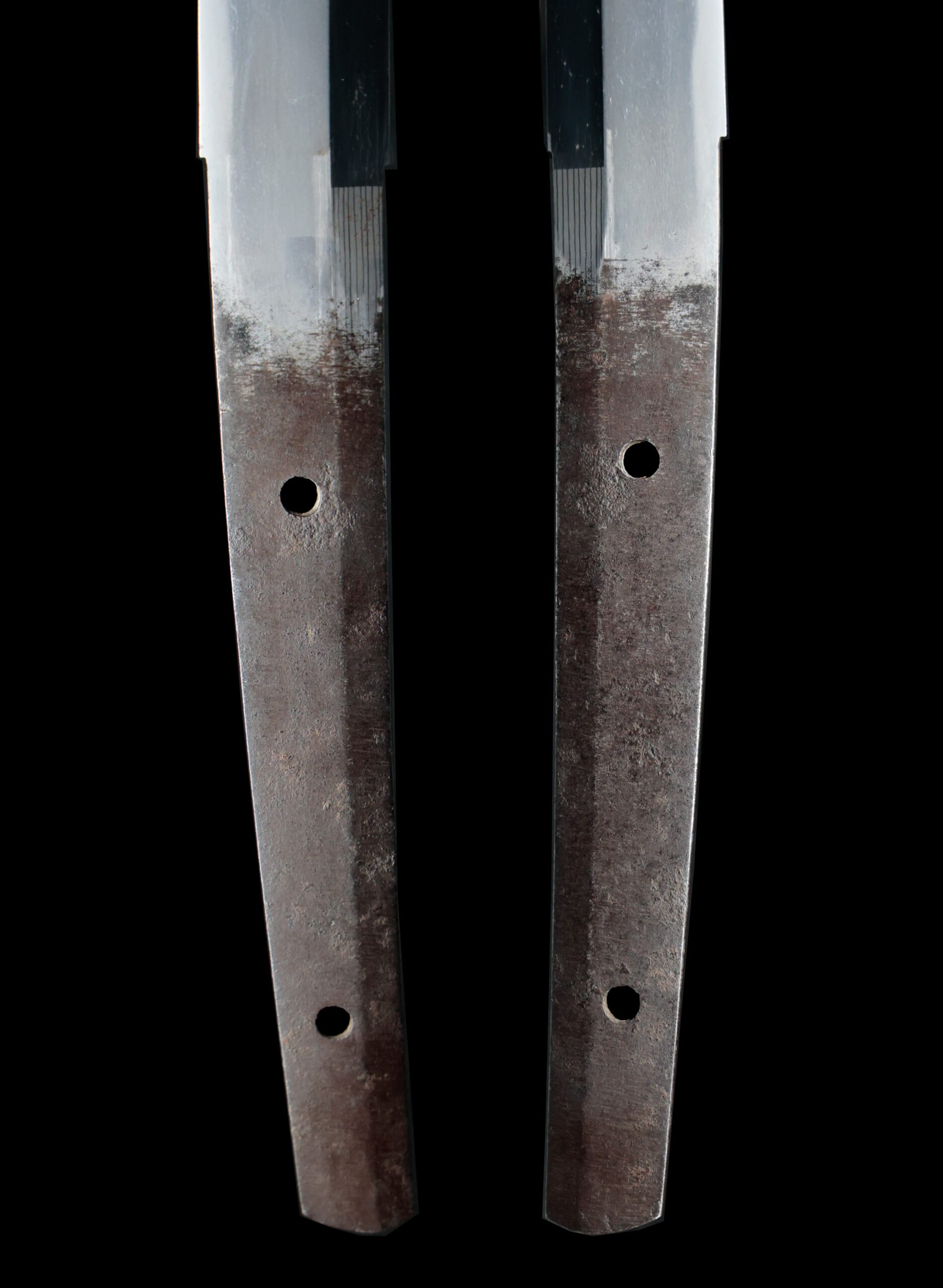
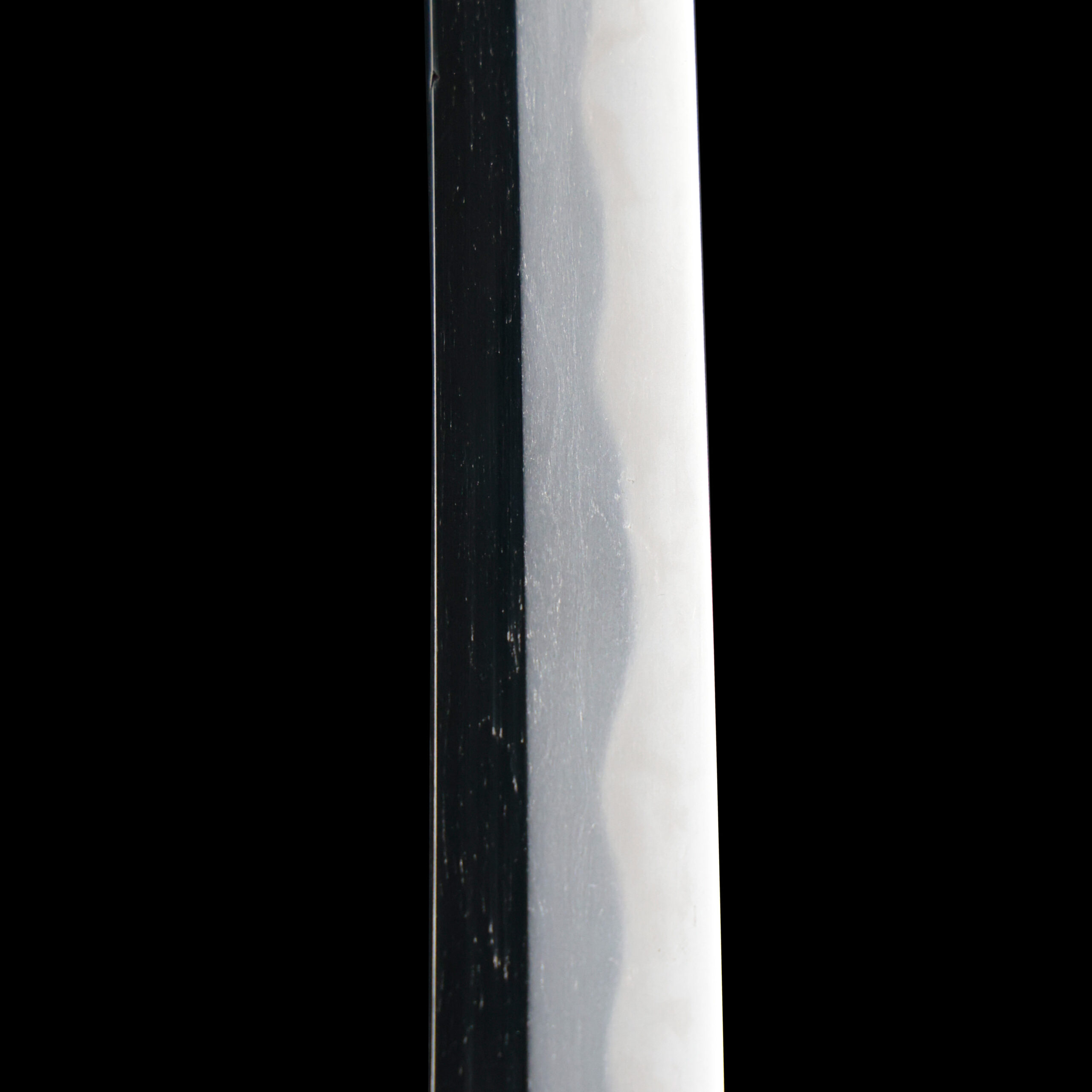
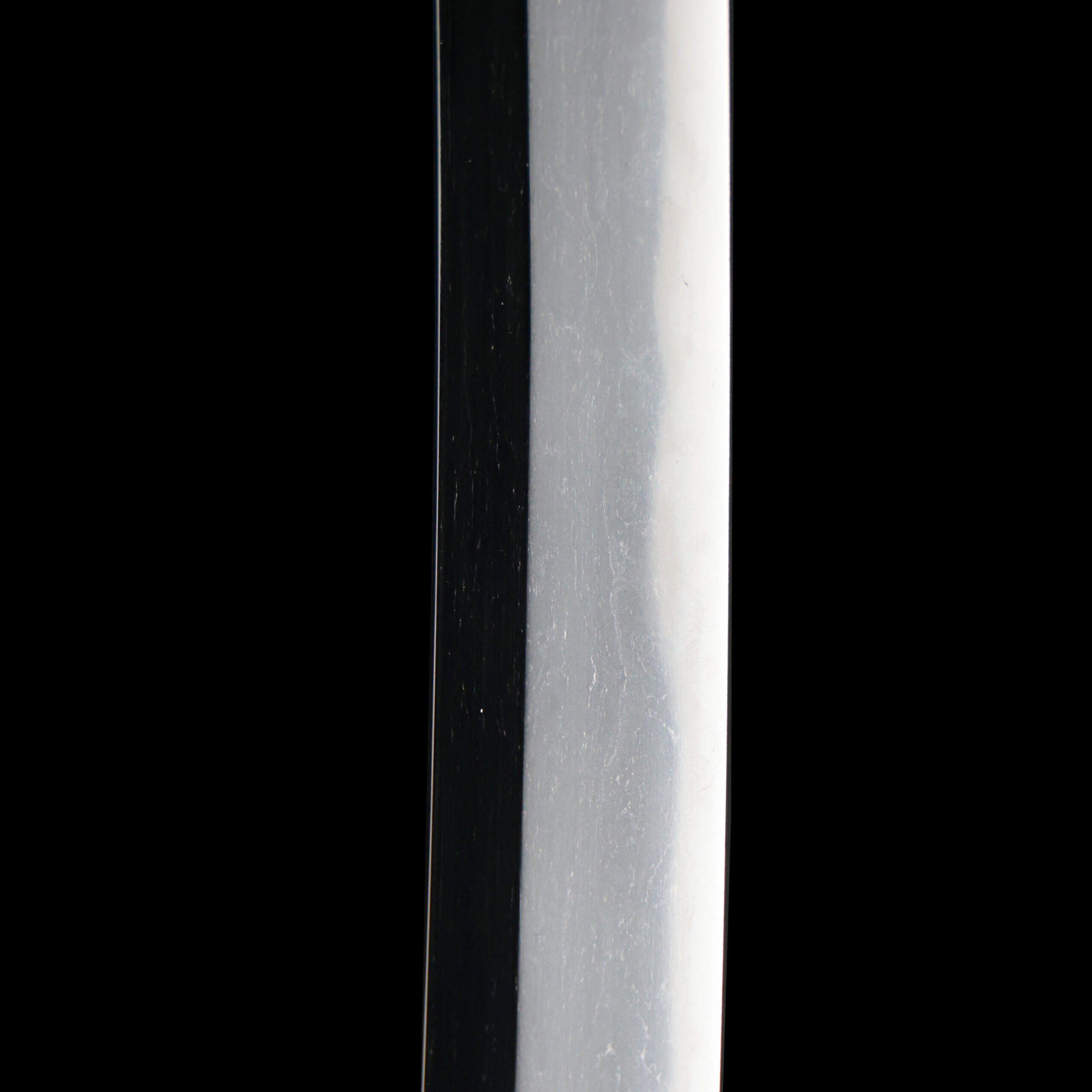
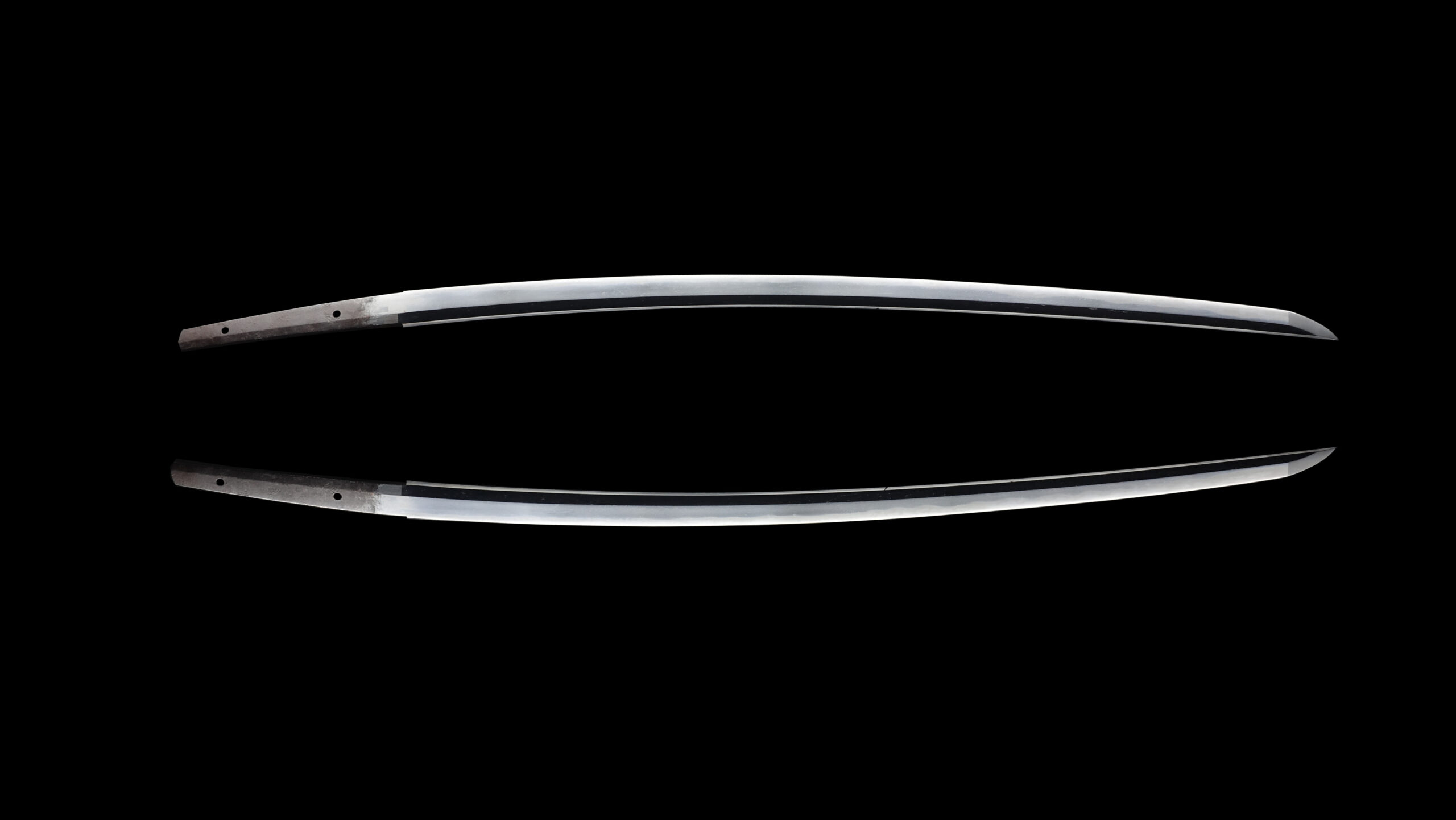
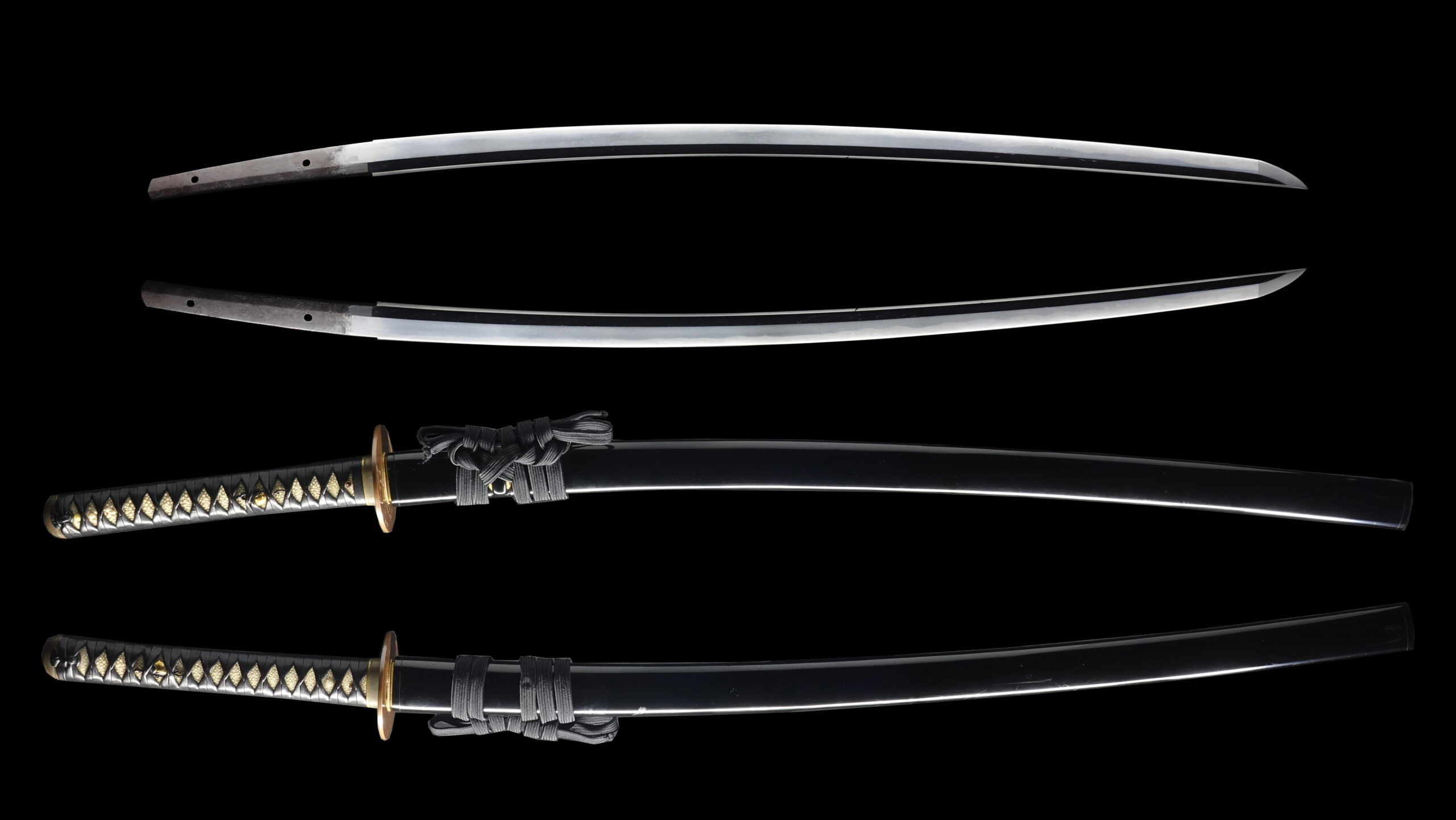
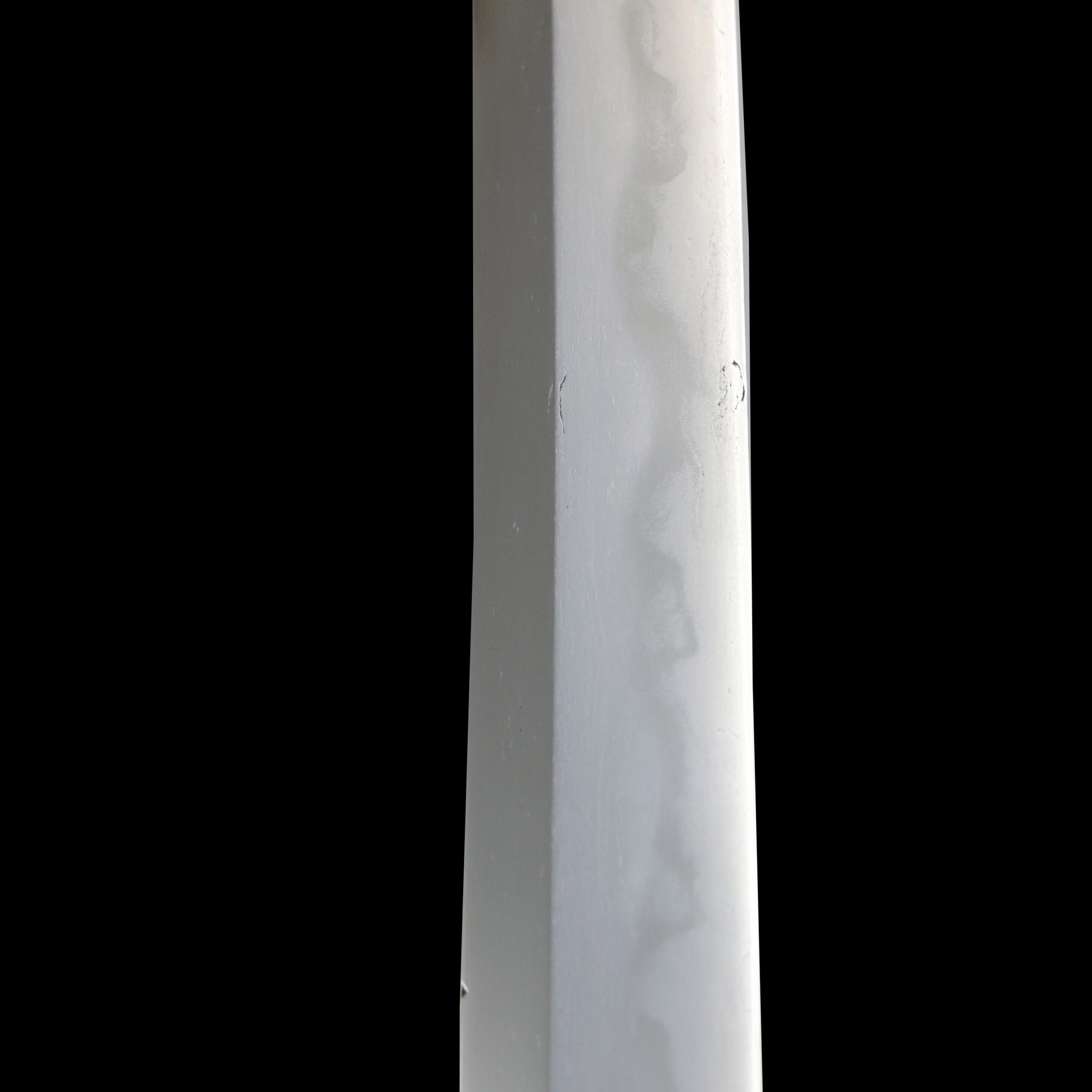
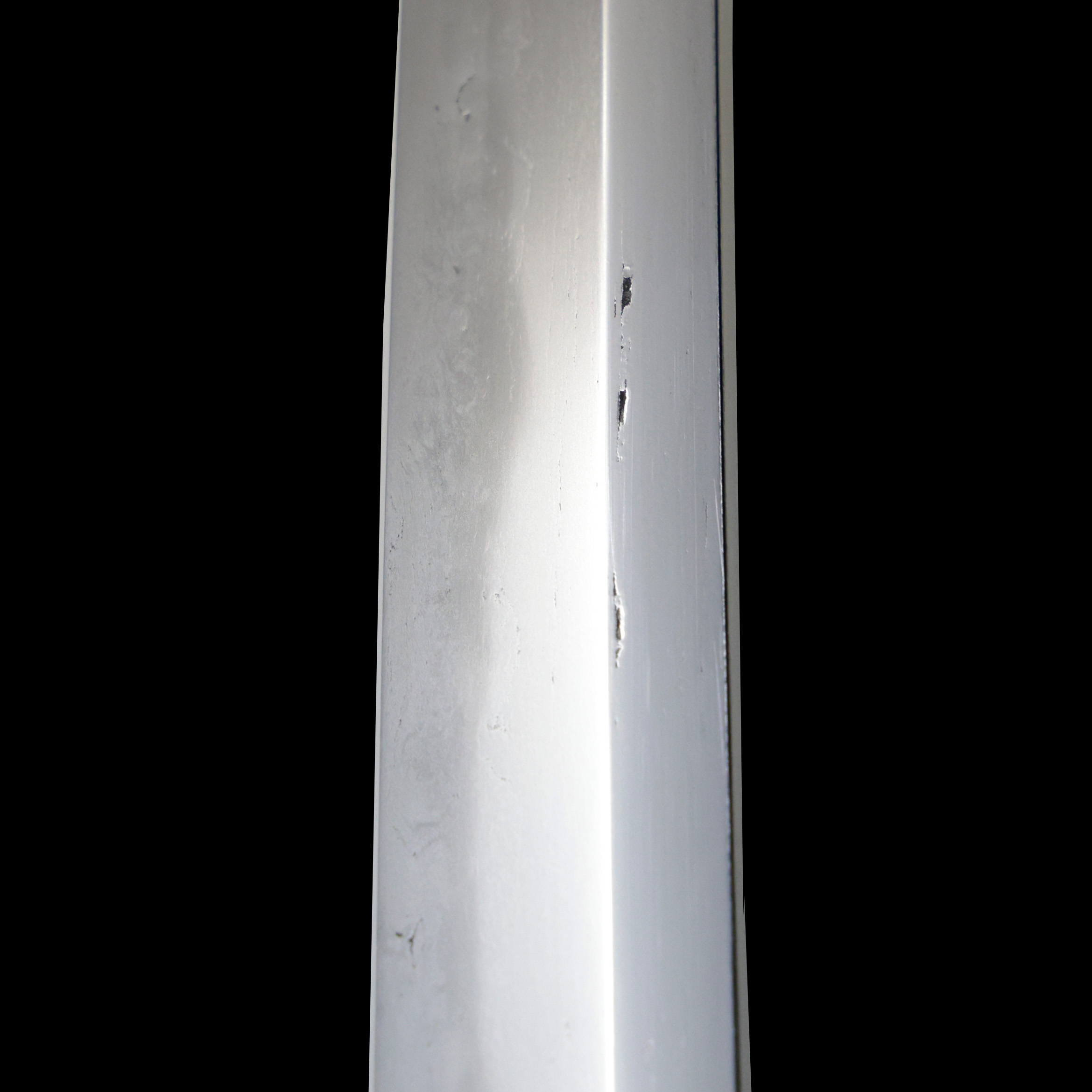
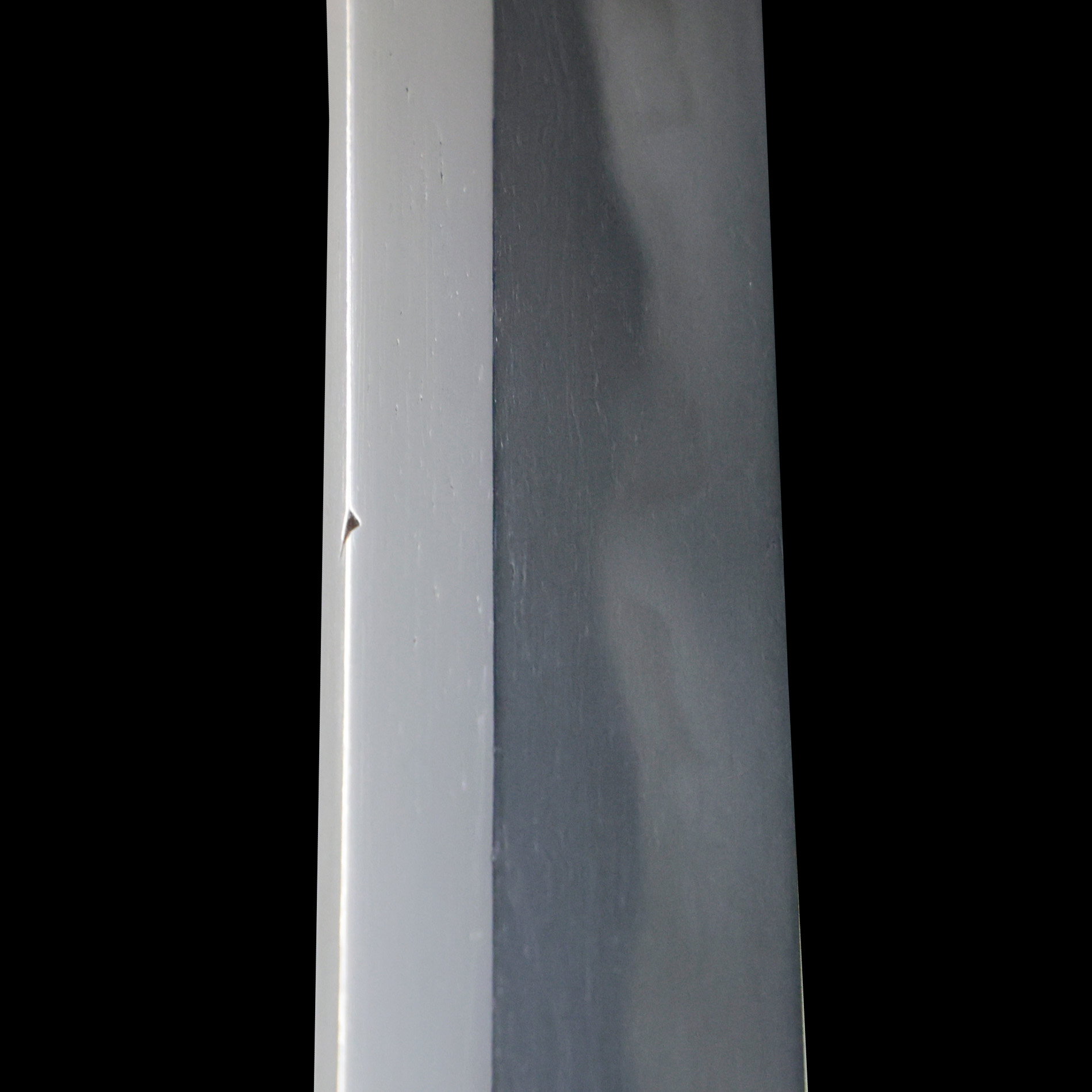
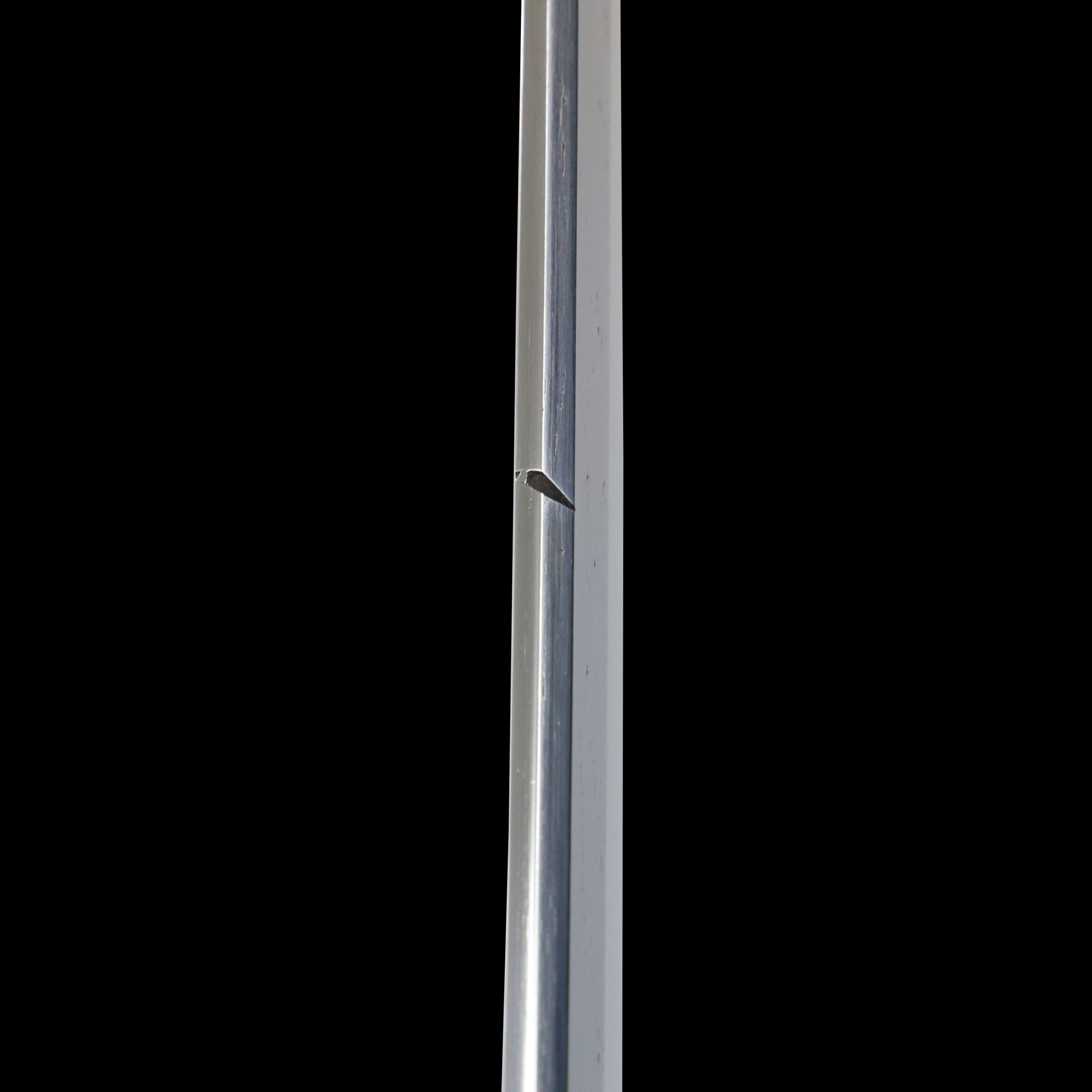
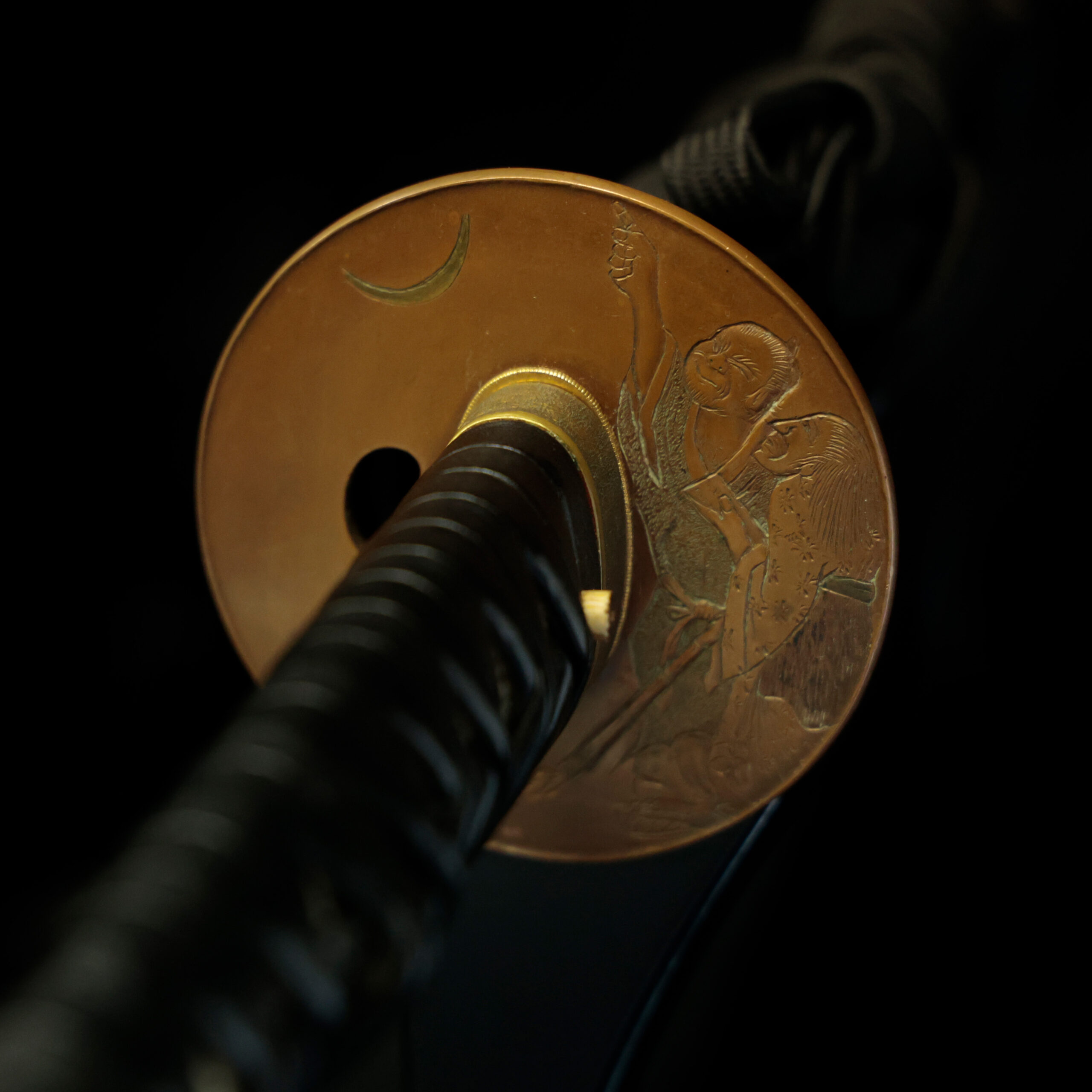
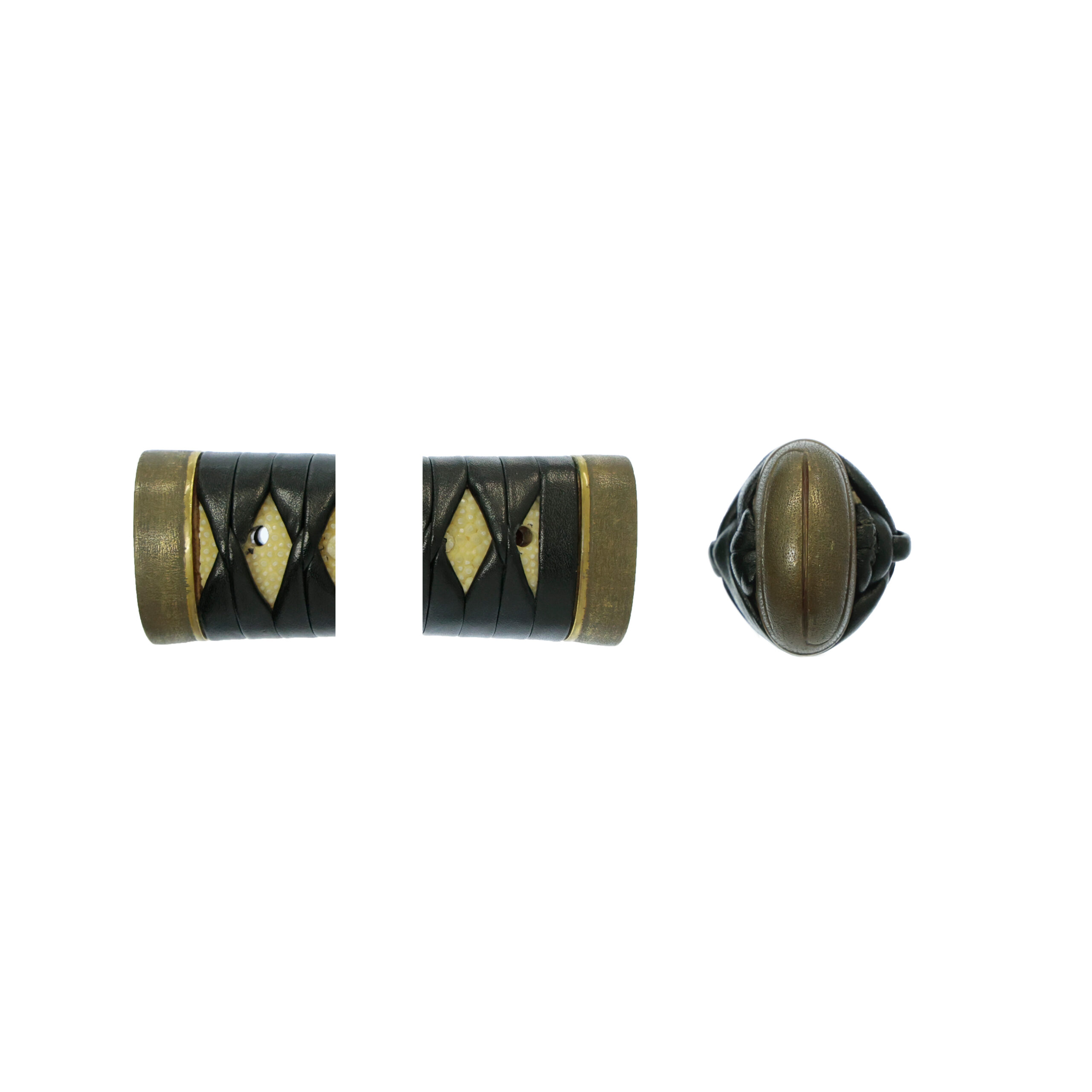
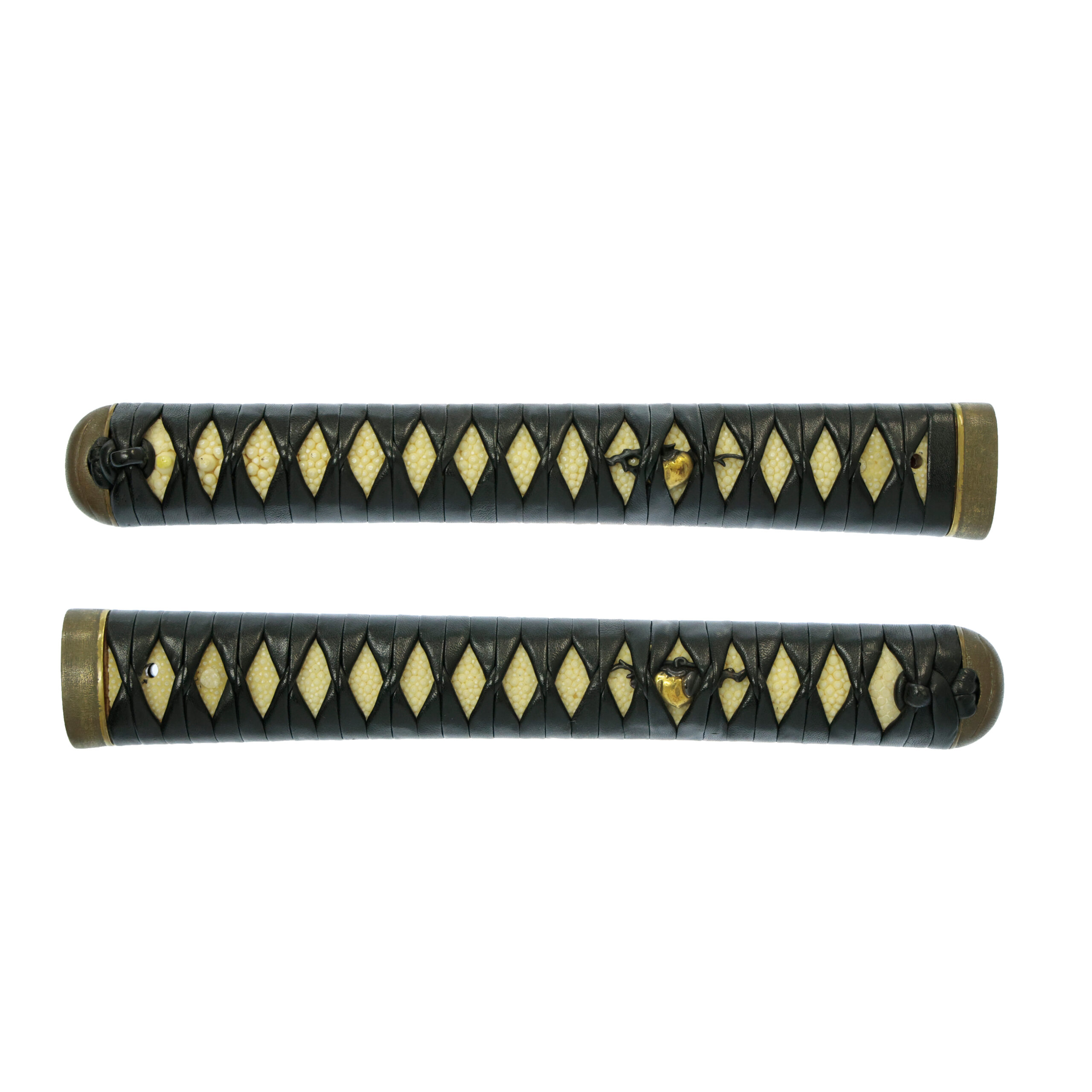
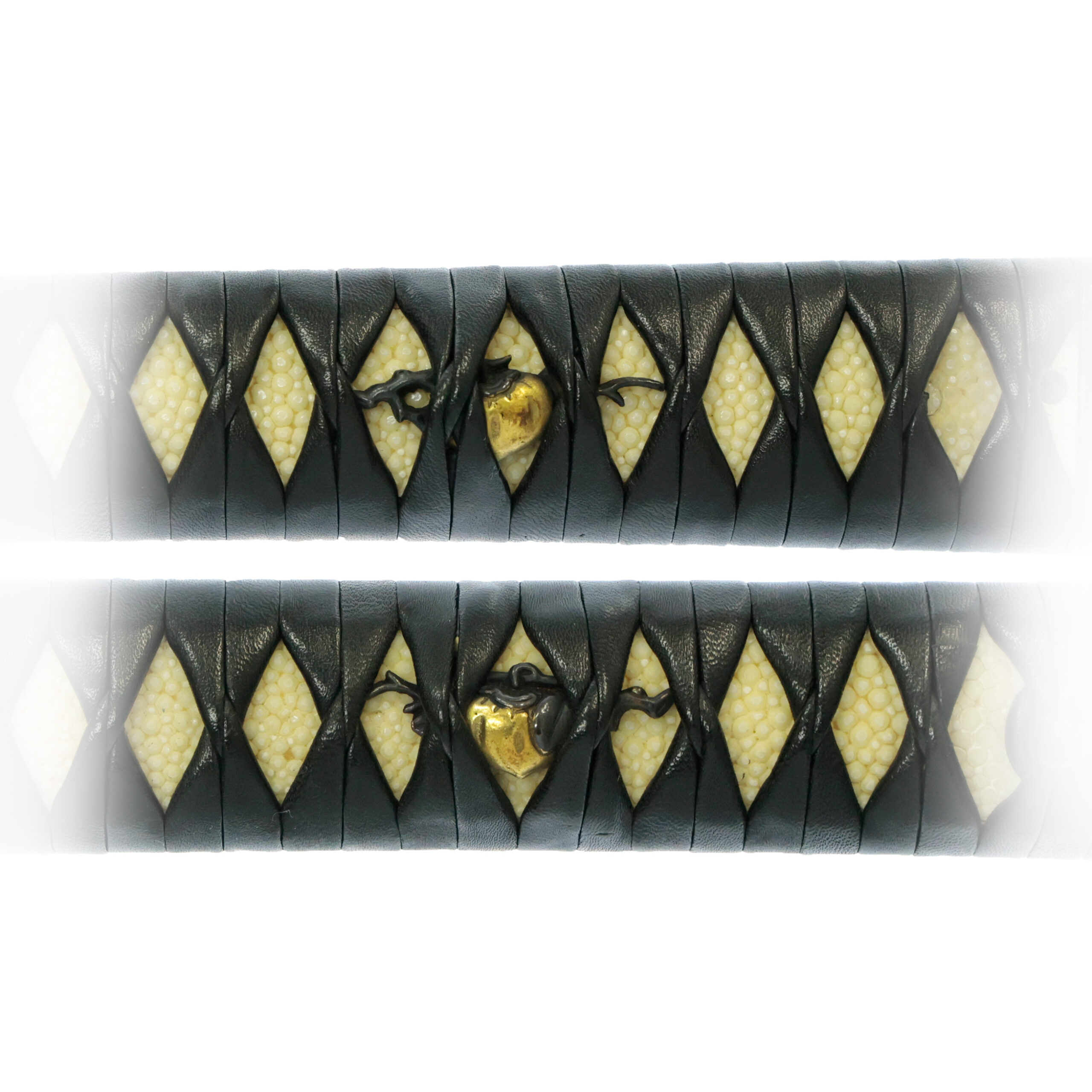
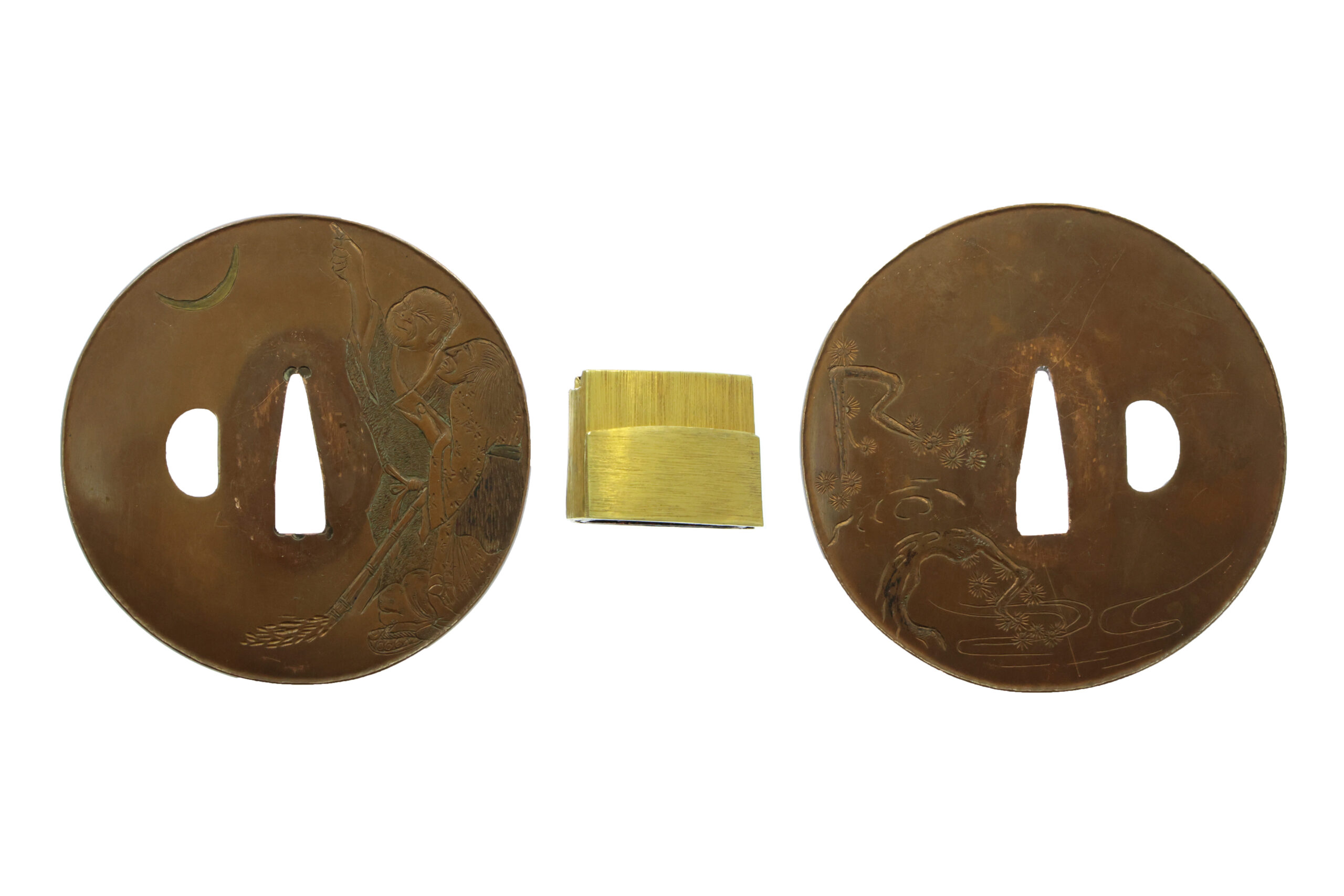
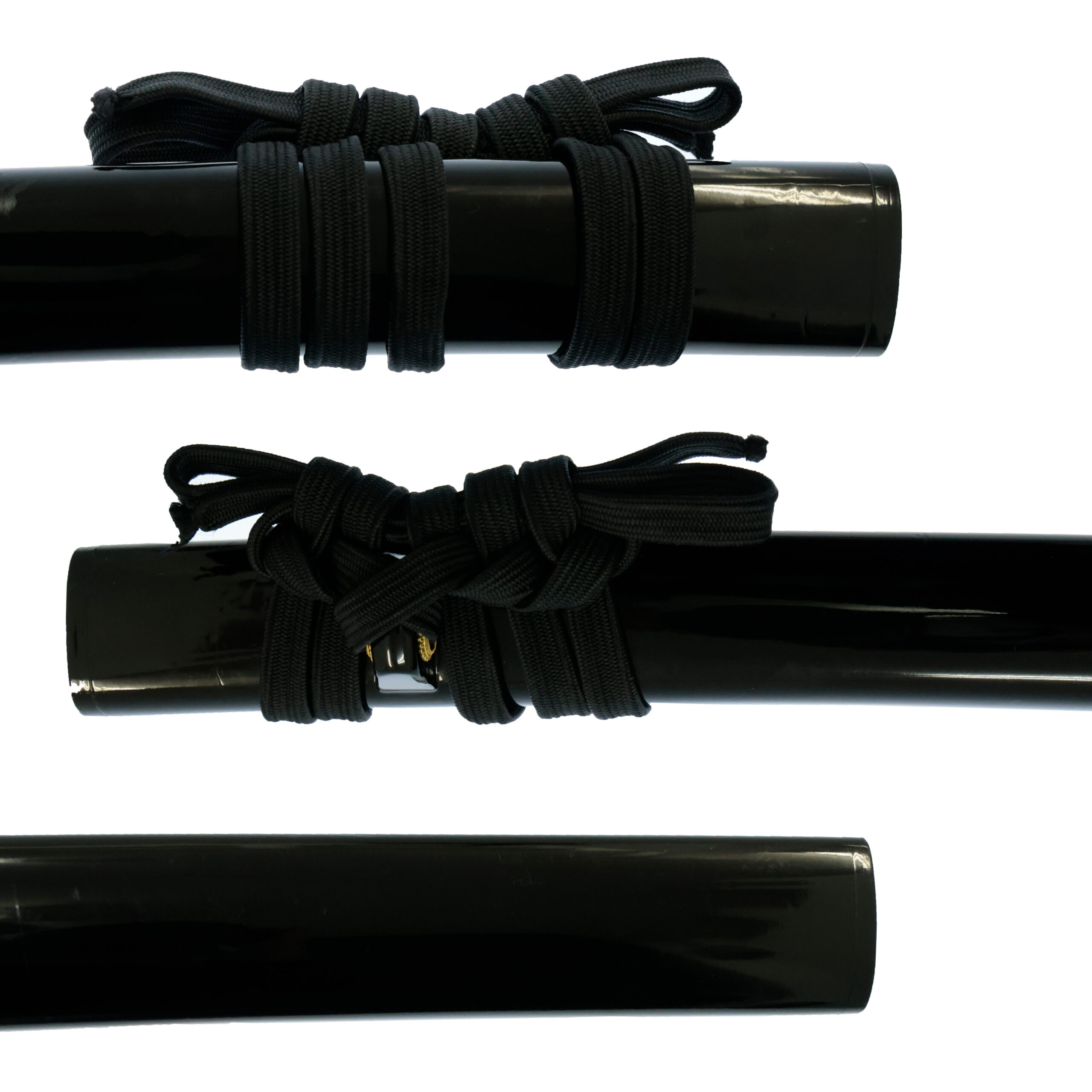
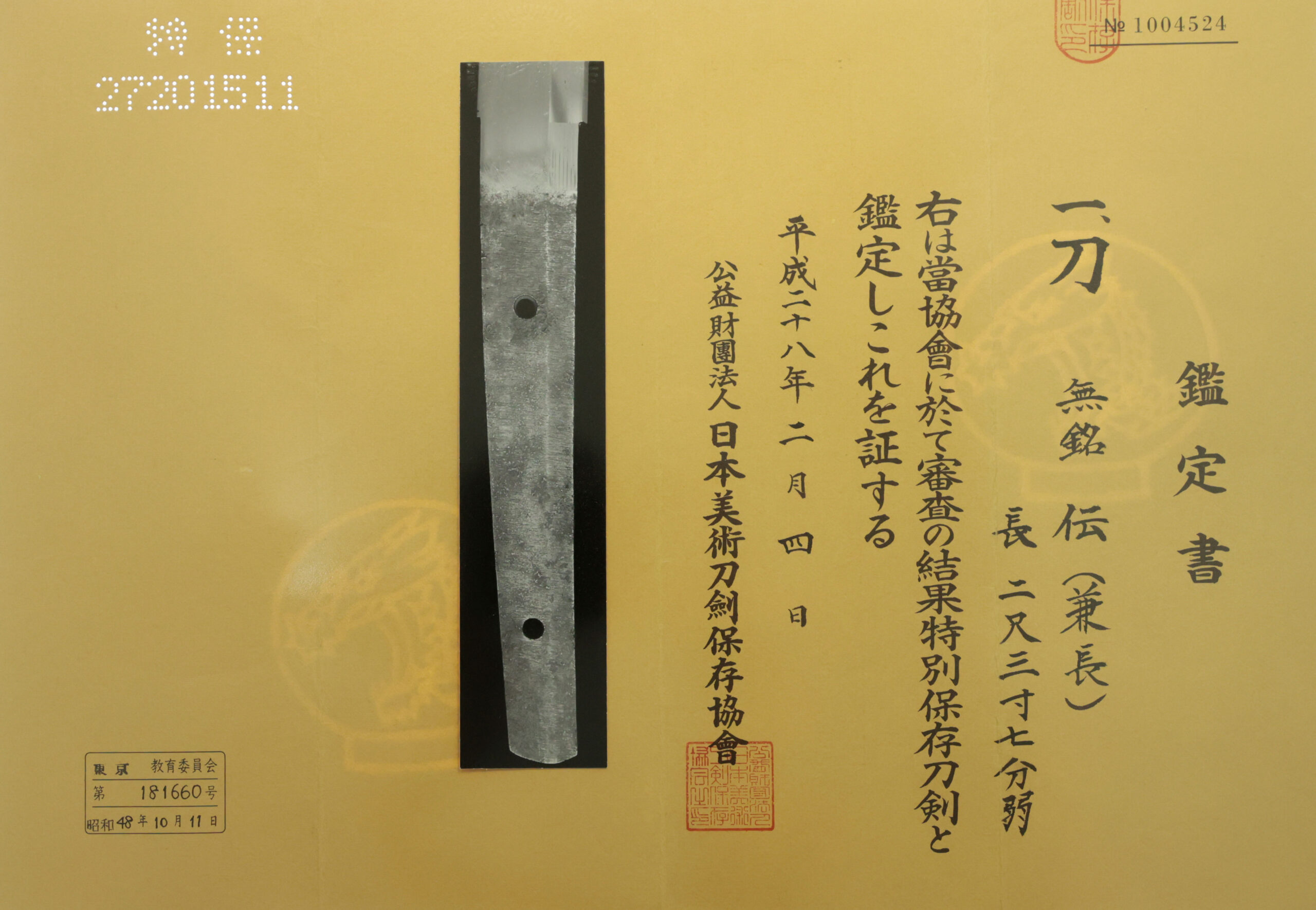
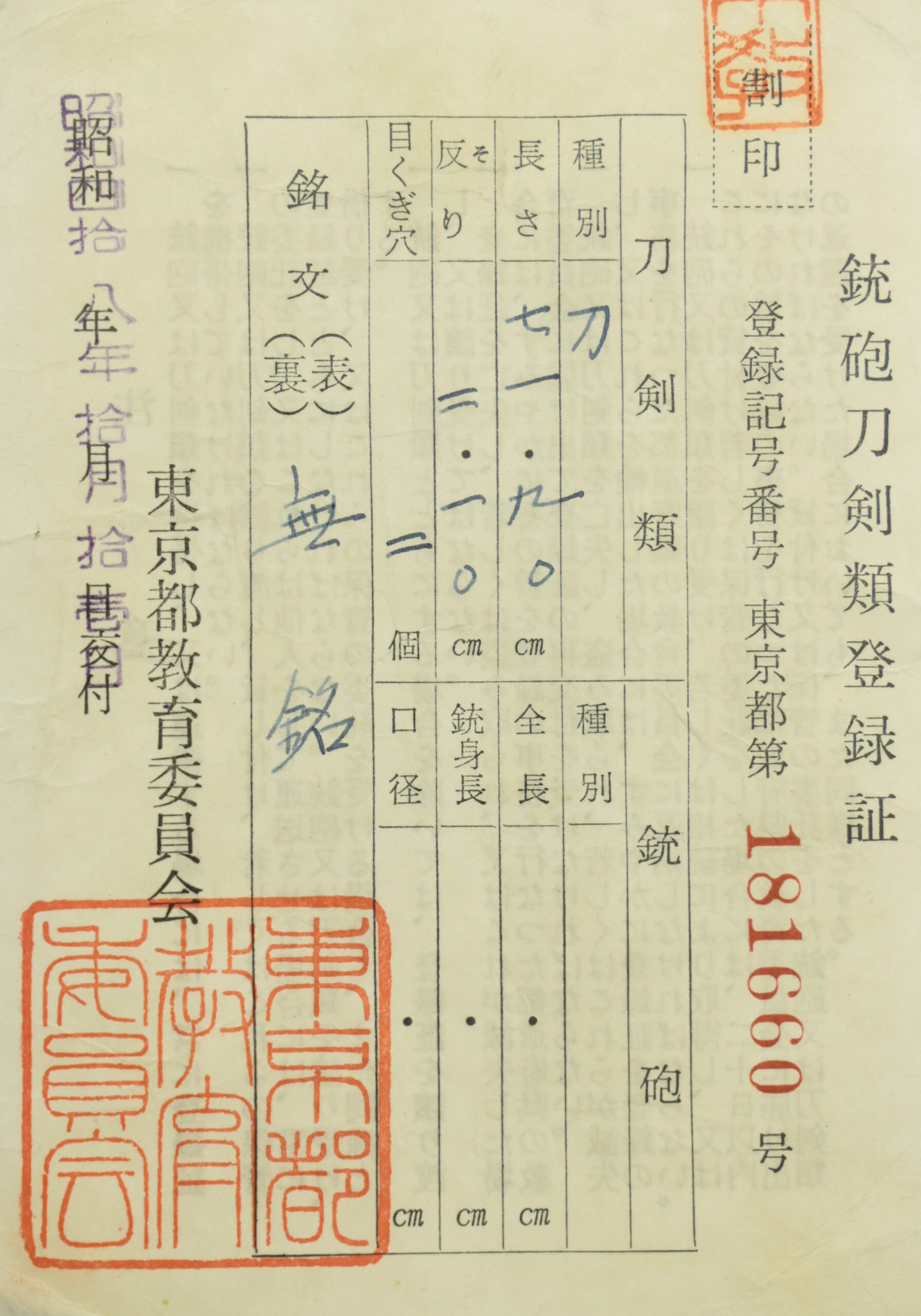
Antique Japanese Sword Katana Attributed to Den Kanenaga with Tokubetsu Hozon Certificate 【Description】 This blade is attributed to Den Kanenaga (伝兼長). The maker’s name, Kanenaga, lasted a few generations in Bizen province (today’s Okayama prefecture). The first- and second-generation Kanenaga were active during the Nanbokucho period (around the mid-late 14th century). We called NBTHK and they confirmed that the attribution was given to Bizen Kanenaga during the Nanbokucho period. It is said that the second-gen Kanenaga, or could be the first-gen in another theory, was an apprentice of Osafune Nagayoshi (長船長義), who was a renowned swordsmith in Bizen Osafune school in Okayama prefecture. Nagayoshi was one of the ten apprentices of Masamune, also known as Masamune Jittetsu (正宗十哲). Masamune is arguably one of the most famous swordsmiths in Japan. In addition, Nagayoshi was known as a swordsmith who incorporated the SOSHU-DEN forging style with the BIZEN style, which is called the SOSHU-BIZEN (相州備前) tradition, in his works. His apprentice Kanenaga also forged swords with characteristics emphasizing the SOSHU-DEN style. The History of Bizen Osafune School It is said that Osafune school was founded by Mitsutada (光忠), who was active during the mid-Kamakura period. Bizen Osafune school was the biggest one of all other schools in Bizen province, and they received many orders from feudal lords or renowned Samurai. They were called Osafunemono and beloved by Samurai warriors. Among the swordsmiths who belonged to this school, Nagamitsu, Sanenaga, and Kagemitsu are known as Osafune Sansaku, the three renowned Osafune swordsmiths. There are also four other prominent swordsmiths who were from Bizen Osafune school. They are called Osafune Shiten-no, the four masters of Osafune school. Their names are Nagamitsu, Kanemitsu, Nagayoshi , and Motoshige. BIZEN is located near the Chugoku Mountains, where iron sands, one of the essential materials for making Japanese swords, were abundant. Furthermore, BIZEN swordsmiths had close access to Yoshi River, where they could find water and charcoal. This geological location contributed to the swordsmiths forging high-quality refined blades. We presume BIZEN was quite active in sword-forging from ancient times. It is said that BIZEN DEN was created by groups of swordsmiths there during the late Heian era (Late 12th century ). These ancient swordsmiths in Bizen province are called Ko-Bizen (Old Bizen) swordsmiths. By inheriting the sword forging techniques from Ko-Bizen swordsmiths, the Bizen Osafune school flourished from the mid-Kamakura period. Homare Kizu (誉疵) We see what appears to be a Homare Kizu (誉疵), which tells us that this blade was used in a battle. Homare means honorable, and Homare Kizu is considered a good blade characteristic that tells us its history. It is appraised as a Tokubetsu Hozon Token (特別保存刀剣) issued by NBTHK (Nihon Bijutsu Touken Hozon Kyokai:日本美術刀剣保存協会). This authentication paper was only given to authentic Japanese swords, especially well preserved and high quality with artistic value. *Please keep in mind that there are a couple of Kitae Kizu on the blade. If you like to know the detailed condition, please feel free to contact us. 【Blade】 Cutting Edge Length(Nagasa) : 71.9 cm (28.3 inches) Curvature(Sori) : 2.1 cm (0.82 inches) Hamon : The crystalline structure which forms along the cutting edge of a blade as a result of the hardening process Jimon(Jihada) : visible steel surface pattern created by folding and hammering during forging process Kissaki : Kissaki is the tip of the Japanese sword. Nakago : Nakago is the tang of the Japanese sword. Japanese swordsmiths left the black rust on the tang because it prevents red rust while the tang is in its handle. And the discoloration of the tang was created over time, and it is a great indicator for a Japanese sword specialist to estimate when the sword was forged. Koshirae :Koshirae is the mounting of the Japanese sword. There are
 NihontoWatch
無銘 · Osafune · 古刀 · 長さ 71.9cm · 反り 2.1cm
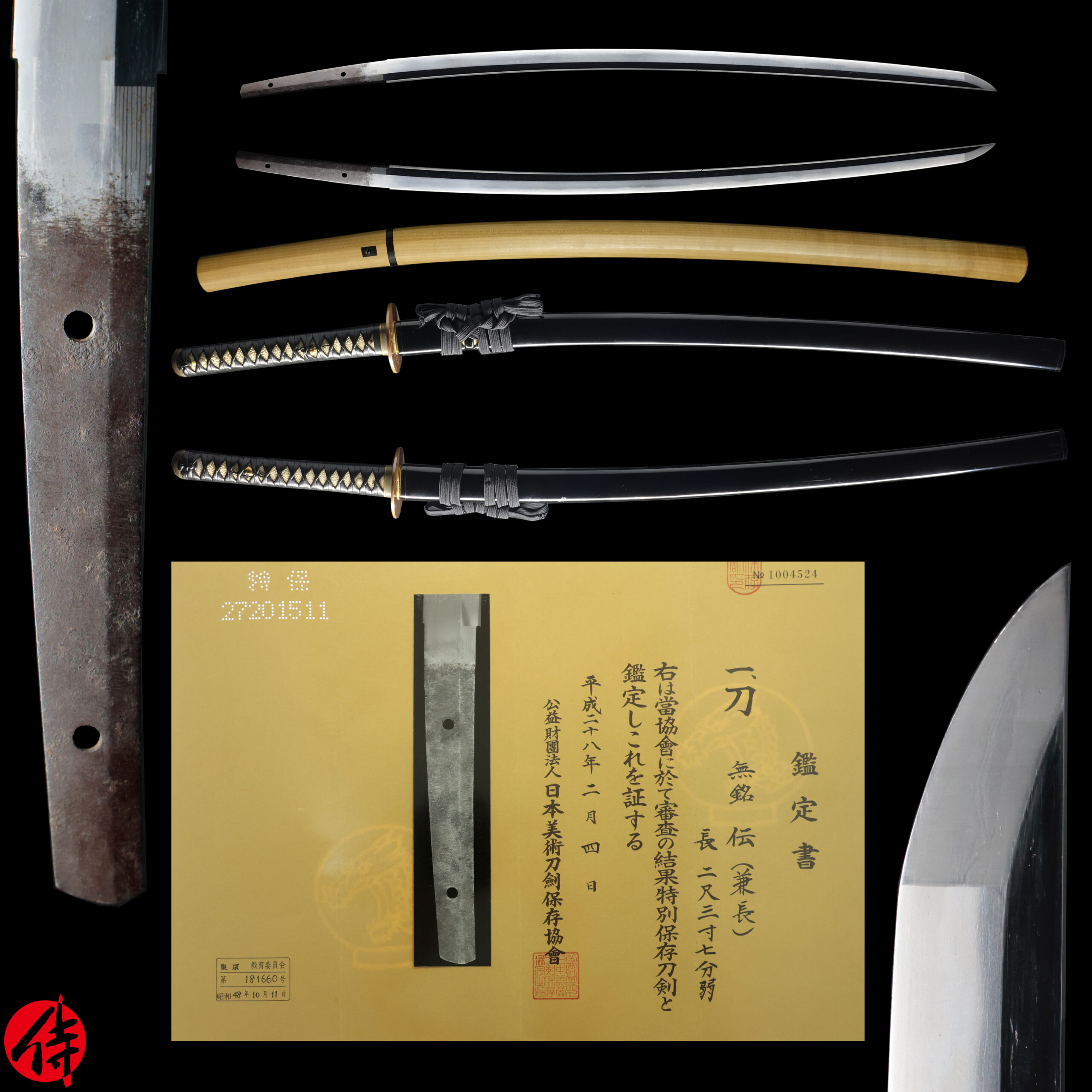


Osafune Chogi school (Soden-Bizen) · 備前 · 1362-1388頃
藤代 Jo saku · 刀剣大鑑 上位10%
現在3点販売中
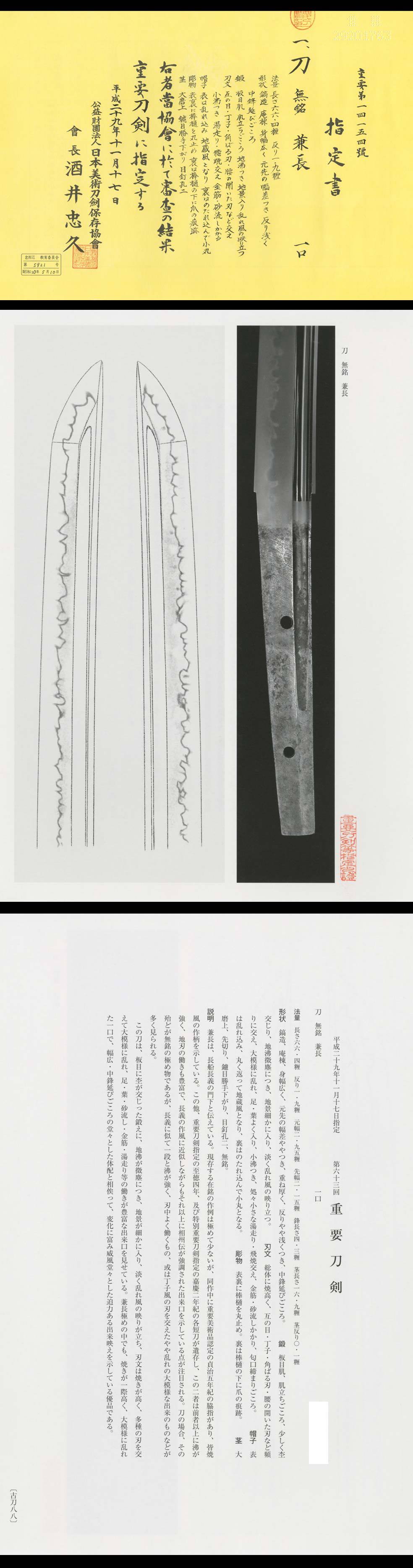
備前の兼長、銘は「兼長」と記し、説明書は長船長義の門と伝え(長船長義の門と伝え)、正宗に発する相州伝を備前の地に取り込んだ相伝備前の系の工とする。在銘作の遺存が極めて少ないことを説明書は率直に記す。基準作は、重要美術品認定の貞治五年(一三六六)紀の脇指、及び至徳四年(一三八七)・嘉慶二年(一三八八)紀の各短刀であり、後二者は前者以上に沸が強く地刃の働きも豊富である。これら僅かな年紀作から、説明書は同工の極め全体を支える判断を導く。すなわち、その出来口は「長義の作風に近似しながらもそれ以上に相州伝が強調された」[[c:2]]ものである、と。ただし鑑定の実際はそこにはなく、その名で遺るものはほとんどが、銘ではなく作柄によって同工に極められた豪壮な大磨上無銘の刀である。
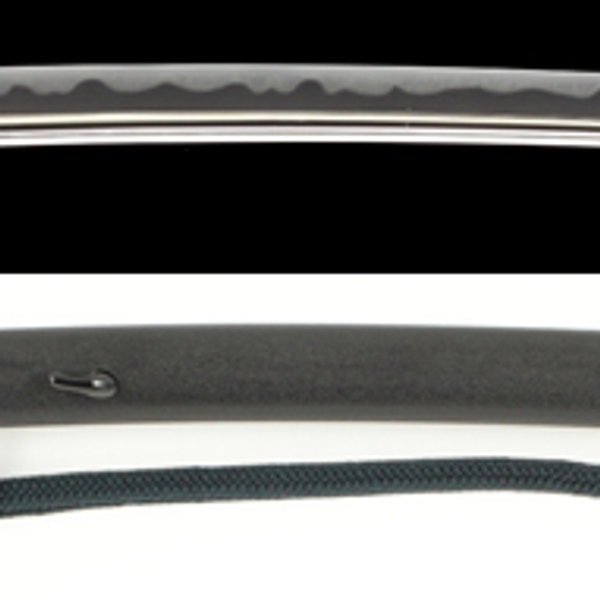
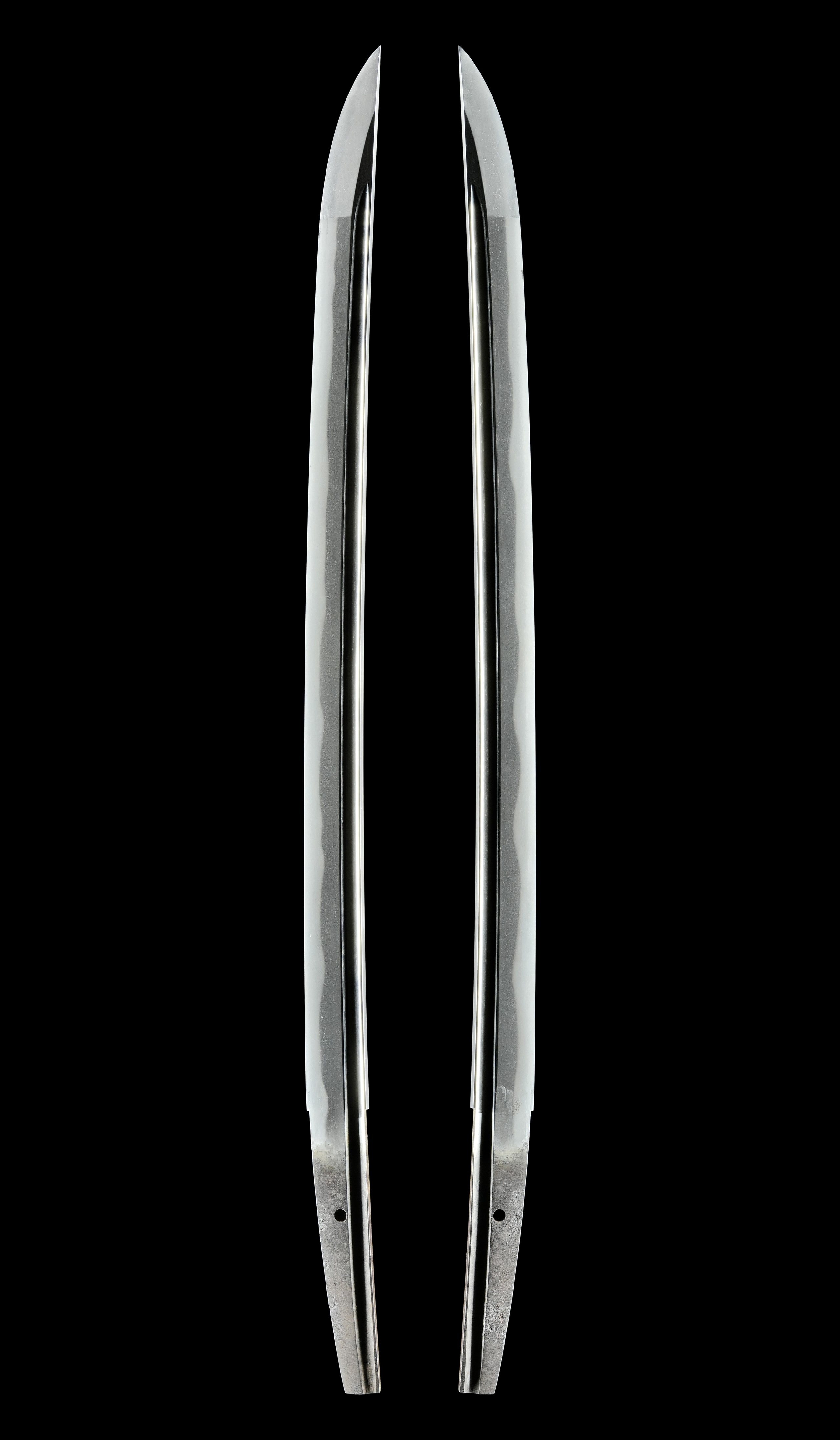
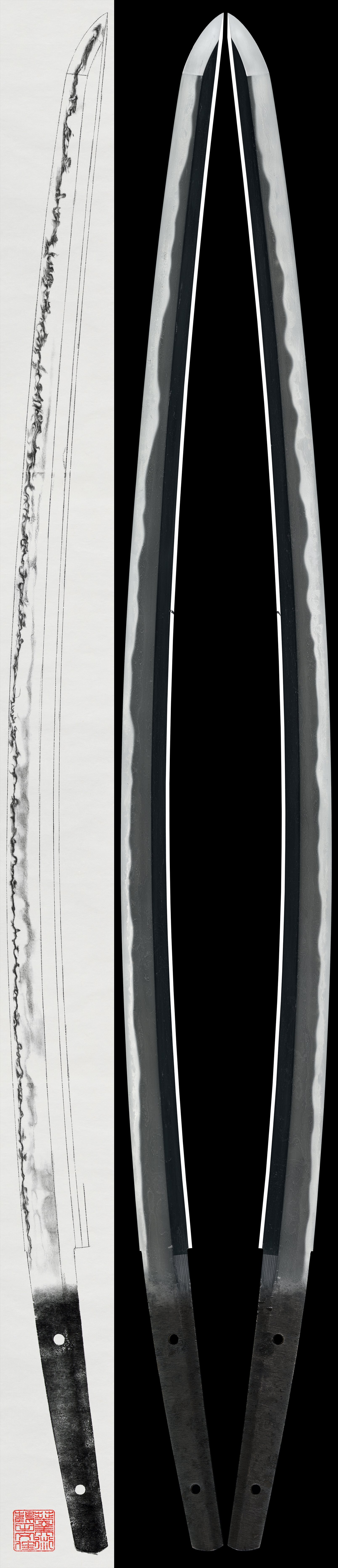
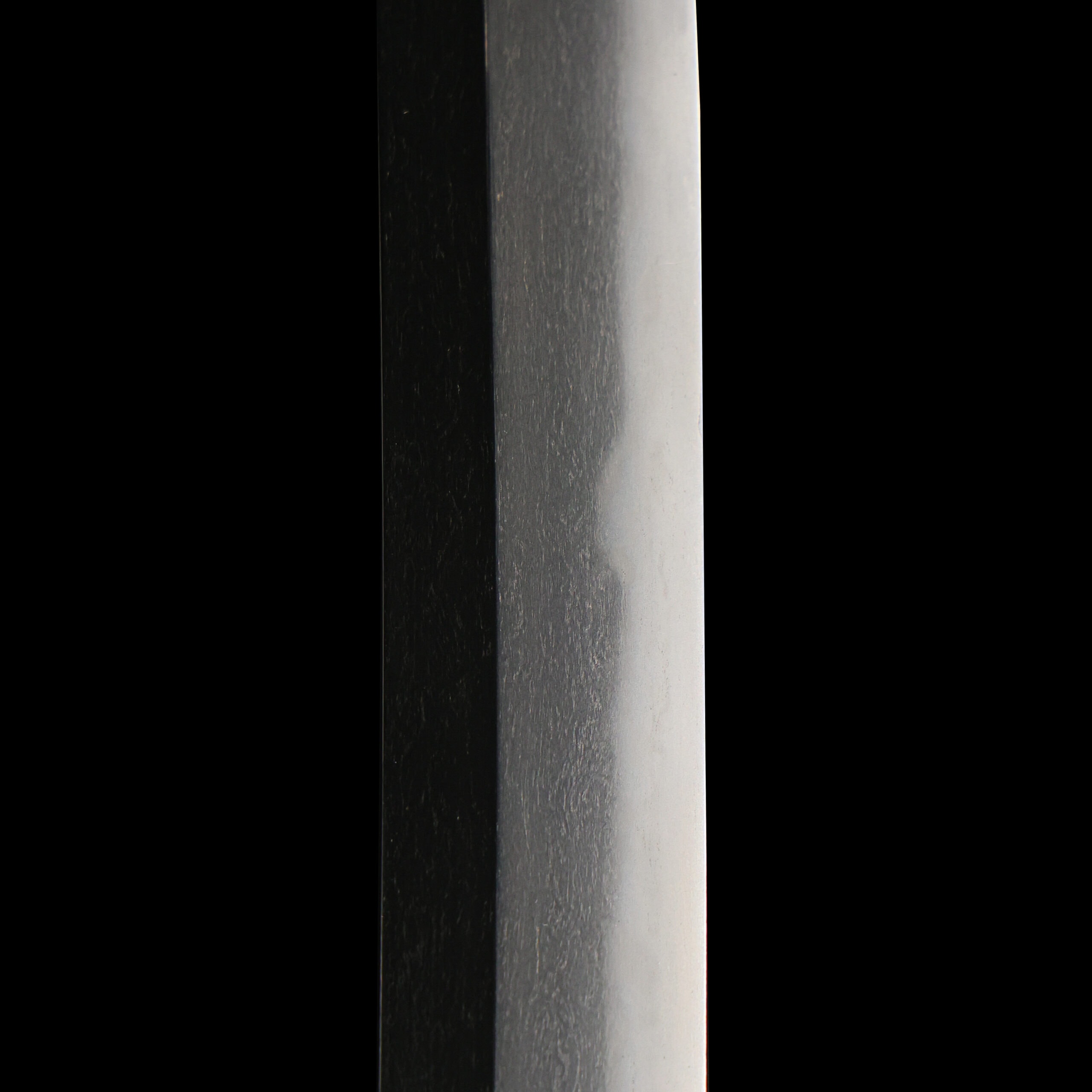
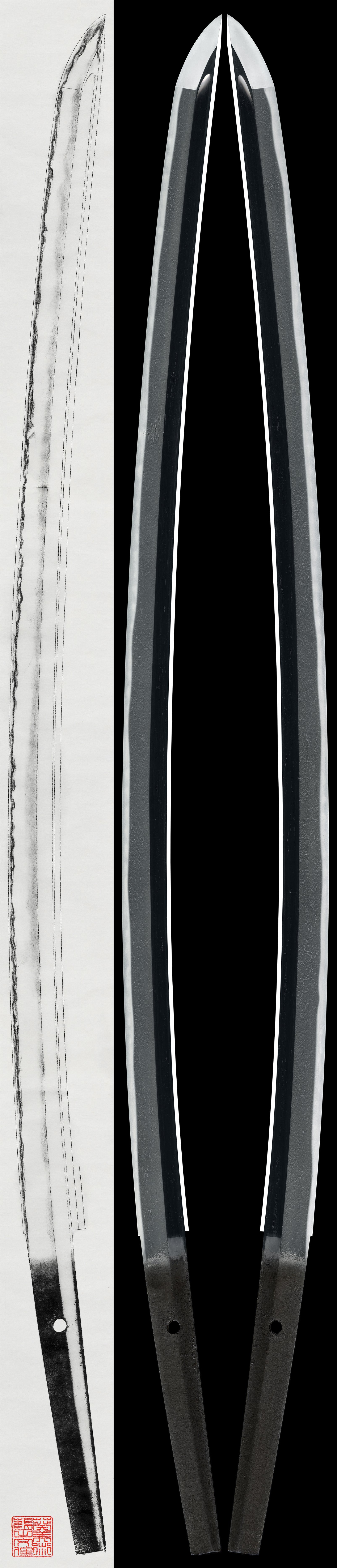
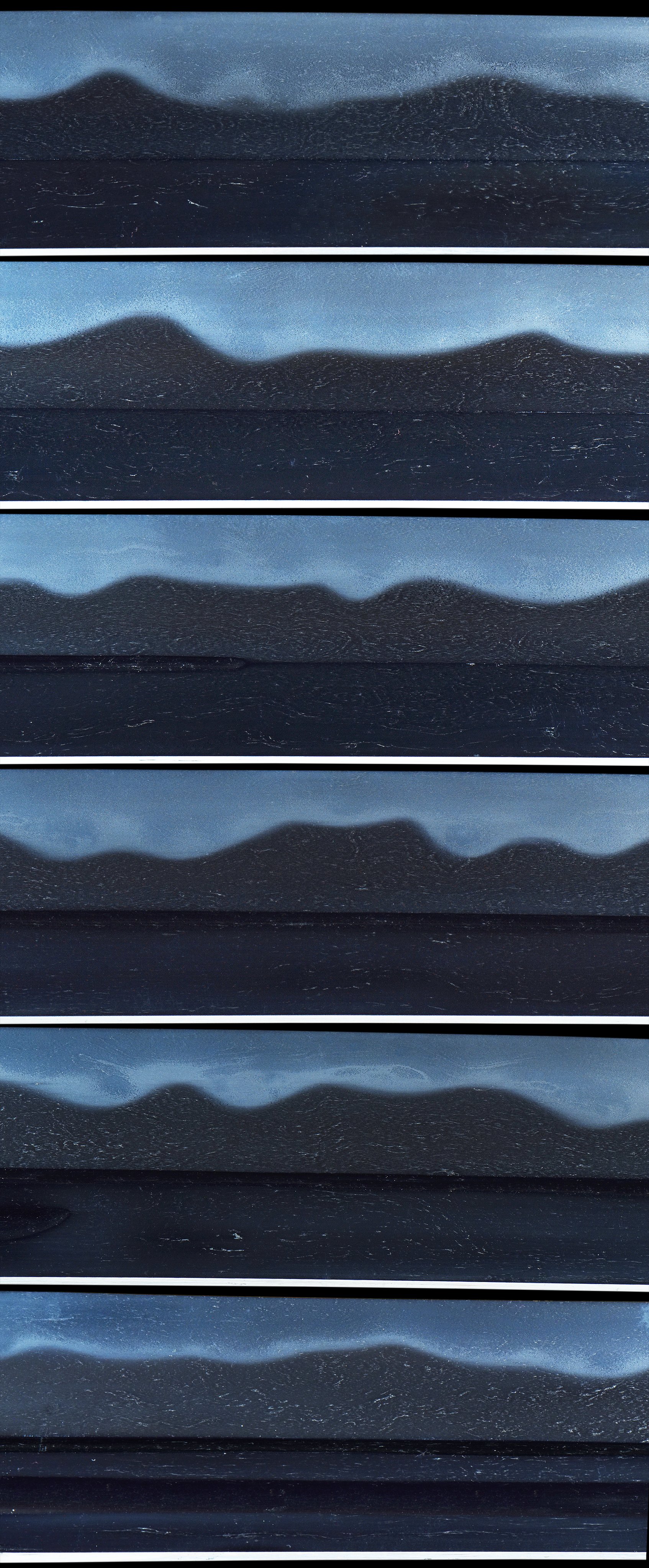
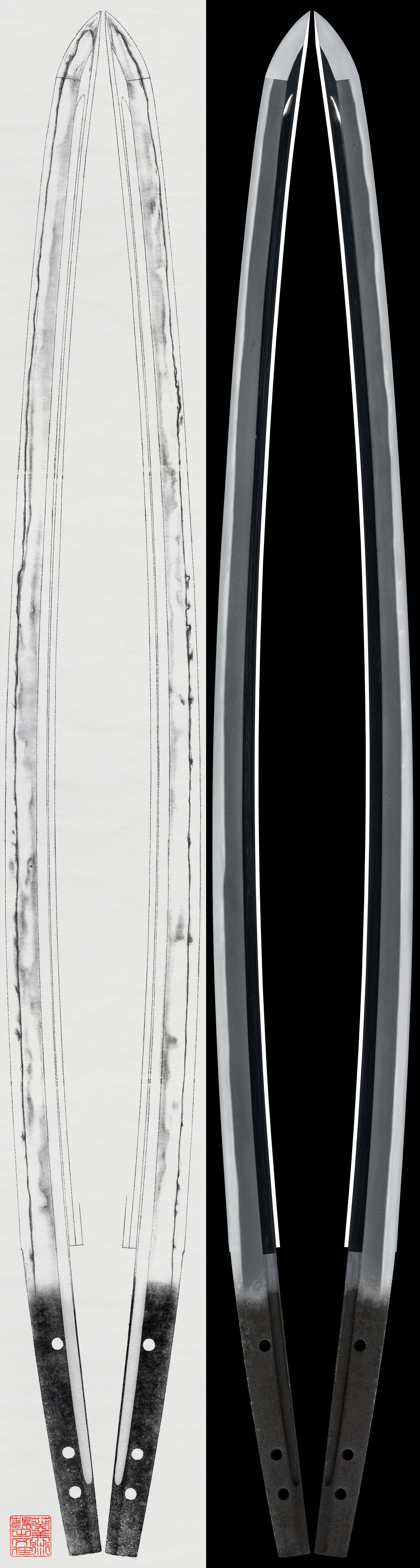
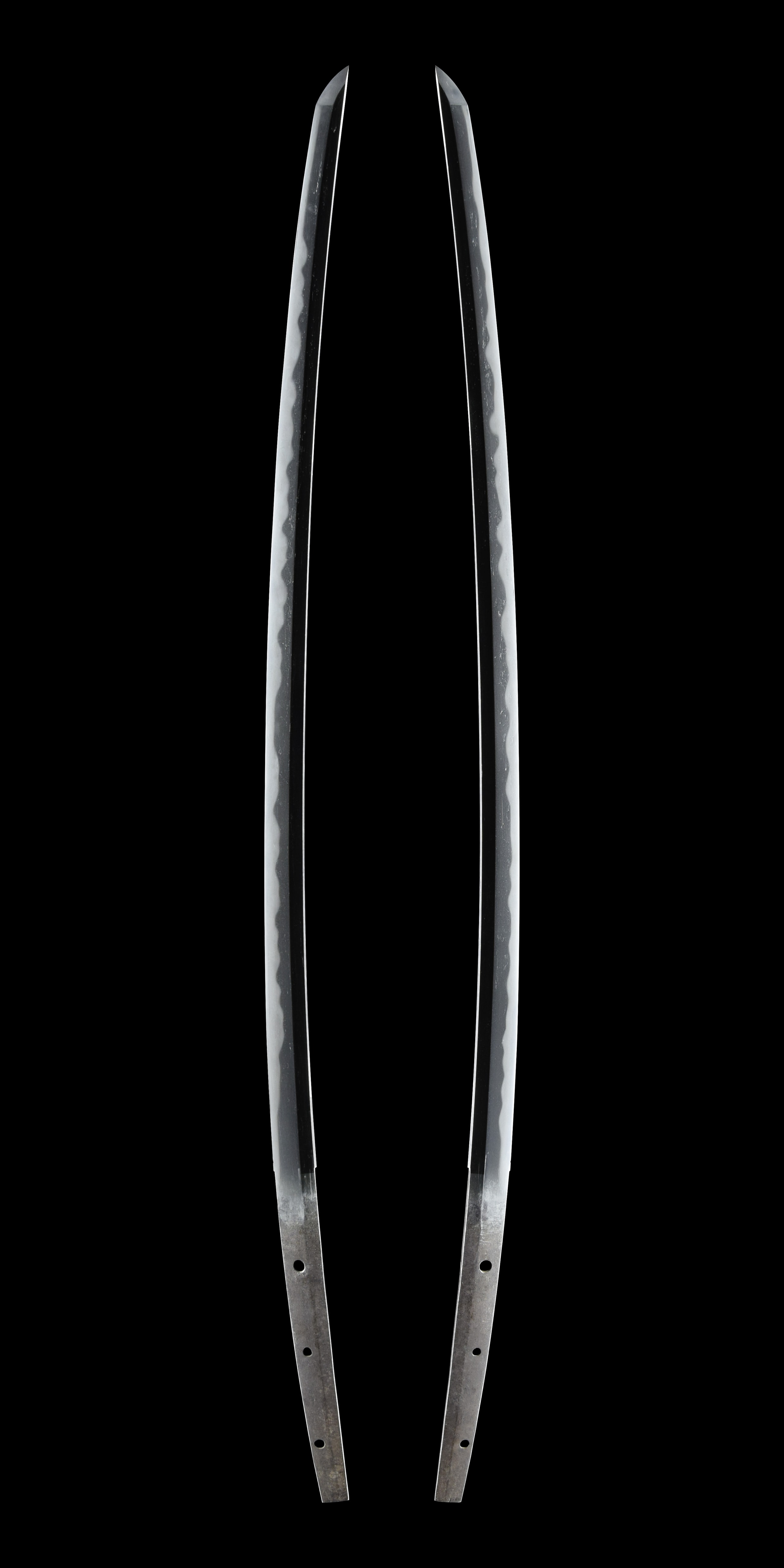
その多数を占める一群について、説明書は、「長義に似て一段と沸が強く、刃中よく働く」[[c:3]]刀と描く。記される姿そのものが見どころの一であって、身幅広く元先の幅差殆どなく、重ね厚く、反りやや深くつき、大鋒あるいは中鋒の延びる、南北朝の豪壮な体配を大磨上に留める。刃文は、のたれ又は互の目を基調に、互の目・小互の目に丁子・角ばる刃・尖り刃を交え、振りを与える腰開きの互の目を交えた大模様の乱れである。足・葉よく入り、匂口は深く明るく、沸はよくつき処々荒めに沸づき、金筋・砂流しが頻りにかかる。小さな湯走り・飛焼が刃の上に飛び、帽子は乱れ込んで尖りごころに掃きかけ、火焔風となるものが多い。
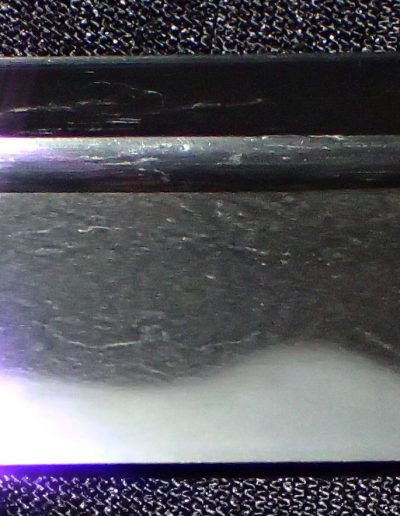
地鉄は、その相州伝の刃を載せる備前の地である。説明書は、板目に杢・大杢目を交え、処々流れ肌を交えて肌立ち、地沸が微塵に厚くつき、地景がよく入ると記す。備前の映りは現れるが淡く、繰り返し淡く乱れ映り立つ(淡く乱れ映り立つ)と記される。その淡さこそが見どころで、相州伝を強く推せば推すほど備前地は薄れ、最も相州伝の強い作では映りはほとんど引く。説明書はその残る映りを国の証と読み、ある刀を「映りが現れていることから、相伝備前と鑑せらる」[[c:5]]ものと判ずる。
作はそれゆえ二様に分かれる。稀な年紀の在銘作が基準で、貞治の脇指は皆焼風に傾き、至徳・嘉慶の短刀は相州伝を極めて、説明書はこれを則重に擬し、「一見則重にも紛れる位に相州伝の強調された」[[c:6]]作と書く。これら年紀作の銘の書風と鏨使いが、この手が長義派に連なることを首肯せしめるという。これに対して大半を占めるのが、長義その人よりも放胆で大模様な大磨上無銘の刀の群である。説明書はまた本間の談として年代の問題を留める。すなわち、貞治の兼長の銘振りは長義と相違し、後の至徳・嘉慶・明徳の作は長義の応安頃の銘振りに通ずるため、「通説を検討すべき」[[c:7]]であり、貞治の兼長は「長義とは別系であり、至徳以後の兼長が長義の門下であろう」[[c:8]]と説く。説明書はこれを定説ではなく検討の余地ある問題として提示する。
長義一類の中で、同工の位置は最も相州伝が強調された極にある。説明書は度合をもって長義と分かつ。長義に極める常の大磨上無銘がやや静かに納まるのに対し、兼長のそれは一段と放胆で大模様、沸の強い手であり、ある特別重要刀剣の刀を「長義一類の中でも兼長に最も擬すべき」[[c:9]]ものと判ずる。腰開きの互の目はその最も特有の見どころで、正系備前の同類には見られぬ振りであり、砂流し・金筋は最も豊かに、飛焼は最も執拗に現れる。かくして、丁子の備前線に近い正系備前寄りの兼光・元重とは作風を異にし、相伝備前の相州寄りを最も推し進めた長義門の工として、長義と並ぶ。
兼長は藤代の極めで上作、刀剣美術の評価において刀工大鑑九〇〇。在銘作が極めて少ないにもかかわらず、その名を負う指定の重みは厚く、国の文化財指定を受けた作はないものの、特別重要刀剣十一口、重要刀剣七十九口、上位二級で九十口に達し、重要美術品に認定された作も数口を遺す。来歴には格のある名が録され、真田家・藤堂家・酒井忠以・土浦土屋家・山内、米国の蒐集家ウォルター・A・コンプトンらの手を経る。所在の知れるもののうち、二口は備前長船刀剣博物館・厳島神社の所蔵にかかり、他は私蔵に帰す。在銘がほとんど遺らず、極めの刀自体も多くは出ぬため、兼長が市に現れることは稀であり、最上級の文化財指定に永く封ぜられた作はないものの、所在の知れる作は特別重要刀剣・重要刀剣の級にあって、その多くは取引されず保たれている。一口が世に出るのは、求めて得られるものではなく、出れば一事件というべきものである。
兼長の位置づけを、日本刀全体および伝統・時代・時期ごとに示します。各位(随一・屈指・有数・著名)は、NBTHK および文化庁による指定に加え、三作や名物帳などの歴史的栄誉を加味したものです。
各項目を選ぶと評価方法が表示されます。
在銘年紀作が示す、確実に活動していた年代
備前伝
時期区分: 相伝備前· 1330–1394
現在8点販売中
相伝備前 相伝備前とは、南北朝時代の備前国長船派にあって、相州伝の作風を加味した一群の刀工およびその作風期を指す呼称である。景光に続く長船派の嫡流たる兼光をはじめ、兼光と並んで傑れた技術を示すとされる長義、その門と伝える兼長、兼光門下の一人にして一説に兼光の弟とも伝える倫光、さらに兼光や長義とは別系統で青江気質を窺わせる元重、長船傍系と目される義景など、多くの備前鍛冶がこの時期に活躍した。兼光の現存する年紀作は鎌倉時代末期の元亨元年から南北朝期の貞治に及ぶ約四十五年に亘り、その南北朝時代初期の康永頃までの作は姿が尋常で父景光風を踏襲した感があるが、貞和・観応頃から姿が大柄となり、それまでになかったのたれ主調の刃文が出現する。長義は「備前刀の中で最も備前ばなれした刀工は長義也」と古来称され、相州伝を強く加味した作風で知られる。長船における正系の技量を継承しつつ、隣国相模の作風を取り込んだ点に、この作風期の独自性が存する。 作風は、まず体配において南北朝期の時代色を色濃く反映する。身幅が広く元先の幅差が目立たず、重ね頃合、大鋒に結ぶ堂々たる姿で、延文・貞治頃を最盛期とする雄渾なる体配を示す。鍛えは板目に杢を交え、総じてよく錬れて地沸つき、地景入り、乱れ映りが立つのを常とする。この乱れ映りは、相州伝の色彩を帯びながらも備前気質を表出する標識であり、相伝備前と鑑する重要な拠所となる。刃文は兼光・倫光においてはおおどかなのたれを主調に互の目・小互の目・角ばる刃・尖りごころの刃などを交え、匂勝ちに小沸つき、単調とならず変化を見せる。一方、長義・兼長においては、のたれ基調に丁子風の刃や腰開きの刃を交えて大模様に華やかに乱れ、よく沸づき、金筋・砂流し頻りにかかり、湯走り・飛焼を見せるなど、地刃の沸が一段と強い出来口を示す。元重は鍛えに流れ柾や地斑を交え、刃文に角ばる互の目が目立ち、逆がかり、逆足・葉を交えて帽子が尖るなど、青江気質を窺わせる点に同工一派の見どころがある。 評価としては、相州伝の影響が単に備前の伝統を駆逐したのではなく、長船の作域を著しく拡大せしめた点に、この作風期の歴史的意義が認められる。精錬の良さは際立ち、肌模様に緩みや荒れが看取されず、長船派棟梁としての鍛錬の妙味が遺憾なく発揮されている。匂口は明るく冴え、保存状態の健全な作が多く、備前の華やかさと強さを存分に堪能できる。兼光が先駆けたおおどかな乱れ、長義の放胆にして個性的な大乱れは、いずれも南北朝期長船を代表する達成として賞される。在銘の年紀作に乏しく無銘の極め物が多いものの、年紀を有する生ぶ茎の遺存例は資料的価値が頗る高く、後世には『集古十種』所載の名品や本阿弥折紙を伴う伝来品も知られる。相伝備前は、備前と相州という二大伝法が融合した到達点として、日本刀の歴史に重きをなすものである。 詳しく見る →
南北朝時代の備前
二つの朝廷が争った六十年、刀身は長大化し、長船がその需要に応えた。兼光と長義の工房は実際に戦う国人層の武士に仕え、軍勢とともに相州風が届いて相伝備前が生まれた。
保存刀剣のうち、出来が一層優れ、保存状態も良好と認められたものです。再刃や、室町・江戸期の多くの無銘作は対象外となり、保存刀剣より高い基準が課されます。
日本美術刀剣保存協会(NBTHK)は、1948年に設立され、文化庁の監督を受ける公益財団法人で、東京・刀剣博物館に本部を置きます。専門の審査員が出品作を直接審査し、美術的・歴史的価値に応じた鑑定書を発行します。NBTHKの鑑定書は、日本刀および刀装具の真正性を示す最も広く認知された基準です。
NBTHK公式サイトReturns/exchanges limited to defects caused by shipping (except willful misconduct or gross negligence by the company); customers must contact within 72 hours of receiving the product.
Antique Japanese Sword Katana Attributed to Den Kanenaga with Tokubetsu Hozon Certificate 【Description】 This blade is attributed to Den Kanenaga (伝兼長). The maker’s name, Kanenaga, lasted a few generations in Bizen province (today’s Okayama prefecture). The first- and second-generation Kanenaga were active during the Nanbokucho period (around the mid-late 14th century). We called NBTHK and they confirmed that the attribution was given to Bizen Kanenaga during the Nanbokucho period. It is said that the second-gen Kanenaga, or could be the first-gen in another theory, was an apprentice of Osafune Nagayoshi (長船長義), who was a renowned swordsmith in Bizen Osafune school in Okayama prefecture. Nagayoshi was one of the ten apprentices of Masamune, also known as Masamune Jittetsu (正宗十哲). Masamune is arguably one of the most famous swordsmiths in Japan. In addition, Nagayoshi was known as a swordsmith who incorporated the SOSHU-DEN forging style with the BIZEN style, which is called the SOSHU-BIZEN (相州備前) tradition, in his works. His apprentice Kanenaga also forged swords with characteristics emphasizing the SOSHU-DEN style. The History of Bizen Osafune School It is said that Osafune school was founded by Mitsutada (光忠), who was active during the mid-Kamakura period. Bizen Osafune school was the biggest one of all other schools in Bizen province, and they received many orders from feudal lords or renowned Samurai. They were called Osafunemono and beloved by Samurai warriors. Among the swordsmiths who belonged to this school, Nagamitsu, Sanenaga, and Kagemitsu are known as Osafune Sansaku, the three renowned Osafune swordsmiths. There are also four other prominent swordsmiths who were from Bizen Osafune school. They are called Osafune Shiten-no, the four masters of Osafune school. Their names are Nagamitsu, Kanemitsu, Nagayoshi , and Motoshige. BIZEN is located near the Chugoku Mountains, where iron sands, one of the essential materials for making Japanese swords, were abundant. Furthermore, BIZEN swordsmiths had close access to Yoshi River, where they could find water and charcoal. This geological location contributed to the swordsmiths forging high-quality refined blades. We presume BIZEN was quite active in sword-forging from ancient times. It is said that BIZEN DEN was created by groups of swordsmiths there during the late Heian era (Late 12th century ). These ancient swordsmiths in Bizen province are called Ko-Bizen (Old Bizen) swordsmiths. By inheriting the sword forging techniques from Ko-Bizen swordsmiths, the Bizen Osafune school flourished from the mid-Kamakura period. Homare Kizu (誉疵) We see what appears to be a Homare Kizu (誉疵), which tells us that this blade was used in a battle. Homare means honorable, and Homare Kizu is considered a good blade characteristic that tells us its history. It is appraised as a Tokubetsu Hozon Token (特別保存刀剣) issued by NBTHK (Nihon Bijutsu Touken Hozon Kyokai:日本美術刀剣保存協会). This authentication paper was only given to authentic Japanese swords, especially well preserved and high quality with artistic value. *Please keep in mind that there are a couple of Kitae Kizu on the blade. If you like to know the detailed condition, please feel free to contact us. 【Blade】 Cutting Edge Length(Nagasa) : 71.9 cm (28.3 inches) Curvature(Sori) : 2.1 cm (0.82 inches) Hamon : The crystalline structure which forms along the cutting edge of a blade as a result of the hardening process Jimon(Jihada) : visible steel surface pattern created by folding and hammering during forging process Kissaki : Kissaki is the tip of the Japanese sword. Nakago : Nakago is the tang of the Japanese sword. Japanese swordsmiths left the black rust on the tang because it prevents red rust while the tang is in its handle. And the discoloration of the tang was created over time, and it is a great indicator for a Japanese sword specialist to estimate when the sword was forged. Koshirae :Koshirae is the mounting of the Japanese sword. There are
NihontoWatch無銘 · Osafune · 古刀 · 長さ 71.9cm · 反り 2.1cm
Osafune Chogi school (Soden-Bizen) · 備前 · 1362-1388頃
藤代 Jo saku · 刀剣大鑑 上位10%
現在3点販売中
備前の兼長、銘は「兼長」と記し、説明書は長船長義の門と伝え(長船長義の門と伝え)、正宗に発する相州伝を備前の地に取り込んだ相伝備前の系の工とする。在銘作の遺存が極めて少ないことを説明書は率直に記す。基準作は、重要美術品認定の貞治五年(一三六六)紀の脇指、及び至徳四年(一三八七)・嘉慶二年(一三八八)紀の各短刀であり、後二者は前者以上に沸が強く地刃の働きも豊富である。これら僅かな年紀作から、説明書は同工の極め全体を支える判断を導く。すなわち、その出来口は「長義の作風に近似しながらもそれ以上に相州伝が強調された」[[c:2]]ものである、と。ただし鑑定の実際はそこにはなく、その名で遺るものはほとんどが、銘ではなく作柄によって同工に極められた豪壮な大磨上無銘の刀である。
その多数を占める一群について、説明書は、「長義に似て一段と沸が強く、刃中よく働く」[[c:3]]刀と描く。記される姿そのものが見どころの一であって、身幅広く元先の幅差殆どなく、重ね厚く、反りやや深くつき、大鋒あるいは中鋒の延びる、南北朝の豪壮な体配を大磨上に留める。刃文は、のたれ又は互の目を基調に、互の目・小互の目に丁子・角ばる刃・尖り刃を交え、振りを与える腰開きの互の目を交えた大模様の乱れである。足・葉よく入り、匂口は深く明るく、沸はよくつき処々荒めに沸づき、金筋・砂流しが頻りにかかる。小さな湯走り・飛焼が刃の上に飛び、帽子は乱れ込んで尖りごころに掃きかけ、火焔風となるものが多い。
地鉄は、その相州伝の刃を載せる備前の地である。説明書は、板目に杢・大杢目を交え、処々流れ肌を交えて肌立ち、地沸が微塵に厚くつき、地景がよく入ると記す。備前の映りは現れるが淡く、繰り返し淡く乱れ映り立つ(淡く乱れ映り立つ)と記される。その淡さこそが見どころで、相州伝を強く推せば推すほど備前地は薄れ、最も相州伝の強い作では映りはほとんど引く。説明書はその残る映りを国の証と読み、ある刀を「映りが現れていることから、相伝備前と鑑せらる」[[c:5]]ものと判ずる。
作はそれゆえ二様に分かれる。稀な年紀の在銘作が基準で、貞治の脇指は皆焼風に傾き、至徳・嘉慶の短刀は相州伝を極めて、説明書はこれを則重に擬し、「一見則重にも紛れる位に相州伝の強調された」[[c:6]]作と書く。これら年紀作の銘の書風と鏨使いが、この手が長義派に連なることを首肯せしめるという。これに対して大半を占めるのが、長義その人よりも放胆で大模様な大磨上無銘の刀の群である。説明書はまた本間の談として年代の問題を留める。すなわち、貞治の兼長の銘振りは長義と相違し、後の至徳・嘉慶・明徳の作は長義の応安頃の銘振りに通ずるため、「通説を検討すべき」[[c:7]]であり、貞治の兼長は「長義とは別系であり、至徳以後の兼長が長義の門下であろう」[[c:8]]と説く。説明書はこれを定説ではなく検討の余地ある問題として提示する。
長義一類の中で、同工の位置は最も相州伝が強調された極にある。説明書は度合をもって長義と分かつ。長義に極める常の大磨上無銘がやや静かに納まるのに対し、兼長のそれは一段と放胆で大模様、沸の強い手であり、ある特別重要刀剣の刀を「長義一類の中でも兼長に最も擬すべき」[[c:9]]ものと判ずる。腰開きの互の目はその最も特有の見どころで、正系備前の同類には見られぬ振りであり、砂流し・金筋は最も豊かに、飛焼は最も執拗に現れる。かくして、丁子の備前線に近い正系備前寄りの兼光・元重とは作風を異にし、相伝備前の相州寄りを最も推し進めた長義門の工として、長義と並ぶ。
兼長は藤代の極めで上作、刀剣美術の評価において刀工大鑑九〇〇。在銘作が極めて少ないにもかかわらず、その名を負う指定の重みは厚く、国の文化財指定を受けた作はないものの、特別重要刀剣十一口、重要刀剣七十九口、上位二級で九十口に達し、重要美術品に認定された作も数口を遺す。来歴には格のある名が録され、真田家・藤堂家・酒井忠以・土浦土屋家・山内、米国の蒐集家ウォルター・A・コンプトンらの手を経る。所在の知れるもののうち、二口は備前長船刀剣博物館・厳島神社の所蔵にかかり、他は私蔵に帰す。在銘がほとんど遺らず、極めの刀自体も多くは出ぬため、兼長が市に現れることは稀であり、最上級の文化財指定に永く封ぜられた作はないものの、所在の知れる作は特別重要刀剣・重要刀剣の級にあって、その多くは取引されず保たれている。一口が世に出るのは、求めて得られるものではなく、出れば一事件というべきものである。
兼長の位置づけを、日本刀全体および伝統・時代・時期ごとに示します。各位(随一・屈指・有数・著名)は、NBTHK および文化庁による指定に加え、三作や名物帳などの歴史的栄誉を加味したものです。
各項目を選ぶと評価方法が表示されます。
在銘年紀作が示す、確実に活動していた年代
備前伝
時期区分: 相伝備前· 1330–1394
現在8点販売中
相伝備前 相伝備前とは、南北朝時代の備前国長船派にあって、相州伝の作風を加味した一群の刀工およびその作風期を指す呼称である。景光に続く長船派の嫡流たる兼光をはじめ、兼光と並んで傑れた技術を示すとされる長義、その門と伝える兼長、兼光門下の一人にして一説に兼光の弟とも伝える倫光、さらに兼光や長義とは別系統で青江気質を窺わせる元重、長船傍系と目される義景など、多くの備前鍛冶がこの時期に活躍した。兼光の現存する年紀作は鎌倉時代末期の元亨元年から南北朝期の貞治に及ぶ約四十五年に亘り、その南北朝時代初期の康永頃までの作は姿が尋常で父景光風を踏襲した感があるが、貞和・観応頃から姿が大柄となり、それまでになかったのたれ主調の刃文が出現する。長義は「備前刀の中で最も備前ばなれした刀工は長義也」と古来称され、相州伝を強く加味した作風で知られる。長船における正系の技量を継承しつつ、隣国相模の作風を取り込んだ点に、この作風期の独自性が存する。 作風は、まず体配において南北朝期の時代色を色濃く反映する。身幅が広く元先の幅差が目立たず、重ね頃合、大鋒に結ぶ堂々たる姿で、延文・貞治頃を最盛期とする雄渾なる体配を示す。鍛えは板目に杢を交え、総じてよく錬れて地沸つき、地景入り、乱れ映りが立つのを常とする。この乱れ映りは、相州伝の色彩を帯びながらも備前気質を表出する標識であり、相伝備前と鑑する重要な拠所となる。刃文は兼光・倫光においてはおおどかなのたれを主調に互の目・小互の目・角ばる刃・尖りごころの刃などを交え、匂勝ちに小沸つき、単調とならず変化を見せる。一方、長義・兼長においては、のたれ基調に丁子風の刃や腰開きの刃を交えて大模様に華やかに乱れ、よく沸づき、金筋・砂流し頻りにかかり、湯走り・飛焼を見せるなど、地刃の沸が一段と強い出来口を示す。元重は鍛えに流れ柾や地斑を交え、刃文に角ばる互の目が目立ち、逆がかり、逆足・葉を交えて帽子が尖るなど、青江気質を窺わせる点に同工一派の見どころがある。 評価としては、相州伝の影響が単に備前の伝統を駆逐したのではなく、長船の作域を著しく拡大せしめた点に、この作風期の歴史的意義が認められる。精錬の良さは際立ち、肌模様に緩みや荒れが看取されず、長船派棟梁としての鍛錬の妙味が遺憾なく発揮されている。匂口は明るく冴え、保存状態の健全な作が多く、備前の華やかさと強さを存分に堪能できる。兼光が先駆けたおおどかな乱れ、長義の放胆にして個性的な大乱れは、いずれも南北朝期長船を代表する達成として賞される。在銘の年紀作に乏しく無銘の極め物が多いものの、年紀を有する生ぶ茎の遺存例は資料的価値が頗る高く、後世には『集古十種』所載の名品や本阿弥折紙を伴う伝来品も知られる。相伝備前は、備前と相州という二大伝法が融合した到達点として、日本刀の歴史に重きをなすものである。 詳しく見る →
南北朝時代の備前
二つの朝廷が争った六十年、刀身は長大化し、長船がその需要に応えた。兼光と長義の工房は実際に戦う国人層の武士に仕え、軍勢とともに相州風が届いて相伝備前が生まれた。
保存刀剣のうち、出来が一層優れ、保存状態も良好と認められたものです。再刃や、室町・江戸期の多くの無銘作は対象外となり、保存刀剣より高い基準が課されます。
日本美術刀剣保存協会(NBTHK)は、1948年に設立され、文化庁の監督を受ける公益財団法人で、東京・刀剣博物館に本部を置きます。専門の審査員が出品作を直接審査し、美術的・歴史的価値に応じた鑑定書を発行します。NBTHKの鑑定書は、日本刀および刀装具の真正性を示す最も広く認知された基準です。
NBTHK公式サイトReturns/exchanges limited to defects caused by shipping (except willful misconduct or gross negligence by the company); customers must contact within 72 hours of receiving the product.