説明

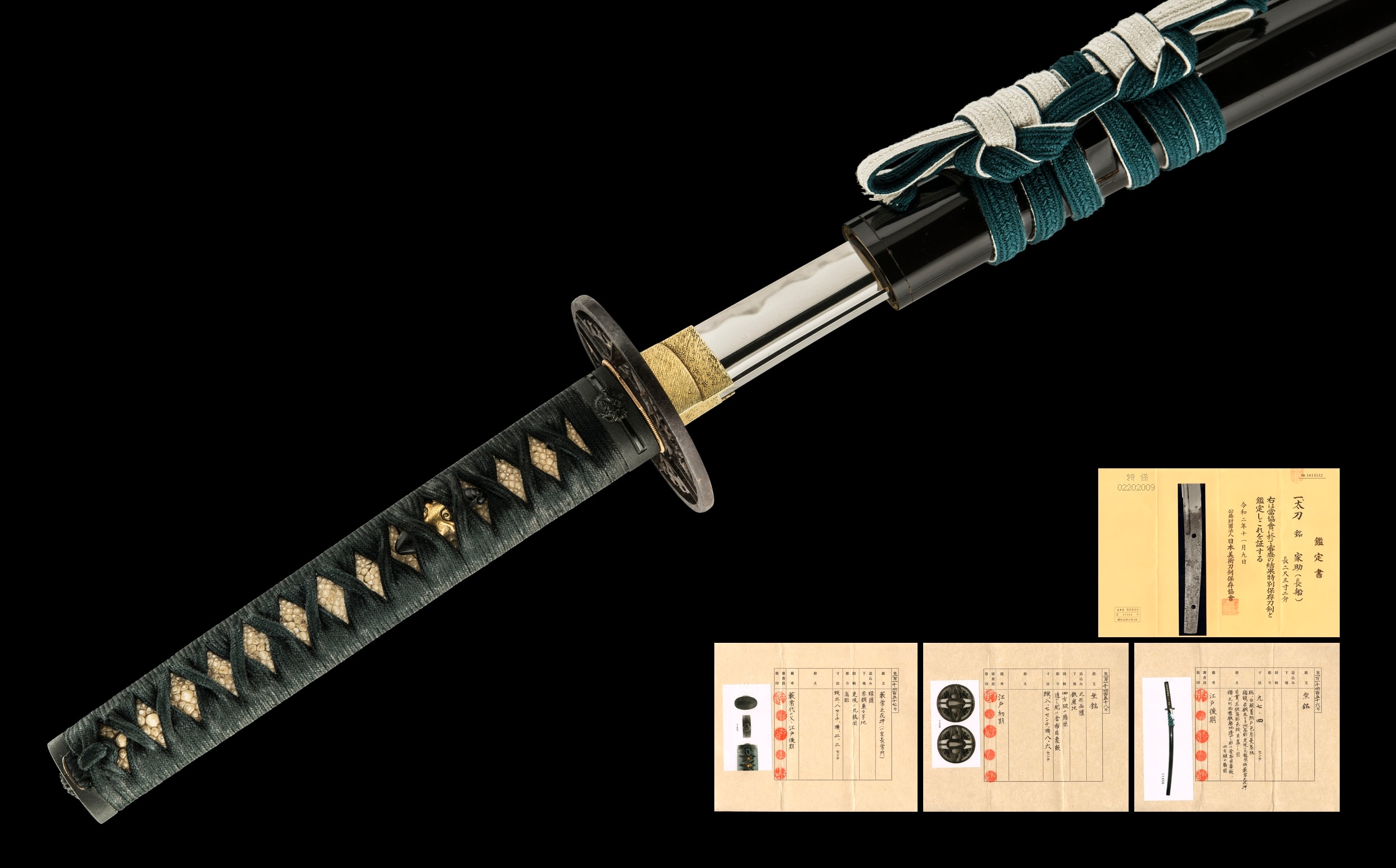
Skip to content ITEM# UJKA396 – Catalogue 37 – Sold An Iesuke Tachi (家助) Here is a tachi with nothing left to prove. Forged by swordsmith Iesuke of the Kozori group some 600 years ago, this blade carries the unmistakable hallmarks of the Bizen tradition – a gorgeous flowing jihada of itame and nagare , a bold straight bô-utsuri , and a lively gunome-chôji-midare hamon with the distinctive kanitsume “crab claw” formations in the upper cutting zone. The ko-nie deki work is precise and bright. Iesuke is said to be the son of a latter generation Nagamitsu and studied under Morikage, placing him firmly within the late Osafune lineage as it transitioned into the early Muromachi period. The blade is a suriage-nakago – slightly shortened, most likely during the late Muromachi or early Edo period to serve as a paired daisho partner. A broad bô-bi groove runs the length of the blade, finished with a rounded maru-dome , lightening the sword for speed and agility. At its original length it would have measured approximately 76-77cm – a cavalry tachi built to reach an opponent from horseback. That past is not entirely hidden: a kirikomi battle scar sits on the mune in the monouchi zone, the mark of a defensive parry in actual combat. Sword polishers have left it untouched, as is tradition. The accompanying Edo-period koshirae is a lacquered gloss-black uchigatana-koshirae of aristocratic refinement. The circular tsuba, attributed to the Kyô-Shoami school and dated 1600-1700, features four “torn fan” cutouts with remnants of nunome-zôgan gold inlay – a design connected to Tokugawa Ieyasu’s resolution after his defeat by Takeda Shingen. The fuchi-kashira are signed by Yabu Tsuneyuki of Osaka, with a dragon-on-ruler motif set against a nanako ground. Shell-themed menuki in the Late Edo style complete a fittings ensemble that speaks to generations of proud ownership. Item Number UJKA396 Sword Type Tachi Swordsmith Iesuke (first generation) Swordsmith (JP) 家助 Signature Iesuke (Osafune

AN IESUKE TACHI (家助)
売切れ
Tokuho売切れ

AN IESUKE TACHI (家助)

太刀

売却済

世界81社の刀剣商を横断追跡 · 価格履歴 · 売却アーカイブ

時代

Koto – Early Muromachi (oei era: 1394-1428)

仕様

長さ

70.2 cm

反り

2.5 cm

元幅

2.71 cm

作者について

Kozori Iesuke家助

2 重要文化財1 特別重要刀剣8 重要刀剣

家助は畠田派の備前長船の刀工で、その年紀作は室町時代初頭の応永にわたり、説明書は盛光・康光・経家と並べて「応永備前を代表する刀工」の一人に挙げる。年紀の最も古い作は地味な応永三年(一三九六)の太刀であり、ふだん見かける華やかな作は応永十年代乃至二十年代の年紀を持ち、応永十九年紀の在銘太刀の一口は特別重要刀剣に及ぶ。その名と系統は、説明書自身が明らかにする問題である。剣書は初代を文永頃の畠田守家の子に遡らせるが、経眼の作に南北朝を遡るものなく、最古は文和頃と鑑せられ、ゆえに遺存の数代は厳密に代別されず畠田派の一連の手として読まれ、古い応永三年の太刀を先代と見るか同人の前期作と見るかは研究課題に委ねられる。 本工の典型は応永備前の乱れである。総じてやや肌立ちごころの板目に、処々小板目・杢・流れ肌を交えた地に地沸・地景つき、これに棒映り乃至鮮明な乱れ映りが立つ。説明書が応永備前の特色の一つに挙げる棒状の映りである。刃文は腰の開いた互の目、すなわち説明書が応永の名工に共通と挙げる腰開きの互の目を主調に、丁子・小丁子・尖り刃を交え、時に小のたれを交える。足・葉頻りに入り、匂出来に小沸ごころ、下半に砂流し・金筋が刃中を走る。帽子は乱れ込んで尖りごころに返り、或いは小丸、時に先に飛焼を交える。 地鉄こそ、極めが本工を応永の筆頭の名から一歩分かつところである。鍛がやや肌立ちごころとなり、匂口がやや締って時にやや沈むとしつつ、説明書はその上手を技術的には盛光・康光に「技術的には遜色がない」とする。上手の地はよく錬れてうるおいがあり、地沸・地景・乱れ映りを見せ、刃中の働きこそ身上で、特別重要刀剣の太刀について説明書は「この太刀は殊に刃中の働きが見事である」と記す。彫物は棒樋を掻き、磨上極めには連樋・添樋を伴い、一口の在銘打刀には鎬地に梵字を彫るなど、実用と信仰の彫が繰り返し現れる。 説明書は本工の作を明示して二様に分かつ。典型の応永備前の乱れに対し、「やや穏やかな直刃調の刃文を焼くもの」を置く。詰んで流れる板目に地沸・地景つき淡く映りごころのある地に中直刃を焼いて小互の目を交え、匂口締りごころに沸つき砂流しかかり、帽子は直ぐに小丸、先掃きかける作である。遺存の作は、生ぶ・在銘・年紀の太刀と、後に本工と極められた大磨上無銘の刀とに分かれ、後者には他名のもとに伝わった末に時代と作風から本工の南北朝後期乃至室町初期の作と読まれたものが少なくなく、古くは真守と極められた一口もその一つである。 畠田家助を分かつのは、まさに極めの言うところである。腰の開いた互の目と棒映りは、その典型の乱れを鎌倉中期ではなく応永備前の作たらしめ、肌立つ板目と締って沈みごころの匂口は、本工を盛光・康光に並べつつ僅かに分かつ。説明書はその上手の年紀刀の一口を、肌立つ板目・地斑・浅い小のたれに腰の開いた互の目を交えた作柄から「長船政光に類する作柄」と評する。本工は末長船の小反の周縁に立ち、説明書はその名が応永の筆頭ほどには一般に聞えないとしつつ、上手の太刀の存在によって「更に高く評価されてよい」と判ずる。 収集の観点では、本工は通り名というより資料の名である。藤代の極めは中上作。国宝はなく、その記録は重要文化財に及び、在銘年紀の太刀二口が指定を受け、その上に特別重要刀剣・重要刀剣の級がある。その作は来歴の確かな所蔵に伝わり、応永十九年紀の太刀は加賀前田家を経て林原美術館が蔵し、重要文化財の一口は春日大社に伝わり、磨上の刀の一口は池田勝入の陣刀であったものを後の所有者が磨上げたものである。特別重要刀剣・重要刀剣の級はわずかで、その多くは伝持されて市場に出るものではないため、在銘年紀の畠田家助が世に出ることは稀であり、時に過ぎない。説明書はかかる一口を「資料的価値の高い一口」とし、備前の鍛えが応永の再興へと身を運んださまを語る健全な証である。
刀剣商

Unique Japan

uniquejapan.com

売切れ