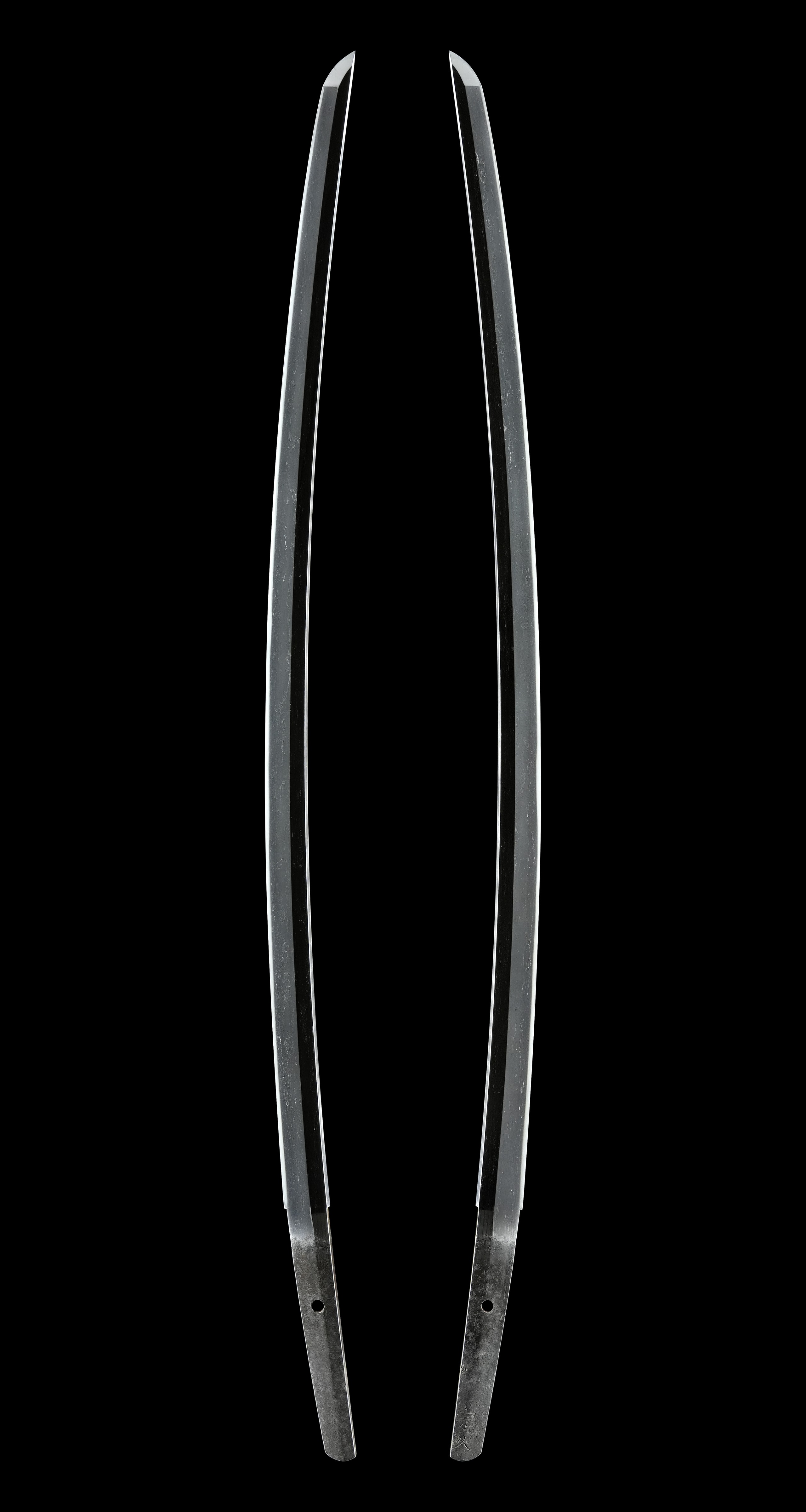
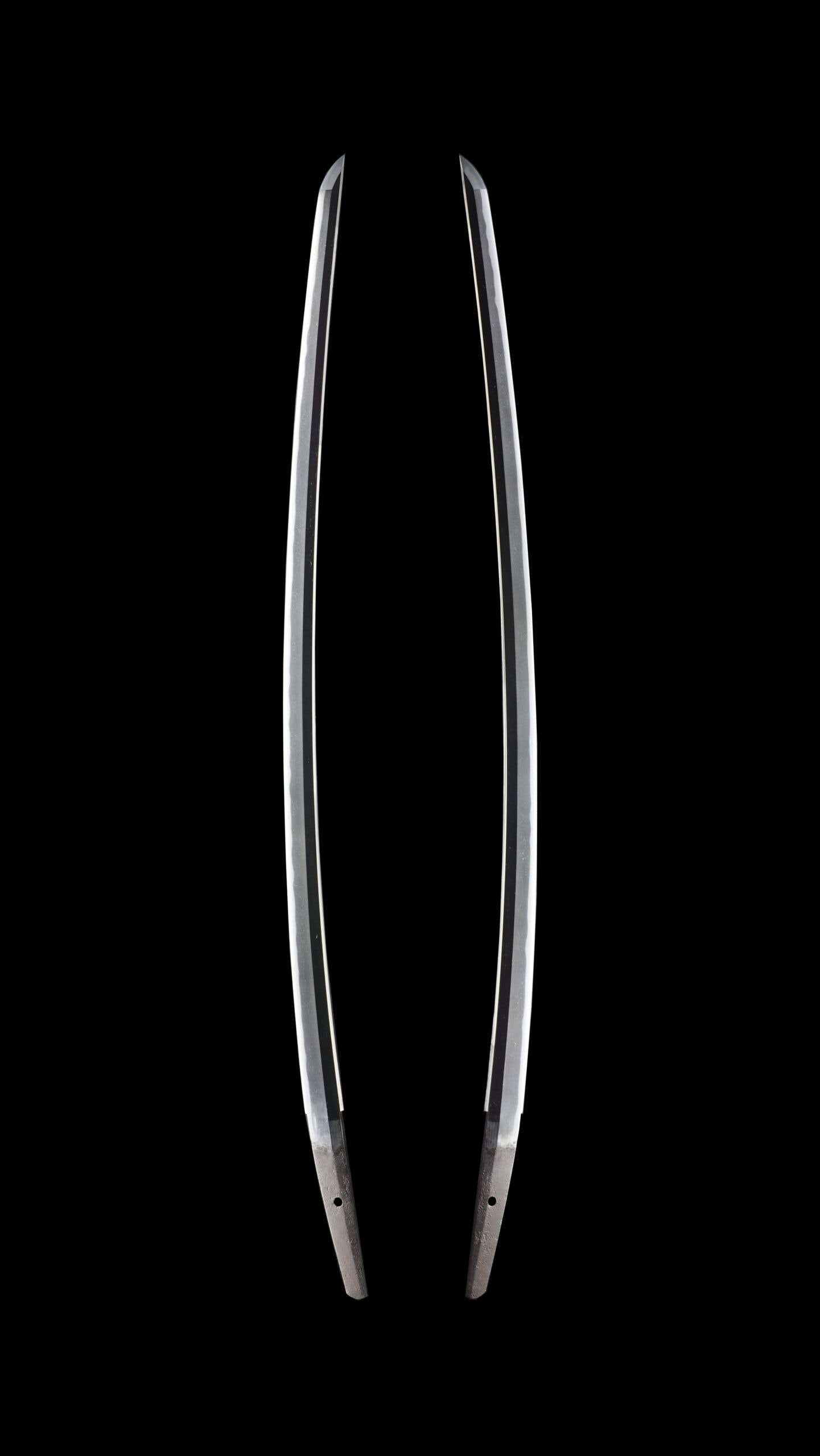
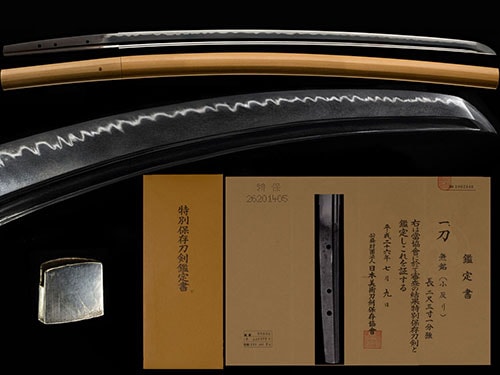
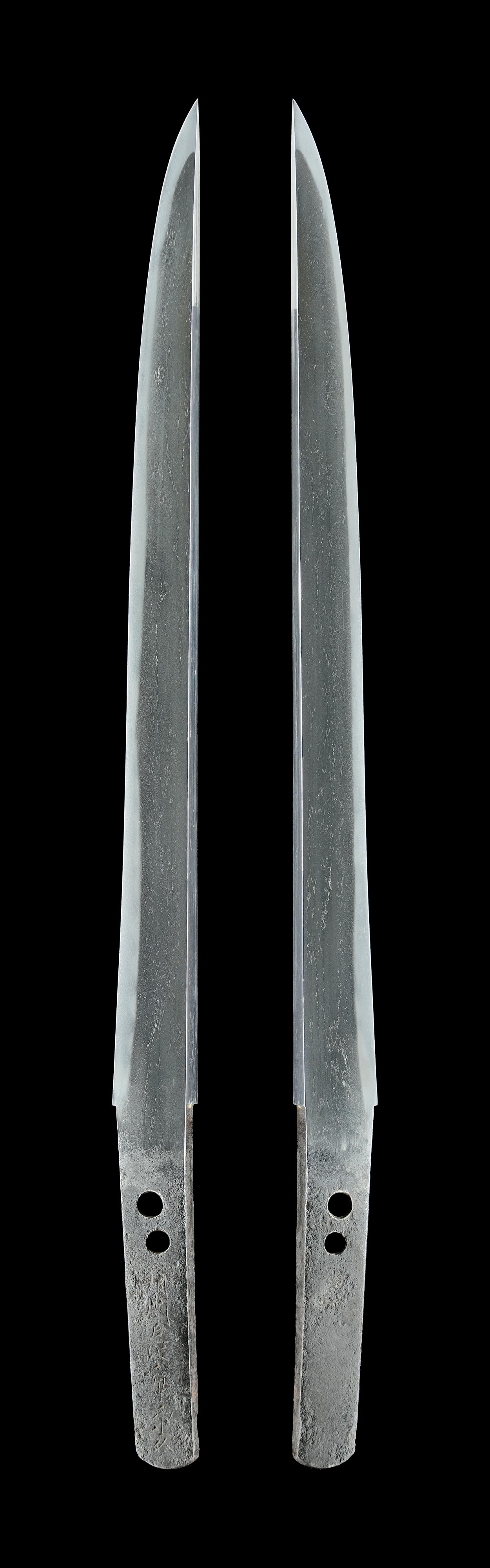
Iesuke is a smith of the line whose dated run across the Ōei era of the early period, and whom the published sources name, beside Morimitsu, Yasumitsu and Tsuneie, as one of the representative swordsmiths of Ōei-. The earliest dated work on record is a quiet of Ōei 3 (1396); the bolder pieces commonly seen carry dates from the teens and twenties of the era, one signed of Ōei 19 reaching . His name and his line are themselves a problem the sources set out plainly. The reference works trace a first generation to a son of Moriie about the Bun'ei era, yet among examined blades none predate the , the oldest read as Bunwa-era work; the surviving generations are therefore taken as one continuous hand rather than separated with confidence, the question of whether the early Ōei 3 is a predecessor or an early work of the man left open for further study.
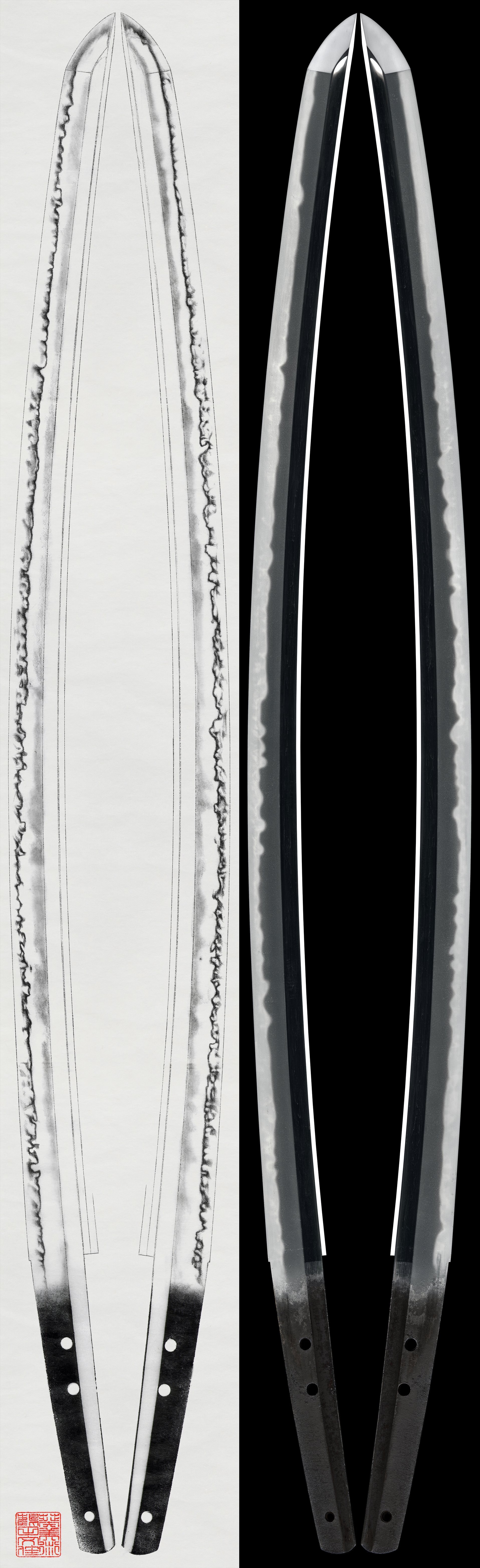
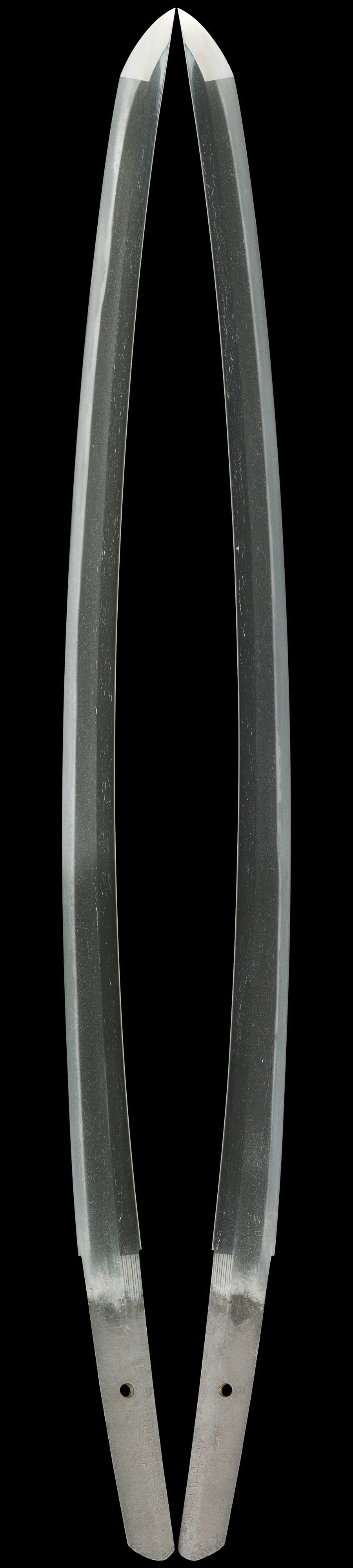
His characteristic hand is the Ōei- . Over an that tends overall to stand a little, mixed in places with , and flowing , the steel carries and , and across it rises a or a clear , the bar-like reflection the published sources single out as one mark of Ōei-. The temper is a that opens broadly at the valley, the the sources name as common to the Ōei masters, mixed with , and pointed , at times a small . and enter frequently, the construction is -based with a feeling, and in the lower half and run through the temper. The turns back in a with a pointed feeling, sometimes a , now and then with toward the point.
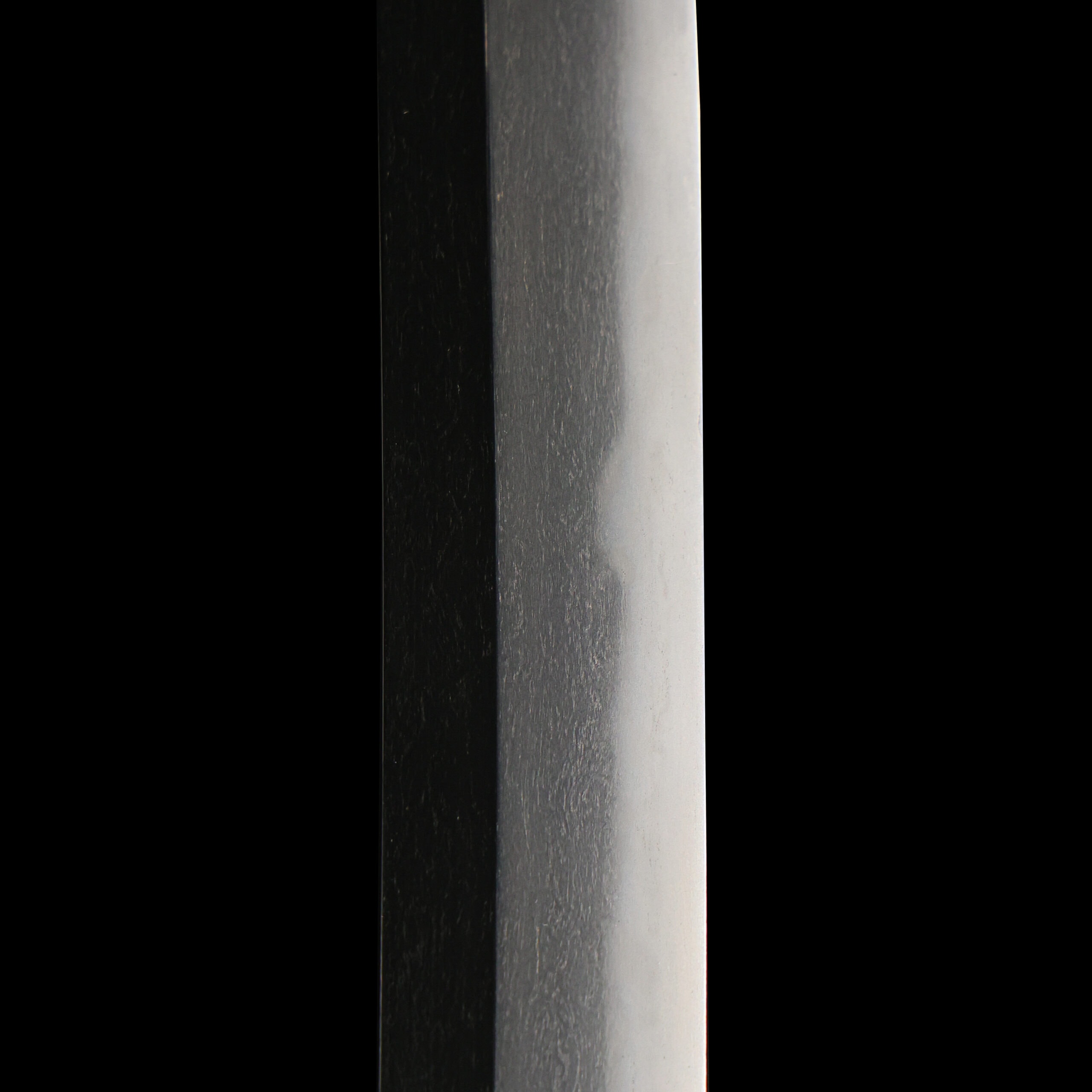
The is the feature by which the judges set him a step apart from the leading Ōei names. They find his forging tending a touch more toward standing grain and his a touch tighter, at times a little subdued, yet they grant that in technical terms his best blades are "in no way inferior" to Morimitsu and Yasumitsu. The of his finest pieces is well-refined and moist, with , and , and the work within the temper is its real strength; of the the published commentary writes that "the activity within the temper of this is especially splendid." Devotional and practical carving recur in the form of , with or on the shortened attributions and cut into the of one signed .
The published sources draw his work into two registers explicitly. Beside the typical Ōei- they set "a somewhat calmer, -toned ," a mixed with over a tightened, flowing with , and a faint , the tight with and , the straight to a with at the tip. His surviving blades divide between the , signed and dated and the later attributed to him, several of which had passed under other names before being read by period and manner as his late--to-Ōei work; one such blade, once appraised as Sanemori, was returned to him.
What sets the Iesuke apart is exactly what the judges name. His and mark his typical as Ōei- rather than mid- work, and his standing and tightened, subdued set him beside Morimitsu and Yasumitsu yet a little apart from them; the published sources liken one of his finest dated to Masamitsu in its standing , mottled and shallow mixed with open-valley . He stands at the periphery of late , and the sources judge that, although his name is less widely known than the leading Ōei smiths', works such as his best show he "deserves to be evaluated more highly."
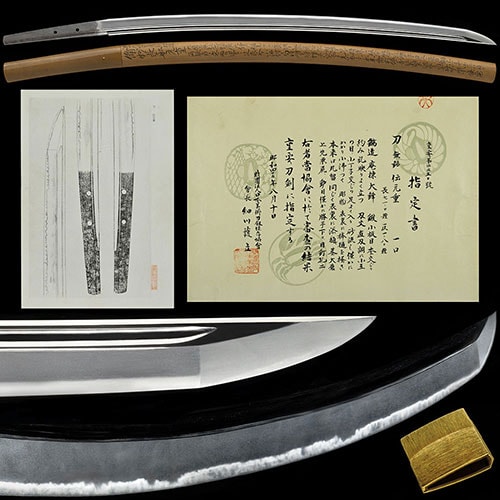
For the collector he is a documentary name rather than a household one. Fujishiro grades him Chū-jō . He has no National Treasures; his record reaches instead the Important Cultural Property rank, with two signed, dated designated, and the and tiers above the wider research record. His blades are preserved in collections grounded in their own provenance, the Ōei 19 held by the Hayashibara Museum of Art and transmitted through the Maeda house, one Important Cultural Property at Kasuga Taisha, and a shortened that was the battlefield sword of Ikeda Katsunyū before later owners had it cut down. Only a small number fall in the and tiers, and these are largely held rather than traded, so a signed and dated Iesuke comes to market only seldom and from time to time; the published sources call such a blade "of high value as reference material," a well-forged document of how forging carried itself into the Ōei revival.