1876年の廃刀令は帯刀を終わらせ、工芸そのものを死の淵に追った。軍の需要と皇室の庇護が命脈を保ち、1906年には月山貞一と宮本包則が帝室技芸員に任じられている。
 NihontoWatchNihontoWatch
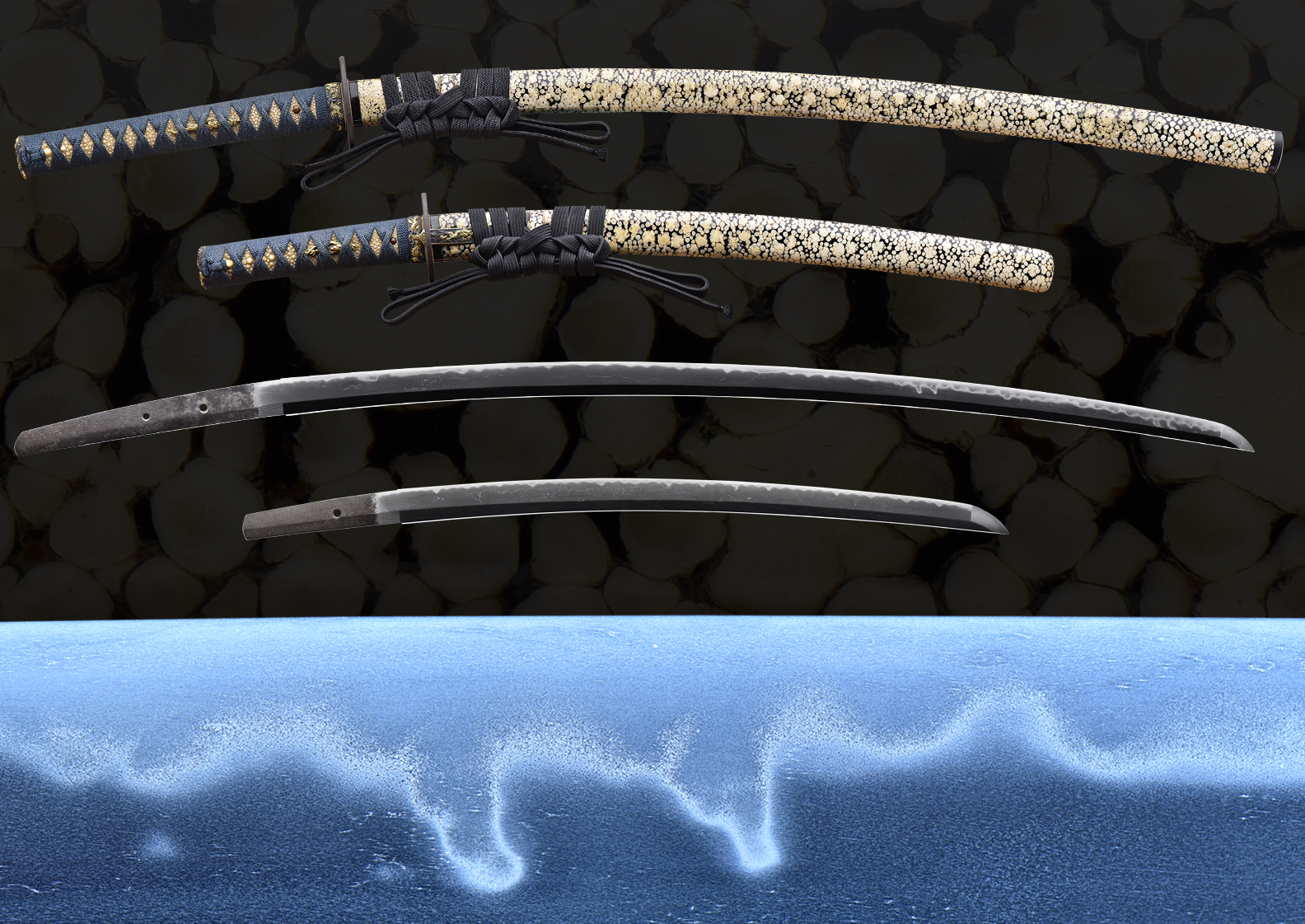
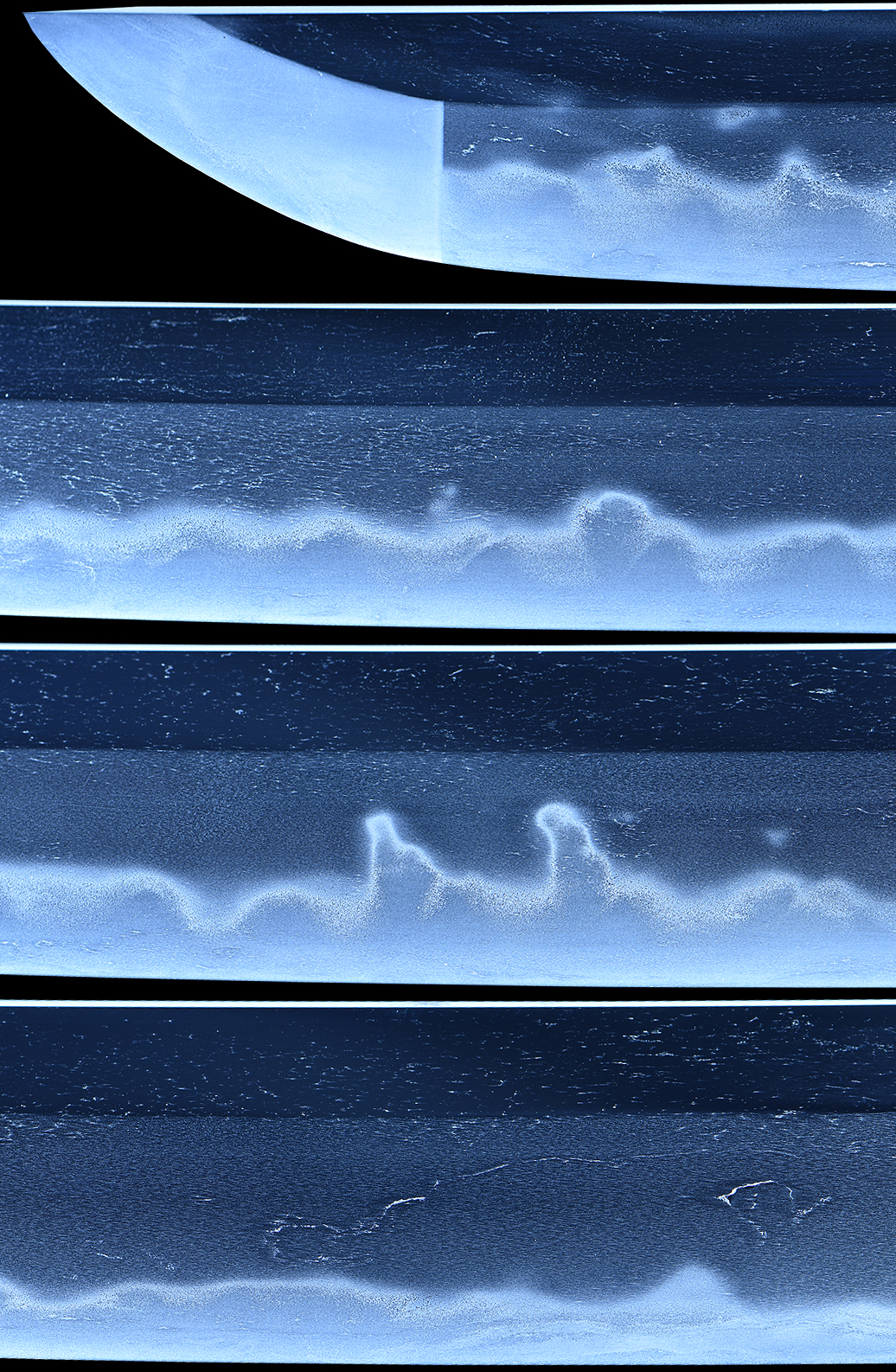
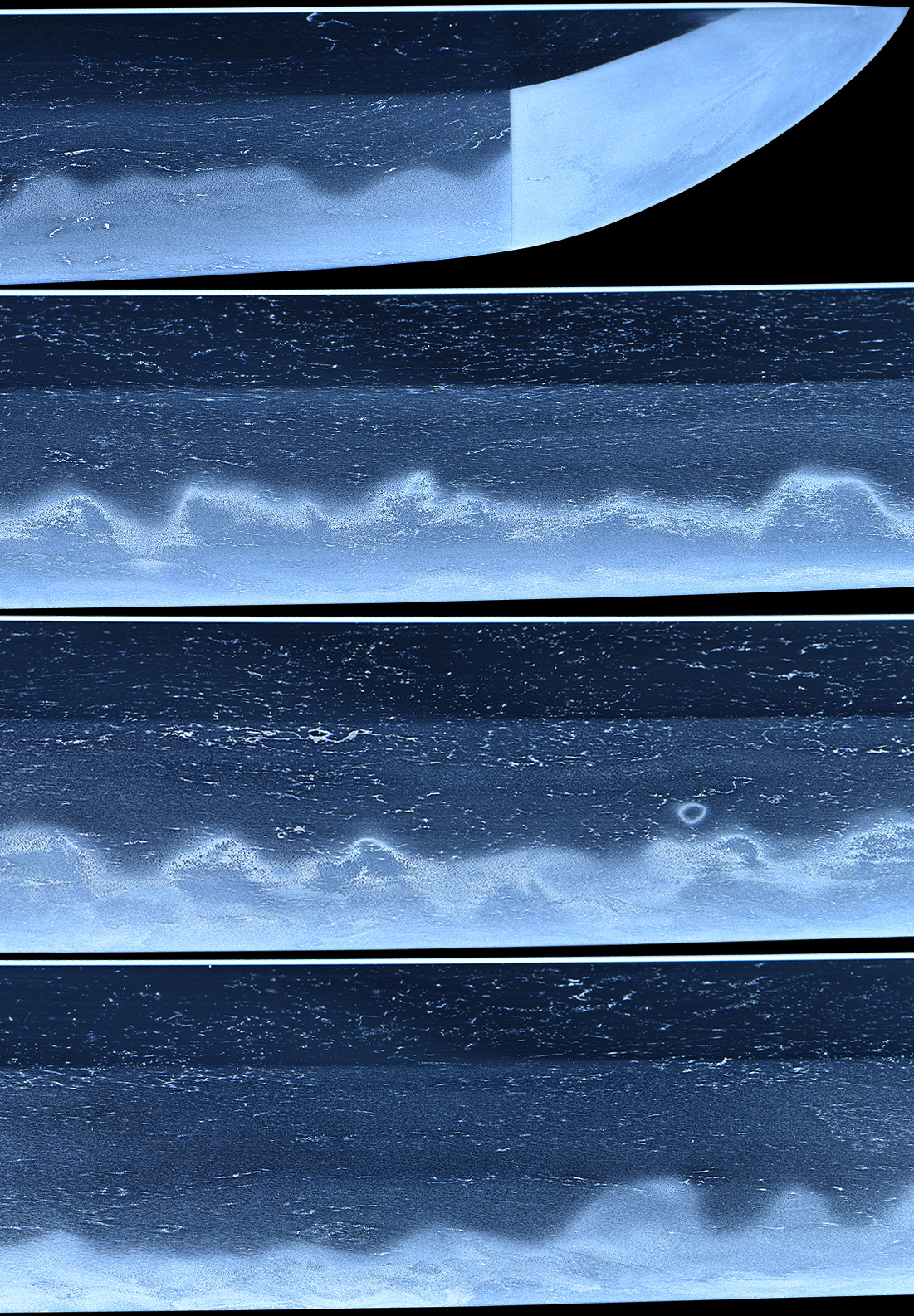
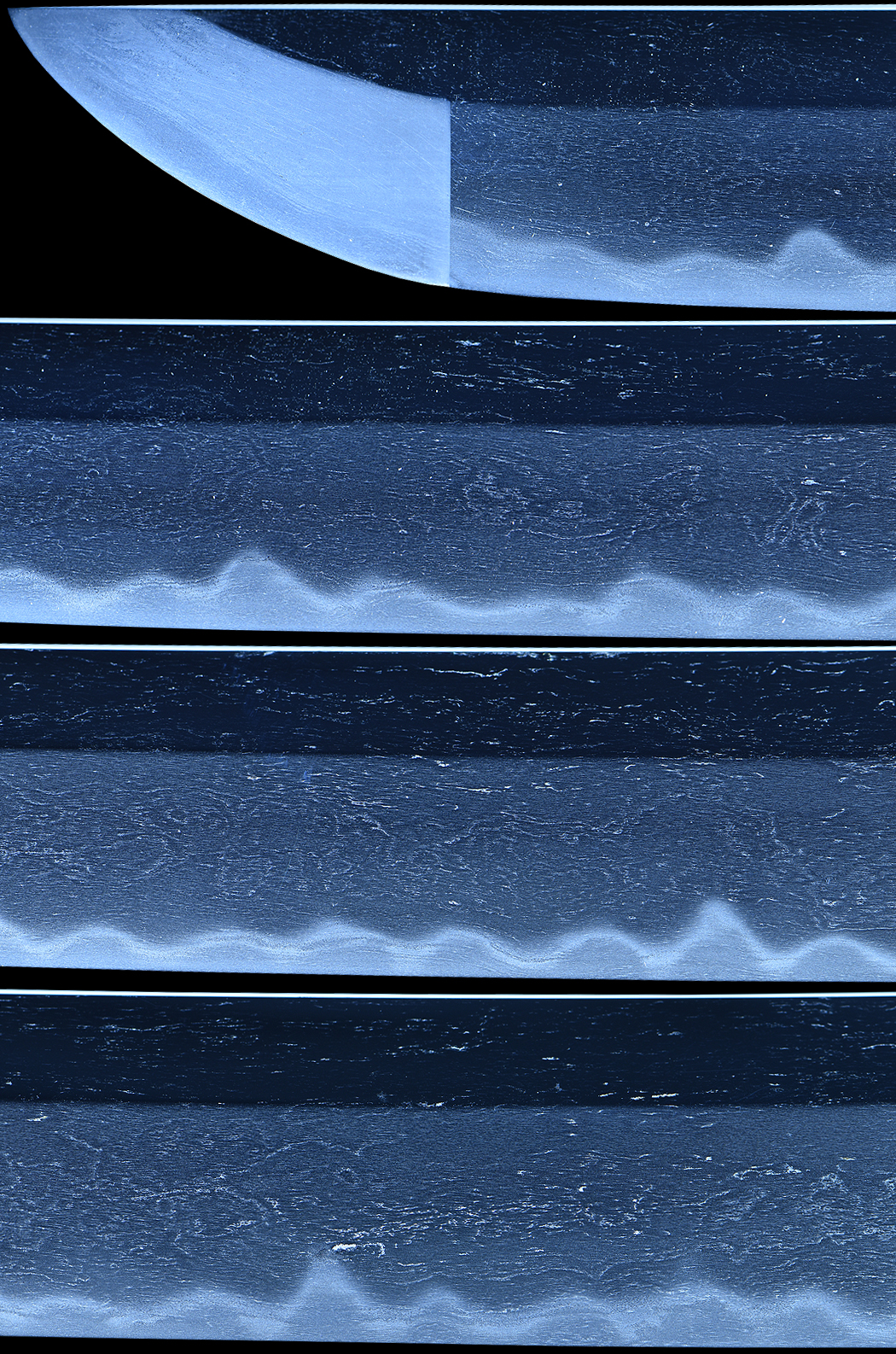
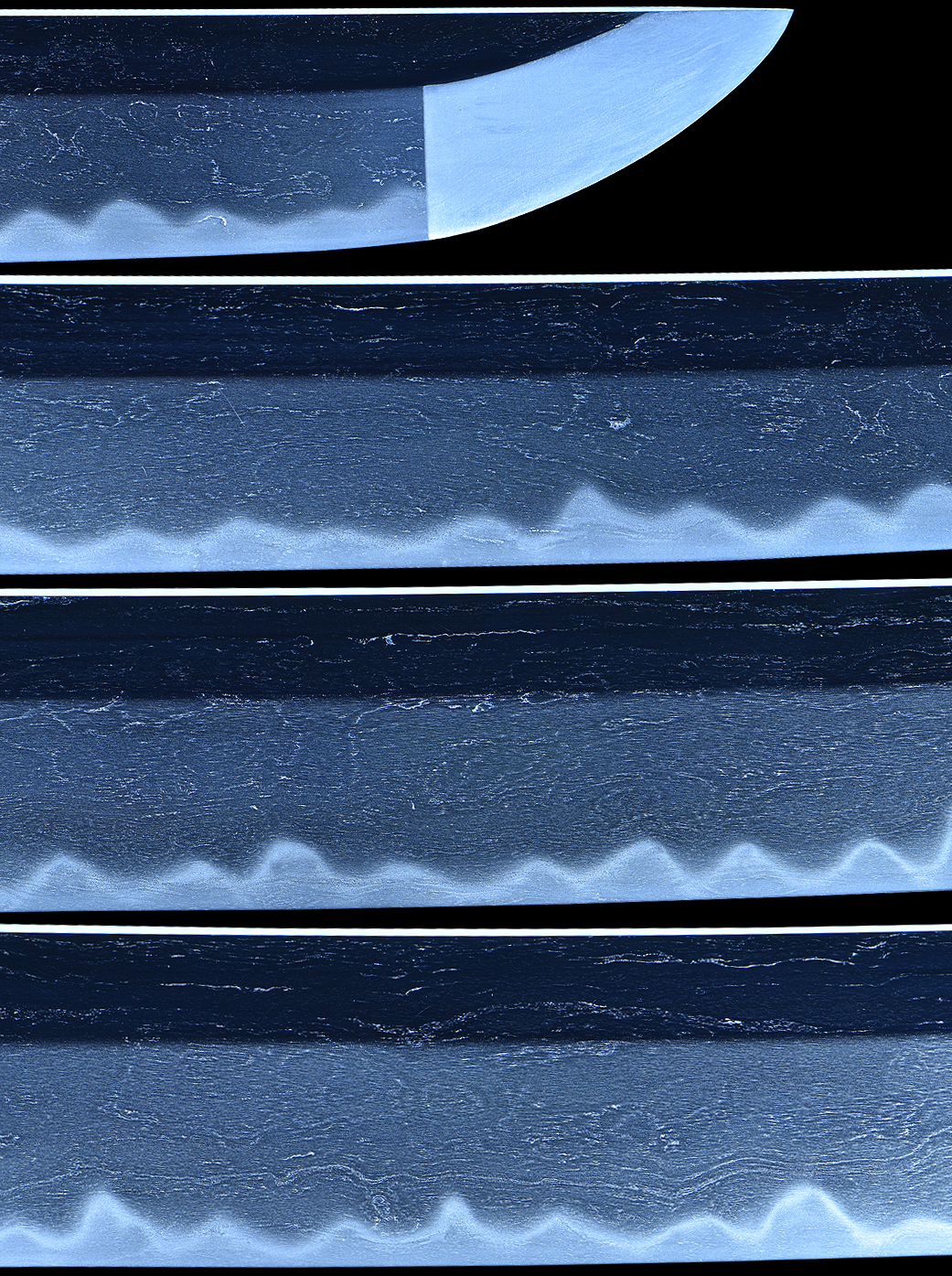
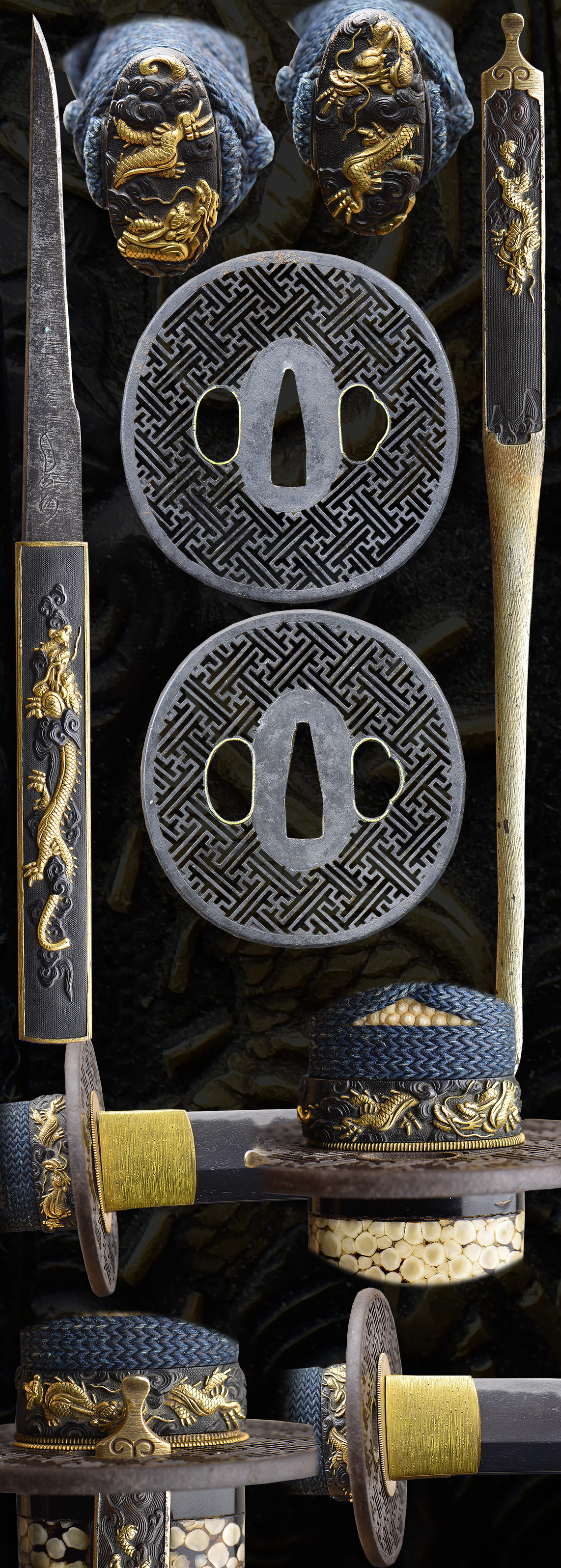
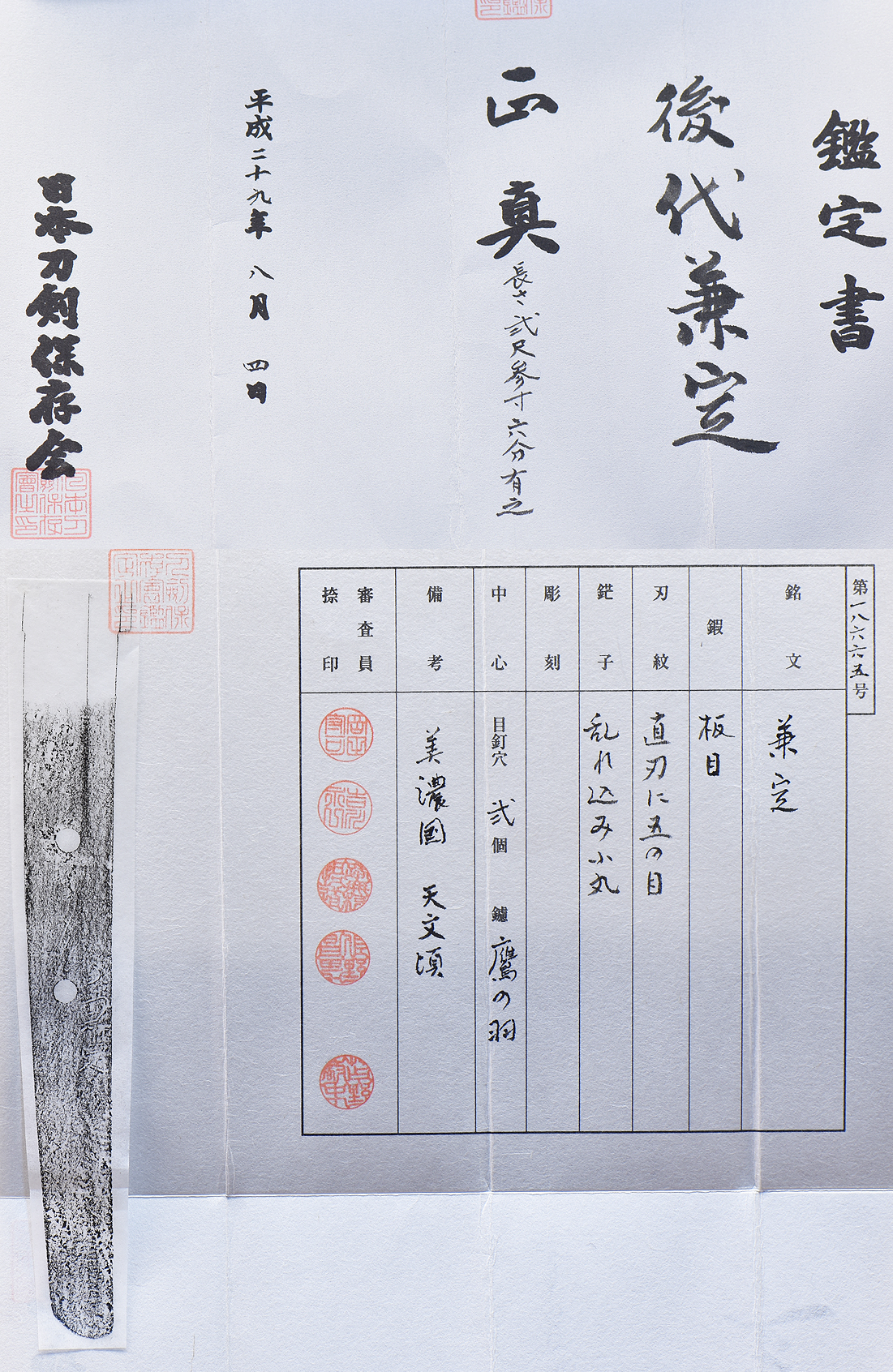
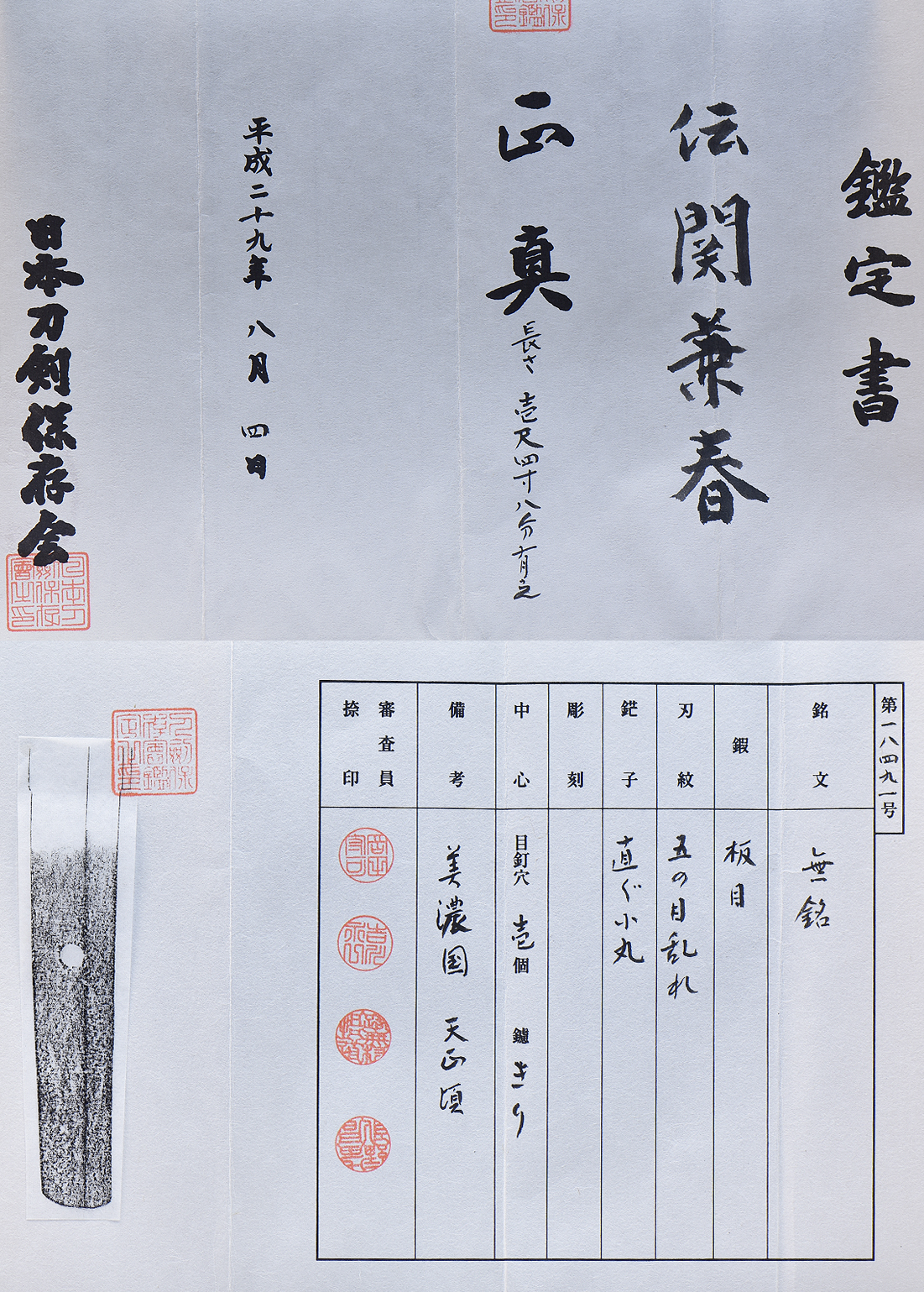
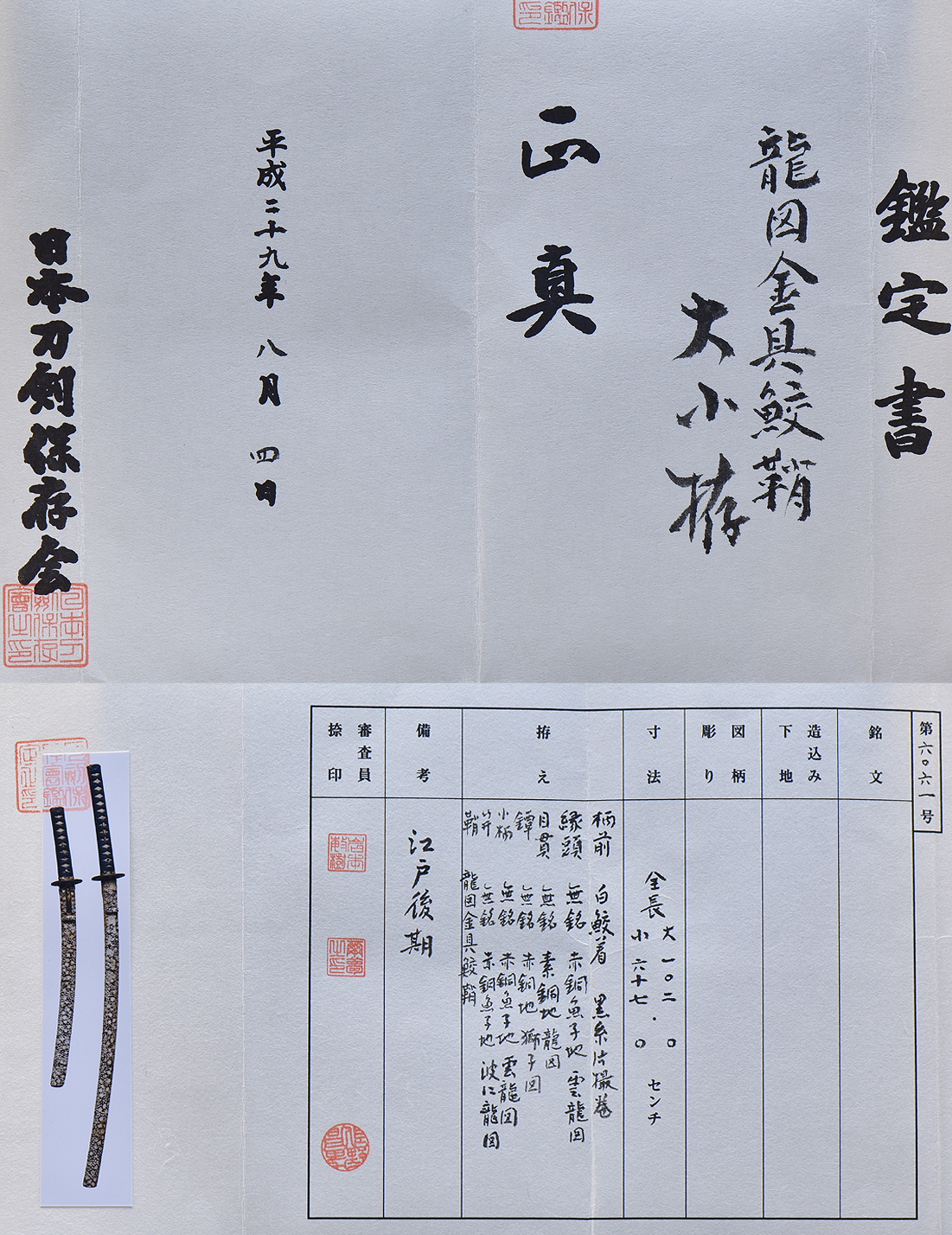
Daisho with Koto Blades (fss-819) Item description:These swords are mounted in an elegant daisho Koshirae. The saya are elaborately finished in a uniques style of Samegawa. The Same/ray skin is attached to the wooden core and ground down flat and polished after lacquer is applied. This finish is not usually found in this condition. An interesting note: The kurikata of both saya are finished in same(rayskin) which is a rarity. The Motif is of Dragons throughout finished in gold waves and clouds as a backdrop. All the fitting are original and matching. This is a true original Daisho. The koshirae has an ito of blue that is also very old and the sageo are black in color. The Kodzuka blade and ko-gatana are in a dragon motif also with a shakudo/nanako finish. The ko-gatana blade is signed. The menuki are also well made in a dragon motif that compleat the koshirai. The tsubas are of a Buddhist symbol repeated throughout finished in iron. These tsuba are spectacular and the amount of work that went into them is incredible. Both swords have matching gold washed habaki and seppa. Please note that for koshirai or mounts to receive papers they must be original and not put together. This is a real daisho set.The katana is signed Kanesada . A beautiful blade in pristine polish and loaded with activity from the Shinto period. Within the gunome-midare hamon there is hotsure, sunagashi and kinsugi. The hada is a dense and beautiful itame and mokume mix with some masame and loaded with ji-nie. It has the appearance of the evening sky!The wakazashi was attributed to kaneharu of the shinto period. A mumei piece this sword has a hamon with O-gunome-midare throughout. The hada is an itame and mokume with ji-nie. This sword reminds one of the work of the Kanemoto line.Both swords date back to the 1500’s and are koto blades.Information on daisho history:The wearing ofdaishōwas limited to the samurai class, and became a symbol or badge of their rank.Daishōmay have became popular around the end of the Muromachi period (1336 to 1573)as several early examples date from the late sixteenth century.An edict in 1629 defining the duties of a samurai required the wearing of adaishōwhen on official duty. During the Meiji period an edict was passed in 1871 abolishing the requirement of the wearing ofdaishōby samurai, and in 1876 the wearing of swords in public by most of Japan’s population was banned; this ended the use of thedaishōas the symbol of the samurai, and the samurai class was abolished soon after the sword ban. DAI / KATANAMei:KanesadaDate:Tenbun (天文, 1532-1555)Nagasa:28-1/8 inchesSori:24.0 mmWidth at the ha-machi:27.8 mmWidth at the yokote:17.4 mmThickness at the mune-machi:6.6 mmConstruction:Shinogi zukuriMune:IoriNakago:UbuKitae:Itame/mokumeHamon:Midare GunomeBoshi:MaruCondition:Good polishSHO / WAKAZASHIMei:Mume attributed to kaneharuDate:Tenshō (天正, 1573-1592)Nagasa:17-5/8 inchesSori:12.0 mmWidth at the ha-machi:26.0 mmWidth at the yokote:19.7 mmThickness at the mune-machi:6.0 mmConstruction:Shinogi zukuriMune:IoriNakago:UbuKitae:Itame/mokumeHamon:Midare GunomeBoshi:MaruCondition:Good polish KATANA DETAILSClick to Enlarge Image WAKAZASHI DETAILSClick to Enlarge Image Yamanaka’s Nihonto Newsletter on Mino Tradition:In Vol II, two issues were dedicated to discussing the specific characteristics of the key schools and smiths. The key smiths and schools are as follows: Kaneuji and his school, Naoe Shizu (Kaneuji’s followers), Kaneshige (worked in Soshu and Mino traditions), Zenjo School (founded by Kaneyoshi who came from Yamato province) , Kanemoto School, Kanesada School (famous 2nd generation “No-sada”), Akasaka Senjuin (Yamato province, Senjuin School, founder is Kuninaga who moved to Mino province, Hachiya School (founded by Kanesada, different kanji than other “No-sada” group.Kaneuji:Hada: Steel grain will show up clearly, much uruoi, ko-mokume with o-hada mixed together, shinogi-ji will have masame, some muneyakiHamon: narrow, worked in nie, small designs of gunome-midare w/nie kuzure, rough nie, inazuma, sunagashi in small places, tagariba mixed in places, midare will be small,Boshi: shallow in midare-komi ending in yakizume or slight kaeri, kaen is seen on some works.Naoe Shizu:– resembles 1st and 2nd Kaneuji work, with of hamon becomes widerKaneshige:Hada: small pattern mokume with masame mixed in, masame hada seen in the shinogi-jiHamon: narrow and in nie with mura nie, gunome-midare, nie kuzure but lacking nie. Uniform gunome somewhere along the hamon, sunagashi of small pattern seen as well as inazume and kunsuji, some muneyakiBoshi: gunome in midare-komi which becomes togari at the tip, some yakizume or ko-maruZenjo School:Hada: Same as others, but appears white, very uniform masame in the jiHamon: narrow yakiba with nie, but nie is lacking, some suguha hotsure, yakiba becomes wider below the yokote, uniform gunome mixed in somewhereBoshi: Ko-maru with little kaeri, some boshi are in Ichimonji style (wh
NihontoWatch



美濃伝 · 陸奥 · 1837-1903頃
現在2点販売中
美濃伝 · Iwashiro
現在7点販売中
明治 廃刀令ののち
1876年の廃刀令は帯刀を終わらせ、工芸そのものを死の淵に追った。軍の需要と皇室の庇護が命脈を保ち、1906年には月山貞一と宮本包則が帝室技芸員に任じられている。
NTHKの中心的な鑑定書で、相応の出来を備えた作に発行されます。在銘作は銘の正真を、無銘作は審査員による刀工・流派の極めを示します。点数を記す詳細な審査表が付されます。
NTHK(日本刀剣保存会)は、NBTHK(1948年設立)に先立つ1910年に創立された、日本で最も古い刀剣鑑定団体です。長く会を率いた会長の没後、NTHKとNTHK-NPOの二つに分かれ、いずれも審査を続けています。NTHKの鑑定書は、点数と審査員の所見を併記する詳細な審査表が特徴で、特に無銘作の極めに定評があります。
We offer a 48 hour inspection period for all Antique items shipped within the United States only. If the item is not to your satisfaction, we will gladly refund your money less any shipping and handling fees. All sales are final after the 48 hour inspection period. Please note that all discounted items are a final sale and not returnable.