戦国の関は一つの産業であった。春日神社を氏神と仰ぐ鍛冶たちが、中部日本の軍勢を武装させた。孫六兼元の三本杉と之定の最上作は、量産の町に第一級の技が息づいていたことの証である。
 NihontoWatchNihontoWatch
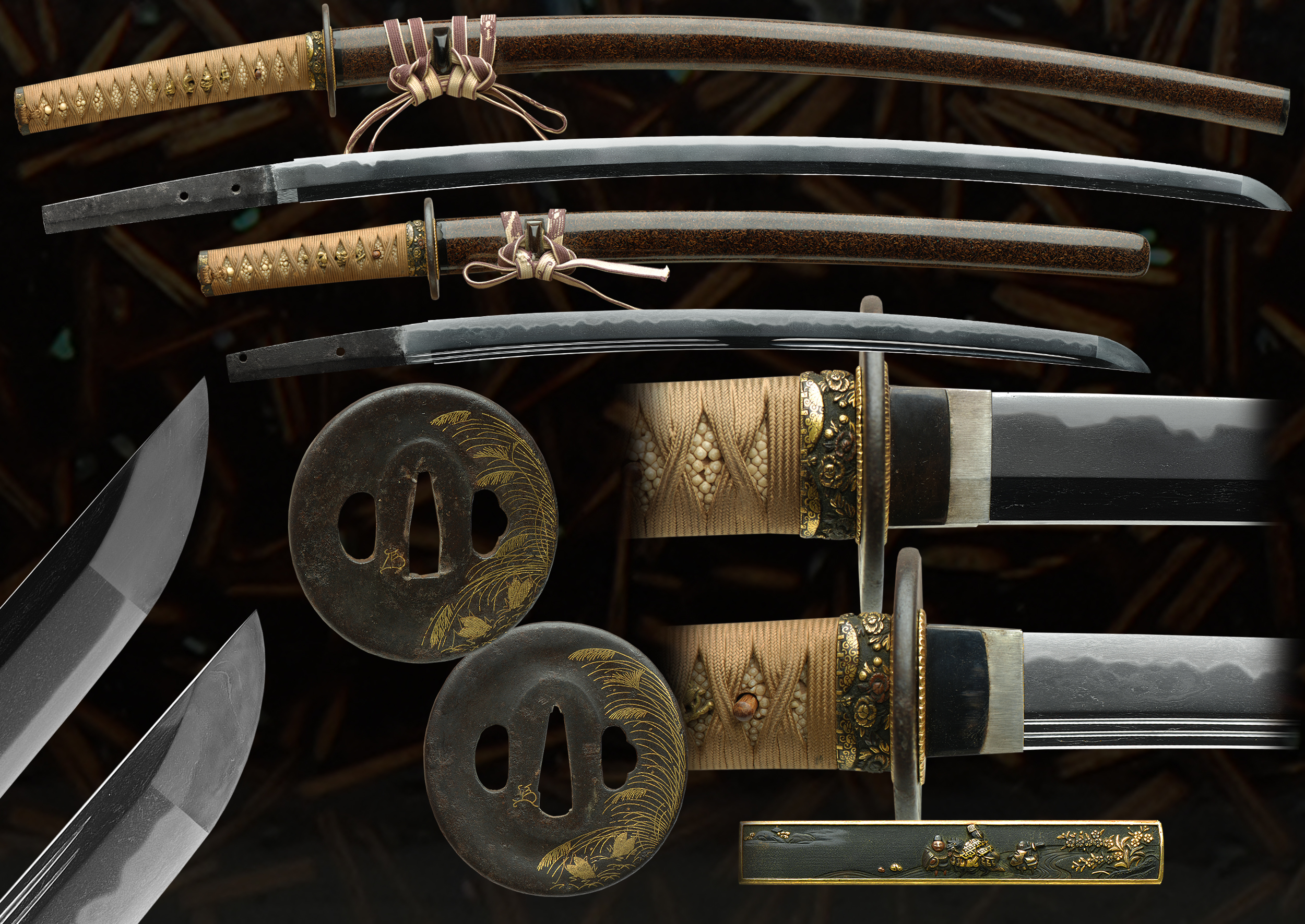
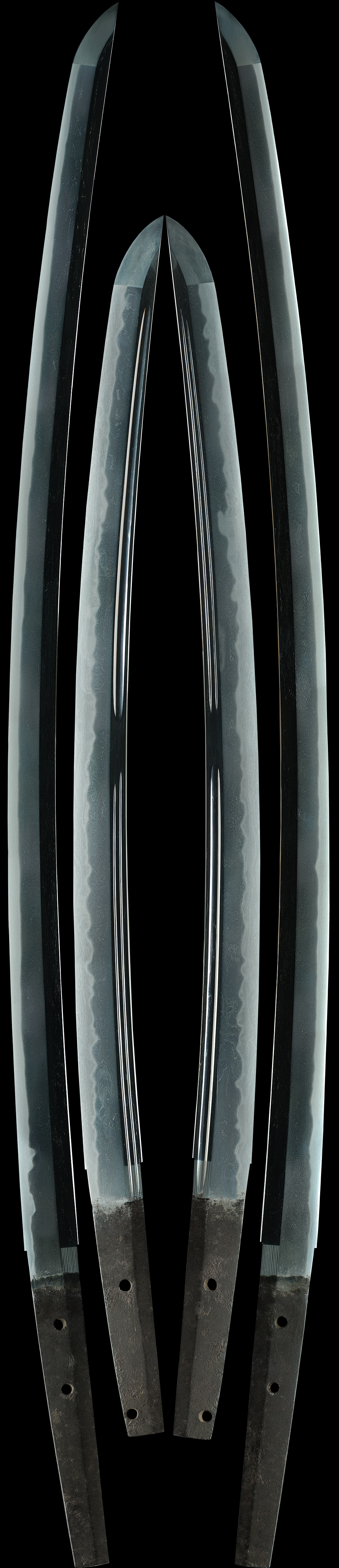
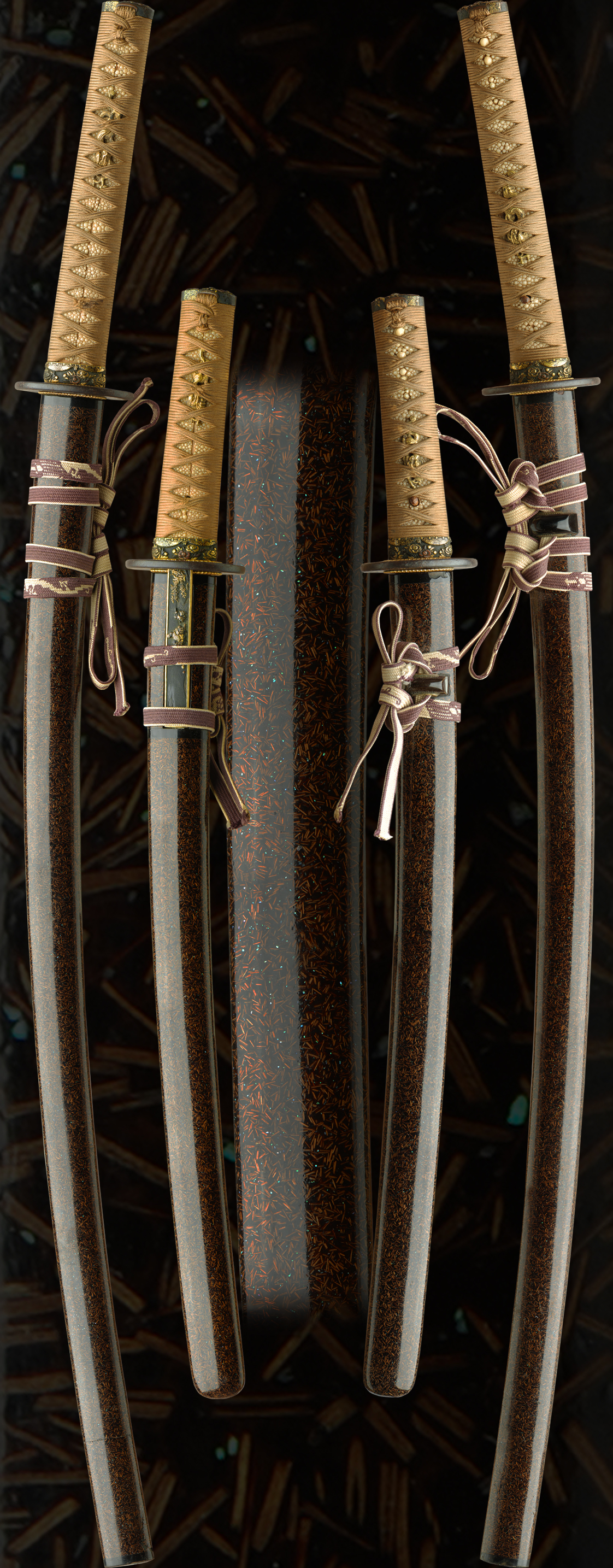
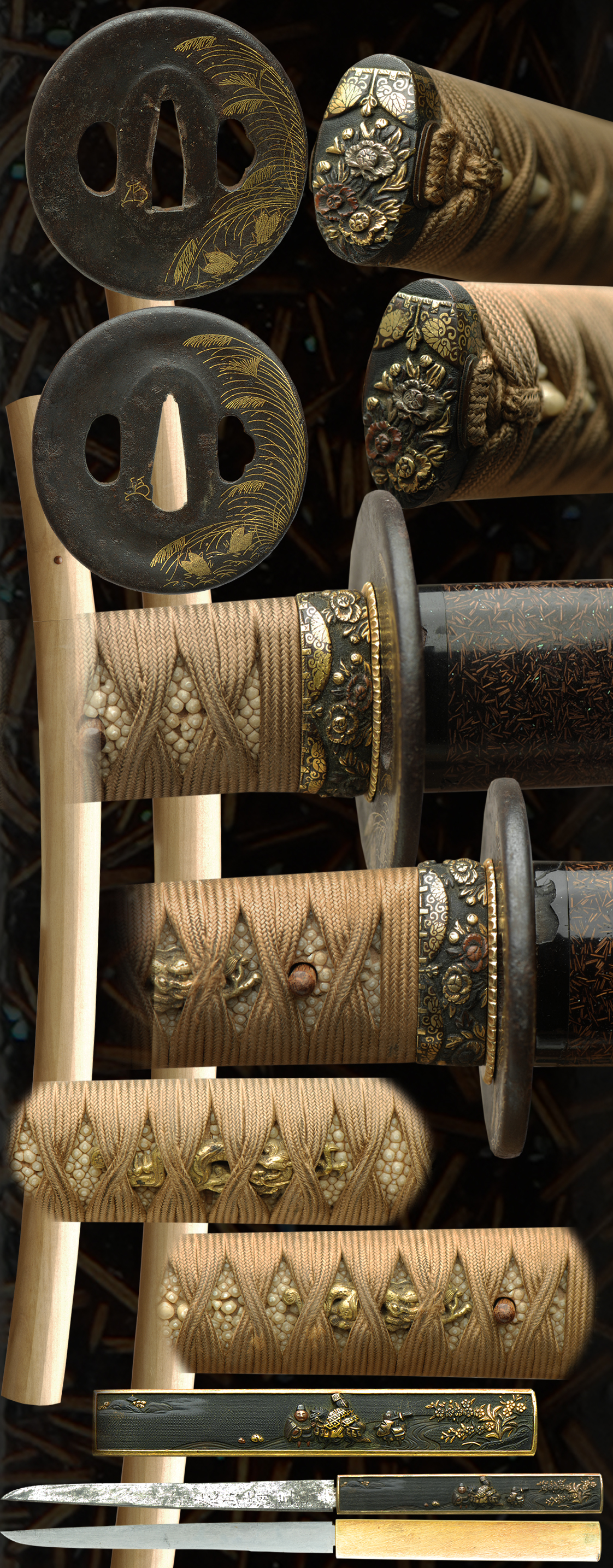
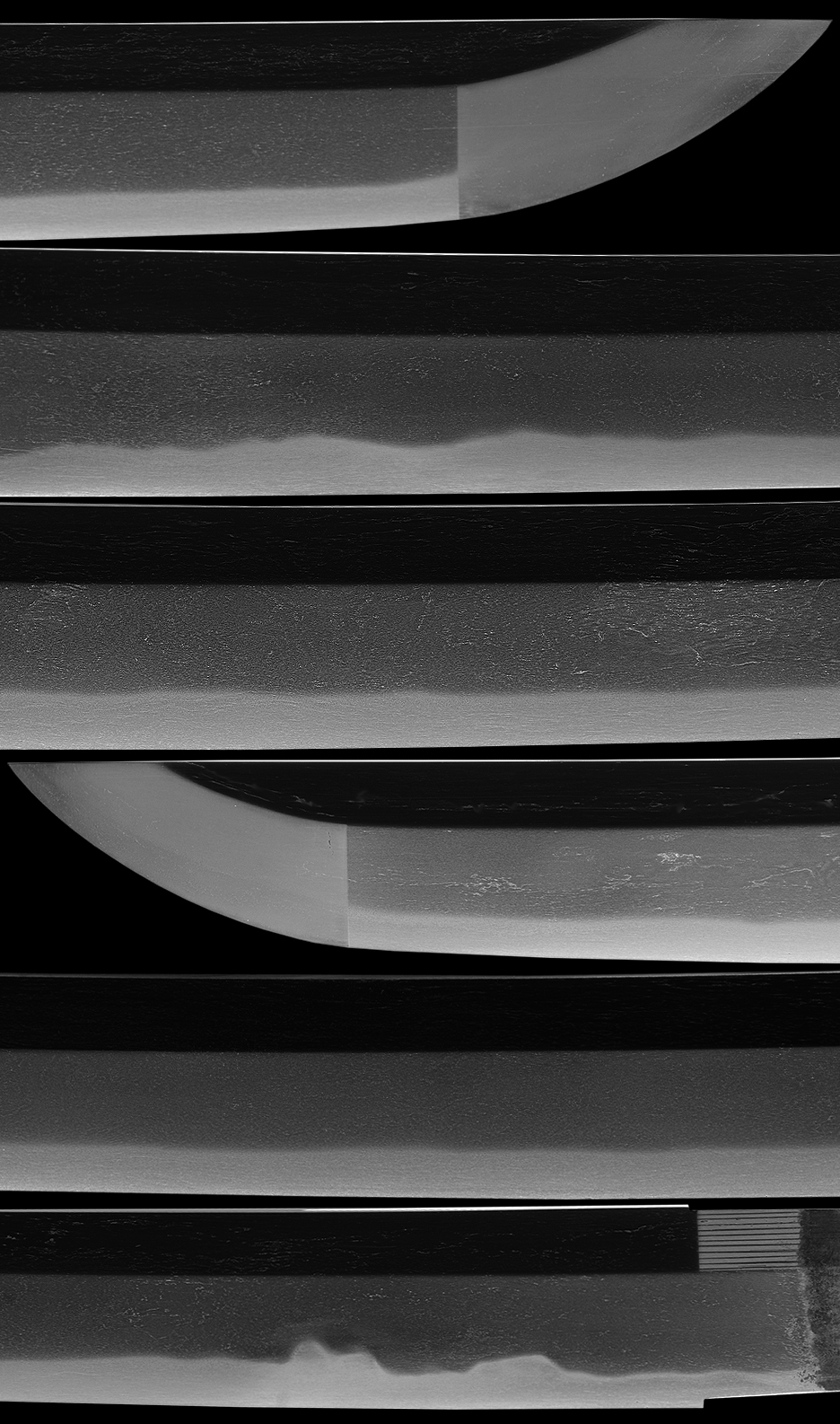
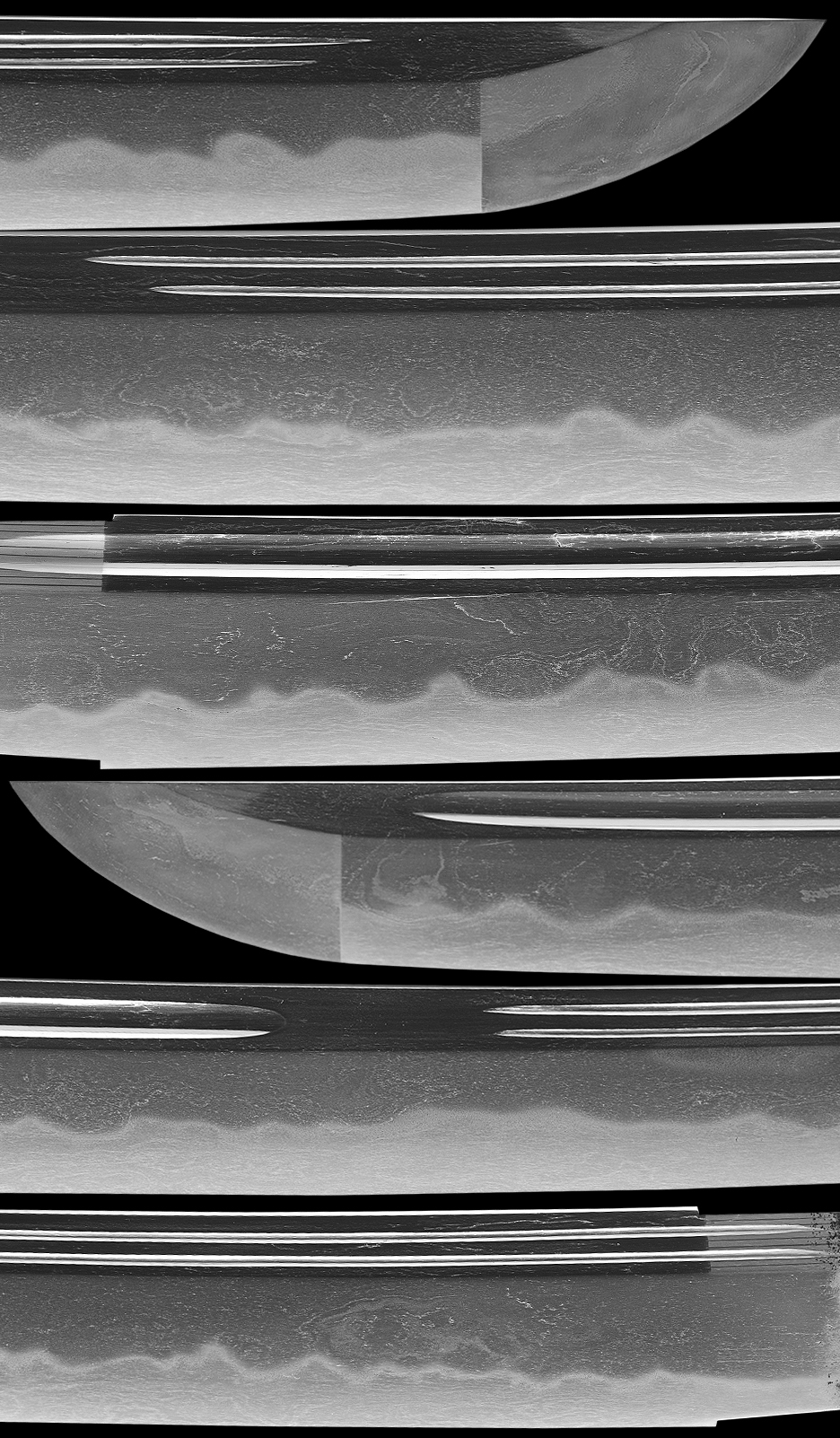
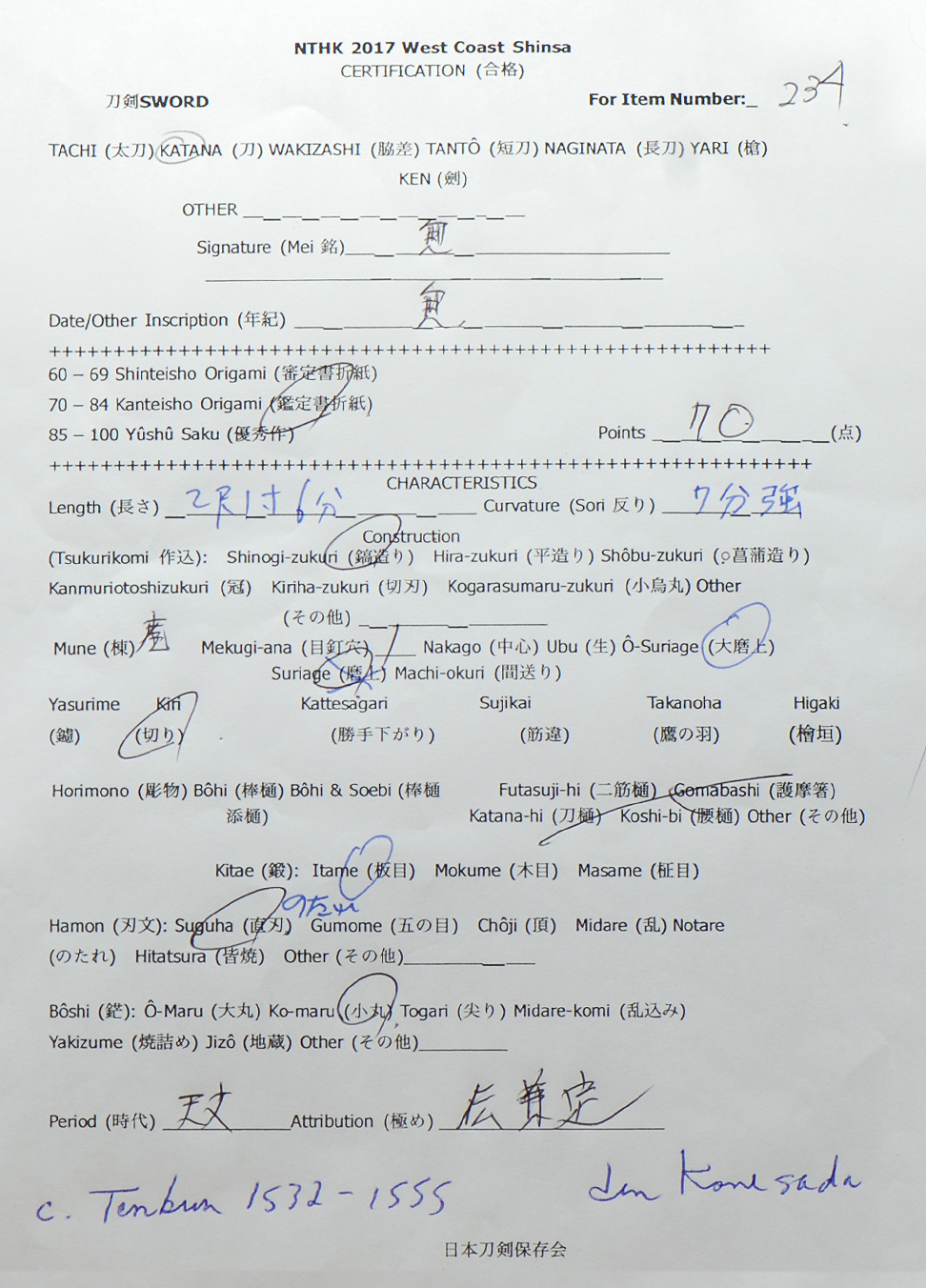
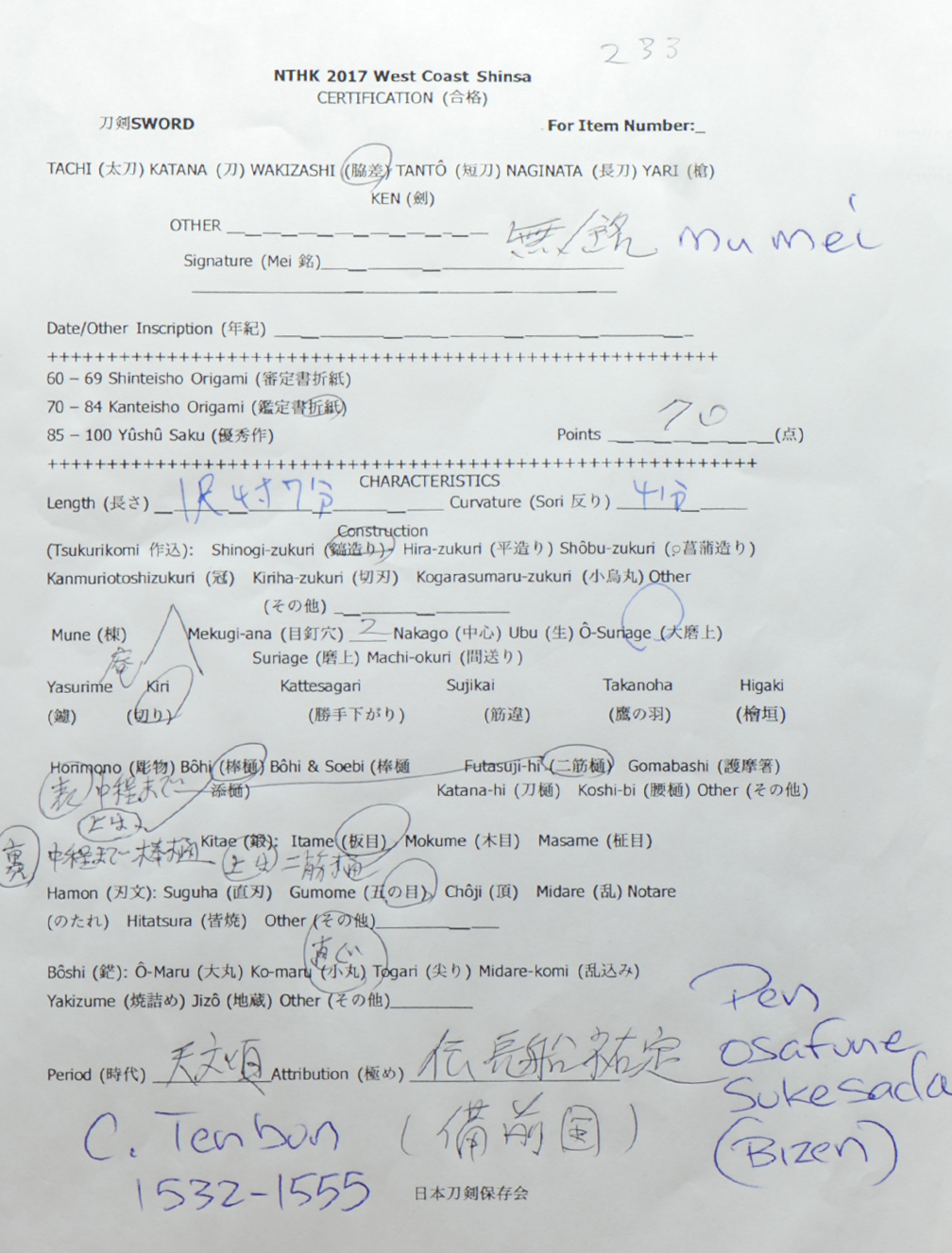
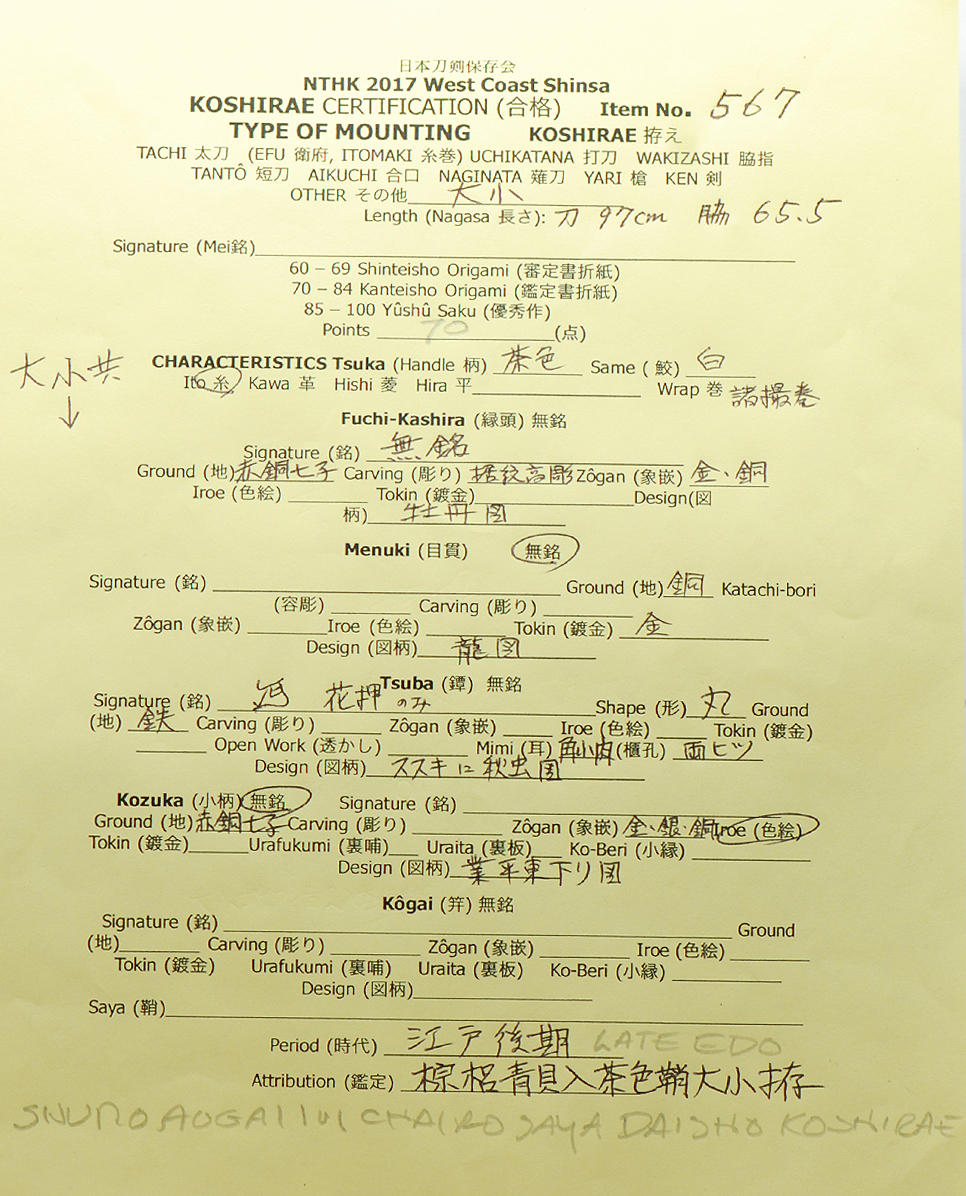
Authentic Period Daisho (fss-759) A True Samurai Daisho, These swords, both Koto pieces (1500’s era) are mounted in a spectacular pair of original Edo period mounts with inlayed style lacquered saya accentuated with abalone throughout. The Motif is of a floral design framed within a textile like curtain and are in pristine condition. The flowers that are used are called Paulowinia, it is a flower pattern referred to in Japanese as Go-Shichi-No-Kiri and was used to represent the Prime minister of Japan in later times. The Menuki are of gold washed dragons and the Kozuka is of a scholar or monks traversing their way to a town in the distance, a very cool scene indeed and quite nice.The Tsuba are of iron with gold inlay of the Musashi plains grass with small winged insects at the bottom both with gold Mon to the maker. The Same or rayskin is of very high quality with a large pattern nodule exposed. The ito is a goldish brown and the sageo is mauvish and white with dragon motif. These sageo with dragon weaved in them are fragile and very old. They are very unique.The Daisho habaki are both 2-piece with shakudo foil bases and the tops are of silver foil both original to the blades and matching.The Dai-to was attributed to Den Kanesada. A beautiful blade in pristine polish and loaded with activity from the koto period an O-suriage piece. Within the Sugu-ha there is hotsure, sunagahi and kinsugi. The hada is a dense and beautiful swirling itame and mokume mix. The hada has some course areas that stand out as in many koto era blades. The KANESADA line of sword smiths of the Mino school are the most famous craftsman of Sue-seki along with KANEMOTO. KANESADA the Second generation, often called Nosada, is still very much-prized as Owazamono. This blade has an attribute of KANESADA most likely a later generation smith of this line. This sword is more than likely early koto to mid koto era. At the head of the school was Mino Kanemoto and Kanesada,there are many sword smiths in Mino province that used this name.The most famous sword smith is 2nd generation ” Izumi Kami Kanesada”.The Sho-to was attributed to Bizen Den of the koto period. An O-suriage piece this sword has a hamon based in midare-ba throughout with an incredible amount of hataraki. The hada is an itame nagare with ji-nie and some Masame. The sword has a very rare version of horimono in the form of bohi on both sides. One side is a double set of gomabashi while the other side sports a set of gomabashi with a wide single Bohi also.“According to Nagayama Bizen-den begins at the end of the Heian Period with the Ko-Bizen School and carried on by the Ichimonji School. Mid-Kamakura period we see the rise of the Osafune School. Nagayama divides discussion of Bizen into two main areas; 1) by main school and change over time, 2) by leading swordsmiths. This discussion will only attempt to summarize the main schools and change over time.”Late Heain Period – Early Kamakura:Ko-Bizen has choji-midare in nioi-deki. See influence on Yamato-den with hamon based on suguha mixed with ko-midare and ko-choji in nie deki. The hamon then evolves into one based on midare, hada is mokume, chu-mokume or ko-mokume. Jifu utsuri is often seen. Finally choji-midare in nioi completed by the Fukuoka Ichimonji School.Middle and Late Kamakura Period:Jigane is soft and well forged, mainly mokume with some o-hada patterns, midare-utsuri or choji-utsuri, some ji-fu-utsuri. Other items remain the same for the most part from the previous period. Boshi is midare-komi, ko-midare and ko-maru.Nambokucho Period:The shape now reflects the grander style of the period, longer swords with longer kissaki. Workmanship begins to reflect the So-den, or soshu style. Jigane is some, has utsuri and o-mokume hada combined with dark jigane that looks like “swimming catfish” (don’t even ask me what that means). There is also ko-mokume hada which stands out and also has utsuri. Hamon, if wide, loses its utsuri. Hamon changes and we begin to see notare-midare and saka-midare forms. Boshi is usually midare komi, in proportion to the hamon but kaeri seems to getting longer.Early Muromachi Period:Shape now reduced in size from previous period, return to style of Kamakura period. Sori inclined to sakizori (which is different from the koshizori of earlier times). Hamon is koshihiraita midare with choji-midare. Utsuri is now straight. Also see some midare and suguha.Late Muromachi Period:Hada loses it appearance of wetness/oiliness. Utsuri is now rarely seen and if seen is no longer distinct. Koshihiraita midare with special variety known as crab-claw choji. Considerable nie in the hamon. Nie kuzure is seen. Scattered nioi.Both swords are mounted in shirasaya to protect the polish and the koshirae have wooden tsunagi for displaying and storage.” The wearing ofdaishōwas limited to the samurai class, and became a symbol or badge of their rank.Daishōmay have became popular around the end of the Muromachi period (1336 to
NihontoWatch
美濃伝 · 美濃
現在21点販売中
兼定は美濃国関を本拠とする末関の刀工で、室町時代後期にこの地で繁栄した美濃鍛冶を兼元とともに代表する。兼定を名乗る工は数代にわたるが、説示に最もしばしば挙げられるのは初代兼定の子にあたる二代和泉守兼定である。この二代は「定」の字のウ冠の中を「之」に切ることから「ノサダ」(之定)と称され、これを「疋」に切る後代の「ヒキサダ」と区別される。之定銘の成立については検討がなされ、はじめは「兼定」を楷書で切り、明応末から永正の初めにかけて之の字体に転じたと見られる。受領銘は永正七年紀の作にはじまり大永六年頃まで及び、之定は古刀期にあって珍しく「和泉守」を受領した工として、多くの刀剣書に上手と評される。説示には永正七年・同十年・同十二年などの年紀作、斎藤利隆との合作、伊勢山田での作刀も挙げられている。 作風は、兼元の三本杉と称される尖り刃主調の乱れ刃と対比して論じられることが多い。之定は頭の丸い互の目に小のたれ・互の目丁子・尖り刃などを交えた変化のある乱れ刃を本領とし、刀には湾れ調を基調に焼の高低を見せて大模様に乱れるものや、互の目丁子に尖り刃を交えて飛焼のかかるものがある。地鉄は板目に流れ肌を交えてよく錬れ、地沸つき地景入り、白け映りや白気ごころの立つものが多く、美濃物にありながら鉄色の明るく冴える点が特色とされる。茎の鑢目は関鍛冶に共通する鷹の羽で、短刀の早い時期には檜垣を見る。短刀や直刃調の刀には来写し(山城物写し)と称する上品な直刃があり、刃中に節が出ず来国俊を思わせる出来を示すものがあって、末関の各工に往々見られる節とこの点で見分けられる。之定と他の兼定との識別は、まず定の字体が之か疋かにより、之定はことに鍛えの錬れと地刃の冴えが一段優れる点に見どころがある。 鑑定にあたっては、姿の傾向が出来口と結びつく点が説示に示される。すなわち湾れ調の作では身幅広く鋒の大きい姿となり、互の目丁子を乱れる作では身幅尋常で元先の幅差が開き反りのやや高い洗練された姿を呈することが多い。切れ味の評価は高く、二ツ胴・立袈裟などの截断銘を金象嵌に伝える作が知られ、号「笒釣瓶」のように号を帯びるものもある。伝来も諸家に及び、紀州徳川家家老三浦将監、津山松平家家老小須賀帯刀、島津家、秋田佐竹家、土佐山内家、また武田信虎所持と伝える作などが挙げられている。総じて之定は、明るく冴えた地鉄と変化に富む乱れ刃、ならびに格調高い来写しの直刃をもって、関鍛冶の中でも技術の擢んでた工と位置づけられ、末関・末美濃の頂点を示す名工として評価される。 詳しく見る →
室町時代の美濃
戦国の関は一つの産業であった。春日神社を氏神と仰ぐ鍛冶たちが、中部日本の軍勢を武装させた。孫六兼元の三本杉と之定の最上作は、量産の町に第一級の技が息づいていたことの証である。
NTHKの中心的な鑑定書で、相応の出来を備えた作に発行されます。在銘作は銘の正真を、無銘作は審査員による刀工・流派の極めを示します。点数を記す詳細な審査表が付されます。
NTHK(日本刀剣保存会)は、NBTHK(1948年設立)に先立つ1910年に創立された、日本で最も古い刀剣鑑定団体です。長く会を率いた会長の没後、NTHKとNTHK-NPOの二つに分かれ、いずれも審査を続けています。NTHKの鑑定書は、点数と審査員の所見を併記する詳細な審査表が特徴で、特に無銘作の極めに定評があります。
We offer a 48 hour inspection period for all Antique items shipped within the United States only. If the item is not to your satisfaction, we will gladly refund your money less any shipping and handling fees. All sales are final after the 48 hour inspection period. Please note that all discounted items are a final sale and not returnable.