 NihontoWatchNihontoWatch
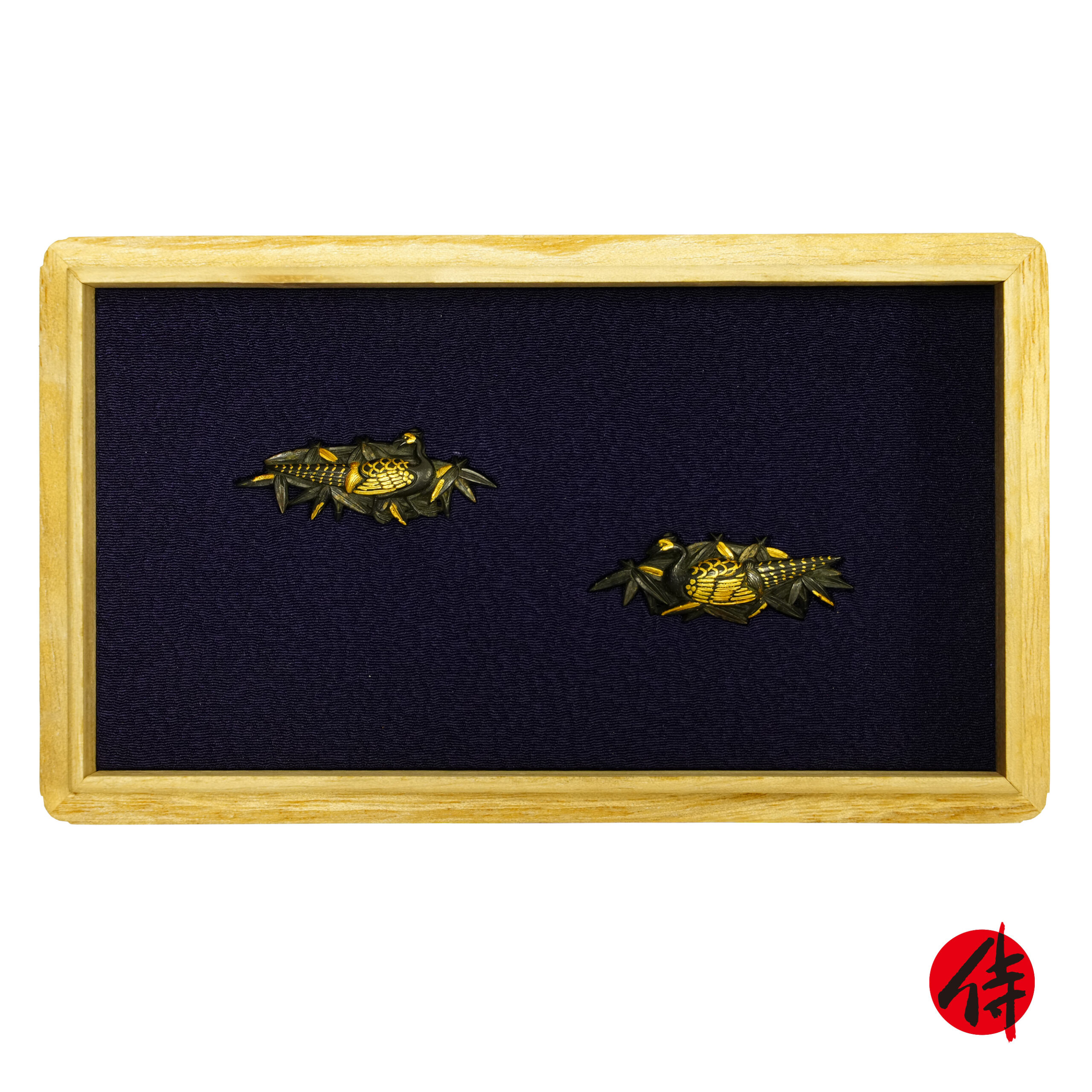
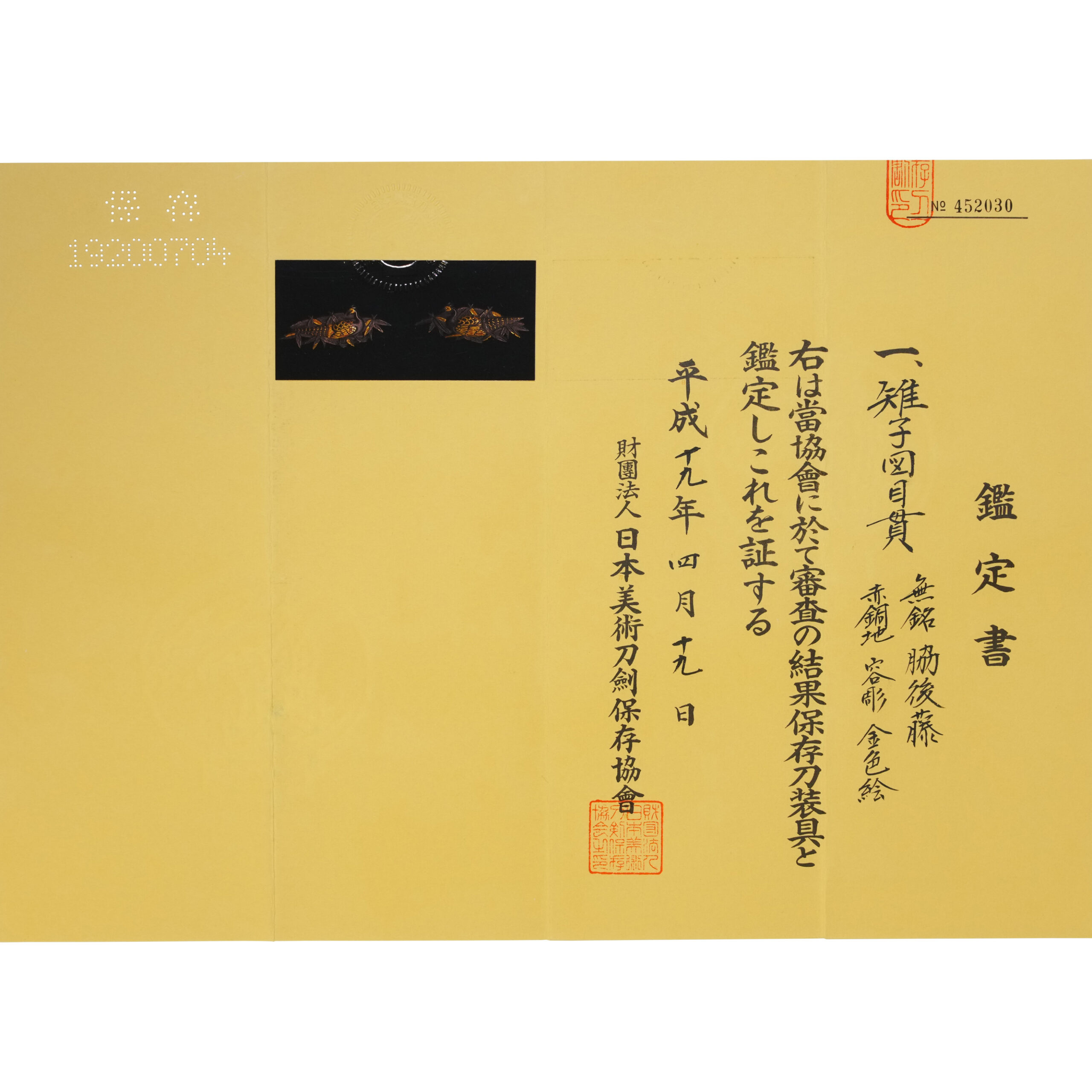
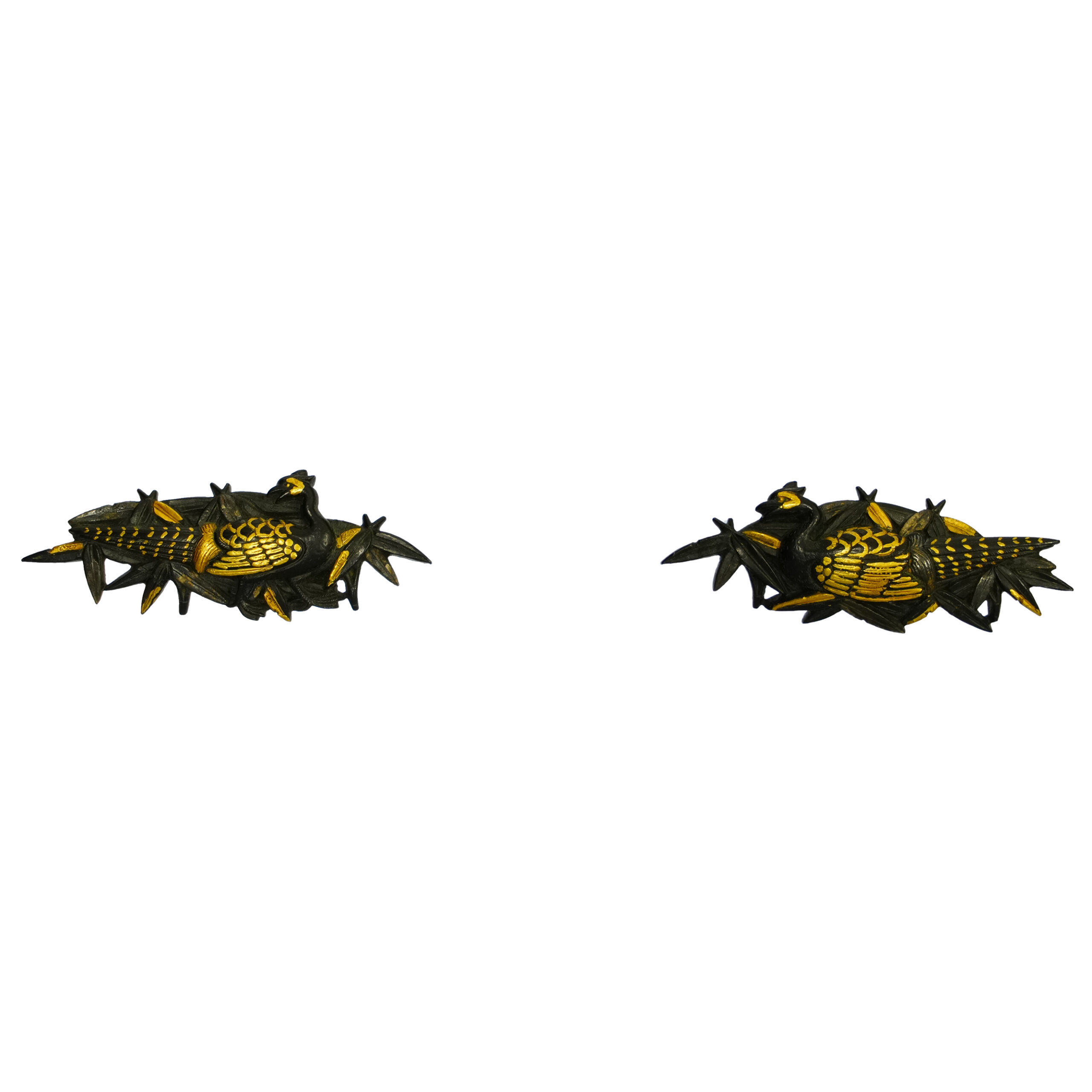
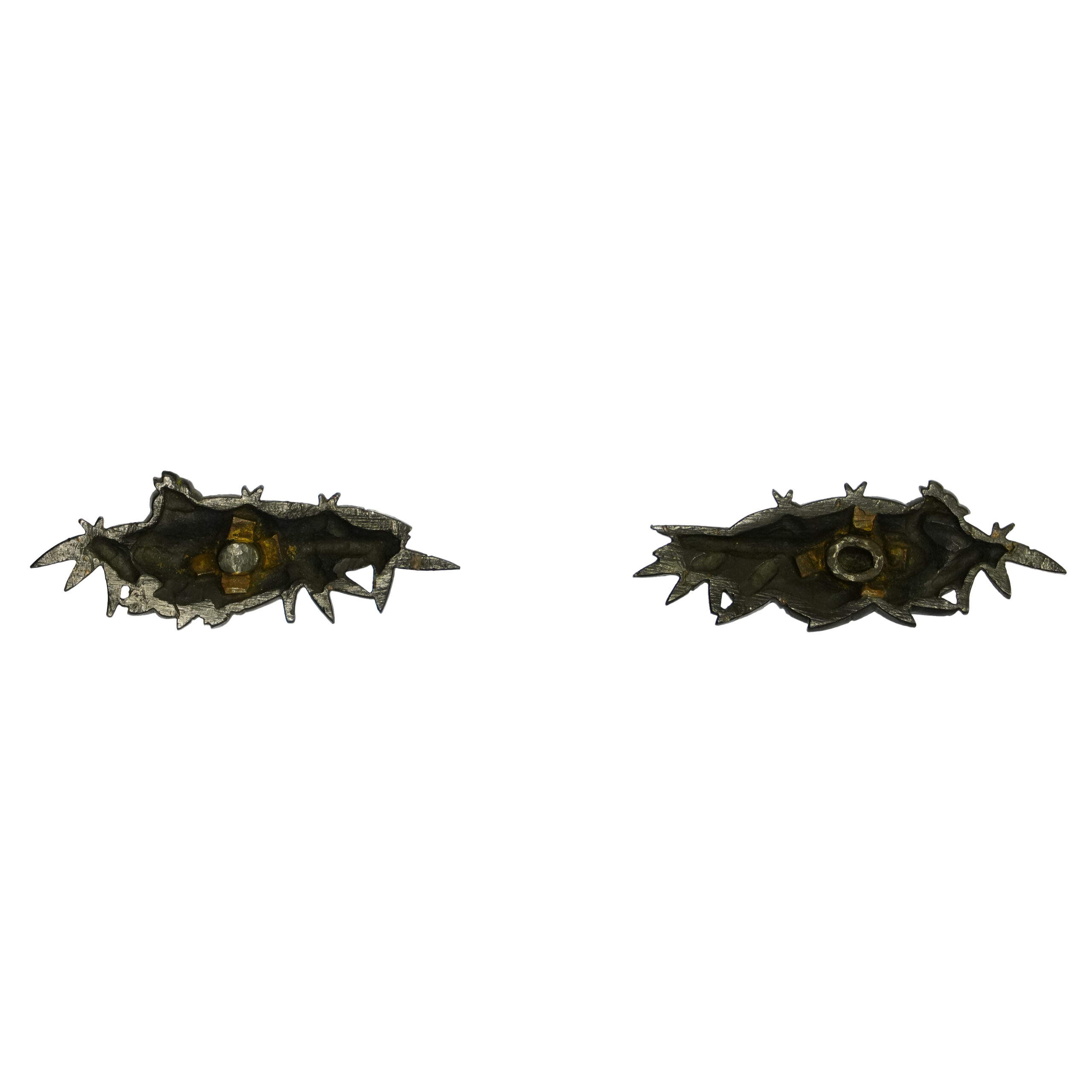
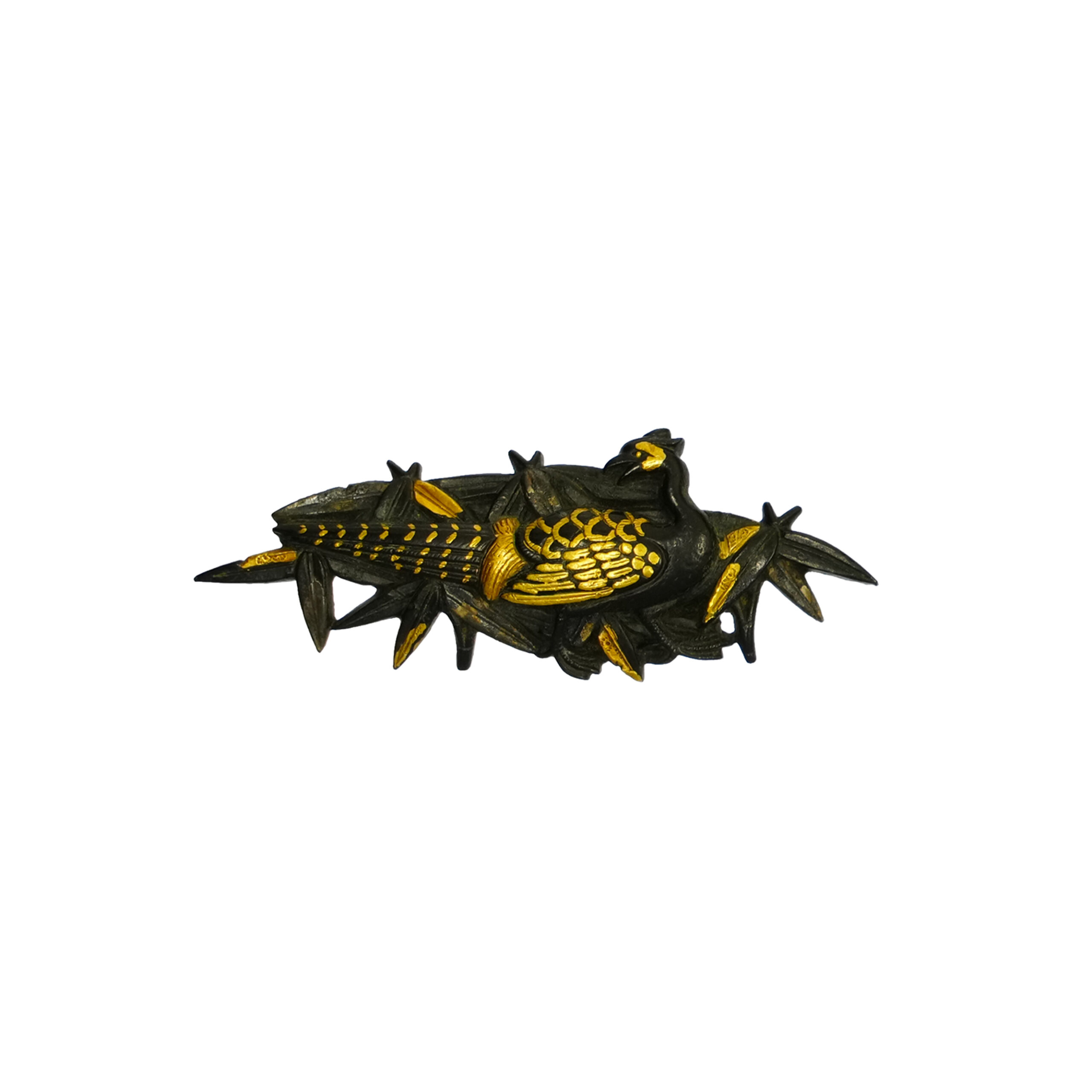
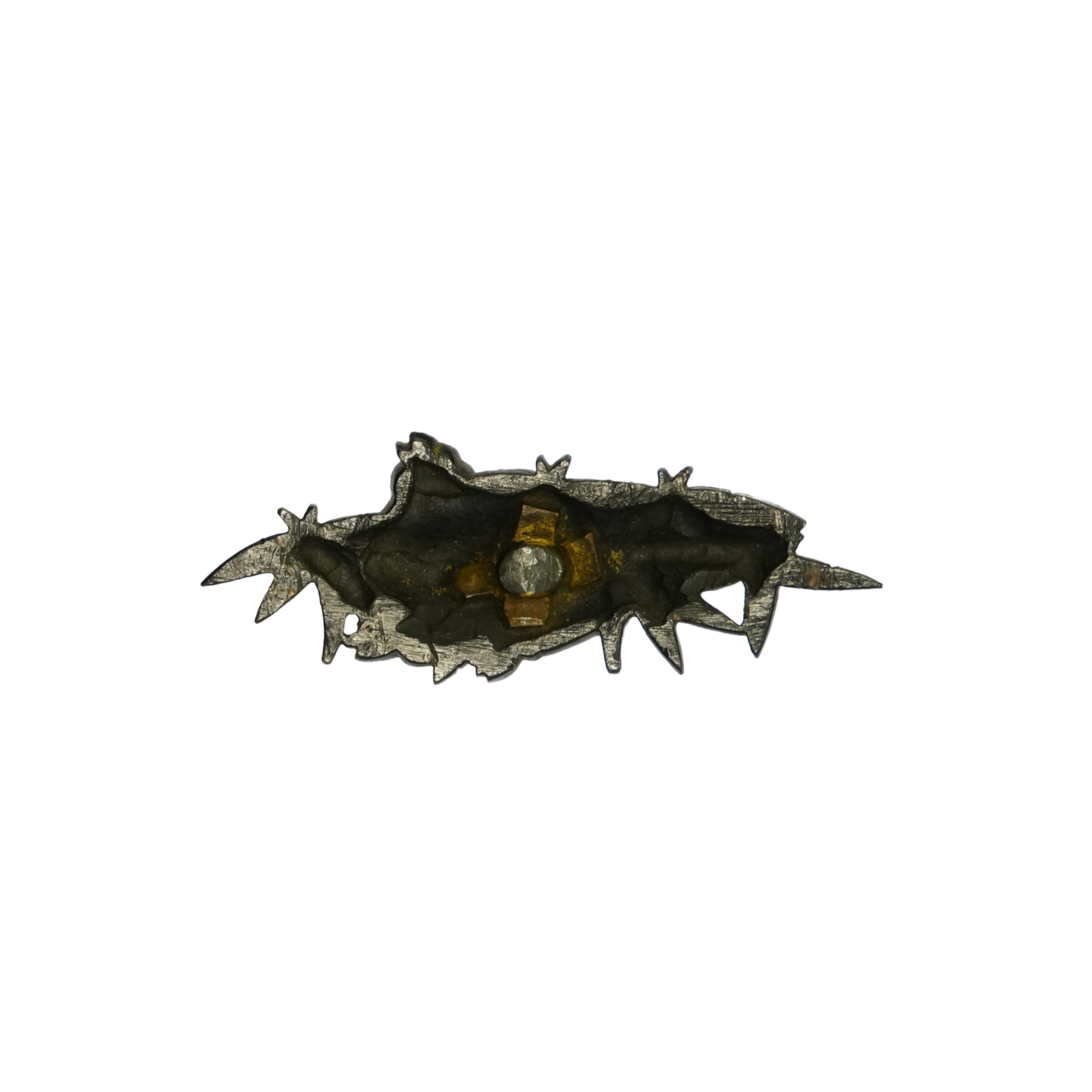
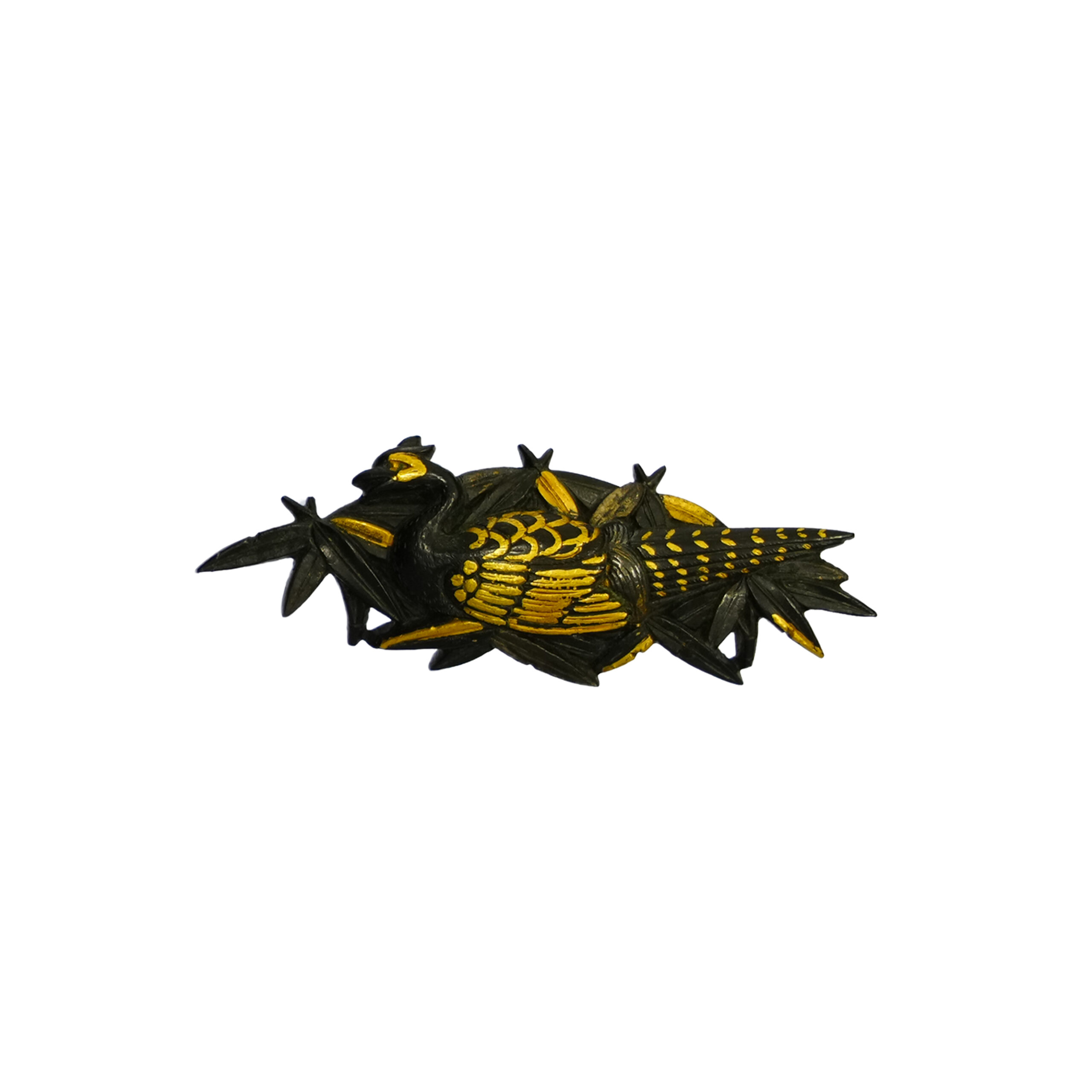
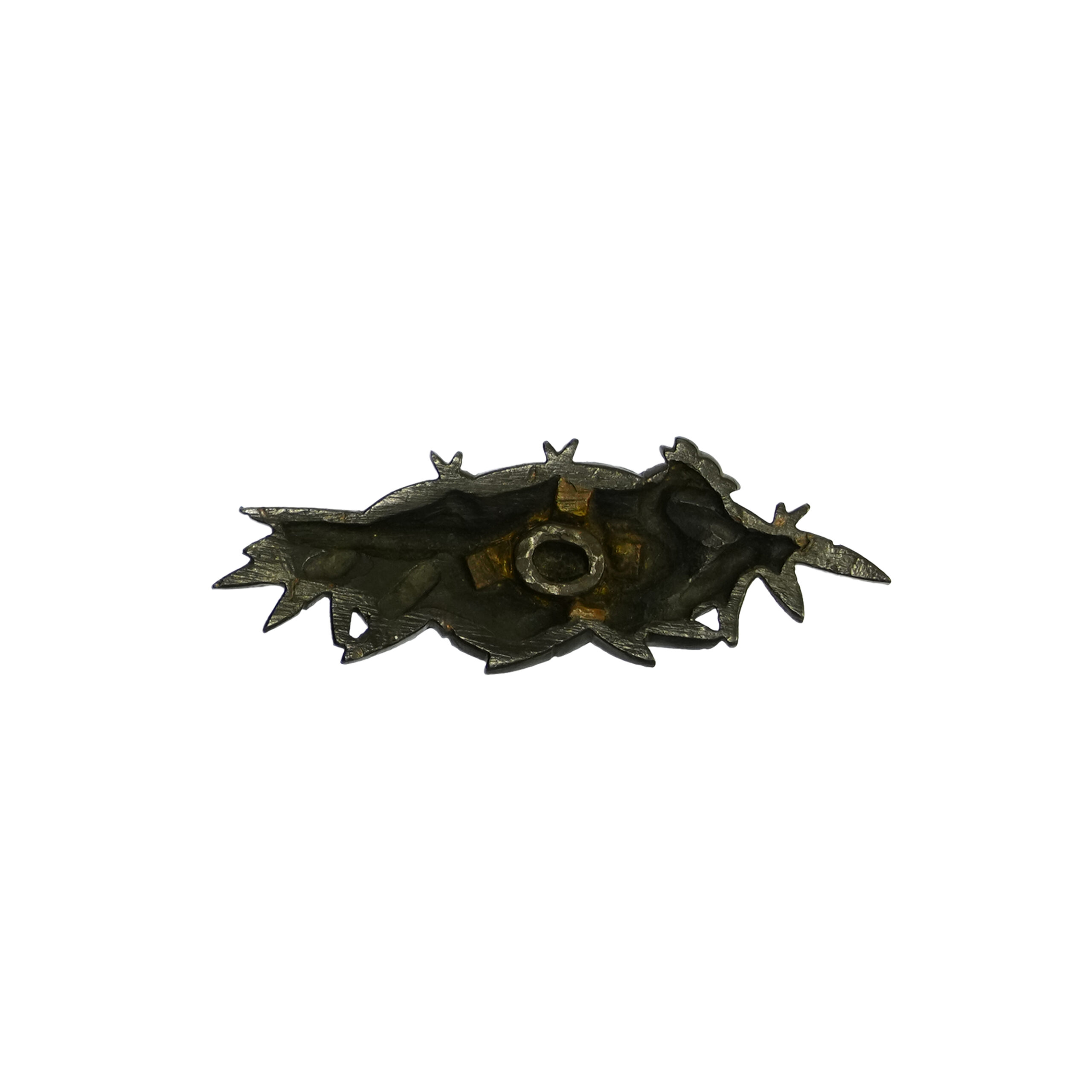
This Menuki is recognized by The Society for Preservation of Japanese Art Swords, which is known as NBTHK. According to the certificate, this Menuki is attributed to a maker of Waki Goto (脇後藤). The Goto family (後藤家) is a metalworking family which lasted 17 generations from the Muromachi period (1333-1573) to the end of the Edo period (1868-1912). Starting with the Ashikaga family of the Muromachi period, they served famous warlords such as Oda Nobunaga (織田信長), Toyotomi Hideyoshi (豊臣秀吉), and Tokugawa Ieyasu (徳川家康). Among the generations, the branch of the Goto family is called Waki Goto. The Goto family has been divided since the time of Goto Tokujo, the fifth generation of the head family, and was divided into 14 families. Also, this Menuki is made from the Shakudou (赤銅), it is an alloy of copper and gold. This material has often been used for making sword mountings due to its properties. Also, the Shakudou gives the works elegant black color. Regarding the design, pheasants (雉, KIji) perched on bamboo grasses are designed for this Menuki. Since ancient times, pheasant has often appeared in Waka (和歌, Japanese poetry) poems that think about families, so it is said that pheasants symbolize family love and marital love. Pheasant was designated as the national bird of Japan in 1947. A beautiful bird endemic to Japan, it is familiar in folk tales and nursery rhymes. Its male is considered the symbol of bravery, and the female symbolizes maternal love. As for bamboos, they grow neatly towards the sky, and it is vital so that this motif represents nobility and strength. Besides, the bamboo breaks straight, but its content is hollow; people thought it shows innocence. According to a Chinese legend, Houhou (鳳凰, Fenghuang) eats bamboo fruits; therefore, bamboo has been considered a sacred plant. Also, as it keeps its green color even in cold winter, people thought the bamboo pattern shows eternity and longevity. We would say that the bamboo pattern is one of the familiar designs for Japanese people since ancient times. While some colorings have partly faded, it seems the some parts were initially colored with golden paint, adding decorativeness to this work. A B Authentication Paper They authenticated the Menuki on April 19th in the 19th year of Heisei (2007). They appraised it as Hozon Tousougu, the Menuki worth preserving for Japanese society.
NihontoWatch
脇後藤派
江戸
無銘
保存 (NBTHK)
販売店の記載のまま
家彫 · Kyoto
現在74点販売中
脇後藤 脇後藤とは、刀装具製作において歴代にわたり権威を保った後藤宗家に対し、その傍系・分家にあたる諸家の総称である。後藤家は室町時代以来、足利将軍家・徳川幕府に仕え、その彫物は「家彫」と称されて市井の需要に応じた「町彫」と区別され、刀装金工の最高峰と仰がれた。脇後藤はこの宗家の血脈と技法を分かち、京都および江戸の中央のみならず諸国へとその伝統を広めた一群である。室町末期に活躍したと伝わる光乗をはじめ、程乗の次男にして理兵衛家を興した悦乗、権兵衛家の順乗、勘兵衛家の東乗・光文、半左衛門家の光正、次左衛門家の光久など、多くの名工がこの系譜に名を連ねている。とりわけ悦乗光邦は寛永十九年に京都に生まれ、加賀前田家より百五十石を賜り、勘兵衛家の演乗と隔年で加州金沢に住して門人を育成し、加賀後藤の隆盛に大きく寄与した。 作風は専ら後藤の御家流を基調とし、赤銅魚子地を高彫あるいは鋤出高彫とし、これに金色絵を施すのを本領とする。魚子地は細かく整然として深く澄み、肉置きも優れる。光乗は桐紋・鳳凰・百足などの意匠を好み、その魚子地と高彫の肉取りに後藤上三代の遺風を伝える。悦乗は龍や獅子といった後藤の掟物のみならず、滑らかな赤銅の波文地に尾鰭を跳ね上げ勢いよく海上を飛ぶ鯱を、隅々まで細緻な鏨の活きた金紋であらわすなど、一風変わった趣向の作をも遺し、小柄笄の仕立・肉置は父程乗に全く同じく、金の色あいよく彫技も傑出する。幕末に至っては、光文の七夕図に見るごとく、赤銅魚子地の高彫金色絵を蒔絵・螺鈿の鞘と取り合わせ、加賀工芸の極致と称される優美な刀装をも生み出している。 評価においては、脇後藤の作はいずれも父祖の御家流を忠実に継ぎつつ、各家それぞれに独自の意匠と卓越した彫技を加えた点が高く評価される。順乗の双龍図鐔が「後藤傍系作品中の傑出作」[[c:1]]と称されるごとく、傍系にありながら宗家に劣らぬ技量を示す作が少なくない。在銘品が比較的少ないため、その遺品はいずれも資料的価値が高く、後藤家研究の好資料として珍重される。理兵衛家の加州移住によって伝統は京・江戸の外へも広がり、加賀後藤として一地方の金工を興隆させた。かくして脇後藤は、後藤宗家の家彫の伝統を時代の好尚に応じて展開させながらその品格を保ち続けた一流として、日本刀装金工史上に重要な位置を占めている。 詳しく見る →
銘が正しい、または無銘でも年代・流派を指摘でき、美術工芸的価値が認められる、保存に値する真正の刀装具と鑑定されたものです。
日本美術刀剣保存協会(NBTHK)は、1948年に設立され、文化庁の監督を受ける公益財団法人で、東京・刀剣博物館に本部を置きます。専門の審査員が出品作を直接審査し、美術的・歴史的価値に応じた鑑定書を発行します。NBTHKの鑑定書は、日本刀および刀装具の真正性を示す最も広く認知された基準です。
NBTHK公式サイトReturns/exchanges limited to defects caused by shipping (except willful misconduct or gross negligence by the company); customers must contact within 72 hours of receiving the product.