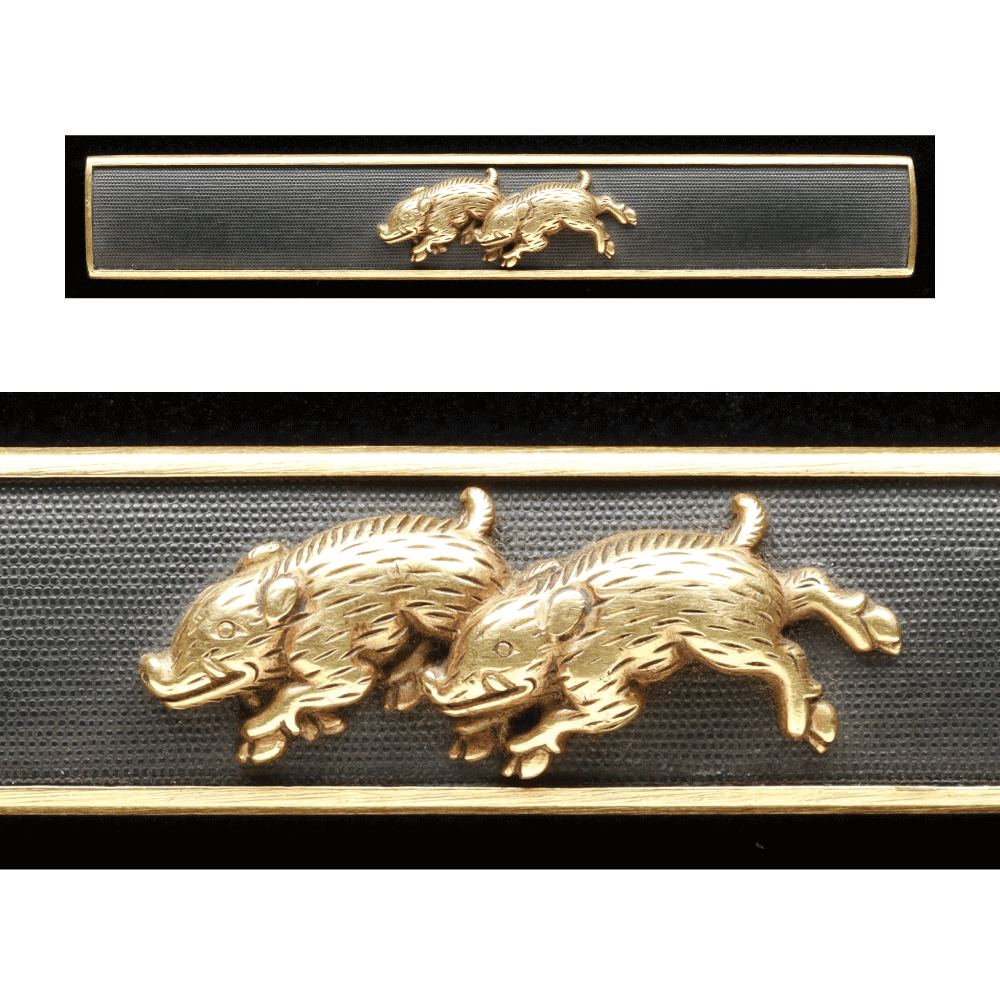
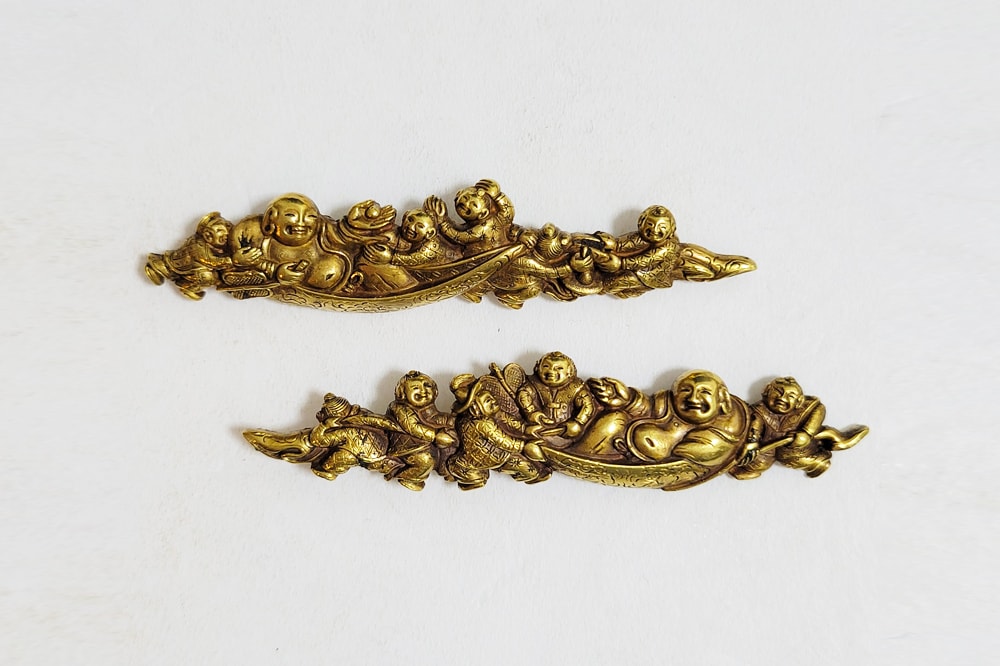
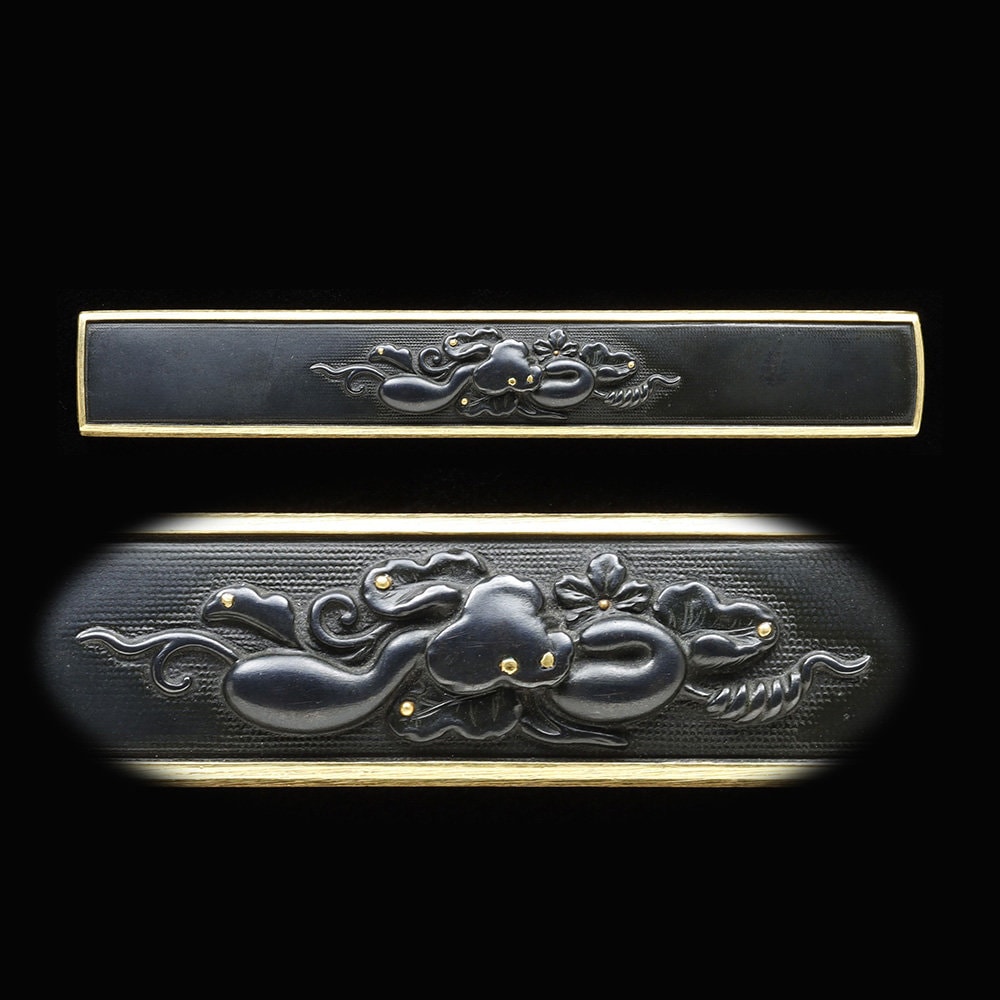
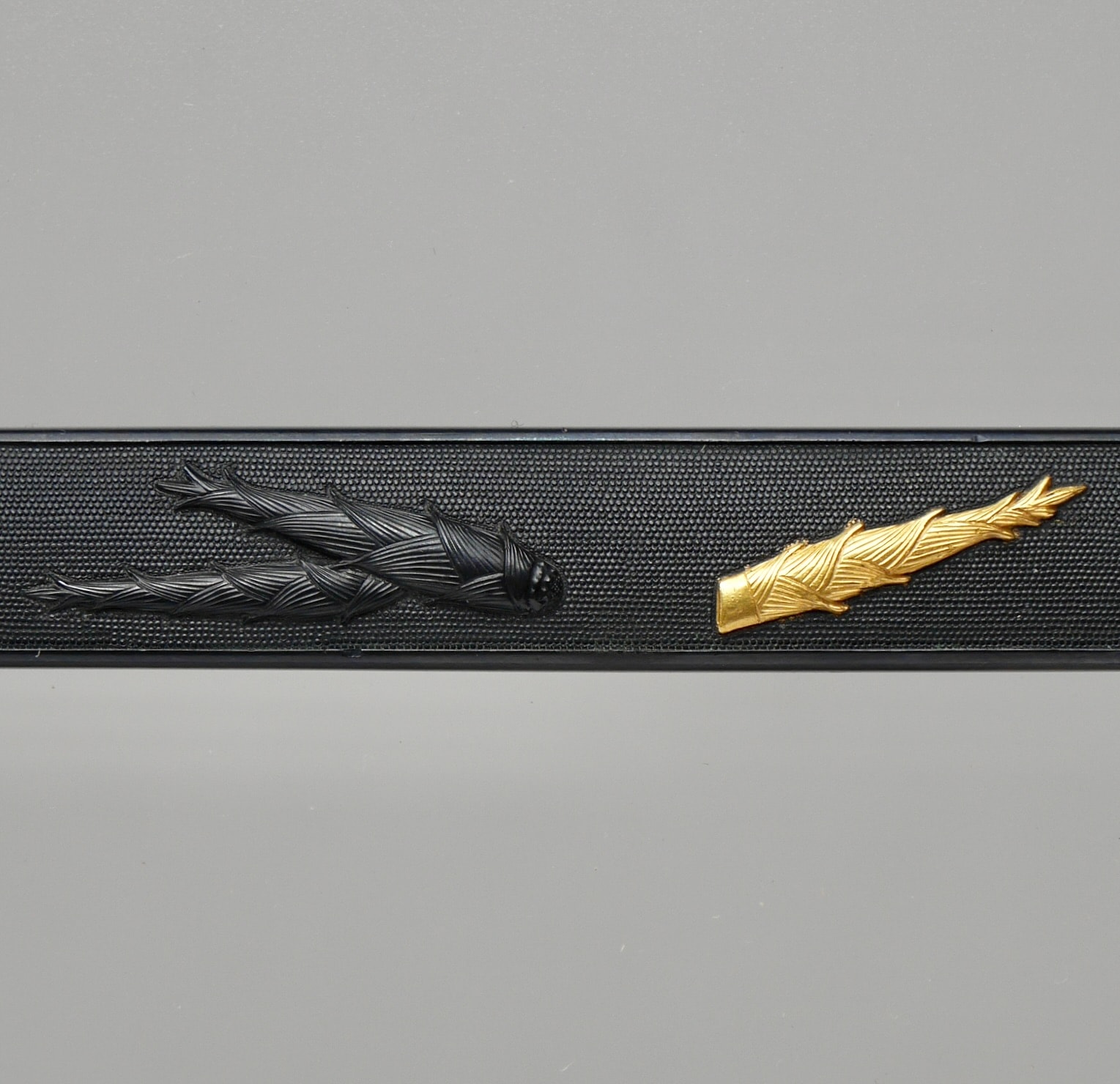
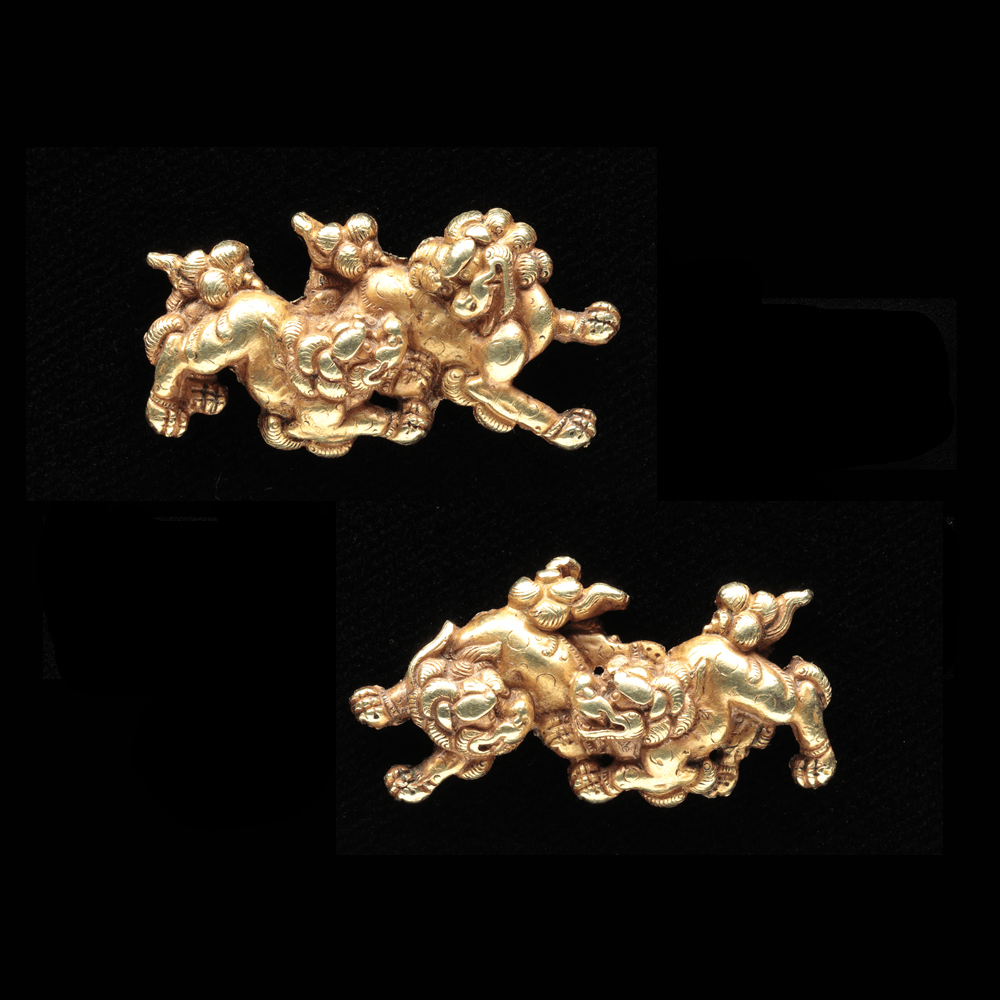
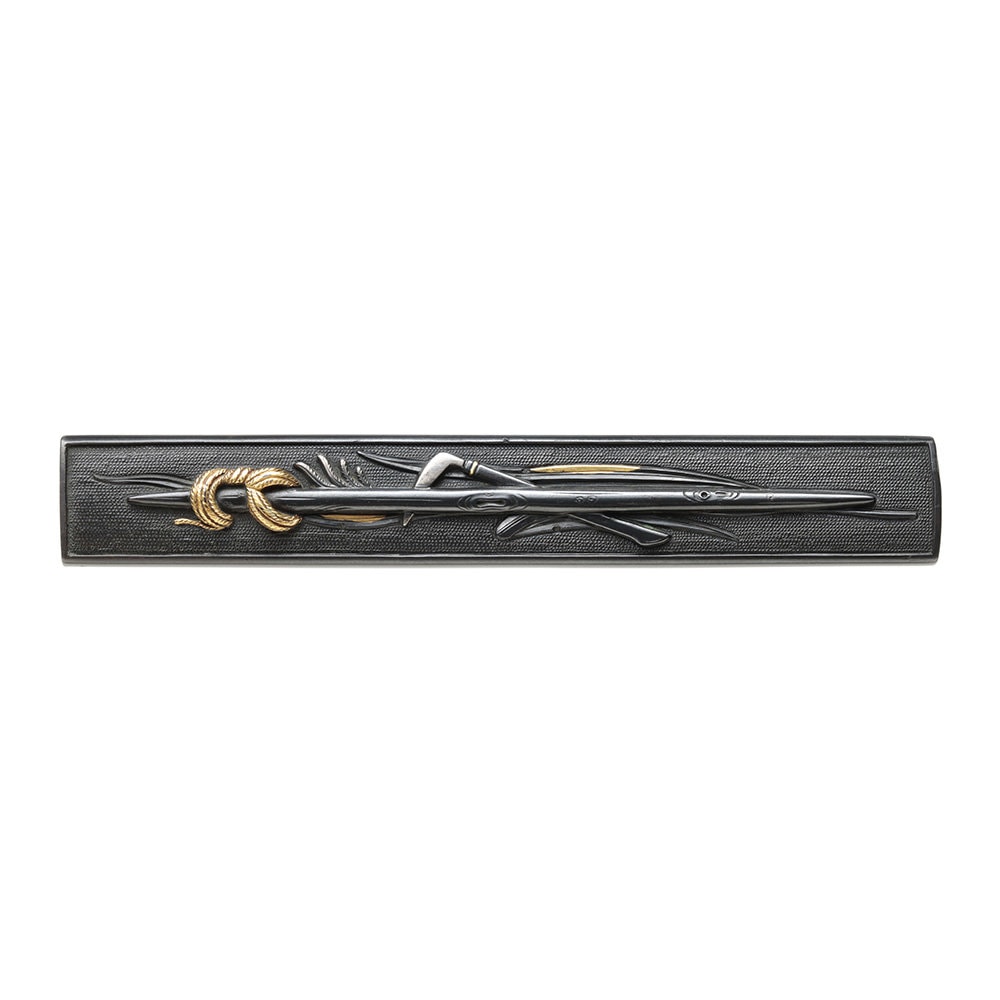
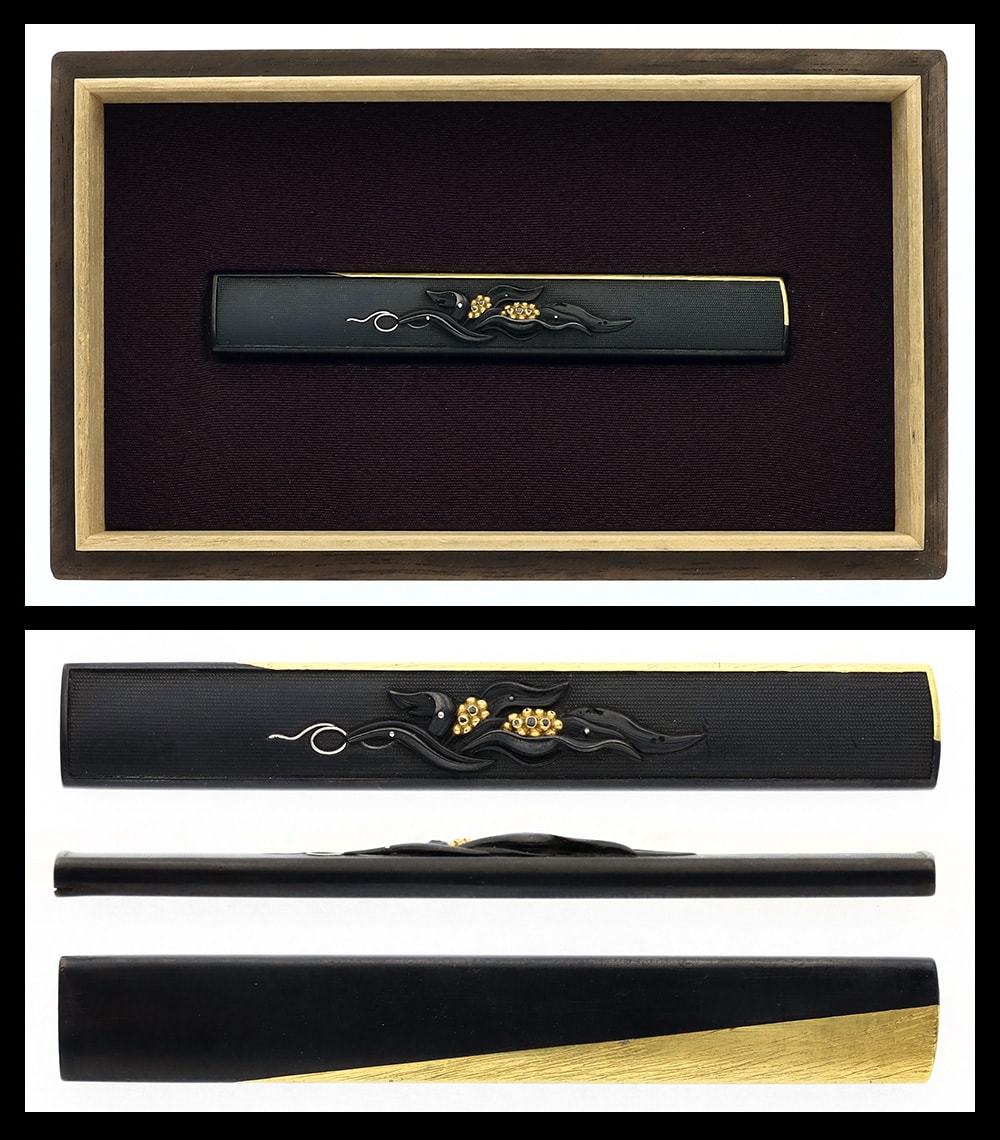
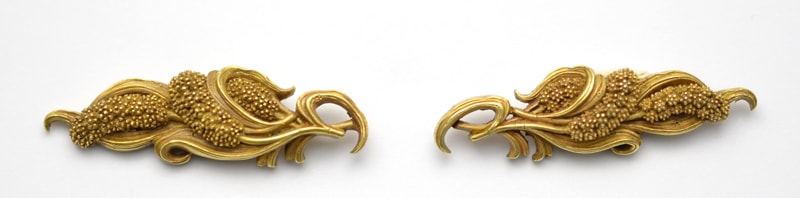
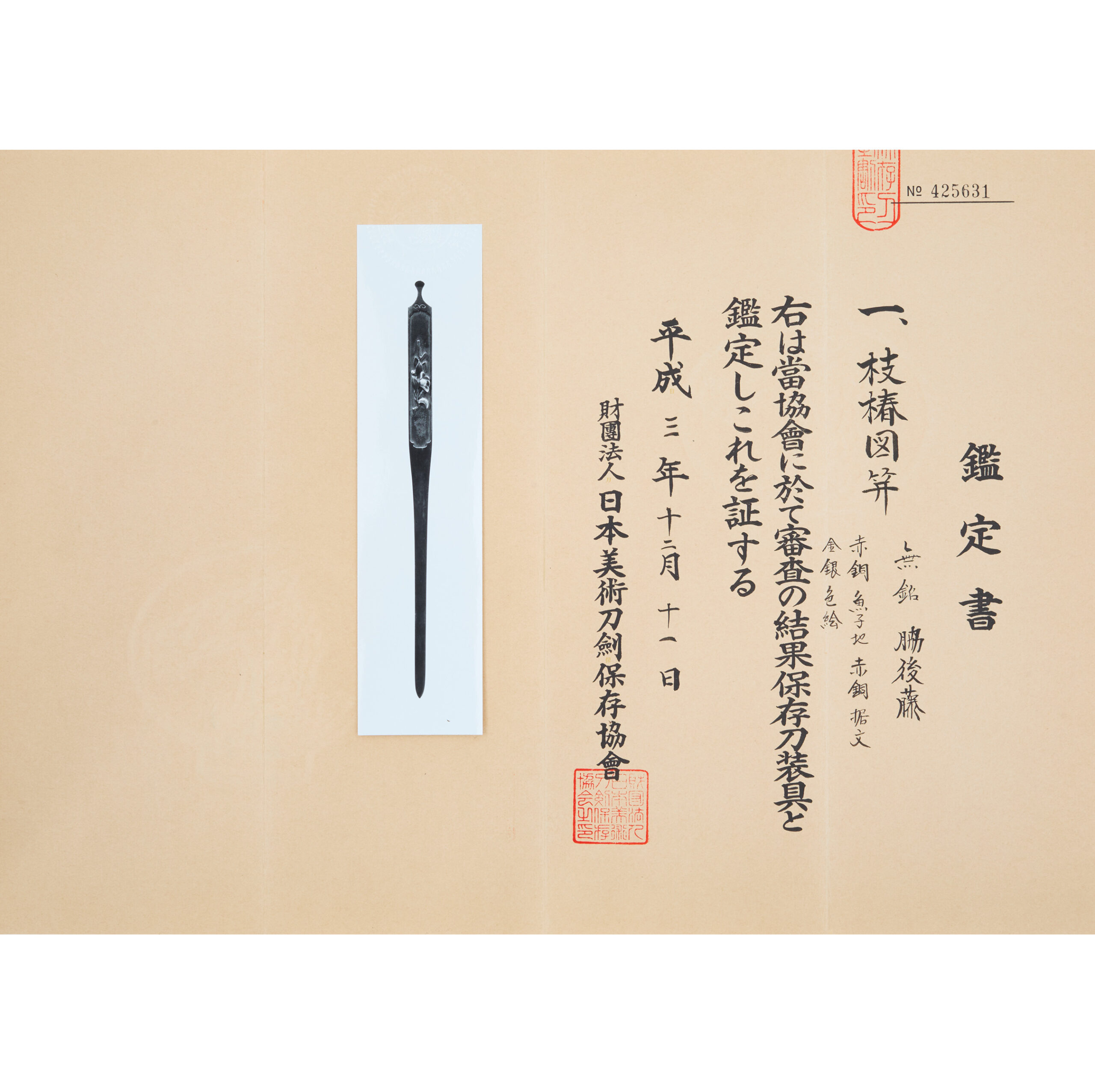
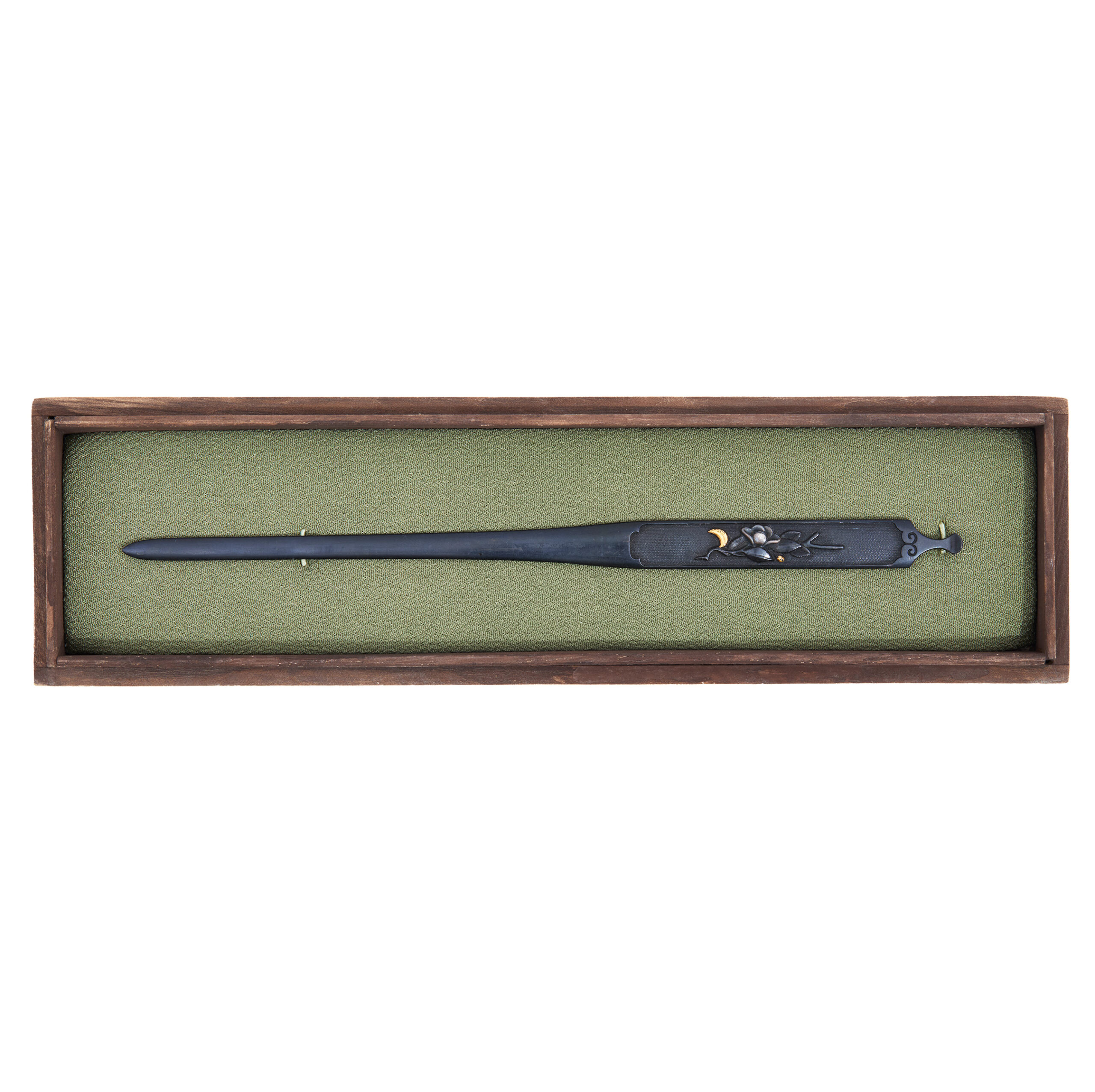
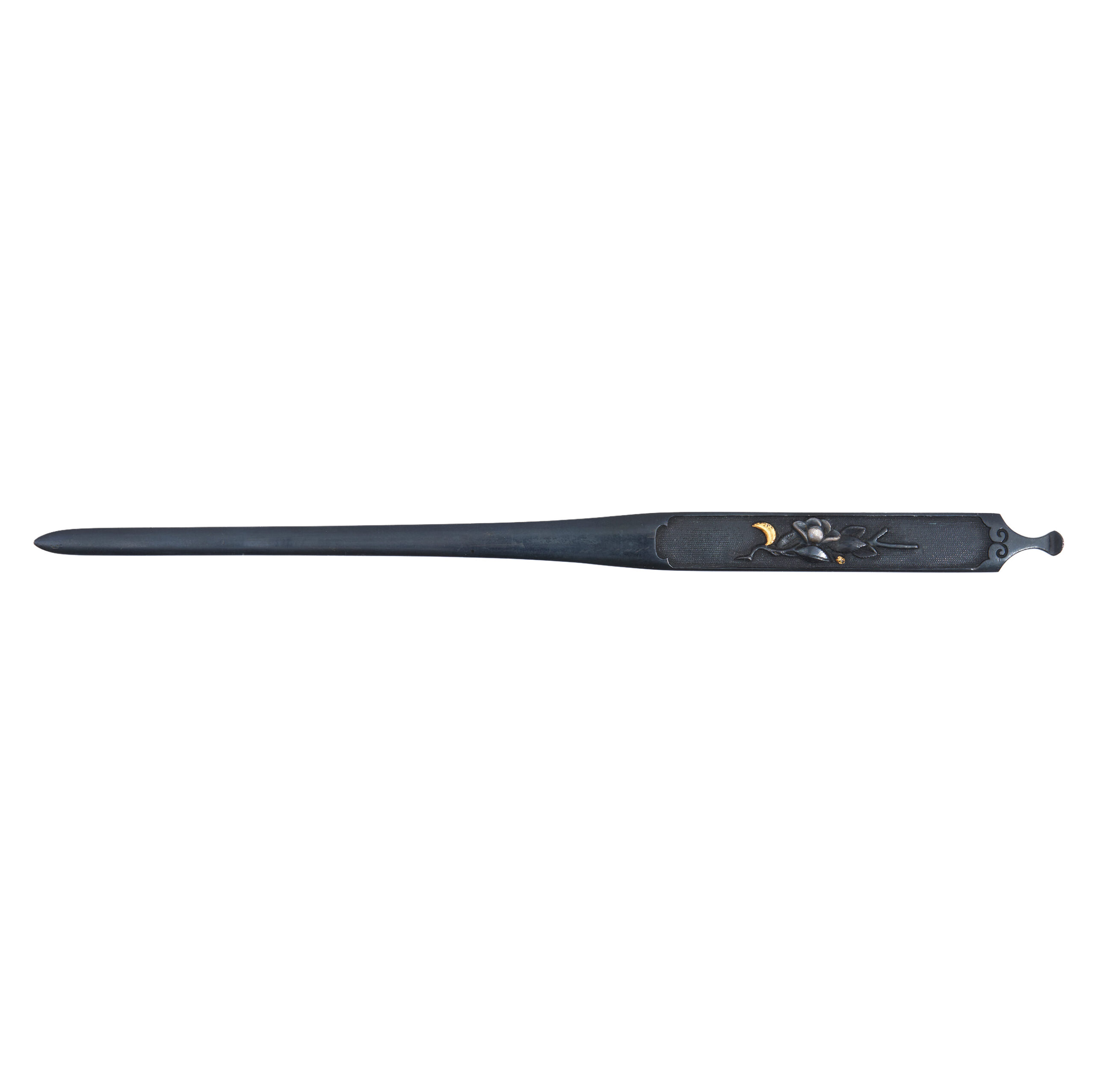
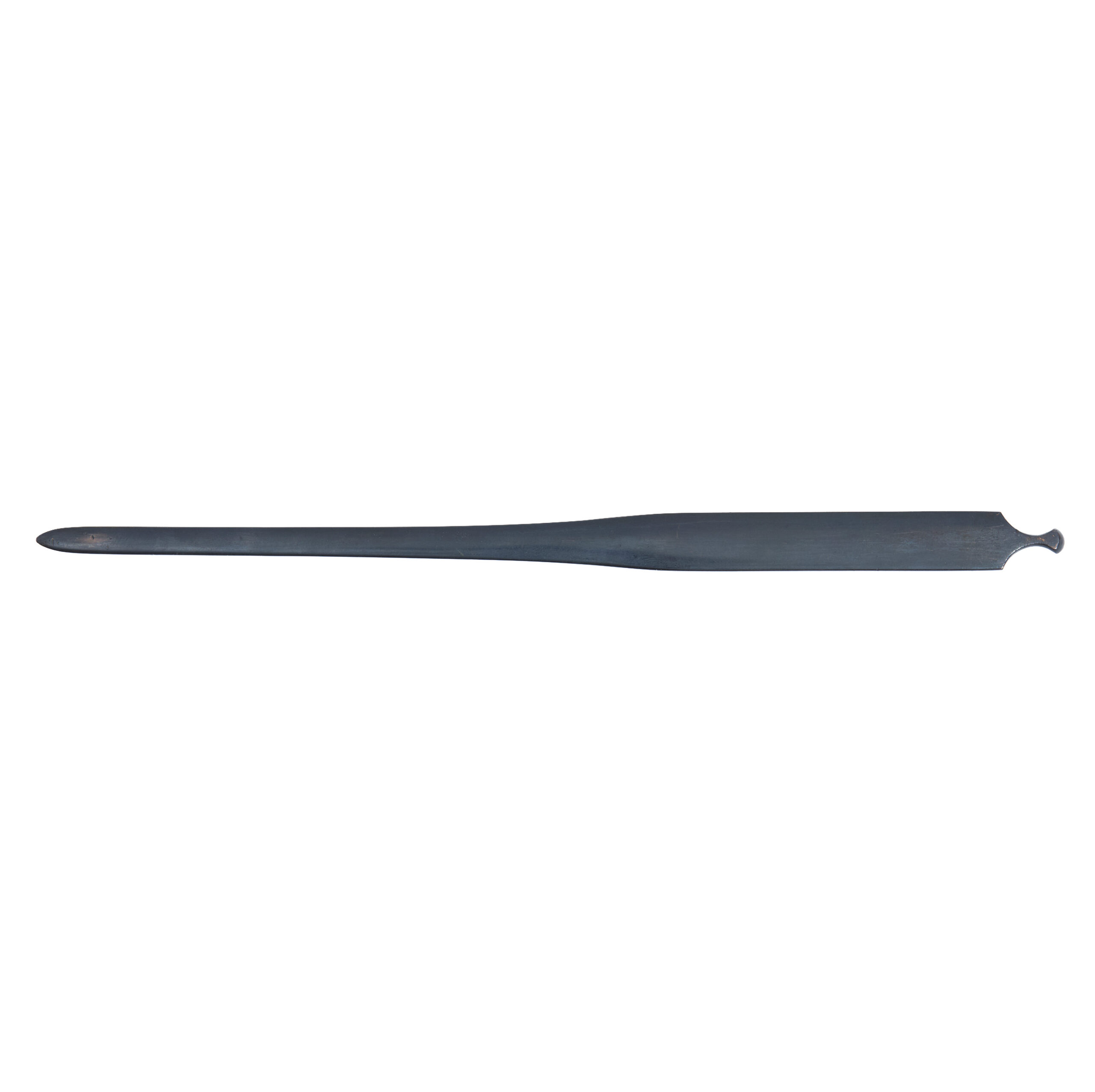
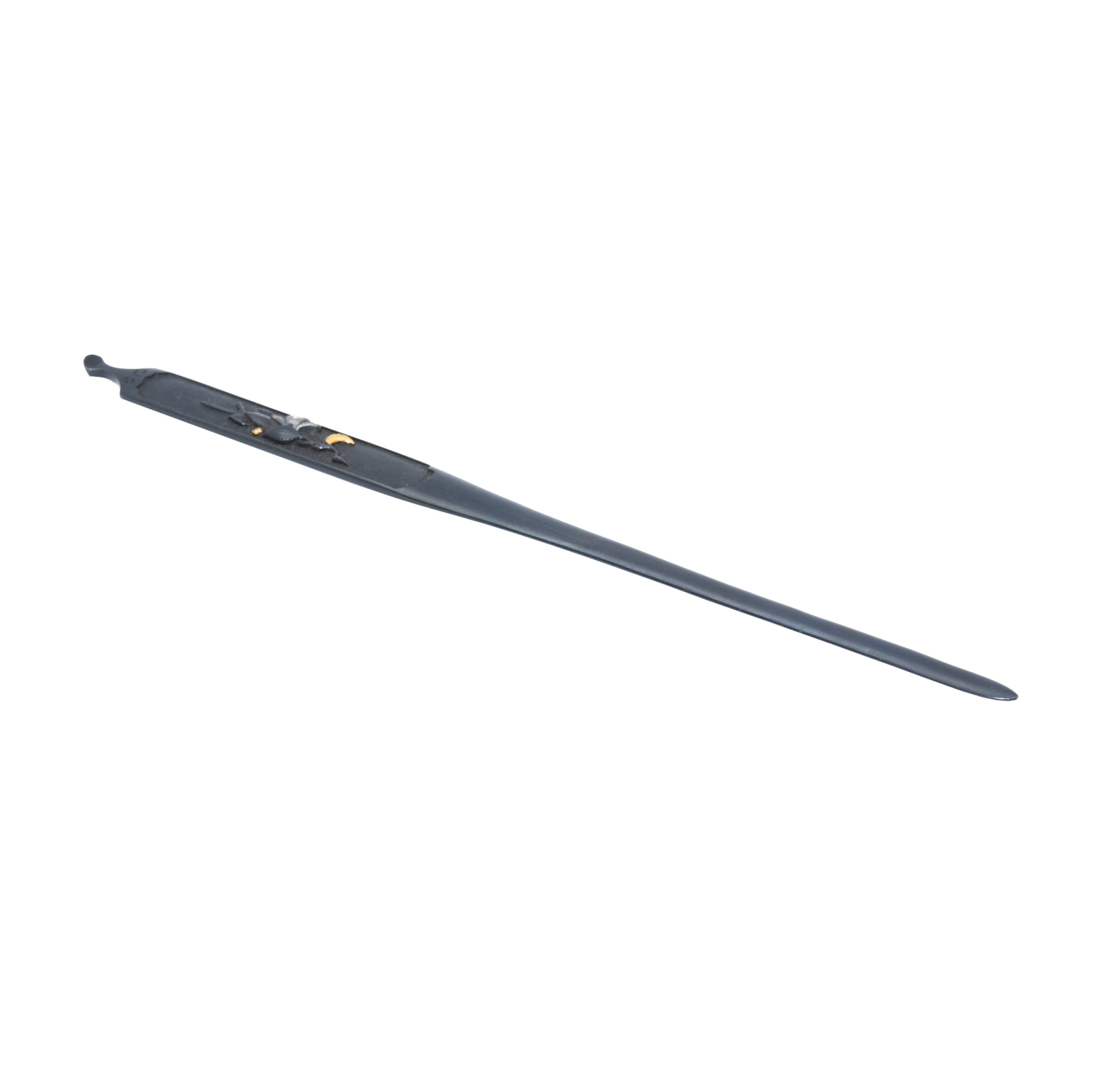
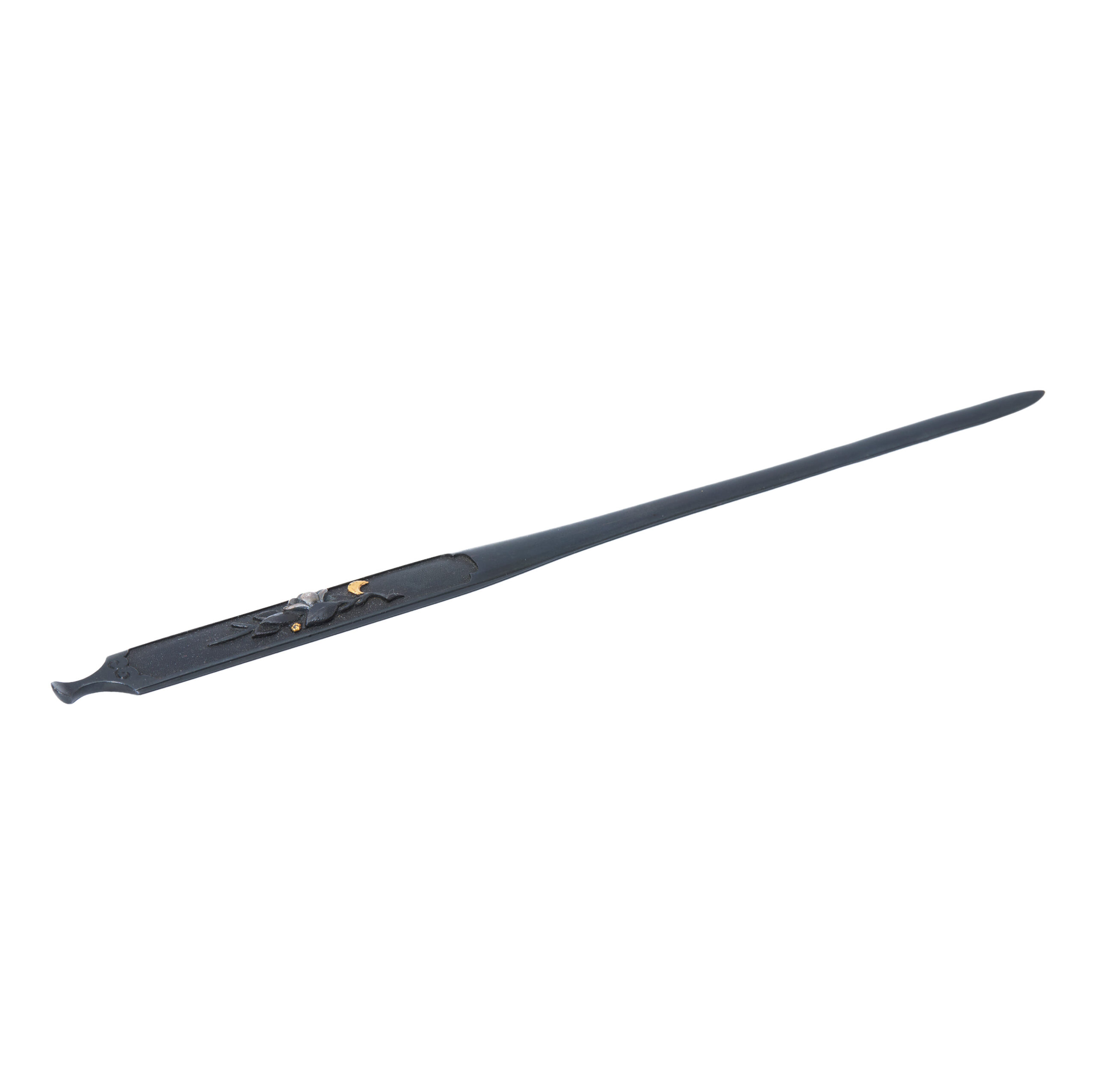
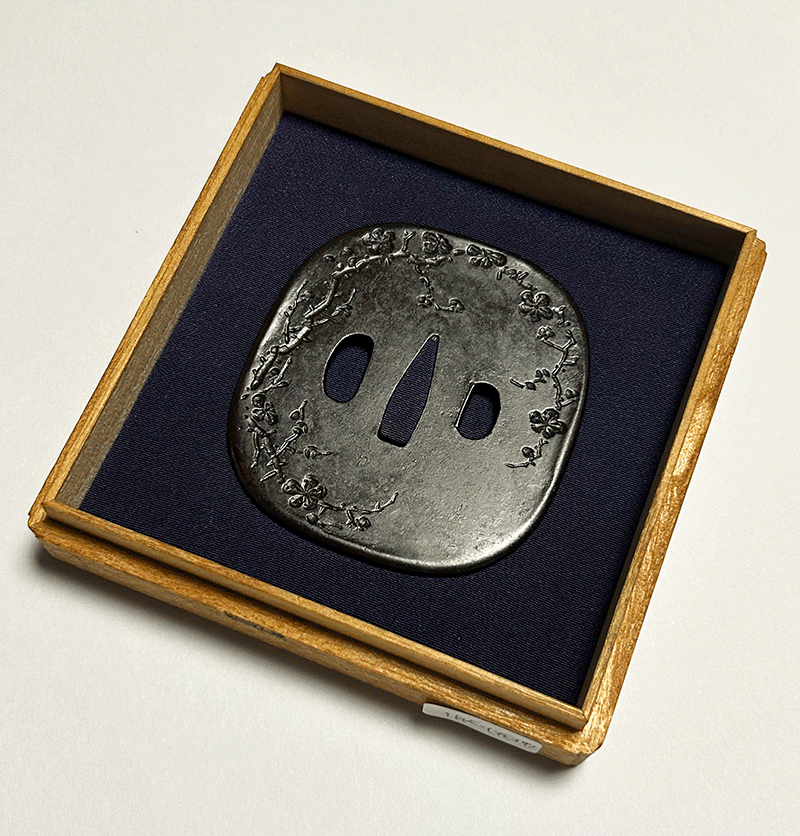
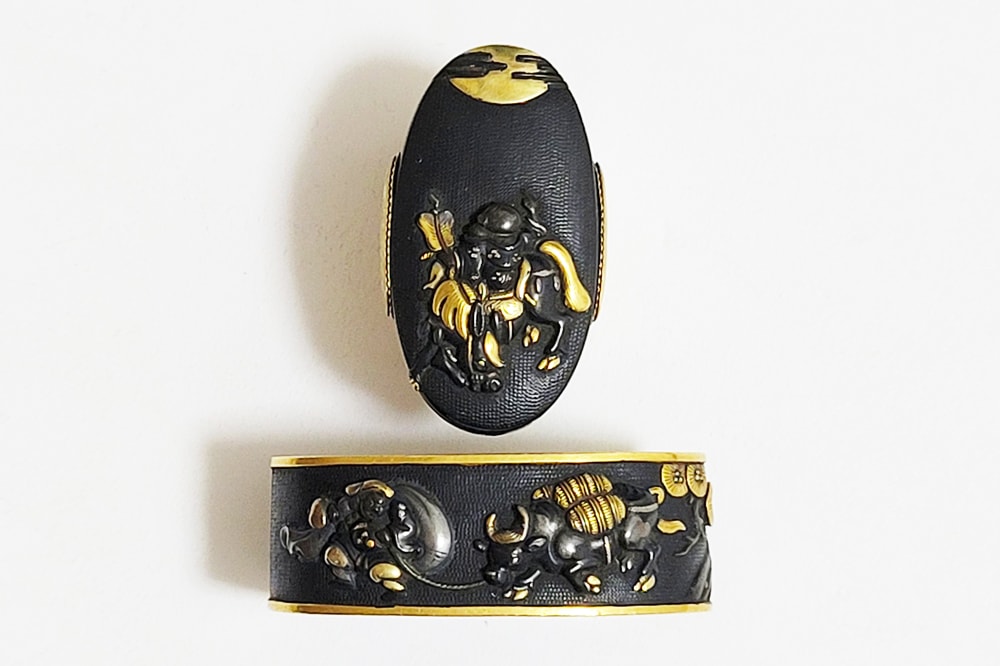
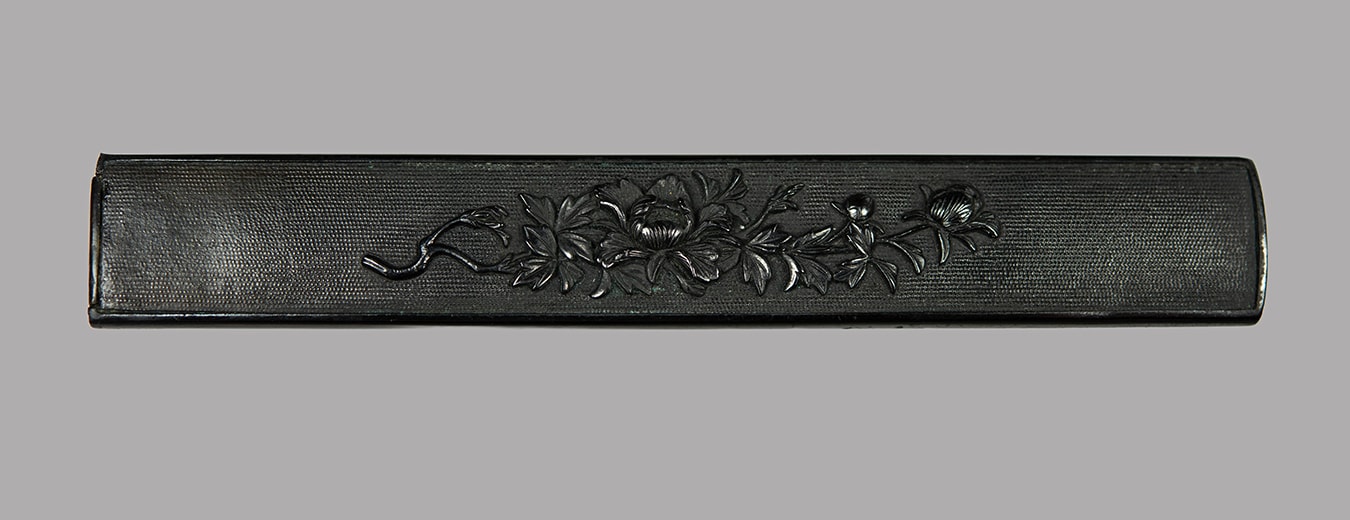
Title: Eda Tsubaki Zu Description This Kougai is attributed to Waki Goto (脇後藤). Waki-Goto refers to craftsmen who were not part of the main Goto family, but were from its branch families, students, or other metalworkers who learned and followed the Goto style. The Goto family was a famous and respected group of metal artists that started in the mid-Muromachi period. The first master, Goto Yujo, began working in Kyoto around the 1460s. The family served the shogunate for generations, making sword fittings, and their tradition continued for about 400 years through around 17 generations until the late Edo period. According to the certificate, the theme of this Kougai is Tsubaki (椿, camellia). In a theory, the way flowers fell off was unfavorably received among Samurai families because it was seen just like a head had fallen off. However, on the other hand, Tsubaki has been appreciated as a plant that produces various byproducts. Tsubaki has been used for multiple things, such as oil, cosmetics, and medicine; we would say that this flower has been very familiar to Japanese people’s lives since ancient times. Also, some people believed that the Tsubaki would protect people from epidemics or evil spirits. As mentioned above, the Japanese name of camellia is written as 椿. And this letter is composed of 木 (tree) and 春 (spring). So, this flower was considered a plant that waits for the arrival of spring. We could imagine how people named this flower in an attempt to give it a good meaning. The piece is made of shakudo, a dark metal alloy, and has a nanako pattern (魚々子地) on the surface. This pattern is created by placing tiny, round bumps evenly, like fish eggs. In addition, it features inlay work made with shikō (志鋼, a type of metal used for decoration). *As this item is an antique, please check each photo and ensure its condition. Why is it that the sword mounting was important for Samurai? The sword mountings of the Japanese sword have many kinds of decorations such as handguards (Tsuba), sword hilt (Menuki), pommel (Fuchi Kashira). The Japanese sword worked as a weapon and as an object to show who he was. For example, it shows their personalities and beliefs. You could say that it is like decorations for smartphones today. We recommend you zoom in on the pictures of the sword fittings. When you do so, you can see the skill of Japanese metal engraving techniques. They are mainly made of iron and copper with inlays of gold, silver, and bronze. When it comes to handguard (Tsuba), each one has a different outline and weight. These sword fittings that have lived with Japanese swords of the same age might be worth as much as the Japanese swords. They are inconspicuous parts of the Japanese sword. Nevertheless, if you are knowledgeable or particular about it, you will become a connoisseur of the Samurai. Authentication Paper : NBTHK Hozon Certificate NBTHK, also known as Nihon Bijutsu Touken Hozon Kyokai (the Society for the Preservation of the Japan Art Sword), is one of the oldest Japanese sword appraising organizations in modern-day Japan. They authenticated the Kozuka on March 11th in the third year of Heisei (1991). They appraised it as Hozon Tousougu, the Kozuka worth preserving for Japanese society. The purchaser will receive this original certificate as well. We can also translate what is written into English and make a PDF file for your record if you request. 【About us】 Samurai Museum is located in Tokyo, Japan, exhibiting antique artifacts related to the Samurai history. Samurai Museum Shop is the place for those who are interested in Japanese culture and craftsmanship. We deal with antique Samurai swords/armor, traditional crafts made in Japan and so on. 【Payment method】 We accept payment through Stripe (Credit card), PayPal , Apple Pay or ChromePay, all of which are secure payment methods. Also, you don’t need to make an account on Stripe for the checkout. If you prefer other payment method, please contact us. You may either pa
 NihontoWatch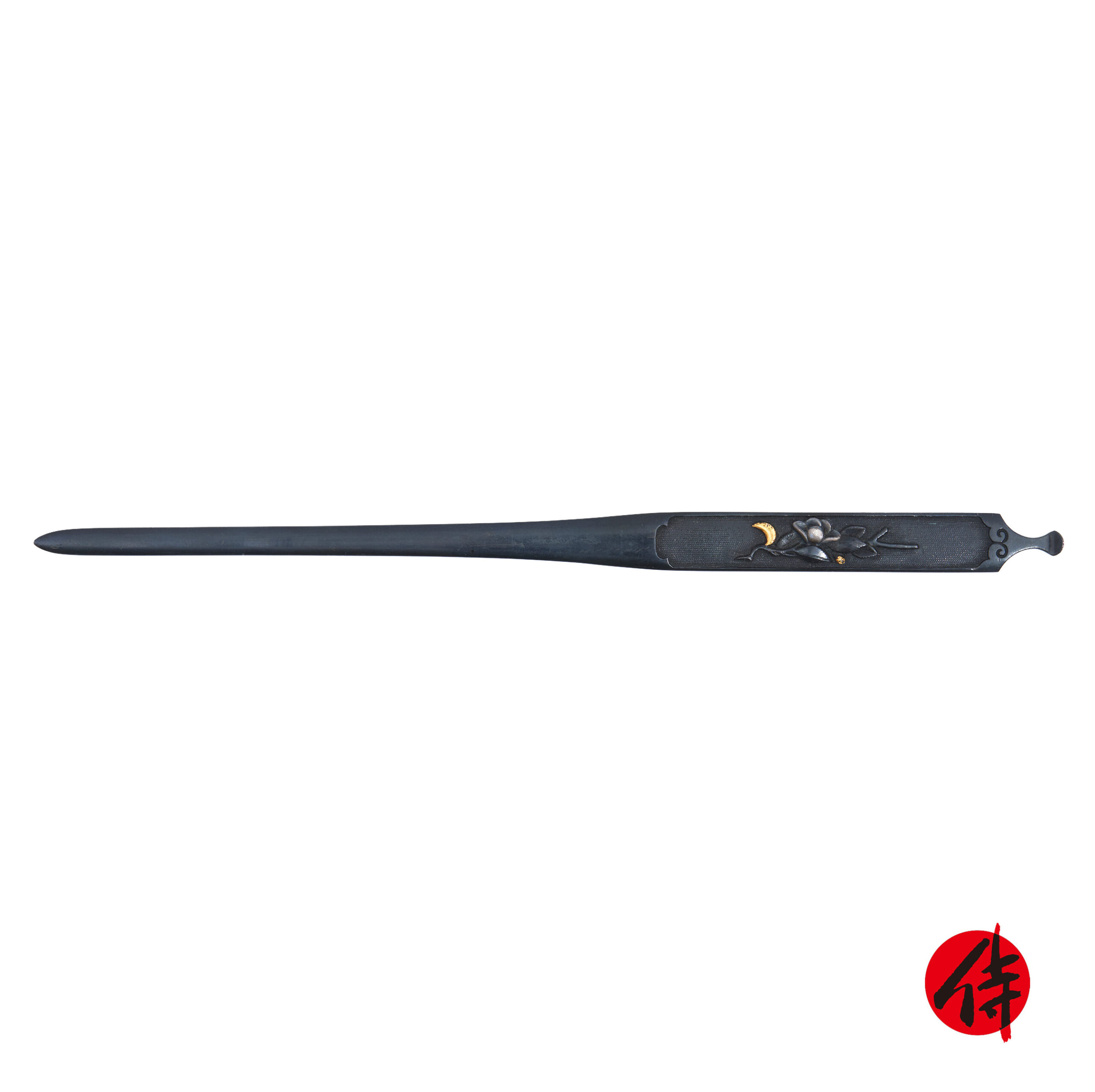
脇後藤派
江戸
伝
保存 (NBTHK)
家彫 · Kyoto
現在73点販売中
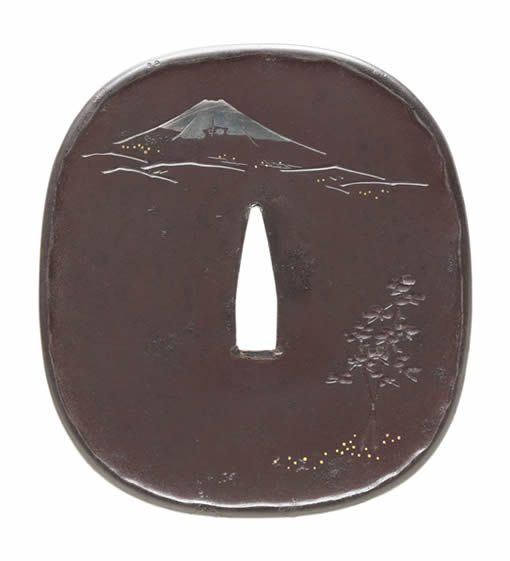
脇後藤 脇後藤とは、刀装具製作において歴代にわたり権威を保った後藤宗家に対し、その傍系・分家にあたる諸家の総称である。後藤家は室町時代以来、足利将軍家・徳川幕府に仕え、その彫物は「家彫」と称されて市井の需要に応じた「町彫」と区別され、刀装金工の最高峰と仰がれた。脇後藤はこの宗家の血脈と技法を分かち、京都および江戸の中央のみならず諸国へとその伝統を広めた一群である。室町末期に活躍したと伝わる光乗をはじめ、程乗の次男にして理兵衛家を興した悦乗、権兵衛家の順乗、勘兵衛家の東乗・光文、半左衛門家の光正、次左衛門家の光久など、多くの名工がこの系譜に名を連ねている。とりわけ悦乗光邦は寛永十九年に京都に生まれ、加賀前田家より百五十石を賜り、勘兵衛家の演乗と隔年で加州金沢に住して門人を育成し、加賀後藤の隆盛に大きく寄与した。 作風は専ら後藤の御家流を基調とし、赤銅魚子地を高彫あるいは鋤出高彫とし、これに金色絵を施すのを本領とする。魚子地は細かく整然として深く澄み、肉置きも優れる。光乗は桐紋・鳳凰・百足などの意匠を好み、その魚子地と高彫の肉取りに後藤上三代の遺風を伝える。悦乗は龍や獅子といった後藤の掟物のみならず、滑らかな赤銅の波文地に尾鰭を跳ね上げ勢いよく海上を飛ぶ鯱を、隅々まで細緻な鏨の活きた金紋であらわすなど、一風変わった趣向の作をも遺し、小柄笄の仕立・肉置は父程乗に全く同じく、金の色あいよく彫技も傑出する。幕末に至っては、光文の七夕図に見るごとく、赤銅魚子地の高彫金色絵を蒔絵・螺鈿の鞘と取り合わせ、加賀工芸の極致と称される優美な刀装をも生み出している。 評価においては、脇後藤の作はいずれも父祖の御家流を忠実に継ぎつつ、各家それぞれに独自の意匠と卓越した彫技を加えた点が高く評価される。順乗の双龍図鐔が「後藤傍系作品中の傑出作」[[c:1]]と称されるごとく、傍系にありながら宗家に劣らぬ技量を示す作が少なくない。在銘品が比較的少ないため、その遺品はいずれも資料的価値が高く、後藤家研究の好資料として珍重される。理兵衛家の加州移住によって伝統は京・江戸の外へも広がり、加賀後藤として一地方の金工を興隆させた。かくして脇後藤は、後藤宗家の家彫の伝統を時代の好尚に応じて展開させながらその品格を保ち続けた一流として、日本刀装金工史上に重要な位置を占めている。 詳しく見る →
銘が正しい、または無銘でも年代・流派を指摘でき、美術工芸的価値が認められる、保存に値する真正の刀装具と鑑定されたものです。
日本美術刀剣保存協会(NBTHK)は、1948年に設立され、文化庁の監督を受ける公益財団法人で、東京・刀剣博物館に本部を置きます。専門の審査員が出品作を直接審査し、美術的・歴史的価値に応じた鑑定書を発行します。NBTHKの鑑定書は、日本刀および刀装具の真正性を示す最も広く認知された基準です。
NBTHK公式サイトReturns/exchanges limited to defects caused by shipping (except willful misconduct or gross negligence by the company); customers must contact within 72 hours of receiving the product.
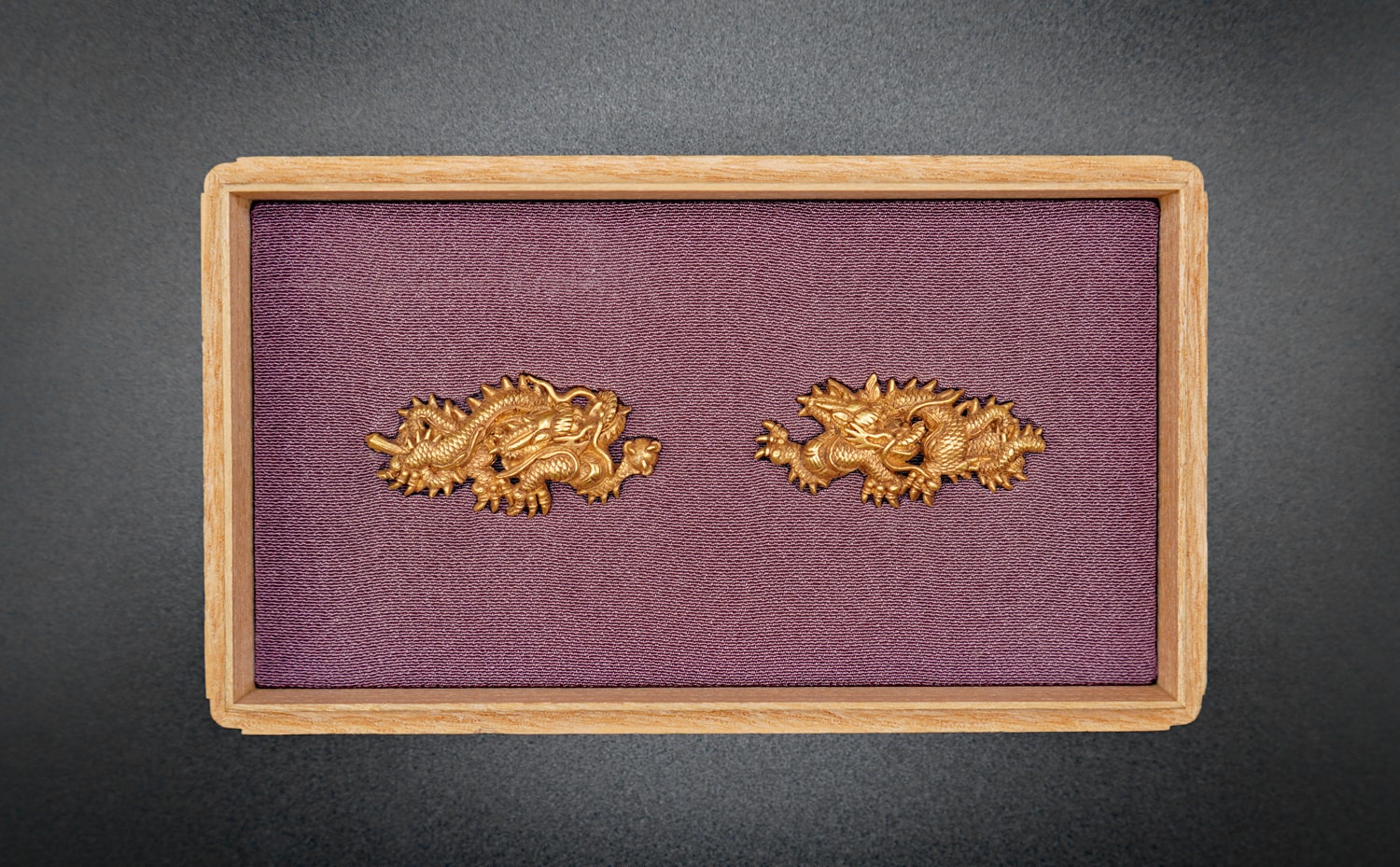
![目貫 - 特別保存 - 作 脇後藤派 - 目貫[脇後藤 這龍図目貫][日本美術刀剣保存協会]特別保存刀装具](/_next/image?url=https%3A%2F%2Fitbhfhyptogxcjbjfzwx.supabase.co%2Fstorage%2Fv1%2Fobject%2Fpublic%2Flisting-images%2Fworld-seiyudo%2FL33093%2F00.jpg&w=2560&q=90)




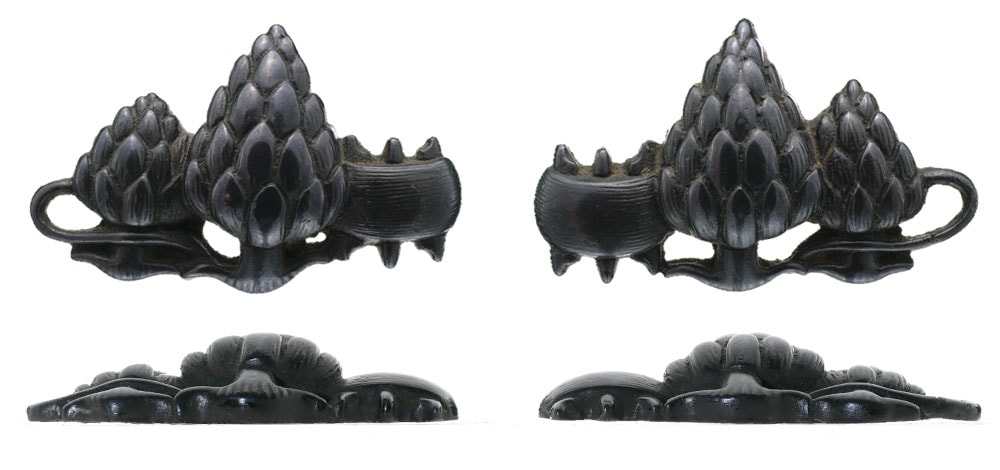
![目貫 - 保存 - 作 後藤派 - 目貫[後藤茂利 猛禽図]](/_next/image?url=https%3A%2F%2Fitbhfhyptogxcjbjfzwx.supabase.co%2Fstorage%2Fv1%2Fobject%2Fpublic%2Flisting-images%2Fworld-seiyudo%2FL1058116%2F00.jpg&w=2560&q=90)
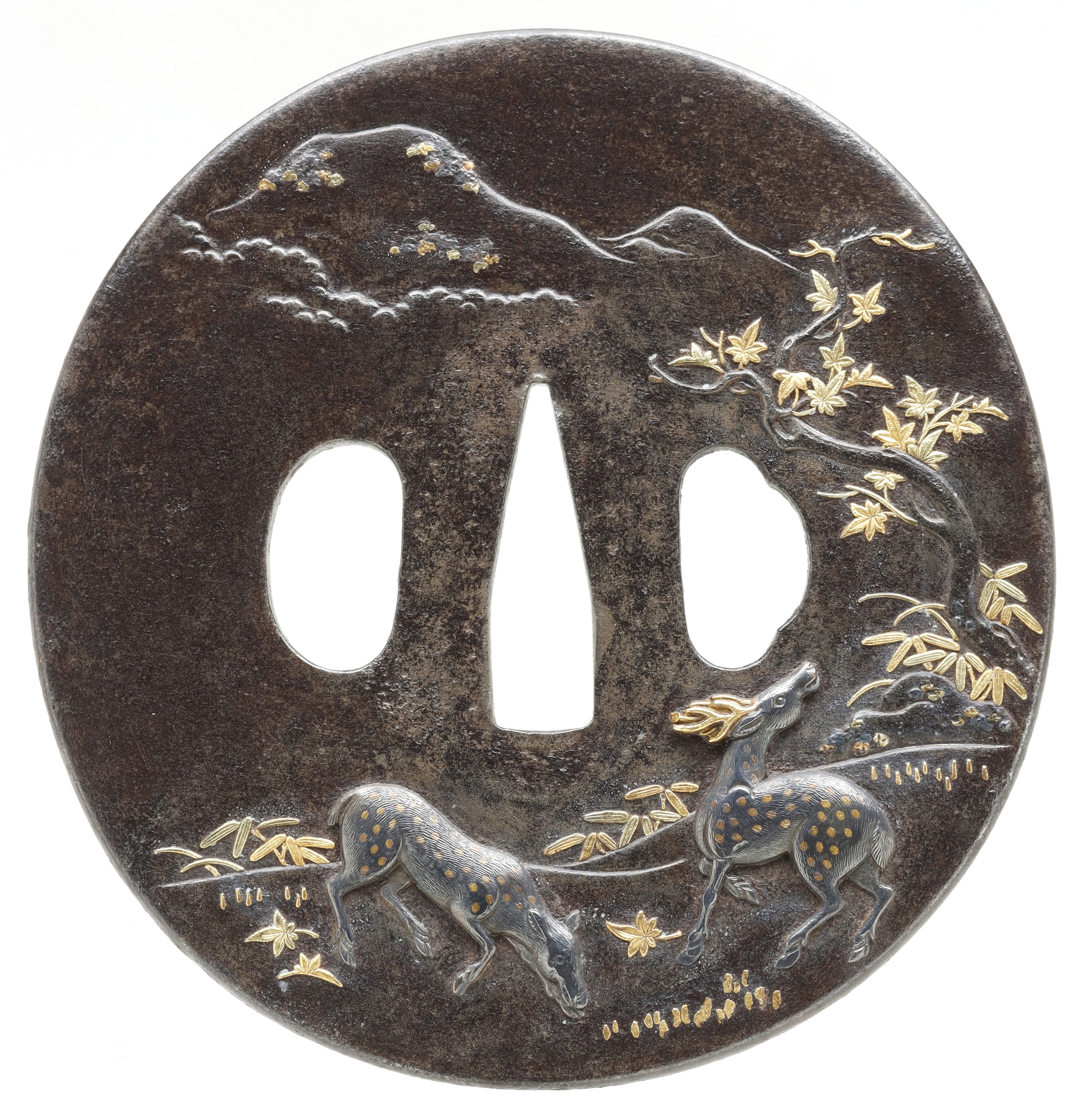
![鍔 - 特別保存 - 作 後藤派 - Tsuba [Goto-Harumitsu Senmen-zu-Tsuba][N.B.T.H.K] Tokubetsu Hozon Tosogu](/_next/image?url=https%3A%2F%2Fitbhfhyptogxcjbjfzwx.supabase.co%2Fstorage%2Fv1%2Fobject%2Fpublic%2Flisting-images%2Fworld-seiyudo%2FL1096428%2F00.jpg&w=2560&q=90)