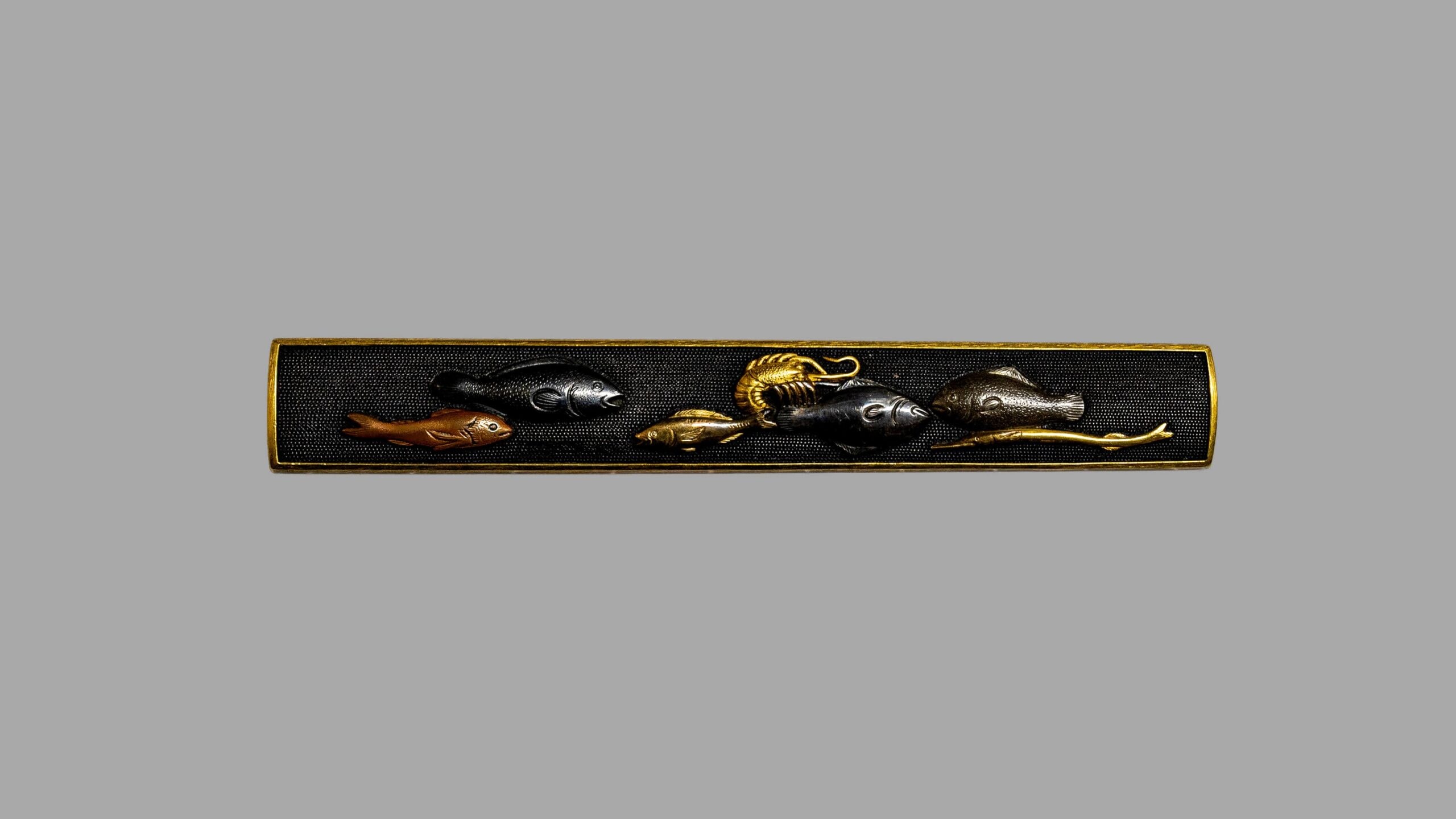
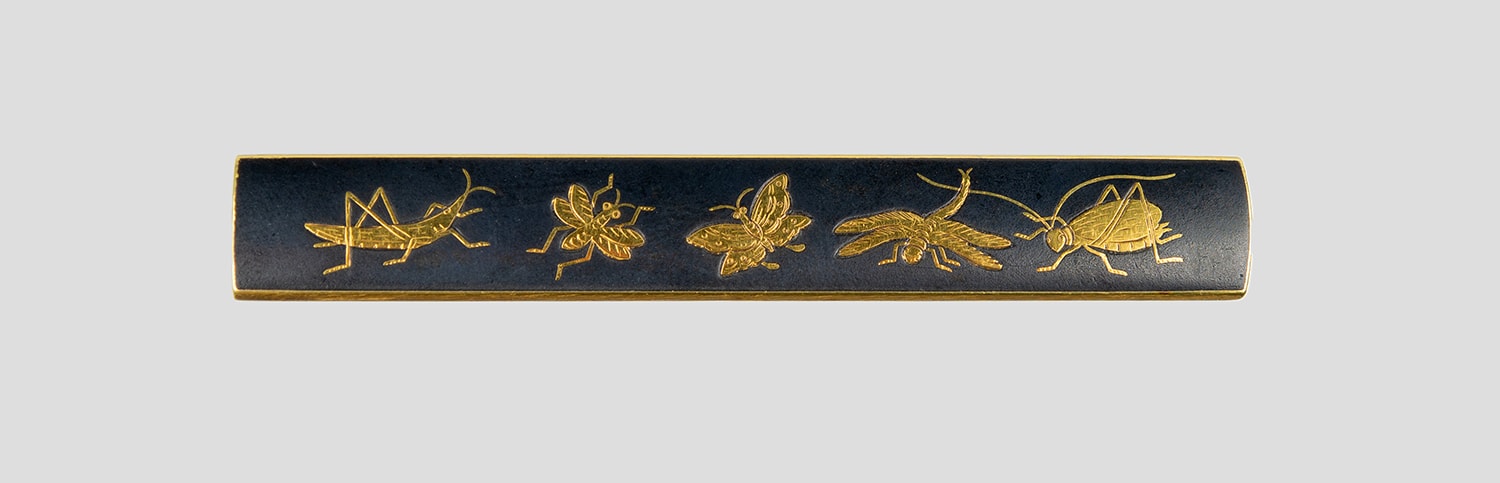
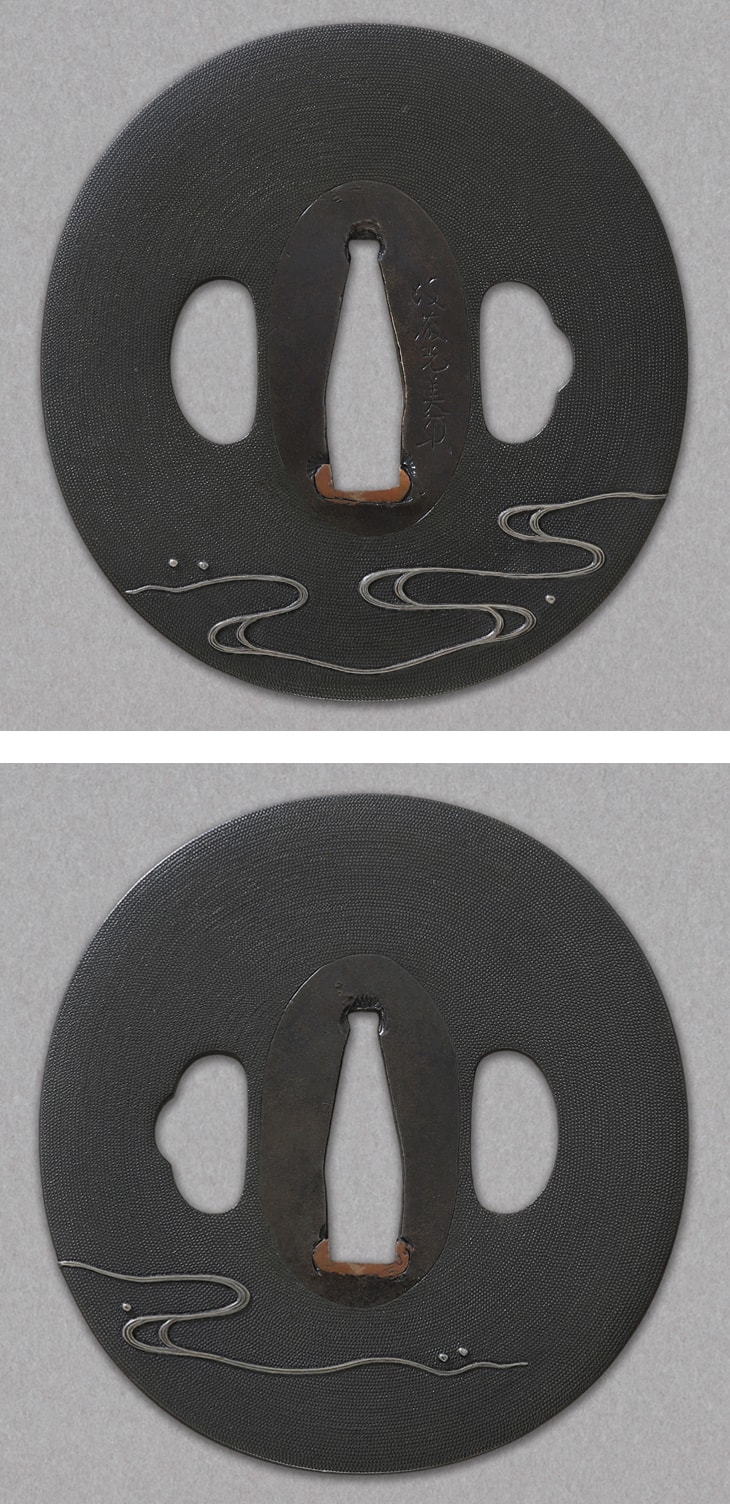
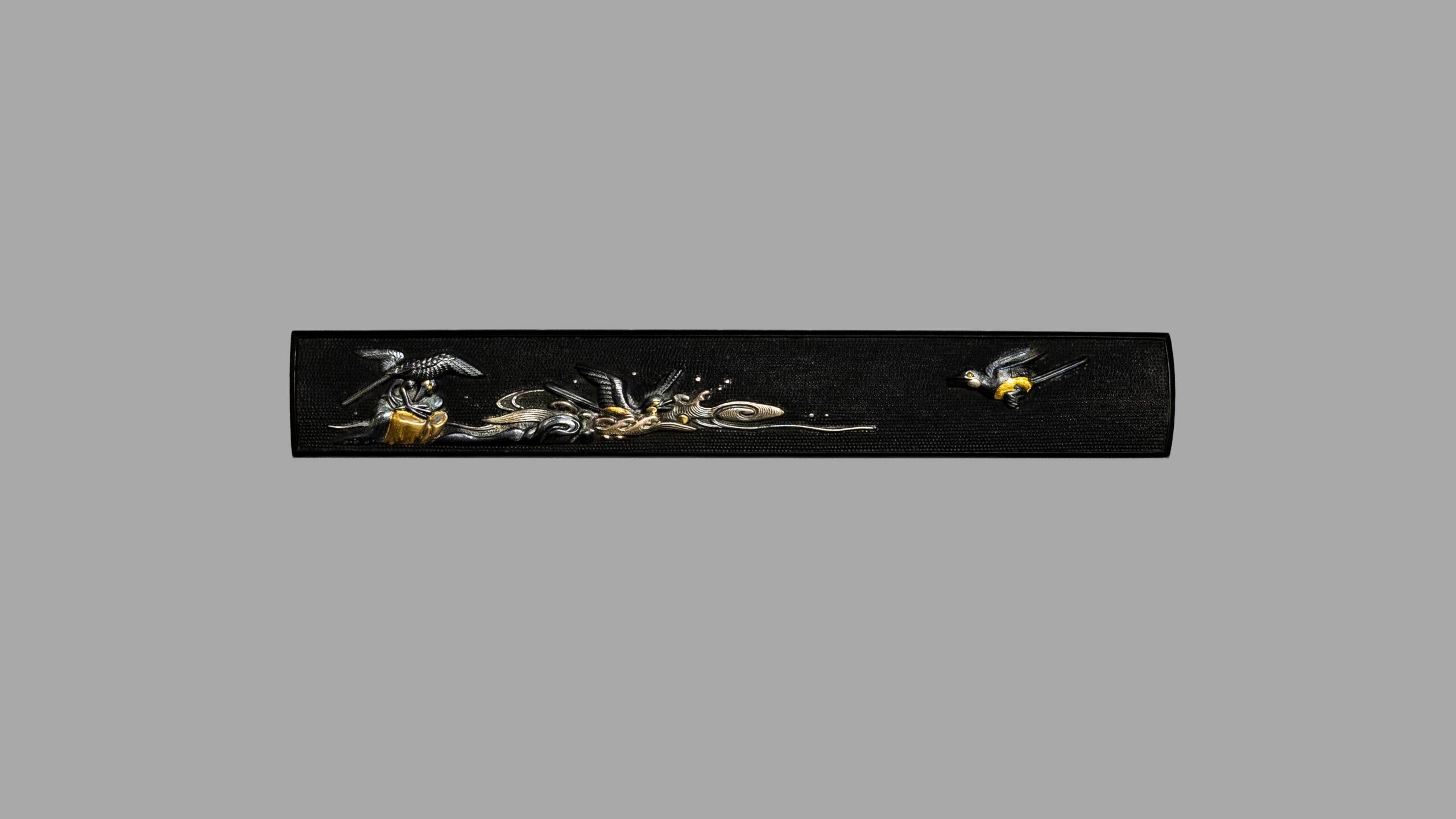
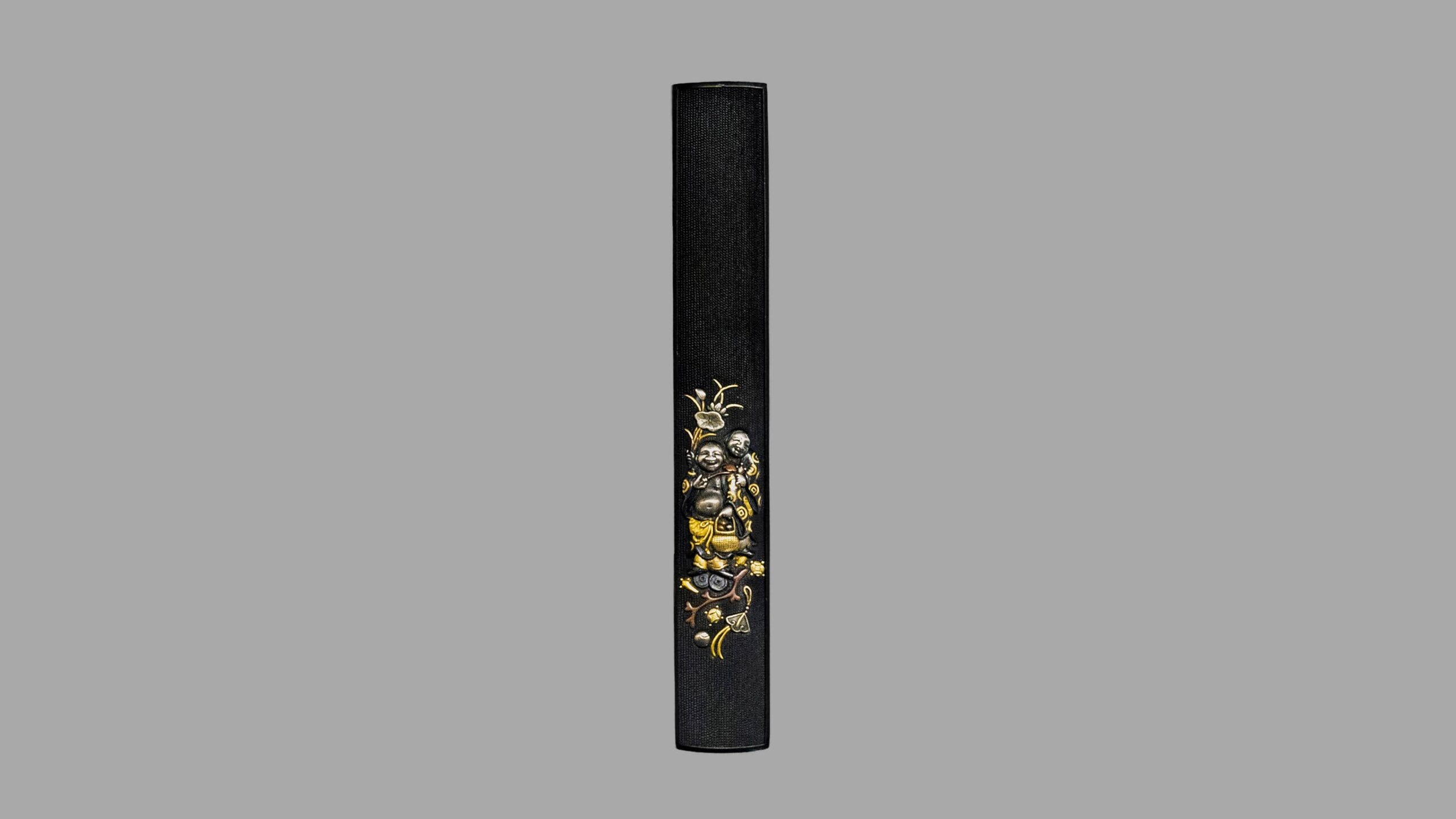
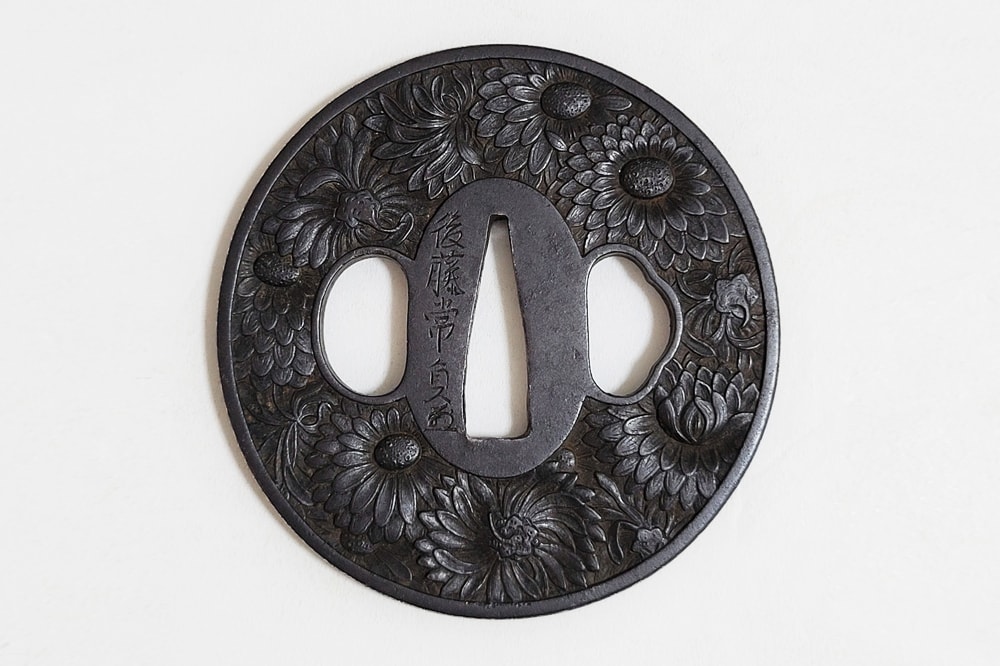
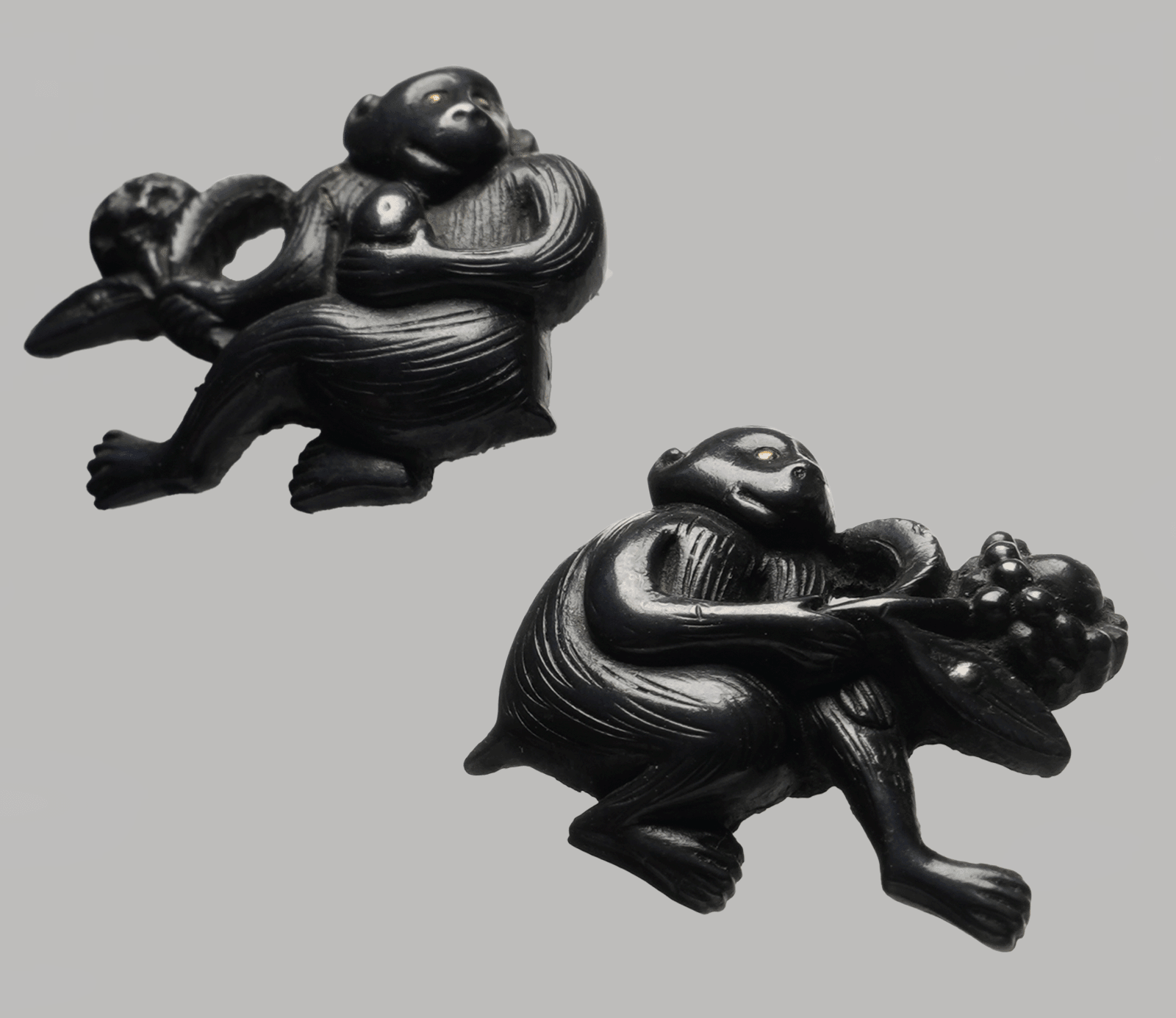
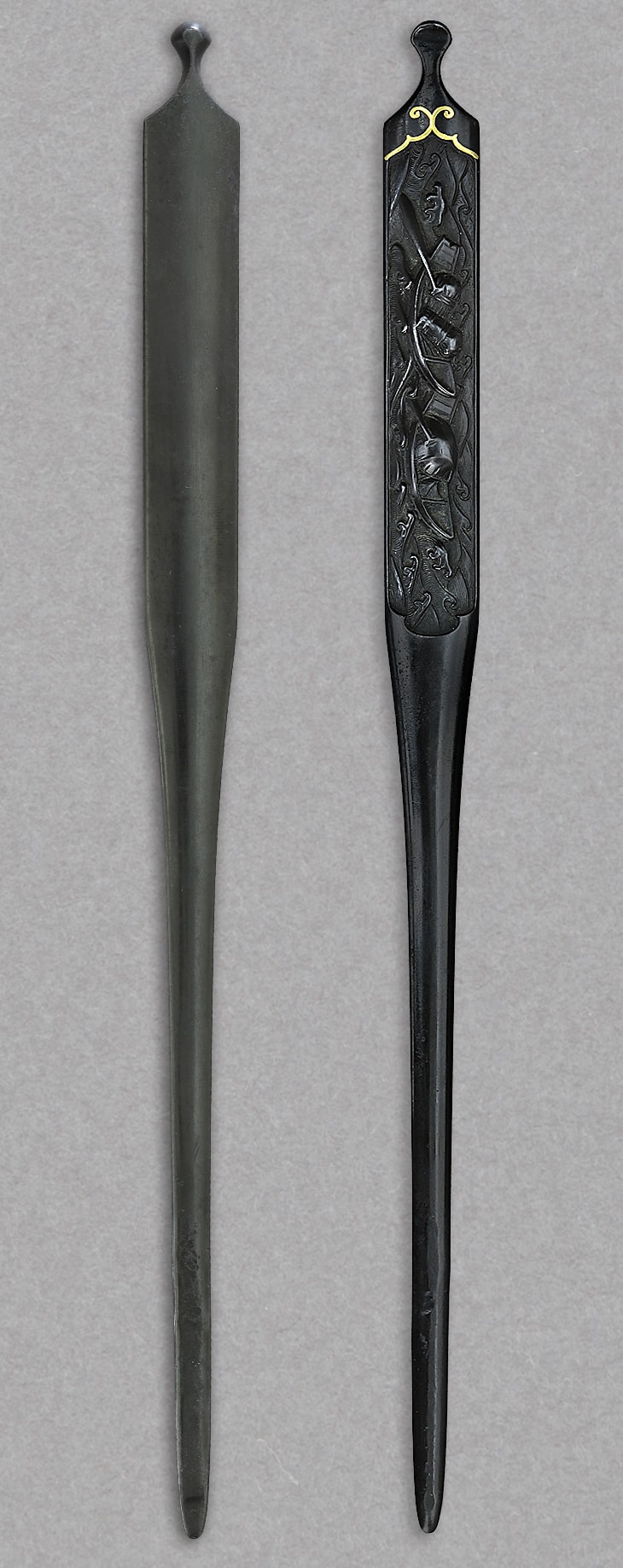
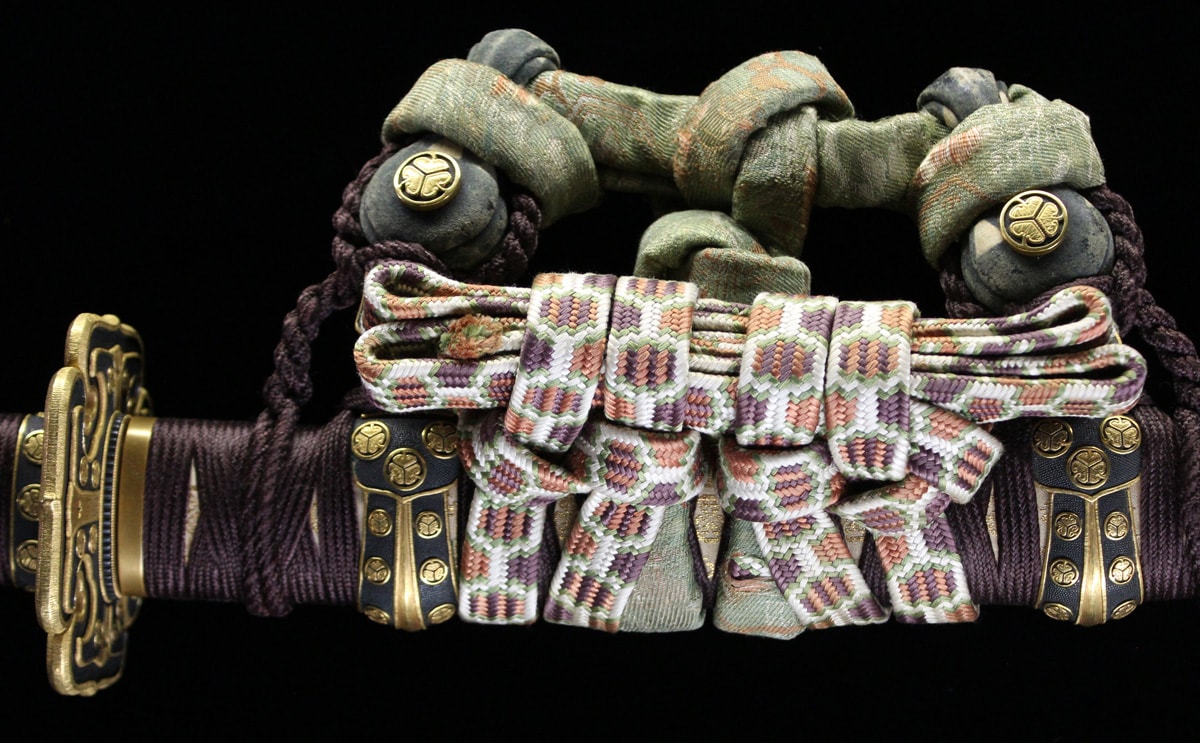
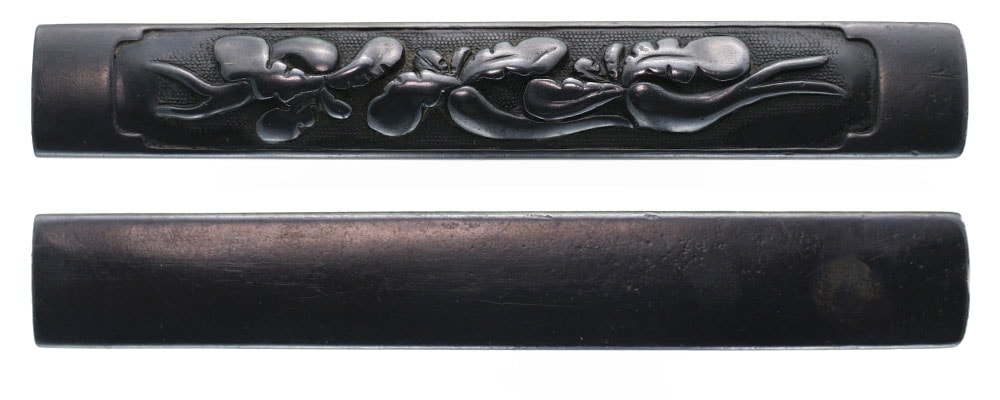
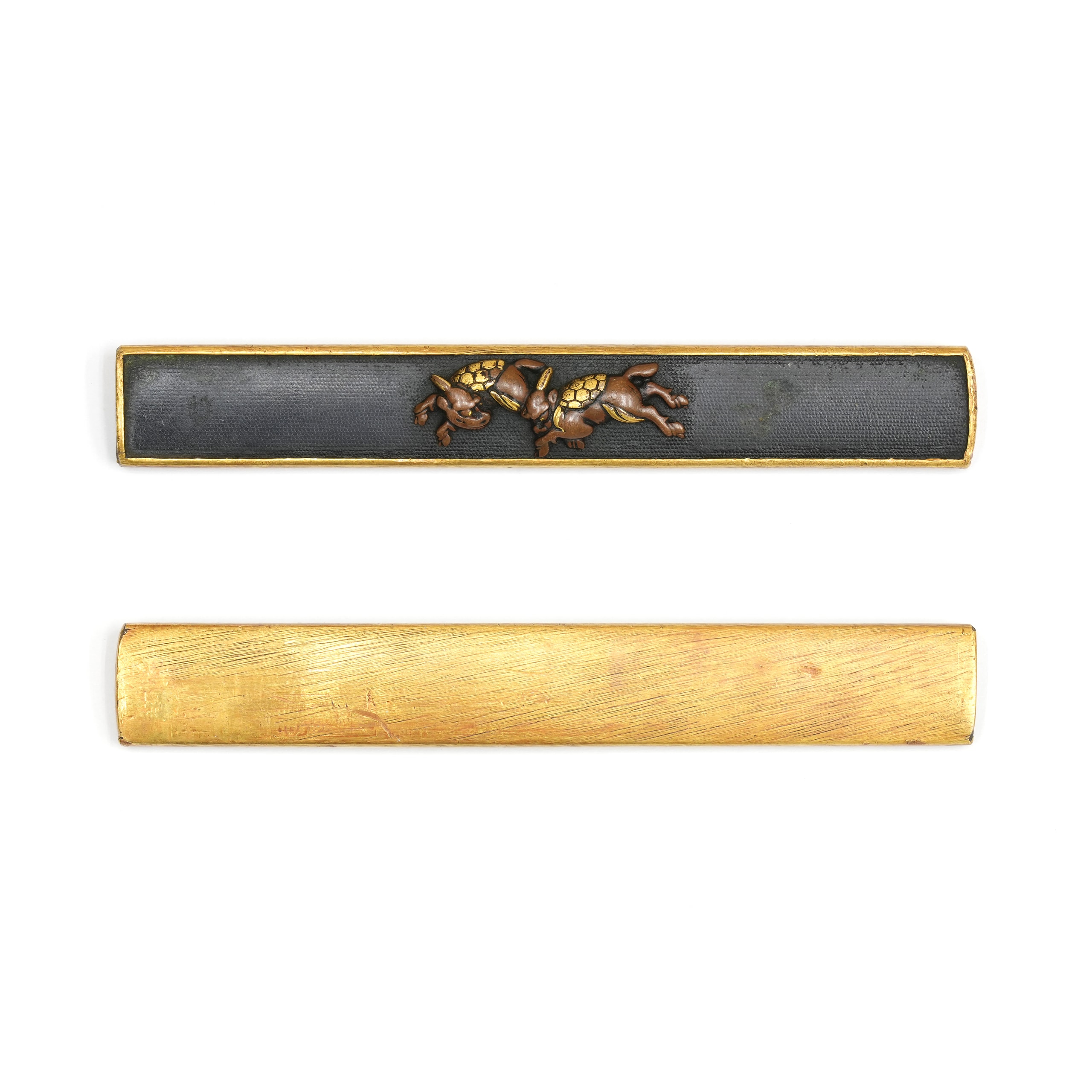
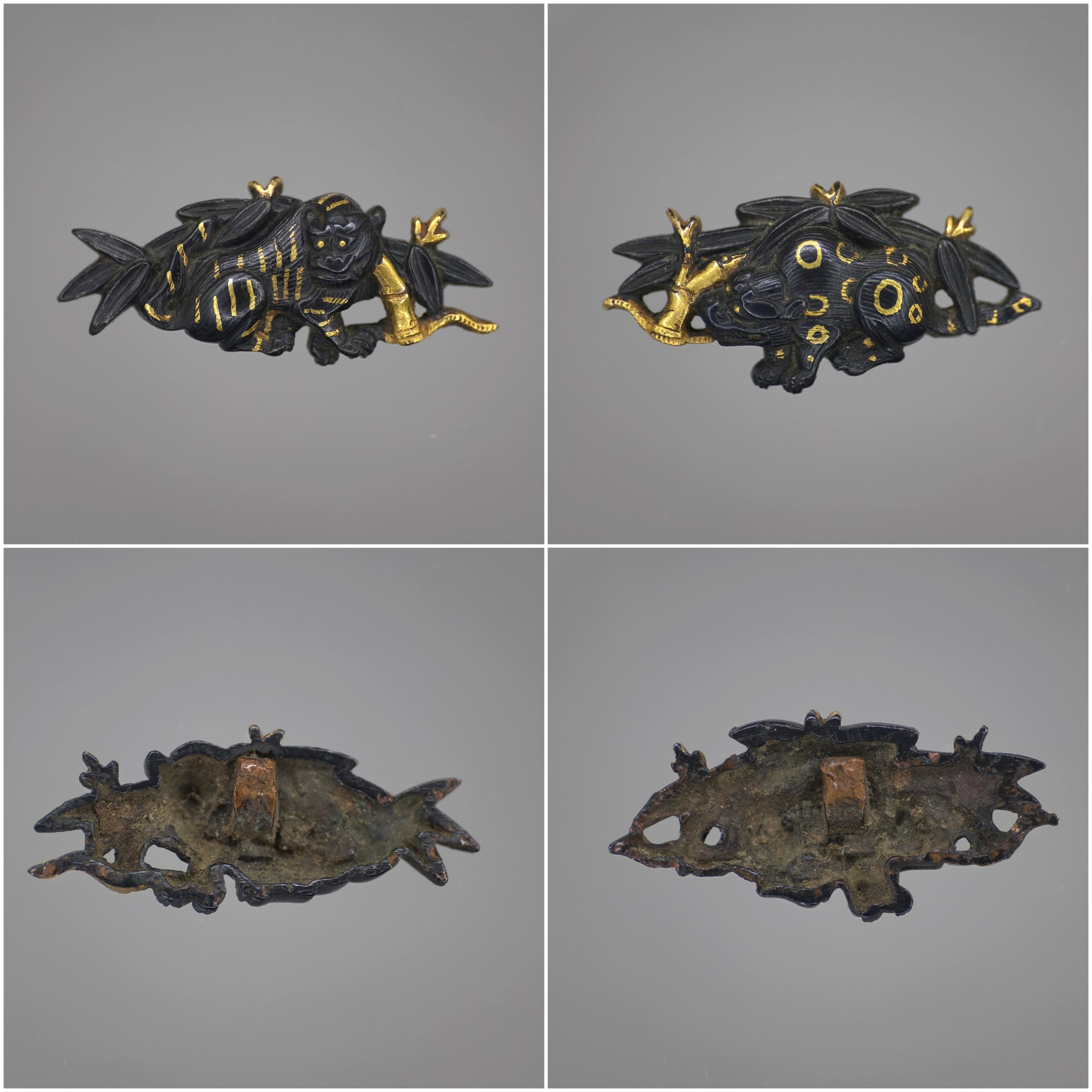
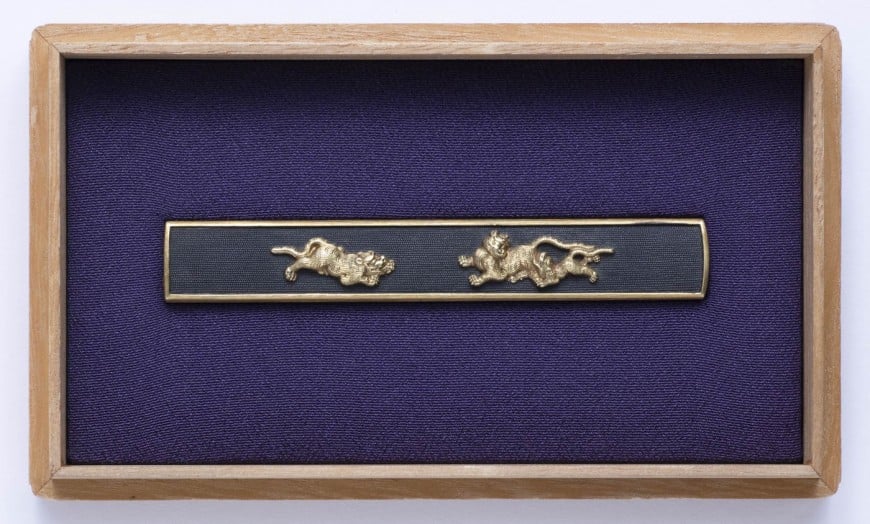
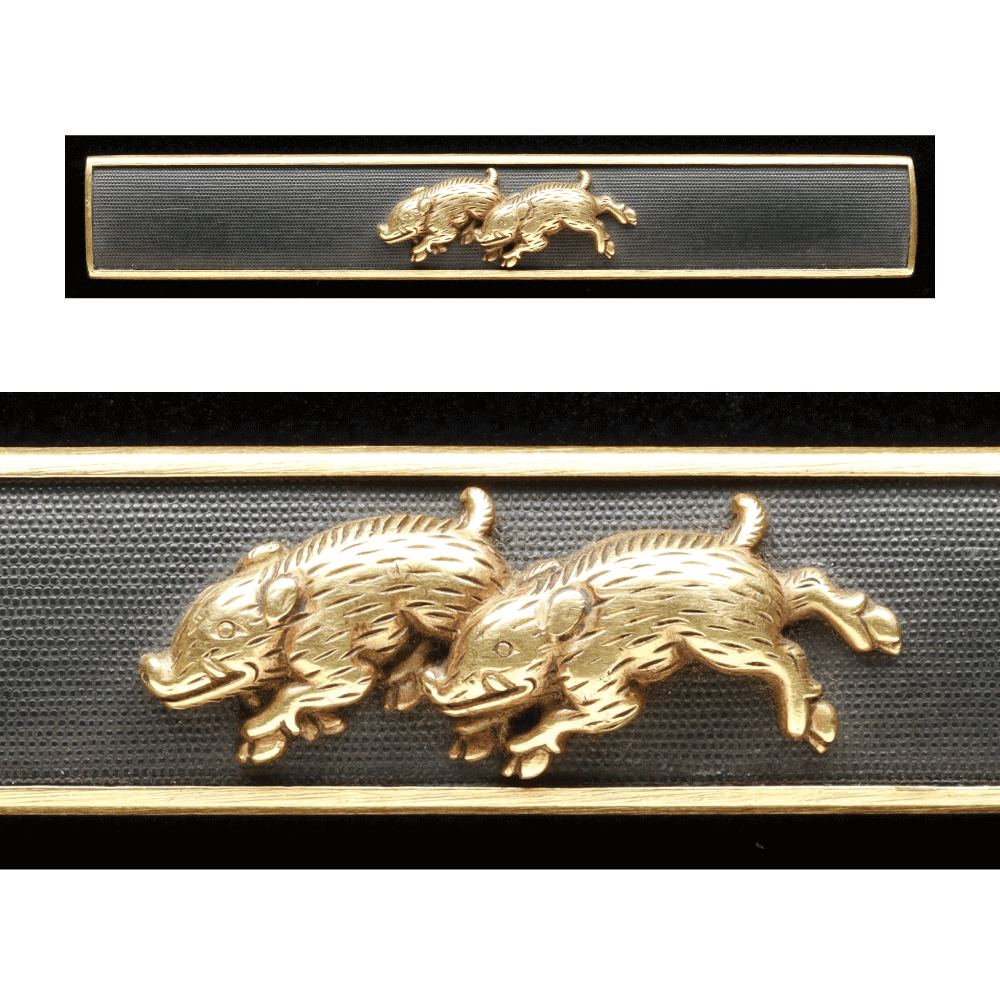
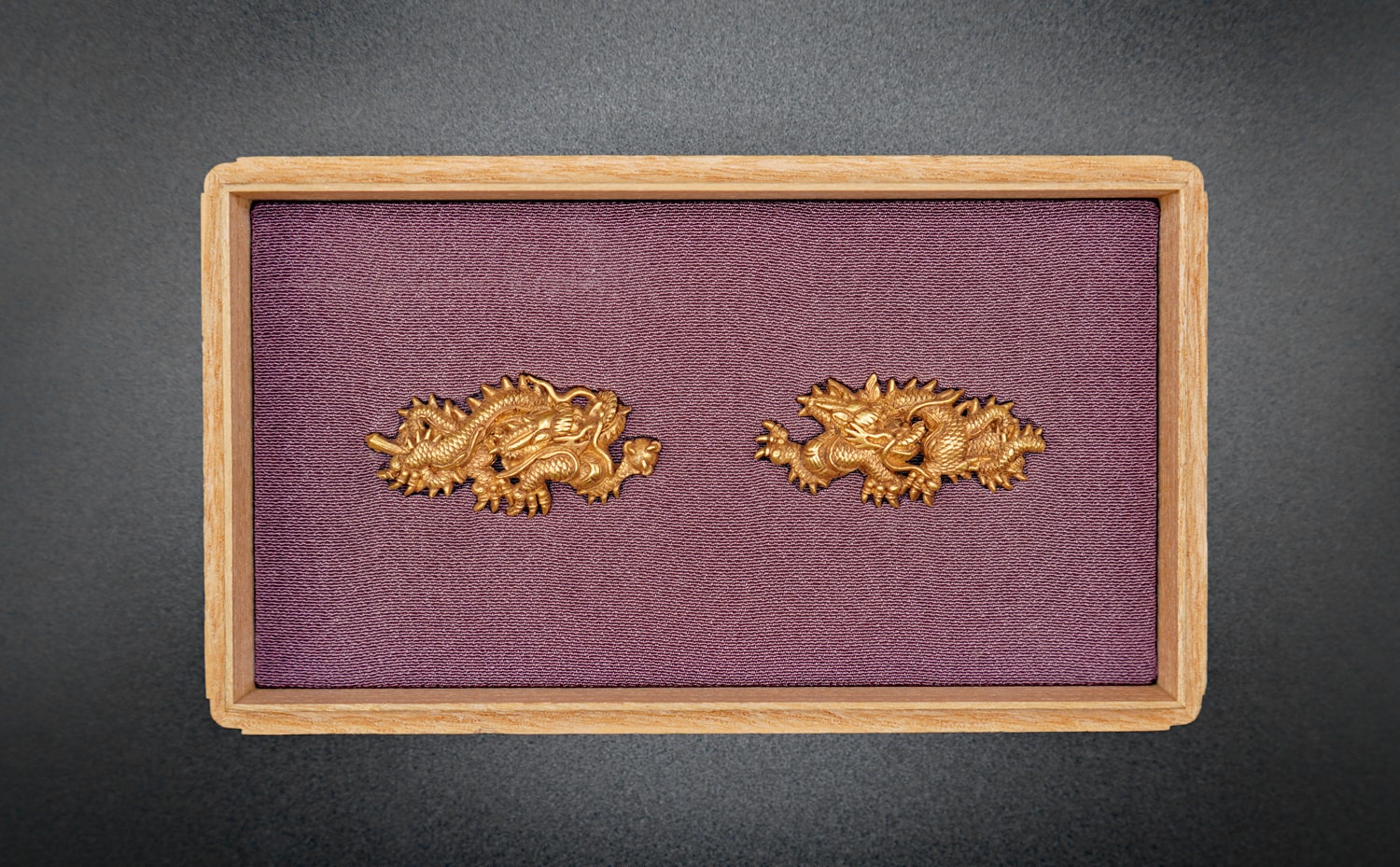
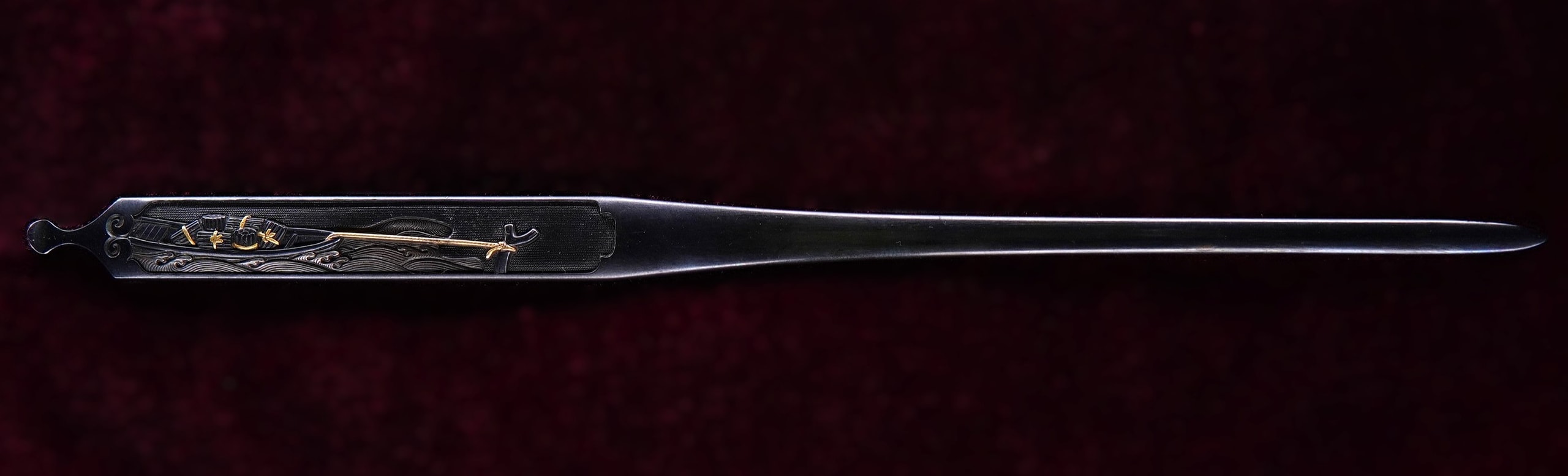
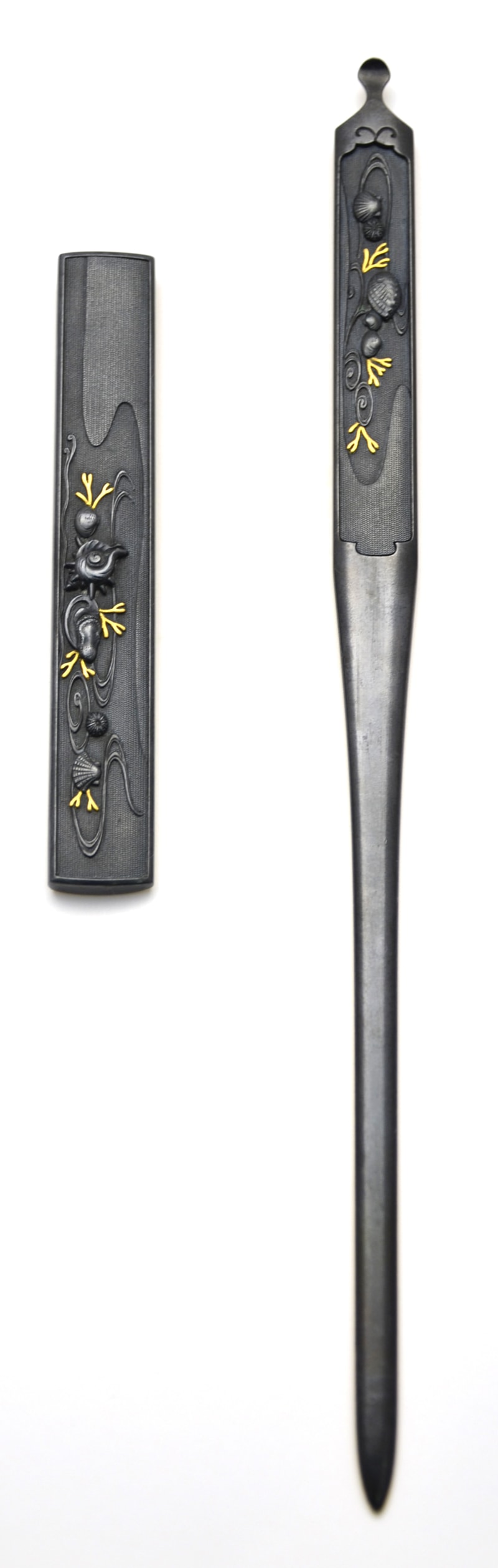
Goto Mitsunori, the fourth-generation head of the mainline Goto house, was the legitimate son of the third master Joshin. Born in Kyoroku 2 (1529) with the common name Kameichi, later changed to Koichiro, he also bore the personal name Mitsuie. Mitsunori initially served the Ashikaga shogunal household before entering the service of Oda Nobunaga. In Tensho 9 (1581), by Nobunaga's order, he and his eldest son Mitsumoto (Tokujo) produced the unmarked oban (ten-ryo), regarded as the largest gold coin in the world. He later served Toyotomi Hideyoshi as well, undertaking important duties connected with the management of Toyotomi gold coinage and financial affairs. As head of the soke of sword-fitting metalworkers, the Goto family served successive shogunal families from the period through the period; their work is designated iebori ("house carving"), distinguished from the ("town carving") produced for general market demand. Mitsunori's reputation as a master craftsman was exceptionally high, and he is said to have been the most capable artisan after Yujo, the founding patriarch of the house.
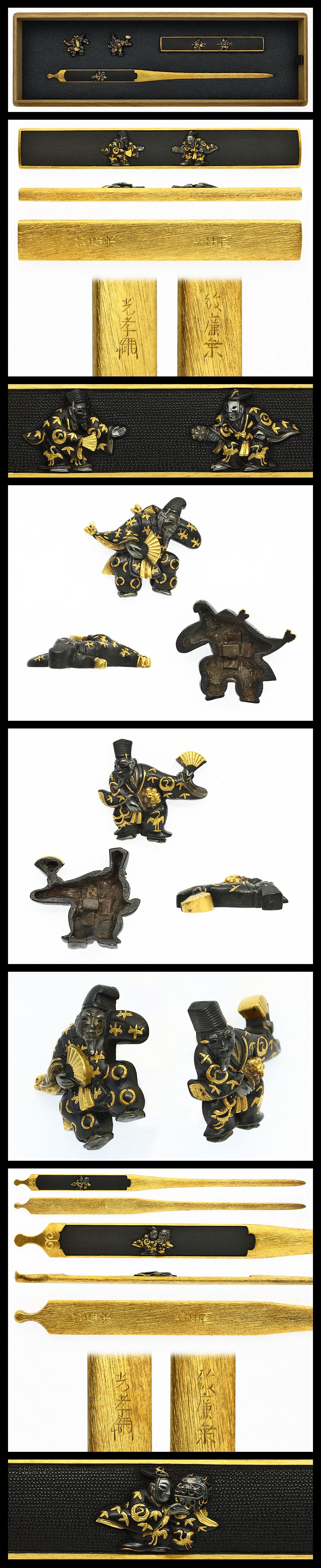
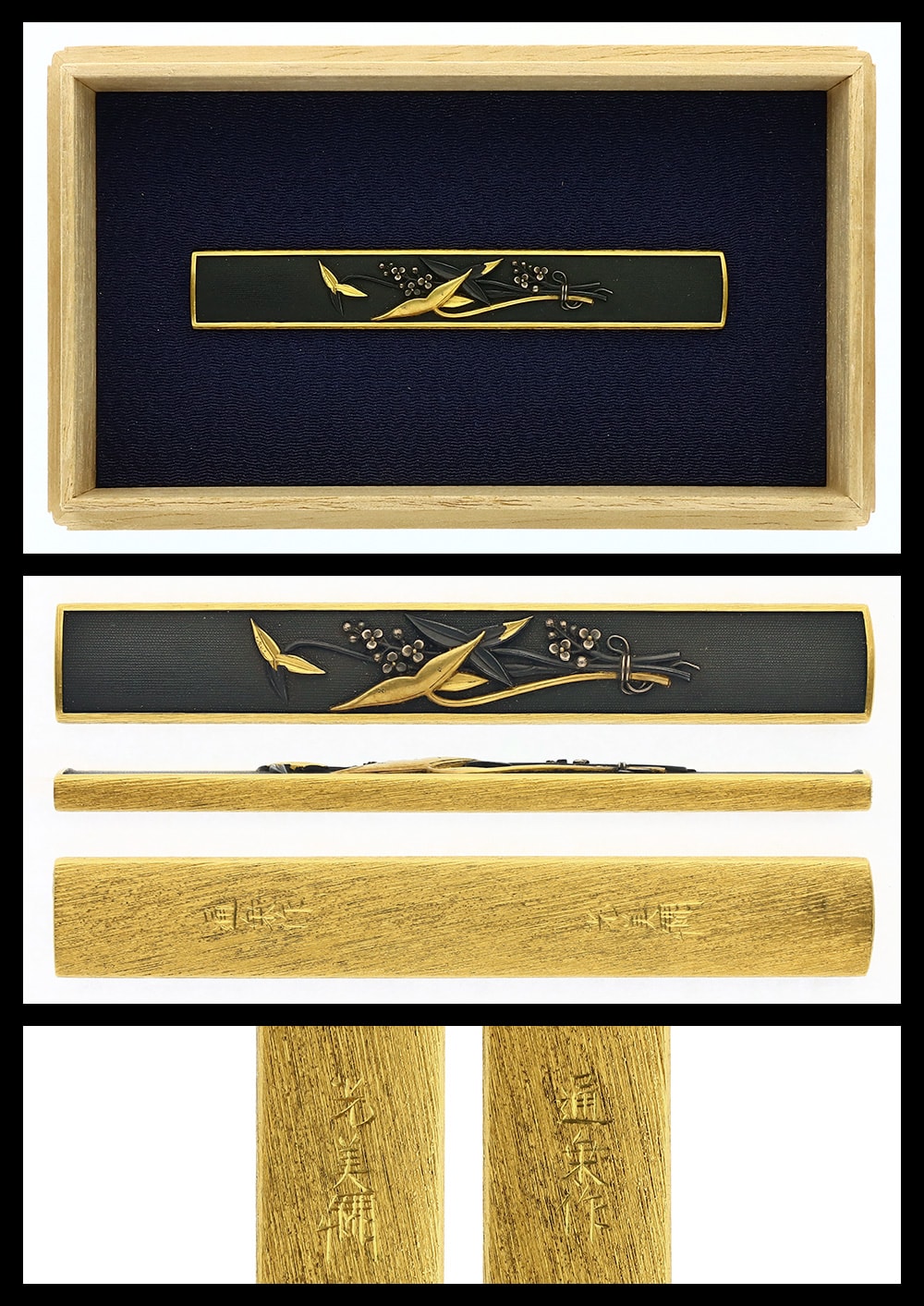
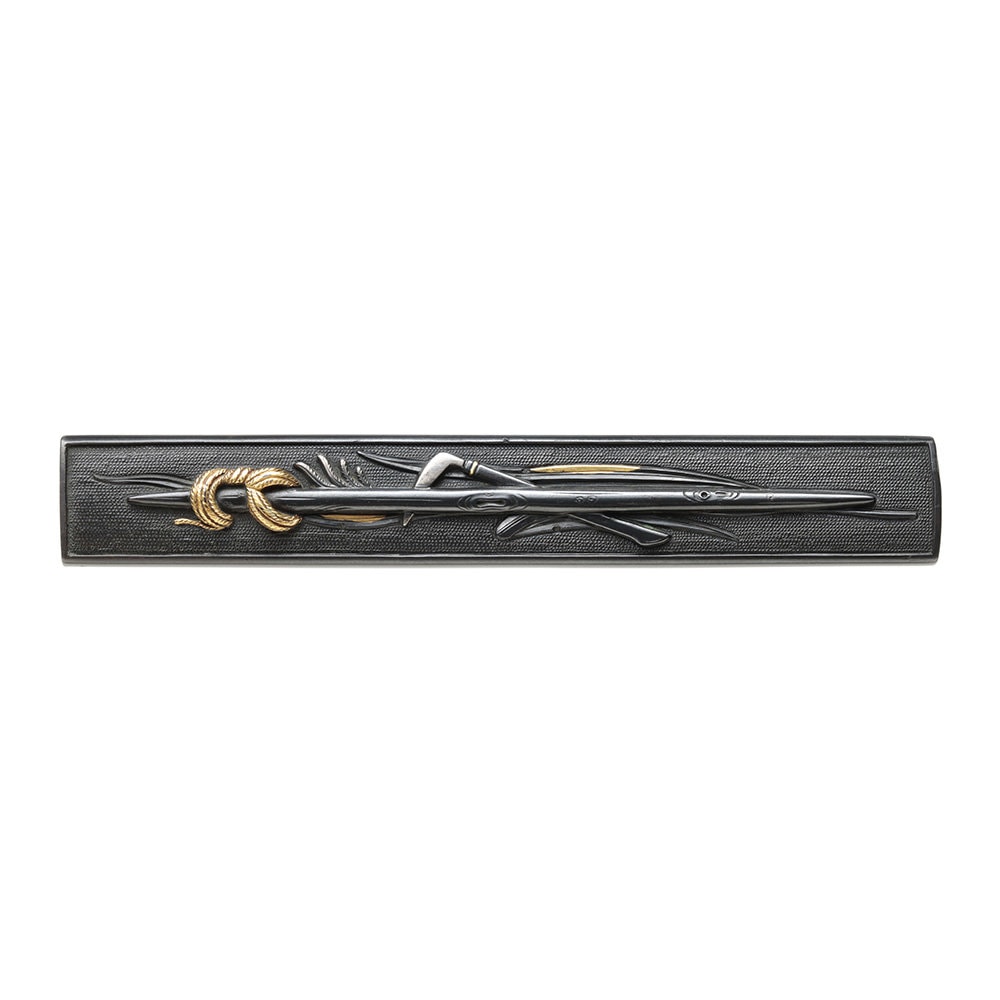
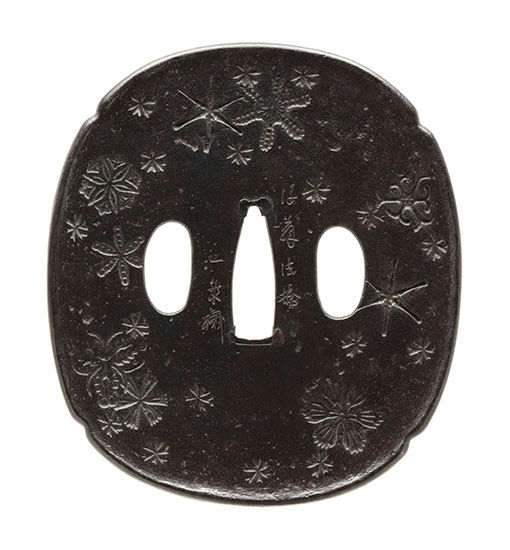
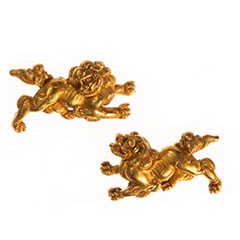
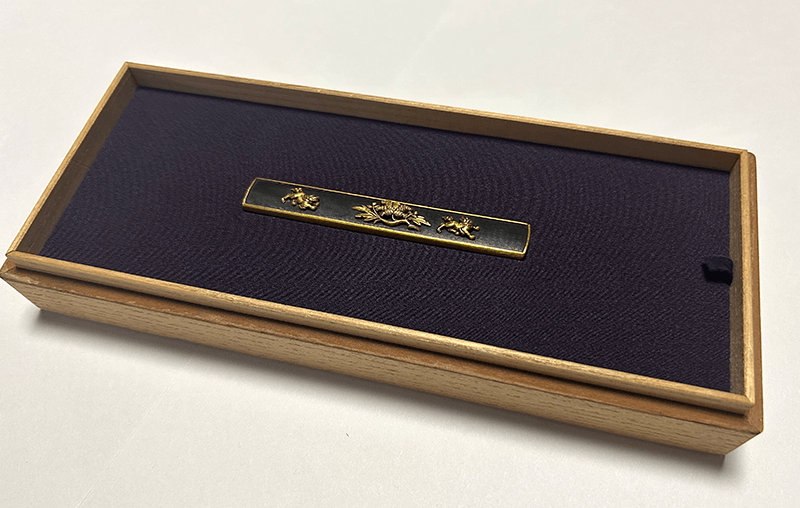
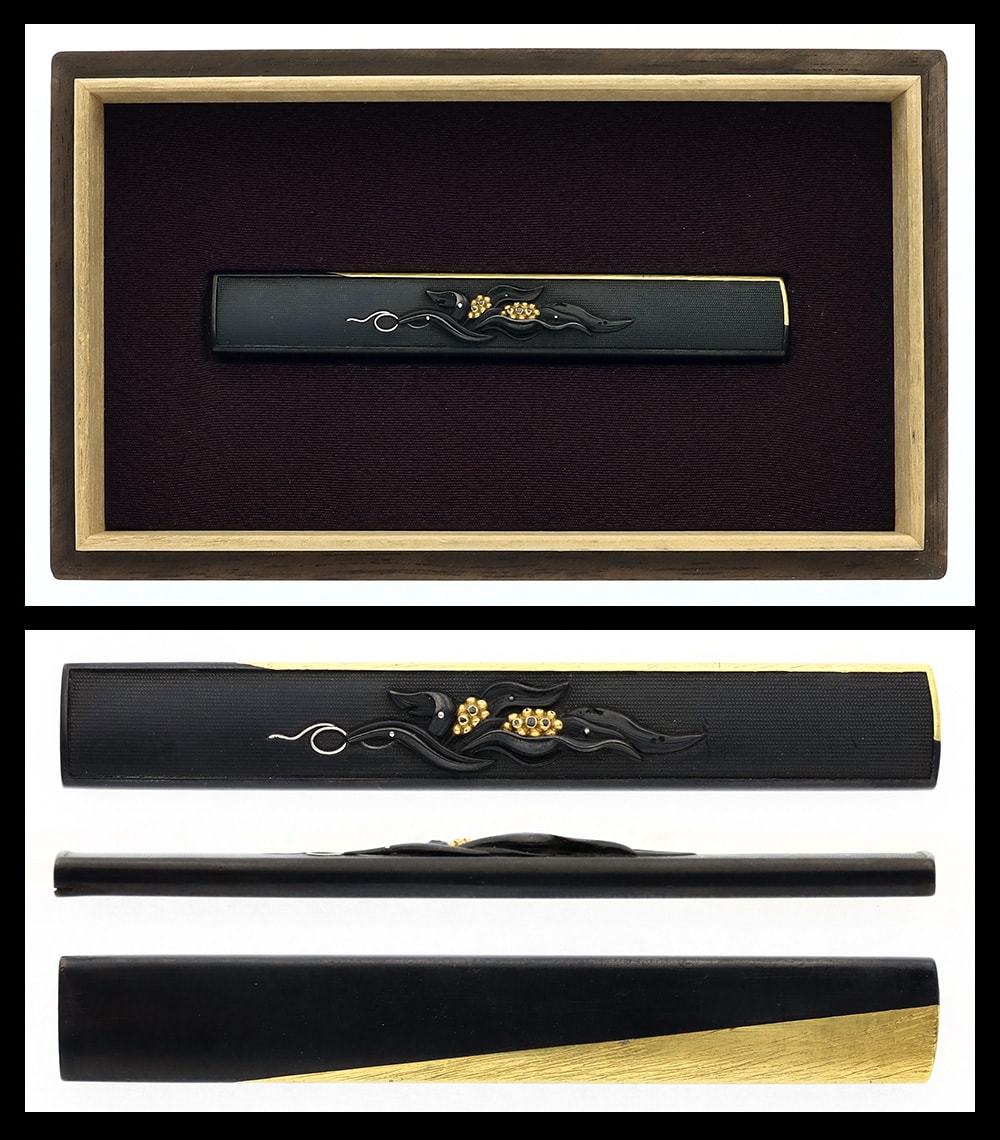
Mitsunori's technical mastery is most evident in his command of yobori (fully modeled sculptural carving) and (high relief) upon and solid gold grounds, often enriched by finely executed and meticulous application of gold and silver . A characteristic feature of his work is the frequent appearance of strongly pictorial compositions, since he employed preparatory drawings (shita-e) by such painters as Kano Motonobu and Kano Eitoku. It is also said that within the Goto house he was the first to produce designs of warrior figures, as well as dragon-and-tiger motifs. His are carved with ample, tactile volume and strongly modulated contours, with in'-ne (contrasting high and low relief root-finishing) on the reverse that is invariably beyond reproach. Whether working in the single tonality of solid gold or in the glossy, vivid black of , he achieved supple, nuanced modeling with pronounced rises and falls in the sculpted flesh -- a feat possible only for a famed master. His personal signatures appear as , including such forms as "Goto Mitsuie ()," "Mitsuie ()," and "Goto ()"; such signed examples are, without exception, works of the highest excellence.
Across the body of designated works, the characterizes Mitsunori's output with consistent evaluative language: his carving reaches "the utmost in delicacy," his works are "brimming with the grand, heroic spirit and lively dynamism characteristic of taste," and his technique is praised as "approaching that of the first master Yujo." Pieces attributed to him carry high Got valuations from successive generations of the Goto house -- assigning 100 to 150 and, in one exceptional instance, twenty gold pieces -- underscoring the esteem in which his work was held within the family's own appraisal tradition. Transmitted through such distinguished collections as the Konoike merchant house and the Hachisuka family, Mitsunori's oeuvre fully embodies the dignity and refinement appropriate to the Goto mainline and represents the -period summit of the iebori tradition.