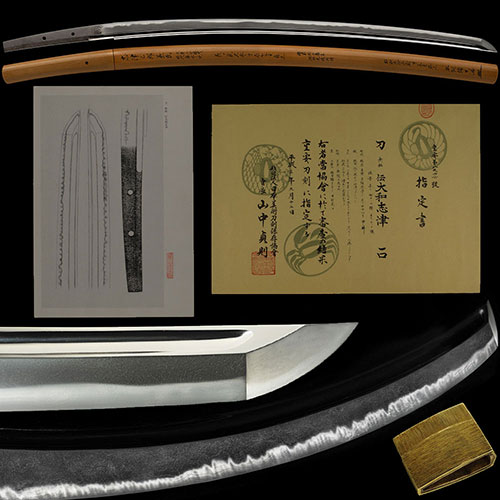


Juyo-Token, 37th Session — Designated September 12, 1991
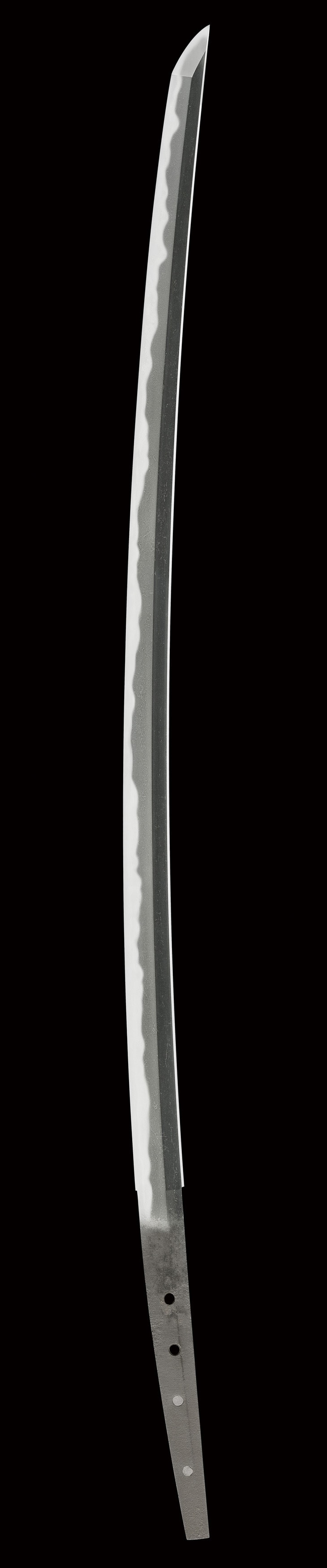
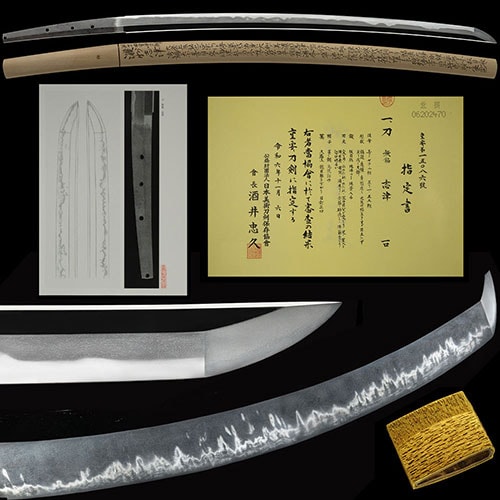
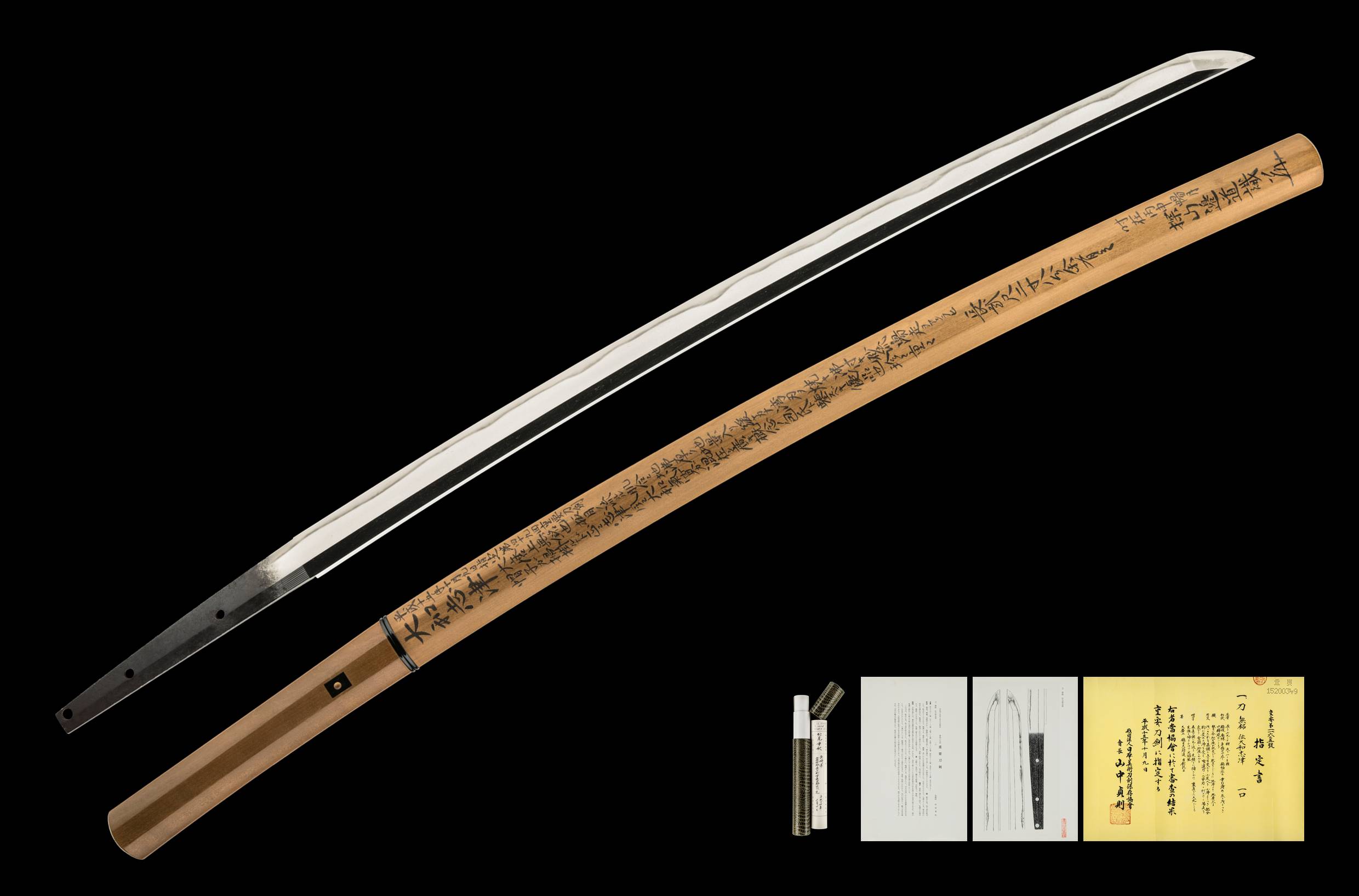
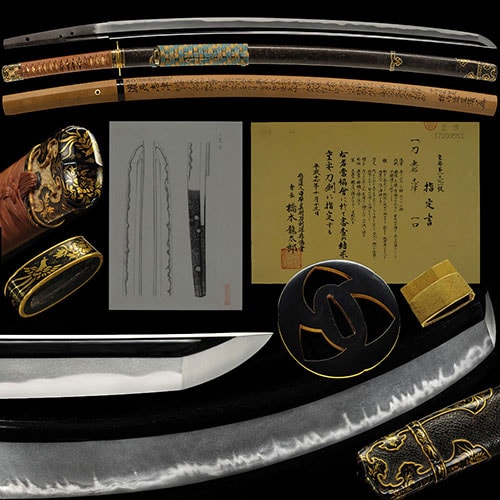
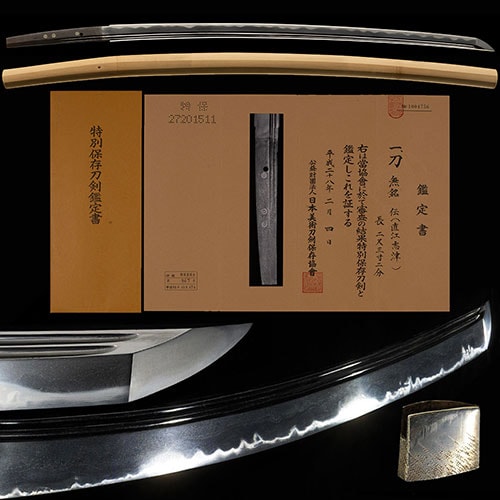
Katana, mumei: den Yamato Shizu (大和志津)
Measurements Nagasa 70.1 cm, sori 2.0 cm, motohaba 2.9 cm, sakihaba 2.2 cm, kissaki-nagasa 3.2 cm, nakago-nagasa 20.2 cm, nakago-sori 0.2 cm
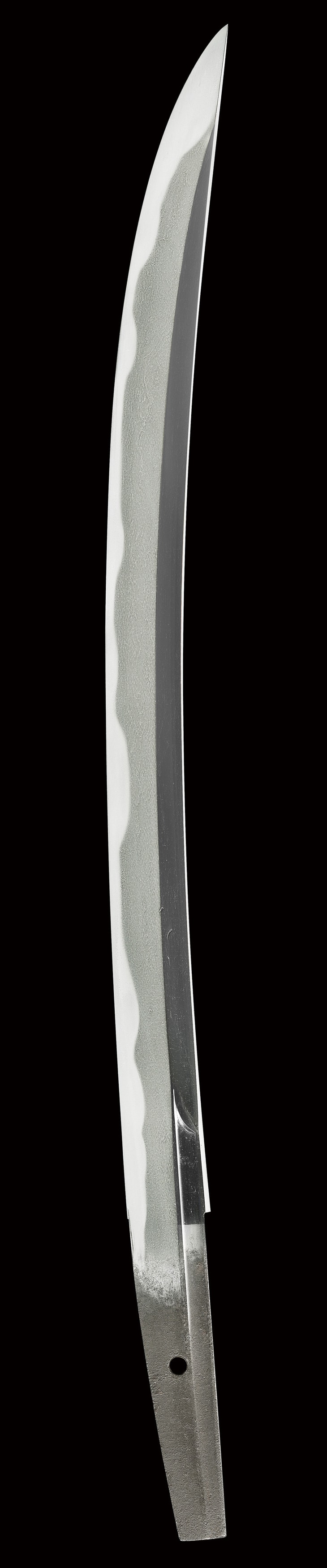
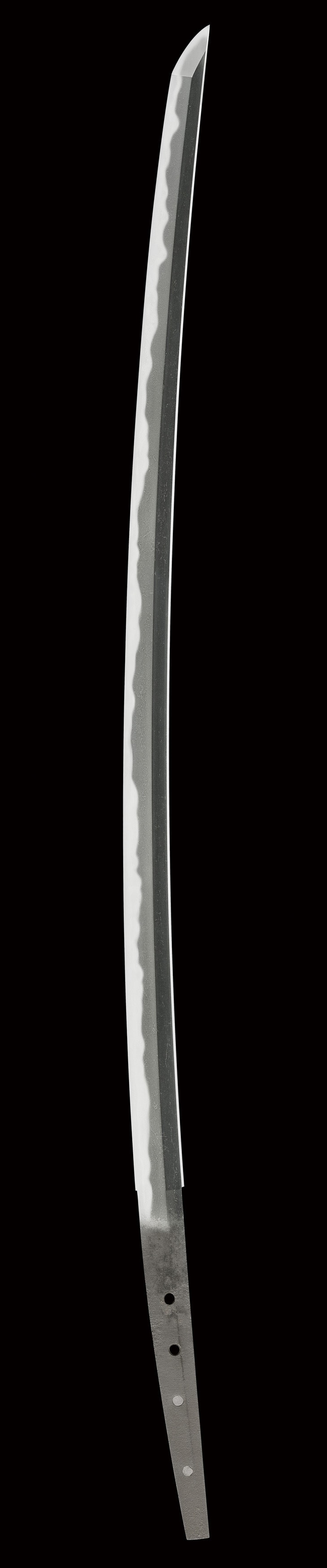
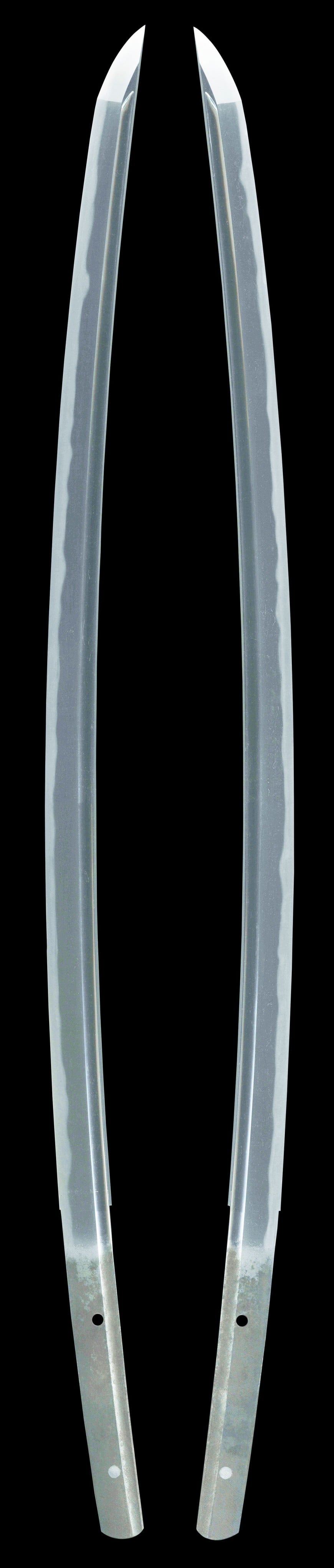
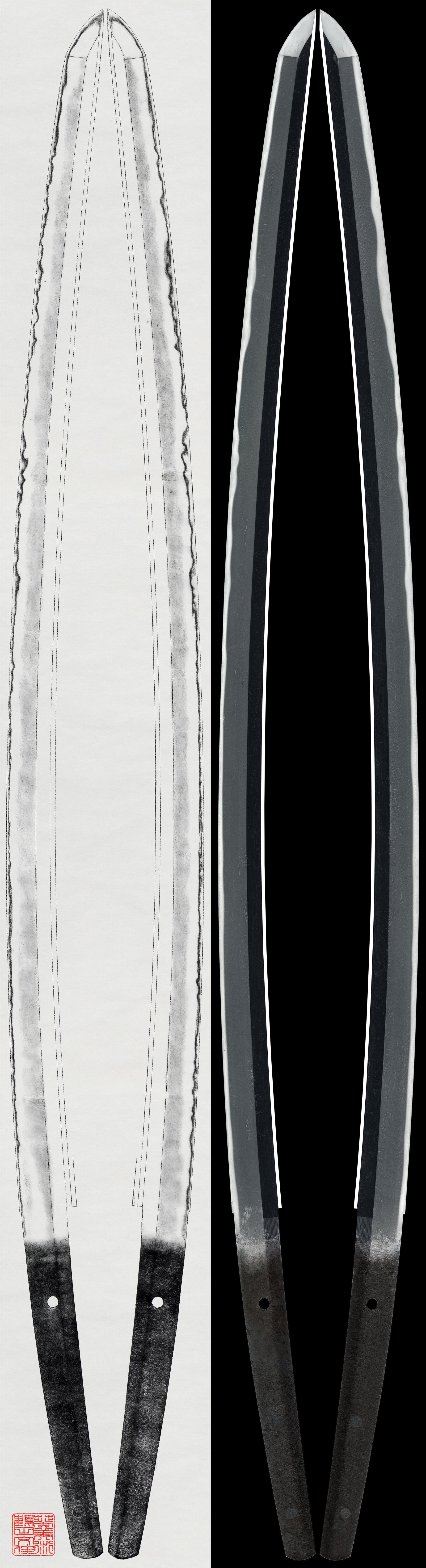
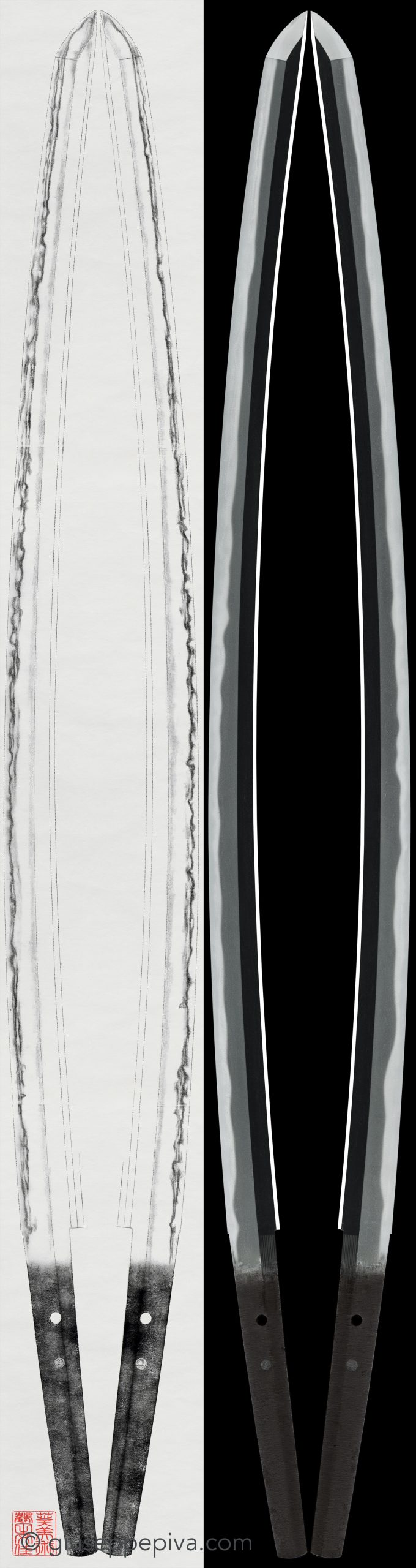
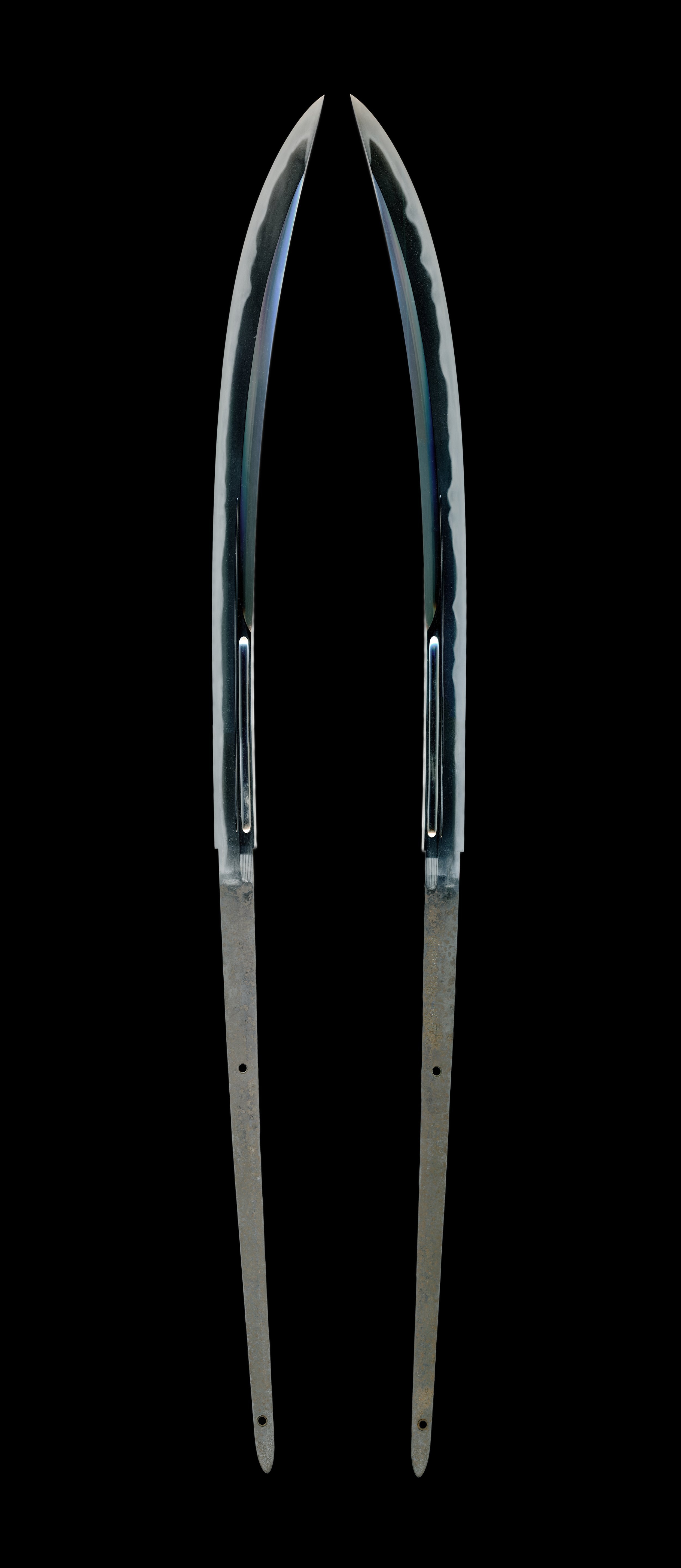
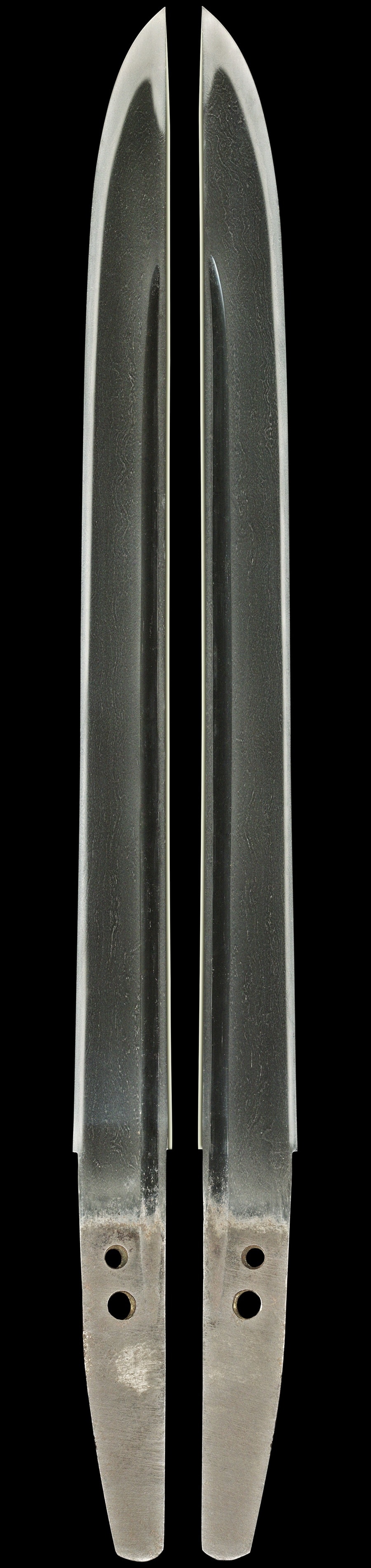
Description Keijo: shinogi-zukuri, iori-mune; standard mihaba; slightly shallow sori; chu-kissaki. Kitae: itame-hada, in places very slightly flowing; the ji is well formed. Hamon: gunome mixed with azuki-style undulations and a chōji-like feeling; ashi enter; in places it becomes a suguha tendency; ko-nie adhere well; with sunagashi, and slight kinsuji. Boshi: slightly notare-like; ko-maru with a slight turn-back. Horimono: On both omote and ura, bō-hi terminating in maru-dome at the lower end. Nakago: ō-suriage; sakikiri; katte-sagari file marks; two mekugi-ana; unsigned.
Artisan Den Yamato Shizu
Era Koto period
Explanation “Yamato Shizu” originally denotes works from the period before Kaneuji (兼氏) took up residence at Shizu in Tagi District, Mino Province—namely, the time when he lived in Yamato and signed with the characters 包氏. However, even after he relocated to Mino, there were smiths in Yamato who succeeded to the 包氏 signature; in a broader sense, these too are included under the designation “Yamato Shizu.”
This katana shows a well-forged ji; the strong jigane exhibits flowing tendencies in places. The hamon—a mixture of gunome with azuki-like undulations and a chōji feeling—overall evokes Shizu. Yet, where paired gunome stand out, one can discern the characteristic features of Yamato Shizu. Moreover, the strongly clear (saeru) quality of the ji and ha is especially pleasing.
Note: The motohaba measurement originally recorded as 3.9 cm was corrected to 2.9 cm by the NBTHK (March 10, 2017).






![Tanto - Hozon - 作 関派 - 短刀[氏房][日本美術刀剣保存協会]保存刀剣](/_next/image?url=https%3A%2F%2Fitbhfhyptogxcjbjfzwx.supabase.co%2Fstorage%2Fv1%2Fobject%2Fpublic%2Flisting-images%2Fworld-seiyudo%2FL747655%2F01.jpg&w=2560&q=90)