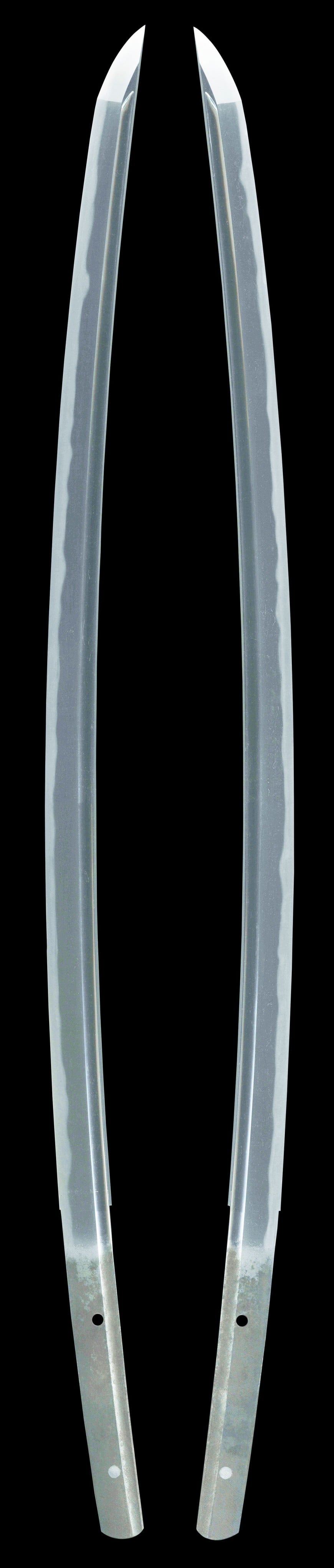
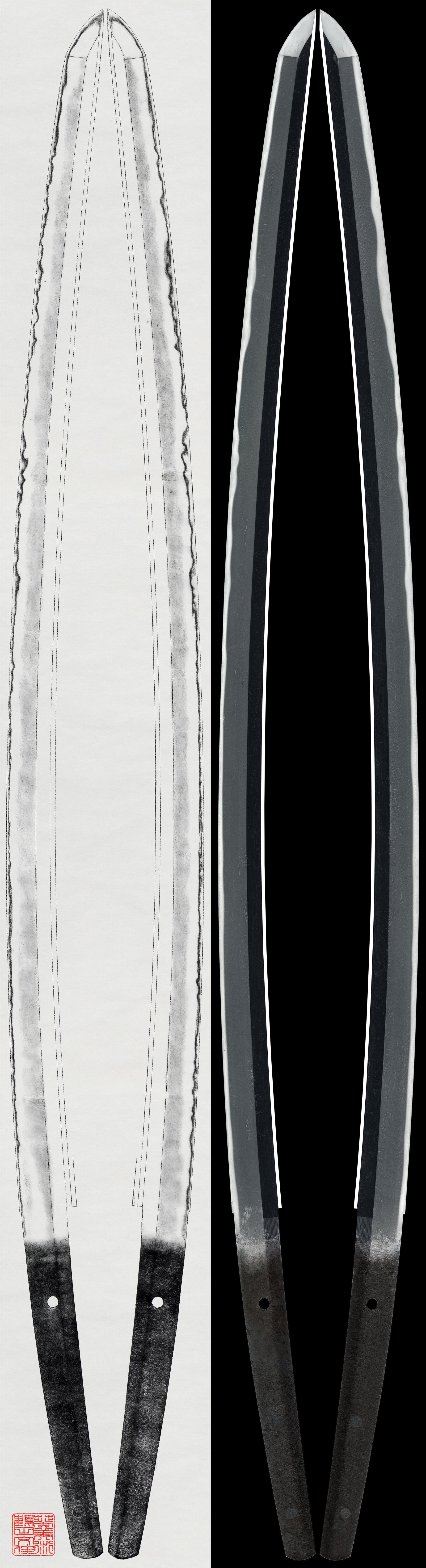
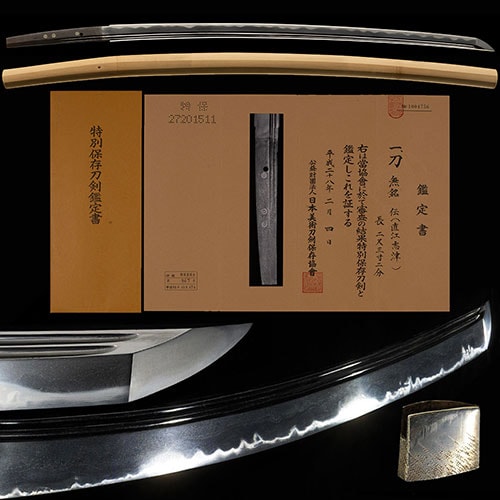
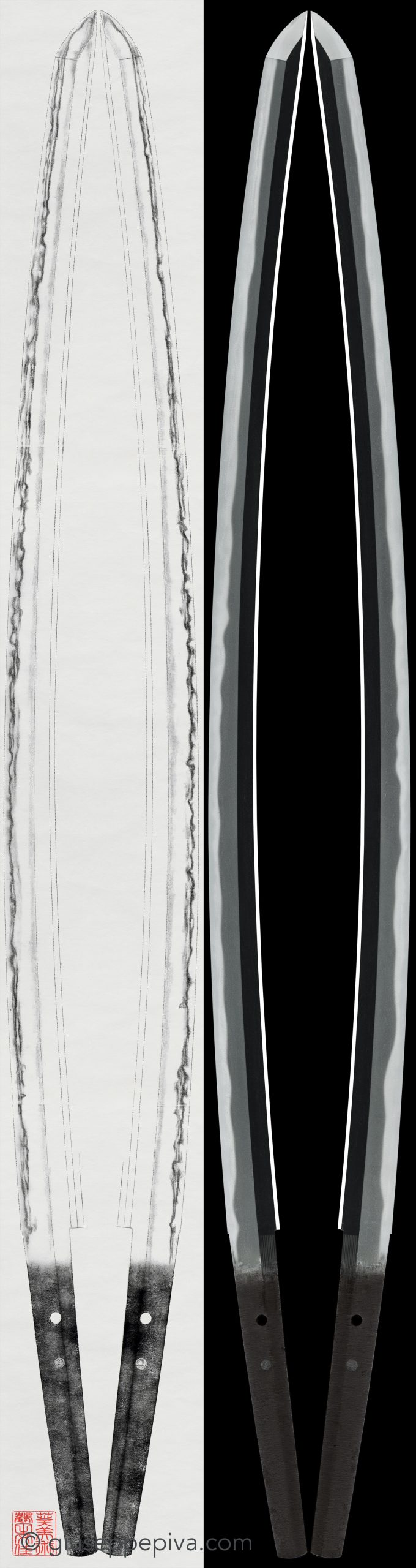
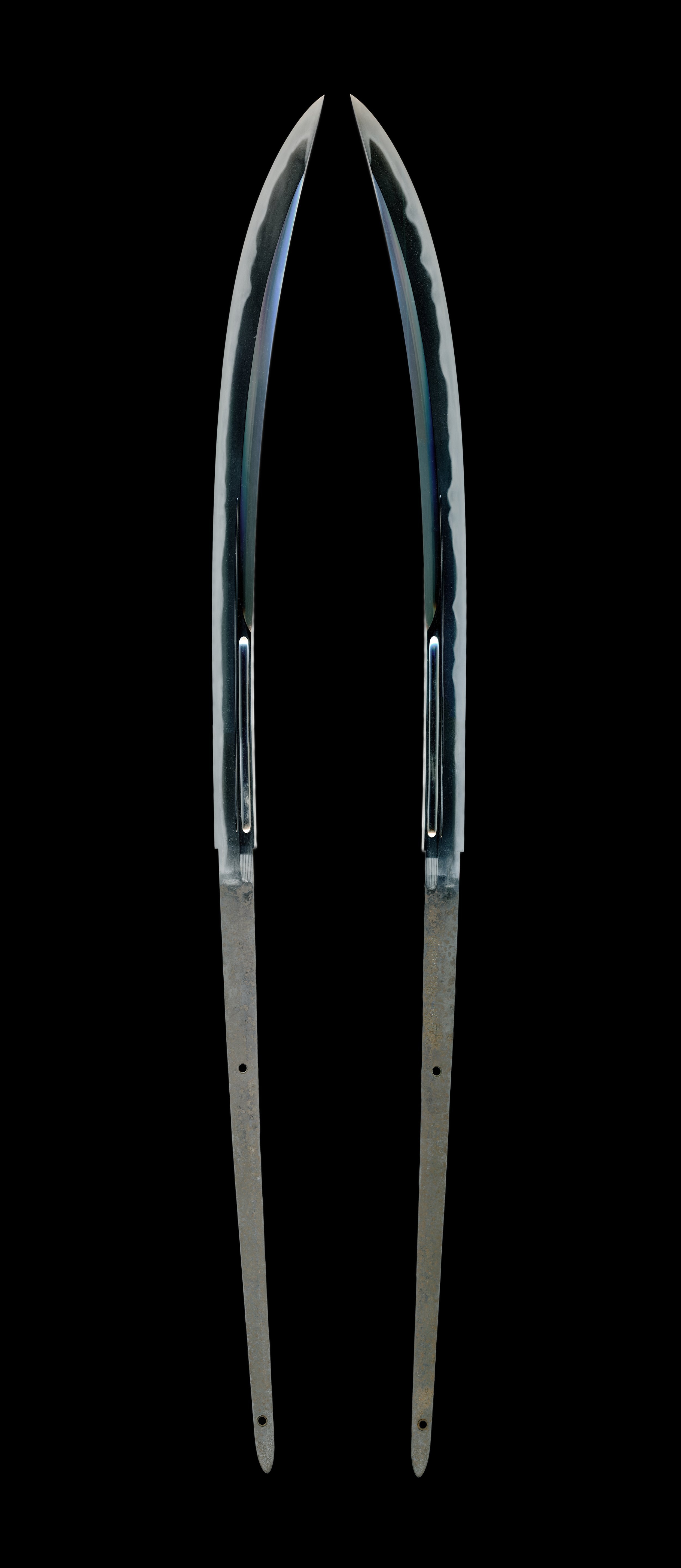
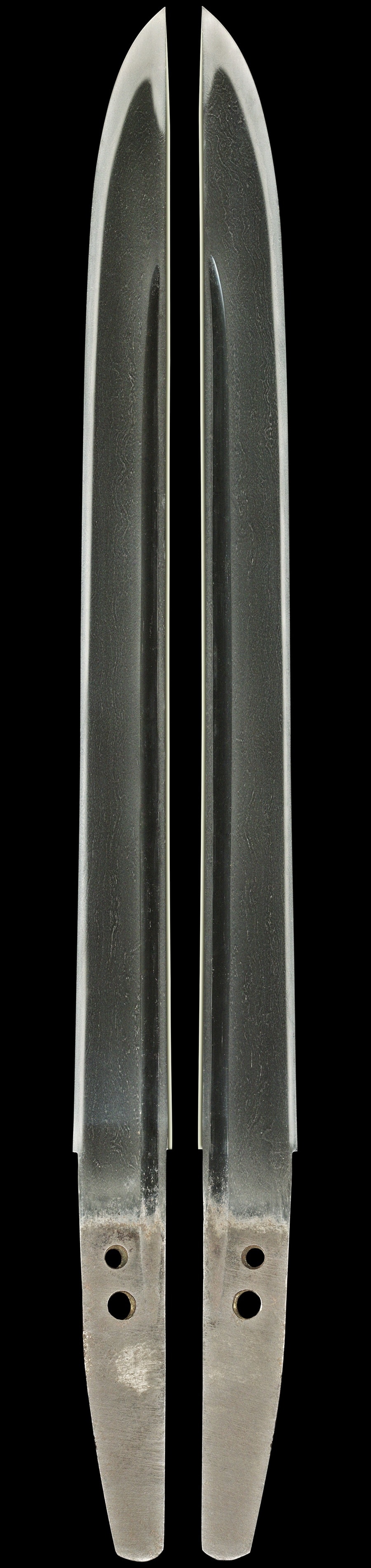
is in origin a place name in : because Masamune's pupil Kaneuji came to live and forge there, the name passed from village to man, and in the appraisal tradition a blade attributed simply means Kaneuji. He began in Yamato as a smith signing 包氏, entered the gate of Masamune, and at changed the writing to 兼氏. Counted from old among the Masamune Juttetsu, he is, in the sentence his designation texts repeat, the one whose manner stands closest to Masamune. No dated work survives; the sources fix his period from the Kanno 1 (1350) date of his reputed pupil Kanetsugu, the very end of into early . One gold-inlaid goes further: in settling there he created the foundation of the smiths.
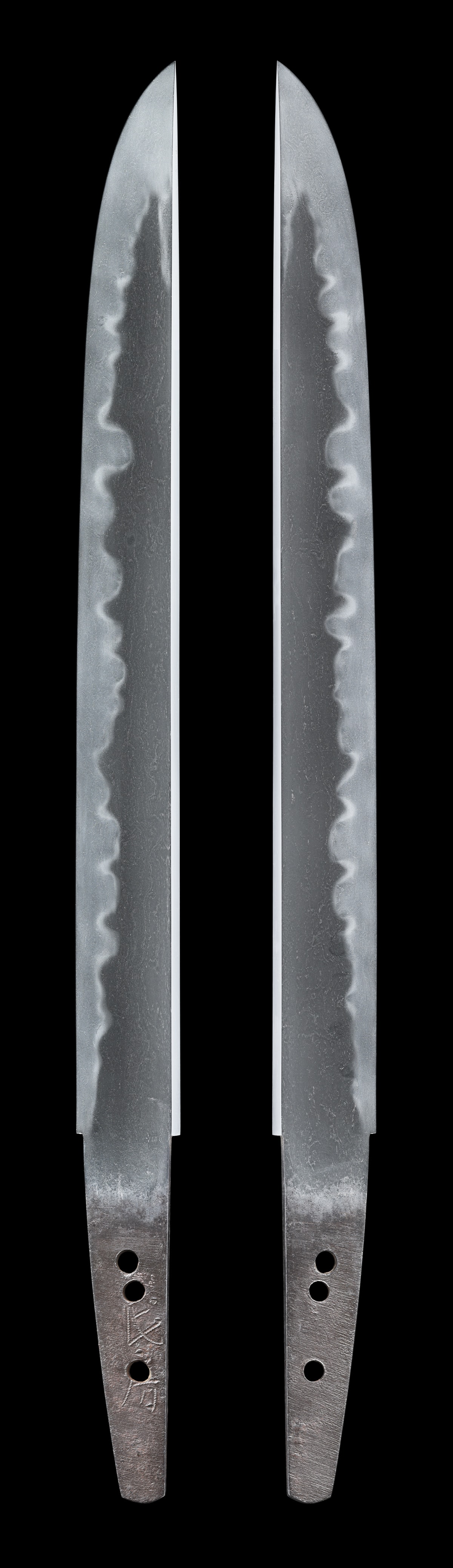
The against the master is stated in one clause: what differs from Masamune is that mixes into the and the run linked within the . His flows and leans toward far more often than in Masamune, Sadamune, Norishige or Yukimitsu, the Tegai hand surviving inside finished work. The pointed teeth are a second tell, -ba mixing into his across much of the corpus where on the homeland smiths they are an occasional accident. Where Masamune's never shows the form twice, Kaneuji lets two or three of one shape run linked in series, and the texts call the linked his habit of hand. The sweeps with and turns back gently round, the calm round return named among his traits.
The manner itself is grand work. The run wide with little taper, shallow in , the extended or grown to . The is mixed with and flowing , the thick, minute on the finest pieces, with fine entering incessantly. Over it he tempers a notare base with , and -ba, the deep, the thick and bright with rough in places; , , and work through and , and the runs or into or with . Yamato shows through this surface at the edge, in , , and . The first text settled a first-glance masterpiece on exactly these points, reading the flowing , pointed and swept, -like as a Yamato air; another finds the Yamato temperament in the masa-leaning and shallow return; a recurring formula resolves the whole: with - added.
Signed works are exceedingly rare, the record repeating it in nearly the words across decades: eight signed records stand against one hundred thirty-six titled , the sustained by gold-inlaid and red-lacquer attribution inscriptions and by : the of Sugawara Naganori, a Kochu of Kyoho 3 (1718) at 1,500 , the whose gold-inlaid name Hanagatami is attributed to Koetsu. The rare signed pieces form a register of their own, , some carved with whose tips sit slightly low, and with , short for their era; the sources turn the point into a trait: builds that never become especially long are rather characteristic of Kaneuji. Within the corpus two poles stand apart. At the bold extreme the rises and falls strongly, and long scatter, and the fills with fire: one is called a blade of particular daring among attributions; another, of Enbun-Joji build with a flame-form burning down the , is named the very finest of the smith's attributions; a third, gold-inlaid, is so daring that the text takes the Kaneuji as confirmed by the work itself. At the calm extreme the temper sits low and even, a shallow with ; one signed Jubi in stands apart even from his other signed blades. At least two Kaneuji are thought to have worked in ; Honma records that on the whole the large belong to the first generation, the small to the second and after, the first generation's signature angular and large in its cutting.
The appraisal tradition keeps a lattice of distinct targets around him. A attribution in the broad sense, the so-called O-, can reach past the first Kaneuji to the second and third generations and the direct pupils; blades of the direct line are marked as not descending to what is called Naoe . Naoe is the school after the move to Naoe in the province, its showing, against the master's, the feeling of less with growing fewer; one published at session 15 as Naoe was raised at session 7 as . The boundary runs upward as well. The that opened his record had carried a Koyu to Sadamune and a to Masamune; the settled it as on the flowing , pointed and swept , calling it the finest among works. What he founded ran forward: the tradition the sources credit him with beginning, and, two and a half centuries on, the Keicho revival of - that Kunihiro built above all on the model of .
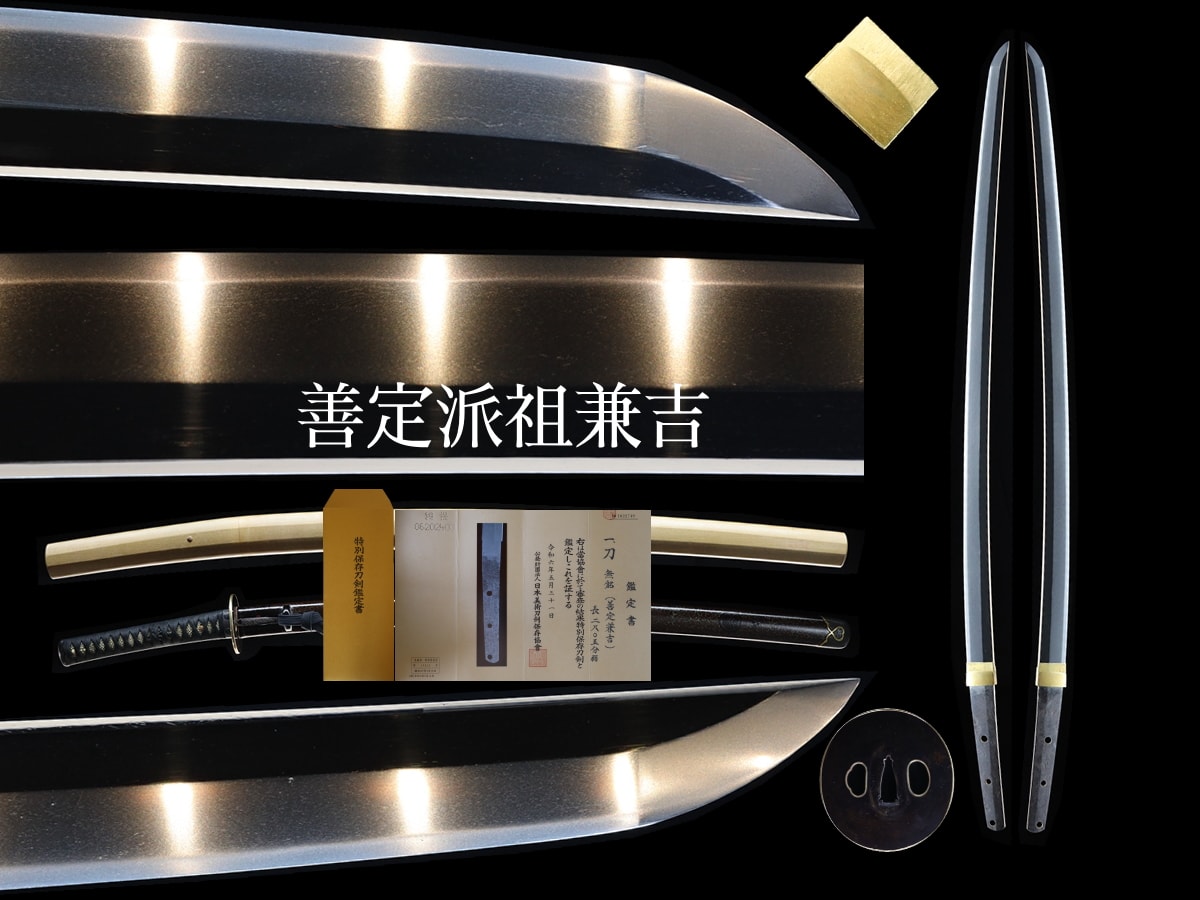
Fujishiro rates him Sai-jo . He has no National Treasures; six blades are Important Cultural Properties, patrimony outside the market, among them three signed and the Inaba , the his texts cite as the yardstick for his short blades. Nine works are prewar Bijutsuhin; nineteen and one hundred twenty-two make one hundred forty-one blades in those two tiers, of one hundred fifty-six designated works on record. Thirty-two blades carry recorded provenance, a roll running through Tokugawa Ieyasu and Hidetada, Maeda Toshitsune, Kuroda Nagamasa, the Date, Satake Yoshinobu, the Hosokawa marquis house, the Naito of Nobeoka, the Owari Tokugawa and the Choshu Mori; the Kuroda , a blade, carries the of Hirai Chiba. One , given by Ii Naomasa to Kimata Seizaburo Morikatsu after the Wakamiko standoff with the Hojo in Tensho 10 (1582), descended in the Kimata, first house of elders of the Hikone Ii. Of recorded whereabouts today, holders include Futarasan Jinja, the Tokugawa Art Museum and the Sano Art Museum. What a private collector may realistically encounter is the and tier; those blades are held closely, and one comes to market only rarely. When it does, the is almost always bare, the attribution reading simply , in this tradition the name of one man.