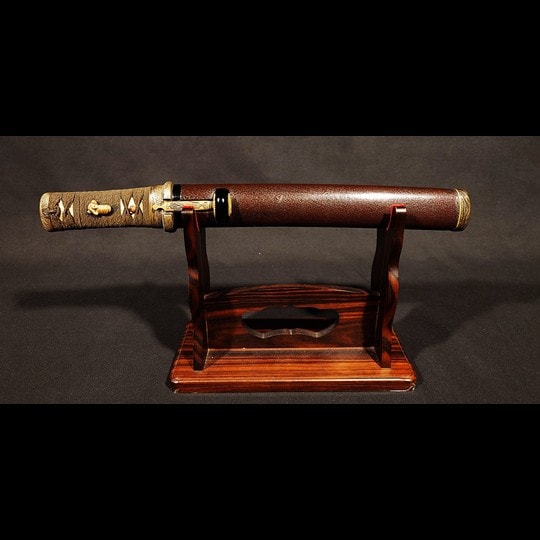
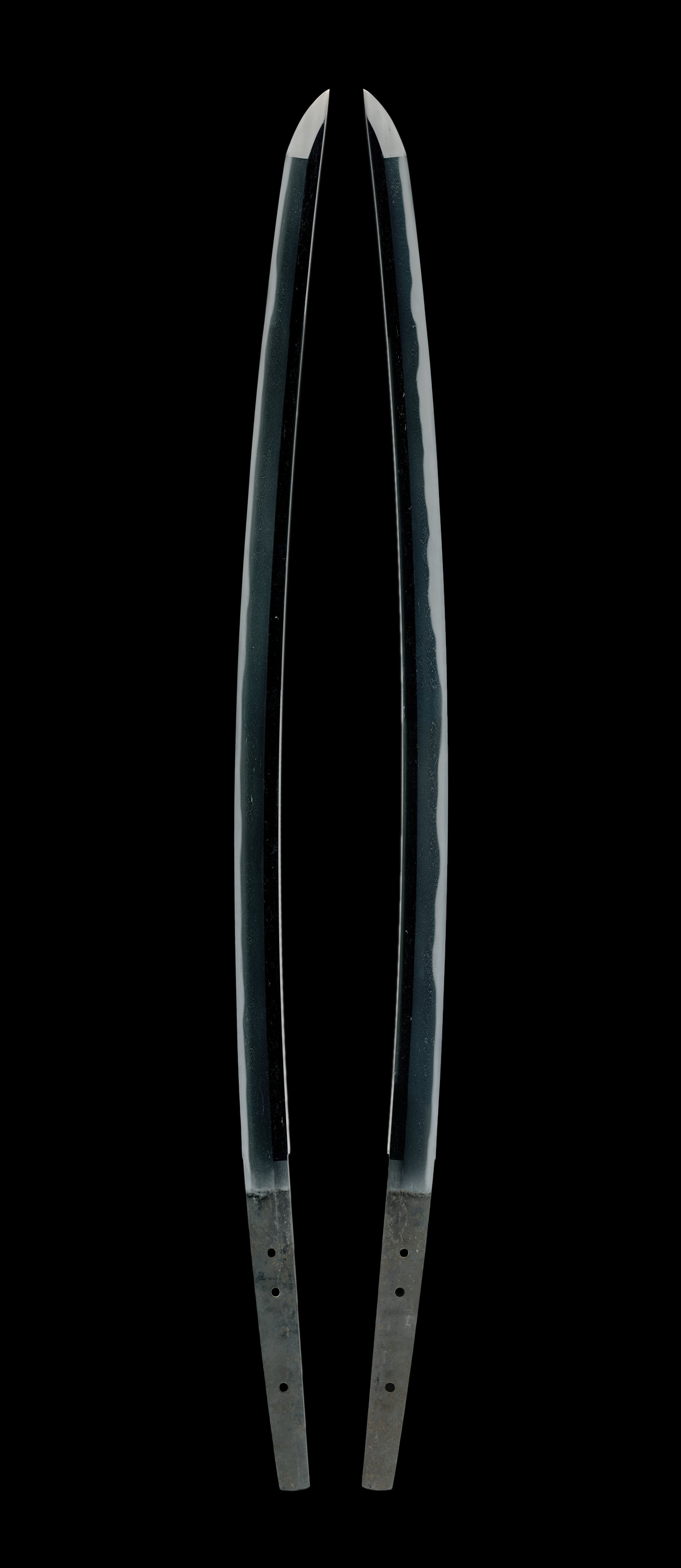
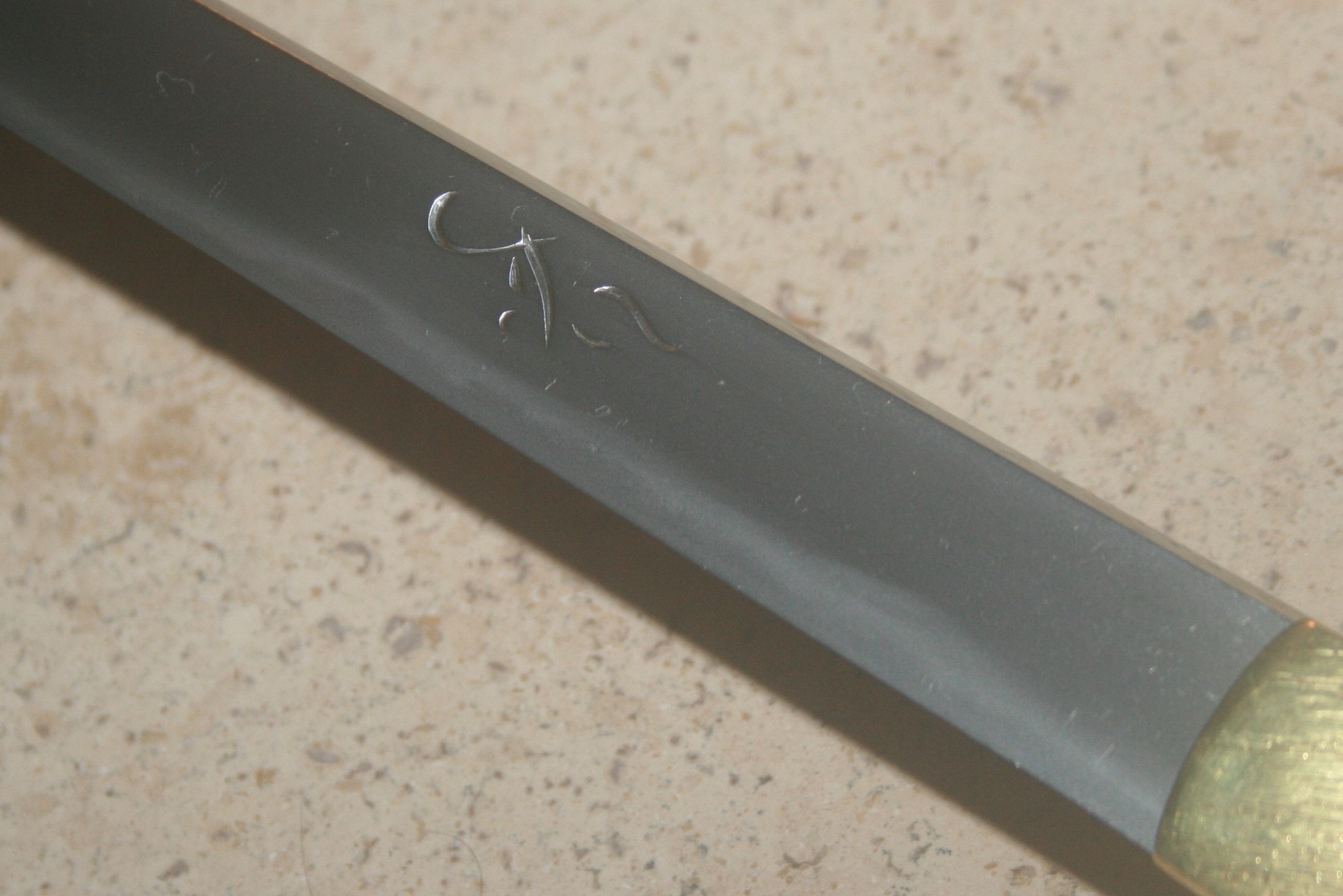
Daishinbo Yukei is said to have been a son of Shintogo Kunimitsu, and one tradition holds that he was the senior fellow apprentice (anideshi) of Yukimitsu. From ancient times he has been renowned as a master of blade carvings (horimono), and it is conjectured that among works by Yukimitsu and Masamune there are carvings executed by his hand. No indisputably authentic signed work has yet been encountered, though a sasaho-form yari bearing a signature reading "Daishinbo" has been designated, with the NBTHK concluding that this represents a different individual from the Kamakura-period tradition.
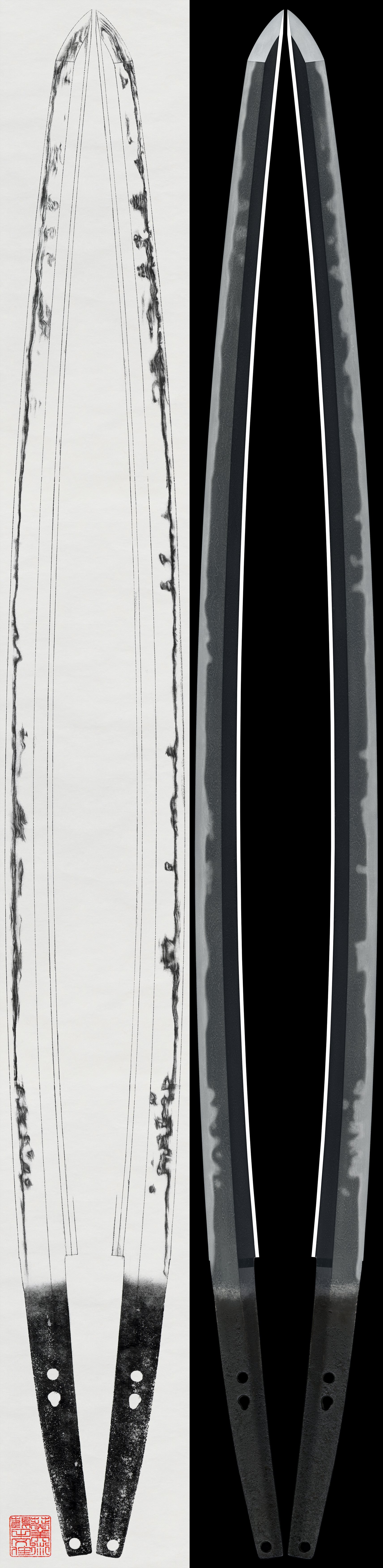
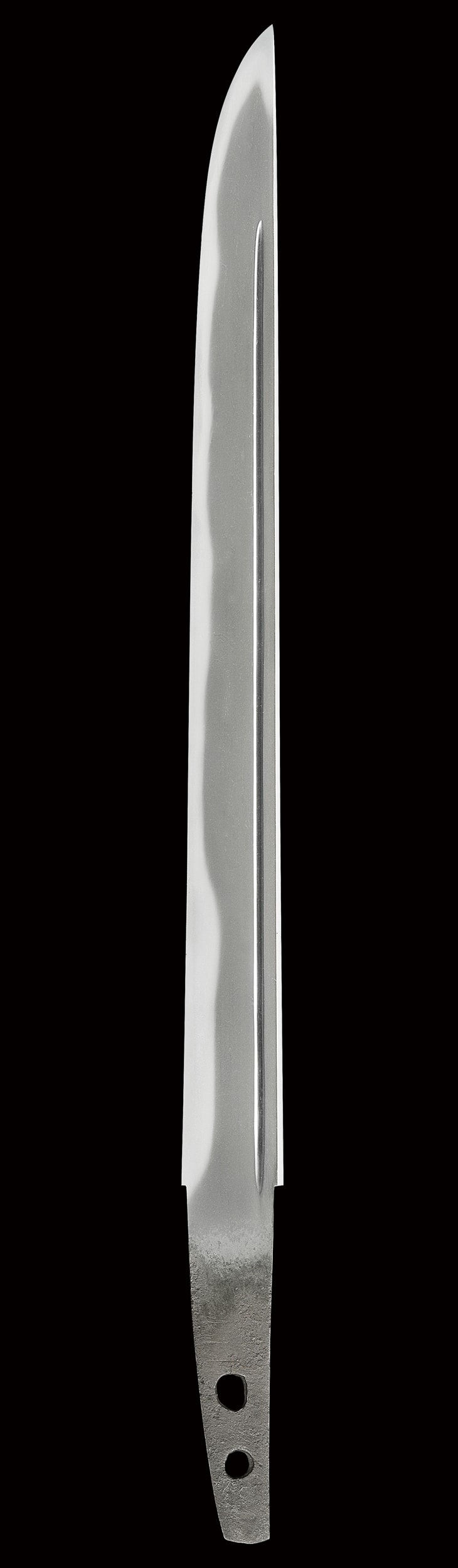
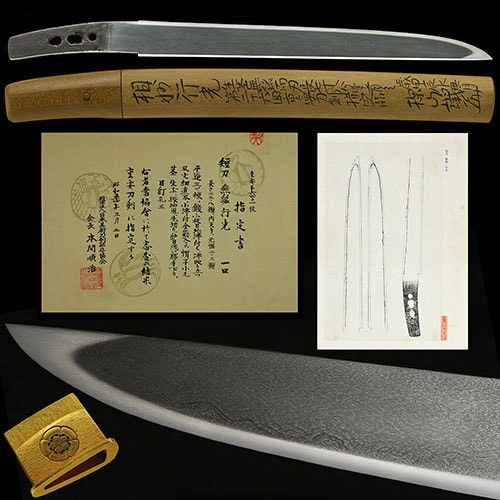
The works attributed to Daishinbo display the principal characteristics of Soshu craftsmanship. The finest example (Juyo, 50th Session) shows an itame forging mixed with mokume and nagare-hada, with "thickly adhering ji-nie" and frequent chikei, while the hamon, founded on "a shallow notare mixed with ko-gunome," contains deep nioi, thick nie, and conspicuous kinsuji and sunagashi with slight yubashiri. This piece retains an origami by Hon'ami Kotsune with a valuation of 350 kan issued in Enpo 4. A second attributed tanto (Juyo, 22nd Session), transmitted in the Shimazu family, is accompanied by a black-lacquered gold hiru-maki aikuchi koshirae preserving Momoyama taste, itself previously designated Juyo.
What distinguishes the Daishinbo attribution is the union of blade and carving: the 50th Session tanto bears an excellently executed relief of a bonji and hitotsu-hitsuji Kurikara, and the NBTHK notes that "within the forging -- where chikei appears frequently -- there is a discernible thread that calls to mind Shintogo Kunimitsu." With no authenticated signed blades, Daishinbo remains an elusive yet consequential figure whose influence on later Soshu horimono is deeply embedded in the tradition.




![Wakizashi - Tokuho - 作 正廣 - 脇差[無銘 相州正広]日本美術刀剣保存協会 特別保存刀剣・特別保存刀装具](/_next/image?url=https%3A%2F%2Fitbhfhyptogxcjbjfzwx.supabase.co%2Fstorage%2Fv1%2Fobject%2Fpublic%2Flisting-images%2Fworld-seiyudo%2FL710046%2F01.jpg&w=2560&q=90)