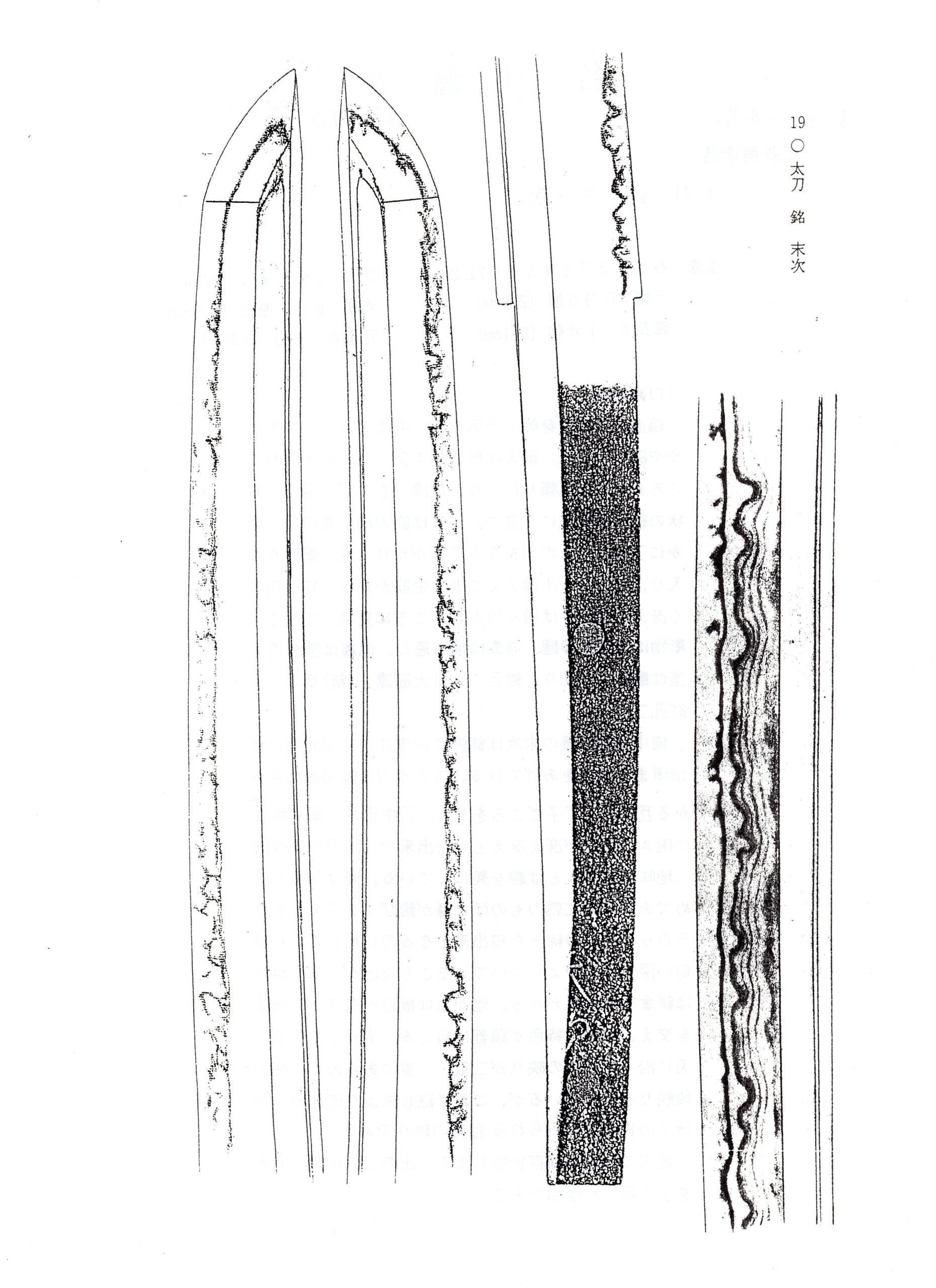
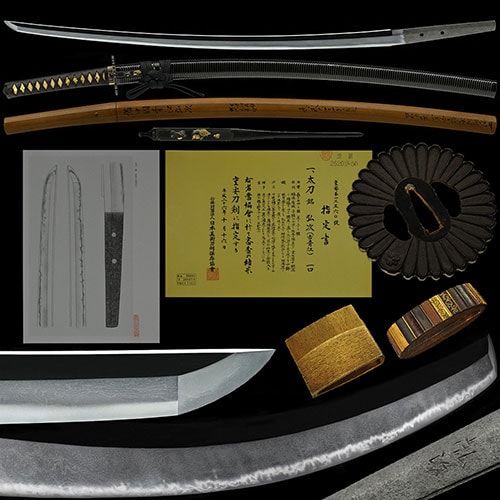
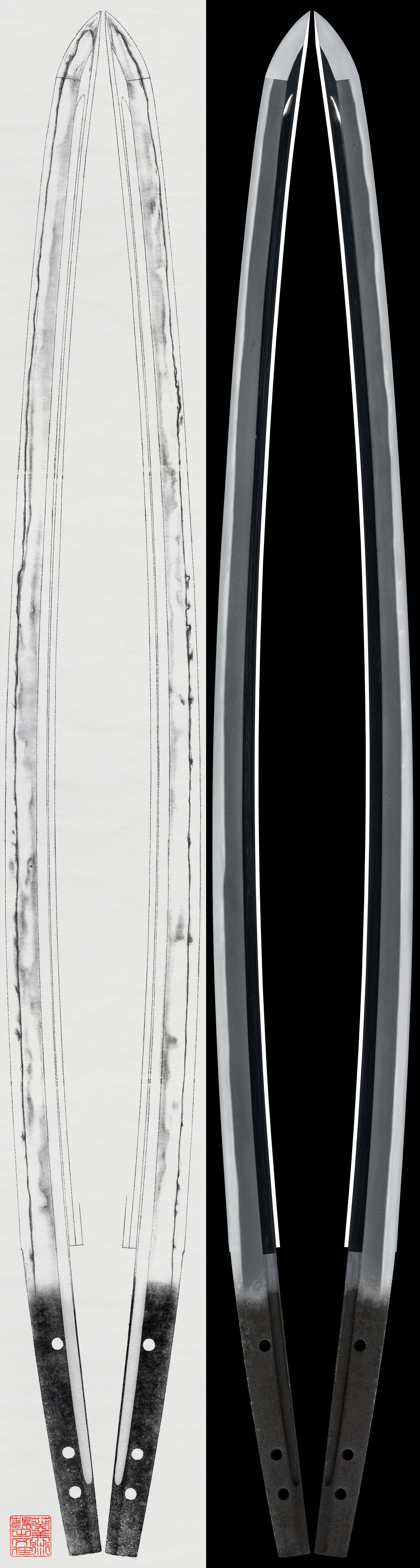
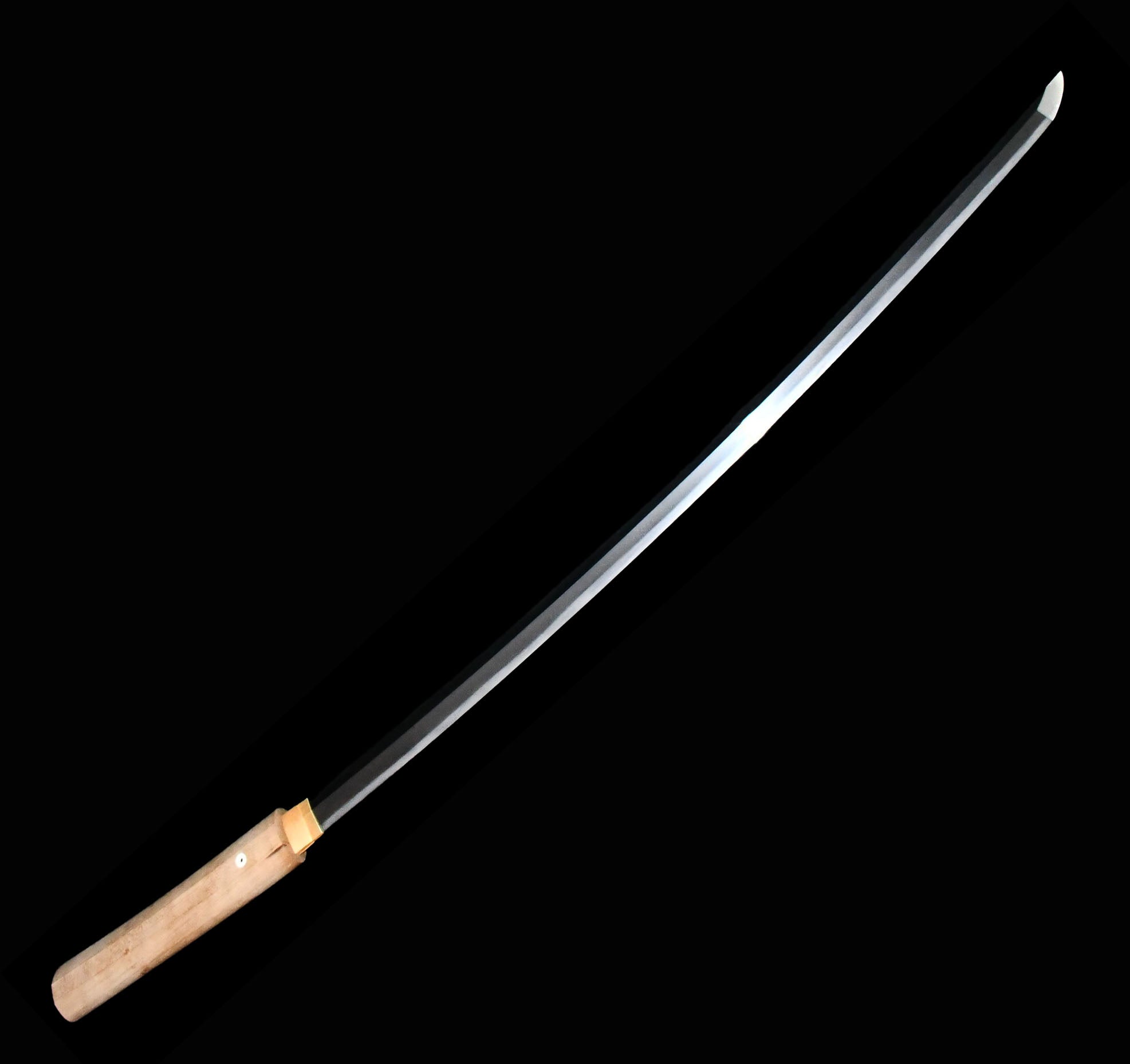
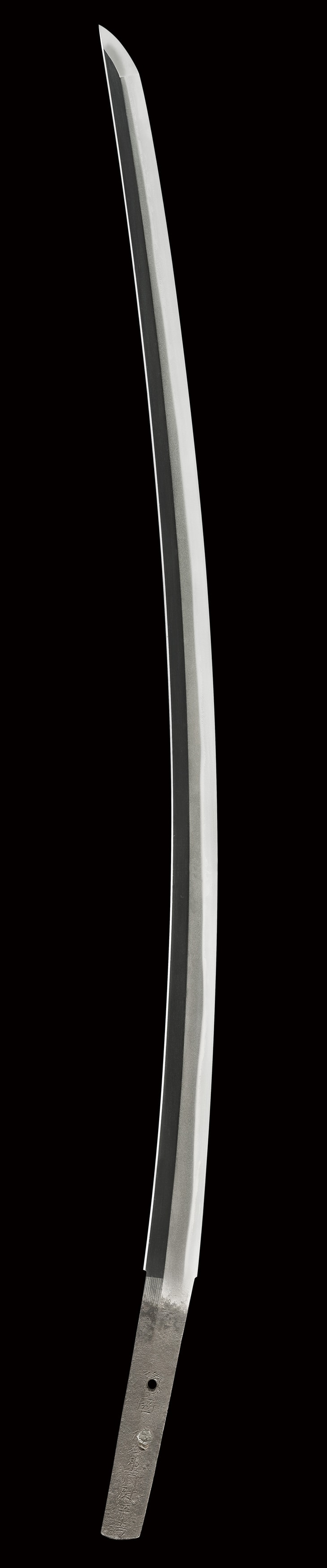
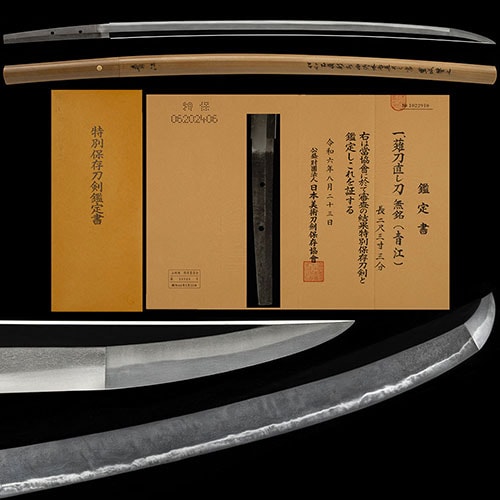
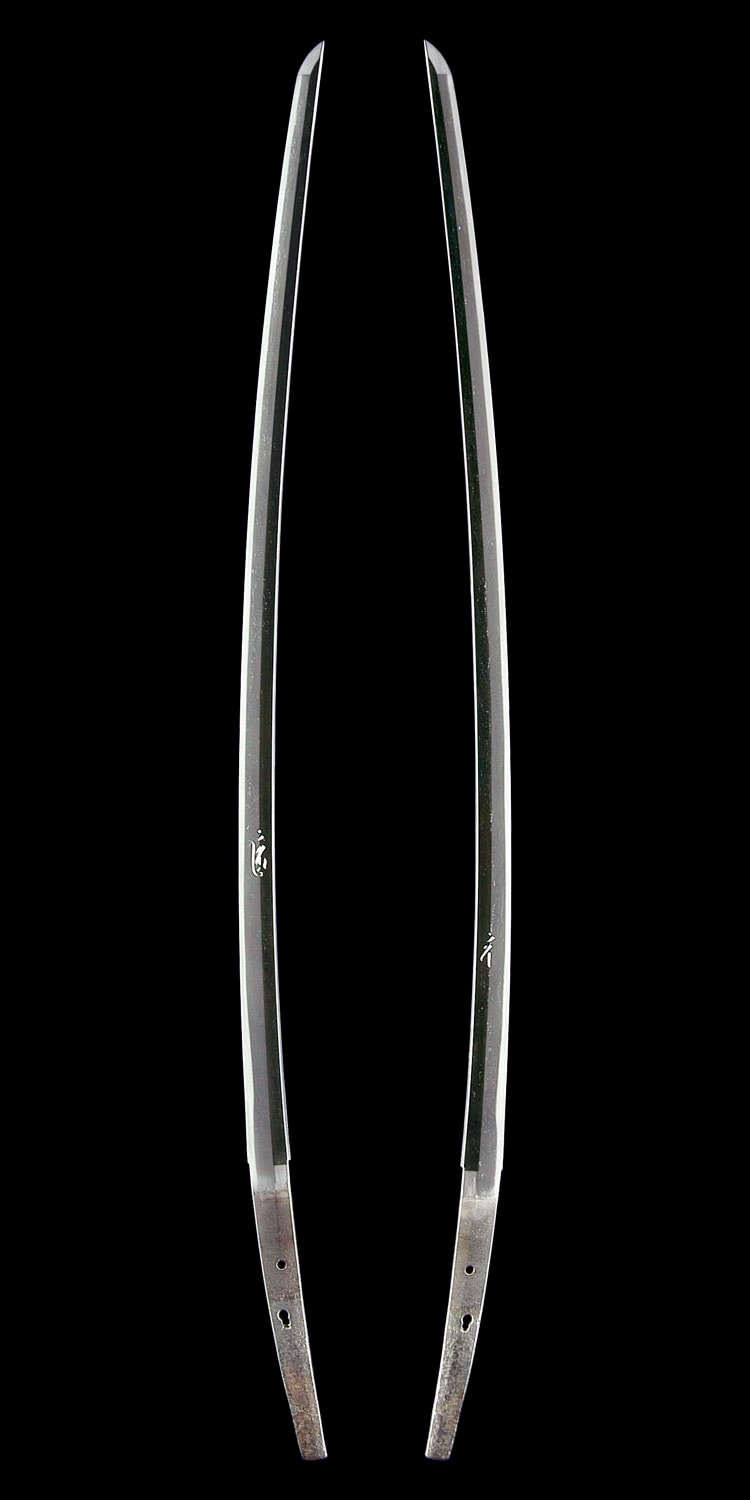
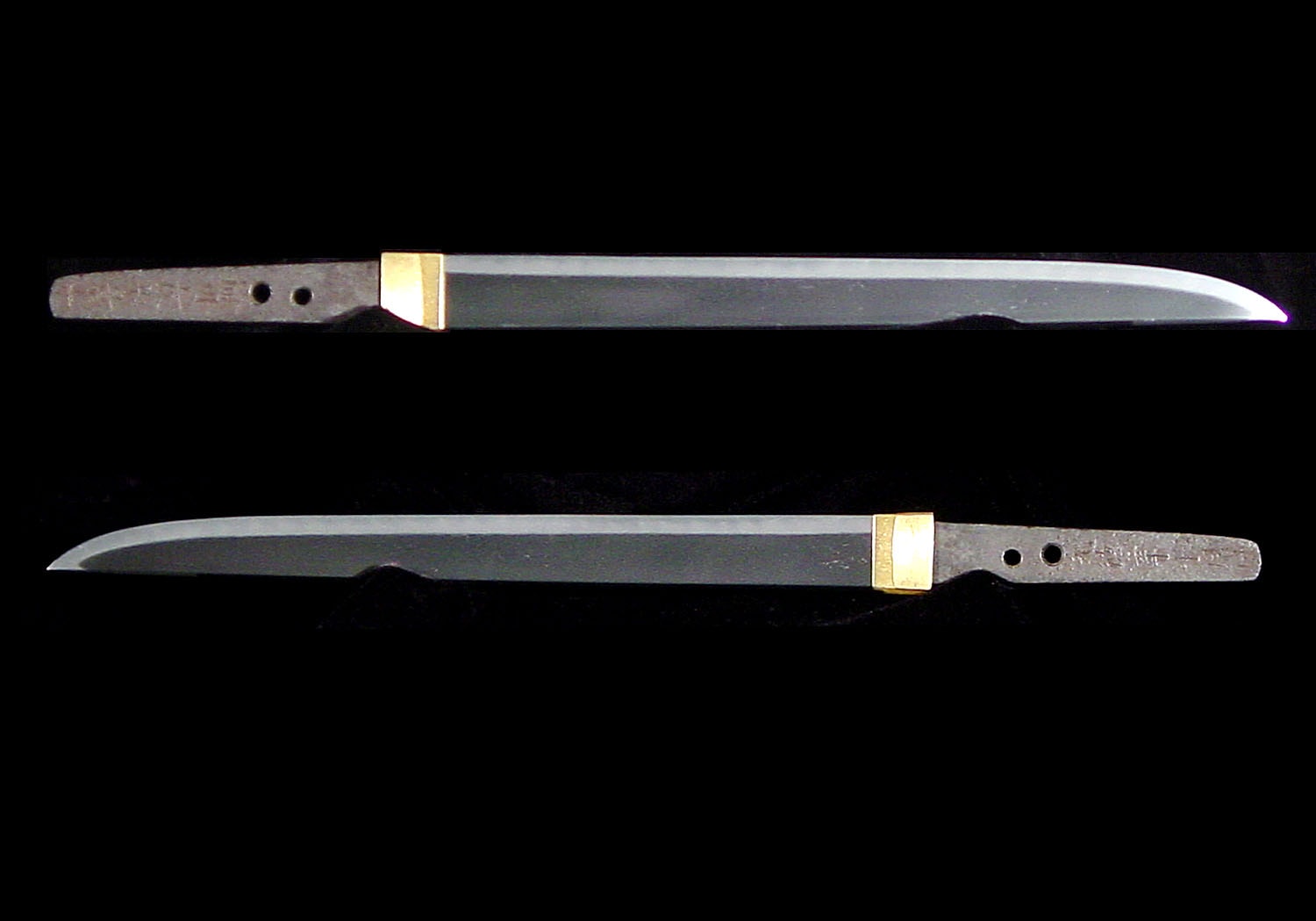
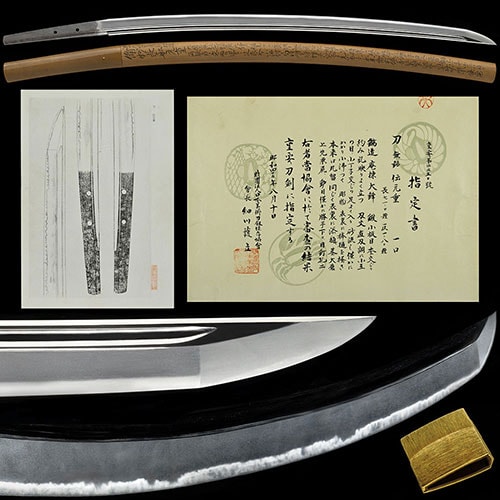
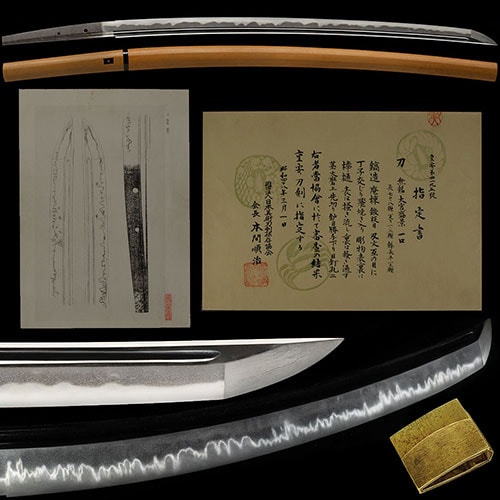
Sadatsugu is an smith of Bicchu, working in the lower basin of the Takahashi River whose iron had been famous since the early-eleventh-century Sarugakki listed "the swords of Bicchu" among the notable products of the provinces. The published sources call him "a representative smith of the forges", placing him with the tsugu-signing masters of the line, a name that was carried on within the school down into the period. They are equally clear about the difficulty he presents: among works bearing the name there are signatures cut in a small manner, in an ordinary proportion, and in a somewhat later hand, so that "Sadatsugu is thought not to have been one man". His surviving signed blades are the spine of the record, and the one in the present catalogue is read, even within , as a work "of a somewhat later date".
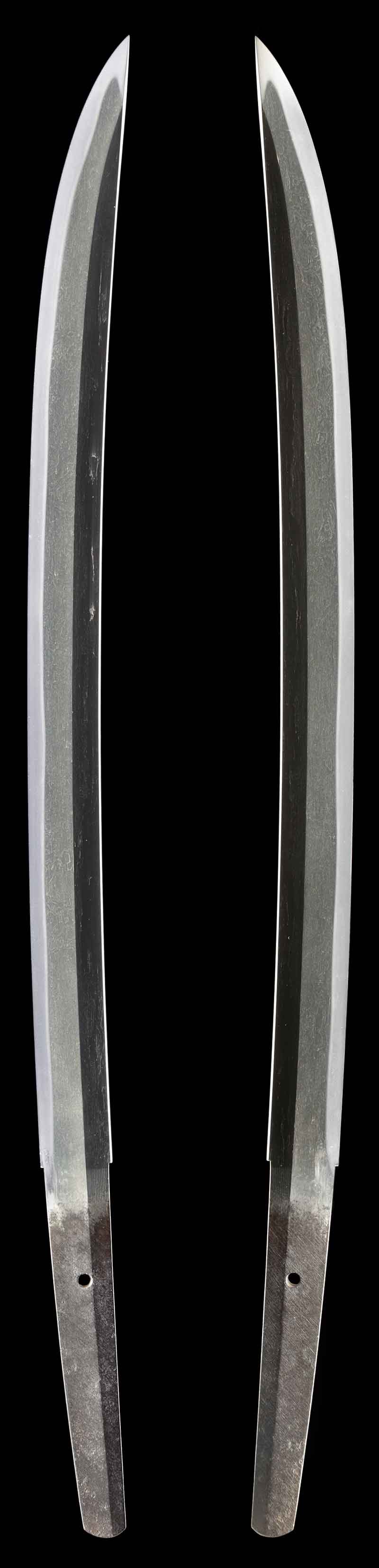
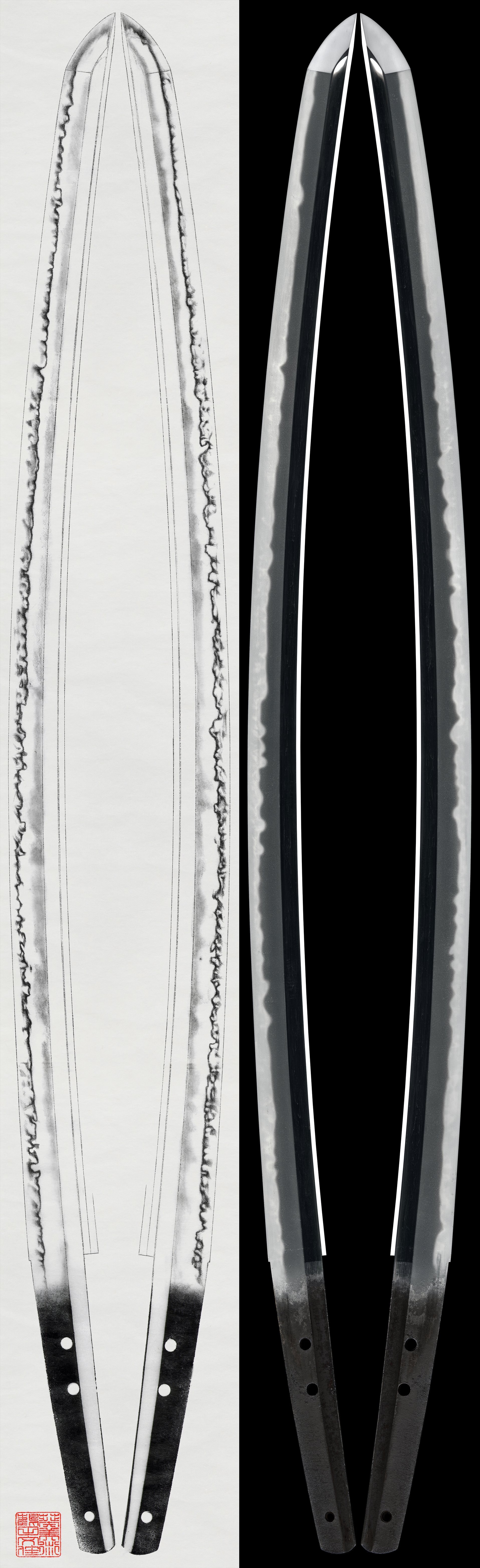
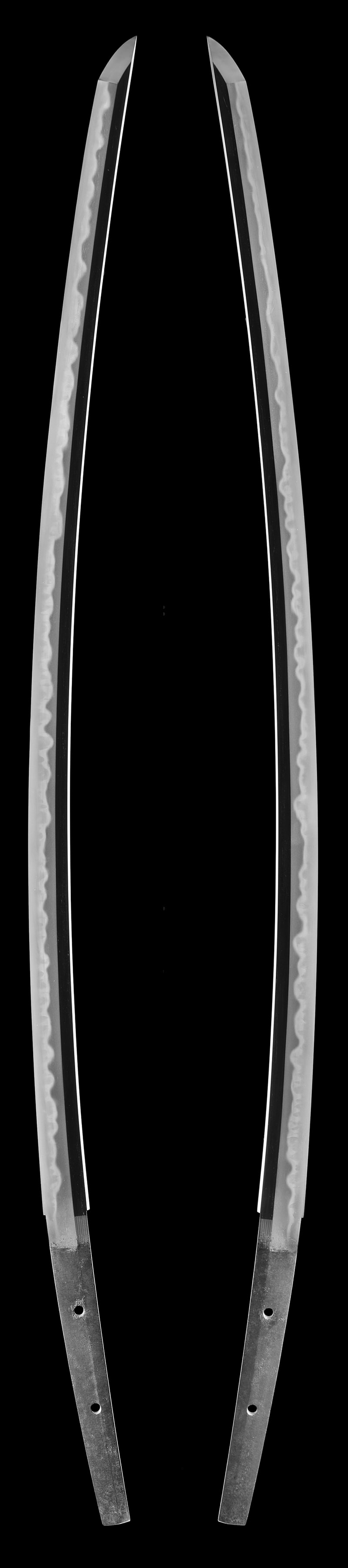
His characteristic hand is the , with , deep in and finished with a , the signature cut in two characters on the near the and toward the , the the steeply slanted that marks a Bicchū tang. What distinguishes the work is not flamboyance but restraint: over the steel he sets a narrow , the drawn tight and carrying , into which only a measured and a little enter, with appearing here and there toward the . It is the calm opposite of the towering clove-flower of mainstream , and the published sources name the orderly with its suitably blended , set against the quality of the steel and a gentle bearing, "a piece that conveys the dignity of the school".
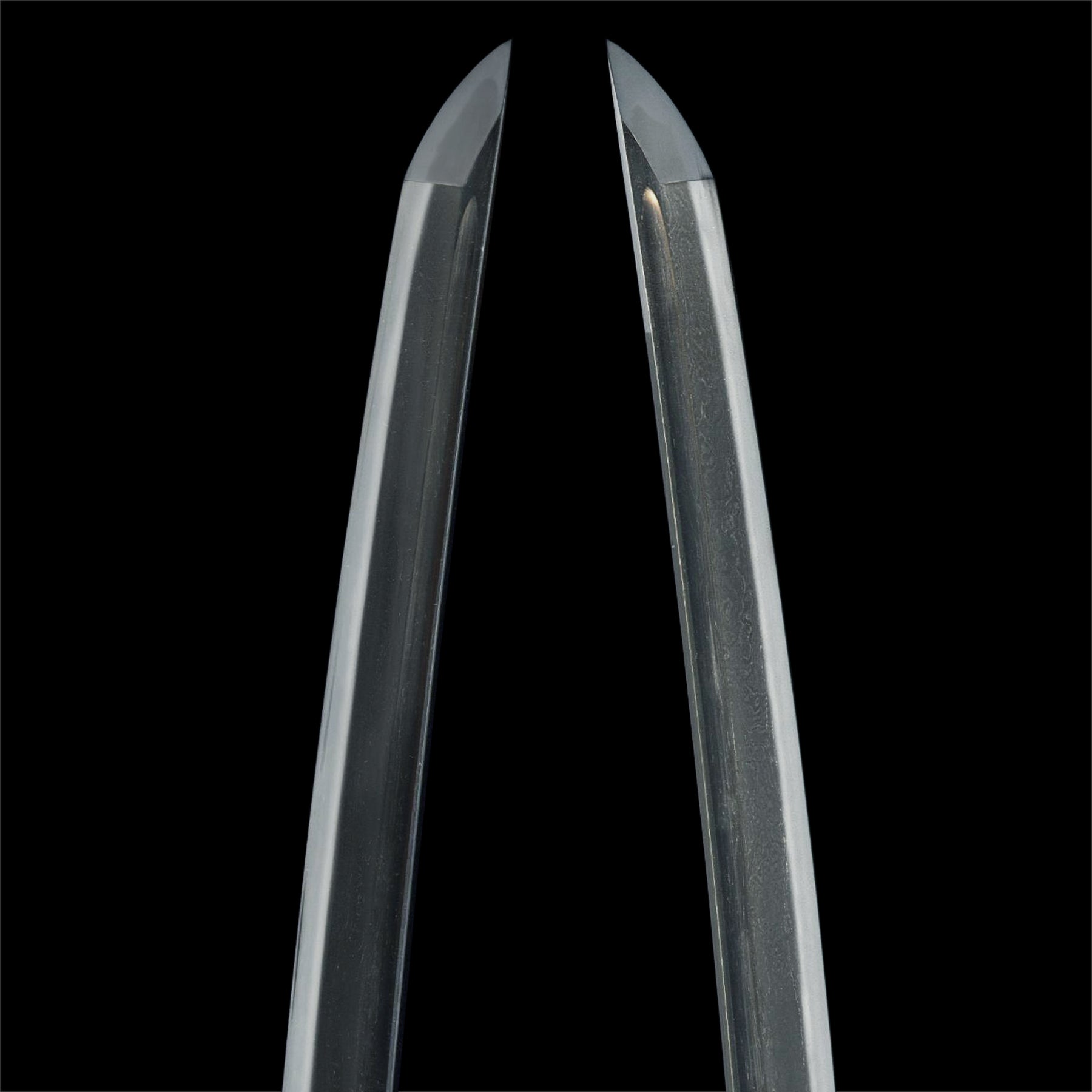
The is where the school speaks. On the signed it is an mixed with , inclining toward nearer the edge, with adhering and mixed through; on the shortened blade it tightens into a well-packed with abundant and . Across both rises the the published sources call "a -toned ", the patchy reflection that stands in place of the clear of and is the surest mark separating his steel from the otherwise comparable work. The runs straight to a small round, on the basically straight with and a somewhat long , and on the later blade a is carved through.
What survives shows him in two registers of the one hand. The , two-character signed , with its small-style and file marks, is his recognized type, quiet and orderly. Against it stands an blade whose long folded-back signature was, at some shortening, repaired and remade into an affixed inscription reading "Sadatsugu, resident of Bicchū Province"; its multiple peg-holes show the blade was reduced more than once, yet the and the fine still carry the school's dignity. The variation in the manner of the signature across these works is exactly the evidence on which the published sources rest the conclusion that more than one smith used the name.
Within the line his hand sits beside the other tsugu-signing smiths, more subdued and astringent than the contemporary . His own grounded tells set him apart: the -toned in the steel, the narrow tight- rather than a flamboyant , and the file marks with the two-character signature that the school cuts where would not. These, rather than any borrowed comparison, are what the published sources name as the basis of the attribution.
For the collector he is a scarce early Bicchū name. The Tōkō Taikan places him high, and his record is led not by the open market but by designated heritage: three of his blades are Important Cultural Properties, among them the signed held by the Tokyo National Museum, a further signed preserved in Toyama, and the -attributed known as "Ō-," shortened and gold-inlaid with a appraisal. These are patrimony, held in museums and long-kept collections, and never come to market; one signed of recorded whereabouts descended through the Kuroda house. Below them only a small number reach the and tiers, so a signed Sadatsugu in private hands is among the rarer things a student of could hope to encounter, and one appears, when it does, only with patience.