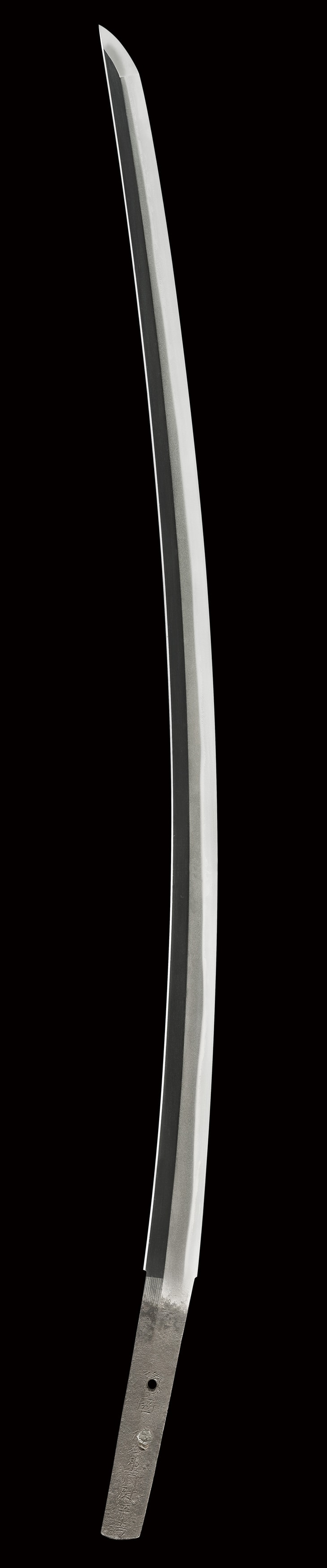
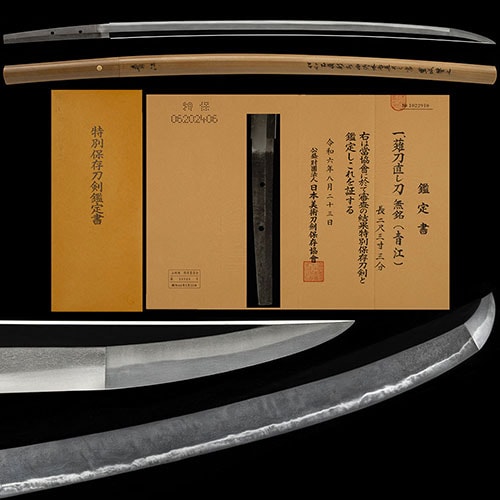
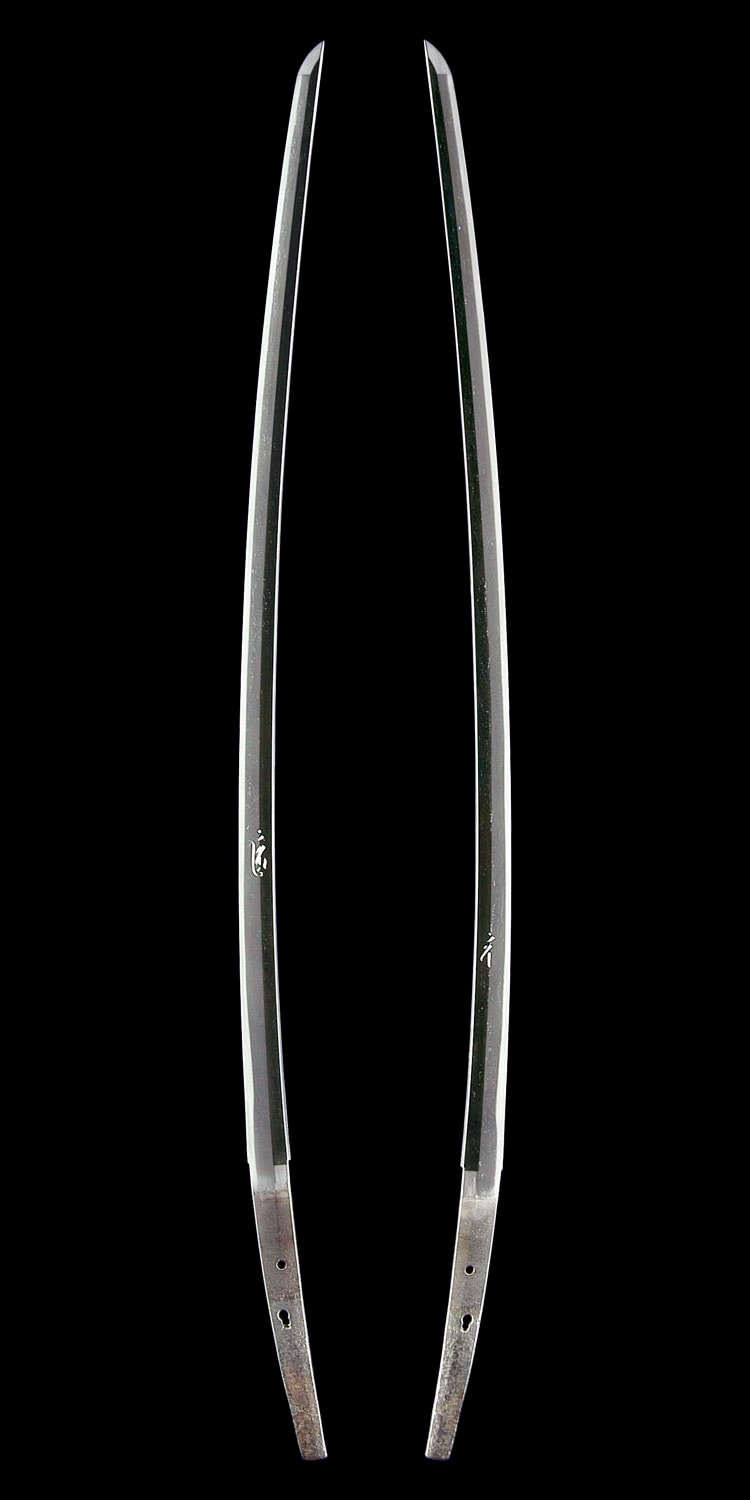
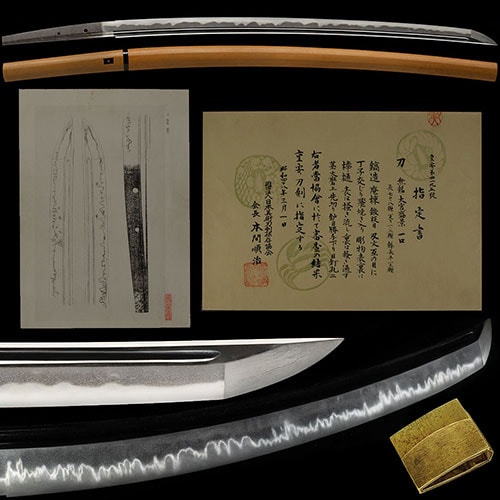
Moritoshi is a smith of the , the early Bicchū line that forged along the lower Takahashi River around the estates of and Manju, working from the end of the period into the early , dated by the swordbooks to about the Gen'nin era of 1224. The published sources give him a leading place in that line, naming him "together with Yasutsugu, Sadatsugu and Tsunetsugu one of the representative smiths of ". A National Treasure carries his two-character signature, and the Important Cultural Properties and the higher modern ranks carry it again, yet extant signed works are few; his record is almost wholly the signed , several still in their original tang, and the foundation of what is known about him.
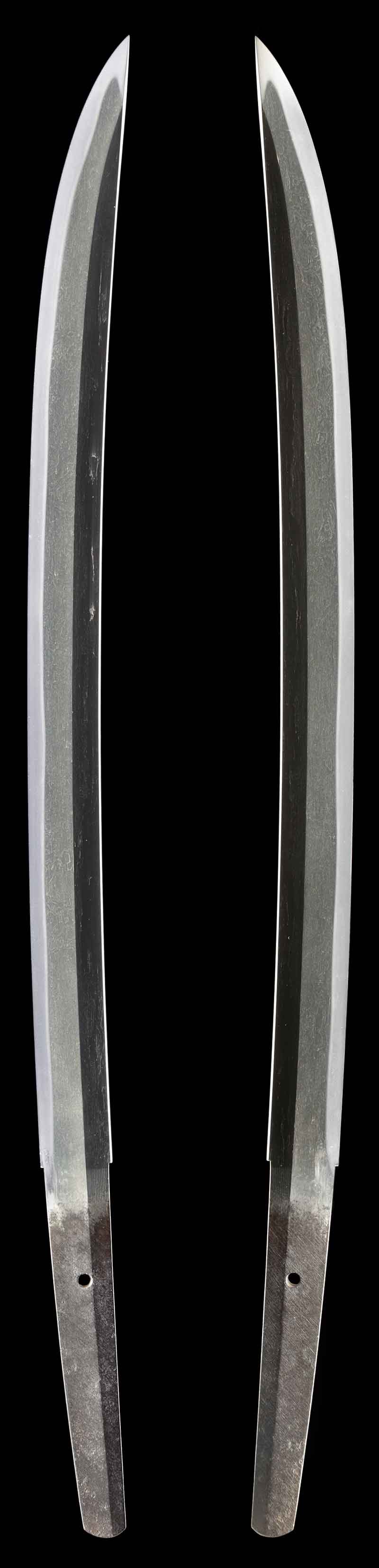
His characteristic hand is a quiet one. Over an mixed with , often a that stands a little so the published sources call it finely , he lays a base into which , and small enter, with occasional angular ; and enter well, adheres, and fine and run through. The temper is not the flamboyant clove-flower of the contemporary but a calm, small irregular line, and on the plainer pieces the tends toward , a subdued, settled feeling. The published sources read the whole as resembling the neighbouring and yet, "compared with , somewhat more restrained, yet possessing a distinctive, astringent flavor".
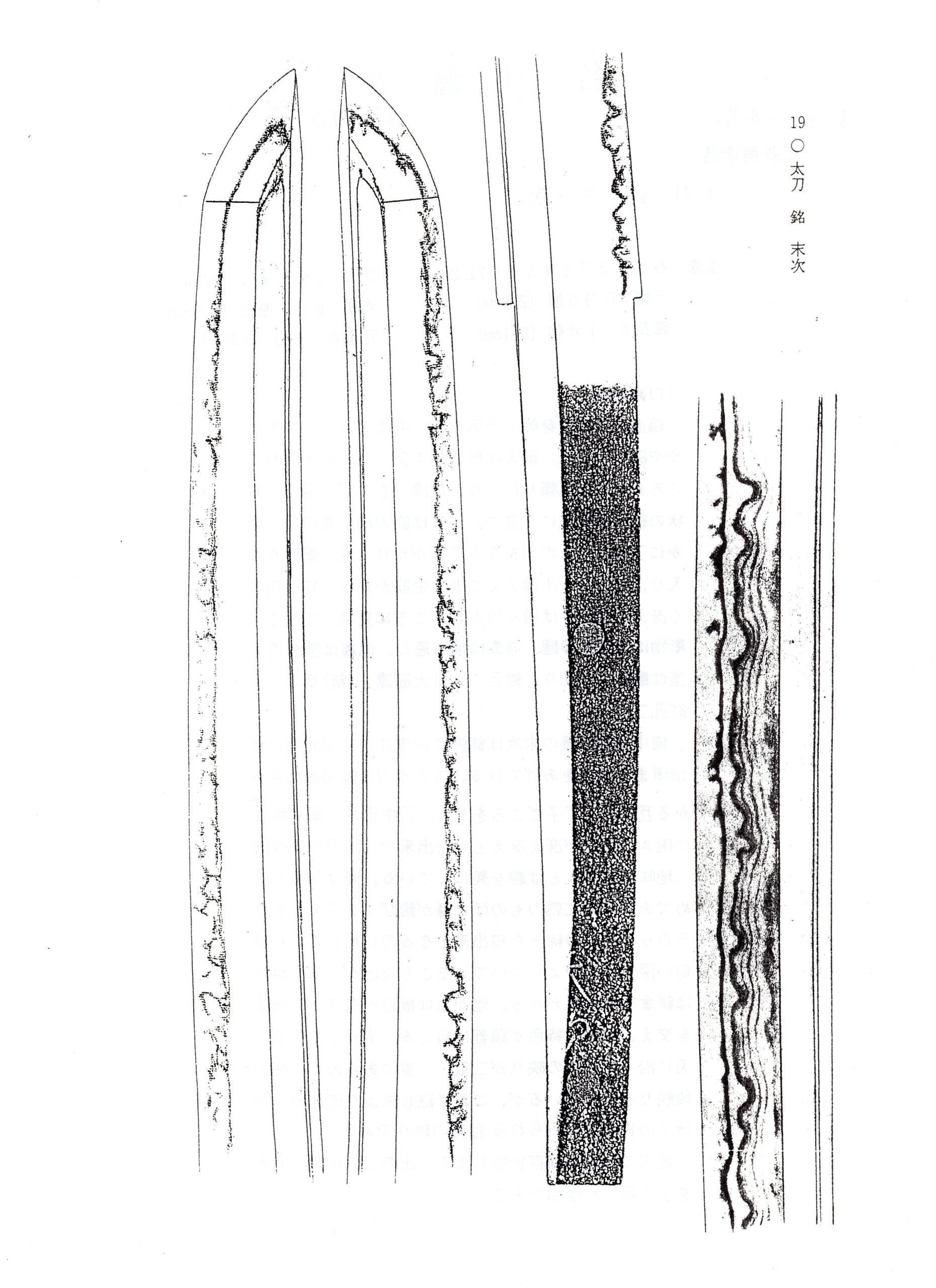
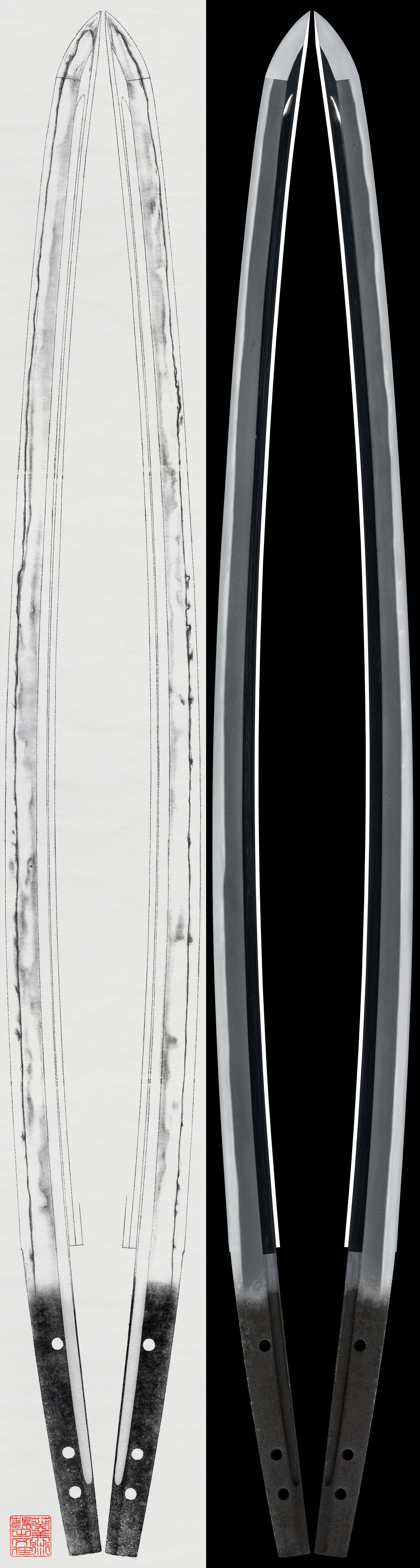
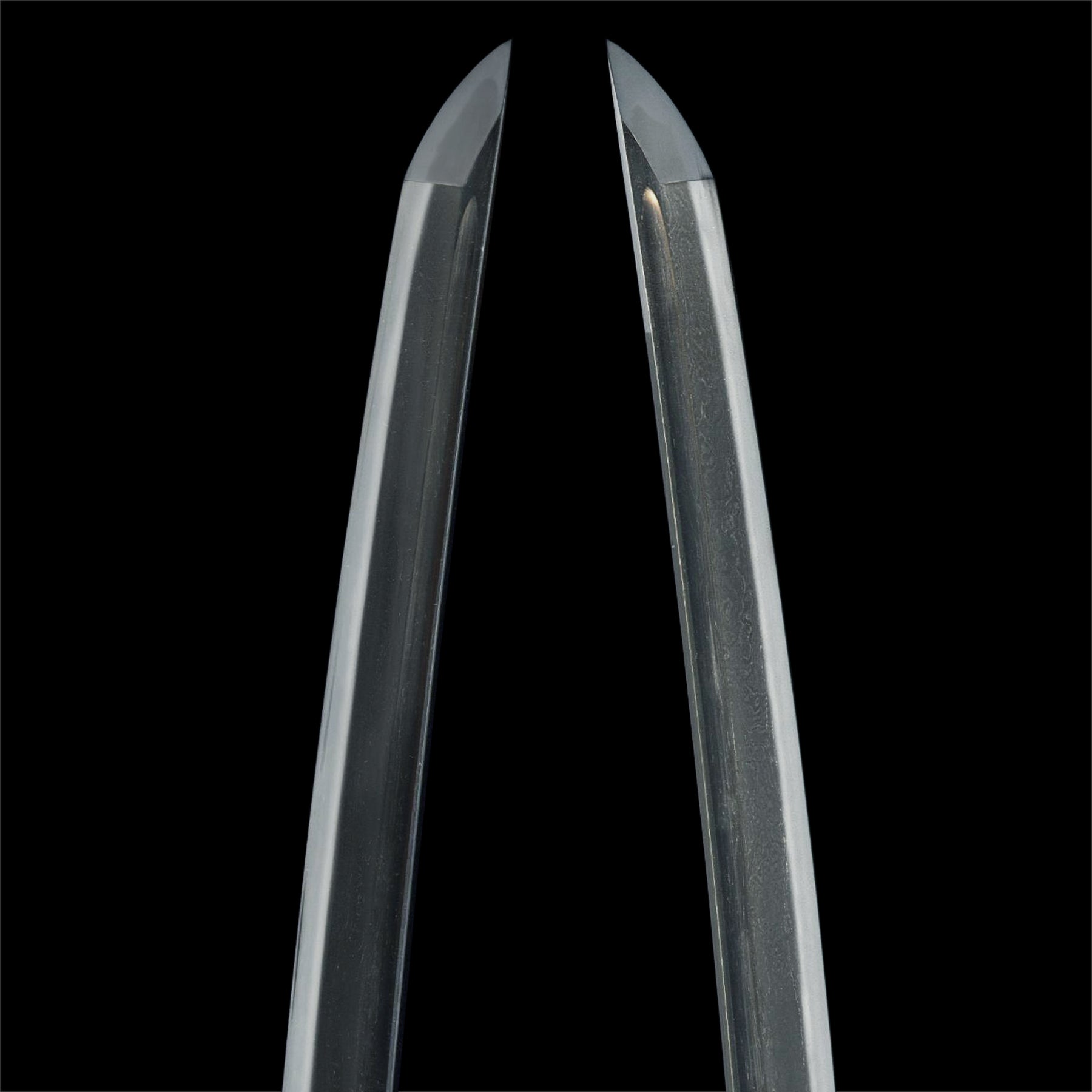
The is where his school speaks most clearly. The forging stands a little and turns blackish in tone, taking on the crepe-like of the old Bicchū steel; dense fine adheres, enter frequently, and through the surface run the speckled and patches of clear . In the darker bands an irregular stands out, and on the finest blades a rises at the . His is the speckled, sober reflection of rather than a clear bright one, and the published sources treat this , standing and crepe-like, as the very thing that separates his work from the it otherwise recalls. The runs straight to a small , at times with a little .
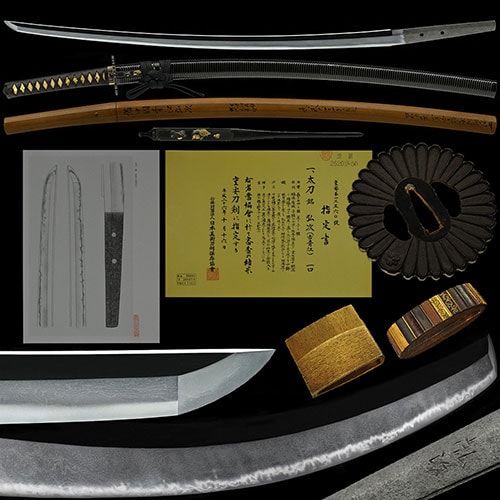
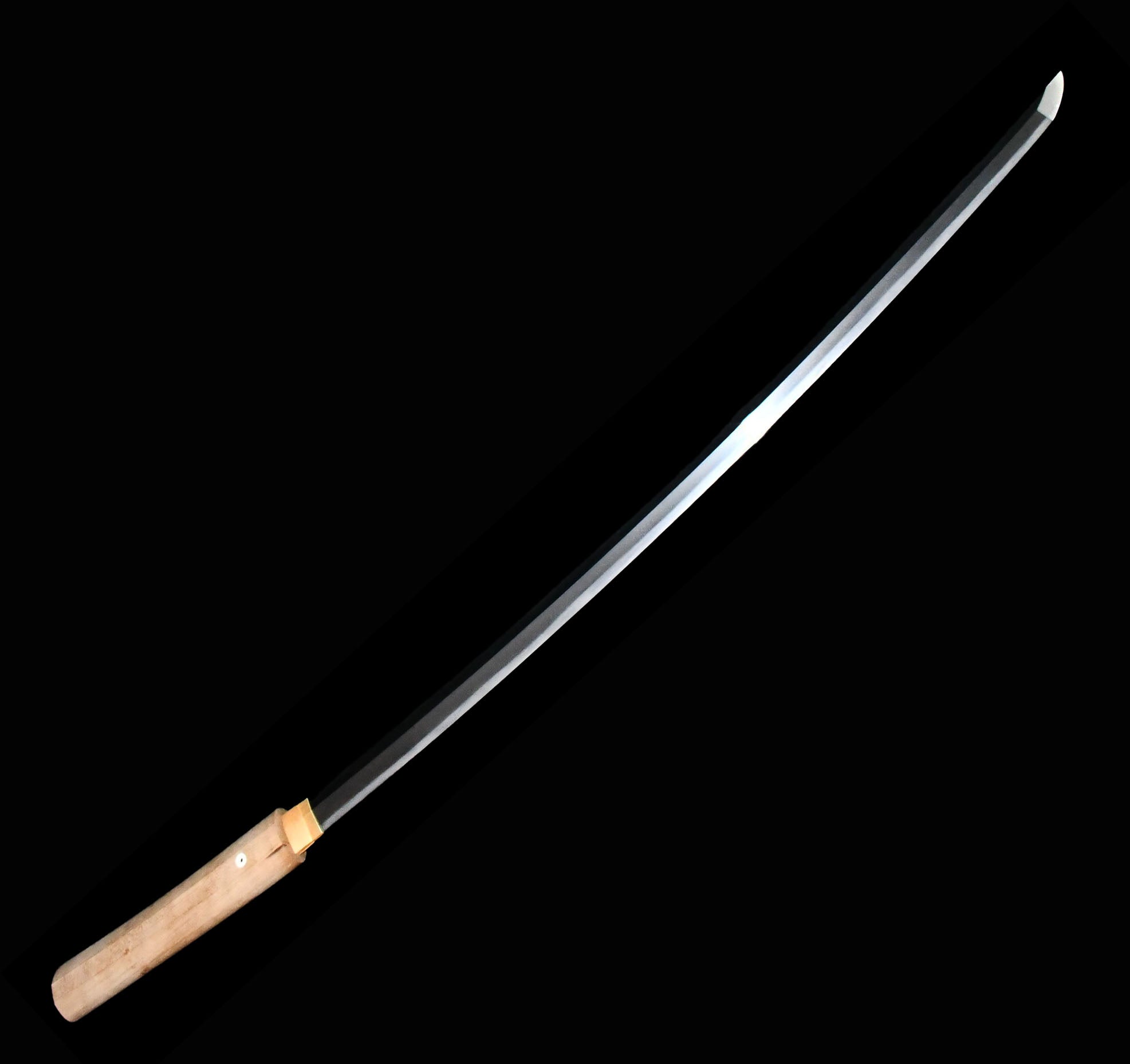
His work survives in essentially one register, the signed , in width from slender to broad and finishing in a or compact , with high and strong ; one survives, signed and carrying a at the . Within that one manner the published sources mark a top group. On the finest signed and the the forging is, in their words, "more refined than is ordinary for the school", the densely and thickly applied, both and richly worked, the deep in and thick in rather than subdued; one such is called a work of outstanding () level, broad and bold in shape and sound in condition. The tang preserves the school's habits: file marks, the signature cut on the , and the smith's own chisel tell, the character 利 set a little closer to the than 守.
What sets him apart from his neighbours the judges name directly. A line also signed Moritoshi, but a Kanagawa is appraised thus: "although there are smiths in who used the signature, this work is judged the Moritoshi of ", and the basis is exactly his own traits, the standing , the quiet with its -toned , the file marks and the signature. His bright and speckled over a subdued place him within beside Yasutsugu, Sadatsugu and Tsunetsugu, and his quiet manner marks him out from the showier of the years; the published sources hold his blades to demonstrate the points of appreciation of the school plainly, one singled out as a piece in which "the characteristic features of are well shown."
For the collector he is a rare early name, graded Jō by Fujishiro. His finest blade is a National Treasure, held with the Important Cultural Properties and the and ranks as patrimony rather than as anything that trades; the National Treasure descends through the Kitsuka, Ōkōchi and Kikkawa families, and his blades are preserved in long-held collections and institutions with their own documented provenance, among them Atsuta Jingū and the Seikadō Bunko, with one carrying a temple provenance to Rendaiji. Only a small number fall in the and tiers, perhaps eight designated works on record beyond the protected pieces, and the published sources call surviving signed examples rare, an and signed blade "valuable as reference material even among this smith's now-scarce works." A privately held signed Moritoshi comes to light only seldom, and to encounter one is a notable thing, a quiet document of how Bicchū forged beside the more brilliant .