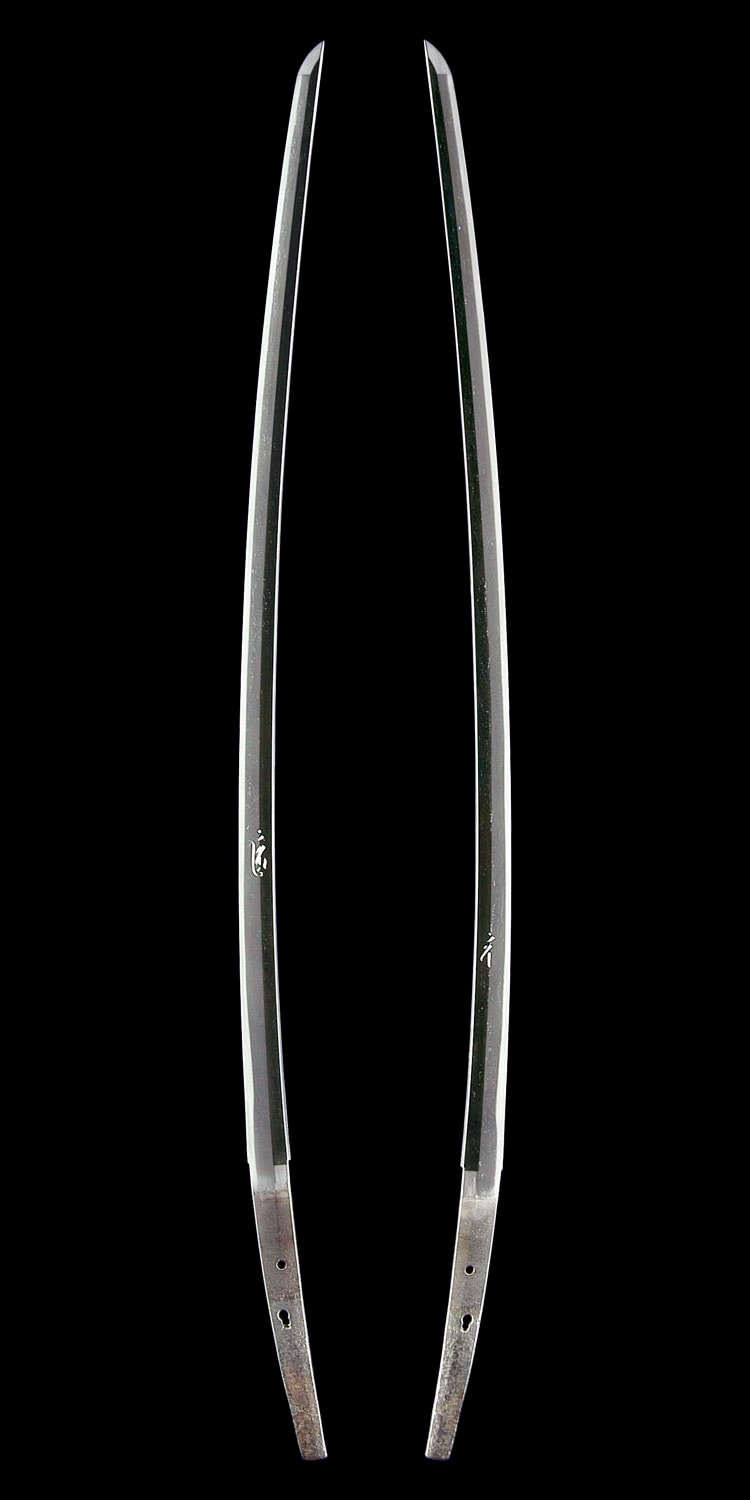
Enji of Bicchu Province, , is the name the gives for this smith, and the published sources set him at the head of the line: he is held to be the first-generation Enji, traditionally the son of Moritsugu, with the name then carried down into the late . He belongs to the group of Bicchu, the swordsmiths who appeared roughly two centuries after the early-eleventh-century reader Sarugaku-ki listed "Bicchu swords" among the products of the provinces, and who worked the lower Takahashi River basin around and Manju. Within that group the works that do not descend later than the mid- are called , the early , and it is to this earliest stratum that his blades are read. A question of generation comes with the name: the reference compilations record several smiths signing 延次 from the start of the period onward, so the corpus carries a name borne by more than one hand, sorted out by date rather than by a difference of school.
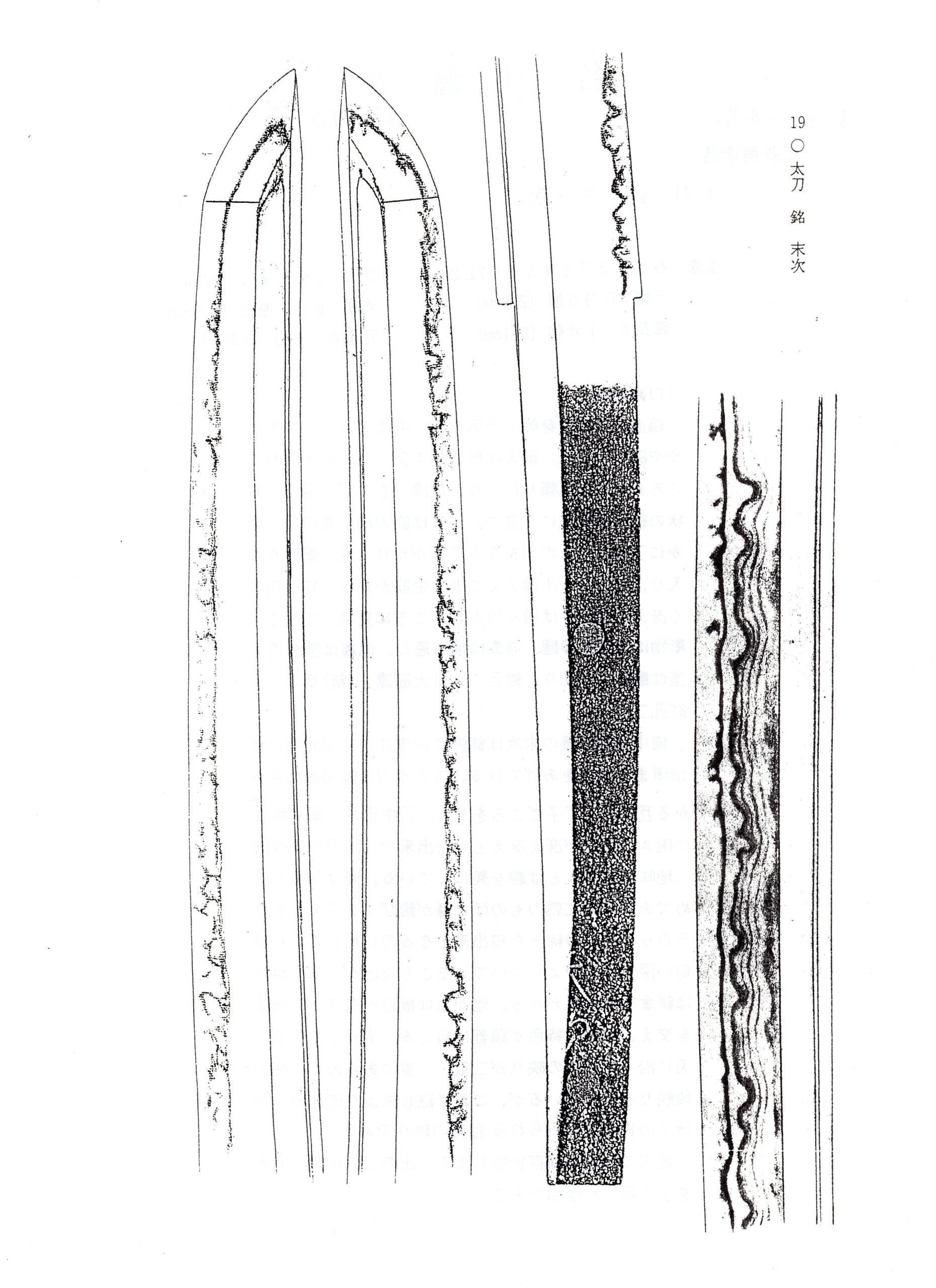
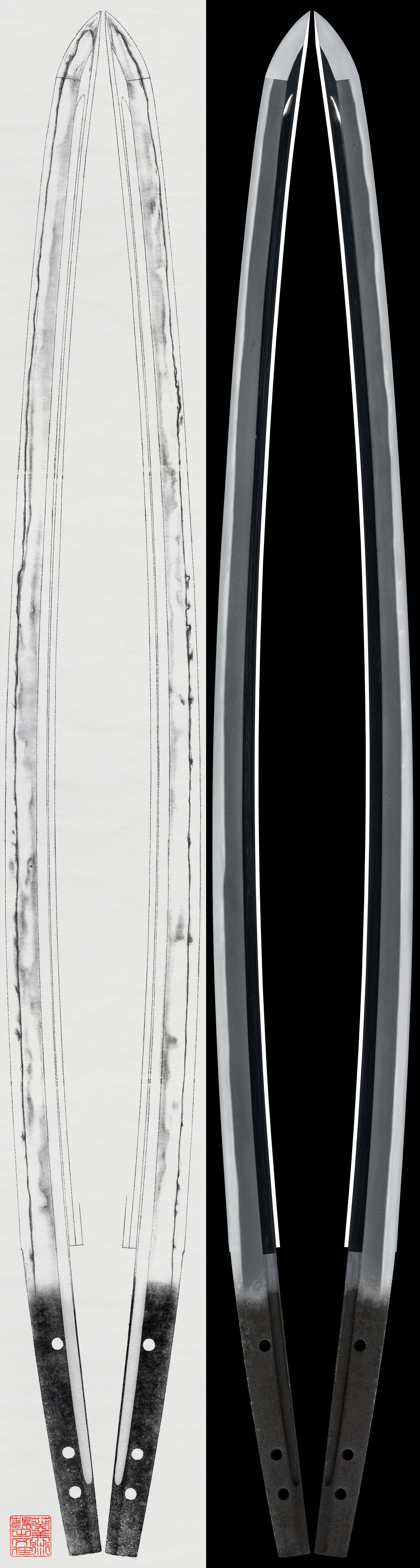
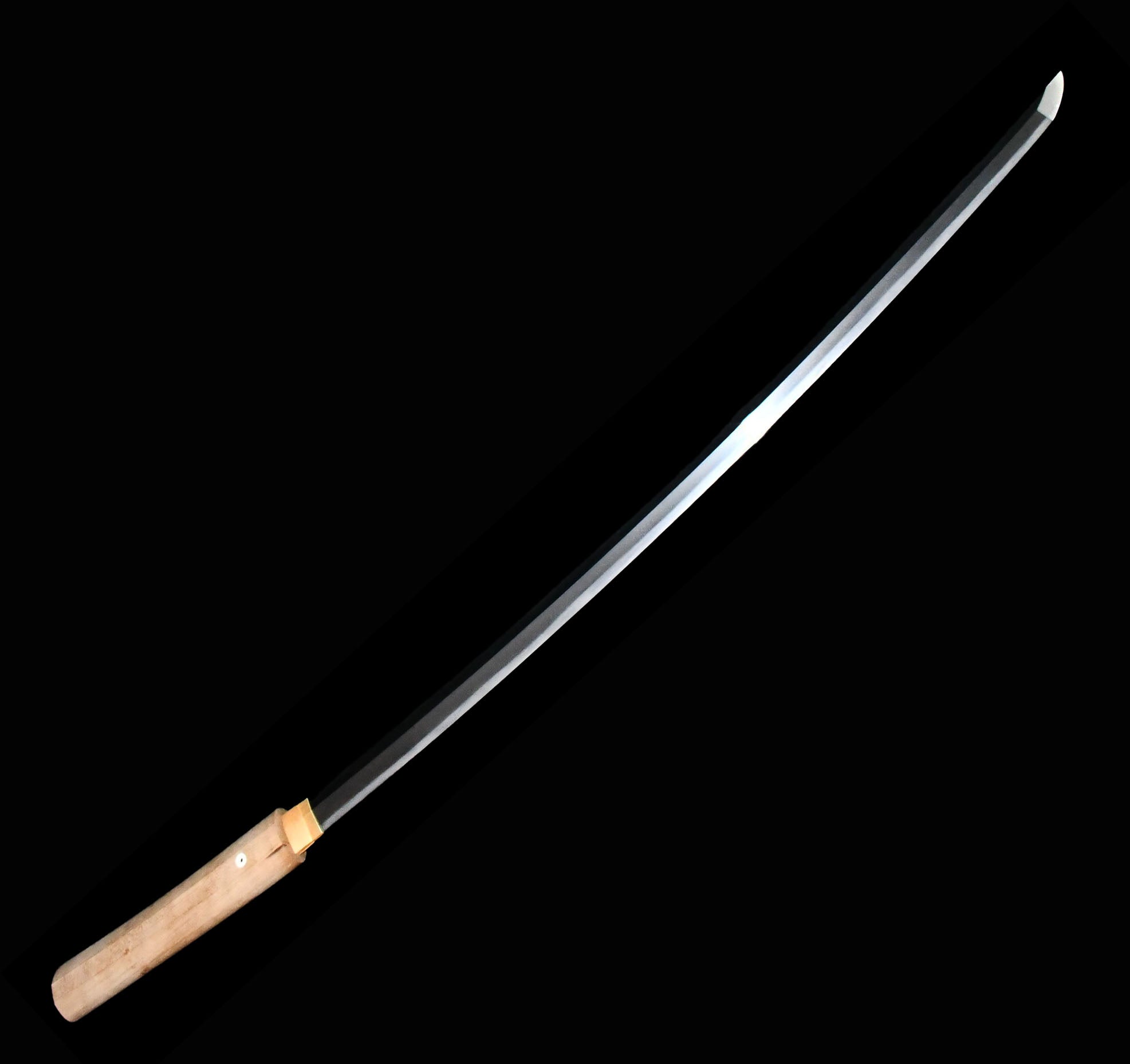
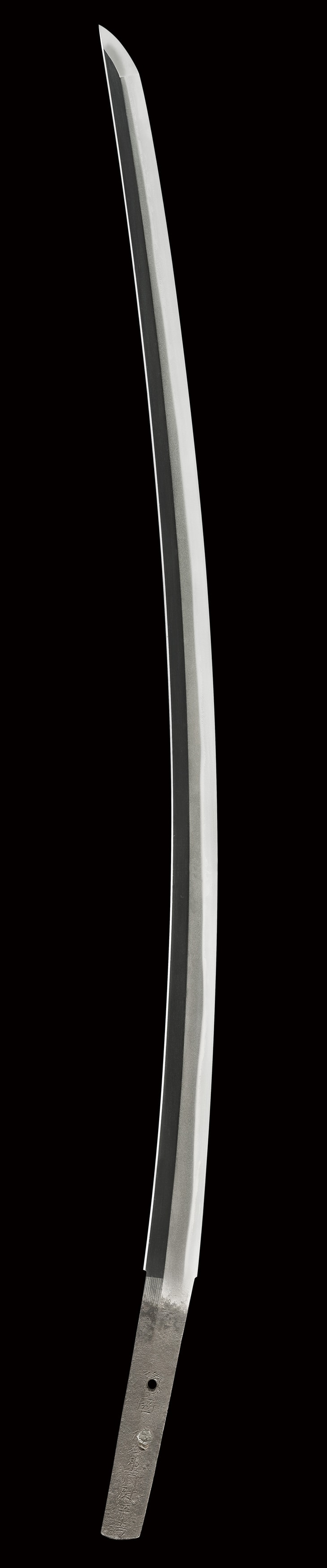
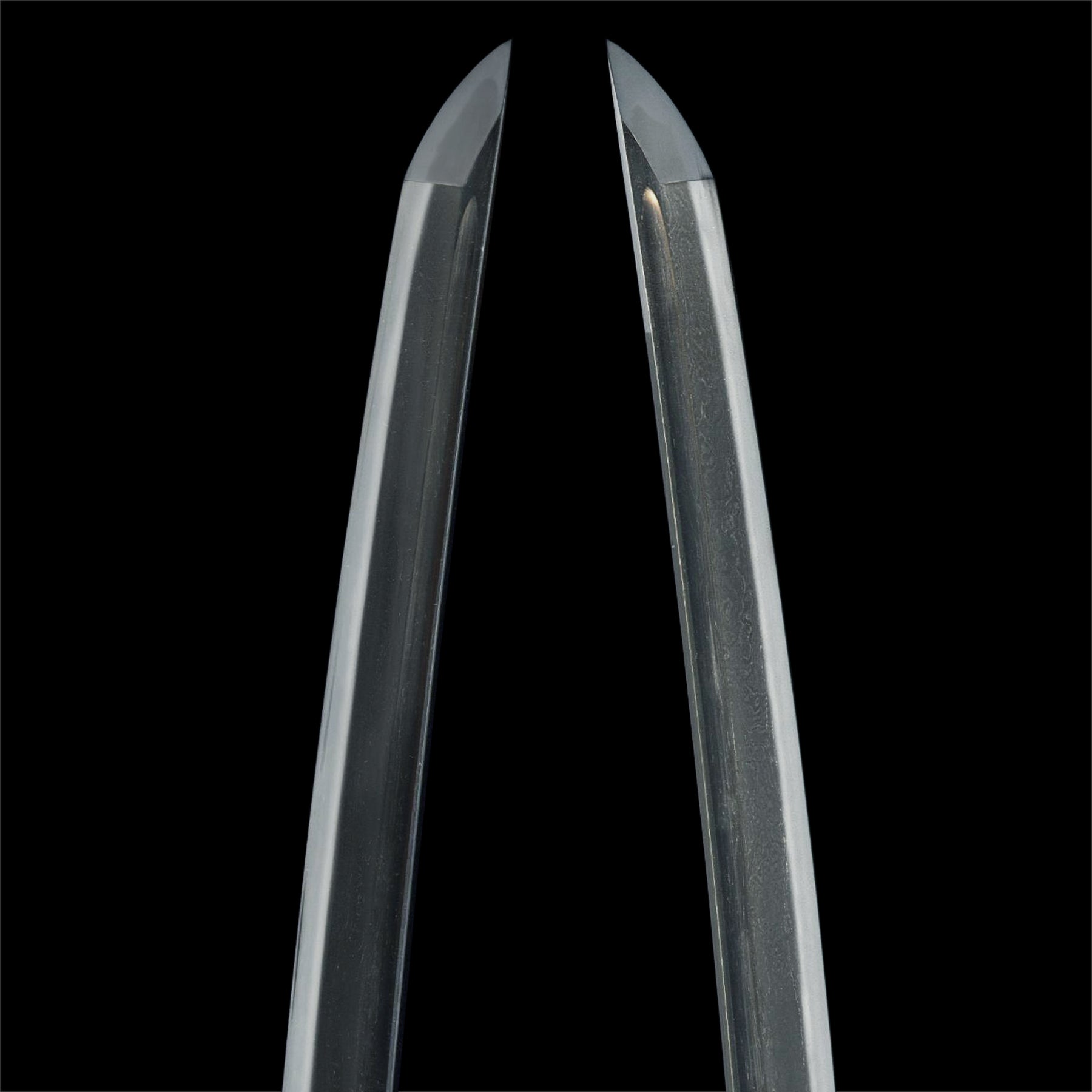
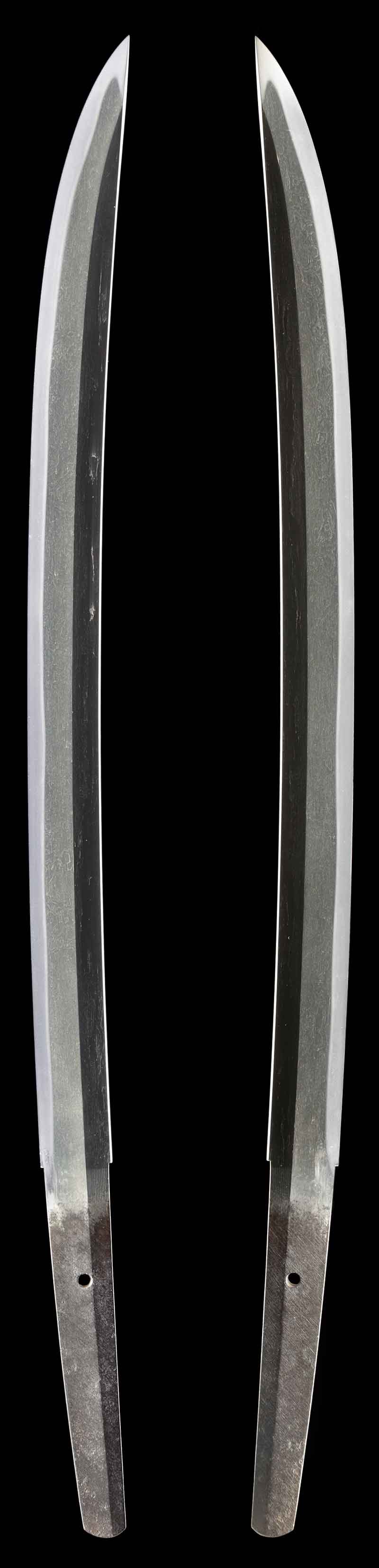
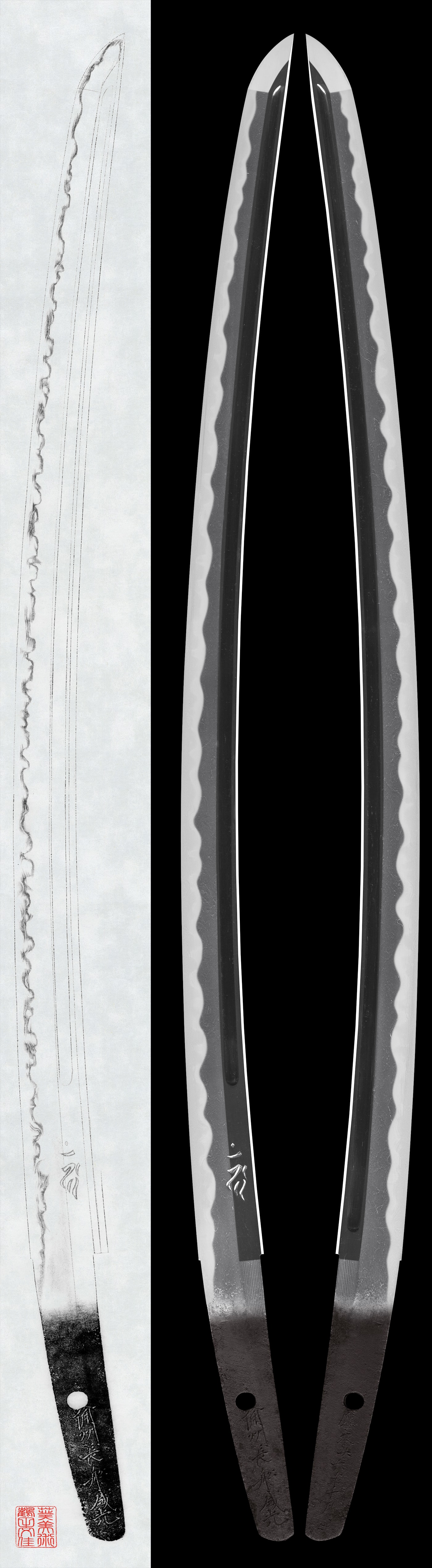
His authenticated work is the signed , slender and built with a high and , the kept small, the tang on the least altered pieces remaining in the pheasant-thigh shape. The hand that recognises him reads first in the steel. Over a tightly forged with fine and , the grain stands up across the whole blade and takes on the crepe-silk of the school, the published sources writing that overall the grain rises into that crepe-like . Clear patches surface in the , intermingles, and a stands over it, the faint and reflection together the marks that hold his to and away from a plain . Over this he tempers a base, shallowly , into which small and small are mixed and enter well; the tends tight and shows bright and clear, and the turns back in . The published sources single out that brightly clear as the superb point of the work, judging on the piece that the way it grows bright and clear is splendid.
The register is the quiet one of the early , and that is the point of him. His is a -toned manner, not the flamboyance toward which the later smiths of the would move, and the small clove and small ride on the straight base as activity rather than govern it. The interest lies in the pairing of a calm temper with a busy : the standing grain, the crepe of the , the patches of , the laid faintly over all of it. The published sources read this whole as the school speaking through one of its founders, holding of the that in both and it well displays the distinctive features of the group and that its workmanship is excellent, and of the that it clearly displays the features of the school in both and . What separates his blades from a is therefore not the temper, which they share, but the beneath it.
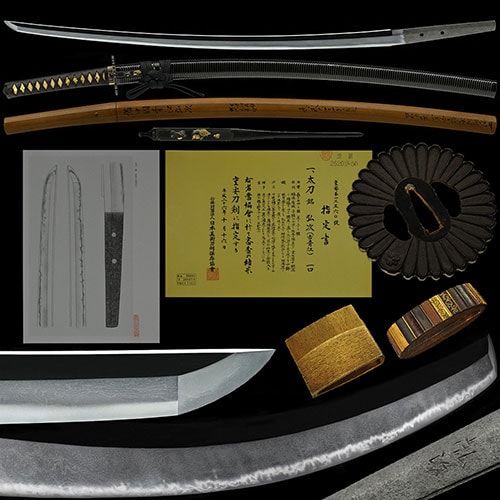
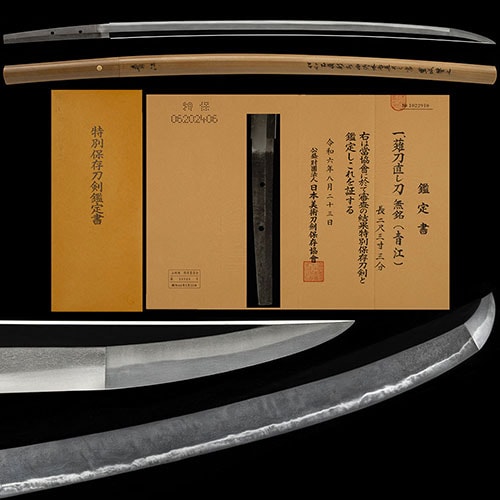
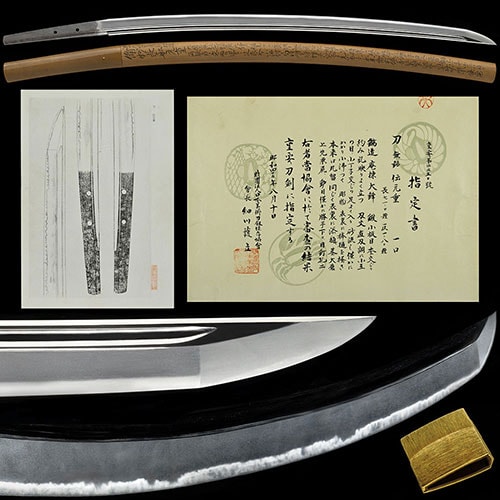
The corpus divides cleanly by date, and the division is one the published record itself draws. One of the two prewar Important Art Object keeps an almost original tang with a high and marked , a faint appearing with intermixed and a standing out; from its and the work in and the published sources carry it back to the early . The second is assigned instead to the mid-, around the Bun'ei era of 1264 to 1274, its commentary opening by noting that several smiths signed Enji from the start of the onward and placing this piece with the later of them. It keeps the slender form and small , a tightly packed with fine and a tendency toward , the temper beginning in a manner and resolving into a slightly -laden with . The signature itself is part of the recognition: a bare two-character is cut on the near the tang tip, with a fine chisel yet in somewhat large characters, over a steeply slanted file pattern. The published sources note that within the tradition, not limited to Enji, it is standard to cut the signature on the , and that the is a point not to be overlooked; on the piece they add that the calligraphy of the precisely matches the example certified as an Important Art Object.
His standing is best taken from the school he opens rather than from a rivalry. Enji stands at the top of the genealogy as the son of Moritsugu, the name descending through the line to the late . The published sources note that signed Enji survive in relatively greater numbers than for most of his fellows, so the difficulty for the connoisseur is less one of authentication than of generation, of placing a given signed blade early or late within the run of the name. What recurs across his record as his own is consistent: the crepe with its and faint reflection, the bright tight over a quiet , the two-character signature above steep file marks. These are not borrowed from a greater contemporary but are the early seen at its source, and unsigned attributions to the school rest on exactly this combination.
The Toko Taikan values his work in the middle range, and three of his blades stand on the official record as designated works. There are no National Treasures or Important Cultural Properties among them. The earliest are the two prewar Important Art Object , one recorded in the Kozan and the Imamura , held by Konoe Fumimaro and now in the Yomei Bunko in Kyoto; the other owned at its designation by Seto Yasutaro of Hyogo. Above these stands a single raised to , with its record on the blade. Enji is accordingly a smith of the early more approachable than the great names yet still uncommon: his signed appear from time to time and with patience, and most carry only the bare two characters of his name, so that placing the generation falls to the eye reading the crepe and the bright . A piece with secure provenance of the kind the Yomei Bunko preserves, transmitted with its history and certified for its calligraphy, is the rarest among them and a landmark when one is encountered.