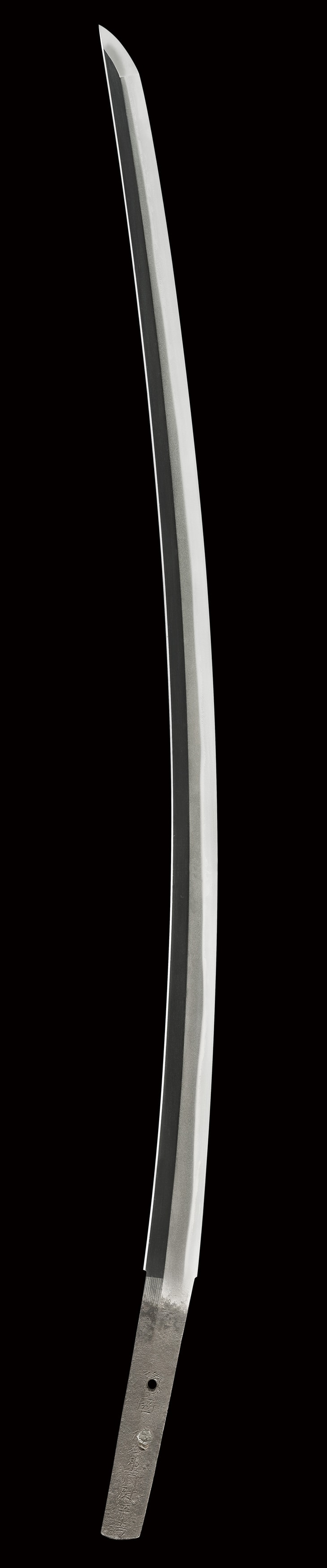
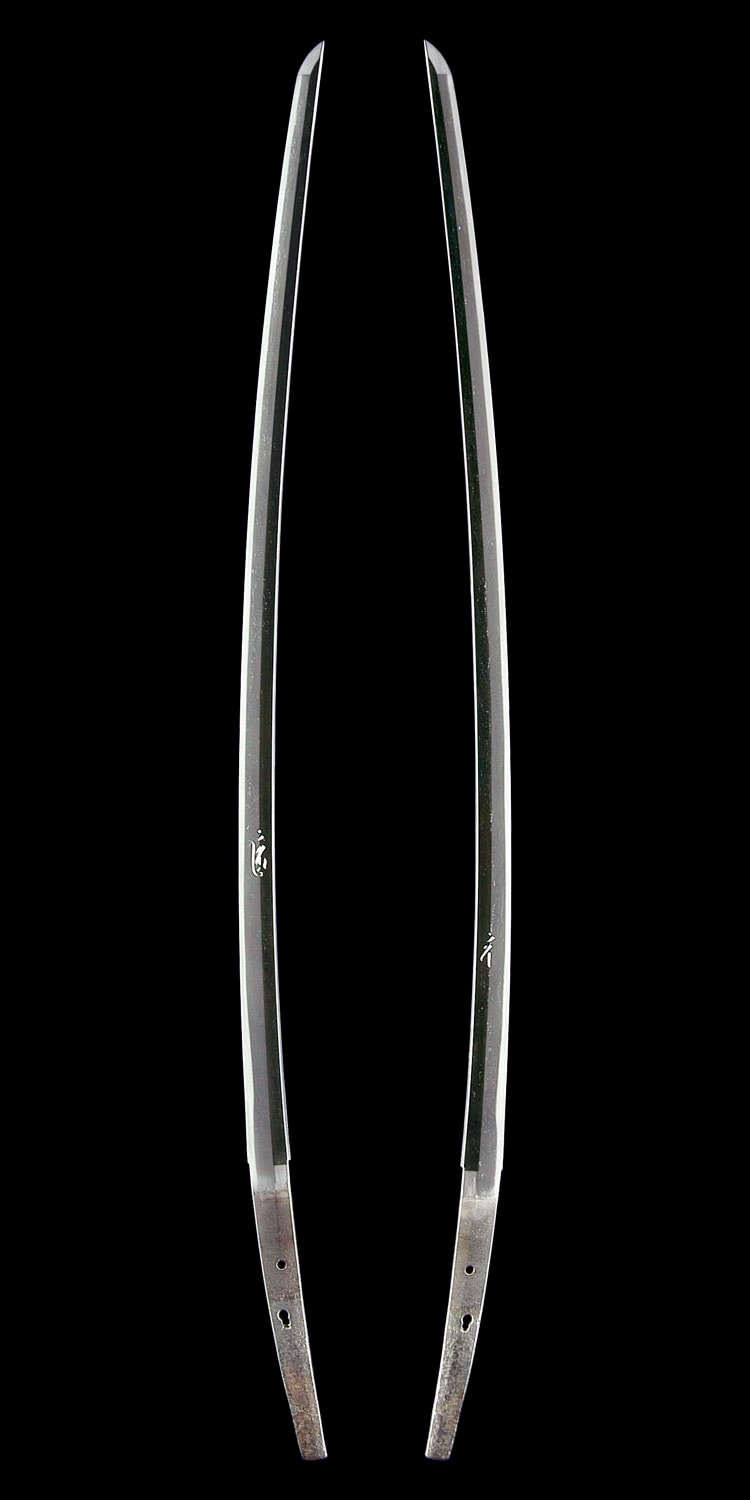
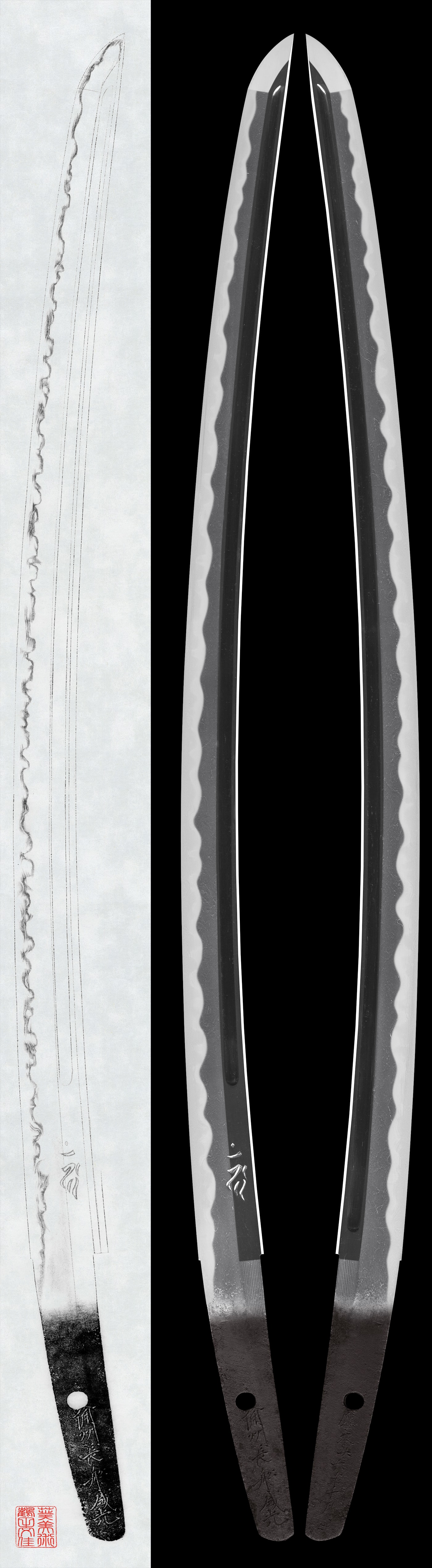
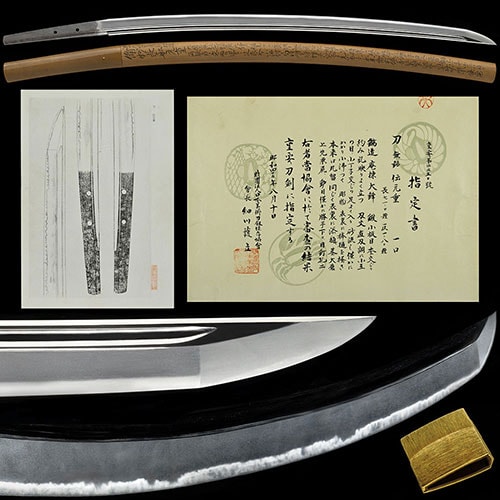
Toshitsugu is a smith of Bicchū, working in the early period and transmitted in the reference works as a son either of Moritsugu or of Tsuguiye, with the placing his activity about the Kenryaku era. The school grew up in the iron country of the lower Takahashi river, around the villages of and Manju, and the published sources reserve the name for the work of the school that does not descend later than roughly the middle of the period. Within that early body Toshitsugu stands as one of the names by which the manner is recognized, though the published commentary returns again and again to a single fact about him: that his signed work scarcely survives. The states plainly that of this smith "extant signed works are exceedingly few", and it is against that scarcity that each surviving blade is weighed.
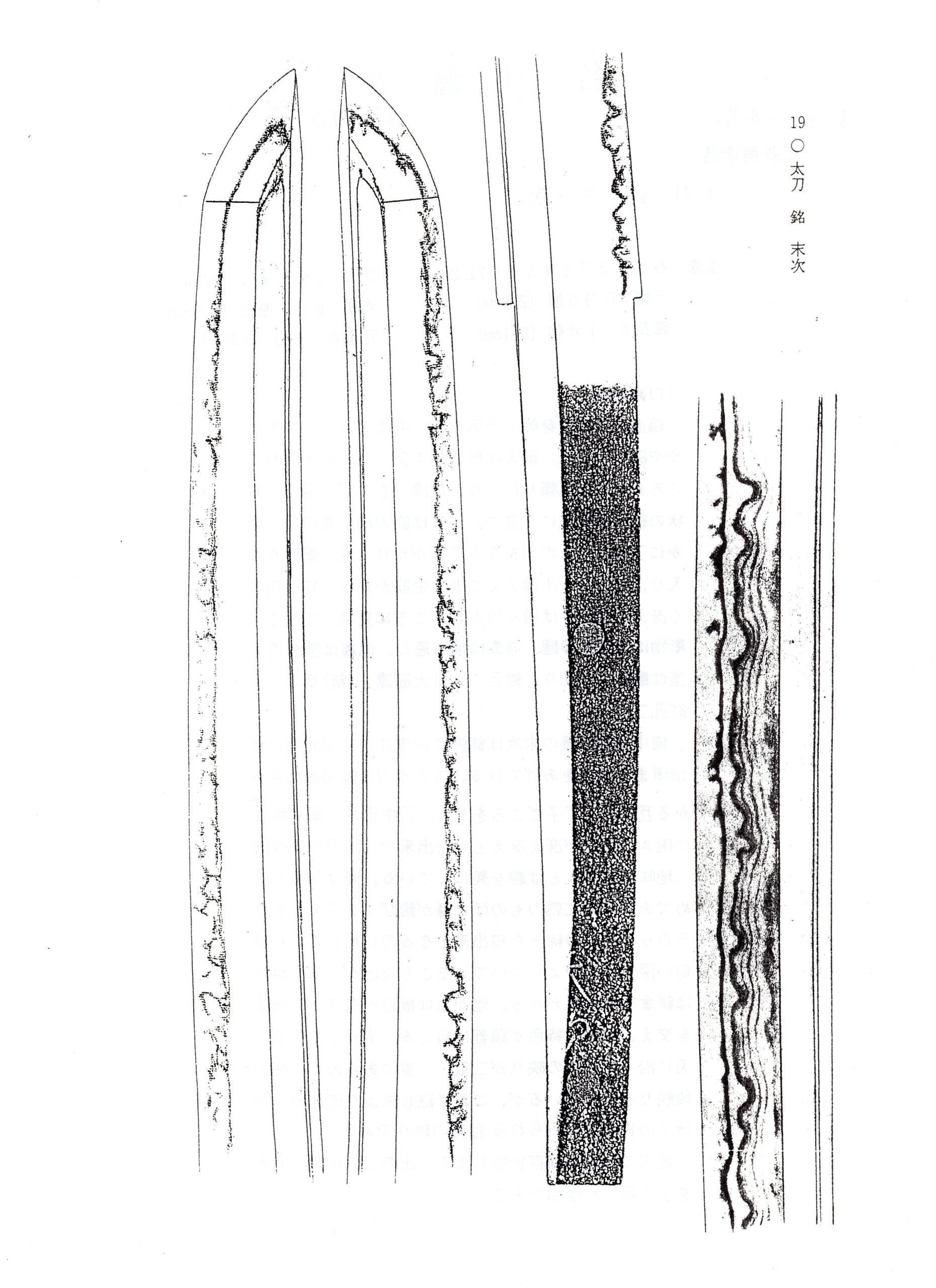
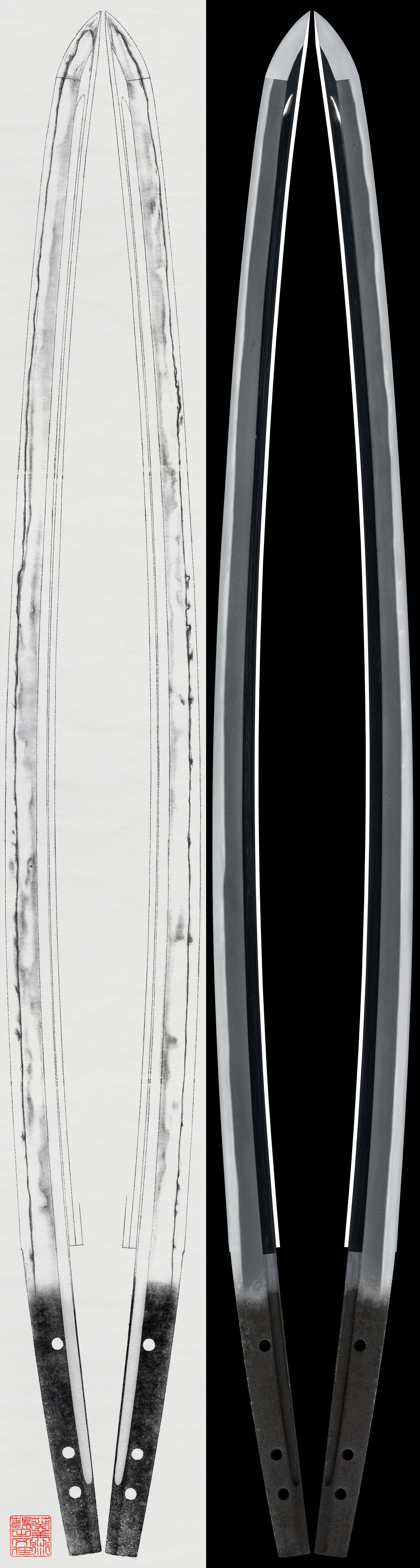
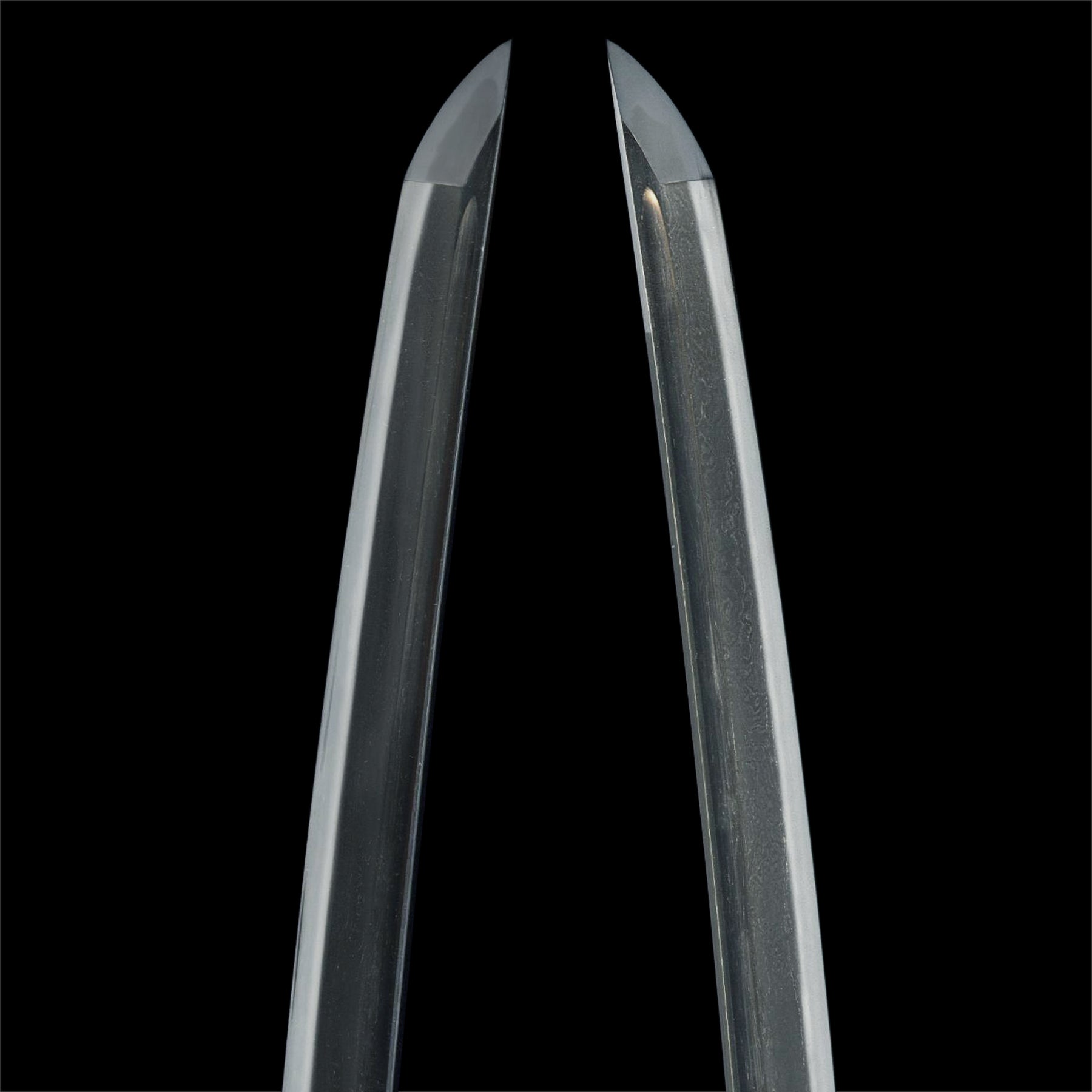
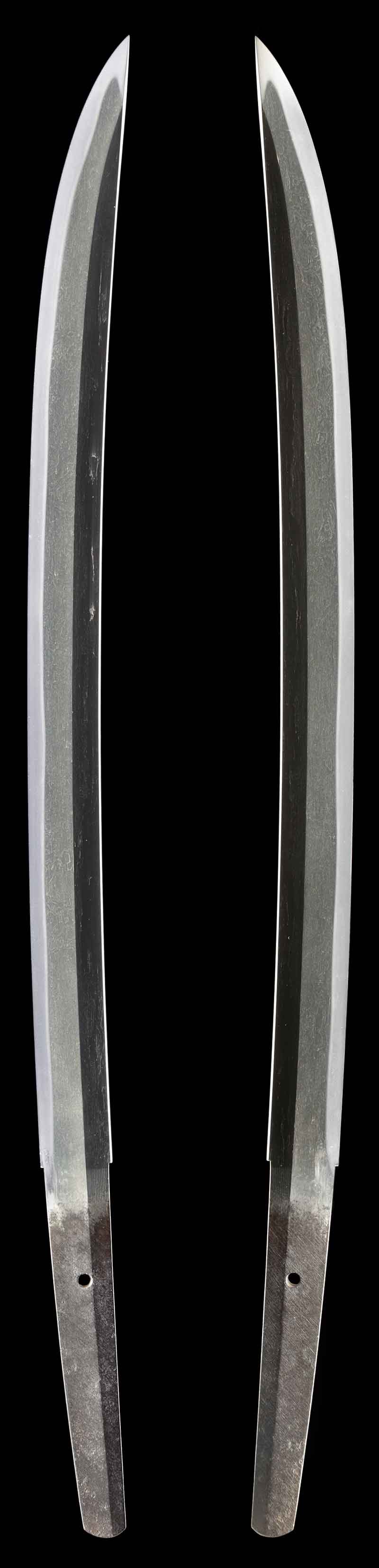
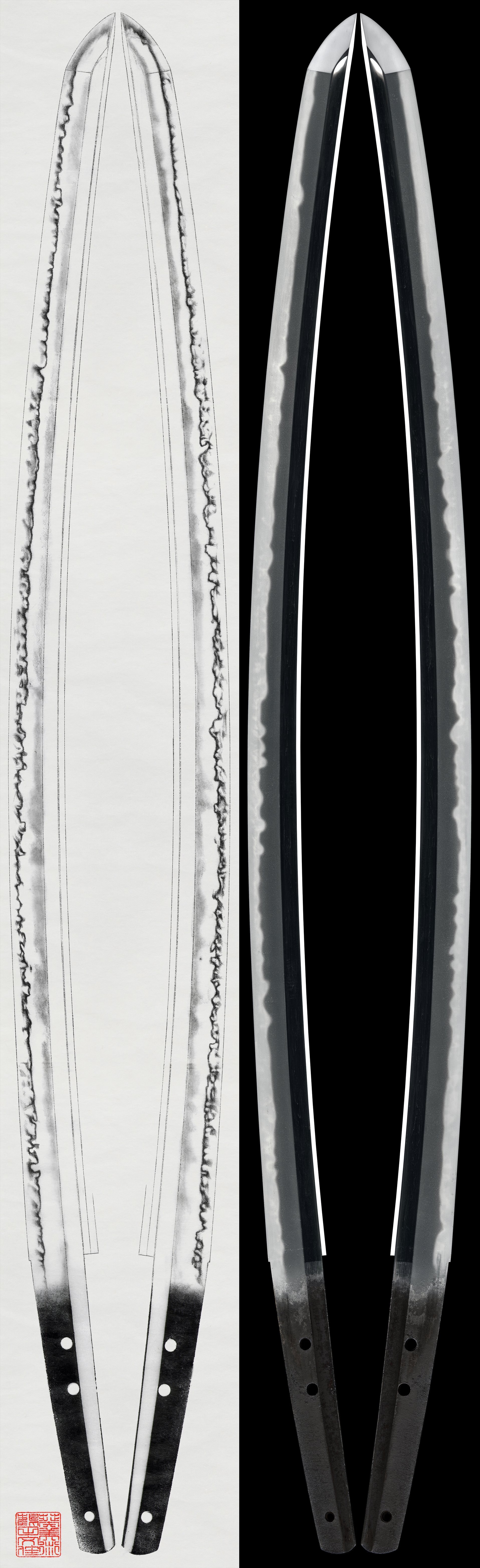
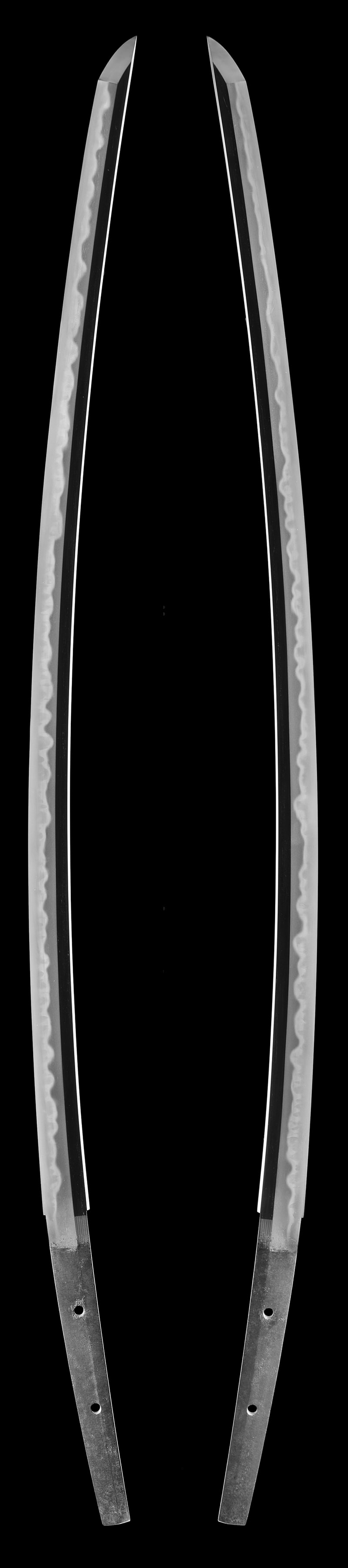
His characteristic hand is the , several still bearing a bold two-character signature cut on the , one of them with high and a small , the rest shortened yet keeping the old carriage with marked , one running to an -leaning point. Over the steel he sets a deliberately quiet temper. The base is a or a plain into which , and small enter, and coming in well, the deep in with thick , and running through it. It is not the flamboyant clove-flower of the great schools but a calm irregular line, and on one broad late a breaks the temper near the while the turns bright and clear. The runs straight to a small , and on the finest signed turns back from into a fuller sweep.
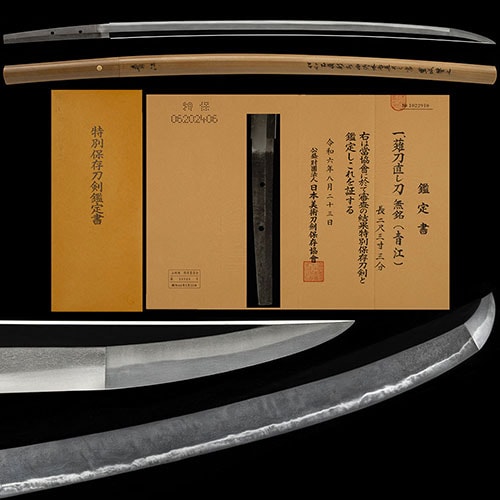
The is where the school speaks. Toshitsugu forges a , in places an mixed with that flows and stands a little, with adhering and entering, and through it run the patchy and the crepe-like surface the published sources name a , calling the texture in so many words a "crepe-like grain". A faint stands over that on his signed pieces. On his most refined attributed work the reflection becomes his particular note: a suji- gathers near the edge while a rises toward the back, and the two together give the layered, stepped that sets those blades apart. The published sources read the whole of this manner as quieter than the work of the day, "somewhat more subdued, with an astringent depth of flavor when compared with contemporary ".
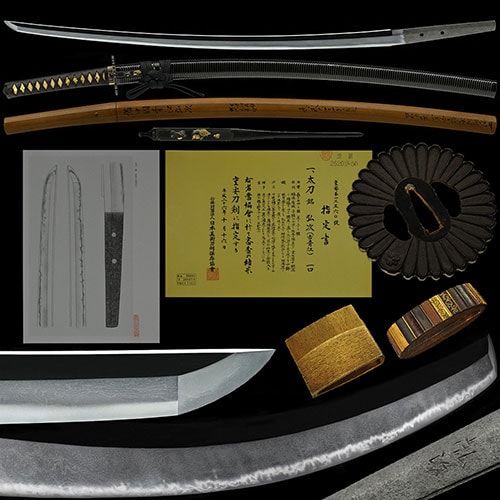
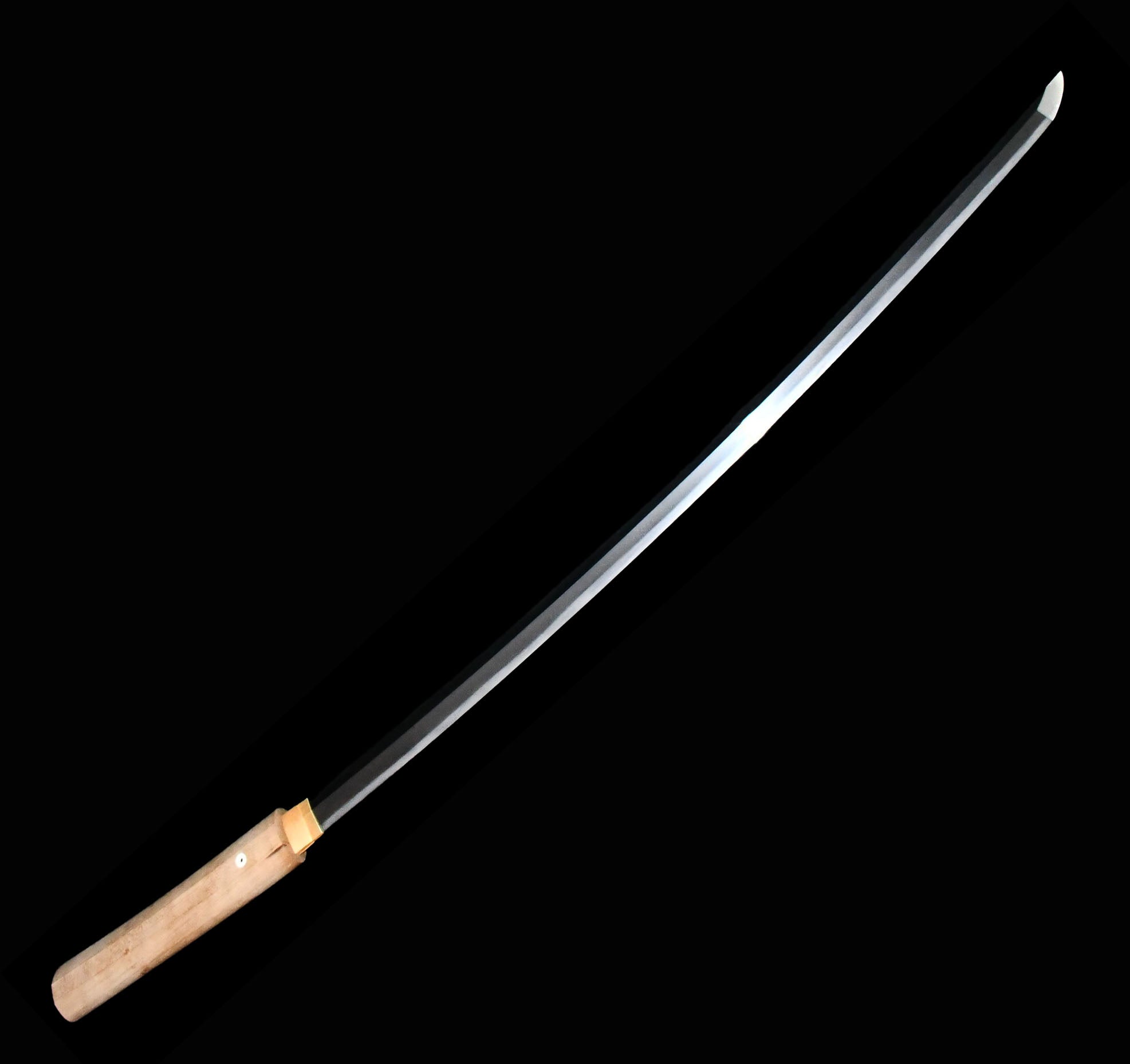
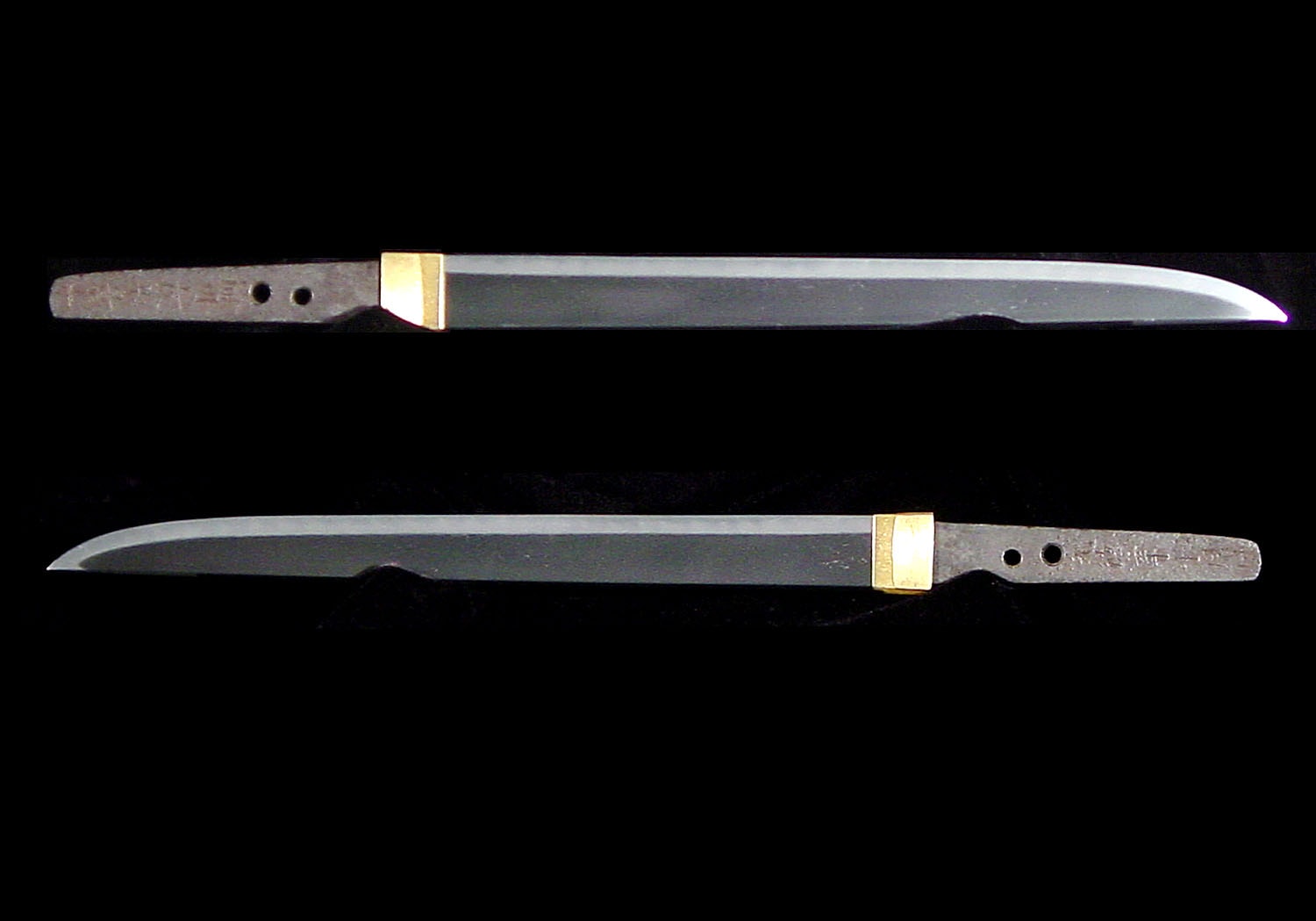
His record divides into two faces. The first is the signed already described, the foundation of any judgment of his hand. The second is the gold-inlaid Kōfū, broad in body with little taper from base to tip, thick in , deeply curved, ending in a compact , the standing overall with minute and the suji- and that read as . Because that powerful shape and those features bind it so closely to the signed of the thirteenth session, the published sources judge it the work of the smith. The file marks on the tang are a large , named a point of appreciation for the school, and the commentary notes that many smiths, Toshitsugu among them, cut the signature on the rather than the customary , calling the "large file marks a point of appreciation for this group".
What separates Toshitsugu within his own province is exactly this calm. Where the wider stream and the schools beyond it carry a showier , his hand keeps to the -based over the , the astringent register the judges treat as the old Bicchu taste. The thirteenth-session is held up not merely as a good Toshitsugu but as a high point of the school as a whole, the naming it "an outstanding piece not only among this smith's works but within the group itself"; of an earlier the body of commentary says that a piece of such quality "has no equal elsewhere" among his surviving signed work. His standing rests less on volume than on the height of the few that remain.
For the collector Toshitsugu is a rare early name carried at a high rank. Fujishiro grades him Jō-jō . He has no National Treasures; his record runs instead through an Important Cultural Property, a held at Dazaifu Tenmangū in Fukuoka, a prewar Jūyō Bijutsuhin now in the Sano Art Museum in Shizuoka, two and a small number of , six designated works in all on the official record. The signed pieces are the precious ones, the published sources prizing the for keeping its original tang and signature; the , secured to him by its bond to the signed , is the other way his hand reaches a collection. With only a handful of blades across the and tiers, and most of them held rather than traded, a signed Toshitsugu comes to light only seldom; a privately held example is a notable thing for a collector to encounter, and a document of how quietly, and how well, the old Bicchu smiths worked beside the brighter forges of .