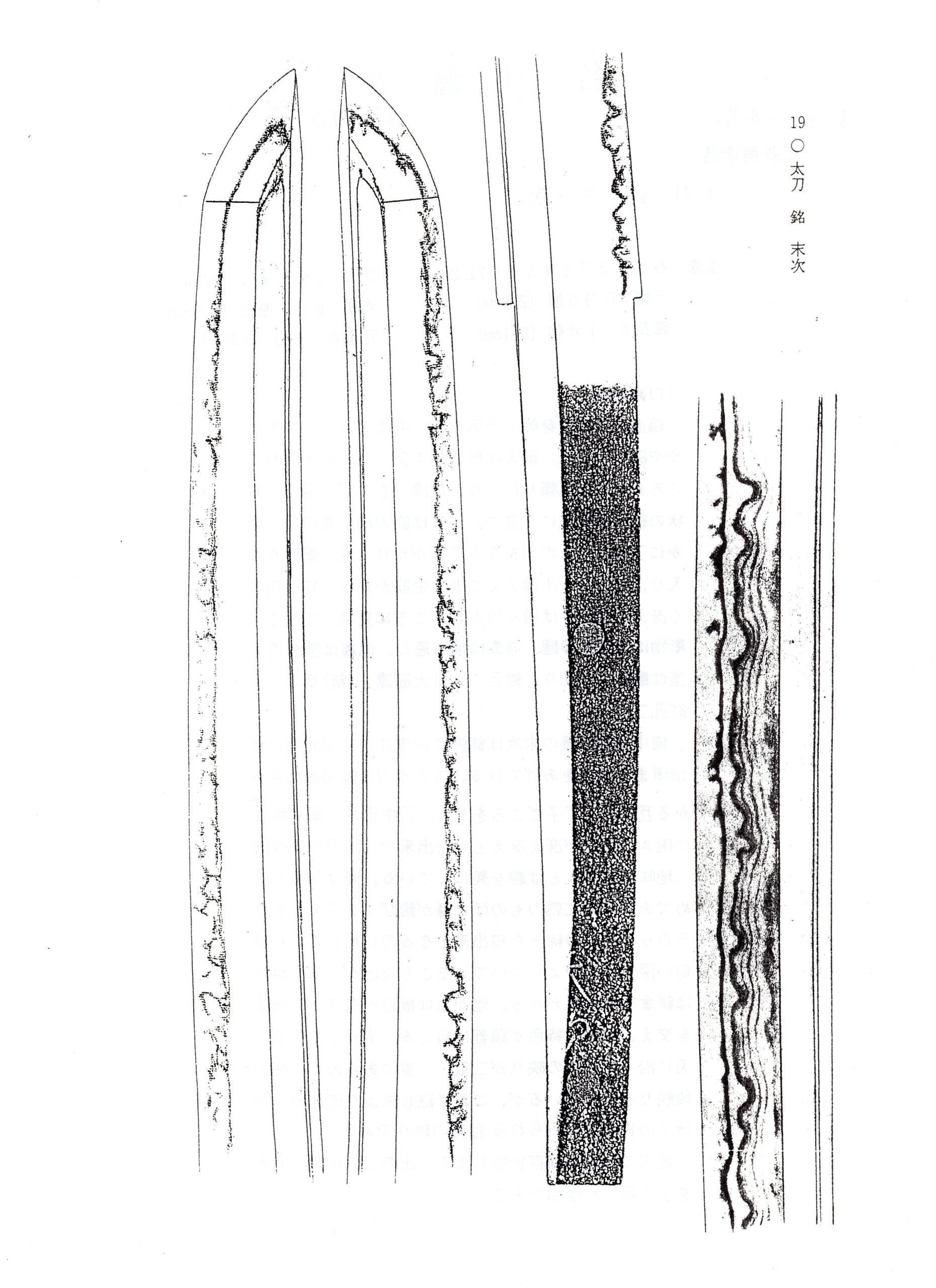
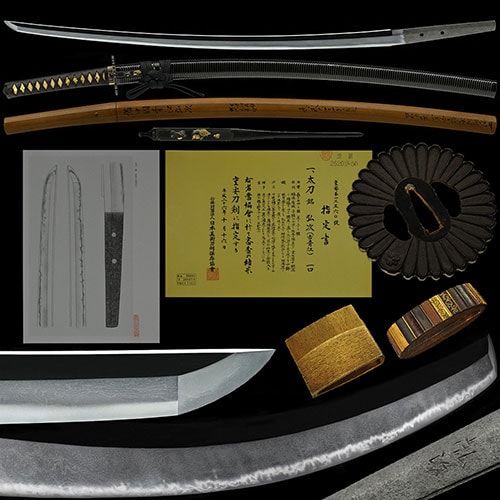
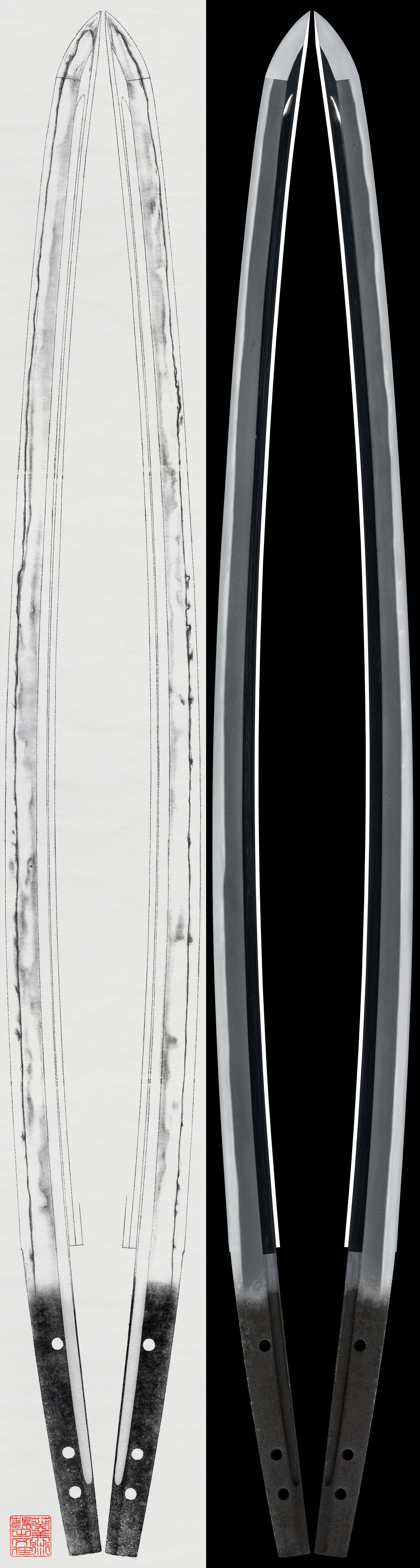
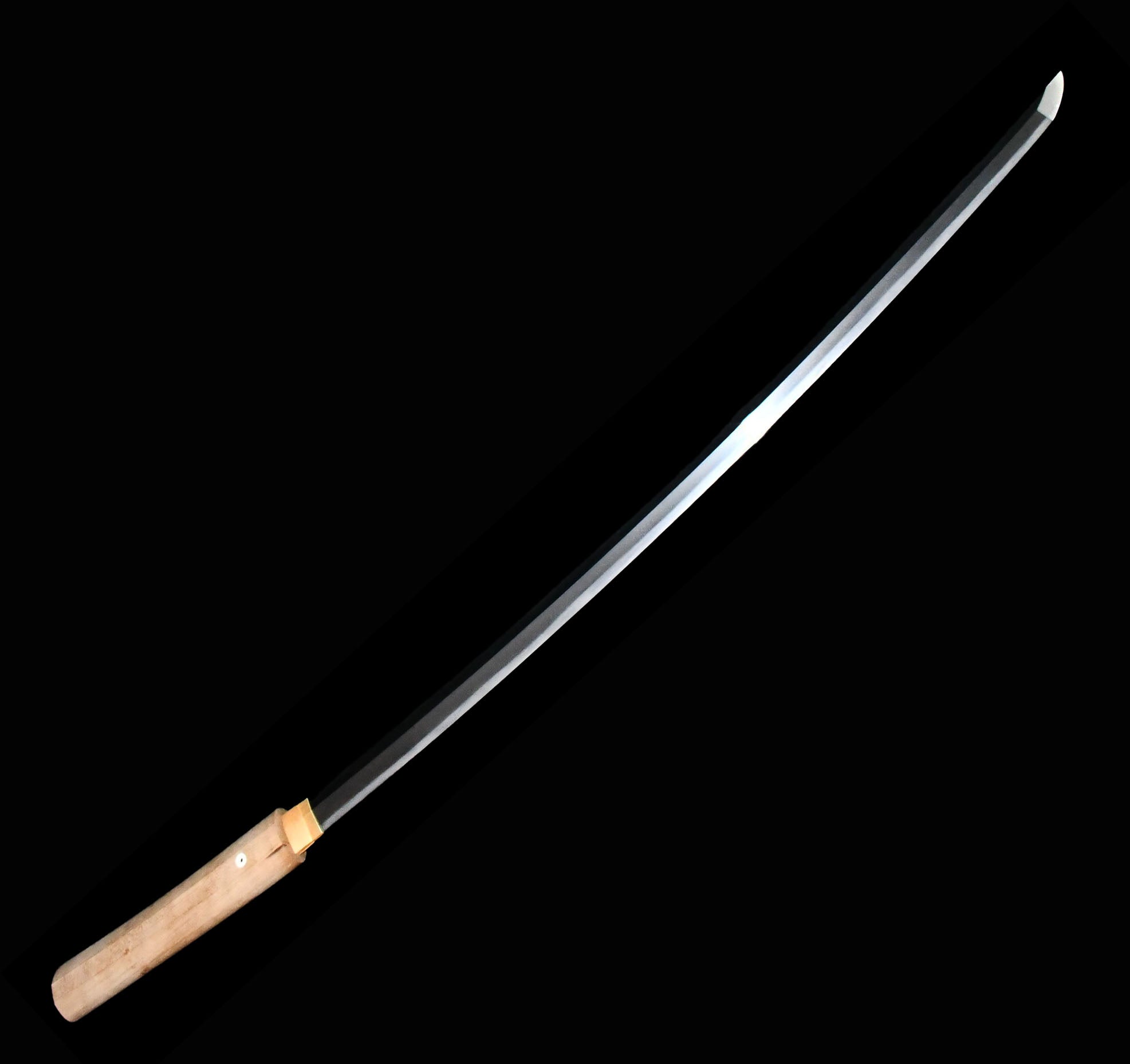
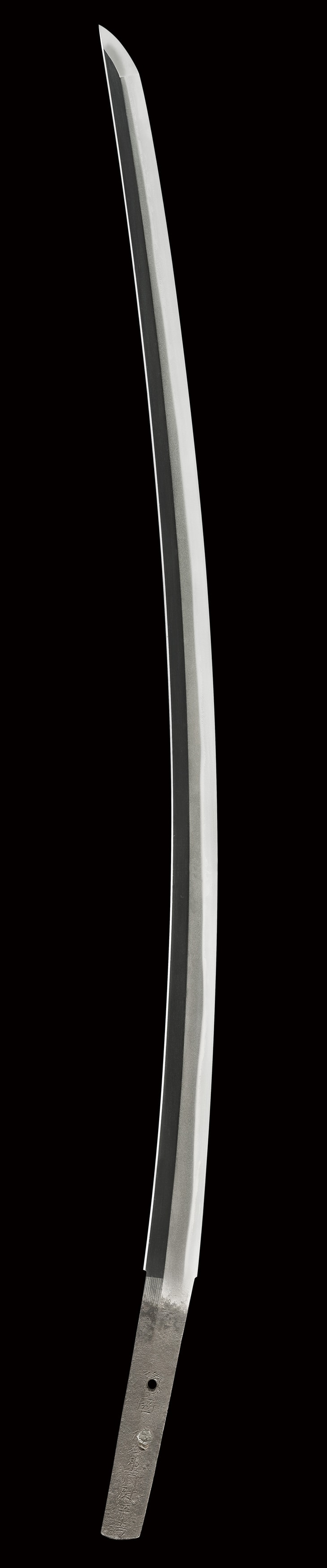
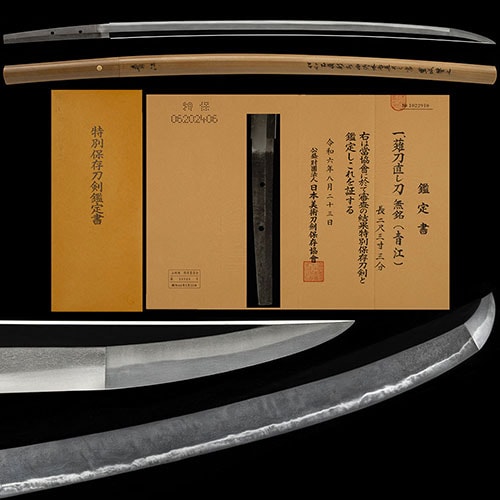
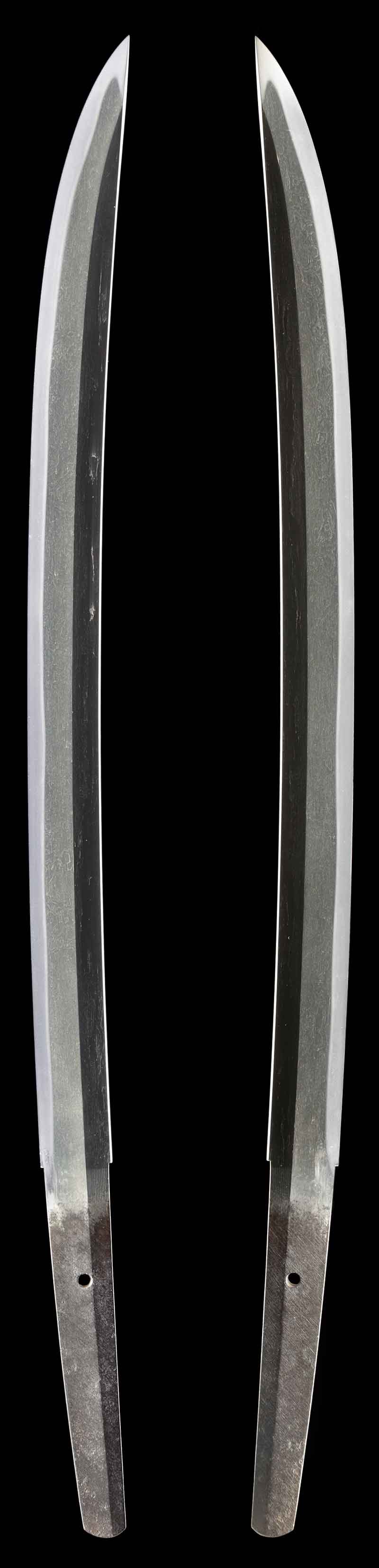
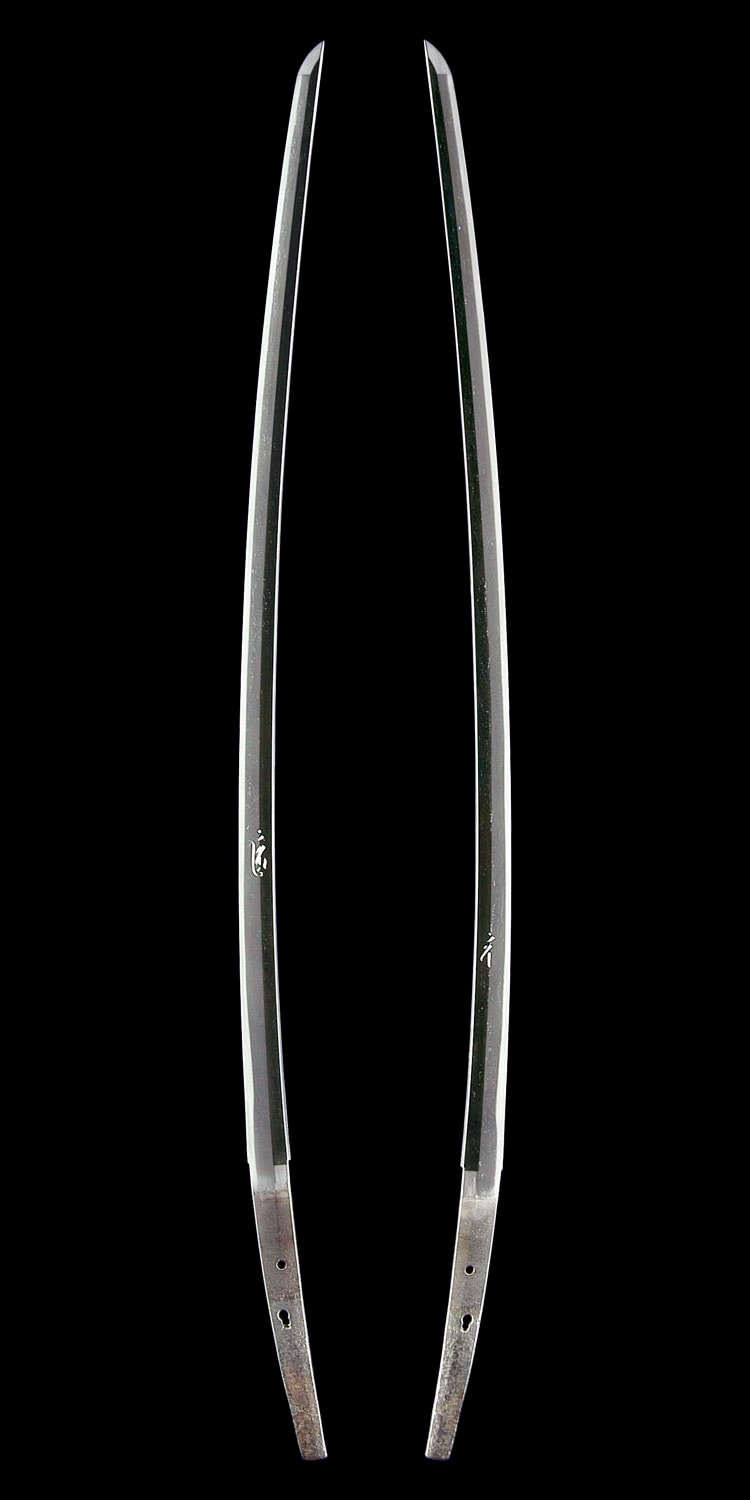
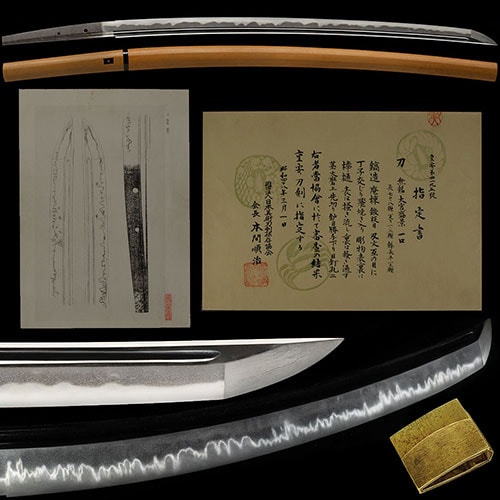
A signed designated at the 48th session carries a two-character , Shigetsugu, cut boldly on the of a shortened tang filed in , and the published commentary reads it as classic : "this clearly displays the characteristics of ." Shigetsugu is a smith of the , the early phase of the school of Bicchū Province. The published sources identify him with the craftsman recorded in the reference works as a son of Toshitsugu and placed in the mid- period around Bun'ei (1264-1275); they note plainly that "this Shigetsugu corresponds to the smith transmitted in the as the son of Toshitsugu, mid-, around Bun'ei." The school itself is traced to Yasutsugu of the Jōan years, and works that do not descend past the mid- are set apart as ; among its representative hands the published record names Moritsugu, Tametsugu, Tsugie, Tsunetsugu, Toshitsugu, Suketsugu and this Shigetsugu, most of them carrying the character tsugu as a shared element of their names.
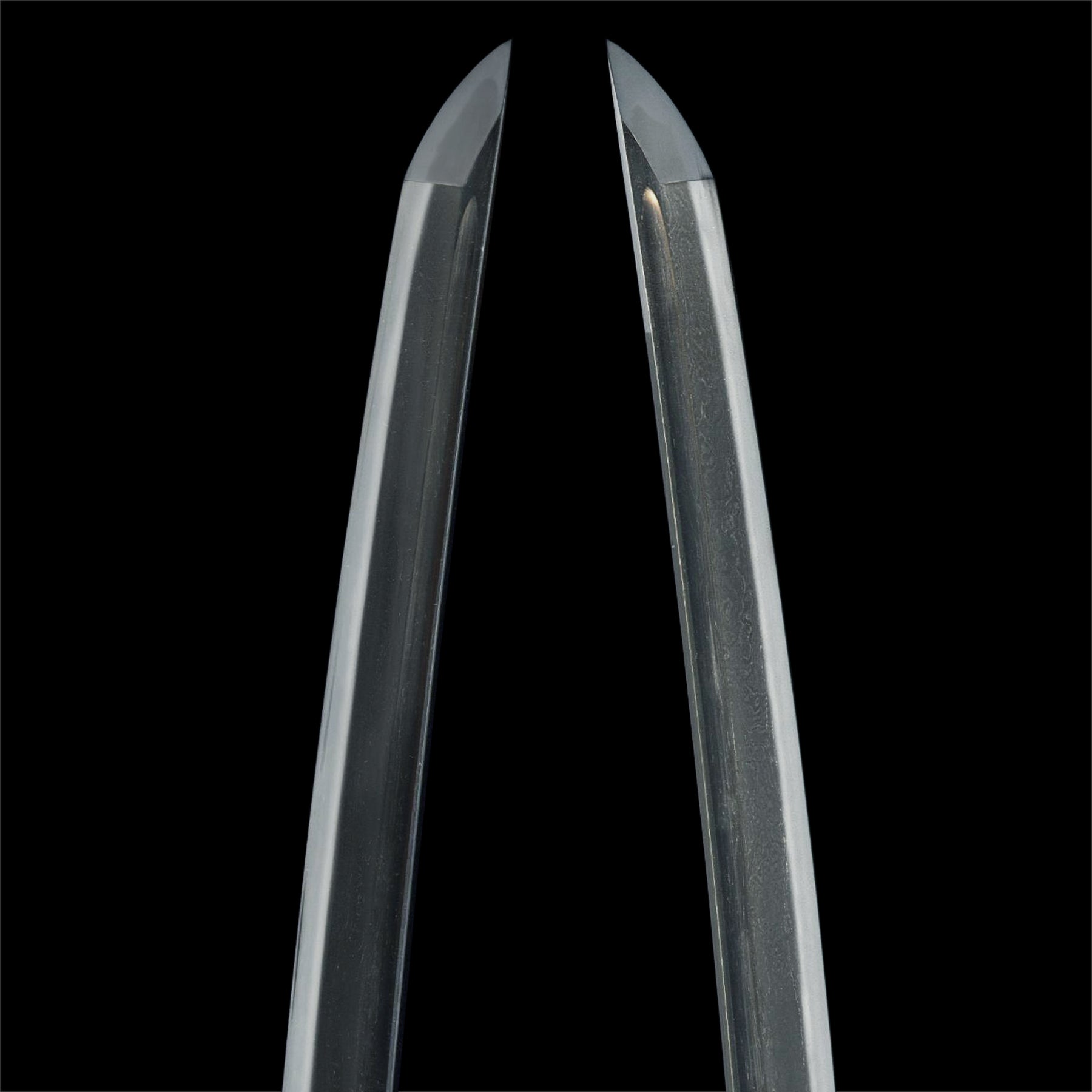
His surviving work is , slender and well-shaped, with a deep -zori and pronounced , several still keeping their original tang. The hand that distinguishes him is a quiet one. Over an mixed with , at times a closely packed standing a little, he forges a steel somewhat dark in tone that tends toward , carrying the speckled -madara and patchy that are the , with fine and, on his most fully described blade, a clear standing in the . The temper over that is calm and archaic, a base shallowly into which a small of and enters. and are well present, the thick and in places particularly strong, and and run frequently along the edge. The runs straight to a -like finish with fine . The published sources call the effect old in feeling and rich in , the activity gathered not in towering clove clusters but in the small reversed-clove line and its internal work.
The is where his school shows most plainly. The somewhat dark steel, the and , and the crepe-like texture set the against the brighter, cleaner of contemporary , and the published commentary draws the contrast directly, judging work "on the whole somewhat subdued and quietly astringent in flavour compared with blades of the period." Over that the stays comparatively restrained. The published sources praise the most fully described of his blades for being "archaic in the temper, well covered in ," with , , and showing within, a deeply nuanced and engaging manner rather than a flamboyant one.
Not all of his record is so quiet. One of his shortened, two-character-signed opens instead into a dense, double-flower - in with a tendency toward , the an standing a little with and an -like reflection. The published sources note that, set beside his quieter -toned work, the manner of the signature and the workmanship differ across his extant pieces, so the activity can open here into a richer clove-flower line. That blade carries a cut-in inscription recording its shortening in Tenbun 10 (1541) by Fukui Ukyō-no- Koremune Tadanō, a documented later history laid over an early hand.
What the judges single out separates him within his own school as much as from his neighbours. Compared with the brighter, cleaner steel of , his somewhat dark with its and reads as the ; and against the school's own conventions the published record notes a telling exception. The three prewar Important Art Object are signed on the , which the commentary remarks is "although works, exceptionally bearing -style signatures," whereas the places its signature on the in the usual manner, the tang filed in ; the placement of the signature and the file marks are exactly the points the published sources name as distinguishing the school from , and they cite them in support of the attribution. He stands among the named early hands of , the quiet Bicchū counterweight to the brilliance of .
For the collector he is a rare early name, graded Jō by Fujishiro. He has no National Treasures and no Important Cultural Properties; his record runs instead through three blades designated Important Art Objects before the war and one designated , four designated works in all, and the published commentary calls the surviving examples precious, holding that "extant works by Shigetsugu are rare, and this one is precious; moreover it has high value as reference material for the study of the smith." Their provenance runs through the great houses: the three-character Shigetsugu was transmitted in the Kishū Tokugawa family before passing to Kōson, another descended through the Tokugawa house to Tokugawa Iesato, and a third was held by Miyazaki Tomijirō of Kanagawa. So few of his blades survive, and so seldom does a signed Shigetsugu come to light, that a privately held example is a notable thing for a collector to encounter, valued less as an ornament than as a document of how the school worked in its earliest age.