NihontoWatch MonNihontoWatchBETA
MarketEncyclopedia
NihontoWatch Mon

NihontoWatchBETA

Market
Encyclopedia
Overview·Kantei·Designations·Provenance·Blade Forms·Signatures·School
OverviewKanteiDesignationsProvenanceBlade FormsSignaturesSchool
  1. Schools
  2. Aoe
  3. Chū-Aoe
  4. Tametsugu

Aoe Tametsugu

爲次

Jūyō
Vol. 24, No. 279 · Tachi

Aoe Tametsugu

爲次

6 ranked works

ProvinceBitchuEraKangen (1243–1247)PeriodKamakuraSchoolAoeTraditionBizen-denGeneration2ndFujishiroJo-jo sakuToko Taikan2,000(top 2%)TypeSwordsmithCodeTAM152
1Kokuhō
3Jūyō Bijutsuhin
2Jūyō Tōken

Overview

Tametsugu is a smith of Bicchu working in the early period, and his name carries one of the celebrated objects of the whole tradition: the National Treasure known as Kitsunegasaki, transmitted in the Kikkawa family. He is the maker the published sources reach for when they describe the early Bicchu manner, the steel of the province before the main line settled into the look the later centuries made famous. The records place him close in time to the smiths of the generation, the transmitting him as a son of Moritsugu active around the Jogen era, his extant work descending no later than the end of the period into the early . With - and the great mid- still ahead of him, he stands among the first hands whose blades let the school be recognized at all.

His recognized work is the slender signed , several still in their original tang with the two-character cut on the , high in with strong and a small or medium point, one keeping the kiji-momo tang of an old blade. The tell of the hand is the . Over an mixed with that stands a little and carries , the published sources find the speckled of the , patches of clear , and a quiet suggestion of . On more than one blade the description runs almost word for word, the forging becoming , mixed in, an impression of reflection across the surface, and it is this crepe-like, clear-steeled , rather than the temper, that the judges name as the school's mark on his blades.

Upon that the temper divides in two, and the division is the spine of his record. The earliest blade, the one the sources call the oldest of the group and the nearest to the Kitsunegasaki, wears a deliberately calm hand: a into which is mixed, entering, the on a companion piece overall subdued, the running straight to a above a tang filed in . The later group, set a little after the National Treasure because the signature is cut in larger characters, is broader in the body and more vigorous in the : a gathering , in one blade returning in places to a base with well in and the edge full of , , and , in a Jubi blade widening at the center into a large . The published commentary calls this manner forceful and full of spirit, and the there finishes not in a round but in .

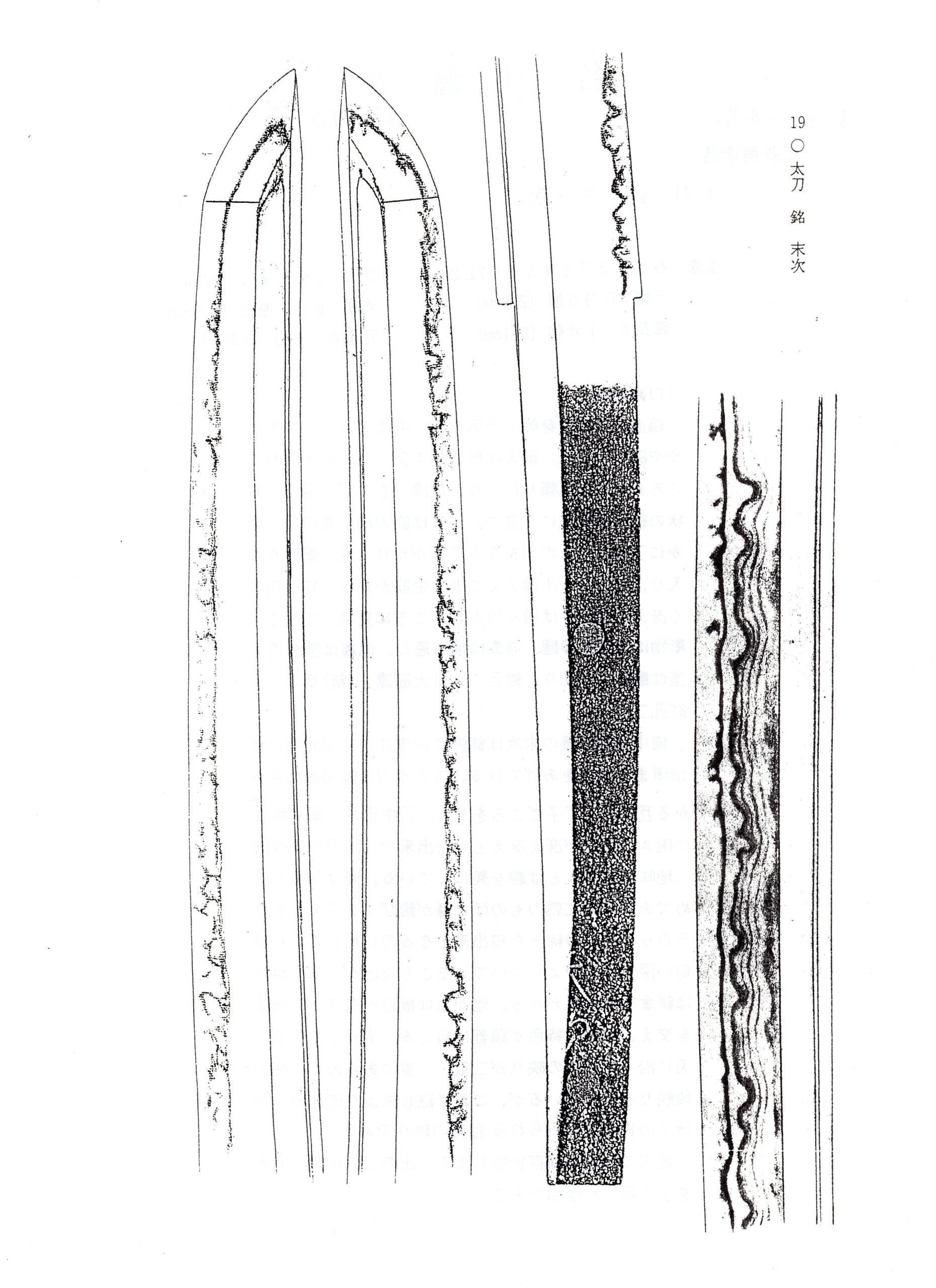
The central question around him is one the sources refuse to close, and it is more interesting than any single feature. Examining the three Important Art Object together, the judges hold all three to be yet write that 'they cannot at once be declared the work of the hand' (同作とはにわかに断じ難く), that the oldest of them is the most archaic, and even of that one that 'it cannot be decisively identified with the celebrated National Treasure Kitsunegasaki Tametsugu' (これが国宝で名高い狐ヶ崎為次と同作とは決し難い). The manner of the signature differs blade to blade; the workmanship shades from the quiet early to the later, showier . Whether one smith changed across a working life or several smiths shared the name is left, in the institution's own words, to further study, which is exactly why the , signed pieces are prized as documentary material for the school.

What sets him apart he shares with no neighbour in quite the combination. Against the plainer of the smiths of the years, his is the with and a suggestion of ; against the flamboyant the main line would later make its signature, his earliest hand is a quiet . The published sources affirm his blades from precisely these two things, writing that 'the and clearly display the characteristic features of the group' (地刃に古青江派の特色がよくあらわれ) and that 'the archaic manner of workmanship is not later than the early period' (古雅な作風は鎌倉初期を下らぬもの). He is read, in short, by the old Bicchu steel and the calm of the early edge, the school caught at its beginning.

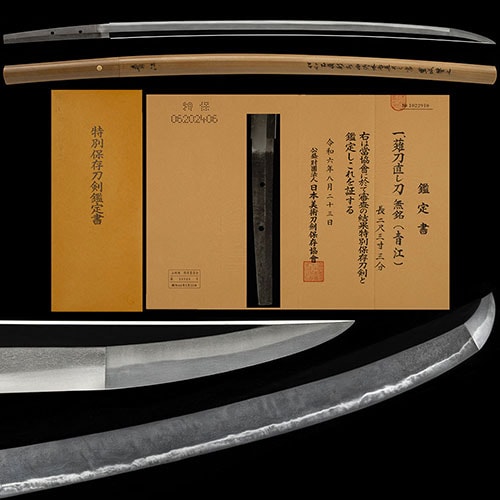
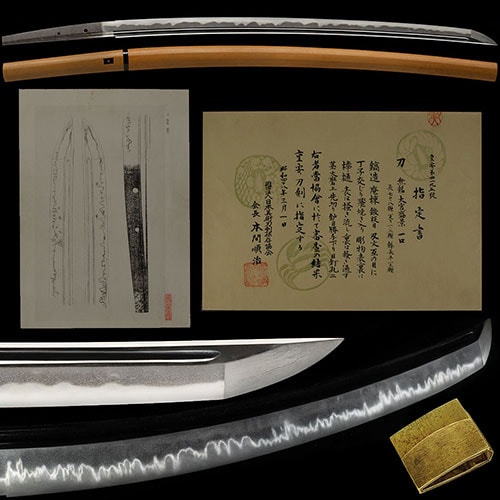
For the collector he is, before anything else, the maker of a National Treasure, and that fixes the terms. Fujishiro grades him Jo-jo . The Kitsunegasaki, the go long held by the Kikkawa house and now in the Kikkawa Historical Museum, is patrimony preserved, not a thing that trades; the published sources call it a sword that predates Shoji 2. Beyond it his record is small and largely held: signed reaching the prewar Bijutsuhin and, in the modern era, only a pair at , one passing through Iwasaki Koyata to the Seikado Bunko, one through Ninomiya Kojun to the Sano Art Museum, another formerly with Matsumoto Kenjiro. With a single locked National Treasure and only a handful of designated blades on record, a signed Tametsugu of recorded whereabouts is a rare thing to meet; one comes to light only seldom, and a privately held example would be, for a collector of early work, among the more memorable things to encounter, a document of how the Bicchu school began.
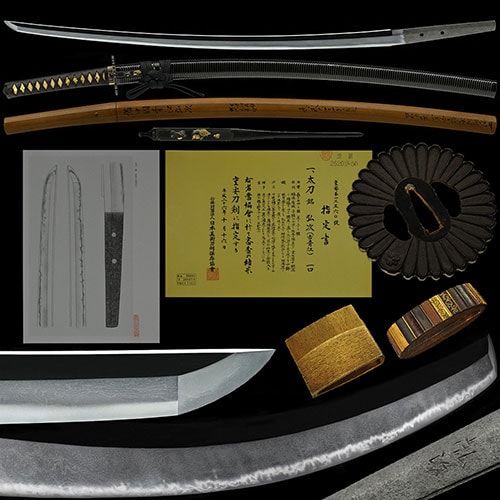
Kantei

one Ko-Aoe signed hand seen across a small group of tachi that the published sources will not yet bind to one maker: the early, slender ubu tachi in a quiet ko-nie suguha with ko-midare over a chirimen-hada and sumihada ground, and the slightly later, broader tachi whose nie-deki ko-midare gathers choji and widens to a large midare; framed throughout by the open question of the National Treasure Kitsunegasaki

Tametsugu is a smith of Bicchu, working in the early period, and one of the school's central problems: he is the maker of the celebrated National Treasure named Kitsunegasaki, transmitted in the Kikkawa family, yet the published sources caution repeatedly that the other signed Tametsugu blades cannot be declared with confidence to be by the hand. His recognized work is the slender, signed , several still in their original tang with the two-character cut on the , with a high , strong , and a or . Over an mixed with that stands a little and carries , with the speckled the sources call , patches of , and a suggestion of , he sets either a quiet mixed with , or a more vigorous into which enters and the line widens toward a large . The runs straight to a or finishes in , the on the tang are . The published sources affirm these from the and as work of no later than the early period, valuable as documentary material, while noting that the manner of the signature differs blade to blade and the dating of the school remains open to study.

Diagnostic discriminators

unique vs Ko-Bizen baseline (no chirimen jifu ground)

unique vs Bizen-school baseline (clear sumihada absent)

unique vs Bizen baseline (katte-sagari / kiri yasurime)

Observation by phase

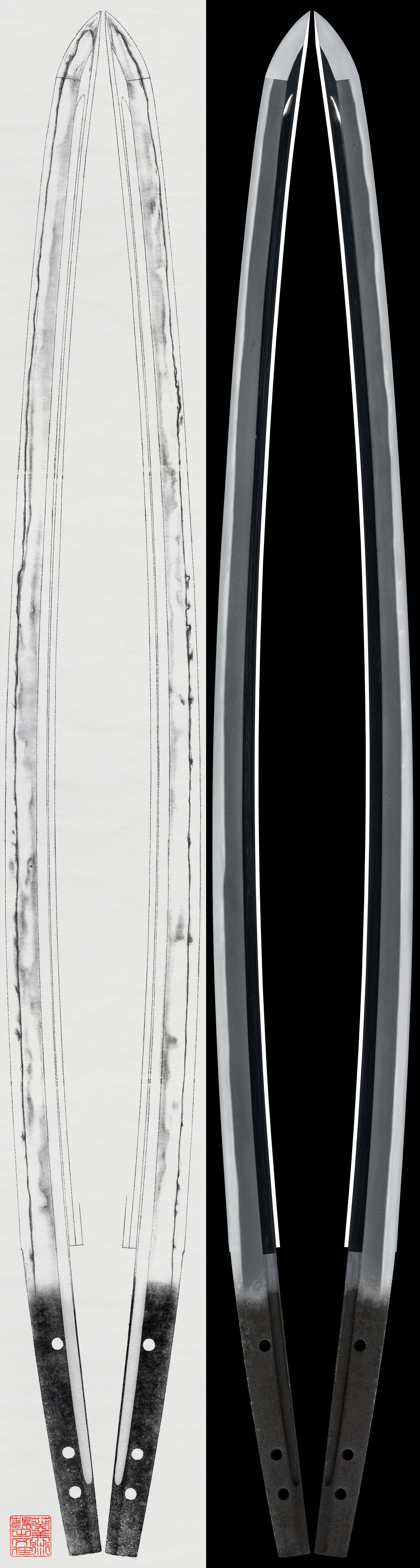
The early ubu tachi (quiet suguha, his classical face)

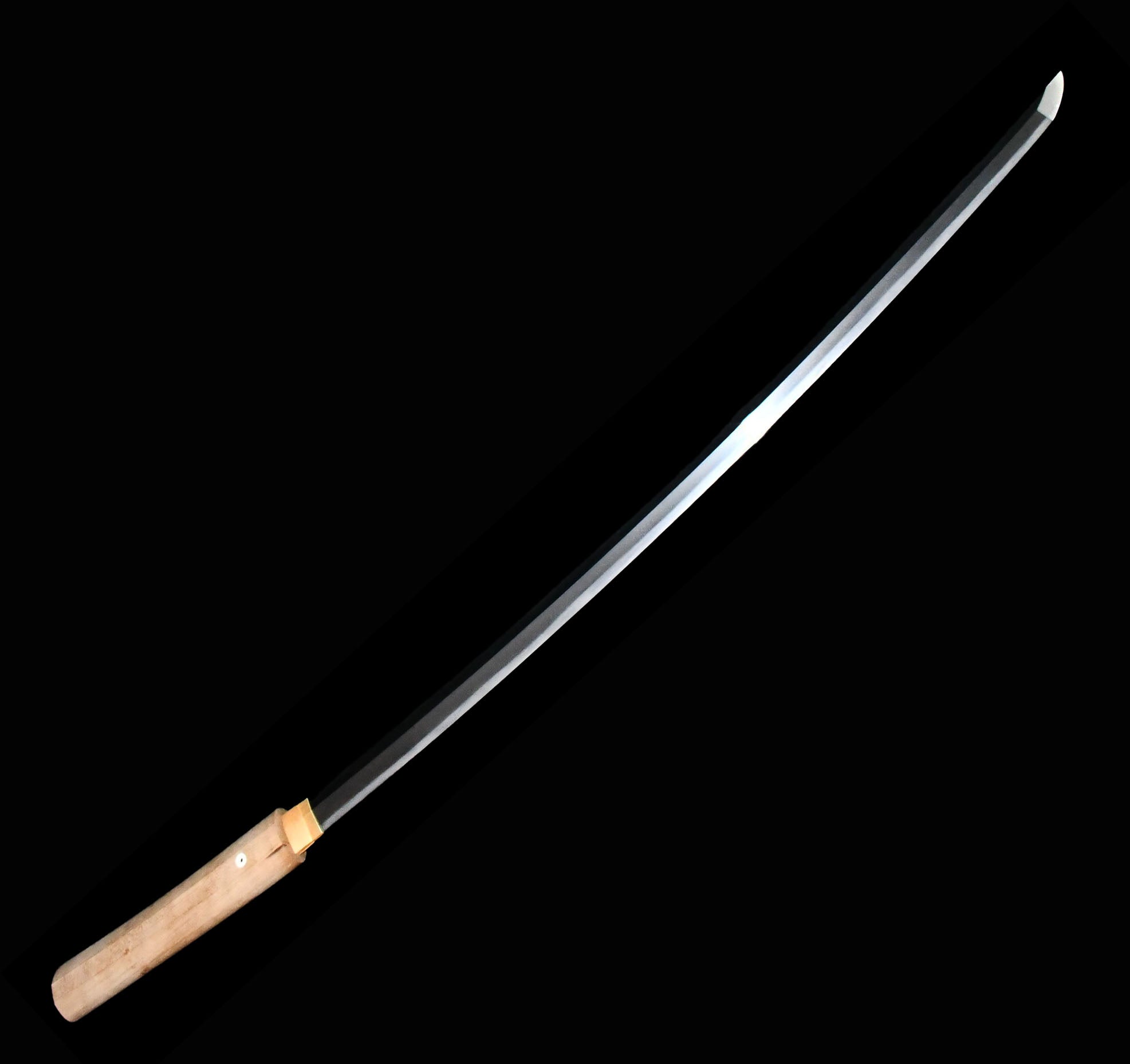
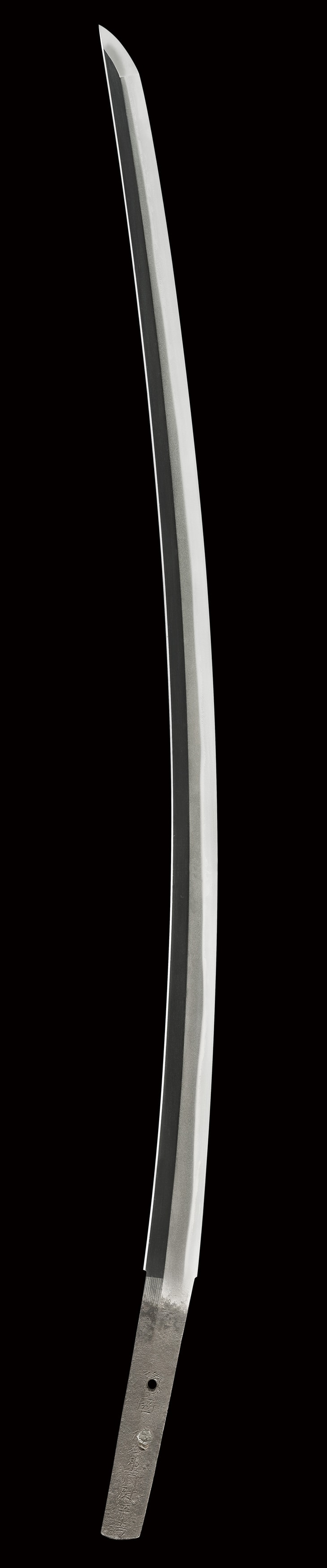
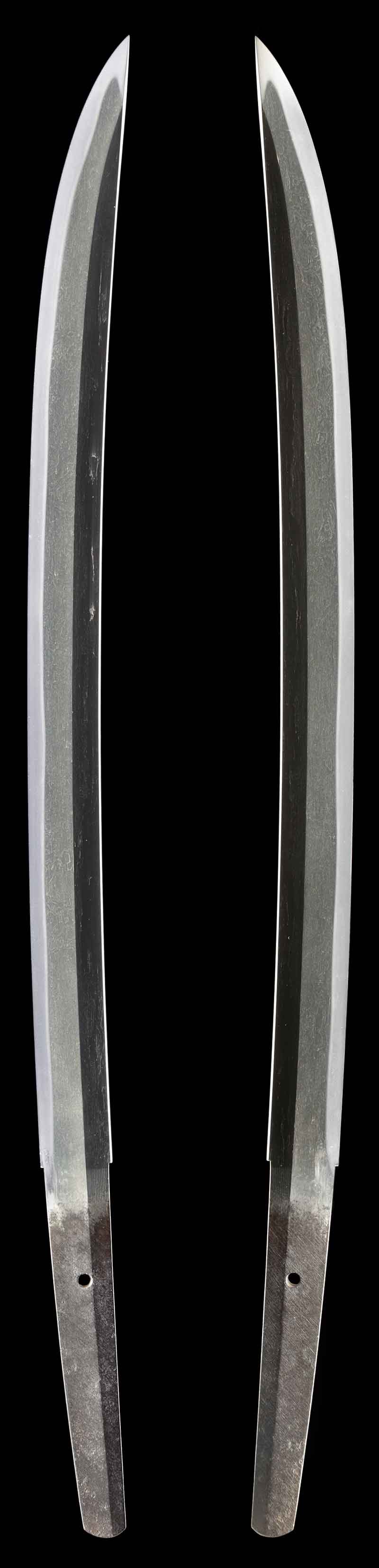
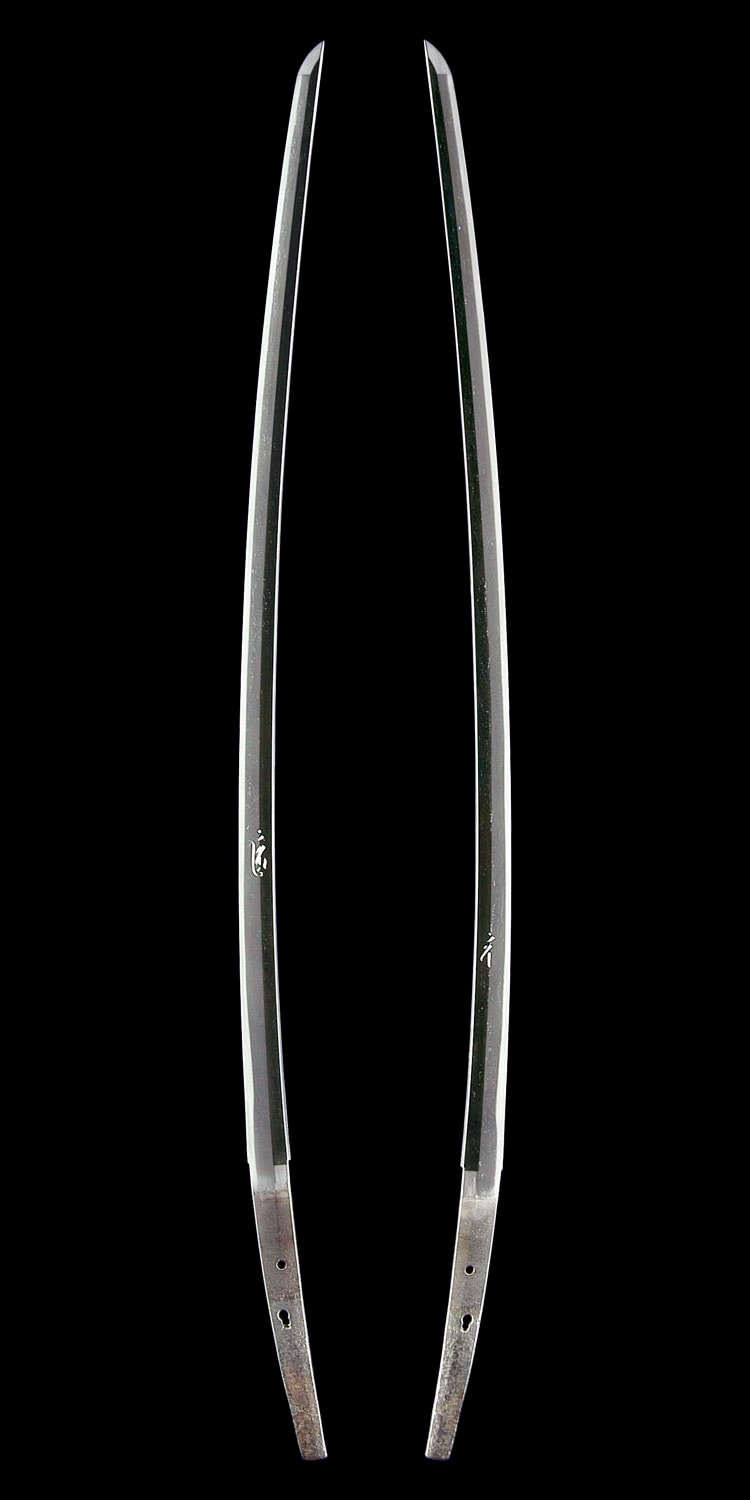
The earliest record, the one the published sources call the oldest of the group and the closest to the Kitsunegasaki, is the slender . It keeps its original kiji-momo tang, with a high , marked , a slender silhouette and a . The ground is an that stands a little, becoming the the sources name, mixed with and showing a suggestion of . Over it the temper is deliberately calm: a into which is mixed, with entering. A second extends the restrained register, its temper a with slight and a feeling, the laid in and overall subdued, the running straight to a , the and the two-character cut on the . The published sources record this Tametsugu as a son of Moritsugu active about the Jogen era, affirm the and as of no later than the early period, and call the signed precious as documentary material.

Sugata 姿
Jigane 地鉄
Hamon 刃文
Bōshi 帽子

The later, broader tachi (nie-deki ko-midare gathering choji)

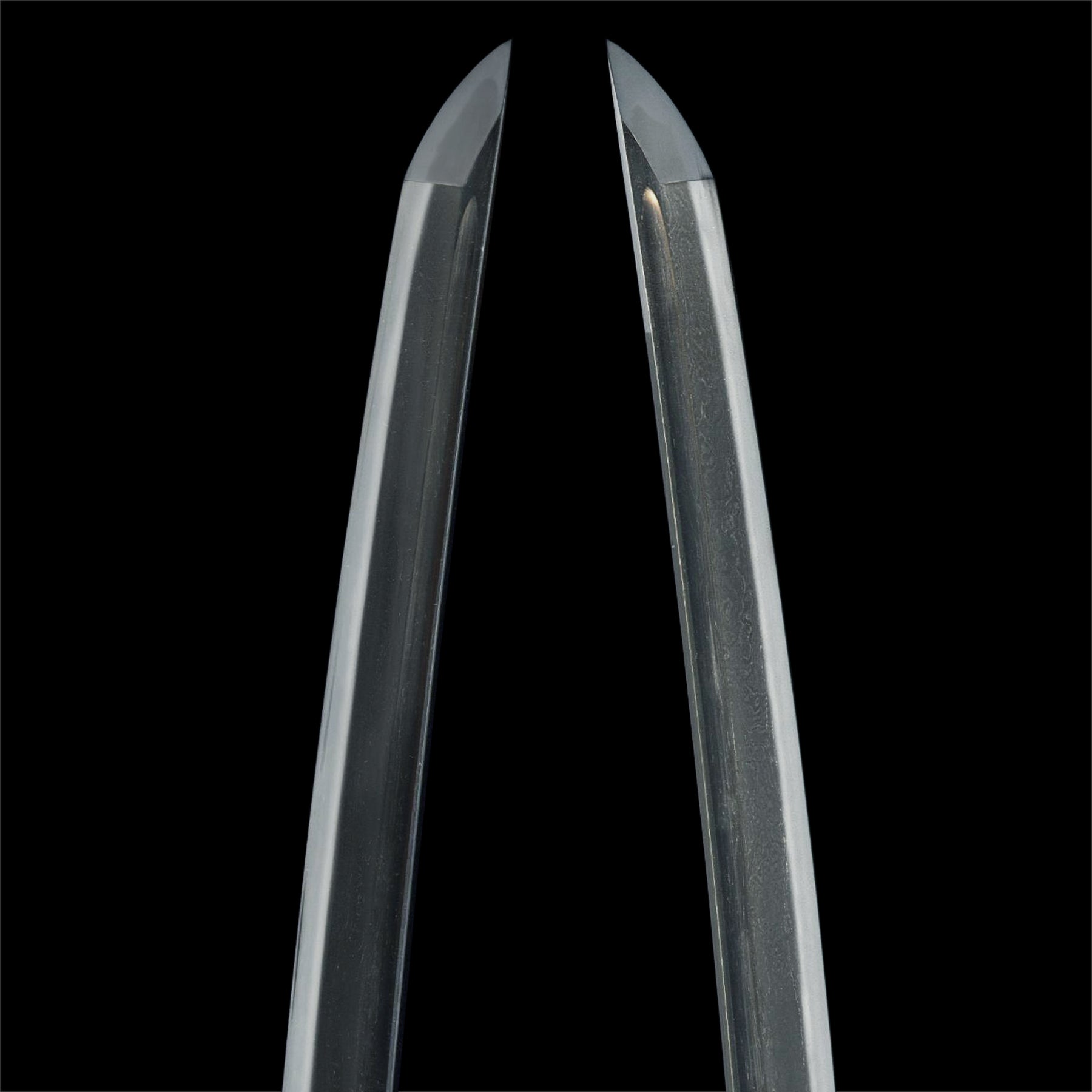
The published sources set a second group slightly later in date, the signature cut in larger characters than the Kitsunegasaki. These are somewhat broader in the body, with a , one shortened only slightly and keeping its high , others but still signed with the two-character . The ground is again an mixed with , the grain standing a little with well adhered, a -like intermingled, the and a suggestion of present. Over it the temper grows more vigorous: a into which is mixed, with abundant activity, in one piece returning in places to a base with entering well, the richly covered in with , and , in another widening at the center into a large . The runs straight and finishes in . The published sources call this manner forceful and full of spirit, affirm it as of no later than the early period, and note the larger signature as the ground for placing it after the Kitsunegasaki.

Sugata 姿
Jigane 地鉄
Hamon 刃文
Bōshi 帽子
Scholarship

The published sources are explicit that the several signed Tametsugu blades cannot be bound to one maker: examining the three Important Art Object tachi together, they hold all to be Ko-Aoe but say it is difficult to declare them at once the work of the same hand, that the third (no. 737) appears the oldest, and that even it cannot be decisively identified with the celebrated National Treasure Kitsunegasaki Tametsugu. The Meikan records this Tametsugu as a son of Moritsugu active about the Jogen era.

On dating, the published sources read the larger signature of the later group as evidence it postdates the Kitsunegasaki, which they consider to predate Shoji 2; the archaic, classical character of the workmanship is held to be of no later than the early Kamakura period, and the signed pieces are valued as documentary material for the school precisely because they are ubu and signed.

Designations

Kokuhō1
Jūyō Bunkazai—
Jūyō Bijutsuhin3
Gyobutsu—
Tokubetsu Jūyō—
Jūyō Tōken2

Elite Standing

0.24 across 6 designated works

Top 10% among smiths

Provenance

8 documented provenances across certified works by Tametsugu

Provenance Standing

0 works held in elite collections across 8 documented provenances

Top 48% among smiths

Raw score: 1.99 / 10

Blade Forms

Distribution across 6 ranked works

Signatures

Signature types across 6 ranked works

Currently Available

Aoe School

Other artisans of the Aoe school

  1. 1.Tsugunao次直27designated
  2. 2.Yasutsugu康次11designated
  3. 3.Naotsugu直次15designated
  4. 4.Tsunetsugu恒次13designated
  5. 5.Kanetsugu包次9designated
  6. 6.Yoshitsugu吉次1 for sale17designated
  7. 7.Suketsugu助次15designated
  8. 8.Moritsugu守次9designated
  9. 9.Masatsune正恒16designated
  10. 10.Toshitsugu俊次6designated
  11. 11.Moritoshi守利9designated
  12. 12.Tsuguyoshi次吉16designated