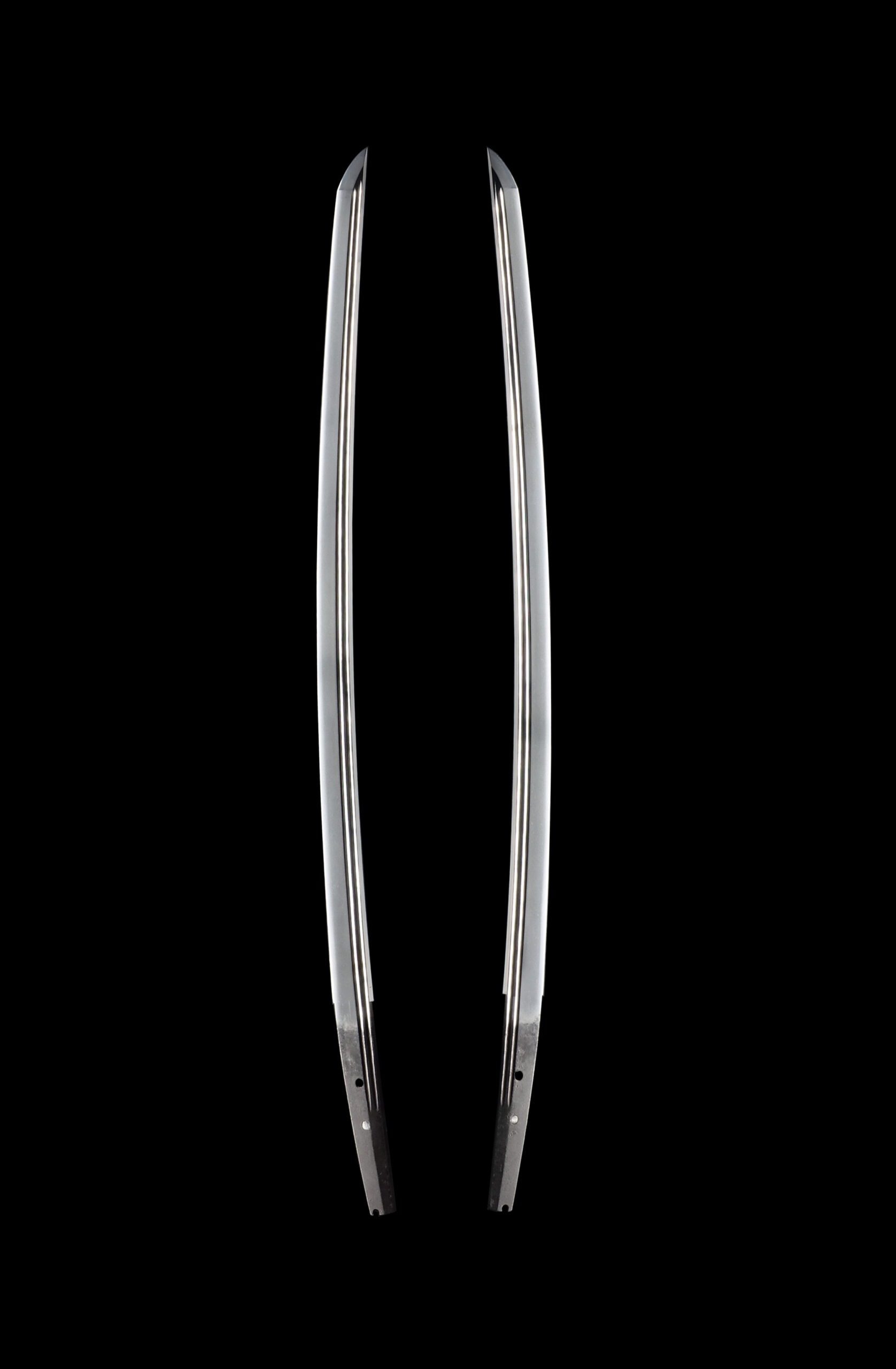
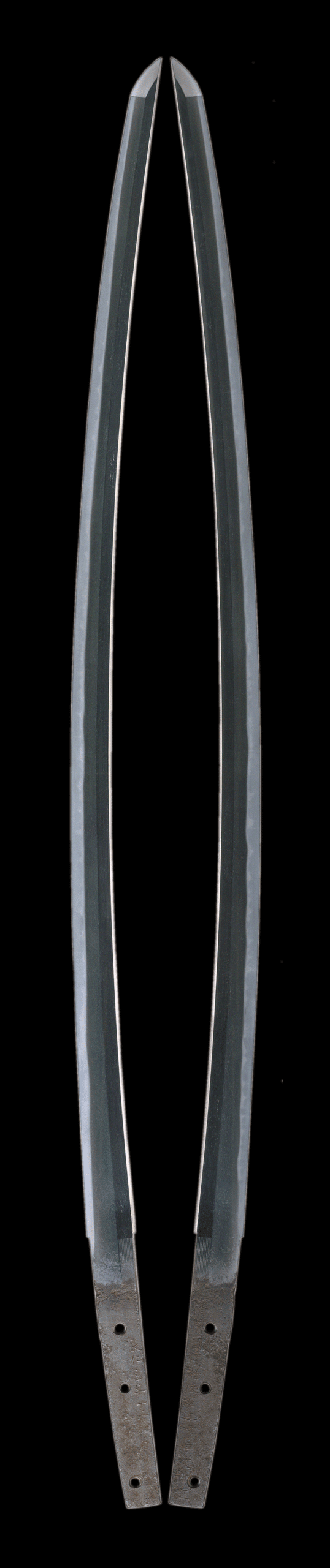
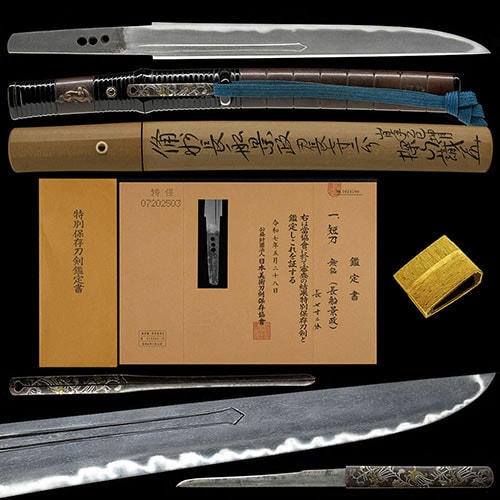
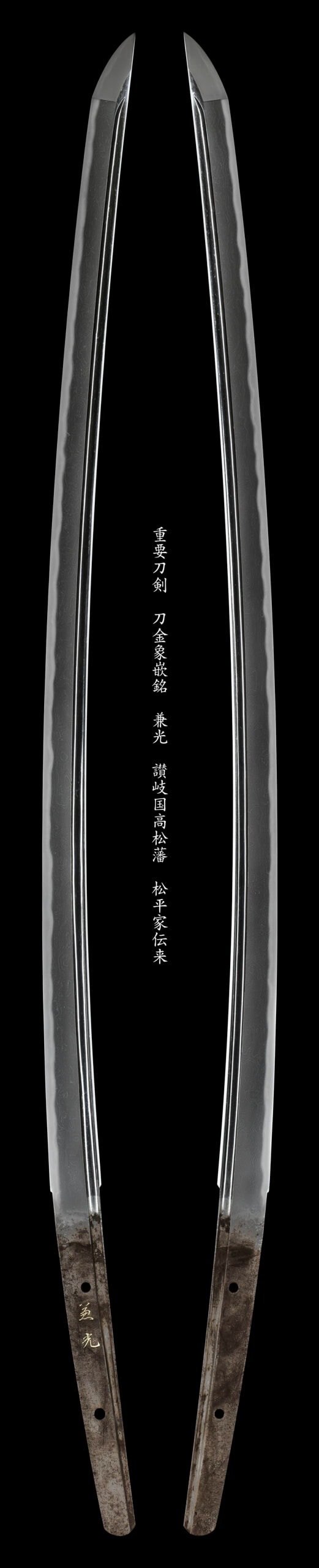
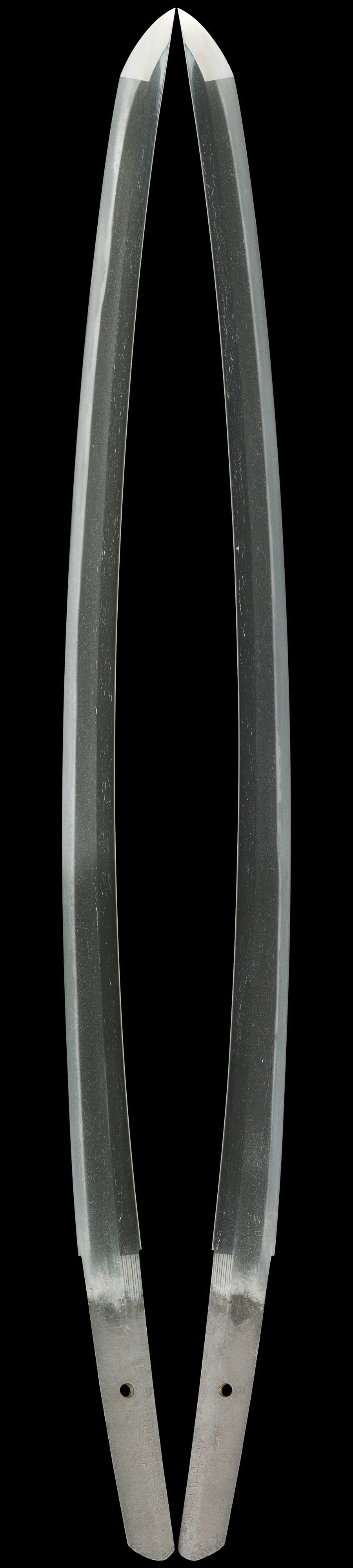
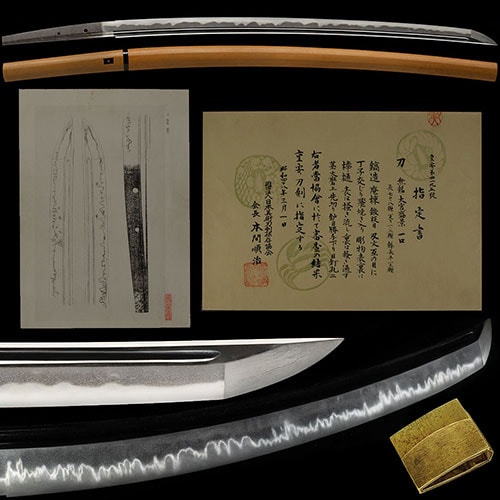
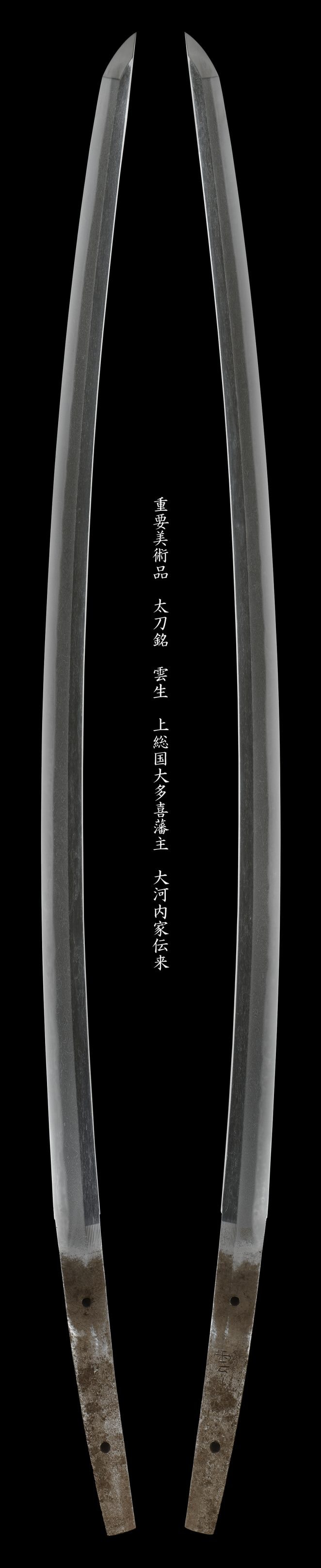
A signed inscribed Bishū Kageyori, designated in the 51st session, fixes this Kageyori in the school of at the close of the period, where the published sources place him traditionally as a son of Kagehide, active around the Einin era. The name itself is one of the problems of late . The reference works enumerate more than one smith signing Kageyori in the province, listing the name among the group, the late offshoots of , the school, and the founders of the Yoshii line, so that a Kageyori blade is read by its own and , the form of its signature, and the very shape of the character yori (依) before it is assigned a hand. This Kageyori is the most fully readable of them, his signed and dated record carrying the old- and into the manner of late , with the calmer of the circle running beside it.
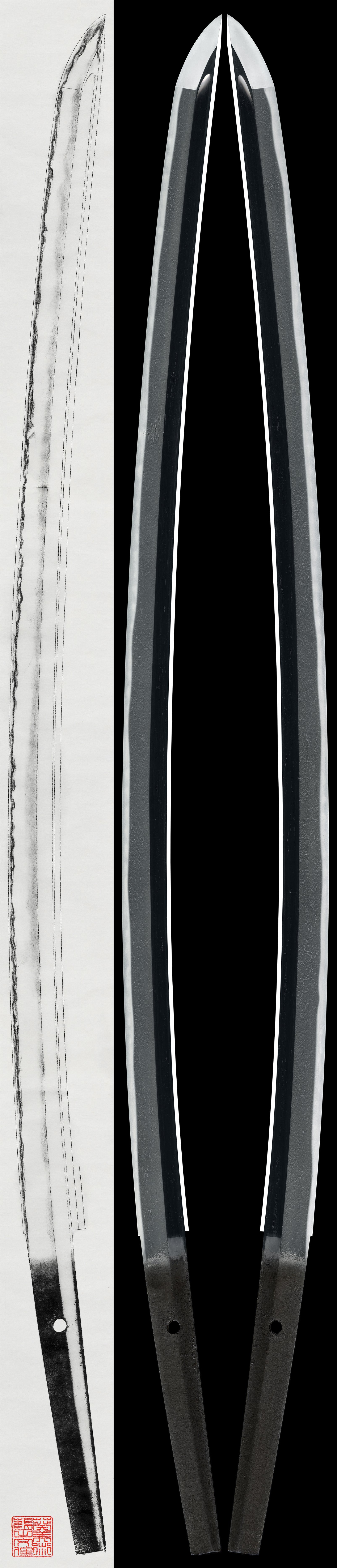
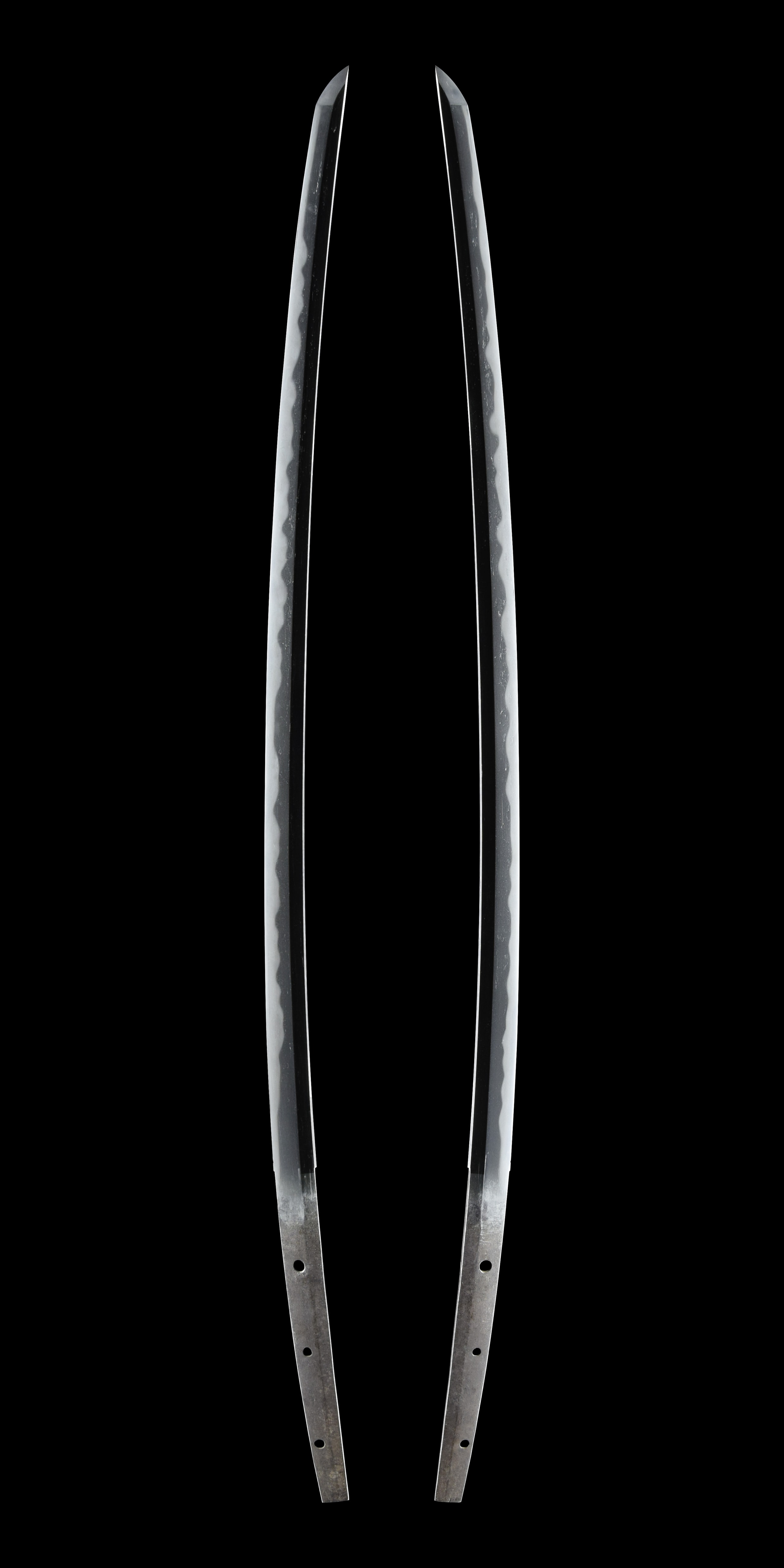
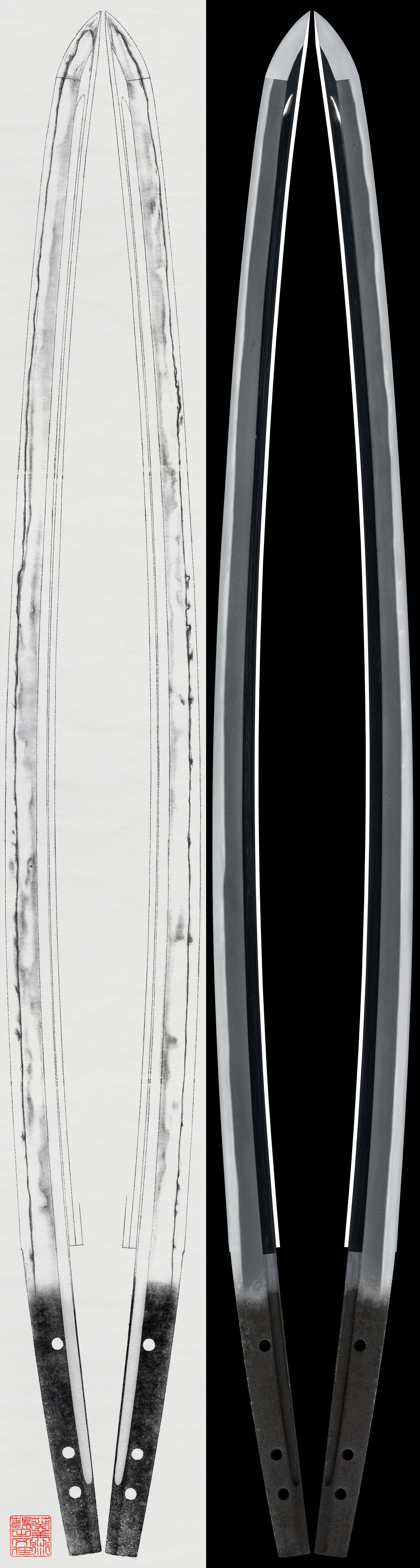
The is the richest statement of his hand. The is somewhat wide with a pronounced taper from base to tip, yet keeping its , with a . The temper is a base mixed with , -like , and , lower and more straight-tending toward the , the whole running . Within it and enter, the line is -dominant with and in places rougher , and fine and play through a bright . The published sources read the rounded-headed crossed with as the very character of late- work, and single out the pointed teeth as inherited from his father: 「尖り刃は父景秀の遺風を想わせる」, the conspicuous in the recalling the bequeathed manner of Kagehide. It is this in a - field, and not a plain late- clove, that ties the blade to the line.
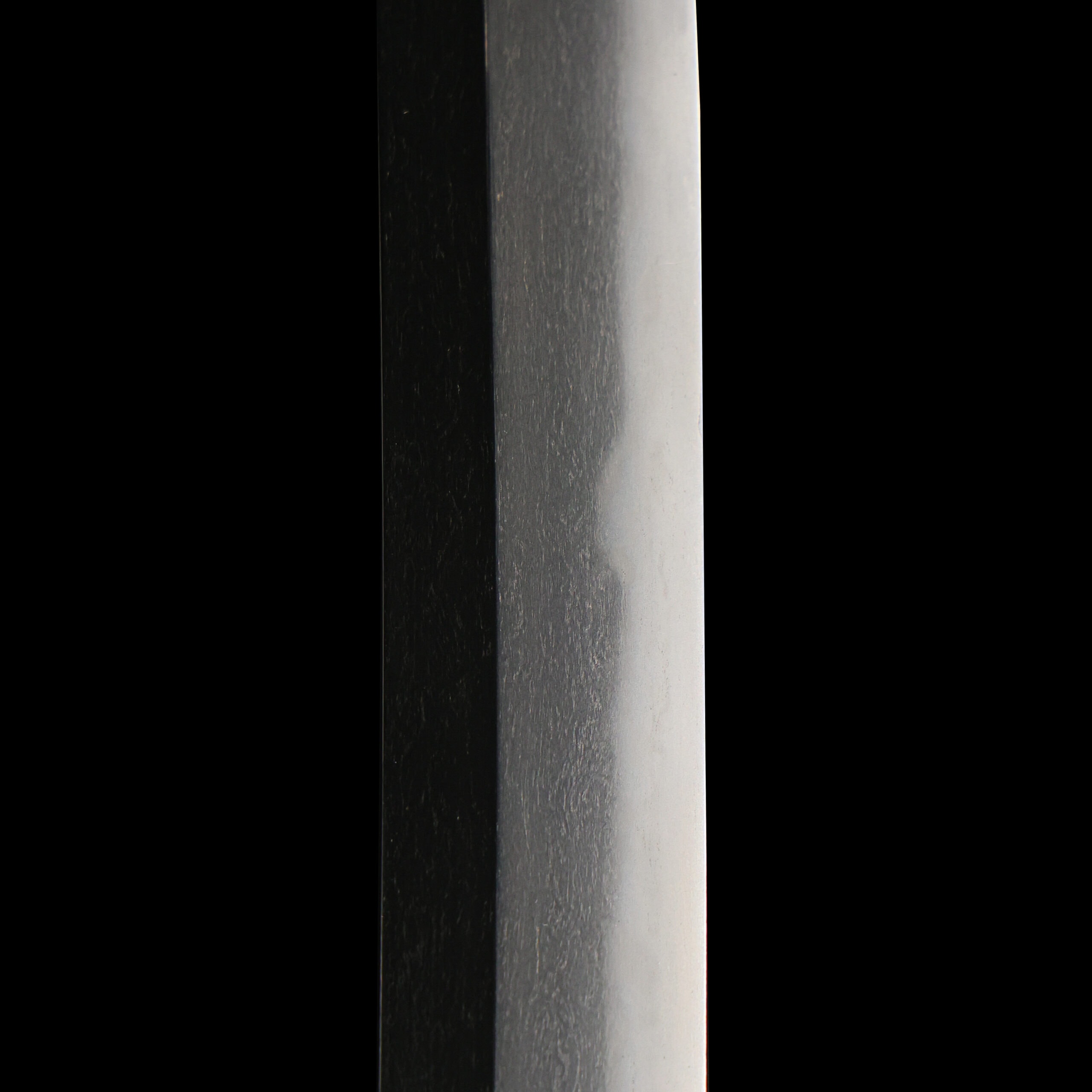
The is old carried into . Over a well-packed , in places mixed with and on the longer inclining to stand a little, he sets a dust-fine , delicate , and a standing clear in the steel. On the the reflection takes a streak-like form, with the patchy of old visible in the lower half, the forging there tightly wrought and refined. The answers the temper rather than templating it: on the it is , -like on the and turning back with a pointed tendency on the ; on the pieces it goes straight into a . He carves on the and, on one , a plain on the with on the .
Beside the flamboyant runs a second register, the calm of the late- circle. The , signed Kageyori and read from its overall workmanship as a late offshoot of around the Kōan years, tempers a with an extremely shallow , mixed with , into which and enter, the tight and adhering. The published sources call its and a thing that recalls work of the late period, refined in feeling, and prize the piece for documenting the working range of the name, noting that it is 「資料性も高い」, high too in its documentary value. The most striking of the blades is an the published sources assign, from the style of and , the small finely chiseled characters, and the form of the character yori, to a Nitta-no-shō smith whose surviving works are extremely few. Notably long, with a high and , it shows a with standing overall, a dark steel color, and a faint ; the mixes slight , the frays in fine -, the tightens and sinks toward , and the temper drops in above the .
The range of the name is best seen against itself. The bright and the sunken, -bearing are the two faces of the late- Kageyori, the one read as 「鎌倉時代後期の長船物らしさ」, the look of late- , the other carried so far from it that the published sources judge the Nitta , with its crepe-like dark and subdued straight temper, 「一見古青江の上作を思わせる」, recalling at first glance a superior work. What holds the hands together is the old- beneath both, the well-packed with its , , and standing , and it is the and the form of the signature, far more than any single temper, on which each attribution rests. The earlier Kageyori, known by a boldly cut large two-character signature over a , stands a generation back from this hand, the name read across the whole arc from old into the school.
Kageyori survives in a small but high designated record. The Tōkō Taikan values his work in the mid range, and Fujishiro assigns him no grade. Two signed and the are designated , one given to the Kageyori said to be Kagehide's son, the other the Nitta-no-shō noted for its rarity; two further were recognized as Jūyō Bijutsuhin before the war, one bold-signed and judged , the other placed around Einin. There are no National Treasures or Important Cultural Properties on this code's record, so the name lives entirely within the upper designated tiers rather than in museum patrimony. The recorded provenance is private and sparse, the prewar Bijutsuhin held in the Tokyo collections of Kodama Sawako and of Yasuda Yoshihiko, with a Tsuchiya-family blade among the . Across the and tiers only the three blades are recorded, and the most distinctive of his hands, the Nitta-no-shō , is by the published account extremely few in survival, so a signed Kageyori in private hands is among the rarer encounters in early , appearing, when it appears at all, only with patience.