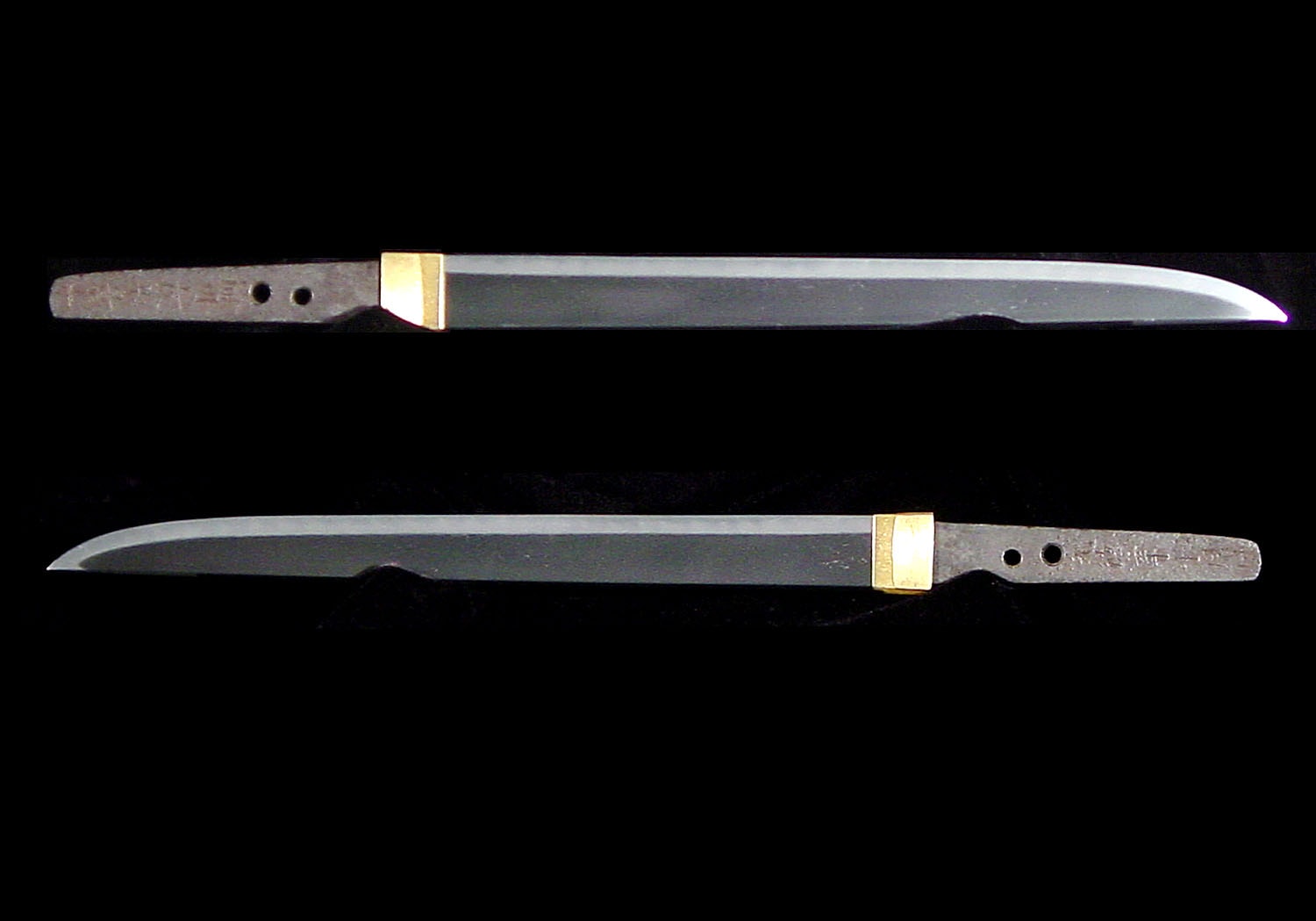
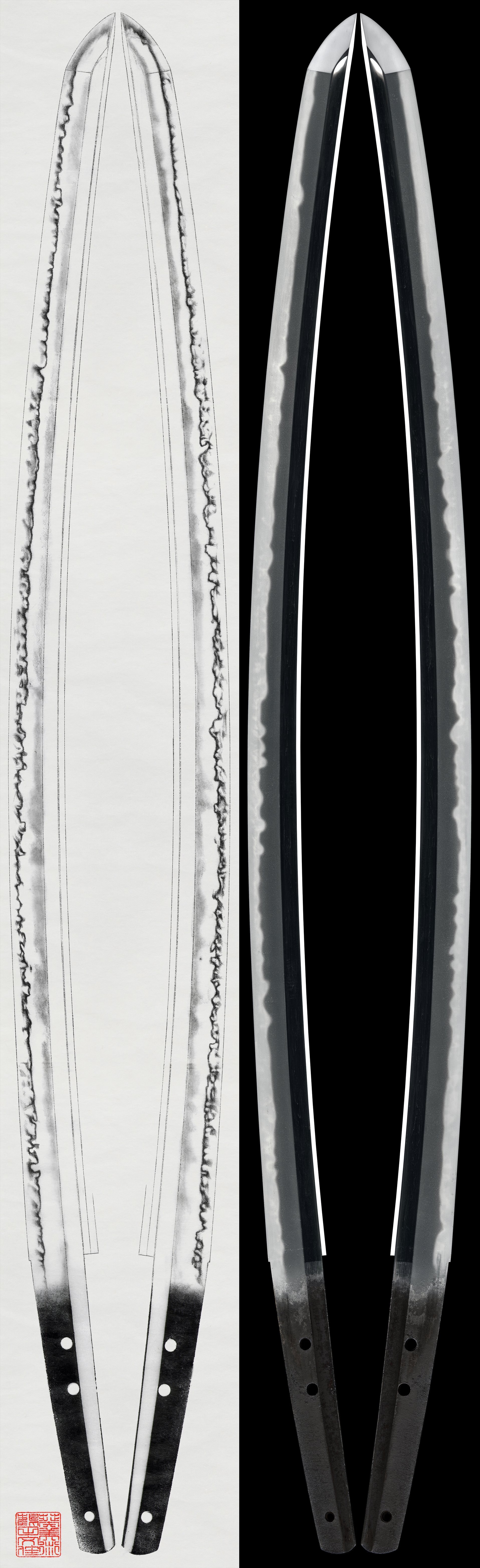
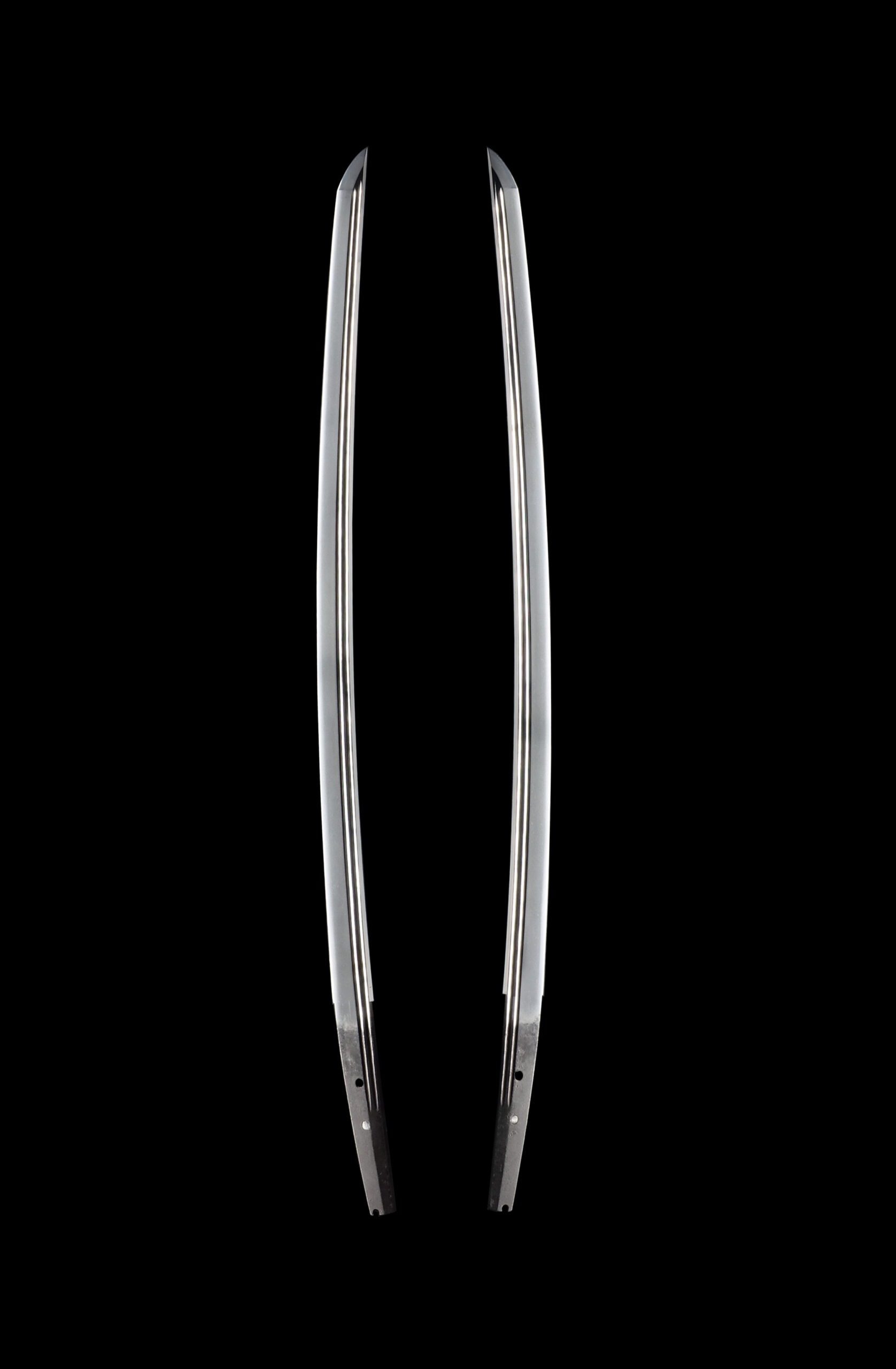
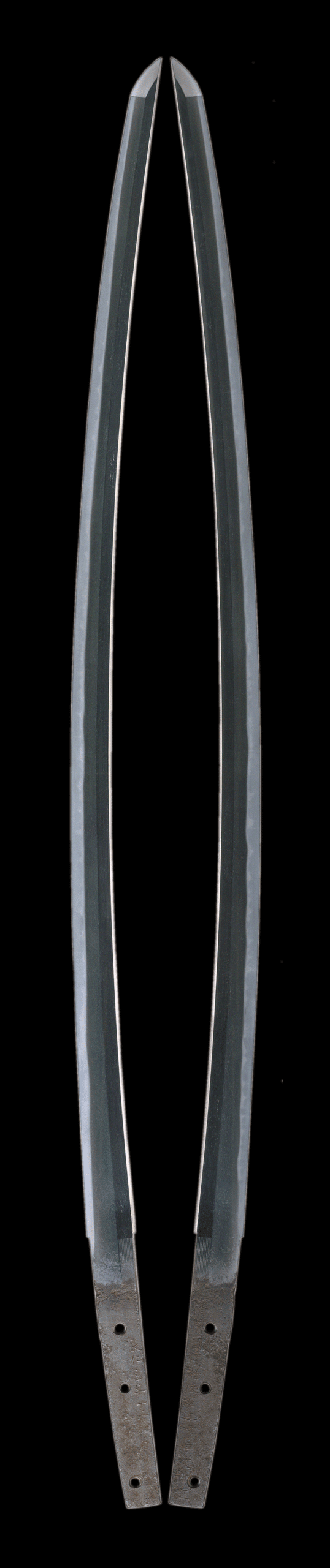
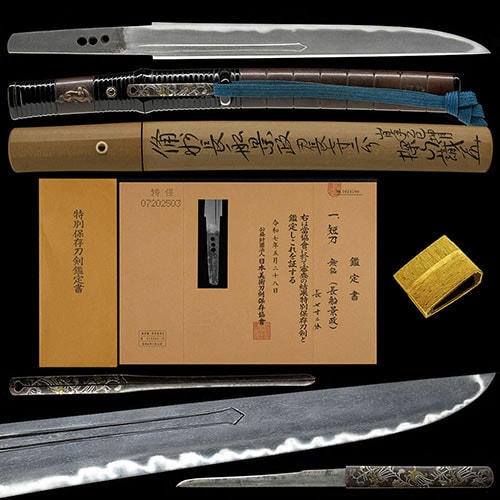
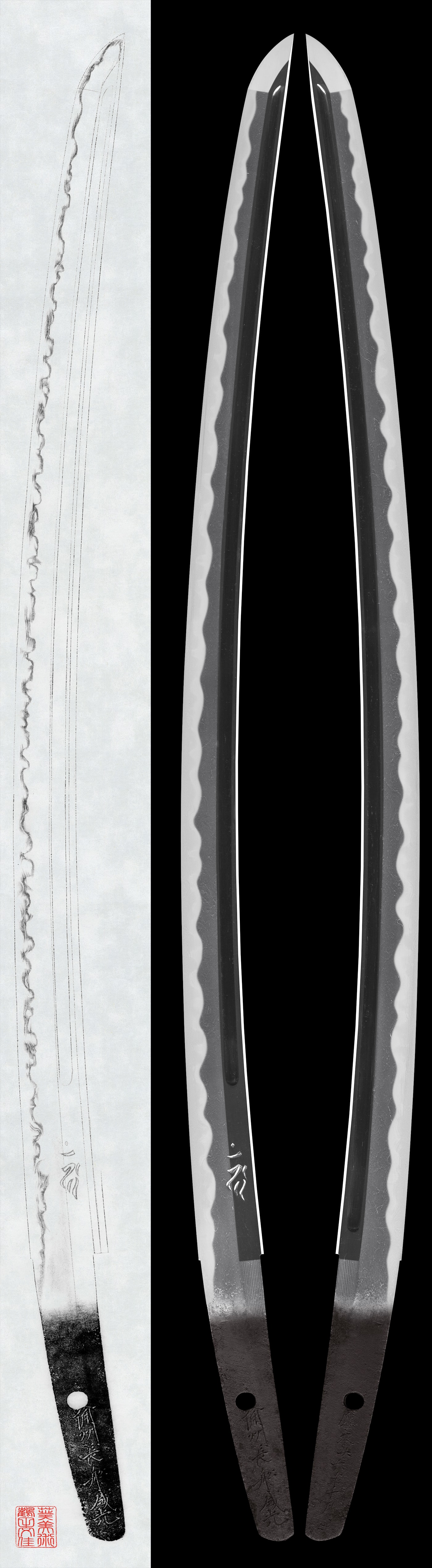
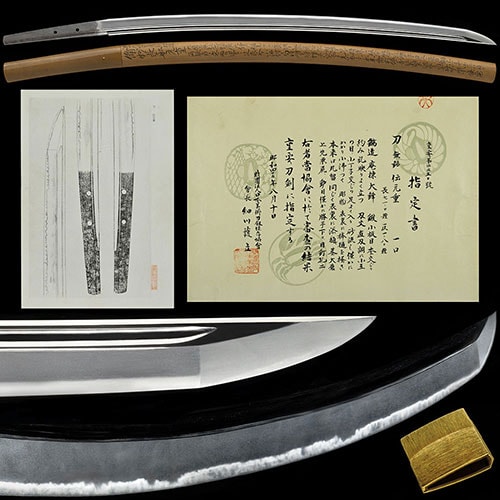
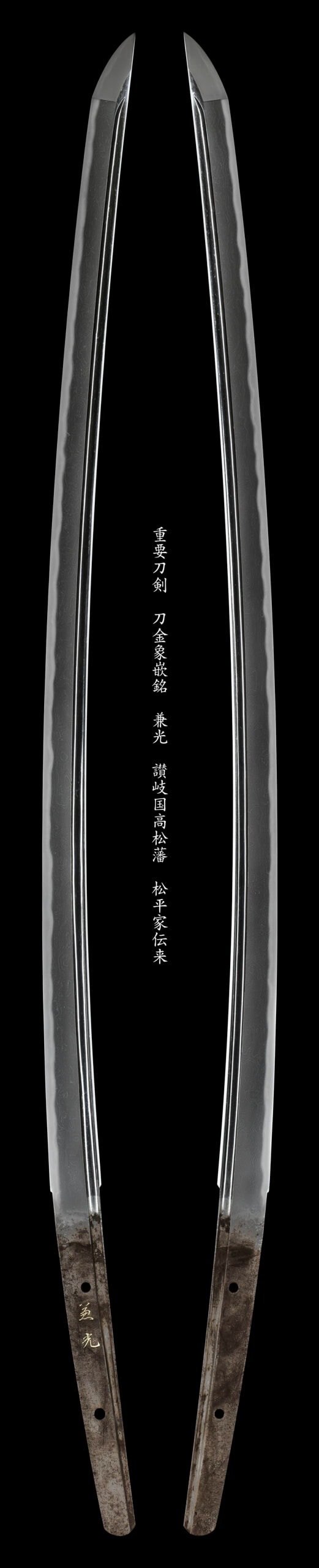
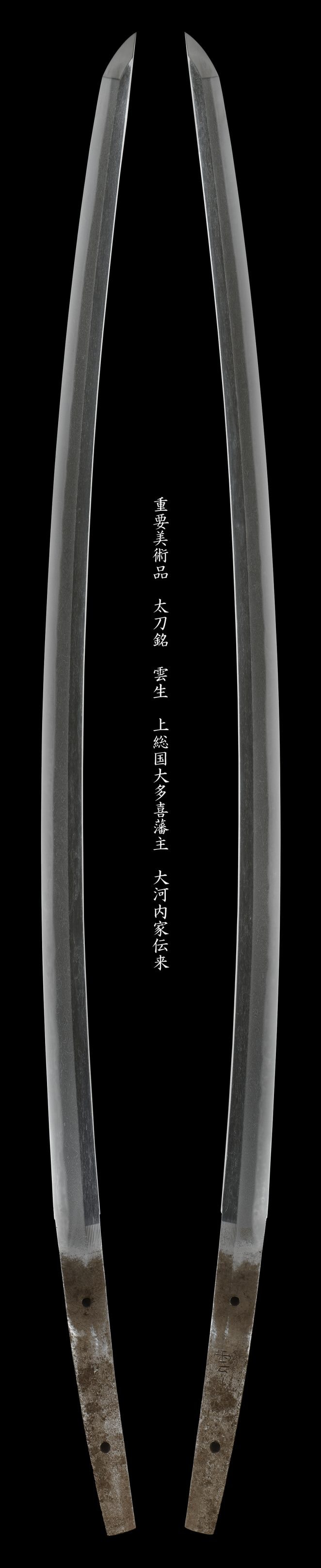
Nagamoto is traditionally regarded as a disciple of Nagamitsu, and by some accounts his younger brother. He was active during the late period, with dated works from the Shodan era (beginning 1299) confirming his period of production. Critically, there exist bearing Nagamitsu's signature in which the manner of inscription — the — is demonstrably by the hand as Nagamoto's own signed works. From this evidence it is inferred that Nagamoto served as one of the -sha (substitute smiths) working on behalf of Nagamitsu, the head of their lineage, and that he was among the principal representatives within the school. Extant signed works by him are exceedingly rare, a circumstance likely attributable to the proportion of his career spent producing blades under his master's name, and possibly to later-generation alterations of the character "" to "mitsu."
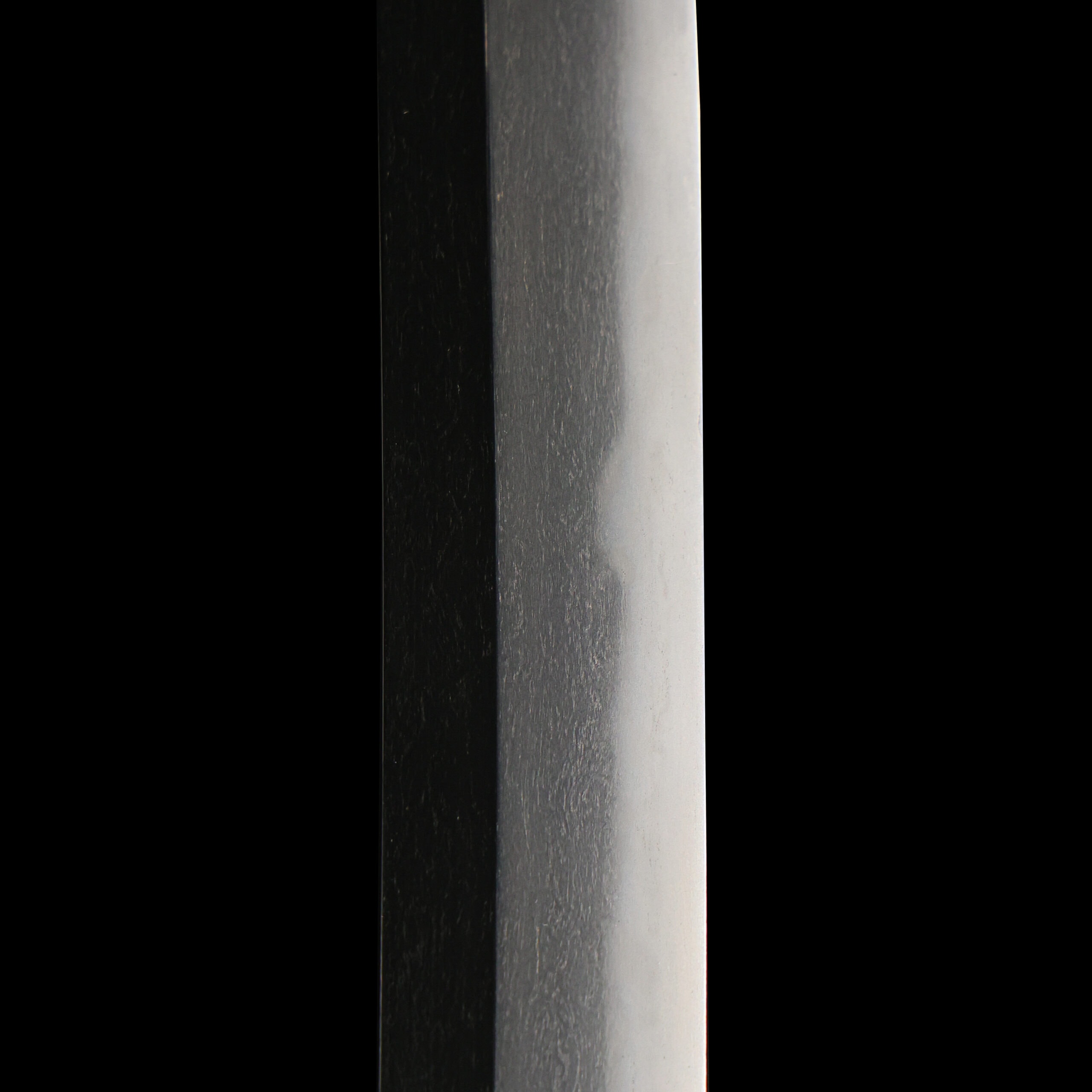
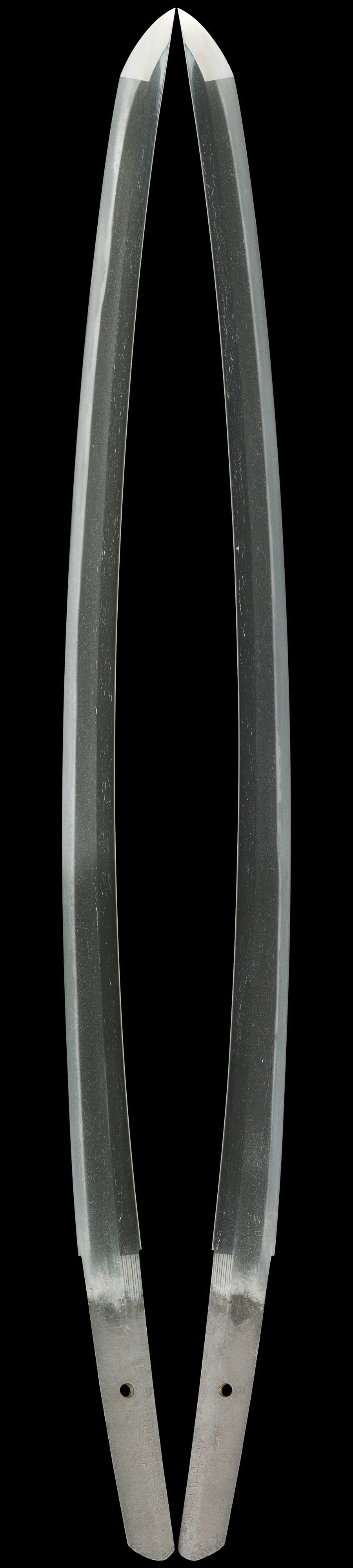
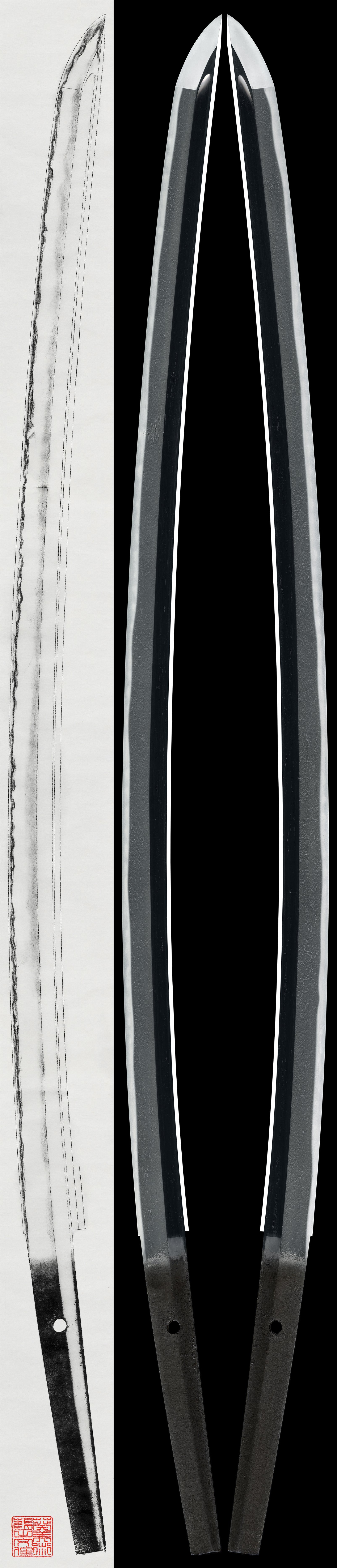
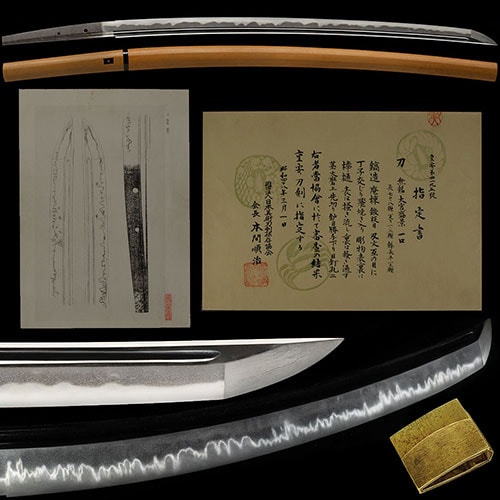
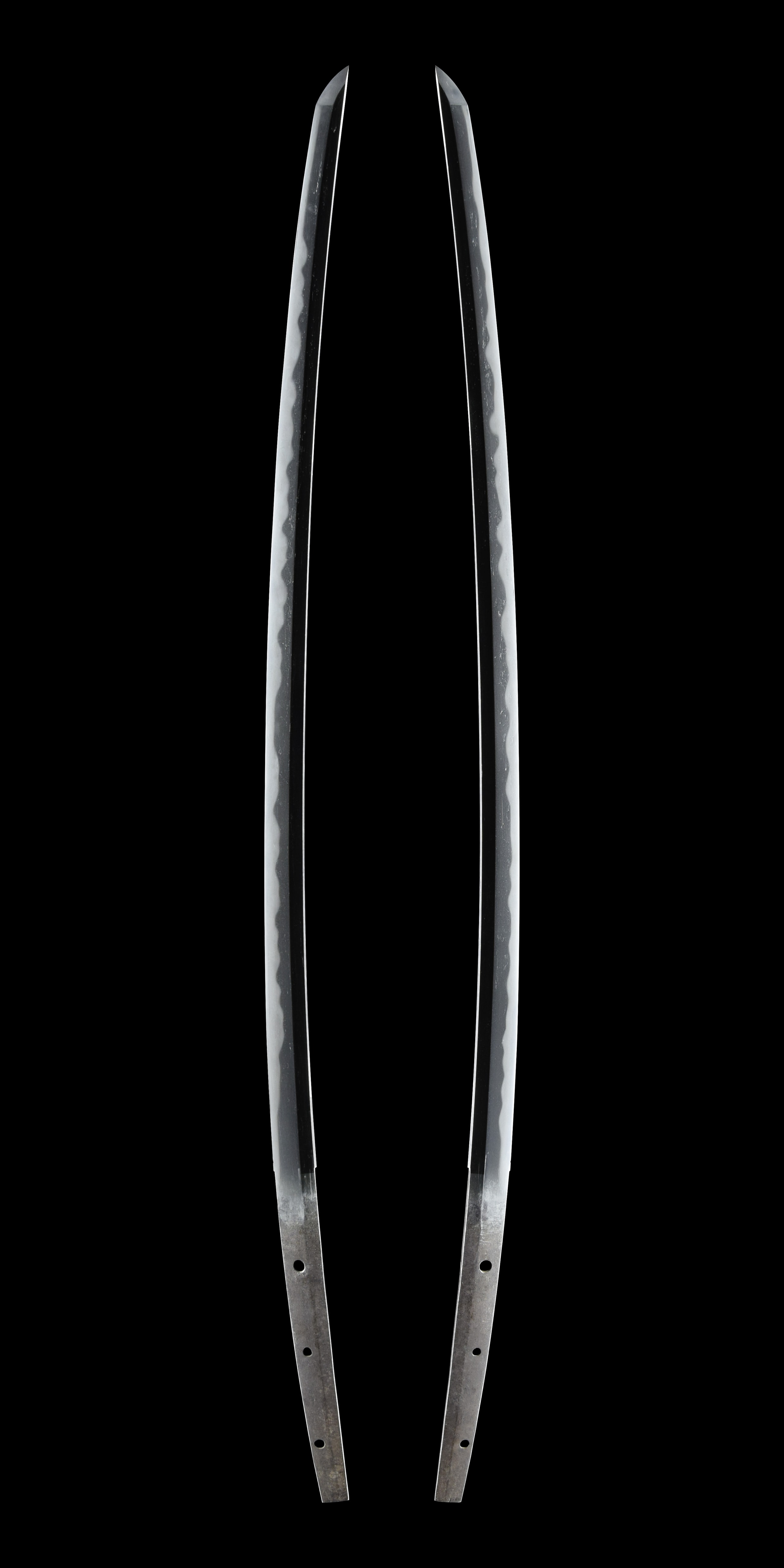
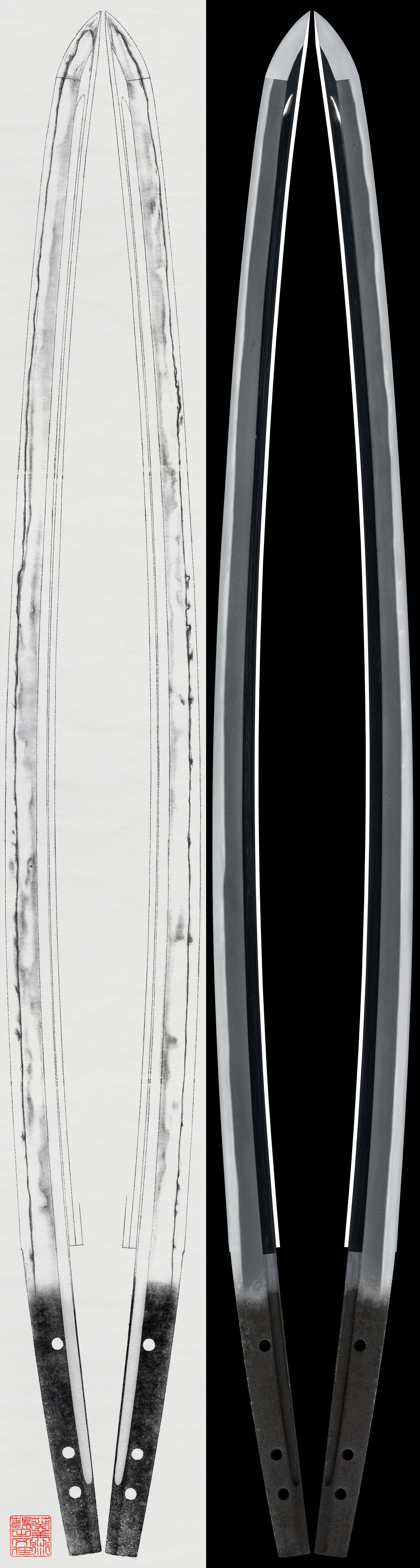
Nagamoto's style is characterized by slender and gentle with pronounced and , often terminating in . His presents tightly forged , sometimes mixed with , bearing fine and abundant , with standing out prominently. His typically centers on mixed with and pointed elements, approaching Nagamitsu's calm manner; alternatively, he produces a quiet into which - are interspersed. The tends toward — a characteristic tightness — and the frequently becomes shallowly , turning back in to form the pattern known as the sansaku-. In works of broader temper, deep with well-adhering is accompanied by and , yielding a vivid .
Within the lineage, Nagamoto occupies a distinctive position as one whose workmanship, while closely aligned with Nagamitsu's refined idiom, nonetheless displays an identifiable individual manner — a quieter, more restrained approach that distinguishes his hand from that of his master. The has repeatedly affirmed that "the characteristic features of this smith are clearly expressed" in blades attributed to him, and has noted the particular documentary value of his dated works. As a smith of whom very few examples survive, each authenticated work carries heightened significance, and the consistent quality of extant pieces confirms Nagamoto as a capable and accomplished artisan of the first rank within the Nagamitsu circle.