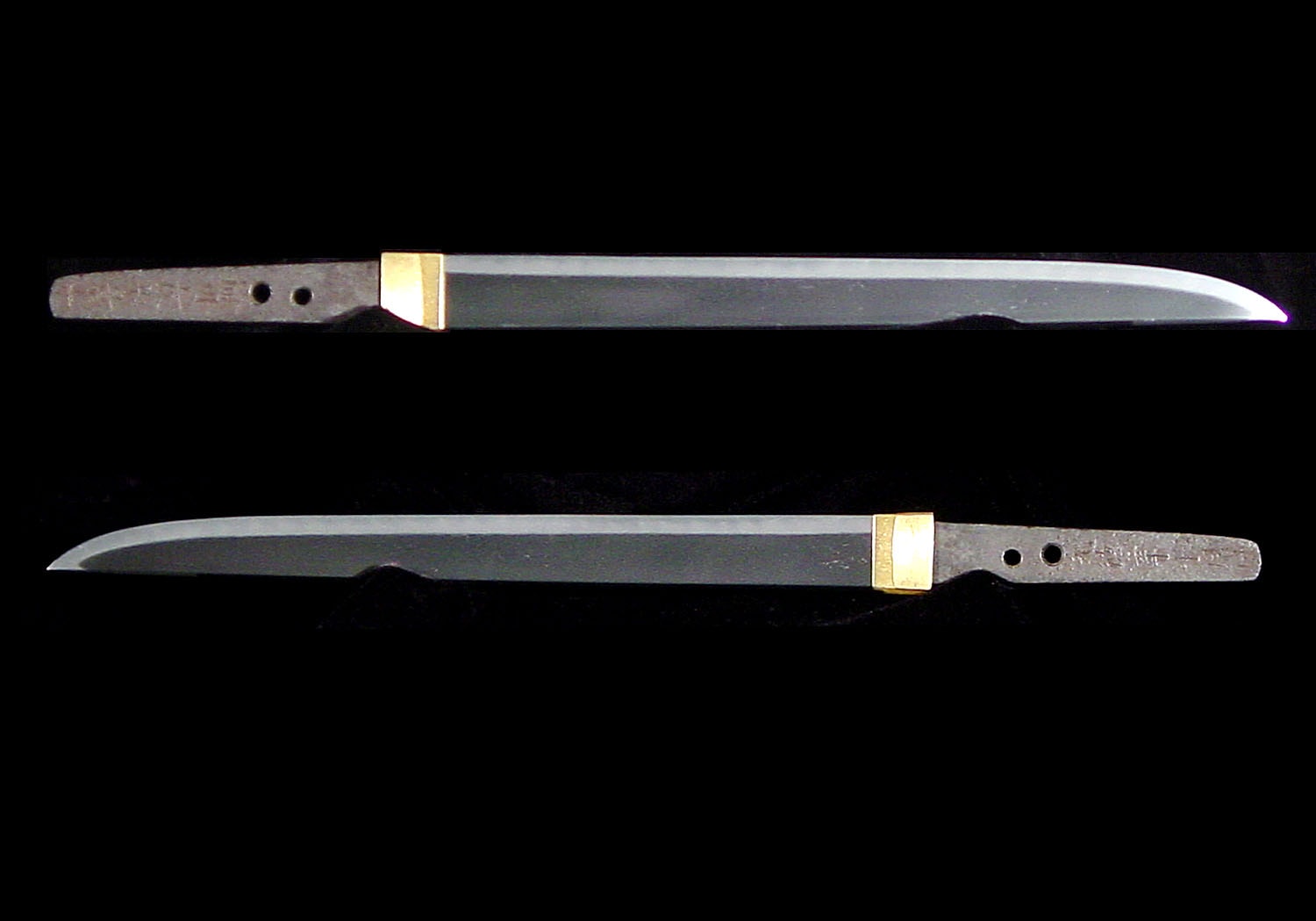
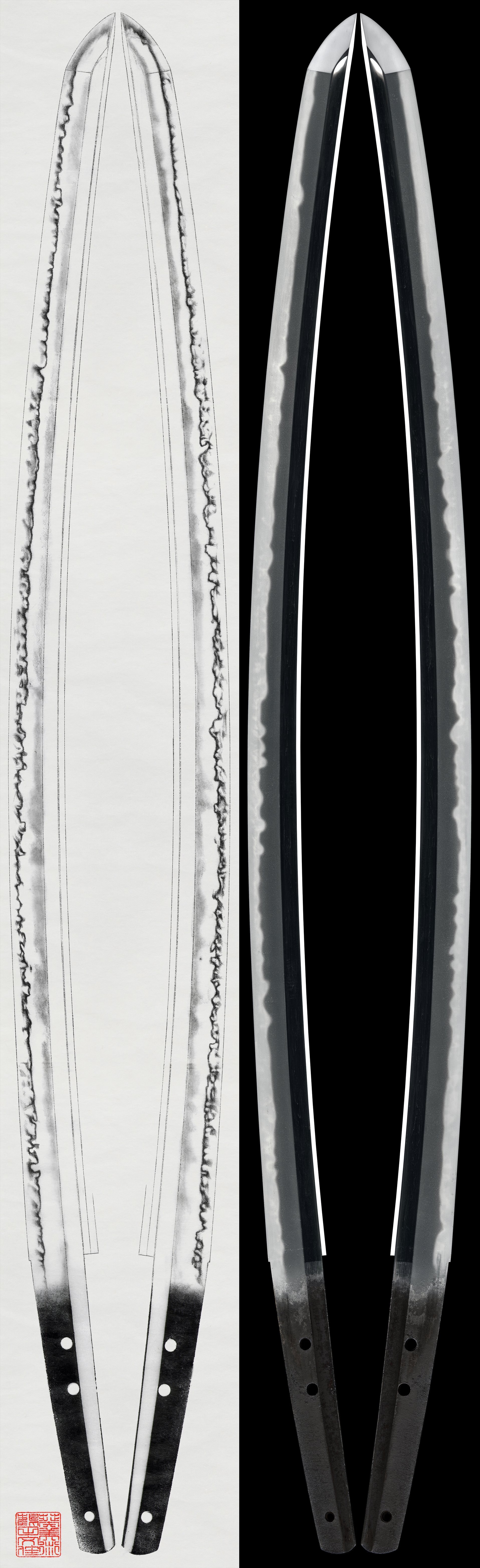
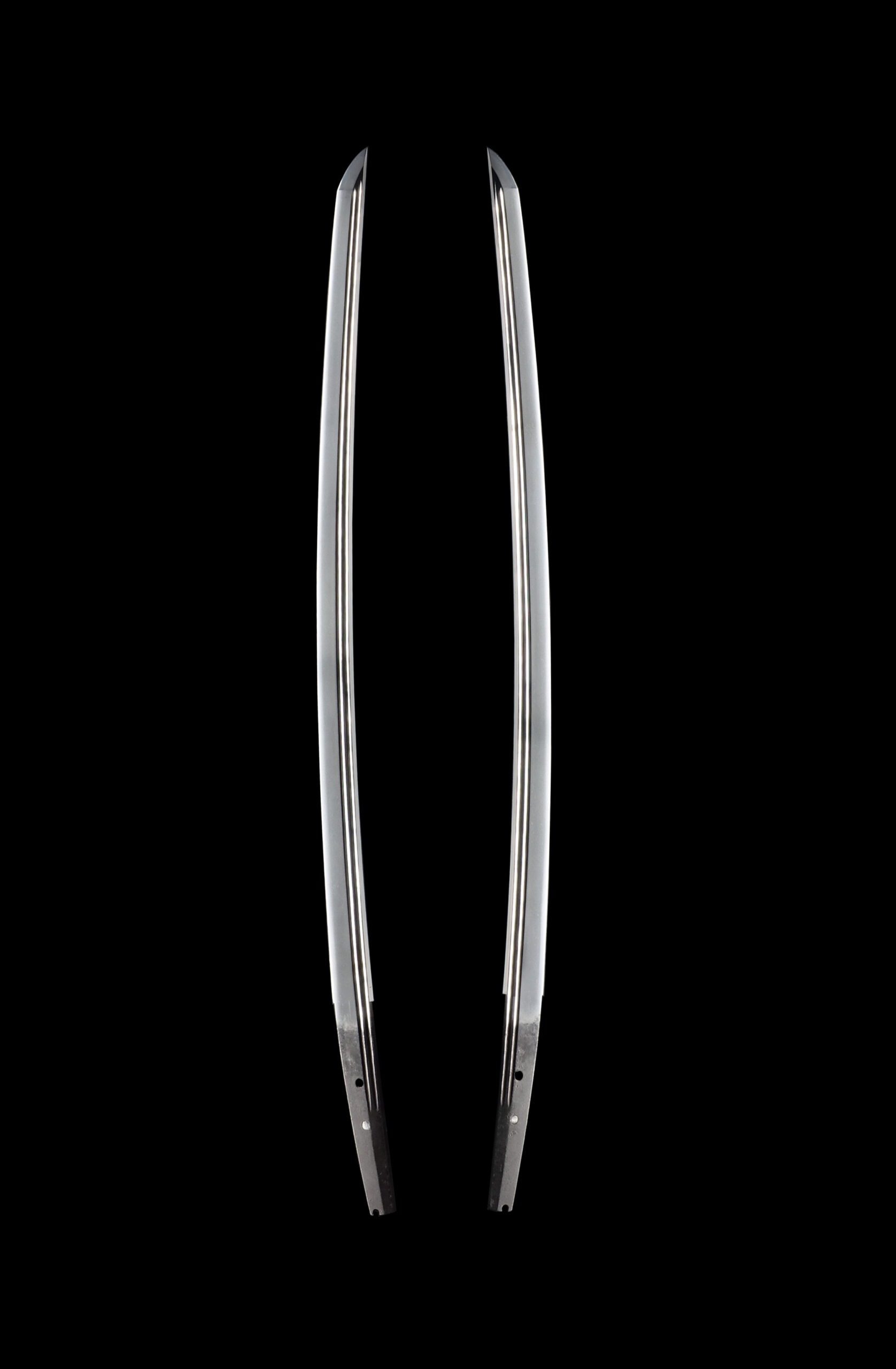
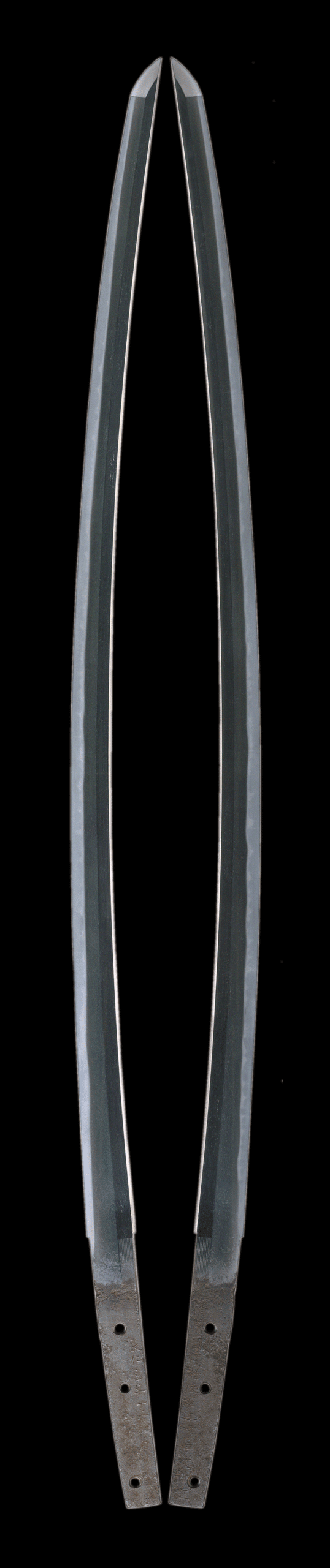
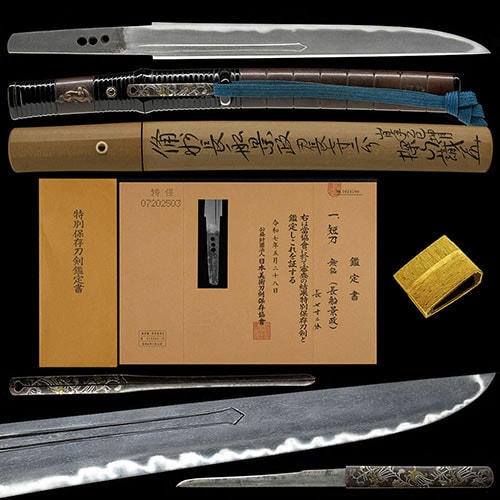
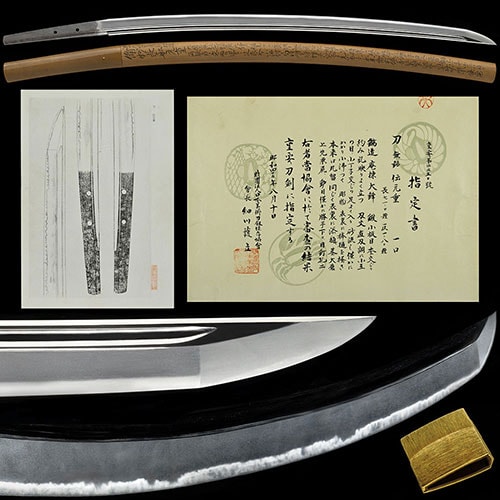
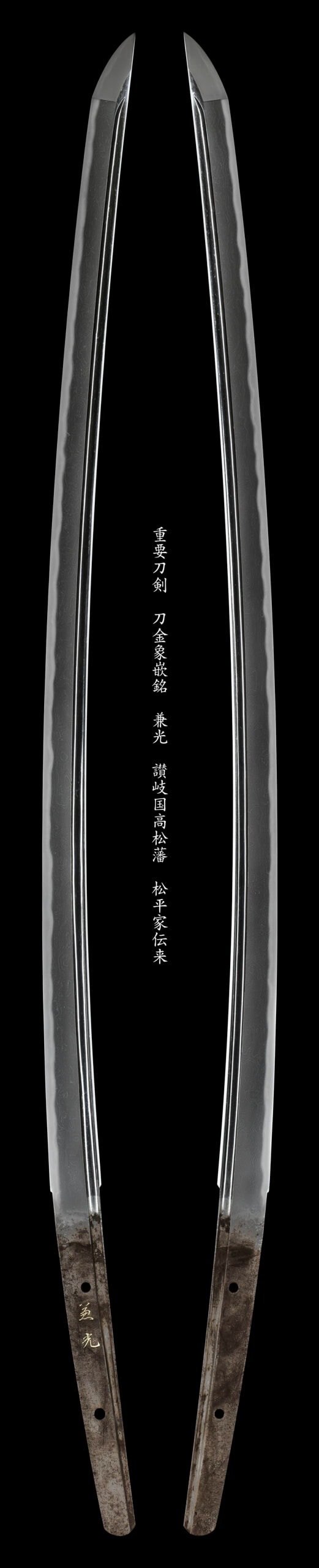
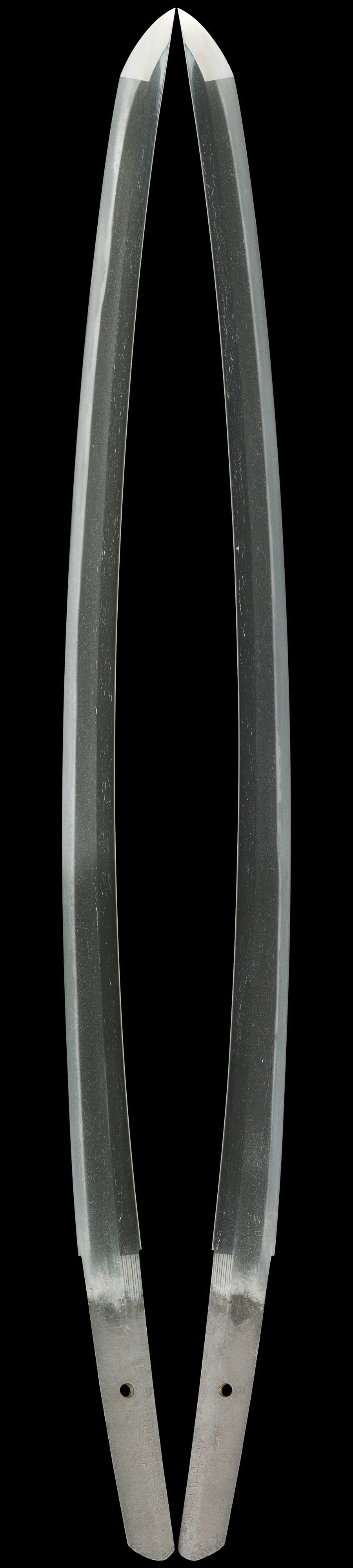
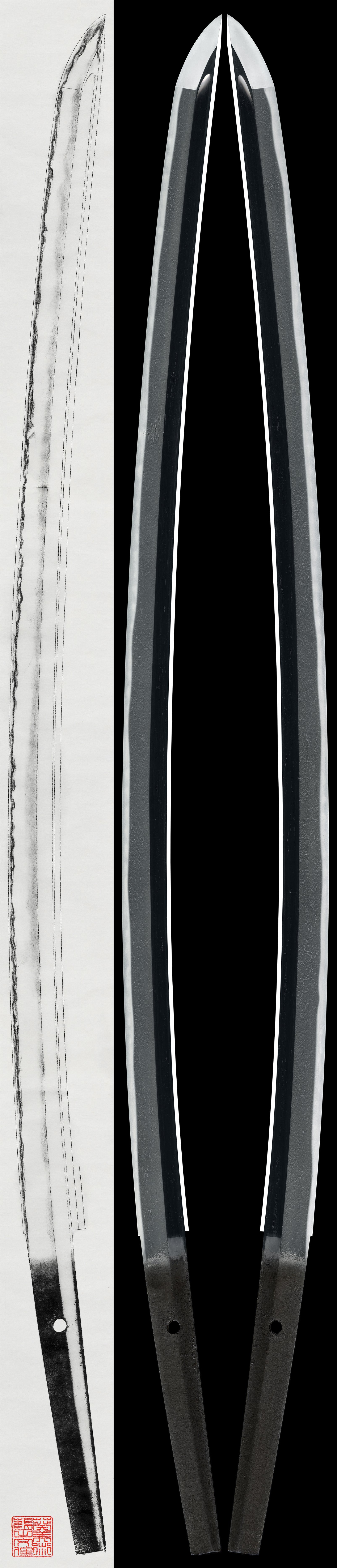
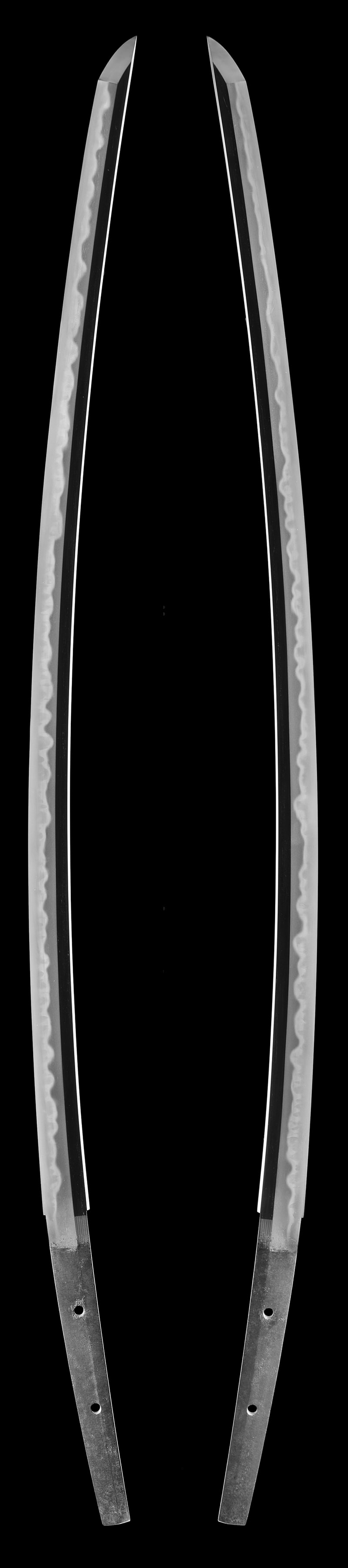
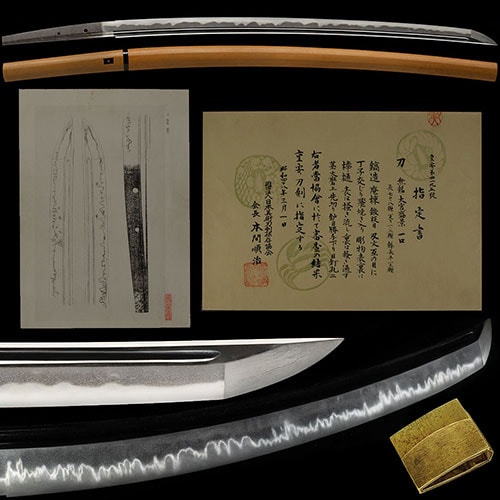
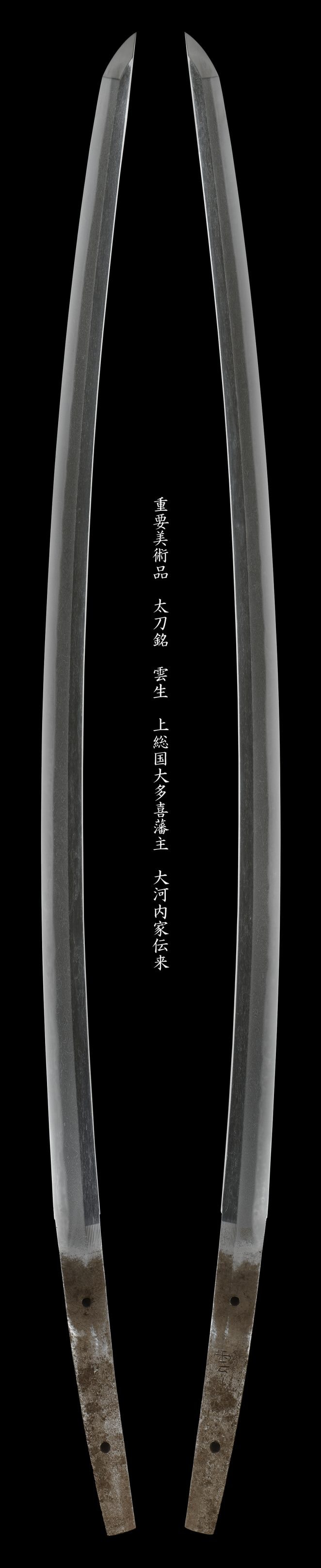
The name Norimitsu spans a lineage of several generations within the group, extending from the late period through the end of the era. The progenitor is traditionally said to have been a disciple in the line of Nagamitsu, and an extant dated Kagen 3 (1305) corroborates this early origin. Thereafter, surviving examples through the period and into the Oei era are extremely few, and the line is thought to have lapsed before being revived in the period. The smith most commonly encountered in extant works -- identified as the fourth generation in the -- was active from around the Eikyo era through the Chokoku and Kansho eras. Together with Sukemitsu, this Norimitsu is celebrated as one of the twin peaks of so-called "Eikyo-," and his workmanship occupies the critical transitional phase between the Oei- manner and the later tradition. Within the -period generation, one tradition holds that Norimitsu was either a disciple or a younger brother of Kanemitsu; dated works from the Jowa through Eiwa eras survive, and his style stands closest to Kanemitsu's within the group.
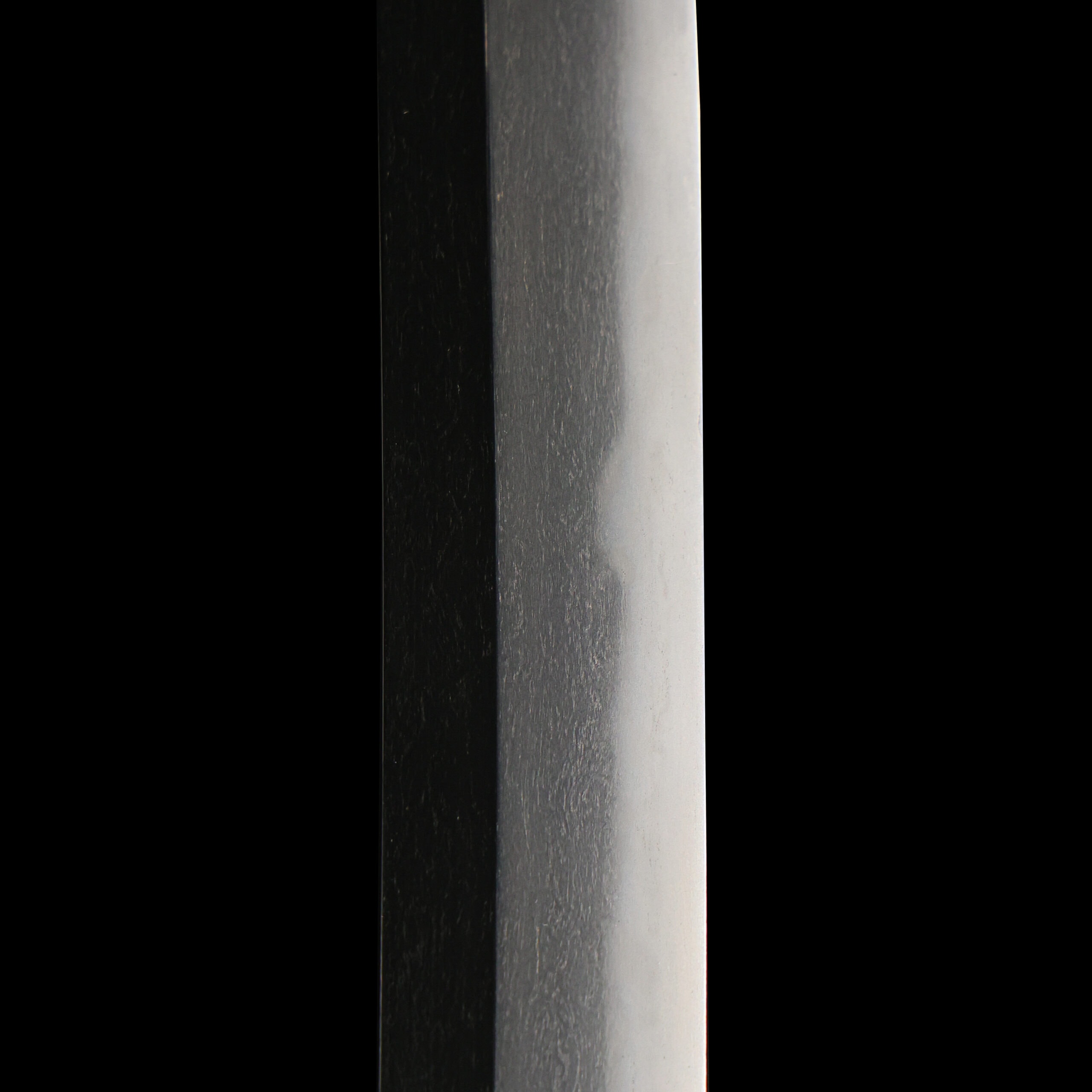
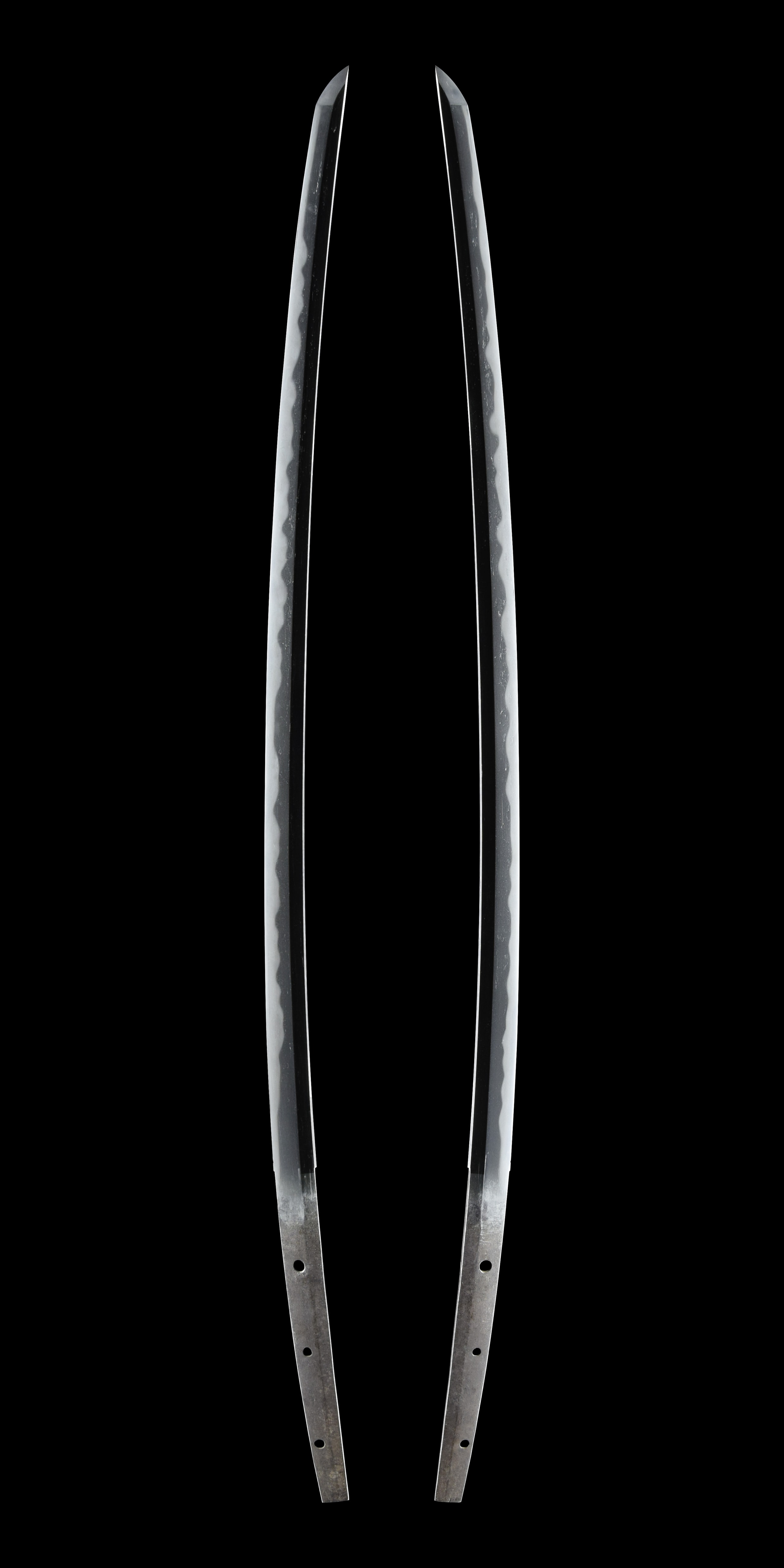
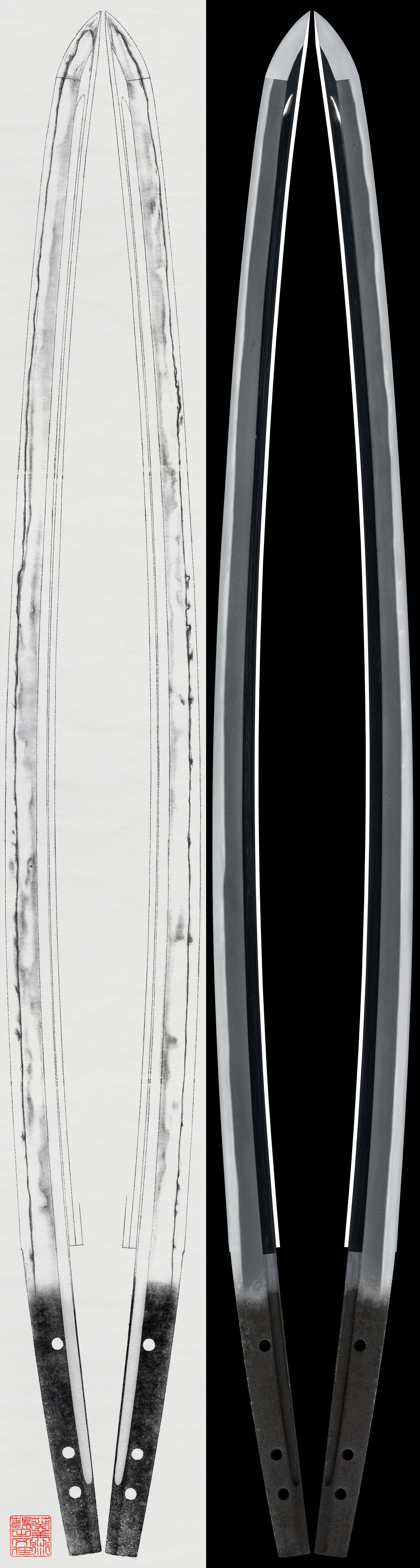
The characteristic across the Norimitsu generations centers on -- with valleys opened at the base -- mixed with , , , and angular elements, forming the distinctive "crab-claw" (kani no ) appearance noted in the . and enter well and frequently; the tends toward a tightened quality, with forming; and the enters in , turning back either pointed or in . The forging presents tightly packed, sometimes mixed with ; fine adheres; enters; and stands out prominently -- a hallmark across nearly all designated examples. In the -period works, the broadens to a large-scale based on , with thicker , , , and ; the manner closely approaches the level of Kanemitsu himself. The later -period works, particularly those from around the Eisho era, show a in which mingles vigorously with , producing a florid, -dominant character with bright .
Norimitsu's oeuvre encompasses , , , , and , with signed and dated examples providing an unusually continuous documentary record across the generations. The bearing a Kyotoku 1 (1452) date, with its original and crisply surviving signature, is praised as the outstanding example among the fourth-generation works, preserved in fully intact condition. The -period generation produced works of considerable scale, including blades originally exceeding 2 7 , with robust and forceful that convey an impression of martial power. Among the generation, Norimitsu's output is comparatively small, yet works from the Eisho era display a level of technique comparable to Yosozaemon-no-jo Sukesada and Jirozaemon-no-jo Katsumitsu, confirming his standing at the summit of the tradition. An Oei 33 (1426) of exceptional documentary value fills a previously unknown gap in the lineage and demonstrates the elegant with that characterizes the school's quieter mode.