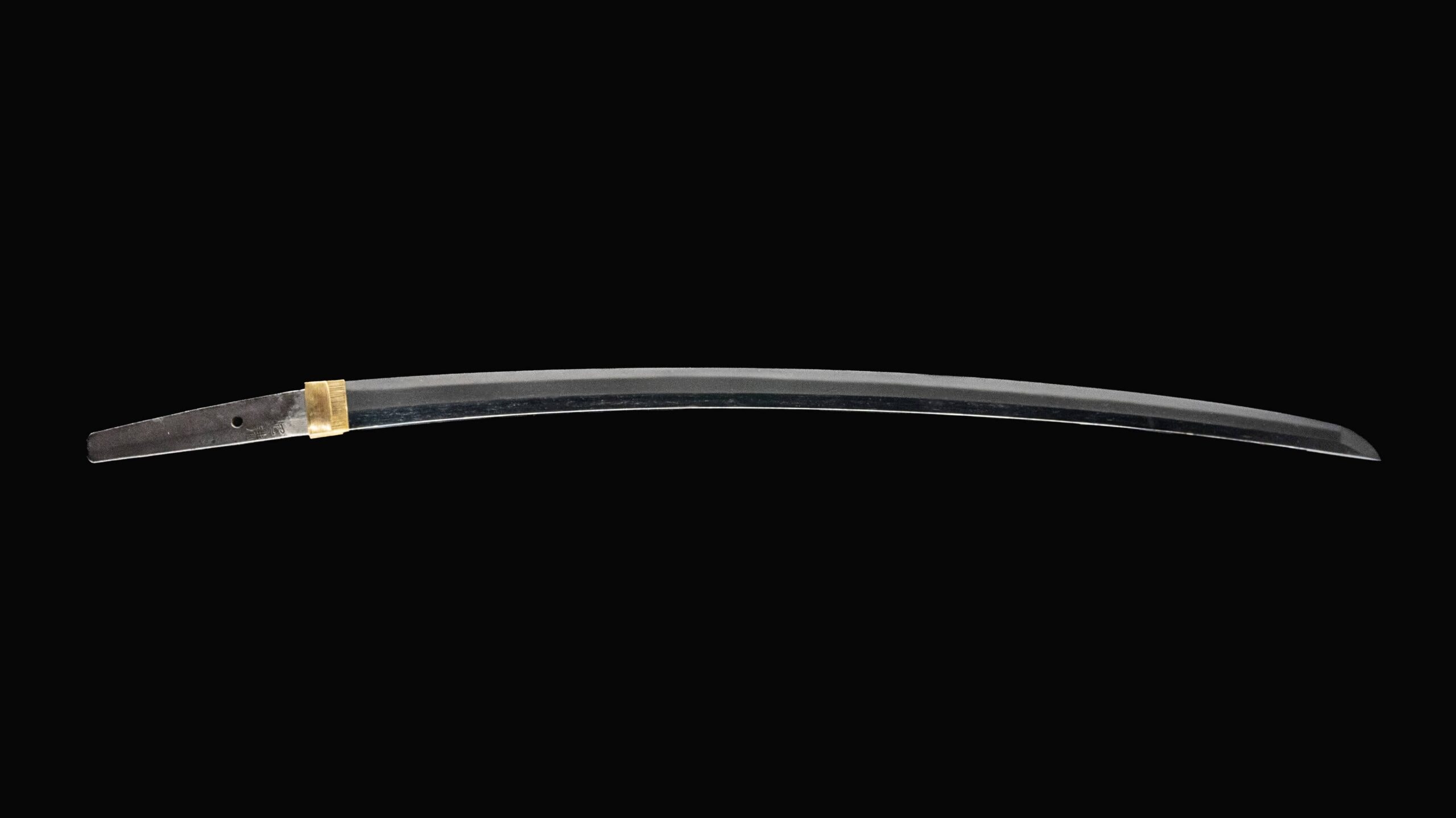
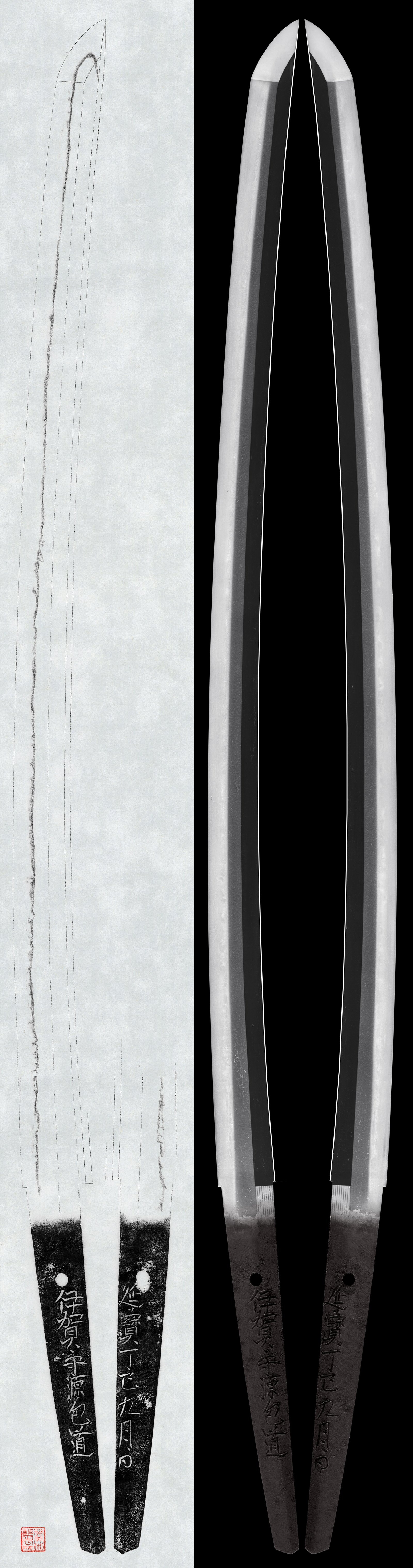
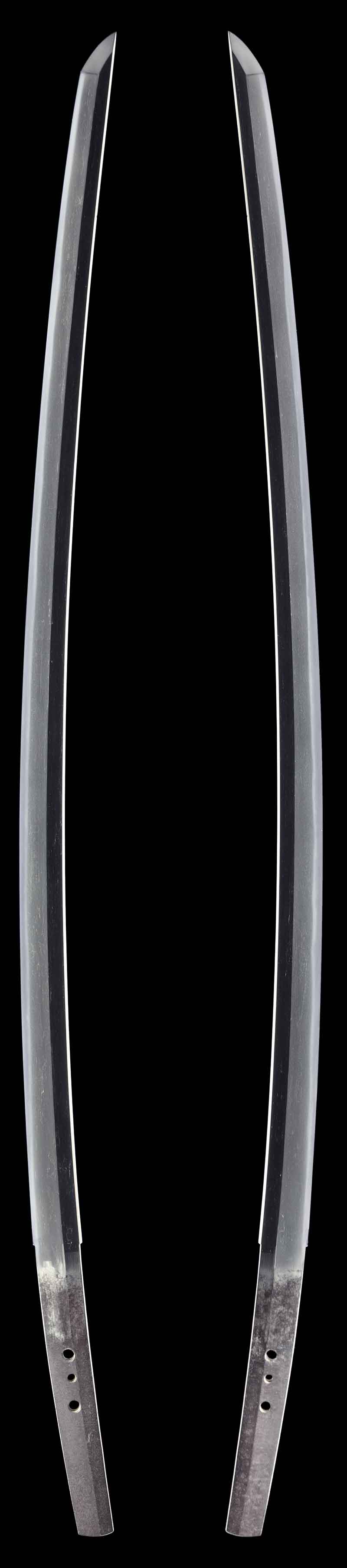
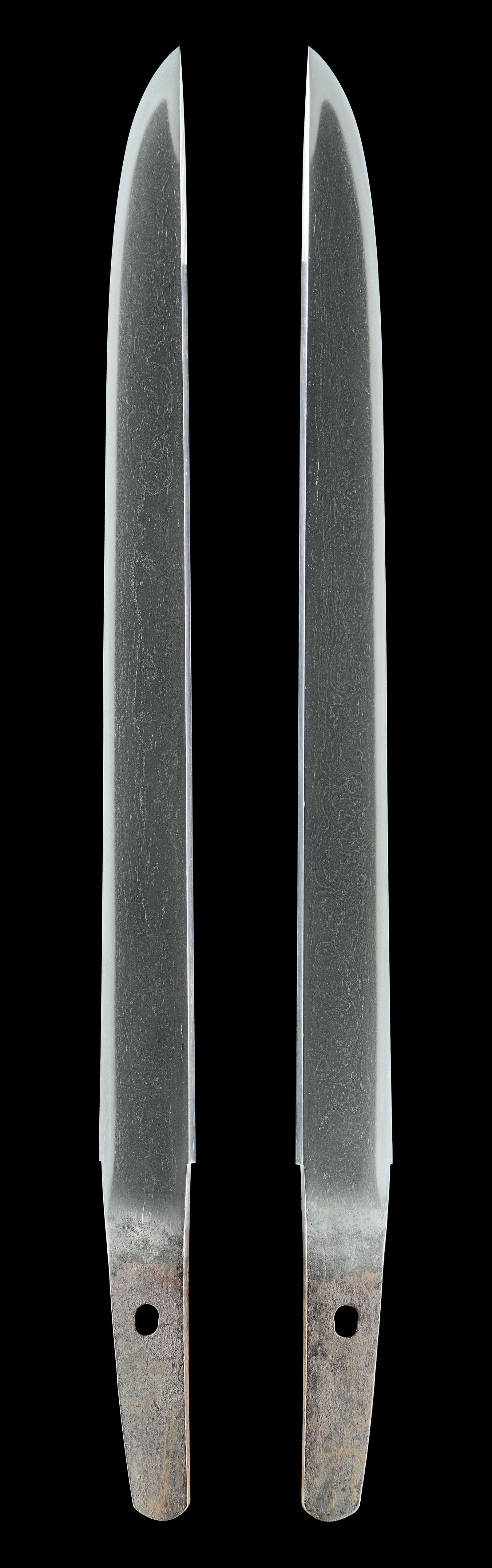
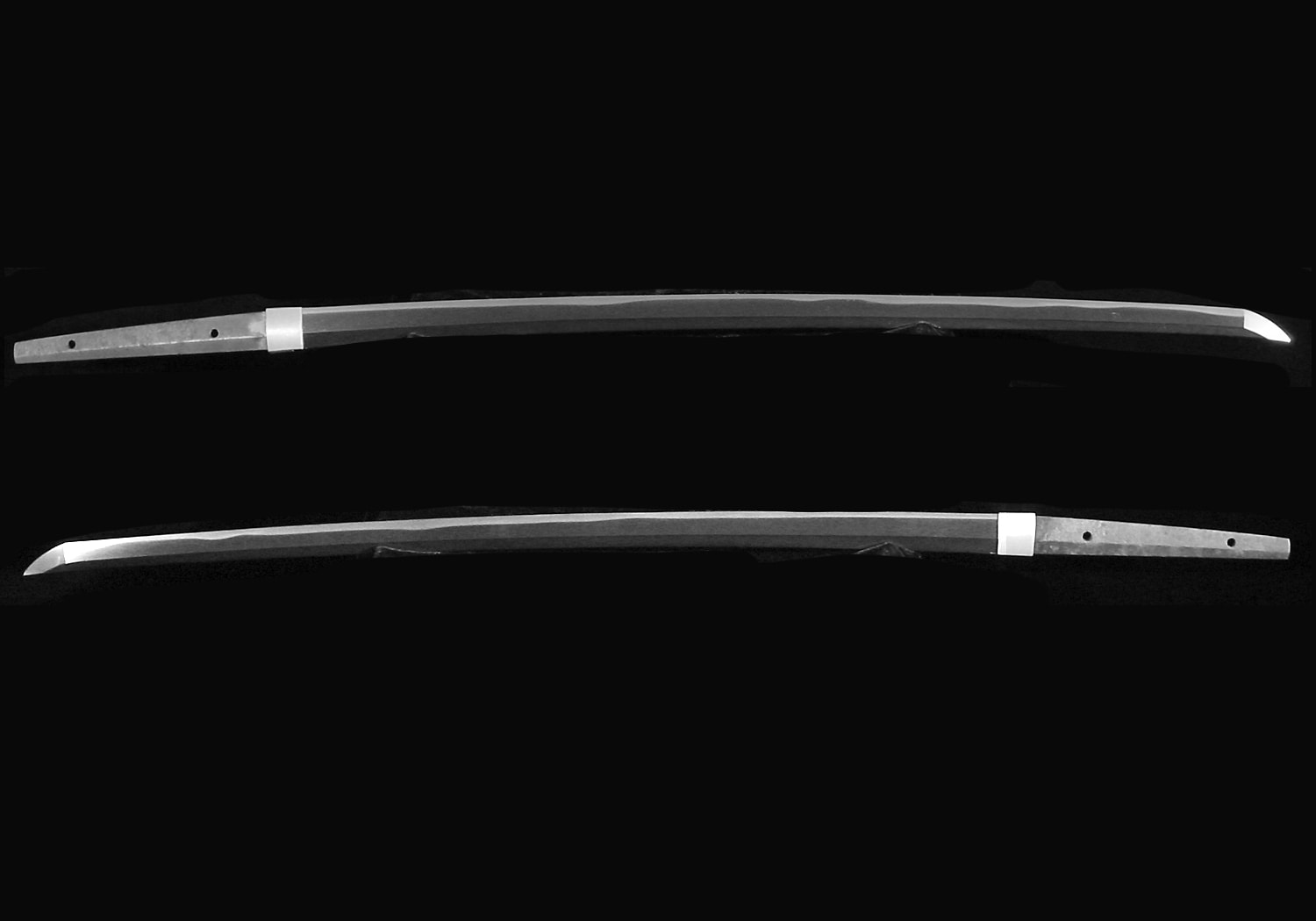
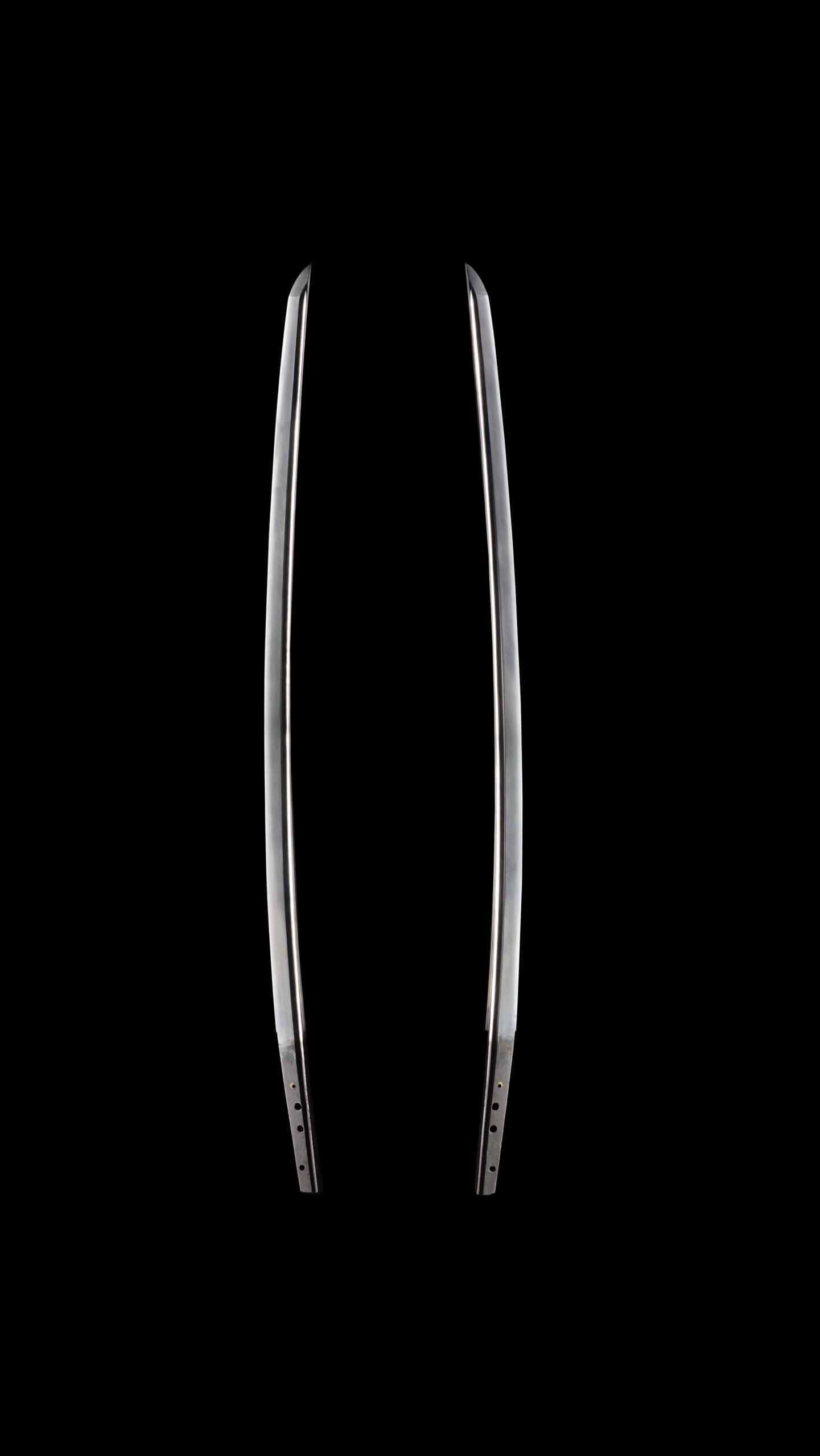
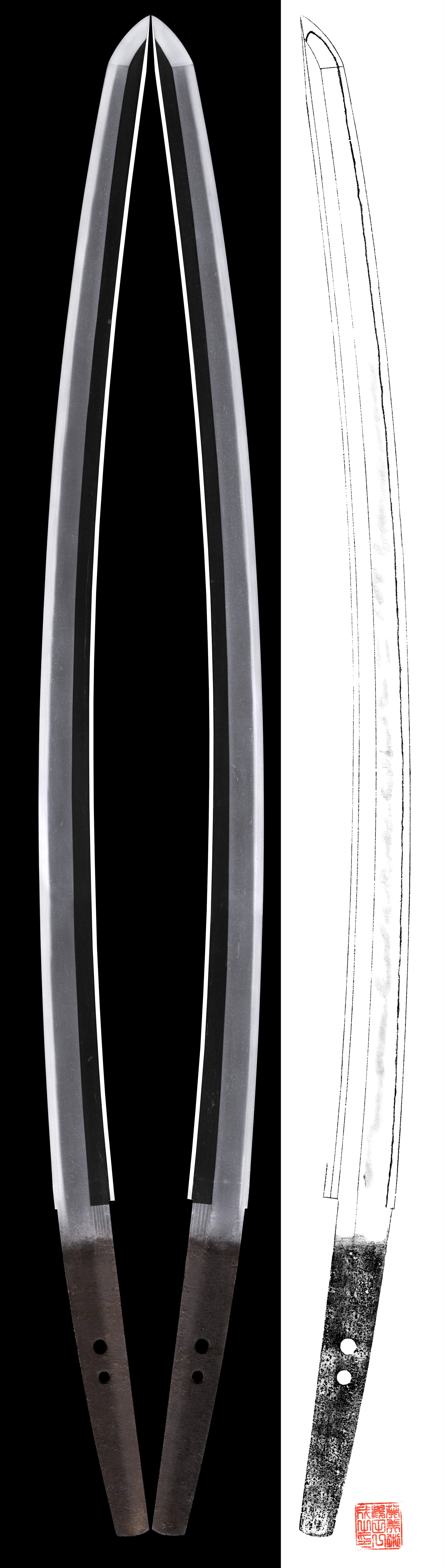
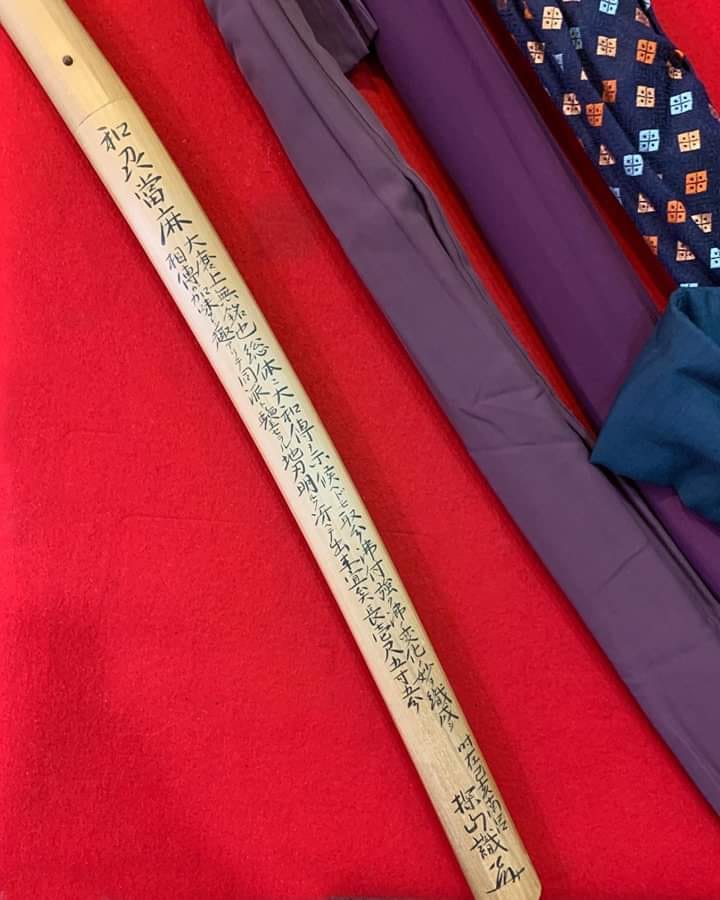
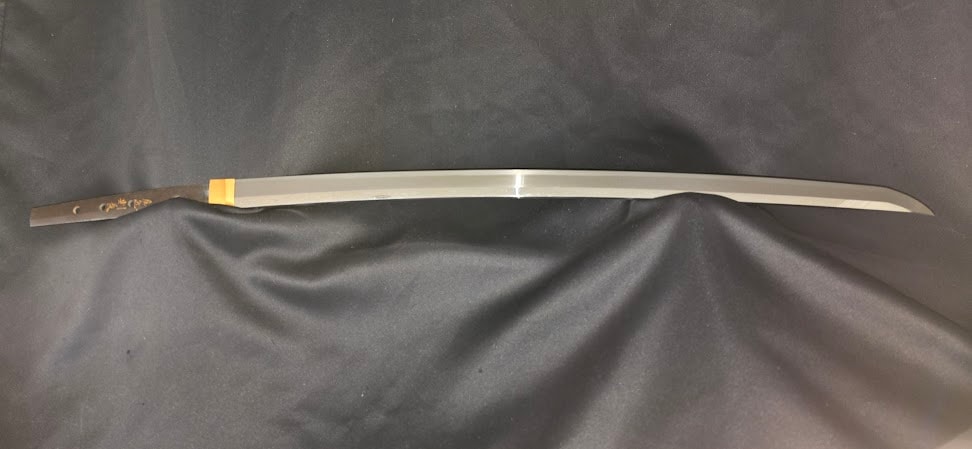
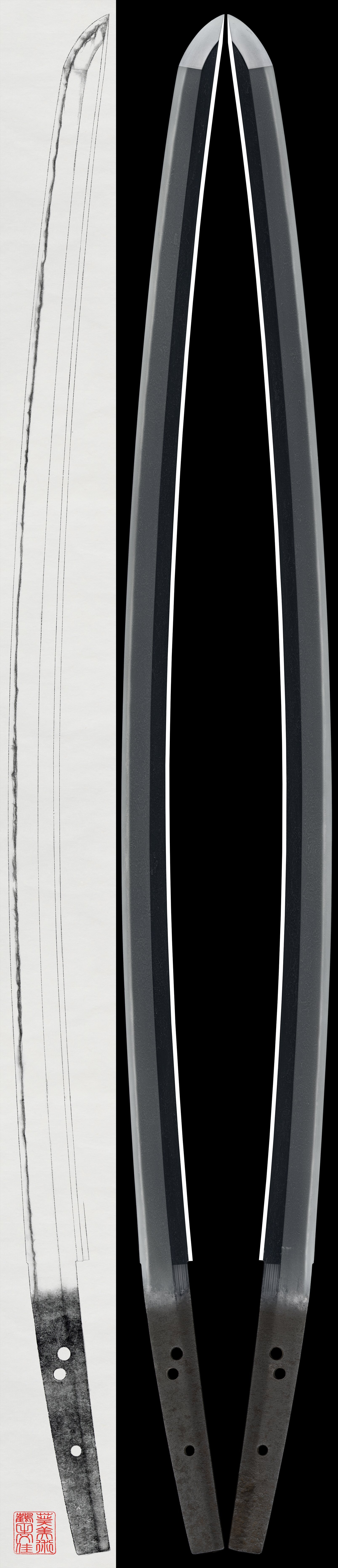
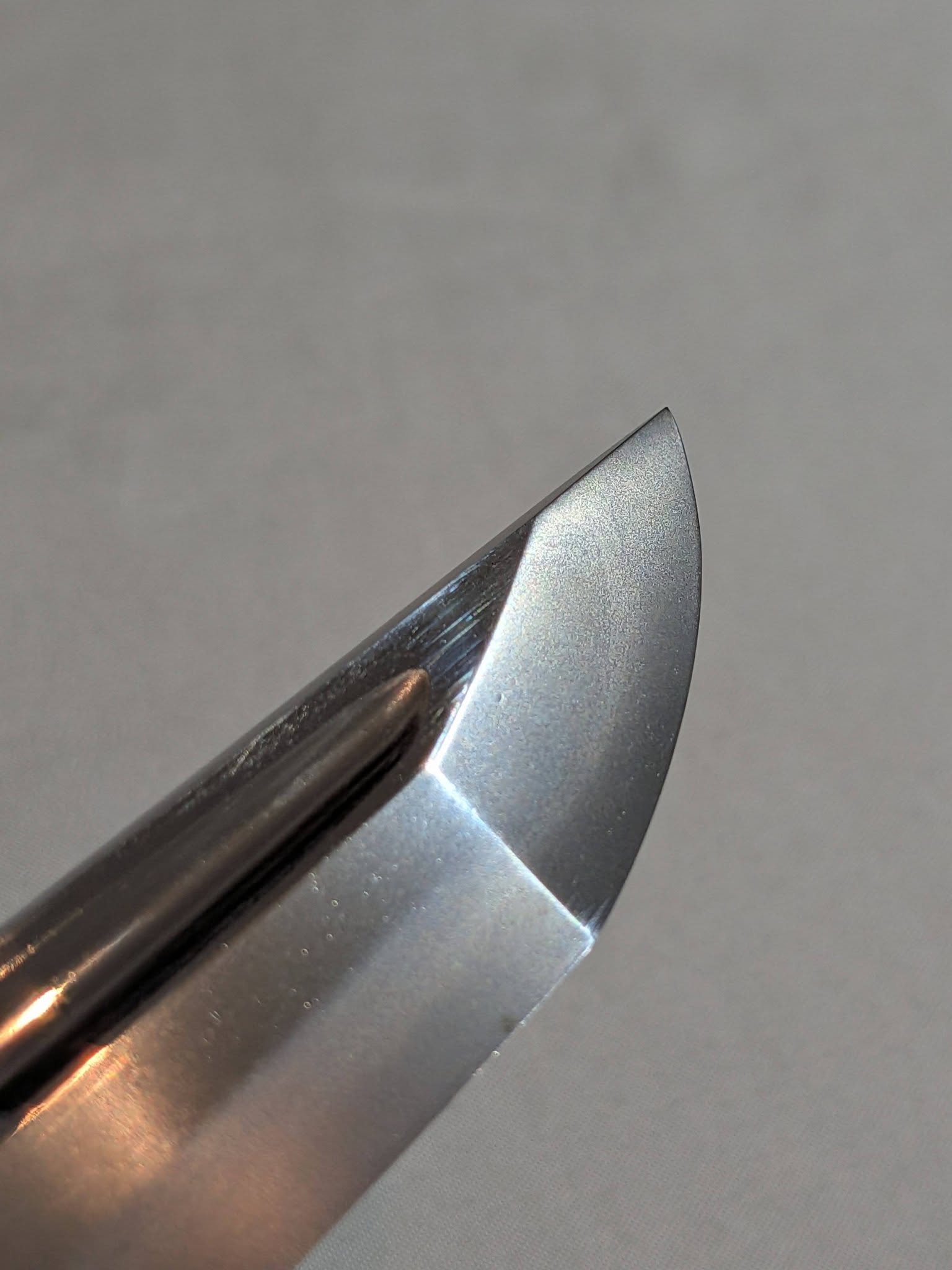
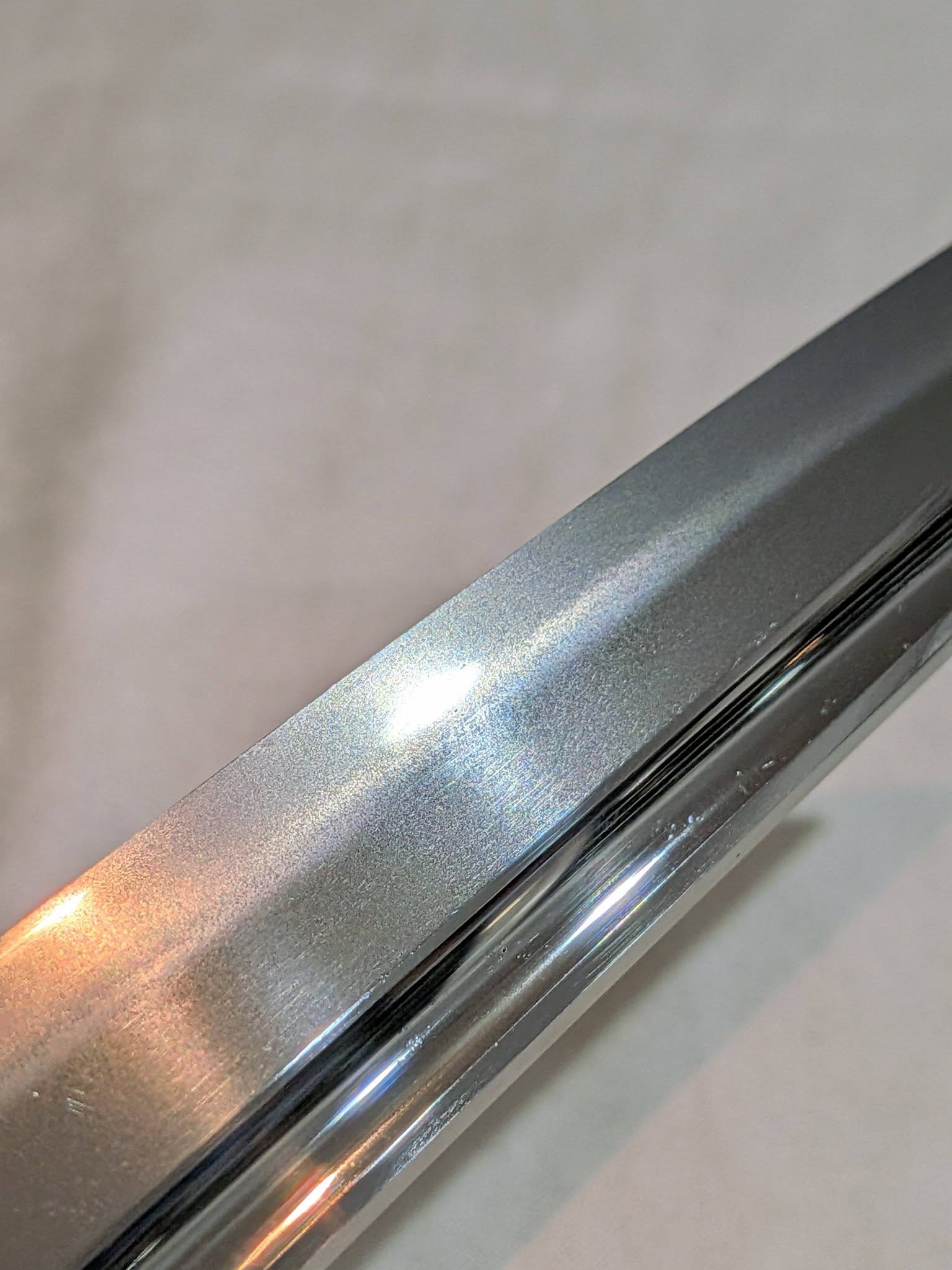
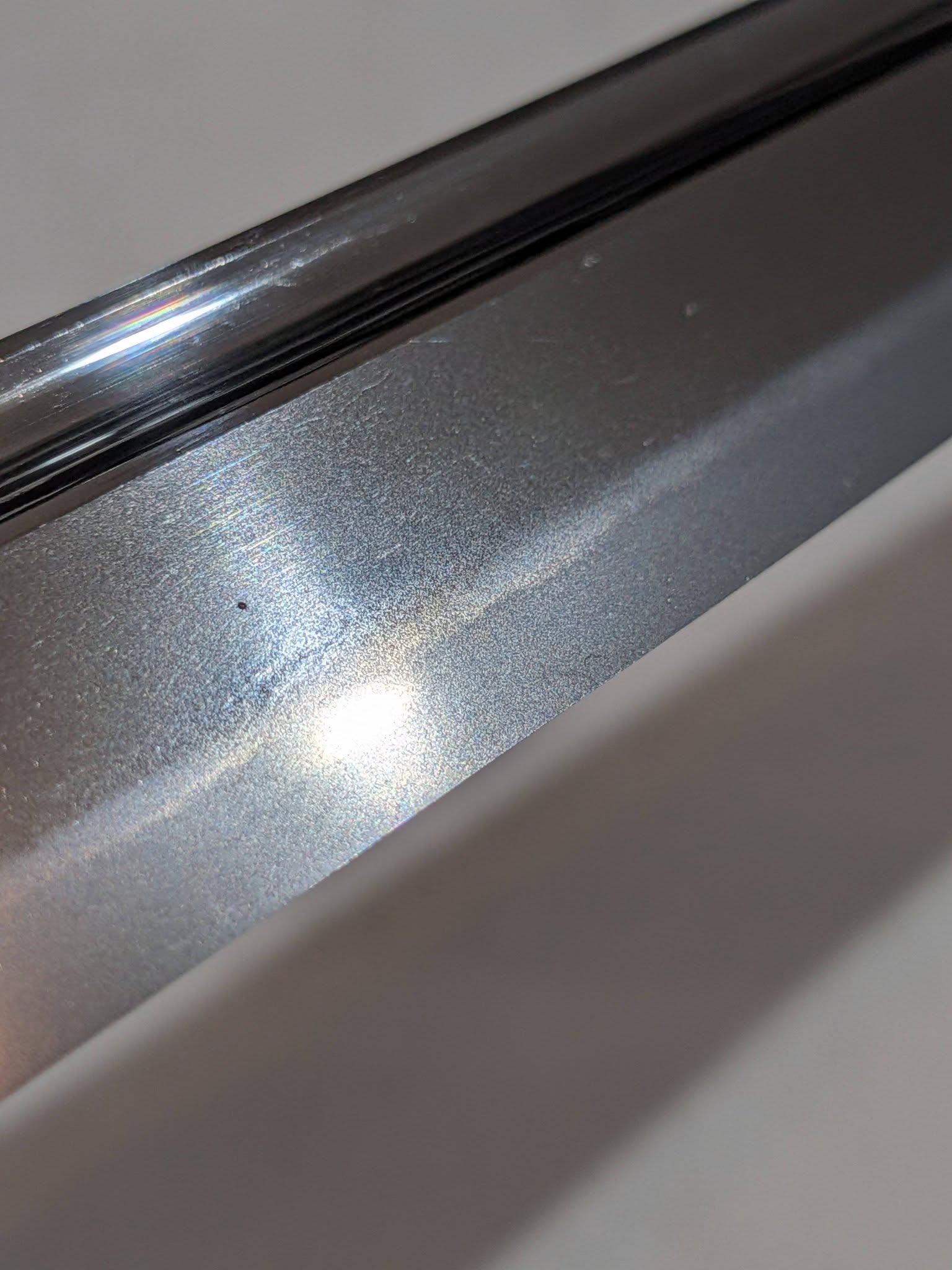
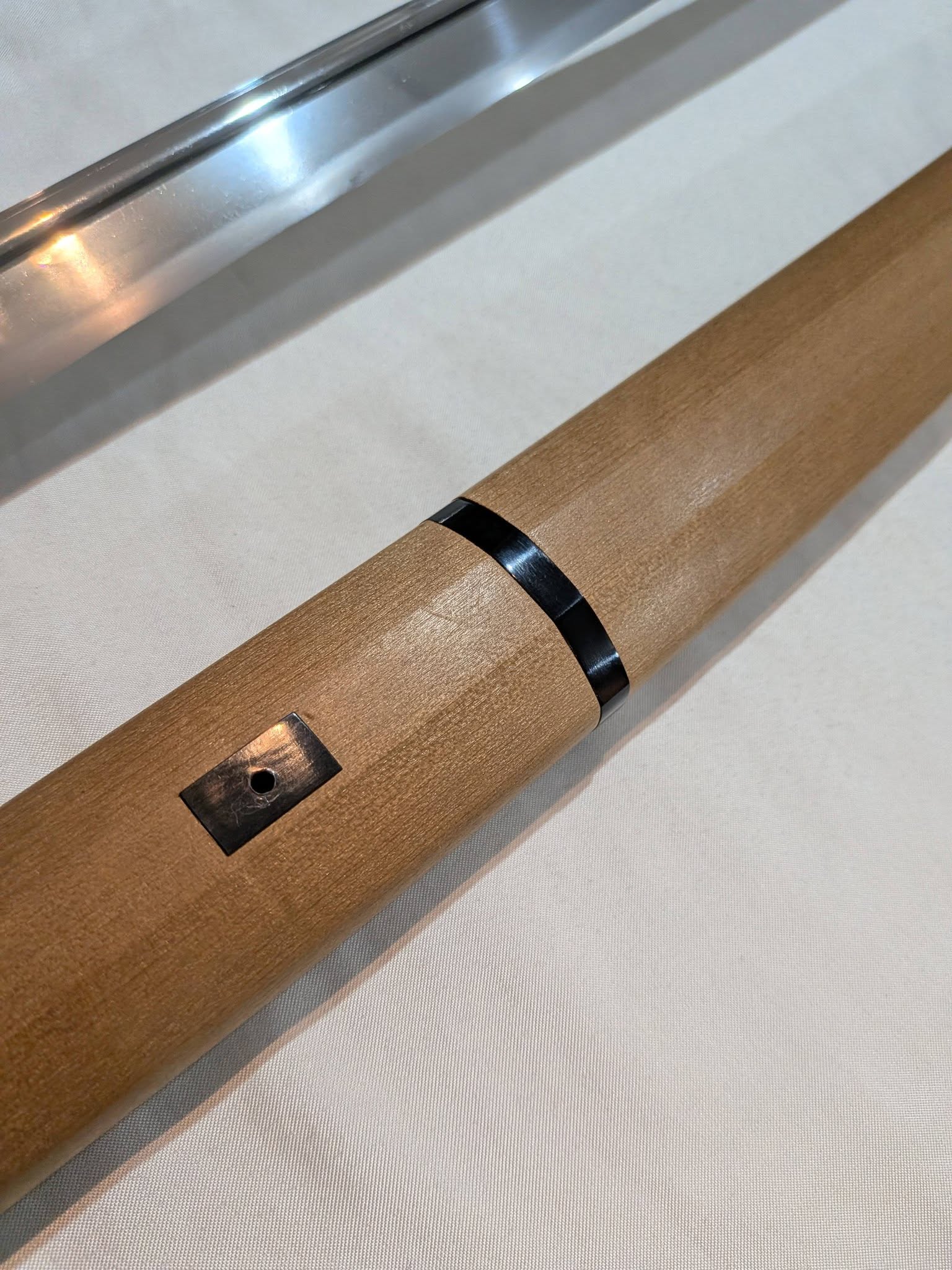
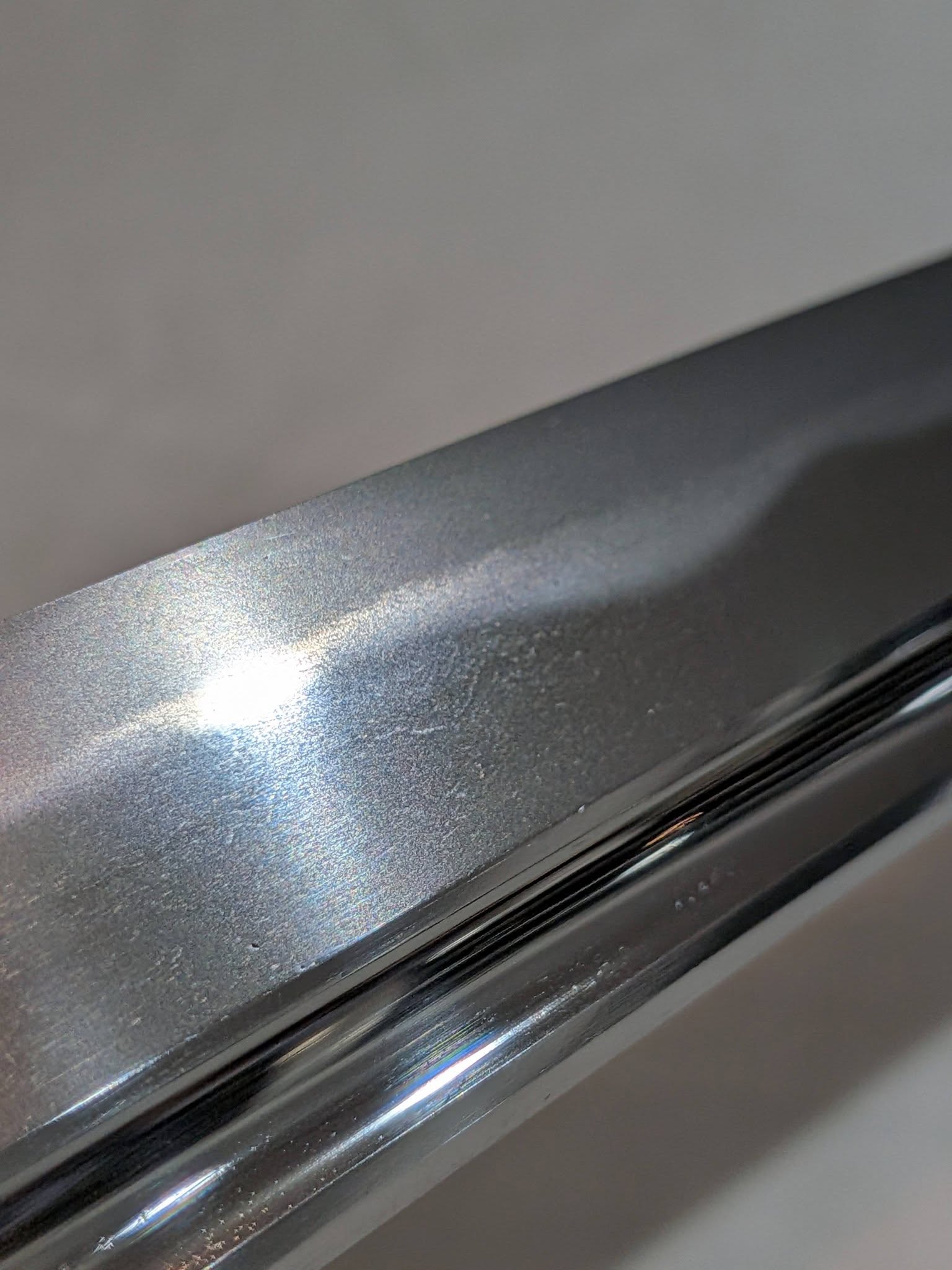
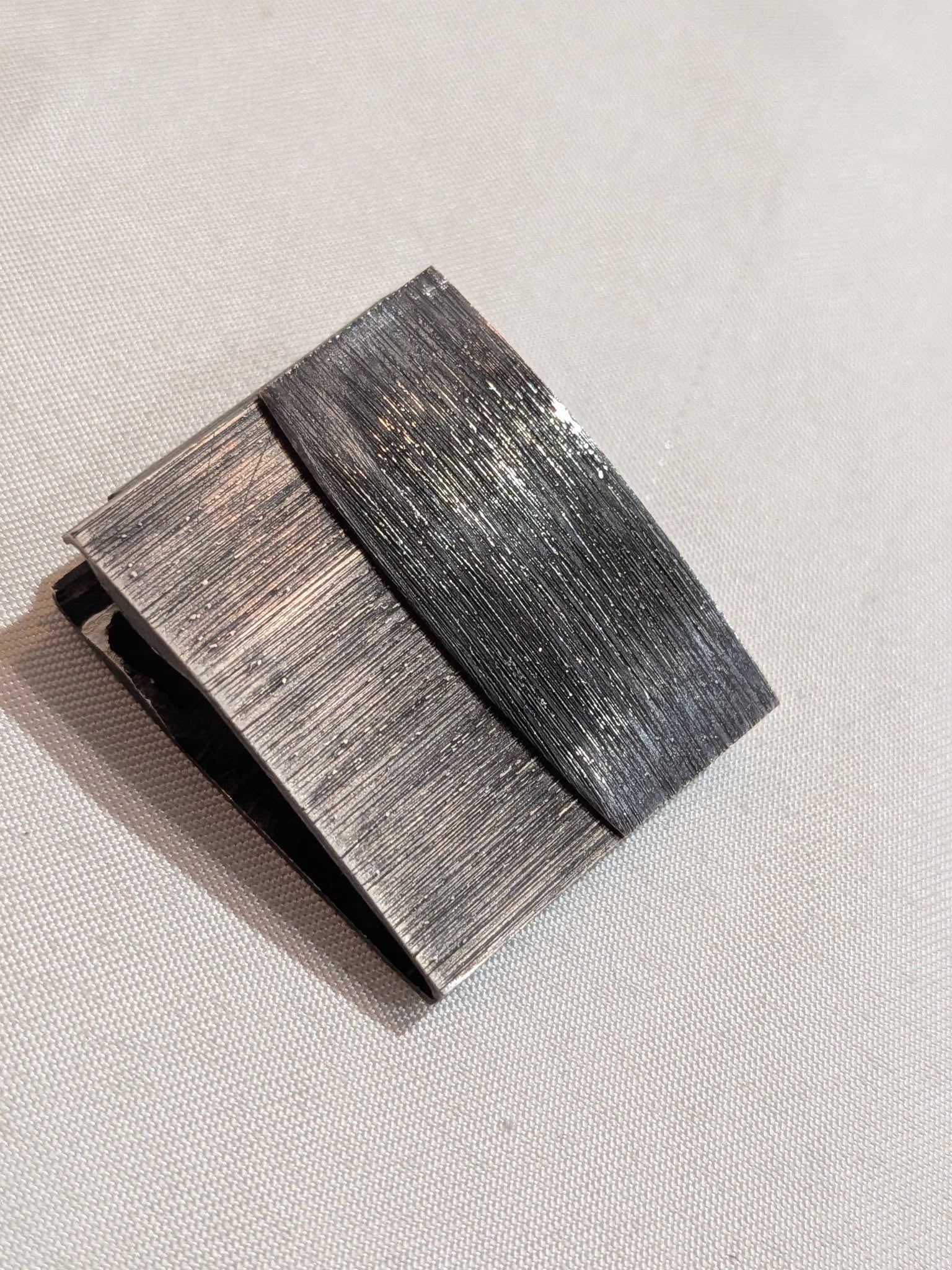
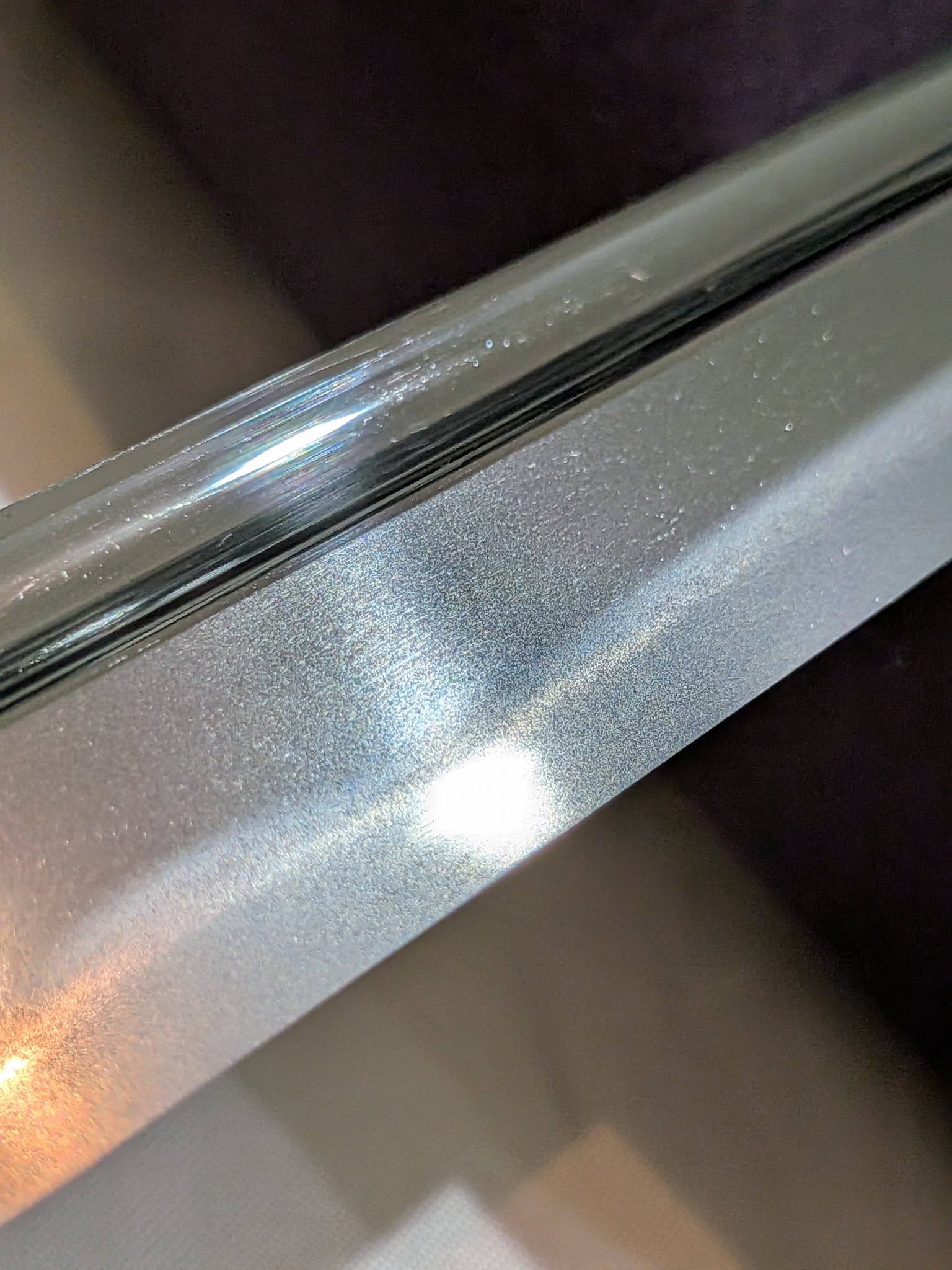
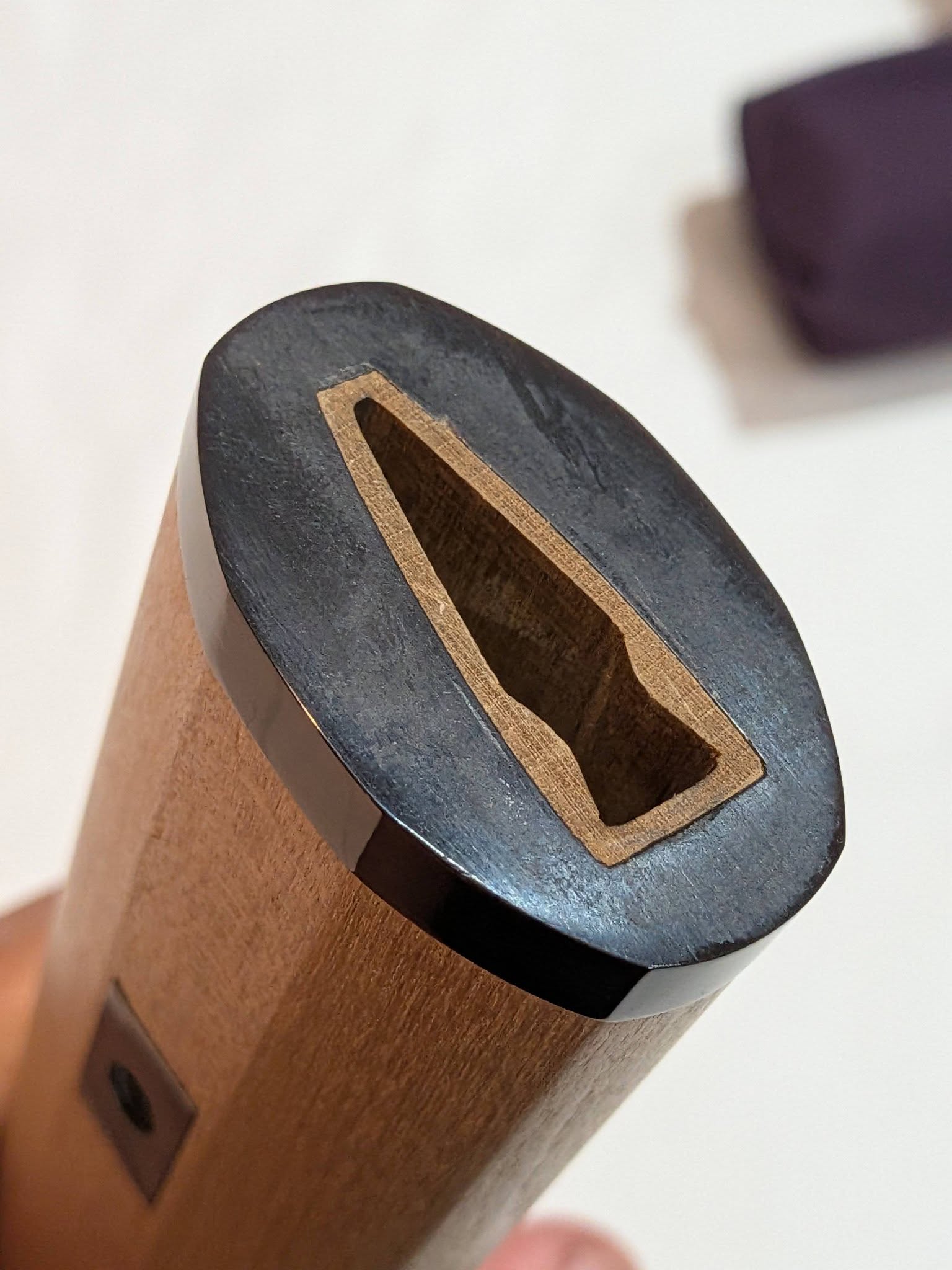
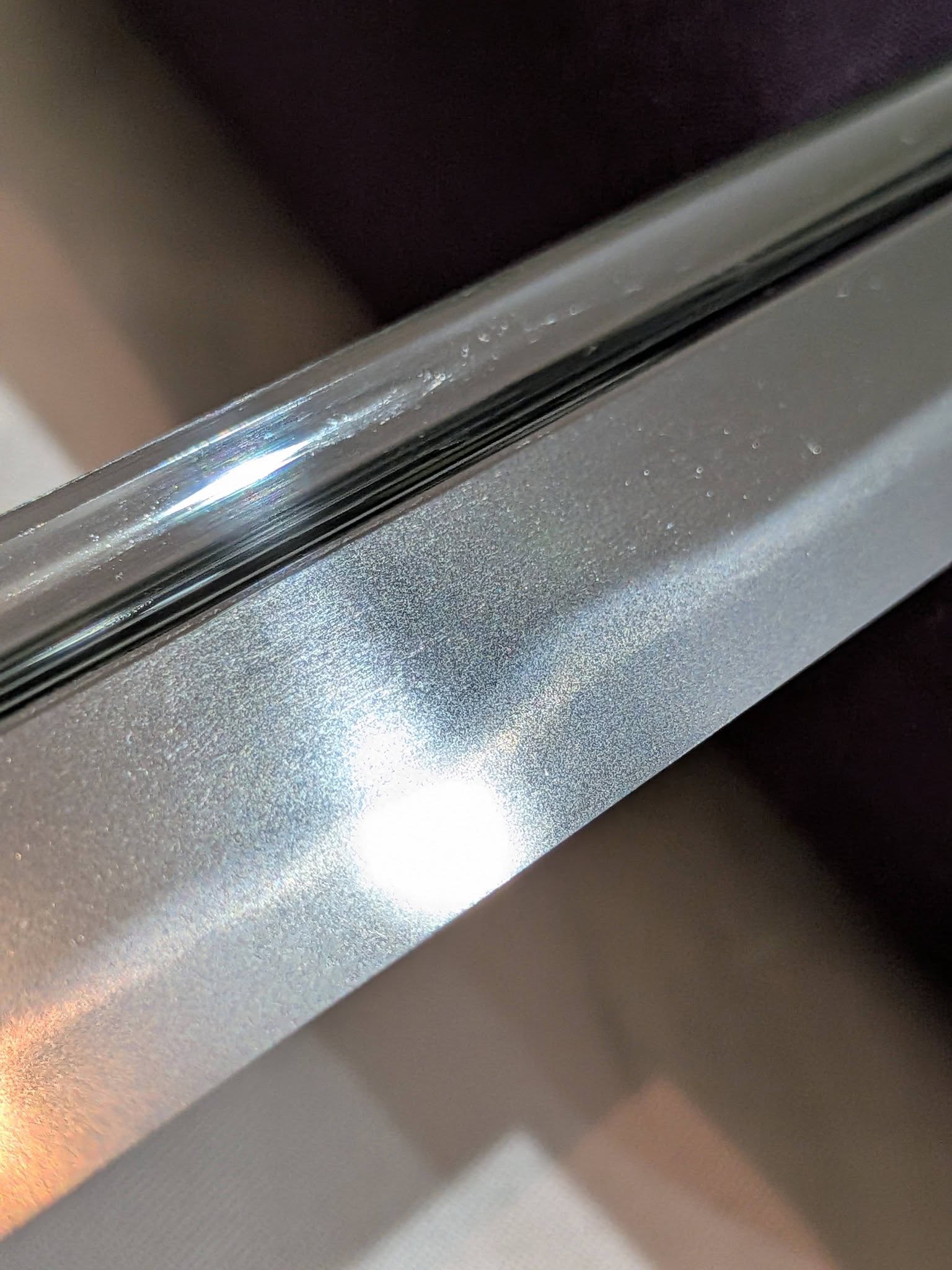
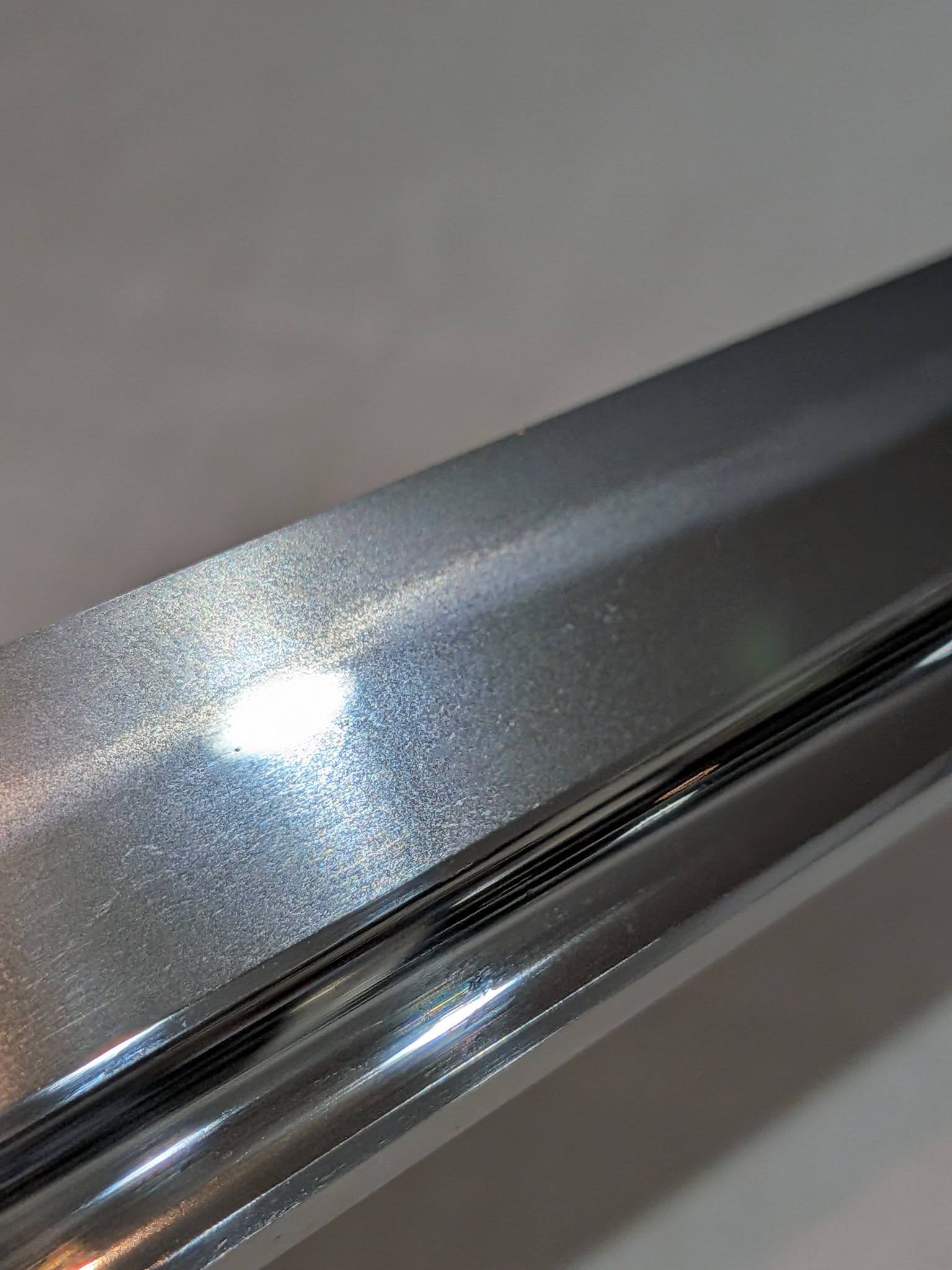
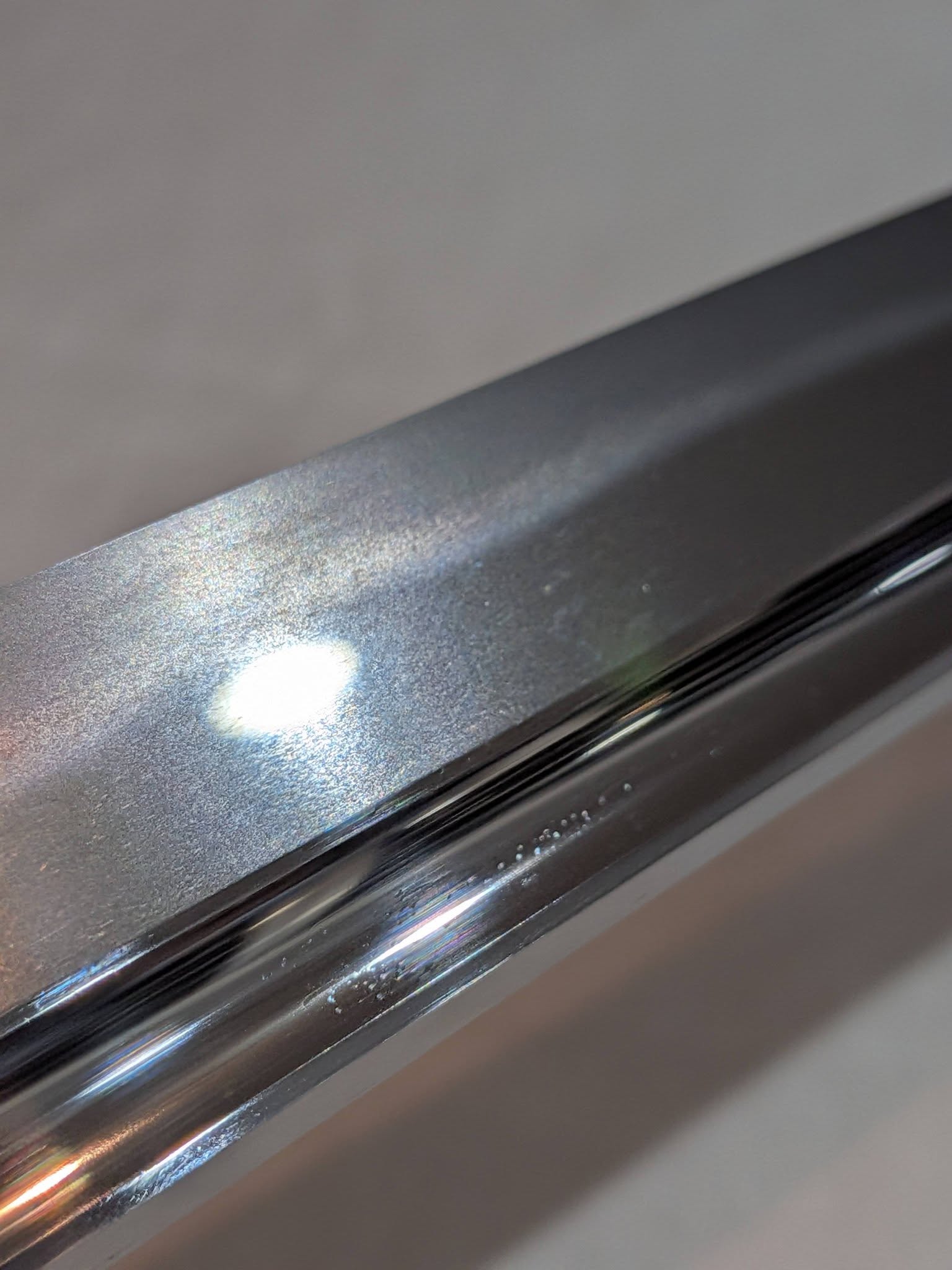
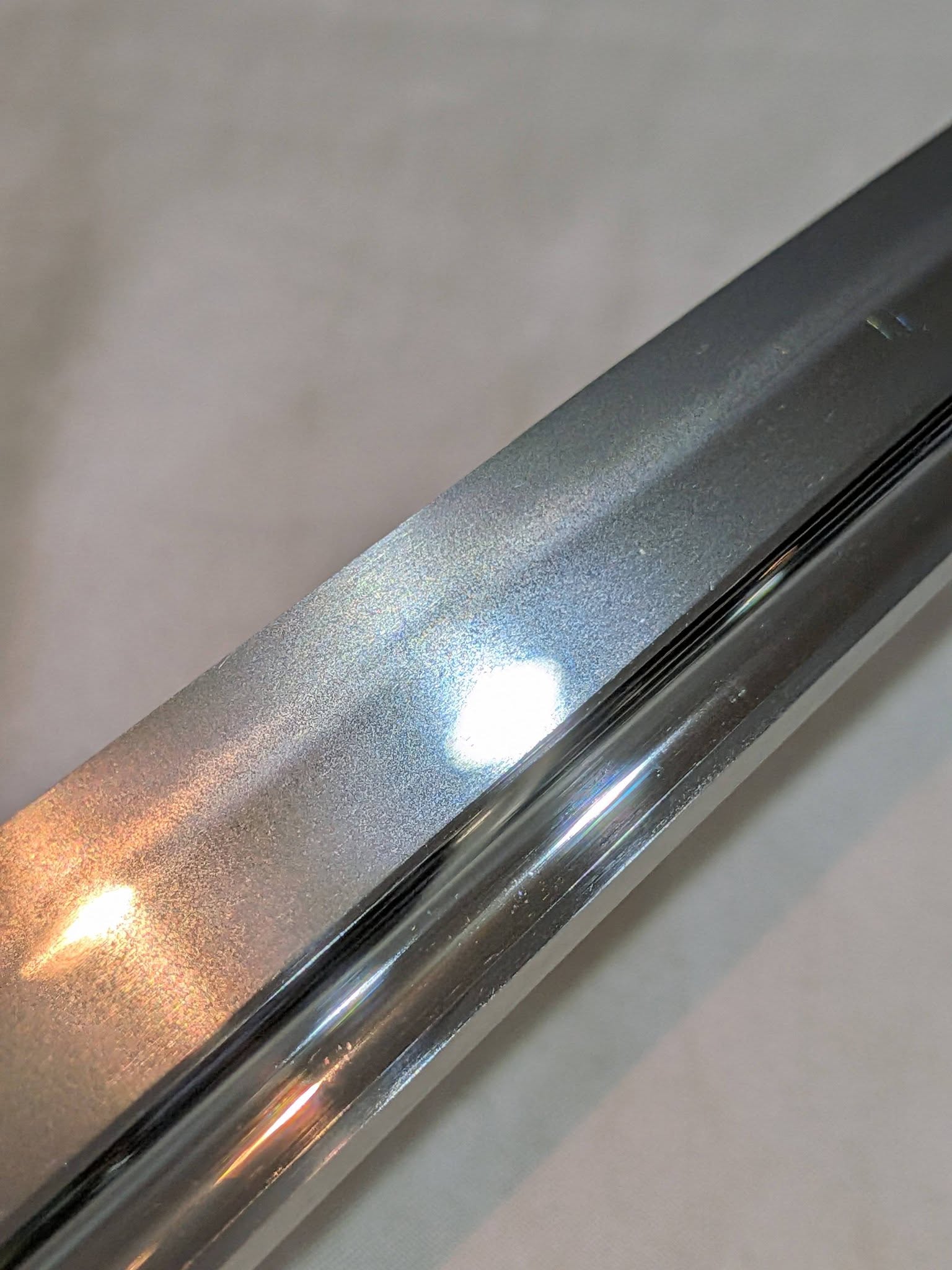
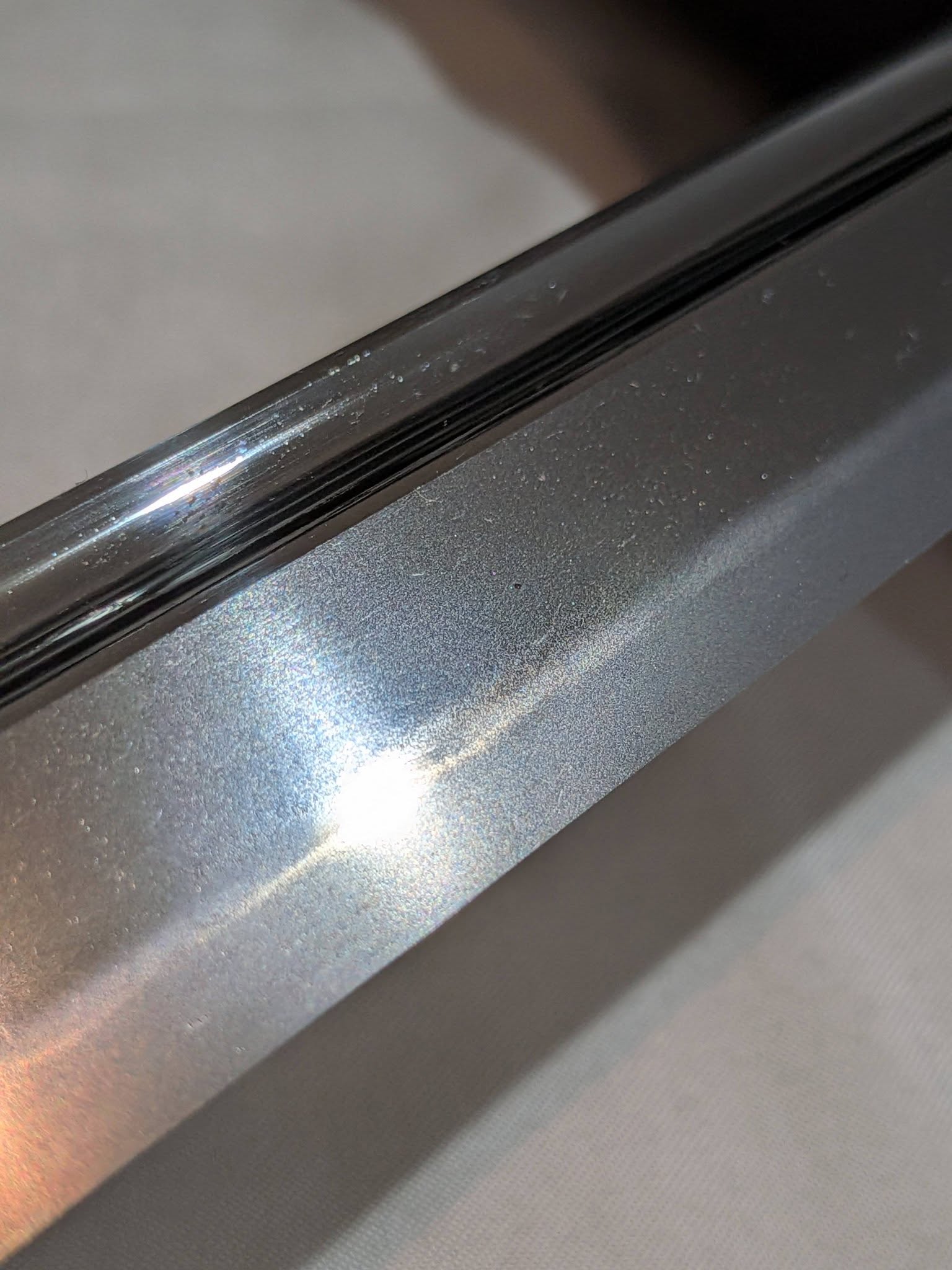
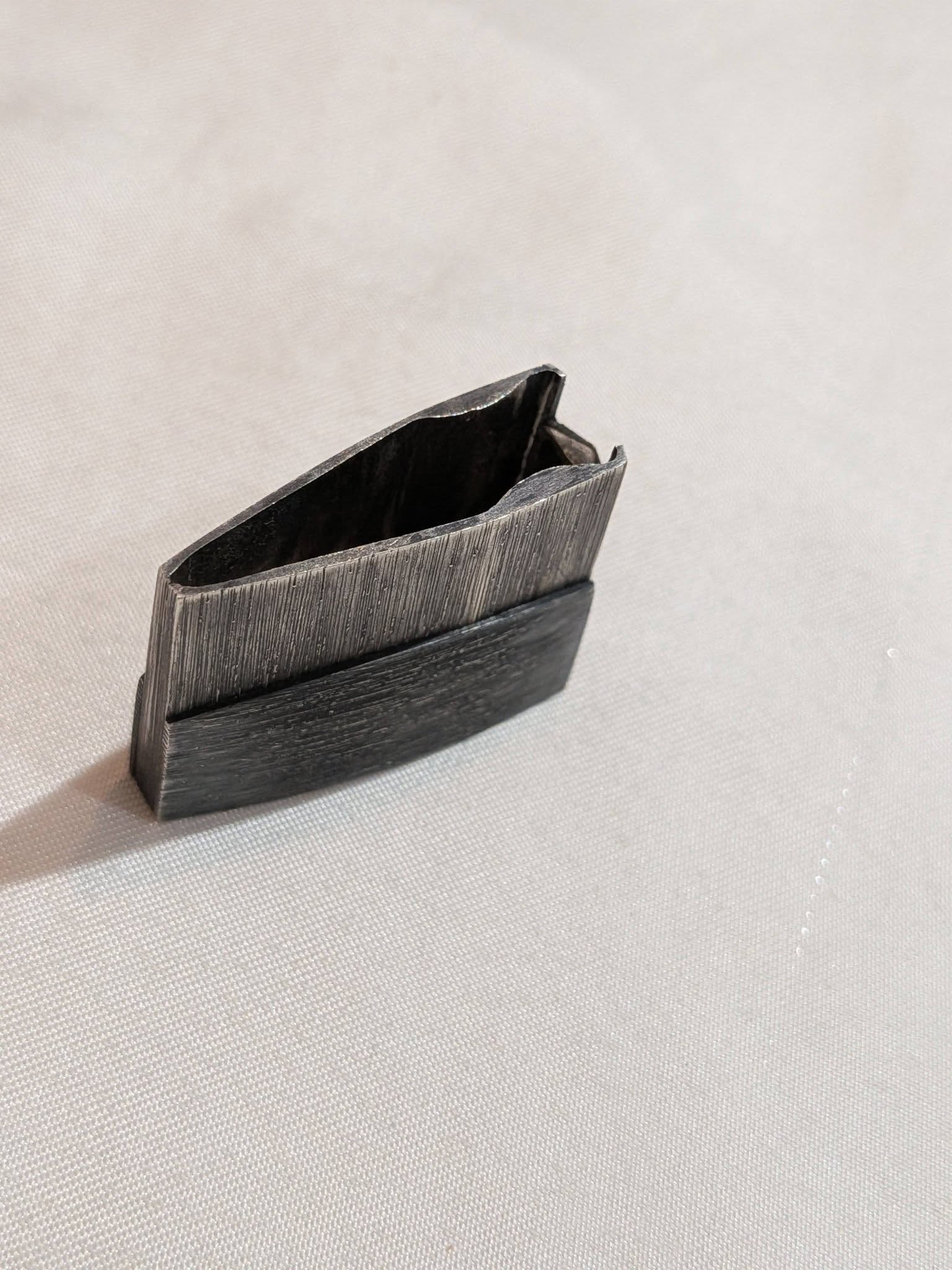
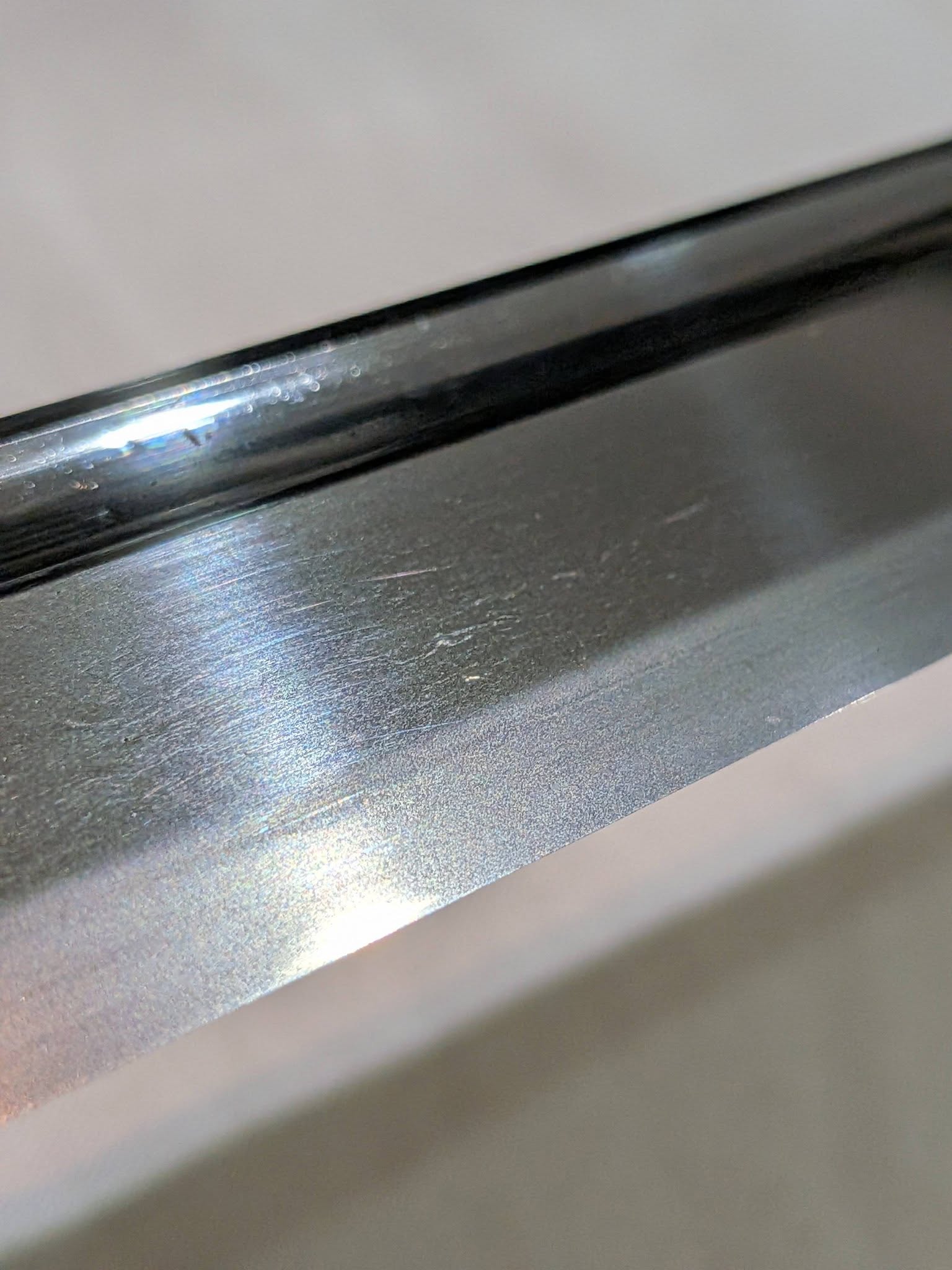
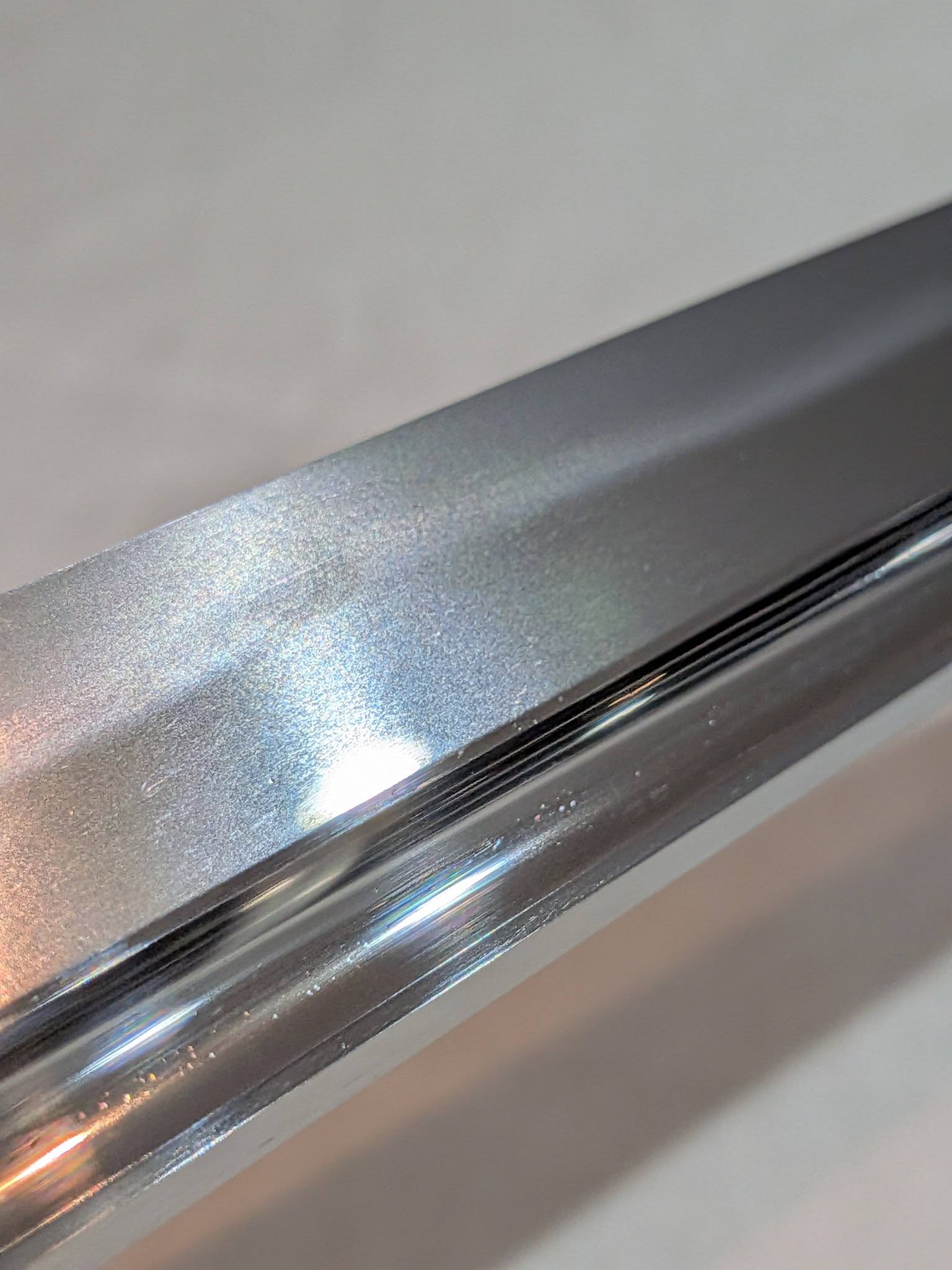
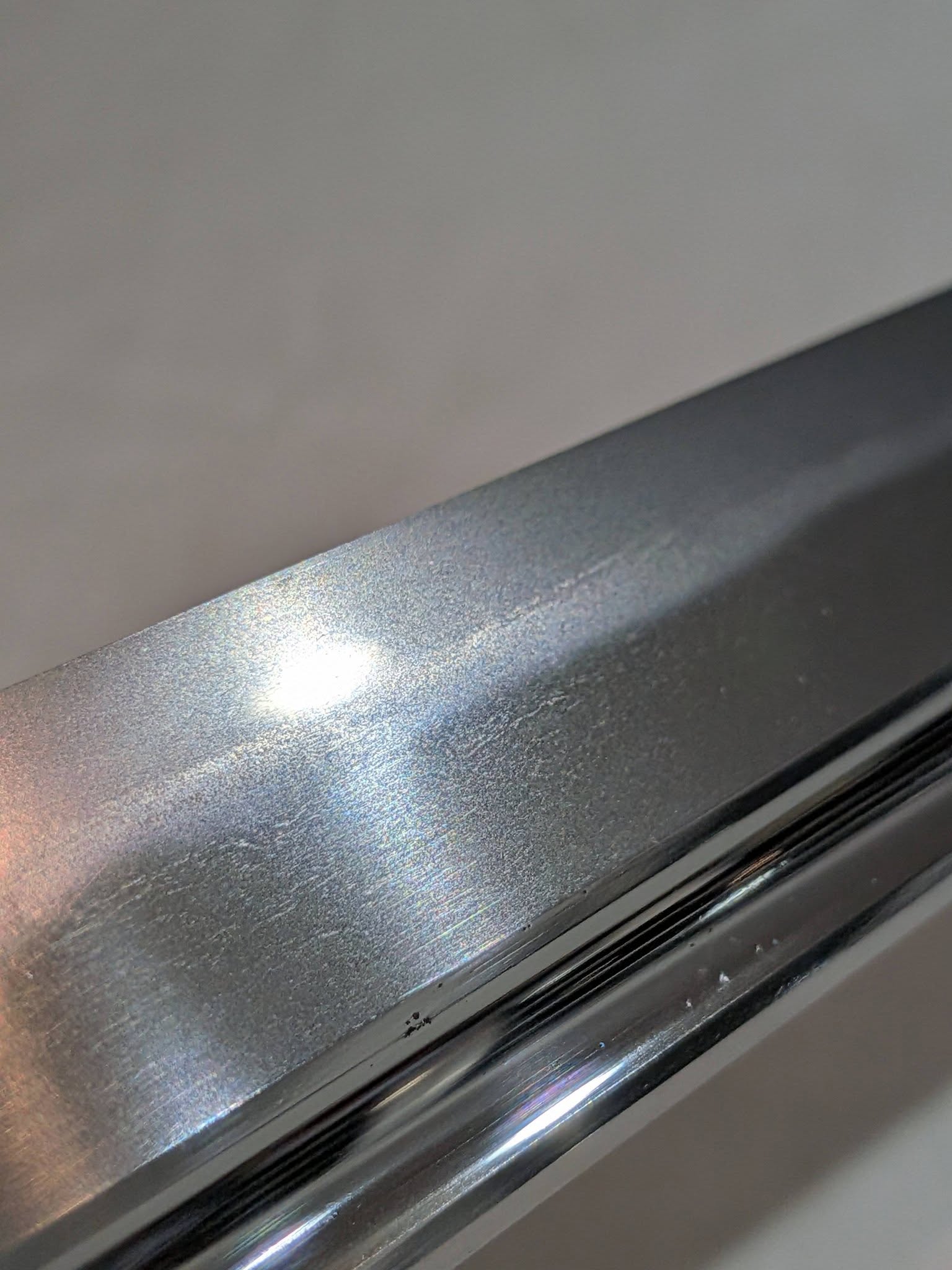
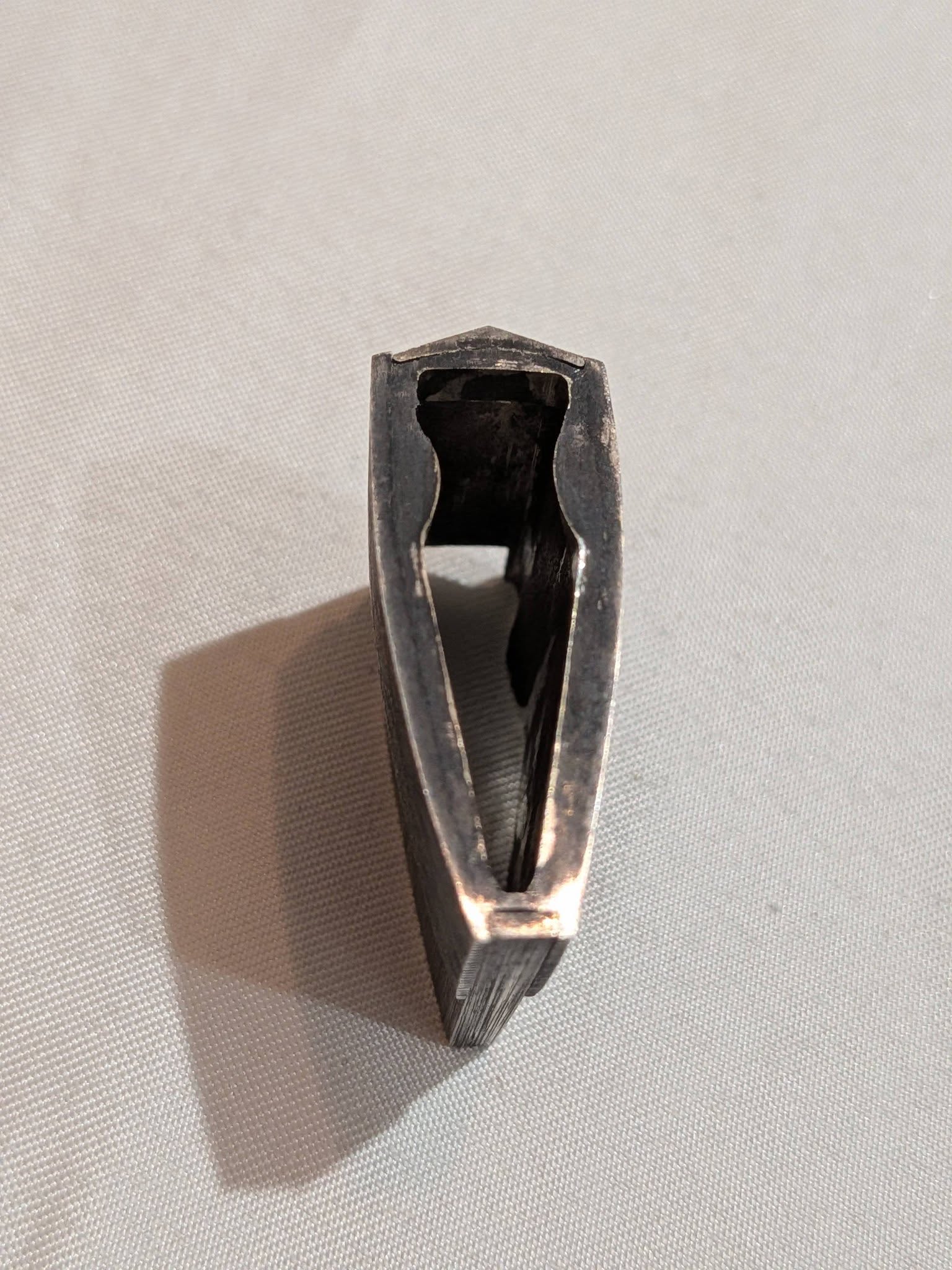
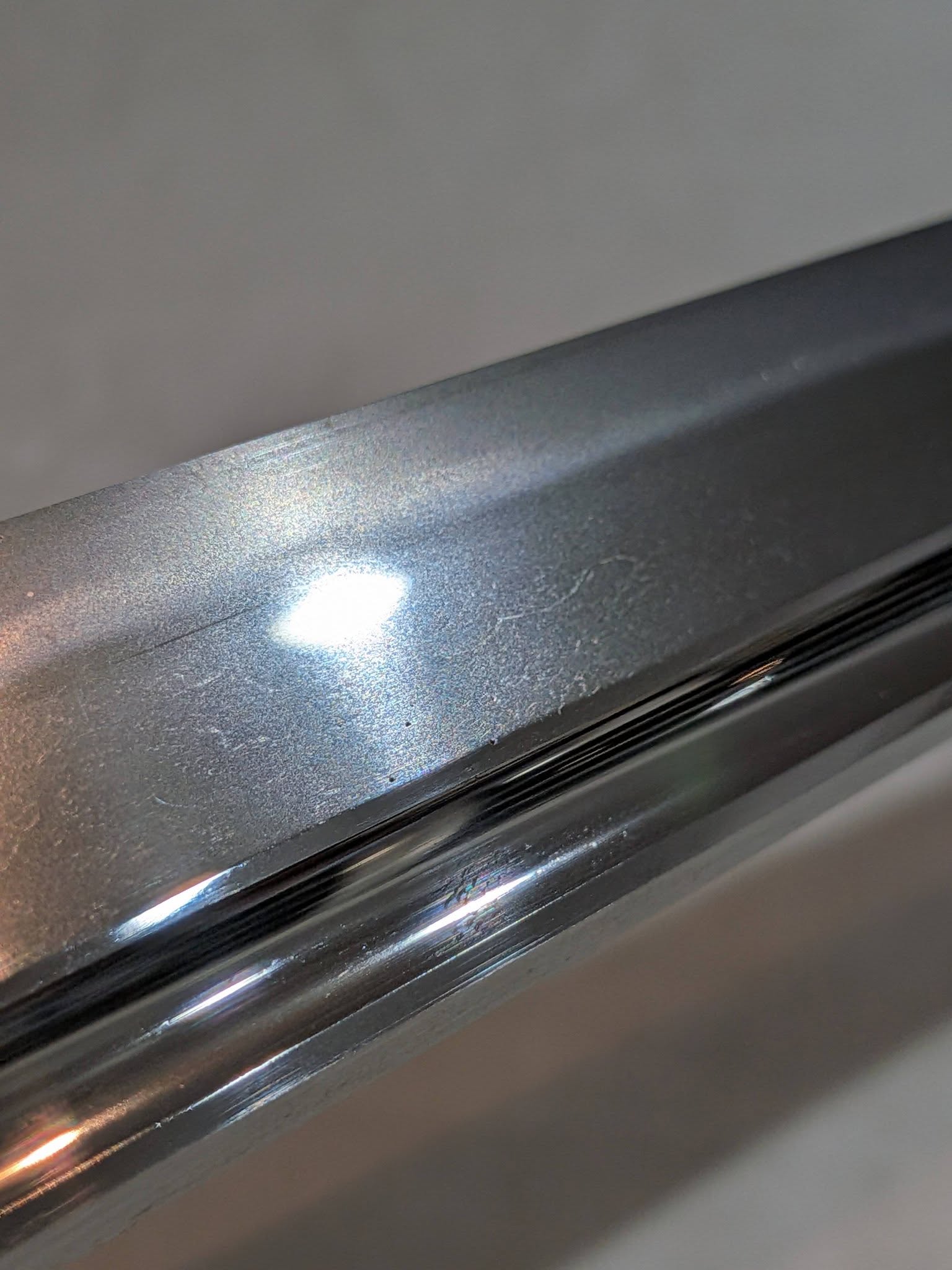
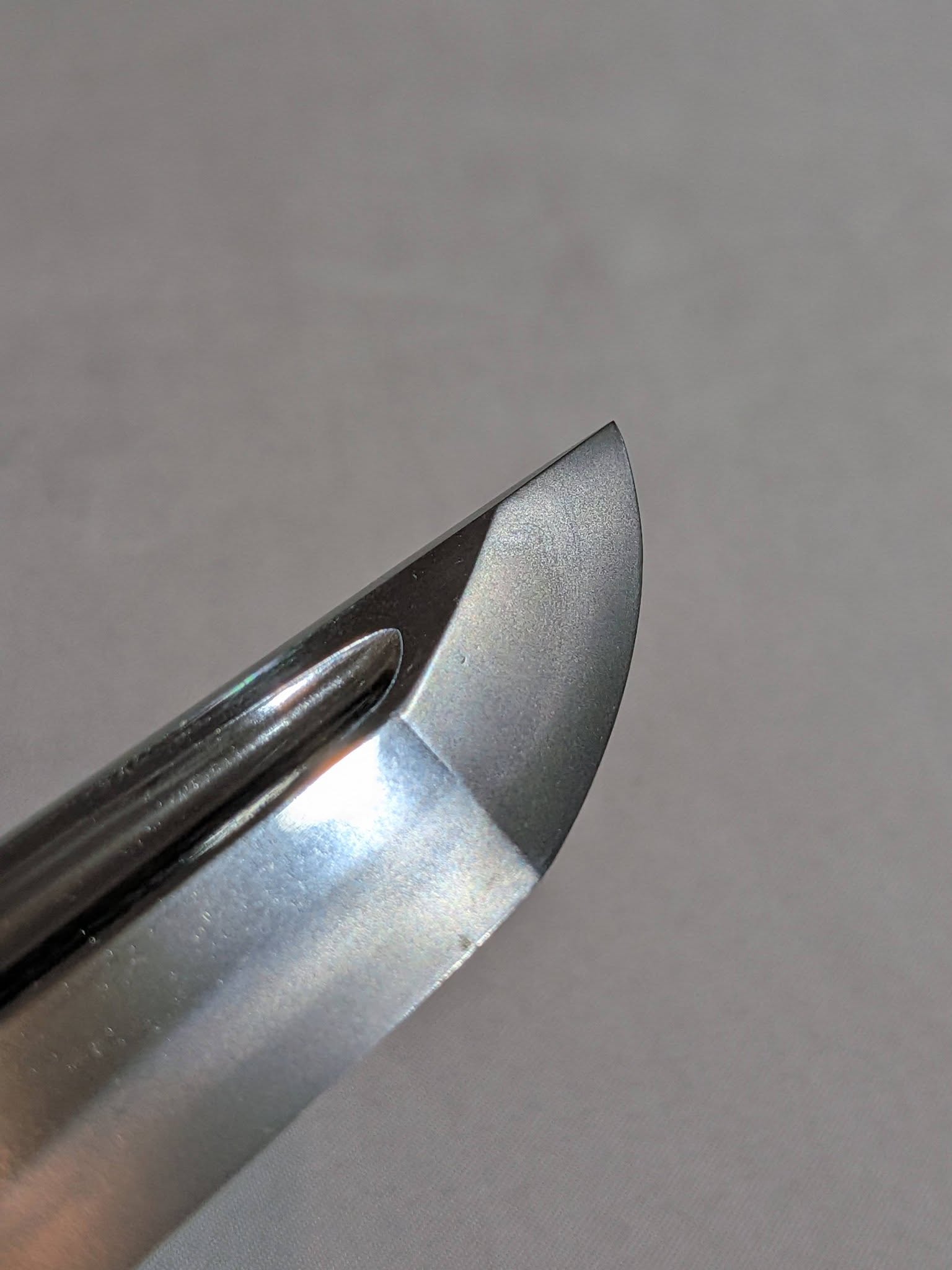
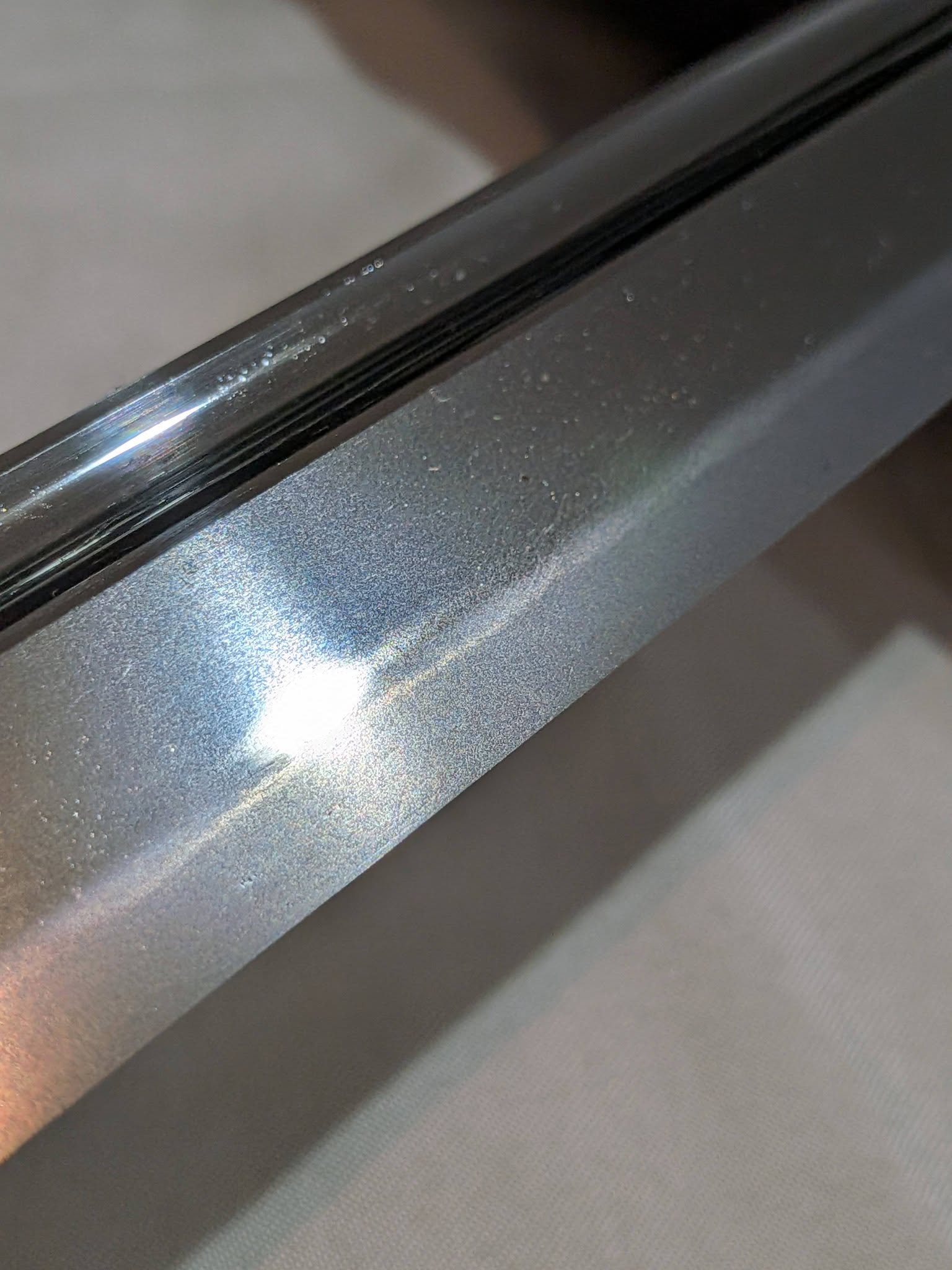
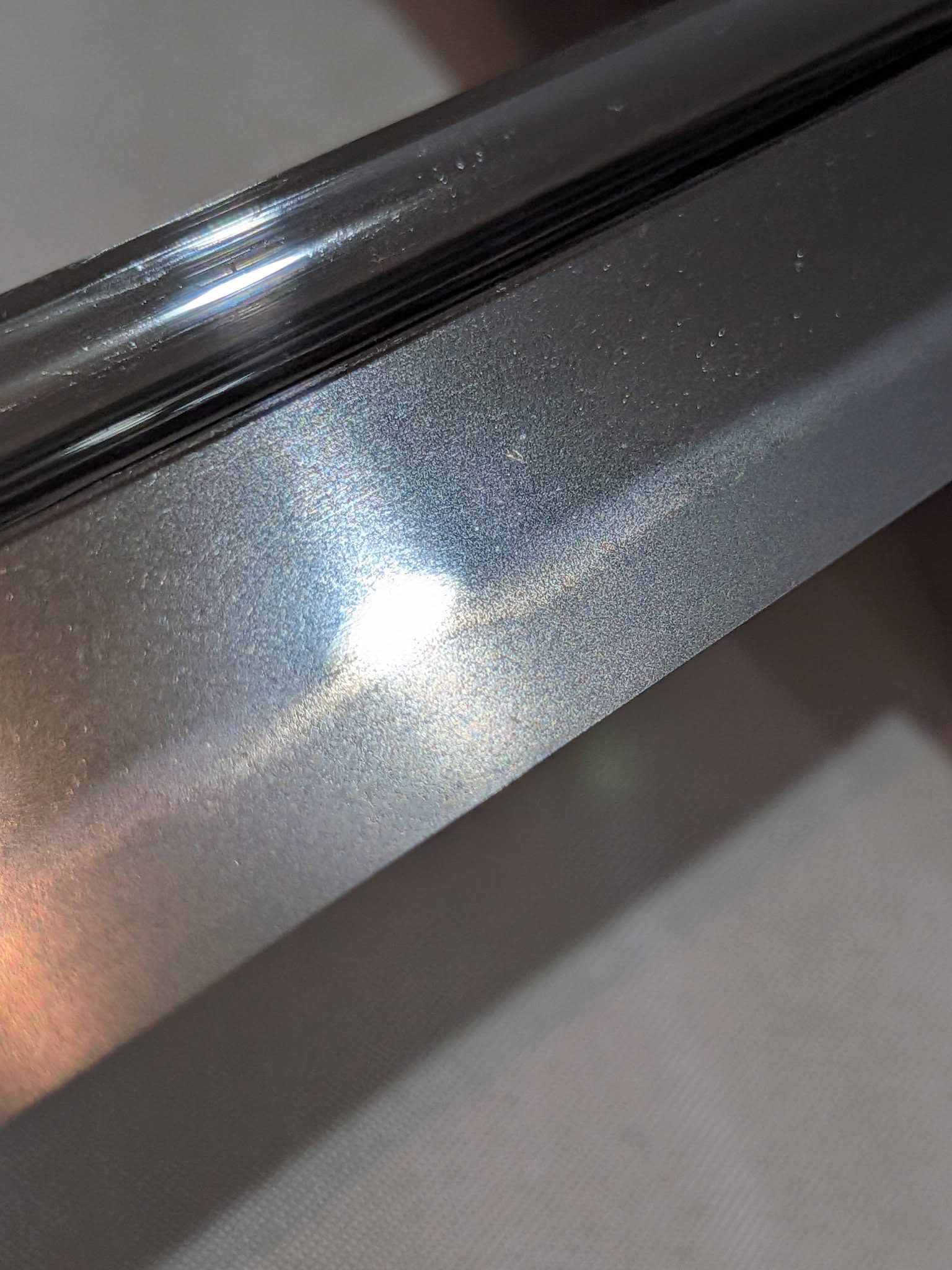
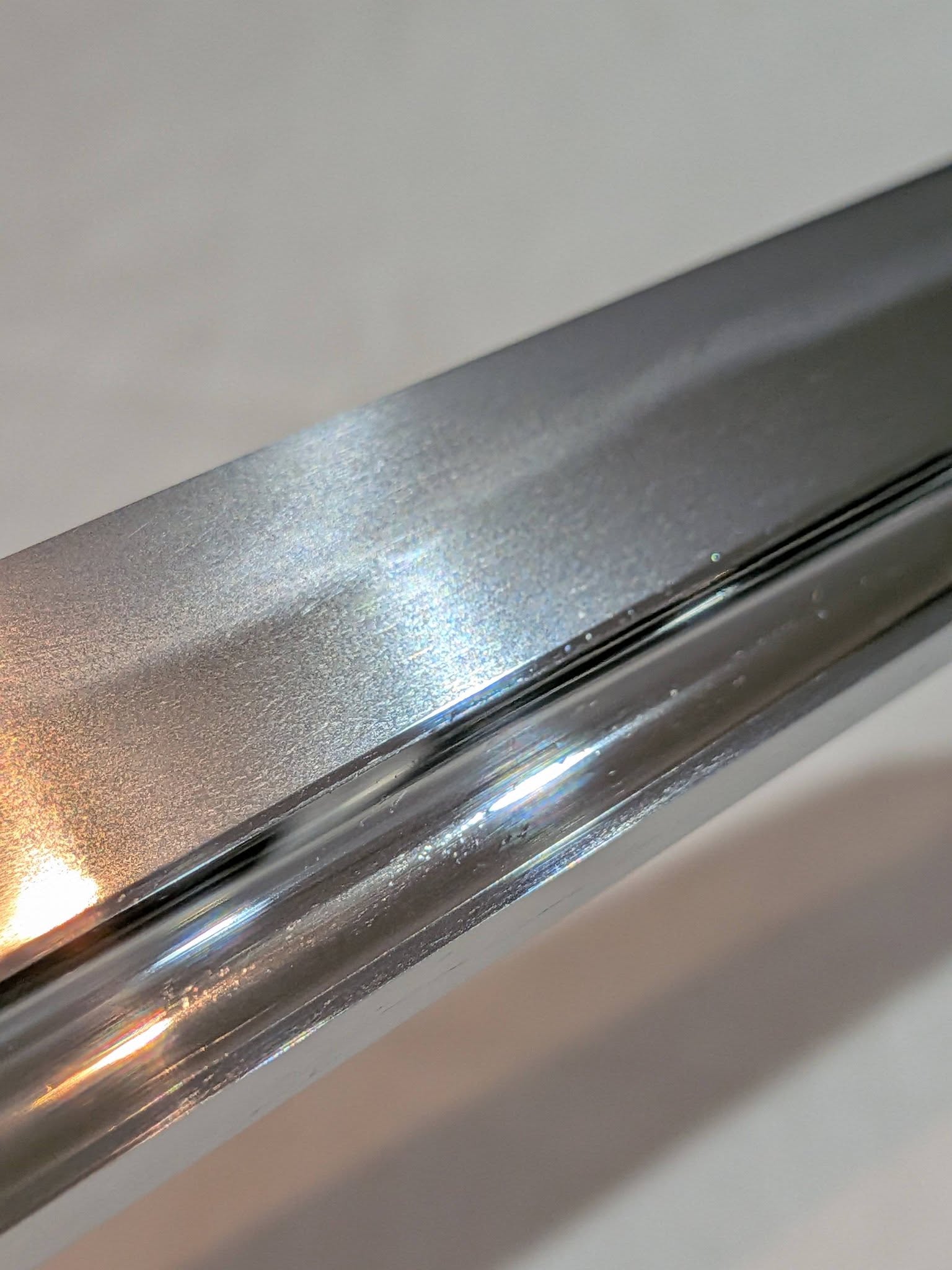
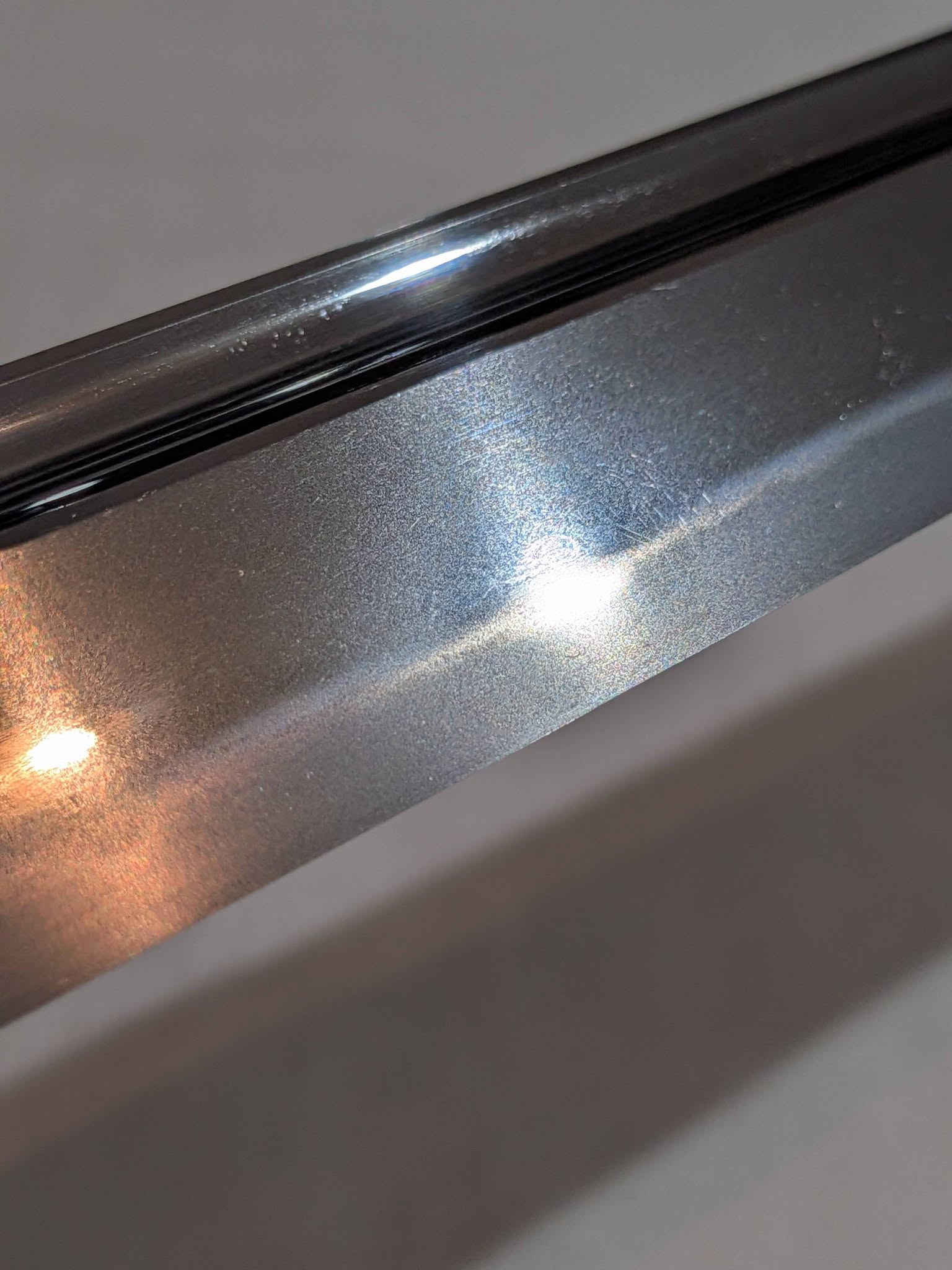
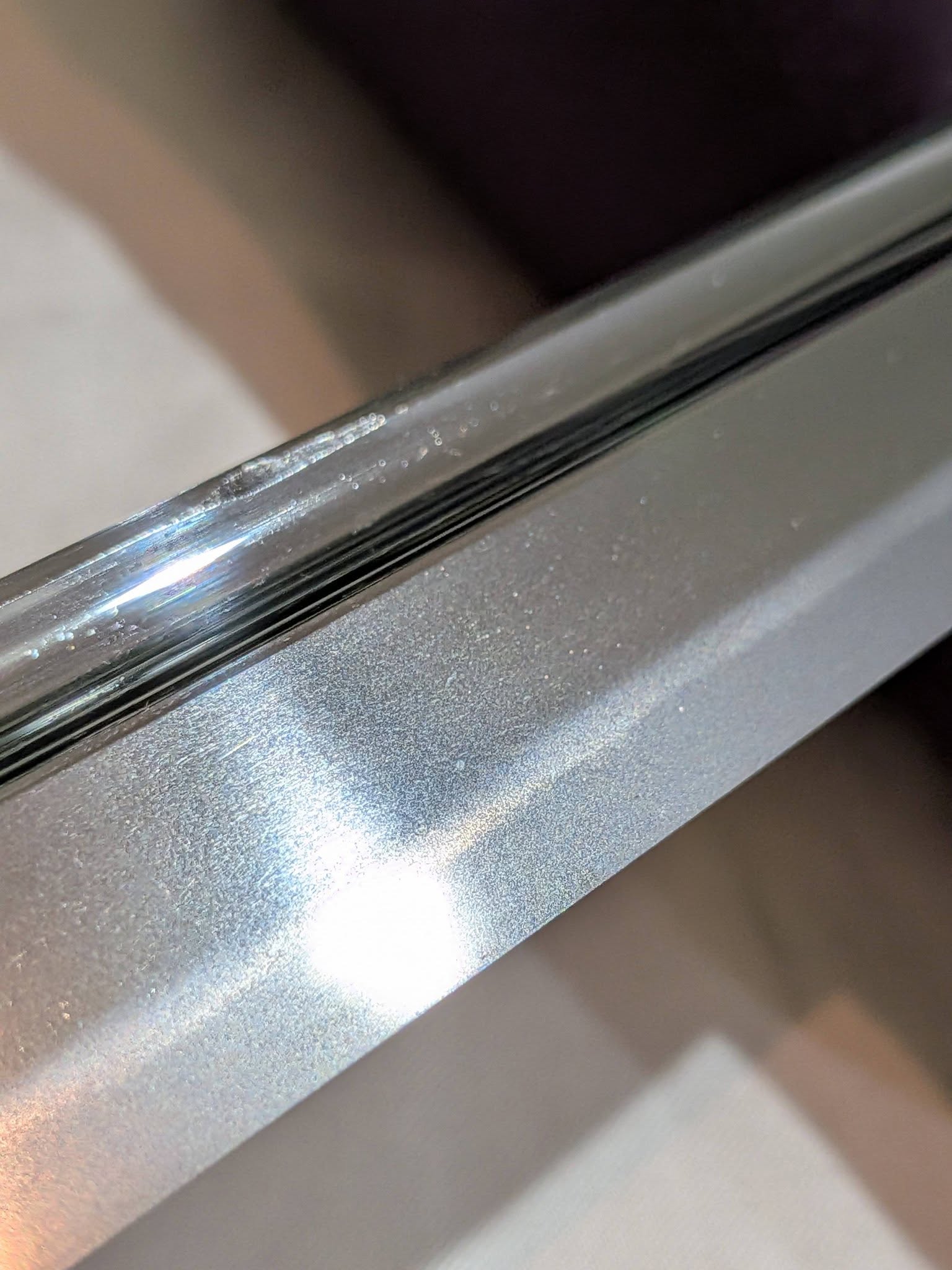
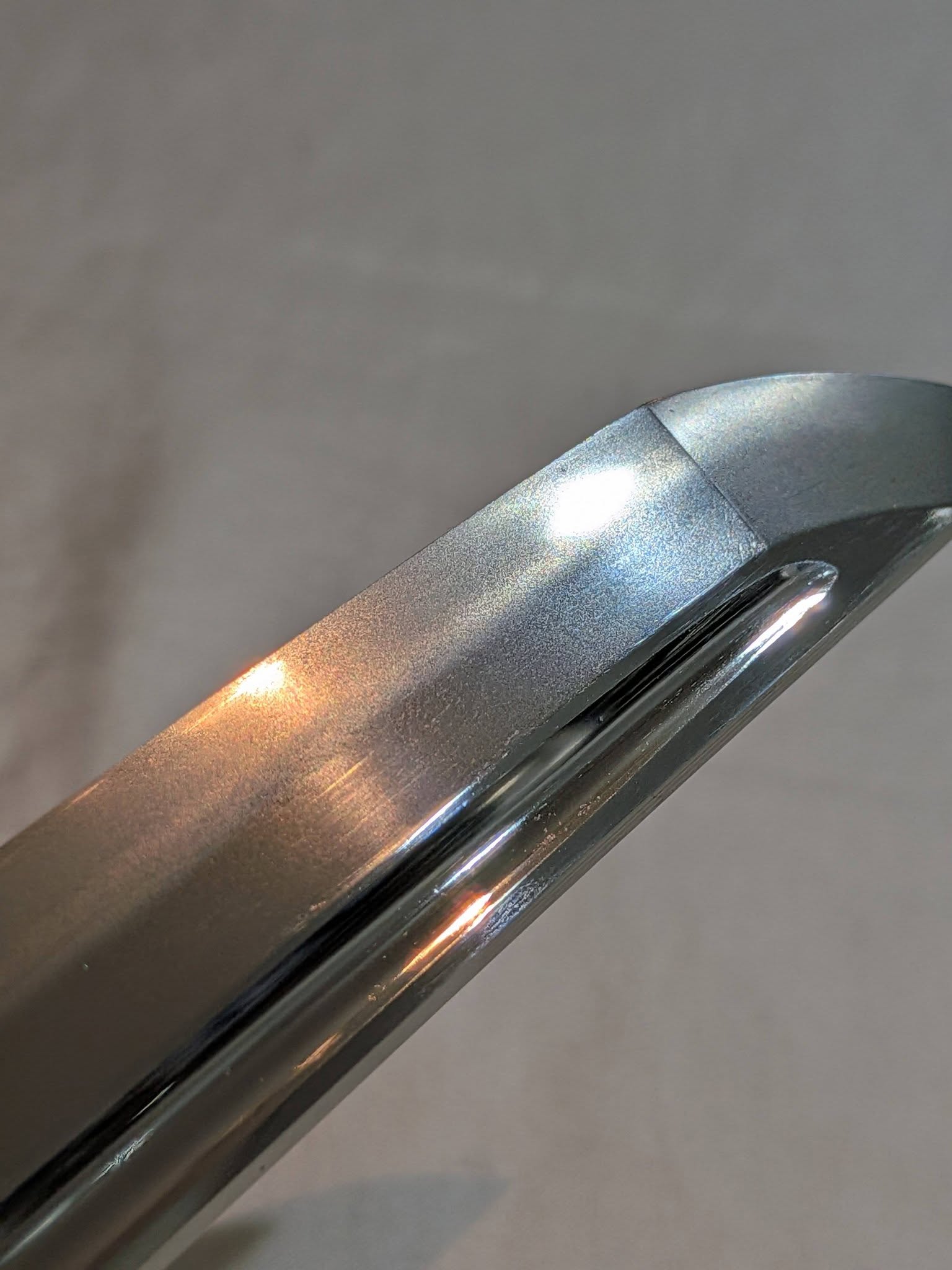
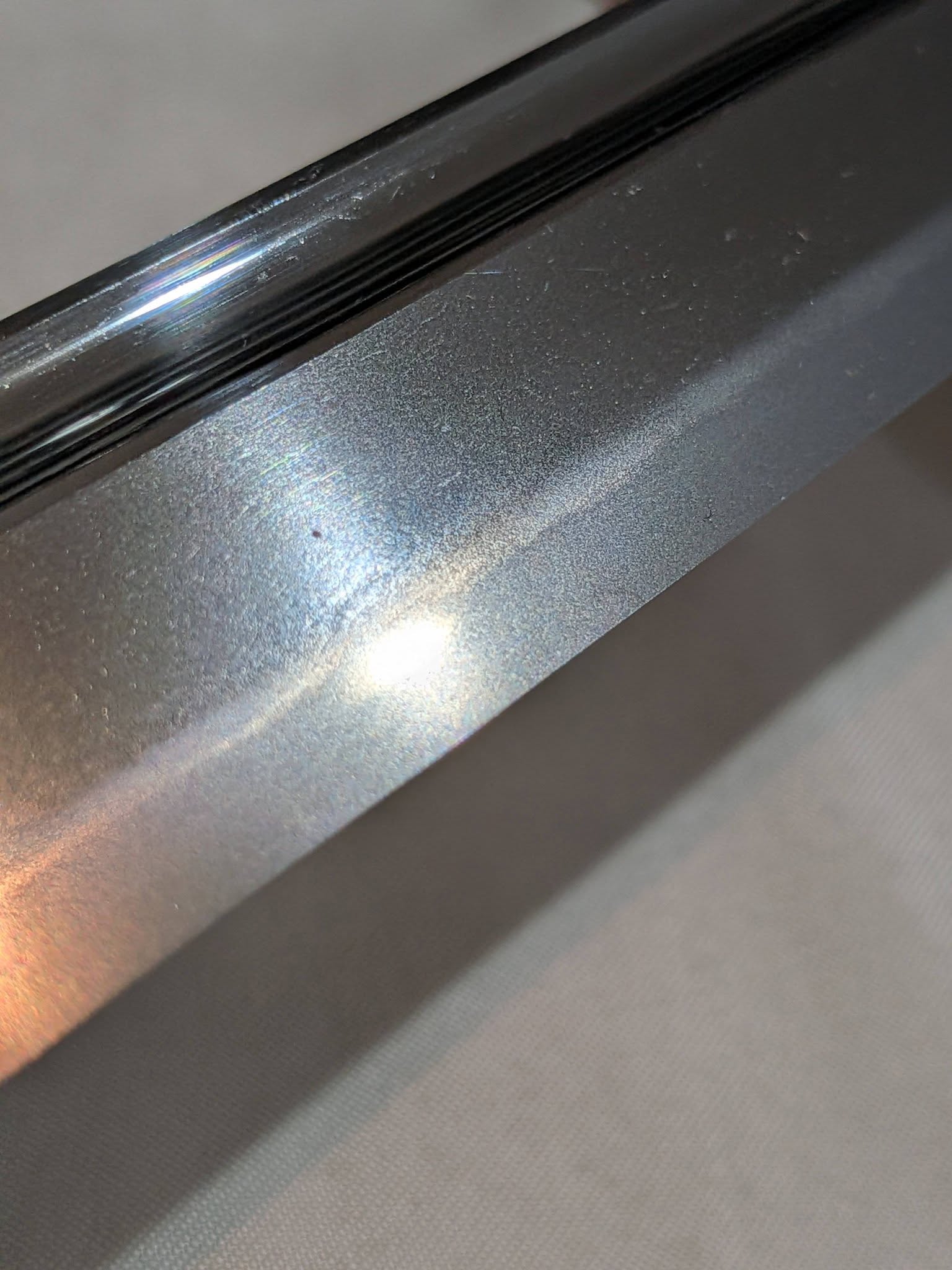
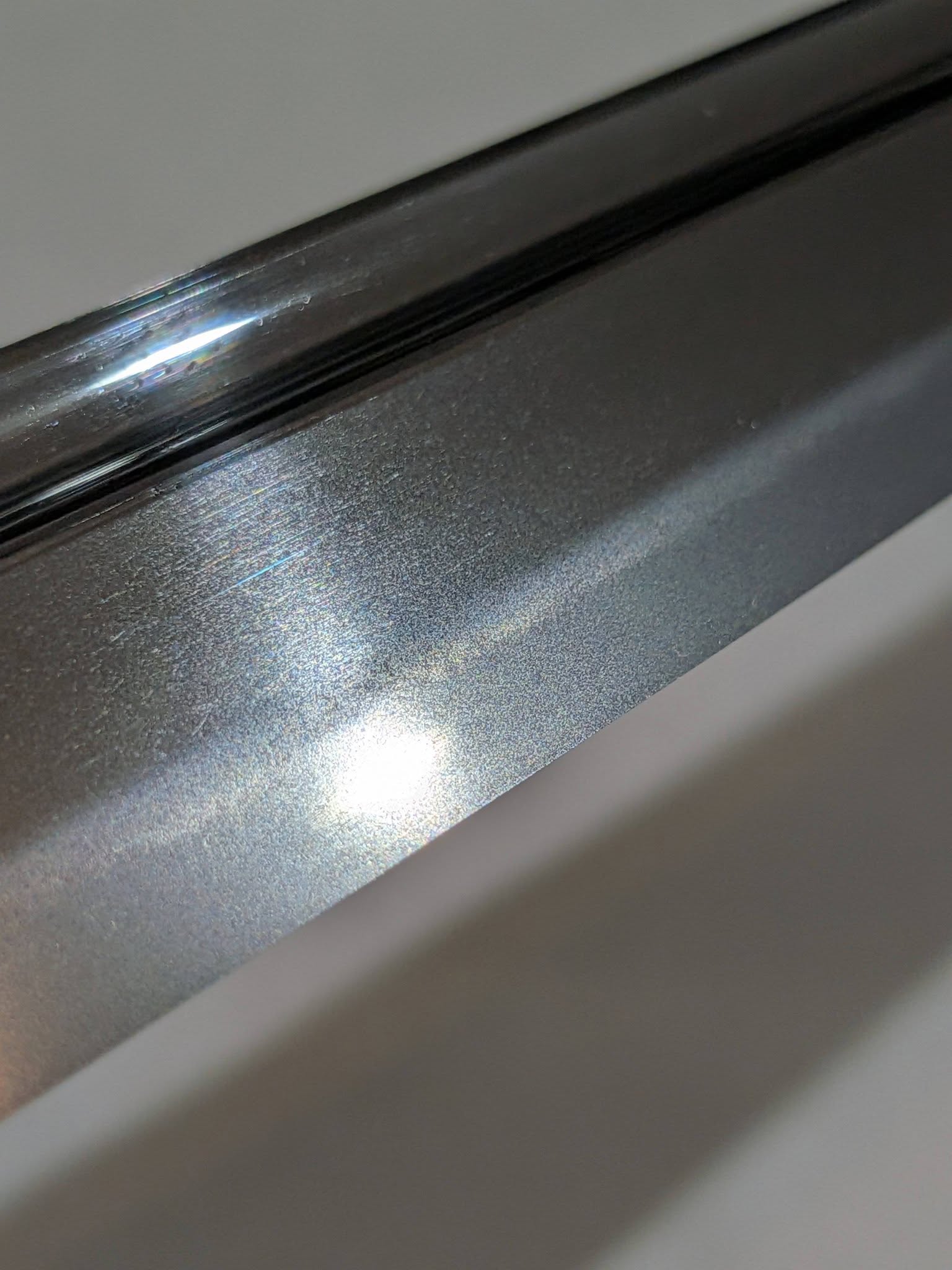
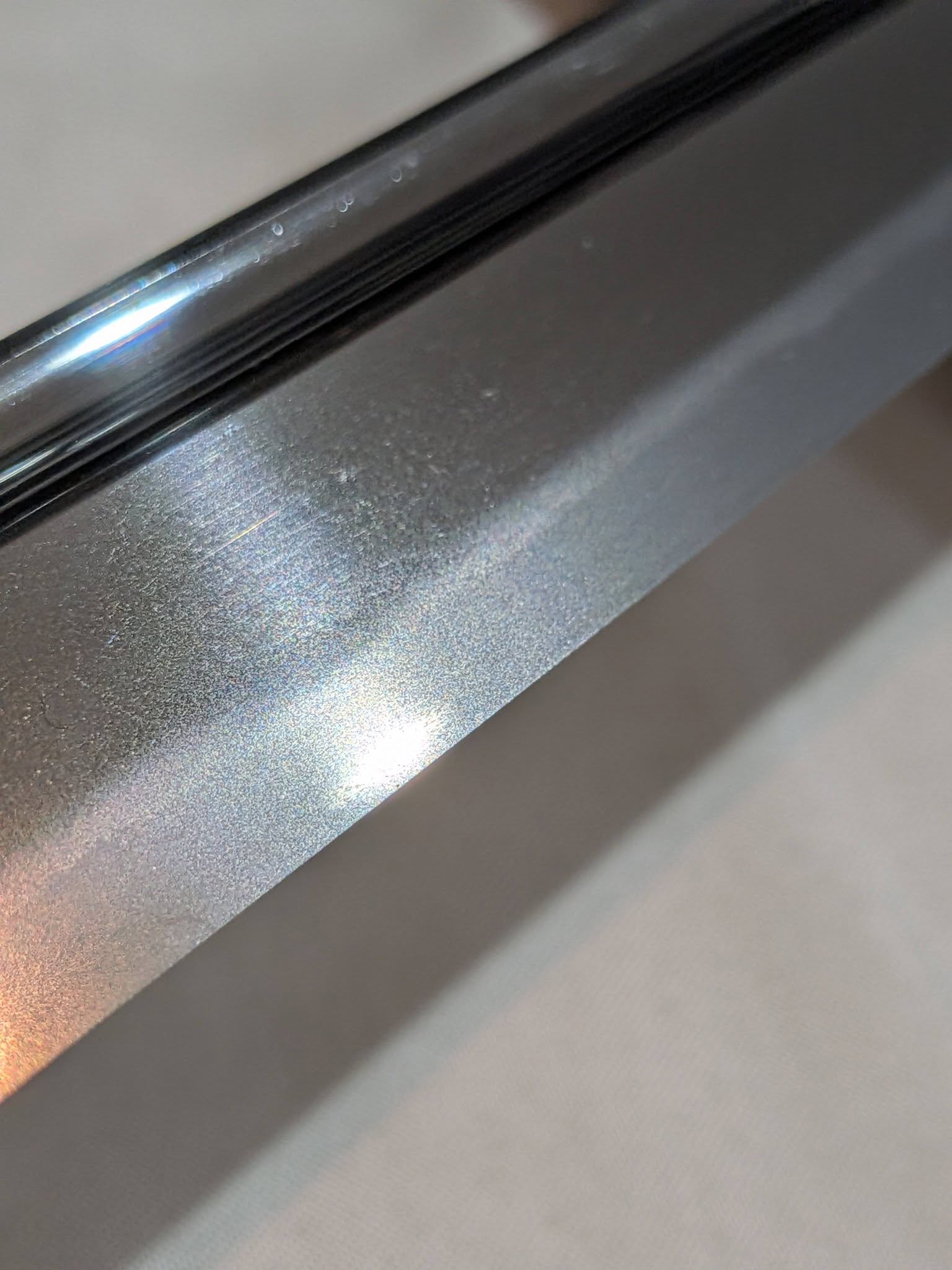
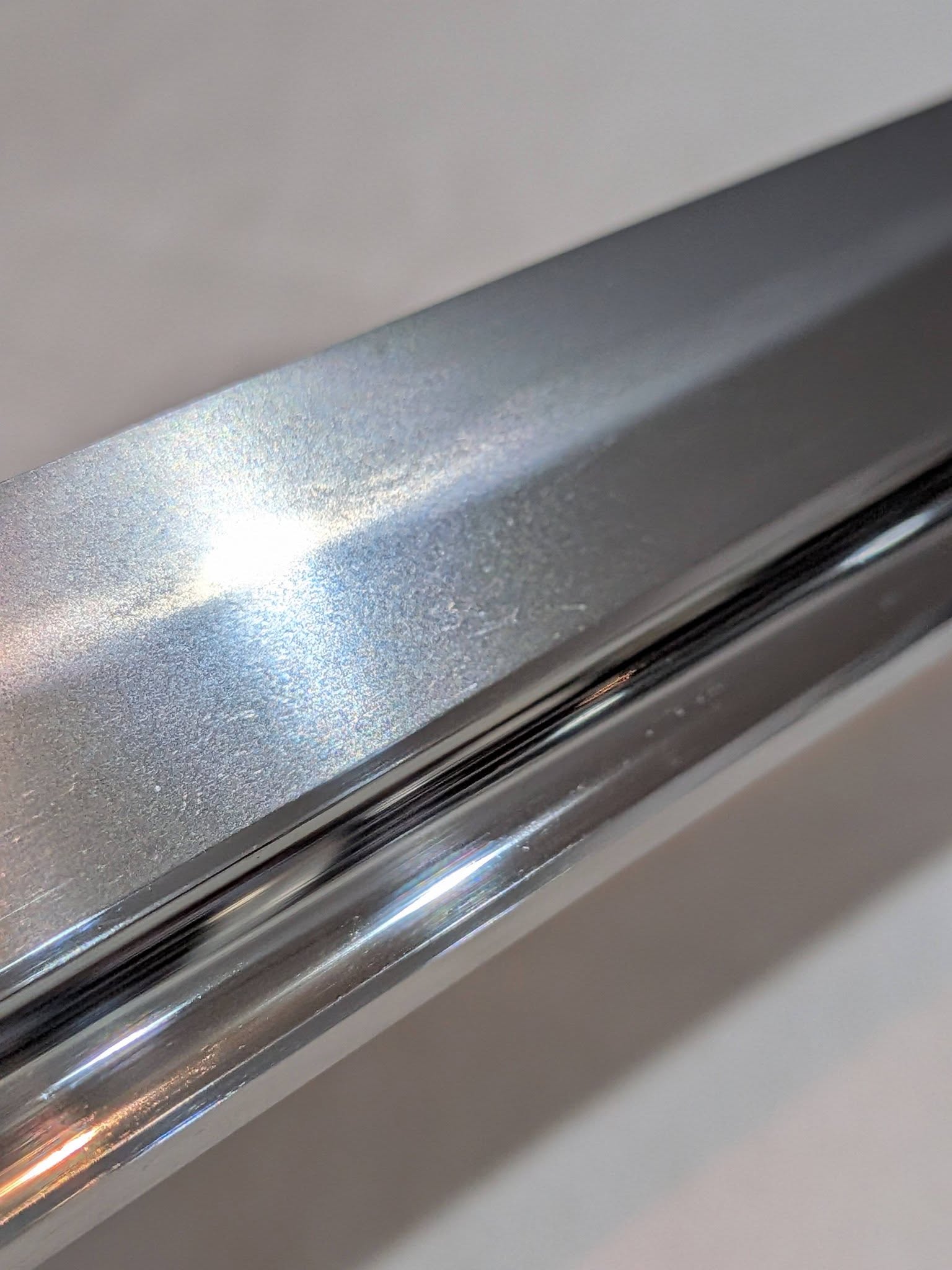
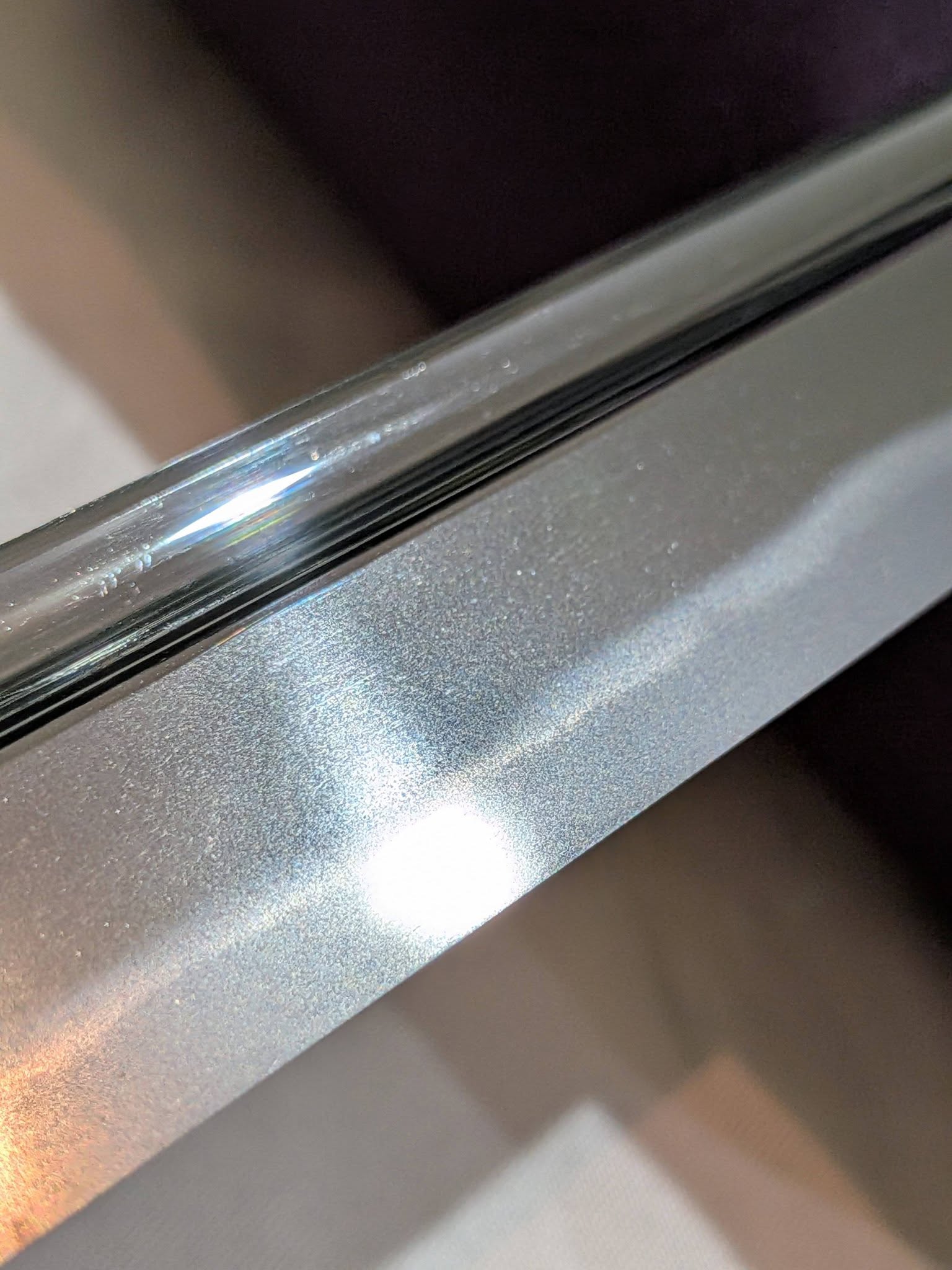
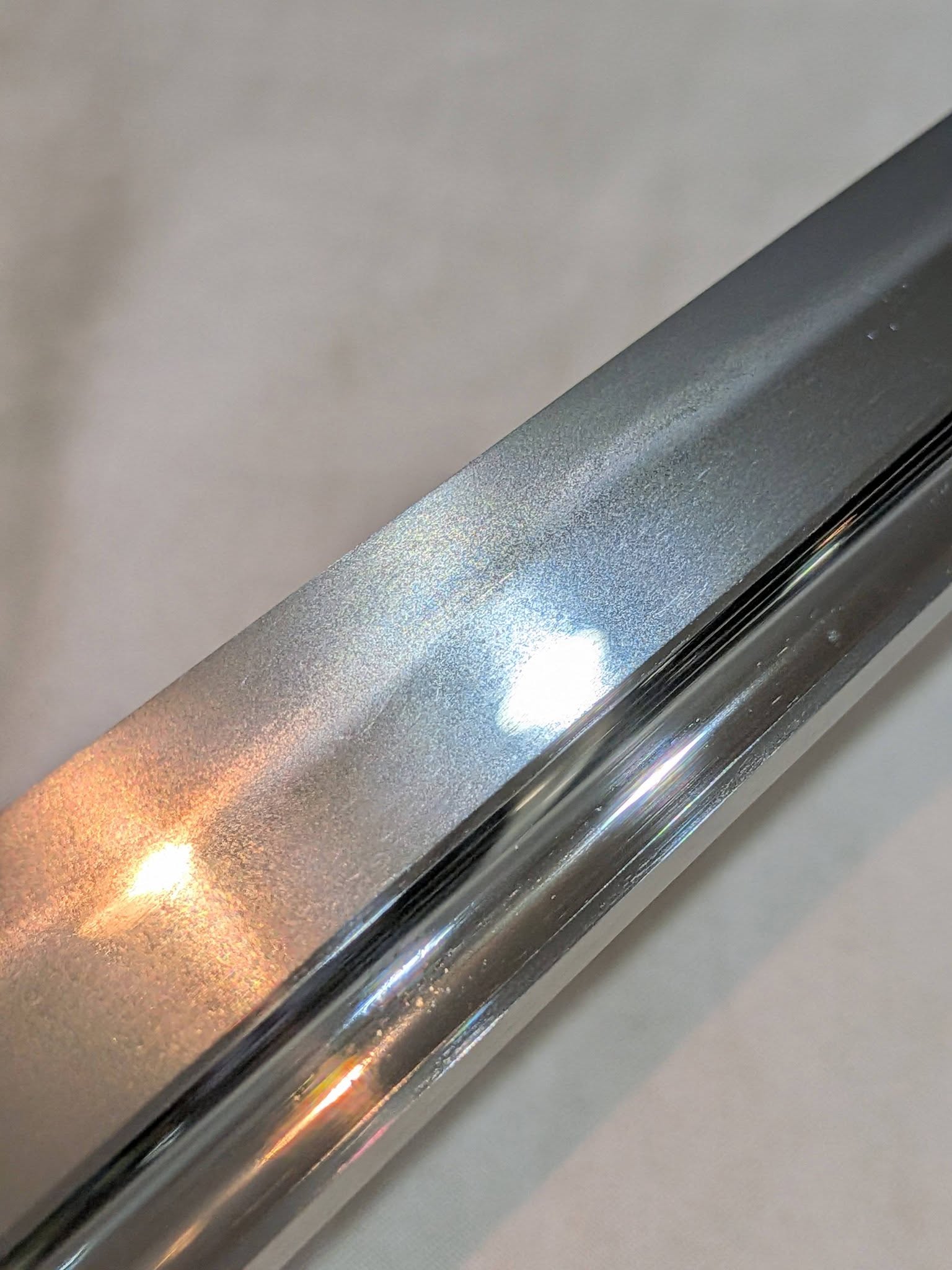
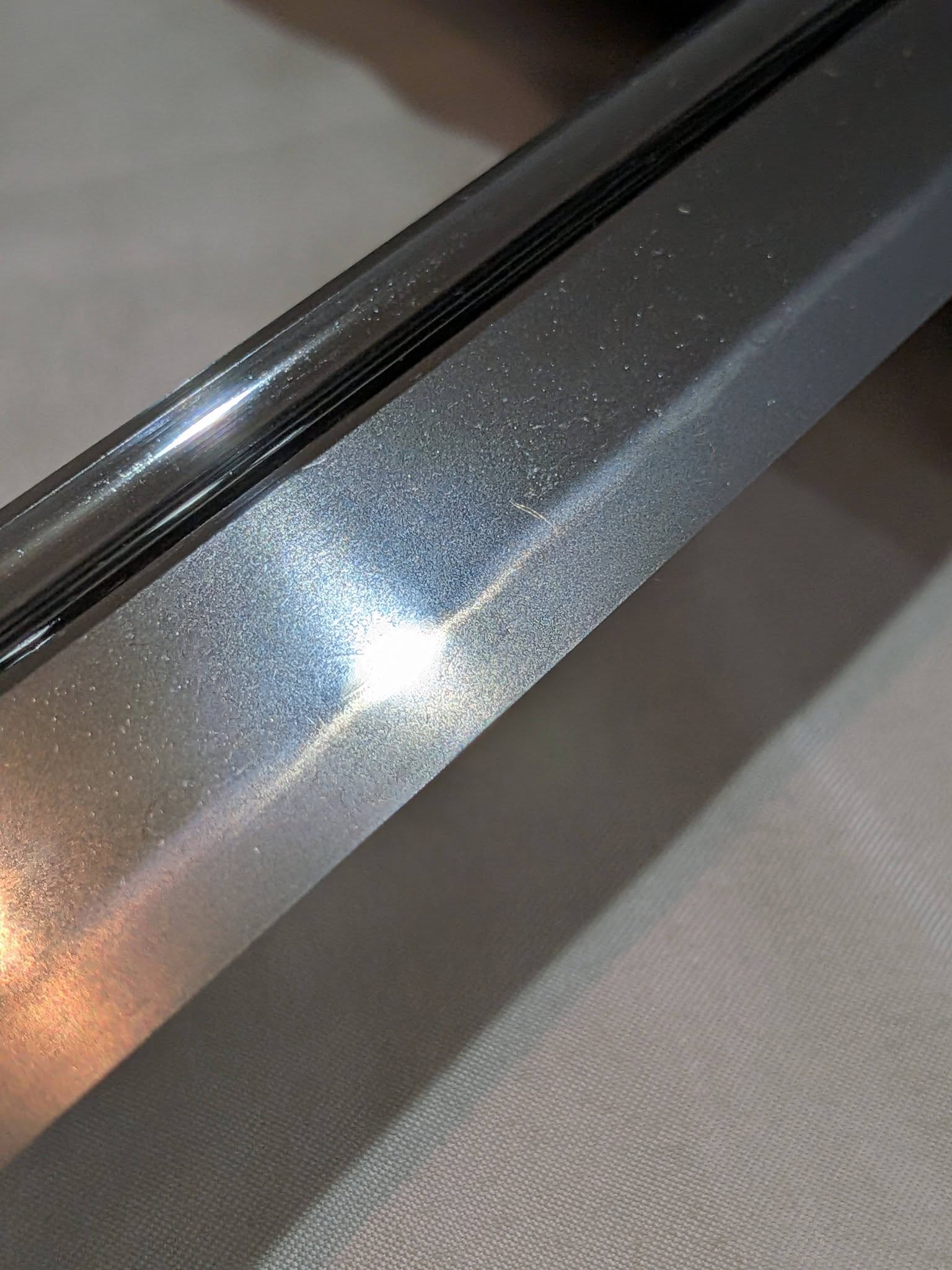
This is a Muromachi-period katana attributed to Yamato Tegai Kanetoshi by an NTHK kanteisho. The blade features a refined ko-itame jihada with Yamato character and a suguha-chō hamon in ko-nie-deki. It is housed in shirasaya and exemplifies the consistent forging and classical Yamato feeling of the Tegai school.
 NihontoWatchBETA
mumei · Tegai · Muromachi
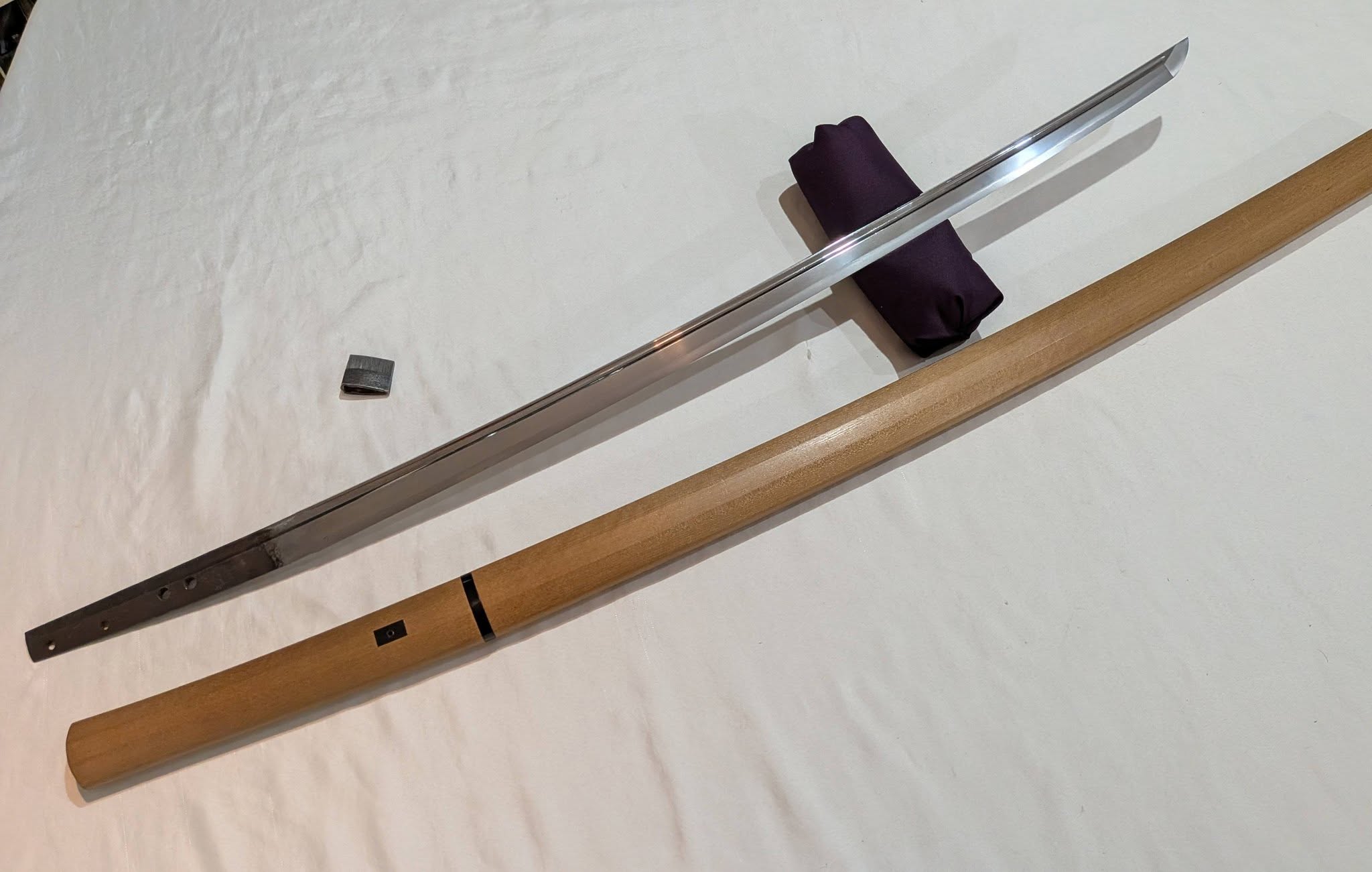
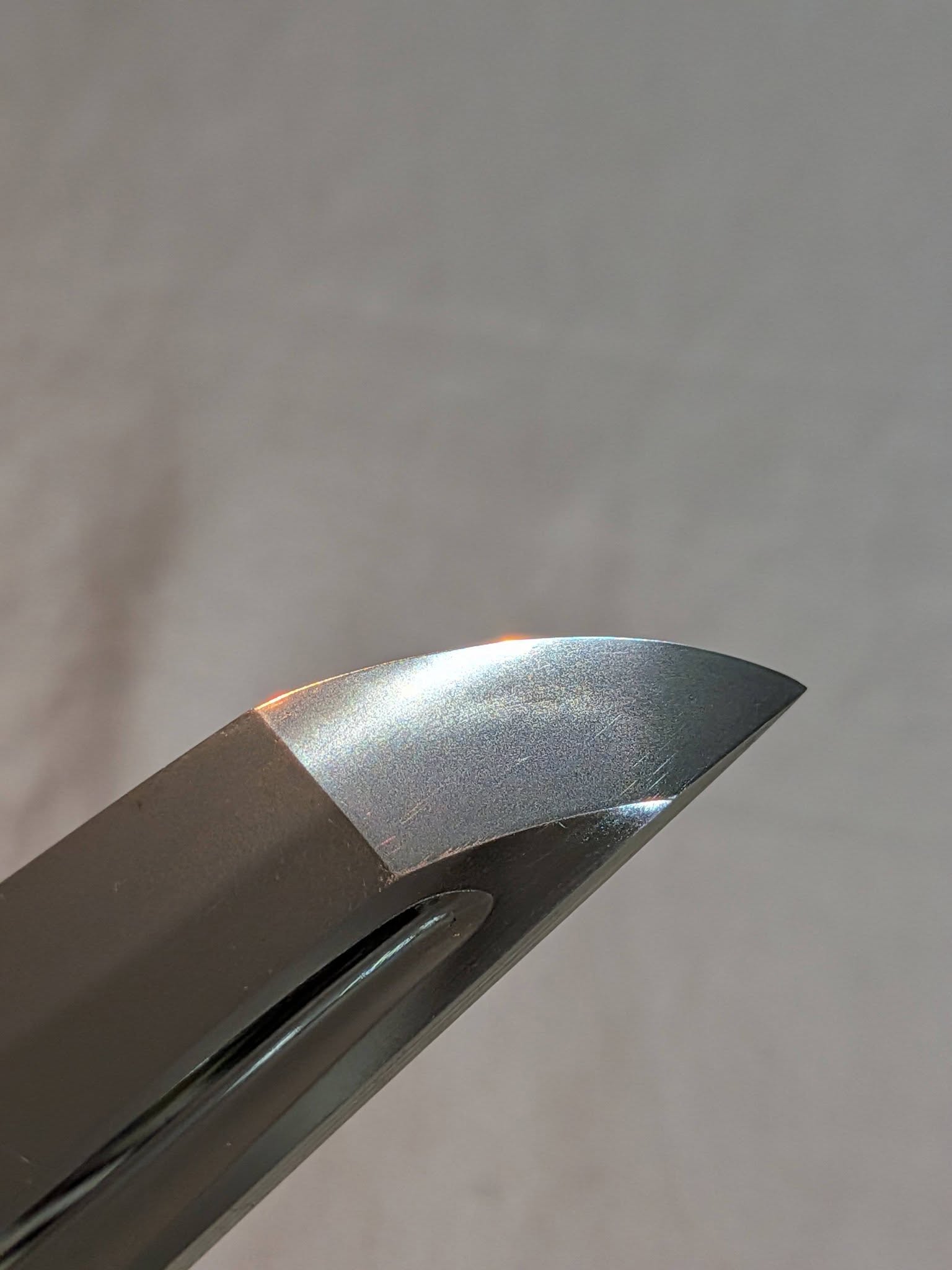
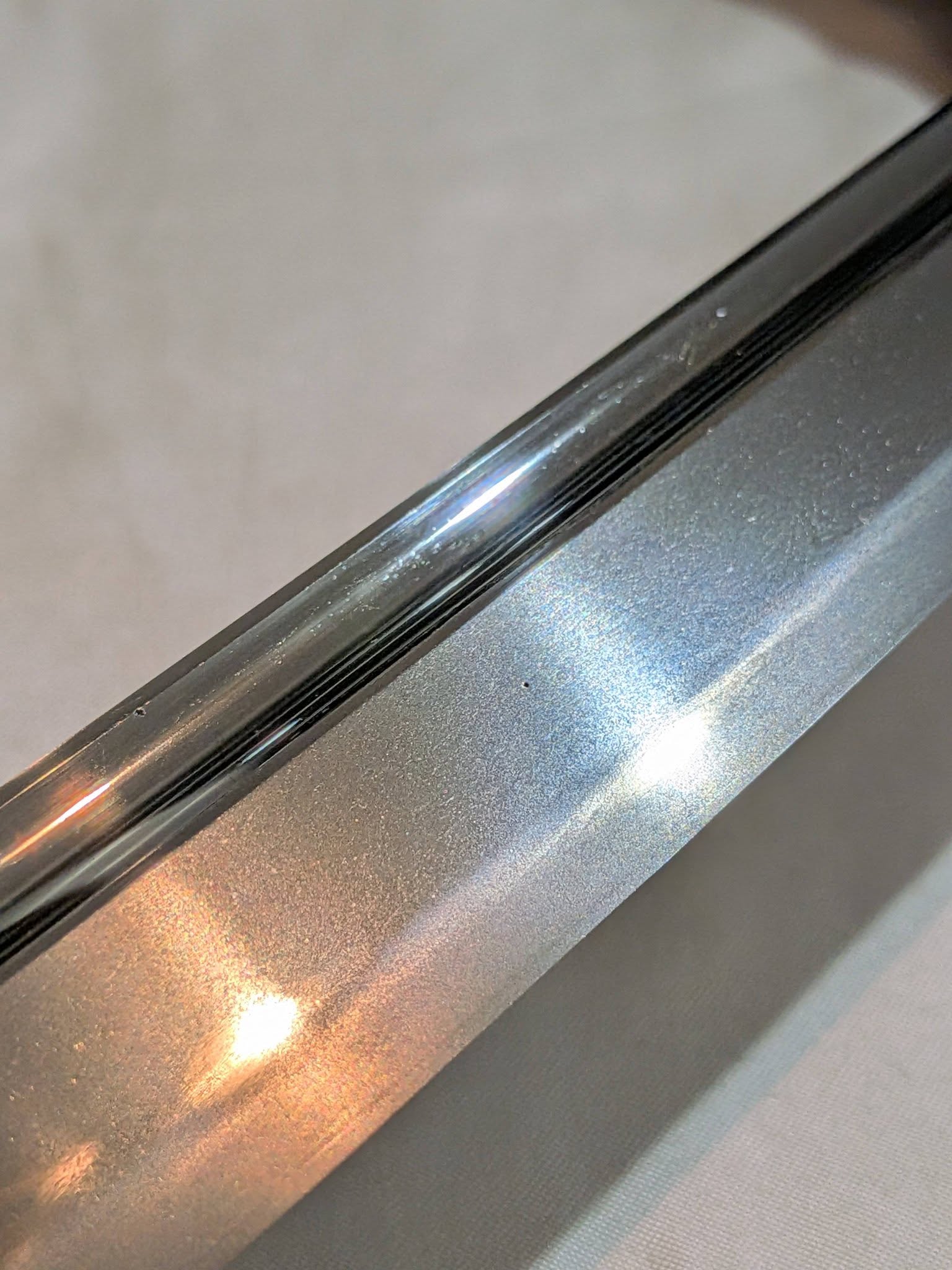
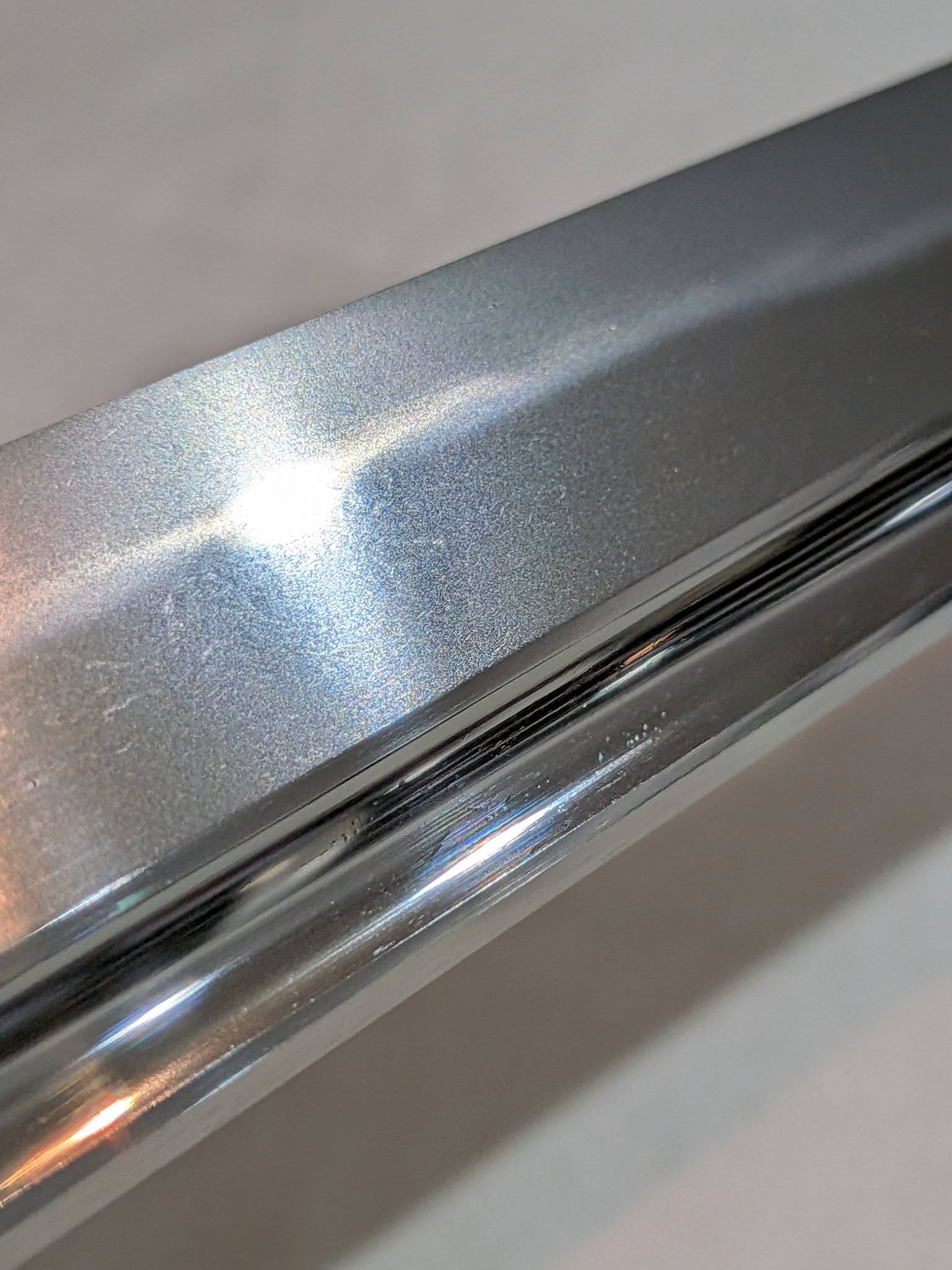
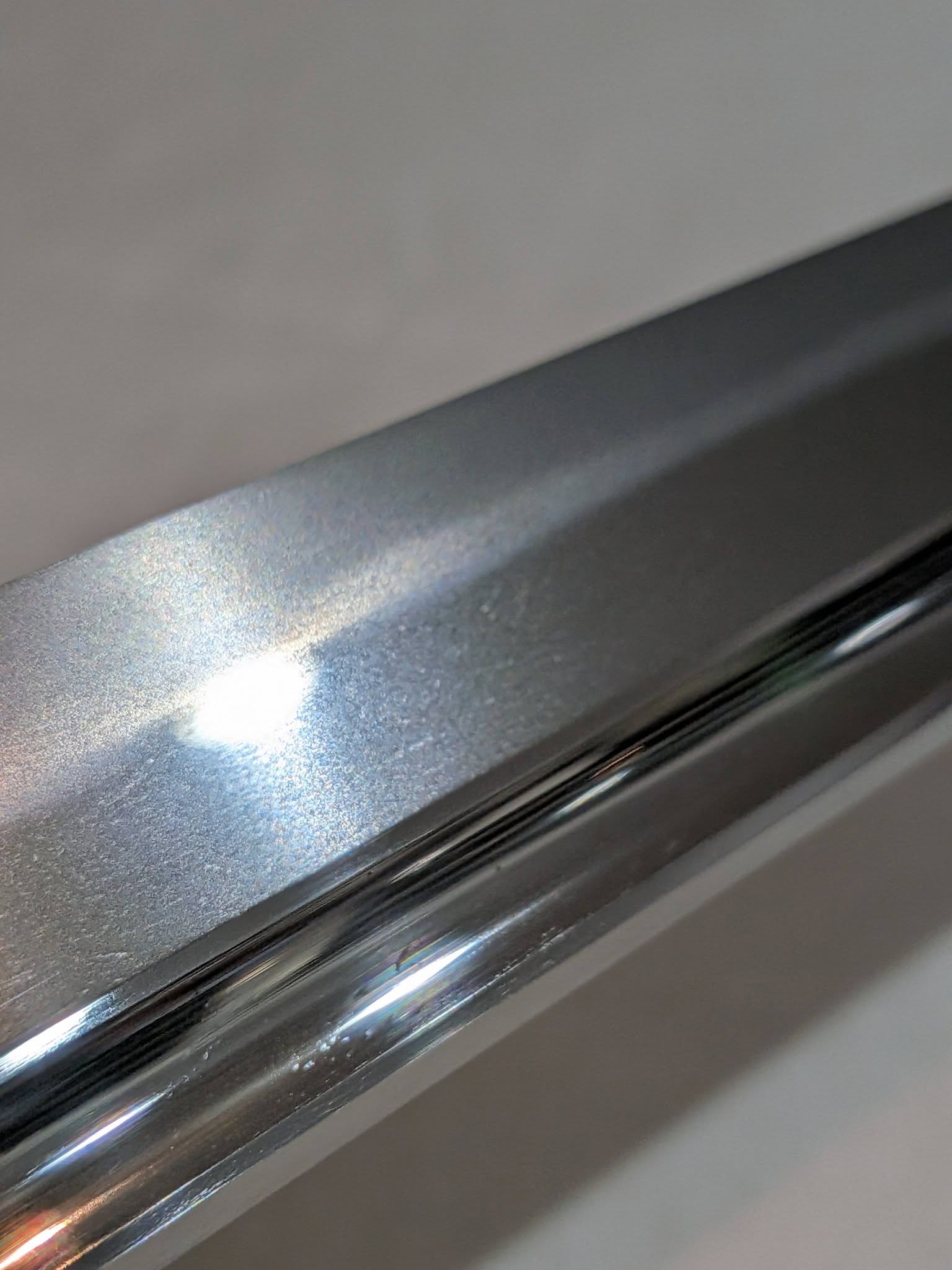
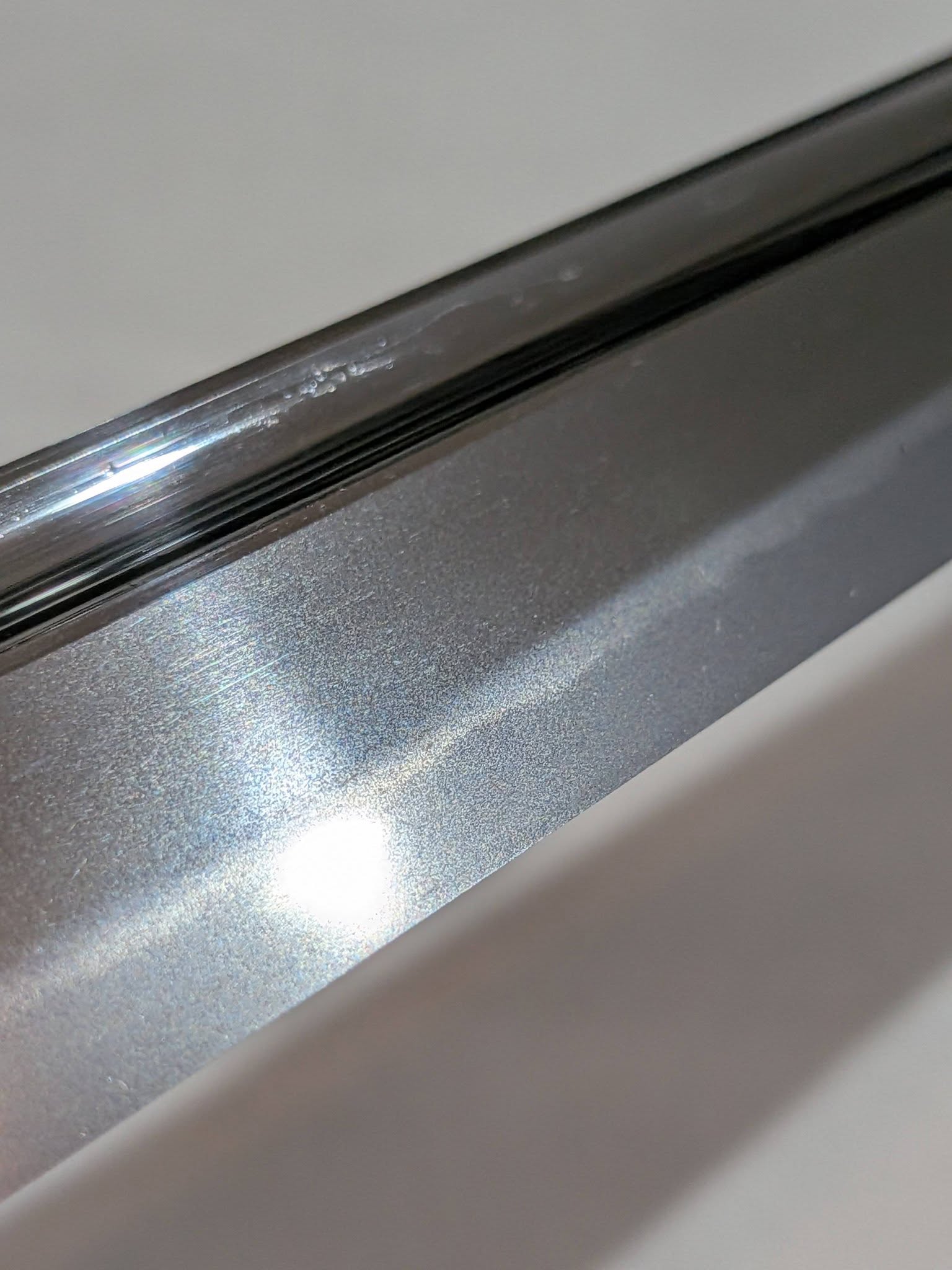

Yamato-den · Yamato · around 1467-1469
Tōken Taikan top 31%
1 piece on the market now
Yamato-den · Yamato
Phase: Sue-Tegai末手掻· 1390–1700
28 pieces on the market now
Sue-Tegai (末手掻) is the late phase of the Tegai school, from the Ōei era through the Muromachi period (with a thin tail of name-bearers into the early Edo period). The term 末手掻 is used directly in NBTHK setsumei to set this generation apart from the classical Ko-Tegai of the founder Kanenaga. Its representative smiths are Kanezane (包眞), Kanetoshi (包俊 / 包利), Kaneyoshi (包吉), and Kaneyuki (包行), names that recur across several generations as the workshop continued to supply blades through the fifteenth and sixteenth centuries. Learn more →
| Smith | Era | Designated |
|---|---|---|
| Kanenaga包永 | 1288-1312 | 63 |
| Kanekiyo包清 | 1362-1370 | 8 |
| Kanetsugu包次 | 1317-1333 | 4 |
| Kanetoshi包俊 | 1381-1384 | 4 |
| Kanezane包眞 | 1394-1428 | 3 |
The NTHK’s principal certificate, issued for a blade of considerable quality. It confirms a genuine signature, or, for an unsigned (mumei) work, records the judges’ attribution to a smith or school. The paper carries a detailed worksheet with a numerical point score.
The NTHK (Nihon Tōken Hozon Kai, the Society for the Preservation of the Japanese Sword) is the oldest of Japan’s sword-appraisal bodies, founded in 1910, decades before the NBTHK. After the death of its long-serving head it divided into two successor societies, the NTHK and the NTHK-NPO, both of which continue to hold shinsa. NTHK certificates are known for a detailed worksheet that records a numerical point score alongside the judges’ written opinion, and the society is especially respected for its attribution of unsigned (mumei) work.
This is a Muromachi-period katana attributed to Yamato Tegai Kanetoshi by an NTHK kanteisho. The blade features a refined ko-itame jihada with Yamato character and a suguha-chō hamon in ko-nie-deki. It is housed in shirasaya and exemplifies the consistent forging and classical Yamato feeling of the Tegai school.
NihontoWatchBETAmumei · Tegai · Muromachi
Yamato-den · Yamato · around 1467-1469
Tōken Taikan top 31%
1 piece on the market now
Yamato-den · Yamato
Phase: Sue-Tegai末手掻· 1390–1700
28 pieces on the market now
Sue-Tegai (末手掻) is the late phase of the Tegai school, from the Ōei era through the Muromachi period (with a thin tail of name-bearers into the early Edo period). The term 末手掻 is used directly in NBTHK setsumei to set this generation apart from the classical Ko-Tegai of the founder Kanenaga. Its representative smiths are Kanezane (包眞), Kanetoshi (包俊 / 包利), Kaneyoshi (包吉), and Kaneyuki (包行), names that recur across several generations as the workshop continued to supply blades through the fifteenth and sixteenth centuries. Learn more →
| Smith | Era | Designated |
|---|---|---|
| Kanenaga包永 | 1288-1312 | 63 |
| Kanekiyo包清 | 1362-1370 | 8 |
| Kanetsugu包次 | 1317-1333 | 4 |
| Kanetoshi包俊 | 1381-1384 | 4 |
| Kanezane包眞 | 1394-1428 | 3 |
The NTHK’s principal certificate, issued for a blade of considerable quality. It confirms a genuine signature, or, for an unsigned (mumei) work, records the judges’ attribution to a smith or school. The paper carries a detailed worksheet with a numerical point score.
The NTHK (Nihon Tōken Hozon Kai, the Society for the Preservation of the Japanese Sword) is the oldest of Japan’s sword-appraisal bodies, founded in 1910, decades before the NBTHK. After the death of its long-serving head it divided into two successor societies, the NTHK and the NTHK-NPO, both of which continue to hold shinsa. NTHK certificates are known for a detailed worksheet that records a numerical point score alongside the judges’ written opinion, and the society is especially respected for its attribution of unsigned (mumei) work.