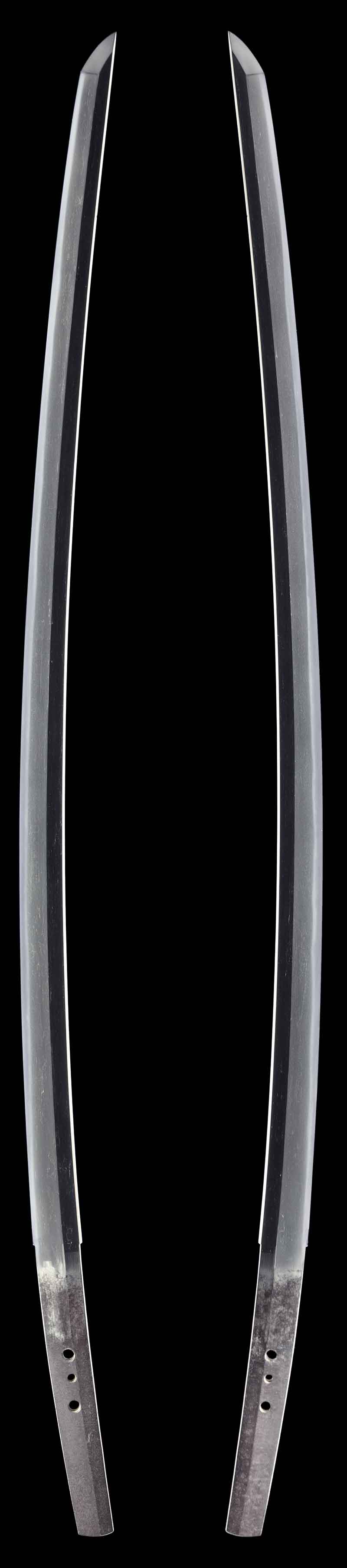
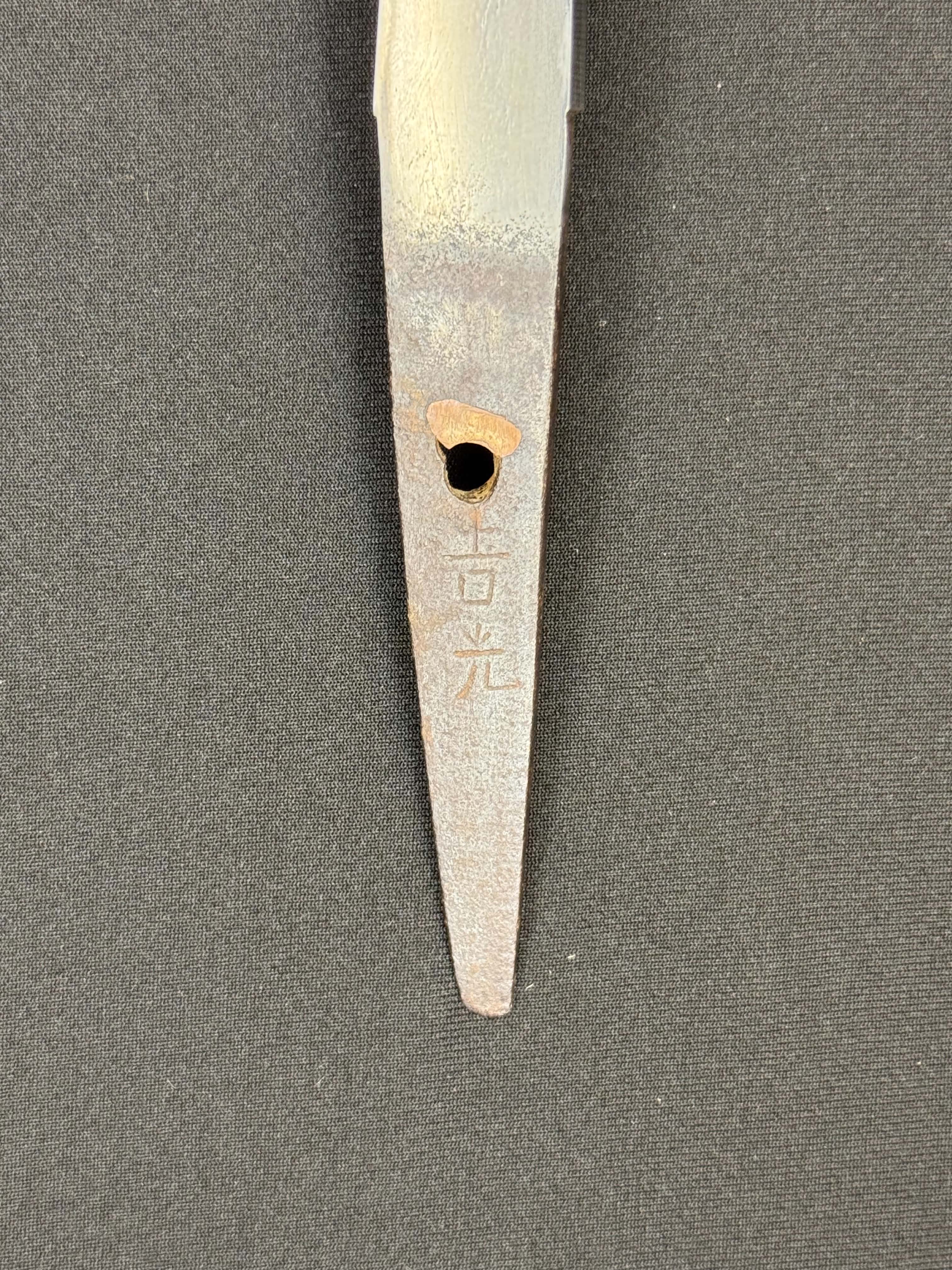
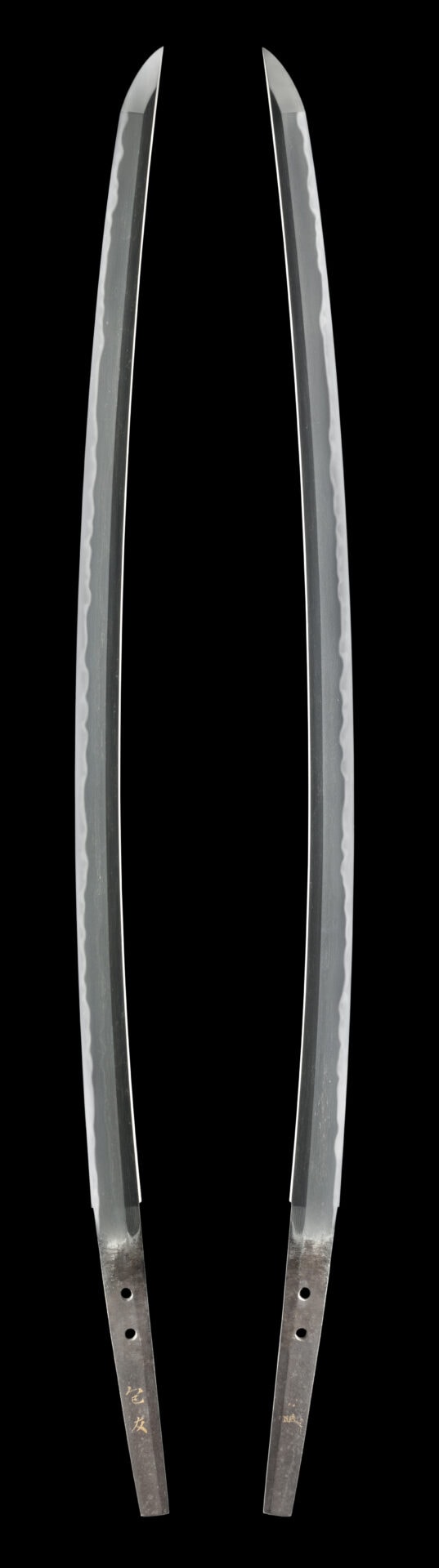
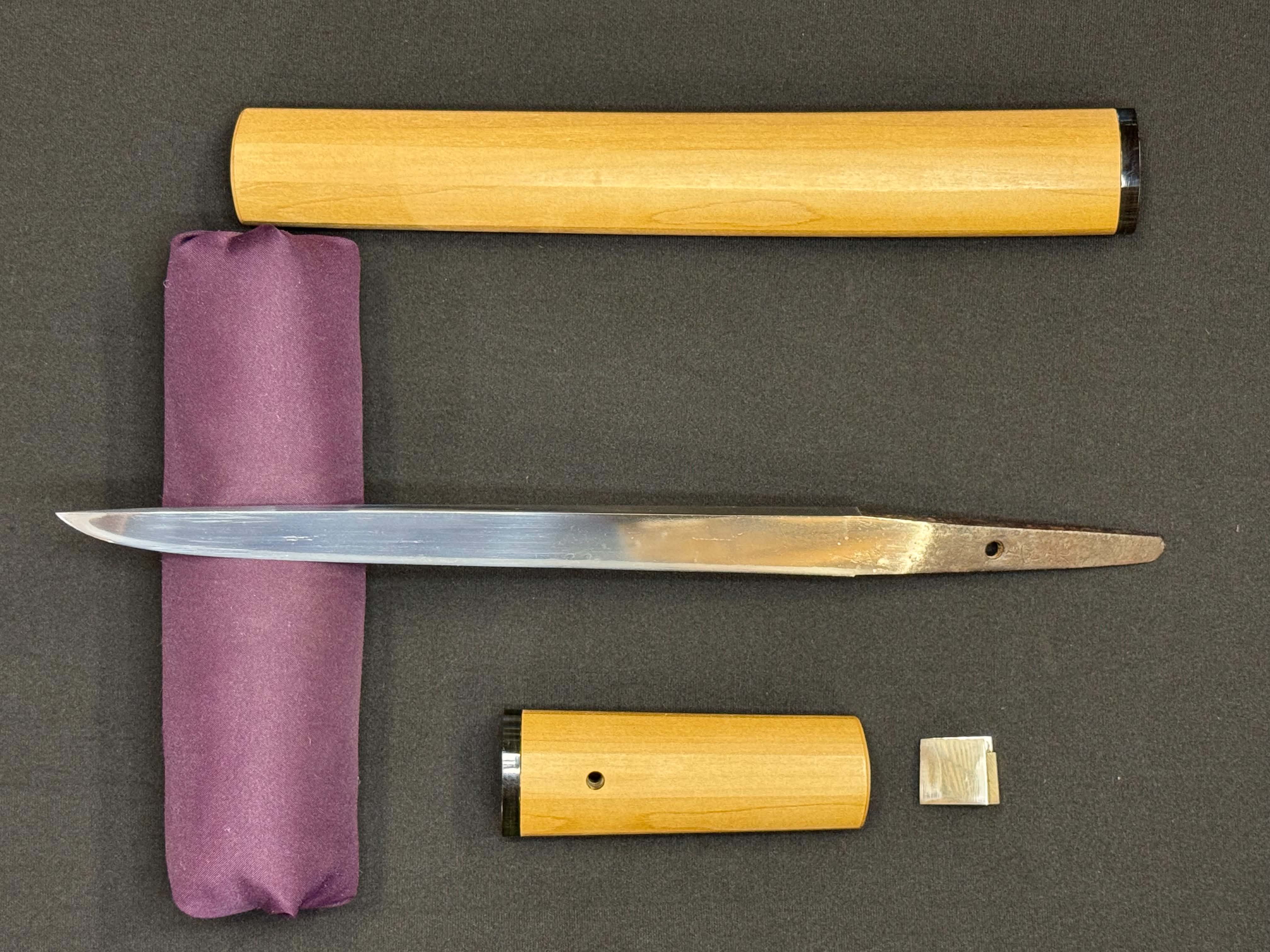
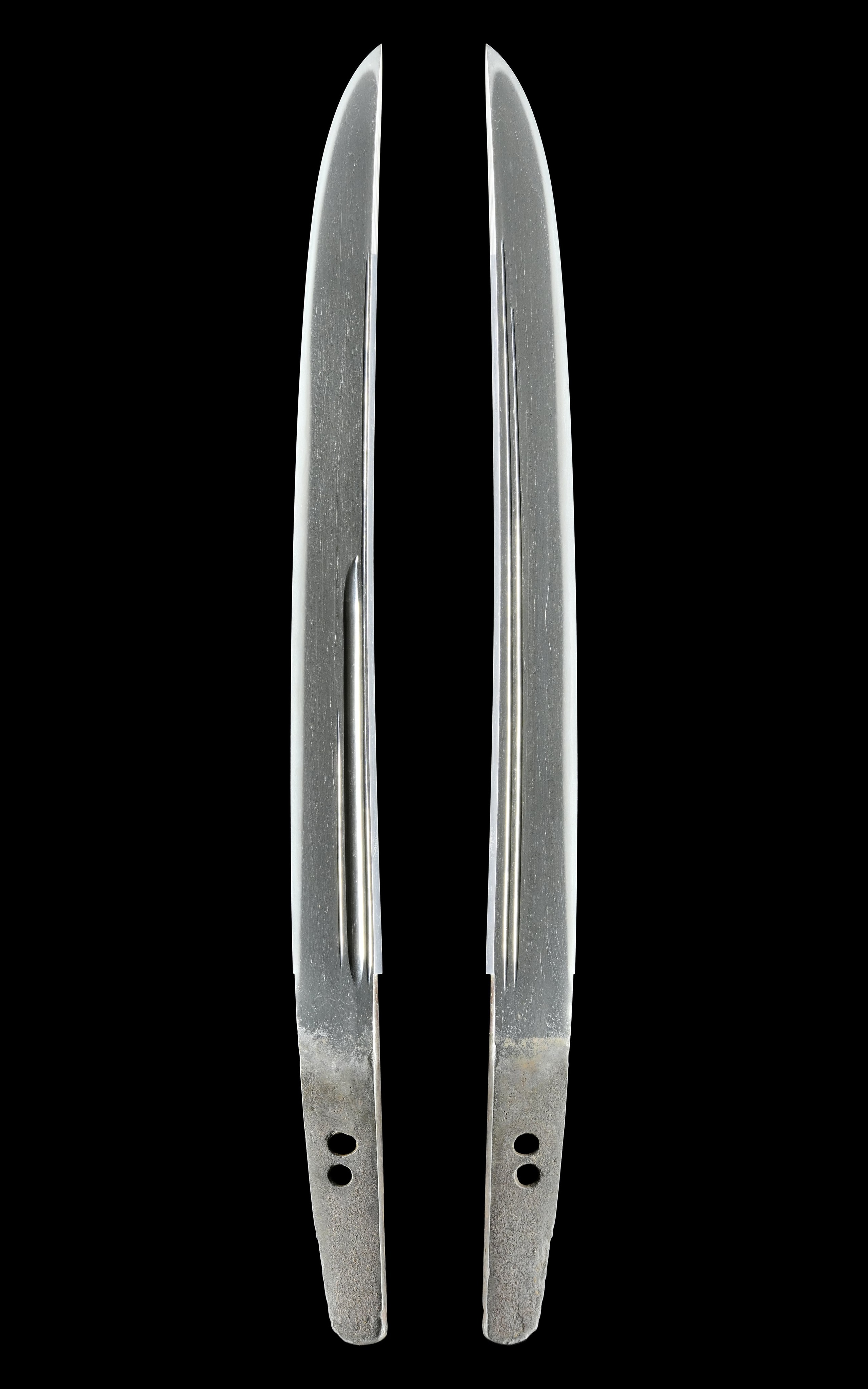
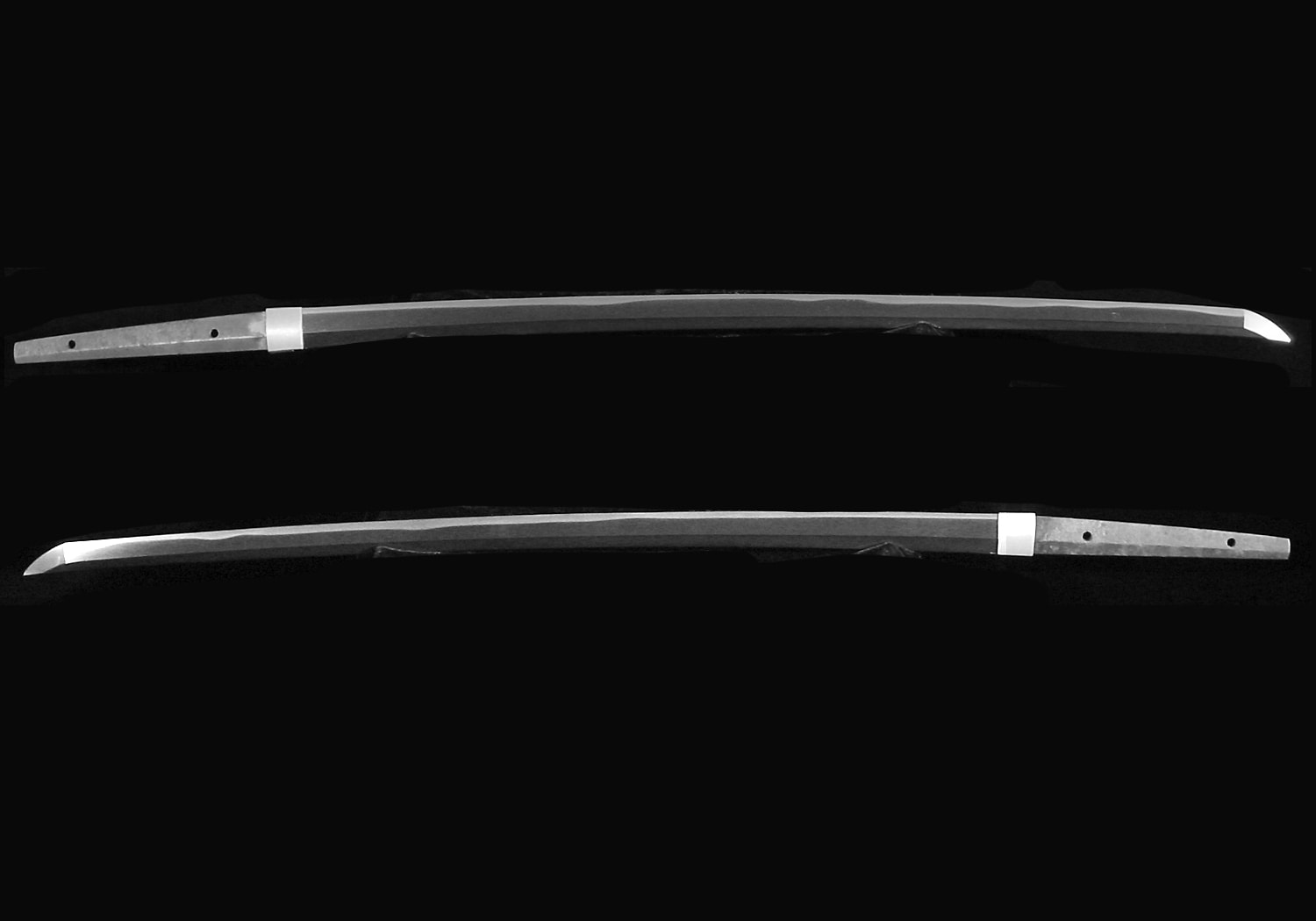
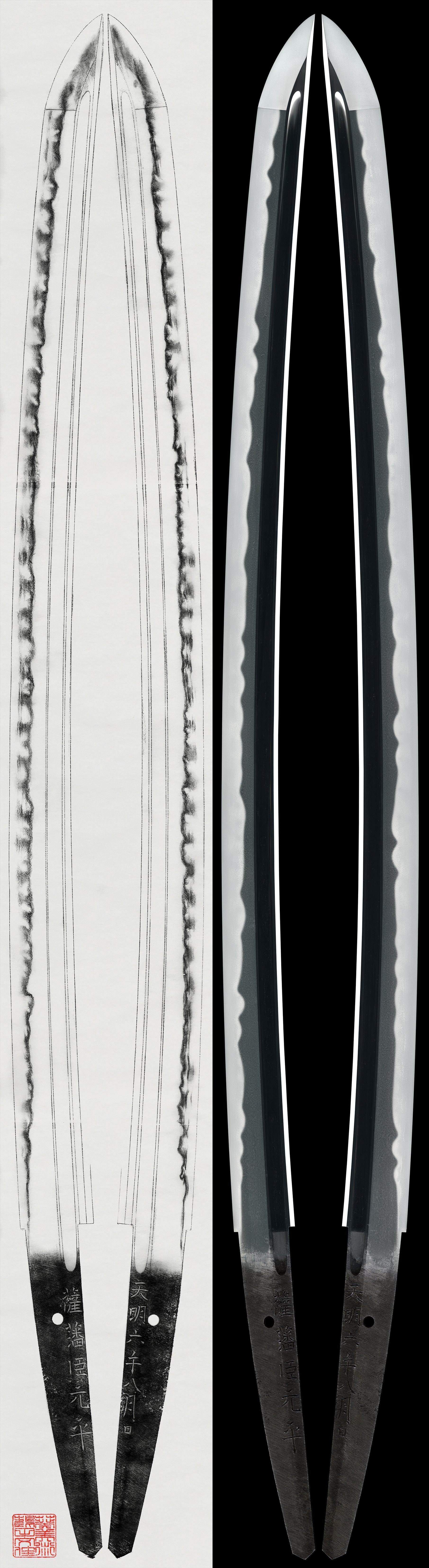
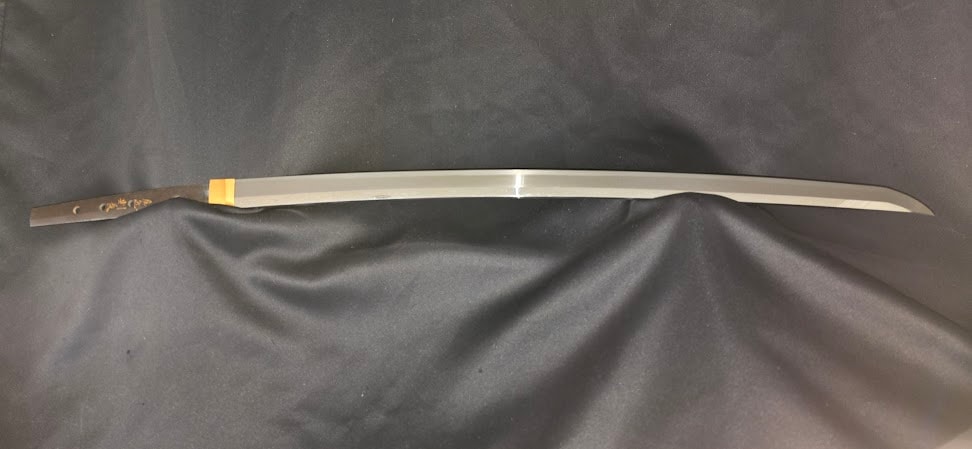
A with a relief carved within a recessed panel on its front and on its back was transmitted in the Sendai Date family and is recorded in the ' Hiroku, the secret register of swords and spears, and it is the most fully documented of the four signed blades that carry Kanetoshi's two-character name. Kanetoshi was a swordsmith of the Yamato school, a group the published sources regard as a body of forgers attached to Tōdai-ji and the largest in scale of the five Yamato traditions. Its founder is given as Kanenaga, whose activity is placed around the Shōō era of the late period, and from him the school flourished through the age and on into the . In the reference compendia the Kanetoshi name is first cited around the Kōan era as an early signature of the first-generation Kanenaga, and is then seen inherited as a successive title down through the and periods. The surviving signed pieces are all small , read as no later than the Ōei era of the early , and the published sources judge the better of them to express Kanetoshi's own character well.
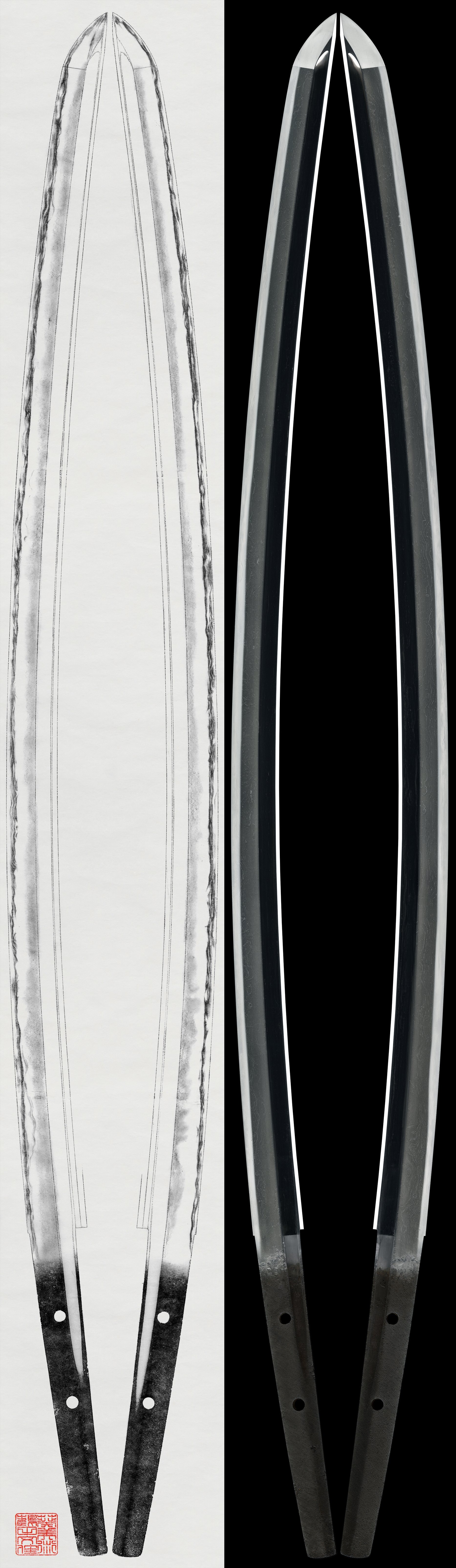
His is a Yamato hand whose grain inclines toward . The forging is , often a tightly packed , that flows and tends toward , with fine thickly and evenly applied; toward the a faint, whitish stands across the , the reflection that the judges name as the very feature setting this later work apart from the -period Yamato blades. Over that he tempers a , calm and shallow, that is never left plain. frays the , small enter, adhere, and runs delicately through, the kept bright and clear with a faintly subdued tendency that the published sources single out as a point of interest, naming it among the school's marks when they write of its 「沈みごころの匂口など手掻派の見どころ」. The runs straight to a with a somewhat long return, at times brushing into at the tip. The form holds to a standard with , the a little thick and the curvature an inward .
The is the more telling half. On the 62 the is densely packed with extremely fine thickly applied and fine entering, the steel bright in color and well worked, while toward the the whitish stands and near the edge the reads straight; the published sources call this a forging in which both and manifest the typical style of the Ōei era, 「地刃に応永頃の手掻派の典型的作風を現わしている」. The faint here is not the deliberate reflection of steel but the natural cast of a Yamato forged in flowing, -inclined grain, and it carries across the smaller pieces as a whitish tone rather than a clear band. Against this the keeps its discipline yet the activity never lets it settle: on the 11 the wide appears shallowly wet with and , and on the 53 piece the temper becomes -like from around the , with small entering the lower half and the bright and clear, the judges finding in it Kanetoshi's character well shown and the workmanship good, 「包俊の特色をよくあらわして、出来がよい」.
The four divide into two registers of one Ōei manner. Across all of them the spine is the fine over -inclined , the whitish , the and the that the school is read by. Two of the blades carry more in the temper than the calm allows. The 53 takes a tendency at the and carries a shōbu- with a plain in its carving, while the 62 piece tempers from the with a , then takes into the -toned line with scattered along the and a that runs , slightly angular on one face and tending to a pointed tip on the other, and bears the relief on its front. The judges note that signed examples of Kanetoshi are few, 「有銘は少い」, and that smiths of the name from the mid- onward tend to a more -dominant temper with standing out in the , so that the calm, bright of these Ōei pieces marks the better, earlier reach of the name.
What places him is best taken from his own blades. The 10 commentary reads these as Yamashiro-style copies, a Yamashiro-mono , that differ from -period examples in their slightly extended dimensions, their whitish , the intermixed here and there, and a return somewhat lacking in refinement, the four points by which a Ōei is told from an older Yamato one. His -inclined with its whitish , his laced with and the occasional , and his with its long return are the marks of his hand drawn from his own blades, and they set his work within the descent without recourse to a borrowed comparison. The published sources weigh him against the standard of his own school rather than against another, finding that among works of this period executed to such a level are rare, 「手搔物で、これだけ出来の優れたこの時代の短刀は稀である」, and valuing the soundest of them as reference material for the study of workmanship, 「手搔物研究上の好参考品である」.
Kanetoshi is held entirely in the tier rather than in the higher designations: the record carries four and no National Treasures or Important Cultural Properties, his designation factor mid-range among names. All four are and signed in the two-character hand, which for so thinly recorded a smith is itself the value, since the published sources note how few signed examples survive. Of the 62 , the Sendai Date heirloom recorded in the ' Hiroku, the judges write that both and are exceedingly sound and the carvings on both faces splendid, 「地刃共に頗る健全で、表裏の彫物も見事である」, and they call the 11 piece 「健全で出来がよい」. No other provenance and no current institutional holder attaches to the recorded blades, so the honest picture is of a smith preserved in private and designated hands rather than in the great museum collections. For a collector this means a signed Kanetoshi is among the rarer of the old Yamato to encounter, the four designated pieces coming to light only from time to time and with patience, each prized less for scale than as a reference point for the Ōei reach of one of the largest Yamato schools.