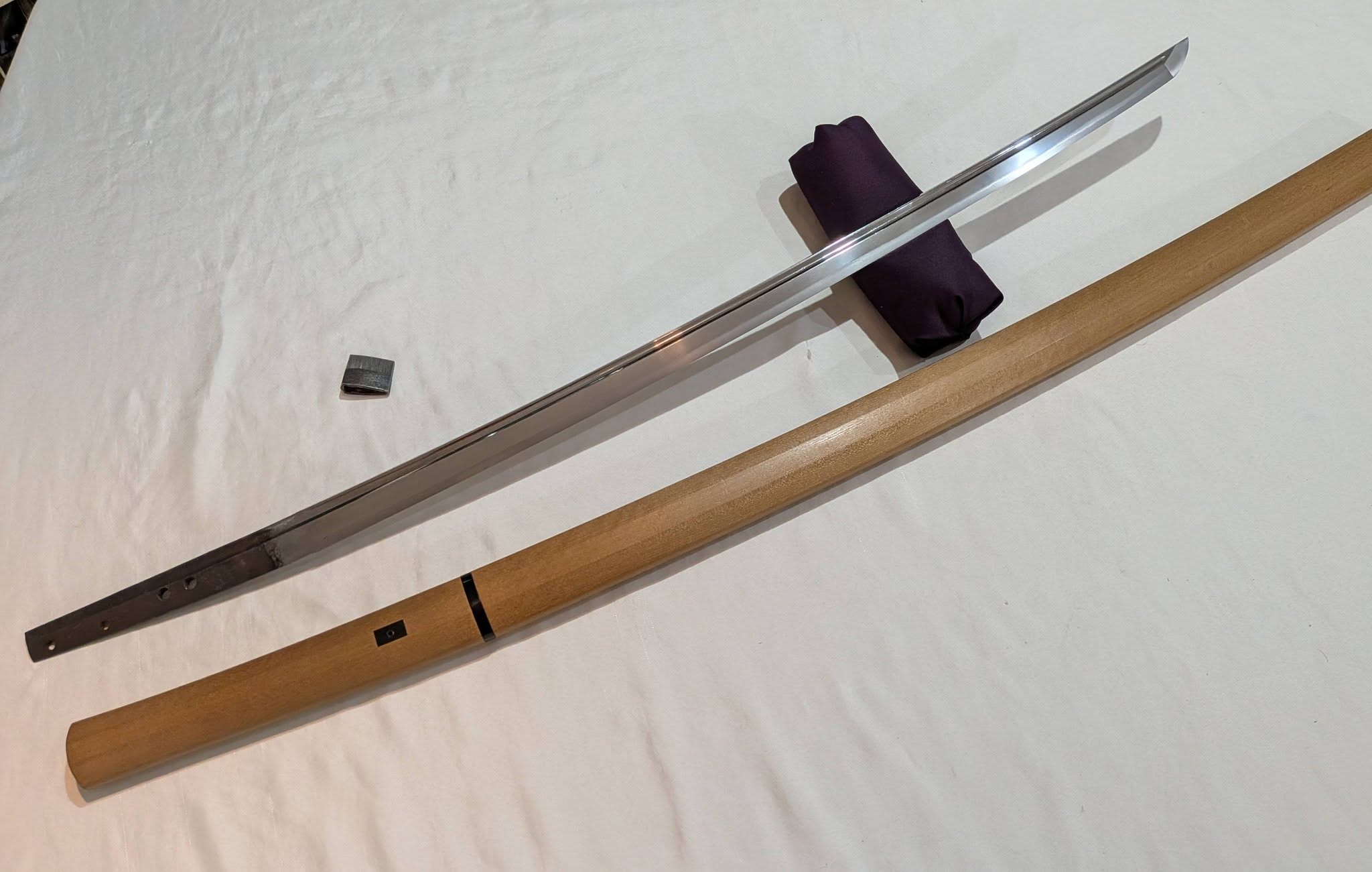
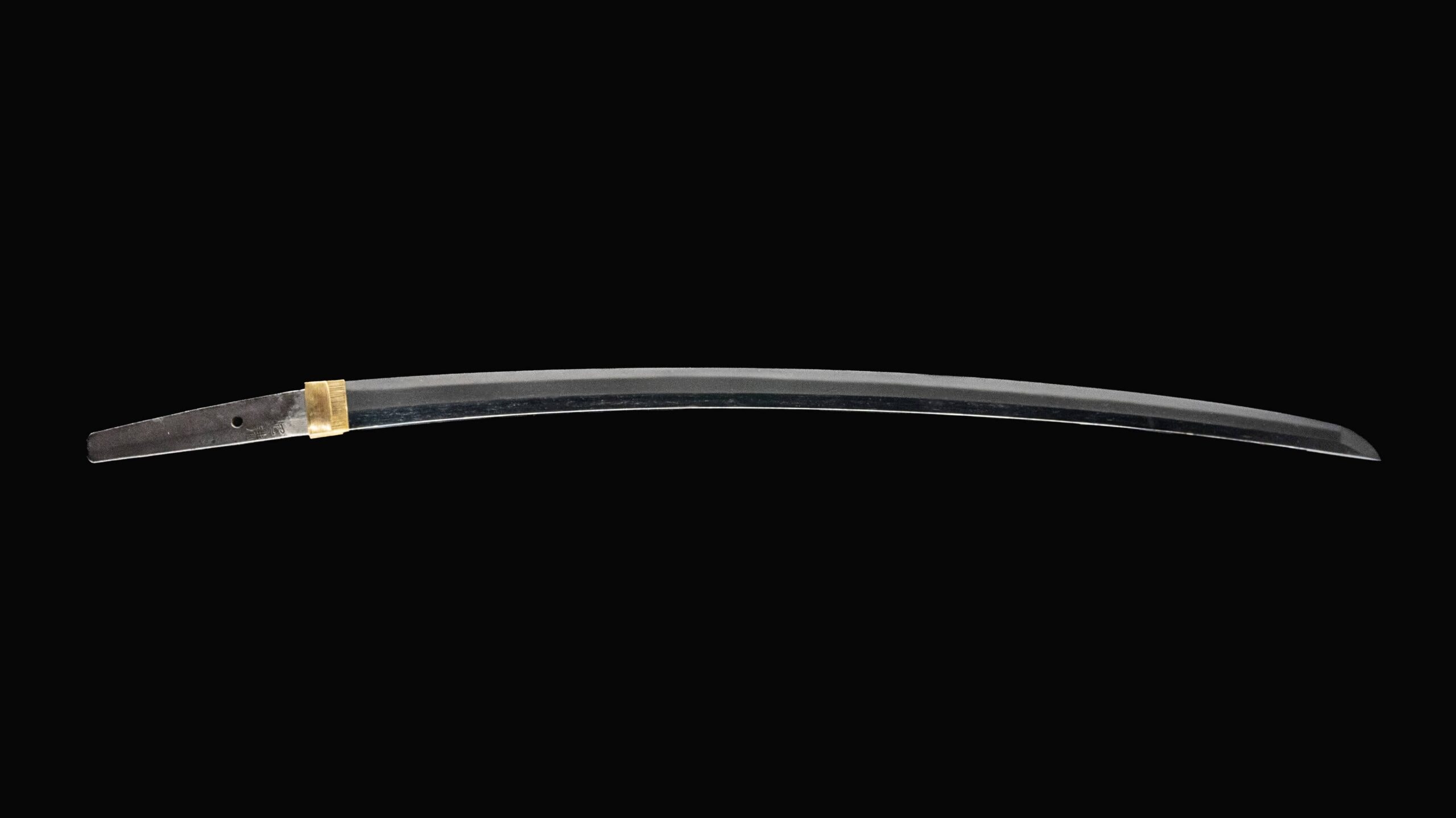
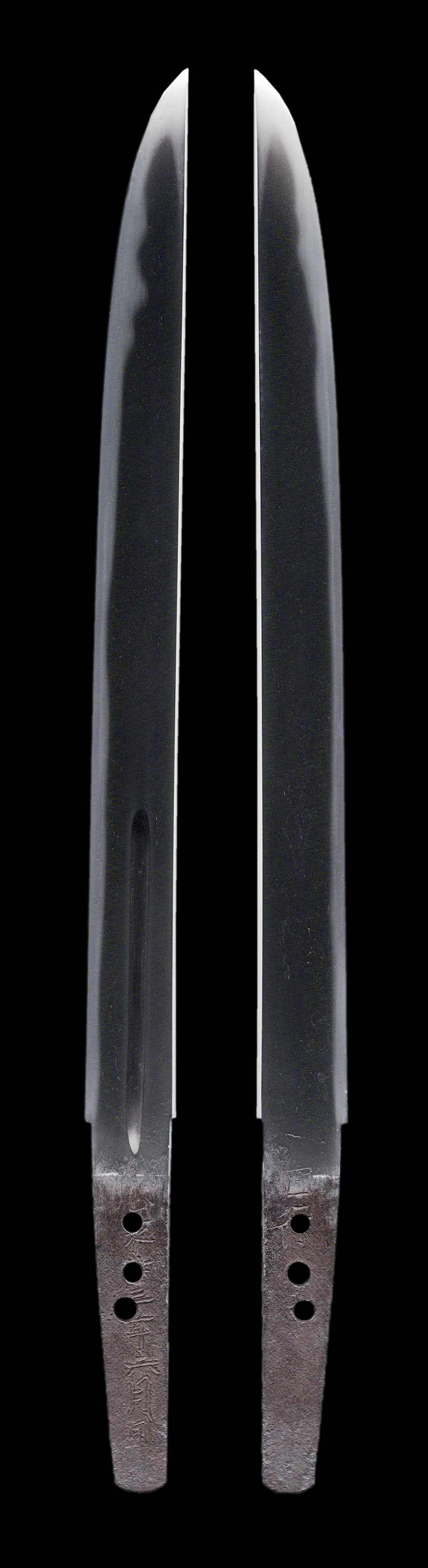
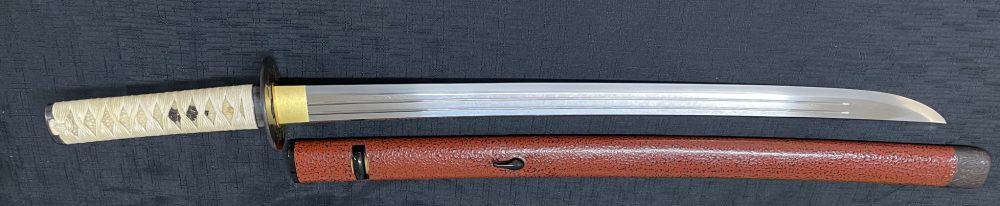
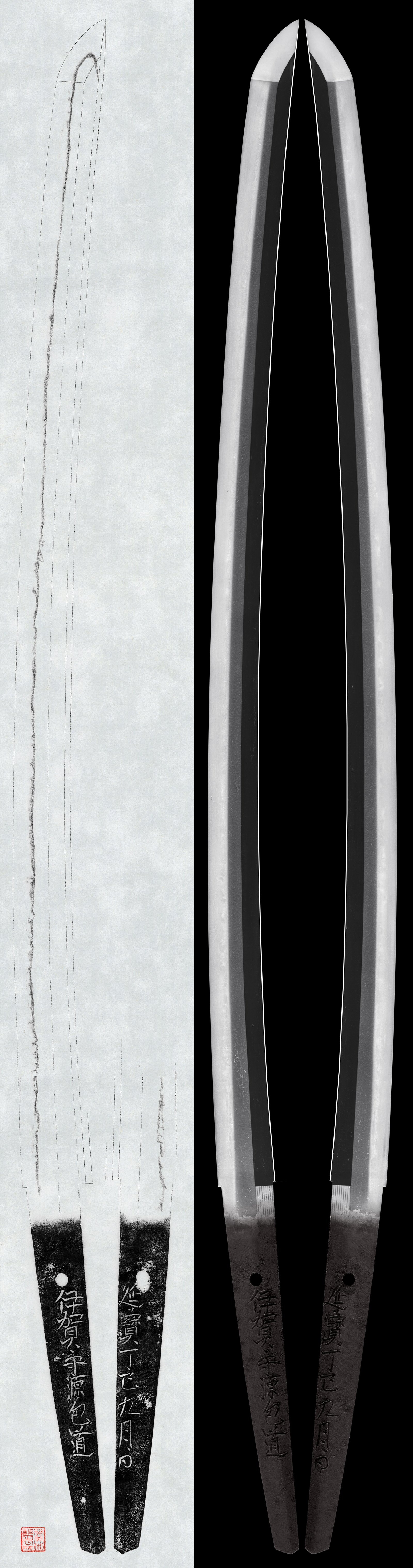
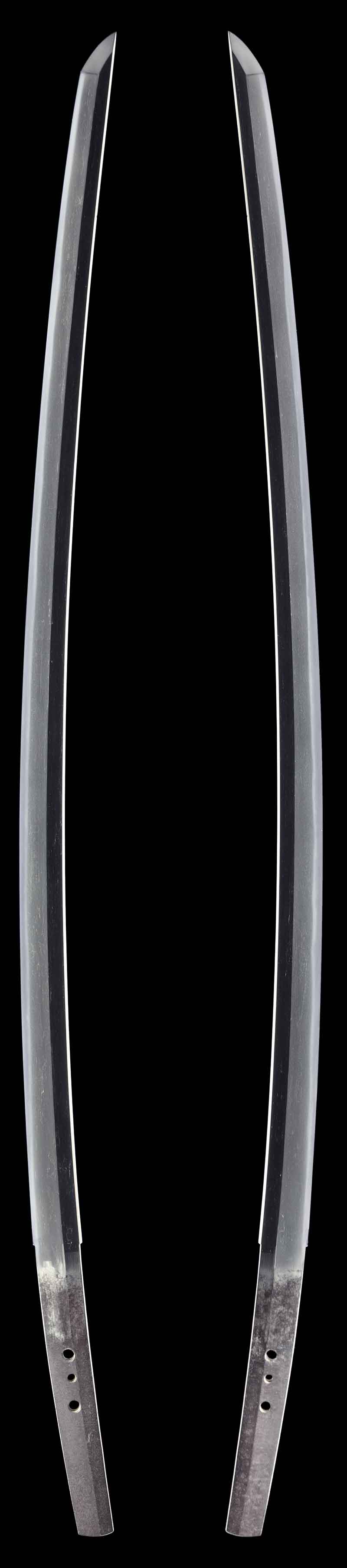
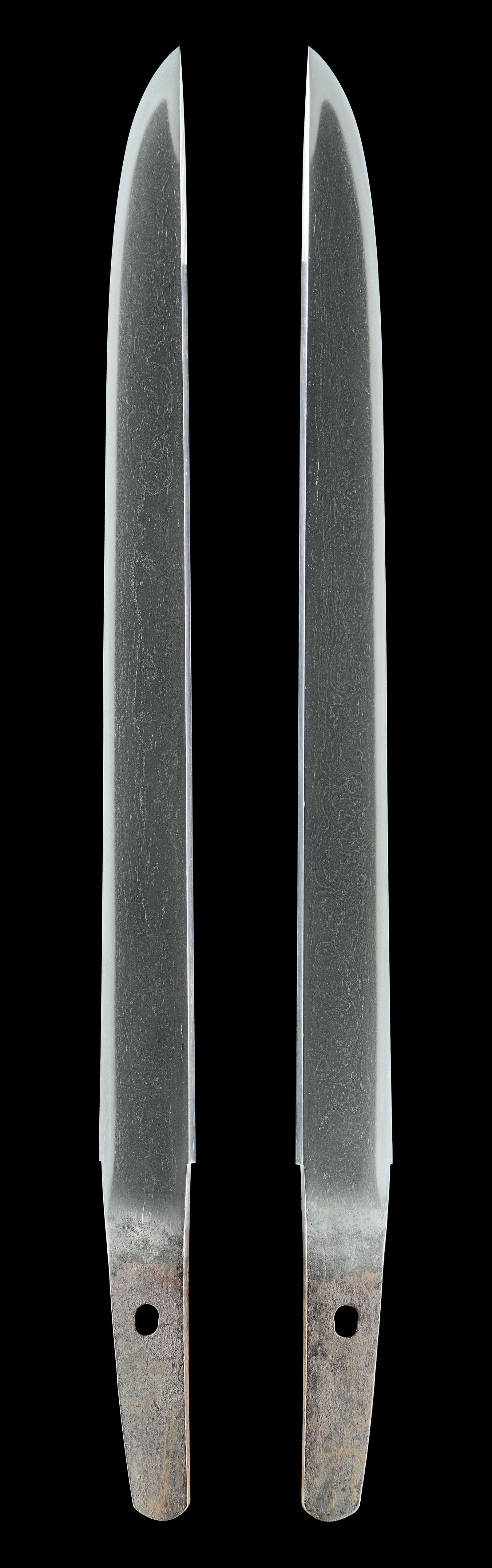
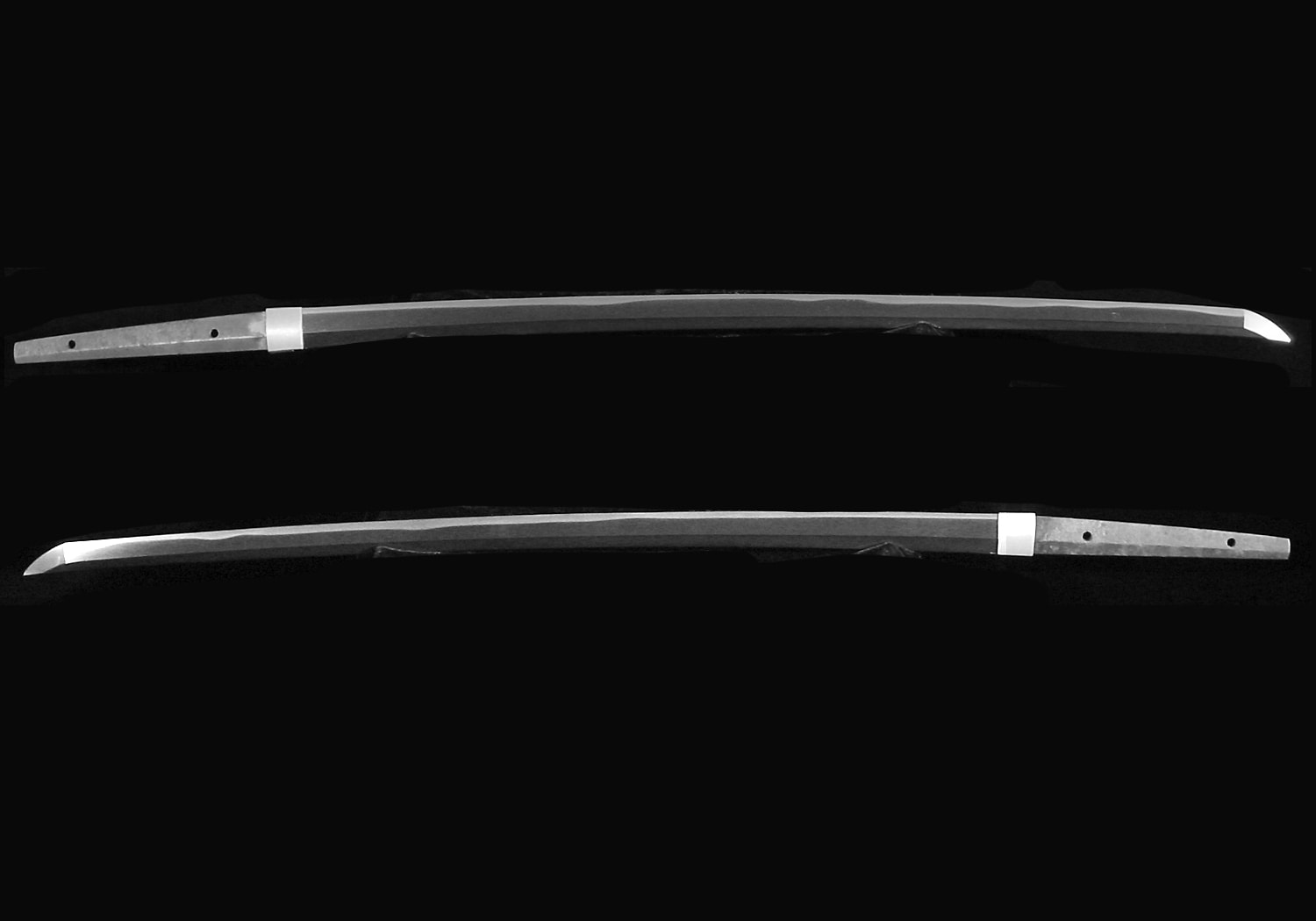
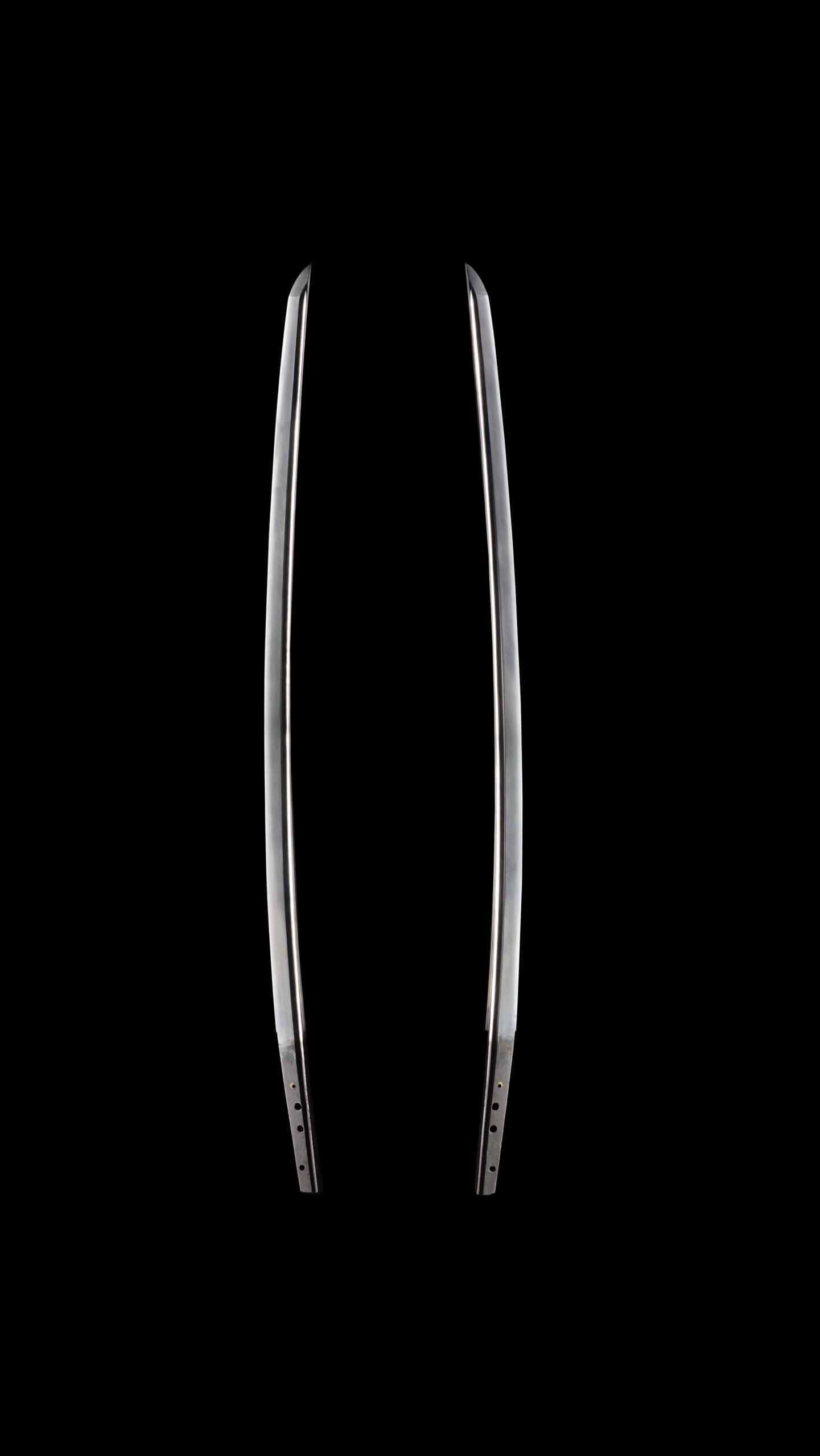
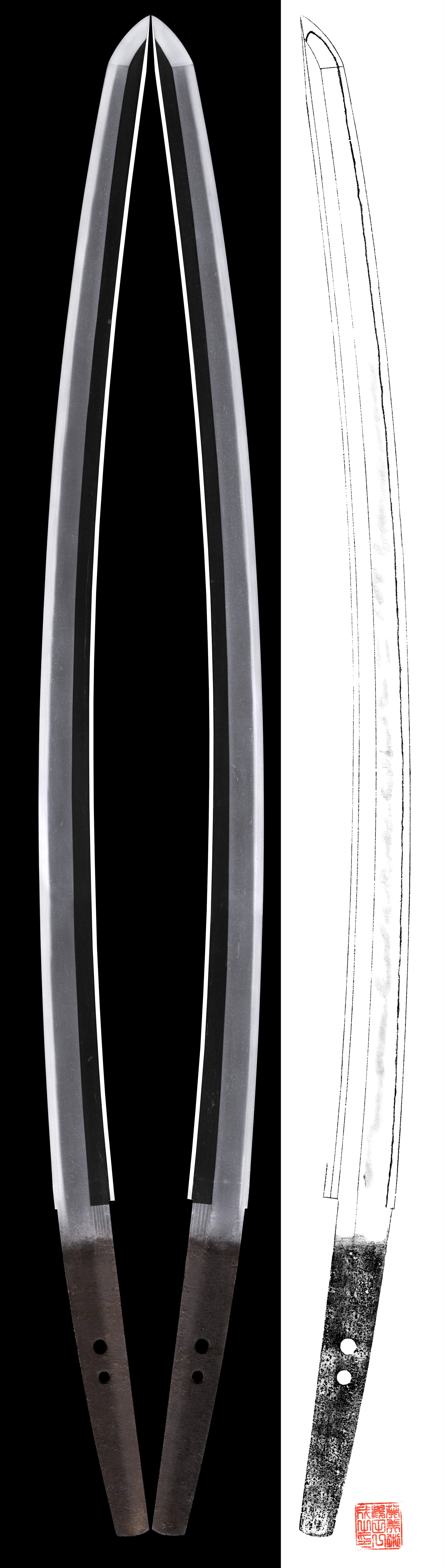
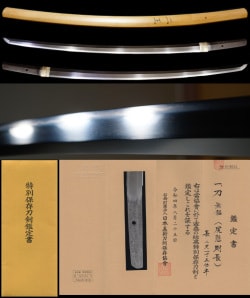
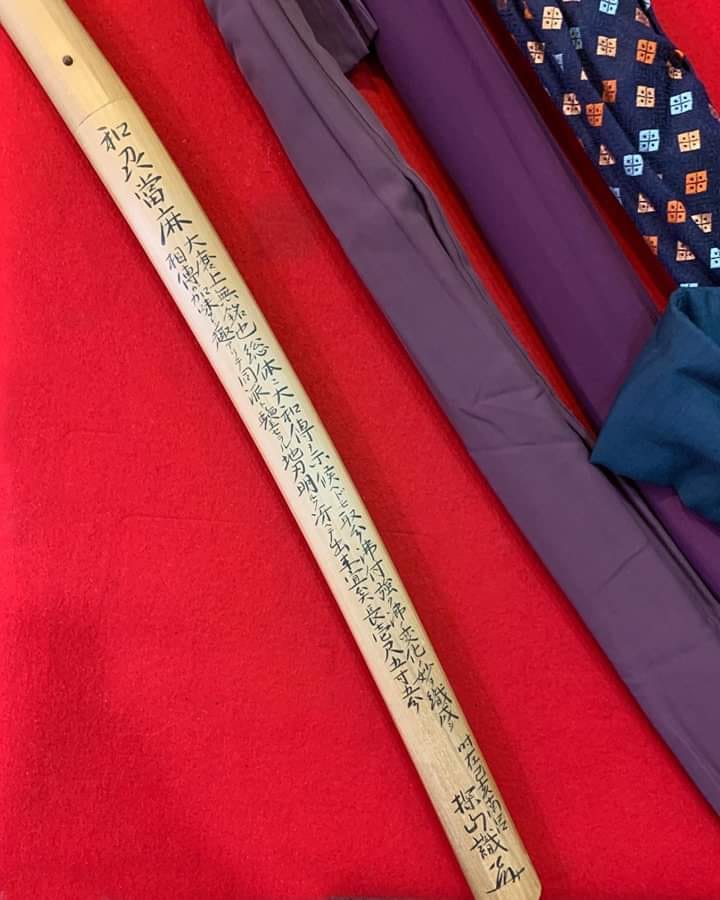
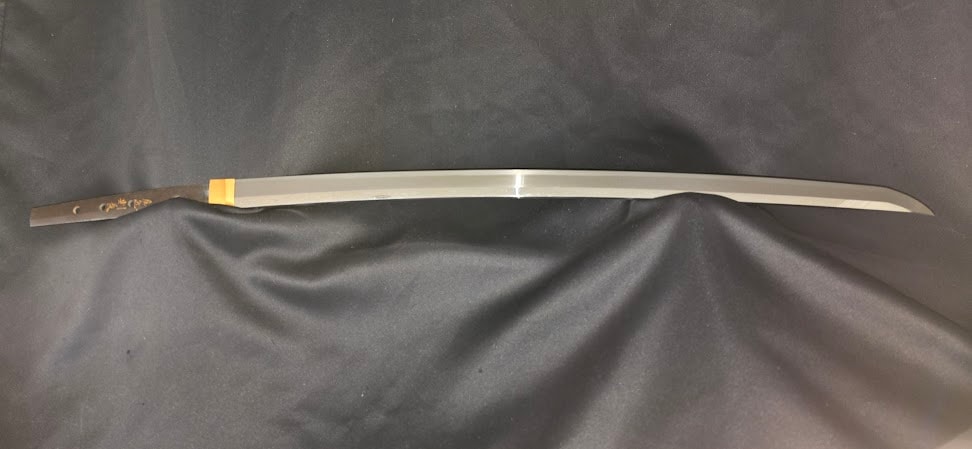
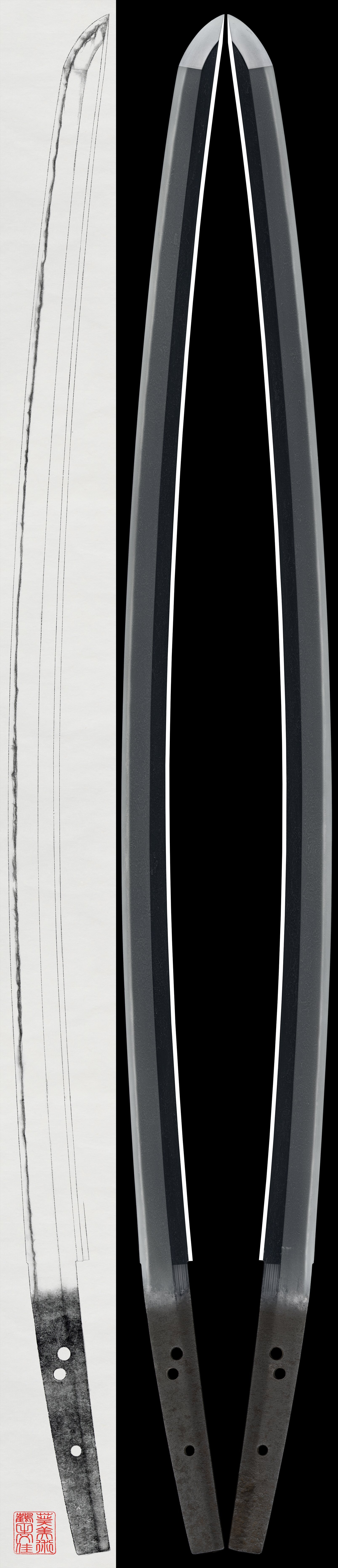
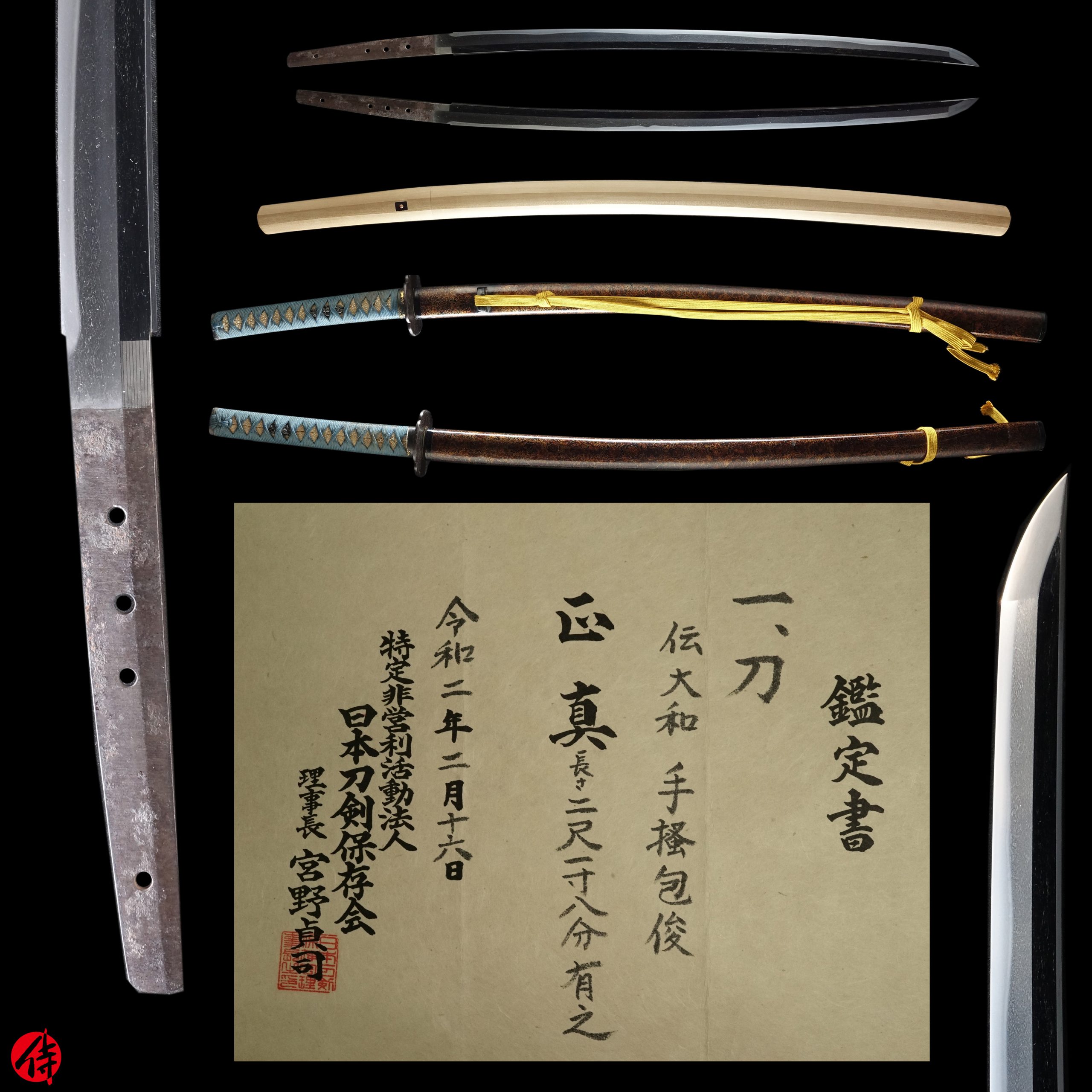
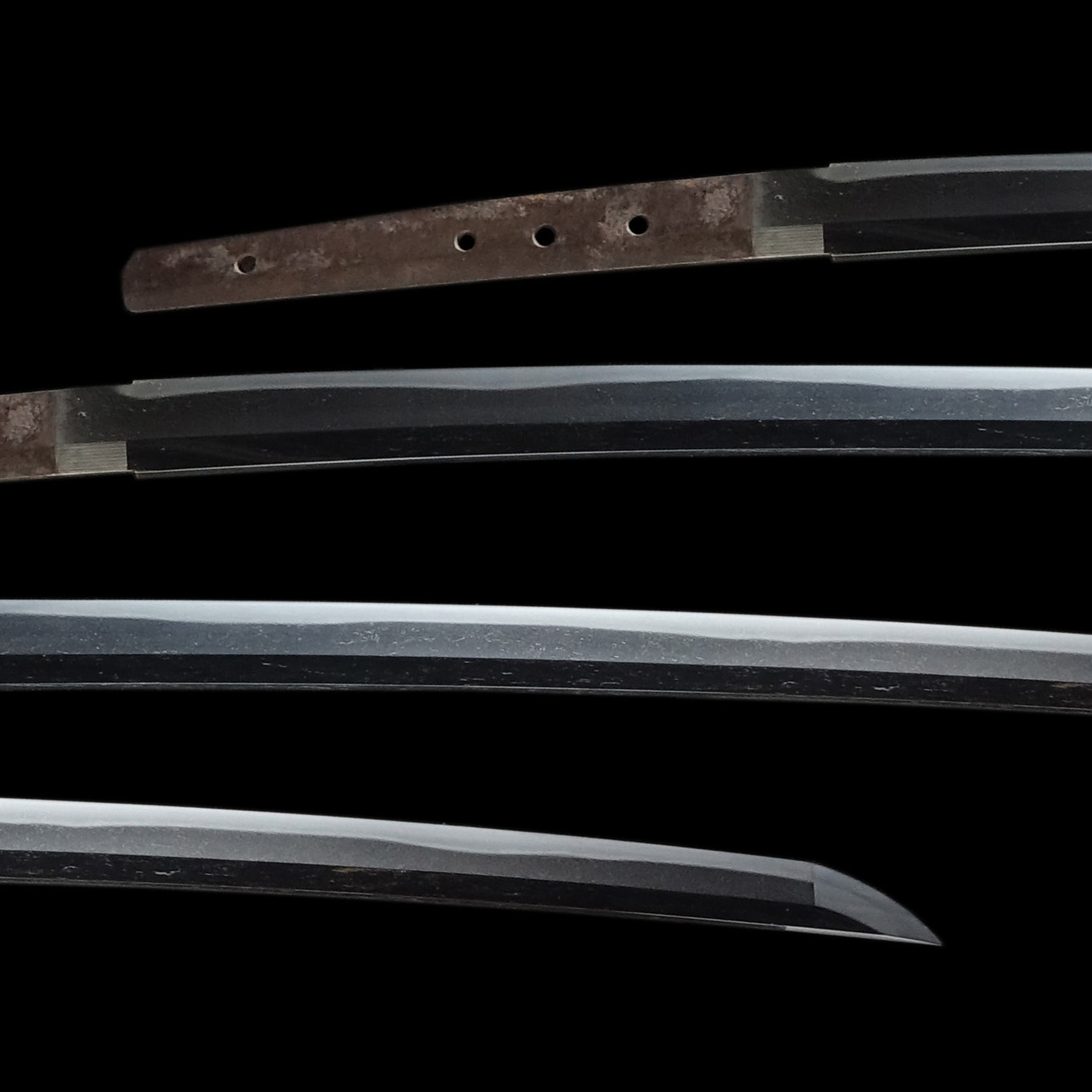
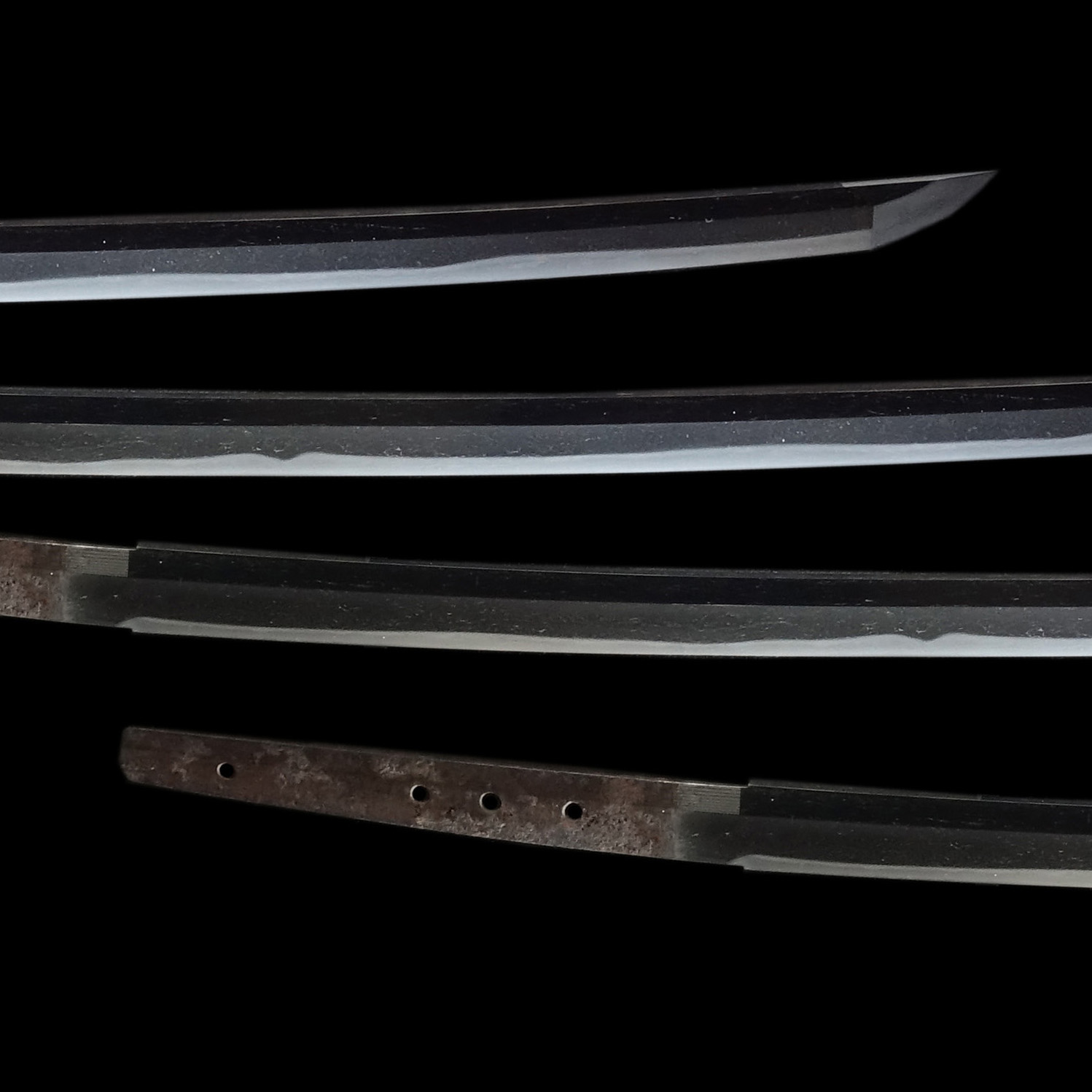
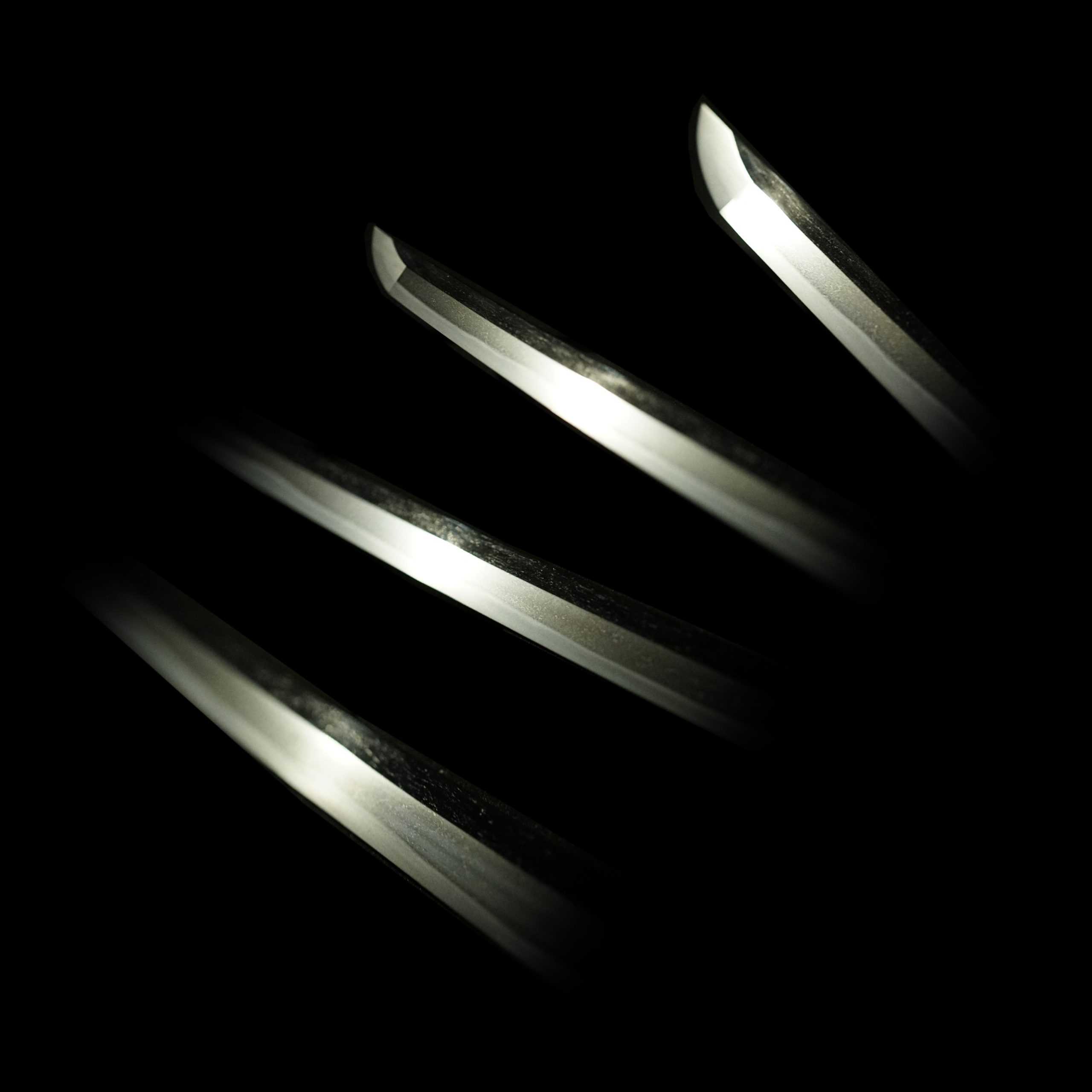
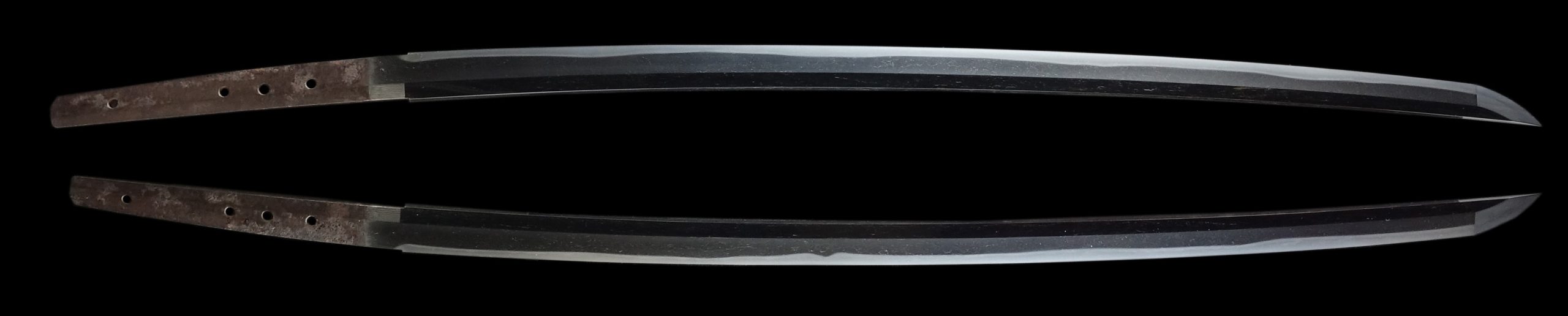
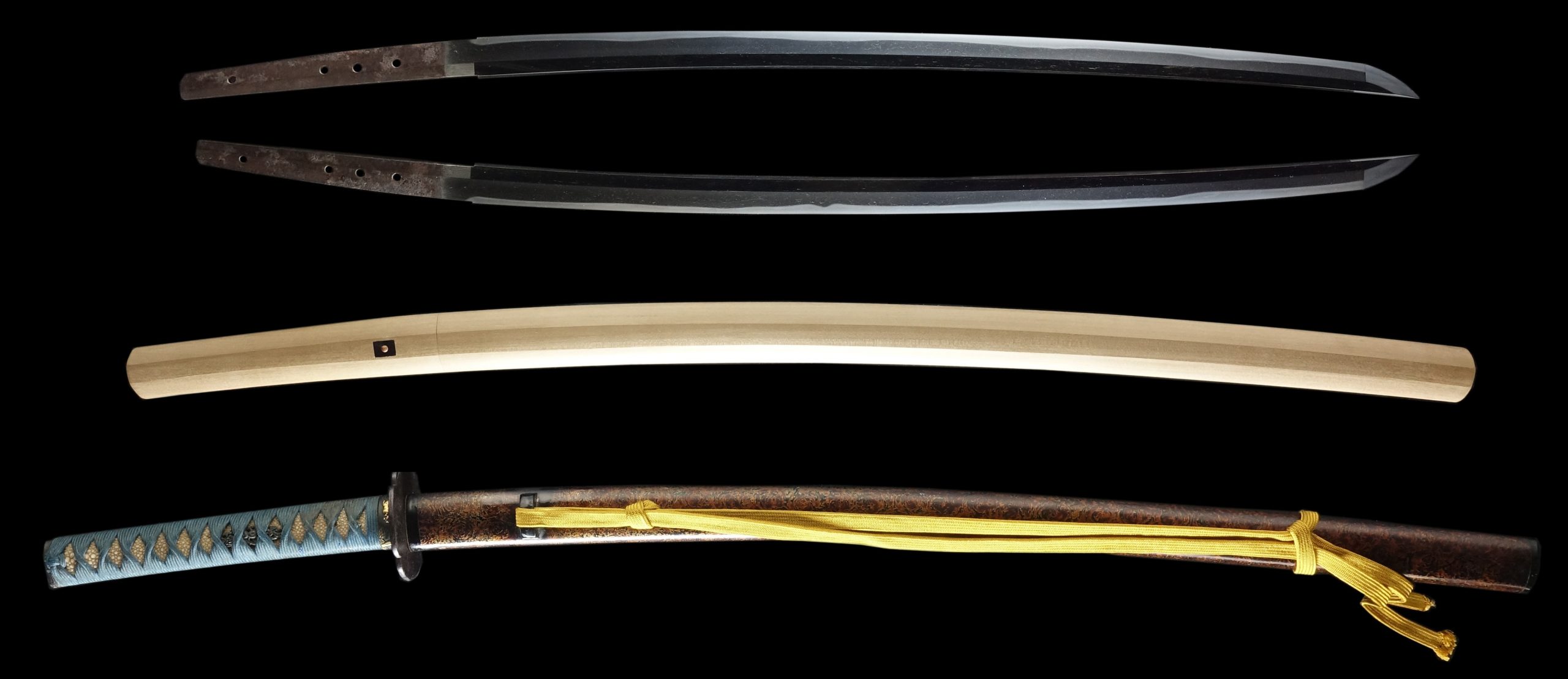
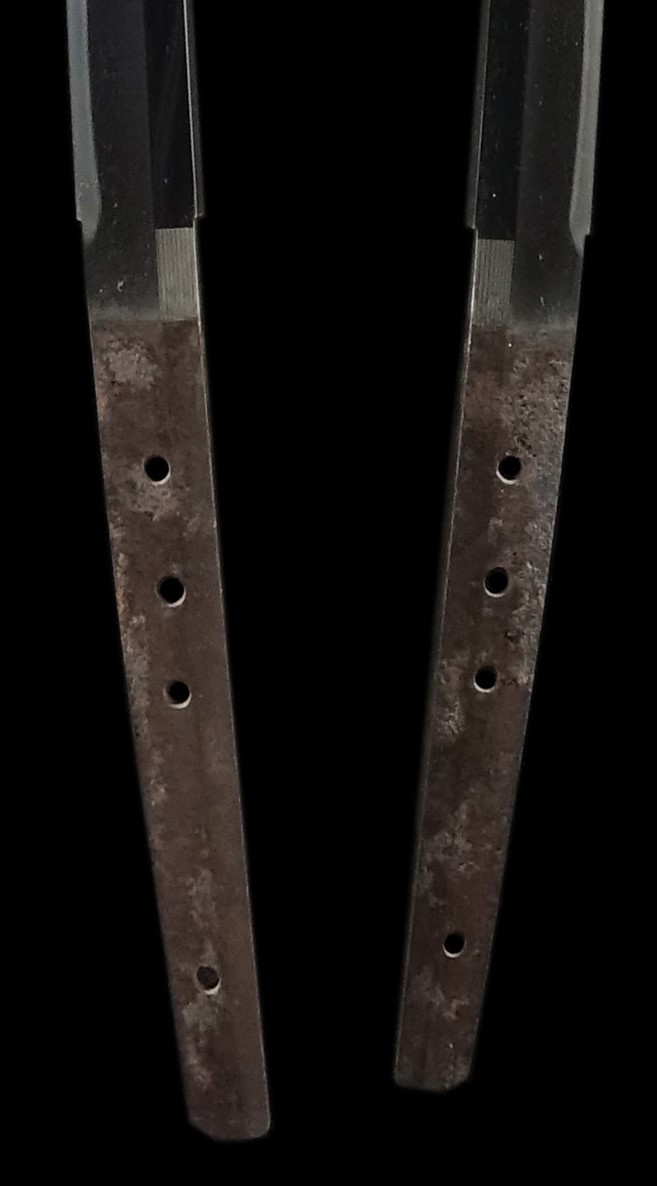
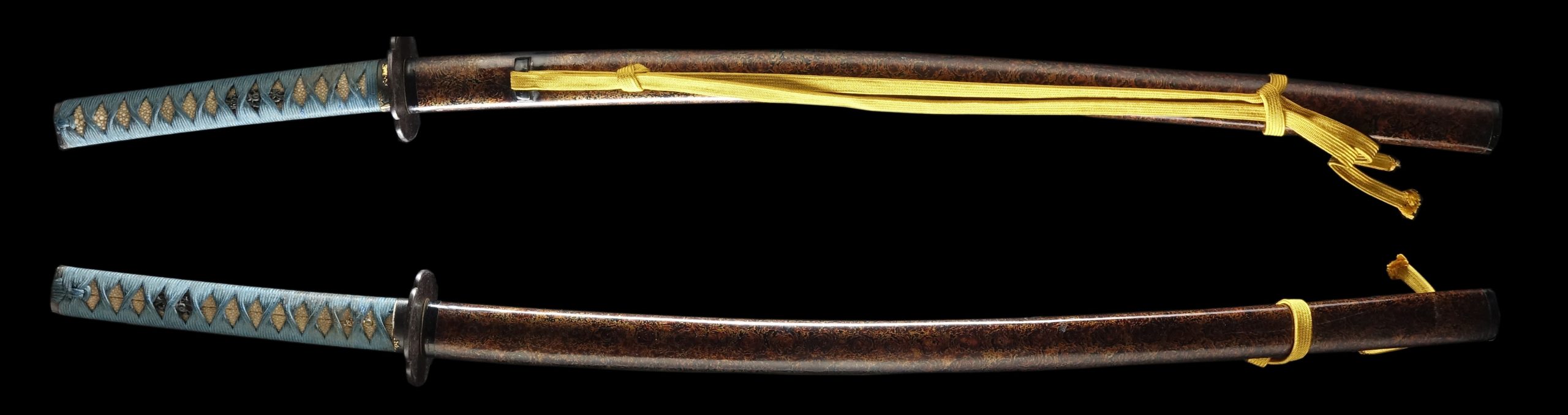
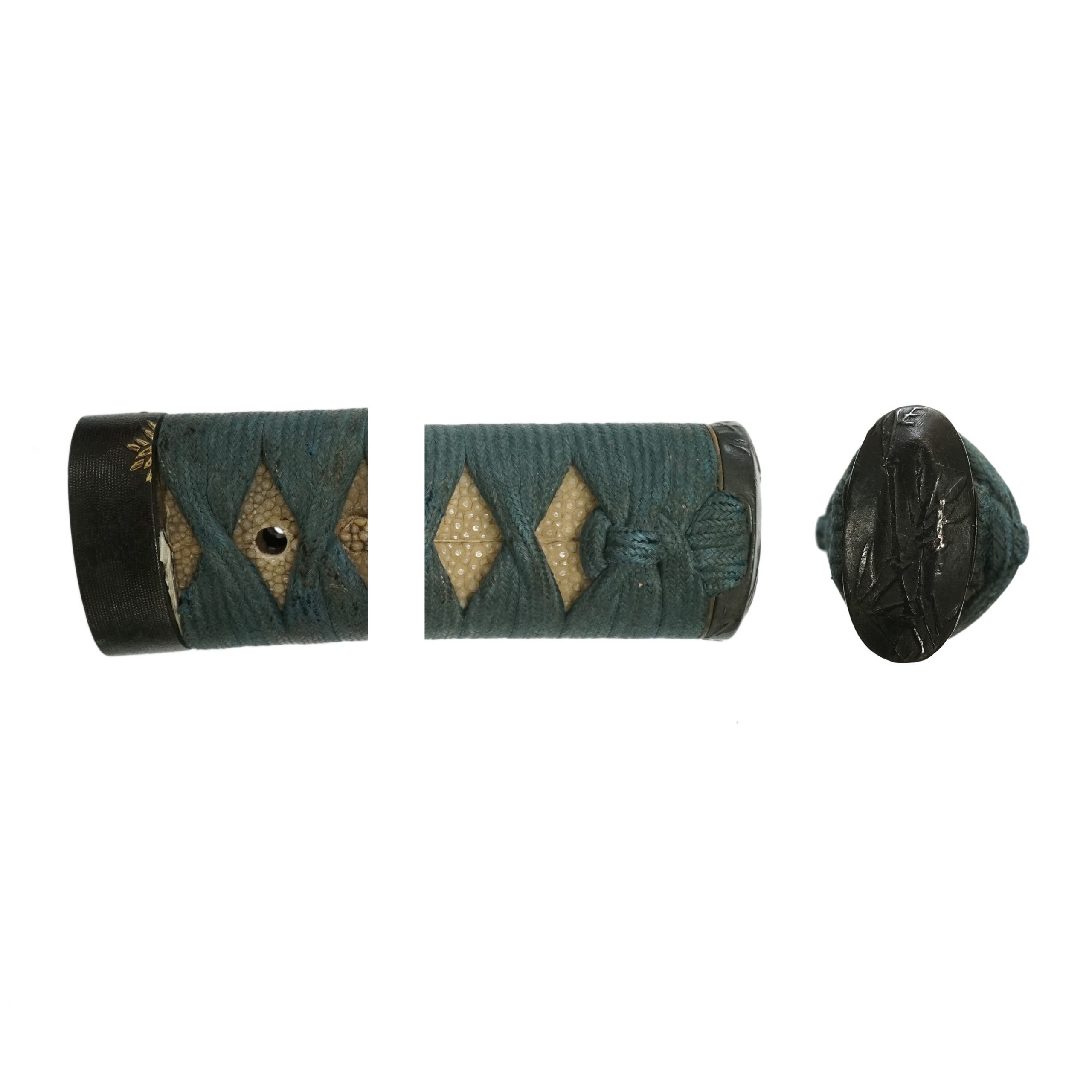
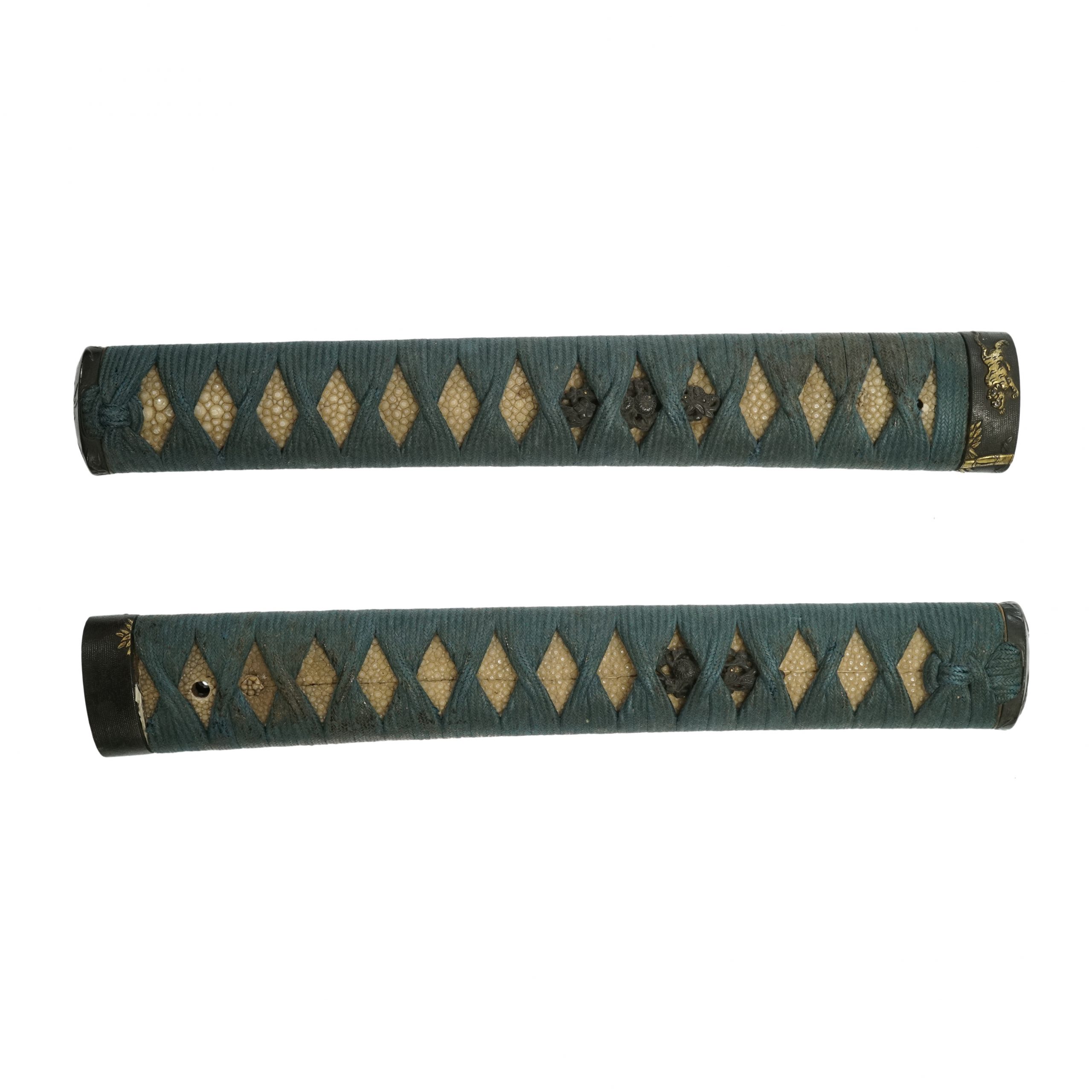
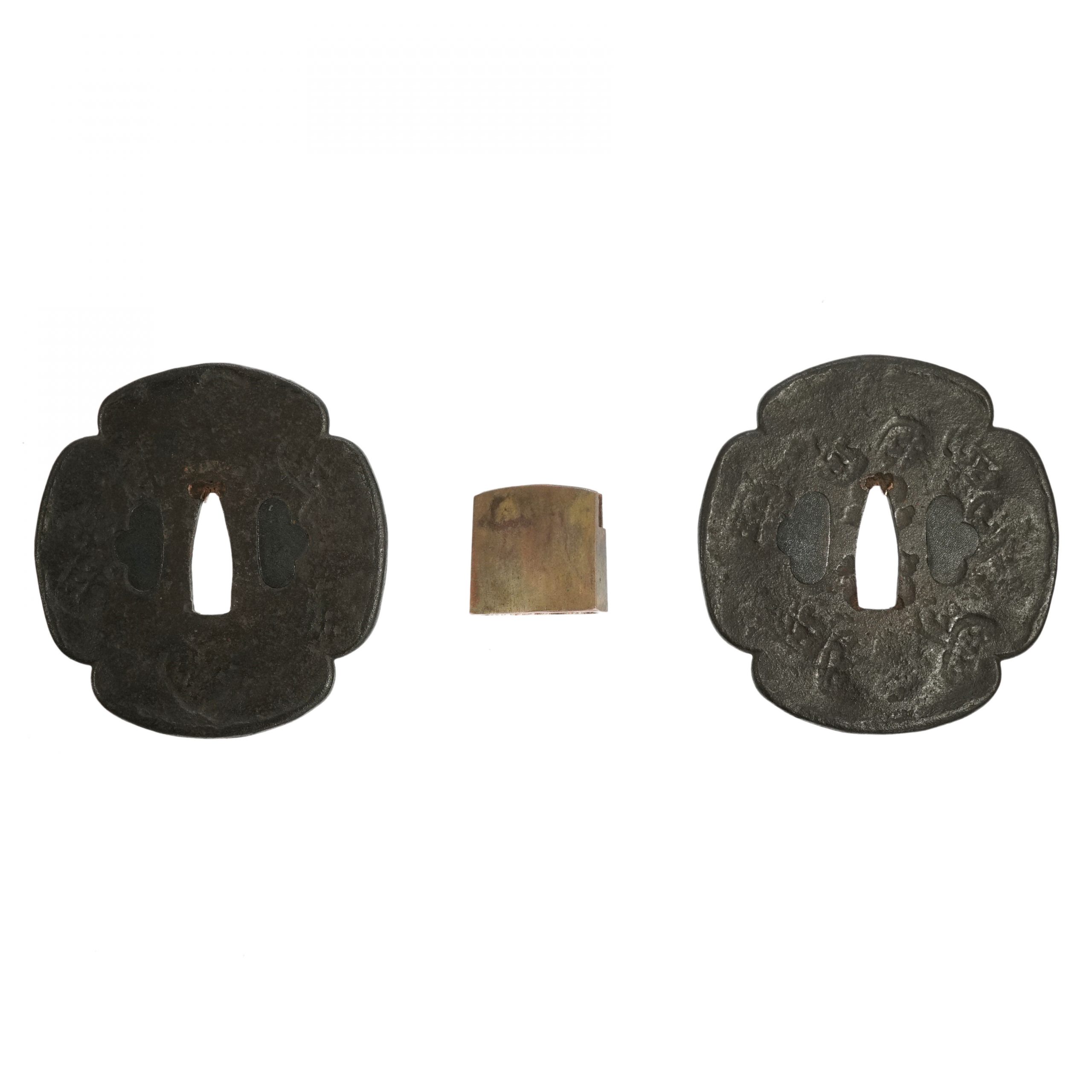
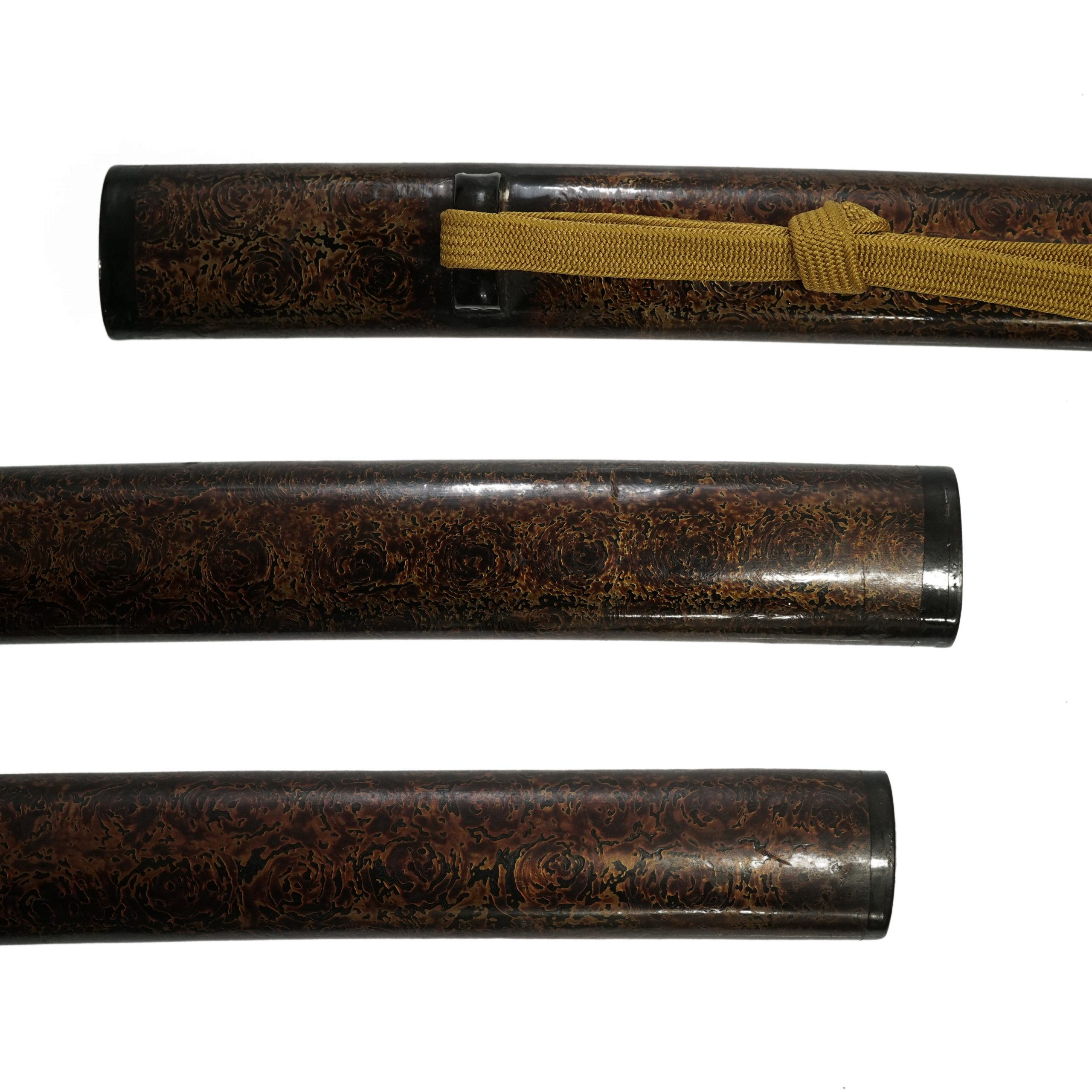
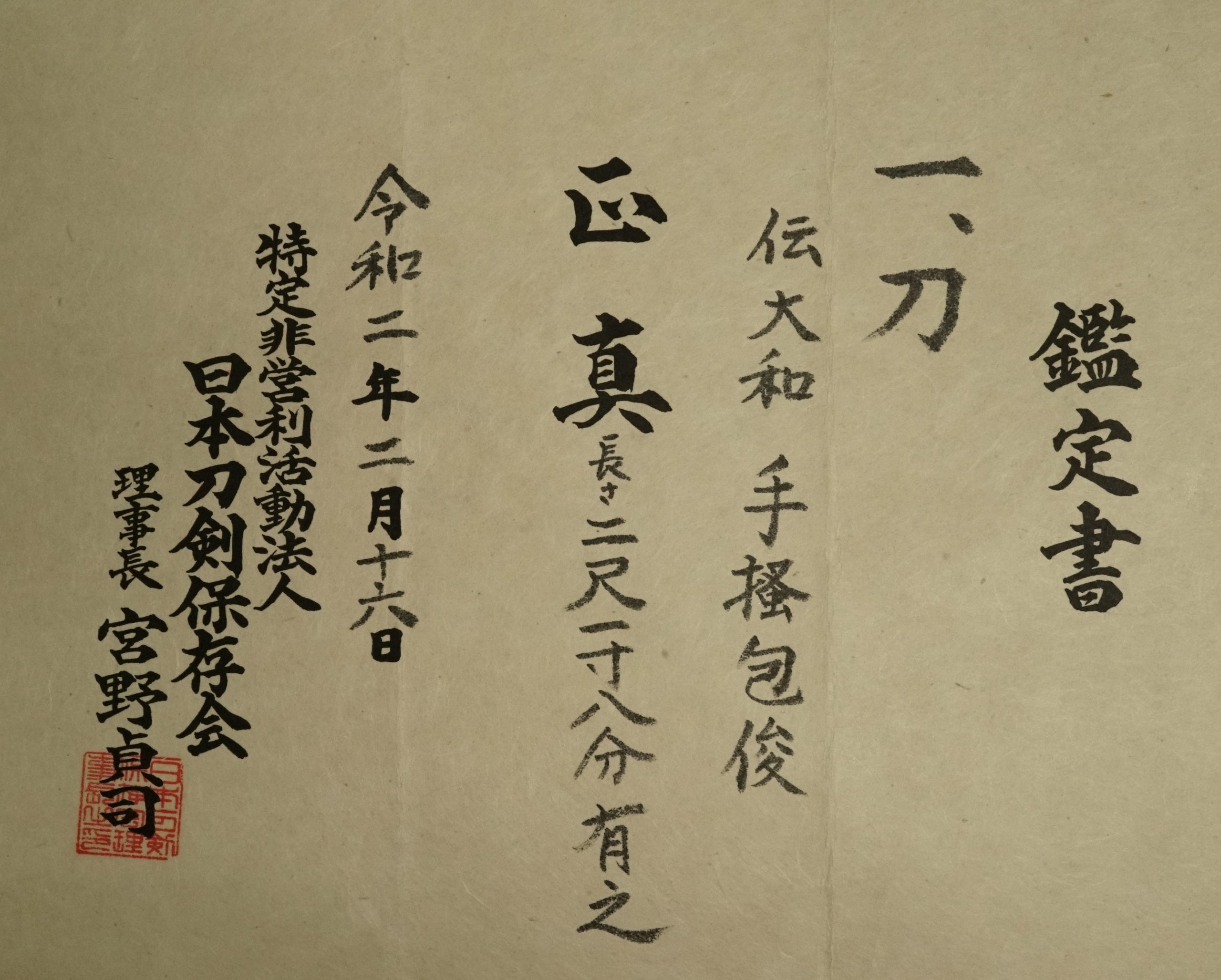
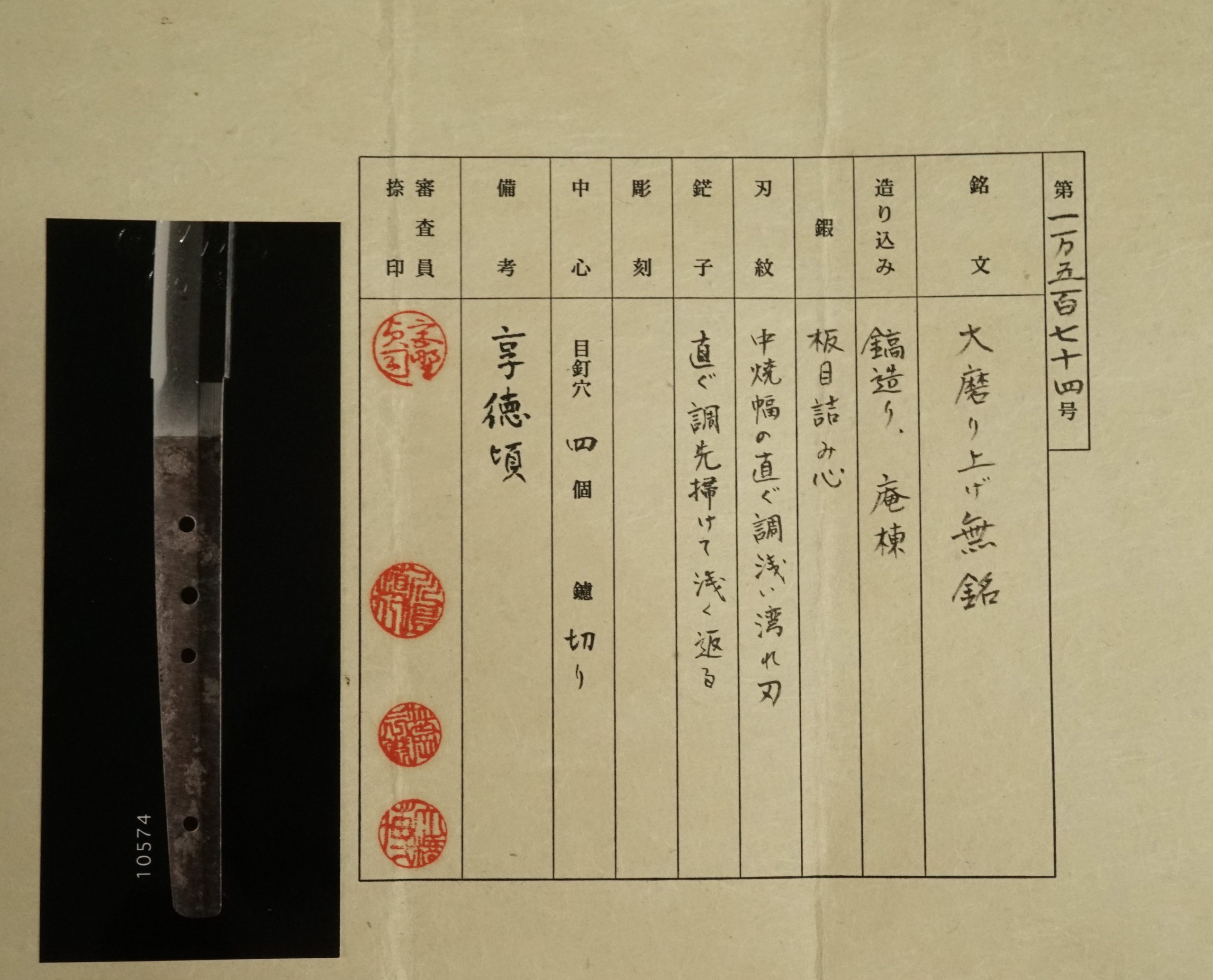
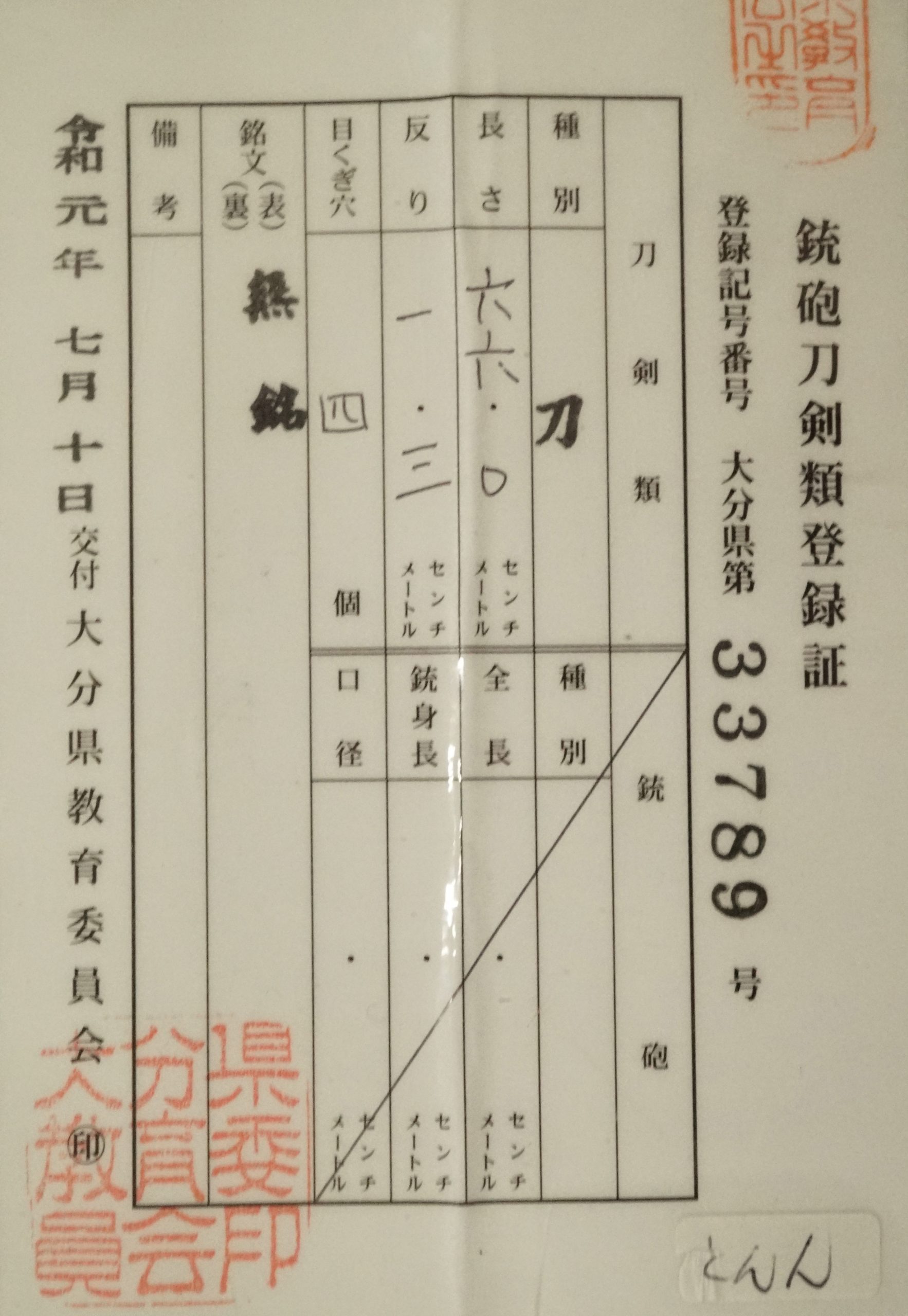
This antique Japanese Katana was forged by Tegai Kanetoshi during the Kyotoku era (Mid Muromachi Period) in the Yamato region. It is unsigned, attributed to Kanetoshi, and comes with an NTHK Kanteisho Certificate. The blade features beautiful Jigane and a traditional Suguha Hamon, and is accompanied by a Koshirae mounting and Shirasaya case.
 NihontoWatchBETA
mumei · Tegai · Muromachi · nagasa 66cm · sori 1.3cm

Yamato-den · Yamato · around 1467-1469
Tōken Taikan top 31%
1 piece on the market now
Yamato-den · Yamato
Phase: Sue-Tegai末手掻· 1390–1700
28 pieces on the market now
Sue-Tegai (末手掻) is the late phase of the Tegai school, from the Ōei era through the Muromachi period (with a thin tail of name-bearers into the early Edo period). The term 末手掻 is used directly in NBTHK setsumei to set this generation apart from the classical Ko-Tegai of the founder Kanenaga. Its representative smiths are Kanezane (包眞), Kanetoshi (包俊 / 包利), Kaneyoshi (包吉), and Kaneyuki (包行), names that recur across several generations as the workshop continued to supply blades through the fifteenth and sixteenth centuries. Learn more →
| Smith | Era | Designated |
|---|---|---|
| Kanenaga包永 | 1288-1312 | 63 |
| Kanekiyo包清 | 1362-1370 | 8 |
| Kanetsugu包次 | 1317-1333 | 4 |
| Kanetoshi包俊 | 1381-1384 | 4 |
| Kanezane包眞 | 1394-1428 | 3 |
The NTHK’s principal certificate, issued for a blade of considerable quality. It confirms a genuine signature, or, for an unsigned (mumei) work, records the judges’ attribution to a smith or school. The paper carries a detailed worksheet with a numerical point score.
The NTHK (Nihon Tōken Hozon Kai, the Society for the Preservation of the Japanese Sword) is the oldest of Japan’s sword-appraisal bodies, founded in 1910, decades before the NBTHK. After the death of its long-serving head it divided into two successor societies, the NTHK and the NTHK-NPO, both of which continue to hold shinsa. NTHK certificates are known for a detailed worksheet that records a numerical point score alongside the judges’ written opinion, and the society is especially respected for its attribution of unsigned (mumei) work.
Returns/exchanges limited to defects caused by shipping (except willful misconduct or gross negligence by the company); customers must contact within 72 hours of receiving the product.
This antique Japanese Katana was forged by Tegai Kanetoshi during the Kyotoku era (Mid Muromachi Period) in the Yamato region. It is unsigned, attributed to Kanetoshi, and comes with an NTHK Kanteisho Certificate. The blade features beautiful Jigane and a traditional Suguha Hamon, and is accompanied by a Koshirae mounting and Shirasaya case.
NihontoWatchBETAmumei · Tegai · Muromachi · nagasa 66cm · sori 1.3cm
Yamato-den · Yamato · around 1467-1469
Tōken Taikan top 31%
1 piece on the market now
Yamato-den · Yamato
Phase: Sue-Tegai末手掻· 1390–1700
28 pieces on the market now
Sue-Tegai (末手掻) is the late phase of the Tegai school, from the Ōei era through the Muromachi period (with a thin tail of name-bearers into the early Edo period). The term 末手掻 is used directly in NBTHK setsumei to set this generation apart from the classical Ko-Tegai of the founder Kanenaga. Its representative smiths are Kanezane (包眞), Kanetoshi (包俊 / 包利), Kaneyoshi (包吉), and Kaneyuki (包行), names that recur across several generations as the workshop continued to supply blades through the fifteenth and sixteenth centuries. Learn more →
| Smith | Era | Designated |
|---|---|---|
| Kanenaga包永 | 1288-1312 | 63 |
| Kanekiyo包清 | 1362-1370 | 8 |
| Kanetsugu包次 | 1317-1333 | 4 |
| Kanetoshi包俊 | 1381-1384 | 4 |
| Kanezane包眞 | 1394-1428 | 3 |
The NTHK’s principal certificate, issued for a blade of considerable quality. It confirms a genuine signature, or, for an unsigned (mumei) work, records the judges’ attribution to a smith or school. The paper carries a detailed worksheet with a numerical point score.
The NTHK (Nihon Tōken Hozon Kai, the Society for the Preservation of the Japanese Sword) is the oldest of Japan’s sword-appraisal bodies, founded in 1910, decades before the NBTHK. After the death of its long-serving head it divided into two successor societies, the NTHK and the NTHK-NPO, both of which continue to hold shinsa. NTHK certificates are known for a detailed worksheet that records a numerical point score alongside the judges’ written opinion, and the society is especially respected for its attribution of unsigned (mumei) work.
Returns/exchanges limited to defects caused by shipping (except willful misconduct or gross negligence by the company); customers must contact within 72 hours of receiving the product.