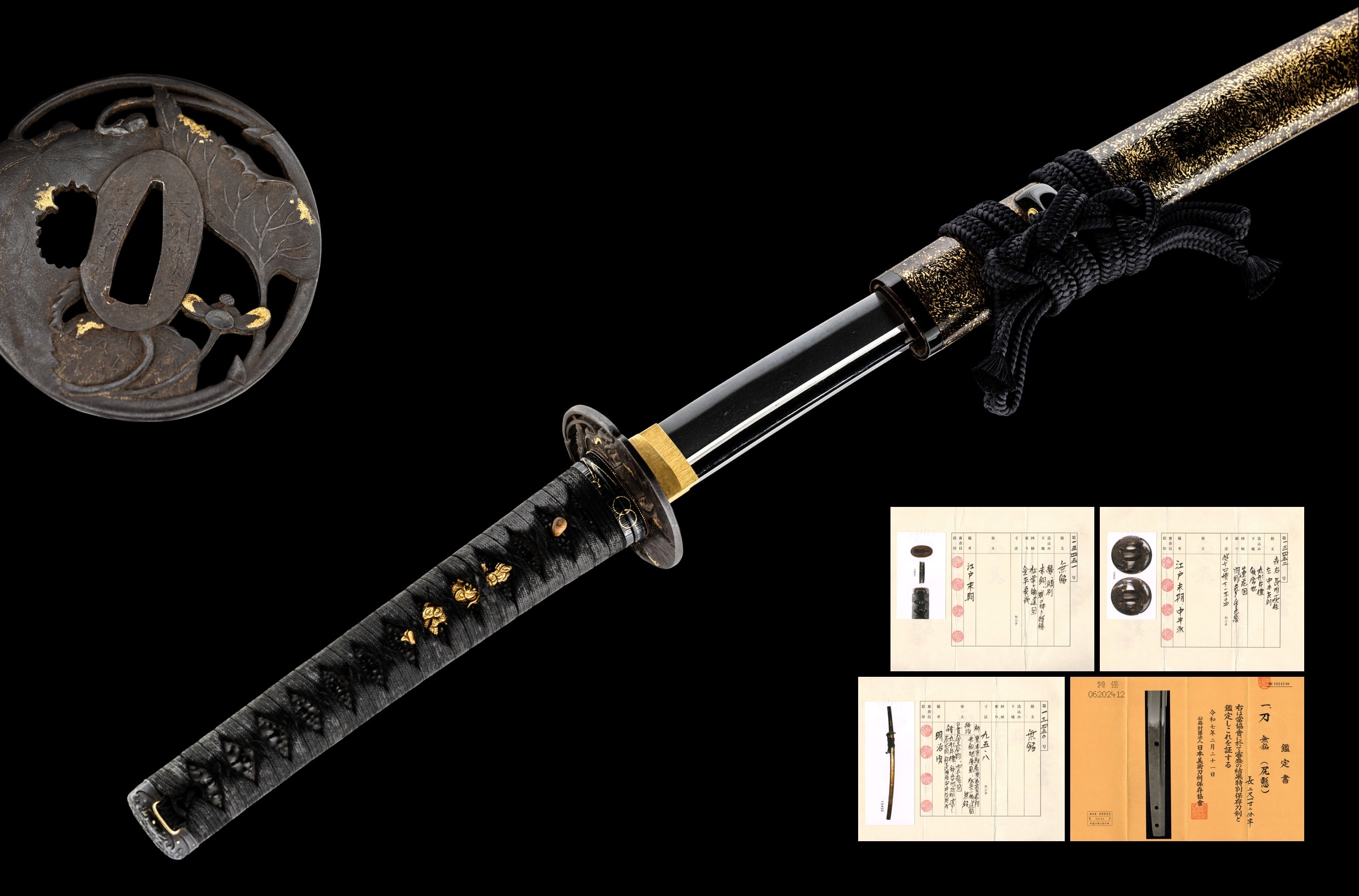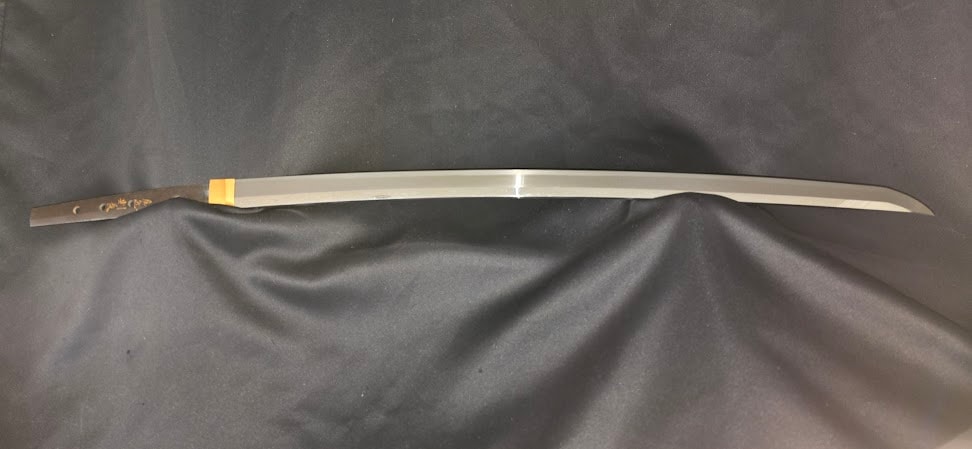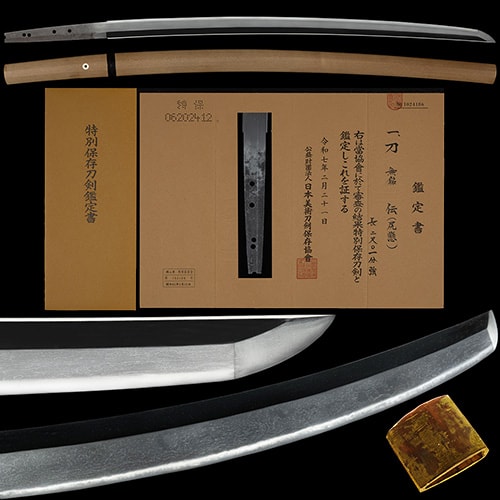
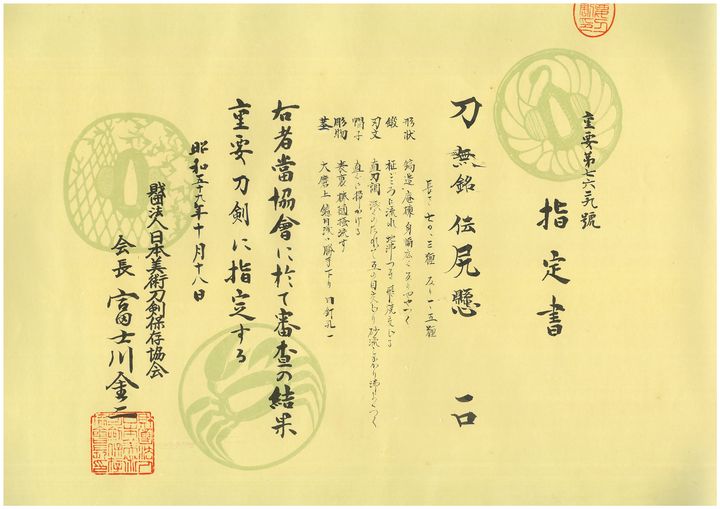
-, 31st Session — Designated October 18, 1984
, : Shikkake (尻懸)
Measurements 70.3 cm, 1.5 cm, 3.0 cm, 2.1 cm, 3.5 cm, 18.4 cm, none
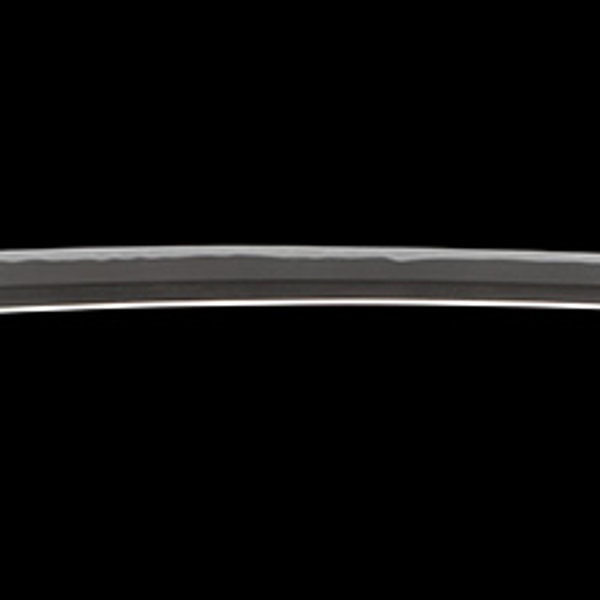
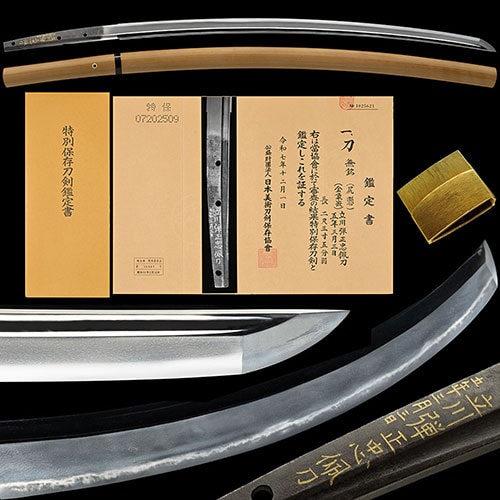
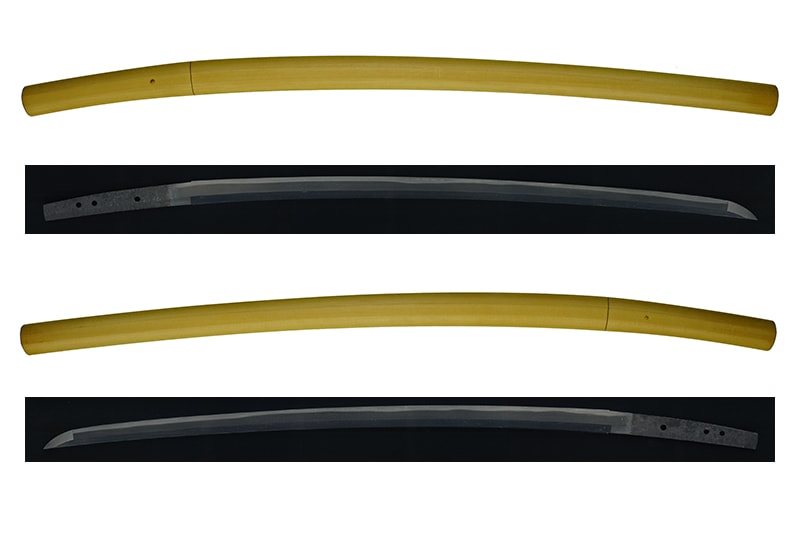
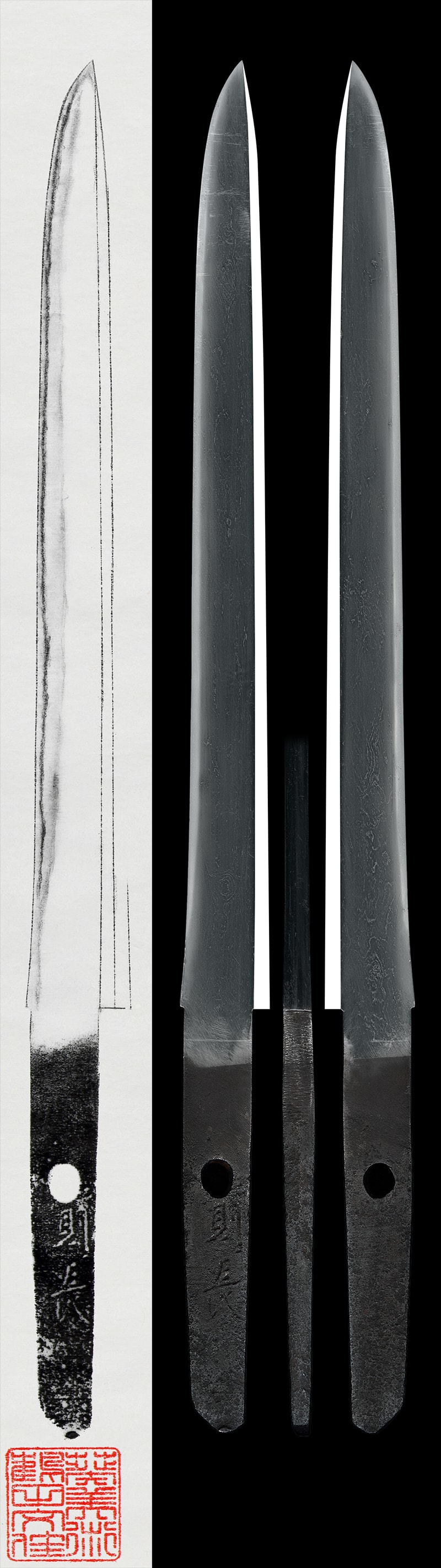
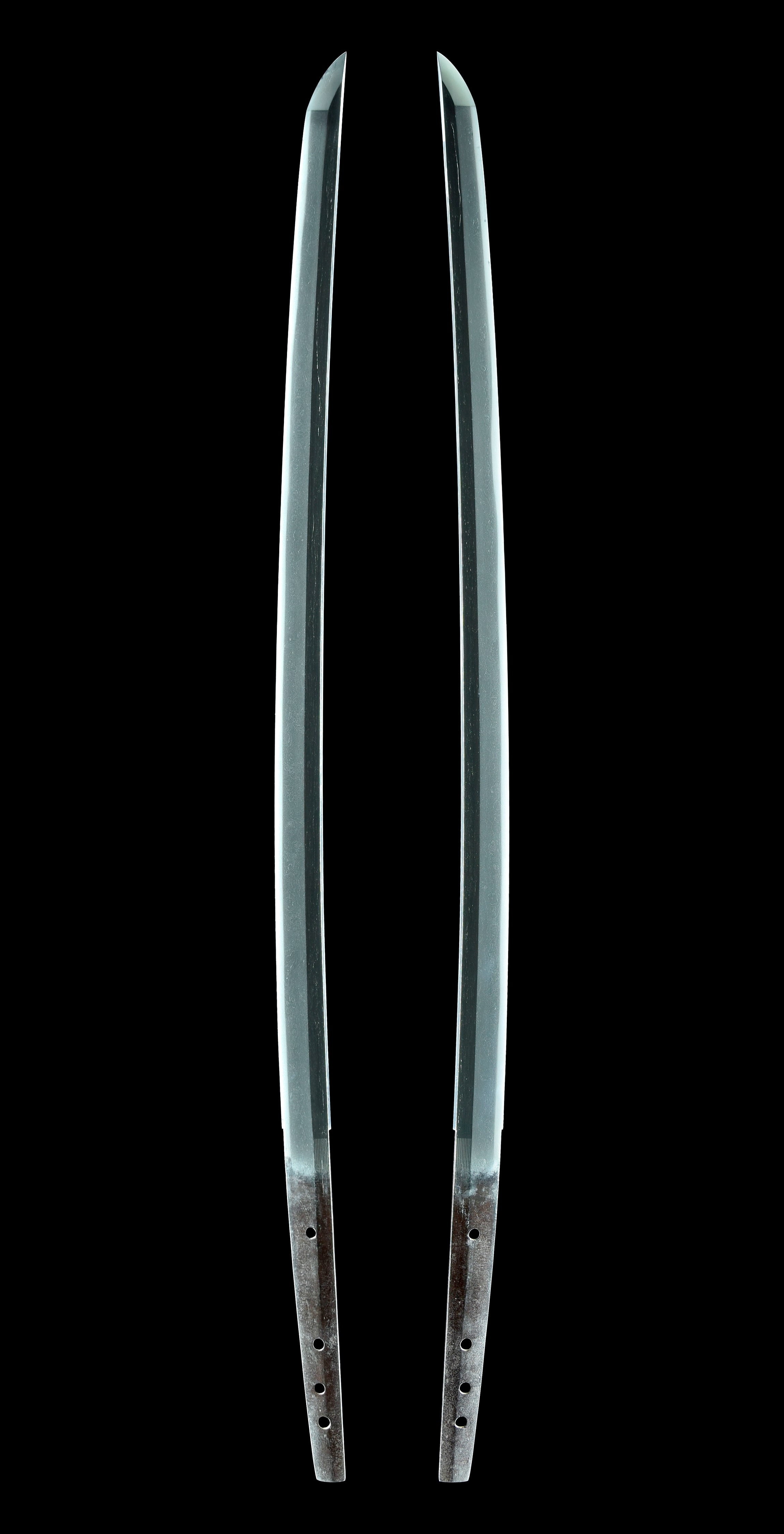
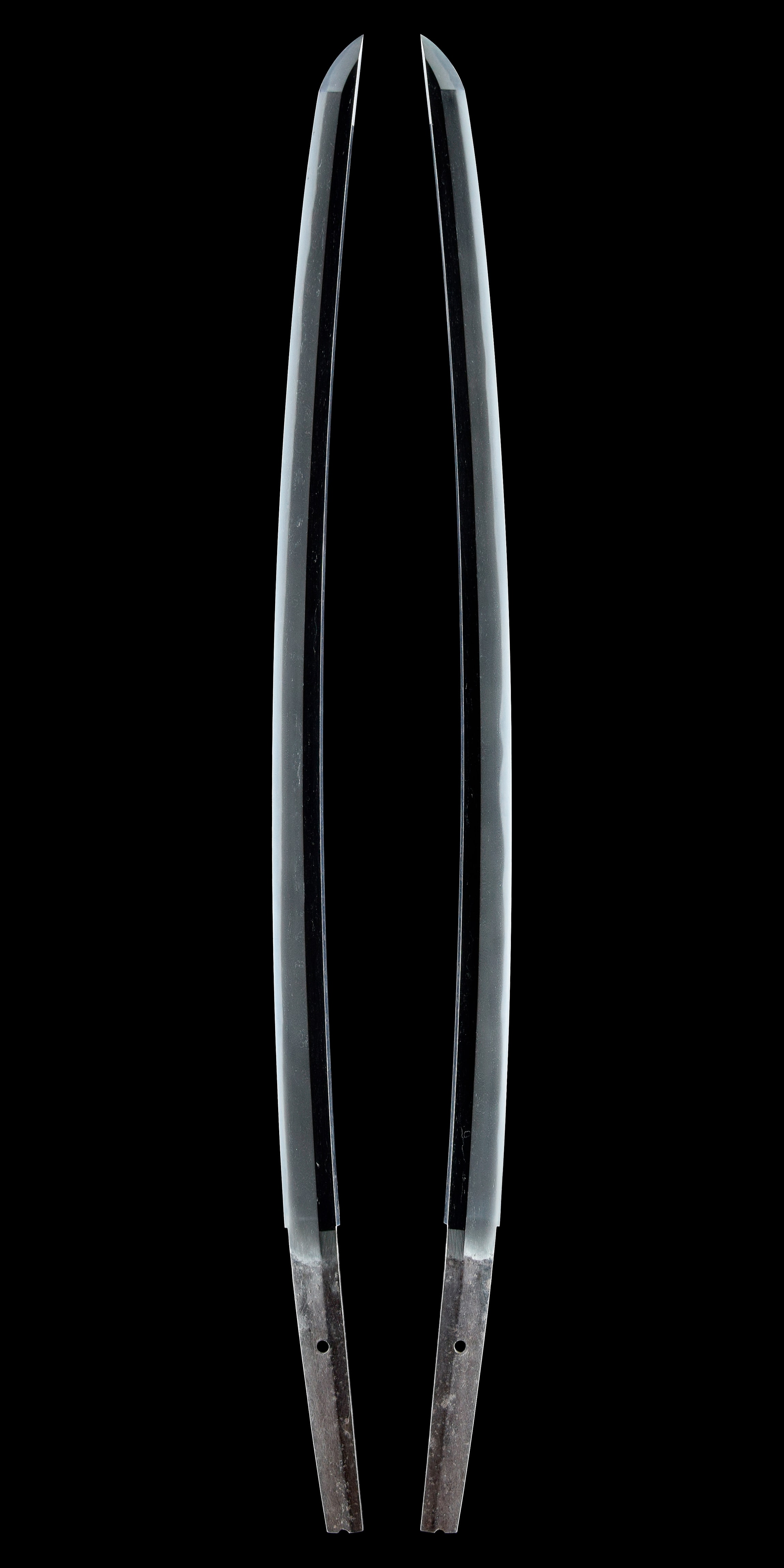
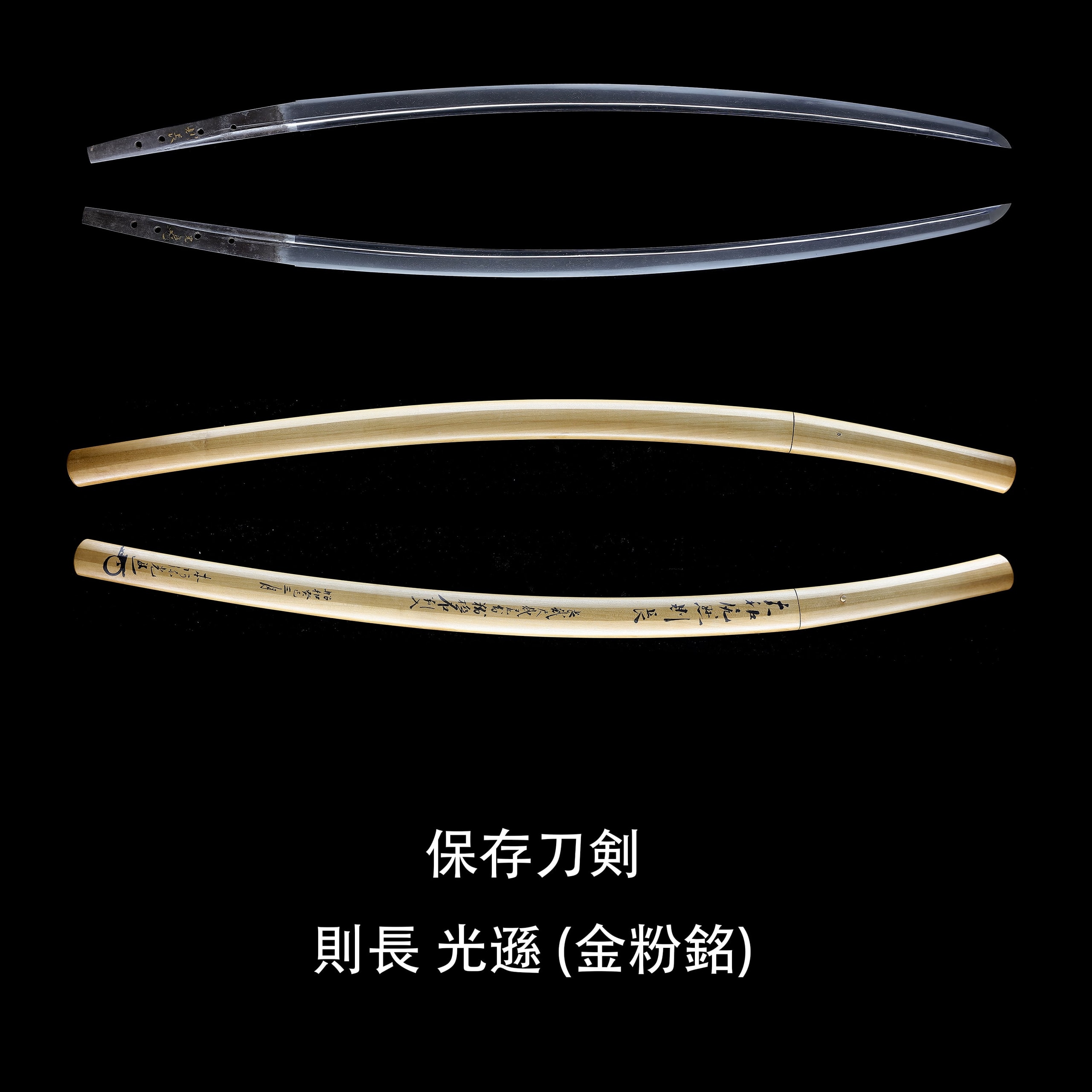
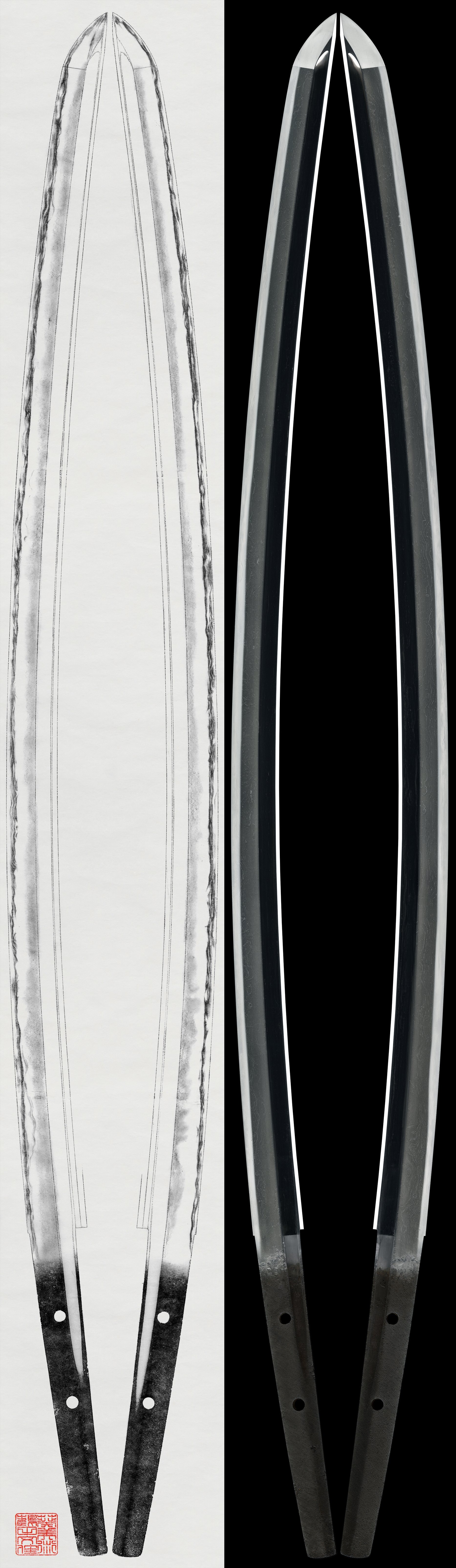
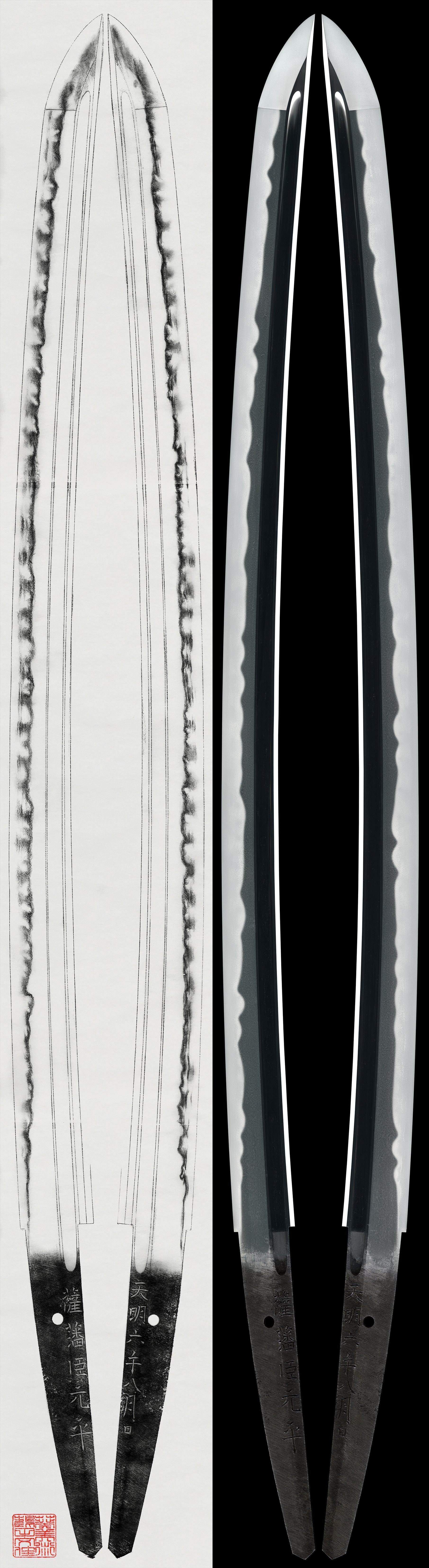
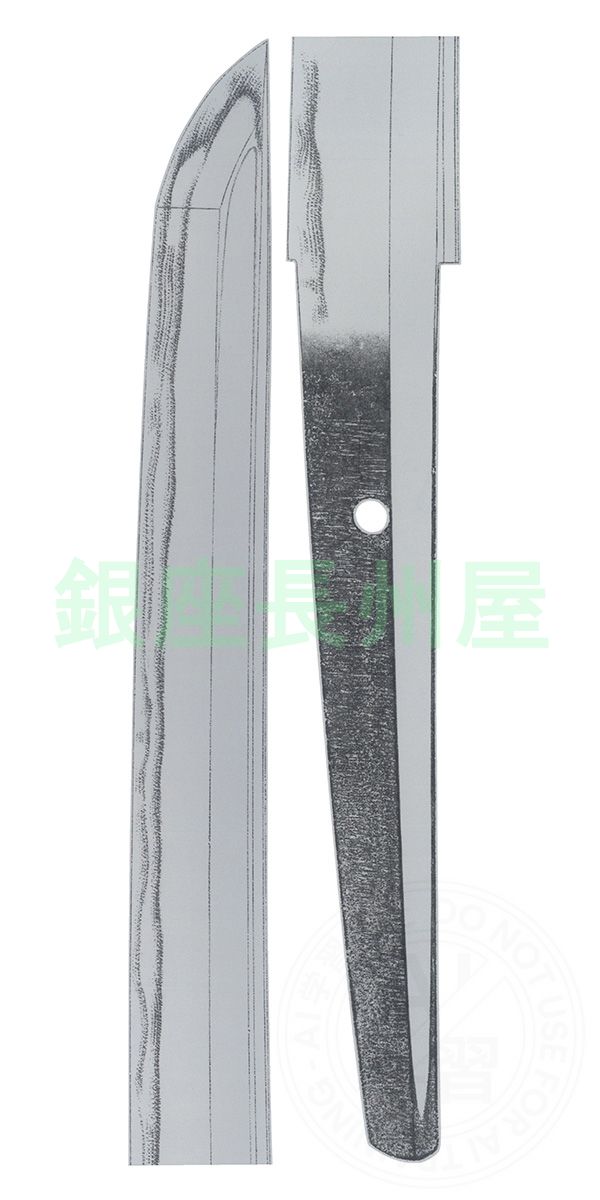
Description Keijō: , ; wide with somewhat developed curvature; . : Flowing, well-forged with a strong -tendency; appears, with intermingled. : , shallowly -undulating, mixed with and ; enter; runs frequently, and adheres well. : Straight, with . : On both sides, carved as kaki-nagashi. : Greatly shortened (); tip ; file marks shallow ; one ; unsigned.
Artisan Shikkake school (尻懸派)
Era : late to early period
Explanation The Shikkake school is one of the five major Yamato groups (Yamato goha). Its founder was Norinaga (則長), and sword reference works place his period of activity in the Shōō era (1292–1293). Among extant dated works are examples bearing dates from Bunpō (1317–1319), Shōchū (1324–1326), Gentoku (1329–1331), and Ryakuō (1338–1342), and smiths signing the name continued into the period. Signed examples include such signatures as “Yamato Norinaga ” (大和則長作), “Yamato no Shikkake jū Norinaga ” (大和国尻懸住則長作), and “Yamato Sakon no jō Norinaga ” (大和左近允則長作).
In workmanship the school displays features common to Yamato forging overall; however, this group in particular often produces works in which and pointed stand out conspicuously, and these become key points of appreciation.
This is wide and bears curvature. The forging shows a flowing texture with a marked -tendency and is tightly forged. The temper is based on with a shallow undulation, and prominently mixes and ; runs repeatedly, and the is straight with . Among Yamato works, these characteristics support an appraisal as Shikkake, and the traditional attribution can be accepted.