NihontoWatch Mon

NihontoWatch

Market
Encyclopedia
Kantei
NihontoWatch Mon

NihontoWatch

Market
Encyclopedia
Kantei

Description

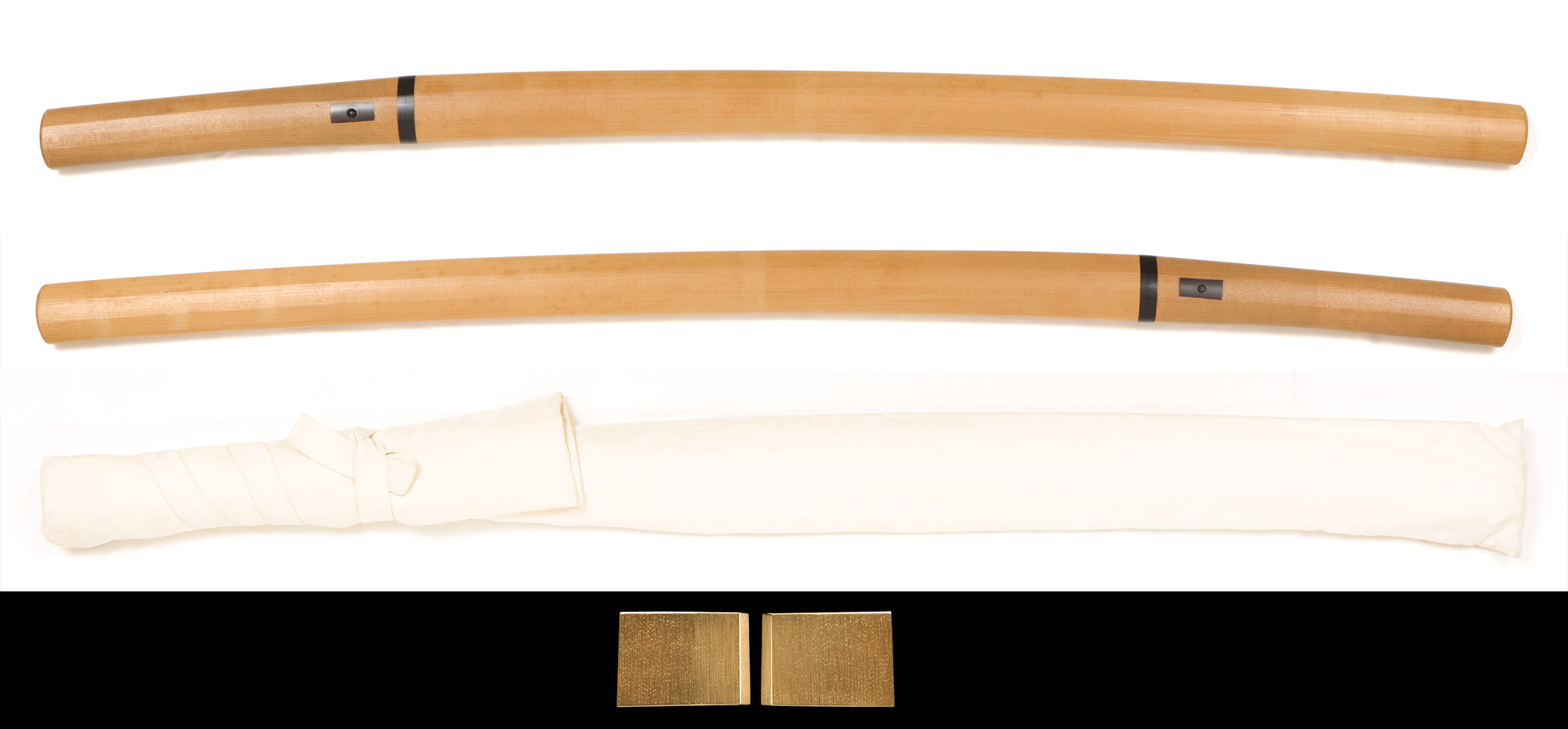
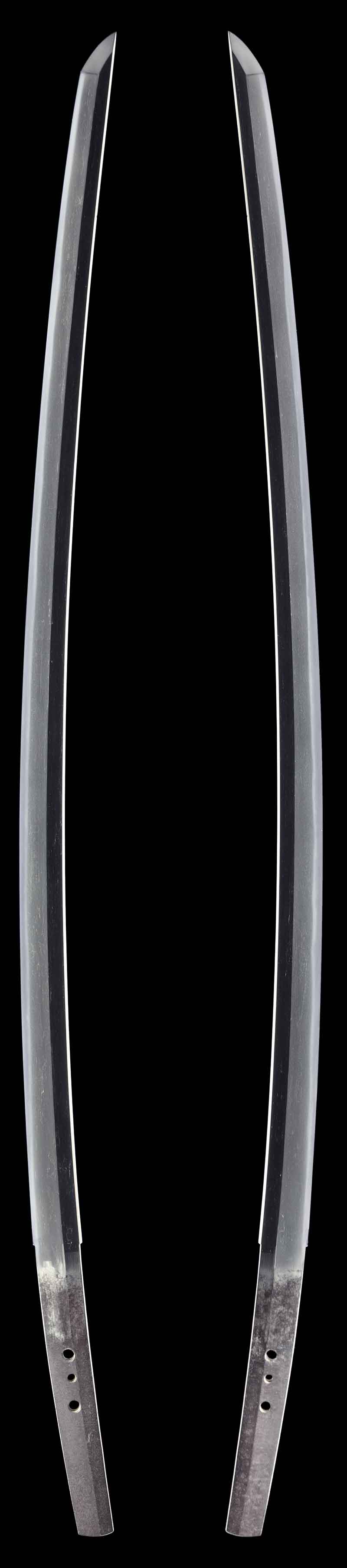
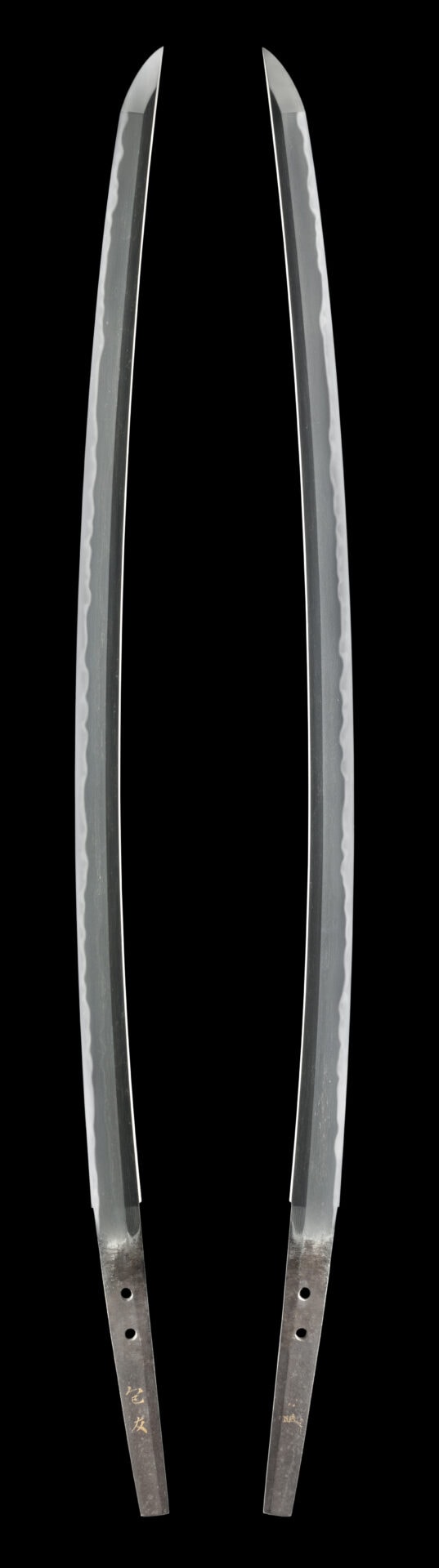
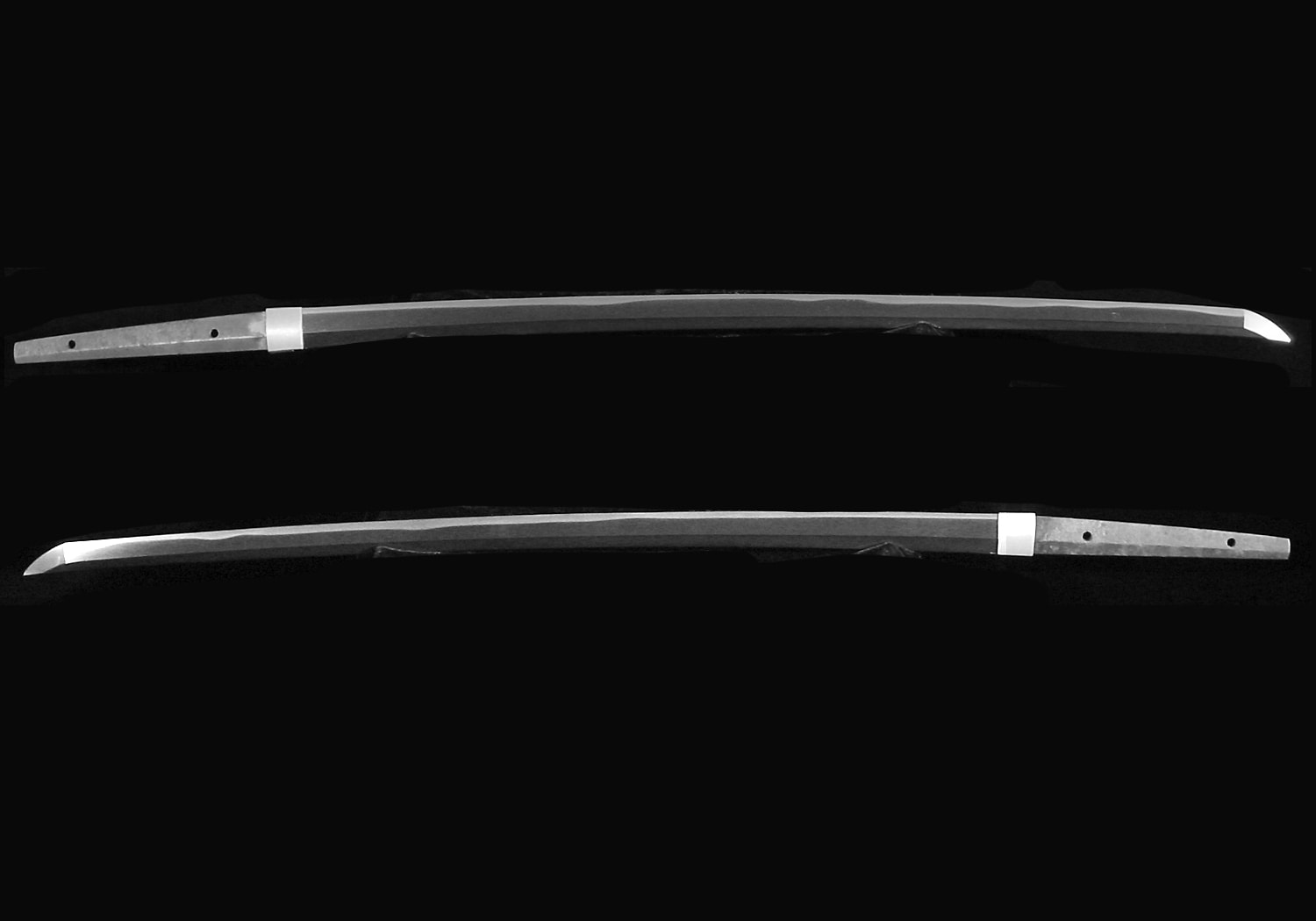
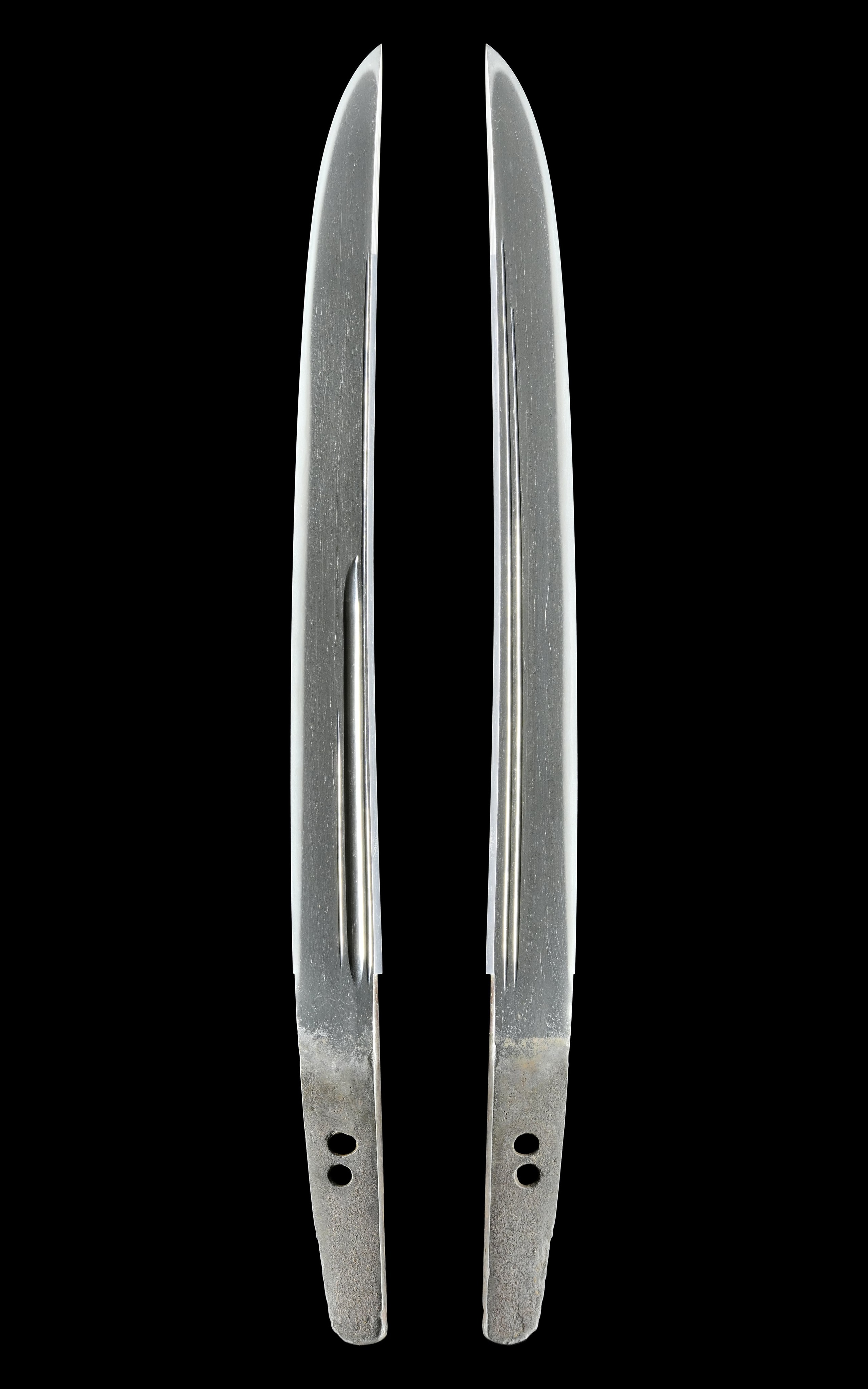
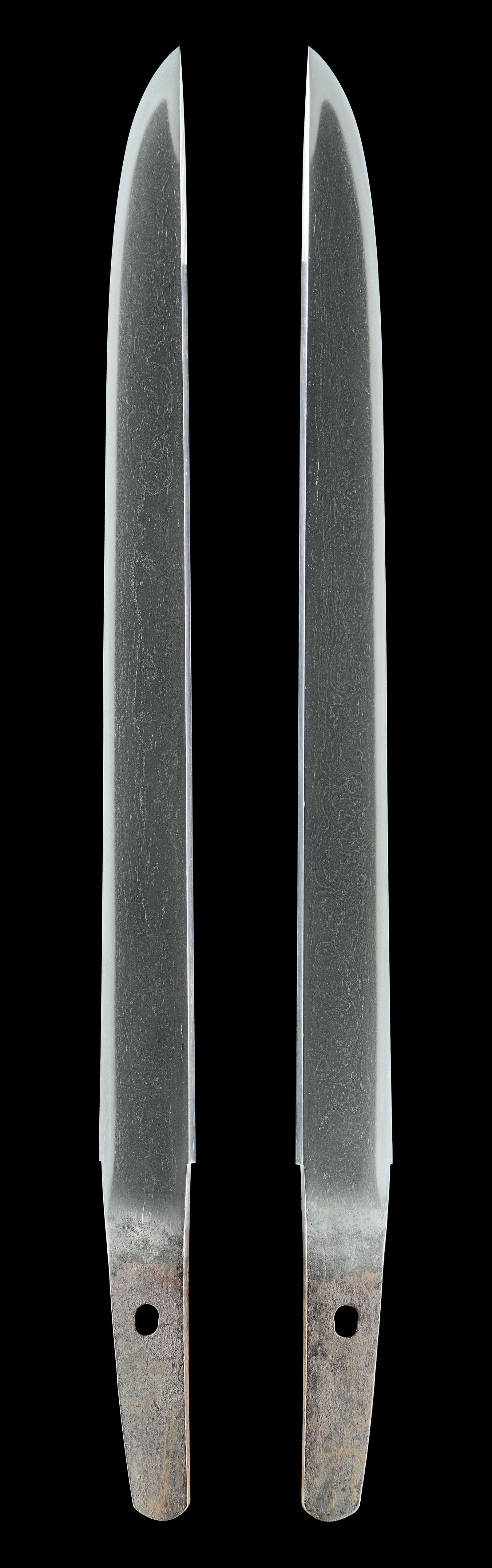
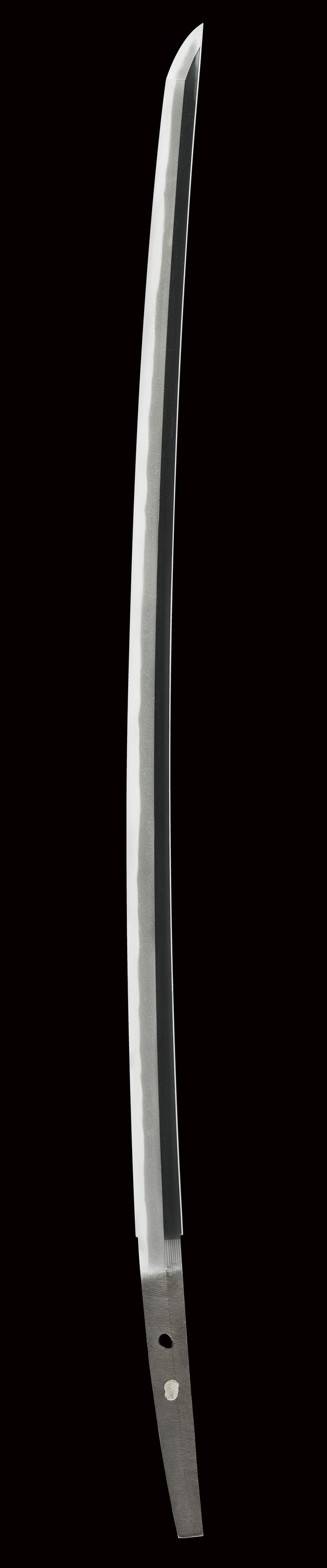
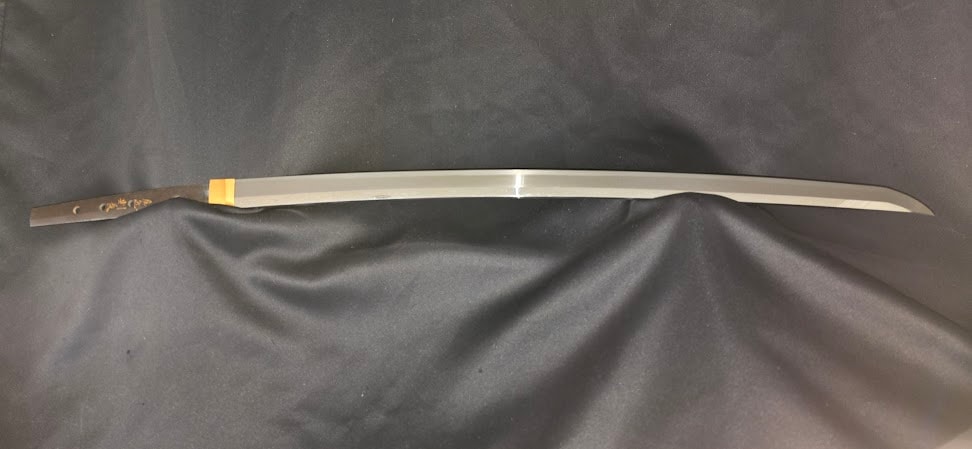
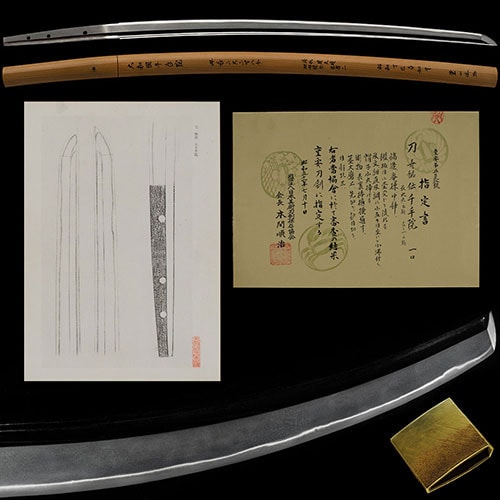
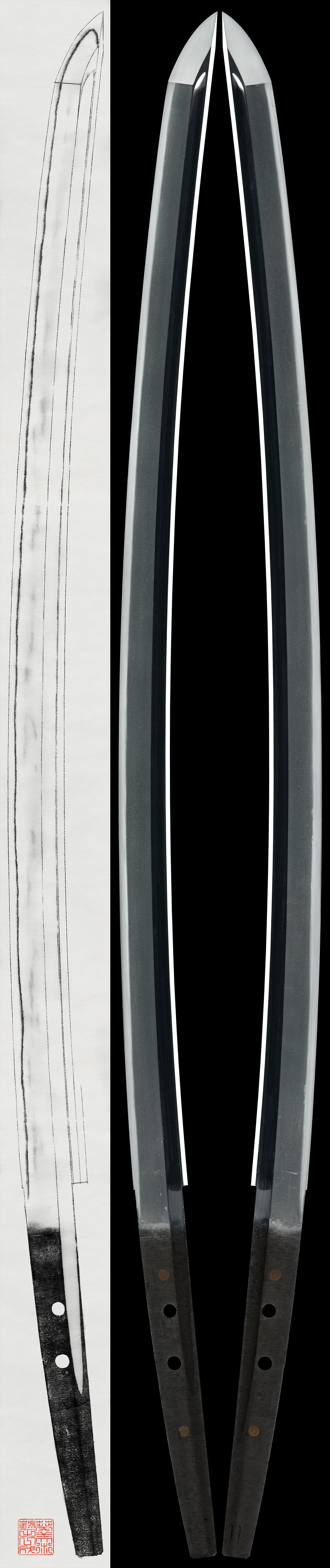
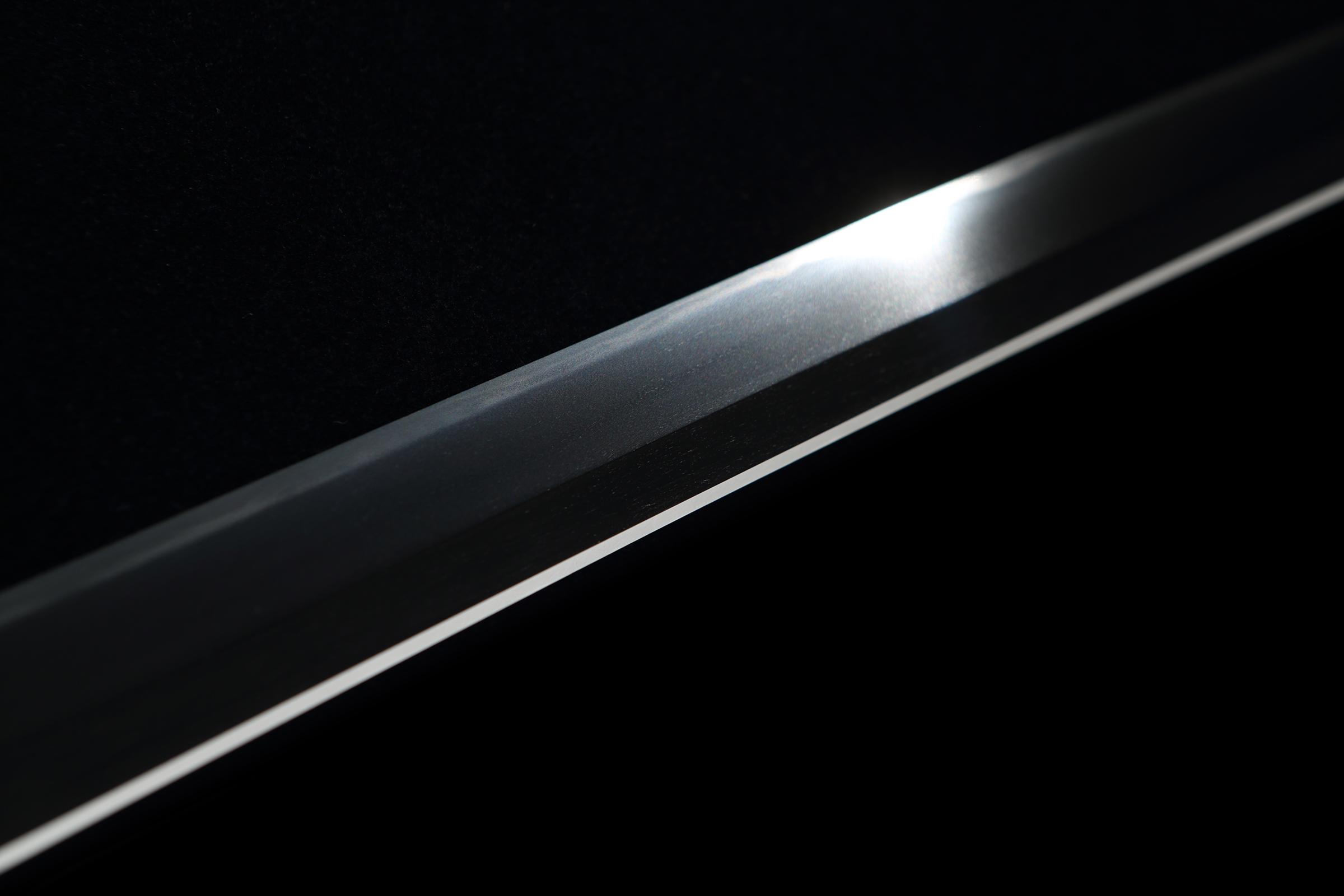
This is a mumei katana attributed to Kanenaga, a smith of the Tegai school from the Kamakura period. It features a wide and high shinogi, well-forged jitetsu, and a vibrant nie-deki hamon. The blade comes with a shirasaya and is certified as Tokubetsu Hozon by the NBTHK.

NihontoWatch MonNihontoWatch
MarketEncyclopediaKantei
Swords›Yamato-den›Tegai›Ko-Tegai›Kanenaga›Katana in Shirasaya
katanaTokubetsu Hozon
Tegai Kanenaga

Katana in Shirasaya

mumei · Tegai · Teio (1222-1224) · nagasa 66.5cm · sori 0.9cm

¥3,000,000
Visit seller website →
Tegai Kanenaga — 1 of 4
Tegai Kanenaga — 2 of 4
Tegai Kanenaga — 3 of 4
Tegai Kanenaga — 4 of 4
1 / 4
1 / 4
Tegai Kanenaga — 1 of 4Tegai Kanenaga — 2 of 4Tegai Kanenaga — 3 of 4Tegai Kanenaga — 4 of 4
Measurements & details
Smith
Tegai Kanenaga
Type
Katana
School
Tegai
Period
Around 1288–1312(Teio)
Province
Yamato
Signature
Unsigned(53% of this smith's designated works are signed)
Measurements
Nagasa 66.5cmSori 0.9cmMotohaba 3.08cmSakihaba 1.83cmKasane 0.65cmWeight 715.5g
Description

This is a mumei katana attributed to Kanenaga, a smith of the Tegai school from the Kamakura period. It features a wide and high shinogi, well-forged jitetsu, and a vibrant nie-deki hamon. The blade comes with a shirasaya and is certified as Tokubetsu Hozon by the NBTHK.

About the maker

Kanenaga

包永

Tegai (Yamato) · Yamato · around 1288-1312

Fujishiro Jo-jo saku · Tōken Taikan top 5%

2 pieces on the market now

›

For Kanenaga (包永) of Yamato the published commentary of the NBTHK returns, blade after blade, to one standing judgment: his manner "is the strongest in nie among Yamato works, the nioiguchi bright, and the jigane notably clear"[[c:1]], and beside the nie, the figure: "many of his blades present a dignified figure of high bearing"[[c:2]]. He is the founder of the Tegai school, one of the five lineages of Yamato, which resided and forged outside the Tegaimon (転害門), the west main gate of Todai-ji, thought to have served the temple. The reference works place him around the Shoo era (1288 to 1293), but the published sources repeatedly argue he goes back further: a tanto dated Karyaku 4 (1329) survives by Kanekiyo of the second generation's circle, and his own workmanship points earlier, so his activity is read from the middle into the late Kamakura period. The name was then carried by successive generations into the Muromachi period.

The construction leads in his work. The shinogi stands high and the shinogi-ji is cut wide, and nearly everything surviving is a suriage tachi of standard width, keeping its koshizori and closing in a chu-kissaki. The hamon is a suguha-cho bent in shallow notare, ko-gunome mixing in, the nioi deep; along the habuchi the edge frays into hotsure, with uchinoke, kuichigai-ba and nijuba, yubashiri drifting into the ji, kinsuji and sunagashi running through the ha. What the sources single out within this activity is the nie itself, especially strong compared with the other schools: "beautiful nie that is rounded and lustrous"[[c:3]]. The boshi continues sugu, strongly swept with hakikake, ending yakizume or turning back small in ko-maru.

The jigane is itame, mixed with mokume in places, flowing along the ha and tending toward masame, with thick ji-nie, chikei entering frequently, and the steel bright and clear. Around the monouchi the yakihaba often widens and the nie abruptly strengthens. Some blades temper the omote and ura differently, the trait typified by the Meibutsu Konotegashiwa Kanenaga[[c:4]]. The record also documents a quieter class, blades in a quiet, low-tempered suguha styling[[c:5]], at times narrowing to hoso-suguha. One such katana, bearing the red-lacquer attribution of Honami Koson and transmitted at Nagono Shrine, is read as "a comparatively calm type among Kanenaga's works"[[c:6]]; even there the thick ji-nie, the chikei and the round, shining nie carry the attribution.

His work survives in two registers. Comparatively many signed tachi remain, the sources note, nearly all suriage with the two-character mei left at the tip of the nakago; the ubu pieces are counted at a mere two. The signature itself is a documented tell: the character Kane compressed vertically, the second vertical stroke of Naga drawn out extremely long. To the doubt sometimes raised over their near-uniform suriage state the NBTHK answers that shortening like tachi yields like nakago: it "does not warrant suspicion"[[c:7]]. The other register is the o-suriage mumei katana attributed to him, where kuichigai-ba appears far more often than on the signed blades and the judgment rides on the quality of the nie: of one such blade the published record writes that on close inspection it surpasses typical Tegai work, the nioi conspicuously deeper and the gleaming ha-nie thick[[c:8]]; of another, that its workmanship connects directly to his signed works. The blades gathered here are the founder's: the second generation, of the Nanbokucho period, is catalogued separately, and the later generations part company readily, their steel turning generally whitish[[c:9]] and the nioiguchi tightening toward ko-nie, against the founder's bright, heavy nie.

Within Yamato the name set beside his is Shikkake Norinaga, and the separation runs along Kanenaga's own line: he holds the suguha-cho through its shallow notare, his ko-gunome never stringing into connected rows, and he lets yubashiri, uchinoke and nijuba play above the habuchi with unusual freedom. The judgments reach beyond the province. Honma observed of the first generation's nie that "at times one sees brilliant, sparkling nie of the kind observed in Awataguchi Hisakuni"[[c:10]], and the eighth Tokubetsu Juyo session writes of one signed tachi that its beautifully shining nie rivals the upper Soshu masters (相州上工). Of a shogunal-gift tachi the record concludes simply that it is "outstanding among his works"[[c:11]].

Kanenaga is rated Jo-jo saku by Fujishiro, and sixty-seven designated works stand on record, among them one National Treasure, five Important Cultural Properties, nine Juyo Bijutsuhin, eight Tokubetsu Juyo and forty-one Juyo. These upper tiers are patrimony, held in shrines, museums and long-private collections, never to trade; recorded holders include the Tokyo National Museum, Himeji Jinja, Shijonawate Jinja, the Sano Art Museum and the Tokugawa Art Museum. The provenance is deep, twenty-five blades carrying a recorded history. One tachi went from the shogun Tokugawa Ieshige to Mizuno Izumi-no-kami Tadayuki and later to Inukai Bokudo; another from Tokugawa Ienari to Sakai Tadanori of Himeji. A signed tachi bears the gold-inlaid possessor mark of Honda Heihachiro Tadatame, that is Tadatoki, husband of Senhime; the folded-back-mei katana of the Ise Ishikawa family is transmitted as Horio Mosuke's; a den katana carries a gold-inlaid cutting test of Tenna 2 (1682), four bodies severed. The rolls extend to the Date and Hachisuka families and the Imperial Family. For a collector the realistic field is the Tokubetsu Juyo and Juyo tiers, forty-nine blades in all. Signed pieces are unusually numerous for so early a smith, eighteen against ten mumei attributions here, yet a tachi with the two-character mei changes hands rarely; what the market more often shows is the o-suriage den attribution, judged, as the published sources always judge it, on the round and lustrous nie.

Historical importance

Where Kanenaga stands among comparable artisans: across all of nihontō, and within tradition, era, and period. The tiers (Foremost · Leading · Major · Notable) weigh official designations from the NBTHK and Japan's Agency for Cultural Affairs, together with historical honors of lasting repute such as the Sansaku and Meibutsu-chō.

随一
Foremost
屈指
Leading
有数
Major
著名
Notable

Select a lens to see how it's measured.

Designation record
62 designated works
Kokuhō (National Treasure)
1
Jūyō Bunkazai
5
Jūyō Bijutsuhin
4
Gyobutsu (Imperial)
3
Tokubetsu Jūyō
8
Jūyō
41
2 works by Kanenaga on the market→
Kanenaga — full profileTegai (Yamato) school
About the school

Tegai

手掻

Yamato-den · Yamato

Phase: Ko-Tegai古手掻· 1200–1394

29 pieces on the market now

›

Ko-Tegai (古手掻) is the founding and classical phase of the Tegai school, spanning the late Kamakura period through the Nanbokuchō era. 1288-1293). Kanenaga is reckoned among the foremost Yamato masters: his signed tachi are celebrated for combining the dignity of Kamakura form with the disciplined grain of the Yamato tradition, and several are designated at the highest levels. The mainline continued through a second-generation Kanenaga and the founder's sons and pupils — Kanetsugu (包次), Kanekiyo (包清), and the early Kanezane (包眞) — into the Nanbokuchō period. In workmanship Ko-Tegai is orthodox Yamato-den.

The jigane is itame with conspicuous masame, especially along the shinogi-ji, thick with ji-nie and threaded by chikei. The hamon is built on a narrow, nie-laden suguha, frequently broken by ko-midare and ko-gunome, with nijūba and hotsure along the habuchi and abundant kinsuji and sunagashi; the bōshi runs sugu to a ko-maru or hakikake finish, often continuing into muneyaki. Early works show a slender, deeply koshizori tachi-sugata with a small kissaki, broadening into the more powerful forms of the Nanbokuchō period. The school's masame-rich grain and quiet, nie-active suguha distinguish its blades from the choji-based exuberance of contemporaneous Bizen work and place Tegai squarely within the five Yamato schools. Learn more →

27 recorded smiths184 designated works
Leading smiths
SmithEraDesignated
Kanenaga包永1288-131262
Kanekiyo包清1362-13708
Kanetsugu包次1317-13334
Kanetoshi包俊1381-13844
Kanezane包眞1394-14283
Explore the Tegai school →

Historical context

The Yamato schools grew up in the shadow of Nara’s great monasteries: Tegai took its name from a gate of Tōdaiji. Their austere masame and quiet suguha are a temple aesthetic, prized ever since for exactly that restraint.

Yamato in the Kamakura period →

NBTHK Certificate
Tokubetsu Hozon Tōken特別保存刀剣
Sword Especially Worthy of Preservation
›

A Hozon-certified blade judged to show notably superior workmanship and a better state of preservation. The bar is higher: re-tempered blades and most unsigned Muromachi/Edo works are excluded.

About the NBTHK›

The NBTHK (Nihon Bijutsu Tōken Hozon Kyōkai, the Society for the Preservation of Japanese Art Swords) is a public-interest incorporated foundation founded in 1948 and supervised by Japan’s Agency for Cultural Affairs (Bunkachō); it is based at the Japanese Sword Museum in Tokyo. Its expert panels physically examine each submitted work (shinsa) and issue a certificate (kanteishō) ranking it by artistic and historical merit. NBTHK papers are the most widely recognized standard of authentication for Japanese swords and fittings.

NBTHK official site→
Seller
T
Touken Komachi
Established 2009 · 17 yrs on the market
🇯🇵Ships from Japan
›
✓Verified dealertoukenkomachi.com
Settles in JPY
✓Ships worldwide✓English supportWire transferPayPal
Return policy

If you judge that the condition of the delivered item differs significantly from the photos or description on our site, a return is possible. However, the return shipping cost is the customer's responsibility. To use cooling-off, please apply in writing by postal mail within one week of the item's arrival. The return shipping cost is the customer's responsibility.

View all of Touken Komachi’s listings→View this item on the dealer’s site→

More works by Tegai Kanenaga

View all →
Tsuruginoya
Jūyō
Katana - Jūyō - by Tegai Kanenaga - Tegai KanenagaKatana - Jūyō - by Tegai Kanenaga - Tegai Kanenaga

Katana

ByTegai Kanenaga
¥7,500,000

Previously sold by Tegai Kanenaga

Iida Koendo
Tokuho
Tachi - Tokuho - by Tegai Kanenaga - Kanenaga (Tegai)Tachi - Tokuho - by Tegai Kanenaga - Kanenaga (Tegai)
Sold

Tachi

ByTegai Kanenaga
SOLD

More Ko-Tegai works

View all →
Goushuya
Tokuho
Katana - Tokuho - by Tegai Kanetomo - Kanefuyu with Kinson Kaoh (Gold Dust Inscription)Katana - Tokuho - by Tegai Kanetomo - Kanefuyu with Kinson Kaoh (Gold Dust Inscription)

Katana

ByTegai Kanetomo
Ask

More from the Tegai school

View all →
Toushin
Tokuho
Tanto - Tokuho - by Tegai Kanekiyo - Mumei (Tegai Kanekiyo) - 4-377Tanto - Tokuho - by Tegai Kanekiyo - Mumei (Tegai Kanekiyo) - 4-377

Tantō

ByTegai Kanekiyo
¥770,000
Nihonto.com
Jūyō
Katana - Jūyō - by Tegai School - Beautiful Juyo Yamato Tegai School KatanaKatana - Jūyō - by Tegai School - Beautiful Juyo Yamato Tegai School Katana

Katana

ByTegai School
¥36,500
Nihonto US
Jūyō
Katana - Jūyō - by Tegai School - Yamato Tegai KatanaKatana - Jūyō - by Tegai School - Yamato Tegai Katana

Katana

ByTegai School
¥29,000
Touken Komachi
Hozon
Wakizashi - Hozon - by Tegai School - Wakizashi, in ShirasayaWakizashi - Hozon - by Tegai School - Wakizashi, in Shirasaya

Wakizashi

ByTegai School
¥160,000
Aoi Art
Tokuho
Katana - Tokuho - by Tegai School - Mumei (Unsigned) (Tegai) (Koshirae: NBTHK Tokubetsu Kicho Tosogu)Katana - Tokuho - by Tegai School - Mumei (Unsigned) (Tegai) (Koshirae: NBTHK Tokubetsu Kicho Tosogu)

Katana

ByTegai School
¥2,500,000
Supein Nihonto
NTHK
Katana - NTHK - by Tegai School - Japanese Wakizashi Tegai School – Yamato Koto c.1428 | KanteishoKatana - NTHK - by Tegai School - Japanese Wakizashi Tegai School – Yamato Koto c.1428 | Kanteisho

Katana

ByTegai School
¥3,600
Toushin
Tokuho
Tanto - Tokuho - by Tegai School - Tegai KanetoshiTanto - Tokuho - by Tegai School - Tegai Kanetoshi

Tantō

ByTegai School
¥1,100,000
Touken Komachi
Tokuho
Wakizashi - Tokuho - by Tegai School - Wakizashi with Shirasaya and KoshiraeWakizashi - Tokuho - by Tegai School - Wakizashi with Shirasaya and Koshirae

Wakizashi

ByTegai School
¥450,000

More from the Yamato tradition

View all →
Aoi Art
Tokuho
Yari - Tokuho - by Senjuin School - Senjuin SakuYari - Tokuho - by Senjuin School - Senjuin Saku

Yari

BySenjuin School
Starting Bid¥280,000
Aoi Art
Tokuho
Tachi - Tokuho - by Shikkake School - Unsigned (Shikkake)Tachi - Tokuho - by Shikkake School - Unsigned (Shikkake)

Tachi

ByShikkake School
Starting Bid¥1,550,000
Goushuya
Tokujū
Katana - Tokuju - by Satsuma Yasuyo - Tokubetsu Juyo Token (One-Leaf Aoi Mon) Shume no Kami Ichihei Fujiwara Ason Yasuyo, Made in Satsushu Kirei-gun on an Auspicious Day in March, Kyoho 12Katana - Tokuju - by Satsuma Yasuyo - Tokubetsu Juyo Token (One-Leaf Aoi Mon) Shume no Kami Ichihei Fujiwara Ason Yasuyo, Made in Satsushu Kirei-gun on an Auspicious Day in March, Kyoho 12

Katana

BySatsuma Yasuyo
Ask
Tokka Biz
Hozon
Katana - Hozon - by Mihara School - Mumei MiharaKatana - Hozon - by Mihara School - Mumei Mihara

Katana

ByMihara School
¥650,000
Choshuya
Jūyō
Katana - Jūyō - by Shikkake School - O-suriage Mumei, Attributed to ShikkakeKatana - Jūyō - by Shikkake School - O-suriage Mumei, Attributed to Shikkake

Katana

ByShikkake School
¥3,600,000
Touken Komachi
Tokuho
Katana - Tokuho - by Senjuin School - Senjuin - ShirasayaKatana - Tokuho - by Senjuin School - Senjuin - Shirasaya

Katana

BySenjuin School
¥880,000
Eirakudo
Jūyō
Katana - Jūyō - by Senjuin School - Senjuin - Juyo TokenKatana - Jūyō - by Senjuin School - Senjuin - Juyo Token

Katana

BySenjuin School
¥3,500,000
Bushido Antique Japanese Swords
Jūyō
Katana - Jūyō - by Shikkake Norinaga - Shikkake Norinaga Juyo TokenKatana - Jūyō - by Shikkake Norinaga - Shikkake Norinaga Juyo Token

Katana

ByShikkake Norinaga
¥42,000

Swords

  • Katana
  • Wakizashi
  • Tantō
  • Tachi
  • Naginata
  • Yari

Fittings

  • Tsuba
  • Fuchi-Kashira
  • Kozuka
  • Menuki

Armor

  • Kabuto
  • Samurai Armor

By Certification

  • Tokujū
  • Jūyō
  • Tokuho
  • Hozon

Resources

  • Dealer Directory
  • Artist Directory
  • The Daily Kantei
  • Glossary
  • Browse All
Nihontowatch© 2026
TermsPrivacyCookiesAbout

Description

This is a mumei katana attributed to Kanenaga, a smith of the Tegai school from the Kamakura period. It features a wide and high shinogi, well-forged jitetsu, and a vibrant nie-deki hamon. The blade comes with a shirasaya and is certified as Tokubetsu Hozon by the NBTHK.

NihontoWatch MonNihontoWatch
MarketEncyclopediaKantei
Swords›Yamato-den›Tegai›Ko-Tegai›Kanenaga›Katana in Shirasaya
katanaTokubetsu Hozon
Tegai Kanenaga

Katana in Shirasaya

mumei · Tegai · Teio (1222-1224) · nagasa 66.5cm · sori 0.9cm
¥3,000,000
Visit seller website →
Tegai Kanenaga — 1 of 4
Tegai Kanenaga — 2 of 4
Tegai Kanenaga — 3 of 4
Tegai Kanenaga — 4 of 4
1 / 4
1 / 4
Tegai Kanenaga — 1 of 4Tegai Kanenaga — 2 of 4Tegai Kanenaga — 3 of 4Tegai Kanenaga — 4 of 4
Measurements & details
Smith
Tegai Kanenaga
Type
Katana
School
Tegai
Period
Around 1288–1312(Teio)
Province
Yamato
Signature
Unsigned(53% of this smith's designated works are signed)
Measurements
Nagasa 66.5cmSori 0.9cmMotohaba 3.08cmSakihaba 1.83cmKasane 0.65cmWeight 715.5g
Description

This is a mumei katana attributed to Kanenaga, a smith of the Tegai school from the Kamakura period. It features a wide and high shinogi, well-forged jitetsu, and a vibrant nie-deki hamon. The blade comes with a shirasaya and is certified as Tokubetsu Hozon by the NBTHK.

About the maker

Kanenaga

包永

Tegai (Yamato) · Yamato · around 1288-1312

Fujishiro Jo-jo saku · Tōken Taikan top 5%

2 pieces on the market now

›

For Kanenaga (包永) of Yamato the published commentary of the NBTHK returns, blade after blade, to one standing judgment: his manner "is the strongest in nie among Yamato works, the nioiguchi bright, and the jigane notably clear"[[c:1]], and beside the nie, the figure: "many of his blades present a dignified figure of high bearing"[[c:2]]. He is the founder of the Tegai school, one of the five lineages of Yamato, which resided and forged outside the Tegaimon (転害門), the west main gate of Todai-ji, thought to have served the temple. The reference works place him around the Shoo era (1288 to 1293), but the published sources repeatedly argue he goes back further: a tanto dated Karyaku 4 (1329) survives by Kanekiyo of the second generation's circle, and his own workmanship points earlier, so his activity is read from the middle into the late Kamakura period. The name was then carried by successive generations into the Muromachi period.

The construction leads in his work. The shinogi stands high and the shinogi-ji is cut wide, and nearly everything surviving is a suriage tachi of standard width, keeping its koshizori and closing in a chu-kissaki. The hamon is a suguha-cho bent in shallow notare, ko-gunome mixing in, the nioi deep; along the habuchi the edge frays into hotsure, with uchinoke, kuichigai-ba and nijuba, yubashiri drifting into the ji, kinsuji and sunagashi running through the ha. What the sources single out within this activity is the nie itself, especially strong compared with the other schools: "beautiful nie that is rounded and lustrous"[[c:3]]. The boshi continues sugu, strongly swept with hakikake, ending yakizume or turning back small in ko-maru.

The jigane is itame, mixed with mokume in places, flowing along the ha and tending toward masame, with thick ji-nie, chikei entering frequently, and the steel bright and clear. Around the monouchi the yakihaba often widens and the nie abruptly strengthens. Some blades temper the omote and ura differently, the trait typified by the Meibutsu Konotegashiwa Kanenaga[[c:4]]. The record also documents a quieter class, blades in a quiet, low-tempered suguha styling[[c:5]], at times narrowing to hoso-suguha. One such katana, bearing the red-lacquer attribution of Honami Koson and transmitted at Nagono Shrine, is read as "a comparatively calm type among Kanenaga's works"[[c:6]]; even there the thick ji-nie, the chikei and the round, shining nie carry the attribution.

His work survives in two registers. Comparatively many signed tachi remain, the sources note, nearly all suriage with the two-character mei left at the tip of the nakago; the ubu pieces are counted at a mere two. The signature itself is a documented tell: the character Kane compressed vertically, the second vertical stroke of Naga drawn out extremely long. To the doubt sometimes raised over their near-uniform suriage state the NBTHK answers that shortening like tachi yields like nakago: it "does not warrant suspicion"[[c:7]]. The other register is the o-suriage mumei katana attributed to him, where kuichigai-ba appears far more often than on the signed blades and the judgment rides on the quality of the nie: of one such blade the published record writes that on close inspection it surpasses typical Tegai work, the nioi conspicuously deeper and the gleaming ha-nie thick[[c:8]]; of another, that its workmanship connects directly to his signed works. The blades gathered here are the founder's: the second generation, of the Nanbokucho period, is catalogued separately, and the later generations part company readily, their steel turning generally whitish[[c:9]] and the nioiguchi tightening toward ko-nie, against the founder's bright, heavy nie.

Within Yamato the name set beside his is Shikkake Norinaga, and the separation runs along Kanenaga's own line: he holds the suguha-cho through its shallow notare, his ko-gunome never stringing into connected rows, and he lets yubashiri, uchinoke and nijuba play above the habuchi with unusual freedom. The judgments reach beyond the province. Honma observed of the first generation's nie that "at times one sees brilliant, sparkling nie of the kind observed in Awataguchi Hisakuni"[[c:10]], and the eighth Tokubetsu Juyo session writes of one signed tachi that its beautifully shining nie rivals the upper Soshu masters (相州上工). Of a shogunal-gift tachi the record concludes simply that it is "outstanding among his works"[[c:11]].

Kanenaga is rated Jo-jo saku by Fujishiro, and sixty-seven designated works stand on record, among them one National Treasure, five Important Cultural Properties, nine Juyo Bijutsuhin, eight Tokubetsu Juyo and forty-one Juyo. These upper tiers are patrimony, held in shrines, museums and long-private collections, never to trade; recorded holders include the Tokyo National Museum, Himeji Jinja, Shijonawate Jinja, the Sano Art Museum and the Tokugawa Art Museum. The provenance is deep, twenty-five blades carrying a recorded history. One tachi went from the shogun Tokugawa Ieshige to Mizuno Izumi-no-kami Tadayuki and later to Inukai Bokudo; another from Tokugawa Ienari to Sakai Tadanori of Himeji. A signed tachi bears the gold-inlaid possessor mark of Honda Heihachiro Tadatame, that is Tadatoki, husband of Senhime; the folded-back-mei katana of the Ise Ishikawa family is transmitted as Horio Mosuke's; a den katana carries a gold-inlaid cutting test of Tenna 2 (1682), four bodies severed. The rolls extend to the Date and Hachisuka families and the Imperial Family. For a collector the realistic field is the Tokubetsu Juyo and Juyo tiers, forty-nine blades in all. Signed pieces are unusually numerous for so early a smith, eighteen against ten mumei attributions here, yet a tachi with the two-character mei changes hands rarely; what the market more often shows is the o-suriage den attribution, judged, as the published sources always judge it, on the round and lustrous nie.

Historical importance

Where Kanenaga stands among comparable artisans: across all of nihontō, and within tradition, era, and period. The tiers (Foremost · Leading · Major · Notable) weigh official designations from the NBTHK and Japan's Agency for Cultural Affairs, together with historical honors of lasting repute such as the Sansaku and Meibutsu-chō.

随一
Foremost
屈指
Leading
有数
Major
著名
Notable

Select a lens to see how it's measured.

Designation record
62 designated works
Kokuhō (National Treasure)
1
Jūyō Bunkazai
5
Jūyō Bijutsuhin
4
Gyobutsu (Imperial)
3
Tokubetsu Jūyō
8
Jūyō
41
2 works by Kanenaga on the market→
Kanenaga — full profileTegai (Yamato) school
About the school

Tegai

手掻

Yamato-den · Yamato

Phase: Ko-Tegai古手掻· 1200–1394

29 pieces on the market now

›

Ko-Tegai (古手掻) is the founding and classical phase of the Tegai school, spanning the late Kamakura period through the Nanbokuchō era. 1288-1293). Kanenaga is reckoned among the foremost Yamato masters: his signed tachi are celebrated for combining the dignity of Kamakura form with the disciplined grain of the Yamato tradition, and several are designated at the highest levels. The mainline continued through a second-generation Kanenaga and the founder's sons and pupils — Kanetsugu (包次), Kanekiyo (包清), and the early Kanezane (包眞) — into the Nanbokuchō period. In workmanship Ko-Tegai is orthodox Yamato-den.

The jigane is itame with conspicuous masame, especially along the shinogi-ji, thick with ji-nie and threaded by chikei. The hamon is built on a narrow, nie-laden suguha, frequently broken by ko-midare and ko-gunome, with nijūba and hotsure along the habuchi and abundant kinsuji and sunagashi; the bōshi runs sugu to a ko-maru or hakikake finish, often continuing into muneyaki. Early works show a slender, deeply koshizori tachi-sugata with a small kissaki, broadening into the more powerful forms of the Nanbokuchō period. The school's masame-rich grain and quiet, nie-active suguha distinguish its blades from the choji-based exuberance of contemporaneous Bizen work and place Tegai squarely within the five Yamato schools. Learn more →

27 recorded smiths184 designated works
Leading smiths
SmithEraDesignated
Kanenaga包永1288-131262
Kanekiyo包清1362-13708
Kanetsugu包次1317-13334
Kanetoshi包俊1381-13844
Kanezane包眞1394-14283
Explore the Tegai school →

Historical context

The Yamato schools grew up in the shadow of Nara’s great monasteries: Tegai took its name from a gate of Tōdaiji. Their austere masame and quiet suguha are a temple aesthetic, prized ever since for exactly that restraint.

Yamato in the Kamakura period →

NBTHK Certificate
Tokubetsu Hozon Tōken特別保存刀剣
Sword Especially Worthy of Preservation
›

A Hozon-certified blade judged to show notably superior workmanship and a better state of preservation. The bar is higher: re-tempered blades and most unsigned Muromachi/Edo works are excluded.

About the NBTHK›

The NBTHK (Nihon Bijutsu Tōken Hozon Kyōkai, the Society for the Preservation of Japanese Art Swords) is a public-interest incorporated foundation founded in 1948 and supervised by Japan’s Agency for Cultural Affairs (Bunkachō); it is based at the Japanese Sword Museum in Tokyo. Its expert panels physically examine each submitted work (shinsa) and issue a certificate (kanteishō) ranking it by artistic and historical merit. NBTHK papers are the most widely recognized standard of authentication for Japanese swords and fittings.

NBTHK official site→
Seller
T
Touken Komachi
Established 2009 · 17 yrs on the market
🇯🇵Ships from Japan
›
✓Verified dealertoukenkomachi.com
Settles in JPY
✓Ships worldwide✓English supportWire transferPayPal
Return policy

If you judge that the condition of the delivered item differs significantly from the photos or description on our site, a return is possible. However, the return shipping cost is the customer's responsibility. To use cooling-off, please apply in writing by postal mail within one week of the item's arrival. The return shipping cost is the customer's responsibility.

View all of Touken Komachi’s listings→View this item on the dealer’s site→

More works by Tegai Kanenaga

View all →
Tsuruginoya
Jūyō
Katana - Jūyō - by Tegai Kanenaga - Tegai KanenagaKatana - Jūyō - by Tegai Kanenaga - Tegai Kanenaga

Katana

ByTegai Kanenaga
¥7,500,000

Previously sold by Tegai Kanenaga

Iida Koendo
Tokuho
Tachi - Tokuho - by Tegai Kanenaga - Kanenaga (Tegai)Tachi - Tokuho - by Tegai Kanenaga - Kanenaga (Tegai)
Sold

Tachi

ByTegai Kanenaga
SOLD

More Ko-Tegai works

View all →
Goushuya
Tokuho
Katana - Tokuho - by Tegai Kanetomo - Kanefuyu with Kinson Kaoh (Gold Dust Inscription)Katana - Tokuho - by Tegai Kanetomo - Kanefuyu with Kinson Kaoh (Gold Dust Inscription)

Katana

ByTegai Kanetomo
Ask

More from the Tegai school

View all →
Toushin
Tokuho
Tanto - Tokuho - by Tegai Kanekiyo - Mumei (Tegai Kanekiyo) - 4-377Tanto - Tokuho - by Tegai Kanekiyo - Mumei (Tegai Kanekiyo) - 4-377

Tantō

ByTegai Kanekiyo
¥770,000
Nihonto.com
Jūyō
Katana - Jūyō - by Tegai School - Beautiful Juyo Yamato Tegai School KatanaKatana - Jūyō - by Tegai School - Beautiful Juyo Yamato Tegai School Katana

Katana

ByTegai School
¥36,500
Nihonto US
Jūyō
Katana - Jūyō - by Tegai School - Yamato Tegai KatanaKatana - Jūyō - by Tegai School - Yamato Tegai Katana

Katana

ByTegai School
¥29,000
Touken Komachi
Hozon
Wakizashi - Hozon - by Tegai School - Wakizashi, in ShirasayaWakizashi - Hozon - by Tegai School - Wakizashi, in Shirasaya

Wakizashi

ByTegai School
¥160,000
Aoi Art
Tokuho
Katana - Tokuho - by Tegai School - Mumei (Unsigned) (Tegai) (Koshirae: NBTHK Tokubetsu Kicho Tosogu)Katana - Tokuho - by Tegai School - Mumei (Unsigned) (Tegai) (Koshirae: NBTHK Tokubetsu Kicho Tosogu)

Katana

ByTegai School
¥2,500,000
Supein Nihonto
NTHK
Katana - NTHK - by Tegai School - Japanese Wakizashi Tegai School – Yamato Koto c.1428 | KanteishoKatana - NTHK - by Tegai School - Japanese Wakizashi Tegai School – Yamato Koto c.1428 | Kanteisho

Katana

ByTegai School
¥3,600
Toushin
Tokuho
Tanto - Tokuho - by Tegai School - Tegai KanetoshiTanto - Tokuho - by Tegai School - Tegai Kanetoshi

Tantō

ByTegai School
¥1,100,000
Touken Komachi
Tokuho
Wakizashi - Tokuho - by Tegai School - Wakizashi with Shirasaya and KoshiraeWakizashi - Tokuho - by Tegai School - Wakizashi with Shirasaya and Koshirae

Wakizashi

ByTegai School
¥450,000

More from the Yamato tradition

View all →
Aoi Art
Tokuho
Yari - Tokuho - by Senjuin School - Senjuin SakuYari - Tokuho - by Senjuin School - Senjuin Saku

Yari

BySenjuin School
Starting Bid¥280,000
Aoi Art
Tokuho
Tachi - Tokuho - by Shikkake School - Unsigned (Shikkake)Tachi - Tokuho - by Shikkake School - Unsigned (Shikkake)

Tachi

ByShikkake School
Starting Bid¥1,550,000
Goushuya
Tokujū
Katana - Tokuju - by Satsuma Yasuyo - Tokubetsu Juyo Token (One-Leaf Aoi Mon) Shume no Kami Ichihei Fujiwara Ason Yasuyo, Made in Satsushu Kirei-gun on an Auspicious Day in March, Kyoho 12Katana - Tokuju - by Satsuma Yasuyo - Tokubetsu Juyo Token (One-Leaf Aoi Mon) Shume no Kami Ichihei Fujiwara Ason Yasuyo, Made in Satsushu Kirei-gun on an Auspicious Day in March, Kyoho 12

Katana

BySatsuma Yasuyo
Ask
Tokka Biz
Hozon
Katana - Hozon - by Mihara School - Mumei MiharaKatana - Hozon - by Mihara School - Mumei Mihara

Katana

ByMihara School
¥650,000
Choshuya
Jūyō
Katana - Jūyō - by Shikkake School - O-suriage Mumei, Attributed to ShikkakeKatana - Jūyō - by Shikkake School - O-suriage Mumei, Attributed to Shikkake

Katana

ByShikkake School
¥3,600,000
Touken Komachi
Tokuho
Katana - Tokuho - by Senjuin School - Senjuin - ShirasayaKatana - Tokuho - by Senjuin School - Senjuin - Shirasaya

Katana

BySenjuin School
¥880,000
Eirakudo
Jūyō
Katana - Jūyō - by Senjuin School - Senjuin - Juyo TokenKatana - Jūyō - by Senjuin School - Senjuin - Juyo Token

Katana

BySenjuin School
¥3,500,000
Bushido Antique Japanese Swords
Jūyō
Katana - Jūyō - by Shikkake Norinaga - Shikkake Norinaga Juyo TokenKatana - Jūyō - by Shikkake Norinaga - Shikkake Norinaga Juyo Token

Katana

ByShikkake Norinaga
¥42,000

Swords

  • Katana
  • Wakizashi
  • Tantō
  • Tachi
  • Naginata
  • Yari

Fittings

  • Tsuba
  • Fuchi-Kashira
  • Kozuka
  • Menuki

Armor

  • Kabuto
  • Samurai Armor

By Certification

  • Tokujū
  • Jūyō
  • Tokuho
  • Hozon

Resources

  • Dealer Directory
  • Artist Directory
  • The Daily Kantei
  • Glossary
  • Browse All
Nihontowatch© 2026
TermsPrivacyCookiesAbout
NihontoWatch Mon

NihontoWatch

Market
Encyclopedia
Kantei
NihontoWatch Mon

NihontoWatch

Market
Encyclopedia
Kantei