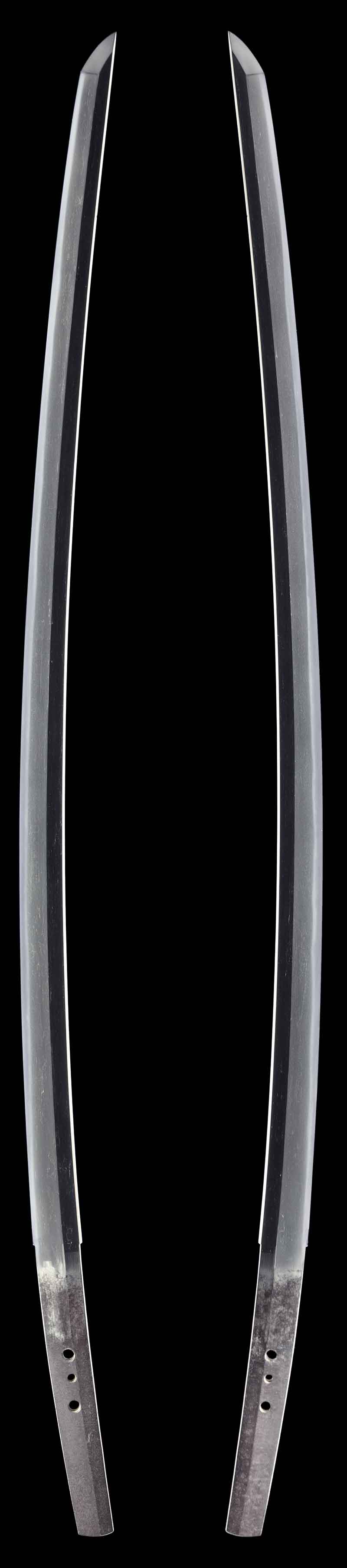
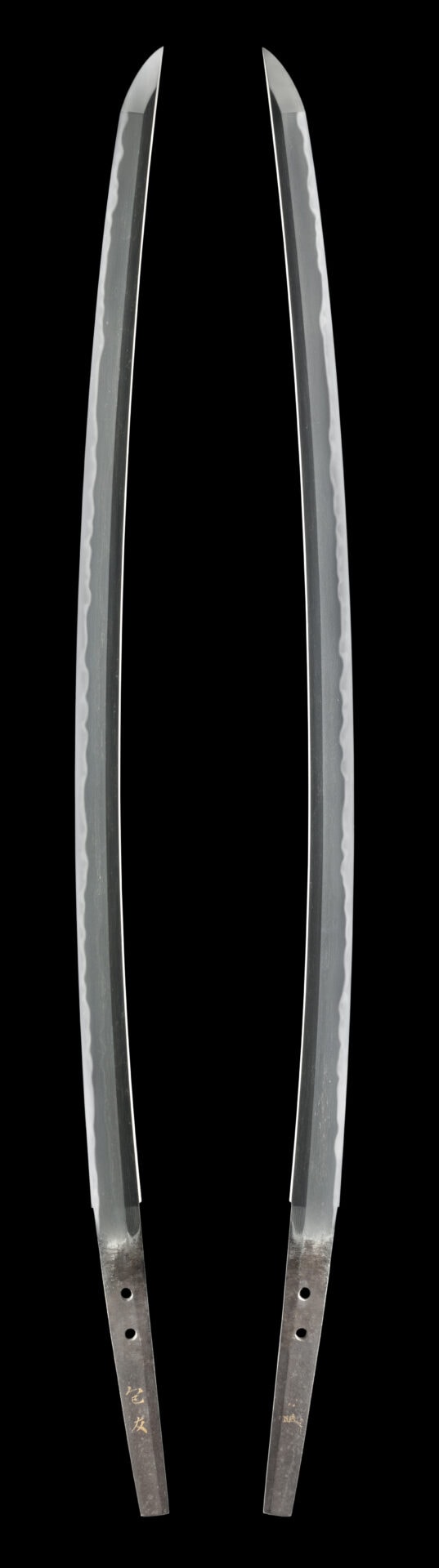
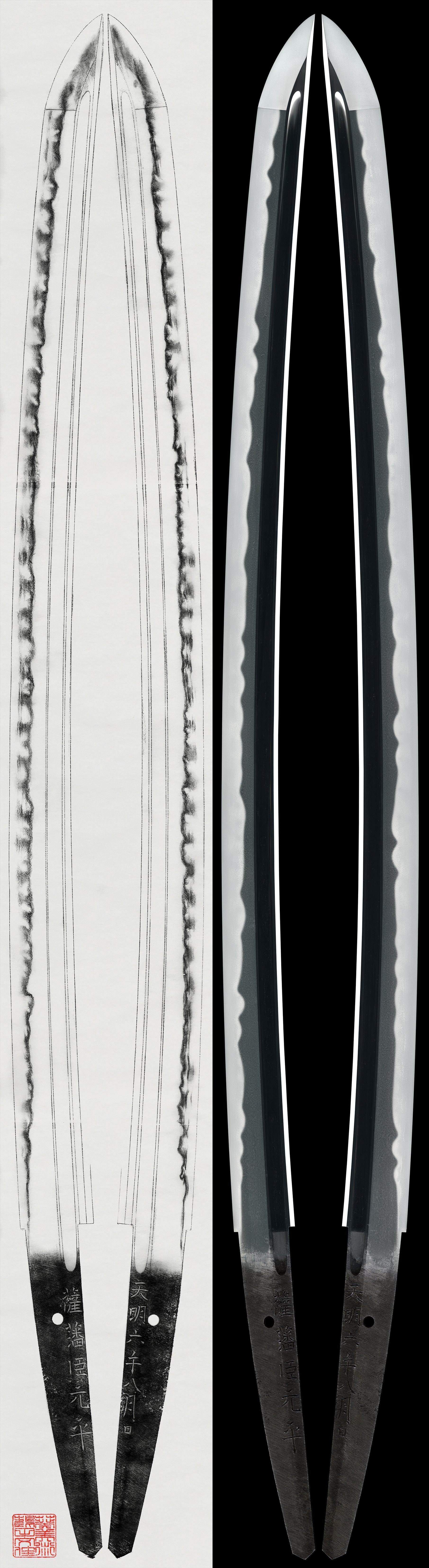
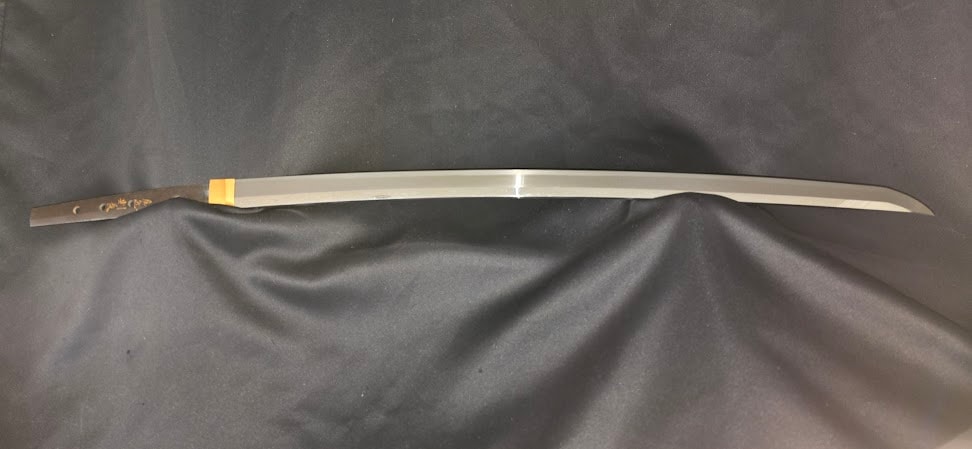
Kanetsugu's earliest dated work is a small of Bunpo 1, 1317, and among the surviving signed blades of the Yamato school it is the oldest dated piece known, a fixed point the published sources call exceptionally valuable as documentary material. He belongs to the school of Nara, which the reference texts describe as a body of smiths attached to Todai-, the name written either or Tenga and said to derive from their workshops outside the Gate that stands opposite the western front of the great temple. Of the five Yamato schools the was the largest in scale, and it flourished from the late period through the and on into . The compendia record Kanetsugu as a son of the first-generation founder Kanenaga, and where most early Yamato smiths leave no firm chronology he leaves three dated signatures, from Bunpo 1 through Genko 3 of 1333 to Ryakuo 3 of 1340, which set him at the bridge between the close of Kamacura and the opening of the age.
His work divides cleanly into two manners. The body of it is in , narrow pieces with a high and inward curvature, at times slightly extended in proportion to their width, the classic stance of a late- Yamato blade. Over them the temper is a calm , or a -tone that takes in a little , shallow and contained rather than showy, animated by the small for which the Yamato hands are known. The frays finely into -, enter, delicate and run along the edge, and the is bright with a tightened, gathered tendency. The other manner survives in a single shortened , and there the hand is altogether more vigorous: a mixed with , and entering frequently, with and scattered over an open -inclined , a temper that looks back toward the older Yamato and the of the ancient smiths rather than toward the quiet of his own .
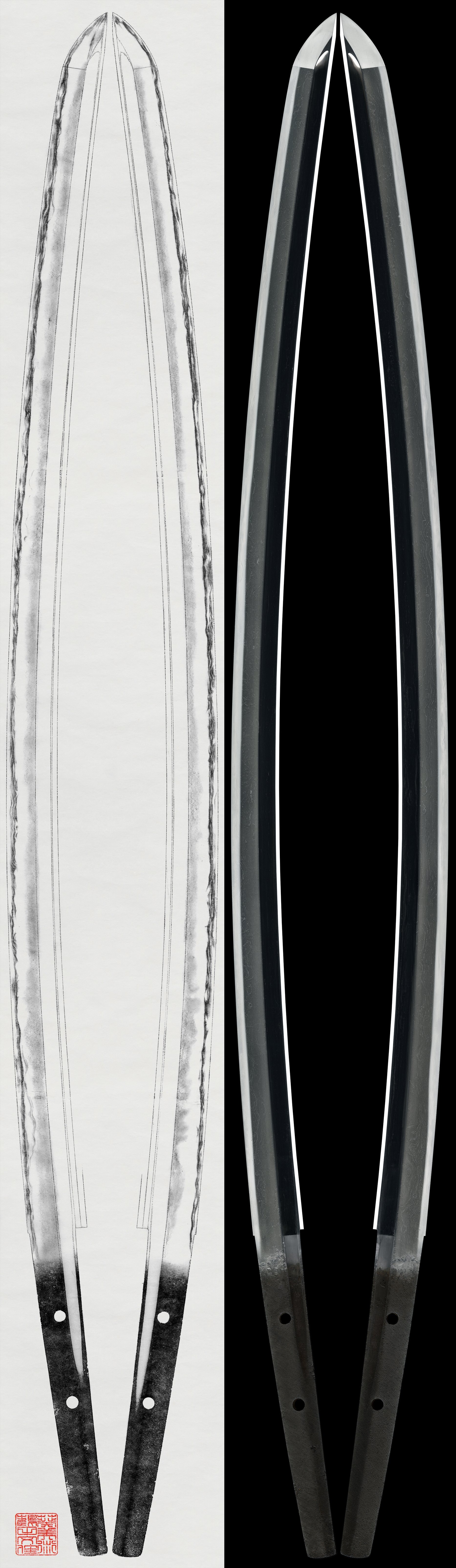
The is where his school speaks most plainly. He forges , often closely packed and carrying , that flows into and a tendency and at times stands open in a character, the structural tell that places him among the of Nara. Across it attaches densely and finely, with fine threading the surface, and on the better a rises from the and connects into a faint toward the , a feature the published sources read as the mark of late- workmanship. The lone carries the more pronounced version of the reflection, a standing over its open grain. The answers the two manners in kind. On the it runs straight and is tempered to the point as a , or turns in a small round with only a very slight verging on the restraint; on the it enters with a slight on one face and is swept with to a pointed-tending return on the other.
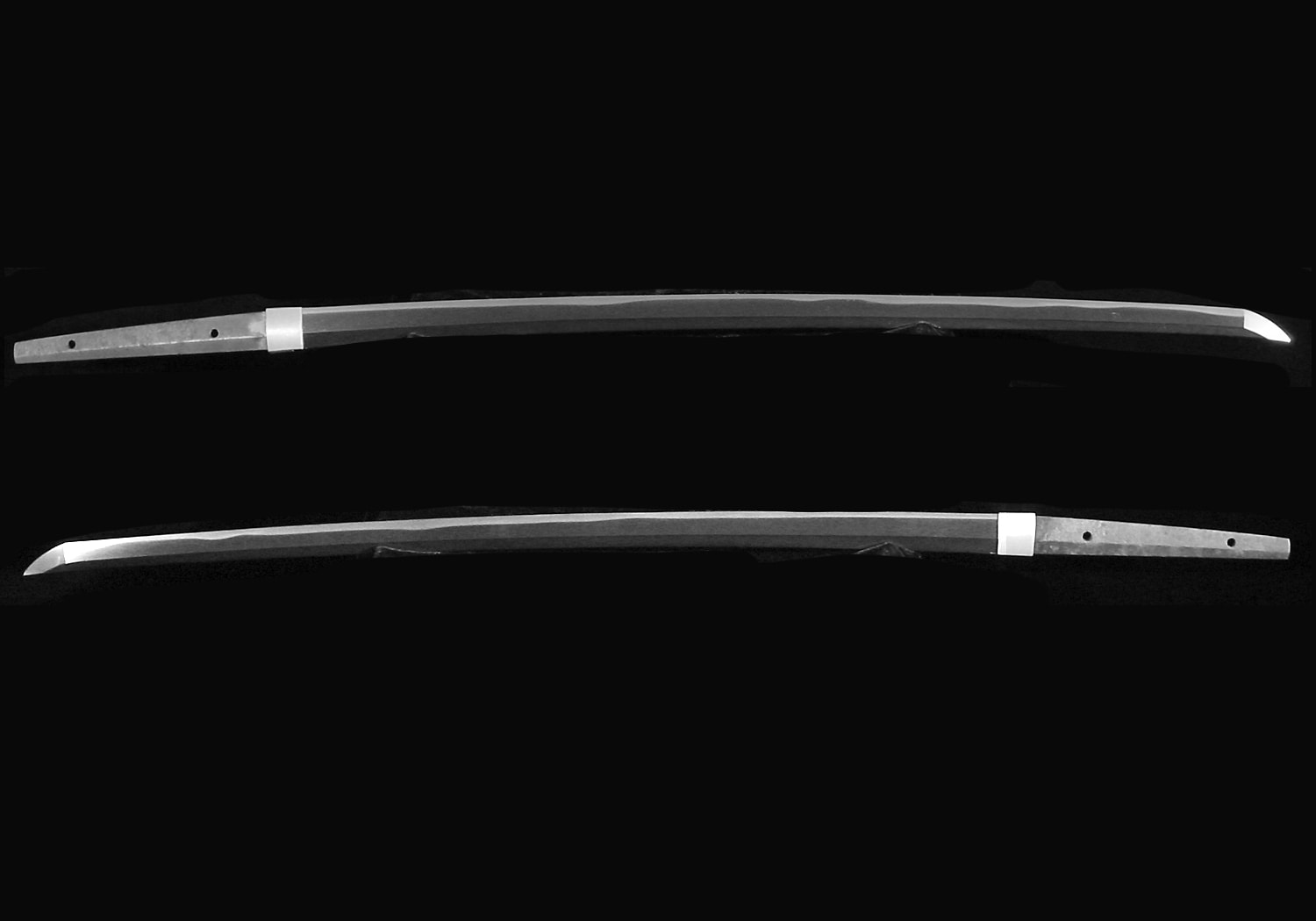
The dated are the spine of what can be known about him. The Bunpo 1 piece of 1317, a slender blade with the rising into its , is the earliest of the three and the earliest dated work on record; the published sources call its Bunpo date the oldest among his own works and the piece exceptionally valuable in documentary terms. The Genko 3 of 1333 sets with a slight admixture of over an mixed with , the grain a little open and adhering, the turning toward a appearance. The Ryakuo 3 of 1340 carries a long signature reading Yamato no ju Kanetsugu and the most worked of the three temper lines, a -tone laced with small , - along the edge and delicate and , and the published sources judge it a superior work in which all the characteristics of the Yamato school are observed, its and exceptionally well preserved. Two of the carry within or beside their , a relief on the Bunpo 1 blade and kaki-nagashi on the Ryakuo 3.
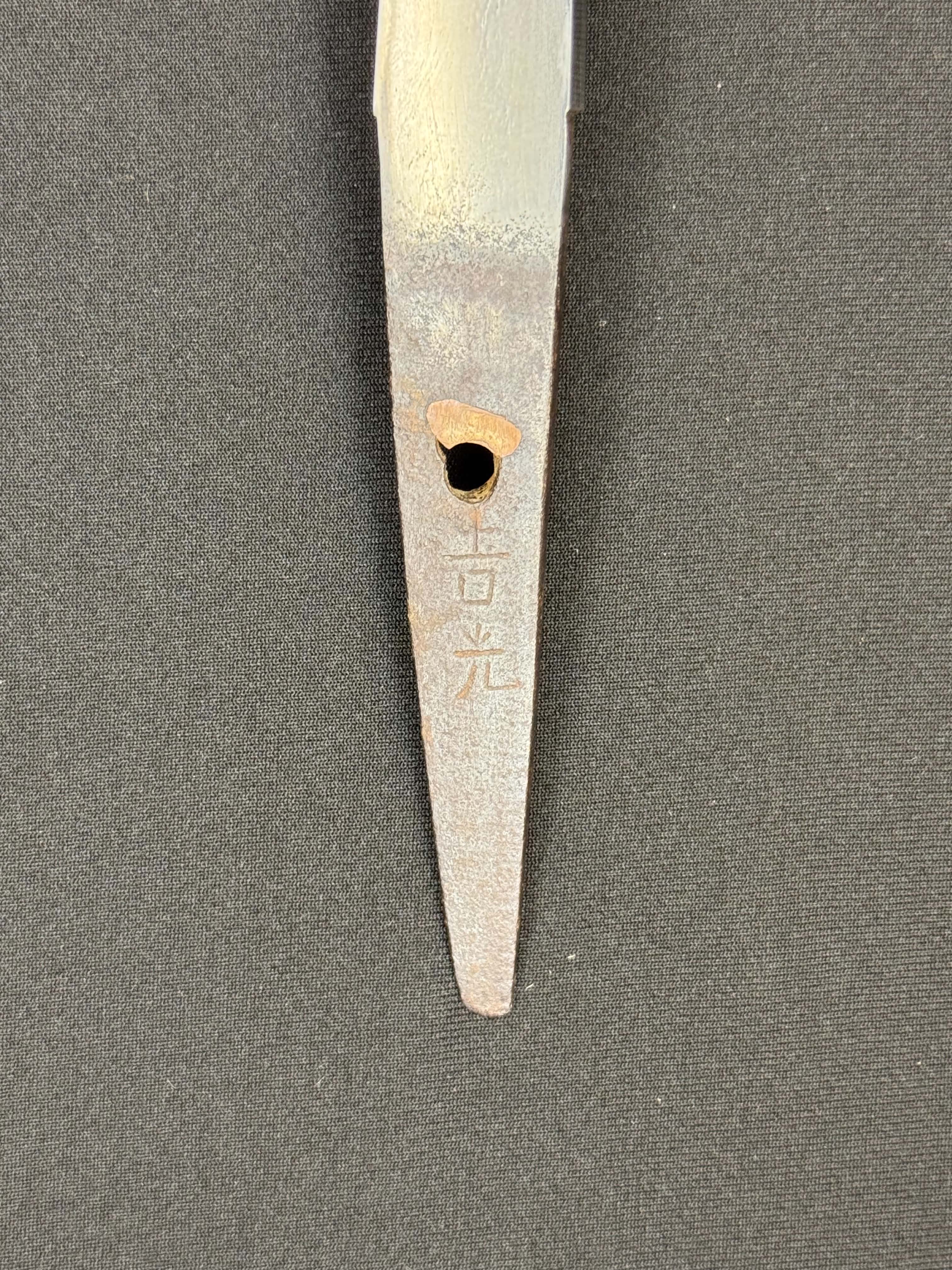
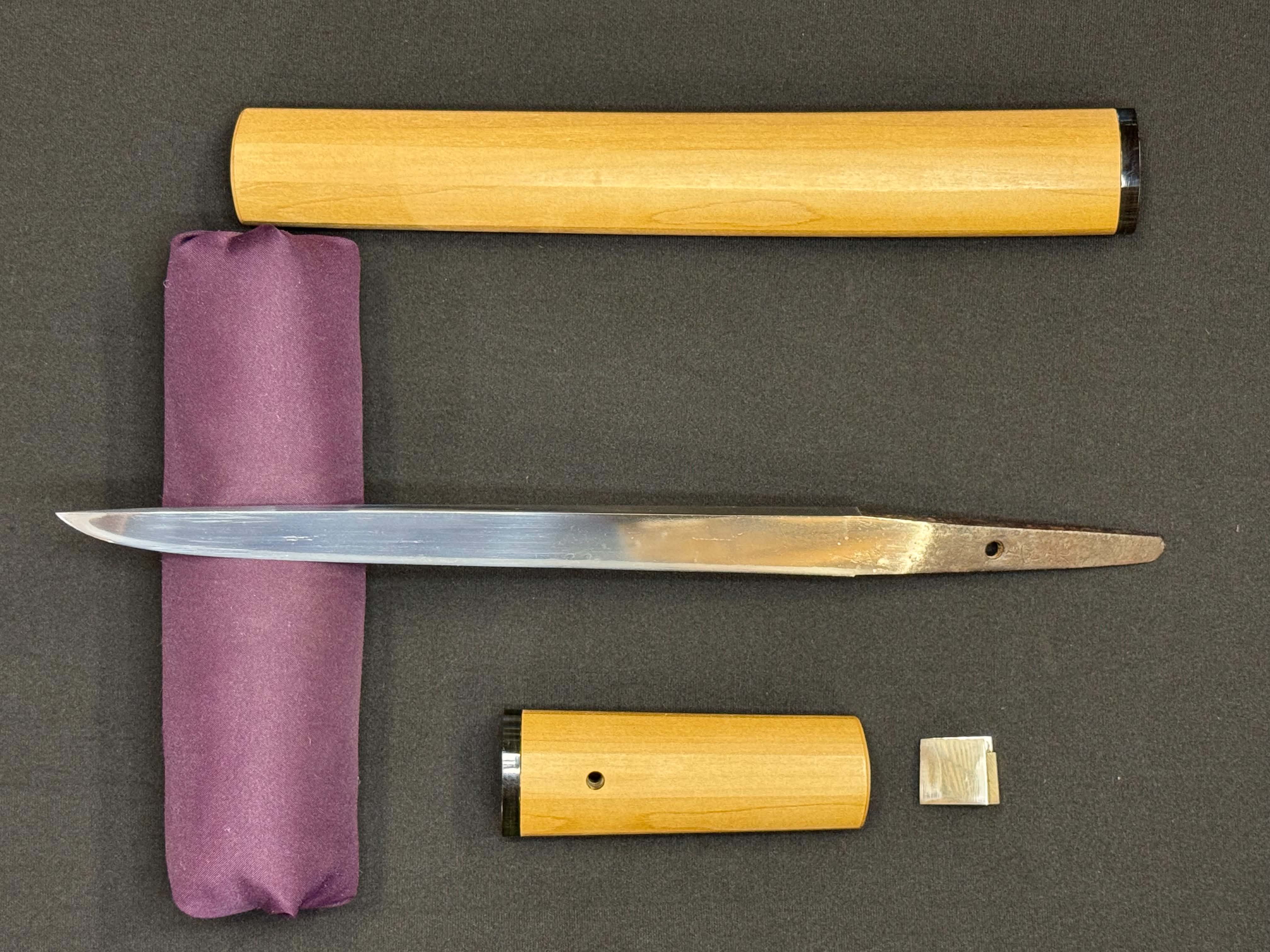
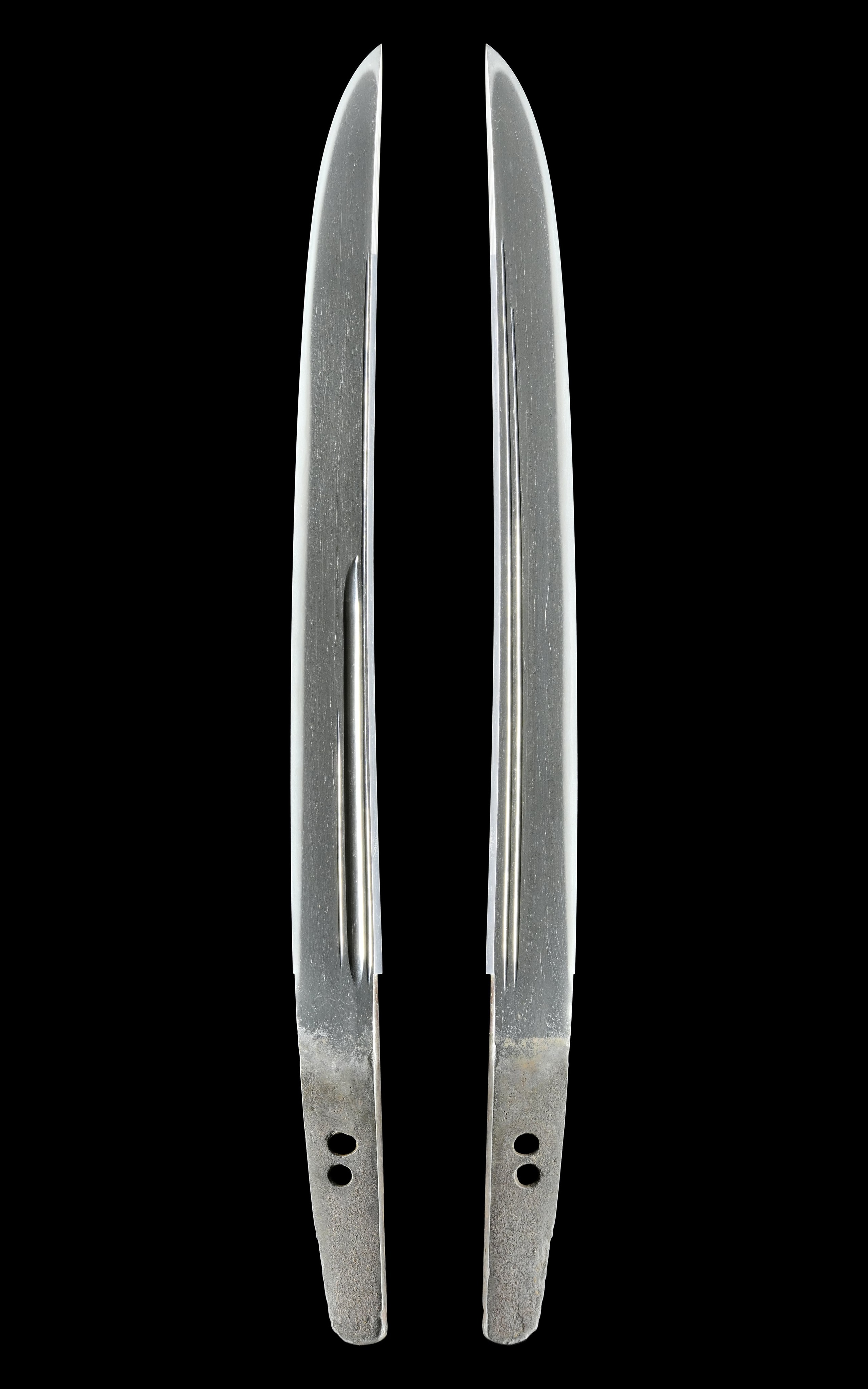
The shortened stands apart from these and is, the commentary observes, an extremely rare survival, for signed Yamato Kanetsugu are very few and no dated by him is encountered. with , reduced to a shallow and a , it carries through both sides and a two-character signature cut boldly with a fine chisel at the tip of the shortened tang. Its place in his oeuvre is what the cannot supply, the evidence of how he worked at full length and in the older idiom, and the published sources read it as good in execution and as broadly affirming the transmitted account of him as a son of the first Kanenaga, calling it an exceptionally rare example and valuable reference material. Set beside the calm , its vigorous and standing mark the range a single early Tegai hand could command, and they keep him from being read as a maker of quiet short blades alone.
Kanetsugu is, by the record, a smith of the study collection rather than the open market. All four of his designated blades stand at the level, none held in the locked tier of patrimony that can never trade; his name carries a place in the Toko Taikan but no Fujishiro grade. What this means in practice is that his work is uncommon rather than unreachable. The surviving pieces are few, all signed and most of them dated, and they pass through recorded hands in the prefectures rather than through famous houses, for no provenance attaches to them in the published record. A privately held example reaches a collector only rarely and as a documentary prize, valued less for ornament than for the firm dates it carries into the study of a school whose early generations are otherwise so hard to fix. The judges' own summing of the 17 serves for the man as much as for the blade, that it is well made, an exceptional rarity, and good material for study.