NihontoWatch MonNihontoWatch
Market
Encyclopedia
Kantei
NihontoWatch MonNihontoWatch
Market
Encyclopedia
Kantei

Description

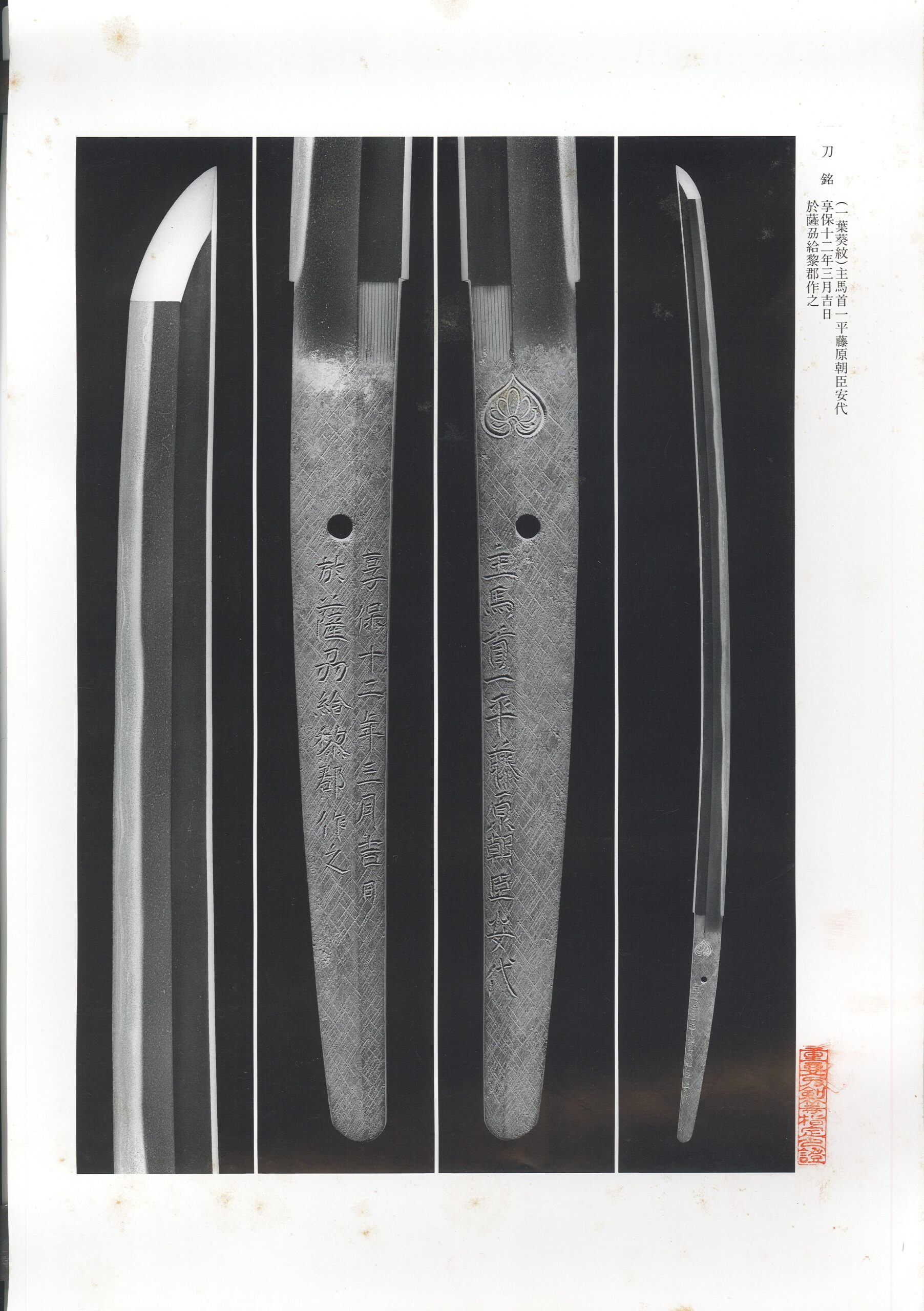
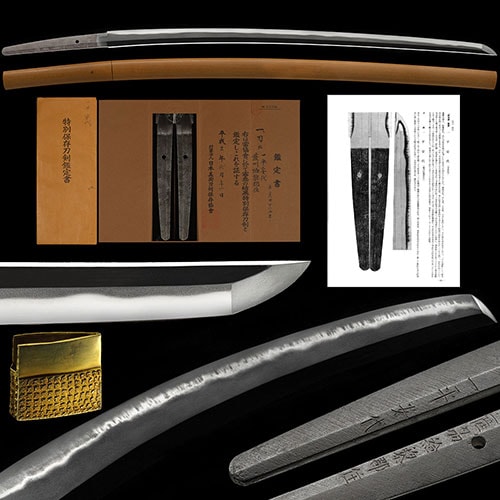
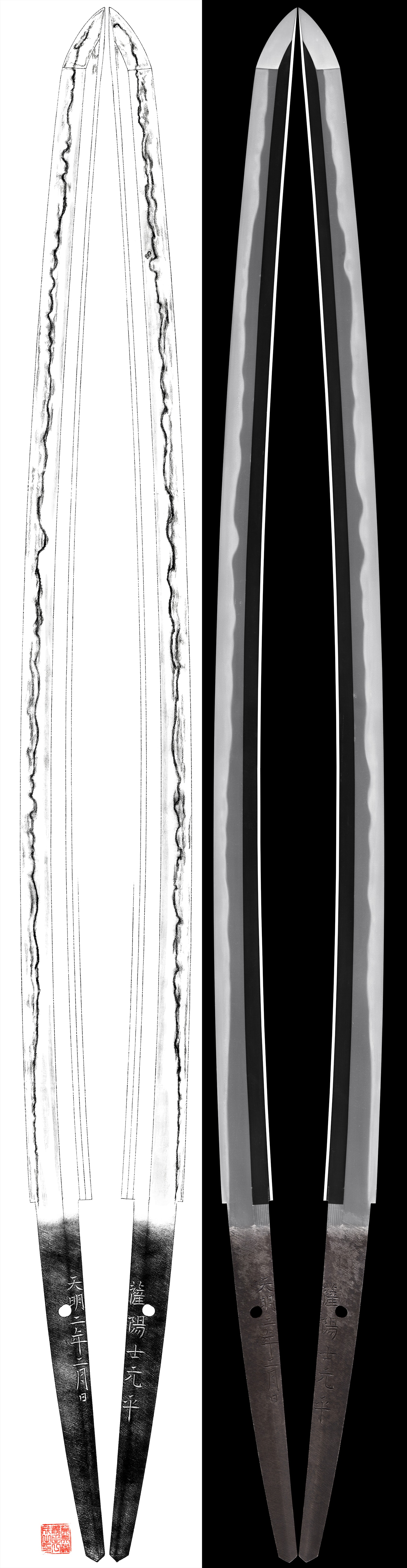
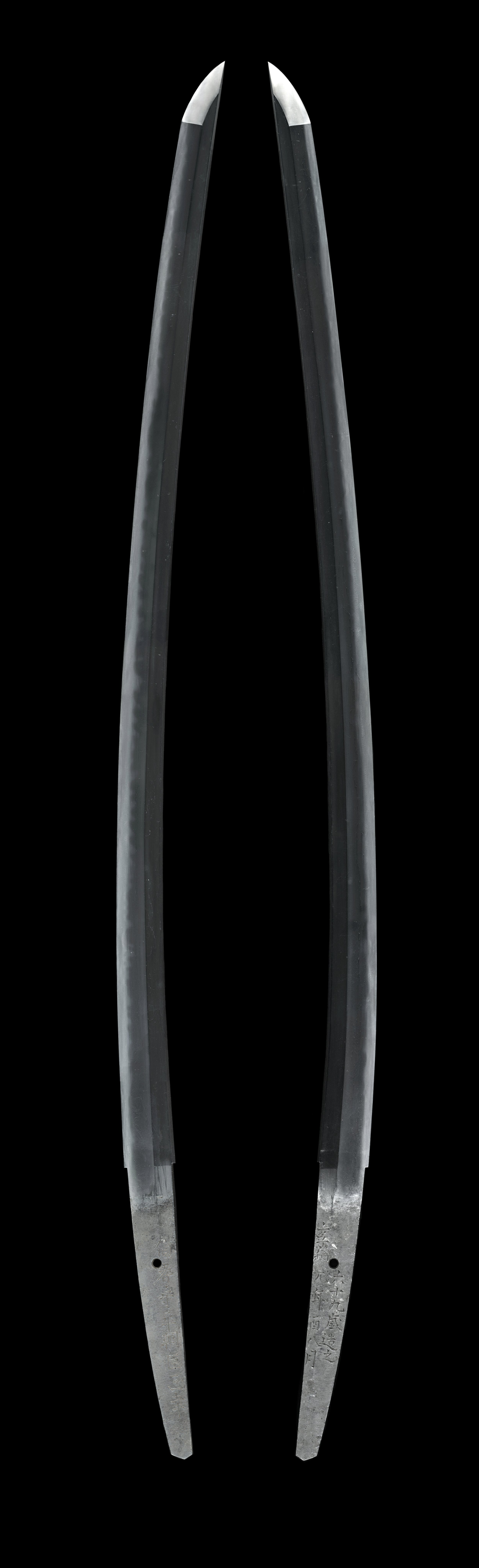
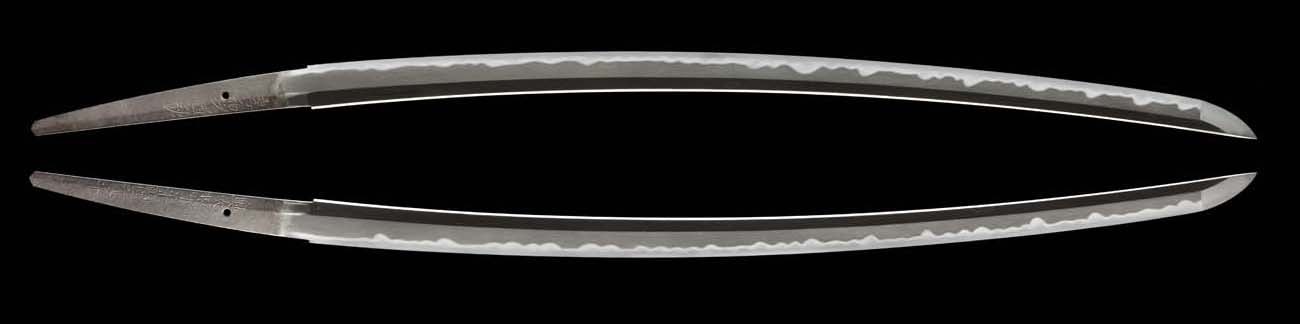
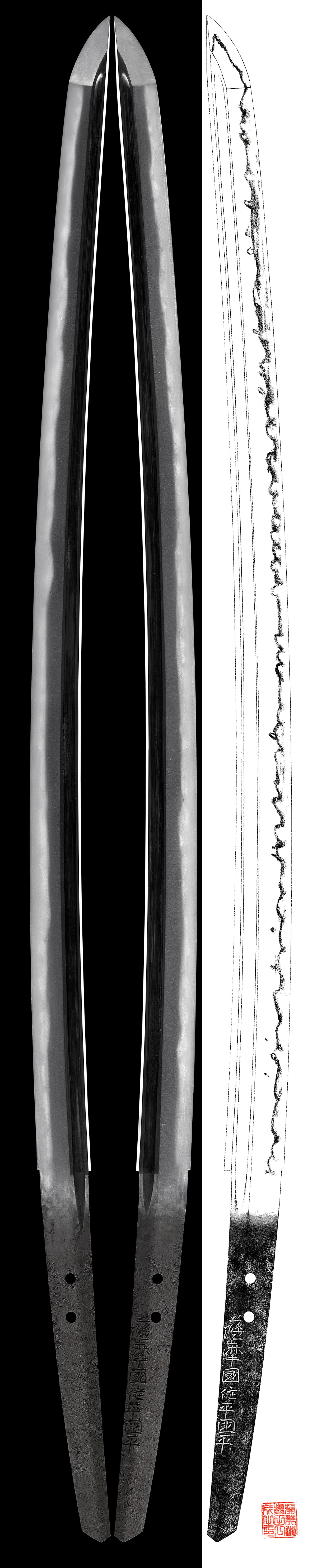
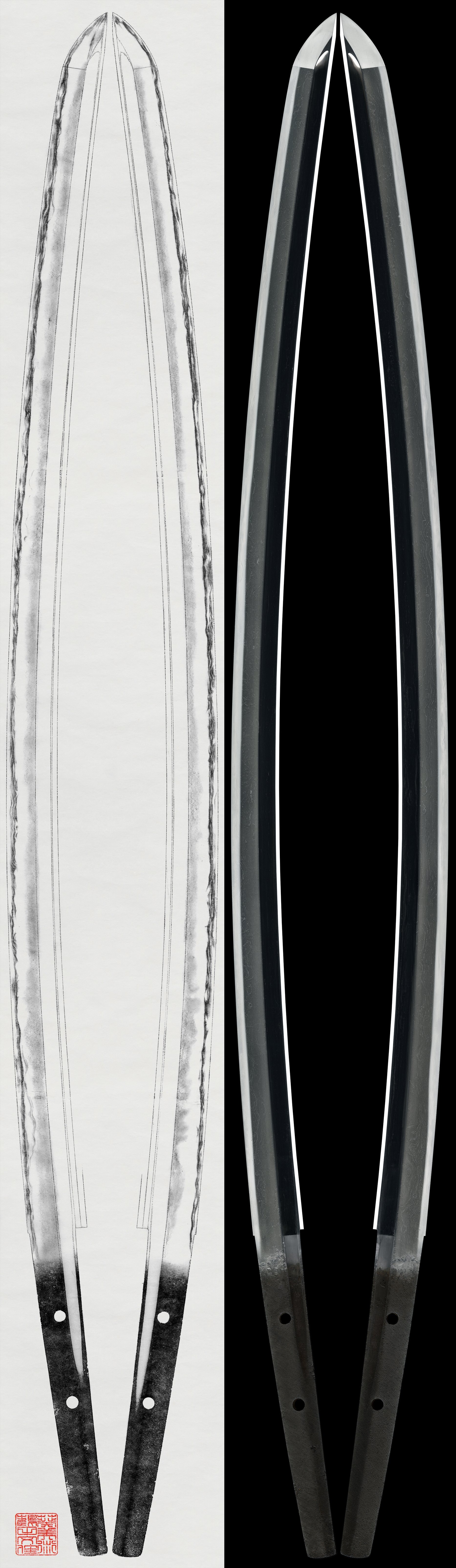
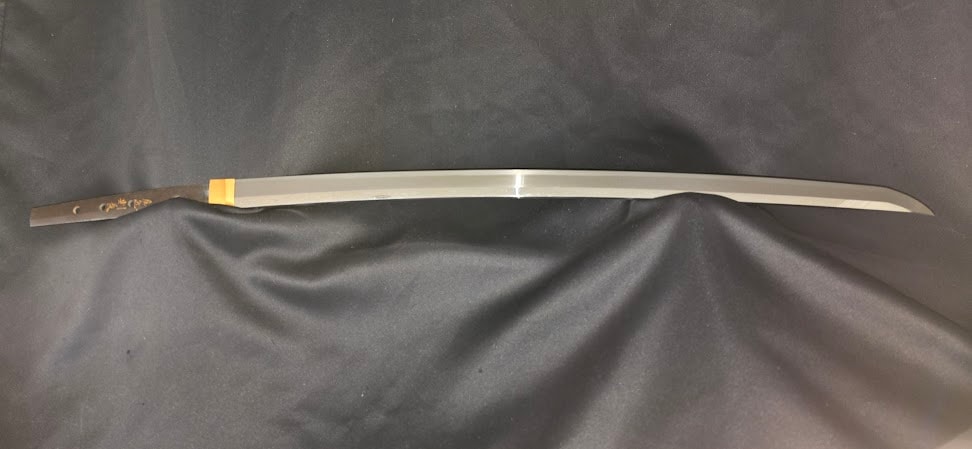
This is a katana made by Yasuyo, Shume no Kami Ichihei Fujiwara Ason, in Satsuma province during the Shinto period. It features a one-leaf aoi mon (hollyhock crest) and a blade length of 76.9cm. The sword has been designated as a Tokubetsu Juyo Token.

NBTHK Setsumei

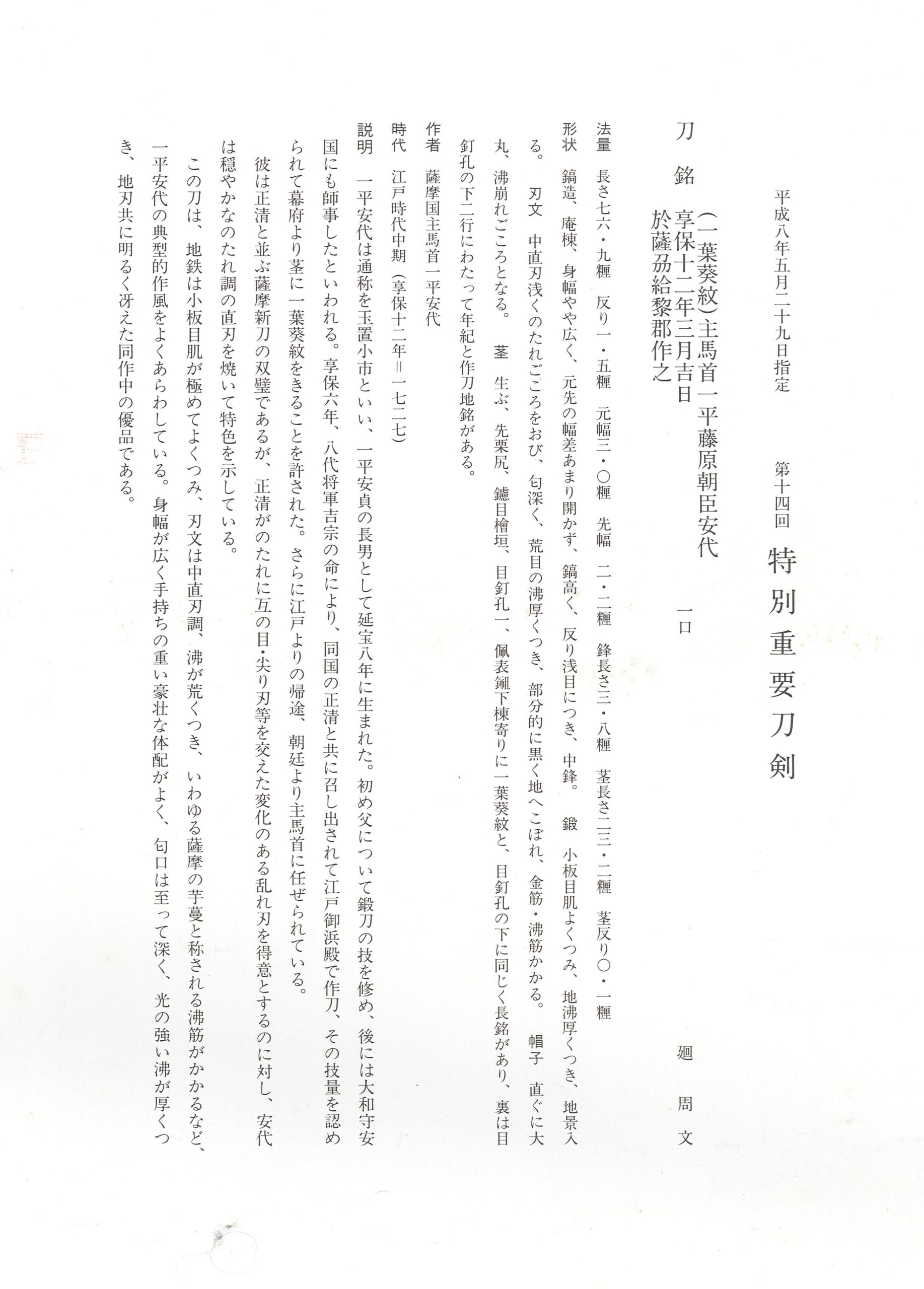
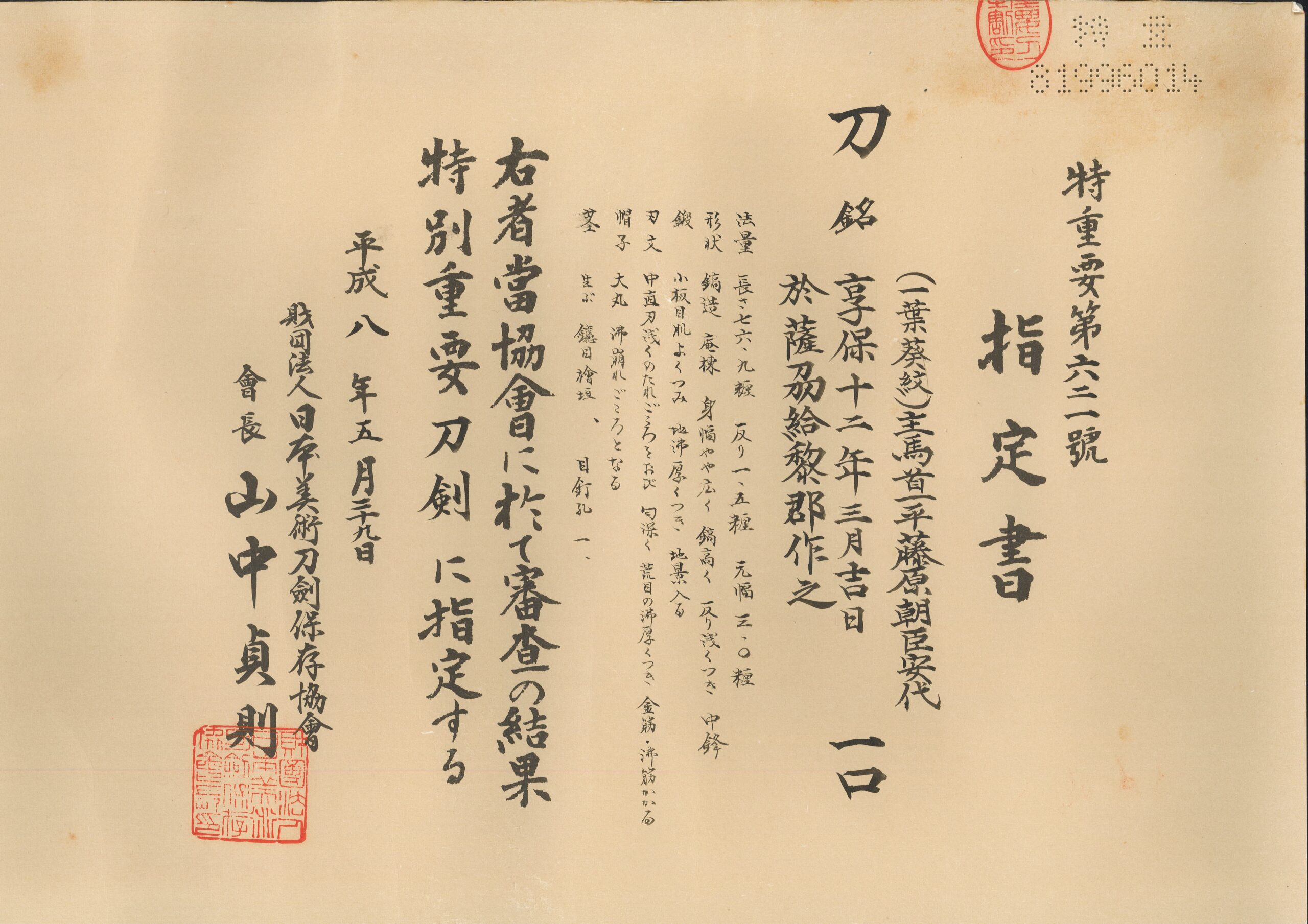
Tokubetsu-Jūyō-Tōken, 14th Session — Designated May 29, 1996 Katana, mei: Shumesuke Ippei Fujiwara Ason Yasushiro (主馬首一平藤原朝臣安代) Setsumei by Meguri Shūbun (廻周文) Measurements Nagasa 76.9 cm, sori 1.5 cm, motohaba 3.0 cm, sakihaba 2.2 cm, kissaki-nagasa 3.8 cm, nakago-nagasa 23.2 cm, nakago-sori 0.1 cm Description Keijō: Shinogi-zukuri with iori-mune. The mihaba is somewhat wide, and the difference between moto and saki width does not open greatly; the shinogi is high. The sori is rather shallow, and the blade has a chū-kissaki. Kitae: Exceptionally well-packed ko-itame-hada; thickly formed ji-nie; chikei appear. Hamon: Chū-suguha with a slight notare-tendency; the nioi is deep. Rather coarse, thick nie adhere; in places it darkens and spills into the ji. Kinsuji and nie-suji are present. Bōshi: Straight, forming a large maru; with a tendency toward nie-kuzure. Horimono: None. Nakago: Ubu; kurijiri. Yasurime are higaki. One mekugi-ana. On the omote, below the mekugi-ana and toward the mune, there is an ichiyō aoi crest, and below the mekugi-ana there is the same long signature; on the ura, below the mekugi-ana, the date and place-of-forging inscription are cut over two lines. Artisan Satsuma Province — Shumesuke Ippei Yasushiro (薩摩国主馬首一平安代) Era Mid Edo period (Kyōhō 12 ) Explanation Ippei Yasushiro was commonly known as Tamaoki Koichi. He was born in Enpō 8 (1680) as the eldest son of Ippei Yasusada. At first he studied swordsmithing under his father, and it is said that later he also trained under Yamato no Kami Yasukuni. In Kyōhō 6, by order of the eighth shōgun Tokugawa Yoshimune, he—together with Masakiyo of the same province—was summoned to Edo and forged swords at the shogunate’s Go-Hamaden residence. His skill was recognized, and he was granted permission by the bakufu to carve the ichiyō aoi crest on his tangs. Furthermore, on his return journey from Edo, he was appointed Shumesuke by the Imperial Court. He stands, together with Masakiyo, as one of the two great masters of Satsuma shintō. Whereas Masakiyo excelled at varied midare-ba that mix notare with gunome and togariba, Yasushiro’s distinctive character is shown in the forging of calm notare-based suguha. This sword displays exceptionally tight ko-itame-hada, and its hamon is in a chū-suguha manner with coarsely adhering nie, including the nie-suji known in Satsuma as “imozuru” (yam-vine). The blade is broad and has a weighty feel in hand, with an imposing and powerful overall taihai. The nioiguchi is extremely deep, and bright, strongly flashing nie form thickly; both ji and ha are bright and clear. It is a superior work among Yasushiro’s oeuvre, and well demonstrates his typical style.

NihontoWatch MonNihontoWatch
MarketEncyclopediaKantei
Swords›Yamato-den›Satsuma›Yasuyo›Tokubetsu Juyo Token (One-Leaf Aoi Mon) Shume no Kami Ichihei Fujiwara Ason Yasuyo, Made in Satsushu Kirei-gun on an Auspicious Day in March, Kyoho 12
katanaTokubetsu Jūyō
Satsuma Yasuyo

Tokubetsu Juyo Token (One-Leaf Aoi Mon) Shume no Kami Ichihei Fujiwara Ason Yasuyo, Made in Satsushu Kirei-gun on an Auspicious Day in March, Kyoho 12

Kyoho (1716-1736) · nagasa 76.9cm · sori 1.5cm

Price on request
Visit seller website →
Satsuma Yasuyo (安代) · Kyoho (1716-1736)1 work for sale →
KatanaTokubetsu Jūyō
Could you name the smith from the blade alone? Today’s kantei →
Satsuma Yasuyo — 1 of 4
Satsuma Yasuyo — 2 of 4
Satsuma Yasuyo — 3 of 4
Satsuma Yasuyo — 4 of 4
1 / 4
1 / 4
Satsuma Yasuyo — 1 of 4Satsuma Yasuyo — 2 of 4Satsuma Yasuyo — 3 of 4Satsuma Yasuyo — 4 of 4
Satsuma Yasuyo (安代) · Kyoho (1716-1736)1 work for sale →
KatanaTokubetsu Jūyō
Could you name the smith from the blade alone? Today’s kantei →
Measurements & details
Smith
Satsuma Yasuyo
Type
Katana
School
Satsuma
Period
Around 1716–1736(Kyoho)
Measurements
Nagasa 76.9cmSori 1.5cmMotohaba 3cmSakihaba 2.2cm
Description

This is a katana made by Yasuyo, Shume no Kami Ichihei Fujiwara Ason, in Satsuma province during the Shinto period. It features a one-leaf aoi mon (hollyhock crest) and a blade length of 76.9cm. The sword has been designated as a Tokubetsu Juyo Token.

NBTHK Zufu Commentary

Tokuju #14

AI translation — may contain errors

-, 14th Session — Designated May 29, 1996

, : Shumesuke Ippei Fujiwara Ason Yasushiro (主馬首一平藤原朝臣安代)

by Meguri Shūbun (廻周文)

Measurements 76.9 cm, 1.5 cm, 3.0 cm, 2.2 cm, 3.8 cm, 23.2 cm, 0.1 cm

Description Keijō: with . The is somewhat wide, and the difference between and width does not open greatly; the is high. The is rather shallow, and the blade has a . : Exceptionally well-packed ; thickly formed ; appear. : with a slight -tendency; the is deep. Rather coarse, thick adhere; in places it darkens and spills into the . and are present. : Straight, forming a large ; with a tendency toward . : None. : ; . are . One . On the , below the and toward the , there is an ichiyō aoi crest, and below the there is the long signature; on the , below the , the date and place-of-forging inscription are cut over two lines.

Artisan Satsuma Province — Shumesuke Ippei Yasushiro (薩摩国主馬首一平安代)

Era Mid period (Kyōhō 12 [1727])

Explanation Ippei Yasushiro was commonly known as Tamaoki Koichi. He was born in Enpō 8 (1680) as the eldest son of Ippei Yasusada. At first he studied swordsmithing under his father, and it is said that later he also trained under Yamato no Kami Yasukuni.

In Kyōhō 6, by order of the eighth shōgun Tokugawa Yoshimune, he—together with Masakiyo of the province—was summoned to and forged swords at the shogunate’s Go-Hamaden residence. His skill was recognized, and he was granted permission by the bakufu to carve the ichiyō aoi crest on his tangs. Furthermore, on his return journey from , he was appointed Shumesuke by the Imperial Court.

He stands, together with Masakiyo, as one of the two great masters of Satsuma . Whereas Masakiyo excelled at varied -ba that mix with and , Yasushiro’s distinctive character is shown in the forging of calm -based .

This sword displays exceptionally tight , and its is in a manner with coarsely adhering , including the known in Satsuma as “imozuru” (yam-vine). The blade is broad and has a weighty feel in hand, with an imposing and powerful overall . The is extremely deep, and bright, strongly flashing form thickly; both and are bright and clear. It is a superior work among Yasushiro’s oeuvre, and well demonstrates his typical style.

About the maker

Yasuyo

安代

Ippei (Naminohira line), Satsuma · Satsuma · around 1716-1736

Fujishiro Jo-jo saku · Tōken Taikan top 14%

1 piece on the market now

›

Ippei Yasuyo, common name Tamaoki Koichi, was the eldest son of the Satsuma smith Ippei Yasusada, born in Enpo 8 (1680). The published sources record that he learned forging first under his father and then under Yamato no Kami Yasukuni of the main Naminohira line, and that in the first month of Kyoho 6 (1721) he was summoned together with Masakiyo by the eighth shogun Tokugawa Yoshimune to forge swords in Edo. In recognition of his skill the bakufu permitted him to cut the single-leaf hollyhock crest into his tang, and on his return journey the court appointed him Shume no Suke. He died in Kyoho 13 (1728) at the age of forty-nine, so that the great part of his recorded work falls into the narrow span of years between the Edo summons and that early death. The institutional verdict on him is consistent and almost formulaic across his designations: he and Masakiyo are 'the twin pillars of Satsuma shinto'[[c:1]].

That pairing carries within it the contrast by which his hand is recognized. Where Masakiyo favored a varied, Shizu-like midareba that mixes notare with gunome and pointed togariba, the published sources record that 'Yasuyo more often tempered a calm, notare-toned suguha'[[c:2]]. His characteristic temper is a suguha-cho, or a wide suguha, that undulates in shallow notare, deep in nioi, the nie laid on thick and strong with coarse ara-nie mixed through it. The feature the judges return to is what runs inside that quiet line: vigorous sunagashi together with long nie-suji and kinsuji, the streaming nie-lines the sources name 'the so-called imozuru of Satsuma'[[c:3]], the yam-vine of the province. On his finest blades these run especially long and are called splendid, the activity in both ji and ha richer than usual.

Beneath that temper the jigane is a tightly packed ko-itame, at times mixed with ko-mokume or flowing toward nagare, with thick ji-nie and chikei entering, and a steel that takes on a markedly blackish tone. Against that dark jigane the bright nioiguchi and coarse nie of the edge stand out, which is much of why a Yasuyo blade reads as it does. The boshi is essentially straight and turns back in an o-maru or a ko-maru, the point swept with hakikake, on the deeper-tempered pieces vigorous enough to take a flame-like cast. His sugata is the other half of the impression: broad in the mihaba, thick in the kasane with ample hiraniku and a chu-kissaki, heavy in the hand and frankly imposing, and almost always preserved ubu with a deep kurijiri, higaki file marks and a long signature.

Within this one settled manner the published sources draw two finer registers. A small number of his blades lean toward masame, the itame flowing and the hada raised a little, and on one such Juyo katana the judges read the whole as 'workmanship that recalls the Yamato Hosho tradition'[[c:4]] and name it a representative piece; the Naminohira and Yamato roots of his training surface there in the standing grain. At the other end of his career, an early katana cut with a four-character signature below the peg-hole is identified as a formative work, and the sources note that such early pieces are comparatively few and valuable for understanding how his style began. The continuity matters more than the divisions: the nie-deki suguha is constant, read once over a calm ko-itame and once over a more standing, masame-tinged jigane.

What sets him apart is exactly what the judges name, and it is best read through his own work rather than against his neighbor's. His is the quiet suguha of the Satsuma pair, its strength carried not in the height of the temper but in the depth of its nioi, the thickness of its nie, and the long imozuru threads that course through it; his ji is dark and well forged, his sugata broad and robust. Of one Tokubetsu Juyo katana the published commentary writes that it is 'his masterpiece, showing outstanding workmanship among his works'[[c:5]], the kind of judgment the sources reserve for the pieces in which the deep nioiguchi, the thick nie and the running kinsuji all come together on a grand, sound body.

For the collector Yasuyo is one of the most sought names in Satsuma shinto, and his record is almost wholly a signed one, twenty of his designated blades carrying his own inscription. Fujishiro grades him Jo-jo saku. He has no National Treasures and no Important Cultural Properties; his standing rests instead on four pieces at the Tokubetsu Juyo rank and thirteen at Juyo, with a further prewar Juyo Bijutsuhin, seventeen blades in the Tokubetsu Juyo and Juyo tiers in all. The provenance is unusually grand for a shinto smith: the sources record blades presented from the Shimazu house upward, one katana presented by Shimazu Tsugutoyo to the shogun Yoshimune, another 'presented by the Shimazu family to Konoe Sadaijin Iehisa'[[c:6]], whose household prized it so highly that it sent Yasuyo silver and a set of poems in return. Imperial, Shimazu, Konoe and Tokugawa names run through his denrai. Almost none of this trades; the designated blades are held in long-established collections, and a signed Ippei Yasuyo comes to a private collector only seldom, and as one of the more rewarding Satsuma encounters when it does.


Historical importance

Where Yasuyo stands among comparable artisans: across all of nihontō, and within tradition, era, and period. The tiers (Foremost · Leading · Major · Notable) weigh official designations from the NBTHK and Japan's Agency for Cultural Affairs, together with historical honors of lasting repute such as the Sansaku and Meibutsu-chō.

随一
Foremost
屈指
Leading
有数
Major
著名
Notable

Select a lens to see how it's measured.

Designation record
19 designated works
Jūyō Bijutsuhin
1
Gyobutsu (Imperial)
2
Tokubetsu Jūyō
4
Jūyō
12
1 work by Yasuyo on the market→
Yasuyo — full profileIppei (Naminohira line), Satsuma school

Dated Works

Years he was demonstrably active, proven by signed-and-dated blades

Active period
1727Editorial estimate: 1716–1736
1 of 18 designated works carry a date

Study this maker →

About the school

Satsuma

薩摩

Yamato-den · Satsuma

32 pieces on the market now

›

The Satsuma school gathered the smiths of southern Kyushu under the patronage of the Shimazu, the daimyo house of Satsuma and Osumi, and the published sources read its history in two distinct flowerings rather than one continuous line. Its shinto fountainhead is Izu no Kami Masafusa, a son of the Mino smith Ujifusa who moved to Kagoshima and carried a strongly nie-laden hand into the province; the NBTHK names him the origin of Satsuma forging. From that root the early school rose to its summit in the pair the judges return to whenever they place it, Mondo-no-Sho Masakiyo and Ippei Yasuyo, the twin pillars of Satsuma shinto. Both were summoned in Kyoho 6 (1721) by the eighth shogun Tokugawa Yoshimune to forge in Edo and were granted the single-leaf hollyhock crest of the Tokugawa for their tangs, and the Ippei line continued through Yasuyo's adopted heir Yasuari. A century later a second summit formed in the shinshinto twin pillars, Oku Yamato no Kami Motohira of the Oku house and Hoki no Kami Masayuki of the Ijichi house, raised to their court titles in the same year of Kansei 1 (1789); Masayuki's name had begun as Masayoshi, and his pupil Masakage carried the manner into the Bunka and Bunsei years. The training the members record runs back through the Naminohira and Yamato roots of the early Ippei smiths, but the working idiom the school is known by is its own. That idiom is a Soshu-den read in coarse nie rather than in clove-flower, and the members describe it in a shared vocabulary. The body is broad in mihaba, thick in kasane, full in hiraniku and stoutly built, the imposing Satsuma sugata. Over a well-forged itame, often a tight ko-itame turning toward nagare or masame and carrying thick ji-nie and dark chikei, the smiths temper a notare-toned gunome-midare into which they set pointed togariba, deep in nioi with thick nie and coarse ara-nie mixed through. The feature the commentary names most often is what streams within that temper, the long kinsuji, nie-suji and sunagashi the sources call imozuru, the yam-vine of the province, vine-like nie-lines running unbroken through the ha.

The jigane takes a markedly blackish cast against which the bright nioiguchi and coarse nie stand out, and the boshi runs in midare-komi or straight, swept with hakikake and on the most vigorous work flaring to a flame-like kaen. Within this one settled manner the members divide. Masakiyo handled the varied Shizu-style midare, his yubashiri gathering at the crests of the temper into a nijuba-like, antique appearance, where Yasuyo tempered a calmer notare-toned suguha whose strength lay in the depth of its nioi and the length of its imozuru; Motohira and Masayuki carried the flamboyant gunome with its kaen boshi into the later period, while a small number of blades lean toward masame and recall the Yamato Hosho grain that the early training laid down. To kantei Satsuma work, the judges read three grounded marks together: the pointed togariba riding a notare base, the deep coarse nie with its running imozuru, and the dark, chikei-laden standing jigane, completed by the swept hakikake or kaen boshi and the broad heavy body. The tang offers further constants, almost always ubu with a bold thick-chiseled signature that frequently carries the smith's age, Motohira's funagata-narrowed kengyo point and Masayuki's bo-hi among them. Among the members the standing is high: Masakiyo and Yasuyo hold the early summit, while Motohira and Masayuki lead the shinshinto generation, the latter's pupil Masakage judged to have inherited the master's hand with notable refinement. The cutting reputation of the province, tied to its Jigen-ryu martial tradition, runs through the bold robust construction the sources call decisive in the hand. The provenance is grand for a domain school: blades presented by the Shimazu house upward to the shogun Yoshimune and to Konoe Iehisa, Minister of the Left, who returned silver and poems to the smiths, with pieces descending through the Tokugawa, the Imperial family and Shimazu branch houses such as the Kabayama. Such blades are held in long-established collections rather than traded, and a signed Satsuma work in its full vigorous Soshu-den comes to a collector only with patience. Learn more →

16 recorded smiths142 designated works
Leading smiths
SmithEraDesignated
Yasuyo安代1716-173619
Motohira元平1778-178938
Masayuki正幸1772-181727
Masakiyo正清1714-173625
Masayoshi正良1764-178610
Explore the Satsuma school →

Historical context

The Edo period (1615 to 1868)

›

Under the Tokugawa peace the daishō became a regulated uniform, and demand gathered in the castle towns, above all Edo itself. The craft split two ways: brilliant display work for connoisseurs, and tested blades whose cutting results were sometimes inlaid in gold.

The Edo period (1615 to 1868) →

NBTHK Certificate
Tokubetsu Jūyō Tōken特別重要刀剣
Especially Important Sword
›

The NBTHK’s highest grade, reserved for the rare Jūyō blades of exceptional artistry, condition, and historical value, judged on par with a nationally designated Important Cultural Property (Jūyō Bunkazai).

Only 1,211 swords have ever reached Tokubetsu Jūyō, about 1 in 2,064 registered blades.

About the NBTHK›

The NBTHK (Nihon Bijutsu Tōken Hozon Kyōkai, the Society for the Preservation of Japanese Art Swords) is a public-interest incorporated foundation founded in 1948 and supervised by Japan’s Agency for Cultural Affairs (Bunkachō); it is based at the Japanese Sword Museum in Tokyo. Its expert panels physically examine each submitted work (shinsa) and issue a certificate (kanteishō) ranking it by artistic and historical merit. NBTHK papers are the most widely recognized standard of authentication for Japanese swords and fittings.

NBTHK official site→
Seller
G
Goushuya
🇯🇵Ships from Japan
›
✓Verified dealergoushuya-nihontou.com
Wire transfer
View all of Goushuya’s listings→View this item on the dealer’s site→

Previously sold by Satsuma Yasuyo

View all →
Eirakudo
Hozon
Katana - Hozon - by Satsuma Yasuyo - Ichinohira Yasuyo - Tokubetsu Hozon TokenKatana - Hozon - by Satsuma Yasuyo - Ichinohira Yasuyo - Tokubetsu Hozon Token
Sold

Katana

BySatsuma Yasuyo
SOLD

More from the Satsuma school

View all →
Aoi Art
Jūyō
Katana - Jūyō - by Satsuma Motohira - Sappan Shin Motohira (1786)Katana - Jūyō - by Satsuma Motohira - Sappan Shin Motohira (1786)

Katana

BySatsuma Motohira
¥5,000,000
Tsuruginoya
Jūyō
Katana - Jūyō - by Satsuma Motohira - Yamatonokami Motohira, An'ei 10th YearKatana - Jūyō - by Satsuma Motohira - Yamatonokami Motohira, An'ei 10th Year

Katana

BySatsuma Motohira
Ask
Nihontocraft
NTHK
Wakizashi - NTHK - by Satsuma Motohira - Satsuyo-shi Motohira (Yamato no Kami Motohira) - Jo Jo Saku Shin-ShintoWakizashi - NTHK - by Satsuma Motohira - Satsuyo-shi Motohira (Yamato no Kami Motohira) - Jo Jo Saku Shin-Shinto

Wakizashi

BySatsuma Motohira
¥6,500
Aoi Art
Tokuho
Katana - Tokuho - by Satsuma Motohira - Satsuyoshi Motohira, dated Tenmei 2nd year, 2nd monthKatana - Tokuho - by Satsuma Motohira - Satsuyoshi Motohira, dated Tenmei 2nd year, 2nd month

Katana

BySatsuma Motohira
¥2,500,000
Toukentakarado
Tokuho
Katana - Tokuho - by Satsuma Masayuki - Houki No Kami Ason MasayoshiKatana - Tokuho - by Satsuma Masayuki - Houki No Kami Ason Masayoshi

Katana

BySatsuma Masayuki
¥2,650,000
Yamasiroya
Tokuho
Katana - Tokuho - by Satsuma Motohira - Oku Yamato Kami Taira Ason MotohiraKatana - Tokuho - by Satsuma Motohira - Oku Yamato Kami Taira Ason Motohira

Katana

BySatsuma Motohira
¥3,000,000
Choshuya
Jūyō
Katana - Jūyō - by Satsuma Masakiyo - Mondo no Kami MasakiyoKatana - Jūyō - by Satsuma Masakiyo - Mondo no Kami Masakiyo

Katana

BySatsuma Masakiyo
¥10,000,000
Aoi Art
Tokuho
Katana - Tokuho - by Satsuma School - Satsuma Kuni Ju KunihiraKatana - Tokuho - by Satsuma School - Satsuma Kuni Ju Kunihira

Katana

BySatsuma School
¥900,000

More from the Yamato tradition

View all →
Aoi Art
Jūyō
Katana - Jūyō - by Taima School - Mumei (Taima)Katana - Jūyō - by Taima School - Mumei (Taima)

Katana

ByTaima School
¥4,500,000
Sanmei
Tokuho
Tachi - Tokuho - by Senjuin School - Unsigned SenjuinTachi - Tokuho - by Senjuin School - Unsigned Senjuin

Tachi

BySenjuin School
¥1,250,000
Choshuya
Tokuho
Katana - Tokuho - by Tegai School - Unsigned (O-suriage) TegaiKatana - Tokuho - by Tegai School - Unsigned (O-suriage) Tegai

Katana

ByTegai School
¥1,250,000
Touken Komachi
Tokuho
Katana - Tokuho - by Senjuin School - Senjuin - ShirasayaKatana - Tokuho - by Senjuin School - Senjuin - Shirasaya

Katana

BySenjuin School
¥880,000
Touken Matsumoto
Hozon
Katana - Hozon - by Tegai Kanenori - Yamato Daijo Fujiwara KanenoriKatana - Hozon - by Tegai Kanenori - Yamato Daijo Fujiwara Kanenori

Katana

ByTegai Kanenori
¥400,000
Touken Komachi
Tokuho
Katana - Tokuho - by Senjuin School - Mumei (attributed to Senju-in) with Shirasaya and KoshiraeKatana - Tokuho - by Senjuin School - Mumei (attributed to Senju-in) with Shirasaya and Koshirae

Katana

BySenjuin School
¥1,250,000
Touken Komachi
Tokuho
Katana - Tokuho - by Tegai Kanenaga - Katana in ShirasayaKatana - Tokuho - by Tegai Kanenaga - Katana in Shirasaya

Katana

ByTegai Kanenaga
¥3,000,000
Bushido Antique Japanese Swords
Jūyō
Katana - Jūyō - by Shikkake Norinaga - Shikkake Norinaga Juyo TokenKatana - Jūyō - by Shikkake Norinaga - Shikkake Norinaga Juyo Token

Katana

ByShikkake Norinaga
¥42,000

Swords

  • Katana
  • Wakizashi
  • Tantō
  • Tachi
  • Naginata
  • Yari
  • Japanese Swords
  • Samurai Swords

Fittings

  • Tsuba
  • Fuchi-Kashira
  • Kozuka
  • Menuki
  • Sword Guards (Tsuba)

Armor

  • Kabuto
  • Samurai Armor
  • All Samurai Armor

By Certification

  • Tokujū
  • Jūyō
  • Tokuho
  • Hozon

Resources

  • Dealer Directory
  • Artist Directory
  • The Daily Kantei
  • Glossary
  • Browse All
Nihontowatch© 2026
TermsPrivacyCookiesAbout

Price on request

View on Goushuya

Description

This is a katana made by Yasuyo, Shume no Kami Ichihei Fujiwara Ason, in Satsuma province during the Shinto period. It features a one-leaf aoi mon (hollyhock crest) and a blade length of 76.9cm. The sword has been designated as a Tokubetsu Juyo Token.

NBTHK Setsumei

Tokubetsu-Jūyō-Tōken, 14th Session — Designated May 29, 1996 Katana, mei: Shumesuke Ippei Fujiwara Ason Yasushiro (主馬首一平藤原朝臣安代) Setsumei by Meguri Shūbun (廻周文) Measurements Nagasa 76.9 cm, sori 1.5 cm, motohaba 3.0 cm, sakihaba 2.2 cm, kissaki-nagasa 3.8 cm, nakago-nagasa 23.2 cm, nakago-sori 0.1 cm Description Keijō: Shinogi-zukuri with iori-mune. The mihaba is somewhat wide, and the difference between moto and saki width does not open greatly; the shinogi is high. The sori is rather shallow, and the blade has a chū-kissaki. Kitae: Exceptionally well-packed ko-itame-hada; thickly formed ji-nie; chikei appear. Hamon: Chū-suguha with a slight notare-tendency; the nioi is deep. Rather coarse, thick nie adhere; in places it darkens and spills into the ji. Kinsuji and nie-suji are present. Bōshi: Straight, forming a large maru; with a tendency toward nie-kuzure. Horimono: None. Nakago: Ubu; kurijiri. Yasurime are higaki. One mekugi-ana. On the omote, below the mekugi-ana and toward the mune, there is an ichiyō aoi crest, and below the mekugi-ana there is the same long signature; on the ura, below the mekugi-ana, the date and place-of-forging inscription are cut over two lines. Artisan Satsuma Province — Shumesuke Ippei Yasushiro (薩摩国主馬首一平安代) Era Mid Edo period (Kyōhō 12 ) Explanation Ippei Yasushiro was commonly known as Tamaoki Koichi. He was born in Enpō 8 (1680) as the eldest son of Ippei Yasusada. At first he studied swordsmithing under his father, and it is said that later he also trained under Yamato no Kami Yasukuni. In Kyōhō 6, by order of the eighth shōgun Tokugawa Yoshimune, he—together with Masakiyo of the same province—was summoned to Edo and forged swords at the shogunate’s Go-Hamaden residence. His skill was recognized, and he was granted permission by the bakufu to carve the ichiyō aoi crest on his tangs. Furthermore, on his return journey from Edo, he was appointed Shumesuke by the Imperial Court. He stands, together with Masakiyo, as one of the two great masters of Satsuma shintō. Whereas Masakiyo excelled at varied midare-ba that mix notare with gunome and togariba, Yasushiro’s distinctive character is shown in the forging of calm notare-based suguha. This sword displays exceptionally tight ko-itame-hada, and its hamon is in a chū-suguha manner with coarsely adhering nie, including the nie-suji known in Satsuma as “imozuru” (yam-vine). The blade is broad and has a weighty feel in hand, with an imposing and powerful overall taihai. The nioiguchi is extremely deep, and bright, strongly flashing nie form thickly; both ji and ha are bright and clear. It is a superior work among Yasushiro’s oeuvre, and well demonstrates his typical style.

NihontoWatch MonNihontoWatch
MarketEncyclopediaKantei
Swords›Yamato-den›Satsuma›Yasuyo›Tokubetsu Juyo Token (One-Leaf Aoi Mon) Shume no Kami Ichihei Fujiwara Ason Yasuyo, Made in Satsushu Kirei-gun on an Auspicious Day in March, Kyoho 12
katanaTokubetsu Jūyō
Satsuma Yasuyo

Tokubetsu Juyo Token (One-Leaf Aoi Mon) Shume no Kami Ichihei Fujiwara Ason Yasuyo, Made in Satsushu Kirei-gun on an Auspicious Day in March, Kyoho 12

Kyoho (1716-1736) · nagasa 76.9cm · sori 1.5cm

Price on request
Visit seller website →
Satsuma Yasuyo (安代) · Kyoho (1716-1736)1 work for sale →
KatanaTokubetsu Jūyō
Could you name the smith from the blade alone? Today’s kantei →
Satsuma Yasuyo — 1 of 4
Satsuma Yasuyo — 2 of 4
Satsuma Yasuyo — 3 of 4
Satsuma Yasuyo — 4 of 4
1 / 4
1 / 4
Satsuma Yasuyo — 1 of 4Satsuma Yasuyo — 2 of 4Satsuma Yasuyo — 3 of 4Satsuma Yasuyo — 4 of 4
Satsuma Yasuyo (安代) · Kyoho (1716-1736)1 work for sale →
KatanaTokubetsu Jūyō
Could you name the smith from the blade alone? Today’s kantei →
Measurements & details
Smith
Satsuma Yasuyo
Type
Katana
School
Satsuma
Period
Around 1716–1736(Kyoho)
Measurements
Nagasa 76.9cmSori 1.5cmMotohaba 3cmSakihaba 2.2cm
Description

This is a katana made by Yasuyo, Shume no Kami Ichihei Fujiwara Ason, in Satsuma province during the Shinto period. It features a one-leaf aoi mon (hollyhock crest) and a blade length of 76.9cm. The sword has been designated as a Tokubetsu Juyo Token.

NBTHK Zufu Commentary

Tokuju #14

AI translation — may contain errors

-, 14th Session — Designated May 29, 1996

, : Shumesuke Ippei Fujiwara Ason Yasushiro (主馬首一平藤原朝臣安代)

by Meguri Shūbun (廻周文)

Measurements 76.9 cm, 1.5 cm, 3.0 cm, 2.2 cm, 3.8 cm, 23.2 cm, 0.1 cm

Description Keijō: with . The is somewhat wide, and the difference between and width does not open greatly; the is high. The is rather shallow, and the blade has a . : Exceptionally well-packed ; thickly formed ; appear. : with a slight -tendency; the is deep. Rather coarse, thick adhere; in places it darkens and spills into the . and are present. : Straight, forming a large ; with a tendency toward . : None. : ; . are . One . On the , below the and toward the , there is an ichiyō aoi crest, and below the there is the long signature; on the , below the , the date and place-of-forging inscription are cut over two lines.

Artisan Satsuma Province — Shumesuke Ippei Yasushiro (薩摩国主馬首一平安代)

Era Mid period (Kyōhō 12 [1727])

Explanation Ippei Yasushiro was commonly known as Tamaoki Koichi. He was born in Enpō 8 (1680) as the eldest son of Ippei Yasusada. At first he studied swordsmithing under his father, and it is said that later he also trained under Yamato no Kami Yasukuni.

In Kyōhō 6, by order of the eighth shōgun Tokugawa Yoshimune, he—together with Masakiyo of the province—was summoned to and forged swords at the shogunate’s Go-Hamaden residence. His skill was recognized, and he was granted permission by the bakufu to carve the ichiyō aoi crest on his tangs. Furthermore, on his return journey from , he was appointed Shumesuke by the Imperial Court.

He stands, together with Masakiyo, as one of the two great masters of Satsuma . Whereas Masakiyo excelled at varied -ba that mix with and , Yasushiro’s distinctive character is shown in the forging of calm -based .

This sword displays exceptionally tight , and its is in a manner with coarsely adhering , including the known in Satsuma as “imozuru” (yam-vine). The blade is broad and has a weighty feel in hand, with an imposing and powerful overall . The is extremely deep, and bright, strongly flashing form thickly; both and are bright and clear. It is a superior work among Yasushiro’s oeuvre, and well demonstrates his typical style.

About the maker

Yasuyo

安代

Ippei (Naminohira line), Satsuma · Satsuma · around 1716-1736

Fujishiro Jo-jo saku · Tōken Taikan top 14%

1 piece on the market now

›

Ippei Yasuyo, common name Tamaoki Koichi, was the eldest son of the Satsuma smith Ippei Yasusada, born in Enpo 8 (1680). The published sources record that he learned forging first under his father and then under Yamato no Kami Yasukuni of the main Naminohira line, and that in the first month of Kyoho 6 (1721) he was summoned together with Masakiyo by the eighth shogun Tokugawa Yoshimune to forge swords in Edo. In recognition of his skill the bakufu permitted him to cut the single-leaf hollyhock crest into his tang, and on his return journey the court appointed him Shume no Suke. He died in Kyoho 13 (1728) at the age of forty-nine, so that the great part of his recorded work falls into the narrow span of years between the Edo summons and that early death. The institutional verdict on him is consistent and almost formulaic across his designations: he and Masakiyo are 'the twin pillars of Satsuma shinto'[[c:1]].

That pairing carries within it the contrast by which his hand is recognized. Where Masakiyo favored a varied, Shizu-like midareba that mixes notare with gunome and pointed togariba, the published sources record that 'Yasuyo more often tempered a calm, notare-toned suguha'[[c:2]]. His characteristic temper is a suguha-cho, or a wide suguha, that undulates in shallow notare, deep in nioi, the nie laid on thick and strong with coarse ara-nie mixed through it. The feature the judges return to is what runs inside that quiet line: vigorous sunagashi together with long nie-suji and kinsuji, the streaming nie-lines the sources name 'the so-called imozuru of Satsuma'[[c:3]], the yam-vine of the province. On his finest blades these run especially long and are called splendid, the activity in both ji and ha richer than usual.

Beneath that temper the jigane is a tightly packed ko-itame, at times mixed with ko-mokume or flowing toward nagare, with thick ji-nie and chikei entering, and a steel that takes on a markedly blackish tone. Against that dark jigane the bright nioiguchi and coarse nie of the edge stand out, which is much of why a Yasuyo blade reads as it does. The boshi is essentially straight and turns back in an o-maru or a ko-maru, the point swept with hakikake, on the deeper-tempered pieces vigorous enough to take a flame-like cast. His sugata is the other half of the impression: broad in the mihaba, thick in the kasane with ample hiraniku and a chu-kissaki, heavy in the hand and frankly imposing, and almost always preserved ubu with a deep kurijiri, higaki file marks and a long signature.

Within this one settled manner the published sources draw two finer registers. A small number of his blades lean toward masame, the itame flowing and the hada raised a little, and on one such Juyo katana the judges read the whole as 'workmanship that recalls the Yamato Hosho tradition'[[c:4]] and name it a representative piece; the Naminohira and Yamato roots of his training surface there in the standing grain. At the other end of his career, an early katana cut with a four-character signature below the peg-hole is identified as a formative work, and the sources note that such early pieces are comparatively few and valuable for understanding how his style began. The continuity matters more than the divisions: the nie-deki suguha is constant, read once over a calm ko-itame and once over a more standing, masame-tinged jigane.

What sets him apart is exactly what the judges name, and it is best read through his own work rather than against his neighbor's. His is the quiet suguha of the Satsuma pair, its strength carried not in the height of the temper but in the depth of its nioi, the thickness of its nie, and the long imozuru threads that course through it; his ji is dark and well forged, his sugata broad and robust. Of one Tokubetsu Juyo katana the published commentary writes that it is 'his masterpiece, showing outstanding workmanship among his works'[[c:5]], the kind of judgment the sources reserve for the pieces in which the deep nioiguchi, the thick nie and the running kinsuji all come together on a grand, sound body.

For the collector Yasuyo is one of the most sought names in Satsuma shinto, and his record is almost wholly a signed one, twenty of his designated blades carrying his own inscription. Fujishiro grades him Jo-jo saku. He has no National Treasures and no Important Cultural Properties; his standing rests instead on four pieces at the Tokubetsu Juyo rank and thirteen at Juyo, with a further prewar Juyo Bijutsuhin, seventeen blades in the Tokubetsu Juyo and Juyo tiers in all. The provenance is unusually grand for a shinto smith: the sources record blades presented from the Shimazu house upward, one katana presented by Shimazu Tsugutoyo to the shogun Yoshimune, another 'presented by the Shimazu family to Konoe Sadaijin Iehisa'[[c:6]], whose household prized it so highly that it sent Yasuyo silver and a set of poems in return. Imperial, Shimazu, Konoe and Tokugawa names run through his denrai. Almost none of this trades; the designated blades are held in long-established collections, and a signed Ippei Yasuyo comes to a private collector only seldom, and as one of the more rewarding Satsuma encounters when it does.
Historical importance

Where Yasuyo stands among comparable artisans: across all of nihontō, and within tradition, era, and period. The tiers (Foremost · Leading · Major · Notable) weigh official designations from the NBTHK and Japan's Agency for Cultural Affairs, together with historical honors of lasting repute such as the Sansaku and Meibutsu-chō.

随一
Foremost
屈指
Leading
有数
Major
著名
Notable

Select a lens to see how it's measured.

Designation record
19 designated works
Jūyō Bijutsuhin
1
Gyobutsu (Imperial)
2
Tokubetsu Jūyō
4
Jūyō
12
1 work by Yasuyo on the market→
Yasuyo — full profileIppei (Naminohira line), Satsuma school

Dated Works

Years he was demonstrably active, proven by signed-and-dated blades

Active period
1727Editorial estimate: 1716–1736
1 of 18 designated works carry a date

Study this maker →

About the school

Satsuma

薩摩

Yamato-den · Satsuma

32 pieces on the market now

›

The Satsuma school gathered the smiths of southern Kyushu under the patronage of the Shimazu, the daimyo house of Satsuma and Osumi, and the published sources read its history in two distinct flowerings rather than one continuous line. Its shinto fountainhead is Izu no Kami Masafusa, a son of the Mino smith Ujifusa who moved to Kagoshima and carried a strongly nie-laden hand into the province; the NBTHK names him the origin of Satsuma forging. From that root the early school rose to its summit in the pair the judges return to whenever they place it, Mondo-no-Sho Masakiyo and Ippei Yasuyo, the twin pillars of Satsuma shinto. Both were summoned in Kyoho 6 (1721) by the eighth shogun Tokugawa Yoshimune to forge in Edo and were granted the single-leaf hollyhock crest of the Tokugawa for their tangs, and the Ippei line continued through Yasuyo's adopted heir Yasuari. A century later a second summit formed in the shinshinto twin pillars, Oku Yamato no Kami Motohira of the Oku house and Hoki no Kami Masayuki of the Ijichi house, raised to their court titles in the same year of Kansei 1 (1789); Masayuki's name had begun as Masayoshi, and his pupil Masakage carried the manner into the Bunka and Bunsei years. The training the members record runs back through the Naminohira and Yamato roots of the early Ippei smiths, but the working idiom the school is known by is its own. That idiom is a Soshu-den read in coarse nie rather than in clove-flower, and the members describe it in a shared vocabulary. The body is broad in mihaba, thick in kasane, full in hiraniku and stoutly built, the imposing Satsuma sugata. Over a well-forged itame, often a tight ko-itame turning toward nagare or masame and carrying thick ji-nie and dark chikei, the smiths temper a notare-toned gunome-midare into which they set pointed togariba, deep in nioi with thick nie and coarse ara-nie mixed through. The feature the commentary names most often is what streams within that temper, the long kinsuji, nie-suji and sunagashi the sources call imozuru, the yam-vine of the province, vine-like nie-lines running unbroken through the ha.

The jigane takes a markedly blackish cast against which the bright nioiguchi and coarse nie stand out, and the boshi runs in midare-komi or straight, swept with hakikake and on the most vigorous work flaring to a flame-like kaen. Within this one settled manner the members divide. Masakiyo handled the varied Shizu-style midare, his yubashiri gathering at the crests of the temper into a nijuba-like, antique appearance, where Yasuyo tempered a calmer notare-toned suguha whose strength lay in the depth of its nioi and the length of its imozuru; Motohira and Masayuki carried the flamboyant gunome with its kaen boshi into the later period, while a small number of blades lean toward masame and recall the Yamato Hosho grain that the early training laid down. To kantei Satsuma work, the judges read three grounded marks together: the pointed togariba riding a notare base, the deep coarse nie with its running imozuru, and the dark, chikei-laden standing jigane, completed by the swept hakikake or kaen boshi and the broad heavy body. The tang offers further constants, almost always ubu with a bold thick-chiseled signature that frequently carries the smith's age, Motohira's funagata-narrowed kengyo point and Masayuki's bo-hi among them. Among the members the standing is high: Masakiyo and Yasuyo hold the early summit, while Motohira and Masayuki lead the shinshinto generation, the latter's pupil Masakage judged to have inherited the master's hand with notable refinement. The cutting reputation of the province, tied to its Jigen-ryu martial tradition, runs through the bold robust construction the sources call decisive in the hand. The provenance is grand for a domain school: blades presented by the Shimazu house upward to the shogun Yoshimune and to Konoe Iehisa, Minister of the Left, who returned silver and poems to the smiths, with pieces descending through the Tokugawa, the Imperial family and Shimazu branch houses such as the Kabayama. Such blades are held in long-established collections rather than traded, and a signed Satsuma work in its full vigorous Soshu-den comes to a collector only with patience. Learn more →

16 recorded smiths142 designated works
Leading smiths
SmithEraDesignated
Yasuyo安代1716-173619
Motohira元平1778-178938
Masayuki正幸1772-181727
Masakiyo正清1714-173625
Masayoshi正良1764-178610
Explore the Satsuma school →

Historical context

The Edo period (1615 to 1868)

›

Under the Tokugawa peace the daishō became a regulated uniform, and demand gathered in the castle towns, above all Edo itself. The craft split two ways: brilliant display work for connoisseurs, and tested blades whose cutting results were sometimes inlaid in gold.

The Edo period (1615 to 1868) →

NBTHK Certificate
Tokubetsu Jūyō Tōken特別重要刀剣
Especially Important Sword
›

The NBTHK’s highest grade, reserved for the rare Jūyō blades of exceptional artistry, condition, and historical value, judged on par with a nationally designated Important Cultural Property (Jūyō Bunkazai).

Only 1,211 swords have ever reached Tokubetsu Jūyō, about 1 in 2,064 registered blades.

About the NBTHK›

The NBTHK (Nihon Bijutsu Tōken Hozon Kyōkai, the Society for the Preservation of Japanese Art Swords) is a public-interest incorporated foundation founded in 1948 and supervised by Japan’s Agency for Cultural Affairs (Bunkachō); it is based at the Japanese Sword Museum in Tokyo. Its expert panels physically examine each submitted work (shinsa) and issue a certificate (kanteishō) ranking it by artistic and historical merit. NBTHK papers are the most widely recognized standard of authentication for Japanese swords and fittings.

NBTHK official site→
Seller
G
Goushuya
🇯🇵Ships from Japan
›
✓Verified dealergoushuya-nihontou.com
Wire transfer
View all of Goushuya’s listings→View this item on the dealer’s site→

Previously sold by Satsuma Yasuyo

View all →
Eirakudo
Hozon
Katana - Hozon - by Satsuma Yasuyo - Ichinohira Yasuyo - Tokubetsu Hozon TokenKatana - Hozon - by Satsuma Yasuyo - Ichinohira Yasuyo - Tokubetsu Hozon Token
Sold

Katana

BySatsuma Yasuyo
SOLD

More from the Satsuma school

View all →
Aoi Art
Jūyō
Katana - Jūyō - by Satsuma Motohira - Sappan Shin Motohira (1786)Katana - Jūyō - by Satsuma Motohira - Sappan Shin Motohira (1786)

Katana

BySatsuma Motohira
¥5,000,000
Tsuruginoya
Jūyō
Katana - Jūyō - by Satsuma Motohira - Yamatonokami Motohira, An'ei 10th YearKatana - Jūyō - by Satsuma Motohira - Yamatonokami Motohira, An'ei 10th Year

Katana

BySatsuma Motohira
Ask
Nihontocraft
NTHK
Wakizashi - NTHK - by Satsuma Motohira - Satsuyo-shi Motohira (Yamato no Kami Motohira) - Jo Jo Saku Shin-ShintoWakizashi - NTHK - by Satsuma Motohira - Satsuyo-shi Motohira (Yamato no Kami Motohira) - Jo Jo Saku Shin-Shinto

Wakizashi

BySatsuma Motohira
¥6,500
Aoi Art
Tokuho
Katana - Tokuho - by Satsuma Motohira - Satsuyoshi Motohira, dated Tenmei 2nd year, 2nd monthKatana - Tokuho - by Satsuma Motohira - Satsuyoshi Motohira, dated Tenmei 2nd year, 2nd month

Katana

BySatsuma Motohira
¥2,500,000
Toukentakarado
Tokuho
Katana - Tokuho - by Satsuma Masayuki - Houki No Kami Ason MasayoshiKatana - Tokuho - by Satsuma Masayuki - Houki No Kami Ason Masayoshi

Katana

BySatsuma Masayuki
¥2,650,000
Yamasiroya
Tokuho
Katana - Tokuho - by Satsuma Motohira - Oku Yamato Kami Taira Ason MotohiraKatana - Tokuho - by Satsuma Motohira - Oku Yamato Kami Taira Ason Motohira

Katana

BySatsuma Motohira
¥3,000,000
Choshuya
Jūyō
Katana - Jūyō - by Satsuma Masakiyo - Mondo no Kami MasakiyoKatana - Jūyō - by Satsuma Masakiyo - Mondo no Kami Masakiyo

Katana

BySatsuma Masakiyo
¥10,000,000
Aoi Art
Tokuho
Katana - Tokuho - by Satsuma School - Satsuma Kuni Ju KunihiraKatana - Tokuho - by Satsuma School - Satsuma Kuni Ju Kunihira

Katana

BySatsuma School
¥900,000

More from the Yamato tradition

View all →
Aoi Art
Jūyō
Katana - Jūyō - by Taima School - Mumei (Taima)Katana - Jūyō - by Taima School - Mumei (Taima)

Katana

ByTaima School
¥4,500,000
Sanmei
Tokuho
Tachi - Tokuho - by Senjuin School - Unsigned SenjuinTachi - Tokuho - by Senjuin School - Unsigned Senjuin

Tachi

BySenjuin School
¥1,250,000
Choshuya
Tokuho
Katana - Tokuho - by Tegai School - Unsigned (O-suriage) TegaiKatana - Tokuho - by Tegai School - Unsigned (O-suriage) Tegai

Katana

ByTegai School
¥1,250,000
Touken Komachi
Tokuho
Katana - Tokuho - by Senjuin School - Senjuin - ShirasayaKatana - Tokuho - by Senjuin School - Senjuin - Shirasaya

Katana

BySenjuin School
¥880,000
Touken Matsumoto
Hozon
Katana - Hozon - by Tegai Kanenori - Yamato Daijo Fujiwara KanenoriKatana - Hozon - by Tegai Kanenori - Yamato Daijo Fujiwara Kanenori

Katana

ByTegai Kanenori
¥400,000
Touken Komachi
Tokuho
Katana - Tokuho - by Senjuin School - Mumei (attributed to Senju-in) with Shirasaya and KoshiraeKatana - Tokuho - by Senjuin School - Mumei (attributed to Senju-in) with Shirasaya and Koshirae

Katana

BySenjuin School
¥1,250,000
Touken Komachi
Tokuho
Katana - Tokuho - by Tegai Kanenaga - Katana in ShirasayaKatana - Tokuho - by Tegai Kanenaga - Katana in Shirasaya

Katana

ByTegai Kanenaga
¥3,000,000
Bushido Antique Japanese Swords
Jūyō
Katana - Jūyō - by Shikkake Norinaga - Shikkake Norinaga Juyo TokenKatana - Jūyō - by Shikkake Norinaga - Shikkake Norinaga Juyo Token

Katana

ByShikkake Norinaga
¥42,000

Swords

  • Katana
  • Wakizashi
  • Tantō
  • Tachi
  • Naginata
  • Yari
  • Japanese Swords
  • Samurai Swords

Fittings

  • Tsuba
  • Fuchi-Kashira
  • Kozuka
  • Menuki
  • Sword Guards (Tsuba)

Armor

  • Kabuto
  • Samurai Armor
  • All Samurai Armor

By Certification

  • Tokujū
  • Jūyō
  • Tokuho
  • Hozon

Resources

  • Dealer Directory
  • Artist Directory
  • The Daily Kantei
  • Glossary
  • Browse All
Nihontowatch© 2026
TermsPrivacyCookiesAbout

Price on request

View on Goushuya
NihontoWatch MonNihontoWatch
Market
Encyclopedia
Kantei
NihontoWatch MonNihontoWatch
Market
Encyclopedia
Kantei