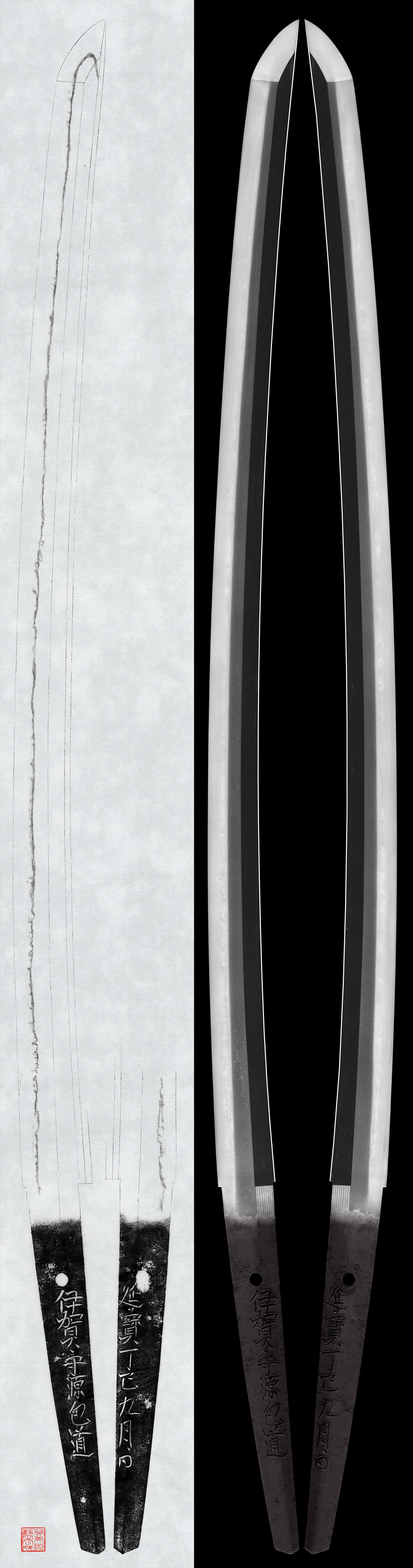
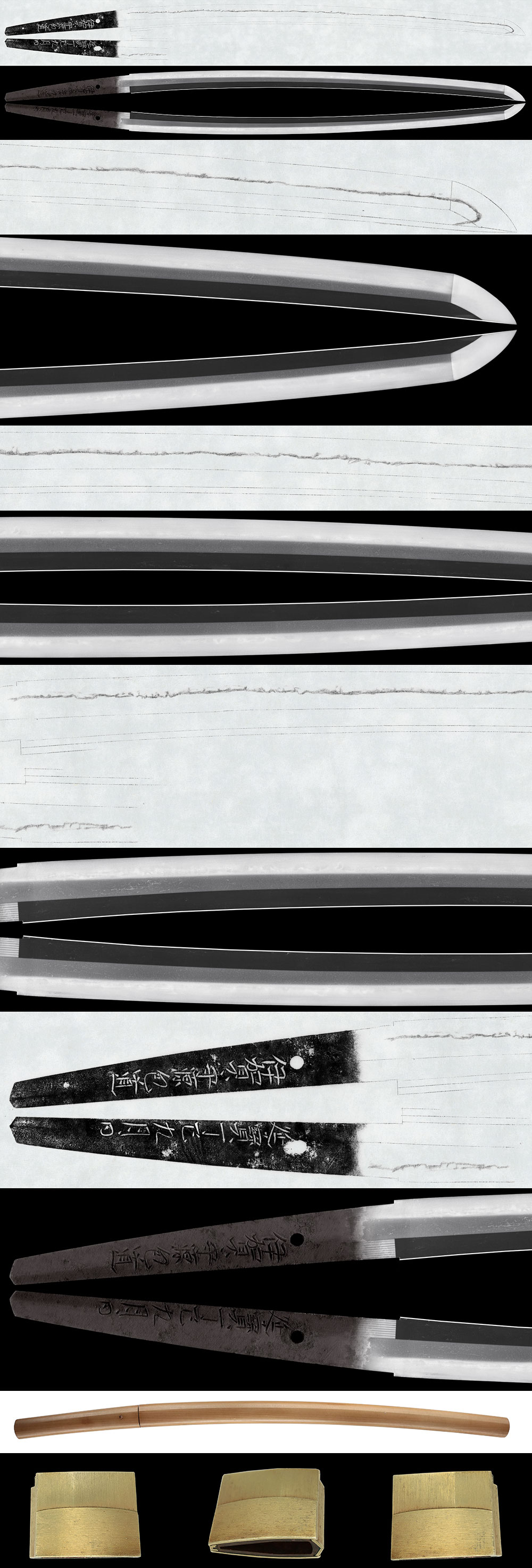
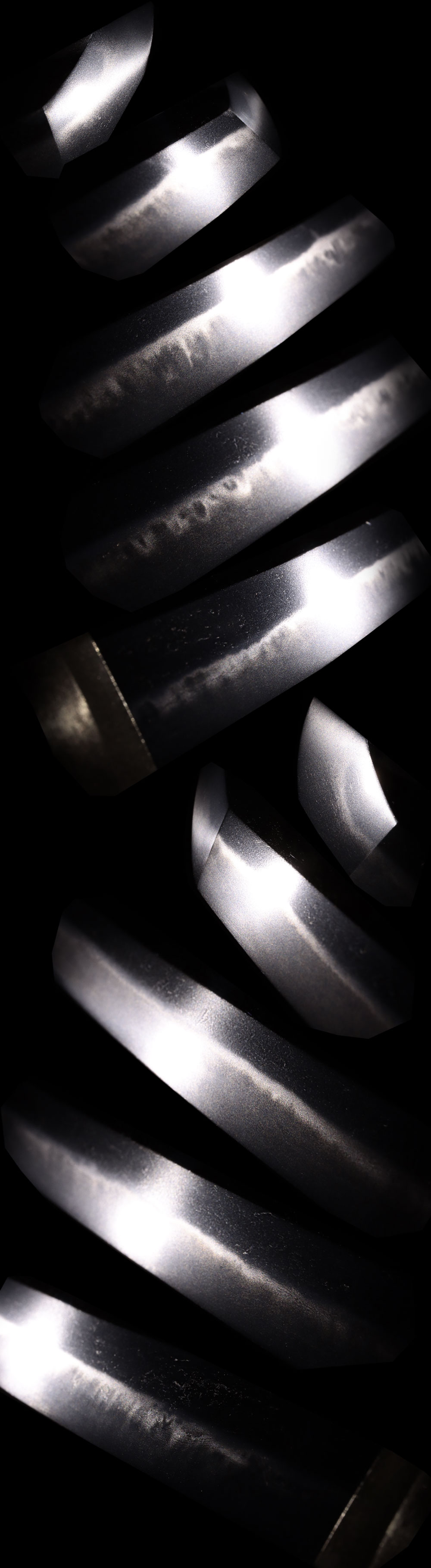
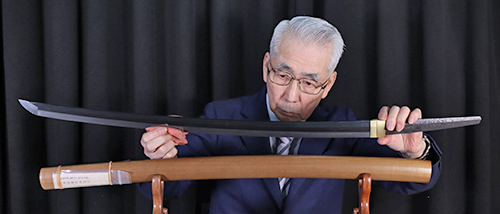
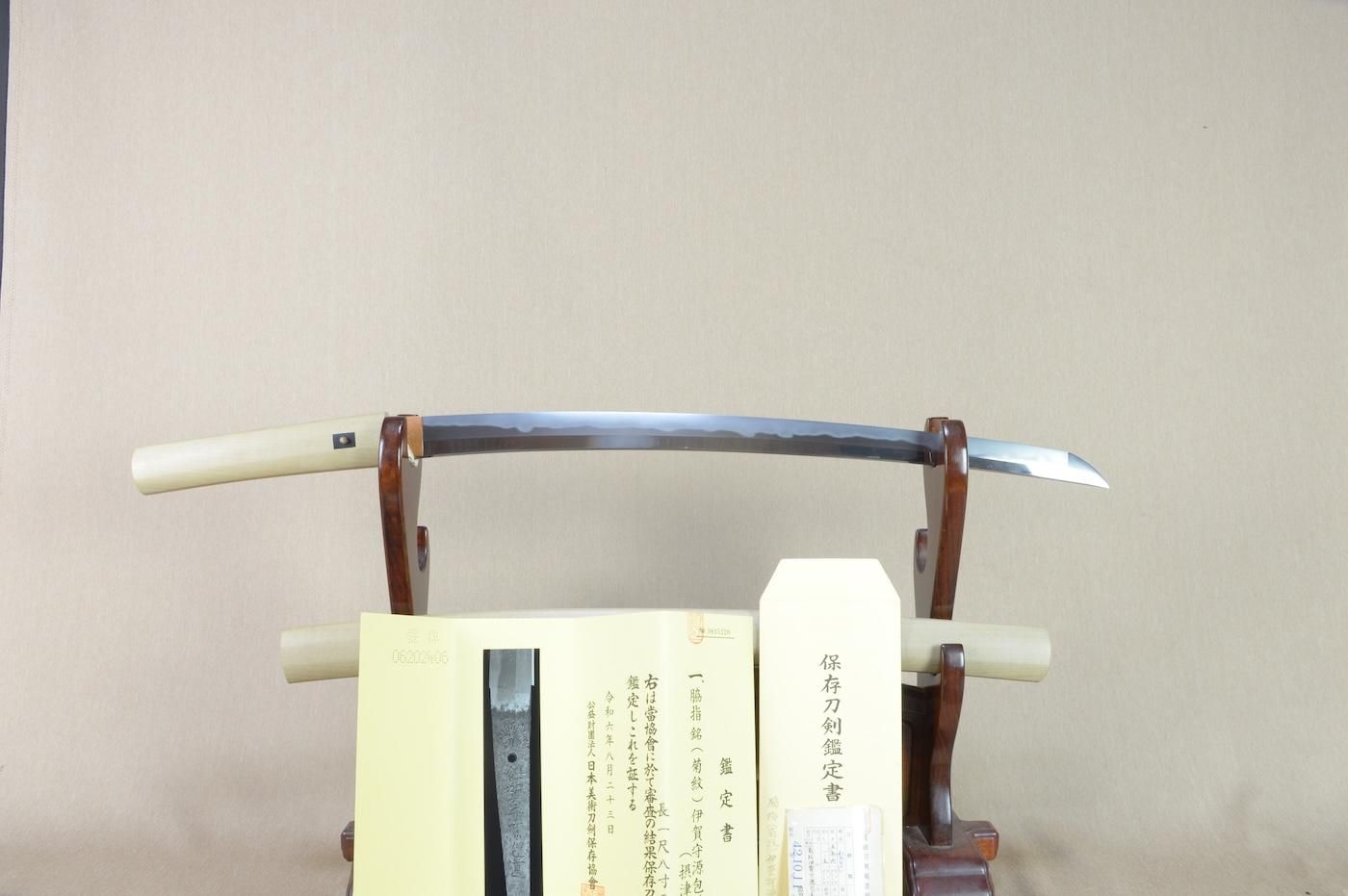
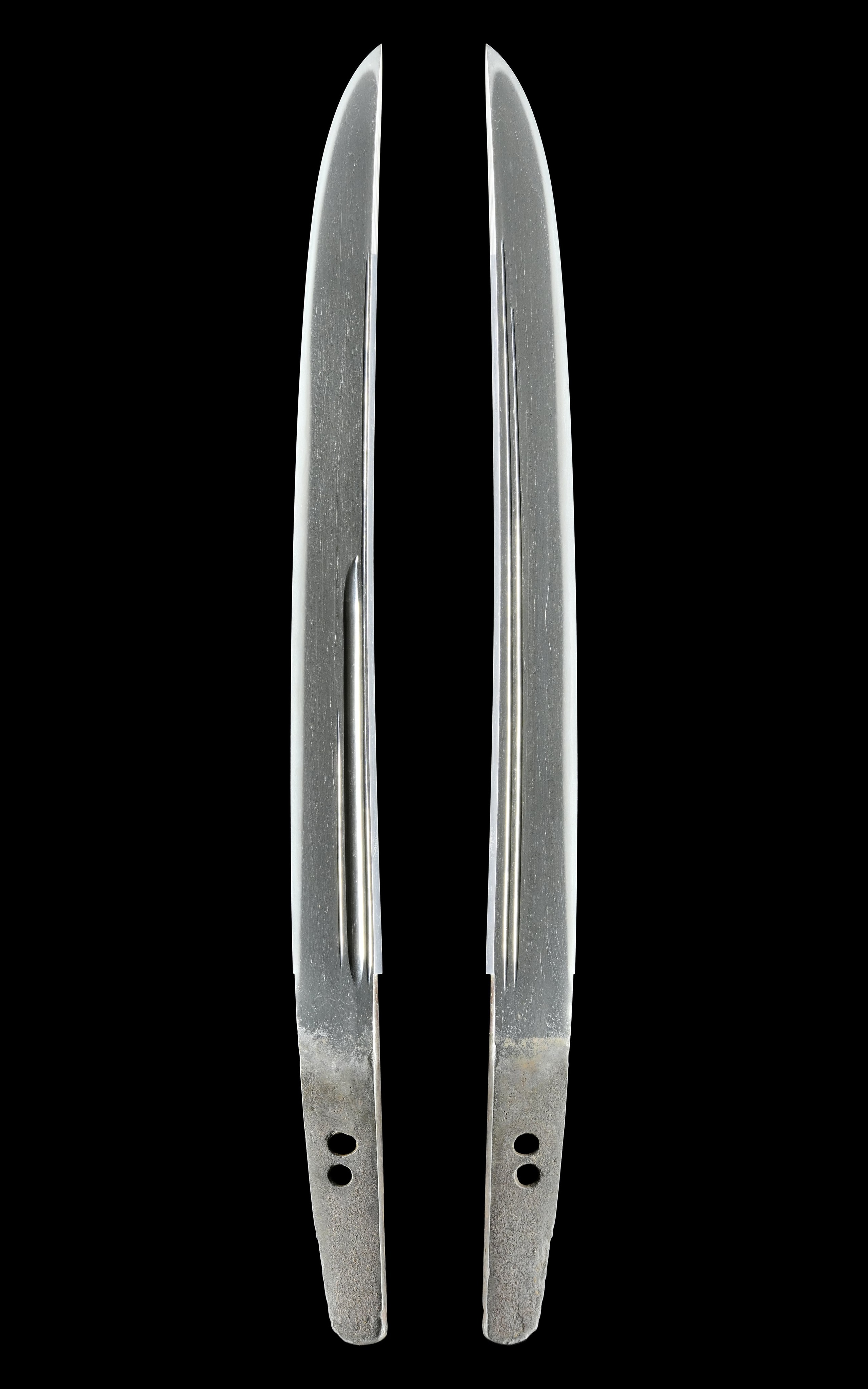
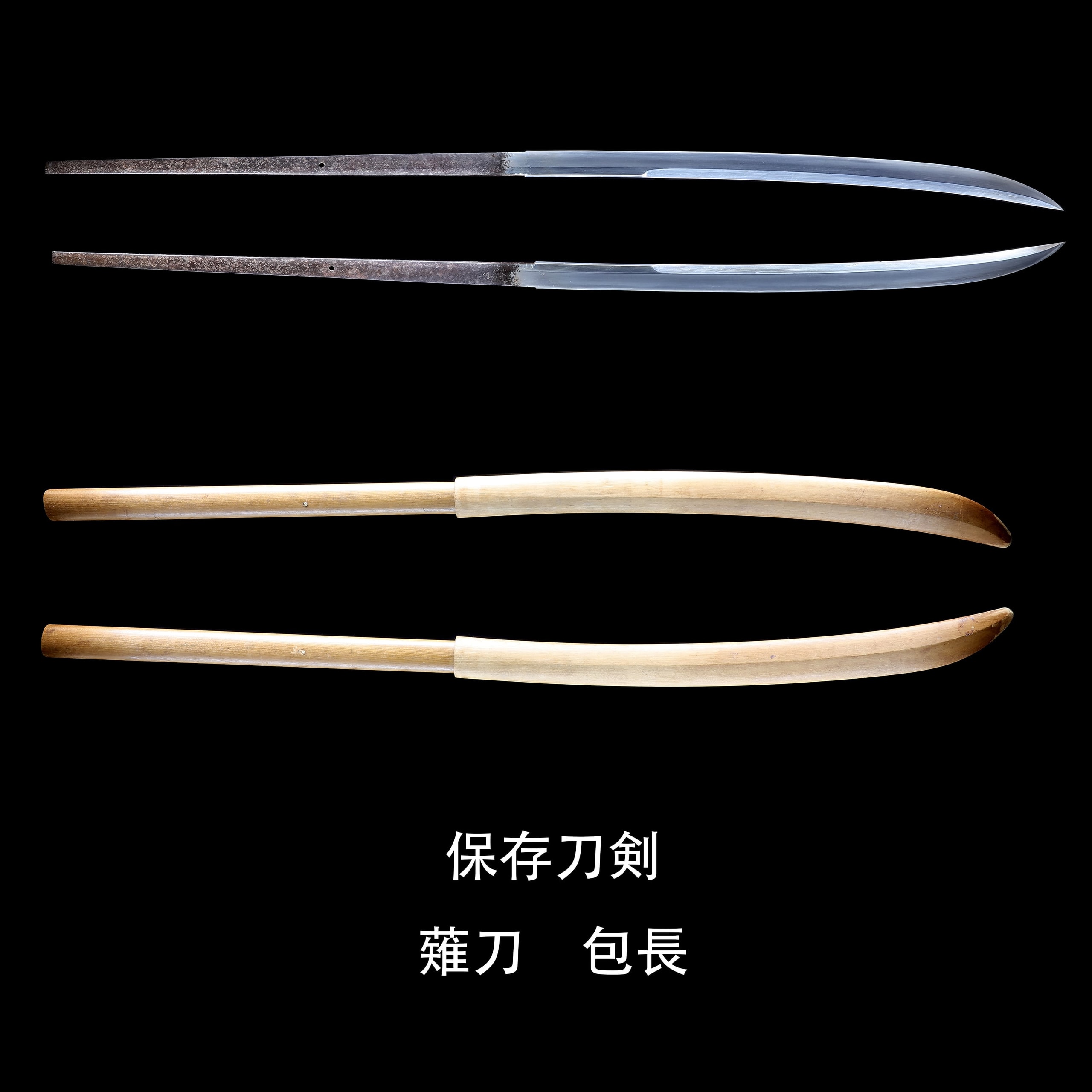
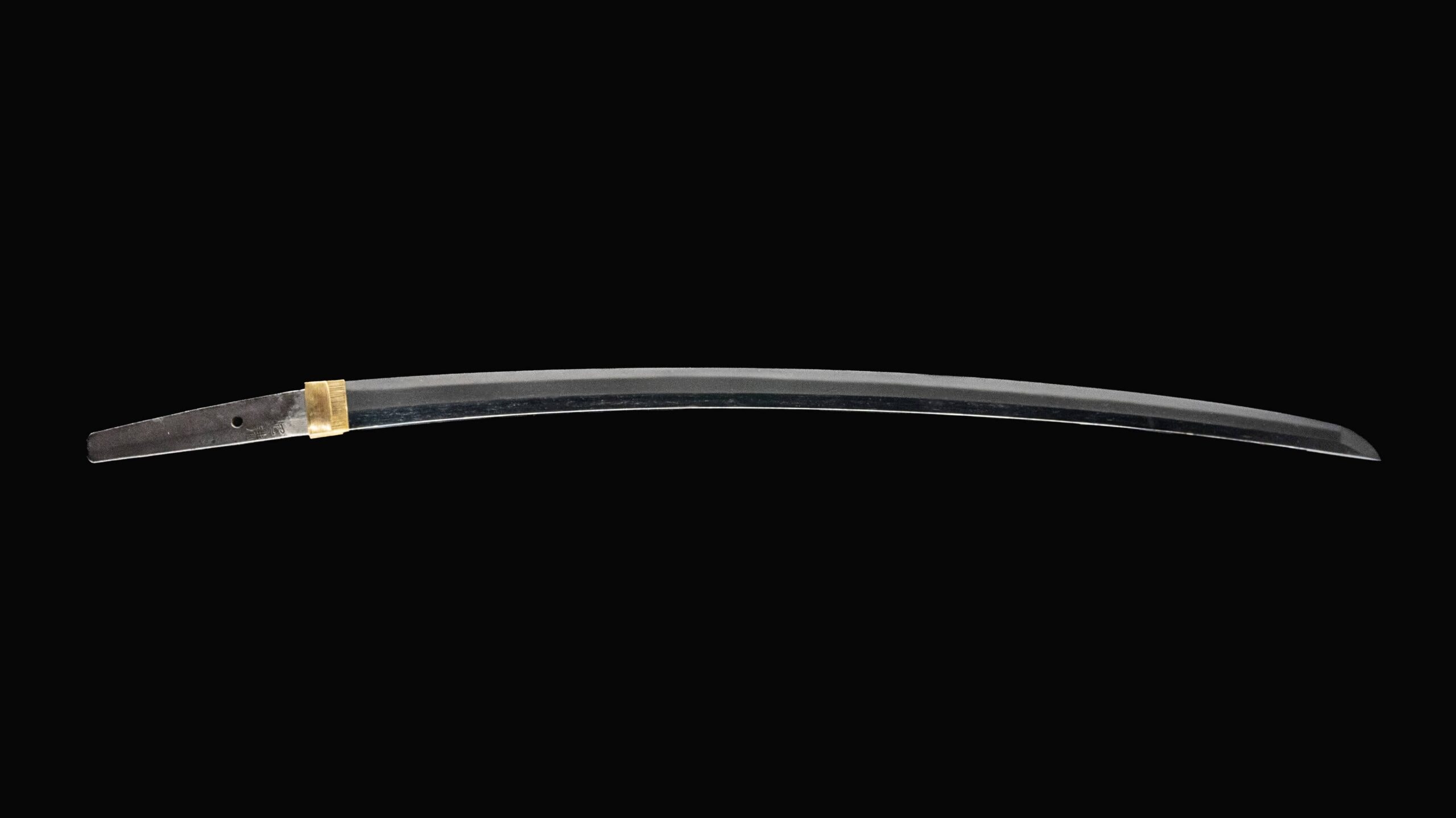
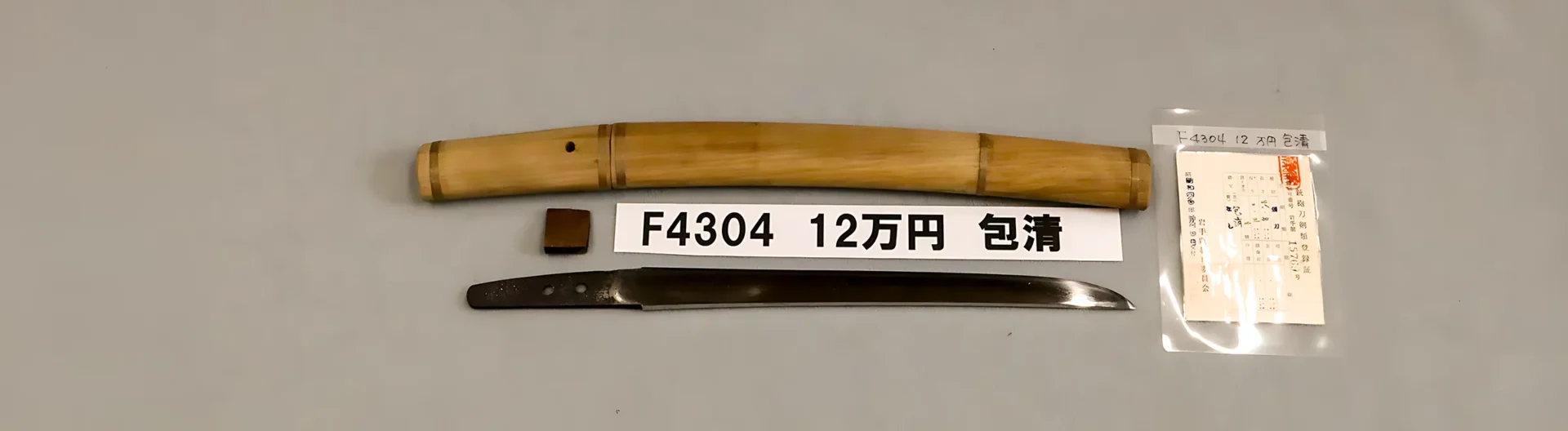
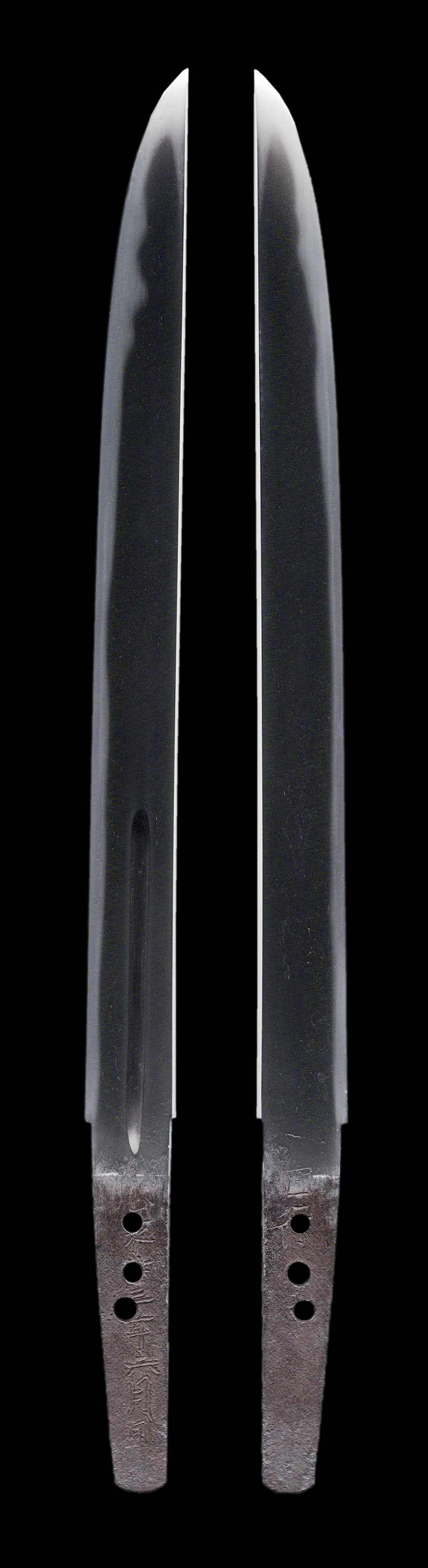
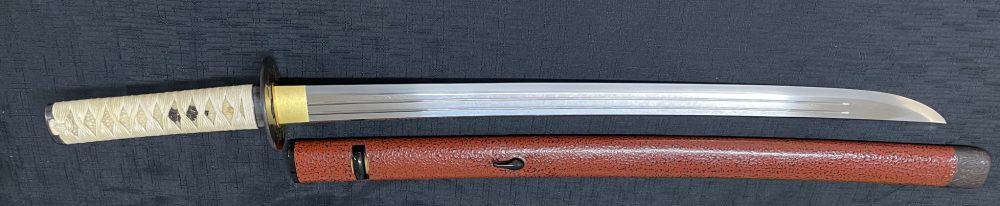
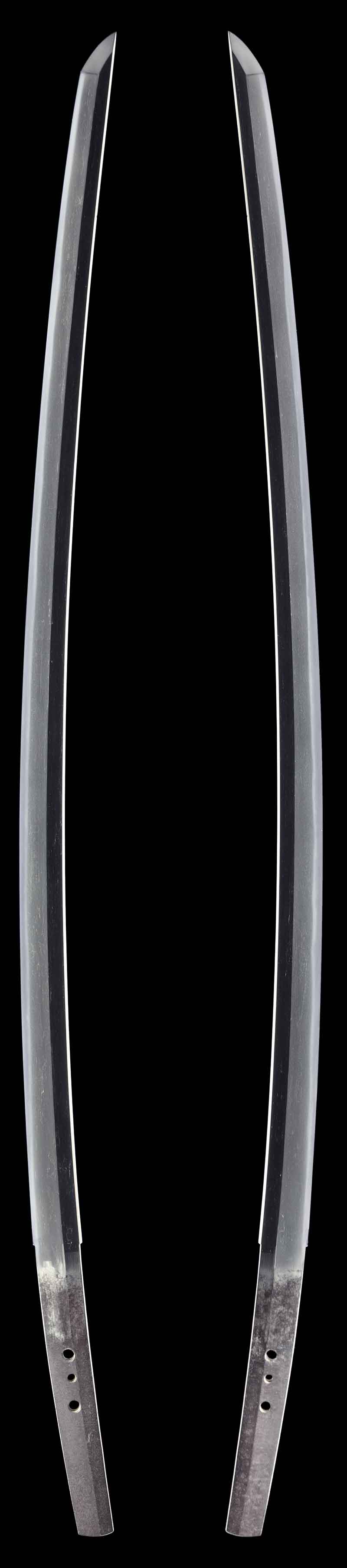
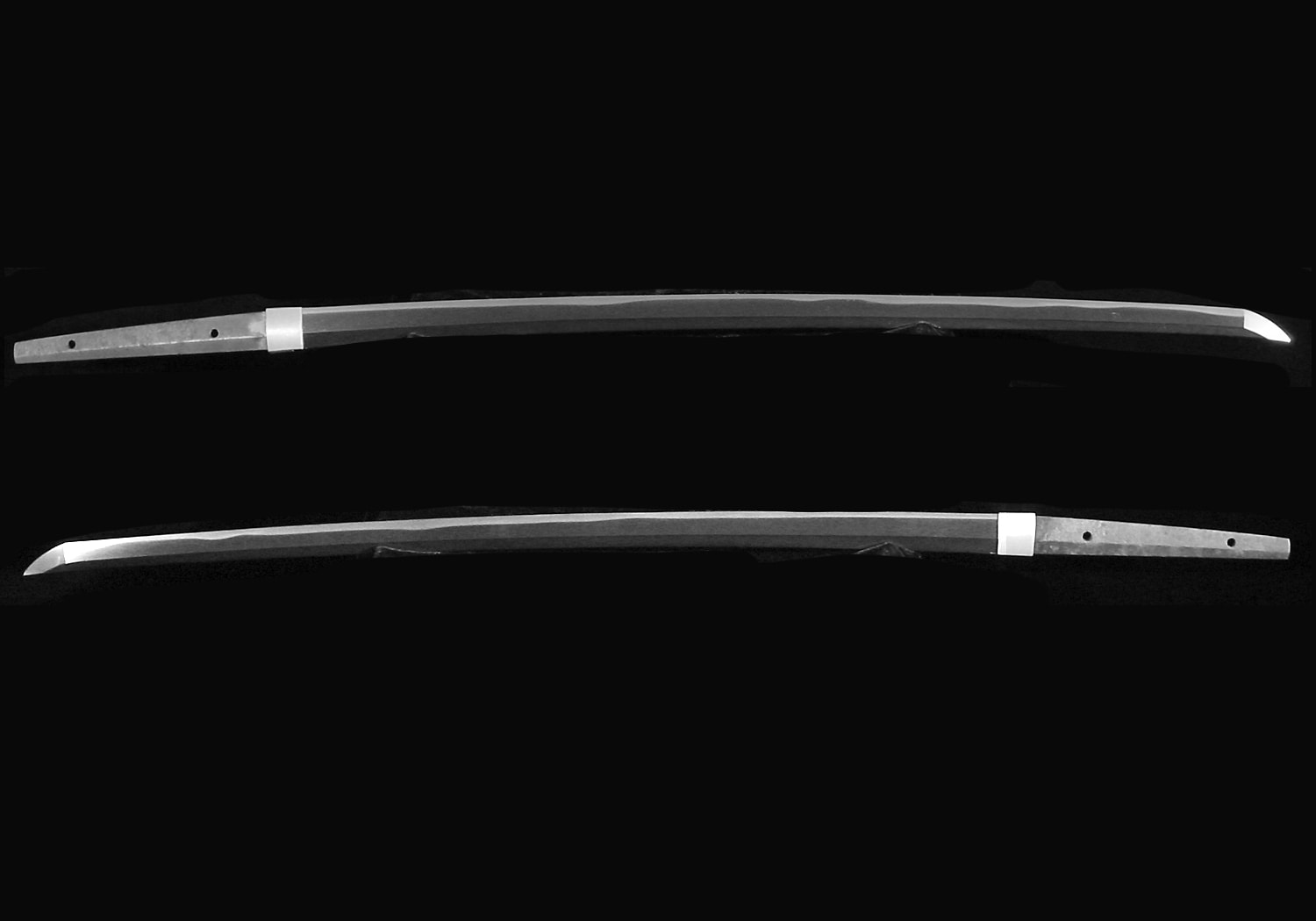
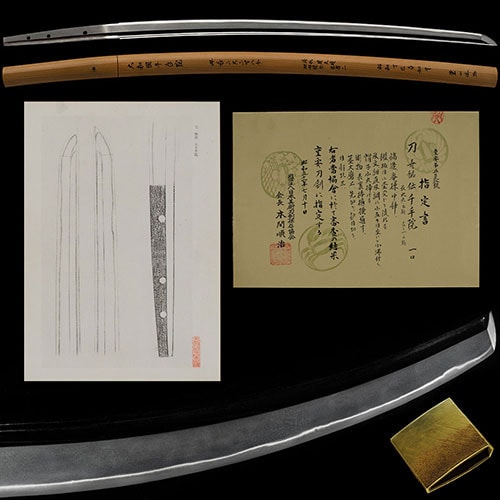
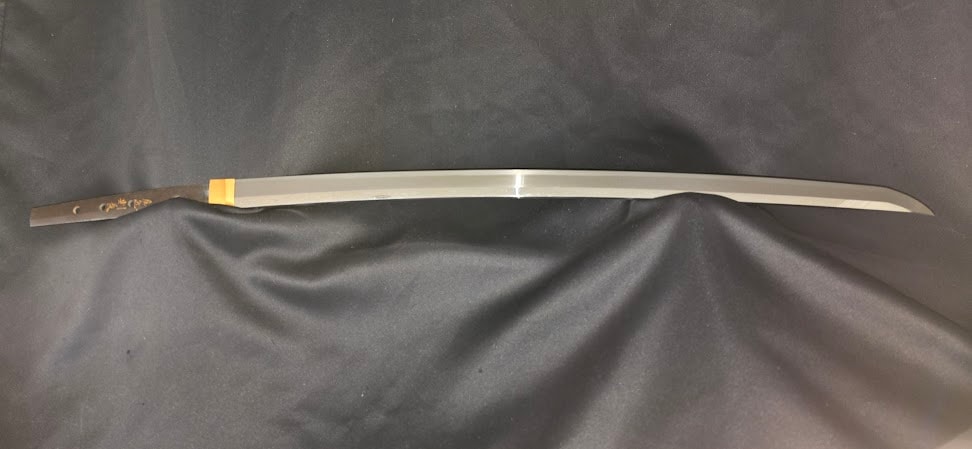
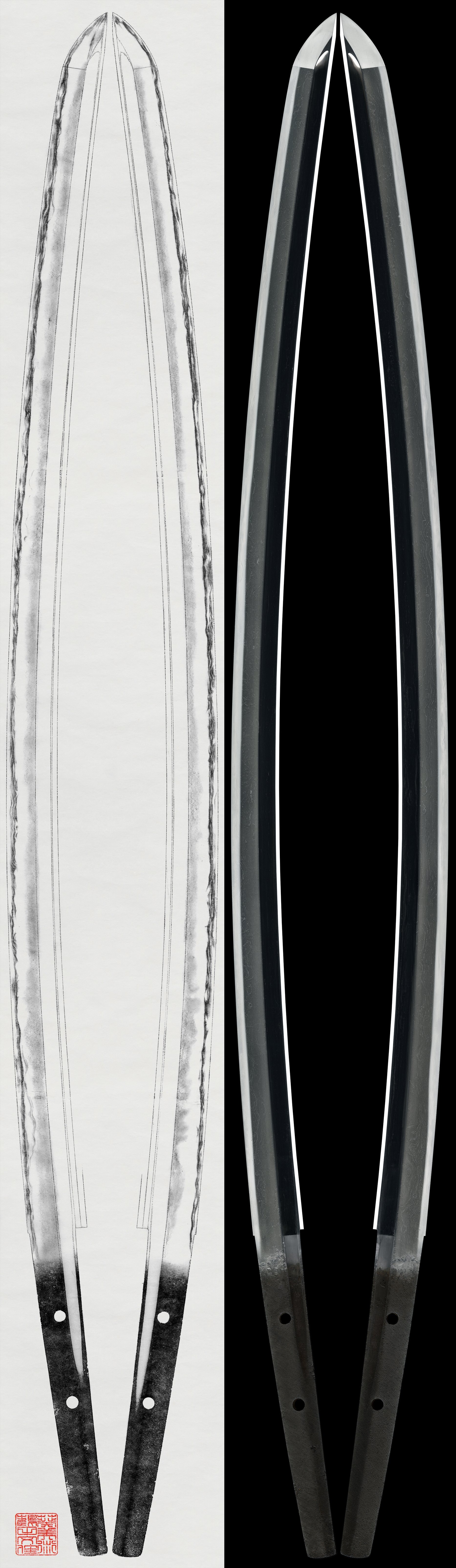
This is a Katana by Iga no Kami Minamoto Kanemichi, a Yamato-style smith active around the Enpō Era (1673-1681) of the Edo Period. It features a broad blade with a thick kasane, a refined ko-itame hada, and a nie-based suguha hamon. The sword comes with an NBTHK Tokubetsu Hozon Token certificate.
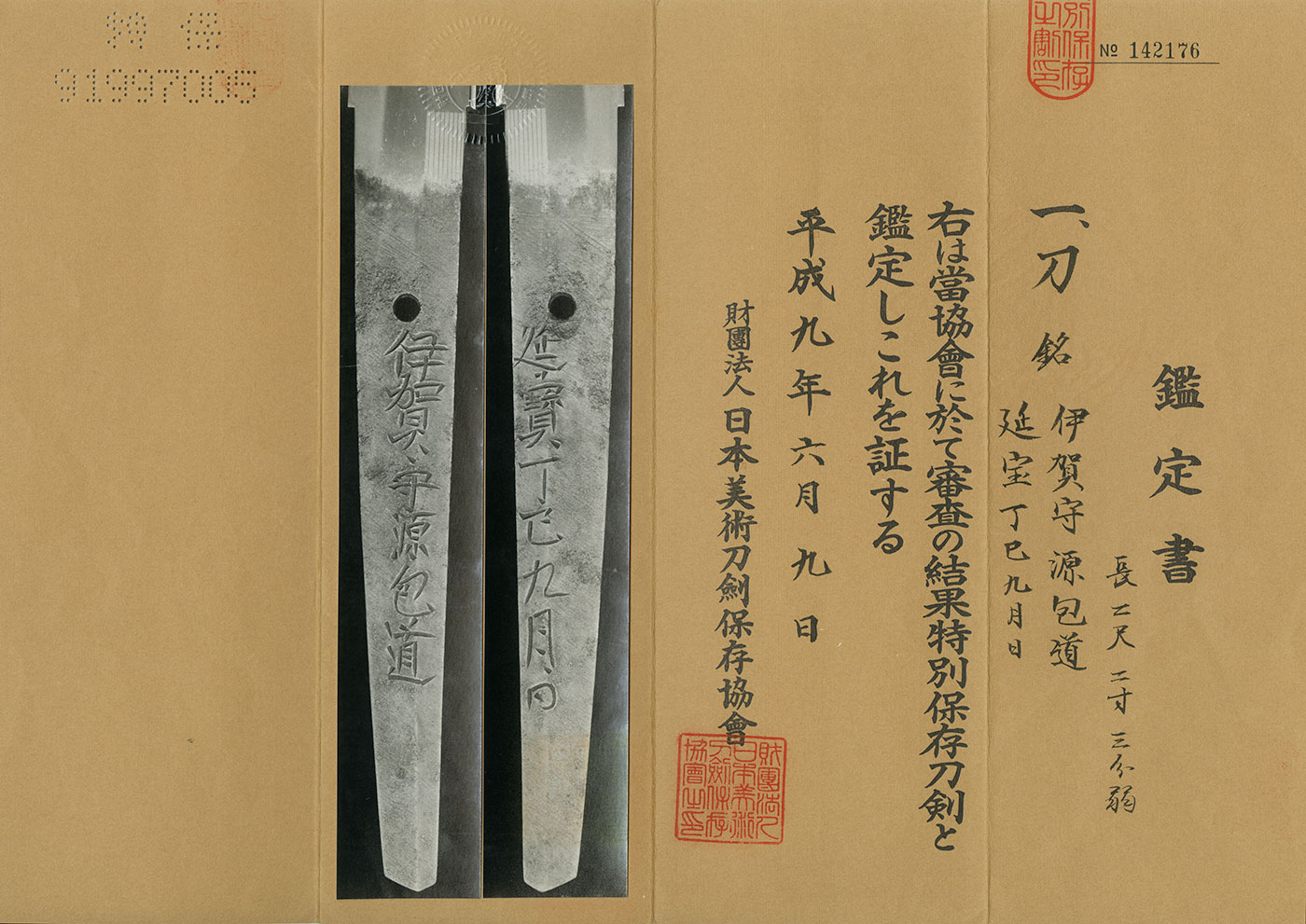
Certificate reading — 銘 伊賀守源包道 延宝丁巳九月日
mei · Genroku (1688-1704) · nagasa 67.7cm · sori 1.52cm


Yamato-den · Yamato · around 1688-1704
1 piece on the market now
Yamato-den · Yamato
Phase: Sue-Tegai末手掻· 1390–1700
29 pieces on the market now
Sue-Tegai (末手掻) is the late phase of the Tegai school, from the Ōei era through the Muromachi period (with a thin tail of name-bearers into the early Edo period). The term 末手掻 is used directly in NBTHK setsumei to set this generation apart from the classical Ko-Tegai of the founder Kanenaga. Its representative smiths are Kanezane (包眞), Kanetoshi (包俊 / 包利), Kaneyoshi (包吉), and Kaneyuki (包行), names that recur across several generations as the workshop continued to supply blades through the fifteenth and sixteenth centuries. Learn more →
| Smith | Era | Designated |
|---|---|---|
| Kanenaga包永 | 1288-1312 | 62 |
| Kanekiyo包清 | 1362-1370 | 8 |
| Kanetsugu包次 | 1317-1333 | 4 |
| Kanetoshi包俊 | 1381-1384 | 4 |
| Kanezane包眞 | 1394-1428 | 3 |
A Hozon-certified blade judged to show notably superior workmanship and a better state of preservation. The bar is higher: re-tempered blades and most unsigned Muromachi/Edo works are excluded.
The NBTHK (Nihon Bijutsu Tōken Hozon Kyōkai, the Society for the Preservation of Japanese Art Swords) is a public-interest incorporated foundation founded in 1948 and supervised by Japan’s Agency for Cultural Affairs (Bunkachō); it is based at the Japanese Sword Museum in Tokyo. Its expert panels physically examine each submitted work (shinsa) and issue a certificate (kanteishō) ranking it by artistic and historical merit. NBTHK papers are the most widely recognized standard of authentication for Japanese swords and fittings.
NBTHK official siteIf you wish to return an item, please notify us within 3 days of receipt. After this period we cannot accept cancellations. Please ship the return to us within 5 business days. Cancellation is conditional on the item being kept in the same condition as at the time of sale, so please handle it with care.
This is a Katana by Iga no Kami Minamoto Kanemichi, a Yamato-style smith active around the Enpō Era (1673-1681) of the Edo Period. It features a broad blade with a thick kasane, a refined ko-itame hada, and a nie-based suguha hamon. The sword comes with an NBTHK Tokubetsu Hozon Token certificate.
Certificate reading — 銘 伊賀守源包道 延宝丁巳九月日
mei · Genroku (1688-1704) · nagasa 67.7cm · sori 1.52cm


Yamato-den · Yamato · around 1688-1704
1 piece on the market now
Yamato-den · Yamato
Phase: Sue-Tegai末手掻· 1390–1700
29 pieces on the market now
Sue-Tegai (末手掻) is the late phase of the Tegai school, from the Ōei era through the Muromachi period (with a thin tail of name-bearers into the early Edo period). The term 末手掻 is used directly in NBTHK setsumei to set this generation apart from the classical Ko-Tegai of the founder Kanenaga. Its representative smiths are Kanezane (包眞), Kanetoshi (包俊 / 包利), Kaneyoshi (包吉), and Kaneyuki (包行), names that recur across several generations as the workshop continued to supply blades through the fifteenth and sixteenth centuries. Learn more →

| Smith | Era | Designated |
|---|---|---|
| Kanenaga包永 | 1288-1312 | 62 |
| Kanekiyo包清 | 1362-1370 | 8 |
| Kanetsugu包次 | 1317-1333 | 4 |
| Kanetoshi包俊 | 1381-1384 | 4 |
| Kanezane包眞 | 1394-1428 | 3 |
A Hozon-certified blade judged to show notably superior workmanship and a better state of preservation. The bar is higher: re-tempered blades and most unsigned Muromachi/Edo works are excluded.
The NBTHK (Nihon Bijutsu Tōken Hozon Kyōkai, the Society for the Preservation of Japanese Art Swords) is a public-interest incorporated foundation founded in 1948 and supervised by Japan’s Agency for Cultural Affairs (Bunkachō); it is based at the Japanese Sword Museum in Tokyo. Its expert panels physically examine each submitted work (shinsa) and issue a certificate (kanteishō) ranking it by artistic and historical merit. NBTHK papers are the most widely recognized standard of authentication for Japanese swords and fittings.
NBTHK official siteIf you wish to return an item, please notify us within 3 days of receipt. After this period we cannot accept cancellations. Please ship the return to us within 5 business days. Cancellation is conditional on the item being kept in the same condition as at the time of sale, so please handle it with care.