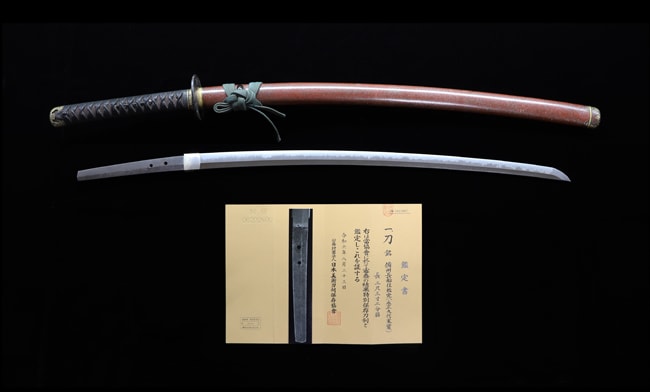
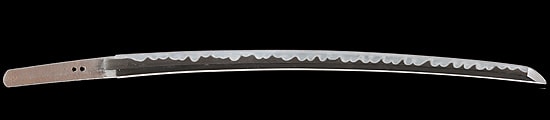
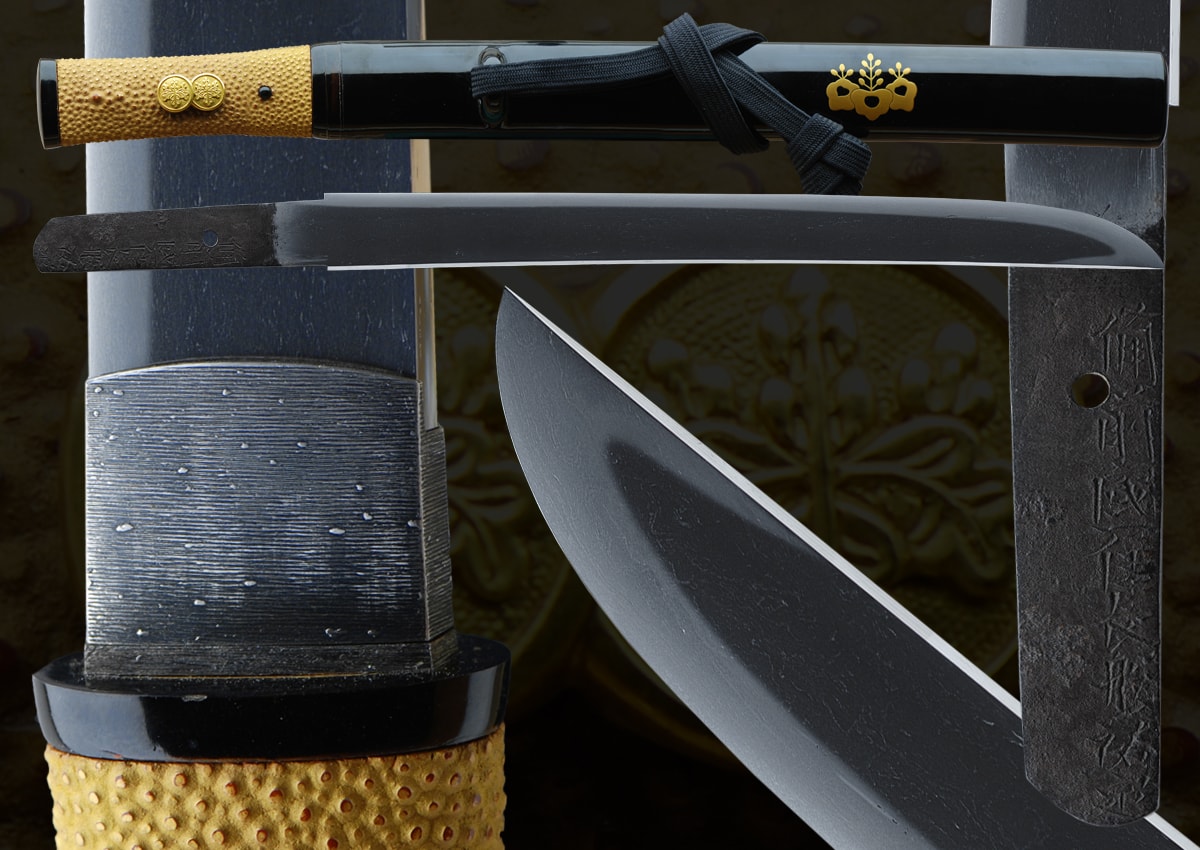
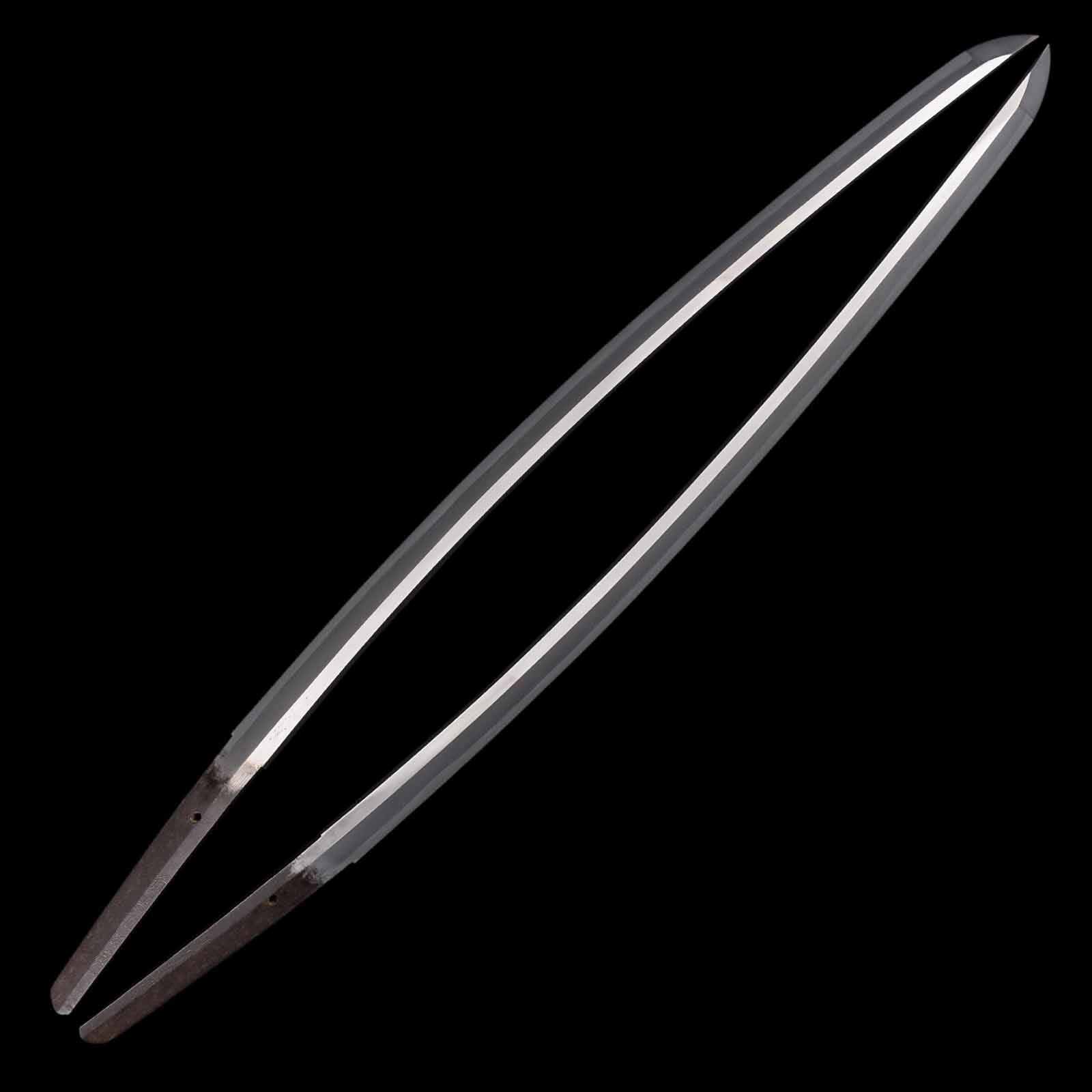
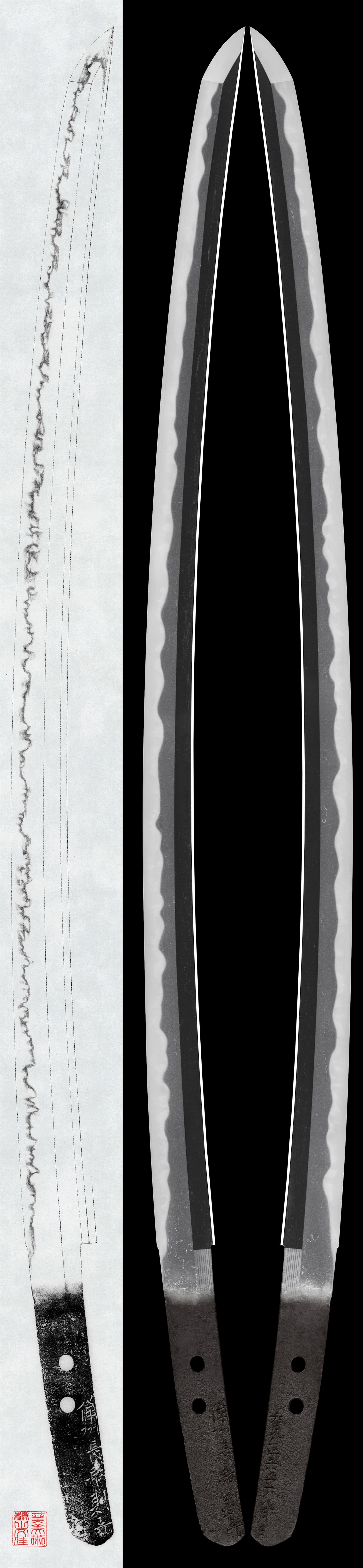
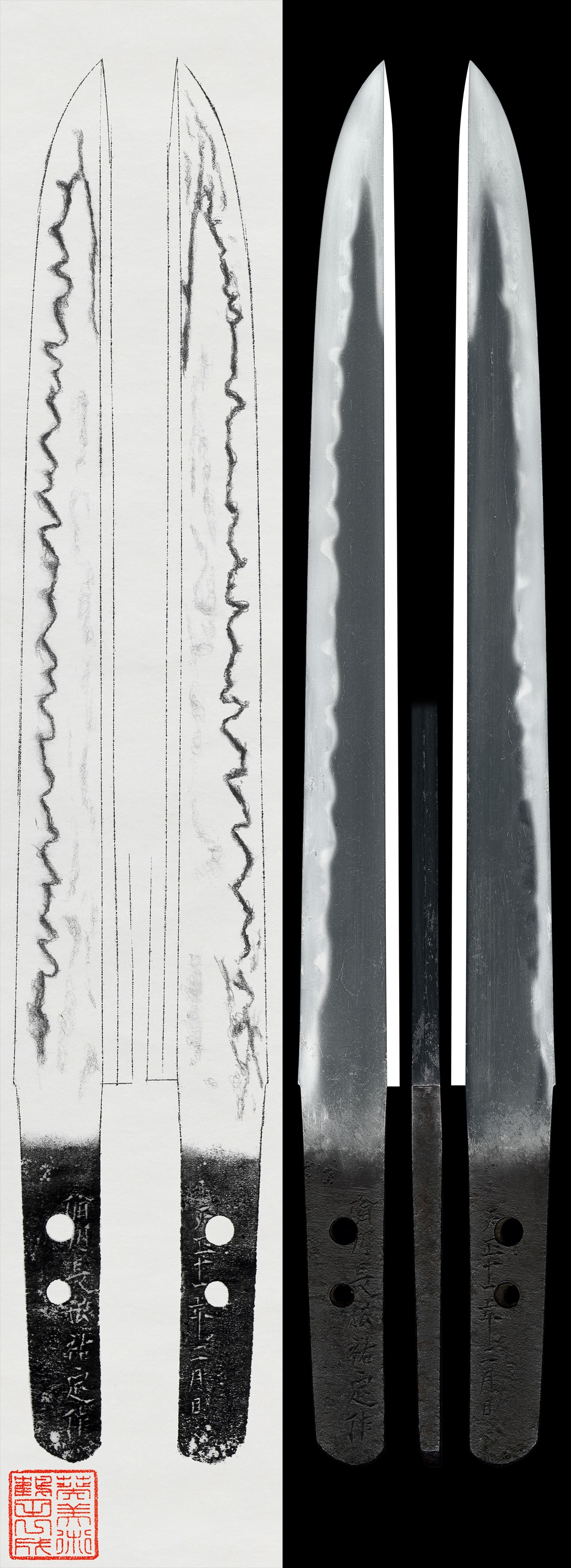
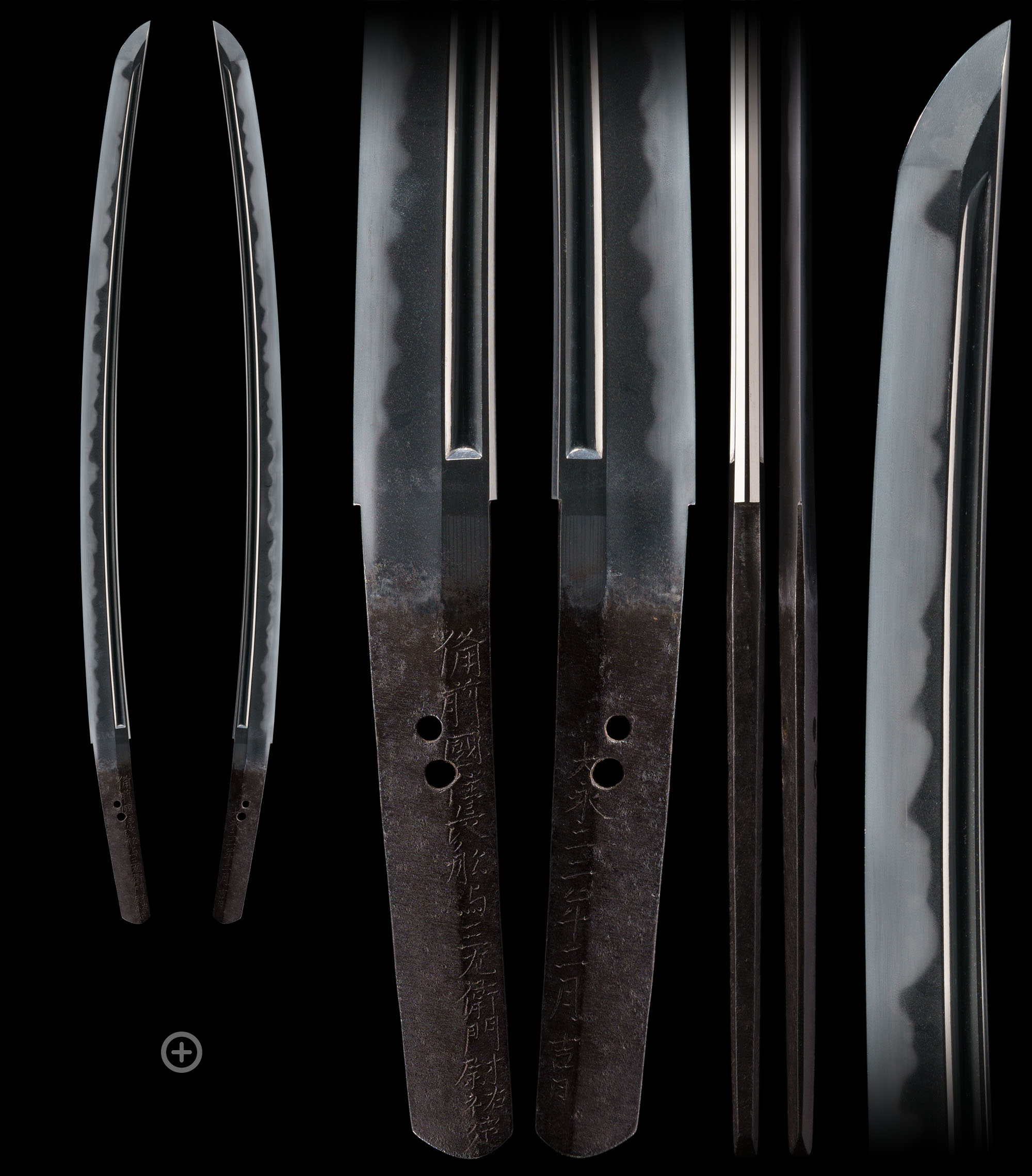
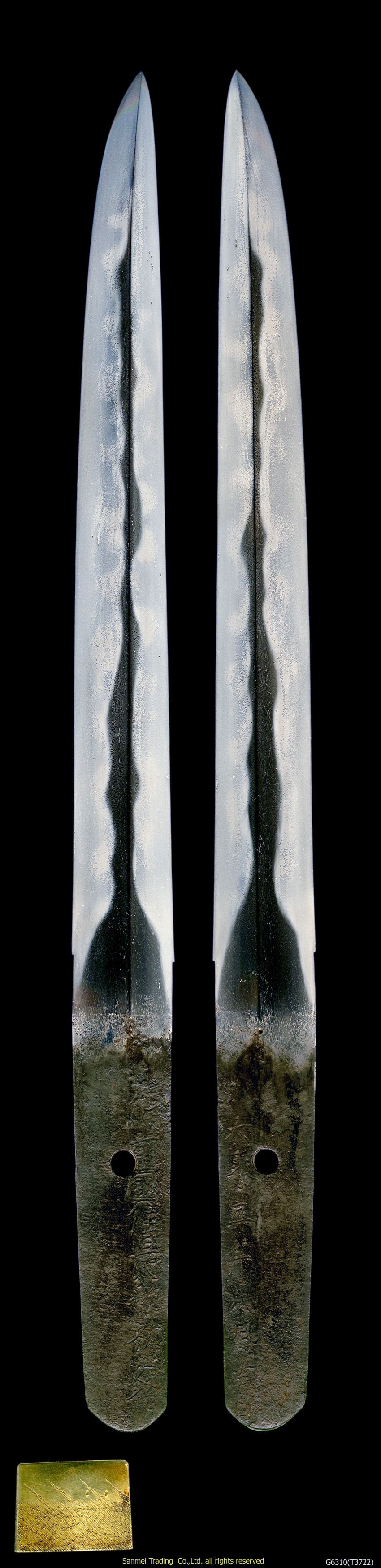
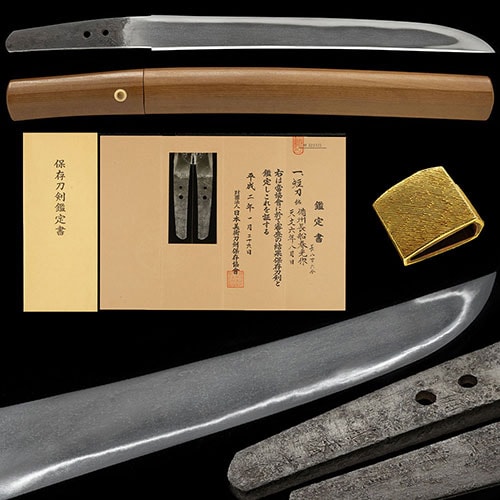
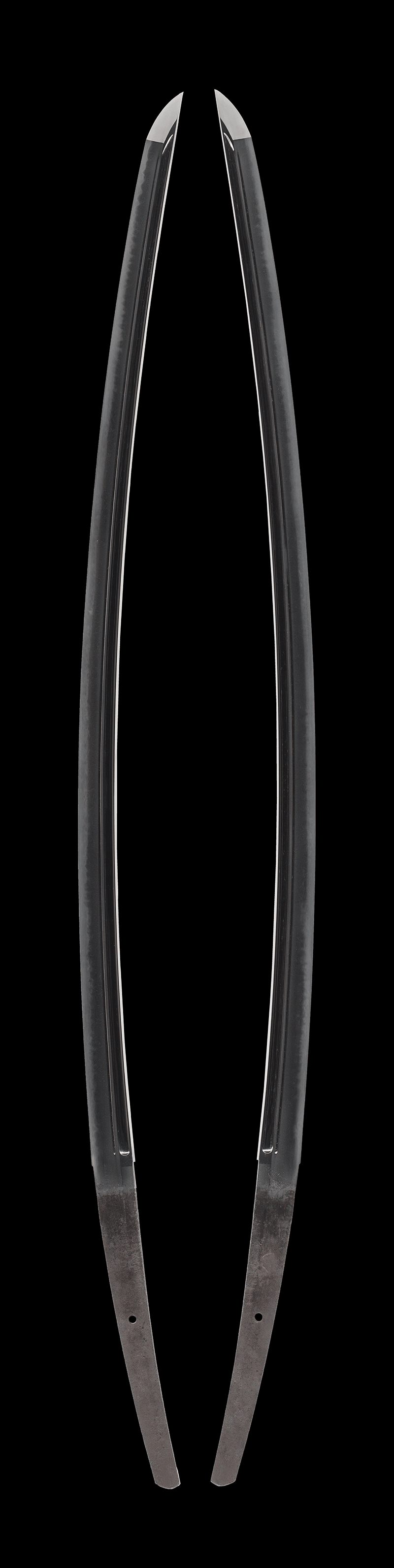
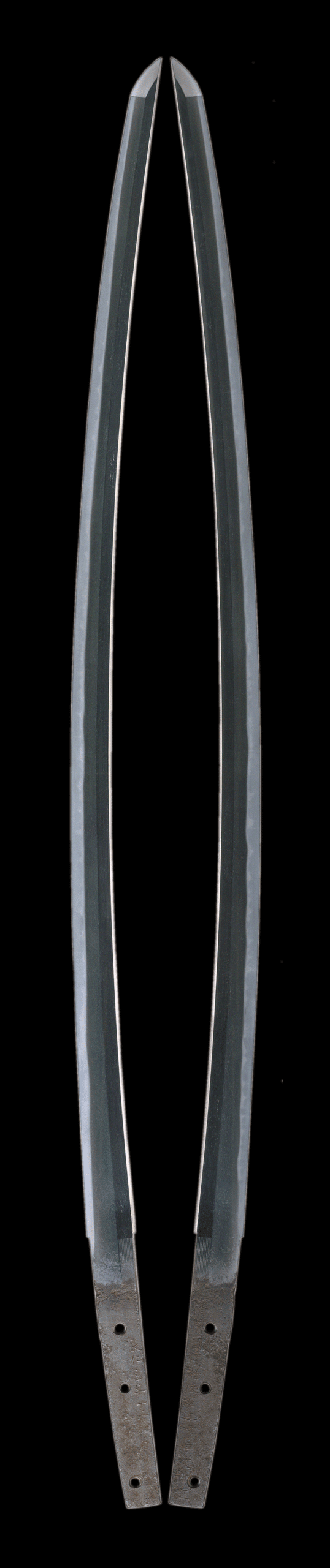
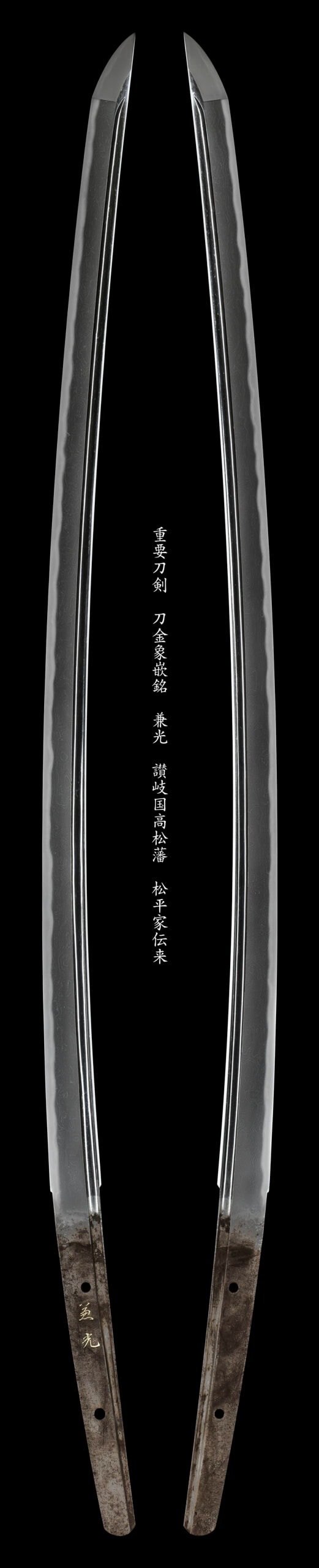
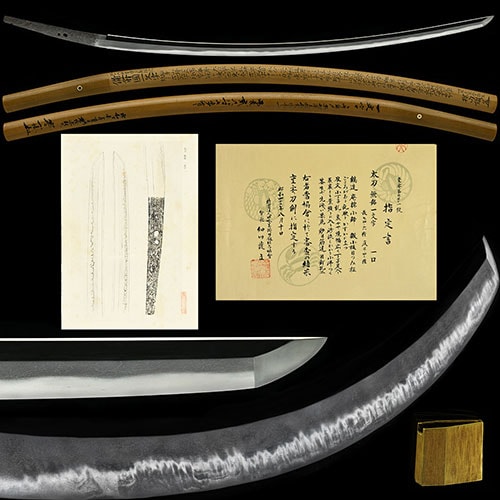
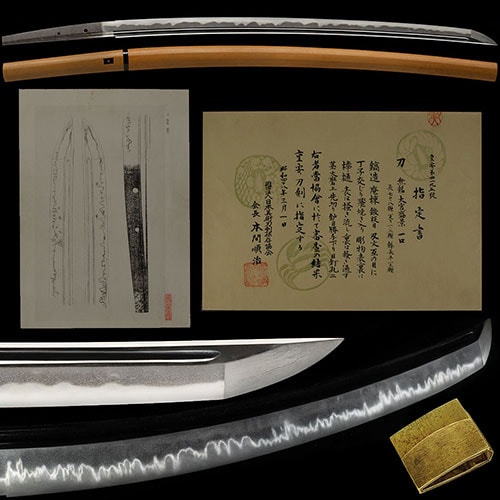
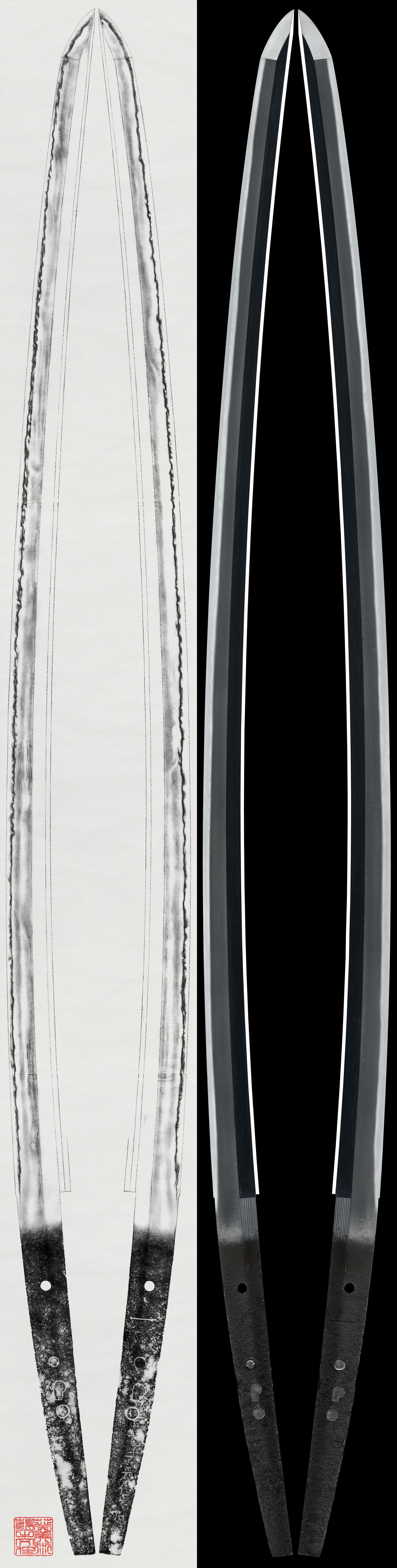
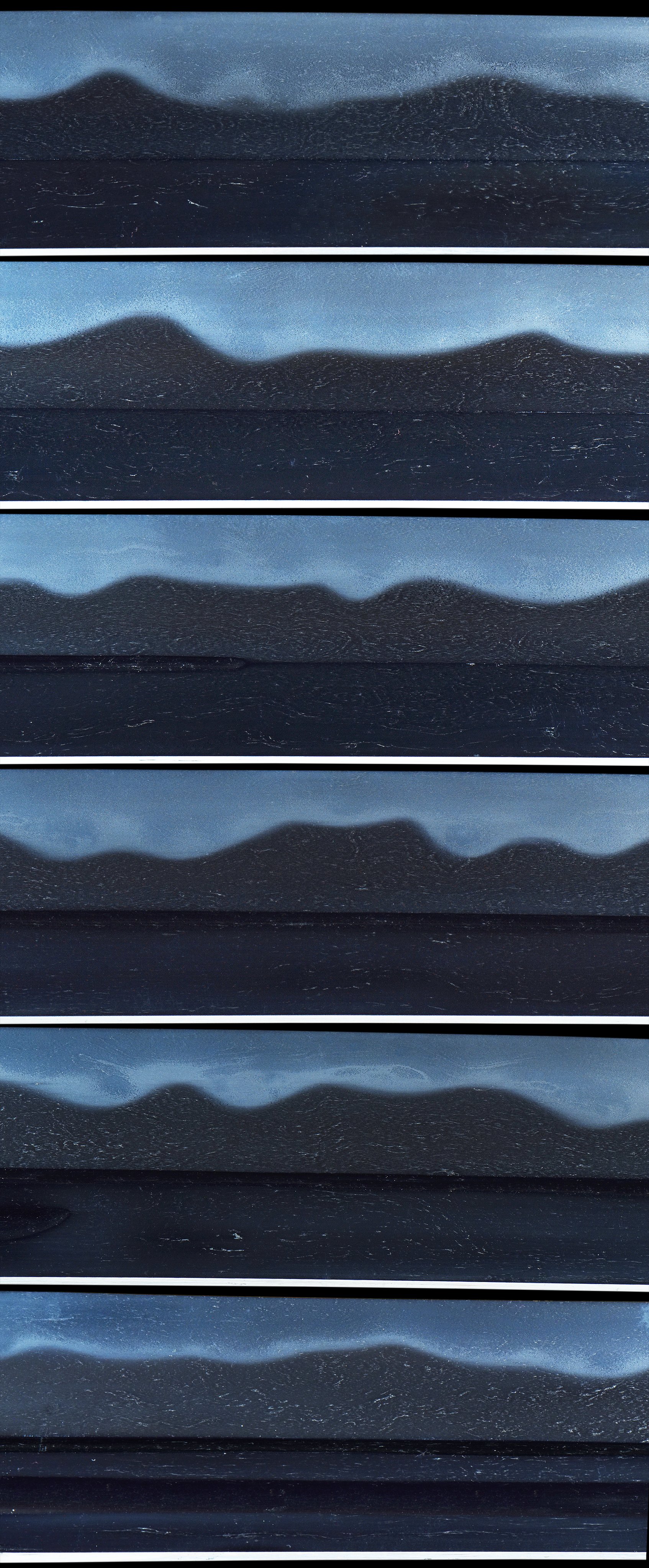
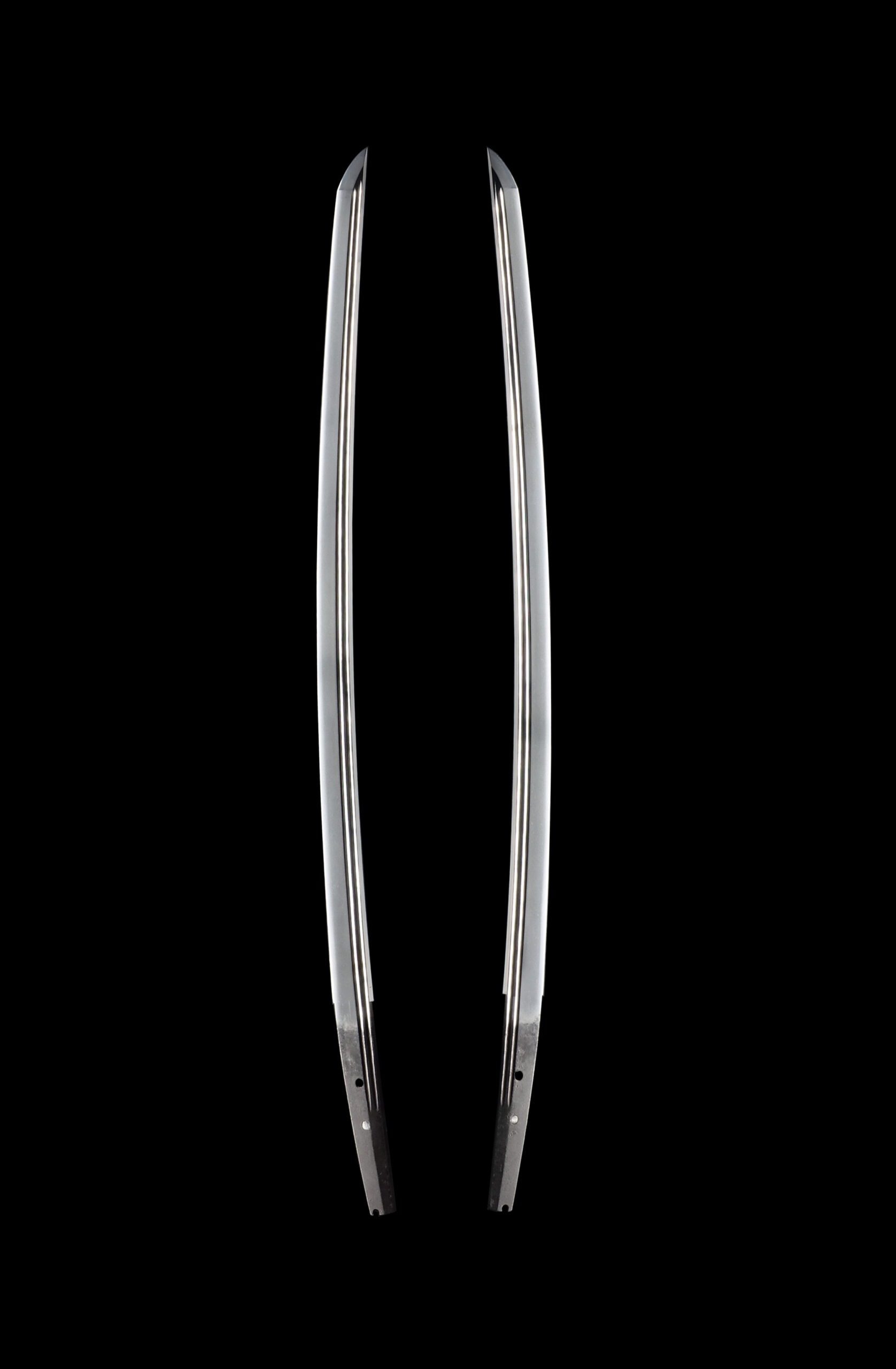
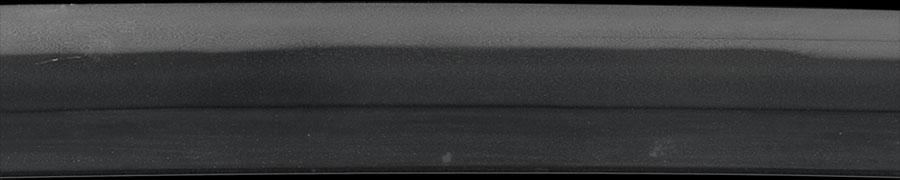
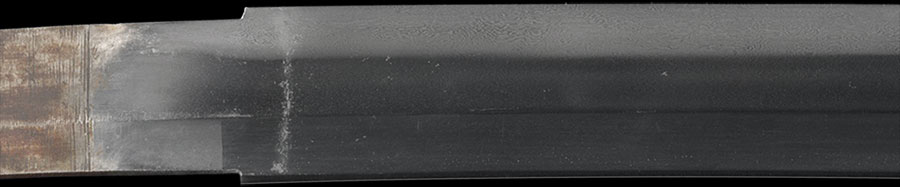
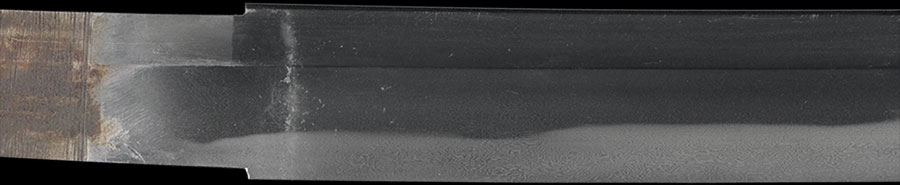
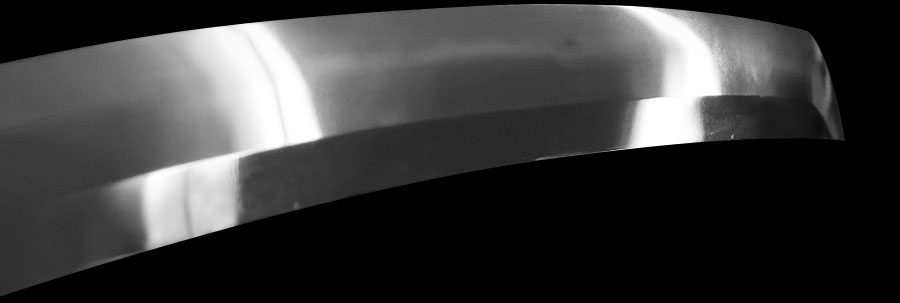
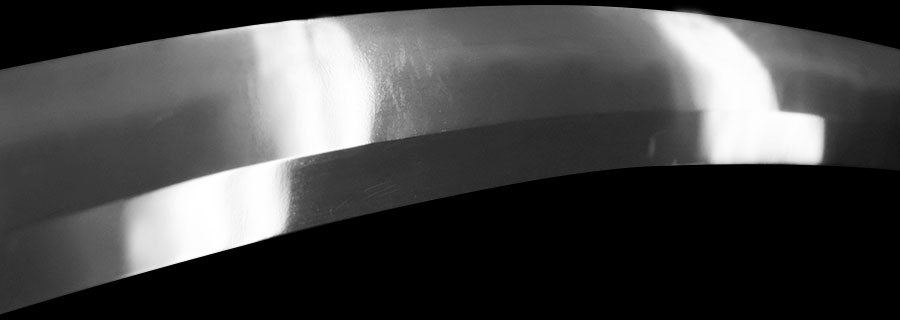
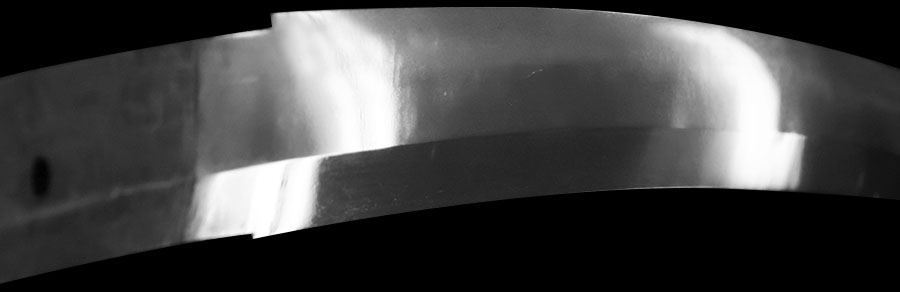
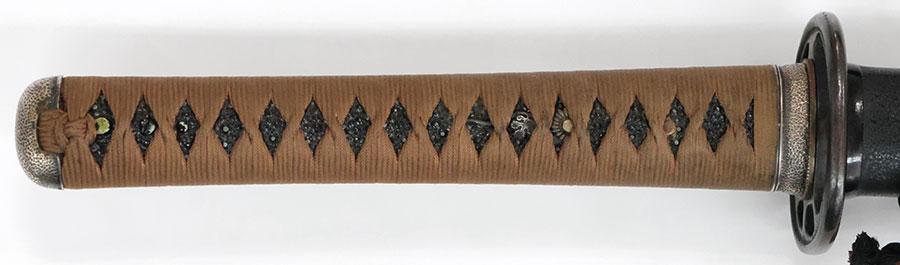
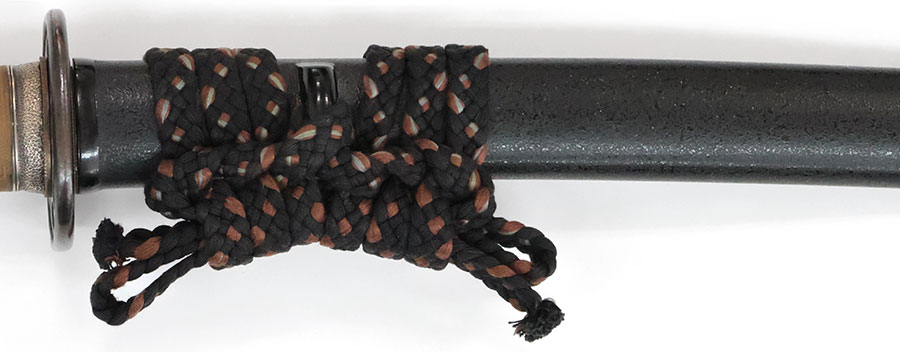
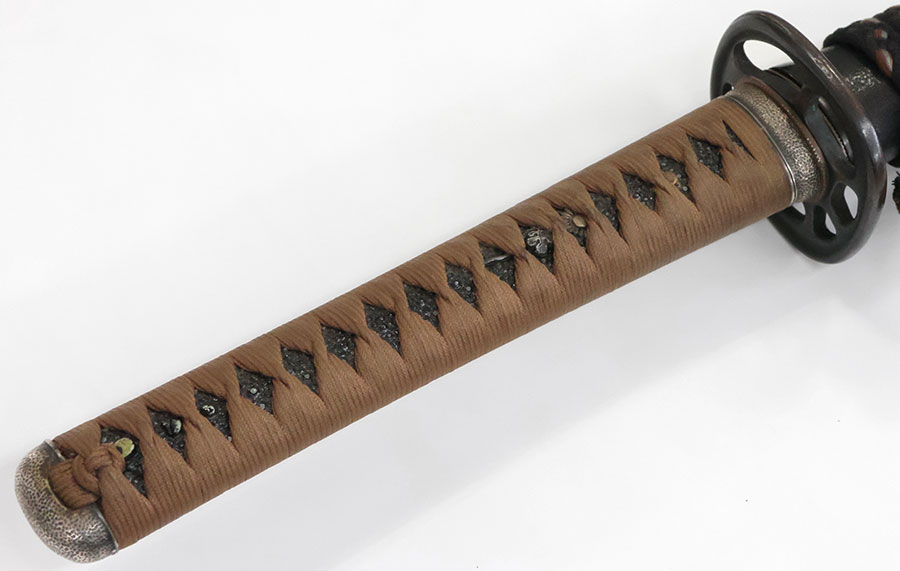
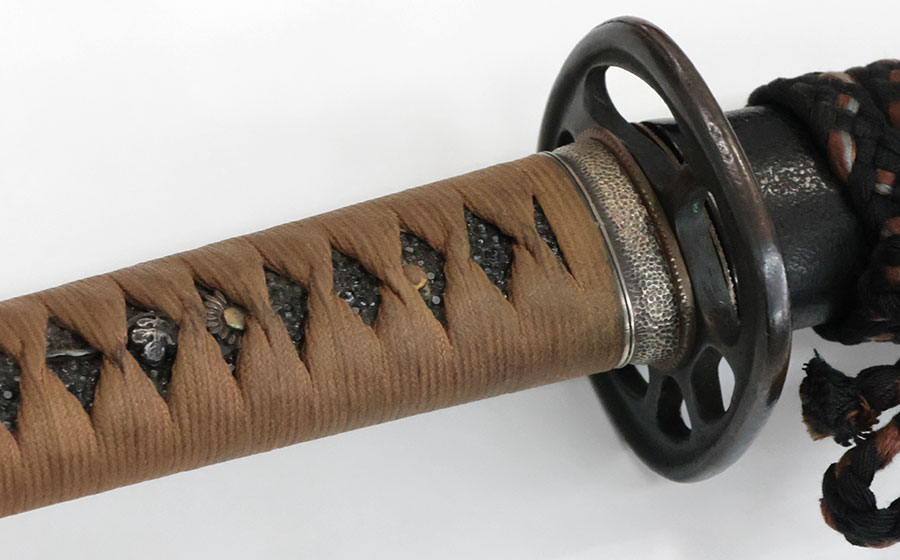
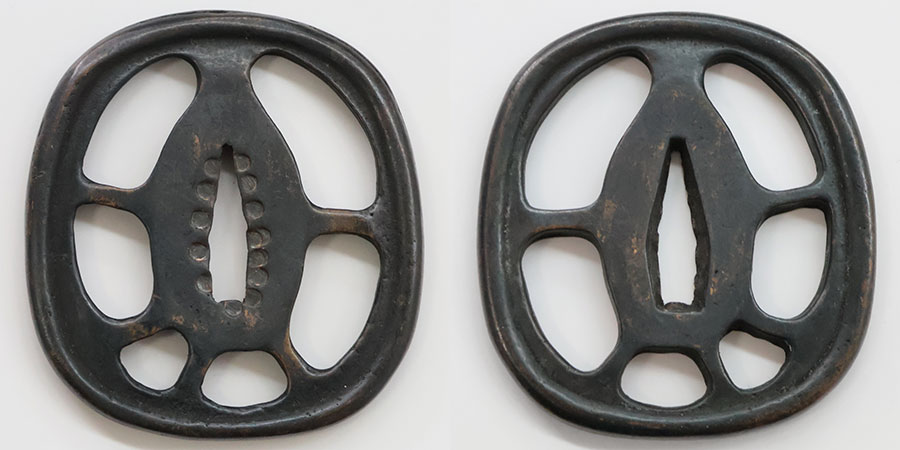
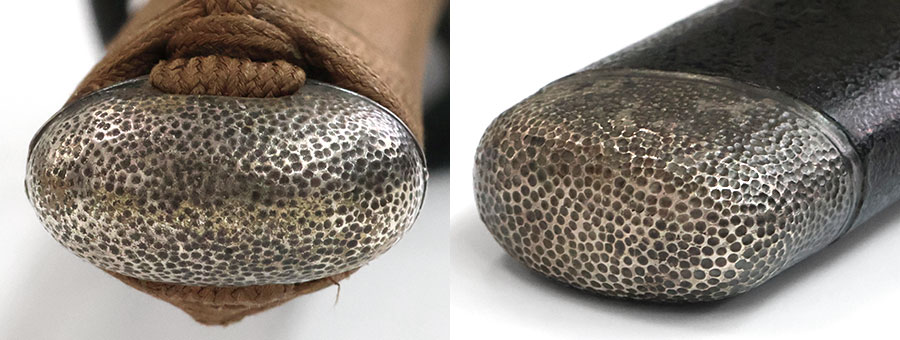
Weight: 1020g (excluding saya) It has arrived, it has arrived—a katana by Fujiwara Sukesada that has been cherished for generations in an old family has emerged. Among Sukesada smiths who used the Fujiwara name, Ueno Daijo Fujiwara Sukesada, Kawachi no Kami Fujiwara Sukesada, Gennoshin Fujiwara Sukesada, and Yamato Daijo Fujiwara Sukesada of the Edo period are famous. However, as this katana lacks a zokumei, it is currently unknown which specific Sukesada produced it. The sugata of this blade shows a wide motohaba with a distinct difference at the sakihaba and a pronounced sori, presenting a grand and powerful appearance. The jigane is a brightly forged ko-itame hada. The hamon is executed in nioi-deki with ko-nie, featuring a wide-tempered notare-midare ba. At a glance, it burns with a spirited edge reminiscent of the works of the famous "Yokozuna of Osaka Shinto," Inoue Shinkai. The koshirae is of a more recent period, but it is a Higo koshirae that adds further splendor to this Fujiwara Sukesada katana. The owners, an elderly couple from an old family, mentioned that they have grown quite old and noted that it is currently unclear which Sukesada generation this blade belongs to. They expressed a wish for it to be of use to someone else, and through the owner's kindness, we are offering it this time at a special, ultra-low price. Although the specific Fujiwara Sukesada remains unidentified, it is highly recommended for those who are interested. Please enjoy this piece.
 NihontoWatchBETA
Edo · nagasa 69.5cm · sori 2.6cm
















Bizen-den · Bizen · around 1596-1615
5 pieces on the market now
Where Sukesada stands among comparable artisans: across all of nihontō, and within tradition, era, and period. The tiers (Foremost · Leading · Major · Notable) weigh official designations from the NBTHK and Japan's Agency for Cultural Affairs, together with historical honors of lasting repute such as the Sansaku and Meibutsu-chō.
Select a lens to see how it's measured.
Years he was demonstrably active, proven by signed-and-dated blades
Bizen-den · Bizen
Phase: Sue-Bizen末備前· 1441–1596
71 pieces on the market now
The last great chapter of Osafune unfolds in the Eisho and Tenbun years of the late Muromachi, when the riverside workshop turned its accumulated craft toward an age of constant war. Where Oei-Bizen had looked backward, reviving the tachi shape and the choji temper of the Kamakura masters under Yasumitsu and Morimitsu, Sue-Bizen faces forward into Sengoku demand. Learn more →
| Smith | Era | Designated |
|---|---|---|
| Sukesada祐定 | 1504-1551 | 72 |
| Sukesada祐定 | 1532-1583 | 18 |
| Sukesada祐定 | 1547-1592 | 8 |
| Sukesada祐定 | 1487-1521 | 5 |
| Sukesada祐定 | 1532-1573 | 3 |
We could not find an authenticity certificate on the seller’s listing. Japanese swords and fittings are normally papered by the NBTHK (or the NTHK). Without one, the attribution is the seller’s own assessment and has not been independently verified — treat it with caution and ask the dealer about certification before buying.
For returns due to customer circumstances, the cost is the customer's responsibility. For returns due to our mis-shipment or a defective item, we bear the cost.
Weight: 1020g (excluding saya) It has arrived, it has arrived—a katana by Fujiwara Sukesada that has been cherished for generations in an old family has emerged. Among Sukesada smiths who used the Fujiwara name, Ueno Daijo Fujiwara Sukesada, Kawachi no Kami Fujiwara Sukesada, Gennoshin Fujiwara Sukesada, and Yamato Daijo Fujiwara Sukesada of the Edo period are famous. However, as this katana lacks a zokumei, it is currently unknown which specific Sukesada produced it. The sugata of this blade shows a wide motohaba with a distinct difference at the sakihaba and a pronounced sori, presenting a grand and powerful appearance. The jigane is a brightly forged ko-itame hada. The hamon is executed in nioi-deki with ko-nie, featuring a wide-tempered notare-midare ba. At a glance, it burns with a spirited edge reminiscent of the works of the famous "Yokozuna of Osaka Shinto," Inoue Shinkai. The koshirae is of a more recent period, but it is a Higo koshirae that adds further splendor to this Fujiwara Sukesada katana. The owners, an elderly couple from an old family, mentioned that they have grown quite old and noted that it is currently unclear which Sukesada generation this blade belongs to. They expressed a wish for it to be of use to someone else, and through the owner's kindness, we are offering it this time at a special, ultra-low price. Although the specific Fujiwara Sukesada remains unidentified, it is highly recommended for those who are interested. Please enjoy this piece.
NihontoWatchBETAEdo · nagasa 69.5cm · sori 2.6cm
Bizen-den · Bizen · around 1596-1615
5 pieces on the market now
Where Sukesada stands among comparable artisans: across all of nihontō, and within tradition, era, and period. The tiers (Foremost · Leading · Major · Notable) weigh official designations from the NBTHK and Japan's Agency for Cultural Affairs, together with historical honors of lasting repute such as the Sansaku and Meibutsu-chō.
Select a lens to see how it's measured.
Years he was demonstrably active, proven by signed-and-dated blades
Bizen-den · Bizen
Phase: Sue-Bizen末備前· 1441–1596
71 pieces on the market now
The last great chapter of Osafune unfolds in the Eisho and Tenbun years of the late Muromachi, when the riverside workshop turned its accumulated craft toward an age of constant war. Where Oei-Bizen had looked backward, reviving the tachi shape and the choji temper of the Kamakura masters under Yasumitsu and Morimitsu, Sue-Bizen faces forward into Sengoku demand. Learn more →
| Smith | Era | Designated |
|---|---|---|
| Sukesada祐定 | 1504-1551 | 72 |
| Sukesada祐定 | 1532-1583 | 18 |
| Sukesada祐定 | 1547-1592 | 8 |
| Sukesada祐定 | 1487-1521 | 5 |
| Sukesada祐定 | 1532-1573 | 3 |
We could not find an authenticity certificate on the seller’s listing. Japanese swords and fittings are normally papered by the NBTHK (or the NTHK). Without one, the attribution is the seller’s own assessment and has not been independently verified — treat it with caution and ask the dealer about certification before buying.
For returns due to customer circumstances, the cost is the customer's responsibility. For returns due to our mis-shipment or a defective item, we bear the cost.