NihontoWatch MonNihontoWatch
Market
Encyclopedia
Kantei
NihontoWatch MonNihontoWatch
Market
Encyclopedia
Kantei

Description

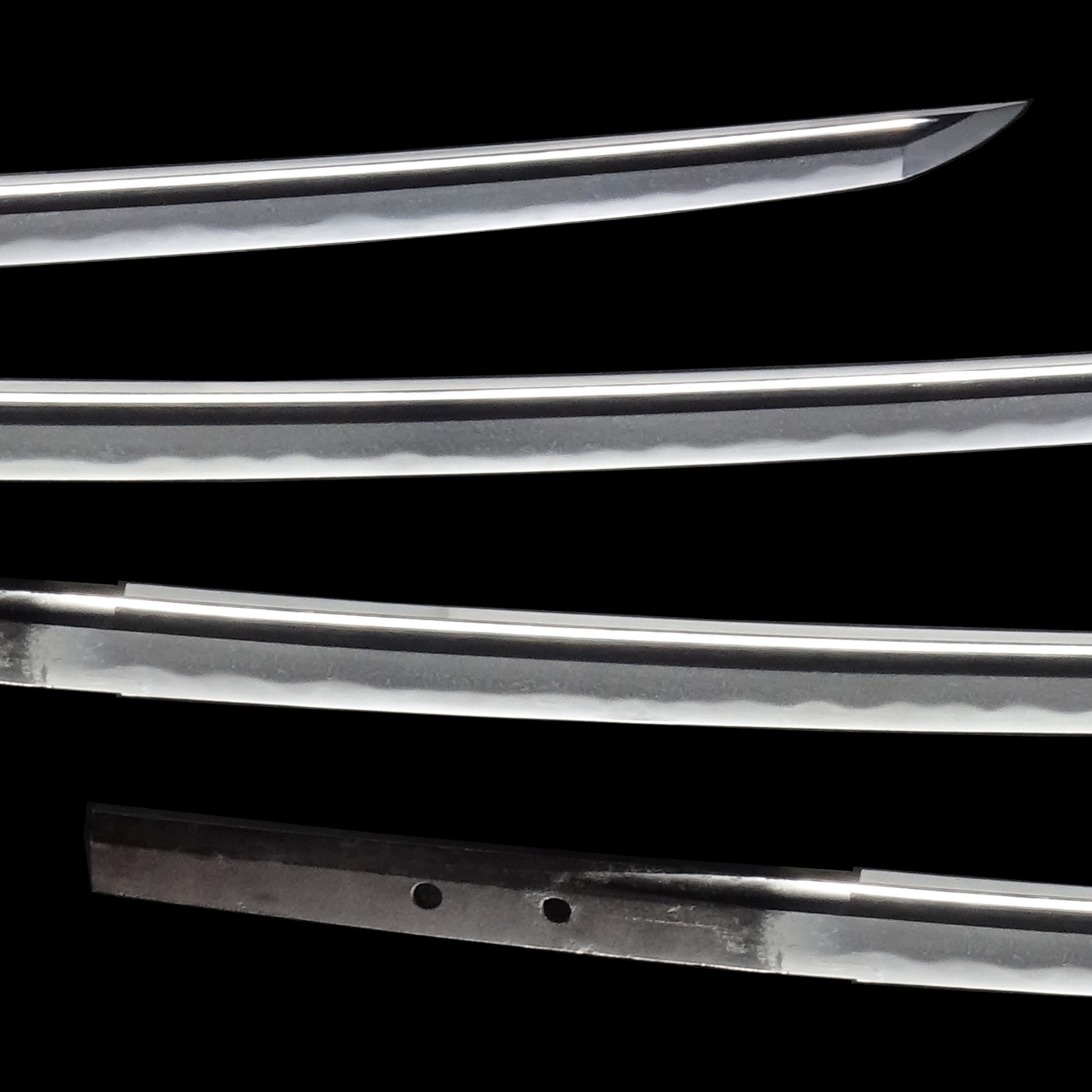
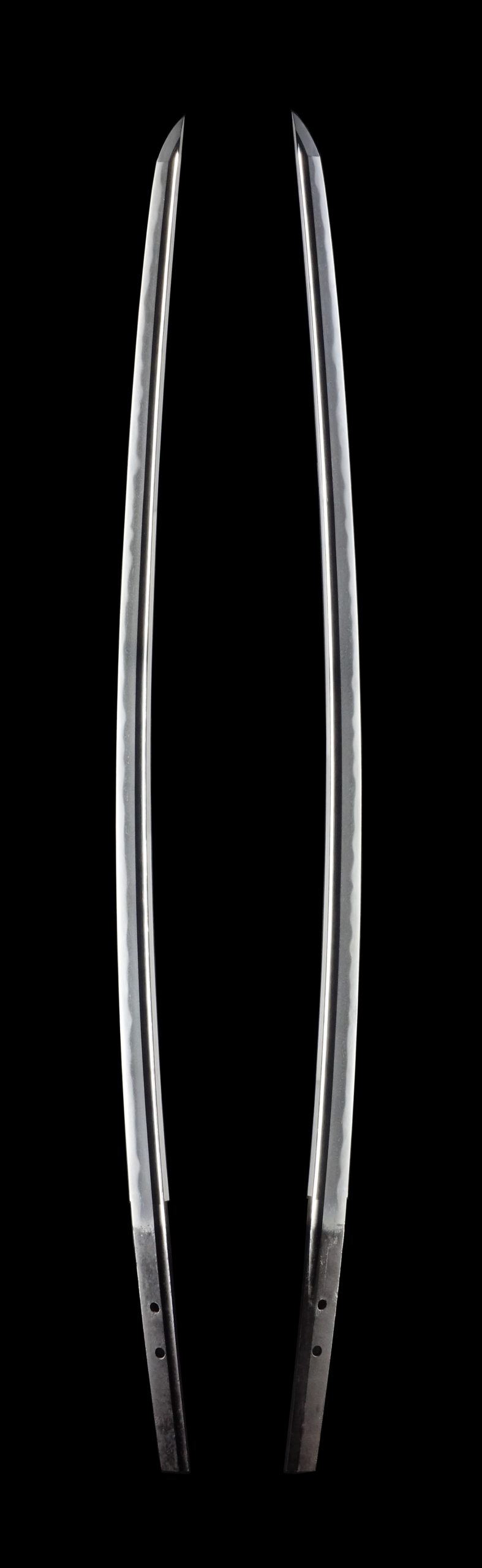
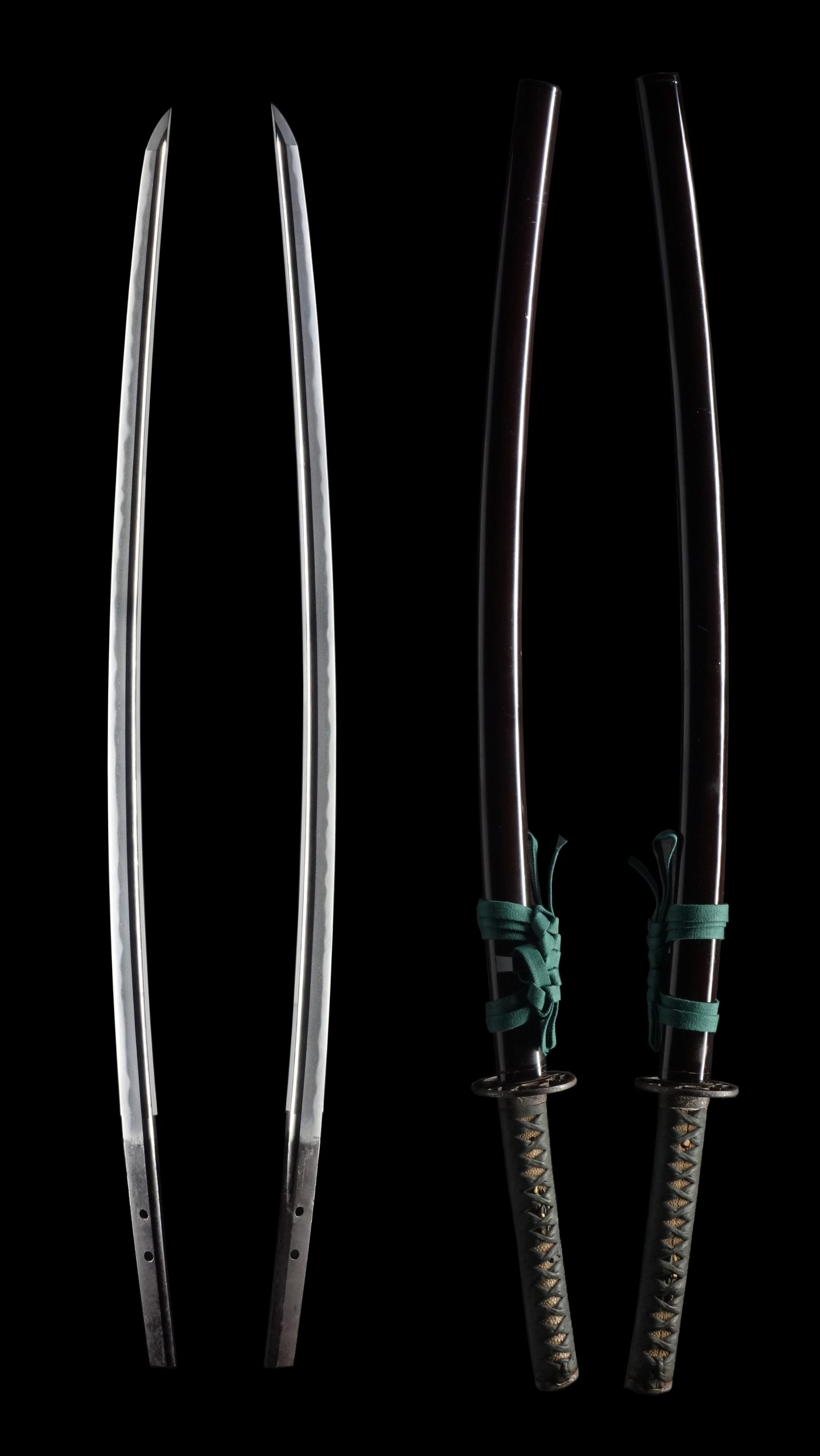
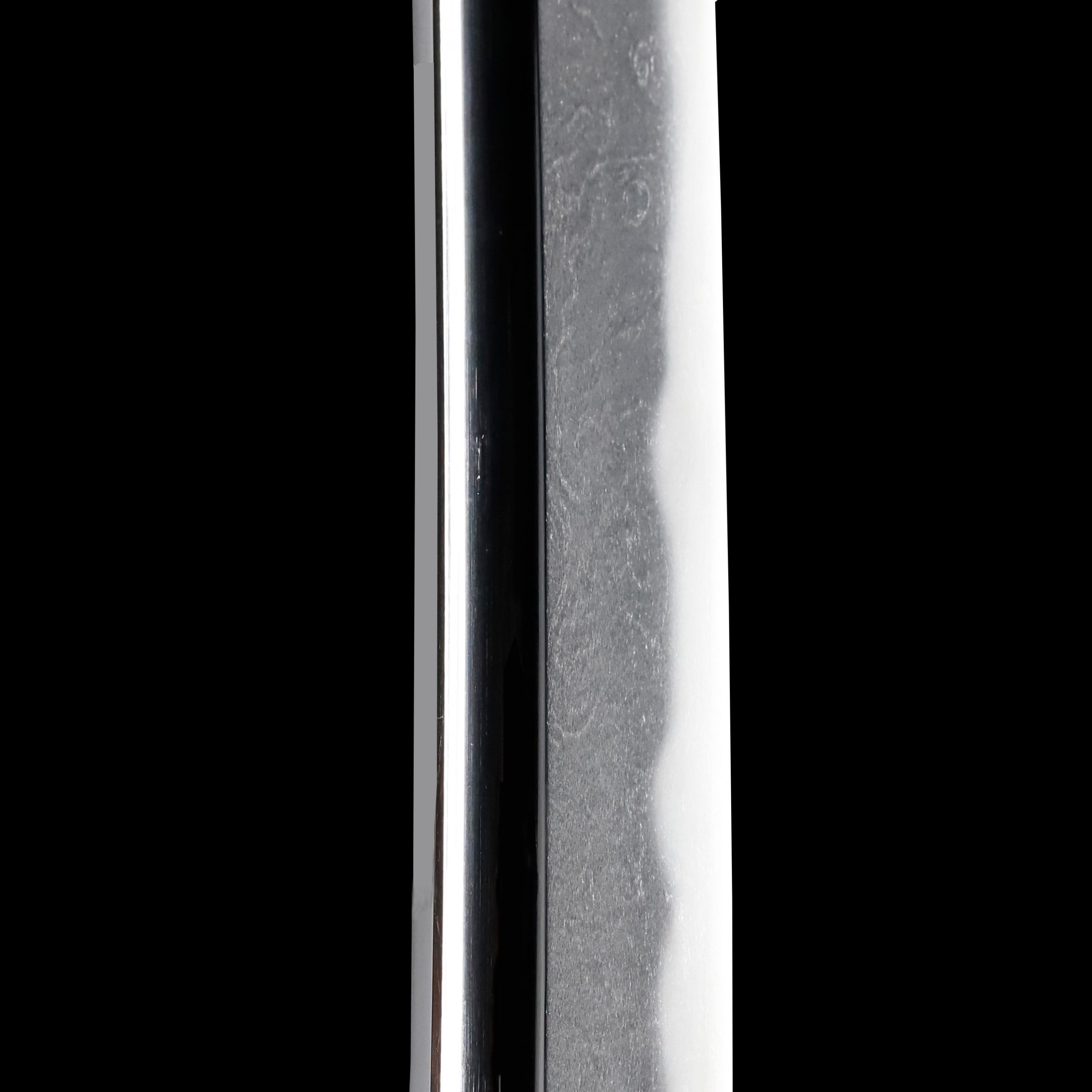
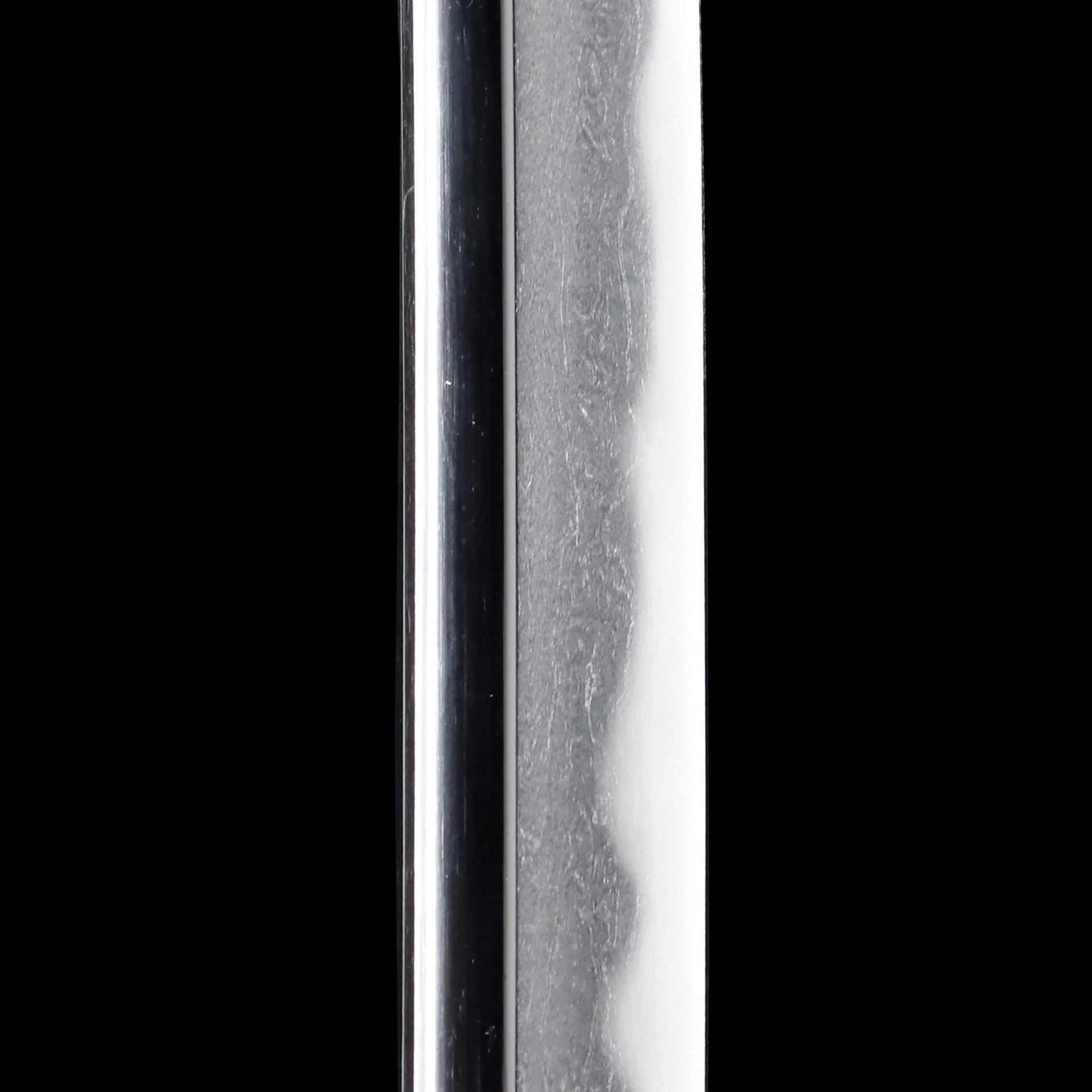
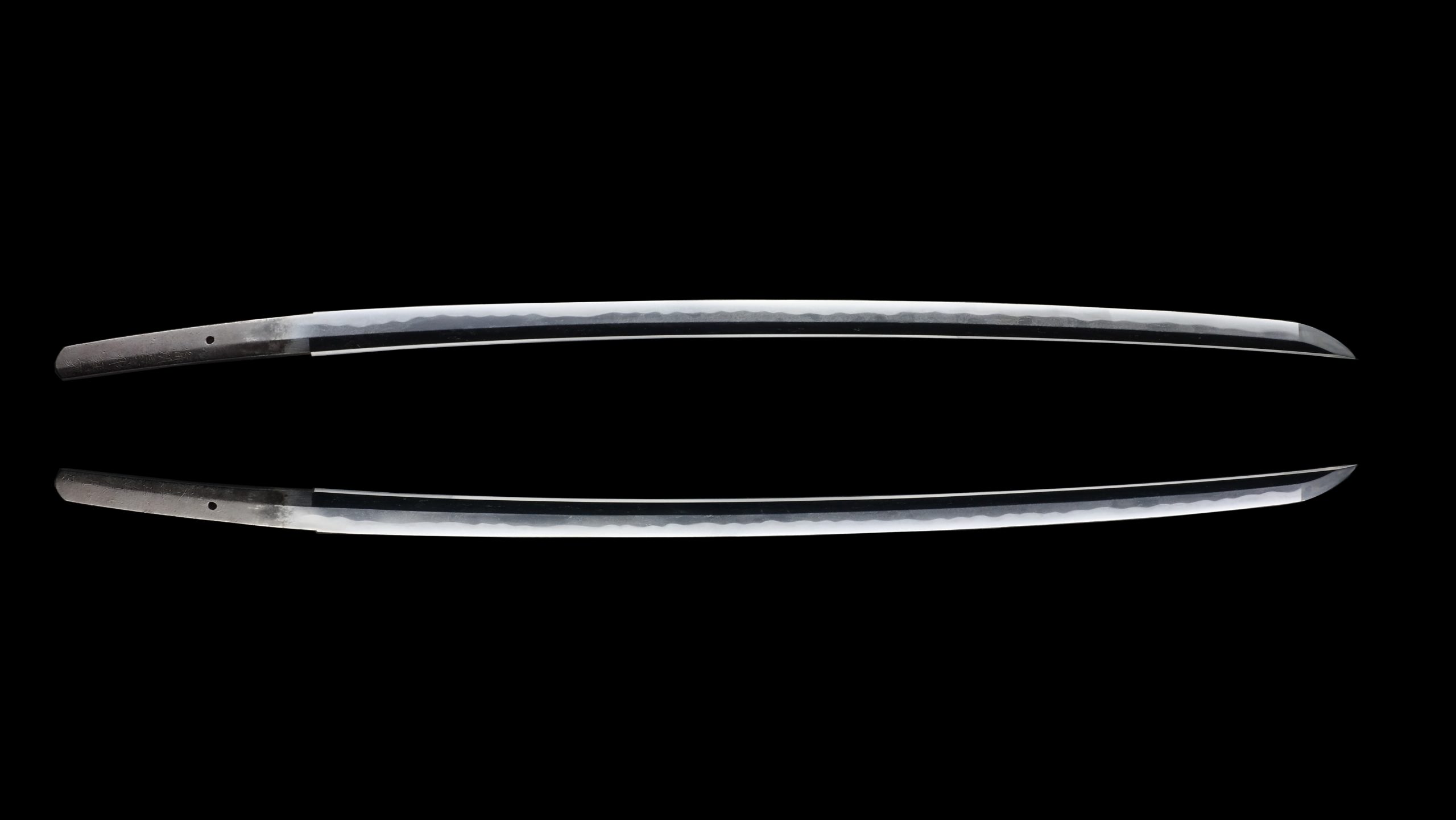
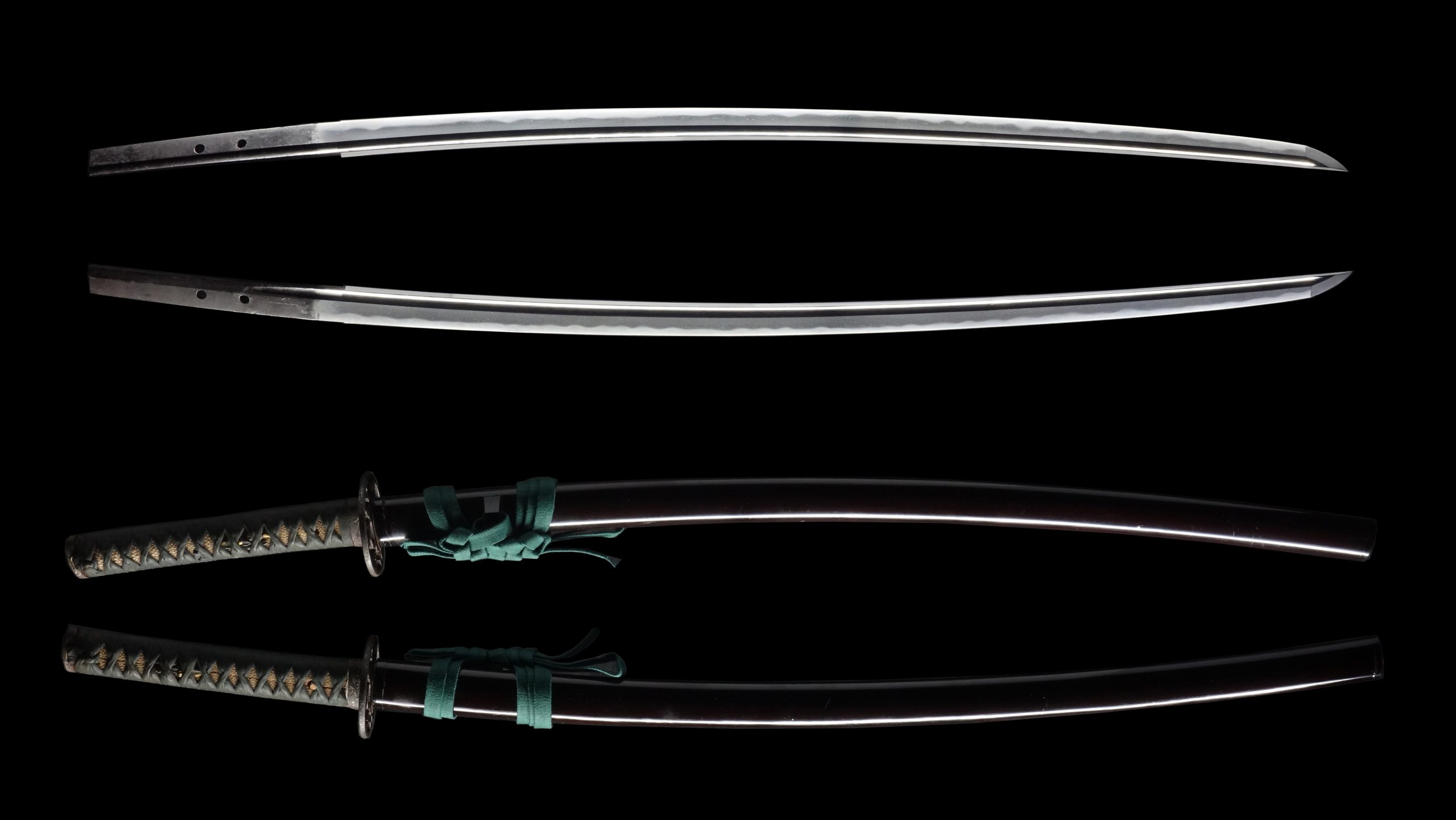
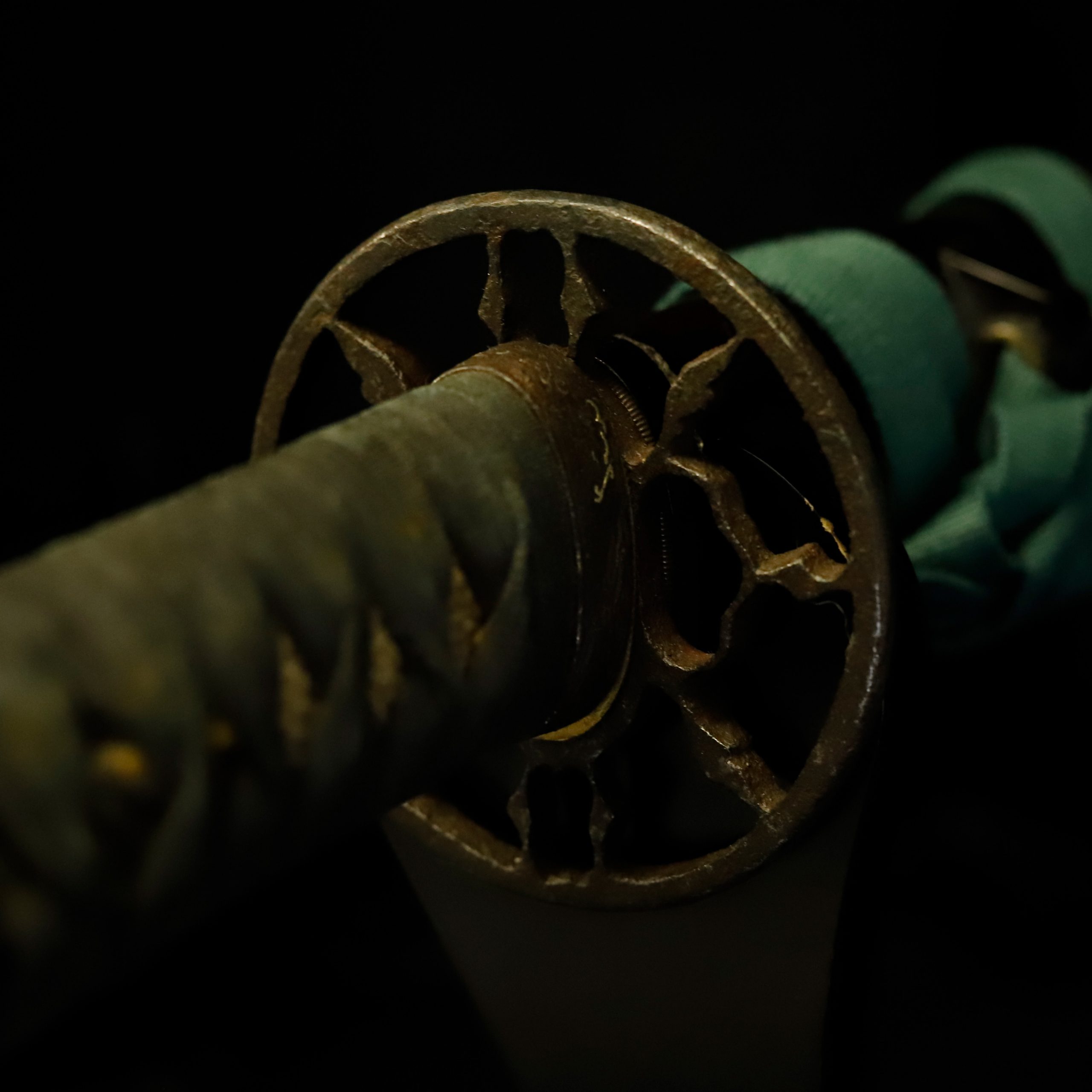
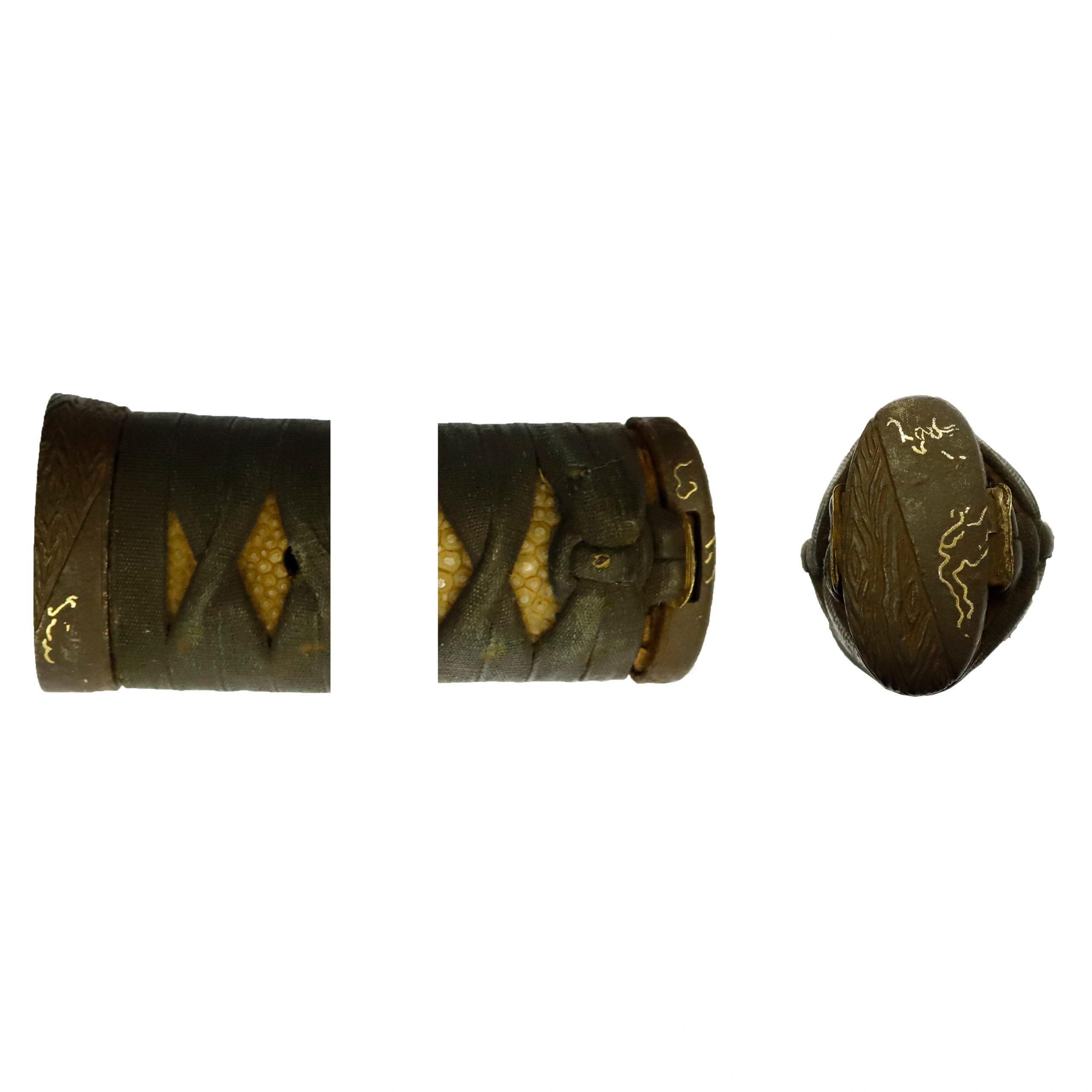
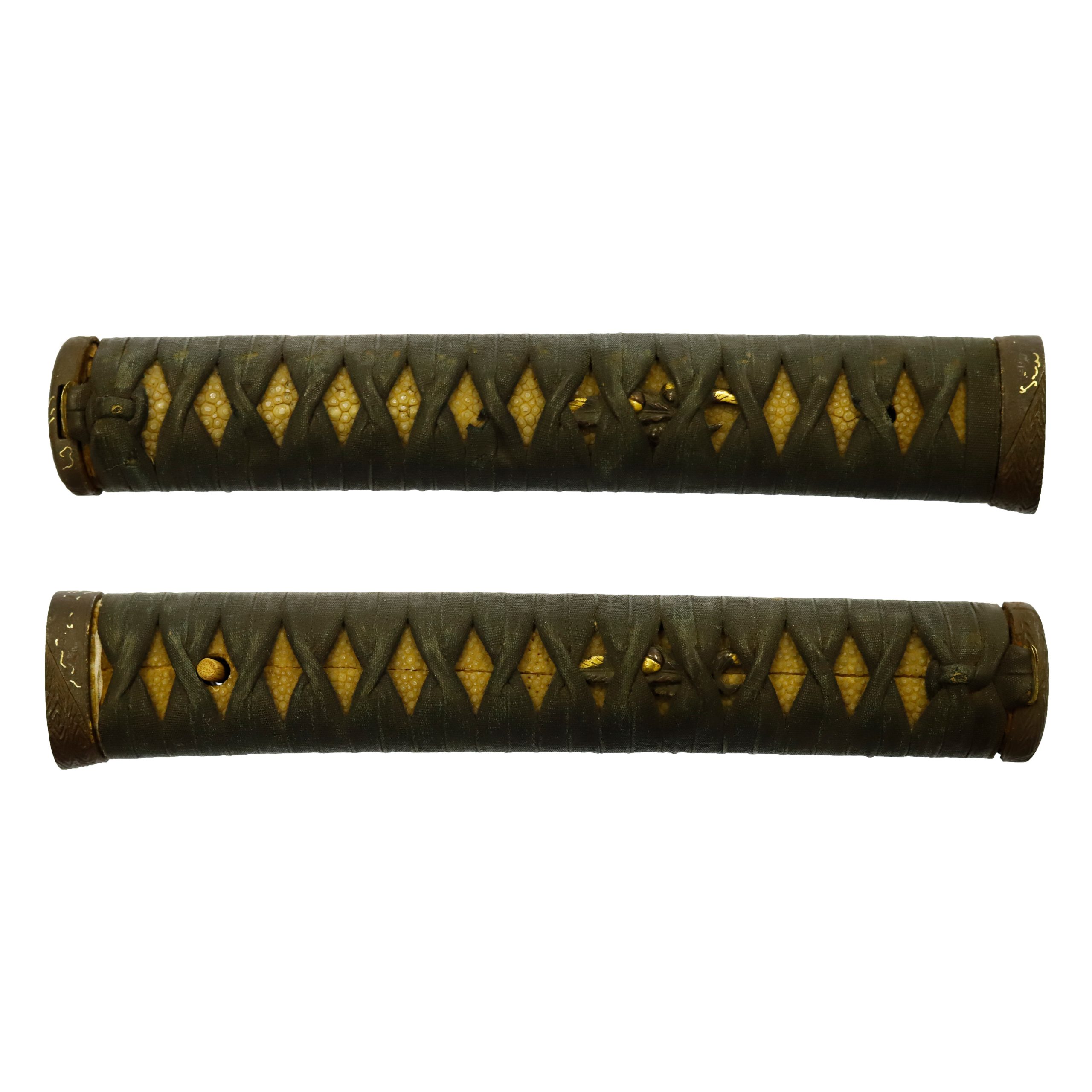
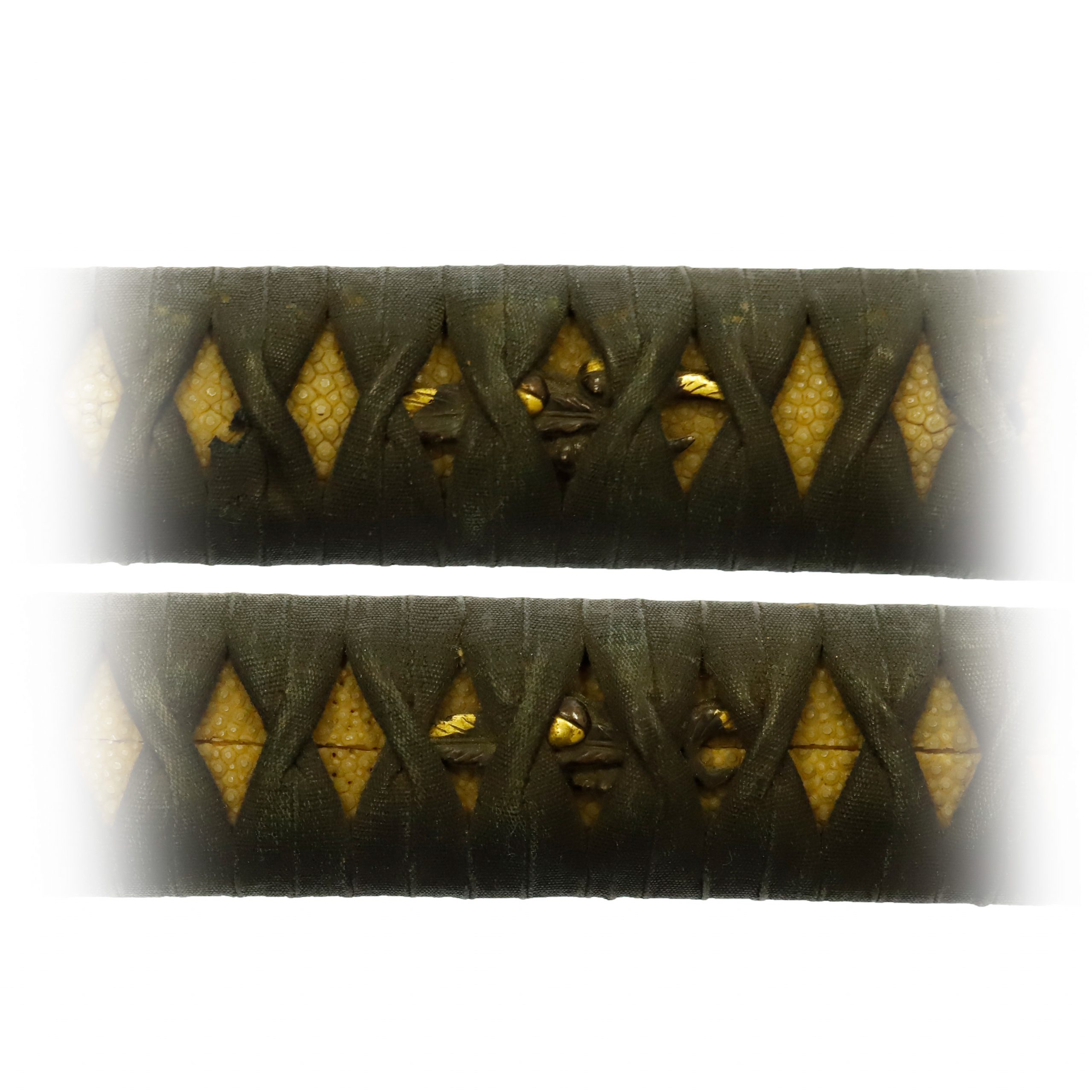
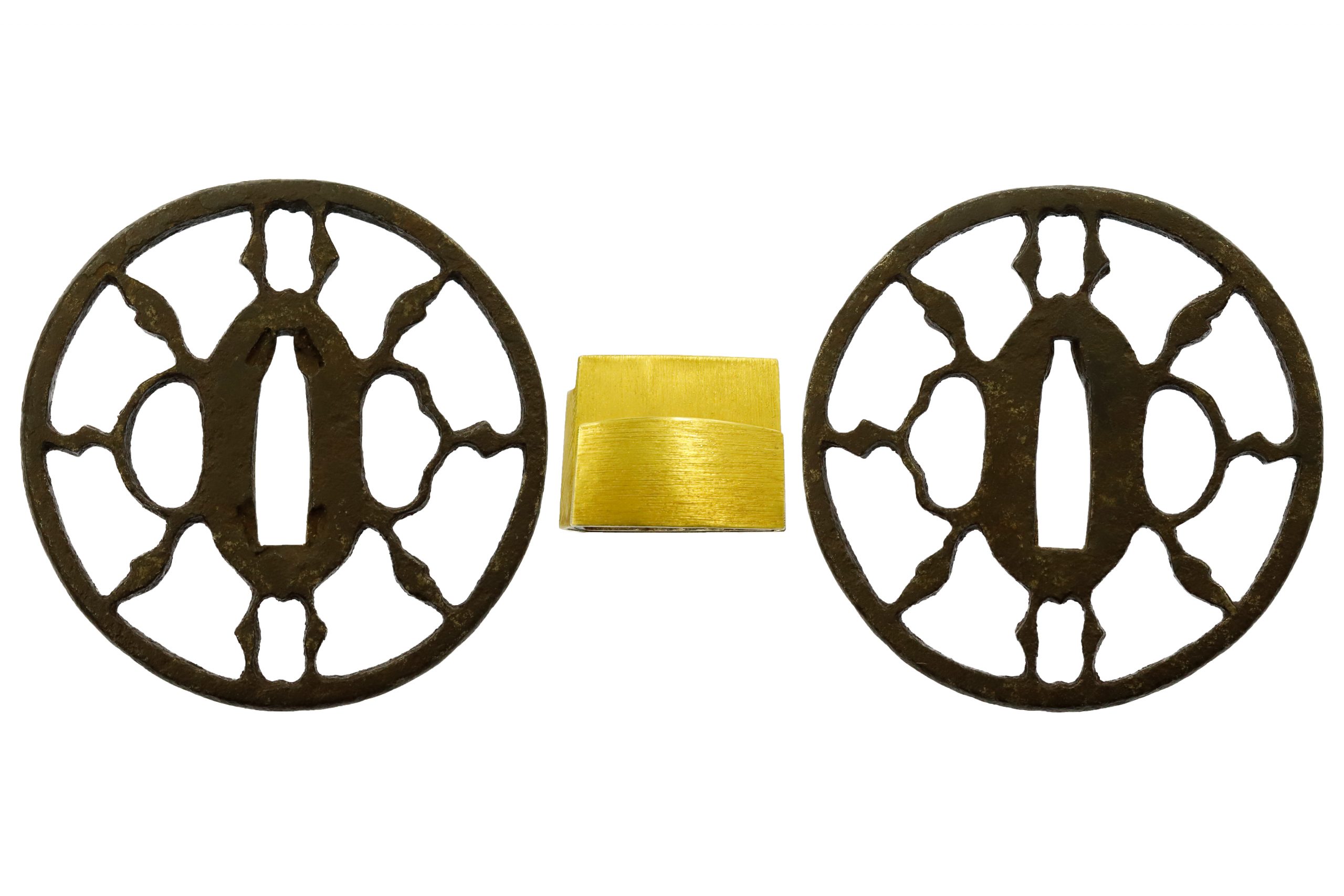
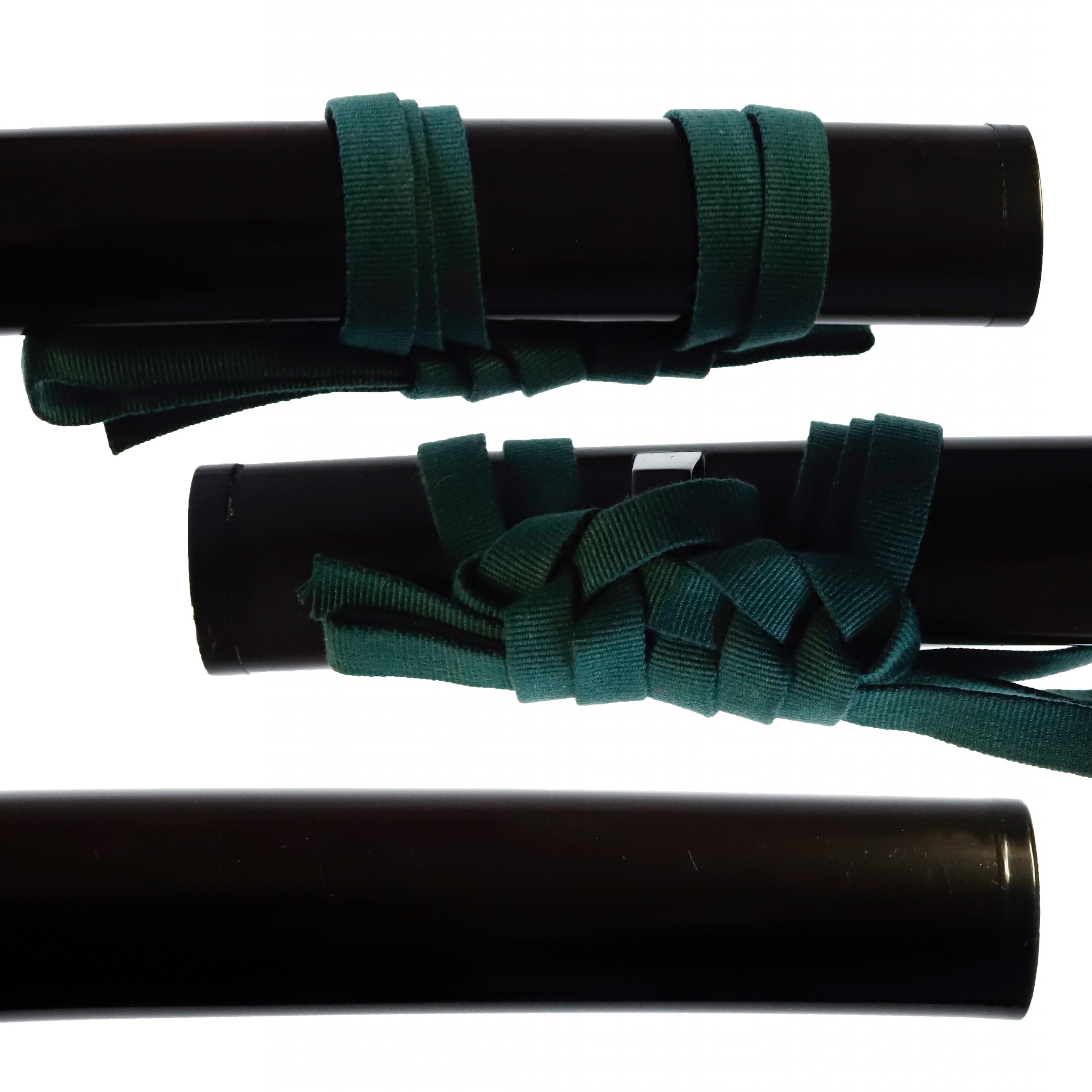
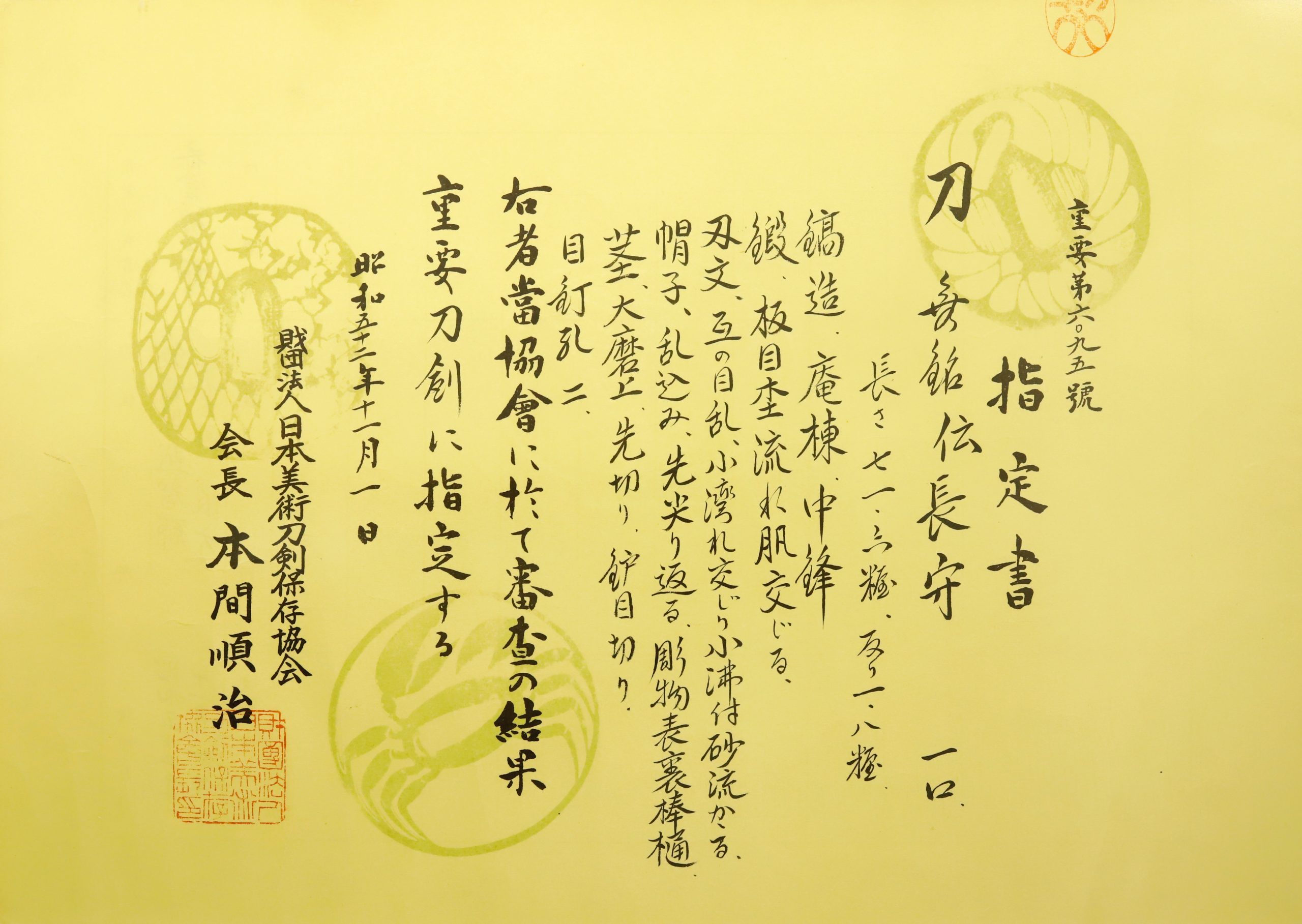
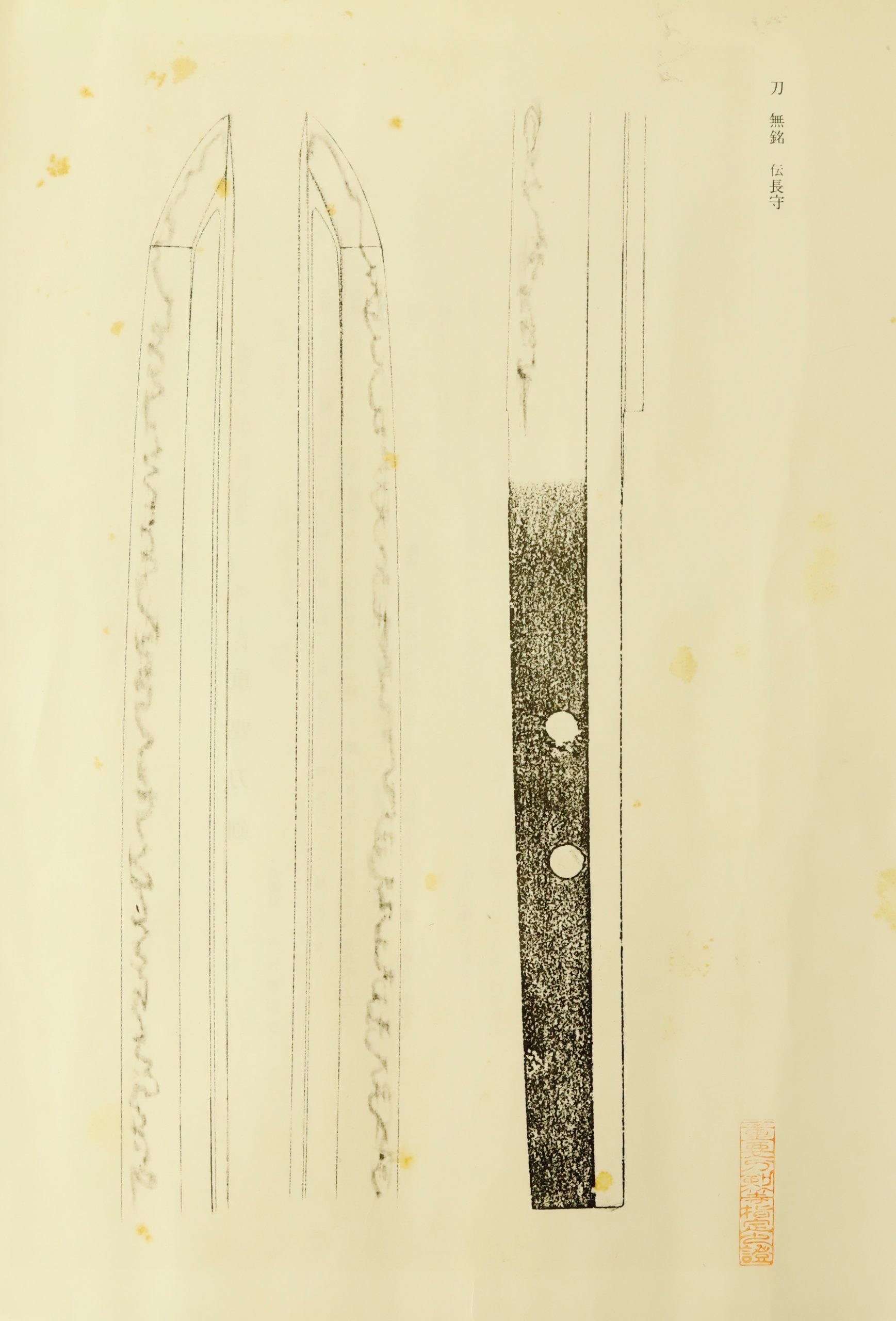
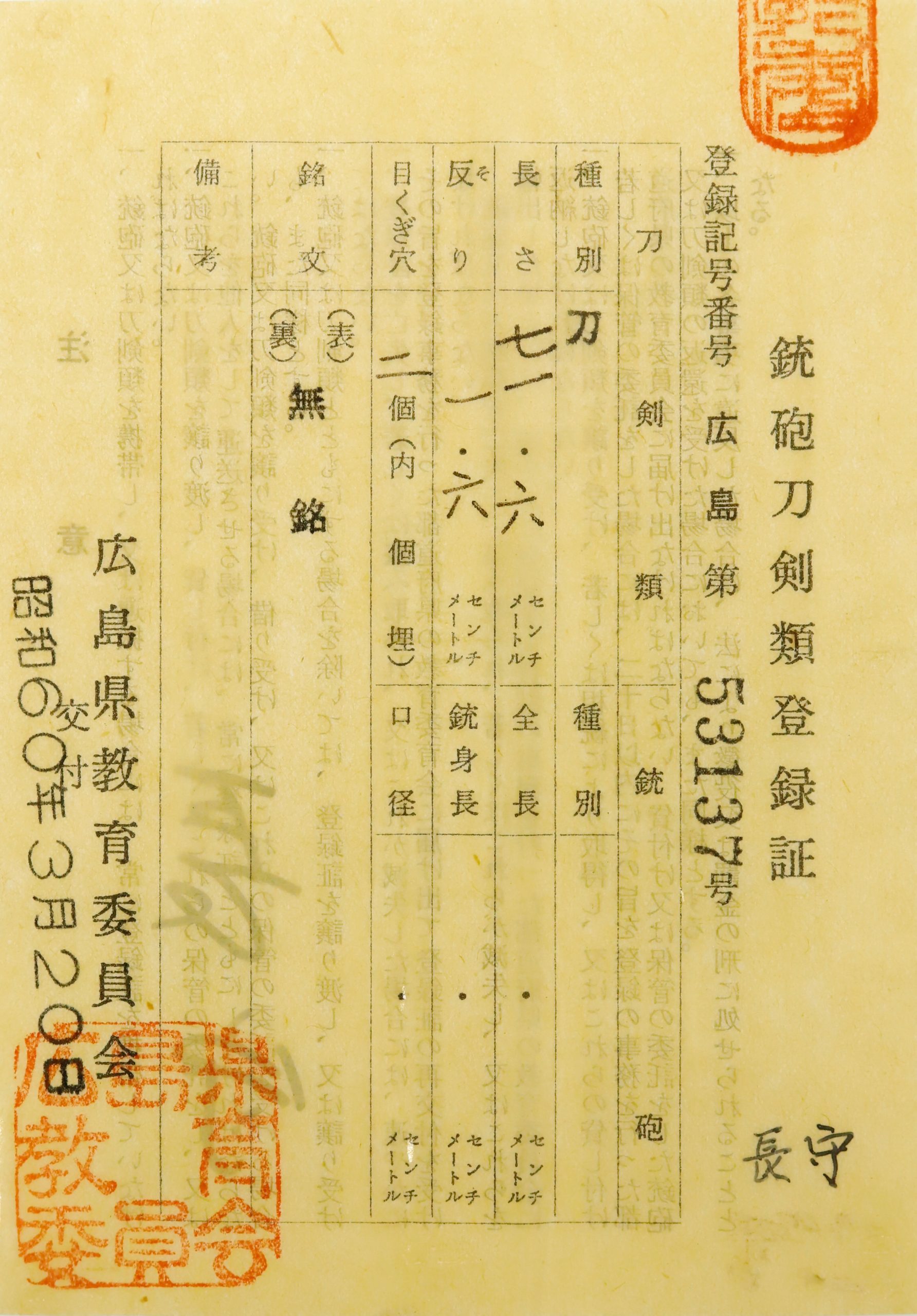
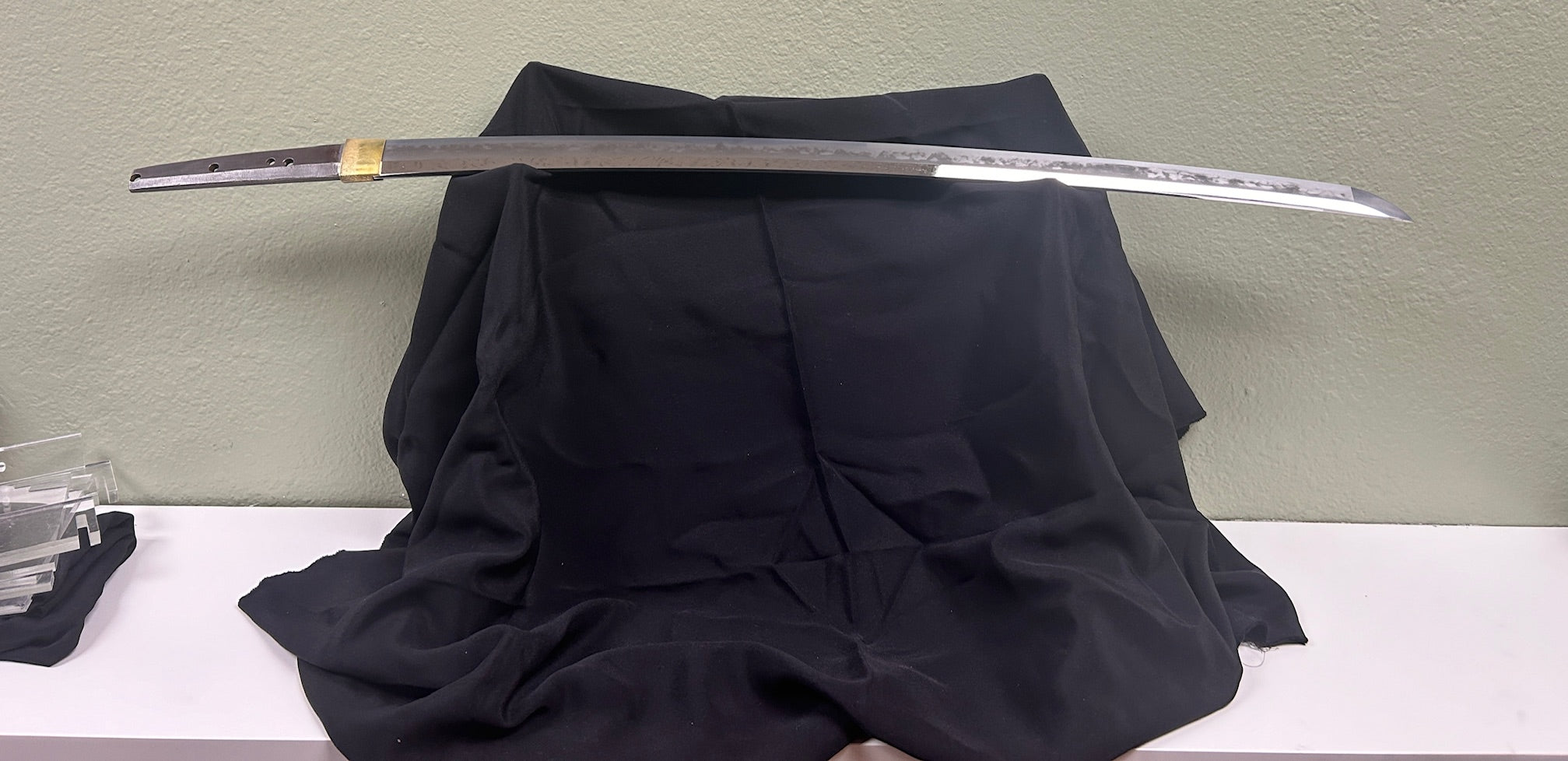
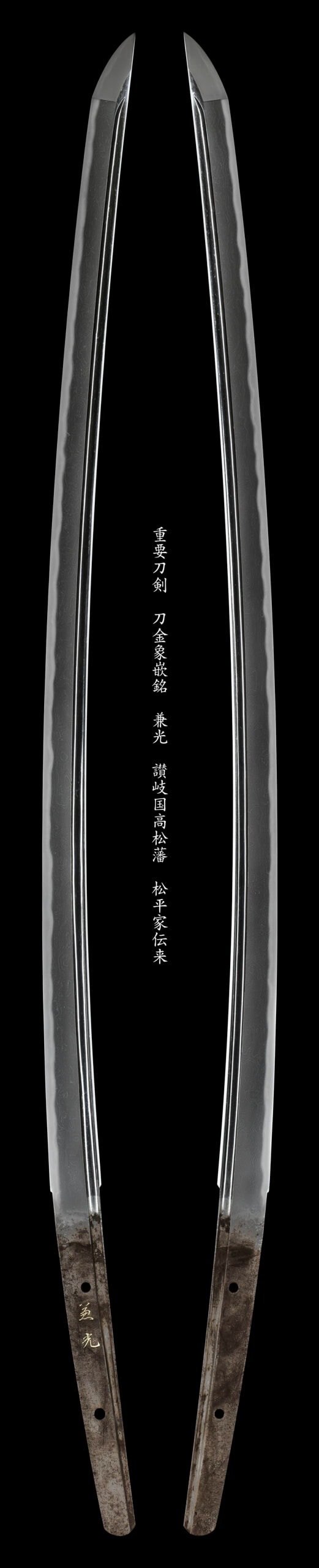
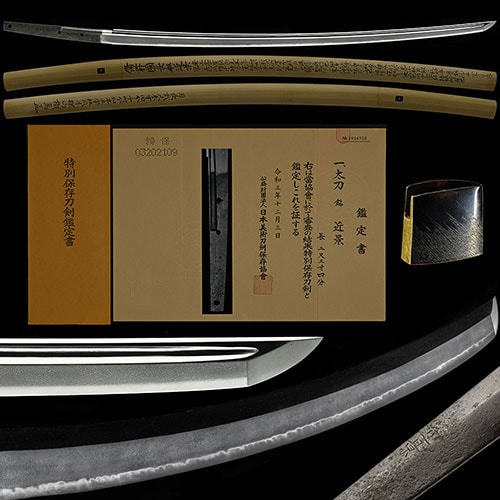
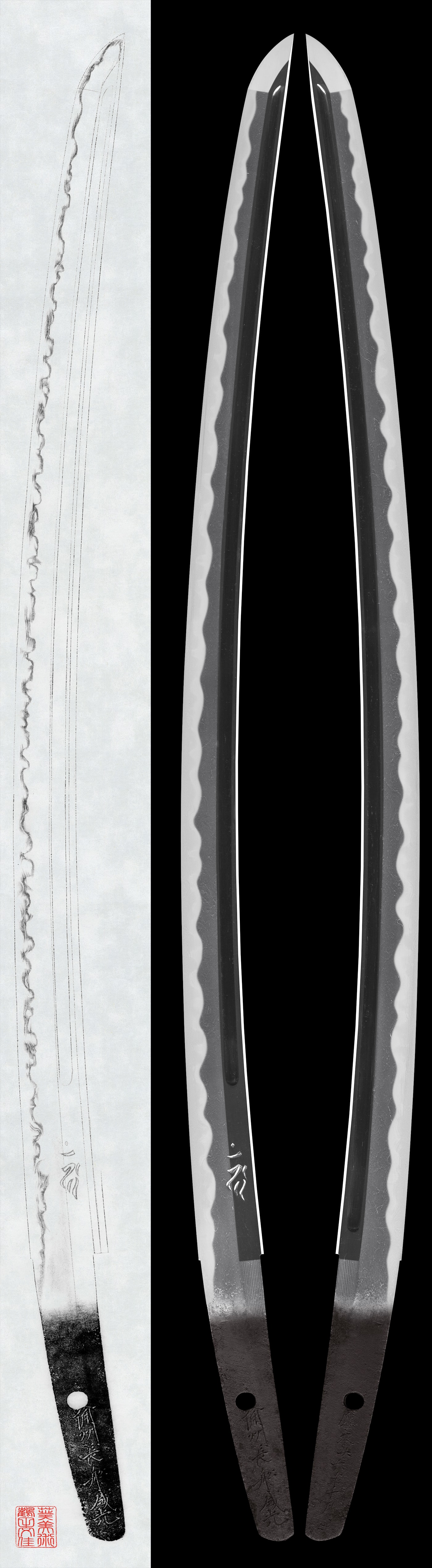
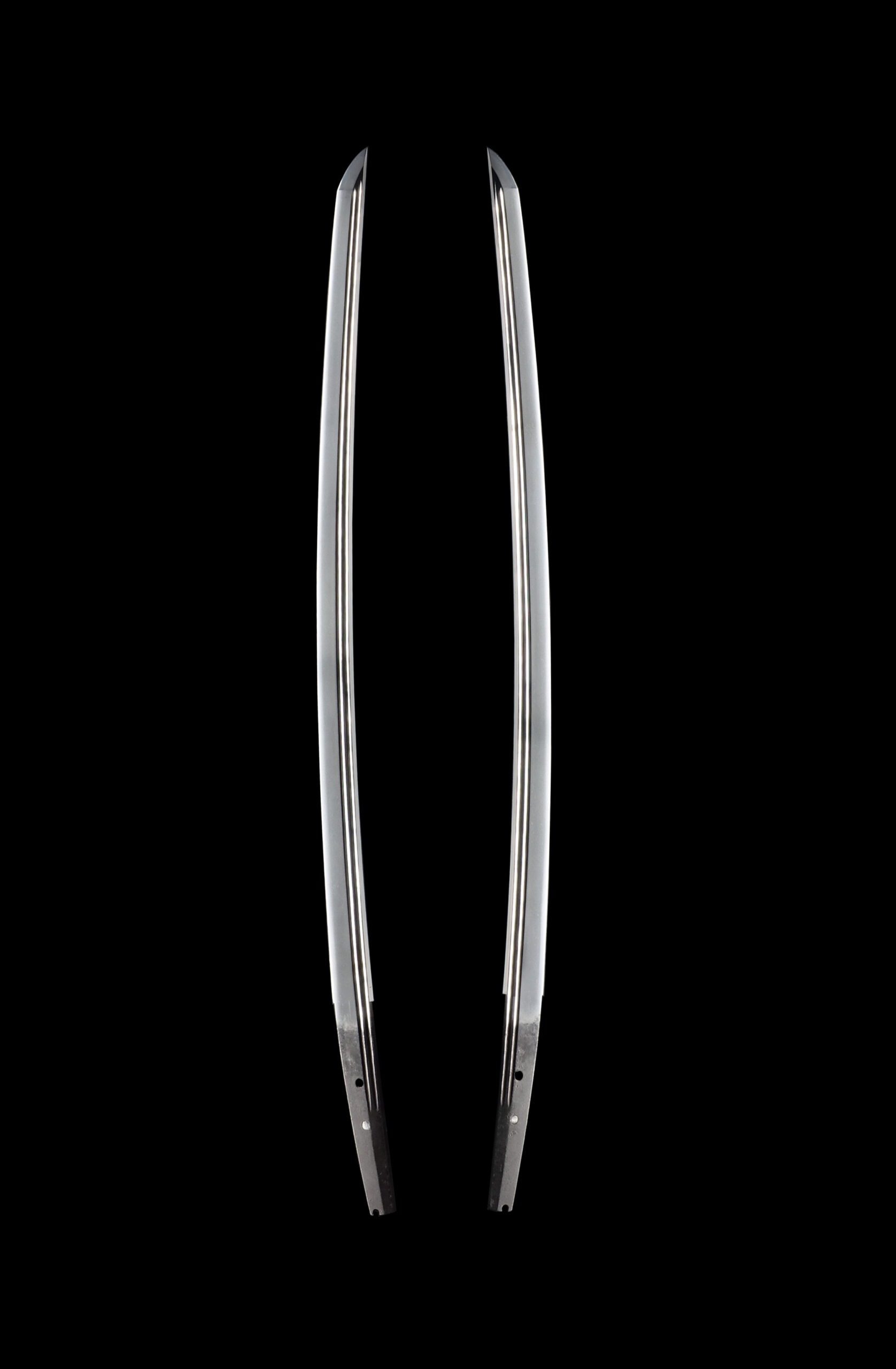
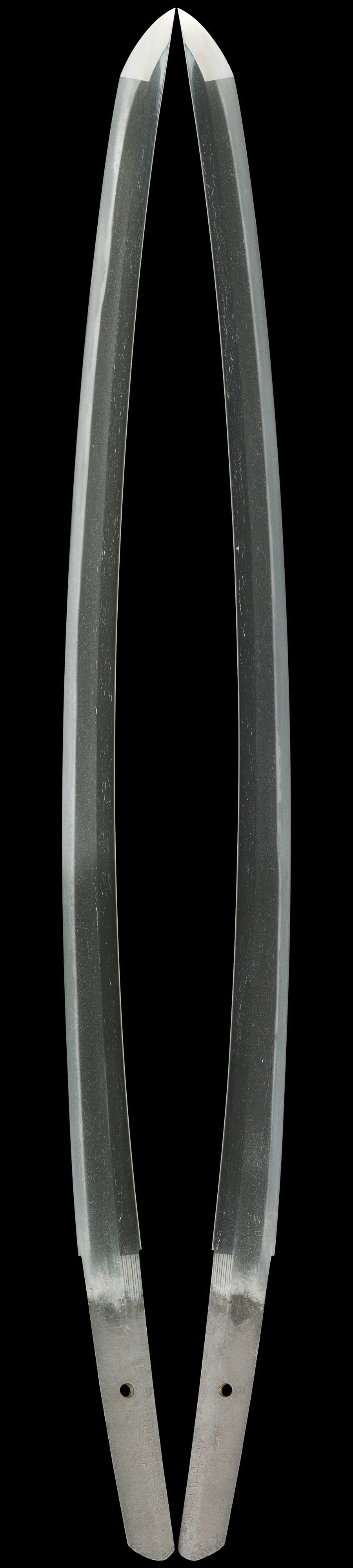
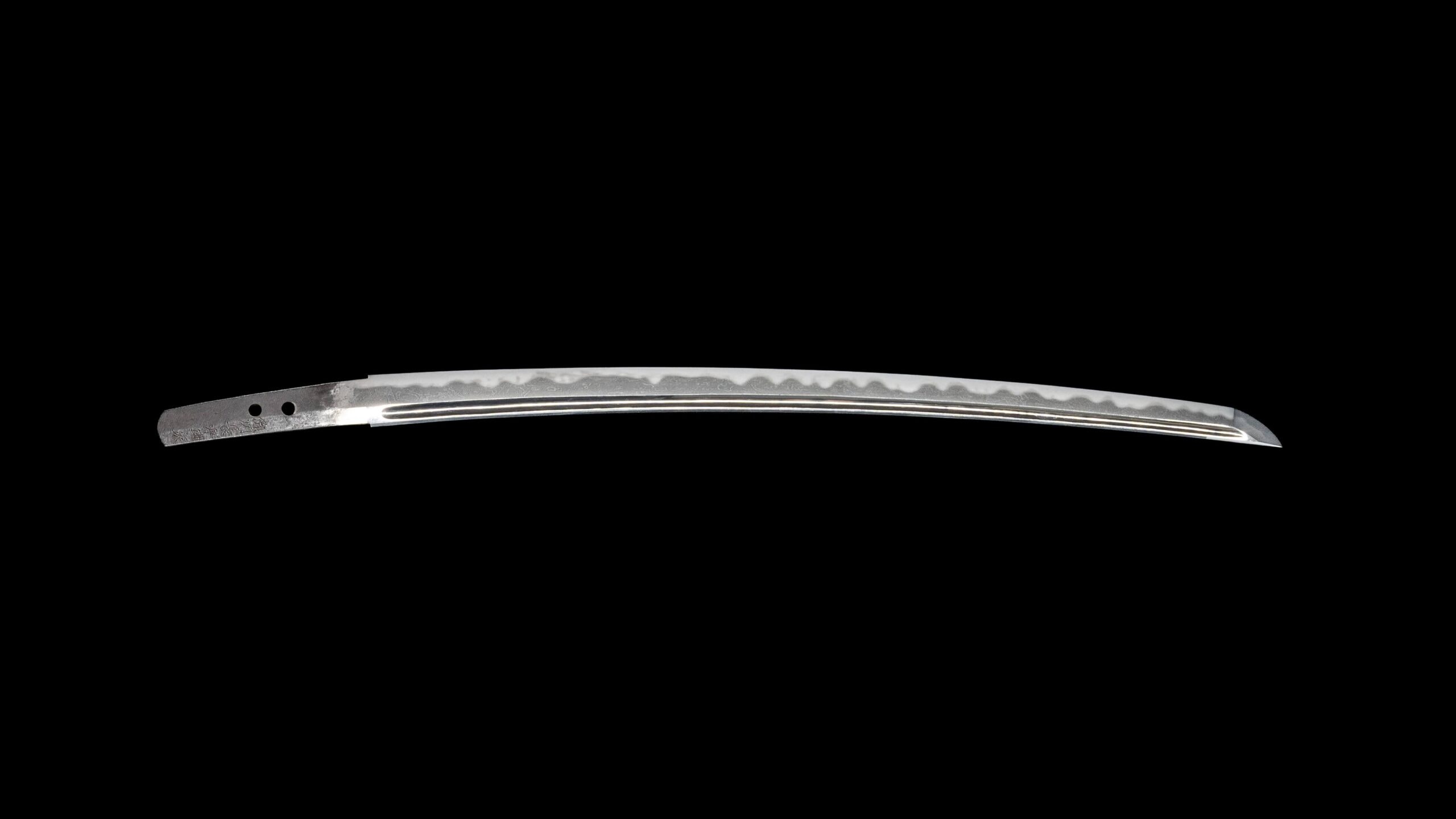
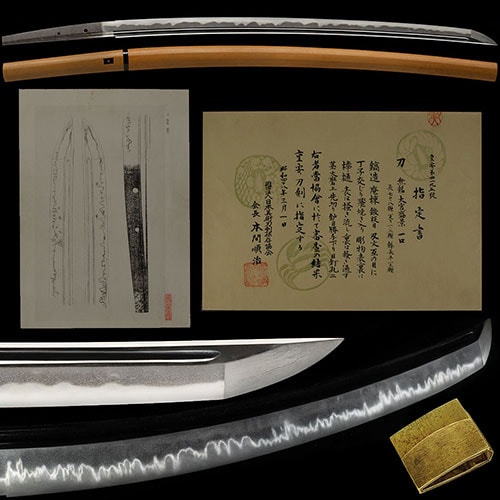
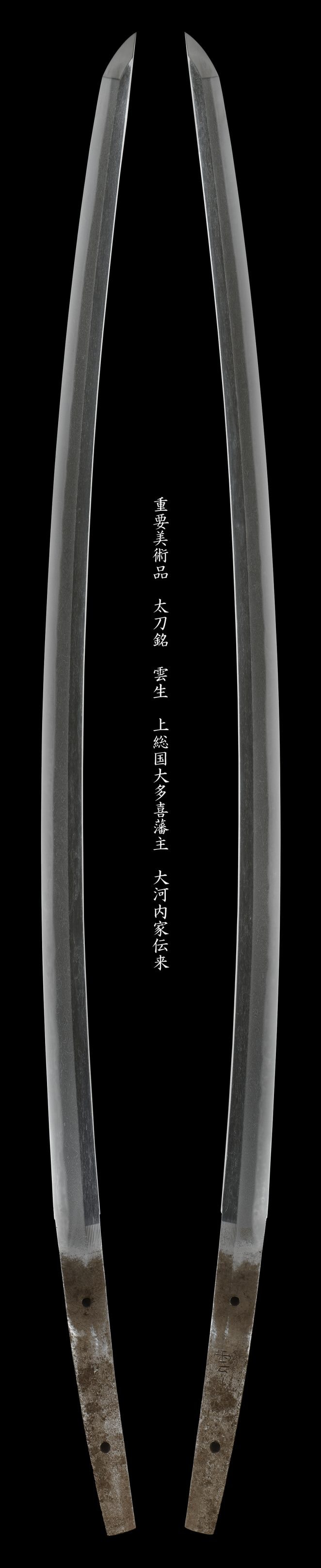
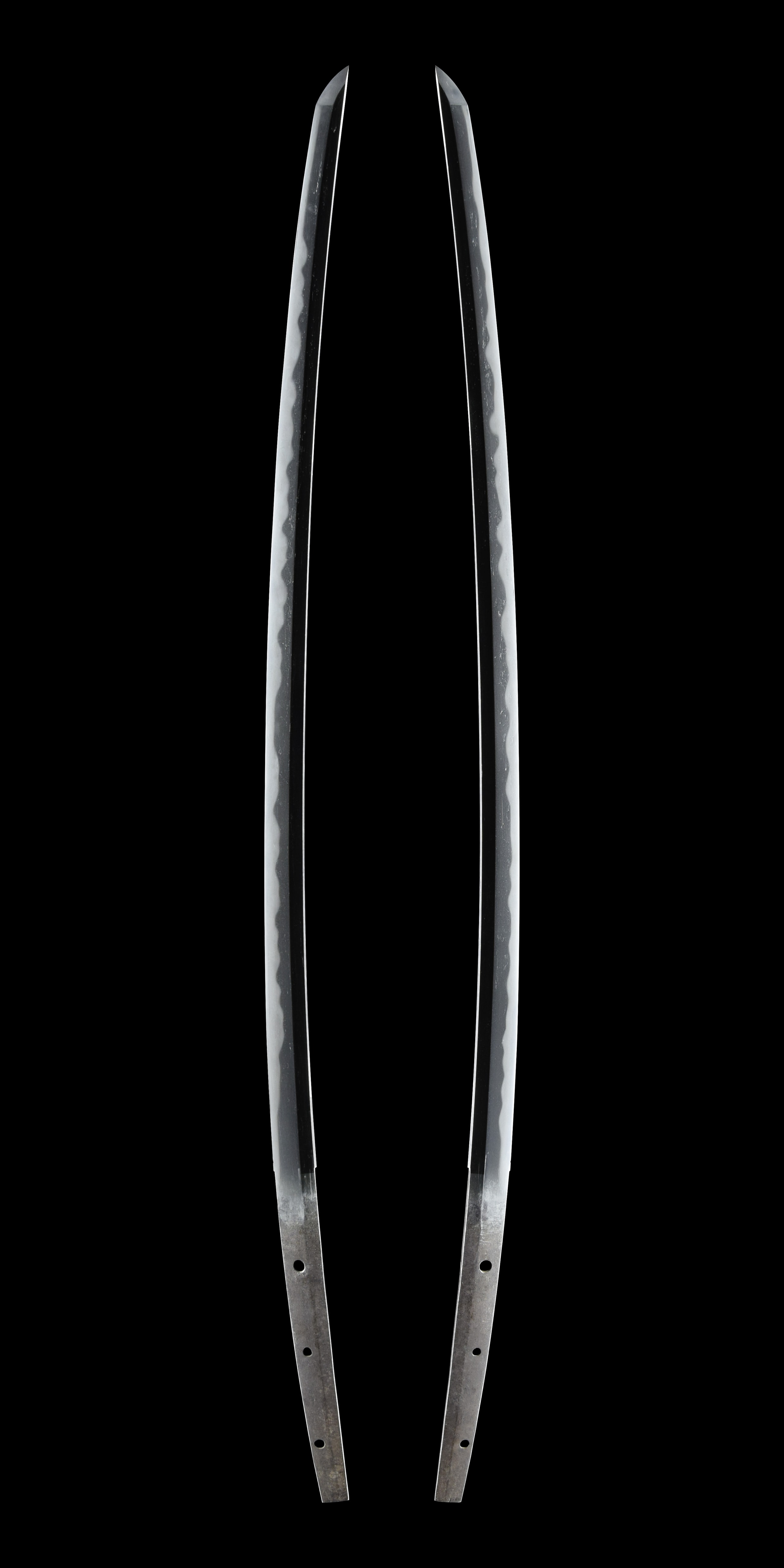
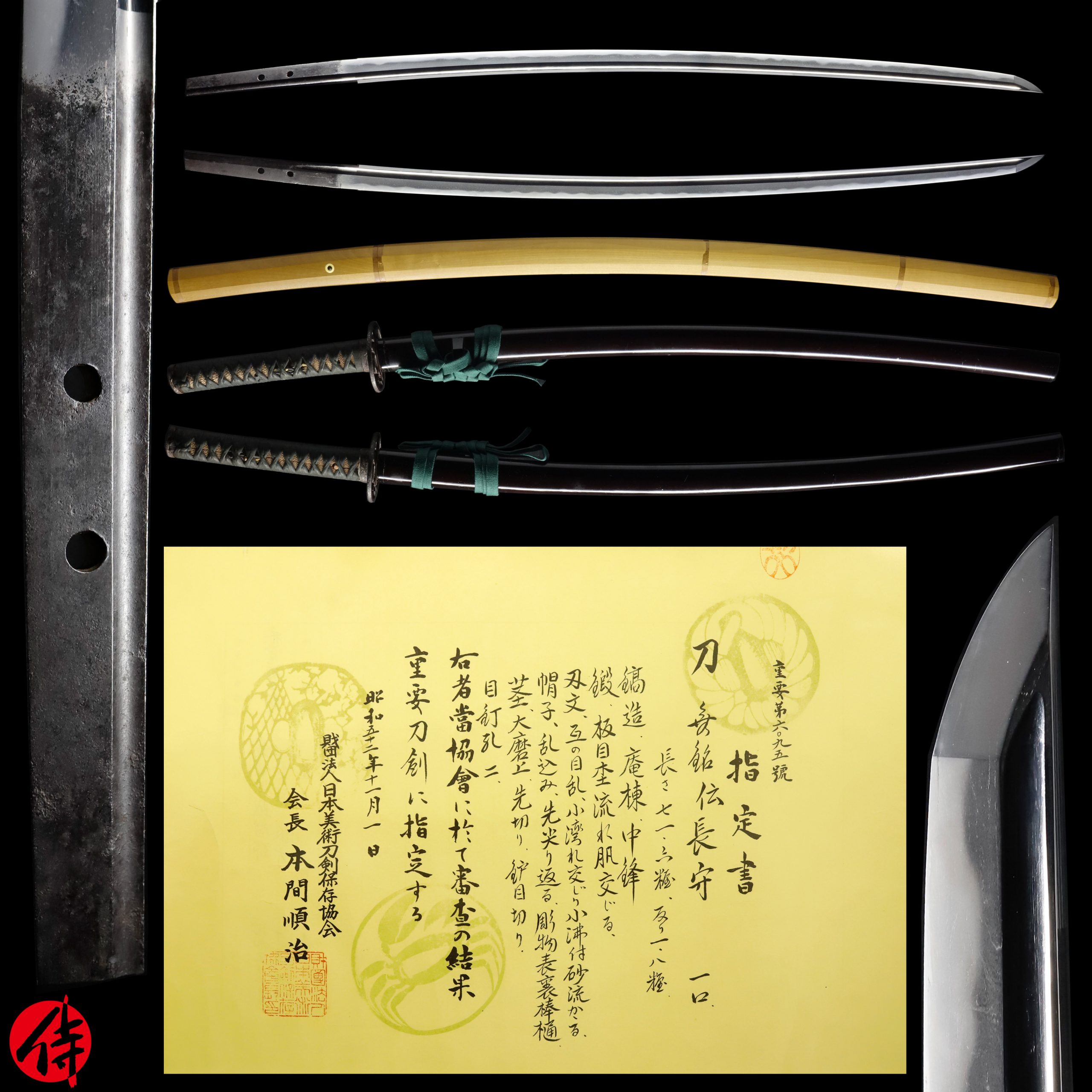
This antique katana is attributed to Nagamori of the Bizen Osafune school, active during the mid-Nanbokucho period (14th century). It is accompanied by an NBTHK Juyo Token certificate, indicating its exceptional quality and historical significance. The blade features a shortened tang (suriage) and comes with a koshirae, including Fuchi-Kashira with a Saya Gata pattern and Menuki depicting a plant motif.

NBTHK Setsumei

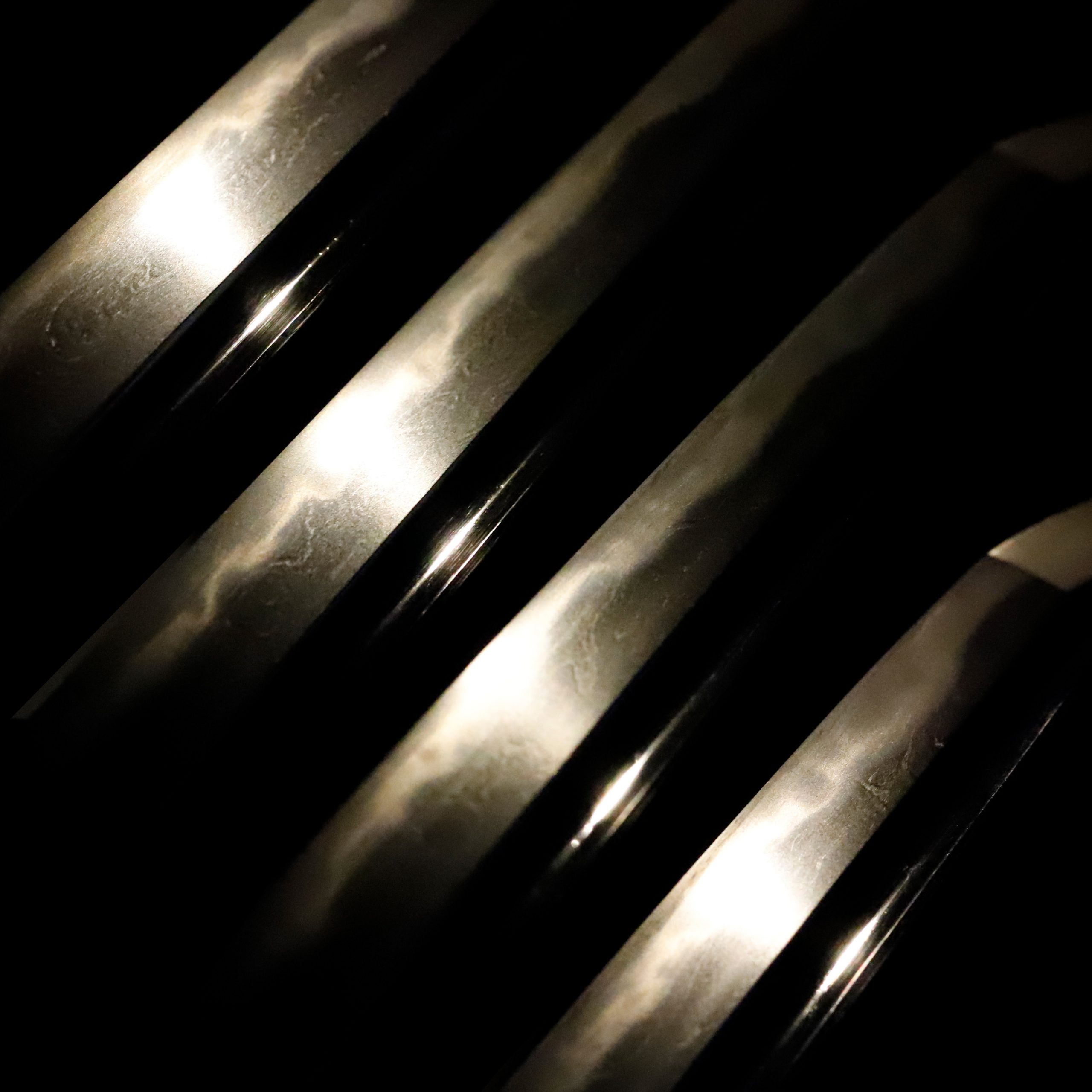
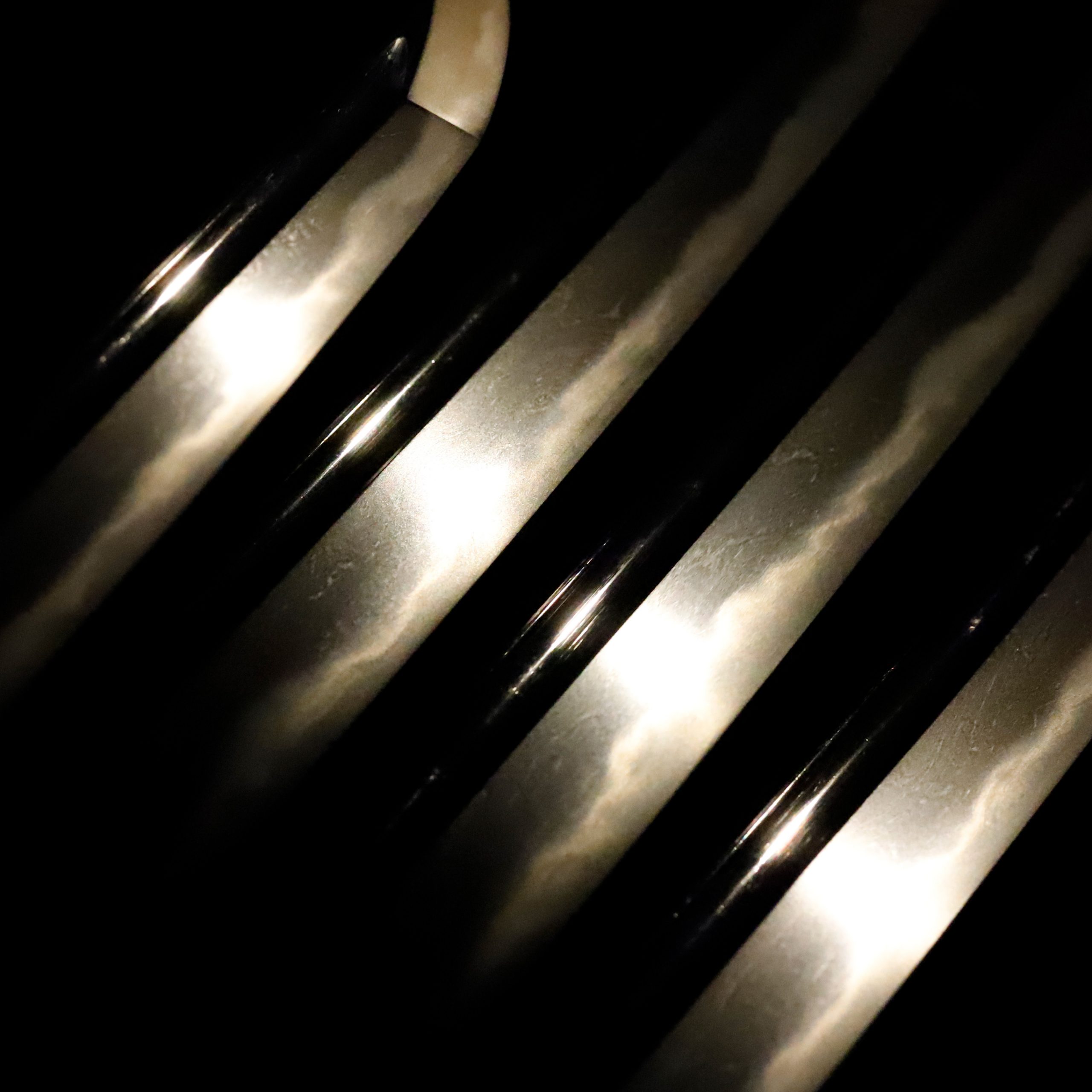
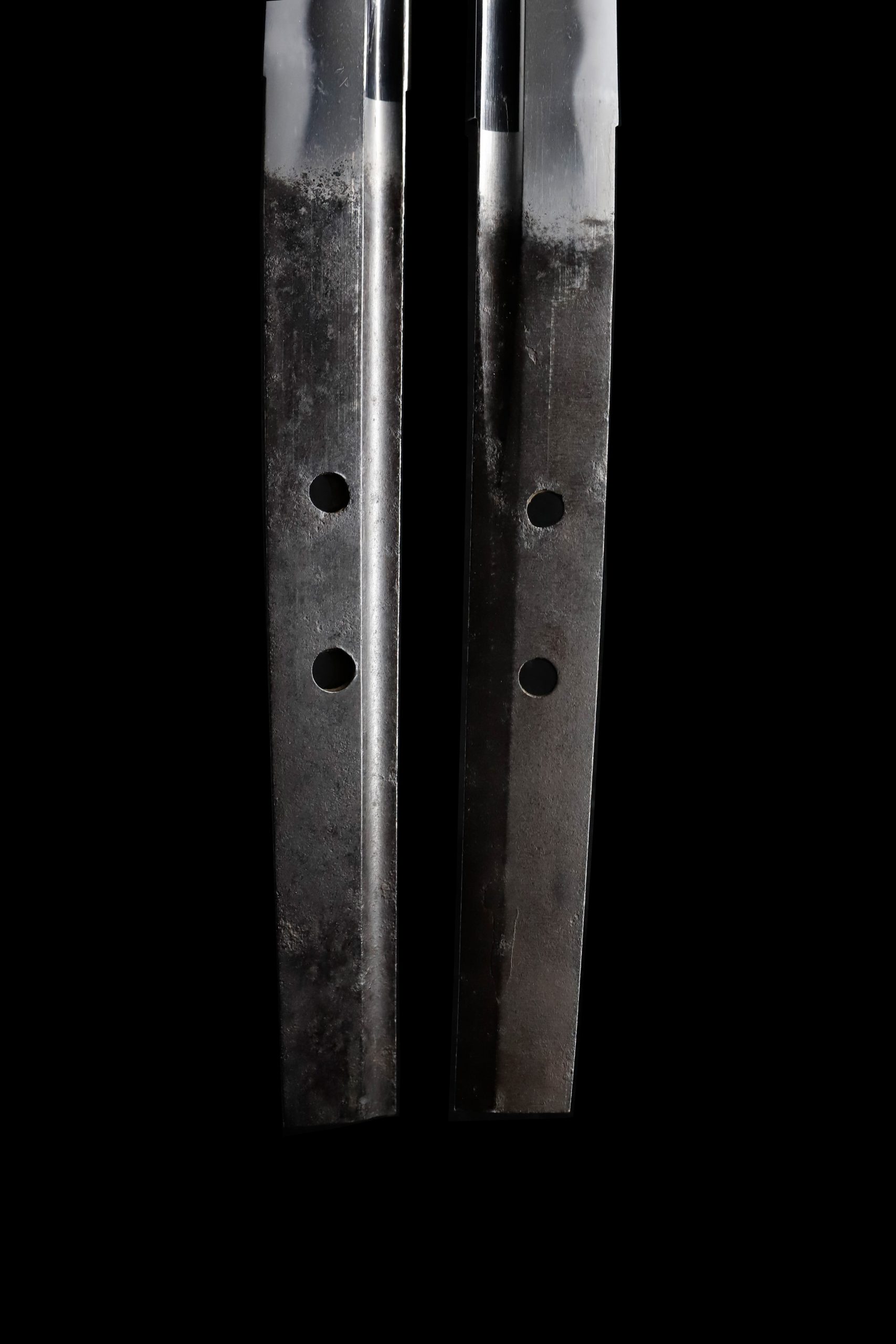
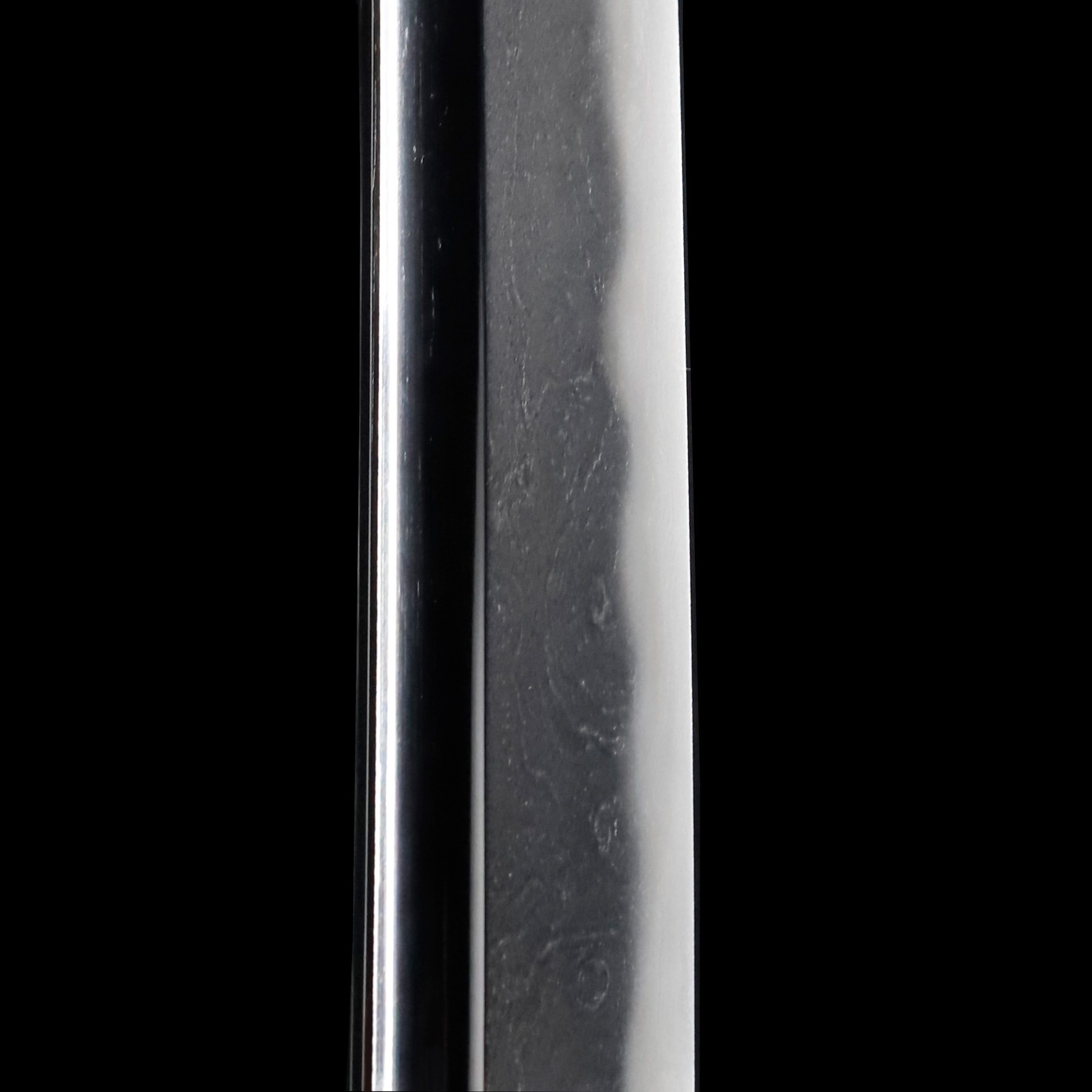
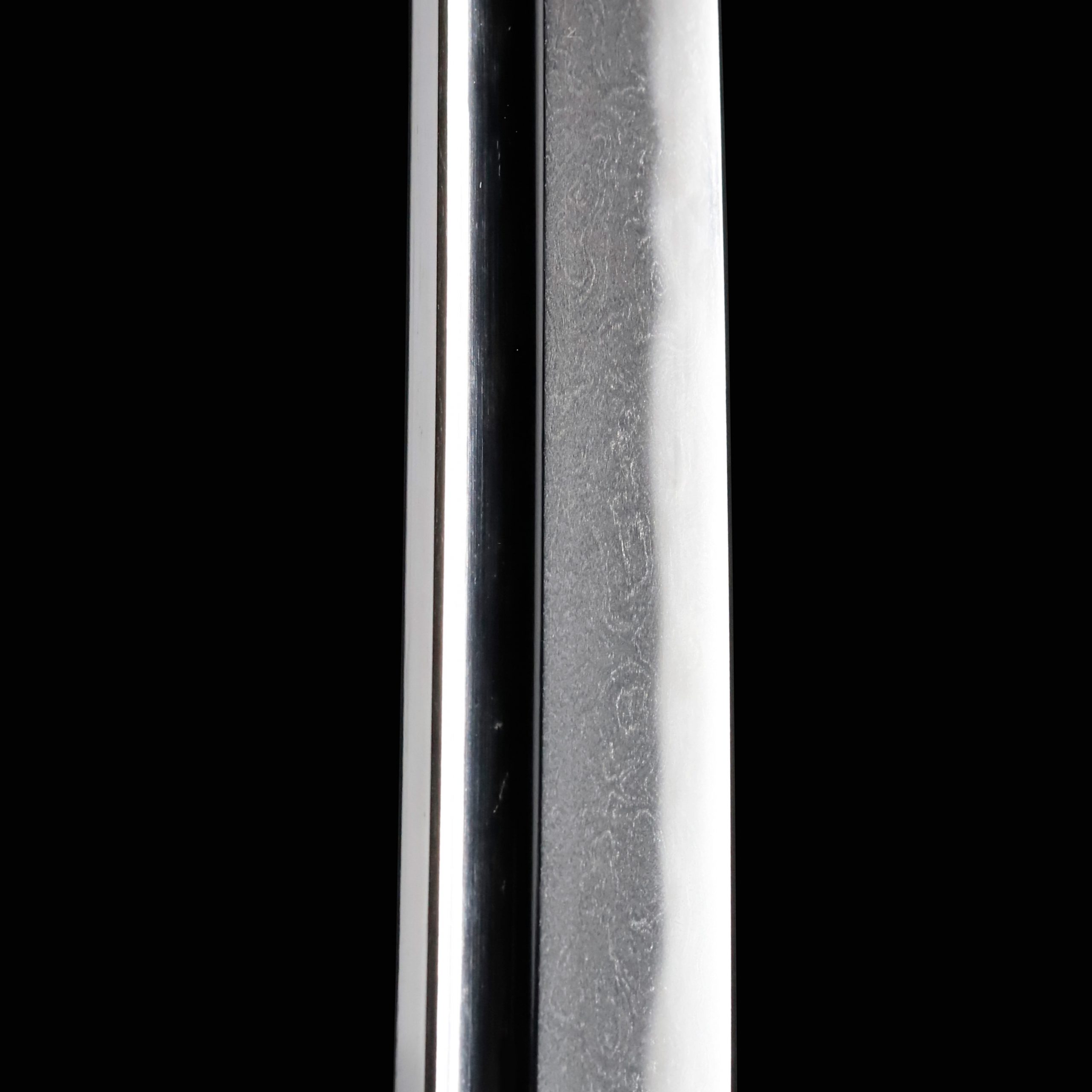
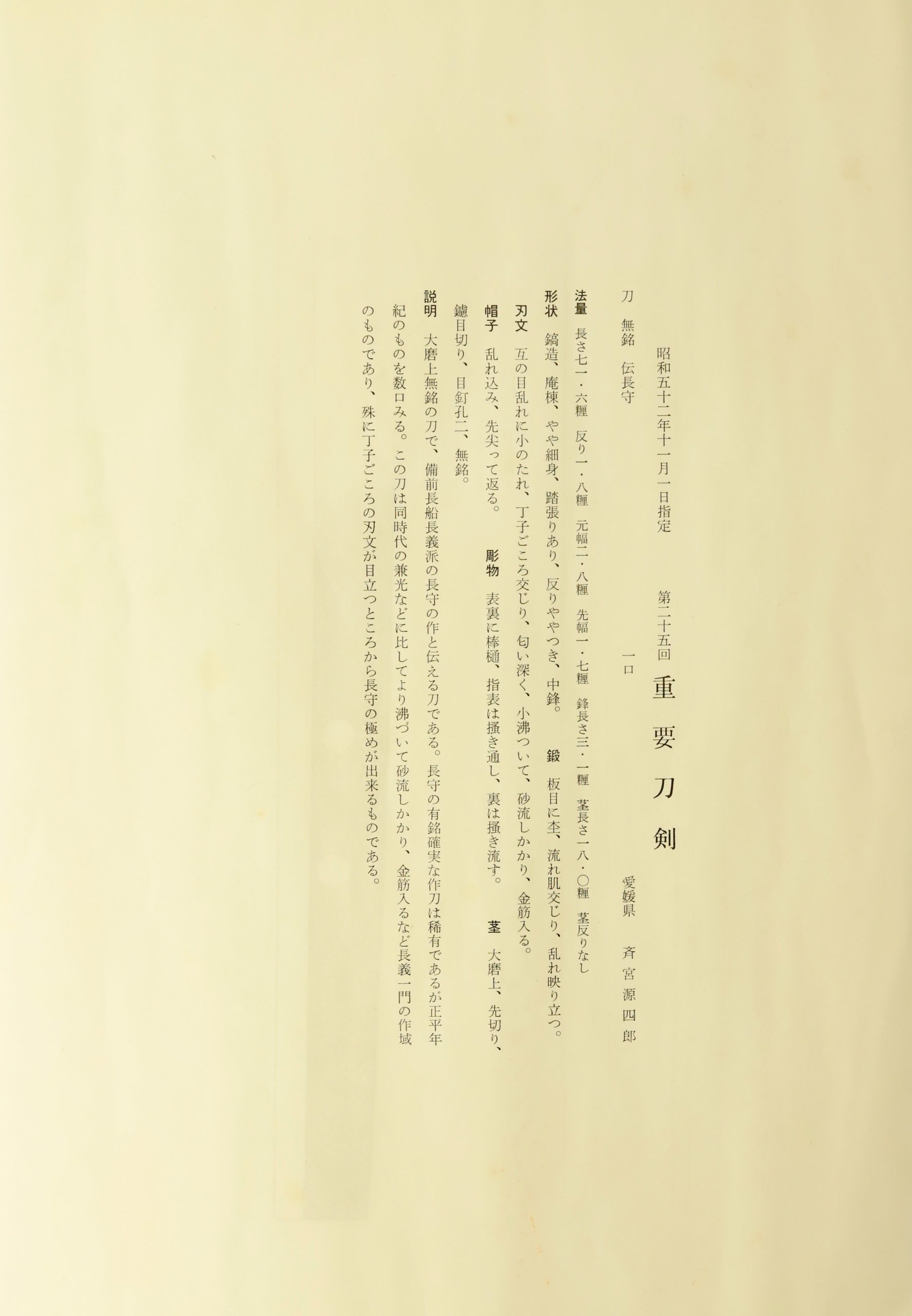
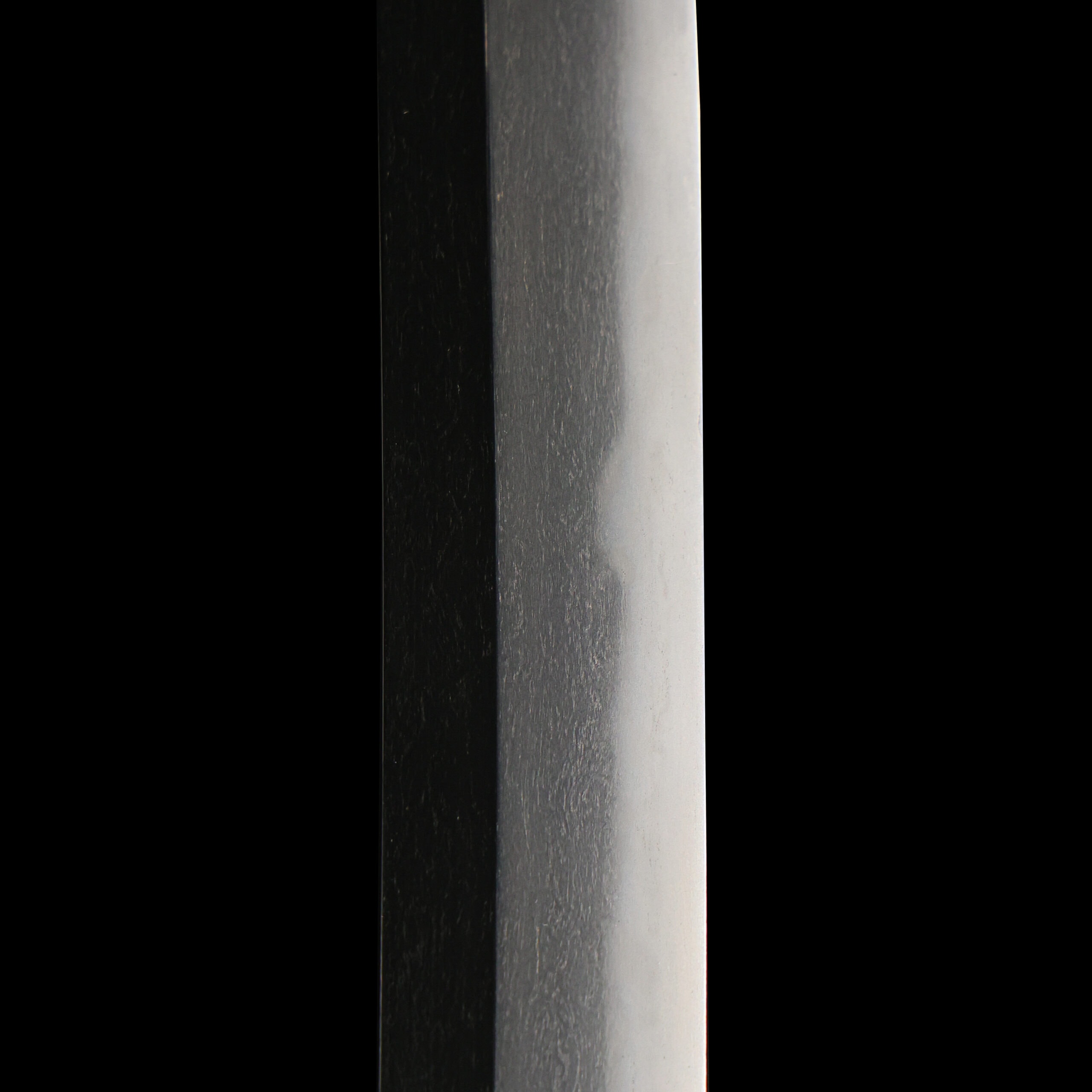
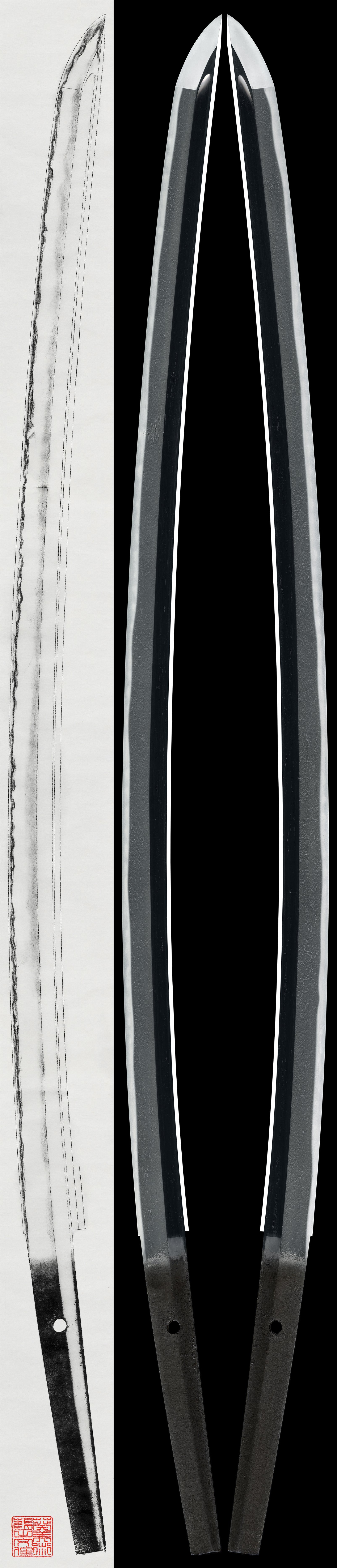
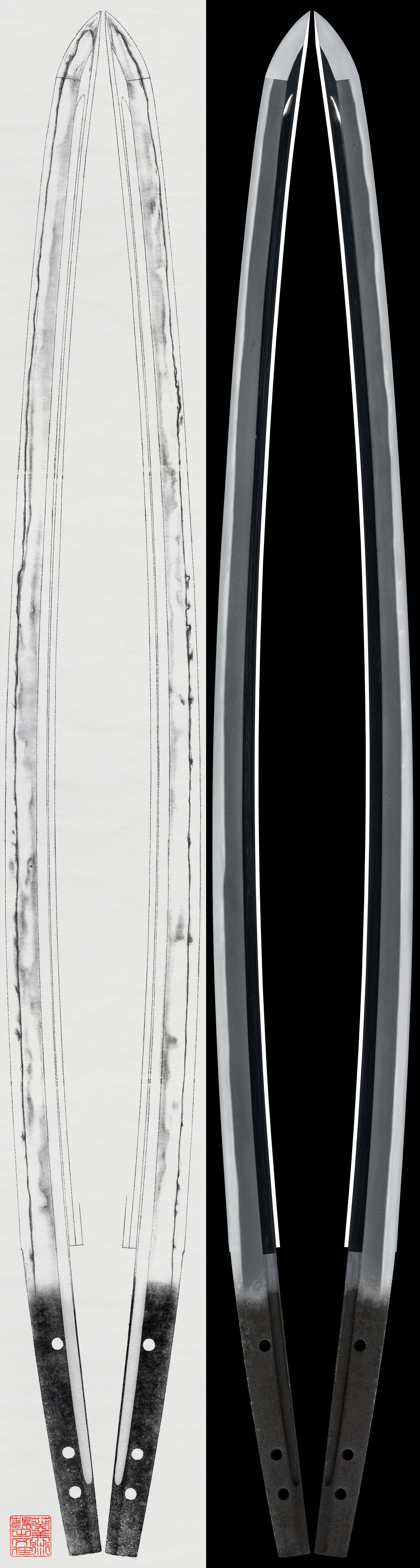
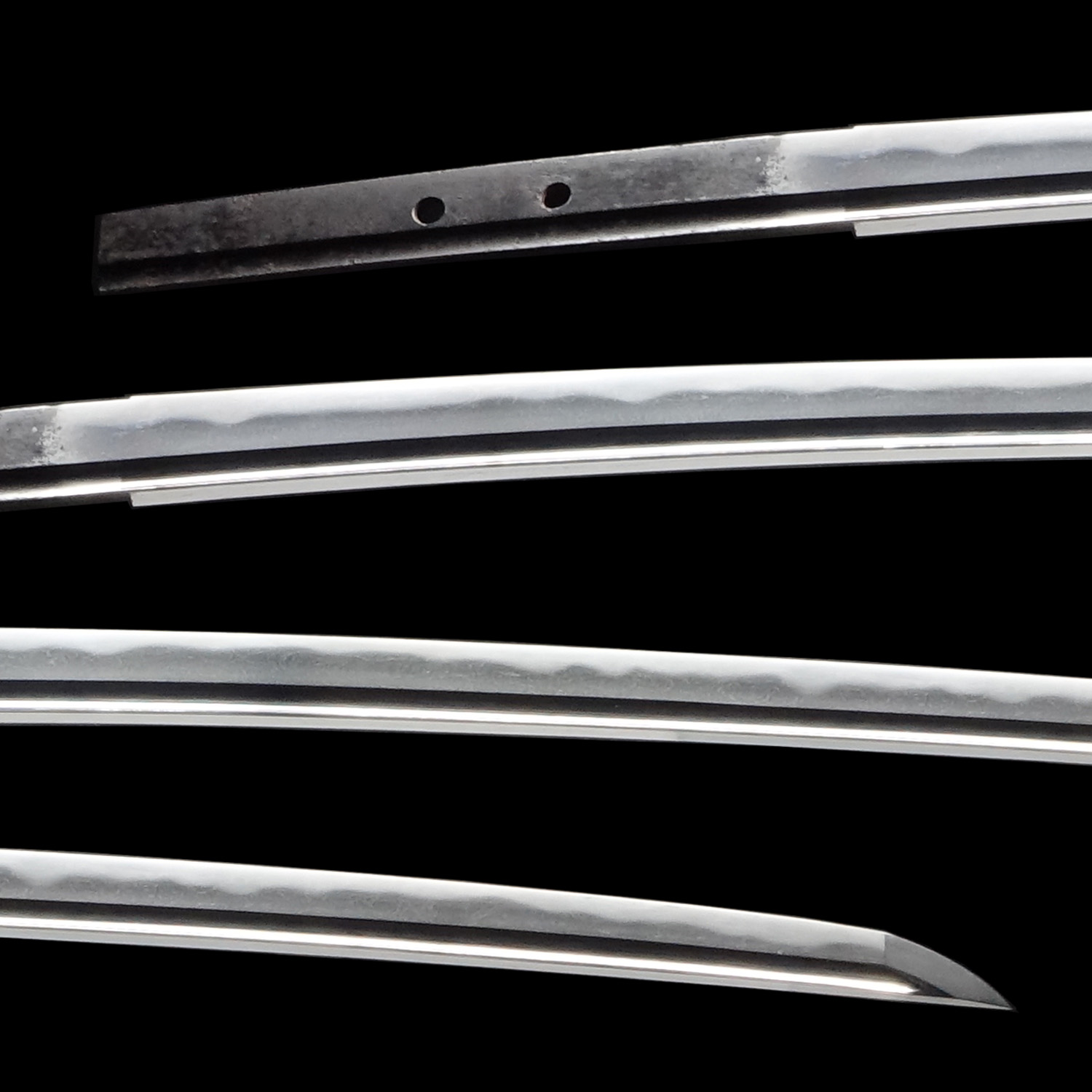
Jūyō-Tōken, 25th Session — Designated November 1, 1977 Katana, mumei: den Nagamori (長守) Measurements Nagasa 71.6 cm, sori 1.8 cm, motohaba 2.8 cm, sakihaba 1.7 cm, kissaki-nagasa 3.1 cm, nakago-nagasa 18.0 cm, nakago-sori none Description Keijō: shinogi-zukuri, iori-mune; somewhat slender; with funbari; sori somewhat present; chū-kissaki. Kitae: itame-hada mixed with mokume and nagare-hada; midare-utsuri stands out. Hamon: gunome-midare with ko-notare, mixed with a chōji-flavor; deep nioi, with ko-nie; sunagashi appears and kinsuji enter. Bōshi: midare-komi, turning back pointed. Horimono: bō-hi on both sides: on the omote it is kaki-tōshi; on the ura it is kaki-nagashi. Nakago: ō-suriage; kiri-jiri; kiri yasurime; two mekugi-ana; unsigned. Artisan Den Nagamori (長守), of the Bizen Osafune Chōgi lineage Era Nanbokuchō period (inferred) Explanation This is an ō-suriage and unsigned katana that is traditionally transmitted (den) as the work of Nagamori of the Nagayoshi (Chōgi) faction within Bizen Osafune. Reliable signed works by Nagamori are exceedingly rare; however, a few blades dated to the Shōhei era are known. In comparison with contemporaneous smiths such as Kanemitsu, this blade shows a stronger tendency toward nie: sunagashi runs through the temper and kinsuji appear, features that fall squarely within the working range of the Chōgi group. Moreover, because the hamon is notably marked by a chōji-like feeling, it is a piece for which an attribution to Nagamori can be made.

NihontoWatch MonNihontoWatch
MarketEncyclopediaKantei
Swords›Bizen-den›Osafune›Sōden-Bizen›Nagamori›Katana: Attributed to Nagamori with NBTHK Juyo Token Certificate
katanaJūyō
Osafune Nagamori

Katana: Attributed to Nagamori with NBTHK Juyo Token Certificate

suriage-mumei · Osafune · Nanbokucho · nagasa 71.6cm · sori 1.6cm

SOLD
Osafune Nagamori (長守) · Osafune · Nanbokucho1 work for sale →
KatanaJūyō
Could you name the smith from the blade alone? Today’s kantei →
Osafune Nagamori — 1 of 24
Osafune Nagamori — 2 of 24
Osafune Nagamori — 3 of 24
Osafune Nagamori — 4 of 24
Osafune Nagamori — 5 of 24
Osafune Nagamori — 6 of 24
Osafune Nagamori — 7 of 24
Osafune Nagamori — 8 of 24
Osafune Nagamori — 9 of 24
Osafune Nagamori — 10 of 24
Osafune Nagamori — 11 of 24
Osafune Nagamori — 12 of 24
Osafune Nagamori — 13 of 24
Osafune Nagamori — 14 of 24
Osafune Nagamori — 15 of 24
Osafune Nagamori — 16 of 24
Osafune Nagamori — 17 of 24
Osafune Nagamori — 18 of 24
Osafune Nagamori — 19 of 24
Osafune Nagamori — 20 of 24
Osafune Nagamori — 21 of 24
Osafune Nagamori — 22 of 24
Osafune Nagamori — 23 of 24
Osafune Nagamori — 24 of 24
1 / 24
1 / 24
Osafune Nagamori — 1 of 24Osafune Nagamori — 2 of 24Osafune Nagamori — 3 of 24Osafune Nagamori — 4 of 24Osafune Nagamori — 5 of 24Osafune Nagamori — 6 of 24Osafune Nagamori — 7 of 24Osafune Nagamori — 8 of 24Osafune Nagamori — 9 of 24Osafune Nagamori — 10 of 24Osafune Nagamori — 11 of 24Osafune Nagamori — 12 of 24Osafune Nagamori — 13 of 24Osafune Nagamori — 14 of 24Osafune Nagamori — 15 of 24Osafune Nagamori — 16 of 24Osafune Nagamori — 17 of 24Osafune Nagamori — 18 of 24Osafune Nagamori — 19 of 24Osafune Nagamori — 20 of 24Osafune Nagamori — 21 of 24Osafune Nagamori — 22 of 24Osafune Nagamori — 23 of 24Osafune Nagamori — 24 of 24
Osafune Nagamori (長守) · Osafune · Nanbokucho1 work for sale →
KatanaJūyō
Could you name the smith from the blade alone? Today’s kantei →
Measurements & details
Smith
Osafune Nagamori
Type
Katana
School
Osafune
Period
Around 1346–1370(Shohei)
Province
Bizen
Signature
suriage-mumei(20% of this smith's designated works are signed)
Measurements
Nagasa 71.6cmSori 1.6cm
Description

This antique katana is attributed to Nagamori of the Bizen Osafune school, active during the mid-Nanbokucho period (14th century). It is accompanied by an NBTHK Juyo Token certificate, indicating its exceptional quality and historical significance. The blade features a shortened tang (suriage) and comes with a koshirae, including Fuchi-Kashira with a Saya Gata pattern and Menuki depicting a plant motif.

NBTHK Zufu Commentary

Juyo #25

AI translation — may contain errors

-, 25th Session — Designated November 1, 1977

, : Nagamori (長守)

Measurements 71.6 cm, 1.8 cm, 2.8 cm, 1.7 cm, 3.1 cm, 18.0 cm, none

Description Keijō: , ; somewhat slender; with ; somewhat present; . : mixed with and ; stands out. : with , mixed with a -flavor; deep , with ; appears and enter. : , turning back pointed. : on both sides: on the it is ; on the it is kaki-nagashi. : ; ; ; two ; unsigned.

Artisan Nagamori (長守), of the Chōgi lineage

Era period (inferred)

Explanation This is an and unsigned that is traditionally transmitted () as the work of Nagamori of the Nagayoshi (Chōgi) faction within .

Reliable signed works by Nagamori are exceedingly rare; however, a few blades dated to the Shōhei era are known. In comparison with contemporaneous smiths such as Kanemitsu, this blade shows a stronger tendency toward : runs through the temper and appear, features that fall squarely within the working range of the Chōgi group. Moreover, because the is notably marked by a -like feeling, it is a piece for which an attribution to Nagamori can be made.

About the maker

Nagamori

長守

Osafune (Bizen), Chōgi line · Bizen · around 1346-1370

Fujishiro Jo saku · Tōken Taikan top 23%

1 piece on the market now

›

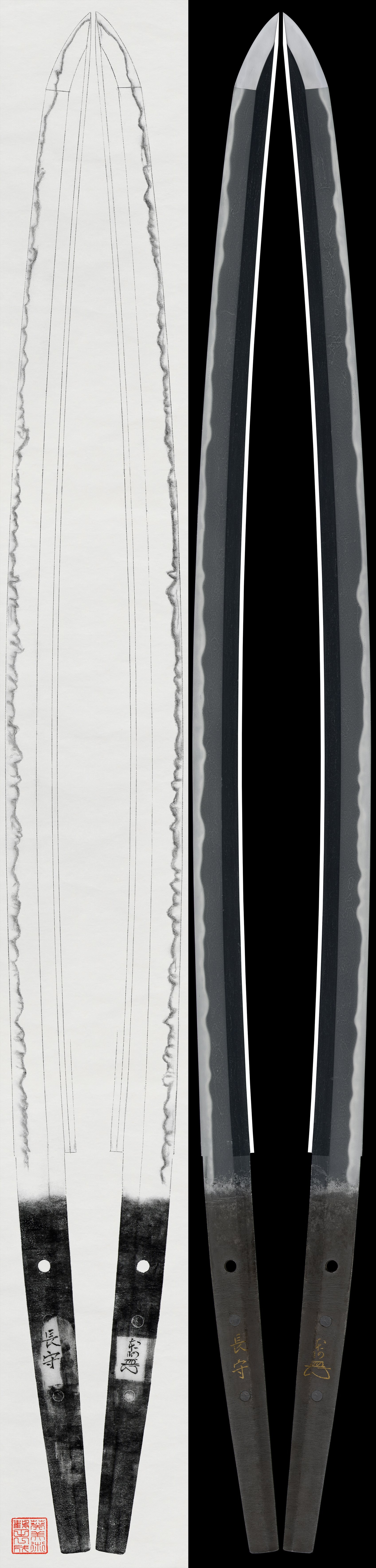
A tantō dated Shōhei 5, the fifth month of 1350, anchors the career of Nagamori of Bizen Osafune, for its date raised the previously known upper limit of his signed work and made him, the published sources say, contemporaneous with his teacher rather than a generation behind. Nagamori has been transmitted since old times as a son or pupil of Chōgi, whose personal name was Nagayoshi. When his dated blades are read together, running from Shōhei 5 (1350) and Shōhei 8 (1353) through Shōhei 22 (1367), into the Kentoku years, and on to the lately surfaced Eiwa 4 (1378) and Kōō 1 (1389), they place him in almost the same years as Chōgi; like his teacher he signed overwhelmingly with Southern Court era names. Because a Chōgi tantō dated Jōwa 6, equivalent to Shōhei 5, survives as Chōgi's earliest dated piece, the two stand together at the head of the dated record, and one Tokubetsu Jūyō wakizashi goes so far as to suggest he may be slightly earlier, that he 「長義よりやや時代がさかのぼるともみられる」[[c:1]].

His is a Bizen hand carried over into the Sōshū idiom of the Chōgi line. The temper that names him is a gunome-midare whose waists open in the Chōgi manner, into which run chōji, ko-gunome, angular elements and a pointed tendency, the line wide and various, with ashi and yō entering, ko-nie adhering, and fine yubashiri and tobiyaki mixed through it. Across the ha lie kinsuji and sunagashi, and the nioiguchi stays bright and clear. Yet the published sources do not let the resemblance to Chōgi stand as the whole story. They grant the affinity in the opened waists and the diversity of the temper, then settle his attribution on a single distinction: in his work the midare resolves into somewhat smaller patterning than the teacher's, so that the judges write of a blade that 「乱れが幾分小模様となる態に長守の極めが首肯される」[[c:2]]. The smaller scale of the irregularity is the tell, and it is read as a manner that falls a little short of Chōgi and Kanenaga in vigour and technical refinement.

The jigane is the constant beneath that temper. He forges an itame mixed with mokume, the grain standing a little and in places flowing toward masame, with ji-nie laid on thickly as fine particles and chikei entering well. The strong ji- and ha-nie that the published sources name as the Chōgi line's Sōshū-den character is exactly what gives his steel its depth. Over it a midare-utsuri stands, though often only faintly, and the published commentary is candid that it is not always present: in blades of this type, it observes, there are examples in which 「映りの全く立たないものがある」[[c:3]]. The bōshi answers the temper, running into the irregularity and turning back in a ko-maru, at times rising to a pointed tip with hakikake; on the signed pieces it sweeps up and turns back long. Bō-hi is carved through on most of the shortened katana, while the signed tantō carry devotional su-ken and gomabashi at the base.

Two registers divide his record. The first is the small body of ubu signed and dated work, almost all of it tantō and short tachi or wakizashi, with a long signature on the omote and a date on the ura: the Shōhei 16 wakizashi in the Tokubetsu Jūyō, hira-zukuri and wide and elongated, tempered in a large gunome-midare with deep nioi and abundant nie that the judges read as strongly Sōshū in character, and which they call 「長守中屈指の一口」[[c:4]], one of the very foremost among his works. The second register, far the larger, is the ō-suriage mumei katana, wide in body with an extended or large kissaki in the Nanbokuchō shape, attributed to him by the smaller-patterned reading of the Chōgi style. The published sources stress that he ranges more broadly than the single flamboyant manner, leaving beside the opened gunome a varied small ko-gunome midare, shallow notare, and even suguha-toned work, so that he may be called 「比較的作域の広い刀工といえる」[[c:5]], a smith of comparatively broad range. That very breadth, set against how few signatures survive, is part of why the mumei attributions turn on so fine a point.

Within the Osafune of the Nanbokuchō he belongs to the Chōgi group, beside Kanenaga and the other Sōshū-den hands of the school. The comparison the judges draw most often is with Chōgi himself. His midare-utsuri and the brightness of both ji and ha keep him a Bizen smith, while the thick ji-nie, the abundant chikei and the kinsuji and sunagashi keep him within the Chōgi line's Sōshū inflection; what separates him from the master is not a different vocabulary but a quieter scale, the irregularity gathered into smaller forms and the whole a degree less forceful. One blade is praised for its bold and splendid air, varied and showy in its midare and rich in the activity within the temper, an excellent work decisively attributed to him; another is read by elimination, its restraint itself the basis of the appraisal.

Fujishiro grades Nagamori at the Jō level. He has no National Treasures and no Important Cultural Properties; his record runs instead through one Tokubetsu Jūyō and thirty-nine Jūyō blades, forty across the two tiers, together with a Gyobutsu tantō held in the Imperial collection. Of recorded whereabouts the survivors are few and largely institutional, among them the Tokyo and Kyoto National Museums, while the Imperial tantō descended through Fukushima Sōbe-no-suke and Tagaya Eishi before entering the Imperial Household. Because authenticated signatures are extremely rare, the dated pieces are valued less as objects than as evidence, the Shōhei tantō in particular being, in the words of the published sources, 「正平年紀の作は, これまでの年紀の上限を引き上げる作であり, 長守を研究する上で貴重な資料である」[[c:6]], valuable material for the study of the smith. A signed Nagamori comes to market only seldom; the mumei katana attributed to him appear more readily, a Chōgi-line Sōshū-den blade of bright steel and varied temper within the reach of a patient collector, and a documented signed example a notable thing to encounter.

Historical importance

Where Nagamori stands among comparable artisans: across all of nihontō, and within tradition, era, and period. The tiers (Foremost · Leading · Major · Notable) weigh official designations from the NBTHK and Japan's Agency for Cultural Affairs, together with historical honors of lasting repute such as the Sansaku and Meibutsu-chō.

随一
Foremost
屈指
Leading
有数
Major
著名
Notable

Select a lens to see how it's measured.

Designation record
40 designated works
Gyobutsu (Imperial)
1
Tokubetsu Jūyō
1
Jūyō
38
1 work by Nagamori on the market→
Nagamori — full profileOsafune (Bizen), Chōgi line school

Dated Works

Years he was demonstrably active, proven by signed-and-dated blades

Active period
1351–1362Editorial estimate: 1346–1370
3 of 7 designated works carry a date
1350
1360
1370

Study this maker →

About the school

Osafune

長船

Bizen-den · Bizen

Phase: Sōden-Bizen相伝備前· 1330–1394

236 pieces on the market now

›

The Soden Bizen school encompasses the group of Nanbokucho-period Osafune smiths in Bizen Province whose work absorbed the technical influence of the Soshu-den, producing a distinctive synthesis that stands apart from both orthodox Bizen and pure Sagami practice. The school divides into two principal lineages: the Kanemitsu group, representing the direct main line of Osafune that descends from Mitsutada through Nagamitsu and Kagemitsu; and the Chogi group, a collateral branch whose members carried the Soshu idiom to its most expressive extremes within Bizen. Kanemitsu, the chakuryu heir of Kagemitsu, pioneered the broad, relaxed notare-based midare that defines the mature Nanbokucho Osafune manner, while Chogi -- described by the NBTHK as the smith "who departs furthest from Bizen" among Bizen makers -- pushed nie-dominant forging to a level that rivals the output of the great Sagami smiths themselves. Together with disciples and contemporaries including Tomomitsu, Motomitsu, Masamitsu, Yoshimitsu, Kanenaga, Nagashige, and Nagamori, they constitute one of the most prolific and technically accomplished groups in the history of Japanese swordsmithing. The school's collective technical identity is anchored in a shared jigane of itame-hada mixed with mokume, with fine ji-nie adhering thickly, chikei entering well, and midare-utsuri standing out -- a persistent Bizen hallmark that survives even in the most Soshu-inflected work. The sugata overwhelmingly reflects the grand Nanbokucho taihai: wide mihaba with little taper between base and tip, and an extended chu-kissaki or o-kissaki conveying martial vigor. Within this shared framework, two distinct temperaments emerge.

" Yoshimitsu likewise inherits the small-pattern tendency, producing ko-gunome mixed with ko-choji whose restraint the NBTHK praises as "upper rank" Soden Bizen. The Chogi lineage, by contrast, emphasizes powerful nie in both ji and ha: Chogi's flamboyant large-scale midare weaves together gunome, choji, togariba, and koshi-hiraki forms with tobiyaki and yubashiri scattering freely, while kinsuji and sunagashi streak through the hardened edge. " Nagashige, now thought to be Chogi's elder brother rather than his junior, works a gentler, smaller-patterned midare yet with nie so strong as to "even surpass Chogi," while Nagamori occupies an intermediate position, his "somewhat smaller patterning" accompanied by rich internal activity. The historical significance of the Soden Bizen school lies in its demonstration that the Soshu influence, far from merely displacing Bizen conventions, catalyzed an extraordinary expansion of the Osafune repertoire. " The NBTHK's evaluative language across the school converges on consistent themes: the forging is "meticulous" and "excellent-quality," the nioiguchi "bright and clear," and the finest examples display a kenzen condition that attests to the soundness of Bizen steel at its peak. The abundance of dated inscriptions -- from Kanemitsu's forty-five-year span through Masamitsu's four-decade career extending into the early Muromachi period -- provides an unusually well-documented chronological framework, with later works by Masamitsu and Yoshimitsu pointing toward the subsequent development of Oei Bizen. Within the broader canon, the Soden Bizen school stands as the fullest realization of the creative possibilities that emerged when two of Japan's greatest forging traditions met and merged. Learn more →

113 recorded smiths2013 designated works
Leading smiths
SmithEraDesignated
Mitsutada光忠1238-123960
Nagamitsu長光1274-1304244
Kagemitsu景光1303-1336143
Kanemitsu兼光1323-1370231
Sanenaga眞長1299-130964
Explore the Osafune school →

Historical context

Bizen in the Nanbokuchō period

›

Sixty years of war between two courts drove blades long and broad, and Osafune met the demand: Kanemitsu and Chōgi led forges serving the provincial warriors who did the fighting, while Sōshū influence arrived with the armies to create Sōden-Bizen.

Bizen in the Nanbokuchō period →

NBTHK Certificate
Jūyō Tōken重要刀剣
Important Sword
›

A blade of top-grade workmanship and condition, formally judged to rank with a nationally recognized Important Art Object (Jūyō Bijutsuhin). Awarded only at the NBTHK’s competitive annual examination.

Of Japan’s roughly 2.5 million registered swords, only 12,307 (about 1 in 203) have ever attained Jūyō.

About the NBTHK›

The NBTHK (Nihon Bijutsu Tōken Hozon Kyōkai, the Society for the Preservation of Japanese Art Swords) is a public-interest incorporated foundation founded in 1948 and supervised by Japan’s Agency for Cultural Affairs (Bunkachō); it is based at the Japanese Sword Museum in Tokyo. Its expert panels physically examine each submitted work (shinsa) and issue a certificate (kanteishō) ranking it by artistic and historical merit. NBTHK papers are the most widely recognized standard of authentication for Japanese swords and fittings.

NBTHK official site→
Seller
S
Samurai Museum
🇯🇵Ships from Japan
›
✓Verified dealersamuraimuseum.jp
✓Ships worldwide✓English supportPayPalCredit card
Return policy

Returns/exchanges limited to defects caused by shipping (except willful misconduct or gross negligence by the company); customers must contact within 72 hours of receiving the product.

View all of Samurai Museum’s listings→View this item on the dealer’s site→

More works by Osafune Nagamori

View all →
Tetsugendo
Katana - by Osafune Nagamori - NagamoriKatana - by Osafune Nagamori - Nagamori

Katana

ByOsafune Nagamori
¥22,000

Previously sold by Osafune Nagamori

View all →
Choshuya
Tanto - by Osafune Nagamori - Kanmuri-otoshi-zukuri Tanto: Nagamori, Bizen Osafune, Dated Eiwa 4th Year, 3rd MonthTanto - by Osafune Nagamori - Kanmuri-otoshi-zukuri Tanto: Nagamori, Bizen Osafune, Dated Eiwa 4th Year, 3rd Month
Sold

Tantō

ByOsafune Nagamori
SOLD
Aoi Art
Jūyō
Katana - Jūyō - by Osafune Nagamori - NagamoriKatana - Jūyō - by Osafune Nagamori - Nagamori
Sold

Katana

ByOsafune Nagamori
SOLD
Eirakudo
Hozon
Katana - Hozon - by Osafune Nagamori - Osafune Nagamori - Tokubetsu Hozon TokenKatana - Hozon - by Osafune Nagamori - Osafune Nagamori - Tokubetsu Hozon Token
Sold

Katana

ByOsafune Nagamori
SOLD

More Sōden-Bizen works

View all →
Eirakudo
Jūyō
Katana - Jūyō - by Motoshige - Motoshige - Juyo TokenKatana - Jūyō - by Motoshige - Motoshige - Juyo Token

Katana

ByMotoshige
¥6,000,000
Samurai Museum
Katana - by Osafune Kanemitsu - Antique Japanese Sword Katana Attributed to Den Osafune Kanemitsu NTHK Yushu Saku Kanteisho CertificateKatana - by Osafune Kanemitsu - Antique Japanese Sword Katana Attributed to Den Osafune Kanemitsu NTHK Yushu Saku Kanteisho Certificate

Katana

ByOsafune Kanemitsu
¥27,856
Goushuya
Jūyō
Katana - Jūyō - by Osafune Kanemitsu - Kanemitsu with Gold Inlay InscriptionKatana - Jūyō - by Osafune Kanemitsu - Kanemitsu with Gold Inlay Inscription

Katana

ByOsafune Kanemitsu
Ask
Aoi Art
Tokuho
Katana - Tokuho - by Osafune Shigezane - Mumei (Osafune Shigezane)Katana - Tokuho - by Osafune Shigezane - Mumei (Osafune Shigezane)

Katana

ByOsafune Shigezane
Starting Bid¥1,650,000
Nihonto Australia
Tokujū
Katana - Tokuju - by Chogi Yoshikage - A Tokubetsu Juyo Masterpiece Yoshikage KatanaKatana - Tokuju - by Chogi Yoshikage - A Tokubetsu Juyo Masterpiece Yoshikage Katana

Katana

ByChogi Yoshikage
Ask
Eirakudo
Tokuho
Tachi - Tokuho - by Osafune Chikakage - Zaimei Chikakage Tachi Tokubetsu Hozon TokenTachi - Tokuho - by Osafune Chikakage - Zaimei Chikakage Tachi Tokubetsu Hozon Token

Tachi

ByOsafune Chikakage
¥5,500,000
Tsuruginoya
Jūyō
Tachi - Jūyō - by Osafune Masamitsu - Bizen Osafune MasamitsuTachi - Jūyō - by Osafune Masamitsu - Bizen Osafune Masamitsu

Tachi

ByOsafune Masamitsu
¥4,800,000
Choshuya
Jūyō
Tachi - Jūyō - by Osafune Masamitsu - Bishu Osafune (Ika-kire Masamitsu) Meitoku 3 nen 8 gatsu (Ika-kire)Tachi - Jūyō - by Osafune Masamitsu - Bishu Osafune (Ika-kire Masamitsu) Meitoku 3 nen 8 gatsu (Ika-kire)

Tachi

ByOsafune Masamitsu
¥4,300,000

More from the Osafune school

View all →
Nihonto.com
Jūyō
Tanto - Jūyō - by Osafune Kagemitsu - Juyo Tanto by Bizen KagemitsuTanto - Jūyō - by Osafune Kagemitsu - Juyo Tanto by Bizen Kagemitsu

Tantō

ByOsafune Kagemitsu
¥89,500
Aoi Art
Jūyō Bijutsuhin
Daisho - Jubi - by Osafune Nagamitsu - Dai Sho: Katana (Important Art Object): Mumei (Attributed to Nagamitsu) / Wakizashi: Mumei (Attributed to Sekishu Naotsuna)Daisho - Jubi - by Osafune Nagamitsu - Dai Sho: Katana (Important Art Object): Mumei (Attributed to Nagamitsu) / Wakizashi: Mumei (Attributed to Sekishu Naotsuna)

Daishō

ByOsafune Nagamitsu
Ask
Aoi Art
Tokuho
Wakizashi - Tokuho - by Oei-Bizen Morimitsu - Bishū Osafune Morimitsu, dated Ōei 26 (1419) - NBTHK Tokubetsu Hozon TokenWakizashi - Tokuho - by Oei-Bizen Morimitsu - Bishū Osafune Morimitsu, dated Ōei 26 (1419) - NBTHK Tokubetsu Hozon Token

Wakizashi

ByOei-Bizen Morimitsu
Starting Bid¥1,500,000
Samurai Museum
Tokuho
Wakizashi - Tokuho - by Osafune Kagemitsu - Antique Japanese Sword Wakizashi Attributed to Den Osafune Kagemitsu with NBTHK Tokubetsu Hozon CertificateWakizashi - Tokuho - by Osafune Kagemitsu - Antique Japanese Sword Wakizashi Attributed to Den Osafune Kagemitsu with NBTHK Tokubetsu Hozon Certificate

Wakizashi

ByOsafune Kagemitsu
¥3,200,000
Touken Matsumoto
Tokuho
Katana - Tokuho - by Sukesada School - Bishu Osafune SukesadaKatana - Tokuho - by Sukesada School - Bishu Osafune Sukesada

Katana

BySukesada School
¥650,000
Touken Matsumoto
Hozon
Wakizashi - Hozon - by Sukesada School - Bishu Osafune Sukesada, Eisho Juninen NigatsujitsuWakizashi - Hozon - by Sukesada School - Bishu Osafune Sukesada, Eisho Juninen Nigatsujitsu

Wakizashi

BySukesada School
¥650,000
Goushuya
Tokujū
Tachi - Tokuju - by Oei-Bizen Morimitsu - Morimitsu - Tokubetsu Juyo TokenTachi - Tokuju - by Oei-Bizen Morimitsu - Morimitsu - Tokubetsu Juyo Token

Tachi

ByOei-Bizen Morimitsu
Ask
Ginza Seikodo
Tokuho
Wakizashi - Tokuho - by Osafune School - Wakizashi signed Bizen Osafune NawaieWakizashi - Tokuho - by Osafune School - Wakizashi signed Bizen Osafune Nawaie

Wakizashi

ByOsafune School
¥2,200,000

More from the Bizen tradition

View all →
Tsuruginoya
Jūyō
Katana - Jūyō - by Fukuoka Ichimonji School - Mumei Fukuoka IchimonjiKatana - Jūyō - by Fukuoka Ichimonji School - Mumei Fukuoka Ichimonji

Katana

ByFukuoka Ichimonji School
Ask
Hyozaemon
Tokuho
Tokuho - by Fukuoka Ichimonji Yoshifusa - Naginata Naoshi Wakizashi by Fukuoka Ichimonji Yoshifusa, a Master of IchimonjiTokuho - by Fukuoka Ichimonji Yoshifusa - Naginata Naoshi Wakizashi by Fukuoka Ichimonji Yoshifusa, a Master of Ichimonji

Naginata Naoshi Wakizashi by Fukuoka Ichimonji Yoshifusa, a Master of Ichimonji

ByFukuoka Ichimonji Yoshifusa
Ask
Eirakudo
Tokuho
Katana - Tokuho - by Katayama Ichimonji School - Katayama Ichimonji - Tokubetsu Hozon TokenKatana - Tokuho - by Katayama Ichimonji School - Katayama Ichimonji - Tokubetsu Hozon Token

Katana

ByKatayama Ichimonji School
¥4,500,000
Giheiya
Hozon
Katana - Hozon - by Takada School - Mumei (Hira Takada) - 72.1cm, with Koshirae and ShirasayaKatana - Hozon - by Takada School - Mumei (Hira Takada) - 72.1cm, with Koshirae and Shirasaya

Katana

ByTakada School
¥350,000
Eirakudo
Jūyō
Katana - Jūyō - by Omiya Morikage - Ohmiya Morikage - Juyo TokenKatana - Jūyō - by Omiya Morikage - Ohmiya Morikage - Juyo Token

Katana

ByOmiya Morikage
¥4,000,000
Goushuya
Jūyō Bijutsuhin
Tachi - Jubi - by Ukai Unsho - Kumoio - From the collection of the Okouchi family, lord of Otaki Domain, Kazusa ProvinceTachi - Jubi - by Ukai Unsho - Kumoio - From the collection of the Okouchi family, lord of Otaki Domain, Kazusa Province

Tachi

ByUkai Unsho
Ask
Toushin
Katana - by Ichimonji School - Mumei (Hatakeda Mitsumori) (Bizen no kuni Yoshioka Ichimonji Sukemitsu)Katana - by Ichimonji School - Mumei (Hatakeda Mitsumori) (Bizen no kuni Yoshioka Ichimonji Sukemitsu)

Katana

ByIchimonji School
¥1,210,000
Aoi Art
Jūyō
Katana - Jūyō - by Aoe School - Mumei (Aoe school)Katana - Jūyō - by Aoe School - Mumei (Aoe school)

Katana

ByAoe School
¥3,200,000

Swords

  • Katana
  • Wakizashi
  • Tantō
  • Tachi
  • Naginata
  • Yari
  • Japanese Swords
  • Samurai Swords

Fittings

  • Tsuba
  • Fuchi-Kashira
  • Kozuka
  • Menuki
  • Sword Guards (Tsuba)

Armor

  • Kabuto
  • Samurai Armor
  • All Samurai Armor

By Certification

  • Tokujū
  • Jūyō
  • Tokuho
  • Hozon

Resources

  • Dealer Directory
  • Artist Directory
  • The Daily Kantei
  • Glossary
  • Browse All
Nihontowatch© 2026
TermsPrivacyCookiesAbout
Sold

Description

This antique katana is attributed to Nagamori of the Bizen Osafune school, active during the mid-Nanbokucho period (14th century). It is accompanied by an NBTHK Juyo Token certificate, indicating its exceptional quality and historical significance. The blade features a shortened tang (suriage) and comes with a koshirae, including Fuchi-Kashira with a Saya Gata pattern and Menuki depicting a plant motif.

NBTHK Setsumei

Jūyō-Tōken, 25th Session — Designated November 1, 1977 Katana, mumei: den Nagamori (長守) Measurements Nagasa 71.6 cm, sori 1.8 cm, motohaba 2.8 cm, sakihaba 1.7 cm, kissaki-nagasa 3.1 cm, nakago-nagasa 18.0 cm, nakago-sori none Description Keijō: shinogi-zukuri, iori-mune; somewhat slender; with funbari; sori somewhat present; chū-kissaki. Kitae: itame-hada mixed with mokume and nagare-hada; midare-utsuri stands out. Hamon: gunome-midare with ko-notare, mixed with a chōji-flavor; deep nioi, with ko-nie; sunagashi appears and kinsuji enter. Bōshi: midare-komi, turning back pointed. Horimono: bō-hi on both sides: on the omote it is kaki-tōshi; on the ura it is kaki-nagashi. Nakago: ō-suriage; kiri-jiri; kiri yasurime; two mekugi-ana; unsigned. Artisan Den Nagamori (長守), of the Bizen Osafune Chōgi lineage Era Nanbokuchō period (inferred) Explanation This is an ō-suriage and unsigned katana that is traditionally transmitted (den) as the work of Nagamori of the Nagayoshi (Chōgi) faction within Bizen Osafune. Reliable signed works by Nagamori are exceedingly rare; however, a few blades dated to the Shōhei era are known. In comparison with contemporaneous smiths such as Kanemitsu, this blade shows a stronger tendency toward nie: sunagashi runs through the temper and kinsuji appear, features that fall squarely within the working range of the Chōgi group. Moreover, because the hamon is notably marked by a chōji-like feeling, it is a piece for which an attribution to Nagamori can be made.

NihontoWatch MonNihontoWatch
MarketEncyclopediaKantei
Swords›Bizen-den›Osafune›Sōden-Bizen›Nagamori›Katana: Attributed to Nagamori with NBTHK Juyo Token Certificate
katanaJūyō
Osafune Nagamori

Katana: Attributed to Nagamori with NBTHK Juyo Token Certificate

suriage-mumei · Osafune · Nanbokucho · nagasa 71.6cm · sori 1.6cm

SOLD
Osafune Nagamori (長守) · Osafune · Nanbokucho1 work for sale →
KatanaJūyō
Could you name the smith from the blade alone? Today’s kantei →
Osafune Nagamori — 1 of 24
Osafune Nagamori — 2 of 24
Osafune Nagamori — 3 of 24
Osafune Nagamori — 4 of 24
Osafune Nagamori — 5 of 24
Osafune Nagamori — 6 of 24
Osafune Nagamori — 7 of 24
Osafune Nagamori — 8 of 24
Osafune Nagamori — 9 of 24
Osafune Nagamori — 10 of 24
Osafune Nagamori — 11 of 24
Osafune Nagamori — 12 of 24
Osafune Nagamori — 13 of 24
Osafune Nagamori — 14 of 24
Osafune Nagamori — 15 of 24
Osafune Nagamori — 16 of 24
Osafune Nagamori — 17 of 24
Osafune Nagamori — 18 of 24
Osafune Nagamori — 19 of 24
Osafune Nagamori — 20 of 24
Osafune Nagamori — 21 of 24
Osafune Nagamori — 22 of 24
Osafune Nagamori — 23 of 24
Osafune Nagamori — 24 of 24
1 / 24
1 / 24
Osafune Nagamori — 1 of 24Osafune Nagamori — 2 of 24Osafune Nagamori — 3 of 24Osafune Nagamori — 4 of 24Osafune Nagamori — 5 of 24Osafune Nagamori — 6 of 24Osafune Nagamori — 7 of 24Osafune Nagamori — 8 of 24Osafune Nagamori — 9 of 24Osafune Nagamori — 10 of 24Osafune Nagamori — 11 of 24Osafune Nagamori — 12 of 24Osafune Nagamori — 13 of 24Osafune Nagamori — 14 of 24Osafune Nagamori — 15 of 24Osafune Nagamori — 16 of 24Osafune Nagamori — 17 of 24Osafune Nagamori — 18 of 24Osafune Nagamori — 19 of 24Osafune Nagamori — 20 of 24Osafune Nagamori — 21 of 24Osafune Nagamori — 22 of 24Osafune Nagamori — 23 of 24Osafune Nagamori — 24 of 24
Osafune Nagamori (長守) · Osafune · Nanbokucho1 work for sale →
KatanaJūyō
Could you name the smith from the blade alone? Today’s kantei →
Measurements & details
Smith
Osafune Nagamori
Type
Katana
School
Osafune
Period
Around 1346–1370(Shohei)
Province
Bizen
Signature
suriage-mumei(20% of this smith's designated works are signed)
Measurements
Nagasa 71.6cmSori 1.6cm
Description

This antique katana is attributed to Nagamori of the Bizen Osafune school, active during the mid-Nanbokucho period (14th century). It is accompanied by an NBTHK Juyo Token certificate, indicating its exceptional quality and historical significance. The blade features a shortened tang (suriage) and comes with a koshirae, including Fuchi-Kashira with a Saya Gata pattern and Menuki depicting a plant motif.

NBTHK Zufu Commentary

Juyo #25

AI translation — may contain errors

-, 25th Session — Designated November 1, 1977

, : Nagamori (長守)

Measurements 71.6 cm, 1.8 cm, 2.8 cm, 1.7 cm, 3.1 cm, 18.0 cm, none

Description Keijō: , ; somewhat slender; with ; somewhat present; . : mixed with and ; stands out. : with , mixed with a -flavor; deep , with ; appears and enter. : , turning back pointed. : on both sides: on the it is ; on the it is kaki-nagashi. : ; ; ; two ; unsigned.

Artisan Nagamori (長守), of the Chōgi lineage

Era period (inferred)

Explanation This is an and unsigned that is traditionally transmitted () as the work of Nagamori of the Nagayoshi (Chōgi) faction within .

Reliable signed works by Nagamori are exceedingly rare; however, a few blades dated to the Shōhei era are known. In comparison with contemporaneous smiths such as Kanemitsu, this blade shows a stronger tendency toward : runs through the temper and appear, features that fall squarely within the working range of the Chōgi group. Moreover, because the is notably marked by a -like feeling, it is a piece for which an attribution to Nagamori can be made.

About the maker

Nagamori

長守

Osafune (Bizen), Chōgi line · Bizen · around 1346-1370

Fujishiro Jo saku · Tōken Taikan top 23%

1 piece on the market now

›

A tantō dated Shōhei 5, the fifth month of 1350, anchors the career of Nagamori of Bizen Osafune, for its date raised the previously known upper limit of his signed work and made him, the published sources say, contemporaneous with his teacher rather than a generation behind. Nagamori has been transmitted since old times as a son or pupil of Chōgi, whose personal name was Nagayoshi. When his dated blades are read together, running from Shōhei 5 (1350) and Shōhei 8 (1353) through Shōhei 22 (1367), into the Kentoku years, and on to the lately surfaced Eiwa 4 (1378) and Kōō 1 (1389), they place him in almost the same years as Chōgi; like his teacher he signed overwhelmingly with Southern Court era names. Because a Chōgi tantō dated Jōwa 6, equivalent to Shōhei 5, survives as Chōgi's earliest dated piece, the two stand together at the head of the dated record, and one Tokubetsu Jūyō wakizashi goes so far as to suggest he may be slightly earlier, that he 「長義よりやや時代がさかのぼるともみられる」[[c:1]].

His is a Bizen hand carried over into the Sōshū idiom of the Chōgi line. The temper that names him is a gunome-midare whose waists open in the Chōgi manner, into which run chōji, ko-gunome, angular elements and a pointed tendency, the line wide and various, with ashi and yō entering, ko-nie adhering, and fine yubashiri and tobiyaki mixed through it. Across the ha lie kinsuji and sunagashi, and the nioiguchi stays bright and clear. Yet the published sources do not let the resemblance to Chōgi stand as the whole story. They grant the affinity in the opened waists and the diversity of the temper, then settle his attribution on a single distinction: in his work the midare resolves into somewhat smaller patterning than the teacher's, so that the judges write of a blade that 「乱れが幾分小模様となる態に長守の極めが首肯される」[[c:2]]. The smaller scale of the irregularity is the tell, and it is read as a manner that falls a little short of Chōgi and Kanenaga in vigour and technical refinement.

The jigane is the constant beneath that temper. He forges an itame mixed with mokume, the grain standing a little and in places flowing toward masame, with ji-nie laid on thickly as fine particles and chikei entering well. The strong ji- and ha-nie that the published sources name as the Chōgi line's Sōshū-den character is exactly what gives his steel its depth. Over it a midare-utsuri stands, though often only faintly, and the published commentary is candid that it is not always present: in blades of this type, it observes, there are examples in which 「映りの全く立たないものがある」[[c:3]]. The bōshi answers the temper, running into the irregularity and turning back in a ko-maru, at times rising to a pointed tip with hakikake; on the signed pieces it sweeps up and turns back long. Bō-hi is carved through on most of the shortened katana, while the signed tantō carry devotional su-ken and gomabashi at the base.

Two registers divide his record. The first is the small body of ubu signed and dated work, almost all of it tantō and short tachi or wakizashi, with a long signature on the omote and a date on the ura: the Shōhei 16 wakizashi in the Tokubetsu Jūyō, hira-zukuri and wide and elongated, tempered in a large gunome-midare with deep nioi and abundant nie that the judges read as strongly Sōshū in character, and which they call 「長守中屈指の一口」[[c:4]], one of the very foremost among his works. The second register, far the larger, is the ō-suriage mumei katana, wide in body with an extended or large kissaki in the Nanbokuchō shape, attributed to him by the smaller-patterned reading of the Chōgi style. The published sources stress that he ranges more broadly than the single flamboyant manner, leaving beside the opened gunome a varied small ko-gunome midare, shallow notare, and even suguha-toned work, so that he may be called 「比較的作域の広い刀工といえる」[[c:5]], a smith of comparatively broad range. That very breadth, set against how few signatures survive, is part of why the mumei attributions turn on so fine a point.

Within the Osafune of the Nanbokuchō he belongs to the Chōgi group, beside Kanenaga and the other Sōshū-den hands of the school. The comparison the judges draw most often is with Chōgi himself. His midare-utsuri and the brightness of both ji and ha keep him a Bizen smith, while the thick ji-nie, the abundant chikei and the kinsuji and sunagashi keep him within the Chōgi line's Sōshū inflection; what separates him from the master is not a different vocabulary but a quieter scale, the irregularity gathered into smaller forms and the whole a degree less forceful. One blade is praised for its bold and splendid air, varied and showy in its midare and rich in the activity within the temper, an excellent work decisively attributed to him; another is read by elimination, its restraint itself the basis of the appraisal.

Fujishiro grades Nagamori at the Jō level. He has no National Treasures and no Important Cultural Properties; his record runs instead through one Tokubetsu Jūyō and thirty-nine Jūyō blades, forty across the two tiers, together with a Gyobutsu tantō held in the Imperial collection. Of recorded whereabouts the survivors are few and largely institutional, among them the Tokyo and Kyoto National Museums, while the Imperial tantō descended through Fukushima Sōbe-no-suke and Tagaya Eishi before entering the Imperial Household. Because authenticated signatures are extremely rare, the dated pieces are valued less as objects than as evidence, the Shōhei tantō in particular being, in the words of the published sources, 「正平年紀の作は, これまでの年紀の上限を引き上げる作であり, 長守を研究する上で貴重な資料である」[[c:6]], valuable material for the study of the smith. A signed Nagamori comes to market only seldom; the mumei katana attributed to him appear more readily, a Chōgi-line Sōshū-den blade of bright steel and varied temper within the reach of a patient collector, and a documented signed example a notable thing to encounter.
Historical importance

Where Nagamori stands among comparable artisans: across all of nihontō, and within tradition, era, and period. The tiers (Foremost · Leading · Major · Notable) weigh official designations from the NBTHK and Japan's Agency for Cultural Affairs, together with historical honors of lasting repute such as the Sansaku and Meibutsu-chō.

随一
Foremost
屈指
Leading
有数
Major
著名
Notable

Select a lens to see how it's measured.

Designation record
40 designated works
Gyobutsu (Imperial)
1
Tokubetsu Jūyō
1
Jūyō
38
1 work by Nagamori on the market→
Nagamori — full profileOsafune (Bizen), Chōgi line school

Dated Works

Years he was demonstrably active, proven by signed-and-dated blades

Active period
1351–1362Editorial estimate: 1346–1370
3 of 7 designated works carry a date
1350
1360
1370

Study this maker →

About the school

Osafune

長船

Bizen-den · Bizen

Phase: Sōden-Bizen相伝備前· 1330–1394

236 pieces on the market now

›

The Soden Bizen school encompasses the group of Nanbokucho-period Osafune smiths in Bizen Province whose work absorbed the technical influence of the Soshu-den, producing a distinctive synthesis that stands apart from both orthodox Bizen and pure Sagami practice. The school divides into two principal lineages: the Kanemitsu group, representing the direct main line of Osafune that descends from Mitsutada through Nagamitsu and Kagemitsu; and the Chogi group, a collateral branch whose members carried the Soshu idiom to its most expressive extremes within Bizen. Kanemitsu, the chakuryu heir of Kagemitsu, pioneered the broad, relaxed notare-based midare that defines the mature Nanbokucho Osafune manner, while Chogi -- described by the NBTHK as the smith "who departs furthest from Bizen" among Bizen makers -- pushed nie-dominant forging to a level that rivals the output of the great Sagami smiths themselves. Together with disciples and contemporaries including Tomomitsu, Motomitsu, Masamitsu, Yoshimitsu, Kanenaga, Nagashige, and Nagamori, they constitute one of the most prolific and technically accomplished groups in the history of Japanese swordsmithing. The school's collective technical identity is anchored in a shared jigane of itame-hada mixed with mokume, with fine ji-nie adhering thickly, chikei entering well, and midare-utsuri standing out -- a persistent Bizen hallmark that survives even in the most Soshu-inflected work. The sugata overwhelmingly reflects the grand Nanbokucho taihai: wide mihaba with little taper between base and tip, and an extended chu-kissaki or o-kissaki conveying martial vigor. Within this shared framework, two distinct temperaments emerge.


" Yoshimitsu likewise inherits the small-pattern tendency, producing ko-gunome mixed with ko-choji whose restraint the NBTHK praises as "upper rank" Soden Bizen. The Chogi lineage, by contrast, emphasizes powerful nie in both ji and ha: Chogi's flamboyant large-scale midare weaves together gunome, choji, togariba, and koshi-hiraki forms with tobiyaki and yubashiri scattering freely, while kinsuji and sunagashi streak through the hardened edge. " Nagashige, now thought to be Chogi's elder brother rather than his junior, works a gentler, smaller-patterned midare yet with nie so strong as to "even surpass Chogi," while Nagamori occupies an intermediate position, his "somewhat smaller patterning" accompanied by rich internal activity. The historical significance of the Soden Bizen school lies in its demonstration that the Soshu influence, far from merely displacing Bizen conventions, catalyzed an extraordinary expansion of the Osafune repertoire. " The NBTHK's evaluative language across the school converges on consistent themes: the forging is "meticulous" and "excellent-quality," the nioiguchi "bright and clear," and the finest examples display a kenzen condition that attests to the soundness of Bizen steel at its peak. The abundance of dated inscriptions -- from Kanemitsu's forty-five-year span through Masamitsu's four-decade career extending into the early Muromachi period -- provides an unusually well-documented chronological framework, with later works by Masamitsu and Yoshimitsu pointing toward the subsequent development of Oei Bizen. Within the broader canon, the Soden Bizen school stands as the fullest realization of the creative possibilities that emerged when two of Japan's greatest forging traditions met and merged. Learn more →

113 recorded smiths2013 designated works
Leading smiths
SmithEraDesignated
Mitsutada光忠1238-123960
Nagamitsu長光1274-1304244
Kagemitsu景光1303-1336143
Kanemitsu兼光1323-1370231
Sanenaga眞長1299-130964
Explore the Osafune school →

Historical context

Bizen in the Nanbokuchō period

›

Sixty years of war between two courts drove blades long and broad, and Osafune met the demand: Kanemitsu and Chōgi led forges serving the provincial warriors who did the fighting, while Sōshū influence arrived with the armies to create Sōden-Bizen.

Bizen in the Nanbokuchō period →

NBTHK Certificate
Jūyō Tōken重要刀剣
Important Sword
›

A blade of top-grade workmanship and condition, formally judged to rank with a nationally recognized Important Art Object (Jūyō Bijutsuhin). Awarded only at the NBTHK’s competitive annual examination.

Of Japan’s roughly 2.5 million registered swords, only 12,307 (about 1 in 203) have ever attained Jūyō.

About the NBTHK›

The NBTHK (Nihon Bijutsu Tōken Hozon Kyōkai, the Society for the Preservation of Japanese Art Swords) is a public-interest incorporated foundation founded in 1948 and supervised by Japan’s Agency for Cultural Affairs (Bunkachō); it is based at the Japanese Sword Museum in Tokyo. Its expert panels physically examine each submitted work (shinsa) and issue a certificate (kanteishō) ranking it by artistic and historical merit. NBTHK papers are the most widely recognized standard of authentication for Japanese swords and fittings.

NBTHK official site→
Seller
S
Samurai Museum
🇯🇵Ships from Japan
›
✓Verified dealersamuraimuseum.jp
✓Ships worldwide✓English supportPayPalCredit card
Return policy

Returns/exchanges limited to defects caused by shipping (except willful misconduct or gross negligence by the company); customers must contact within 72 hours of receiving the product.

View all of Samurai Museum’s listings→View this item on the dealer’s site→

More works by Osafune Nagamori

View all →
Tetsugendo
Katana - by Osafune Nagamori - NagamoriKatana - by Osafune Nagamori - Nagamori

Katana

ByOsafune Nagamori
¥22,000

Previously sold by Osafune Nagamori

View all →
Choshuya
Tanto - by Osafune Nagamori - Kanmuri-otoshi-zukuri Tanto: Nagamori, Bizen Osafune, Dated Eiwa 4th Year, 3rd MonthTanto - by Osafune Nagamori - Kanmuri-otoshi-zukuri Tanto: Nagamori, Bizen Osafune, Dated Eiwa 4th Year, 3rd Month
Sold

Tantō

ByOsafune Nagamori
SOLD
Aoi Art
Jūyō
Katana - Jūyō - by Osafune Nagamori - NagamoriKatana - Jūyō - by Osafune Nagamori - Nagamori
Sold

Katana

ByOsafune Nagamori
SOLD
Eirakudo
Hozon
Katana - Hozon - by Osafune Nagamori - Osafune Nagamori - Tokubetsu Hozon TokenKatana - Hozon - by Osafune Nagamori - Osafune Nagamori - Tokubetsu Hozon Token
Sold

Katana

ByOsafune Nagamori
SOLD

More Sōden-Bizen works

View all →
Eirakudo
Jūyō
Katana - Jūyō - by Motoshige - Motoshige - Juyo TokenKatana - Jūyō - by Motoshige - Motoshige - Juyo Token

Katana

ByMotoshige
¥6,000,000
Samurai Museum
Katana - by Osafune Kanemitsu - Antique Japanese Sword Katana Attributed to Den Osafune Kanemitsu NTHK Yushu Saku Kanteisho CertificateKatana - by Osafune Kanemitsu - Antique Japanese Sword Katana Attributed to Den Osafune Kanemitsu NTHK Yushu Saku Kanteisho Certificate

Katana

ByOsafune Kanemitsu
¥27,856
Goushuya
Jūyō
Katana - Jūyō - by Osafune Kanemitsu - Kanemitsu with Gold Inlay InscriptionKatana - Jūyō - by Osafune Kanemitsu - Kanemitsu with Gold Inlay Inscription

Katana

ByOsafune Kanemitsu
Ask
Aoi Art
Tokuho
Katana - Tokuho - by Osafune Shigezane - Mumei (Osafune Shigezane)Katana - Tokuho - by Osafune Shigezane - Mumei (Osafune Shigezane)

Katana

ByOsafune Shigezane
Starting Bid¥1,650,000
Nihonto Australia
Tokujū
Katana - Tokuju - by Chogi Yoshikage - A Tokubetsu Juyo Masterpiece Yoshikage KatanaKatana - Tokuju - by Chogi Yoshikage - A Tokubetsu Juyo Masterpiece Yoshikage Katana

Katana

ByChogi Yoshikage
Ask
Eirakudo
Tokuho
Tachi - Tokuho - by Osafune Chikakage - Zaimei Chikakage Tachi Tokubetsu Hozon TokenTachi - Tokuho - by Osafune Chikakage - Zaimei Chikakage Tachi Tokubetsu Hozon Token

Tachi

ByOsafune Chikakage
¥5,500,000
Tsuruginoya
Jūyō
Tachi - Jūyō - by Osafune Masamitsu - Bizen Osafune MasamitsuTachi - Jūyō - by Osafune Masamitsu - Bizen Osafune Masamitsu

Tachi

ByOsafune Masamitsu
¥4,800,000
Choshuya
Jūyō
Tachi - Jūyō - by Osafune Masamitsu - Bishu Osafune (Ika-kire Masamitsu) Meitoku 3 nen 8 gatsu (Ika-kire)Tachi - Jūyō - by Osafune Masamitsu - Bishu Osafune (Ika-kire Masamitsu) Meitoku 3 nen 8 gatsu (Ika-kire)

Tachi

ByOsafune Masamitsu
¥4,300,000

More from the Osafune school

View all →
Nihonto.com
Jūyō
Tanto - Jūyō - by Osafune Kagemitsu - Juyo Tanto by Bizen KagemitsuTanto - Jūyō - by Osafune Kagemitsu - Juyo Tanto by Bizen Kagemitsu

Tantō

ByOsafune Kagemitsu
¥89,500
Aoi Art
Jūyō Bijutsuhin
Daisho - Jubi - by Osafune Nagamitsu - Dai Sho: Katana (Important Art Object): Mumei (Attributed to Nagamitsu) / Wakizashi: Mumei (Attributed to Sekishu Naotsuna)Daisho - Jubi - by Osafune Nagamitsu - Dai Sho: Katana (Important Art Object): Mumei (Attributed to Nagamitsu) / Wakizashi: Mumei (Attributed to Sekishu Naotsuna)

Daishō

ByOsafune Nagamitsu
Ask
Aoi Art
Tokuho
Wakizashi - Tokuho - by Oei-Bizen Morimitsu - Bishū Osafune Morimitsu, dated Ōei 26 (1419) - NBTHK Tokubetsu Hozon TokenWakizashi - Tokuho - by Oei-Bizen Morimitsu - Bishū Osafune Morimitsu, dated Ōei 26 (1419) - NBTHK Tokubetsu Hozon Token

Wakizashi

ByOei-Bizen Morimitsu
Starting Bid¥1,500,000
Samurai Museum
Tokuho
Wakizashi - Tokuho - by Osafune Kagemitsu - Antique Japanese Sword Wakizashi Attributed to Den Osafune Kagemitsu with NBTHK Tokubetsu Hozon CertificateWakizashi - Tokuho - by Osafune Kagemitsu - Antique Japanese Sword Wakizashi Attributed to Den Osafune Kagemitsu with NBTHK Tokubetsu Hozon Certificate

Wakizashi

ByOsafune Kagemitsu
¥3,200,000
Touken Matsumoto
Tokuho
Katana - Tokuho - by Sukesada School - Bishu Osafune SukesadaKatana - Tokuho - by Sukesada School - Bishu Osafune Sukesada

Katana

BySukesada School
¥650,000
Touken Matsumoto
Hozon
Wakizashi - Hozon - by Sukesada School - Bishu Osafune Sukesada, Eisho Juninen NigatsujitsuWakizashi - Hozon - by Sukesada School - Bishu Osafune Sukesada, Eisho Juninen Nigatsujitsu

Wakizashi

BySukesada School
¥650,000
Goushuya
Tokujū
Tachi - Tokuju - by Oei-Bizen Morimitsu - Morimitsu - Tokubetsu Juyo TokenTachi - Tokuju - by Oei-Bizen Morimitsu - Morimitsu - Tokubetsu Juyo Token

Tachi

ByOei-Bizen Morimitsu
Ask
Ginza Seikodo
Tokuho
Wakizashi - Tokuho - by Osafune School - Wakizashi signed Bizen Osafune NawaieWakizashi - Tokuho - by Osafune School - Wakizashi signed Bizen Osafune Nawaie

Wakizashi

ByOsafune School
¥2,200,000

More from the Bizen tradition

View all →
Tsuruginoya
Jūyō
Katana - Jūyō - by Fukuoka Ichimonji School - Mumei Fukuoka IchimonjiKatana - Jūyō - by Fukuoka Ichimonji School - Mumei Fukuoka Ichimonji

Katana

ByFukuoka Ichimonji School
Ask
Hyozaemon
Tokuho
Tokuho - by Fukuoka Ichimonji Yoshifusa - Naginata Naoshi Wakizashi by Fukuoka Ichimonji Yoshifusa, a Master of IchimonjiTokuho - by Fukuoka Ichimonji Yoshifusa - Naginata Naoshi Wakizashi by Fukuoka Ichimonji Yoshifusa, a Master of Ichimonji

Naginata Naoshi Wakizashi by Fukuoka Ichimonji Yoshifusa, a Master of Ichimonji

ByFukuoka Ichimonji Yoshifusa
Ask
Eirakudo
Tokuho
Katana - Tokuho - by Katayama Ichimonji School - Katayama Ichimonji - Tokubetsu Hozon TokenKatana - Tokuho - by Katayama Ichimonji School - Katayama Ichimonji - Tokubetsu Hozon Token

Katana

ByKatayama Ichimonji School
¥4,500,000
Giheiya
Hozon
Katana - Hozon - by Takada School - Mumei (Hira Takada) - 72.1cm, with Koshirae and ShirasayaKatana - Hozon - by Takada School - Mumei (Hira Takada) - 72.1cm, with Koshirae and Shirasaya

Katana

ByTakada School
¥350,000
Eirakudo
Jūyō
Katana - Jūyō - by Omiya Morikage - Ohmiya Morikage - Juyo TokenKatana - Jūyō - by Omiya Morikage - Ohmiya Morikage - Juyo Token

Katana

ByOmiya Morikage
¥4,000,000
Goushuya
Jūyō Bijutsuhin
Tachi - Jubi - by Ukai Unsho - Kumoio - From the collection of the Okouchi family, lord of Otaki Domain, Kazusa ProvinceTachi - Jubi - by Ukai Unsho - Kumoio - From the collection of the Okouchi family, lord of Otaki Domain, Kazusa Province

Tachi

ByUkai Unsho
Ask
Toushin
Katana - by Ichimonji School - Mumei (Hatakeda Mitsumori) (Bizen no kuni Yoshioka Ichimonji Sukemitsu)Katana - by Ichimonji School - Mumei (Hatakeda Mitsumori) (Bizen no kuni Yoshioka Ichimonji Sukemitsu)

Katana

ByIchimonji School
¥1,210,000
Aoi Art
Jūyō
Katana - Jūyō - by Aoe School - Mumei (Aoe school)Katana - Jūyō - by Aoe School - Mumei (Aoe school)

Katana

ByAoe School
¥3,200,000

Swords

  • Katana
  • Wakizashi
  • Tantō
  • Tachi
  • Naginata
  • Yari
  • Japanese Swords
  • Samurai Swords

Fittings

  • Tsuba
  • Fuchi-Kashira
  • Kozuka
  • Menuki
  • Sword Guards (Tsuba)

Armor

  • Kabuto
  • Samurai Armor
  • All Samurai Armor

By Certification

  • Tokujū
  • Jūyō
  • Tokuho
  • Hozon

Resources

  • Dealer Directory
  • Artist Directory
  • The Daily Kantei
  • Glossary
  • Browse All
Nihontowatch© 2026
TermsPrivacyCookiesAbout
Sold
NihontoWatch MonNihontoWatch
Market
Encyclopedia
Kantei
NihontoWatch MonNihontoWatch
Market
Encyclopedia
Kantei