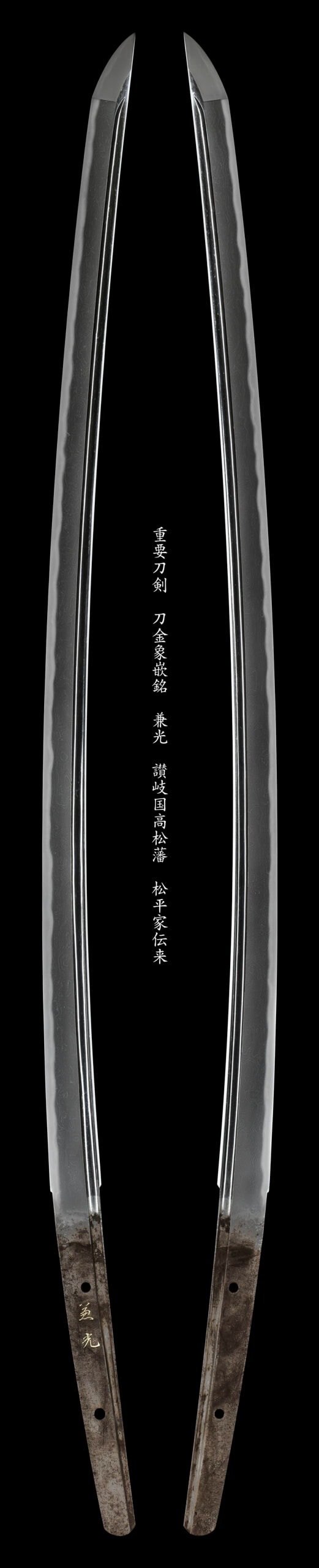
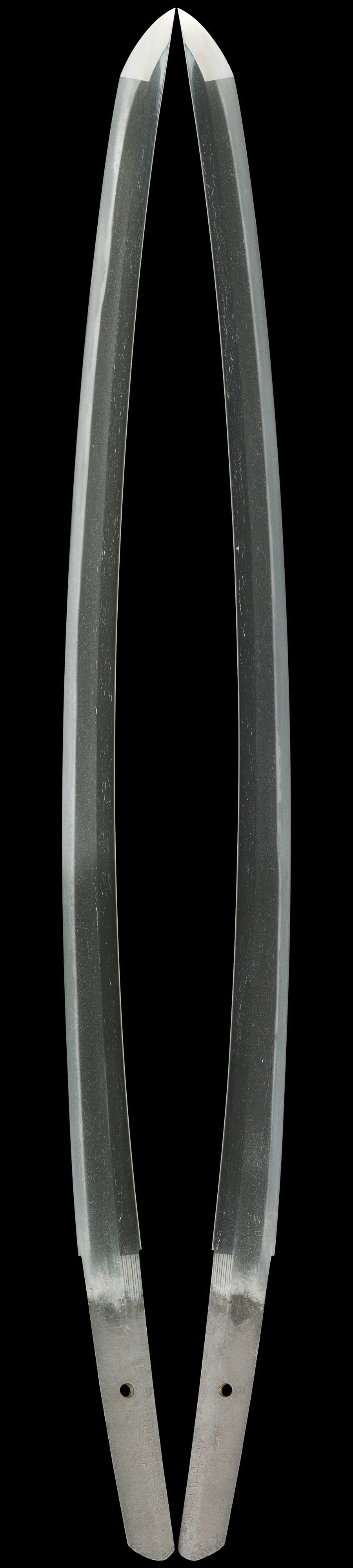
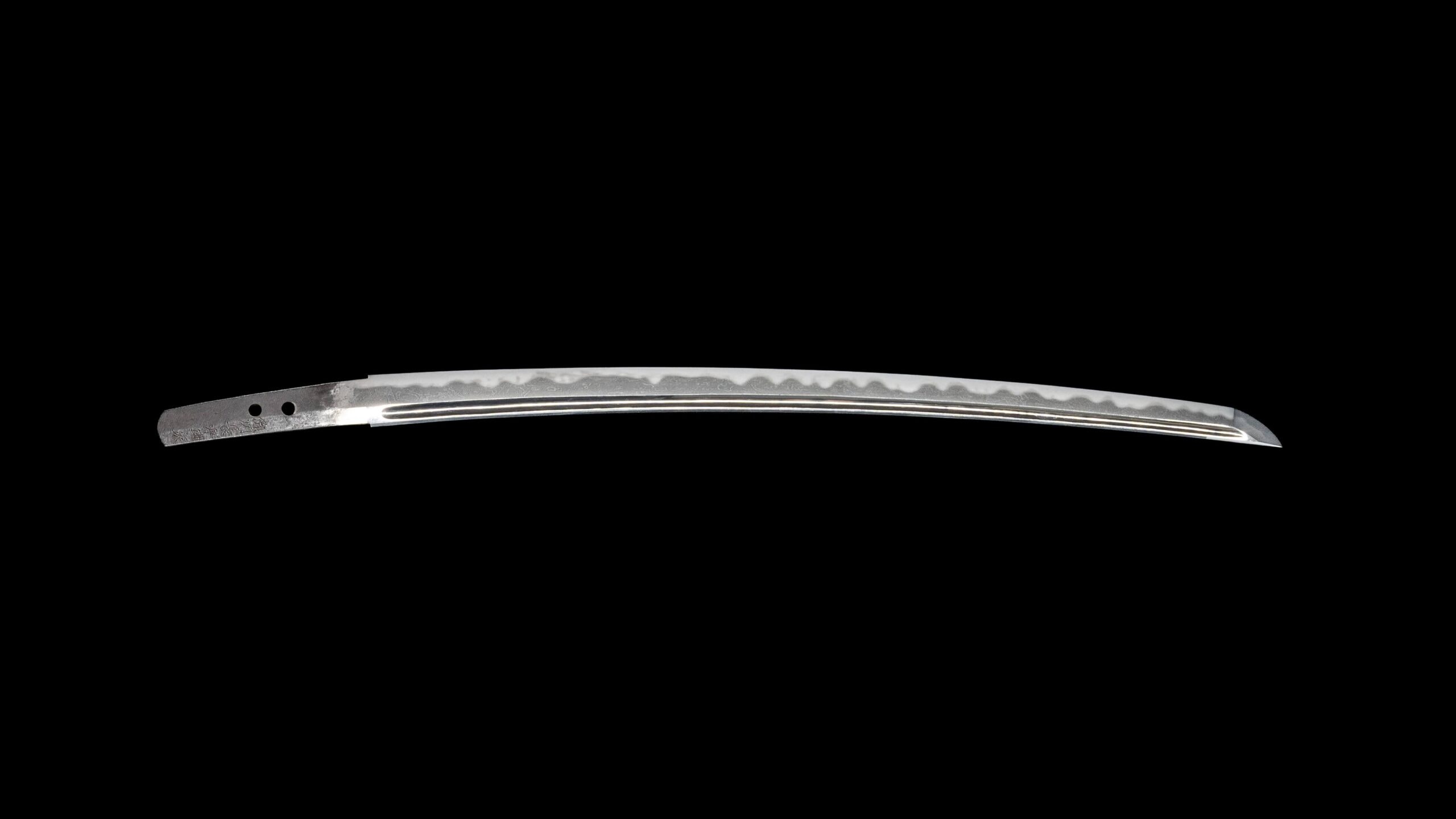
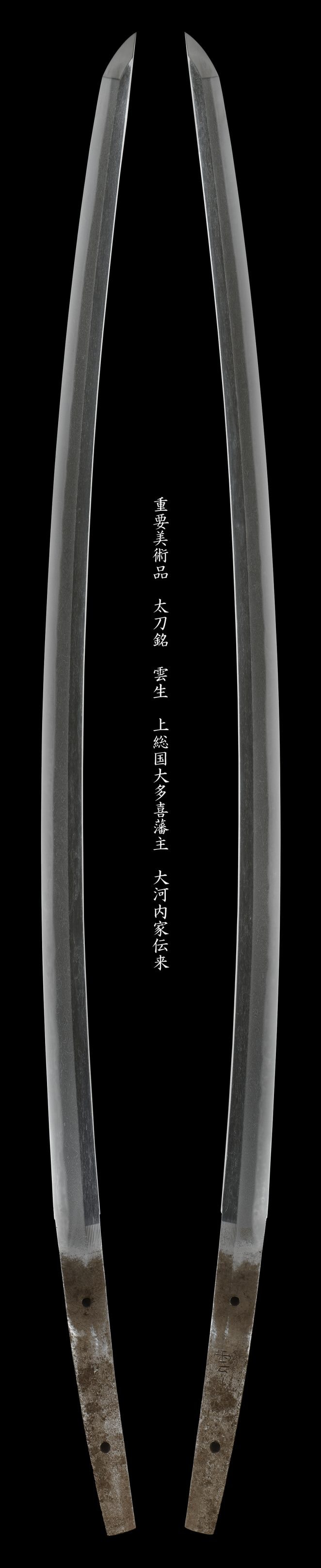
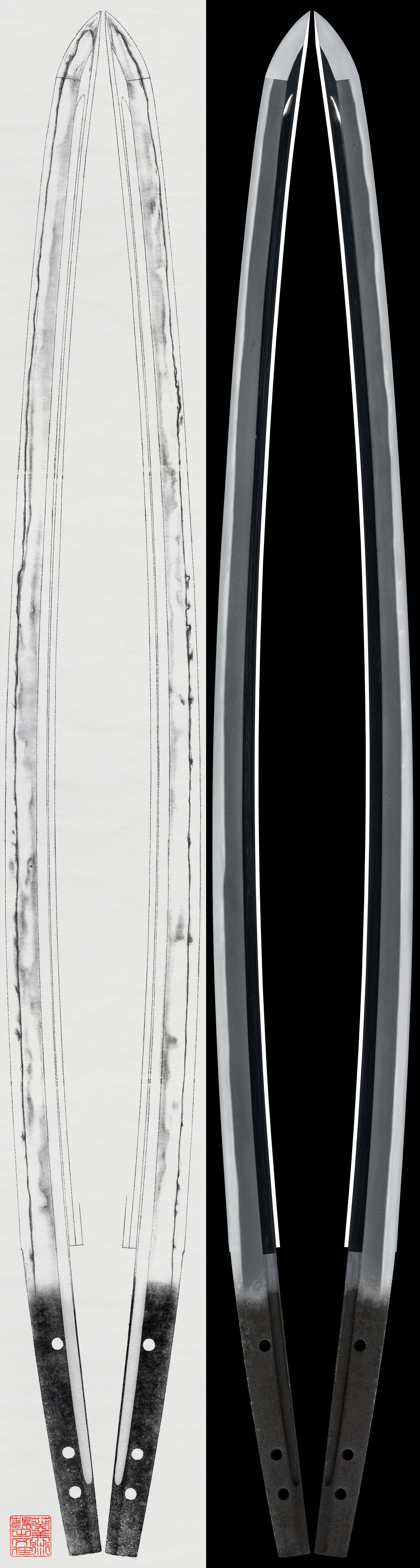
A dated Shōhei 5, the fifth month of 1350, anchors the career of Nagamori of , for its date raised the previously known upper limit of his signed work and made him, the published sources say, contemporaneous with his teacher rather than a generation behind. Nagamori has been transmitted since old times as a son or pupil of Chōgi, whose personal name was Nagayoshi. When his dated blades are read together, running from Shōhei 5 (1350) and Shōhei 8 (1353) through Shōhei 22 (1367), into the Kentoku years, and on to the lately surfaced Eiwa 4 (1378) and Kōō 1 (1389), they place him in almost the years as Chōgi; like his teacher he signed overwhelmingly with Southern Court era names. Because a Chōgi dated Jōwa 6, equivalent to Shōhei 5, survives as Chōgi's earliest dated piece, the two stand together at the head of the dated record, and one goes so far as to suggest he may be slightly earlier, that he 「長義よりやや時代がさかのぼるともみられる」.
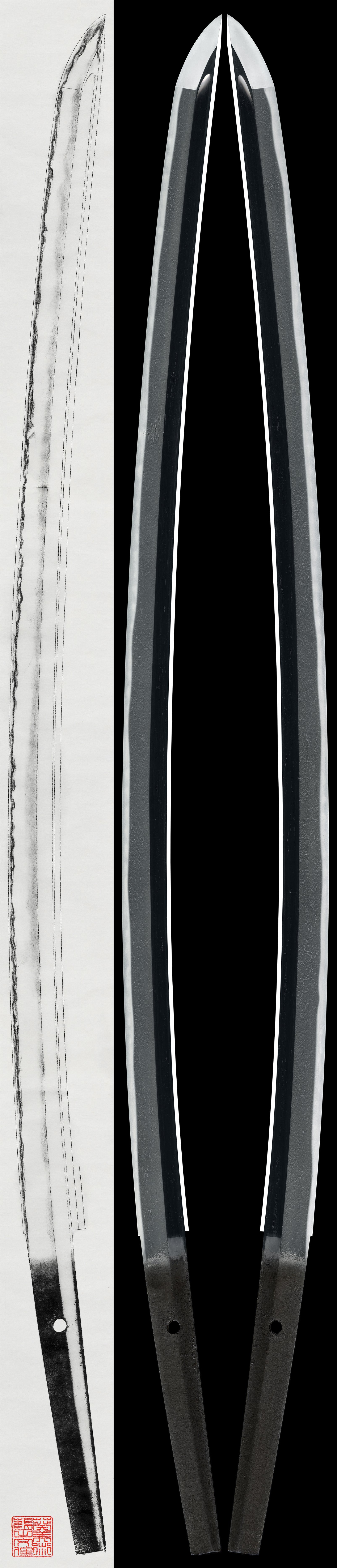
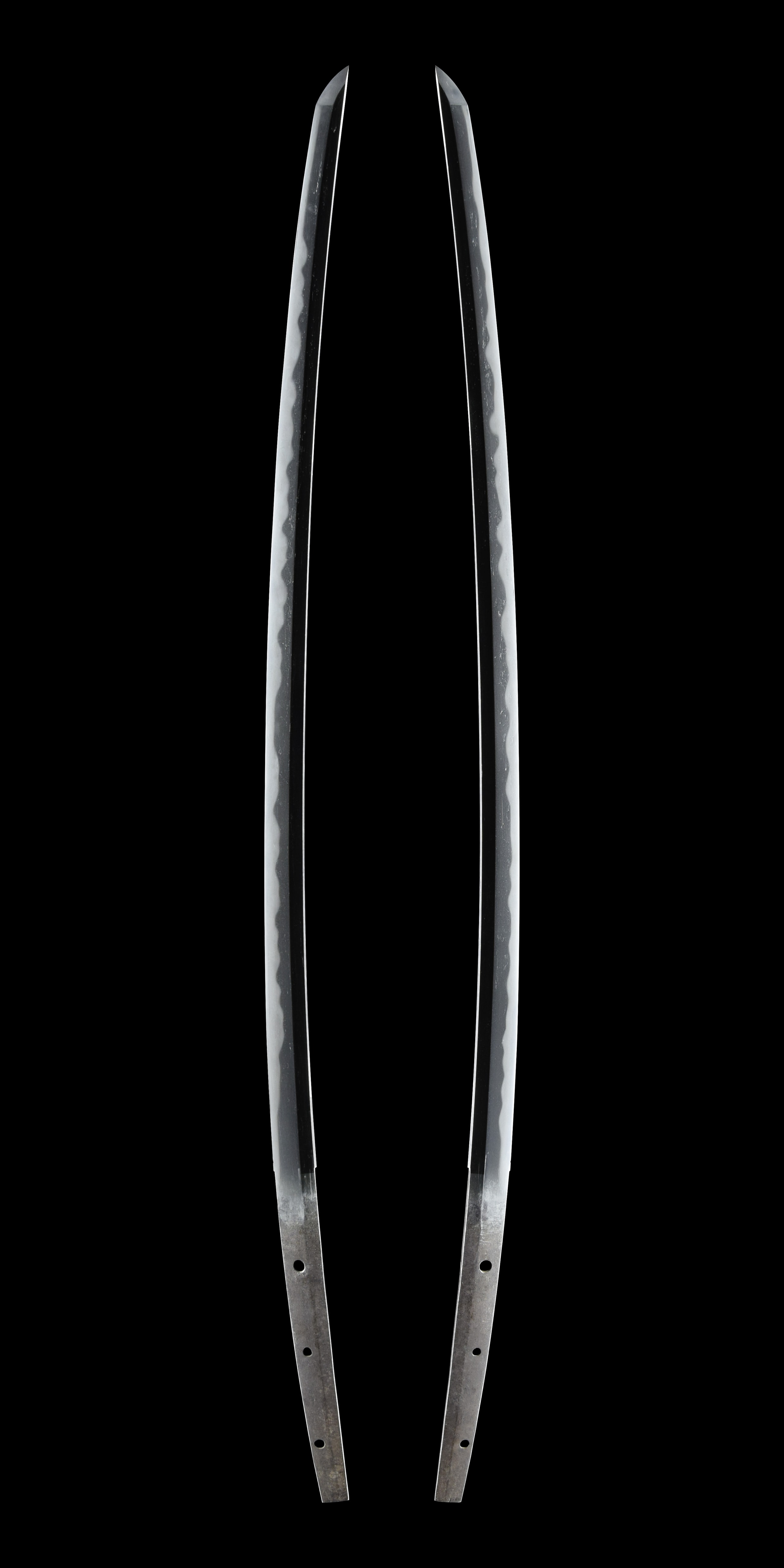
His is a hand carried over into the idiom of the Chōgi line. The temper that names him is a whose waists open in the Chōgi manner, into which run , , angular elements and a pointed tendency, the line wide and various, with and entering, adhering, and fine and mixed through it. Across the lie and , and the stays bright and clear. Yet the published sources do not let the resemblance to Chōgi stand as the whole story. They grant the affinity in the opened waists and the diversity of the temper, then settle his attribution on a single distinction: in his work the resolves into somewhat smaller patterning than the teacher's, so that the judges write of a blade that 「乱れが幾分小模様となる態に長守の極めが首肯される」. The smaller scale of the irregularity is the tell, and it is read as a manner that falls a little short of Chōgi and Kanenaga in vigour and technical refinement.
The is the constant beneath that temper. He forges an mixed with , the grain standing a little and in places flowing toward , with laid on thickly as fine particles and entering well. The strong - and that the published sources name as the Chōgi line's Sōshū-den character is exactly what gives his steel its depth. Over it a stands, though often only faintly, and the published commentary is candid that it is not always present: in blades of this type, it observes, there are examples in which 「映りの全く立たないものがある」. The answers the temper, running into the irregularity and turning back in a , at times rising to a pointed tip with ; on the signed pieces it sweeps up and turns back long. is carved through on most of the shortened , while the signed carry devotional su- and at the base.
Two registers divide his record. The first is the small body of signed and dated work, almost all of it and short or , with a long signature on the and a date on the : the Shōhei 16 in the , and wide and elongated, tempered in a large with deep and abundant that the judges read as strongly in character, and which they call 「長守中屈指の一口」, one of the very foremost among his works. The second register, far the larger, is the , wide in body with an extended or large in the shape, attributed to him by the smaller-patterned reading of the Chōgi style. The published sources stress that he ranges more broadly than the single flamboyant manner, leaving beside the opened a varied small , shallow , and even -toned work, so that he may be called 「比較的作域の広い刀工といえる」, a smith of comparatively broad range. That very breadth, set against how few signatures survive, is part of why the attributions turn on so fine a point.
Within the of the he belongs to the Chōgi group, beside Kanenaga and the other Sōshū-den hands of the school. The comparison the judges draw most often is with Chōgi himself. His and the brightness of both and keep him a smith, while the thick , the abundant and the and keep him within the Chōgi line's inflection; what separates him from the master is not a different vocabulary but a quieter scale, the irregularity gathered into smaller forms and the whole a degree less forceful. One blade is praised for its bold and splendid air, varied and showy in its and rich in the activity within the temper, an excellent work decisively attributed to him; another is read by elimination, its restraint itself the basis of the appraisal.
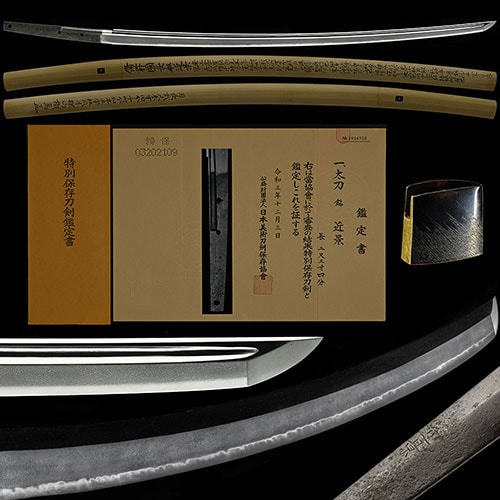
Fujishiro grades Nagamori at the Jō level. He has no National Treasures and no Important Cultural Properties; his record runs instead through one and thirty-nine blades, forty across the two tiers, together with a held in the Imperial collection. Of recorded whereabouts the survivors are few and largely institutional, among them the Tokyo and Kyoto National Museums, while the Imperial descended through Fukushima Sōbe-no- and Tagaya Eishi before entering the Imperial Household. Because authenticated signatures are extremely rare, the dated pieces are valued less as objects than as evidence, the Shōhei in particular being, in the words of the published sources, 「正平年紀の作は、これまでの年紀の上限を引き上げる作であり、長守を研究する上で貴重な資料である」, valuable material for the study of the smith. A signed Nagamori comes to market only seldom; the attributed to him appear more readily, a Chōgi-line Sōshū-den blade of bright steel and varied temper within the reach of a patient collector, and a documented signed example a notable thing to encounter.