Sixty years of war between two courts drove blades long and broad, and Osafune met the demand: Kanemitsu and Chōgi led forges serving the provincial warriors who did the fighting, while Sōshū influence arrived with the armies to create Sōden-Bizen.
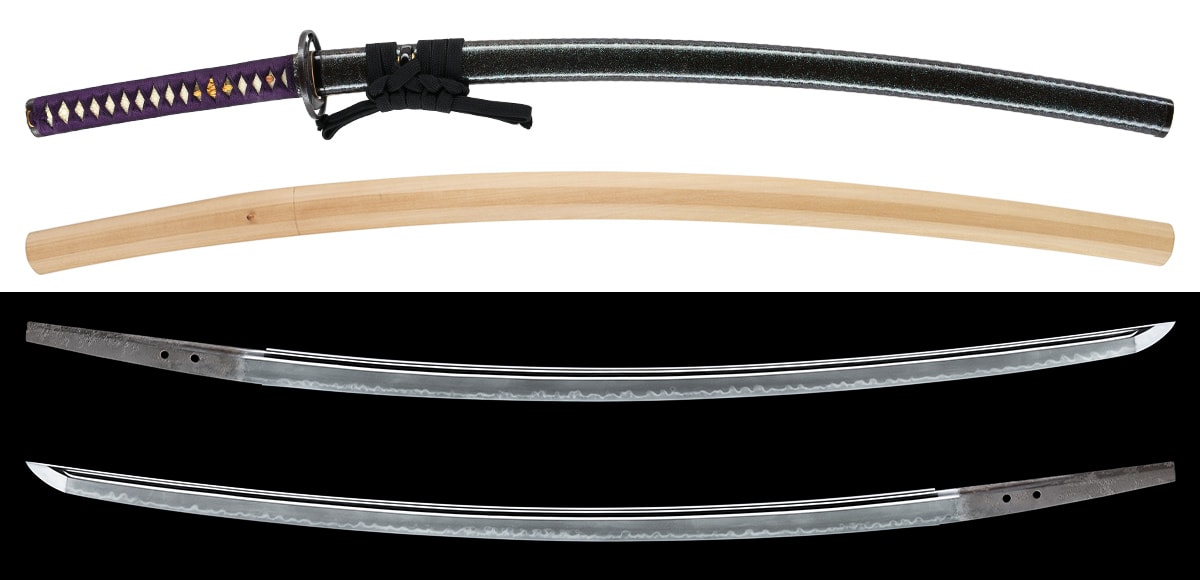
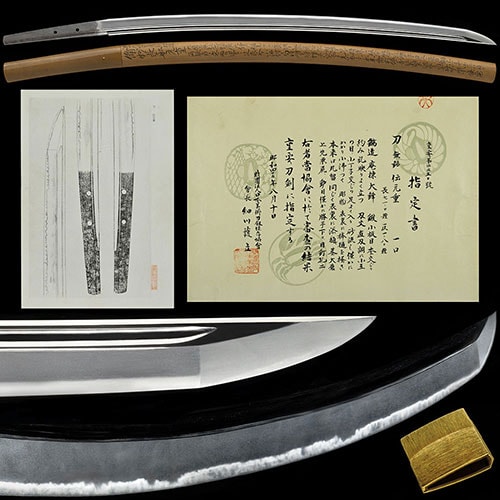
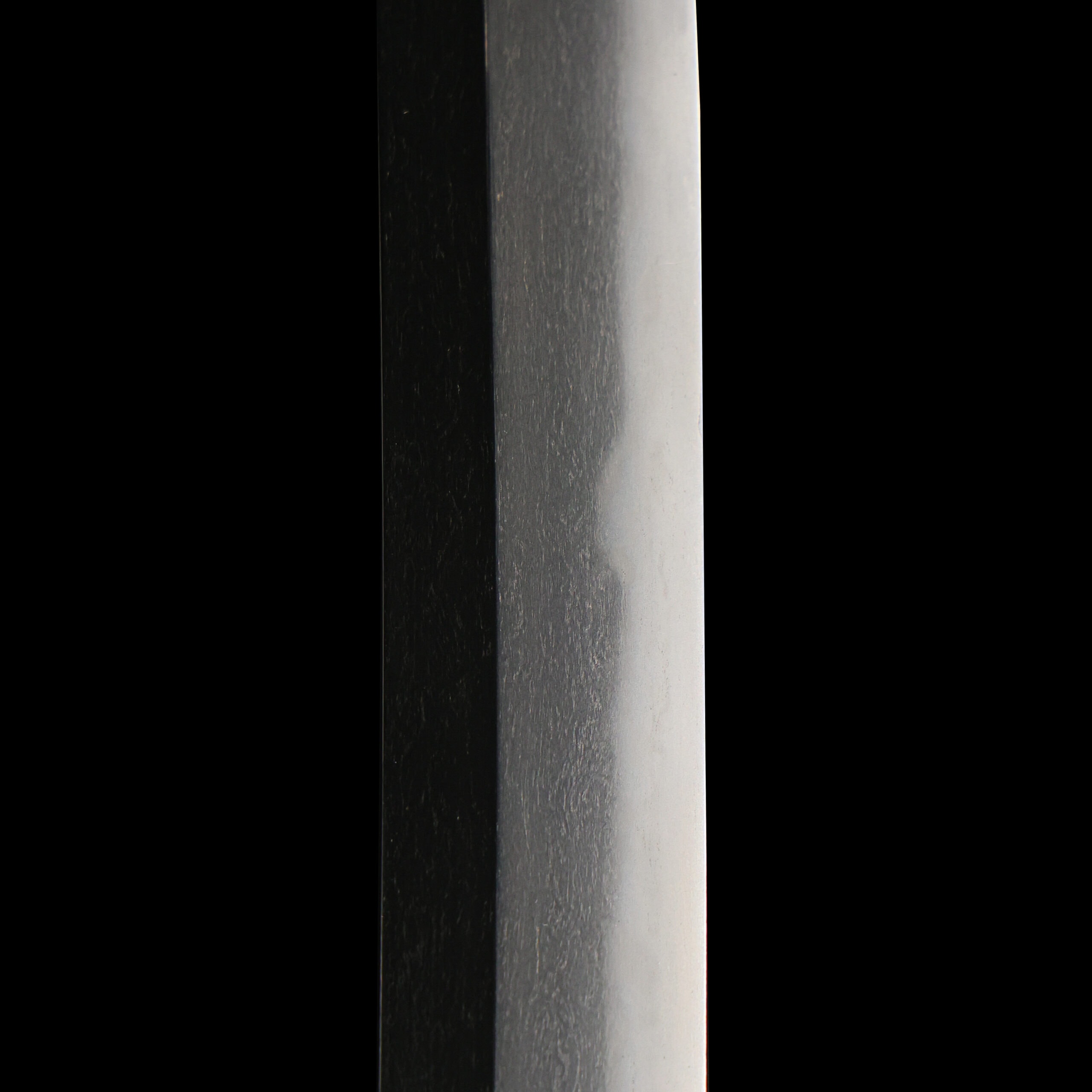
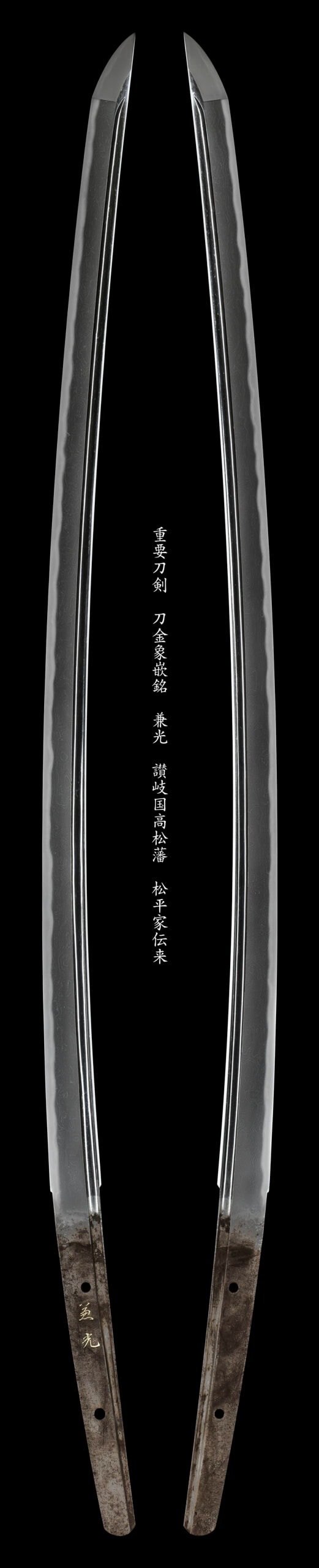
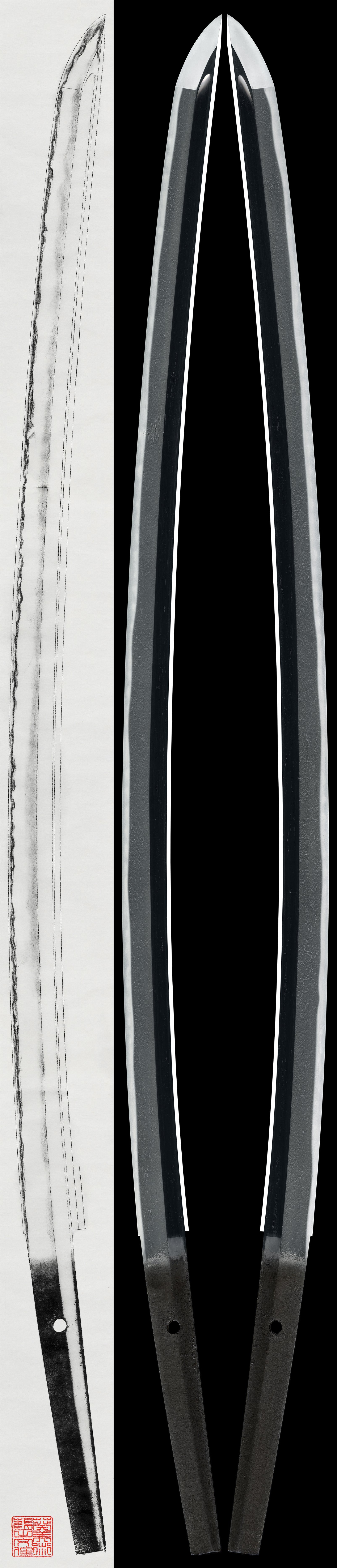
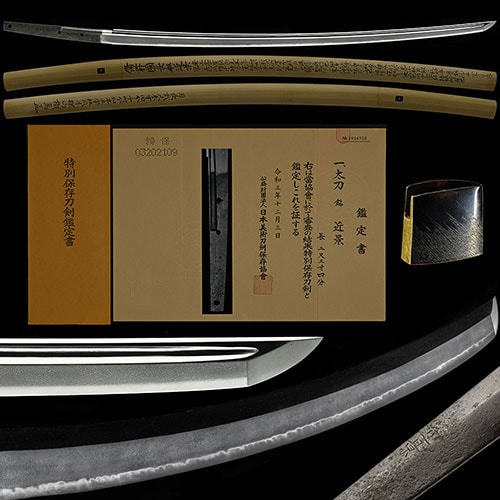
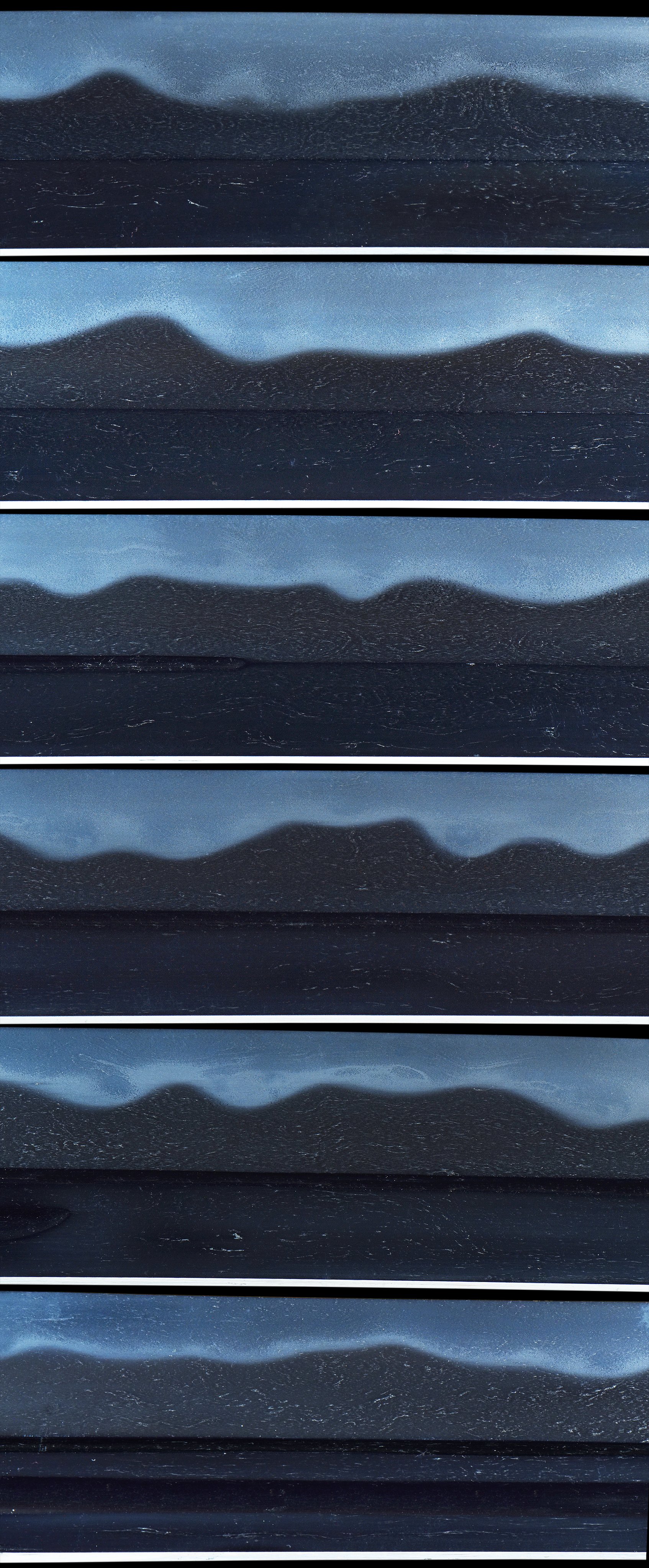
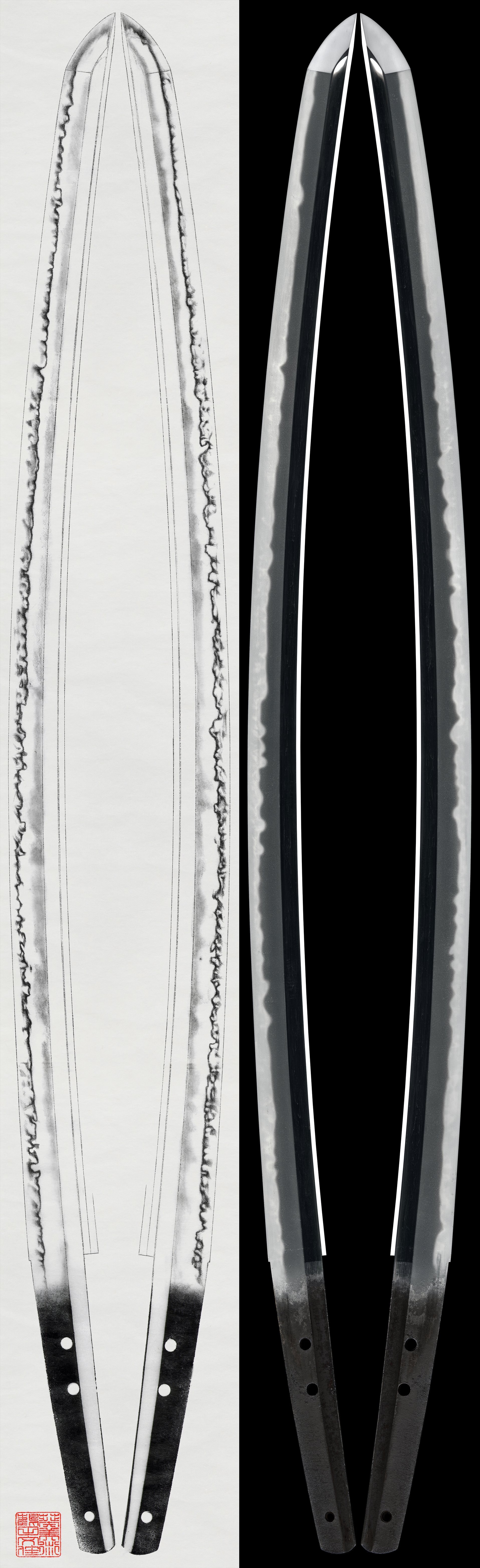
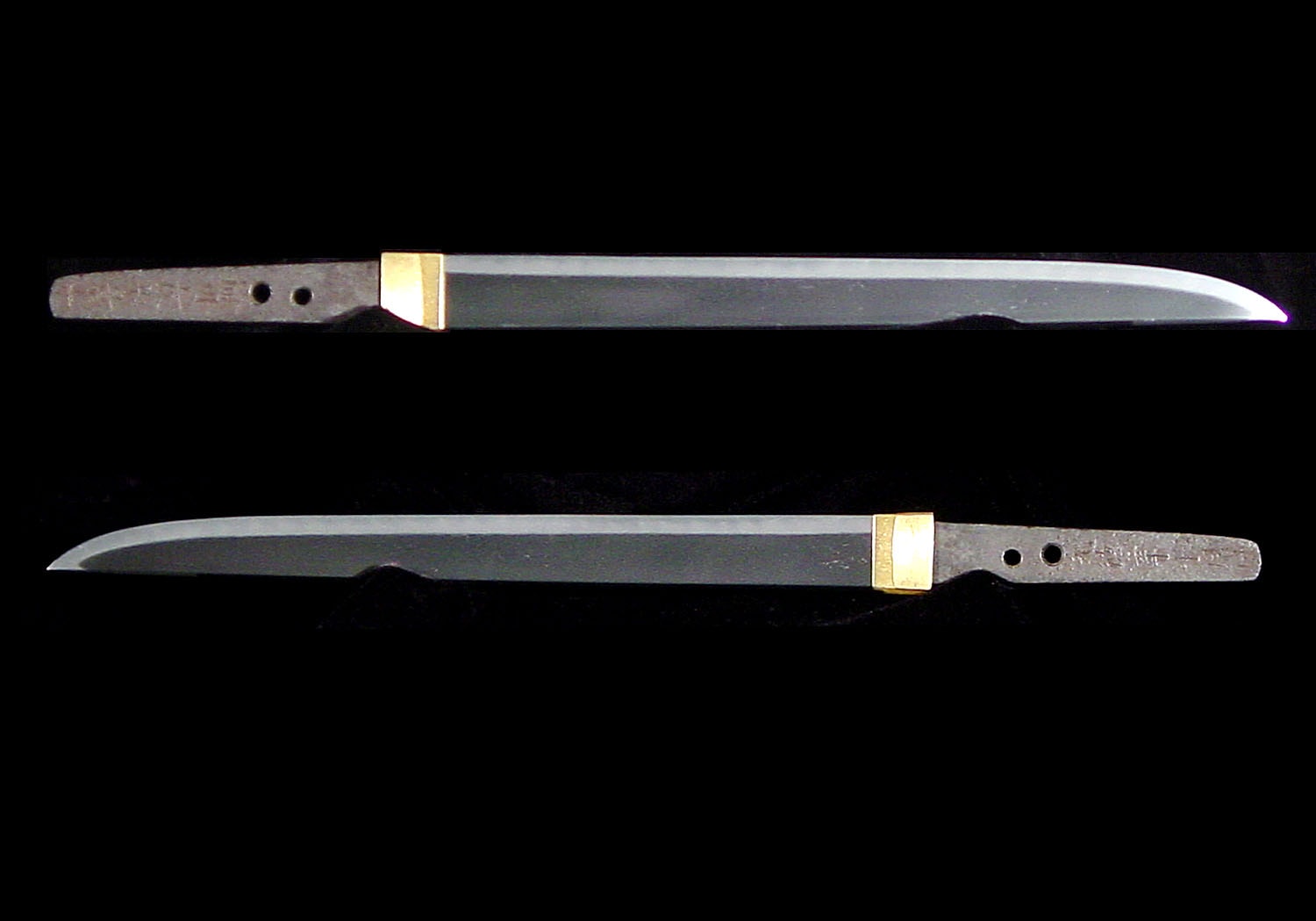
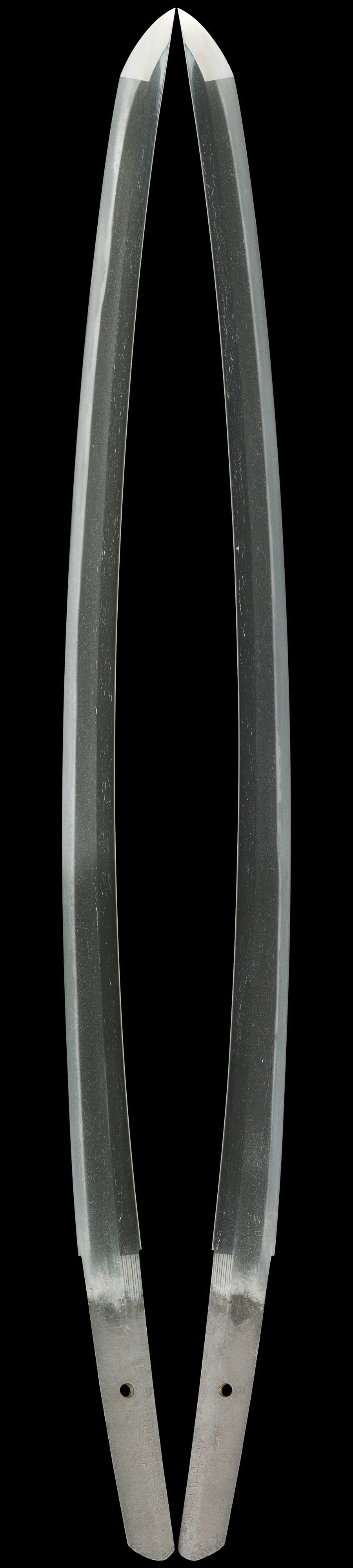
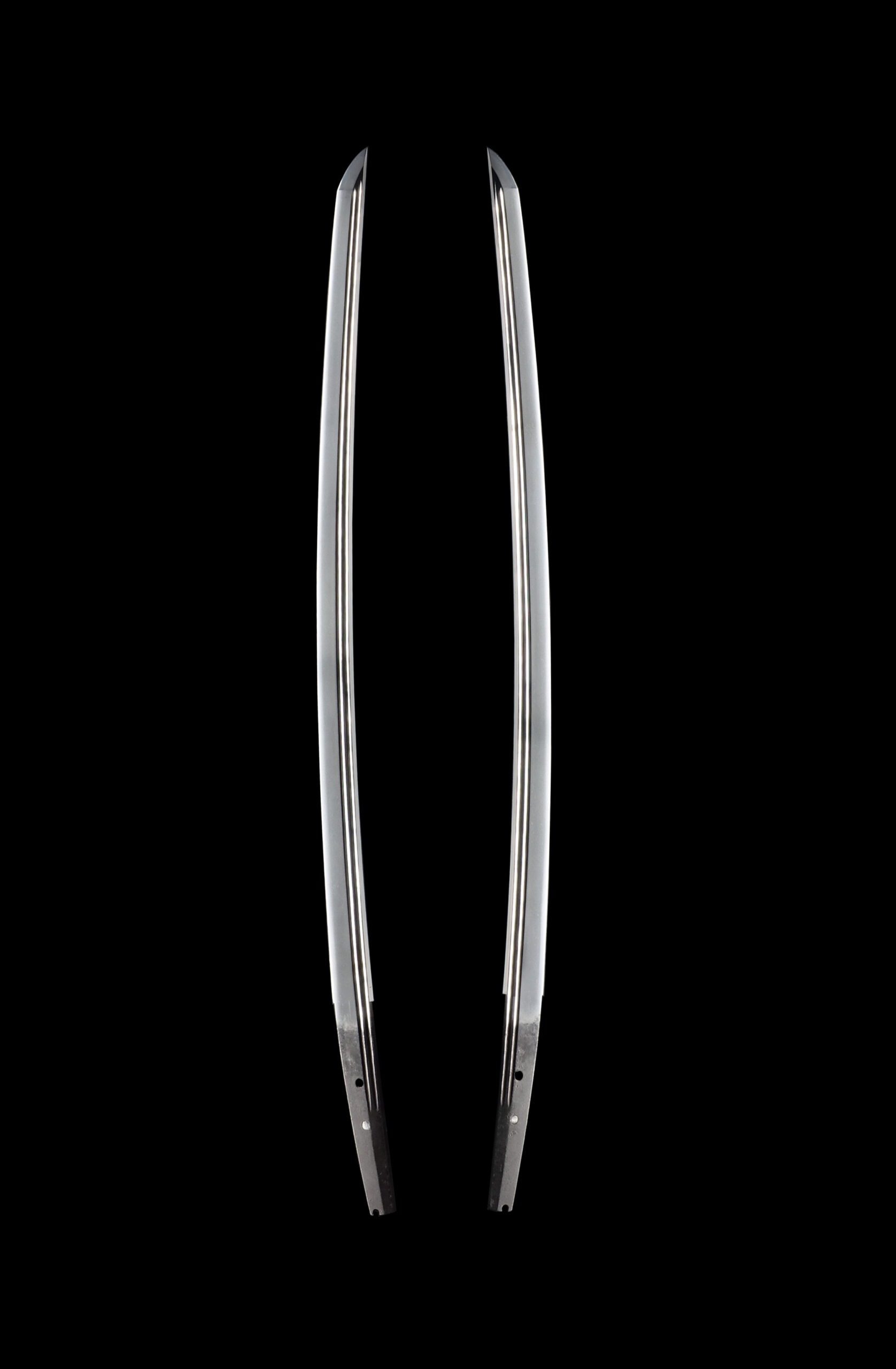
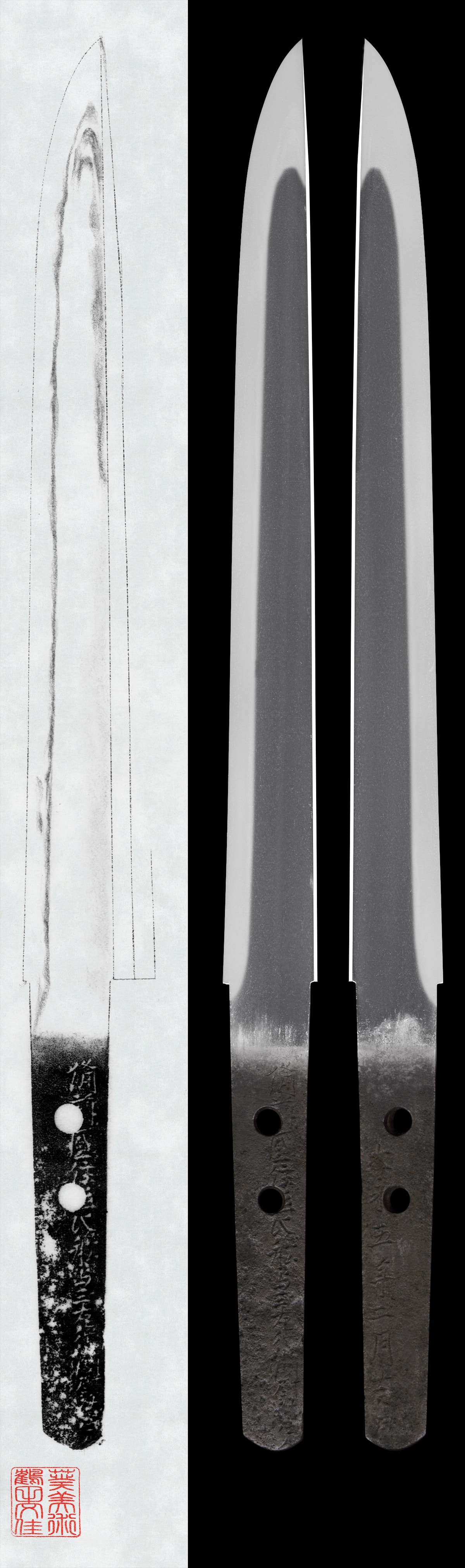
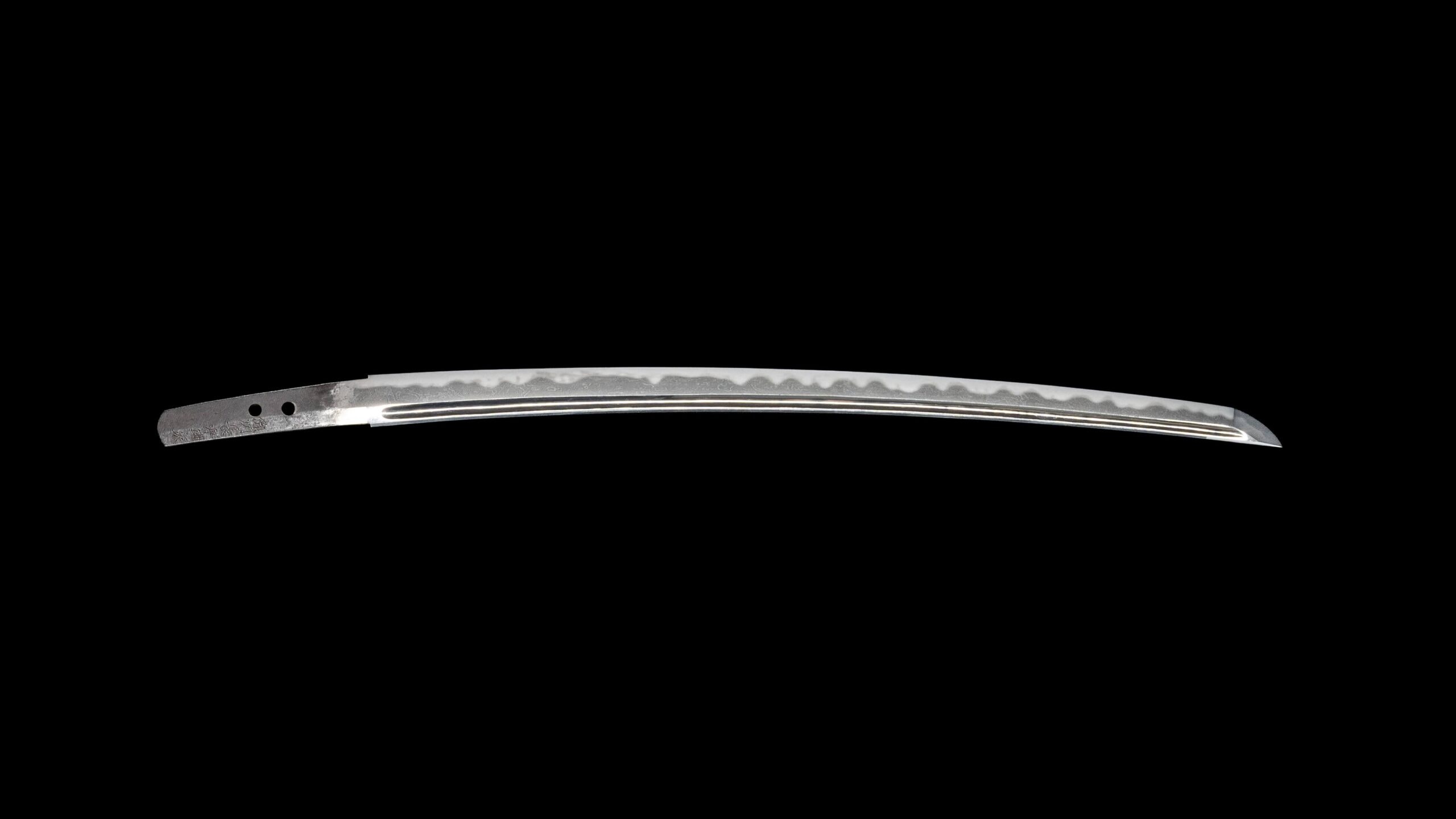
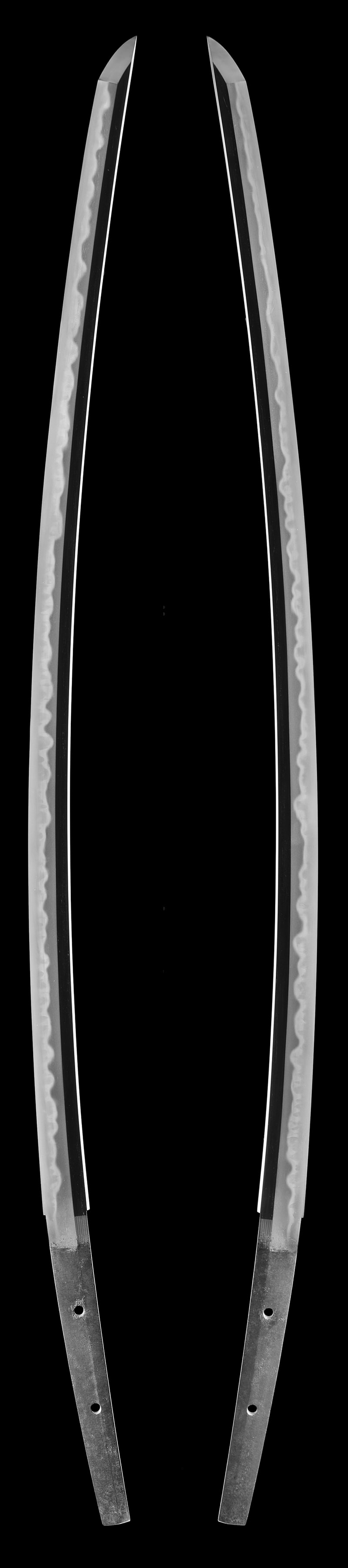
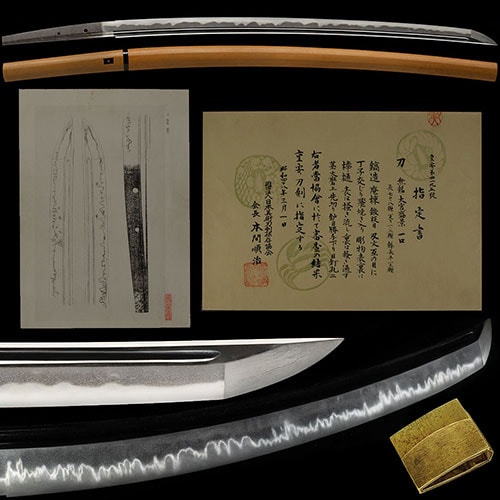
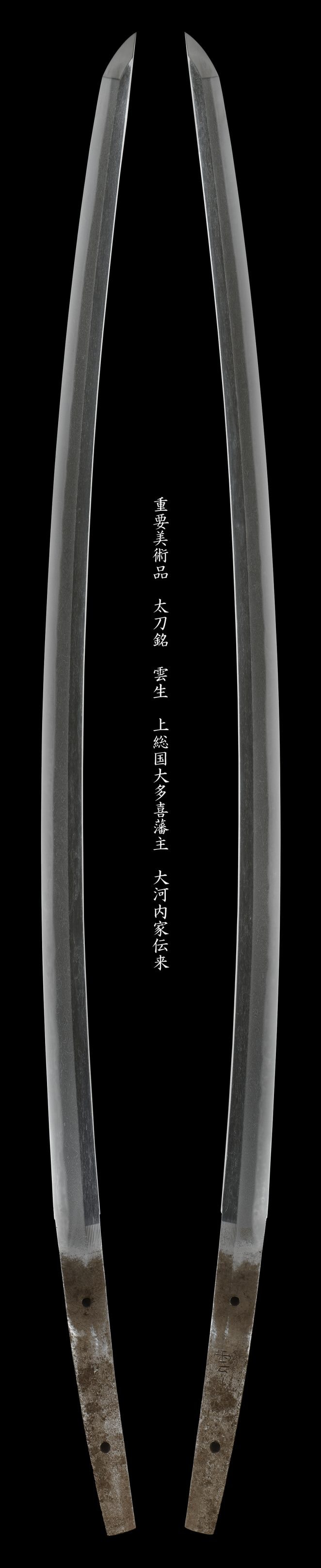
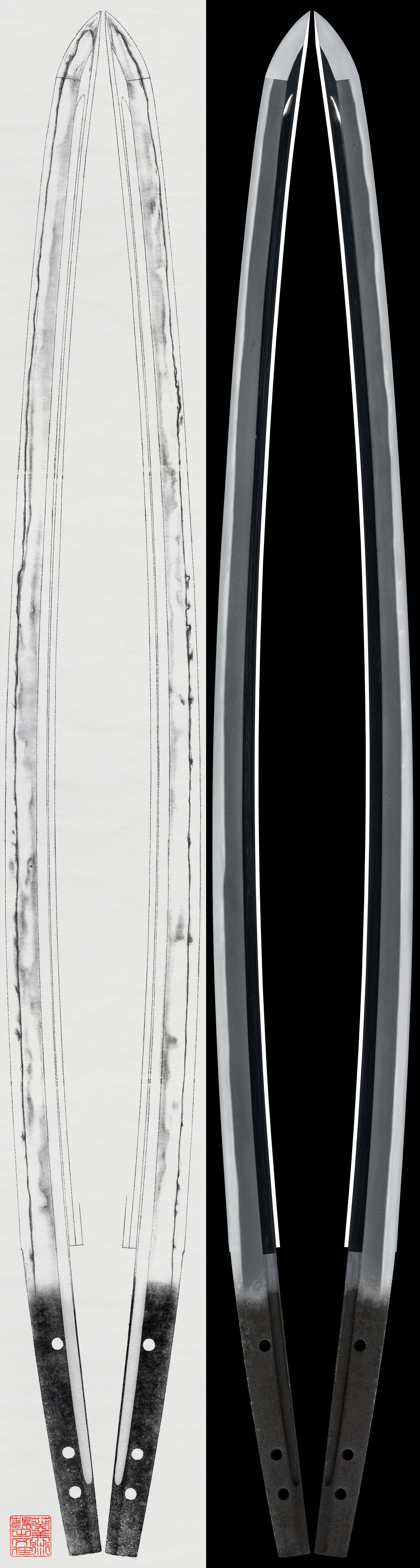
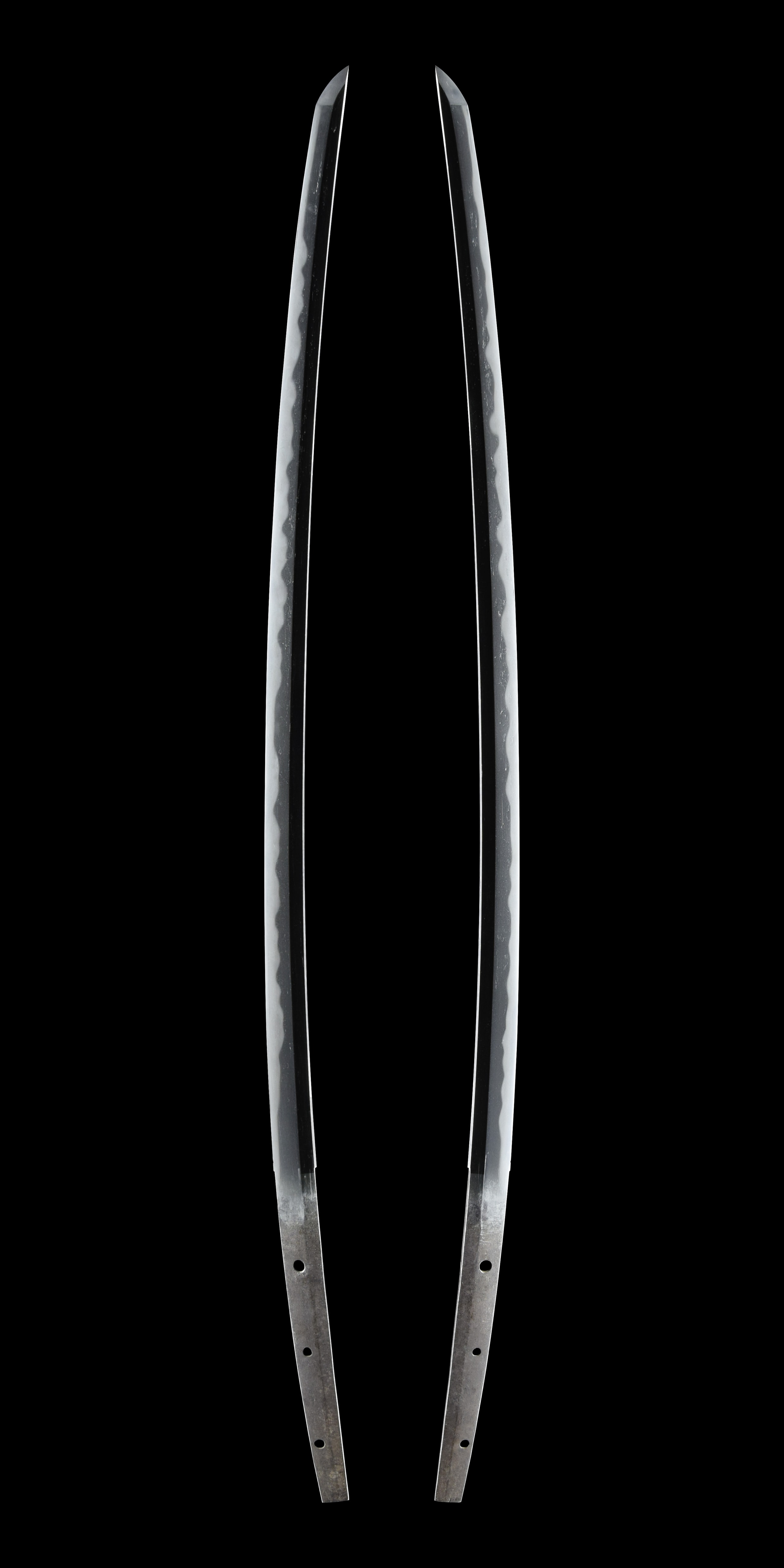
This is a Juyo Token designated tachi by Masamitsu, a master craftsman from the Osafune school in Bizen province, said to be the son of Kanemitsu. Dating to the Nanbokucho period, it features a wide mihaba, slightly deep sori, and a vibrant hamon with mixed gunome, chojiba, and togariba. The blade is exceptionally healthy with a bright nioikuchi, showcasing the superb craftsmanship of the era.
 NihontoWatch
mei · Osafune · Nanbokucho · nagasa 70.1cm · sori 1.6cm
Bizen Osafune (Kanemitsu line) · Bizen · around 1356-1399
Fujishiro Jo-jo saku · Tōken Taikan top 14%
2 pieces on the market now
Among the dated tantō by Masamitsu is one carved on the omote with a swelling-dragon kurikara and on the ura with a bonji and gomabashi, a thick-kasane piece dated Eiwa 4 (1378) that the published record calls a representative superior work of his oeuvre[[c:1]] and that has come down with the epithet Koryū Masamitsu, the Small Dragon Masamitsu. He was a Bizen Osafune smith of the mid-Nanbokuchō into the early Muromachi period and one of the disciples of Osafune Kanemitsu, named in the published sources in one breath with his fellow students Tomomitsu and Motomitsu. His dated blades run from Enbun through Ōei, so that his working span is fixed with a clarity unusual for the late Osafune, and he carries his teacher's manner forward into the closing decades of the koto Bizen tradition.
The tell of his hand is restraint. Following Kanemitsu he works notare, gunome-midare and suguha alike, yet across the whole of his output the temper settles toward a small, subdued pattern, and the NBTHK names this exactly: 「総じて刃文が小模様となるところに此の工の見どころがある」, the point of appreciation in his work is that the hamon as a whole becomes small in scale. Over a well-forged itame he tempers a ko-notare into which gunome, kaku-gunome, ko-chōji and pointed togariba enter, the nioiguchi nioi-dominant and tight, carrying ko-nie with fine sunagashi and kinsuji, and on his finest tantō, the Koryū Masamitsu among them, he sets a kataochi-gunome, the saw-tooth temper that is the Kanemitsu school's own inheritance. The ashi and yō enter well; the activity is held within a quiet line rather than flung into towering clusters.
The jigane is the Osafune constant beneath that quiet edge. His itame is well forged, often standing a little and mixed with mokume, with a thick ji-nie and fine chikei, and over it stands a bright midare-utsuri, the speckled reflection of old Bizen steel, that the published record finds on his signed and his attributed work alike. Where the forging tightens into a packed ko-itame the utsuri only grows clearer; on the slender late pieces it can run as a straight bō-utsuri or a sugu-utsuri instead. The bōshi answers the hamon, entering in midare-komi to a ko-maru or finishing with a faintly pointed togari-gokoro and hakikake, and on his tantō he carves the devotional program of the school, bonji with a gyō-form kurikara and bonji with gomabashi, the swelling-dragon motif that the published commentary traces to the distinctive horimono of the Osafune line since the second-generation Nagamitsu[[c:2]].
His record falls into clear registers. The signed and dated work of the high Nanbokuchō is the core, cut on an ubu tang with the full Bishū Osafune Masamitsu signature and a year date. The late work is the slender kodachi, ko-tachi and naginata of the Kakyō years at the very end of the period, narrower in body and tighter in the line, which the swordbooks gather as a class the published record describes thus: 「総称して江戸時代以来小反物と称している」, pieces collectively called ko-sorimono since the Edo period. Beside these stand the ō-suriage mumei katana and naginata-naoshi attributed to him within the Kanemitsu circle. Running through all of it is the standing scholarly note that the name Masamitsu was borne by two generations, the shodai of the Enbun through Eitoku years and the nidai of the Kakyō years, the swordbooks assigning individual pieces to each by year inscription and workmanship; on one signed second-generation tantō the judges go so far as to write that the quality of its ji and ha is so good as to give 「殆んど兼光を見るような感がある」, almost the impression of looking at Kanemitsu himself.
What sets him apart within his own school is precisely that subdued line and that bright reflection. On the ō-suriage attributions the published record affirms the Kanemitsu-school ji and ha while granting candidly that the work resembles Kanemitsu yet falls a step short of him, seen in the slightly subdued temper and the less settled monouchi, so that the attribution rests on era and school as much as on a personal tell. Against his teacher's broader, more varied midare, Masamitsu is read by the smallness of his pattern and the tightness of his nioiguchi; against the plainer late-Bizen hands he is held by the brightness of his midare-utsuri and the kataochi-gunome on his edge. He stands among the last Osafune masters to keep the Kanemitsu manner intact before the school turned to the volume production of the Ōei years.
For the collector he is a knowable late-Osafune name carried on a substantial signed record. Fujishiro grades him Jō-jō saku. He has no National Treasures; his standing rests instead on two Important Cultural Property tachi, two blades at the Tokubetsu Jūyō rank, and a wide spread at Jūyō, and the published commentary singles out one Tokubetsu Jūyō tachi, more complex and showy than his wont, as 「同作中出色の出来映え」, an outstanding example among his works. His blades are grounded in old provenance, the Tokugawa shogunal house among them, with the Koryū Masamitsu tantō transmitted in the Ōmaeda family and once carrying a Hon'ami Kōtsune origami, and his work is held today in long-standing public and private collections, including the Kyushu National Museum, the Hayashibara Museum of Art and the Tokyo National Museum. With only a small number of blades in the Tokubetsu Jūyō and Jūyō tiers and most of those long held rather than traded, a signed and dated Masamitsu of recorded whereabouts comes to light only from time to time, and a privately held example, ideally an ubu-tang piece with its date intact, is a satisfying thing for a collector to encounter, a precisely datable document of how the great Osafune line carried its art to the close of the koto age.
Where Masamitsu stands among comparable artisans: across all of nihontō, and within tradition, era, and period. The tiers (Foremost · Leading · Major · Notable) weigh official designations from the NBTHK and Japan's Agency for Cultural Affairs, together with historical honors of lasting repute such as the Sansaku and Meibutsu-chō.
Select a lens to see how it's measured.
Years he was demonstrably active, proven by signed-and-dated blades
Bizen-den · Bizen
235 pieces on the market now
No single workshop in the history of Japanese swordmaking grew larger or lasted longer than Osafune, the riverside village in Bizen Province whose name became, across three centuries, a byword for the province's mainline. Its de facto founder was Mitsutada (光忠), working at Osafune in the middle Kamakura period; tradition makes him the son of Chikatada, and the genealogies derive his line from the Ko-Bizen Masatsune group already settled in the village. His blades, bold and imposing with a jigane so refined the sources say it can at a glance suggest Kyoto work, were treasured from old as the swords of commanders, and from his hand the school spread immediately: his sons Nagamitsu (長光) and Sanenaga (眞長), his grandson Kagemitsu (景光), and outward through pupils and collaterals until, by the late Kamakura years, Osafune was less a family than an industry. The line is conventionally read as a three-generation spine, Mitsutada founding it, Nagamitsu setting its classical standard, Kagemitsu bringing both temper and forging to their finished form before handing the manner to his pupil Chikakage (近景), whose echo of the master is so close that signed Kagemitsu blades are sometimes read as Chikakage daimei. What binds the membership is a shared steel before any shared temper. The forging is itame mixed with mokume, tightening on the finest blades into a dense ko-itame; fine ji-nie adheres, chikei enter, and over all of it stands the midare-utsuri that anchors even the most Kyoto-like jigane back to Bizen. On that floor the founding generation tempers a flamboyant choji-midare mixed with gunome: Mitsutada's tadpole-headed kawazuko-choji, Nagamitsu's round-topped plump choji, the deep nioi with ko-nie, the bright nioiguchi. From here the school divides by hand and by era. Sanenaga draws the calm pole, a gentle chu-suguha of tightened nioiguchi; Kagemitsu completes the slanting, square-shouldered kataochi-gunome over a suguha base, the family's last great Kamakura invention, carried on by his close kinsman Kagemasa (景政). The Nanbokucho generation then turns toward Soshu-den: Kanemitsu (兼光), fourth master of the mainline, pioneers a broad notare and is read, with Chogi (長義), as the head of Soden-Bizen, the Bizen wing that worked Soshu nie into a jigane that still throws a Bizen utsuri.
Chogi is called the most un-Bizen of Bizen smiths, his ear-shaped mimigata his tell; around him Nagashige (長重), Yoshikage (義景), Tomomitsu (倫光) and Kanenaga (兼長) press the Soshu side by degrees, while Motoshige (元重), of a separate Hatakeda descent, carries an Aoe-tinged squared, slanting ha. Two generations later the Oei revival returns to Kamakura: Yasumitsu (康光) and Morimitsu (盛光), the twin pillars of Oei-Bizen, revive the tachi shape and the choji temper over a wide-waisted koshibiraki-gunome, both finishing in the pointed rosoku-no-shin (candle-wick) boshi that gives the late date away. For the collector the school is a school of discriminations, and to kantei it is to read those fine partitions. The constant midare-utsuri over a bright ko-itame fixes the province; the boshi then sorts the maker, Mitsutada's pointed midare-komi against Nagamitsu's composed ko-maru Sansaku turn, Kagemitsu's contained return, the candle-wick tongue of Oei. Within a single phase the calls turn on a half-step: Nagamitsu's plump crests against Sanenaga's cooler nioiguchi, Kagemasa's freer play against Kagemitsu's tighter order, Nagashige read out of Chogi by a nie that surpasses his brother's. The standing of the best is matched by their patrimony. Mitsutada, Nagamitsu and Kagemitsu each hold National Treasures and stand at the head of Fujishiro's Sai-jo saku; their named blades, the Daihannya Nagamitsu, the Kogaryu Kagemitsu, the O-Kanemitsu, passed through Nobunaga, Ieyasu, Uesugi Kenshin and the great daimyo houses. Because Nagamitsu and the Nanbokucho masters signed and survived in number, Osafune offers what most peerage names cannot, a deep field of Tokubetsu Juyo and Juyo work that a patient collector may still realistically hold. Through every register the same hand declares itself: the bright steel, the vivid reflection, and a temper that runs, across three centuries, as the spine of Bizen. Learn more →
| Smith | Era | Designated |
|---|---|---|
| Mitsutada光忠 | 1238-1239 | 60 |
| Nagamitsu長光 | 1274-1304 | 244 |
| Kagemitsu景光 | 1303-1336 | 143 |
| Kanemitsu兼光 | 1323-1370 | 231 |
| Sanenaga眞長 | 1299-1309 | 64 |
Bizen in the Nanbokuchō period
Sixty years of war between two courts drove blades long and broad, and Osafune met the demand: Kanemitsu and Chōgi led forges serving the provincial warriors who did the fighting, while Sōshū influence arrived with the armies to create Sōden-Bizen.
A blade of top-grade workmanship and condition, formally judged to rank with a nationally recognized Important Art Object (Jūyō Bijutsuhin). Awarded only at the NBTHK’s competitive annual examination.
Of Japan’s roughly 2.5 million registered swords, only 12,307 (about 1 in 203) have ever attained Jūyō.
The NBTHK (Nihon Bijutsu Tōken Hozon Kyōkai, the Society for the Preservation of Japanese Art Swords) is a public-interest incorporated foundation founded in 1948 and supervised by Japan’s Agency for Cultural Affairs (Bunkachō); it is based at the Japanese Sword Museum in Tokyo. Its expert panels physically examine each submitted work (shinsa) and issue a certificate (kanteishō) ranking it by artistic and historical merit. NBTHK papers are the most widely recognized standard of authentication for Japanese swords and fittings.
NBTHK official siteReturns/exchanges/cancellations not accepted after shipment except for significant defects; if defective, return/exchange possible within 3 days of arrival (return shipping paid by customer).

This is a Juyo Token designated tachi by Masamitsu, a master craftsman from the Osafune school in Bizen province, said to be the son of Kanemitsu. Dating to the Nanbokucho period, it features a wide mihaba, slightly deep sori, and a vibrant hamon with mixed gunome, chojiba, and togariba. The blade is exceptionally healthy with a bright nioikuchi, showcasing the superb craftsmanship of the era.
NihontoWatchmei · Osafune · Nanbokucho · nagasa 70.1cm · sori 1.6cm
Bizen Osafune (Kanemitsu line) · Bizen · around 1356-1399
Fujishiro Jo-jo saku · Tōken Taikan top 14%
2 pieces on the market now
Among the dated tantō by Masamitsu is one carved on the omote with a swelling-dragon kurikara and on the ura with a bonji and gomabashi, a thick-kasane piece dated Eiwa 4 (1378) that the published record calls a representative superior work of his oeuvre[[c:1]] and that has come down with the epithet Koryū Masamitsu, the Small Dragon Masamitsu. He was a Bizen Osafune smith of the mid-Nanbokuchō into the early Muromachi period and one of the disciples of Osafune Kanemitsu, named in the published sources in one breath with his fellow students Tomomitsu and Motomitsu. His dated blades run from Enbun through Ōei, so that his working span is fixed with a clarity unusual for the late Osafune, and he carries his teacher's manner forward into the closing decades of the koto Bizen tradition.
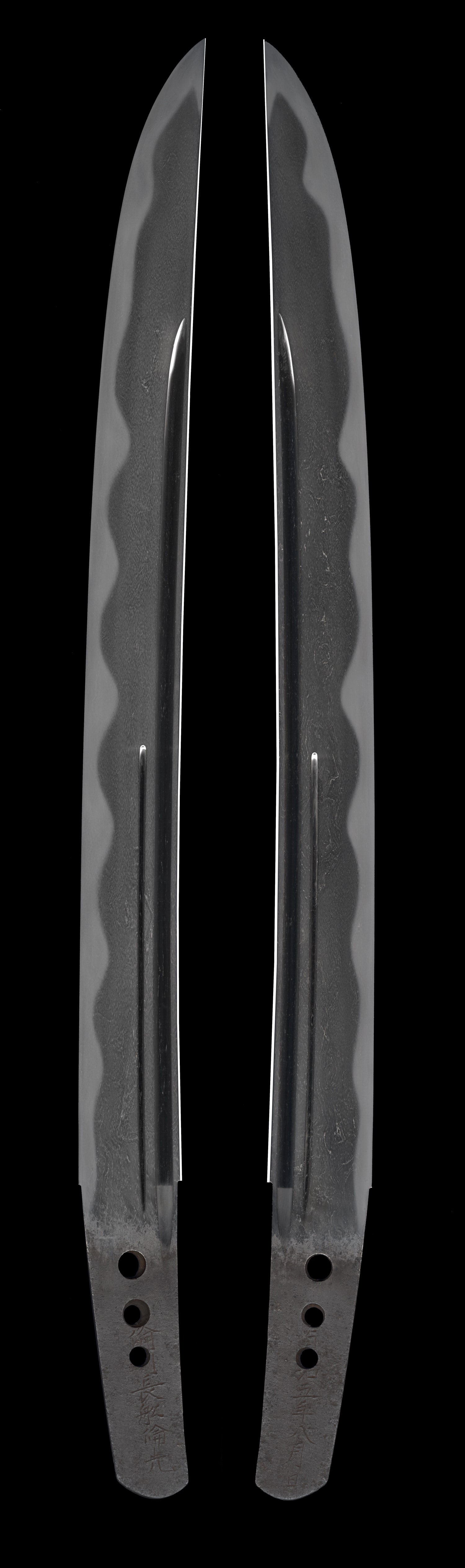
The tell of his hand is restraint. Following Kanemitsu he works notare, gunome-midare and suguha alike, yet across the whole of his output the temper settles toward a small, subdued pattern, and the NBTHK names this exactly: 「総じて刃文が小模様となるところに此の工の見どころがある」, the point of appreciation in his work is that the hamon as a whole becomes small in scale. Over a well-forged itame he tempers a ko-notare into which gunome, kaku-gunome, ko-chōji and pointed togariba enter, the nioiguchi nioi-dominant and tight, carrying ko-nie with fine sunagashi and kinsuji, and on his finest tantō, the Koryū Masamitsu among them, he sets a kataochi-gunome, the saw-tooth temper that is the Kanemitsu school's own inheritance. The ashi and yō enter well; the activity is held within a quiet line rather than flung into towering clusters.
The jigane is the Osafune constant beneath that quiet edge. His itame is well forged, often standing a little and mixed with mokume, with a thick ji-nie and fine chikei, and over it stands a bright midare-utsuri, the speckled reflection of old Bizen steel, that the published record finds on his signed and his attributed work alike. Where the forging tightens into a packed ko-itame the utsuri only grows clearer; on the slender late pieces it can run as a straight bō-utsuri or a sugu-utsuri instead. The bōshi answers the hamon, entering in midare-komi to a ko-maru or finishing with a faintly pointed togari-gokoro and hakikake, and on his tantō he carves the devotional program of the school, bonji with a gyō-form kurikara and bonji with gomabashi, the swelling-dragon motif that the published commentary traces to the distinctive horimono of the Osafune line since the second-generation Nagamitsu[[c:2]].
His record falls into clear registers. The signed and dated work of the high Nanbokuchō is the core, cut on an ubu tang with the full Bishū Osafune Masamitsu signature and a year date. The late work is the slender kodachi, ko-tachi and naginata of the Kakyō years at the very end of the period, narrower in body and tighter in the line, which the swordbooks gather as a class the published record describes thus: 「総称して江戸時代以来小反物と称している」, pieces collectively called ko-sorimono since the Edo period. Beside these stand the ō-suriage mumei katana and naginata-naoshi attributed to him within the Kanemitsu circle. Running through all of it is the standing scholarly note that the name Masamitsu was borne by two generations, the shodai of the Enbun through Eitoku years and the nidai of the Kakyō years, the swordbooks assigning individual pieces to each by year inscription and workmanship; on one signed second-generation tantō the judges go so far as to write that the quality of its ji and ha is so good as to give 「殆んど兼光を見るような感がある」, almost the impression of looking at Kanemitsu himself.
What sets him apart within his own school is precisely that subdued line and that bright reflection. On the ō-suriage attributions the published record affirms the Kanemitsu-school ji and ha while granting candidly that the work resembles Kanemitsu yet falls a step short of him, seen in the slightly subdued temper and the less settled monouchi, so that the attribution rests on era and school as much as on a personal tell. Against his teacher's broader, more varied midare, Masamitsu is read by the smallness of his pattern and the tightness of his nioiguchi; against the plainer late-Bizen hands he is held by the brightness of his midare-utsuri and the kataochi-gunome on his edge. He stands among the last Osafune masters to keep the Kanemitsu manner intact before the school turned to the volume production of the Ōei years.
For the collector he is a knowable late-Osafune name carried on a substantial signed record. Fujishiro grades him Jō-jō saku. He has no National Treasures; his standing rests instead on two Important Cultural Property tachi, two blades at the Tokubetsu Jūyō rank, and a wide spread at Jūyō, and the published commentary singles out one Tokubetsu Jūyō tachi, more complex and showy than his wont, as 「同作中出色の出来映え」, an outstanding example among his works. His blades are grounded in old provenance, the Tokugawa shogunal house among them, with the Koryū Masamitsu tantō transmitted in the Ōmaeda family and once carrying a Hon'ami Kōtsune origami, and his work is held today in long-standing public and private collections, including the Kyushu National Museum, the Hayashibara Museum of Art and the Tokyo National Museum. With only a small number of blades in the Tokubetsu Jūyō and Jūyō tiers and most of those long held rather than traded, a signed and dated Masamitsu of recorded whereabouts comes to light only from time to time, and a privately held example, ideally an ubu-tang piece with its date intact, is a satisfying thing for a collector to encounter, a precisely datable document of how the great Osafune line carried its art to the close of the koto age.
Where Masamitsu stands among comparable artisans: across all of nihontō, and within tradition, era, and period. The tiers (Foremost · Leading · Major · Notable) weigh official designations from the NBTHK and Japan's Agency for Cultural Affairs, together with historical honors of lasting repute such as the Sansaku and Meibutsu-chō.
Select a lens to see how it's measured.
Years he was demonstrably active, proven by signed-and-dated blades
Bizen-den · Bizen
235 pieces on the market now
No single workshop in the history of Japanese swordmaking grew larger or lasted longer than Osafune, the riverside village in Bizen Province whose name became, across three centuries, a byword for the province's mainline. Its de facto founder was Mitsutada (光忠), working at Osafune in the middle Kamakura period; tradition makes him the son of Chikatada, and the genealogies derive his line from the Ko-Bizen Masatsune group already settled in the village. His blades, bold and imposing with a jigane so refined the sources say it can at a glance suggest Kyoto work, were treasured from old as the swords of commanders, and from his hand the school spread immediately: his sons Nagamitsu (長光) and Sanenaga (眞長), his grandson Kagemitsu (景光), and outward through pupils and collaterals until, by the late Kamakura years, Osafune was less a family than an industry. The line is conventionally read as a three-generation spine, Mitsutada founding it, Nagamitsu setting its classical standard, Kagemitsu bringing both temper and forging to their finished form before handing the manner to his pupil Chikakage (近景), whose echo of the master is so close that signed Kagemitsu blades are sometimes read as Chikakage daimei. What binds the membership is a shared steel before any shared temper. The forging is itame mixed with mokume, tightening on the finest blades into a dense ko-itame; fine ji-nie adheres, chikei enter, and over all of it stands the midare-utsuri that anchors even the most Kyoto-like jigane back to Bizen. On that floor the founding generation tempers a flamboyant choji-midare mixed with gunome: Mitsutada's tadpole-headed kawazuko-choji, Nagamitsu's round-topped plump choji, the deep nioi with ko-nie, the bright nioiguchi. From here the school divides by hand and by era. Sanenaga draws the calm pole, a gentle chu-suguha of tightened nioiguchi; Kagemitsu completes the slanting, square-shouldered kataochi-gunome over a suguha base, the family's last great Kamakura invention, carried on by his close kinsman Kagemasa (景政). The Nanbokucho generation then turns toward Soshu-den: Kanemitsu (兼光), fourth master of the mainline, pioneers a broad notare and is read, with Chogi (長義), as the head of Soden-Bizen, the Bizen wing that worked Soshu nie into a jigane that still throws a Bizen utsuri.
Chogi is called the most un-Bizen of Bizen smiths, his ear-shaped mimigata his tell; around him Nagashige (長重), Yoshikage (義景), Tomomitsu (倫光) and Kanenaga (兼長) press the Soshu side by degrees, while Motoshige (元重), of a separate Hatakeda descent, carries an Aoe-tinged squared, slanting ha. Two generations later the Oei revival returns to Kamakura: Yasumitsu (康光) and Morimitsu (盛光), the twin pillars of Oei-Bizen, revive the tachi shape and the choji temper over a wide-waisted koshibiraki-gunome, both finishing in the pointed rosoku-no-shin (candle-wick) boshi that gives the late date away. For the collector the school is a school of discriminations, and to kantei it is to read those fine partitions. The constant midare-utsuri over a bright ko-itame fixes the province; the boshi then sorts the maker, Mitsutada's pointed midare-komi against Nagamitsu's composed ko-maru Sansaku turn, Kagemitsu's contained return, the candle-wick tongue of Oei. Within a single phase the calls turn on a half-step: Nagamitsu's plump crests against Sanenaga's cooler nioiguchi, Kagemasa's freer play against Kagemitsu's tighter order, Nagashige read out of Chogi by a nie that surpasses his brother's. The standing of the best is matched by their patrimony. Mitsutada, Nagamitsu and Kagemitsu each hold National Treasures and stand at the head of Fujishiro's Sai-jo saku; their named blades, the Daihannya Nagamitsu, the Kogaryu Kagemitsu, the O-Kanemitsu, passed through Nobunaga, Ieyasu, Uesugi Kenshin and the great daimyo houses. Because Nagamitsu and the Nanbokucho masters signed and survived in number, Osafune offers what most peerage names cannot, a deep field of Tokubetsu Juyo and Juyo work that a patient collector may still realistically hold. Through every register the same hand declares itself: the bright steel, the vivid reflection, and a temper that runs, across three centuries, as the spine of Bizen. Learn more →
| Smith | Era | Designated |
|---|---|---|
| Mitsutada光忠 | 1238-1239 | 60 |
| Nagamitsu長光 | 1274-1304 | 244 |
| Kagemitsu景光 | 1303-1336 | 143 |
| Kanemitsu兼光 | 1323-1370 | 231 |
| Sanenaga眞長 | 1299-1309 | 64 |
Bizen in the Nanbokuchō period
Sixty years of war between two courts drove blades long and broad, and Osafune met the demand: Kanemitsu and Chōgi led forges serving the provincial warriors who did the fighting, while Sōshū influence arrived with the armies to create Sōden-Bizen.
A blade of top-grade workmanship and condition, formally judged to rank with a nationally recognized Important Art Object (Jūyō Bijutsuhin). Awarded only at the NBTHK’s competitive annual examination.
Of Japan’s roughly 2.5 million registered swords, only 12,307 (about 1 in 203) have ever attained Jūyō.
The NBTHK (Nihon Bijutsu Tōken Hozon Kyōkai, the Society for the Preservation of Japanese Art Swords) is a public-interest incorporated foundation founded in 1948 and supervised by Japan’s Agency for Cultural Affairs (Bunkachō); it is based at the Japanese Sword Museum in Tokyo. Its expert panels physically examine each submitted work (shinsa) and issue a certificate (kanteishō) ranking it by artistic and historical merit. NBTHK papers are the most widely recognized standard of authentication for Japanese swords and fittings.
NBTHK official siteReturns/exchanges/cancellations not accepted after shipment except for significant defects; if defective, return/exchange possible within 3 days of arrival (return shipping paid by customer).