Sixty years of war between two courts drove blades long and broad, and Osafune met the demand: Kanemitsu and Chōgi led forges serving the provincial warriors who did the fighting, while Sōshū influence arrived with the armies to create Sōden-Bizen.
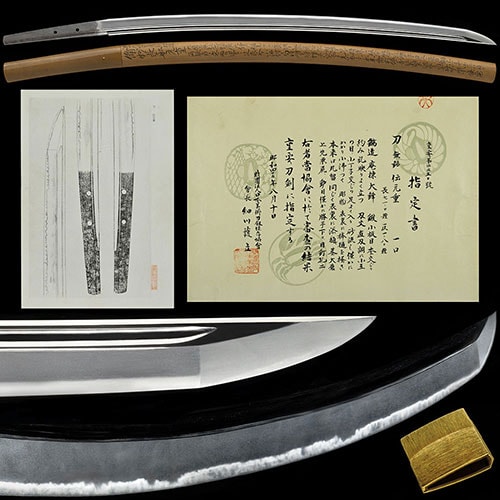
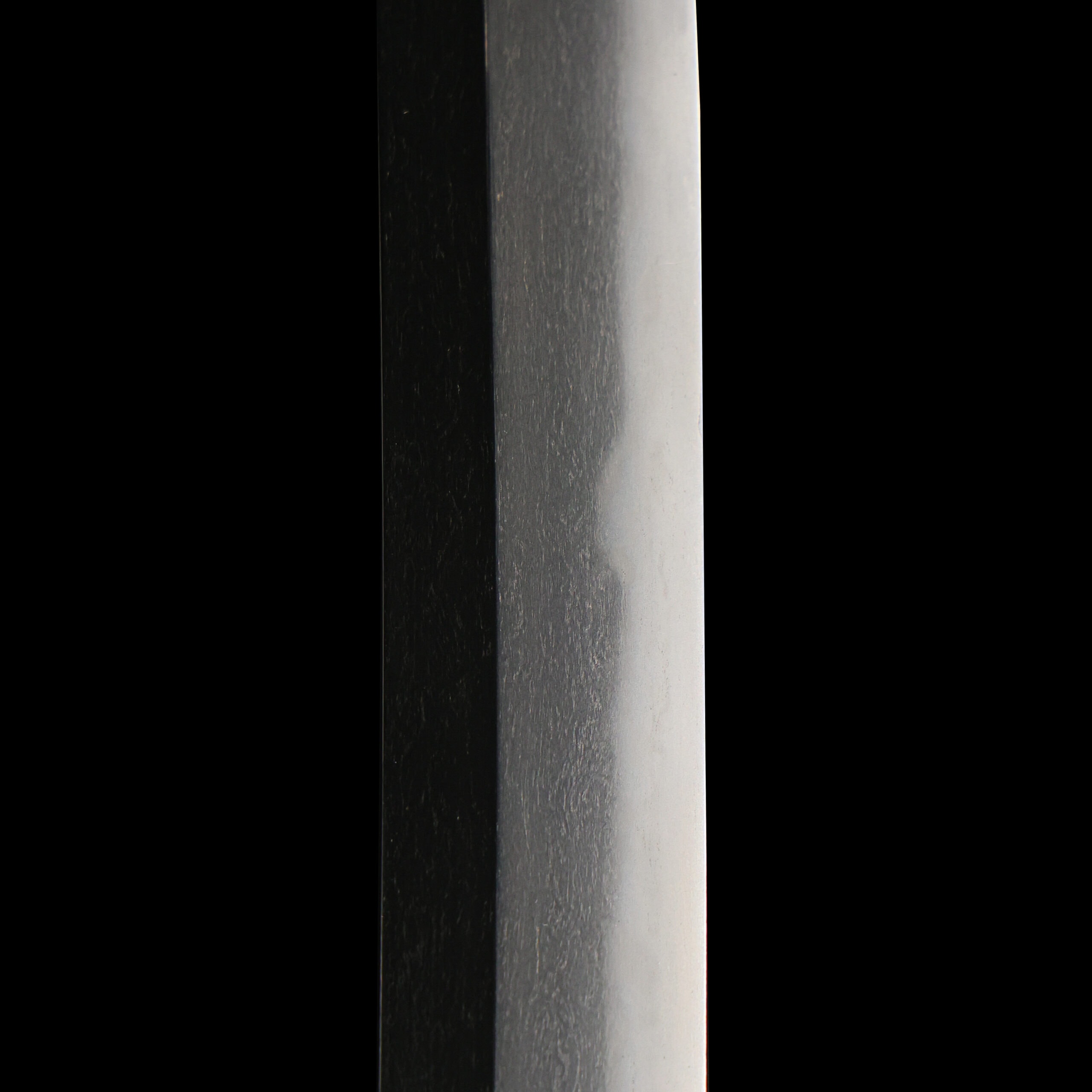
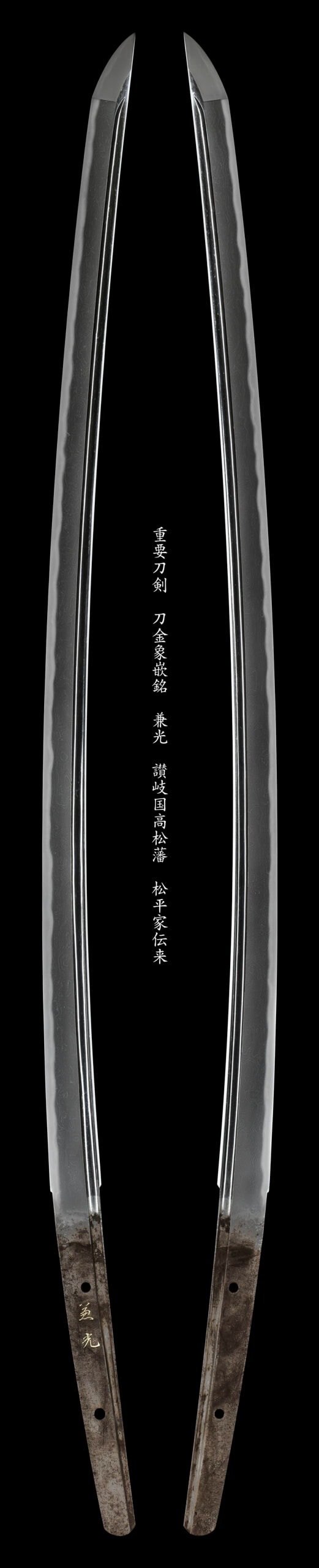
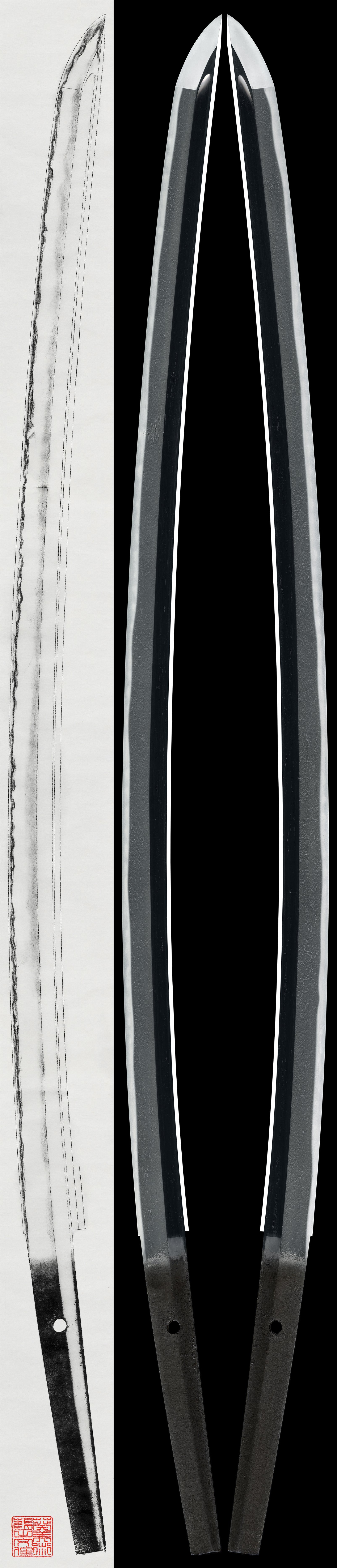
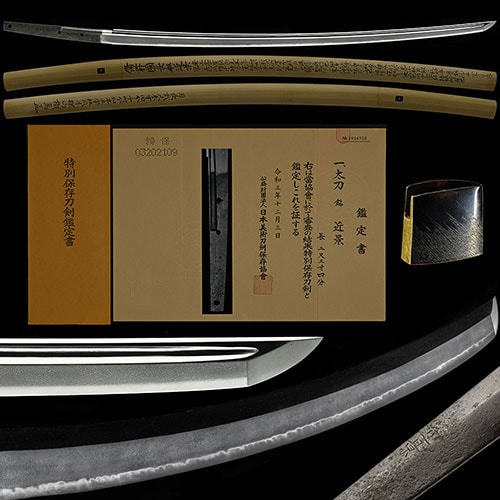
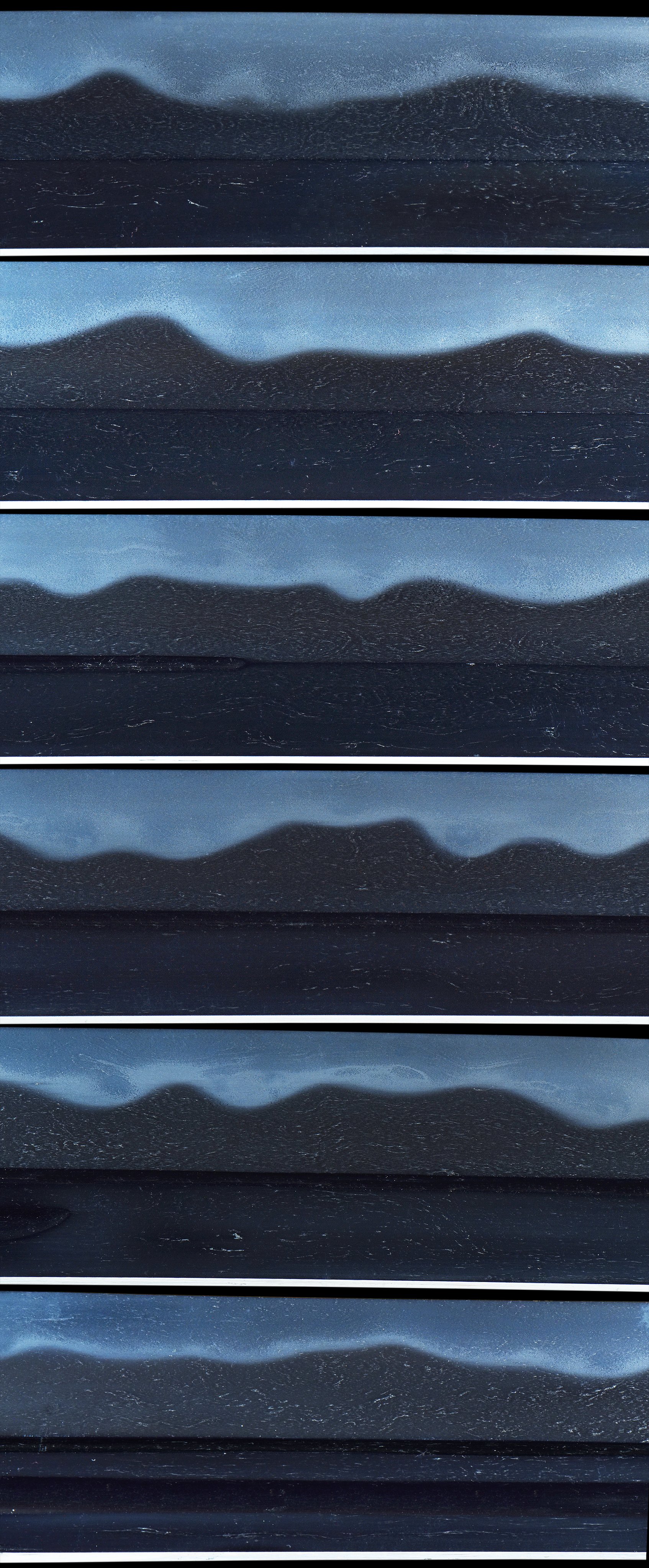
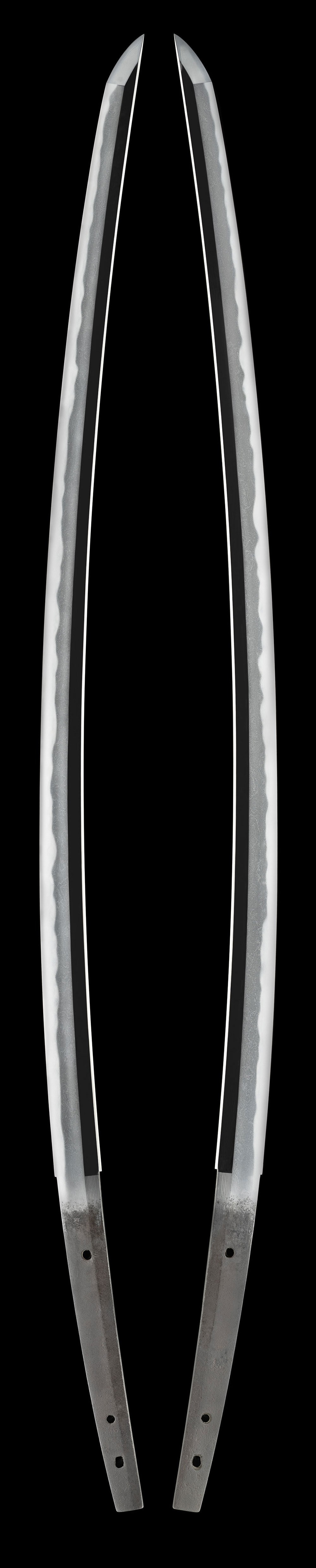
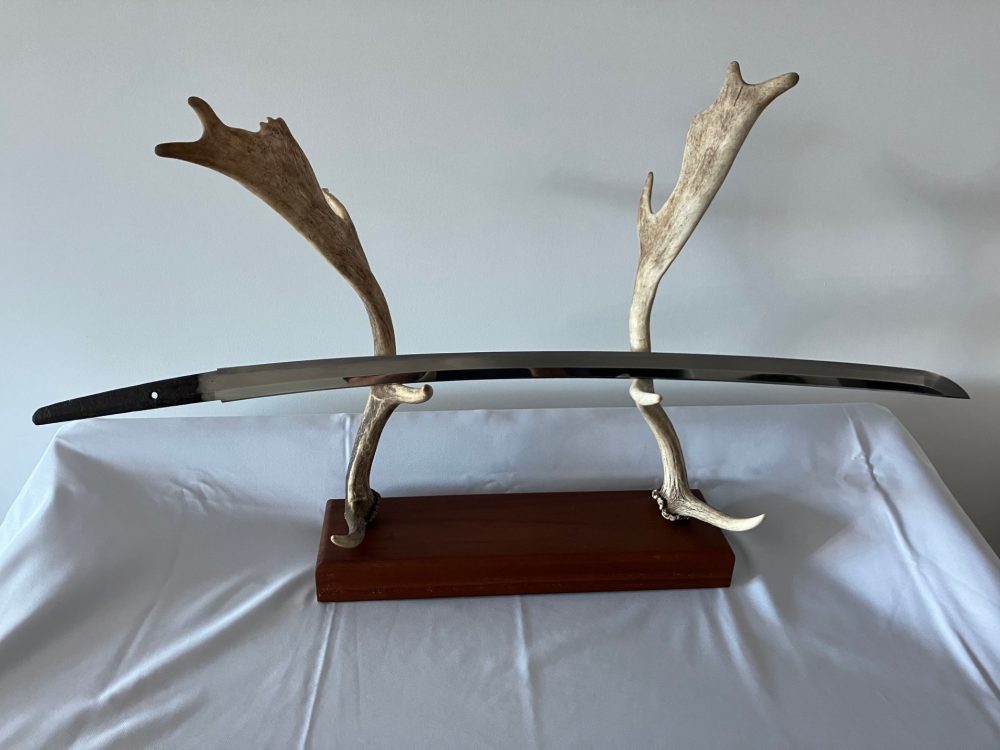
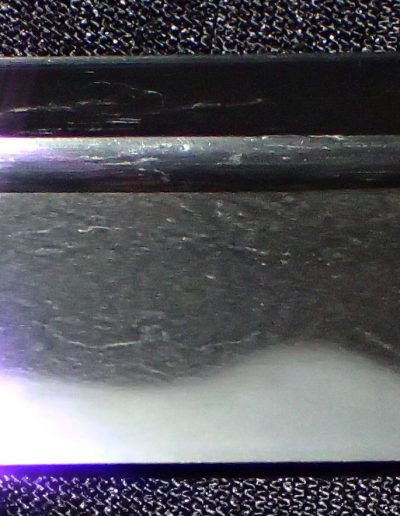
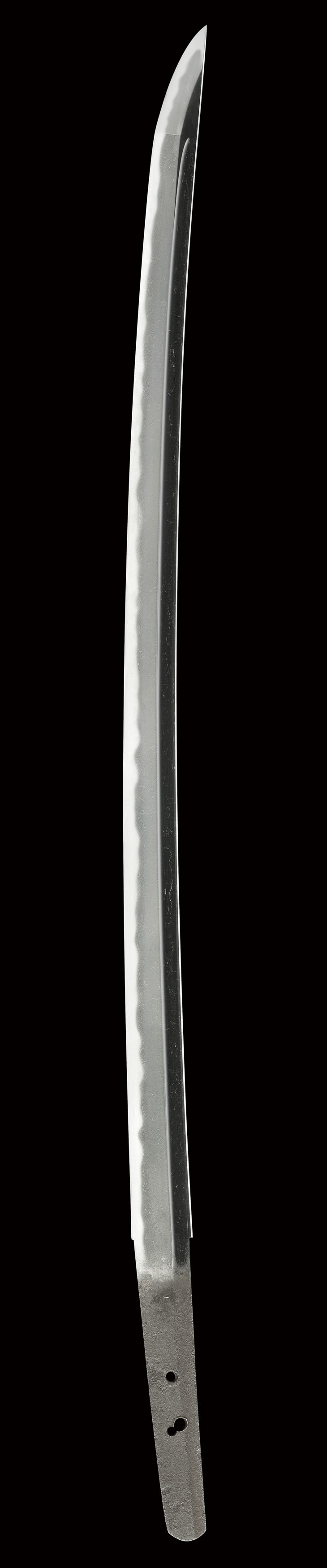
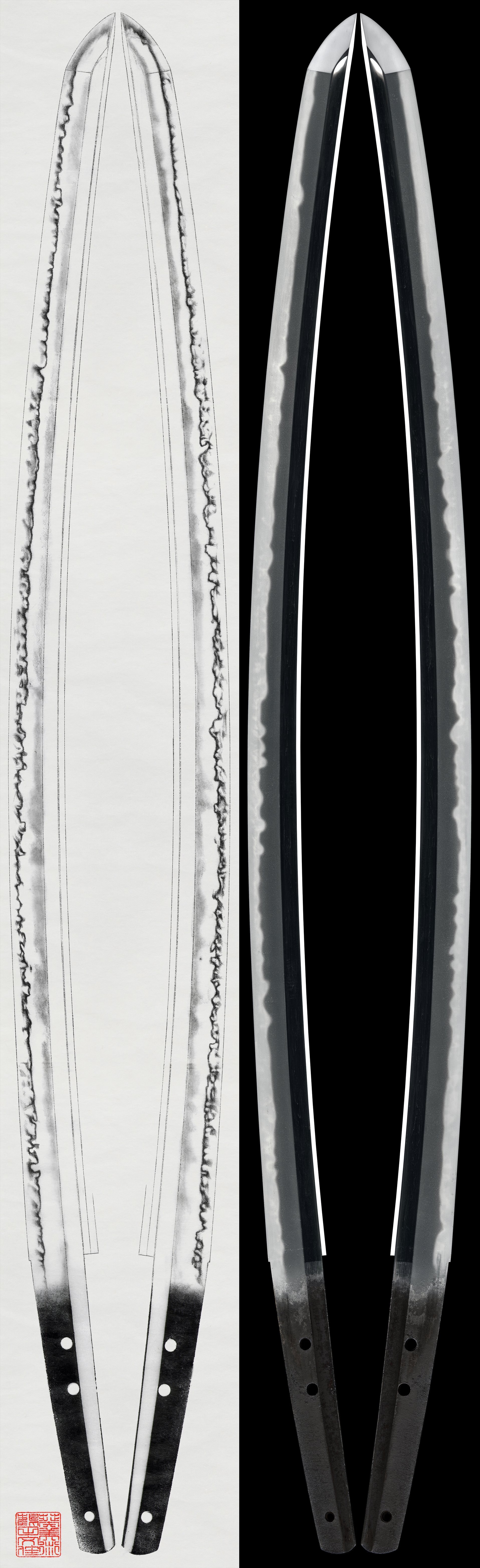
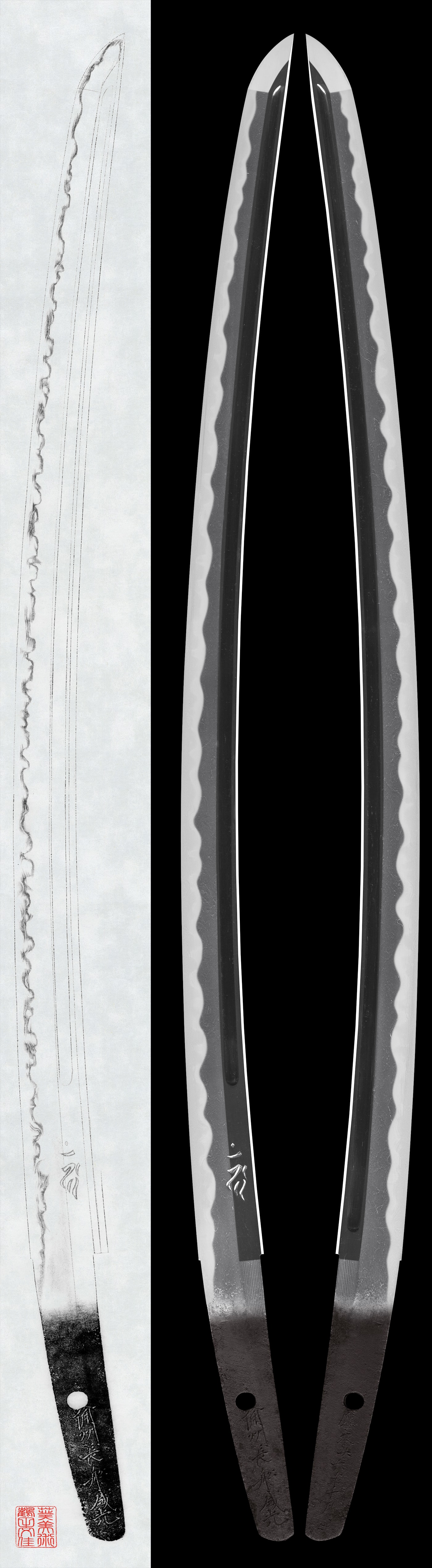
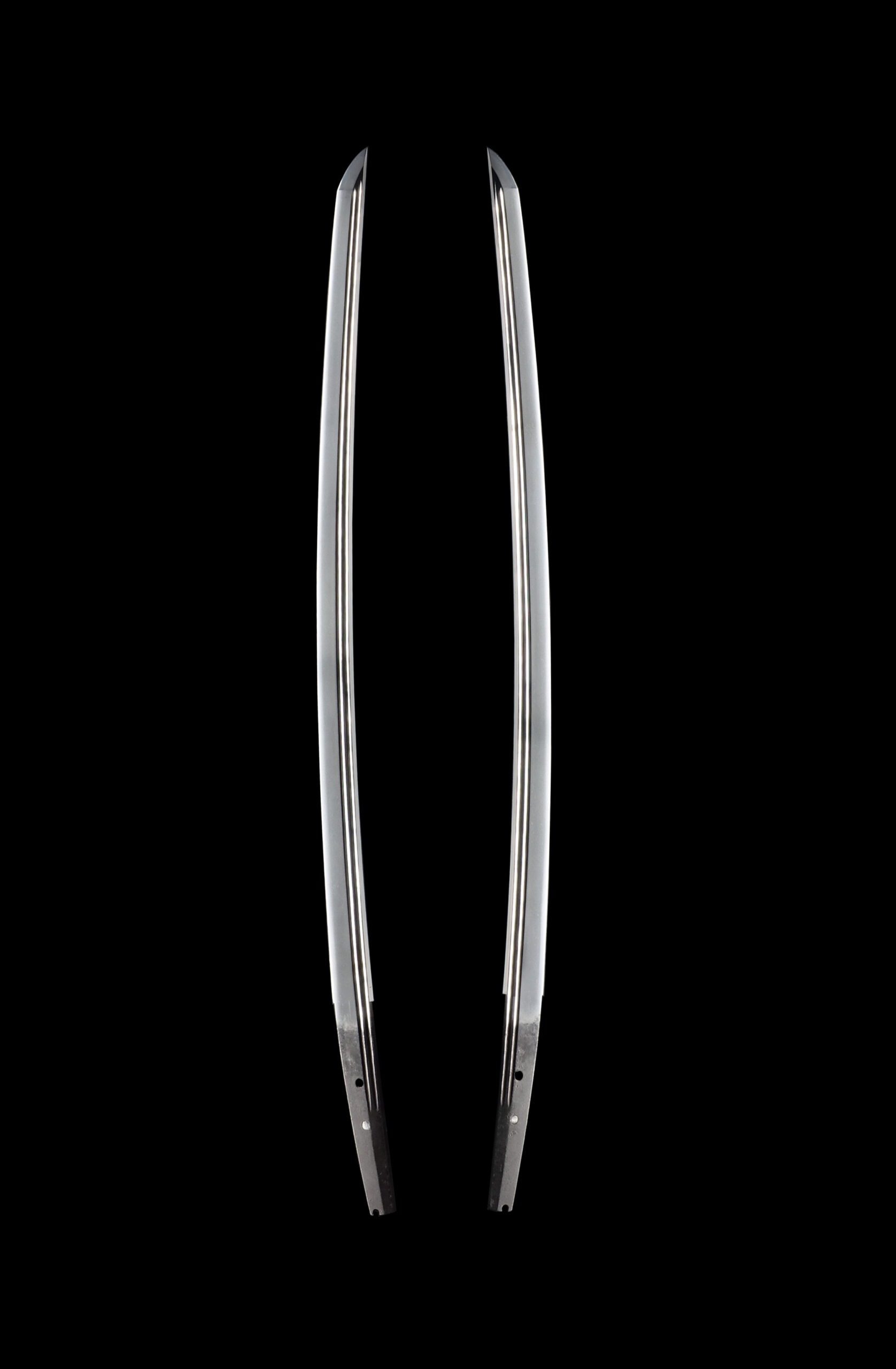
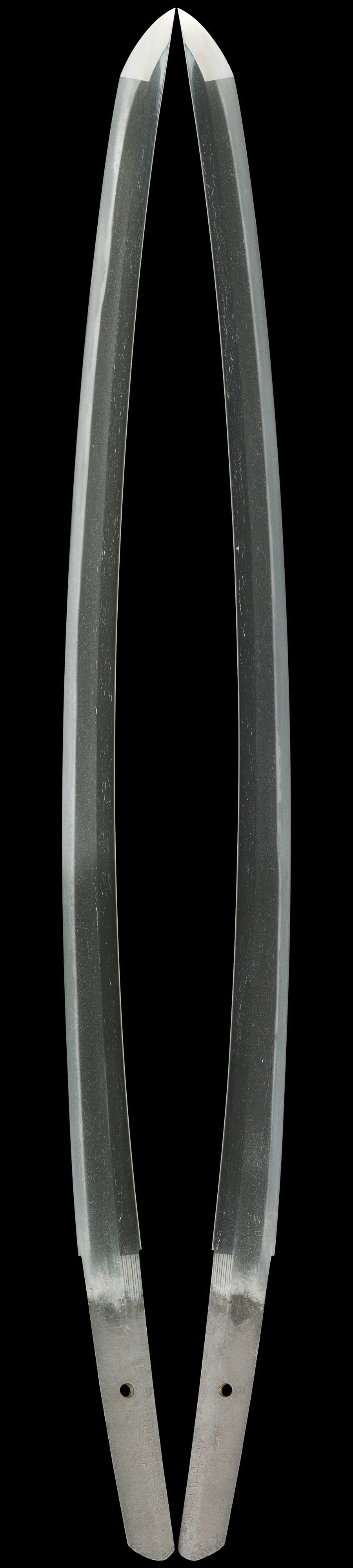
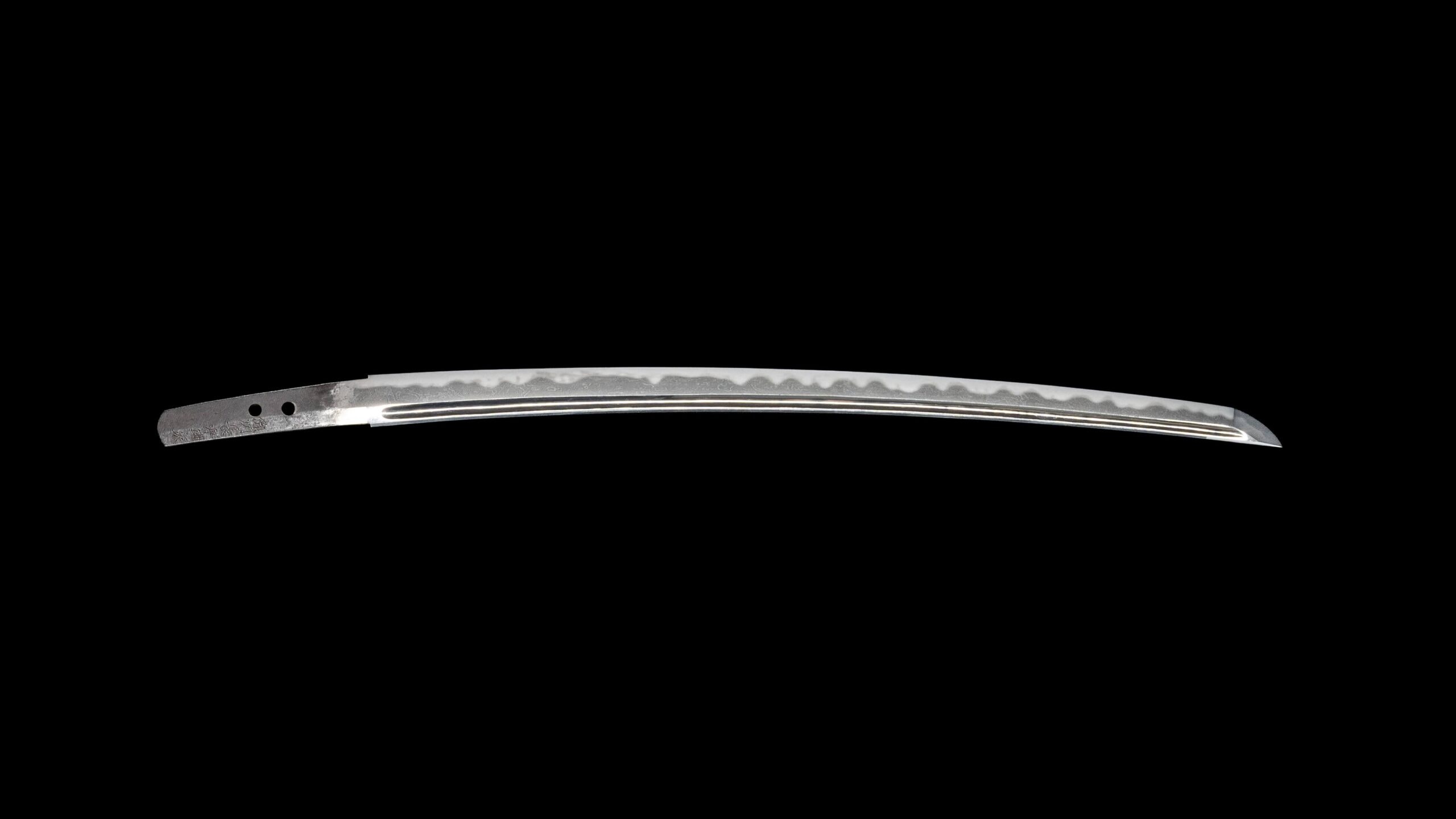
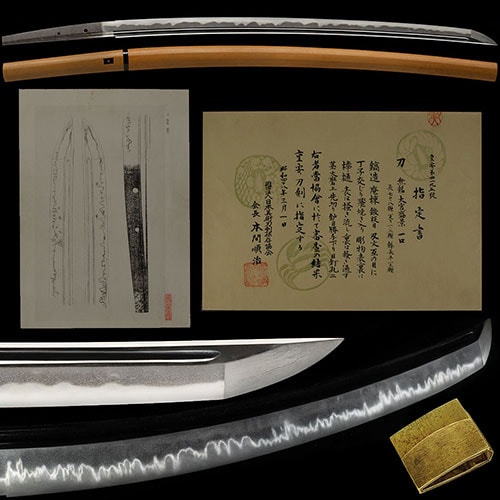
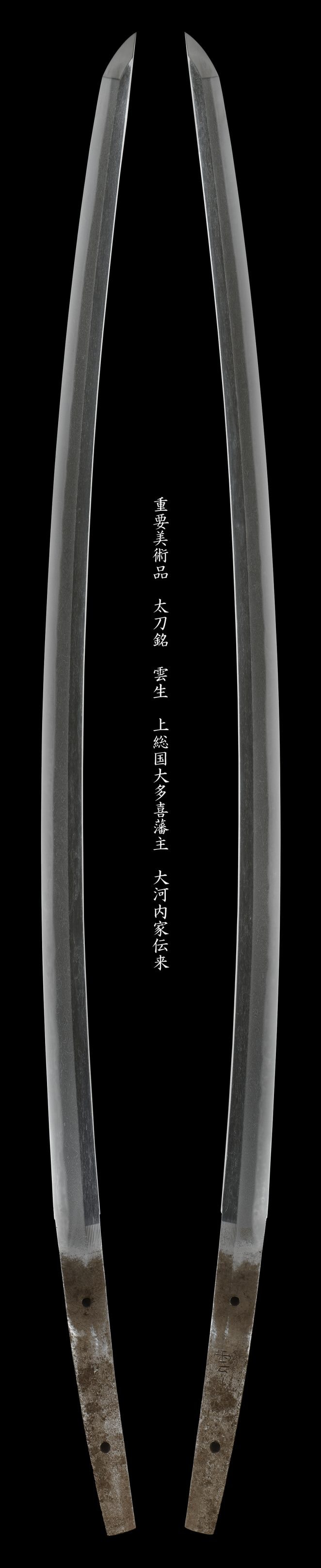
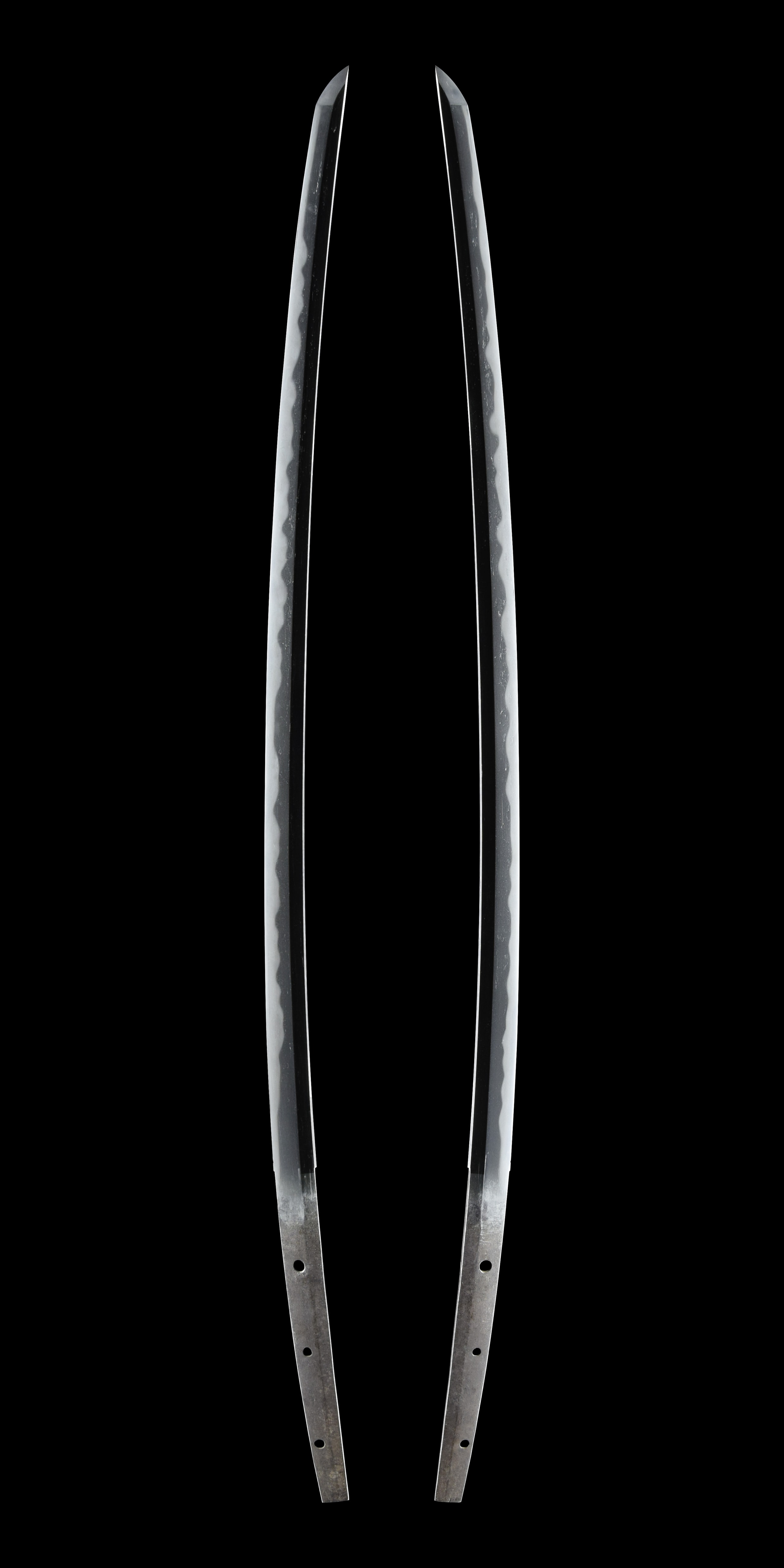
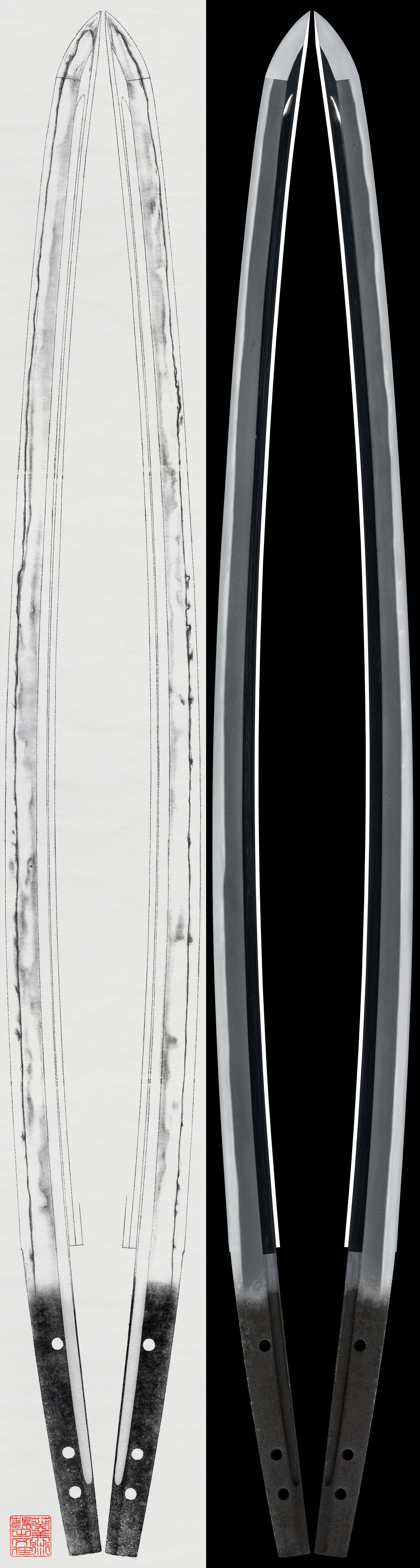
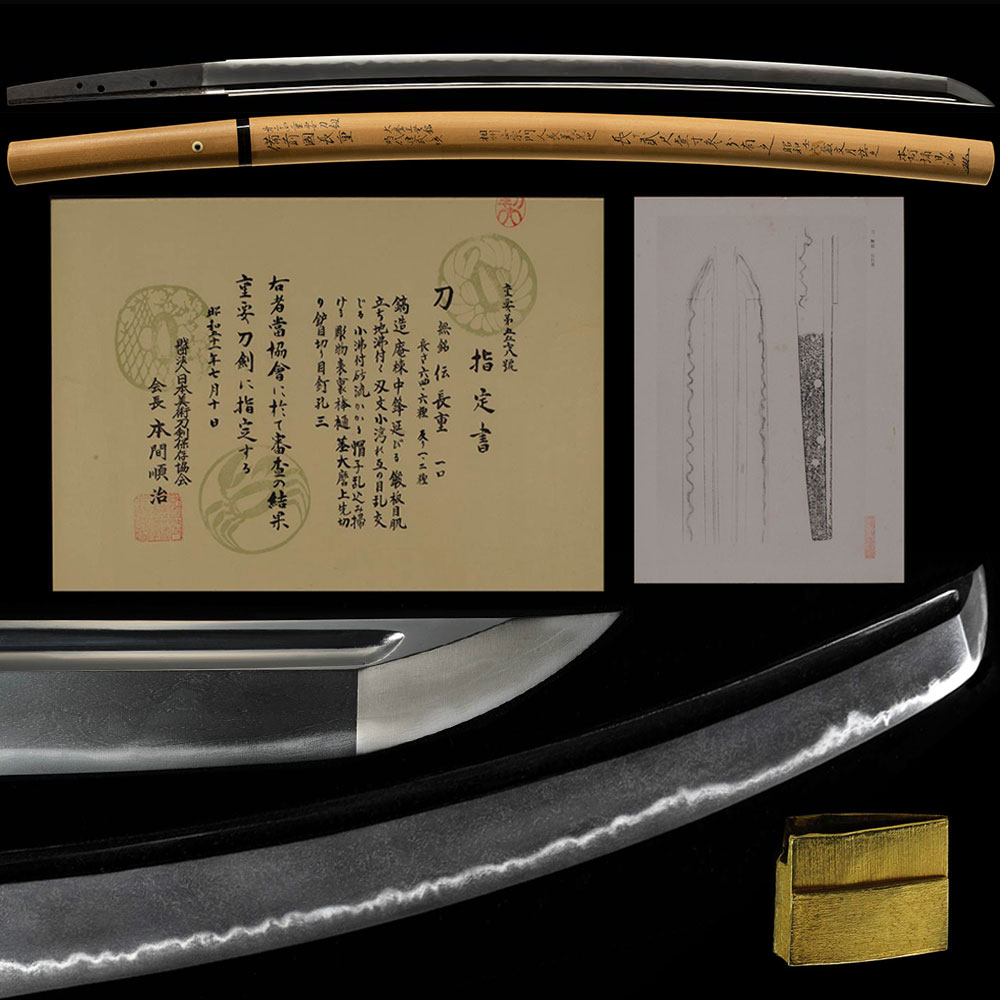
This is a Juyo Token designated katana by Osafune Nagashige, said to be the older brother of Nagayoshi, active from the late Kamakura to early Nanbokucho period. It features a wide mihaba, shallow sori, and extended kissaki characteristic of the Nanbokucho era, with a bright and clear hamon displaying abundant nie, kinsuji, and sunagashi, reflecting a strong Soshu influence. The blade is accompanied by a sayagaki by Hon'ami Nisshu.
 NihontoWatch
mei · Osafune · Nanbokucho · nagasa 64.7cm · sori 1.2cm
Osafune Chogi school (Soden-Bizen), Bizen · Bizen · around 1334-1342
Fujishiro Jo-jo saku · Tōken Taikan top 10%
Nagashige worked at Osafune in the opening years of the Nanbokuchō period, in the line that the published sources rank beside Kanemitsu as a 'standard-bearer of Sōden-Bizen'[[c:1]], the Bizen wing that took up Sōshū technique. His relationship to Chōgi was long misread, and the correction is one of the firmer facts on record: an older account made him Chōgi's younger brother, but his surviving signed blades carry dates of Kenmu 1 and 2 (1334–1335) and Kōei 1 (1342), while no work of Chōgi can be traced earlier than Shōhei 15, so the prevailing view today makes him Chōgi's elder brother. The dated anchor of that argument is concrete: a tantō signed Bishū Osafune-jū Nagashige and dated to the cyclical year kinoe-inu, Kenmu 1, once the sashiryō of Hon'ami Kōtoku, is his National Treasure.
His characteristic hand is the Sōden-Bizen midare, and it is most fully seen on the broad mumei katana that make up the bulk of his record. Over a standing itame mixed with mokume and nagare-hada, the jigane standing a little, he tempers a shallow notare or gunome base into which enter ko-gunome, ko-chōji and pointed togariba, with abundant ashi and yō. The nioiguchi is deep and bright, ko-nie adheres well with passages of rougher nie, and kinsuji and sunagashi run freely, small tobiyaki and yubashiri scattered along the edge. The bōshi runs midare-komi, rising to a pointed tip with hakikake or turning back in a small ko-maru. The construction is the full Nanbokuchō build, wide in mihaba with little width-taper, thick in kasane, an extended chū-kissaki or an ō-kissaki, hand-heavy and imposing.
The jigane carries the Bizen credential that keeps the work from turning purely Sōshū. Itame with thick ji-nie and well-entering chikei appears on every blade, and over it stands a midare-utsuri, clear where the forging is itame with mokume and falling to a faint utsuri-like cast on the rest. On the signed register, by contrast, the hand is tighter and calmer. The dated tachi run to a well-packed itame with fine ji-nie and only a light utsuri, the temper a chū-suguha or suguha-toned line mixed with ko-gunome and ko-chōji, even saka-ashi entering, ko-nie and ko-ashi present. Devotional carving, bonji set at the koshimoto, appears on more than one piece.
The published sources draw two further registers within his own work. On the signed tantō they read a more emphatic Sōshū cast than Chōgi himself, noting that 'among the signed survivors the tantō press the Sōshū manner further than Chōgi'[[c:2]]; these are hira-zukuri with a standing hada, a small notare with gunome growing vigorous toward the tip, sunagashi frequent and the pointed bōshi powerful. One signed tantō stands apart from everything else, its temper centered on kataochi-gunome mixed with squared kaku-gunome, evoking Kanemitsu, his circle and even Motoshige rather than the Chōgi midare; the sources call it 'a stylistic range unusual for Nagashige'[[c:3]] and value it as documentary material for the breadth of his manner.
What separates Nagashige from Chōgi is named the same way in entry after entry, and it is the whole of his kantei. His midare is of smaller scale and his yaki somewhat lower, yet 'the nie in both ji and ha surpasses Chōgi's'[[c:4]]; it is on this single recurring point that a Sōden-Bizen blade is converted into a Nagashige attribution. His distinction is carried by his own traits, the smaller, lower midare laid over a ji and ha more richly charged with nie, rather than by any feature borrowed from his brother. Traditionally his son Nagamori carries the line forward in a conspicuously chōji-based but somewhat lesser hand.
Fujishiro grades him Jō-jō saku. Signed, ubu Nagashige are extremely rare, and the body of his record runs through the Tokubetsu Jūyō and Jūyō tiers and the prewar Jūyō Bijutsuhin, above which stands his single National Treasure, the Kenmu 1 tantō held in the Hon'ami family. Several blades carry daimyō provenance: a katana given by Tokugawa Ieyasu to the Naruse house of Inuyama in Owari and long kept there, others through the Maeda of Kaga, the Nabeshima of Saga and the Shimazu. With only thirteen blades in the Tokubetsu Jūyō and Jūyō tiers and almost all of them held rather than traded, a signed Nagashige comes to light only seldom; a privately held example, where the broad Sōden-Bizen katana shows its smaller midare over an unusually nie-laden ji and ha, is a notable thing for a collector to encounter, and a document of how Bizen absorbed the Sōshū manner.
Where Nagashige stands among comparable artisans: across all of nihontō, and within tradition, era, and period. The tiers (Foremost · Leading · Major · Notable) weigh official designations from the NBTHK and Japan's Agency for Cultural Affairs, together with historical honors of lasting repute such as the Sansaku and Meibutsu-chō.
Select a lens to see how it's measured.
Years he was demonstrably active, proven by signed-and-dated blades
Bizen-den
Phase: Sōden-Bizen相伝備前· 1330–1394
8 pieces on the market now
The Soden Bizen school encompasses the group of Nanbokucho-period Osafune smiths in Bizen Province whose work absorbed the technical influence of the Soshu-den, producing a distinctive synthesis that stands apart from both orthodox Bizen and pure Sagami practice. The school divides into two principal lineages: the Kanemitsu group, representing the direct main line of Osafune that descends from Mitsutada through Nagamitsu and Kagemitsu; and the Chogi group, a collateral branch whose members carried the Soshu idiom to its most expressive extremes within Bizen. Kanemitsu, the chakuryu heir of Kagemitsu, pioneered the broad, relaxed notare-based midare that defines the mature Nanbokucho Osafune manner, while Chogi -- described by the NBTHK as the smith "who departs furthest from Bizen" among Bizen makers -- pushed nie-dominant forging to a level that rivals the output of the great Sagami smiths themselves. Together with disciples and contemporaries including Tomomitsu, Motomitsu, Masamitsu, Yoshimitsu, Kanenaga, Nagashige, and Nagamori, they constitute one of the most prolific and technically accomplished groups in the history of Japanese swordsmithing. The school's collective technical identity is anchored in a shared jigane of itame-hada mixed with mokume, with fine ji-nie adhering thickly, chikei entering well, and midare-utsuri standing out -- a persistent Bizen hallmark that survives even in the most Soshu-inflected work. The sugata overwhelmingly reflects the grand Nanbokucho taihai: wide mihaba with little taper between base and tip, and an extended chu-kissaki or o-kissaki conveying martial vigor. Within this shared framework, two distinct temperaments emerge.
" Yoshimitsu likewise inherits the small-pattern tendency, producing ko-gunome mixed with ko-choji whose restraint the NBTHK praises as "upper rank" Soden Bizen. The Chogi lineage, by contrast, emphasizes powerful nie in both ji and ha: Chogi's flamboyant large-scale midare weaves together gunome, choji, togariba, and koshi-hiraki forms with tobiyaki and yubashiri scattering freely, while kinsuji and sunagashi streak through the hardened edge. " Nagashige, now thought to be Chogi's elder brother rather than his junior, works a gentler, smaller-patterned midare yet with nie so strong as to "even surpass Chogi," while Nagamori occupies an intermediate position, his "somewhat smaller patterning" accompanied by rich internal activity. The historical significance of the Soden Bizen school lies in its demonstration that the Soshu influence, far from merely displacing Bizen conventions, catalyzed an extraordinary expansion of the Osafune repertoire. " The NBTHK's evaluative language across the school converges on consistent themes: the forging is "meticulous" and "excellent-quality," the nioiguchi "bright and clear," and the finest examples display a kenzen condition that attests to the soundness of Bizen steel at its peak. The abundance of dated inscriptions -- from Kanemitsu's forty-five-year span through Masamitsu's four-decade career extending into the early Muromachi period -- provides an unusually well-documented chronological framework, with later works by Masamitsu and Yoshimitsu pointing toward the subsequent development of Oei Bizen. Within the broader canon, the Soden Bizen school stands as the fullest realization of the creative possibilities that emerged when two of Japan's greatest forging traditions met and merged. Learn more →
| Smith | Era | Designated |
|---|---|---|
| Chogi長義 | 1356-1379 | 108 |
| Kanenaga兼長 | 1362-1388 | 94 |
| Nagashige長重 | 1334-1342 | 16 |
| Yoshikage義景 | 1334-1363 | 66 |
| Nagashige長重 | 1356-1361 | 0 |
Bizen in the Nanbokuchō period
Sixty years of war between two courts drove blades long and broad, and Osafune met the demand: Kanemitsu and Chōgi led forges serving the provincial warriors who did the fighting, while Sōshū influence arrived with the armies to create Sōden-Bizen.
A blade of top-grade workmanship and condition, formally judged to rank with a nationally recognized Important Art Object (Jūyō Bijutsuhin). Awarded only at the NBTHK’s competitive annual examination.
Of Japan’s roughly 2.5 million registered swords, only 12,307 (about 1 in 203) have ever attained Jūyō.
The NBTHK (Nihon Bijutsu Tōken Hozon Kyōkai, the Society for the Preservation of Japanese Art Swords) is a public-interest incorporated foundation founded in 1948 and supervised by Japan’s Agency for Cultural Affairs (Bunkachō); it is based at the Japanese Sword Museum in Tokyo. Its expert panels physically examine each submitted work (shinsa) and issue a certificate (kanteishō) ranking it by artistic and historical merit. NBTHK papers are the most widely recognized standard of authentication for Japanese swords and fittings.
NBTHK official siteReturns/exchanges/cancellations not accepted after shipment except for significant defects; if defective, return/exchange possible within 3 days of arrival (return shipping paid by customer).

This is a Juyo Token designated katana by Osafune Nagashige, said to be the older brother of Nagayoshi, active from the late Kamakura to early Nanbokucho period. It features a wide mihaba, shallow sori, and extended kissaki characteristic of the Nanbokucho era, with a bright and clear hamon displaying abundant nie, kinsuji, and sunagashi, reflecting a strong Soshu influence. The blade is accompanied by a sayagaki by Hon'ami Nisshu.
NihontoWatchmei · Osafune · Nanbokucho · nagasa 64.7cm · sori 1.2cm
Osafune Chogi school (Soden-Bizen), Bizen · Bizen · around 1334-1342
Fujishiro Jo-jo saku · Tōken Taikan top 10%
Nagashige worked at Osafune in the opening years of the Nanbokuchō period, in the line that the published sources rank beside Kanemitsu as a 'standard-bearer of Sōden-Bizen'[[c:1]], the Bizen wing that took up Sōshū technique. His relationship to Chōgi was long misread, and the correction is one of the firmer facts on record: an older account made him Chōgi's younger brother, but his surviving signed blades carry dates of Kenmu 1 and 2 (1334–1335) and Kōei 1 (1342), while no work of Chōgi can be traced earlier than Shōhei 15, so the prevailing view today makes him Chōgi's elder brother. The dated anchor of that argument is concrete: a tantō signed Bishū Osafune-jū Nagashige and dated to the cyclical year kinoe-inu, Kenmu 1, once the sashiryō of Hon'ami Kōtoku, is his National Treasure.
His characteristic hand is the Sōden-Bizen midare, and it is most fully seen on the broad mumei katana that make up the bulk of his record. Over a standing itame mixed with mokume and nagare-hada, the jigane standing a little, he tempers a shallow notare or gunome base into which enter ko-gunome, ko-chōji and pointed togariba, with abundant ashi and yō. The nioiguchi is deep and bright, ko-nie adheres well with passages of rougher nie, and kinsuji and sunagashi run freely, small tobiyaki and yubashiri scattered along the edge. The bōshi runs midare-komi, rising to a pointed tip with hakikake or turning back in a small ko-maru. The construction is the full Nanbokuchō build, wide in mihaba with little width-taper, thick in kasane, an extended chū-kissaki or an ō-kissaki, hand-heavy and imposing.
The jigane carries the Bizen credential that keeps the work from turning purely Sōshū. Itame with thick ji-nie and well-entering chikei appears on every blade, and over it stands a midare-utsuri, clear where the forging is itame with mokume and falling to a faint utsuri-like cast on the rest. On the signed register, by contrast, the hand is tighter and calmer. The dated tachi run to a well-packed itame with fine ji-nie and only a light utsuri, the temper a chū-suguha or suguha-toned line mixed with ko-gunome and ko-chōji, even saka-ashi entering, ko-nie and ko-ashi present. Devotional carving, bonji set at the koshimoto, appears on more than one piece.
The published sources draw two further registers within his own work. On the signed tantō they read a more emphatic Sōshū cast than Chōgi himself, noting that 'among the signed survivors the tantō press the Sōshū manner further than Chōgi'[[c:2]]; these are hira-zukuri with a standing hada, a small notare with gunome growing vigorous toward the tip, sunagashi frequent and the pointed bōshi powerful. One signed tantō stands apart from everything else, its temper centered on kataochi-gunome mixed with squared kaku-gunome, evoking Kanemitsu, his circle and even Motoshige rather than the Chōgi midare; the sources call it 'a stylistic range unusual for Nagashige'[[c:3]] and value it as documentary material for the breadth of his manner.
What separates Nagashige from Chōgi is named the same way in entry after entry, and it is the whole of his kantei. His midare is of smaller scale and his yaki somewhat lower, yet 'the nie in both ji and ha surpasses Chōgi's'[[c:4]]; it is on this single recurring point that a Sōden-Bizen blade is converted into a Nagashige attribution. His distinction is carried by his own traits, the smaller, lower midare laid over a ji and ha more richly charged with nie, rather than by any feature borrowed from his brother. Traditionally his son Nagamori carries the line forward in a conspicuously chōji-based but somewhat lesser hand.
Fujishiro grades him Jō-jō saku. Signed, ubu Nagashige are extremely rare, and the body of his record runs through the Tokubetsu Jūyō and Jūyō tiers and the prewar Jūyō Bijutsuhin, above which stands his single National Treasure, the Kenmu 1 tantō held in the Hon'ami family. Several blades carry daimyō provenance: a katana given by Tokugawa Ieyasu to the Naruse house of Inuyama in Owari and long kept there, others through the Maeda of Kaga, the Nabeshima of Saga and the Shimazu. With only thirteen blades in the Tokubetsu Jūyō and Jūyō tiers and almost all of them held rather than traded, a signed Nagashige comes to light only seldom; a privately held example, where the broad Sōden-Bizen katana shows its smaller midare over an unusually nie-laden ji and ha, is a notable thing for a collector to encounter, and a document of how Bizen absorbed the Sōshū manner.
Where Nagashige stands among comparable artisans: across all of nihontō, and within tradition, era, and period. The tiers (Foremost · Leading · Major · Notable) weigh official designations from the NBTHK and Japan's Agency for Cultural Affairs, together with historical honors of lasting repute such as the Sansaku and Meibutsu-chō.
Select a lens to see how it's measured.
Years he was demonstrably active, proven by signed-and-dated blades
Bizen-den
Phase: Sōden-Bizen相伝備前· 1330–1394
8 pieces on the market now
The Soden Bizen school encompasses the group of Nanbokucho-period Osafune smiths in Bizen Province whose work absorbed the technical influence of the Soshu-den, producing a distinctive synthesis that stands apart from both orthodox Bizen and pure Sagami practice. The school divides into two principal lineages: the Kanemitsu group, representing the direct main line of Osafune that descends from Mitsutada through Nagamitsu and Kagemitsu; and the Chogi group, a collateral branch whose members carried the Soshu idiom to its most expressive extremes within Bizen. Kanemitsu, the chakuryu heir of Kagemitsu, pioneered the broad, relaxed notare-based midare that defines the mature Nanbokucho Osafune manner, while Chogi -- described by the NBTHK as the smith "who departs furthest from Bizen" among Bizen makers -- pushed nie-dominant forging to a level that rivals the output of the great Sagami smiths themselves. Together with disciples and contemporaries including Tomomitsu, Motomitsu, Masamitsu, Yoshimitsu, Kanenaga, Nagashige, and Nagamori, they constitute one of the most prolific and technically accomplished groups in the history of Japanese swordsmithing. The school's collective technical identity is anchored in a shared jigane of itame-hada mixed with mokume, with fine ji-nie adhering thickly, chikei entering well, and midare-utsuri standing out -- a persistent Bizen hallmark that survives even in the most Soshu-inflected work. The sugata overwhelmingly reflects the grand Nanbokucho taihai: wide mihaba with little taper between base and tip, and an extended chu-kissaki or o-kissaki conveying martial vigor. Within this shared framework, two distinct temperaments emerge.
" Yoshimitsu likewise inherits the small-pattern tendency, producing ko-gunome mixed with ko-choji whose restraint the NBTHK praises as "upper rank" Soden Bizen. The Chogi lineage, by contrast, emphasizes powerful nie in both ji and ha: Chogi's flamboyant large-scale midare weaves together gunome, choji, togariba, and koshi-hiraki forms with tobiyaki and yubashiri scattering freely, while kinsuji and sunagashi streak through the hardened edge. " Nagashige, now thought to be Chogi's elder brother rather than his junior, works a gentler, smaller-patterned midare yet with nie so strong as to "even surpass Chogi," while Nagamori occupies an intermediate position, his "somewhat smaller patterning" accompanied by rich internal activity. The historical significance of the Soden Bizen school lies in its demonstration that the Soshu influence, far from merely displacing Bizen conventions, catalyzed an extraordinary expansion of the Osafune repertoire. " The NBTHK's evaluative language across the school converges on consistent themes: the forging is "meticulous" and "excellent-quality," the nioiguchi "bright and clear," and the finest examples display a kenzen condition that attests to the soundness of Bizen steel at its peak. The abundance of dated inscriptions -- from Kanemitsu's forty-five-year span through Masamitsu's four-decade career extending into the early Muromachi period -- provides an unusually well-documented chronological framework, with later works by Masamitsu and Yoshimitsu pointing toward the subsequent development of Oei Bizen. Within the broader canon, the Soden Bizen school stands as the fullest realization of the creative possibilities that emerged when two of Japan's greatest forging traditions met and merged. Learn more →
| Smith | Era | Designated |
|---|---|---|
| Chogi長義 | 1356-1379 | 108 |
| Kanenaga兼長 | 1362-1388 | 94 |
| Nagashige長重 | 1334-1342 | 16 |
| Yoshikage義景 | 1334-1363 | 66 |
| Nagashige長重 | 1356-1361 | 0 |
Bizen in the Nanbokuchō period
Sixty years of war between two courts drove blades long and broad, and Osafune met the demand: Kanemitsu and Chōgi led forges serving the provincial warriors who did the fighting, while Sōshū influence arrived with the armies to create Sōden-Bizen.
A blade of top-grade workmanship and condition, formally judged to rank with a nationally recognized Important Art Object (Jūyō Bijutsuhin). Awarded only at the NBTHK’s competitive annual examination.
Of Japan’s roughly 2.5 million registered swords, only 12,307 (about 1 in 203) have ever attained Jūyō.
The NBTHK (Nihon Bijutsu Tōken Hozon Kyōkai, the Society for the Preservation of Japanese Art Swords) is a public-interest incorporated foundation founded in 1948 and supervised by Japan’s Agency for Cultural Affairs (Bunkachō); it is based at the Japanese Sword Museum in Tokyo. Its expert panels physically examine each submitted work (shinsa) and issue a certificate (kanteishō) ranking it by artistic and historical merit. NBTHK papers are the most widely recognized standard of authentication for Japanese swords and fittings.
NBTHK official siteReturns/exchanges/cancellations not accepted after shipment except for significant defects; if defective, return/exchange possible within 3 days of arrival (return shipping paid by customer).