
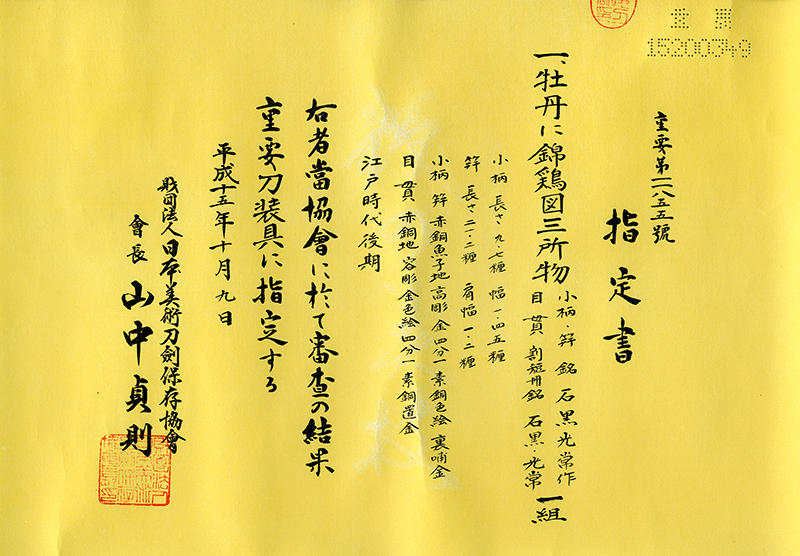
Jūyō-Tōsōgu, 49th Session — Designated October 9, 2003
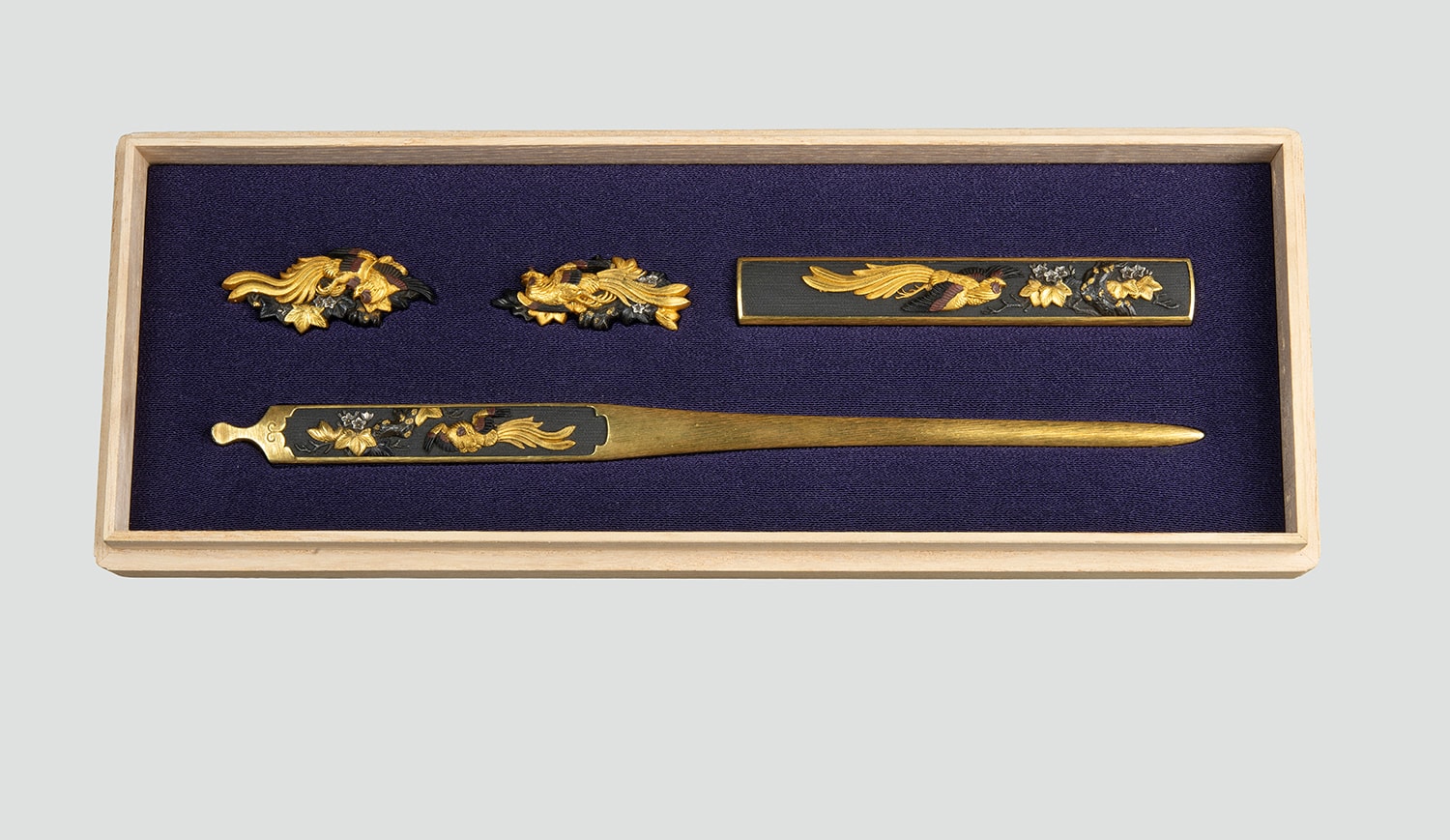
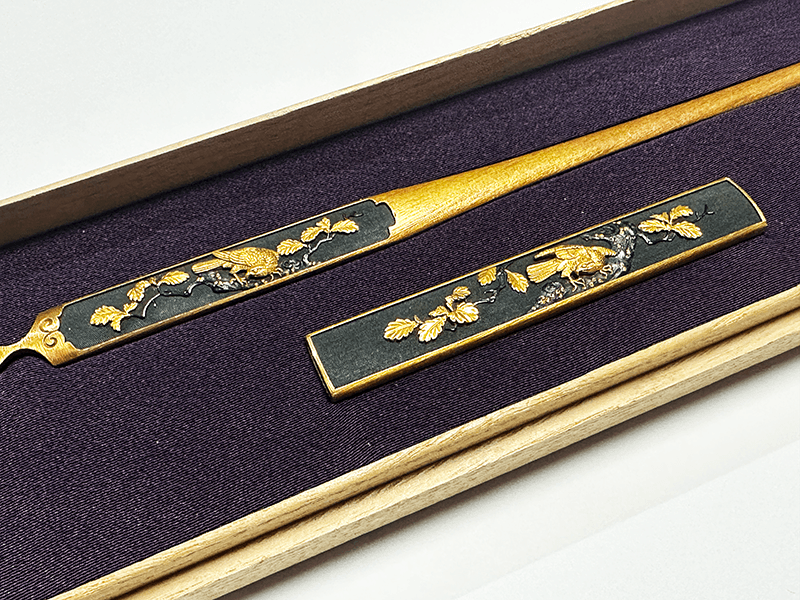
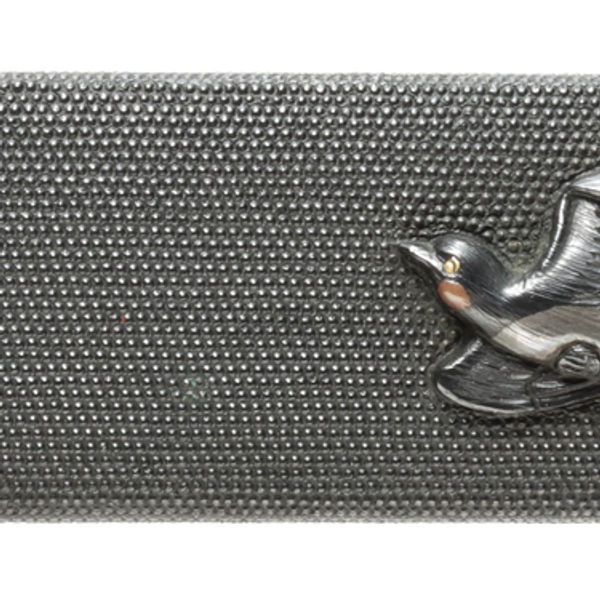
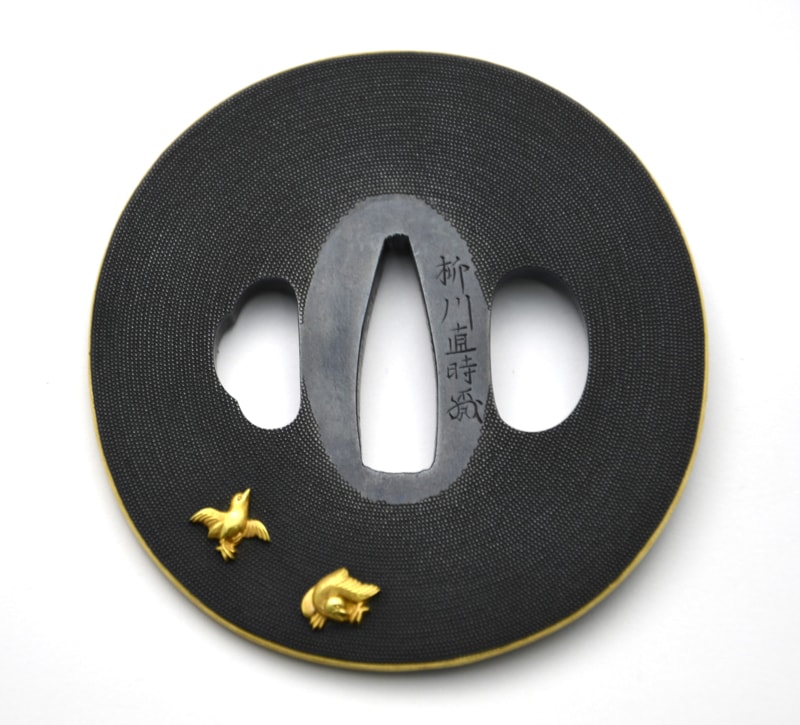
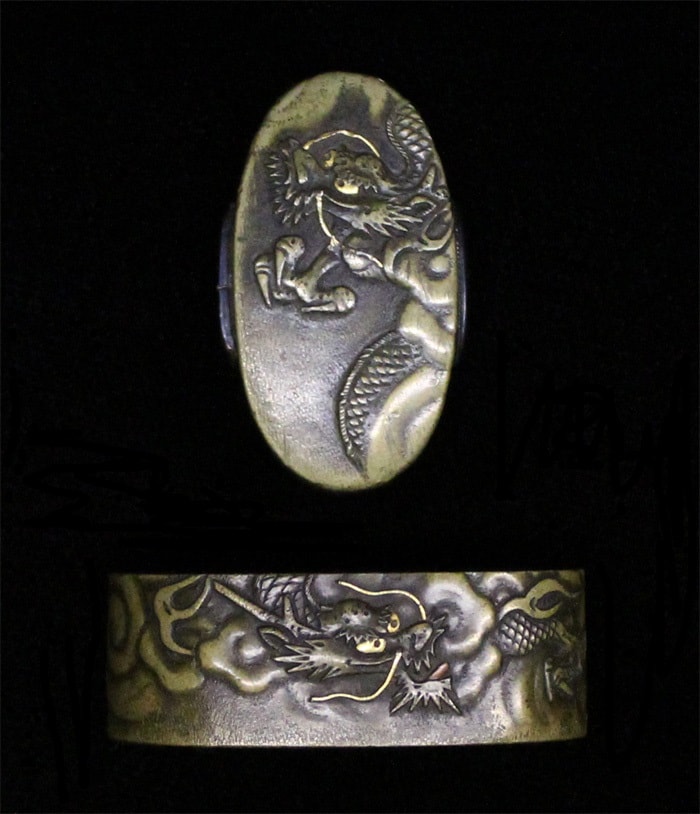
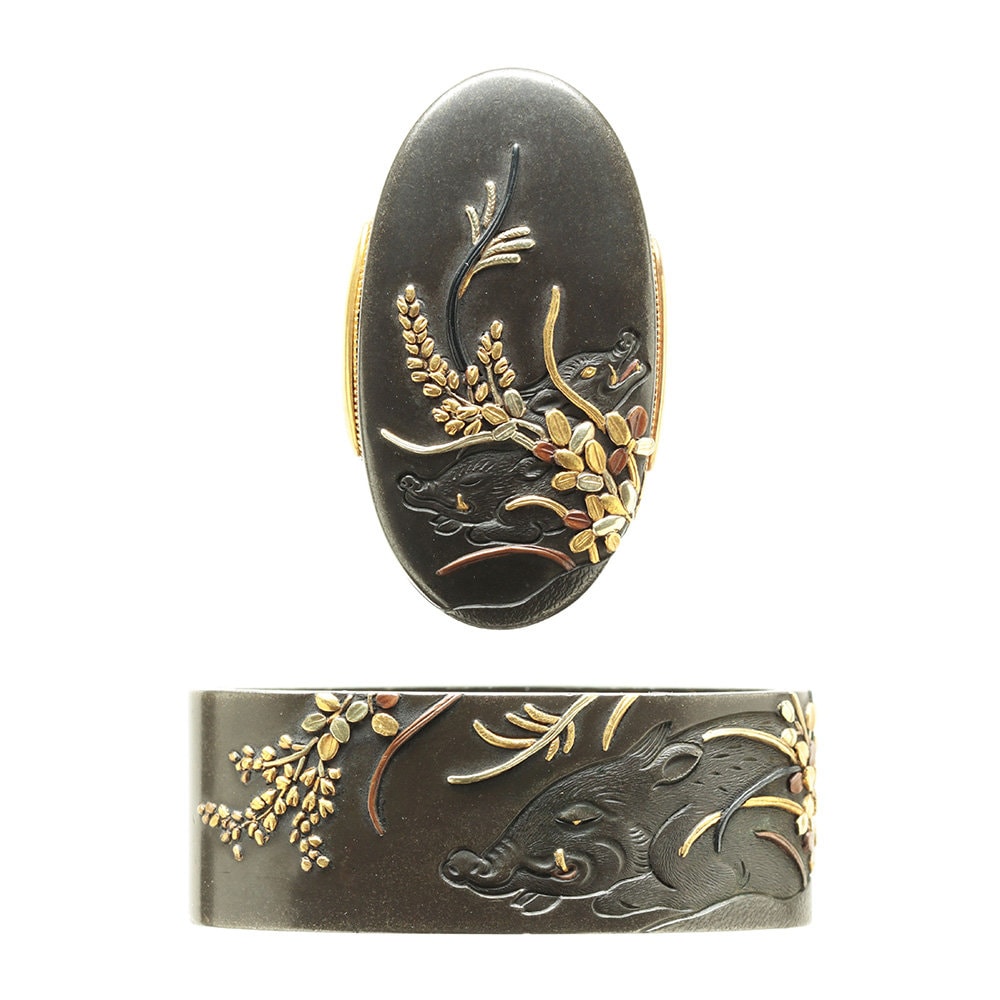
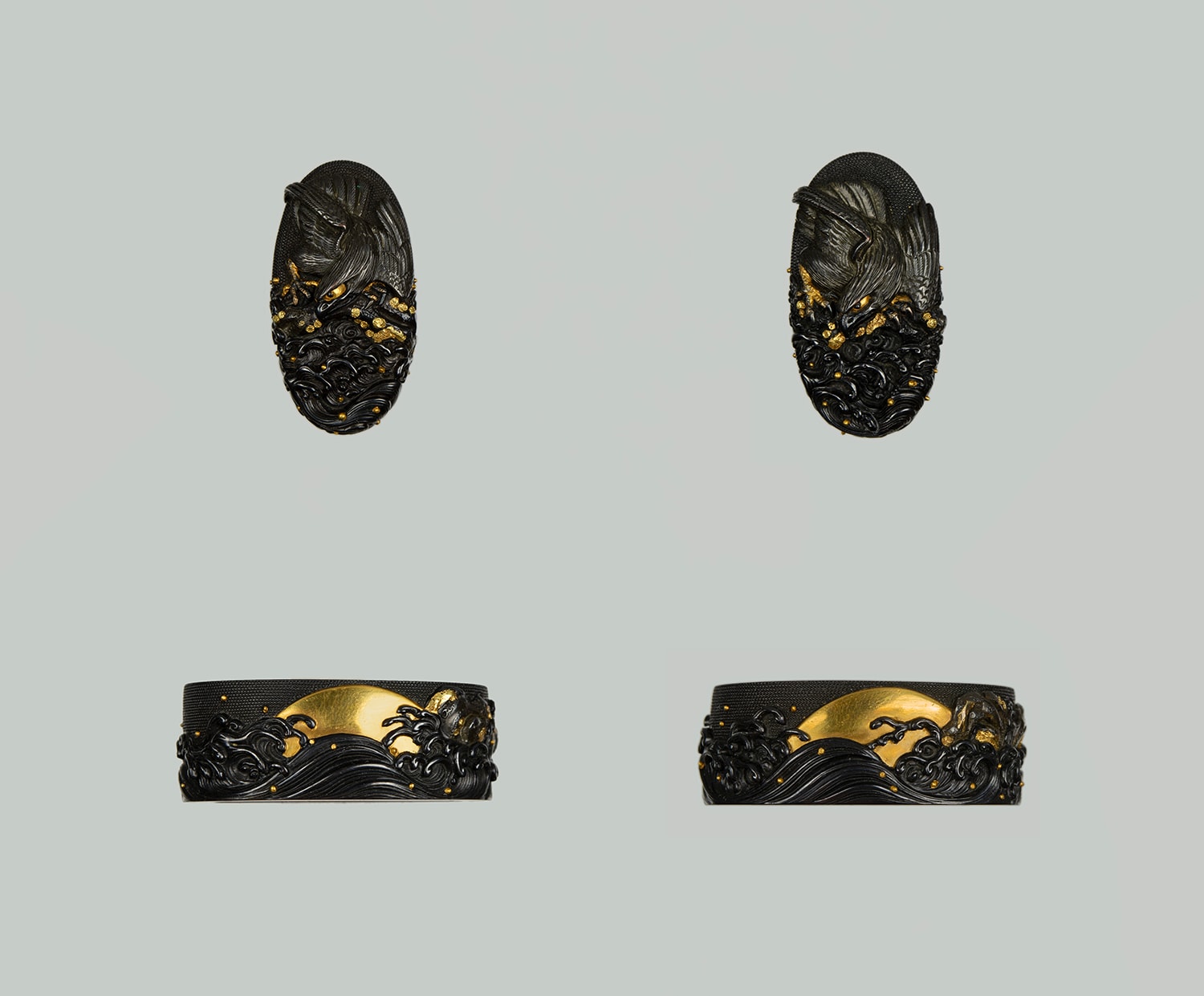
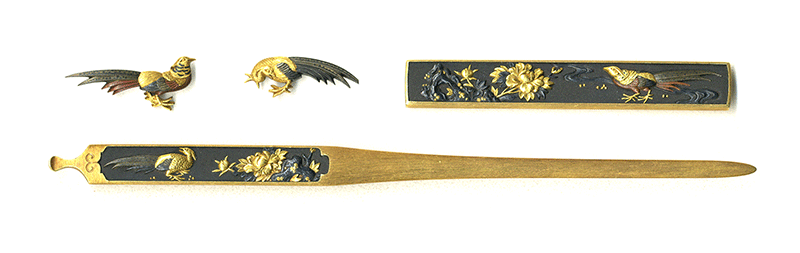
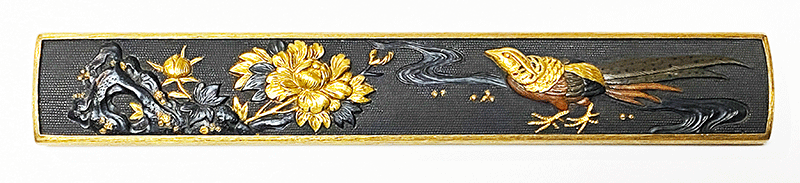
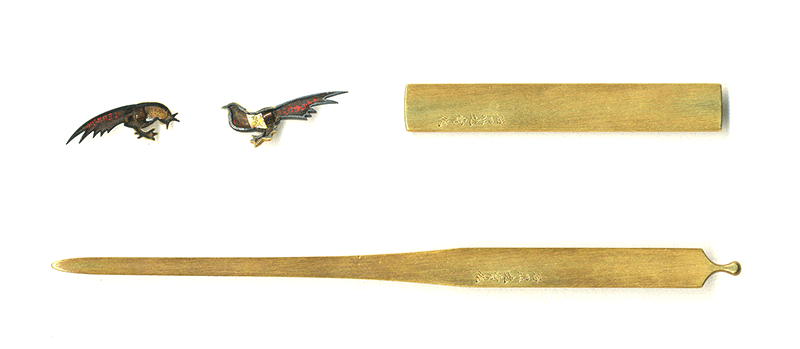
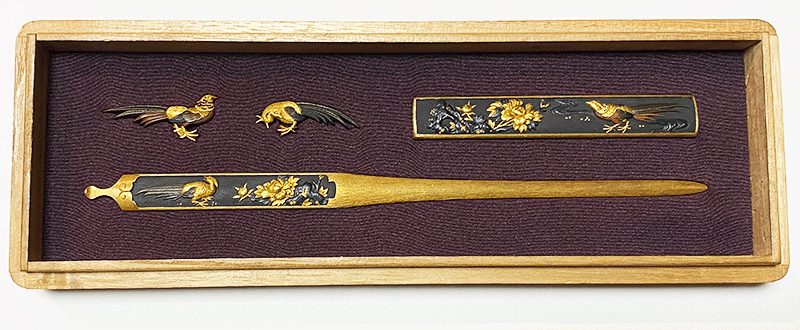
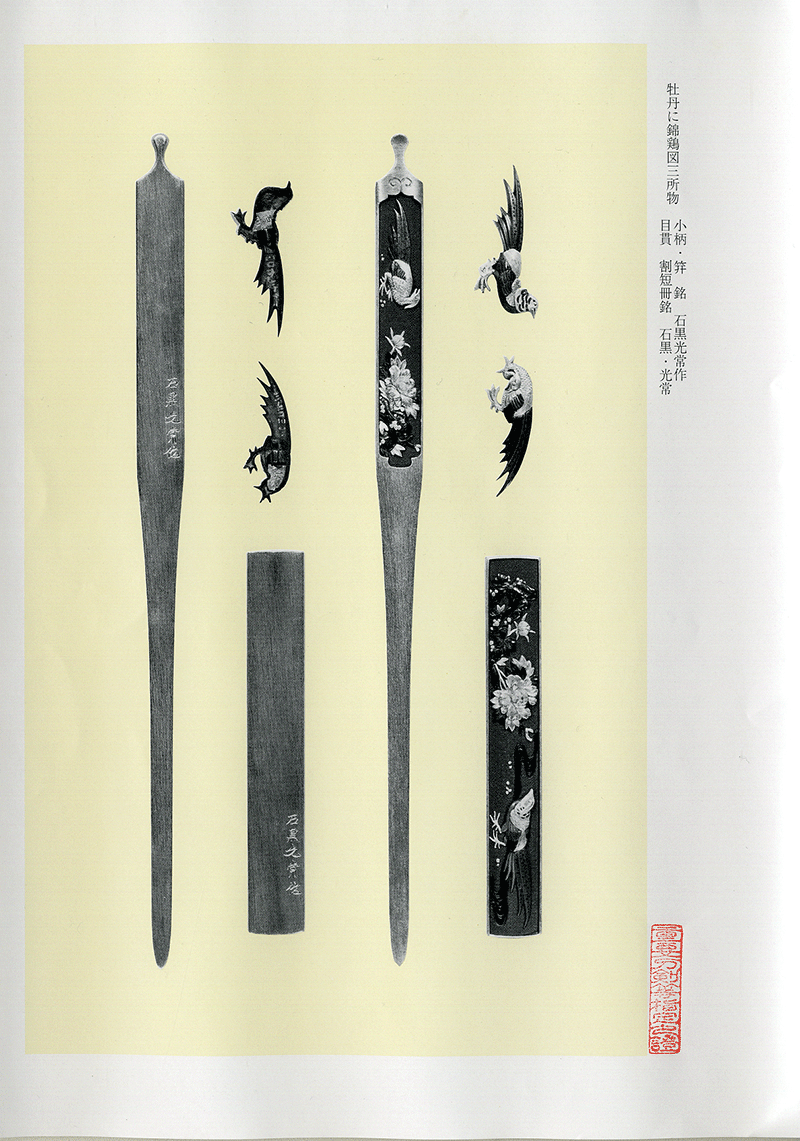
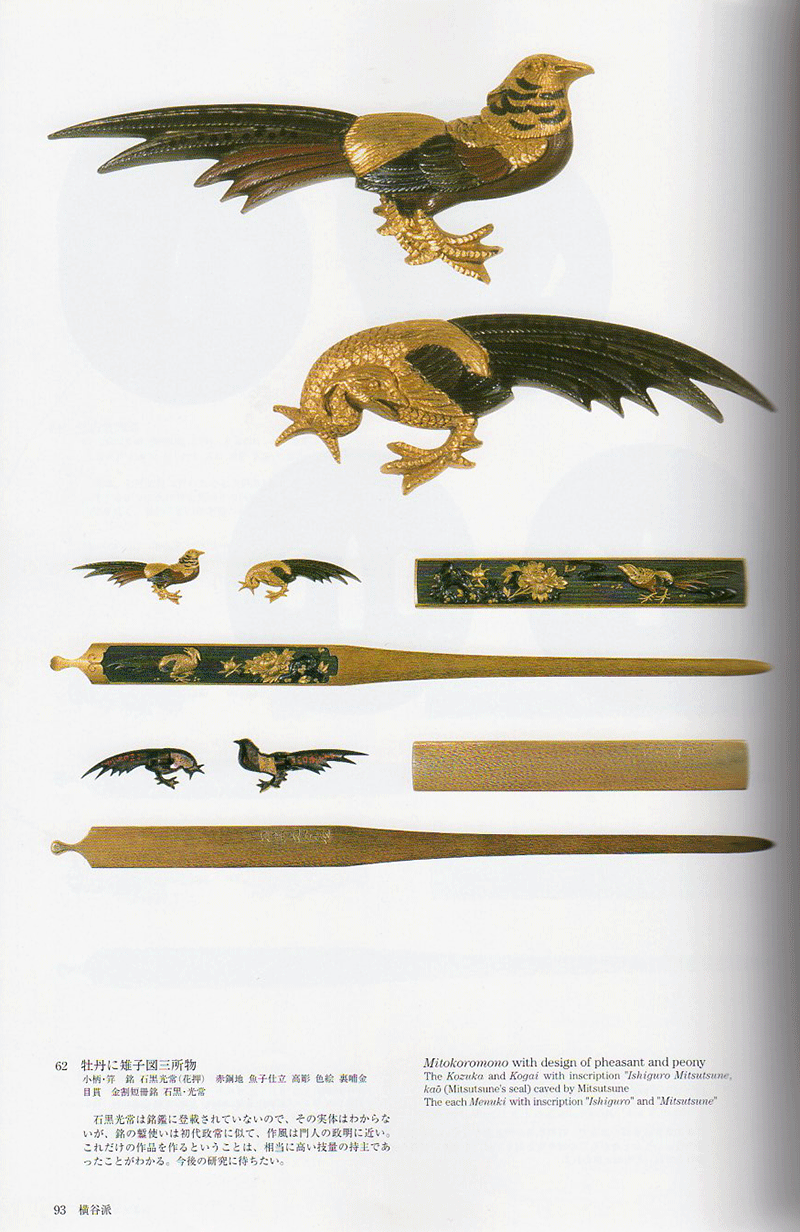
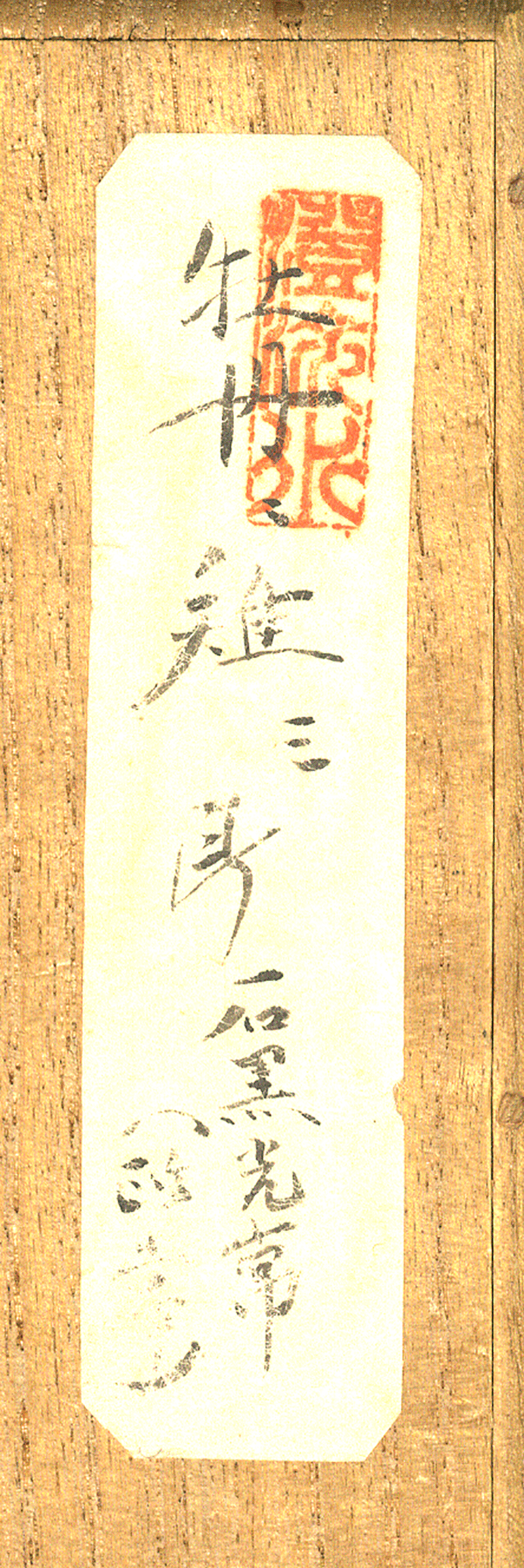
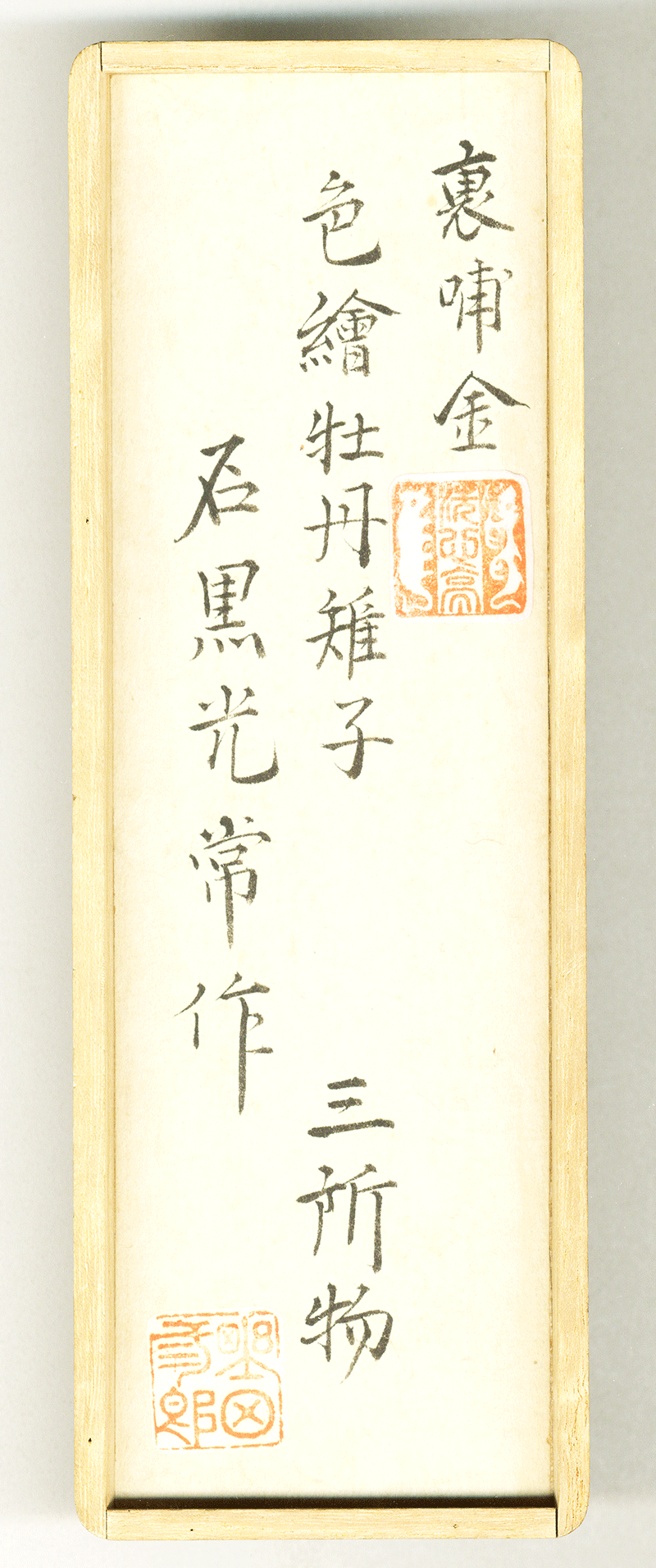
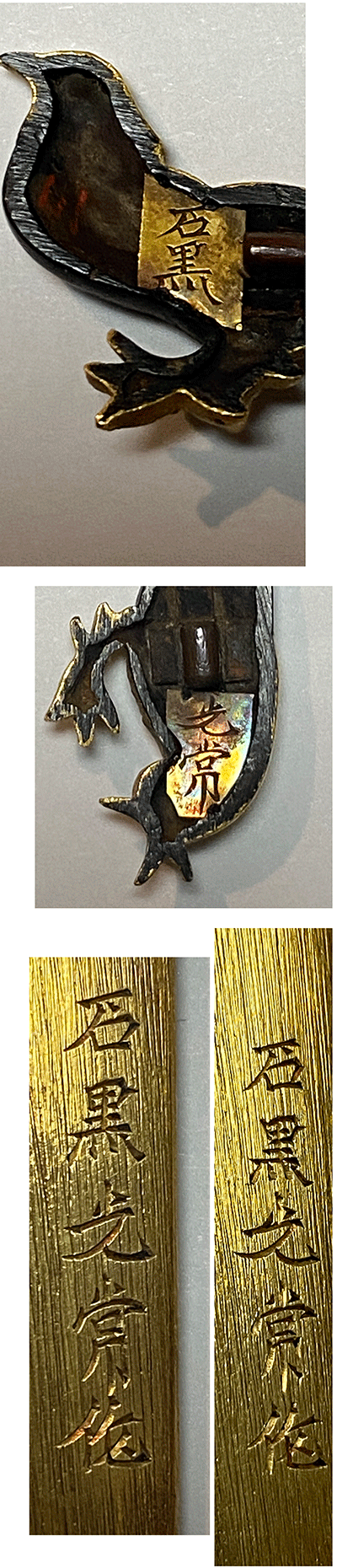
Mitokoromono (Kozuka, Kogai, Menuki), mei: Ishiguro Mitsutsune (石黒光常)
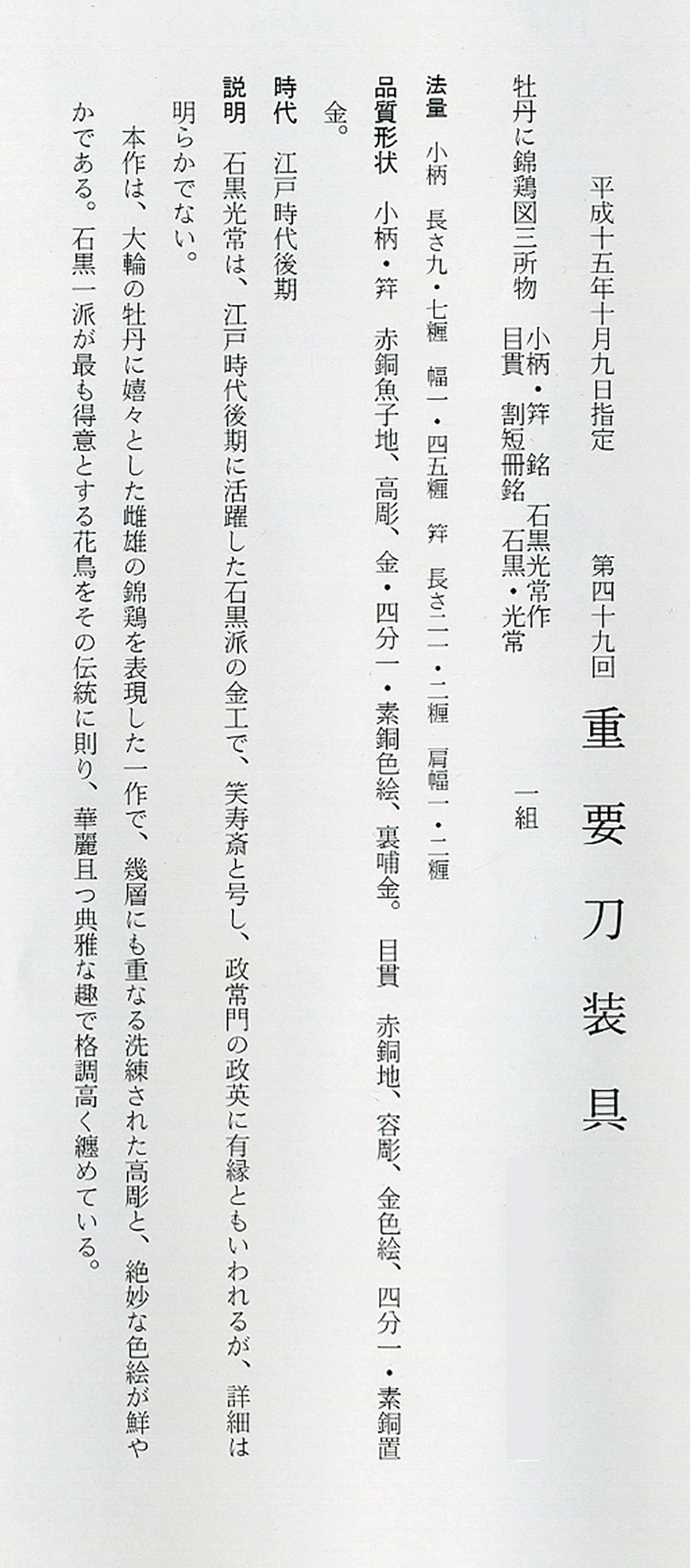
Measurements
- Kozuka: length 9.7 cm; width 1.45 cm
- Kogai: length 22.0 cm; shoulder width 2.2 cm
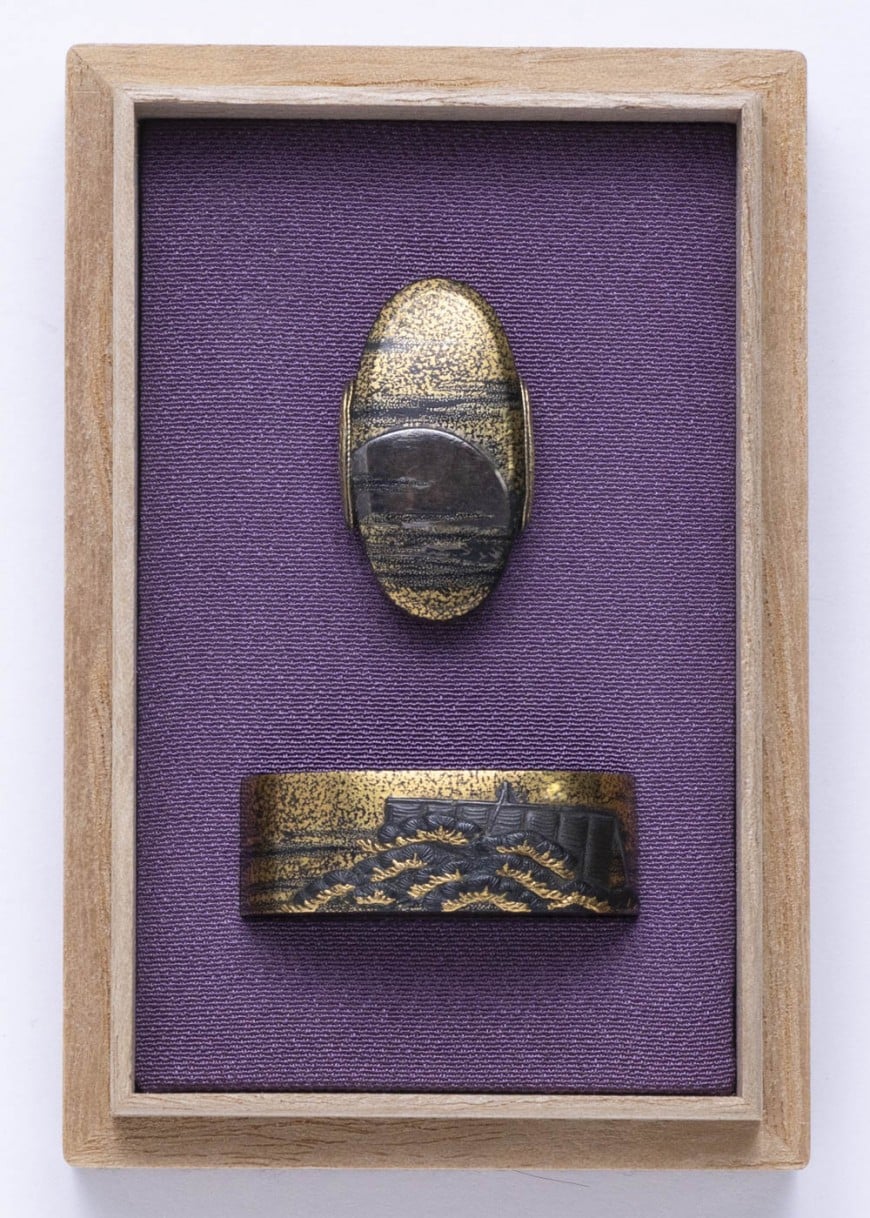
Description Form: Mitokoromono (three-piece matching set) Material:
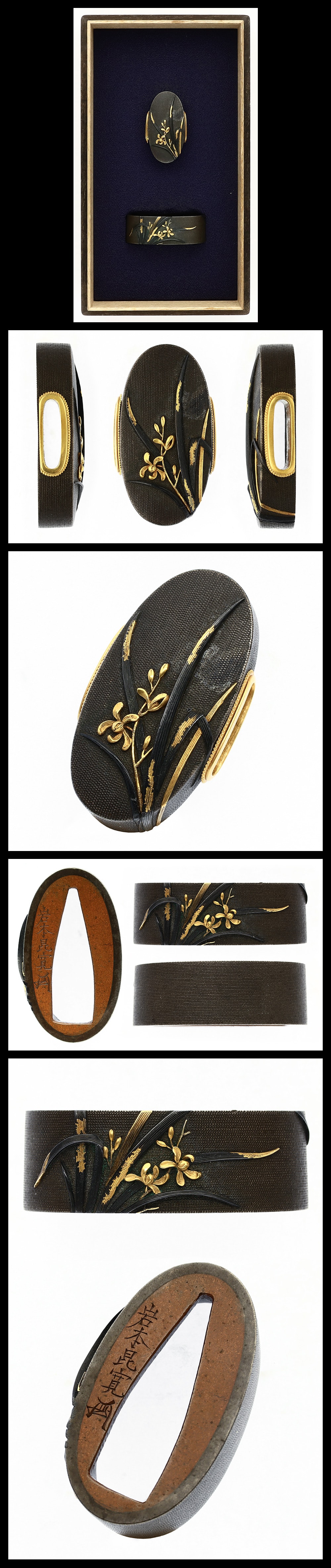
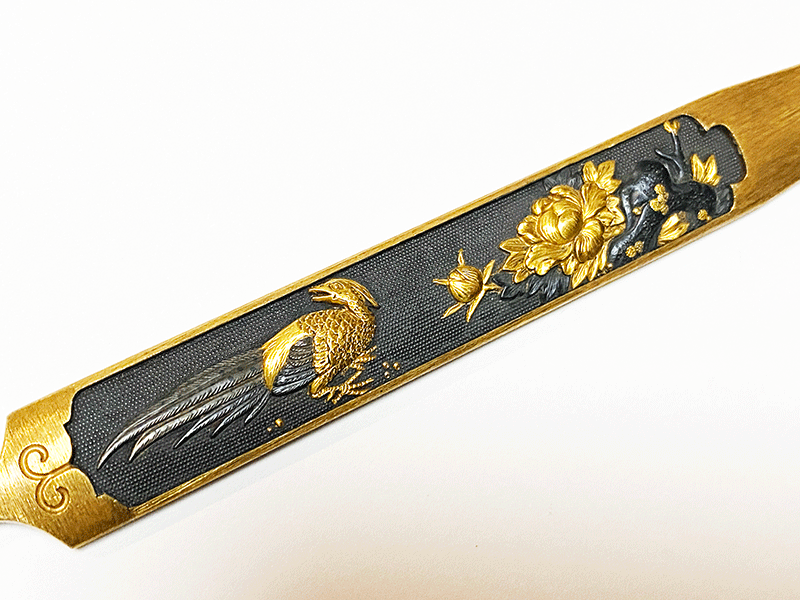
- Kozuka and kogai: shakudō ground with nanako-ji
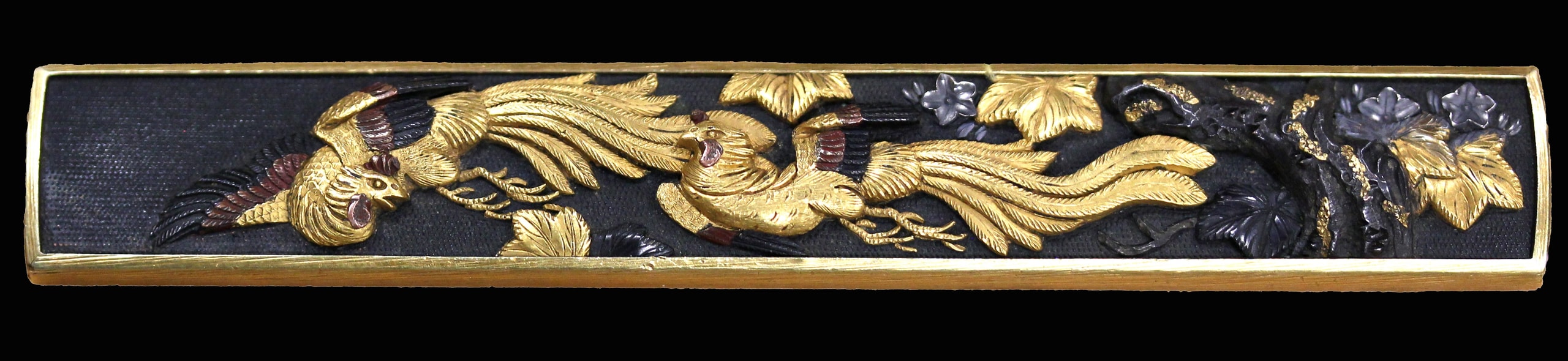
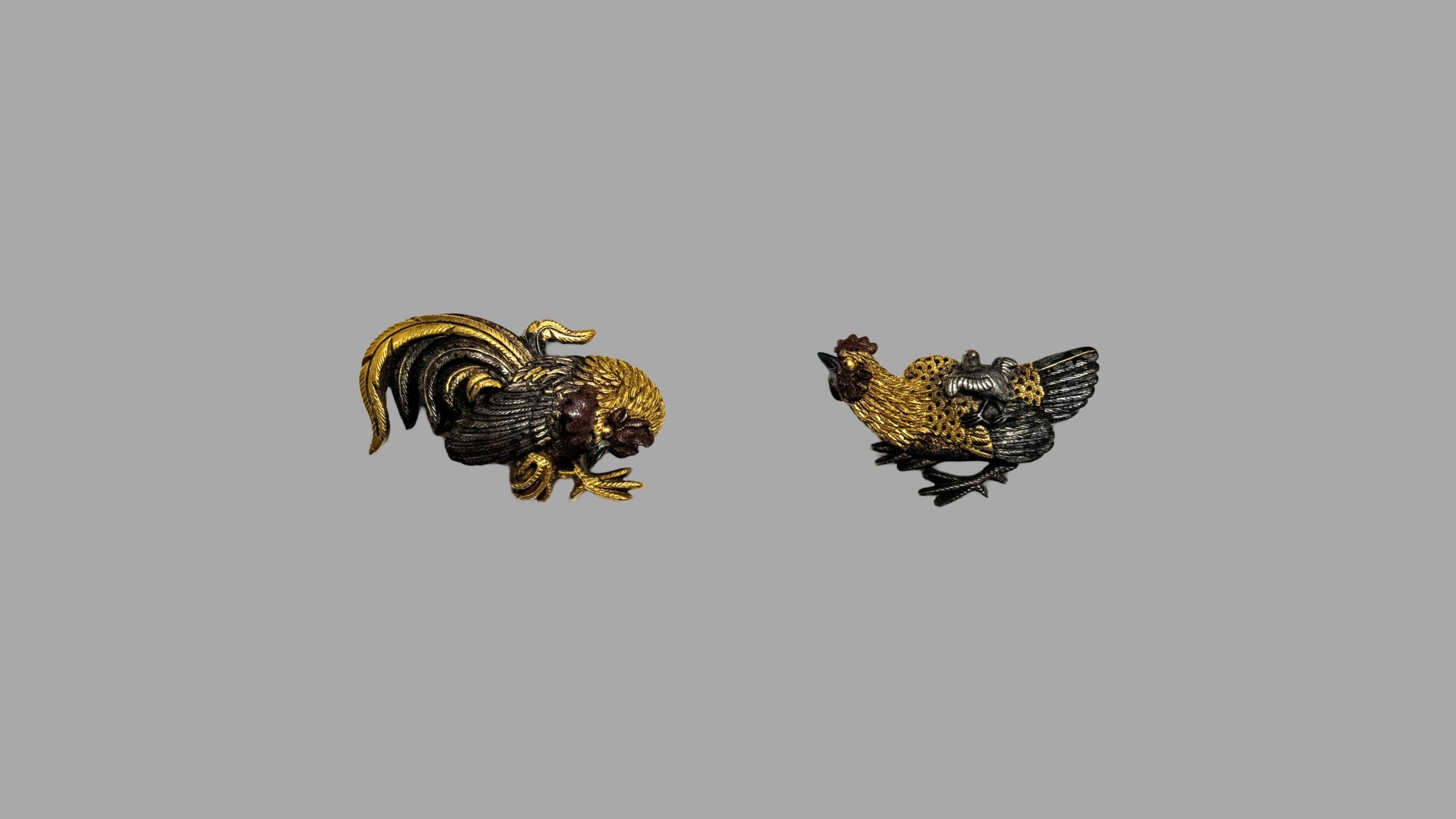
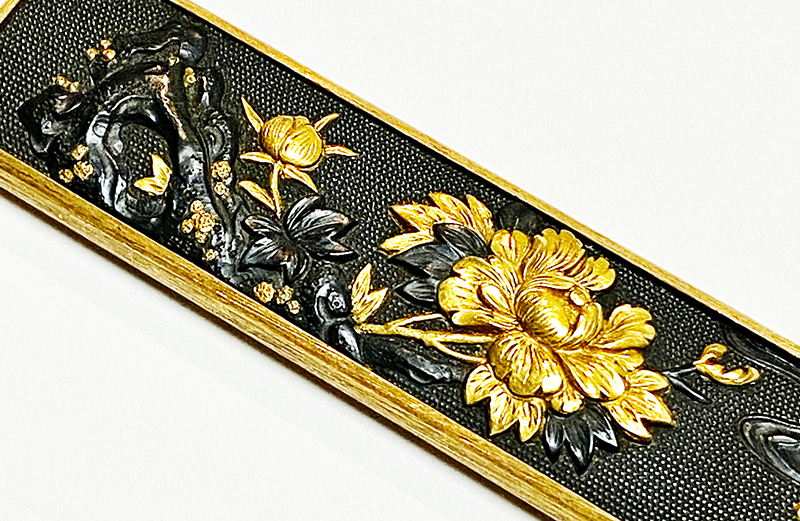
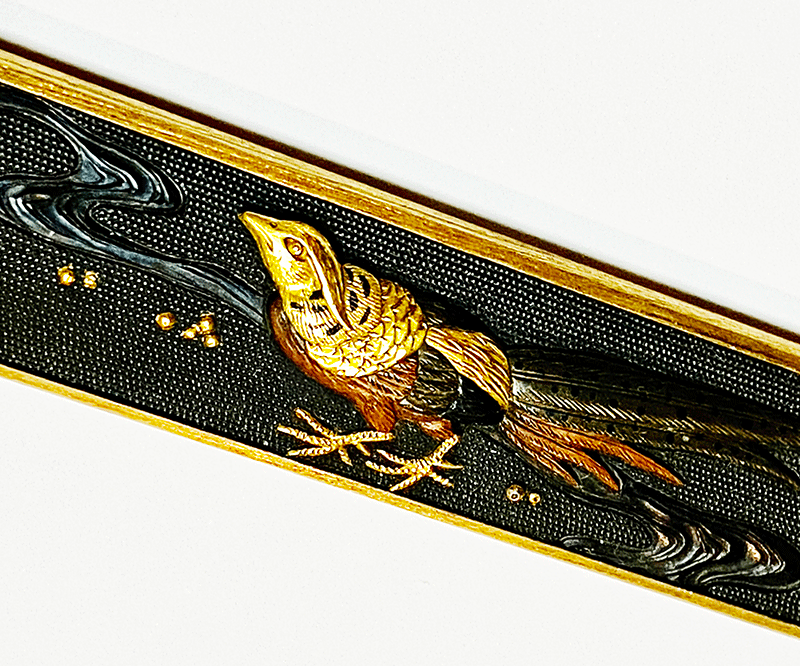
- Menuki: shakudō ground Construction: tsuranewari (split-and-joined construction) for the kozuka and kogai Design: Peonies with a cheerful pair (male and female) of golden pheasants (kinkei) Decoration:
- Kozuka and kogai: takabori and iroe using shibuichi and suaka; reverse with kin’ura (gold backing)
- Menuki: rounded carving (yōbori) with gold iroe, and shibuichi/suaka accents Signature: Inscribed “Ishiguro Mitsutsune” (石黒光常)
Artisan Ishiguro Mitsutsune (石黒光常), Ishiguro school; also known by the gō Shōjusai (Shōju-sai)
Era Late Edo period
Explanation Ishiguro Mitsutsune was a metalworker of the Ishiguro school who was active in the late Edo period. He used the art name Shōjusai. It is also said that he had some connection to Masaei, a student of Masatsune, but the details are not clear.
This work depicts large peony blossoms and an exuberant pair of golden pheasants. The refined takabori—built up in multiple layers—and the superbly judged iroe are brilliantly vivid. Taking up the flower-and-bird subjects at which the Ishiguro lineage most excelled, and adhering to that tradition, the set is brought together with a splendid yet elegant sensibility, achieving a composition of notably high refinement and dignity.