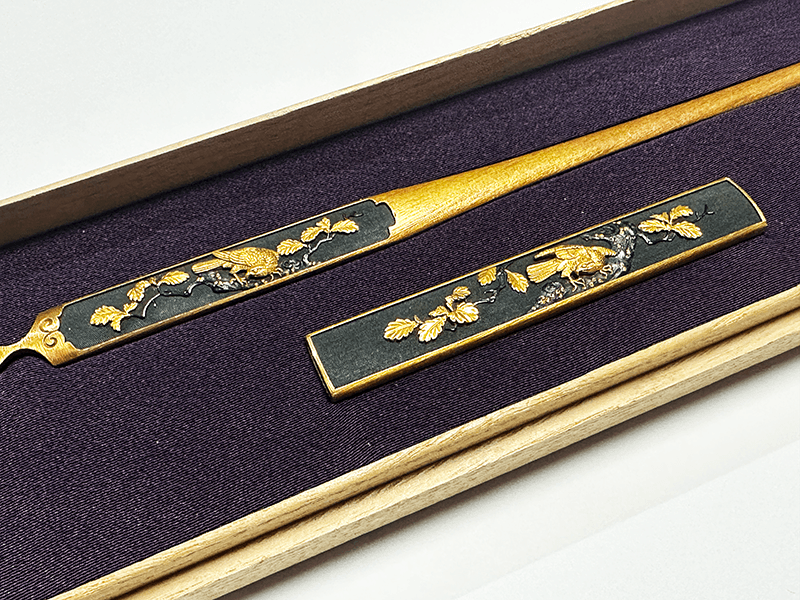
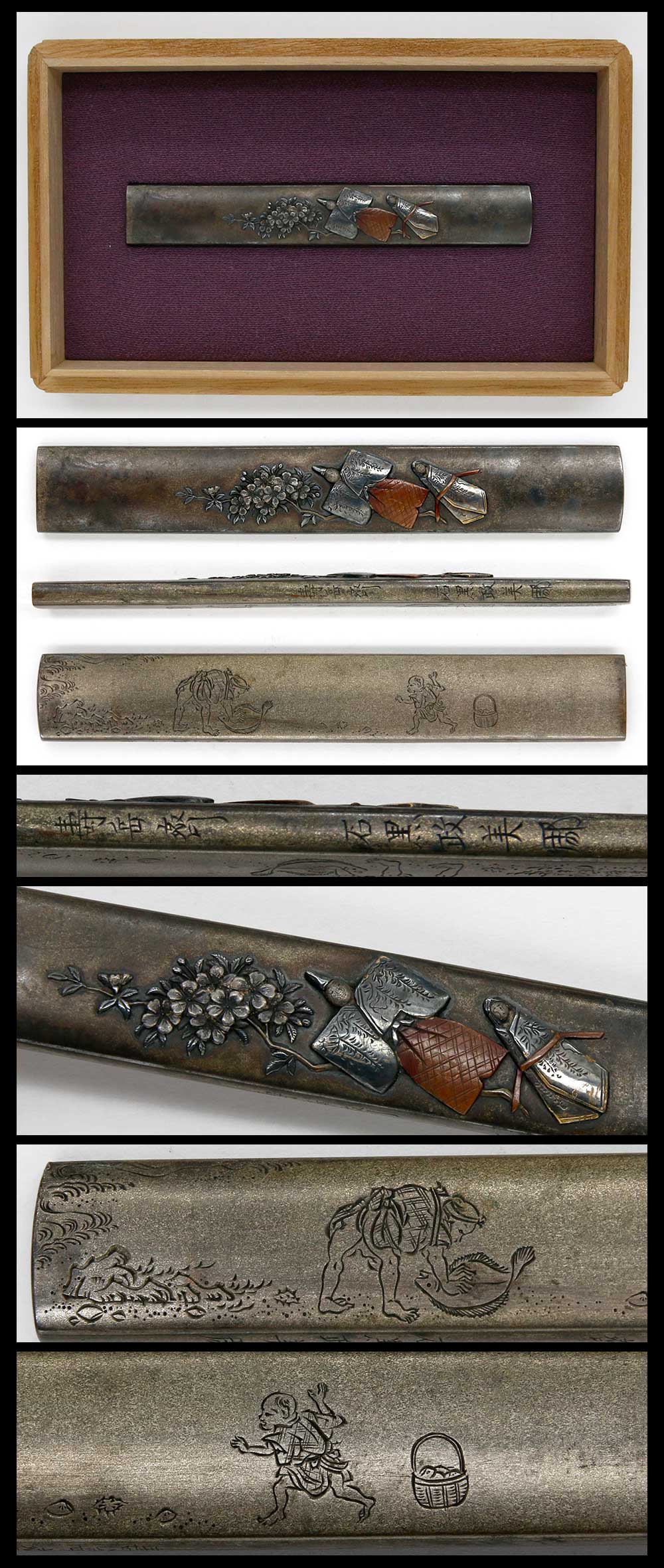
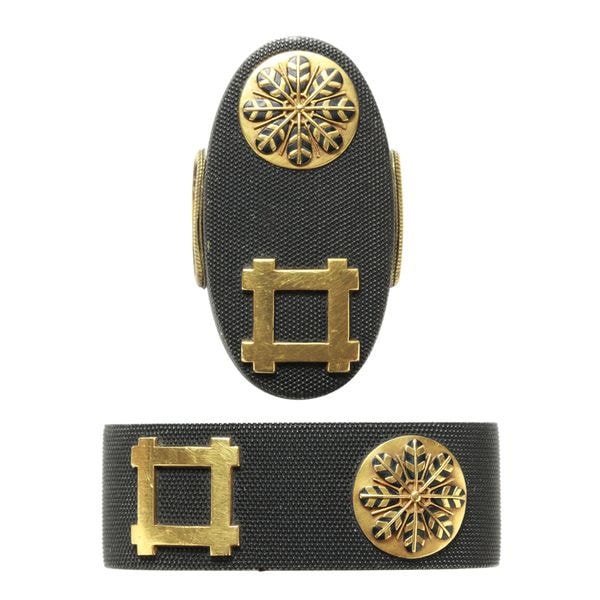
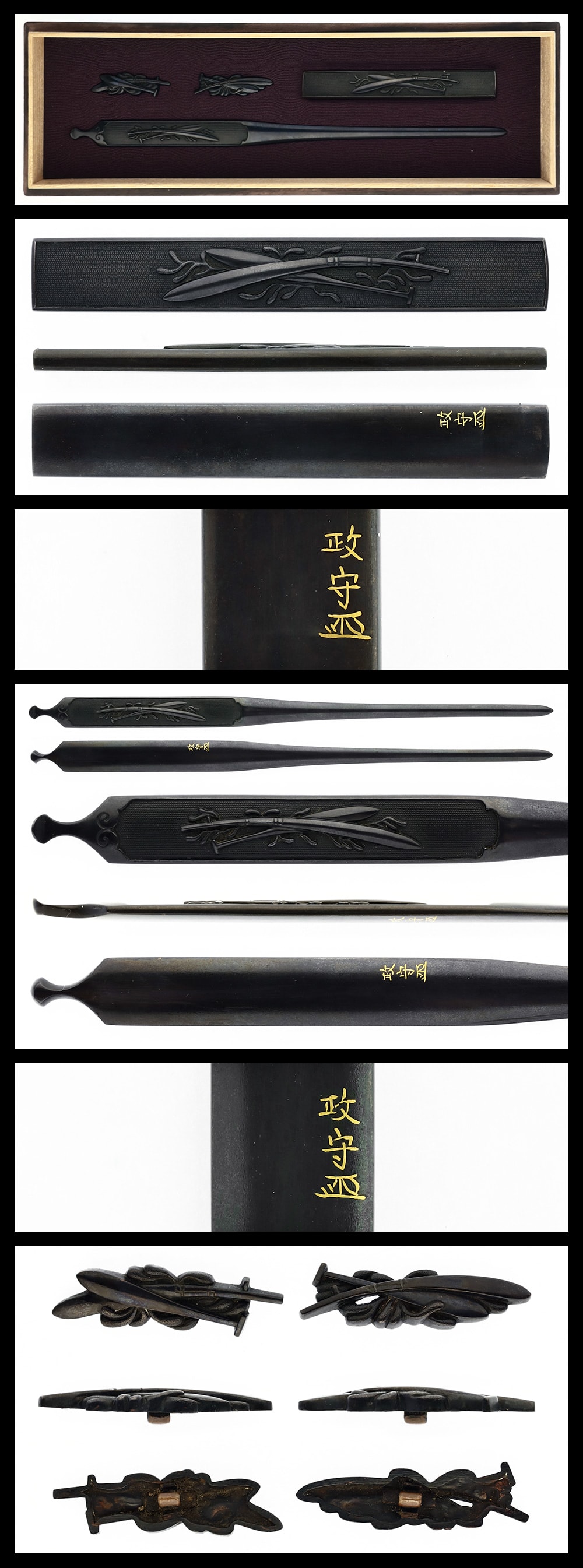
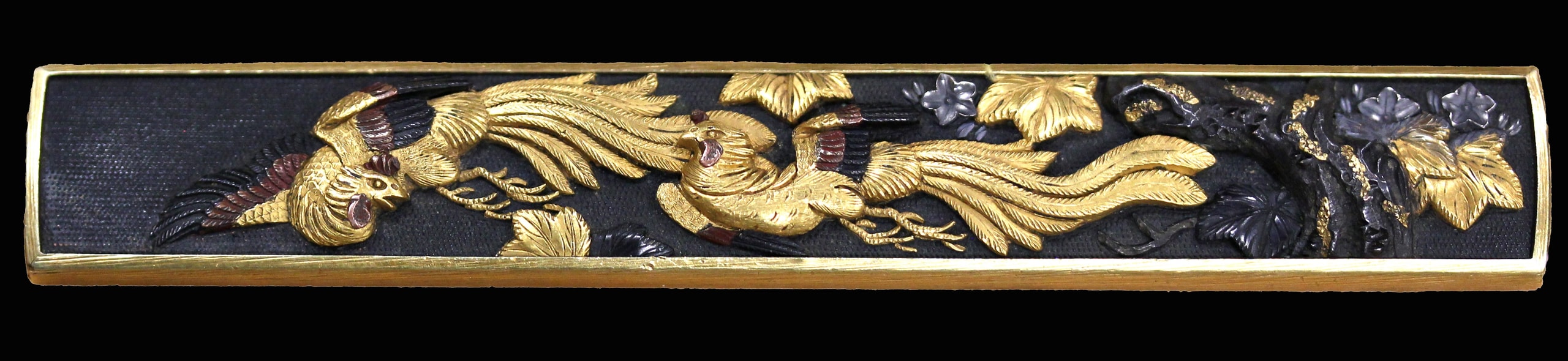
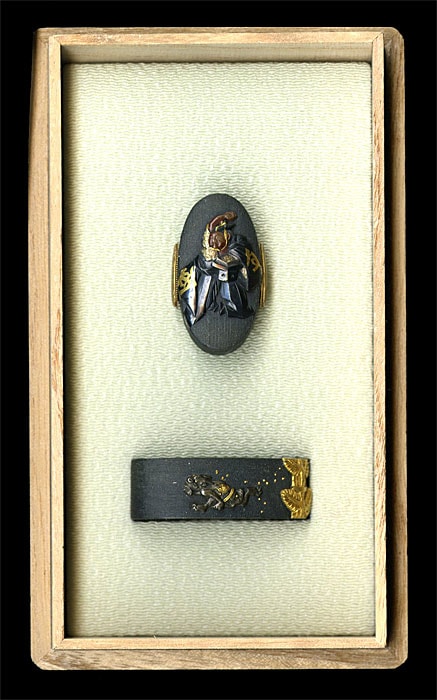
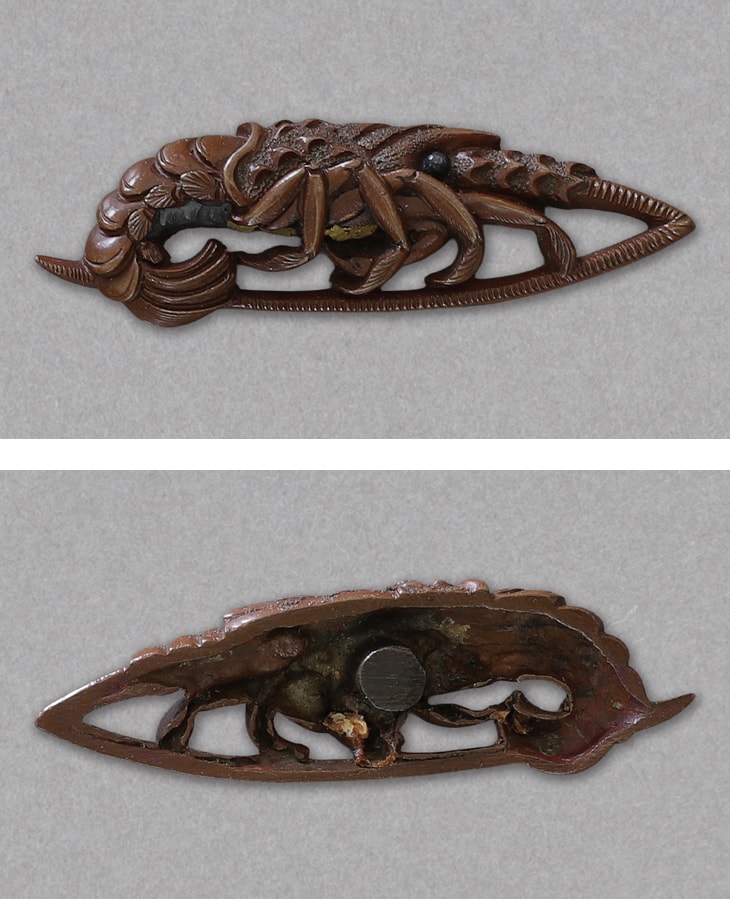
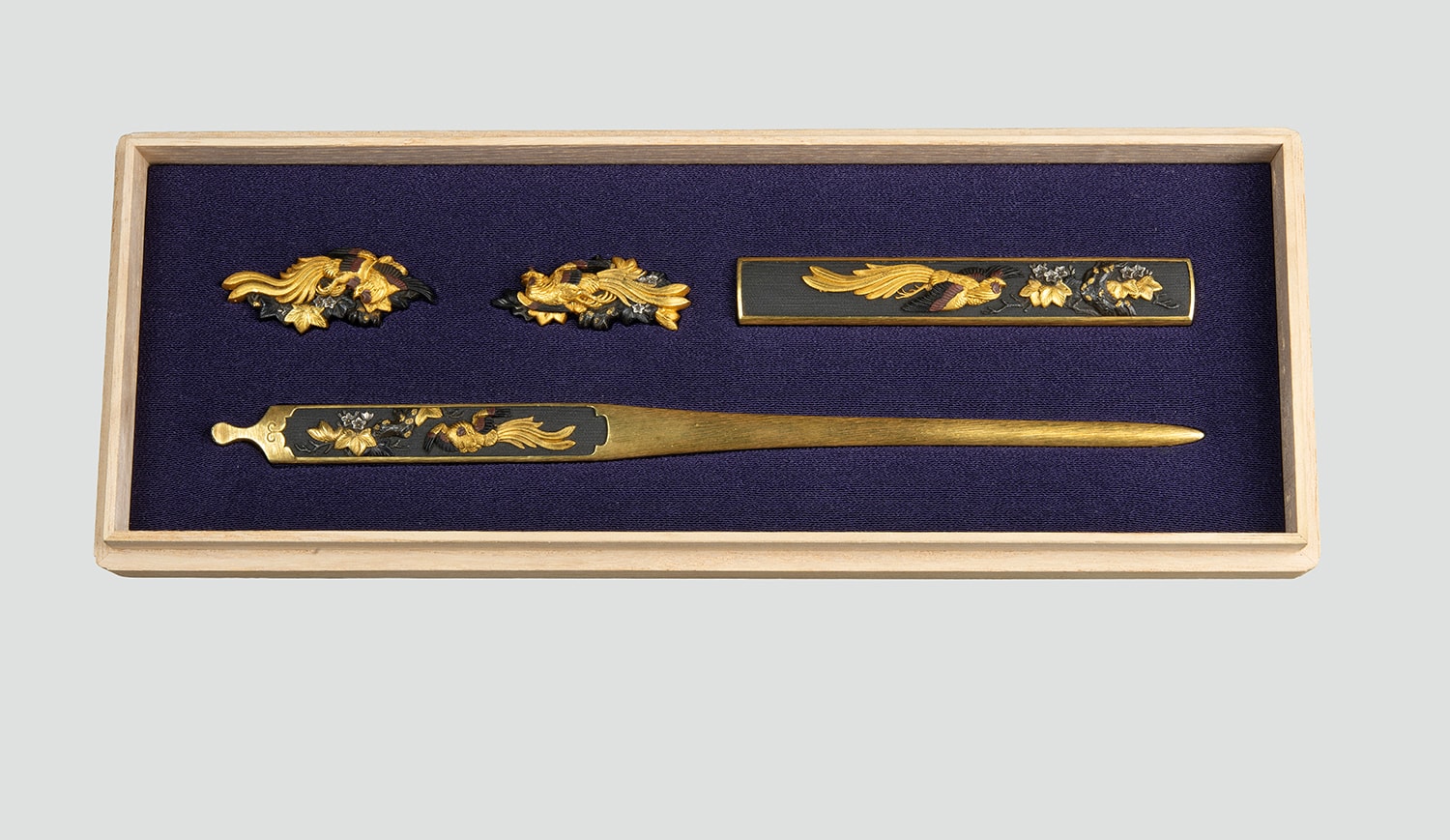
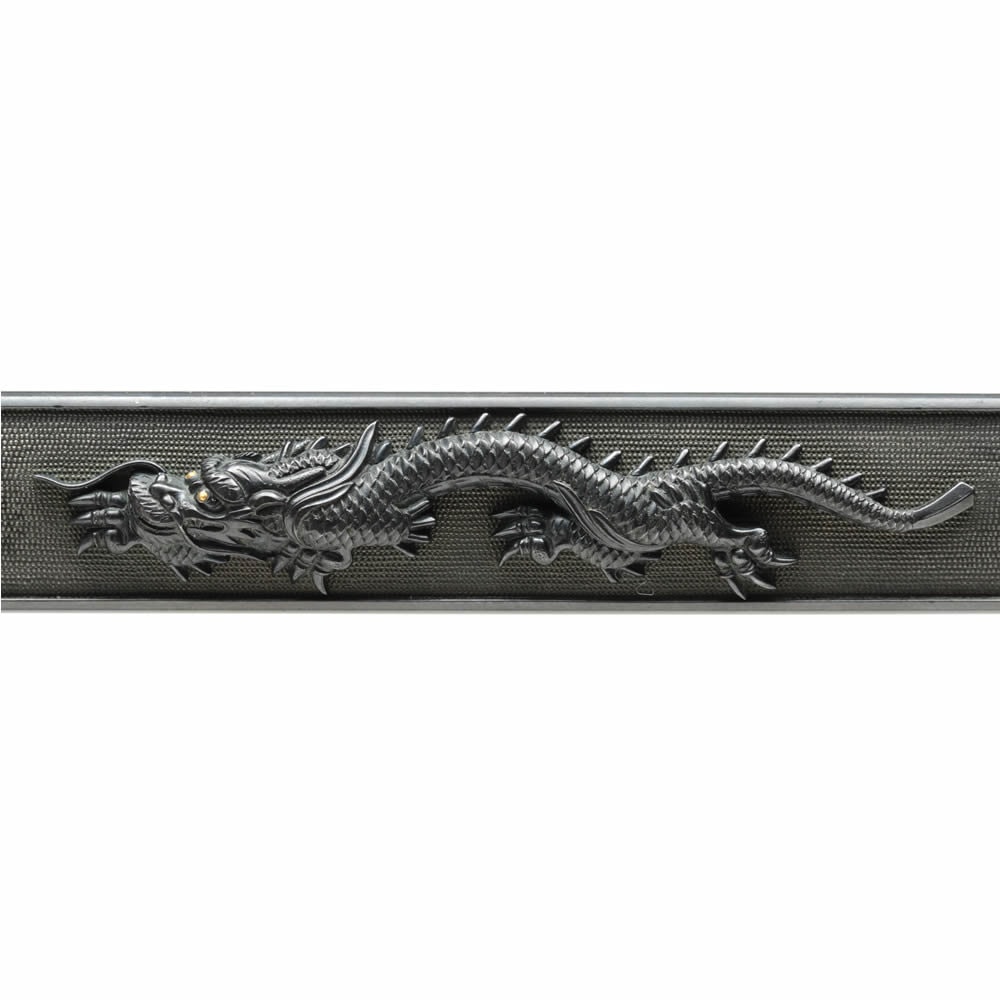
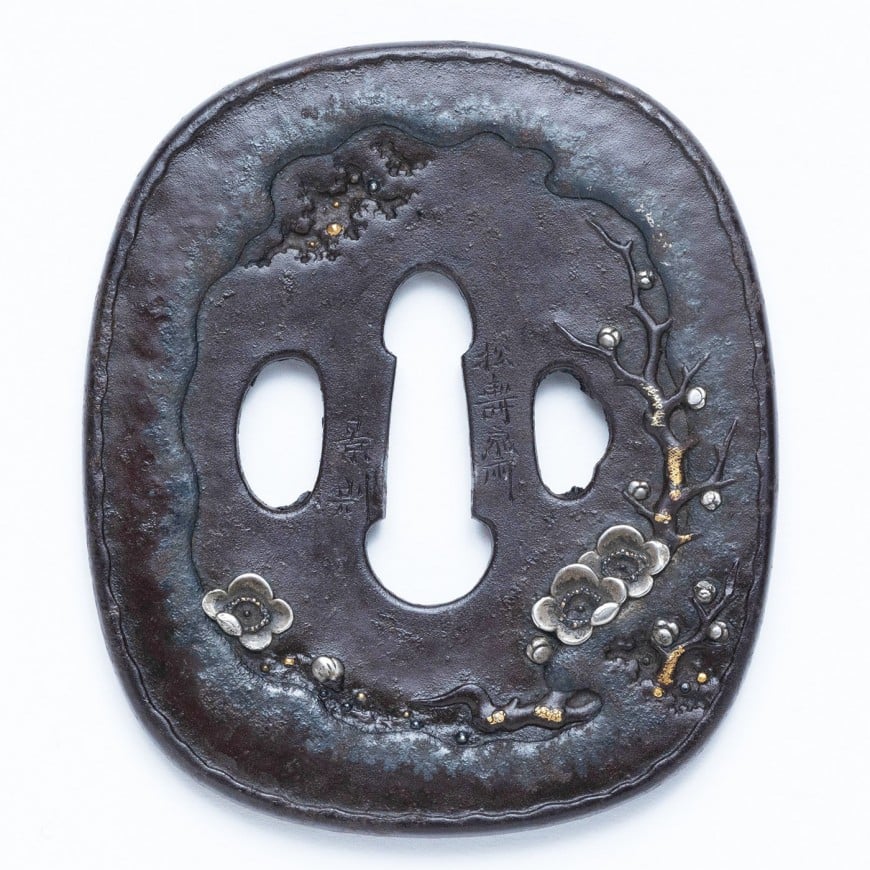
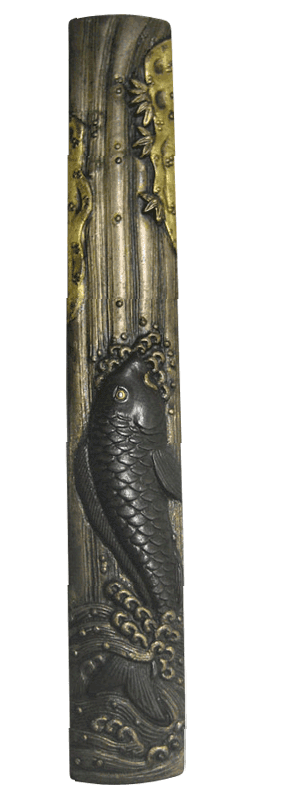
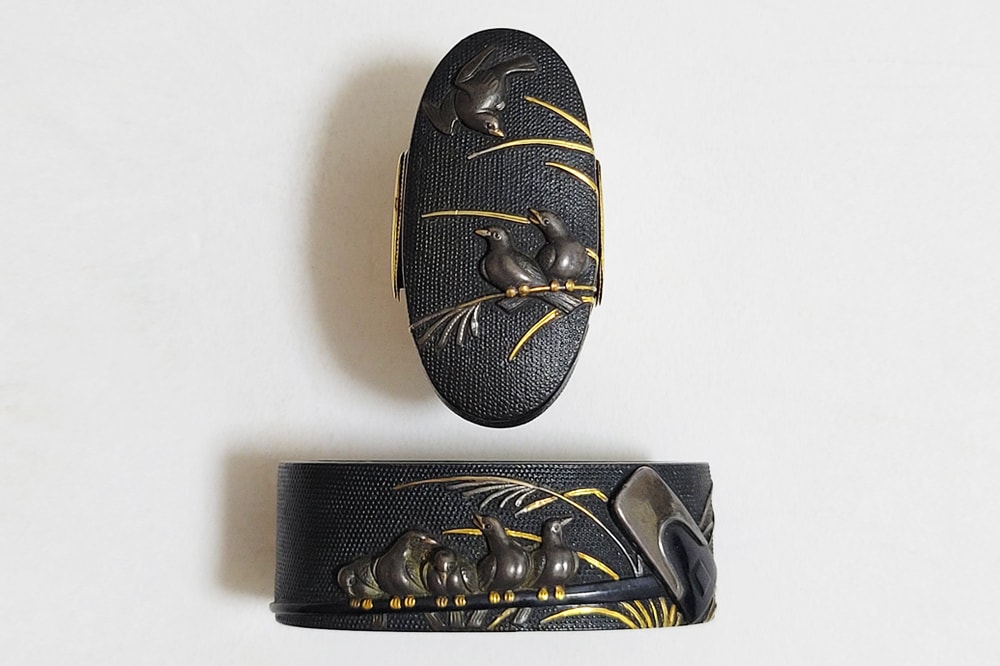
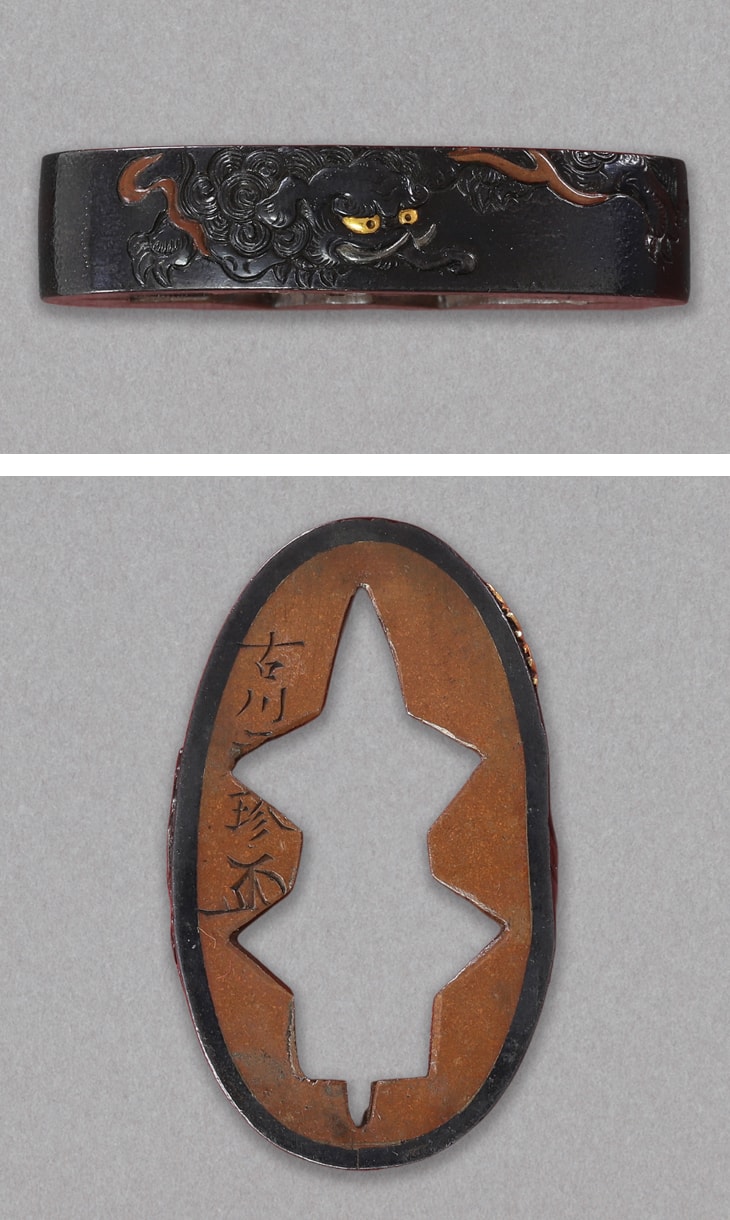
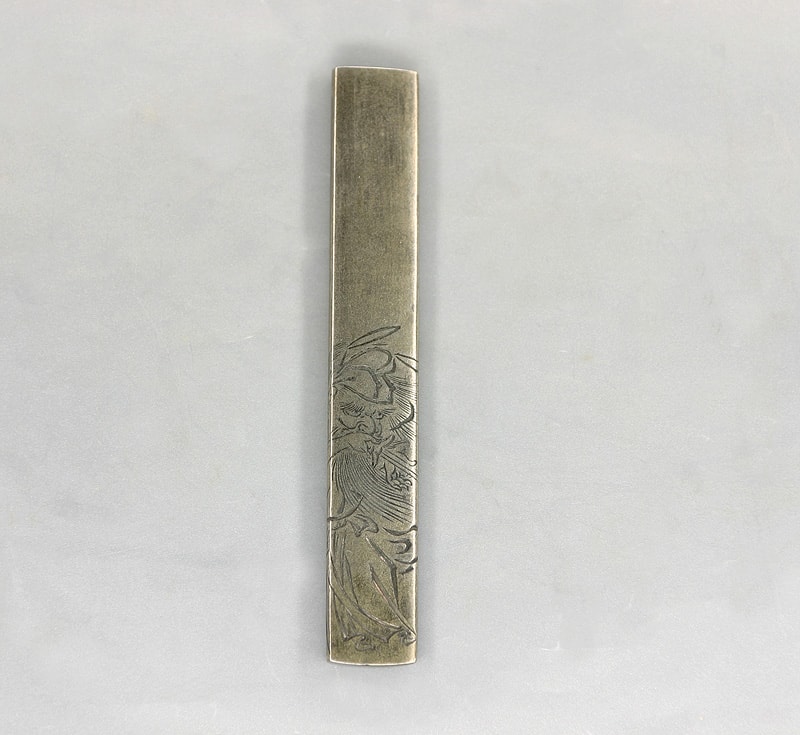
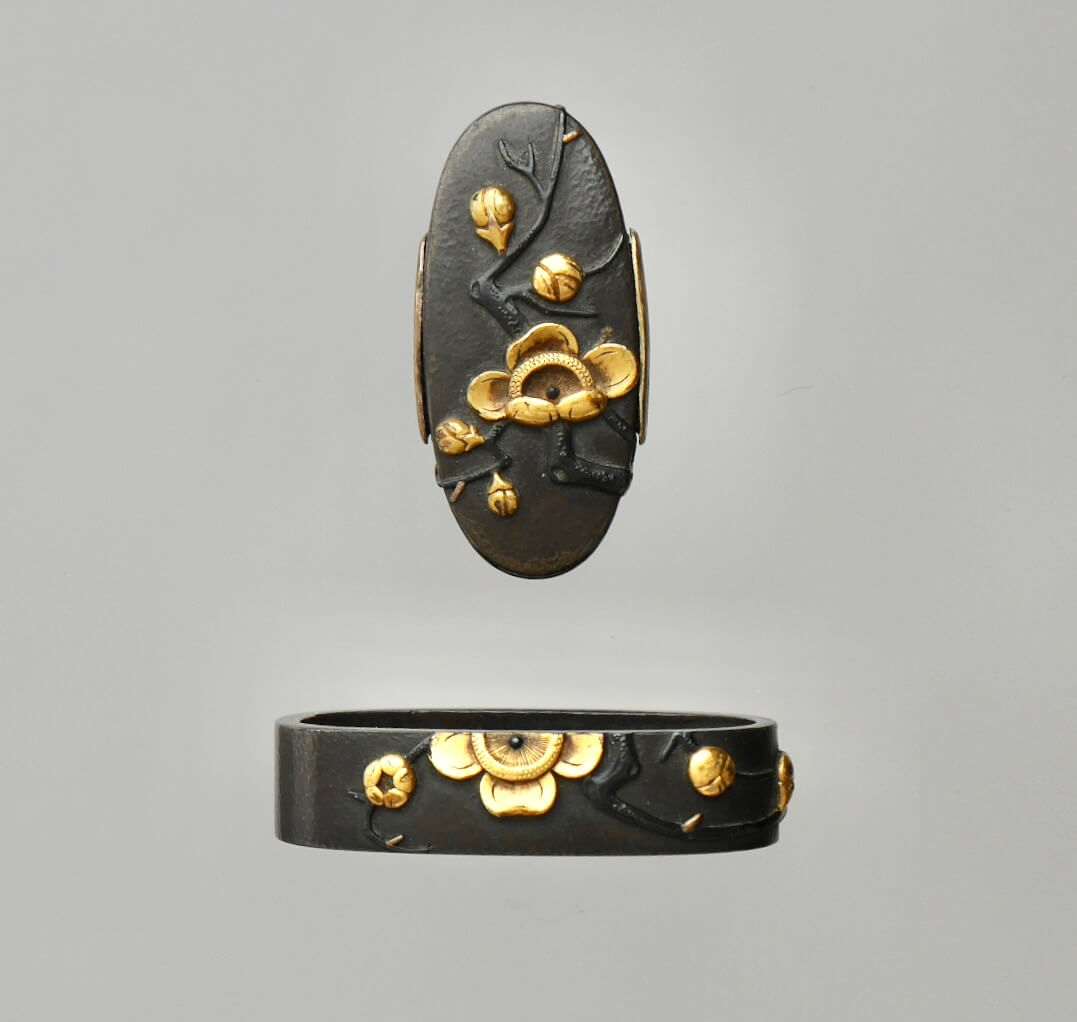
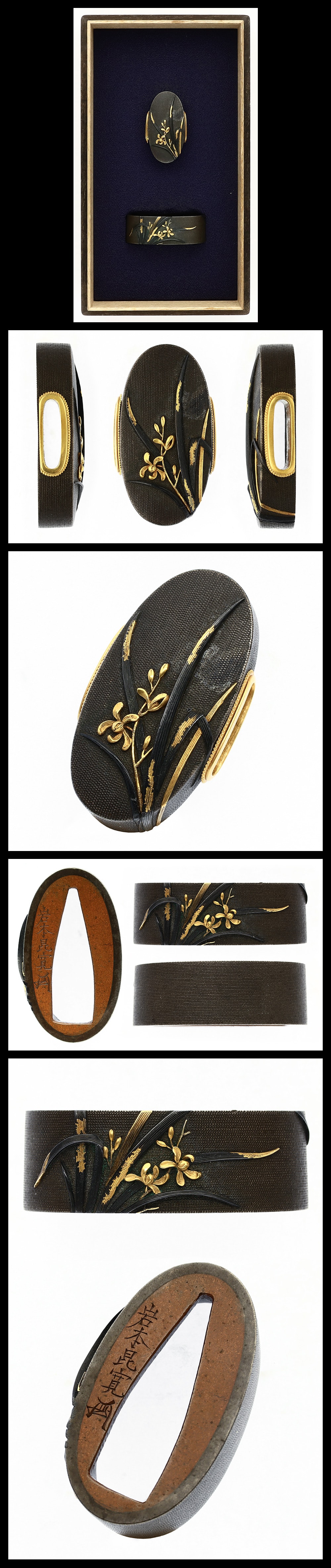
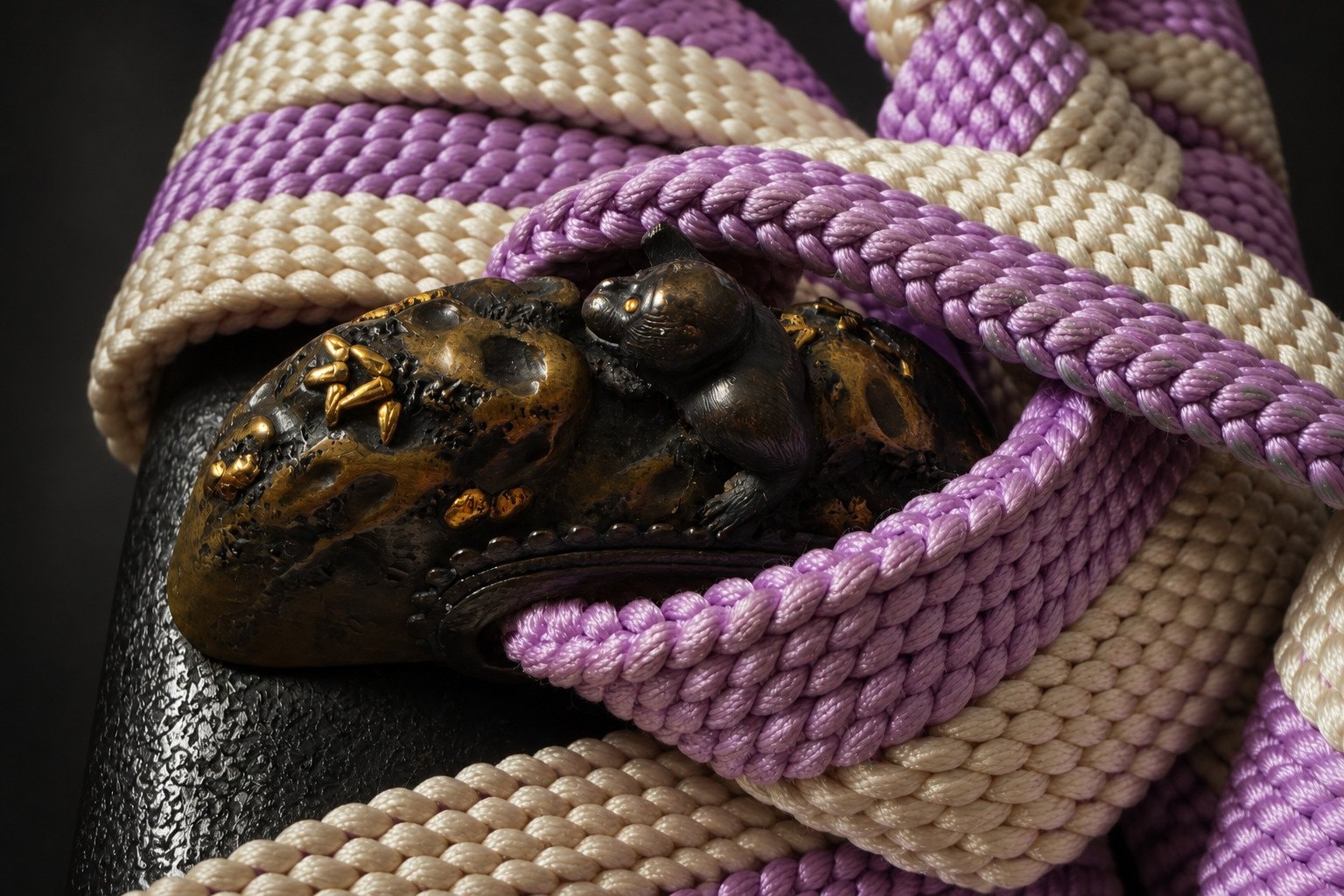
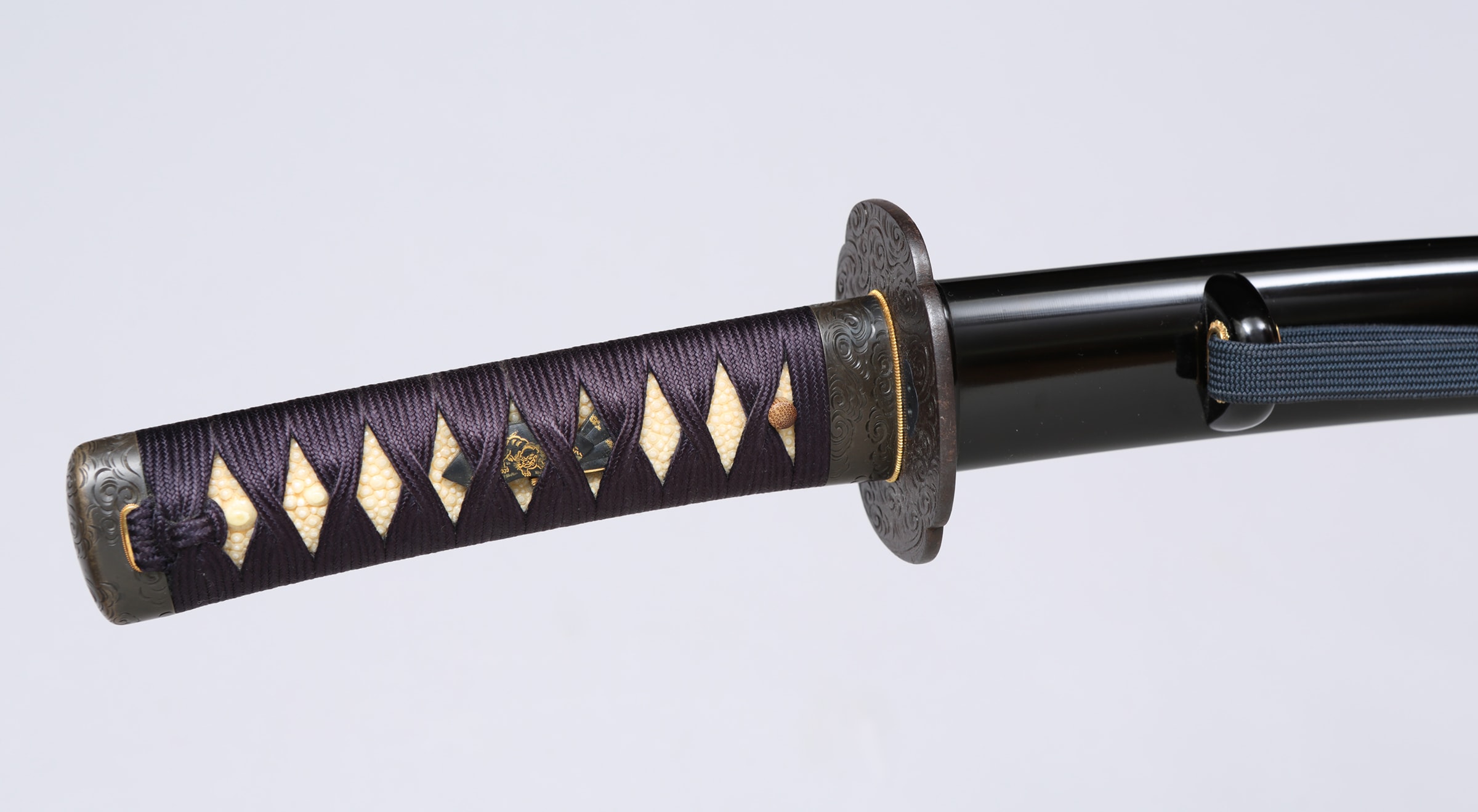
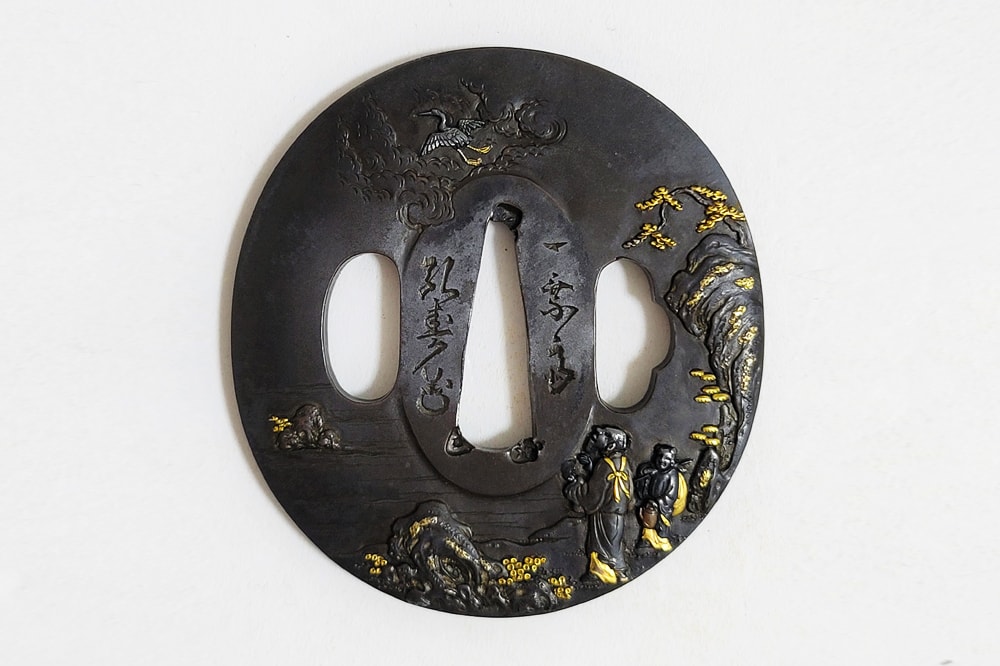
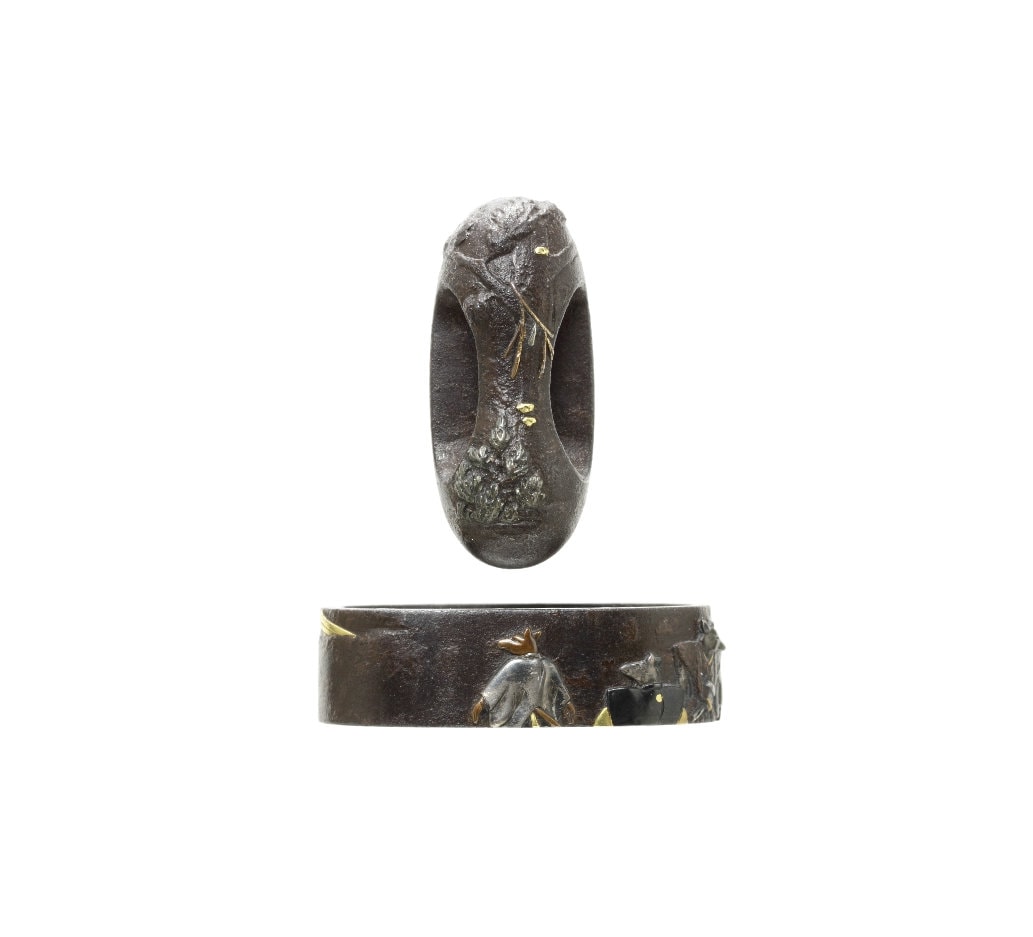
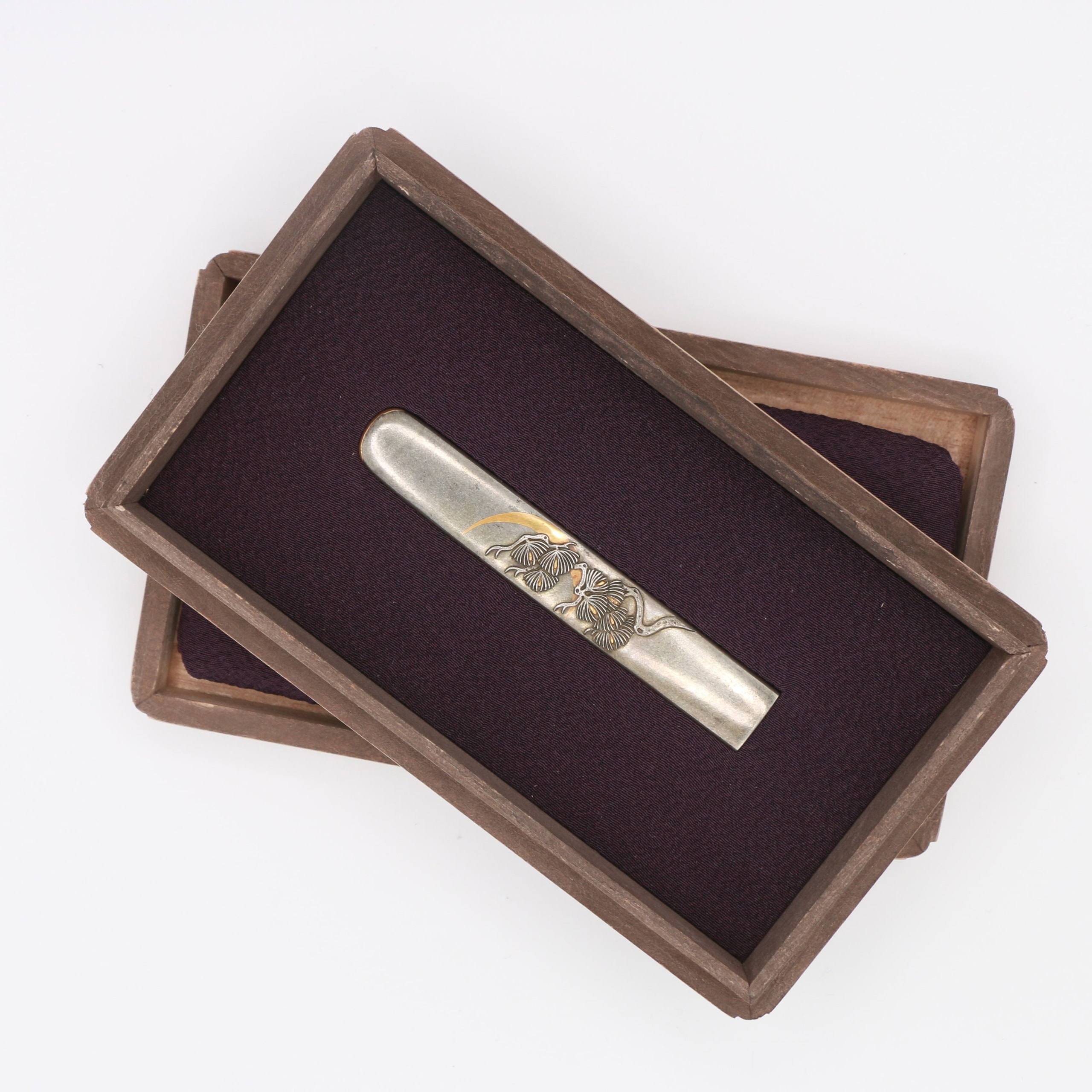
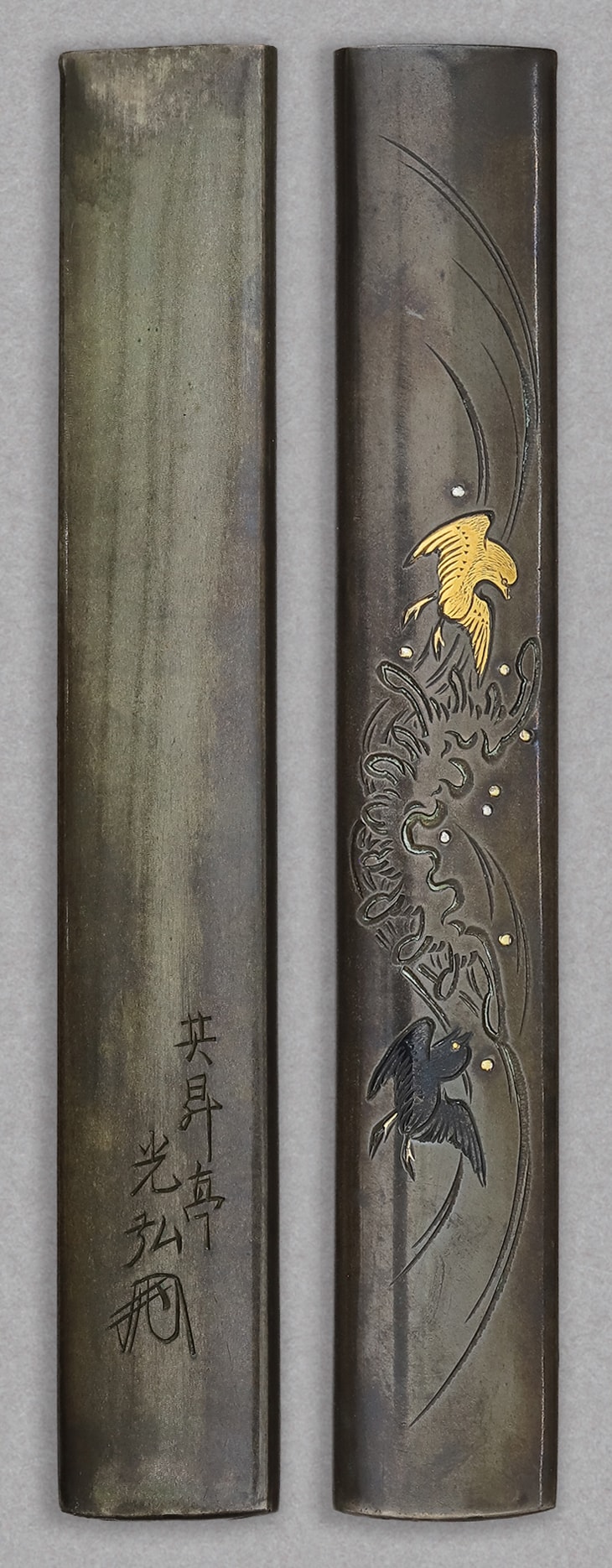
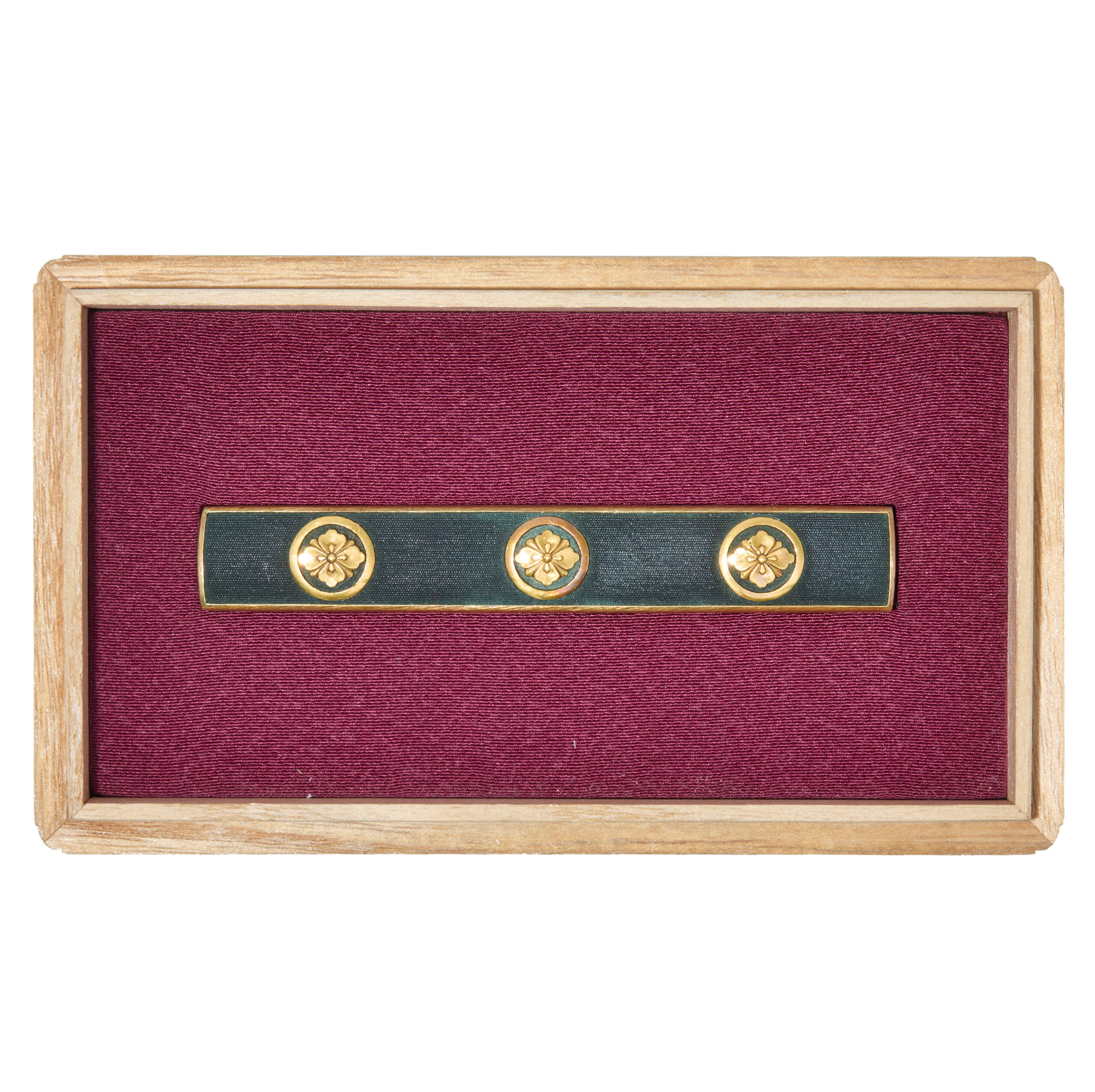
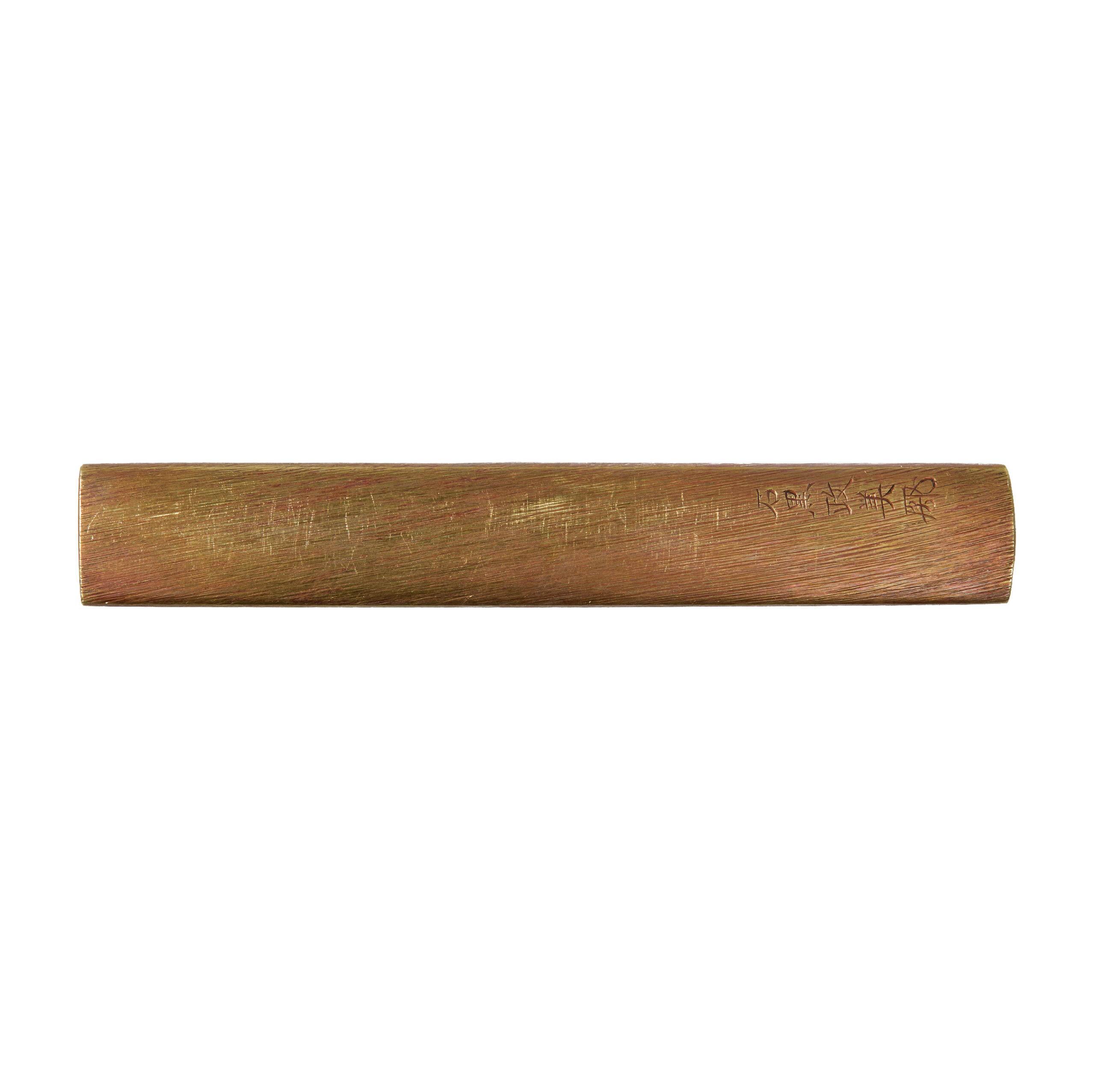
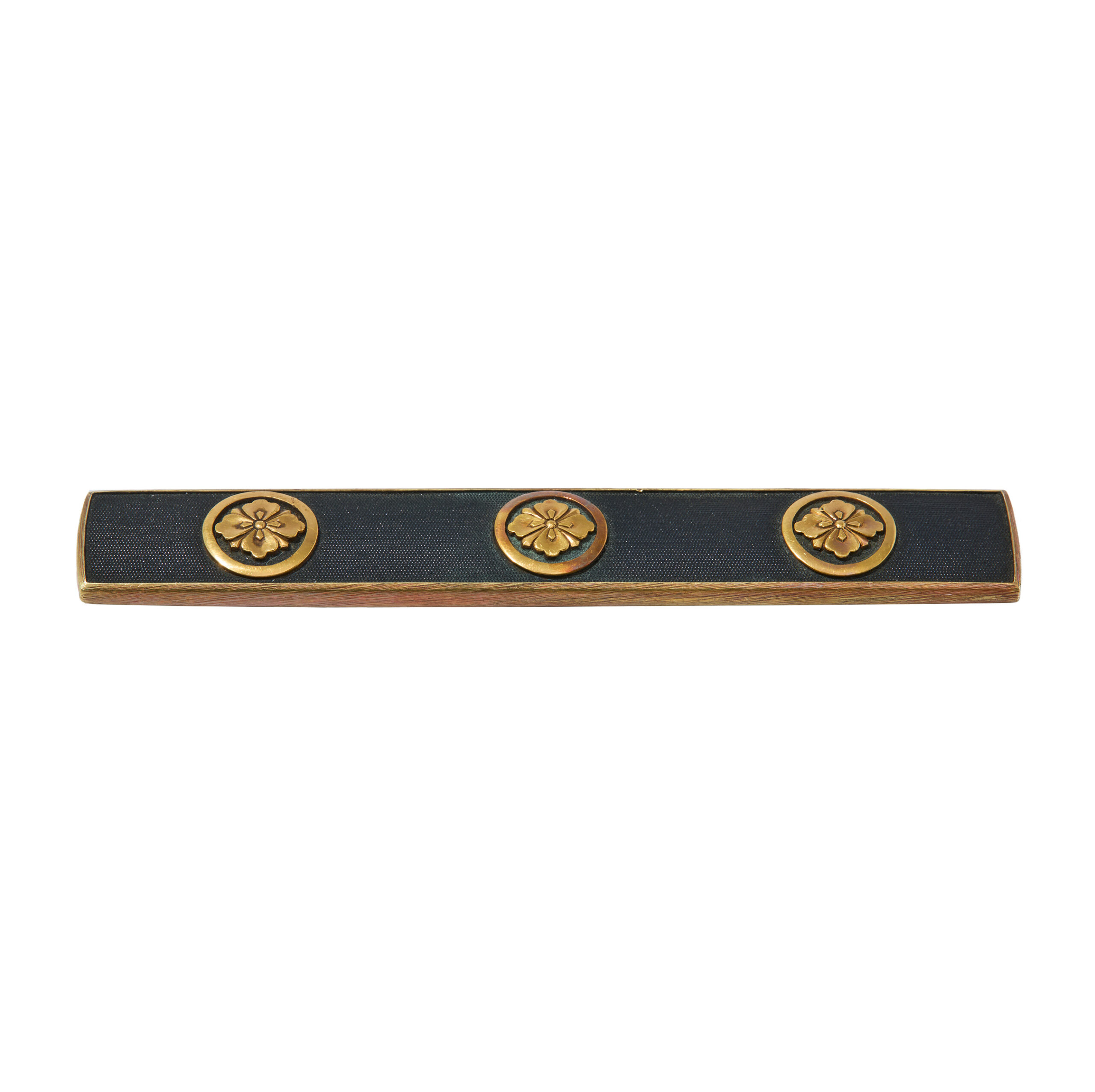
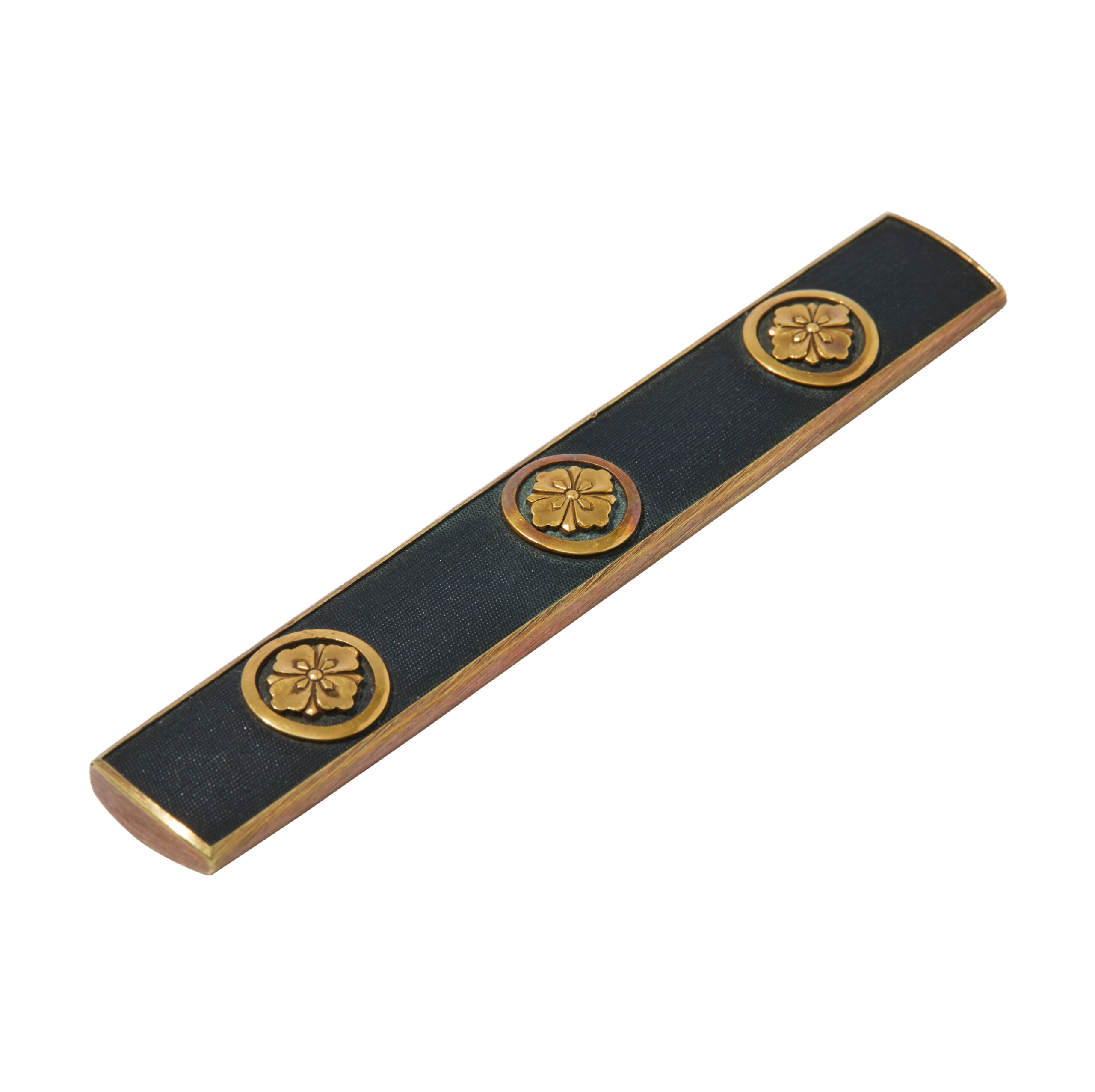
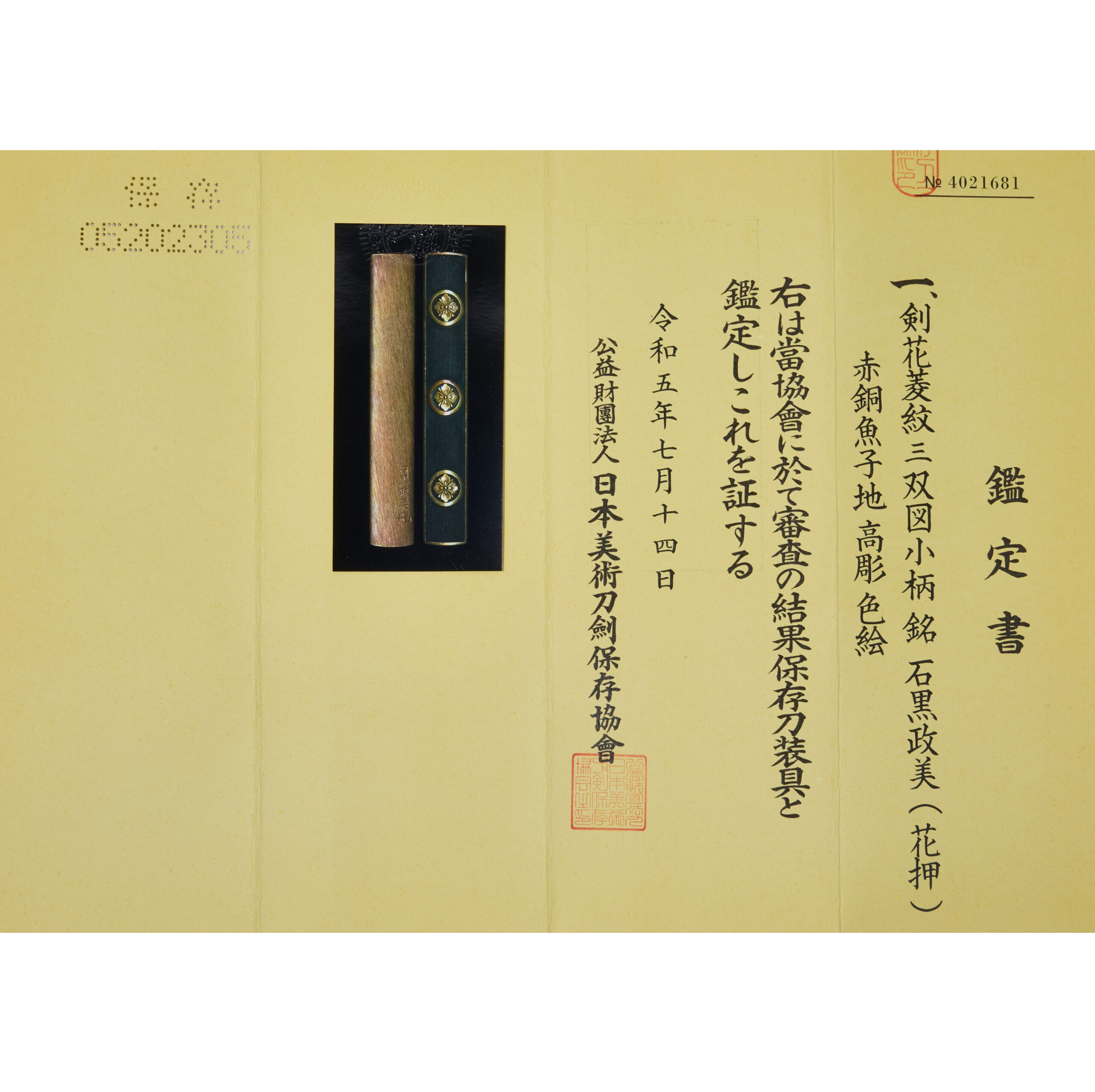
題名: 剣花菱図小柄 作品解説: 本作は、銅に金を加えることで深く美しい黒色を呈する日本伝統の合金「赤銅(しゃくどう)」を地金に用いた小柄です。精緻な「高彫(たかぼり)」に「色絵(いろえ)」による金銀の象嵌を施し、重厚かつ華やかな装飾美を見せています。 画題は、優美な花菱紋に力強い剣を組み合わせた伝統的な家紋「剣花菱(けんはなびし)」です。剣は三種の神器の一つとして古来より武勇の象徴とされ、武士の精神を象徴する意匠として家紋に多く取り入れられてきました。 剣花菱には多くのバリエーションがありますが、幕末の風雲児として知られる勝海舟が用いた「丸に剣花菱」は特に有名です。剣の持つ剛毅さと、花の持つ繊細な美しさが調和した、日本独自の美意識が凝縮された意匠といえるでしょう。 銘には、安永三年(1774年)生まれの名工「石黒政美(いしぐろ まさよし)」の名が刻まれています。政美は当初佐野直義に学び、後に初代石黒政常の門下となりました。同門の政明とともに、江戸横谷派の流れを汲む石黒派の重鎮として活躍した名手です。本姓は岡本、通称は省蔵、号に寿河斎、寿翁斎などがあります。 銘の最後には、作者の真筆であることを証明し、芸術的な自己表現の一環でもある「花押(かお)」が鮮やかに刻まれています。 ※アンティーク品のため、状態については写真にて詳細をご確認ください。 小柄(こづか)とは: 小柄は、刀の鞘の側面に設けられた「小柄櫃(こづかびつ)」に収納される小刀の柄の部分を指します。多くの鍔には、刀身を通す中心穴(なかごあな)の両脇に、小柄や笄(こうがい)を通すための穴が開けられており、刀を抜くことなくこれらを使用できるよう工夫されていました。 もともとは木を削るなどの日常的な用途や、緊急時の武器として用いられましたが、実戦的な武器というよりは、現代のカッターナイフや工作用ナイフに近い役割を担っていました。 泰平の世となった江戸時代には、実用性よりも装飾性が重視されるようになり、金工師たちの手によって美術品としての価値を高めた華美な小柄が数多く制作されました。 刀装具の重要性について: 日本刀の装いである「刀装具」には、鍔、目貫、縁頭など、多種多様な装飾が施されています。武士にとって刀は武器であると同時に、自らのアイデンティティや信念、個性を誇示するための象徴でもありました。現代で例えるならば、スマートフォンのケースやアクセサリーのように、持ち主のこだわりを表現する場であったといえます。 ぜひ細部まで拡大してご覧ください。鉄や銅を主体に、金・銀・青銅などを象嵌した、日本の伝統的な彫金技術の粋を感じ取っていただけるはずです。刀本体を支える「縁の下の力持ち」ともいえる存在ですが、刀装具に精通することこそが、真の「侍の目利き」への第一歩といえるでしょう。 鑑定書: 日本美術刀剣保存協会(NBTHK) 保存刀装具鑑定書(第〇〇号) 公益財団法人日本美術刀剣保存協会は、現代日本において最も権威ある刀剣鑑定機関の一つです。本作は令和五年(2023年)七月十四日に、美術的・歴史的価値の高い「保存刀装具」として合格・認定されています。
Certificate reading — 銘 石黒政美(花押)
 NihontoWatch
政美
寛政〜文久(1774-1862)
在銘
保存 (NBTHK)
町彫 · 武蔵
現在4点販売中
石黒政美は、江戸時代後期に活躍した刀装具師である。その現存する年紀作から安永三年(1774年)に生まれ、通称を庄蔵といい、寿岳斎・寿霍斎また寿翁斎・寿翁などと号した。はじめ柳川派の佐野直好(初銘直美)に学び、のち石黒家の初代政常に師事したところから、両師の名を一字ずつ貰って政美と名乗った。石黒派は、石黒政常を長とする横谷・柳川系列の中の有力な一派であり、政美は石黒政常の門人で、名工の誉れが高く、同門の政明とは双璧と称される上手である。政美には「三代目石黒・政美」[[c:1]]と銘した作が遺存することから、恐らく政美は二代政常歿後、同家の三代目を継承したものと推せられる。また、島津家の抱工となって活躍した。
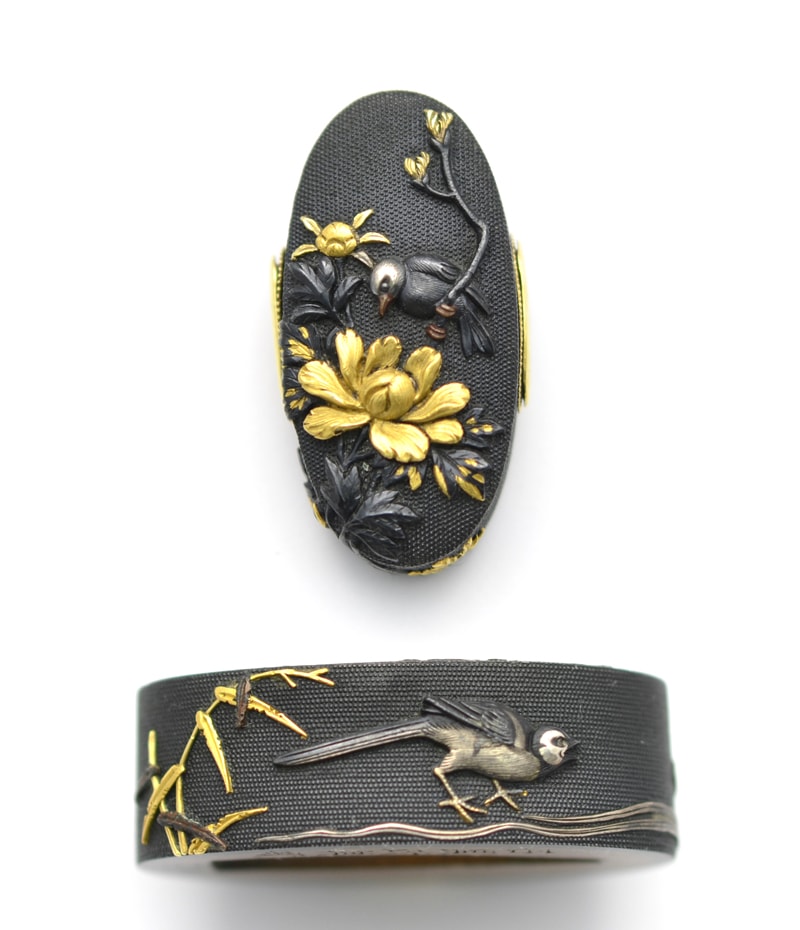
石黒派の作風は時代の好尚を端的にあらわして成功しており、花鳥を主題とした濃艶な絵画的世界を高彫色絵で展開している。その作風は同派の嗜好に即し、花鳥を主題とした華麗な絵画的世界を高彫色絵で展開している。多くは赤銅魚子地に高彫据文、色絵の彫法で華麗に展開しており、鳥の中でも鷹は初代政常をはじめ一門のお家芸であり、孔雀は政美、錦鶏鳥は政明が得意としている。色金は金を主に、銀、朧銀、赤銅と多彩であるが、緋色銅を効果的に用いているところが政美はじめ一門の上手達の見どころである。ただし、常に華美な作ばかりでなく、四分一磨地に高彫色絵の技法をもって晩秋の風景を絵画的に描いたものや、比較的少ない色金で龍虎を仕上げた作品も遺されており、その表現の幅広さを示している。
石黒政美の作品は、その緻密な彫技と豪華な彩色において高く評価されている。「まさに政美の本領が発揮された逸品である」[[c:2]]と評されるように、石黒派の特色をよく顕示したものであり、政美快心作の一つである。総じて濃麗な構図と彫技を展開させているが、色絵は金一色のみとして画品を高めている作や、画品を高めるため裏面は空間を大きくとって流水を配し、画面に奥行と横への広がりを計るなど、構図にも細心の注意をはらっている作も見られる。また、「三代目」と切った銘文や「七子 松本正脩(花押)」[[c:3]]の添銘は、同工同派の研究上貴重な資料となる。政美の作品は、石黒派の伝統を受け継ぎつつ、独自の表現を追求したものであり、江戸金工史上における重要な位置を占めている。
政美の位置づけを、日本刀全体および伝統・時代・時期ごとに示します。各位(随一・屈指・有数・著名)は、NBTHK および文化庁による指定に加え、三作や名物帳などの歴史的栄誉を加味したものです。
各項目を選ぶと評価方法が表示されます。
町彫 · Edo
現在19点販売中
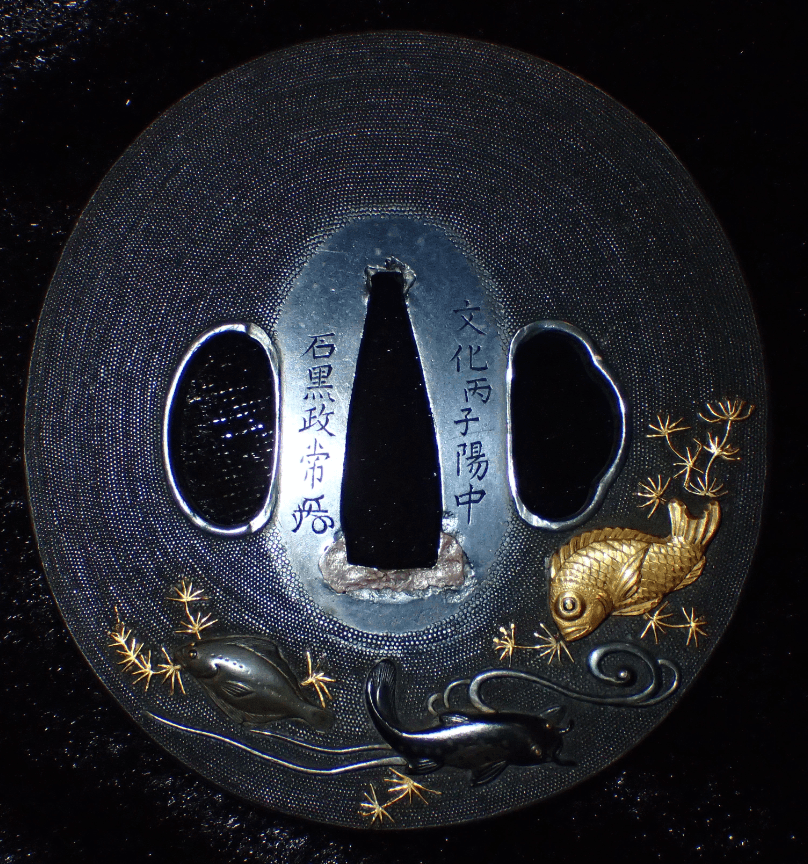
石黒派は、江戸時代後期に江戸で隆盛した町彫の一流派である。開祖の石黒政常は宝暦十年に生まれ、柳川直政の門人加藤直常に学び、のちに直政にも師事して独立した。両師の名から「政」と「常」の一字ずつを取って政常と名乗ったと伝えられる。日本橋の呉服町に住し、雅号を東嶽子(のち東岳子)といい、文政十一年に没した。その門下からは政美、政明をはじめ、是常、政英、政広ら多くの上手が輩出し、子の是常、政美の子で是常に学んだ是美らへと技が受け継がれて、同家は明治まで代々栄えた。横谷・柳川系列に連なりながらも、政常が柳川家の作風を脱し、花鳥図に独自の工夫を凝らして一派の作風を確立した点に、石黒派の起源がある。 石黒派の作風は、その時代の好尚を端的にあらわして成功しており、花鳥を主題とした濃艶な絵画的世界を高彫色絵で展開する点を一門共通の標識とする。多くは赤銅魚子地を高彫とし、金を主に銀、朧銀、素銅、四分一、茶四分一、緋色銅など多彩な色金を駆使した色絵を施す。なかでも緋色銅を効果的に用いるところが、政美をはじめ一門の上手達の見どころである。画題としては鳥を得意とし、鷹などの猛禽は初代政常以来のお家芸であり、孔雀は政美、雉子や錦鶏鳥は政明が得意とした。政常の彫は実直細密で磨きも綺麗に気品があり、空間を巧みに生かした清澄な気韻に満ちる。これを承けて政美は写実的な構図に細心の注意をはらい、裏面に空間を大きくとって流水を配するなど画面に奥行を計り、政常と双璧と称される政明は写生に徹した描写と一段と華やかな色絵を個性とした。是常は老梅の幹や猛禽の姿を力強く表現し、平肉を貶して遠近感を出す工夫を見せ、是美は緋色銅・銀・素銅を巧みに用いた色彩感覚に秀でた。華麗でありながら卑しさに陥らぬところに、一門に共通する技量の高さがある。 石黒派の作品は、町彫の雄として豪華精巧に仕上げた優品として高く評価されている。政常の作は華麗典雅のなかに武士好みの勇猛さを内包し、後藤家の家彫を研究して我物とした作も見られる。政美の作は緻密な彫技と豪華な彩色において本領を発揮した逸品とされ、政明の作は花鳥図を金工技術の限りを尽くして展開し、見る者に驚きを与える魅力をもつ。是常の作は壮厳華麗で堅実な彫法を示し、石黒派を研究する上で貴重な作とされ、是美の作は細緻な鏨法と豪華な色絵を見事に融合させた会心の作と評される。錦鶏鳥に見られる華麗さは当時流行の錦絵にも通じるものがあり、一門が日本人好みの花鳥図を高い品格をもって展開した点に、石黒派の独壇場たる所以がある。かくして石黒派は、横谷・柳川の古典を受け継ぎつつ、これを濃麗な絵画的世界へと昇華させた一流として、江戸金工史上に確固たる位置を占めている。 詳しく見る →
銘が正しい、または無銘でも年代・流派を指摘でき、美術工芸的価値が認められる、保存に値する真正の刀装具と鑑定されたものです。
日本美術刀剣保存協会(NBTHK)は、1948年に設立され、文化庁の監督を受ける公益財団法人で、東京・刀剣博物館に本部を置きます。専門の審査員が出品作を直接審査し、美術的・歴史的価値に応じた鑑定書を発行します。NBTHKの鑑定書は、日本刀および刀装具の真正性を示す最も広く認知された基準です。
NBTHK公式サイトReturns/exchanges limited to defects caused by shipping (except willful misconduct or gross negligence by the company); customers must contact within 72 hours of receiving the product.
¥480,000