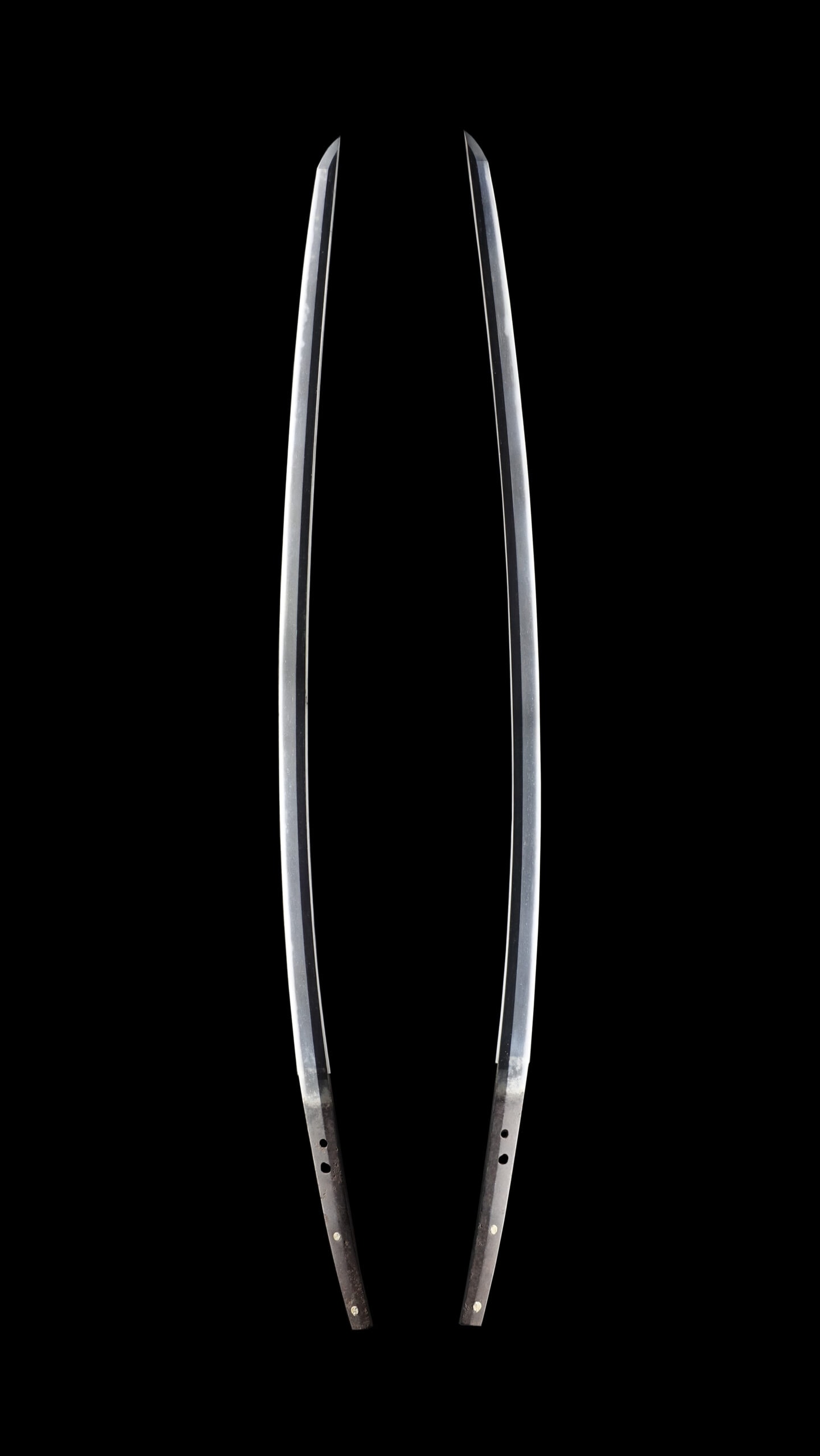
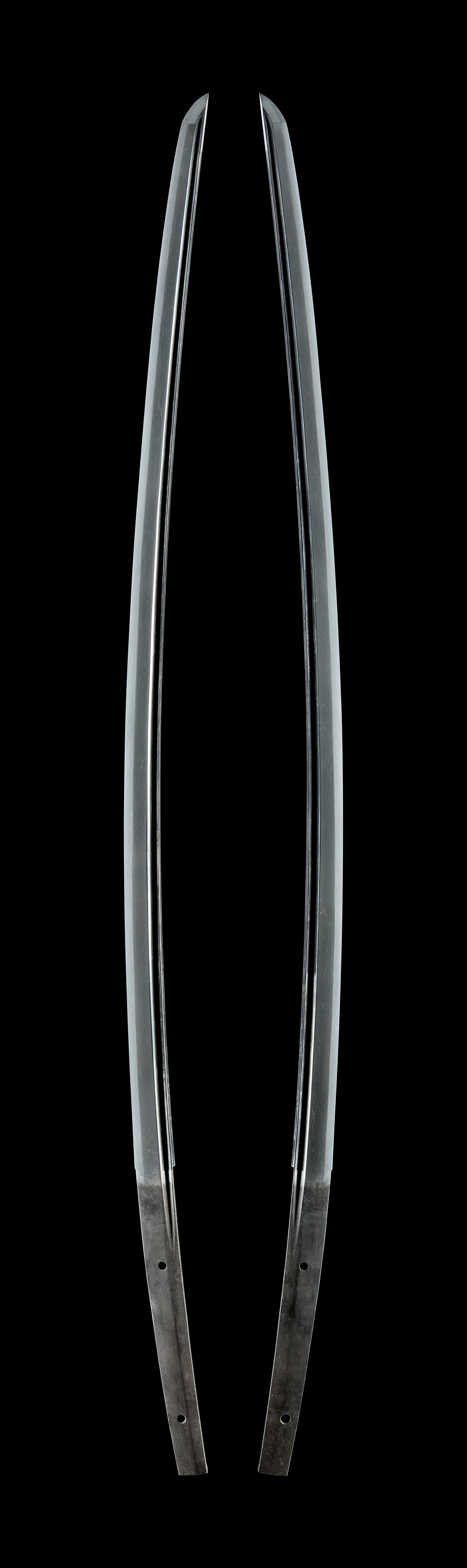
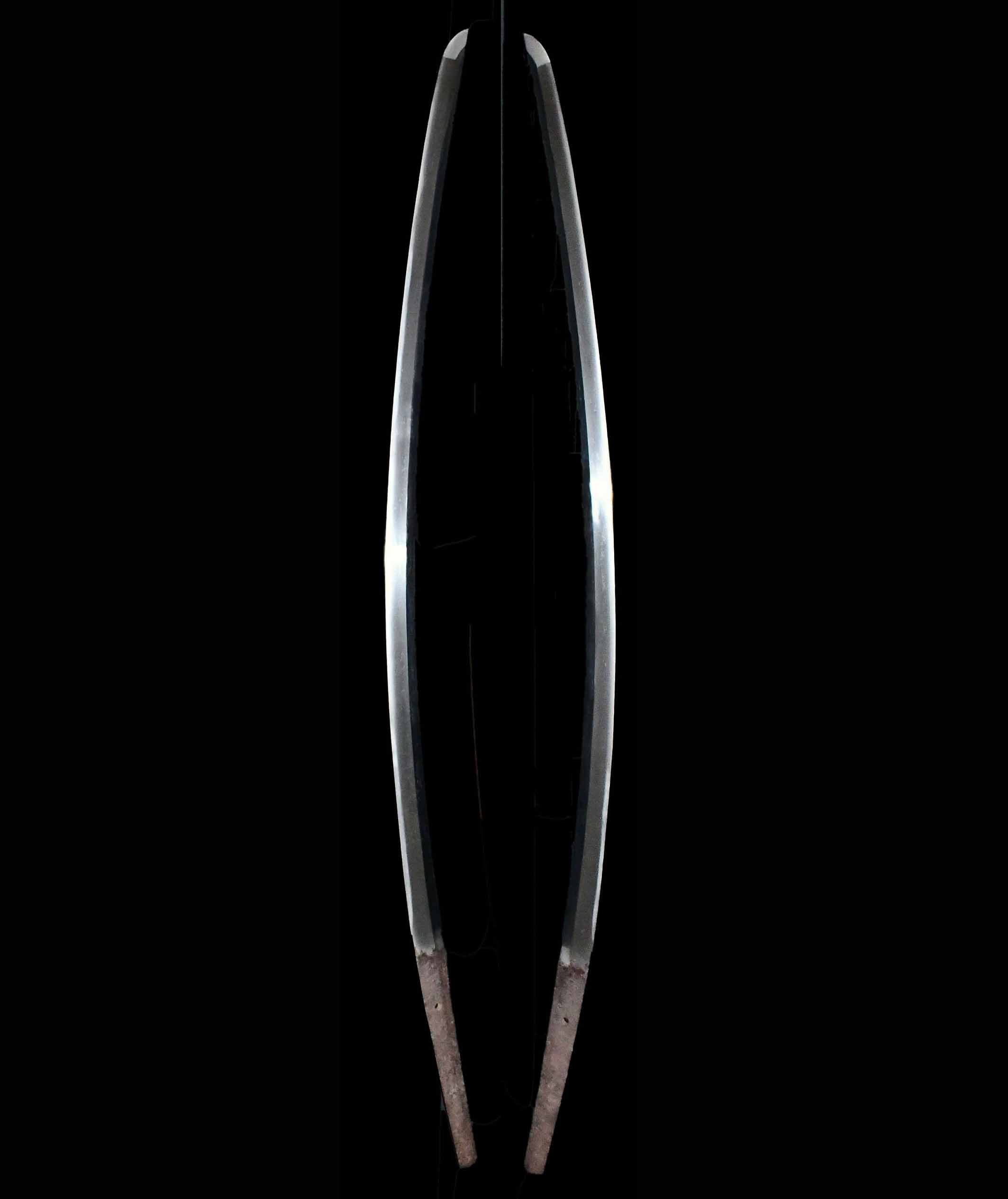
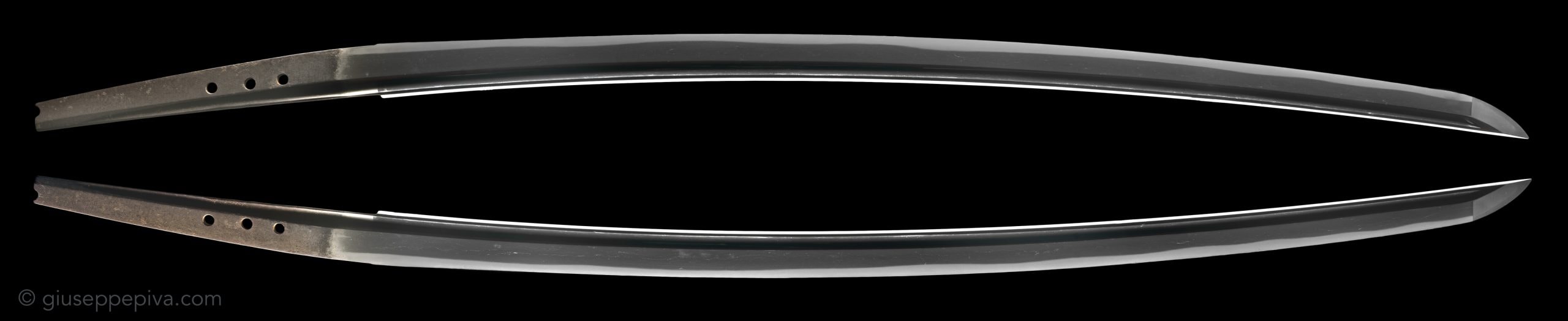
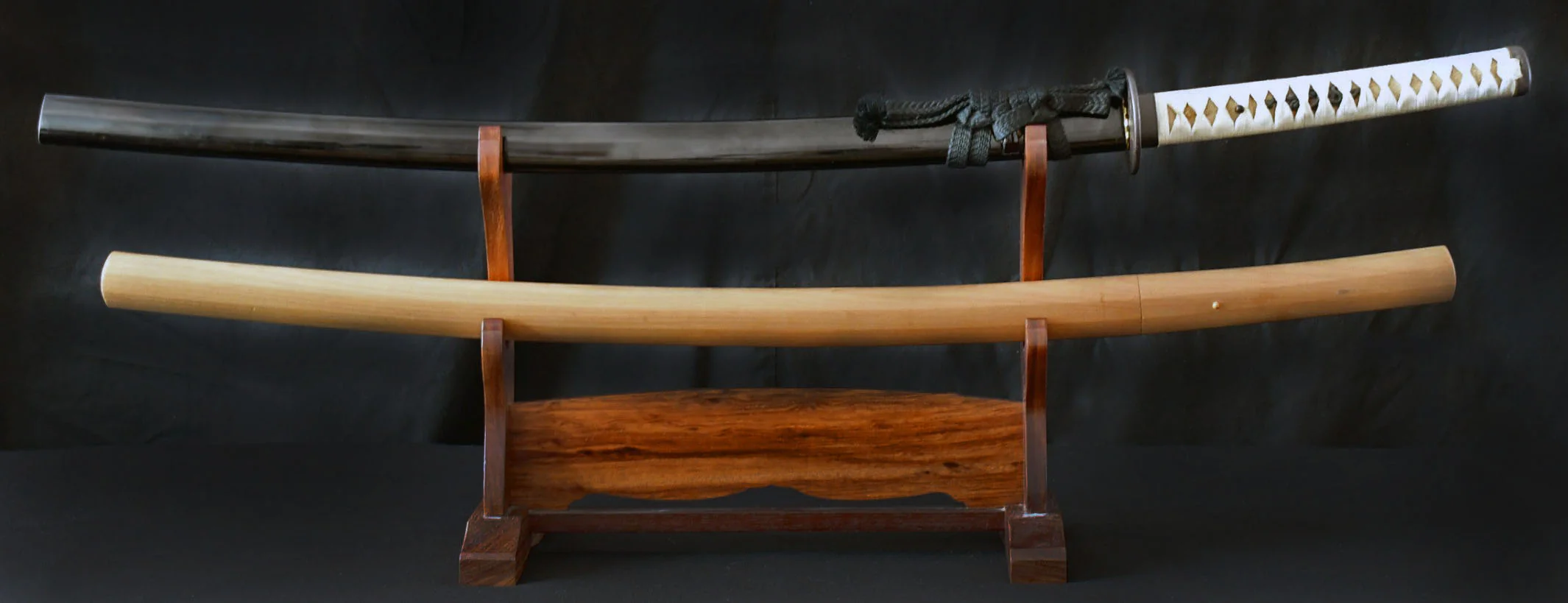
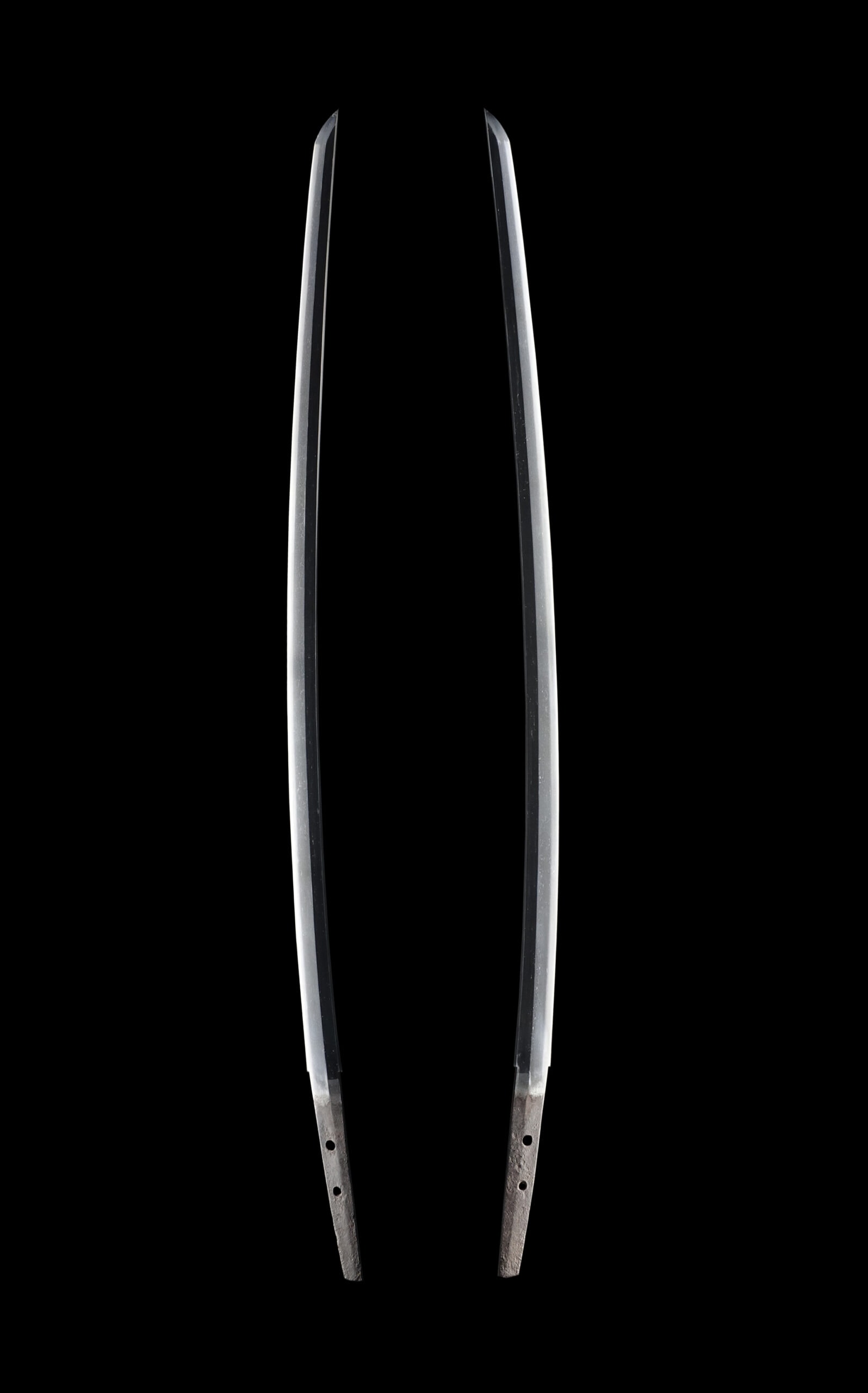
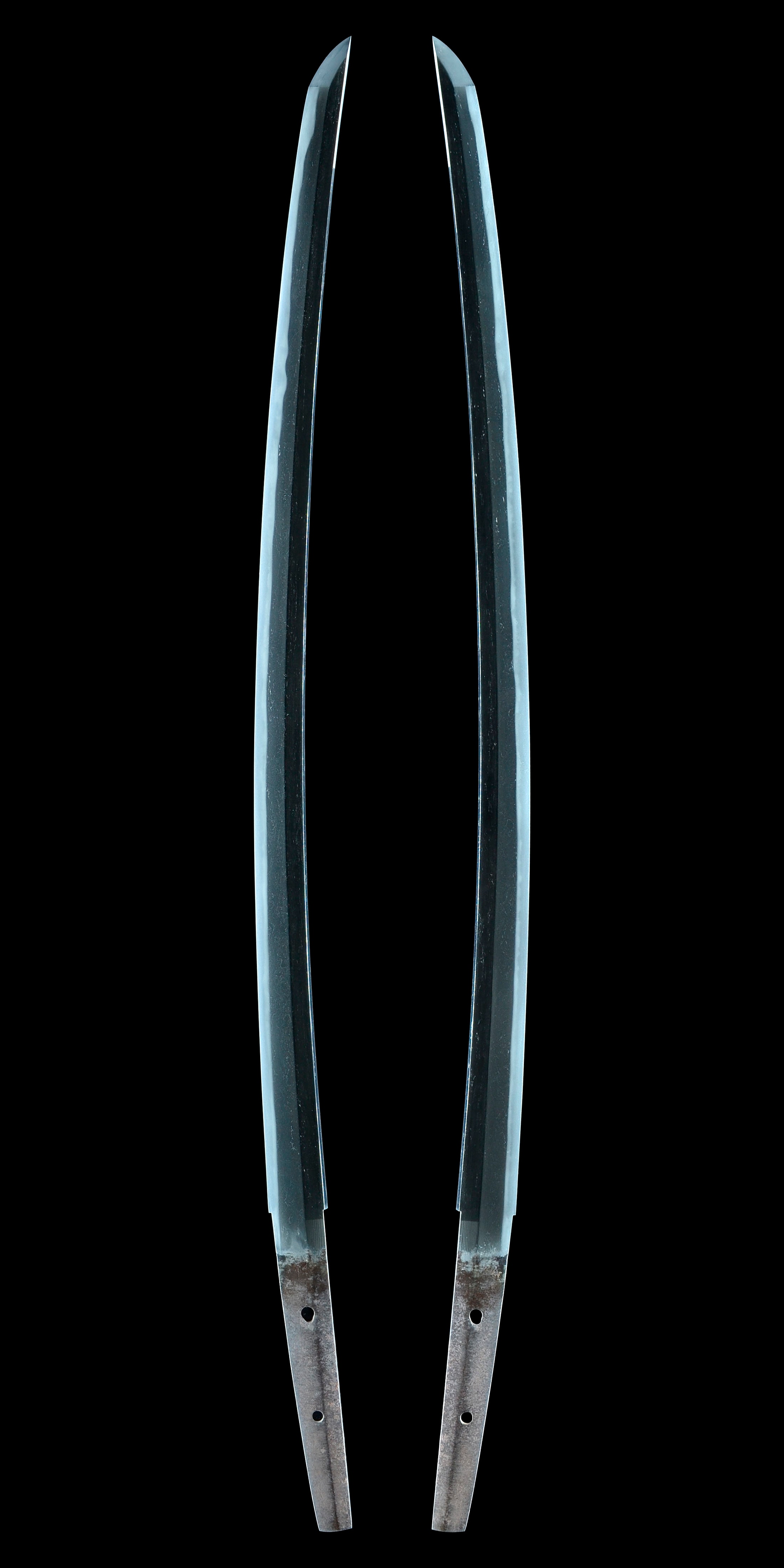
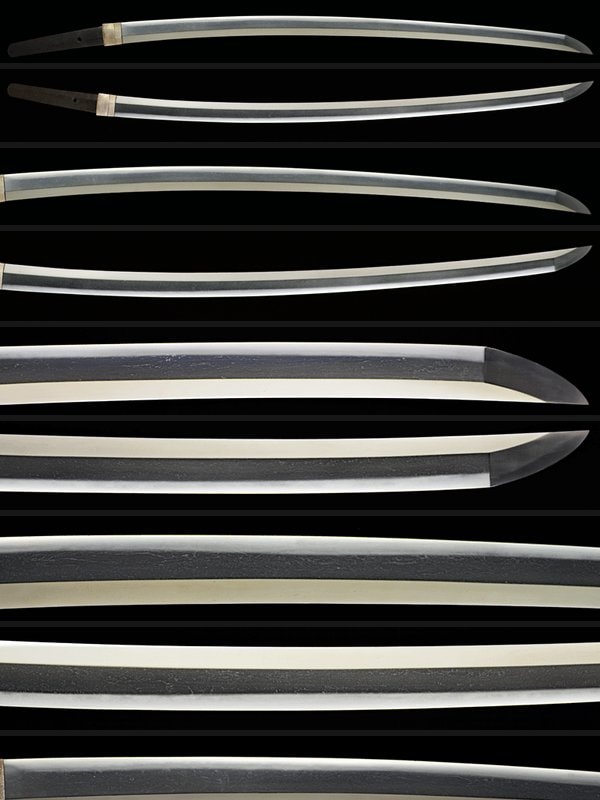
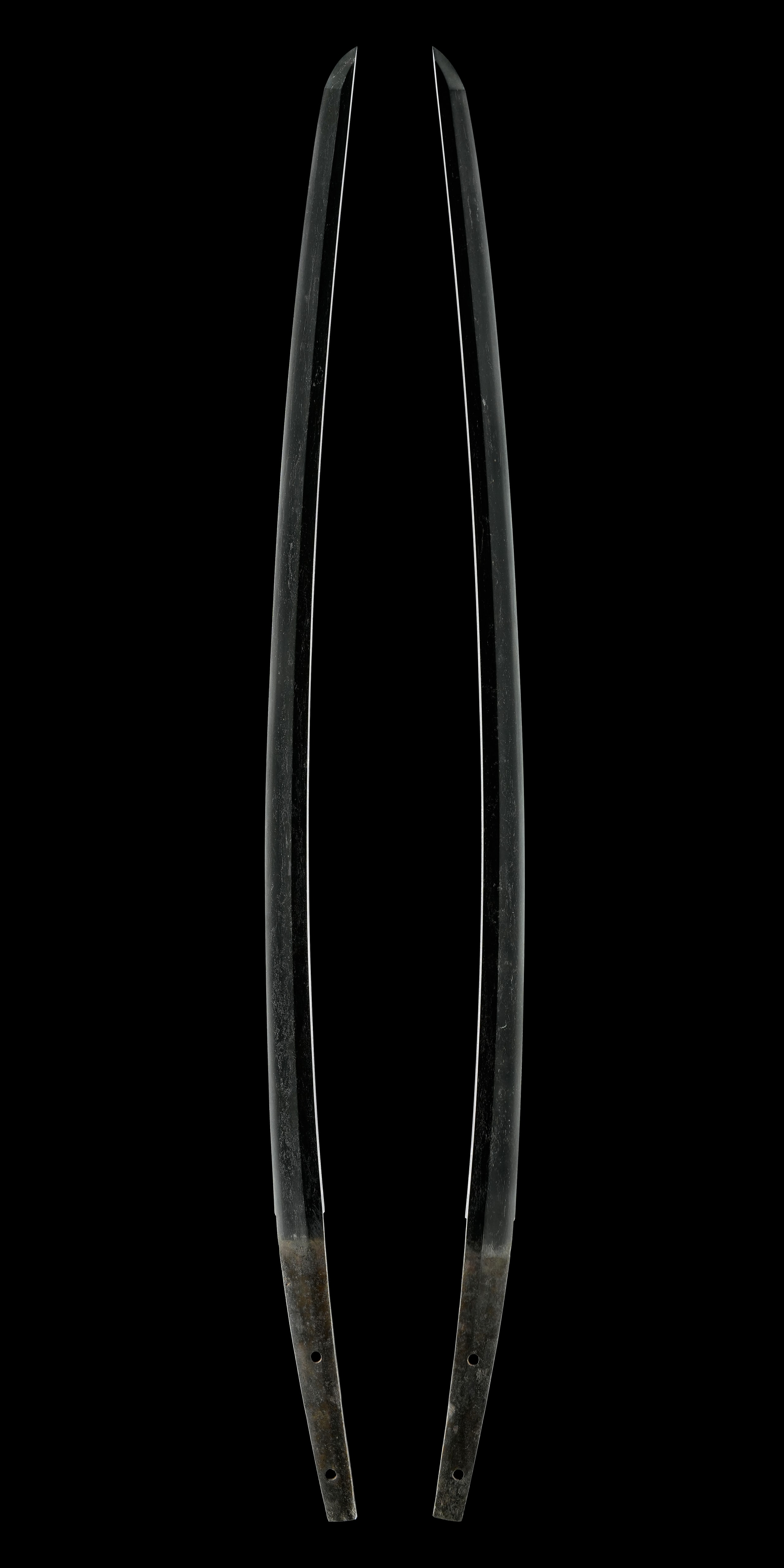
二つの朝廷、六十年の戦、そして刀剣史上もっとも劇的な姿。幅広の刀身、延びた切先、後代に磨上げられて雄大な刀となった大太刀。相州風がこの時代の様式であった。
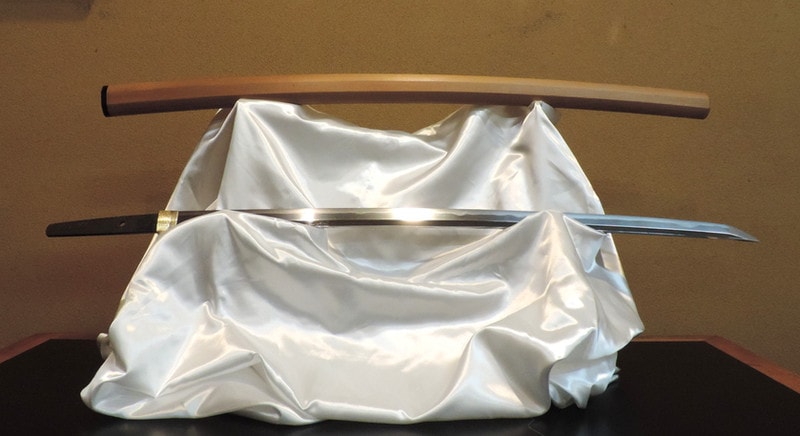
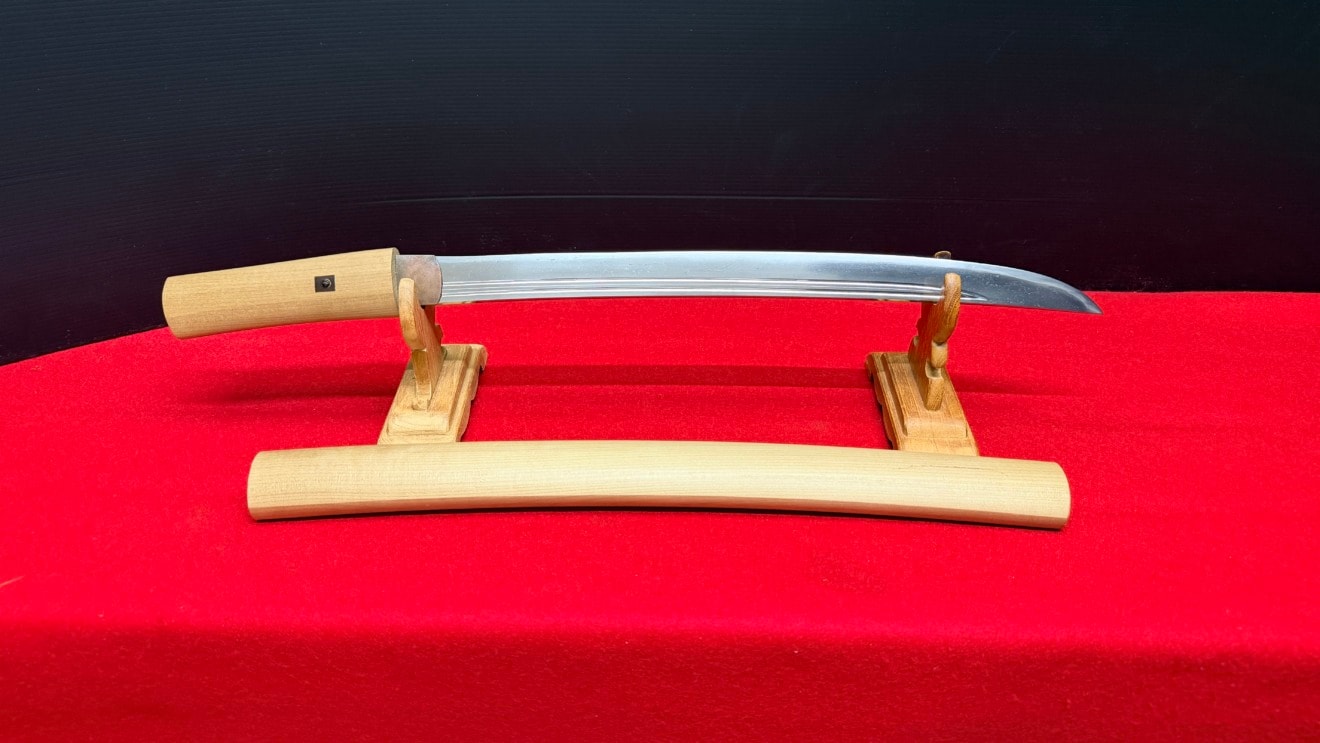
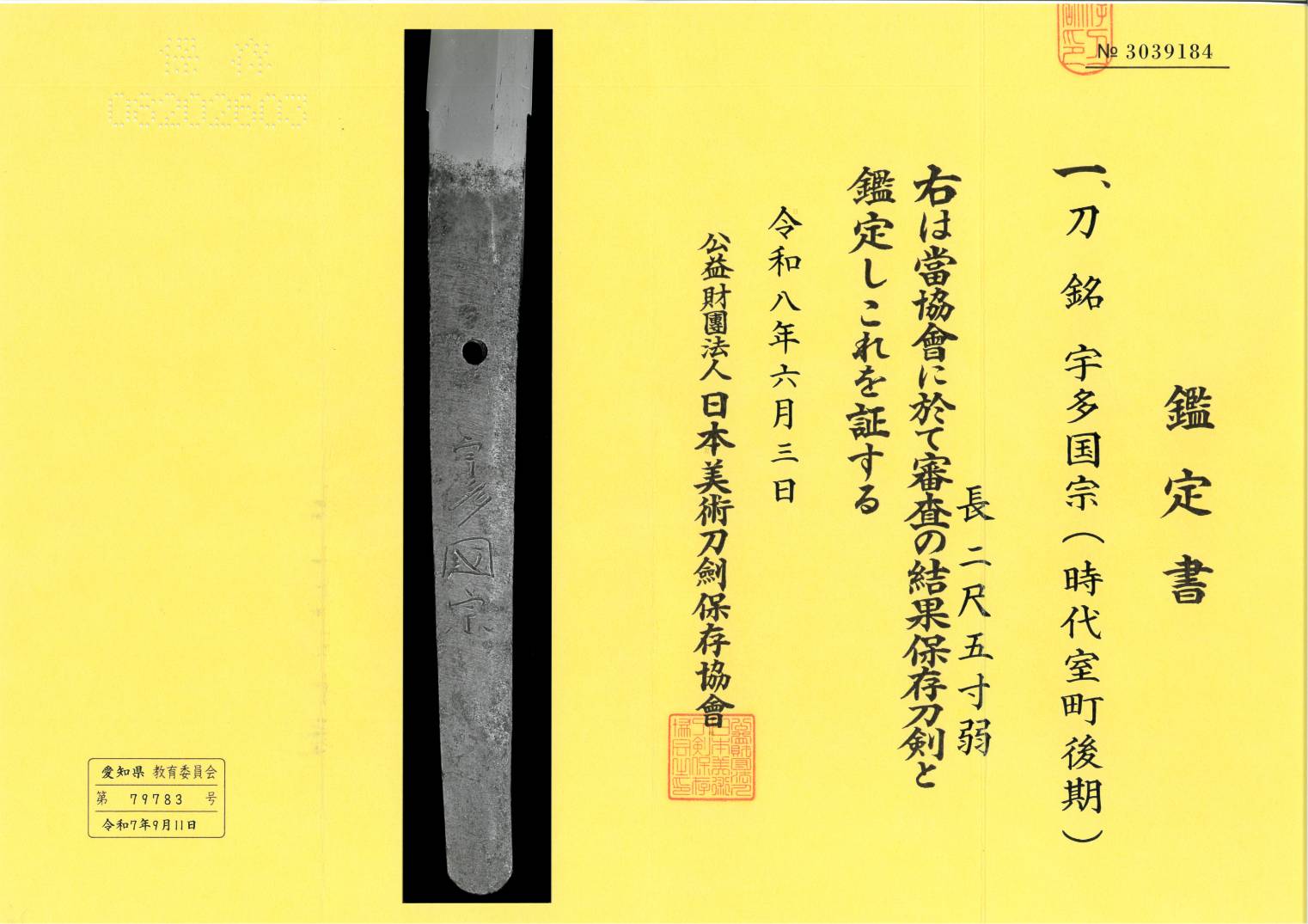
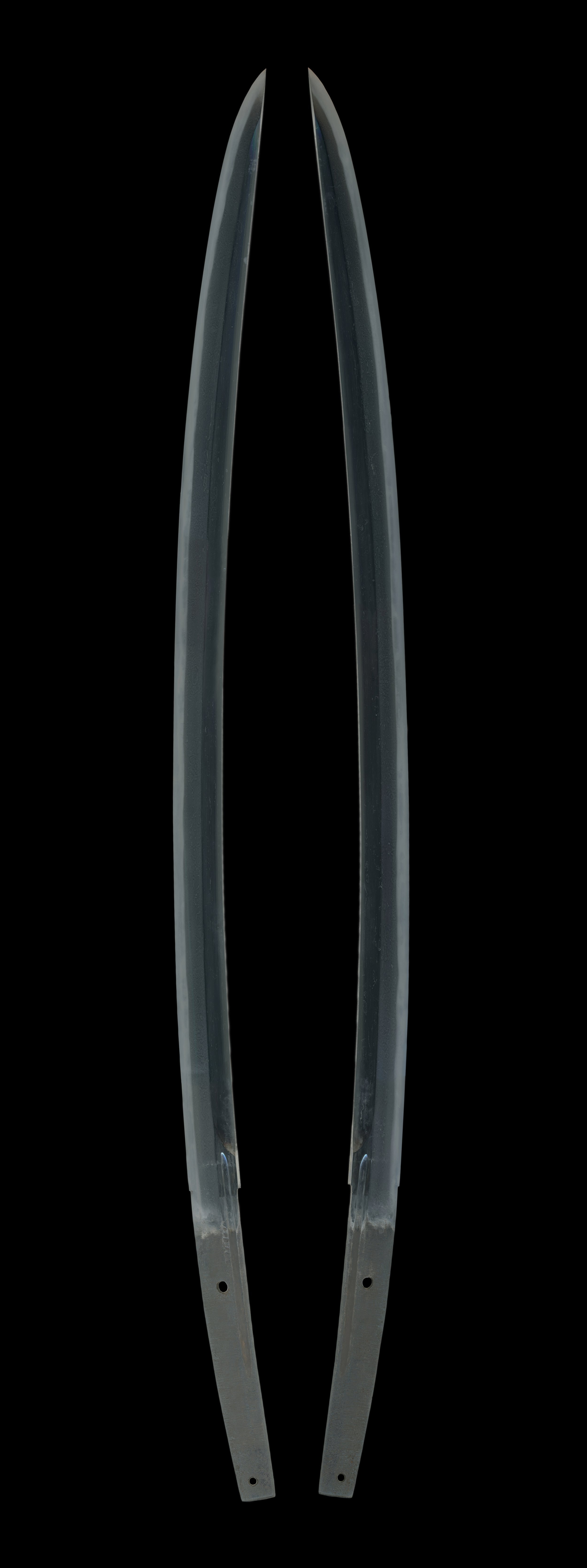
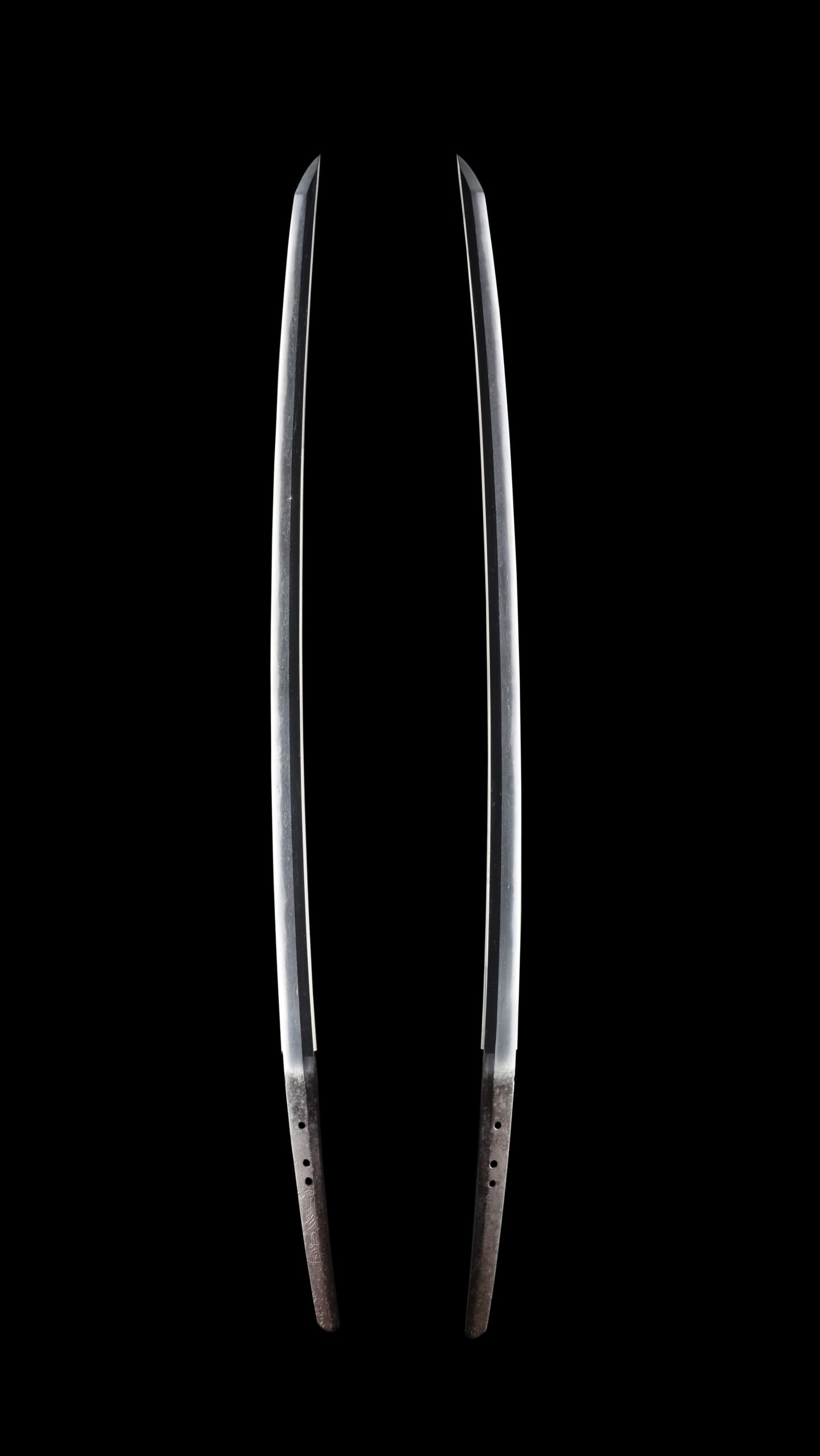
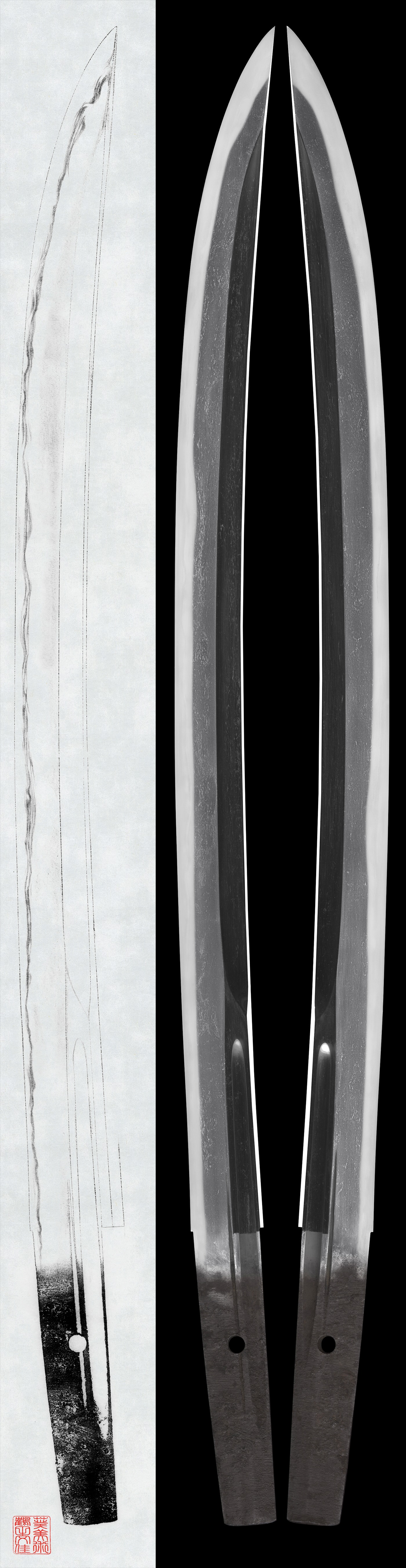
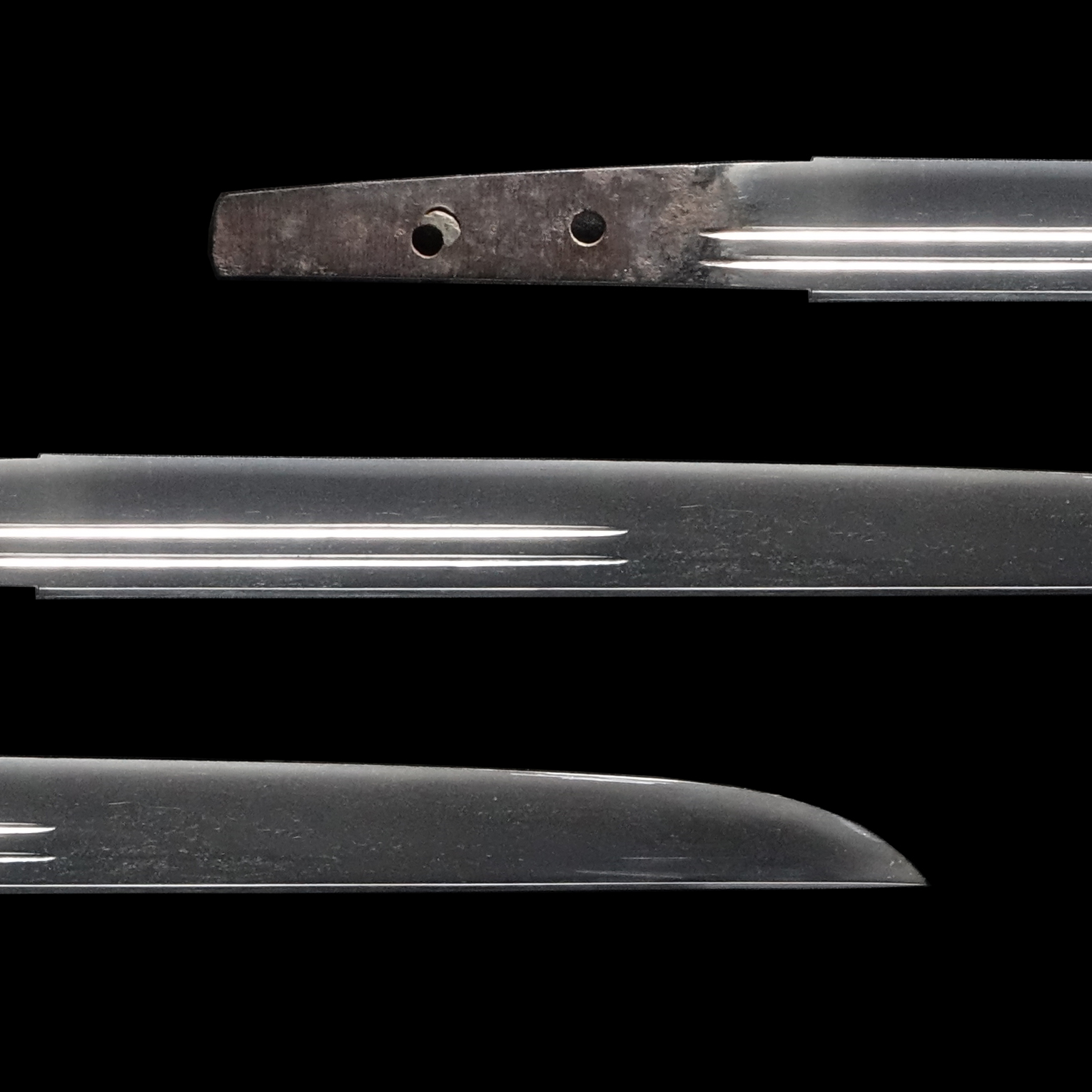
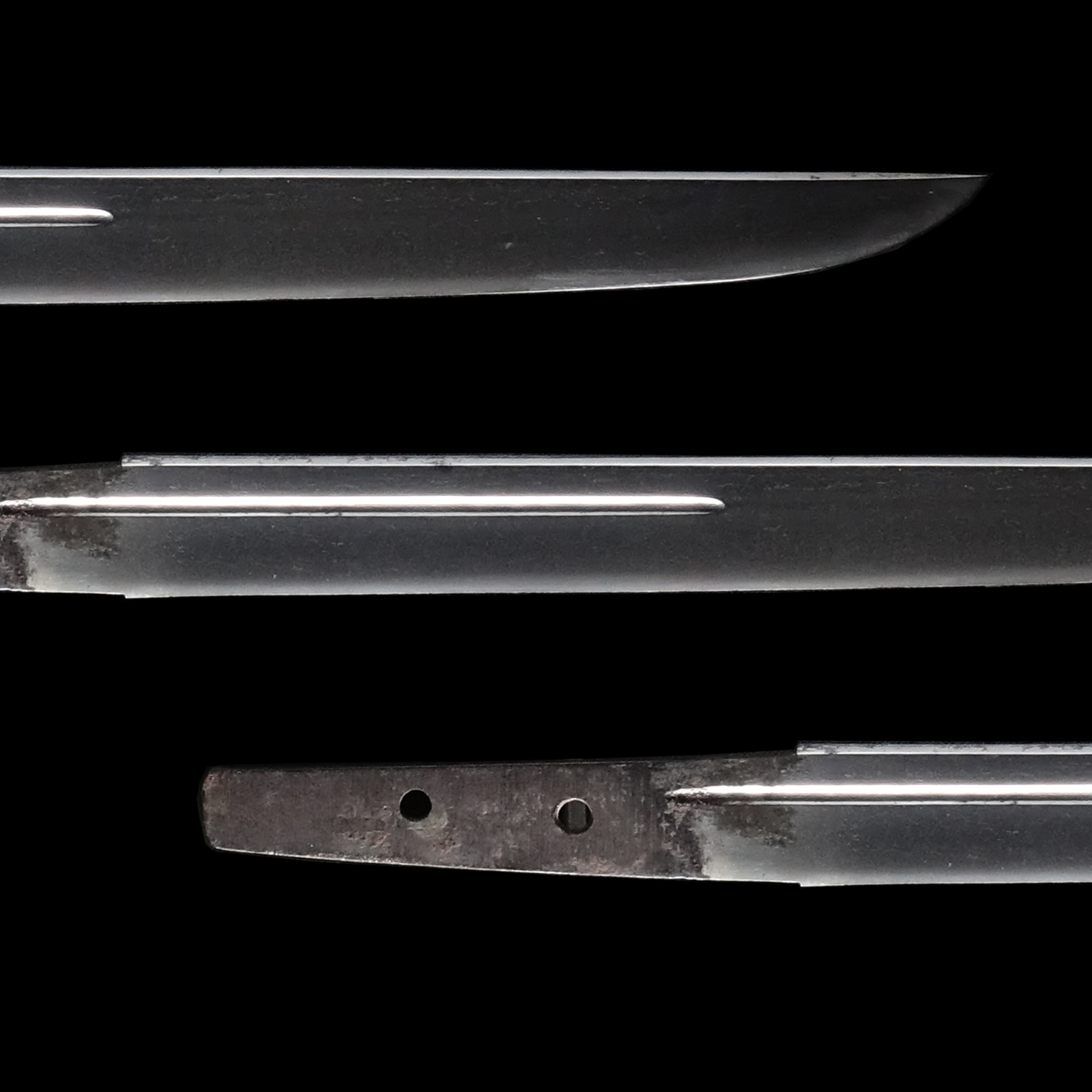
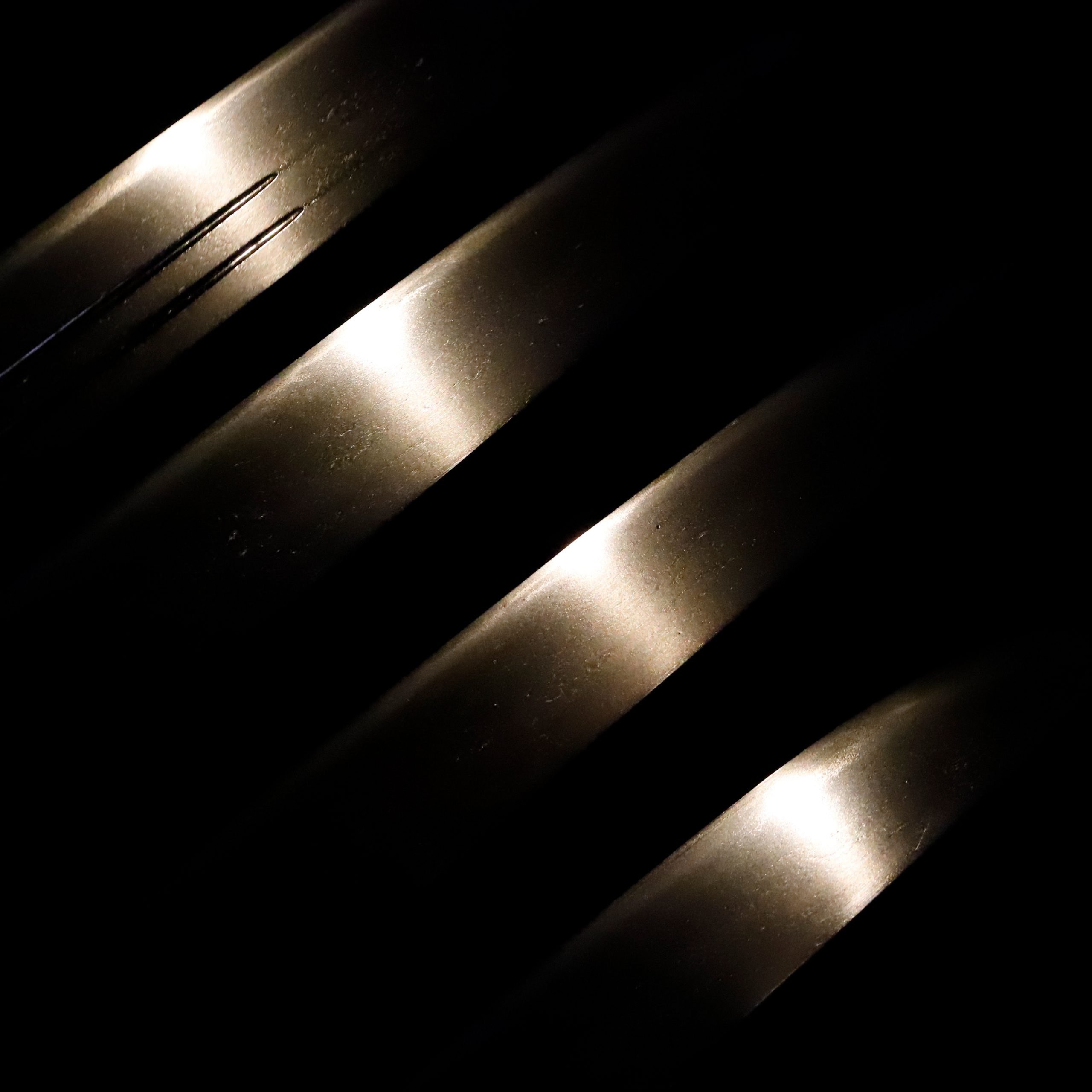
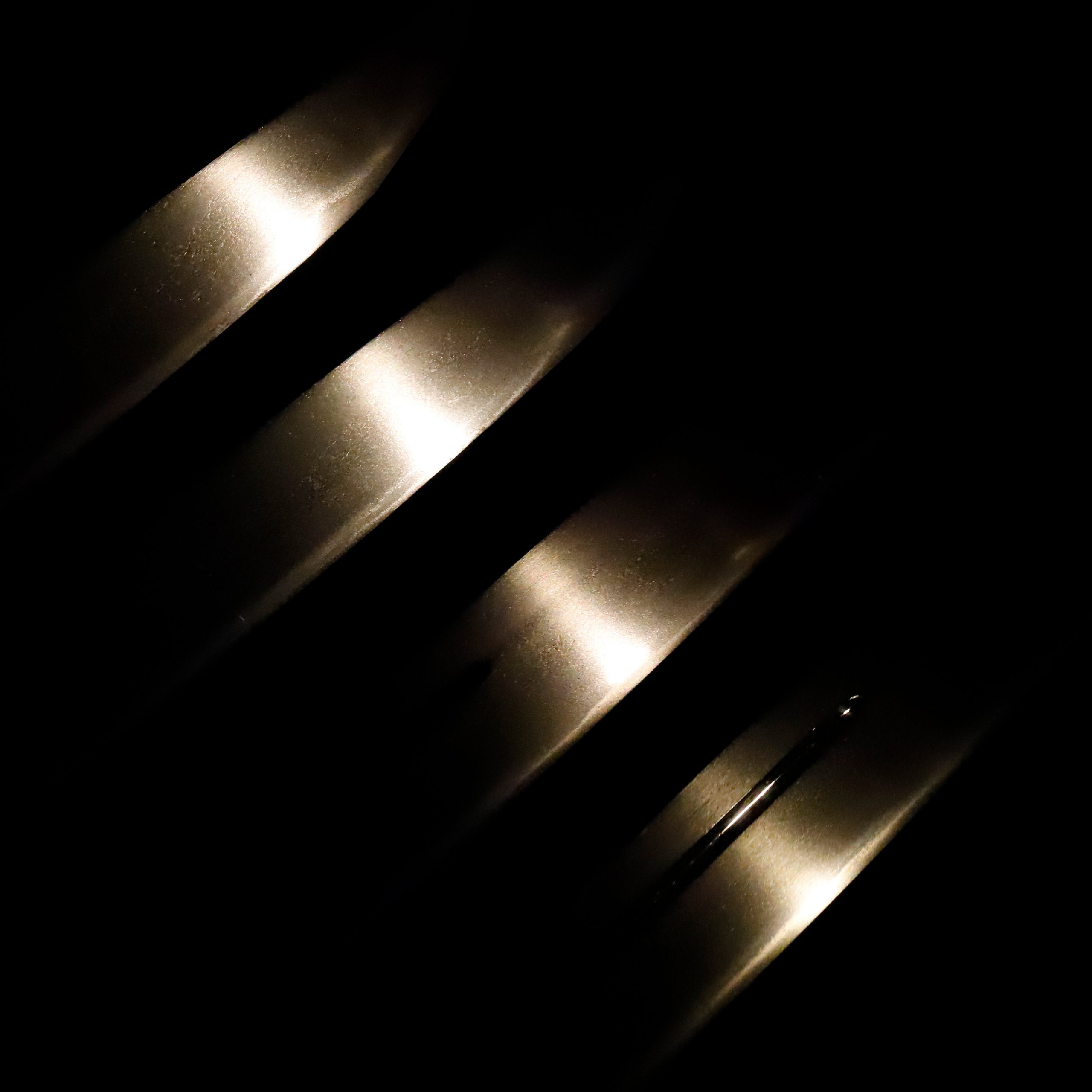
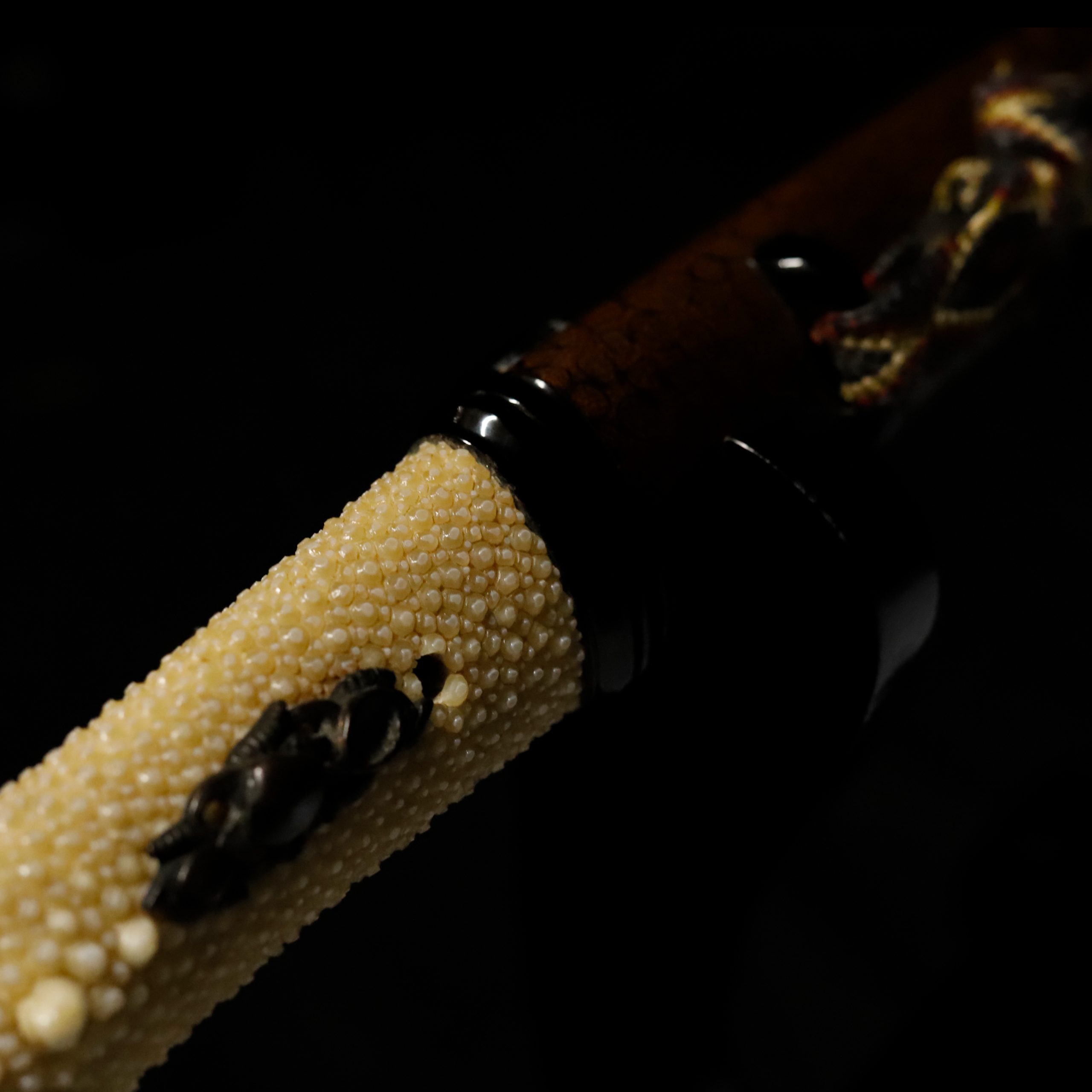
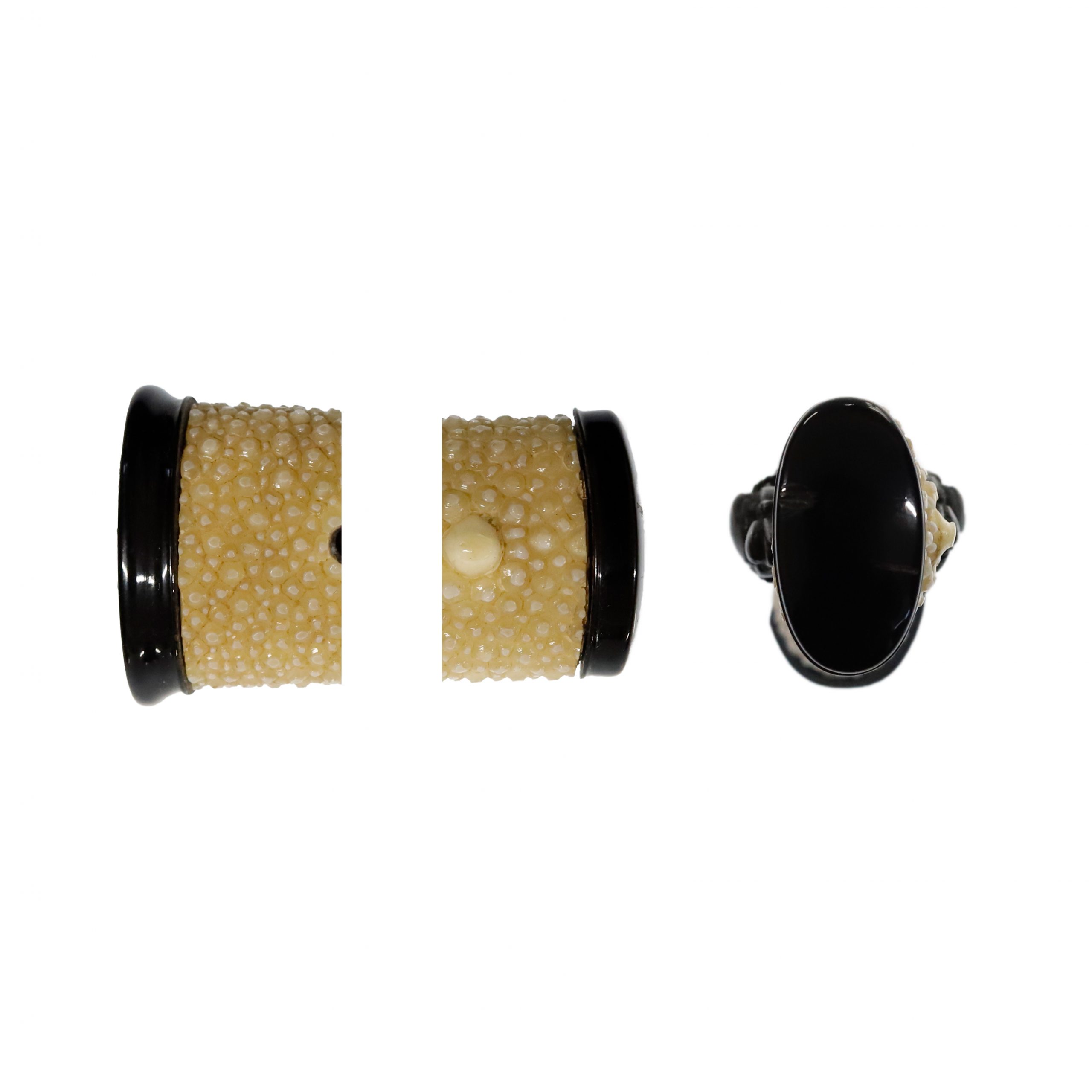
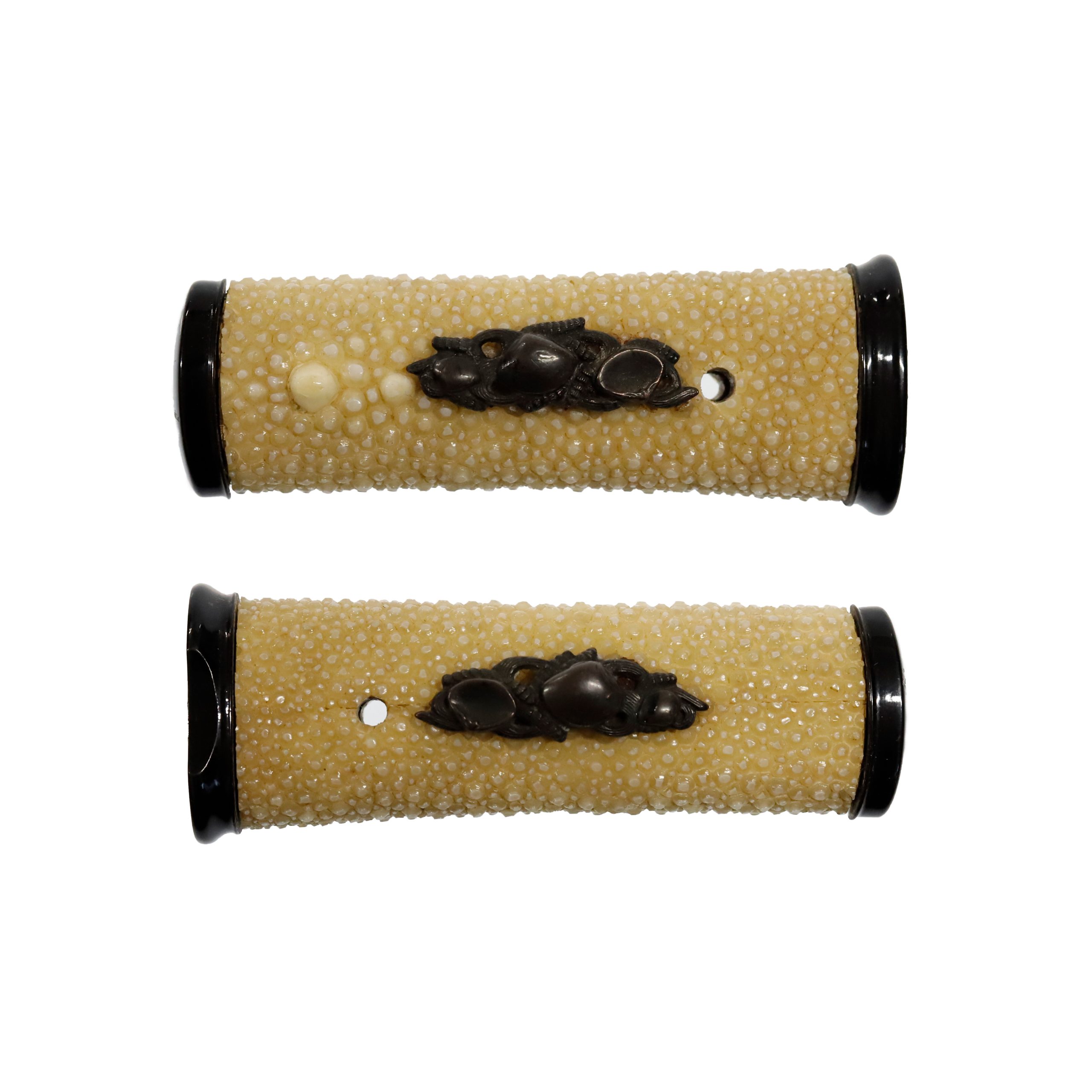
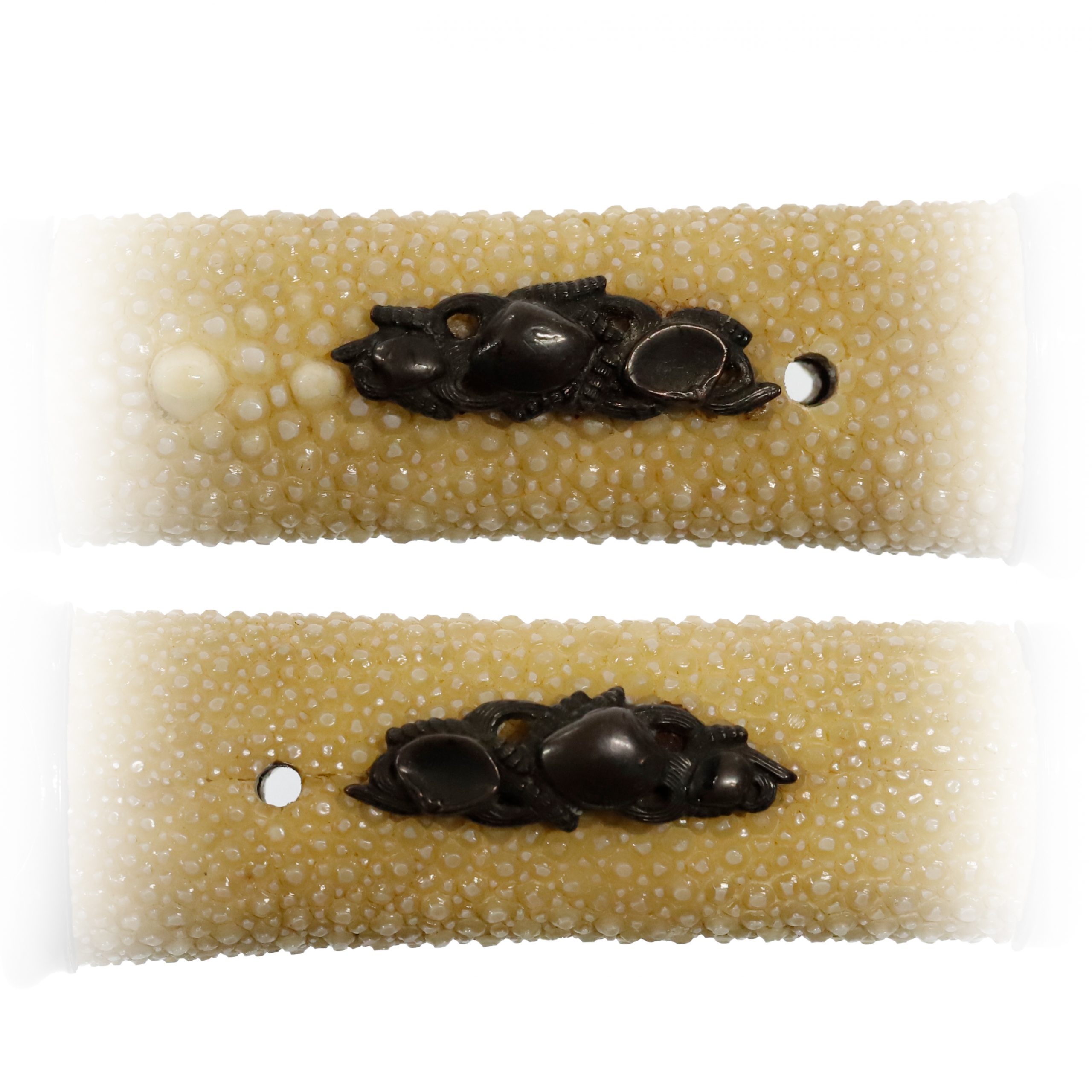
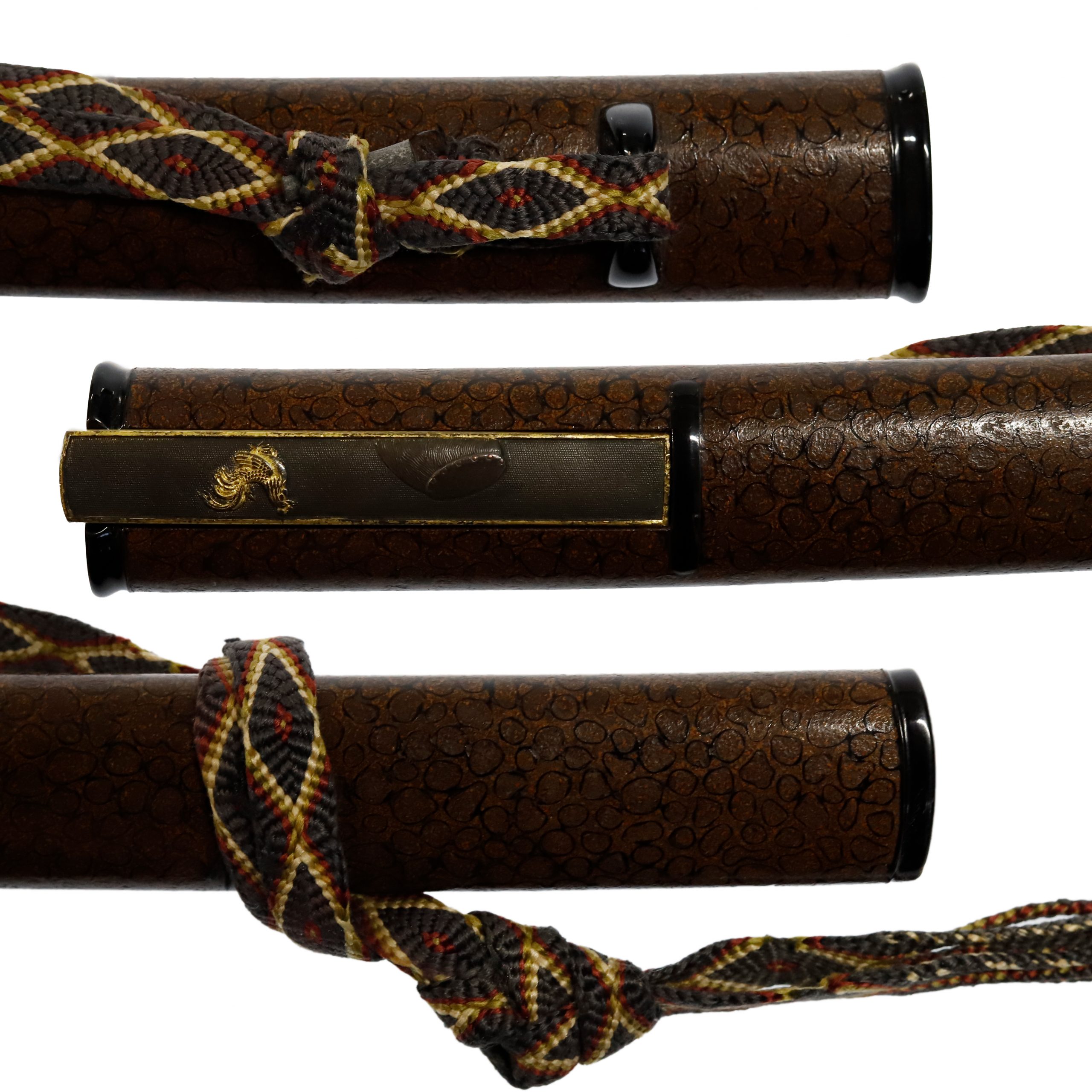
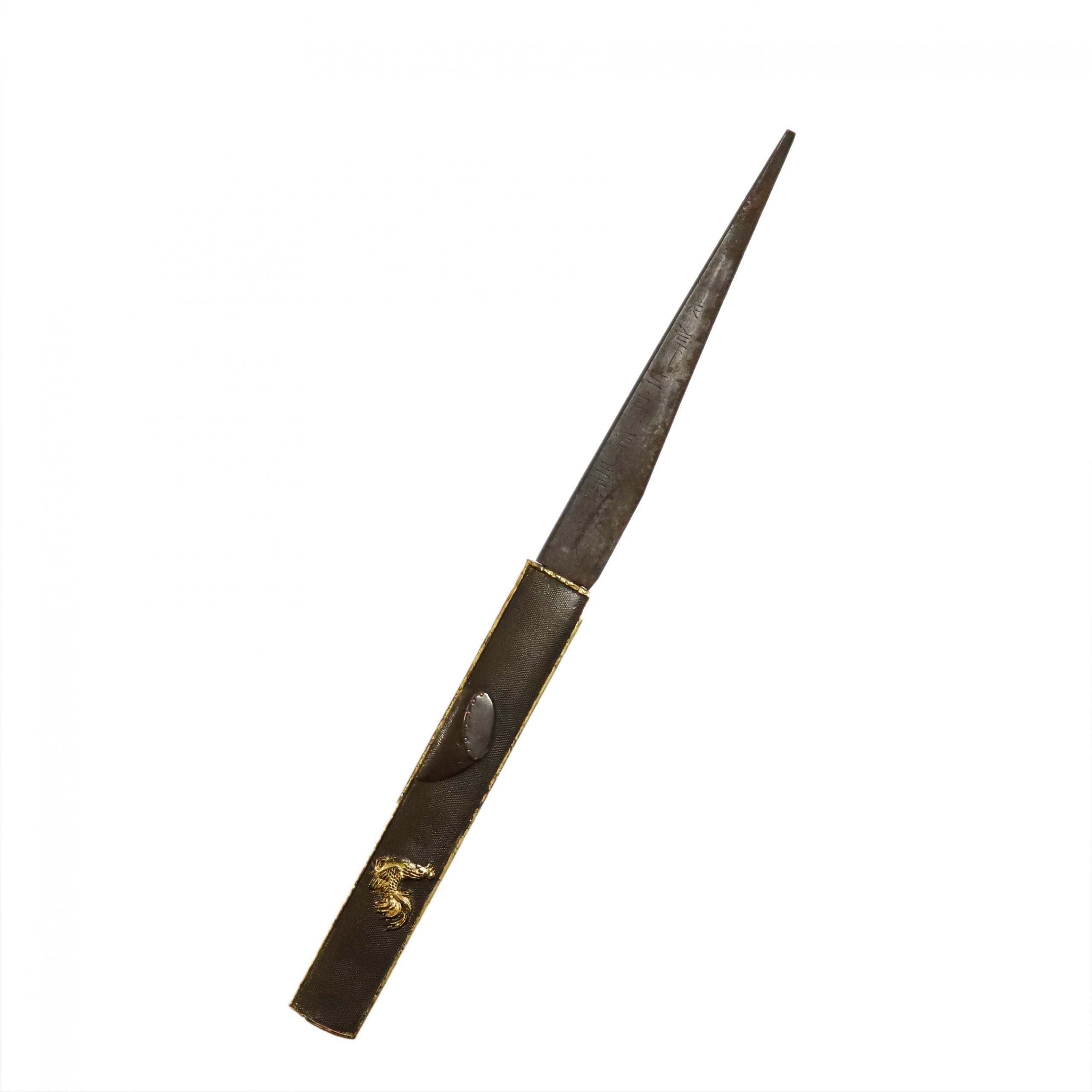
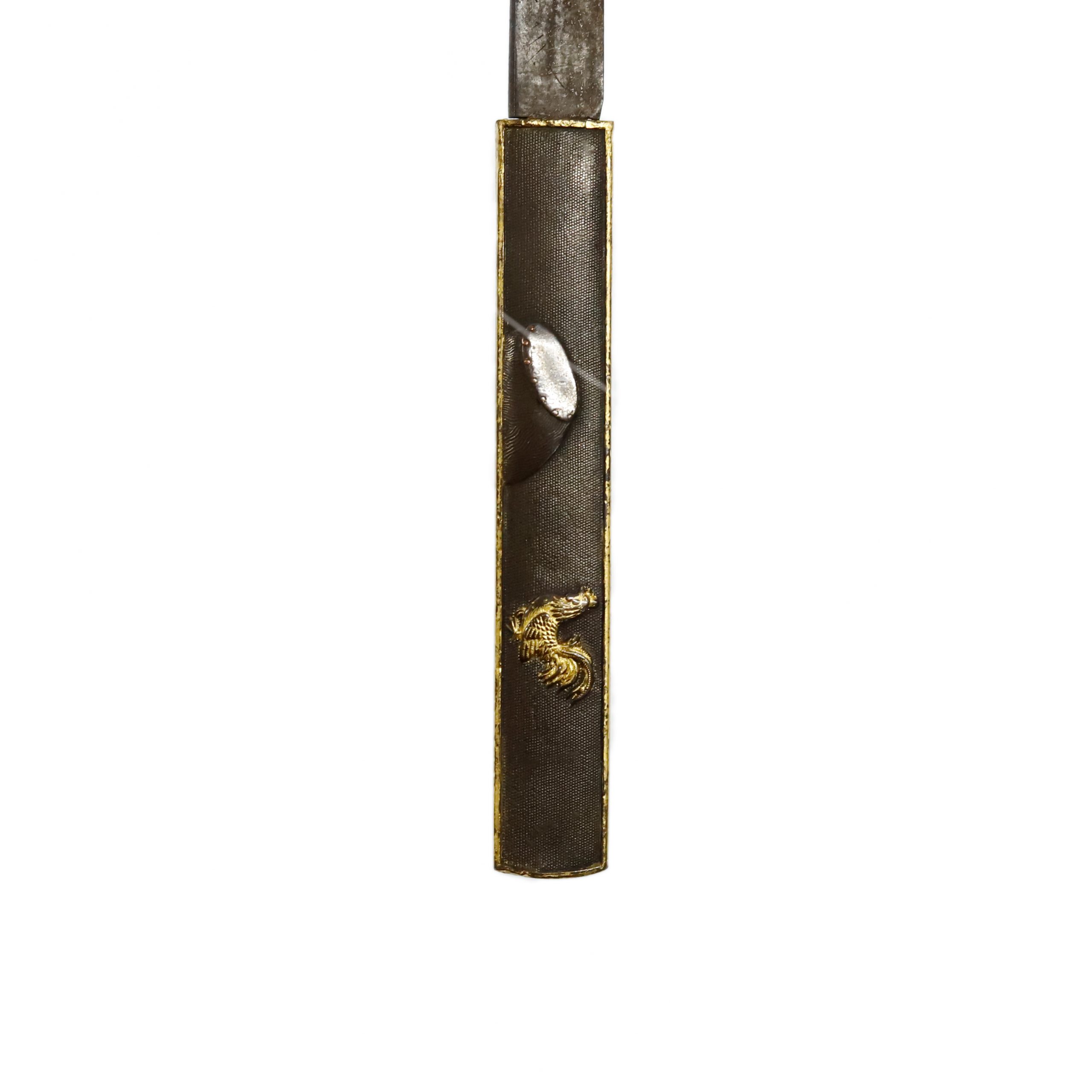
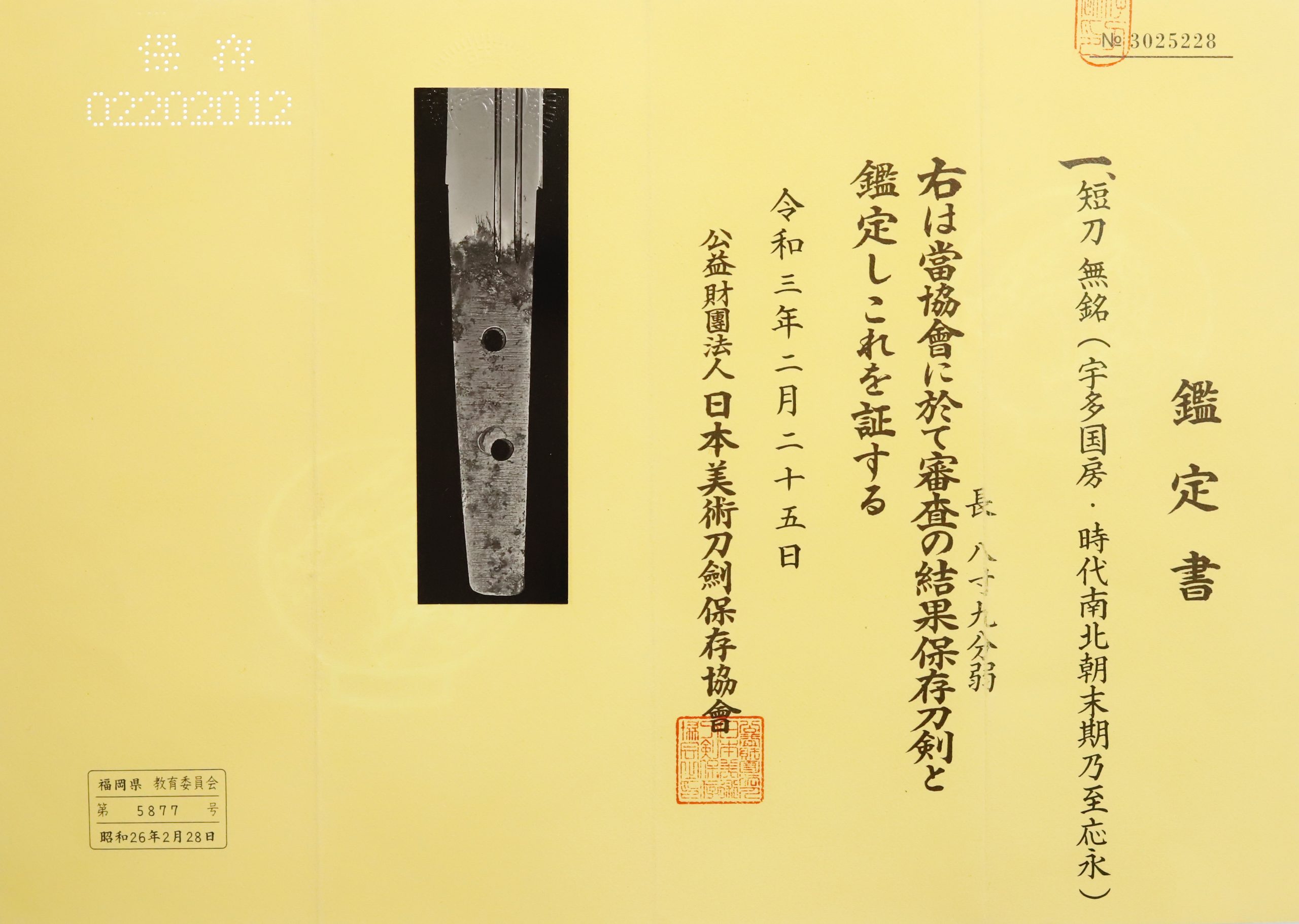
日本刀 短刀 伝宇多国房 日本美術刀剣保存協会 保存刀剣鑑定書付 【解説】 本作は日本美術刀剣保存協会(日刀保)により、南北朝時代後期から応永年間(14世紀後半〜15世紀初頭)にかけての宇多国房と極められた短刀です。 宇多派は南北朝時代から室町時代中期(1334年〜1491年頃)にかけて繁栄した名門で、鎌倉時代末期に国光によって創始されました。拠点は越中国(現在の富山県)に置かれましたが、開祖・国光はもともと大和国宇多郡(奈良県)の出身であり、鎌倉末期に門弟の初代国房や国宗らを連れて越中へ移住したと伝えられています。 初代国房は国光の子であり、越中移住後の宇多派隆盛において中心的な役割を果たしました。「国房」の名は数代にわたって継承されており、本作はその後の世代の国房による作と推測されます。 宇多派は南北朝から室町時代にかけて、実戦に即した機能美を持つ刀剣を打つことで知られ、北陸地方の諸派の中でも最も有力な流派として栄えました。南北朝という朝廷が二分された激動の時代背景もあり、多くの武士に重用された歴史があります。 宇多派の作品は、鎌倉末期から南北朝期までのものを「古宇多」、室町時代以降のものを「宇多」と大別しますが、本作はその作域から「古宇多」の範疇に属する貴重な一振りです。 本作には、美術的価値が高く保存状態が優れていることを証明する、日本美術刀剣保存協会の「保存刀剣鑑定書」が付属しております。 ※棟(むね)の部分にわずかな黒錆が見受けられます。ご希望がございましたら、発送前に当方負担にて専門の研師による部分研磨を施し、最良の状態で納品させていただきます。 【刀身】 長さ(刃長):27.0 cm 反り:0 cm 刃文:焼入れによって刃縁に現れる結晶構造 地鉄(肌):鍛錬の折り返しによって現れる鋼の模様 茎(なかご): 茎は刀身の柄に収まる部分です。あえて残された黒錆は、柄内部での赤錆の発生を防ぐ役割を果たします。経年による茎の錆色は、専門家が制作年代を特定する上での重要な指標となります。 【外装:拵】 拵(こしらえ)は、鞘、柄、鐔などの装飾金具一式を指します。 縁頭(ふちかしら): 柄の両端を保護する一対の金具です。 本作の縁頭は、黒漆を塗り立てた簡潔かつ気品ある意匠となっております。漆特有の艶やかな黒が、柄全体の印象を引き締めています。 柄・目貫(めぬき): 目貫の意匠は「貝尽くし」と思われ、巻貝や蛤(はまぐり)が象られています。 平安時代、貴族の間で「貝合わせ」という遊びが流行しました。蛤の殻は対となる殻以外とは決して合わさらないことから、夫婦円満の象徴とされ、公家の嫁入り道具としても重宝されました。 また、四方を海に囲まれた日本において、貝の文様は古来より非常に親しまれてきた吉祥文様の一つでもあります。
 NihontoWatch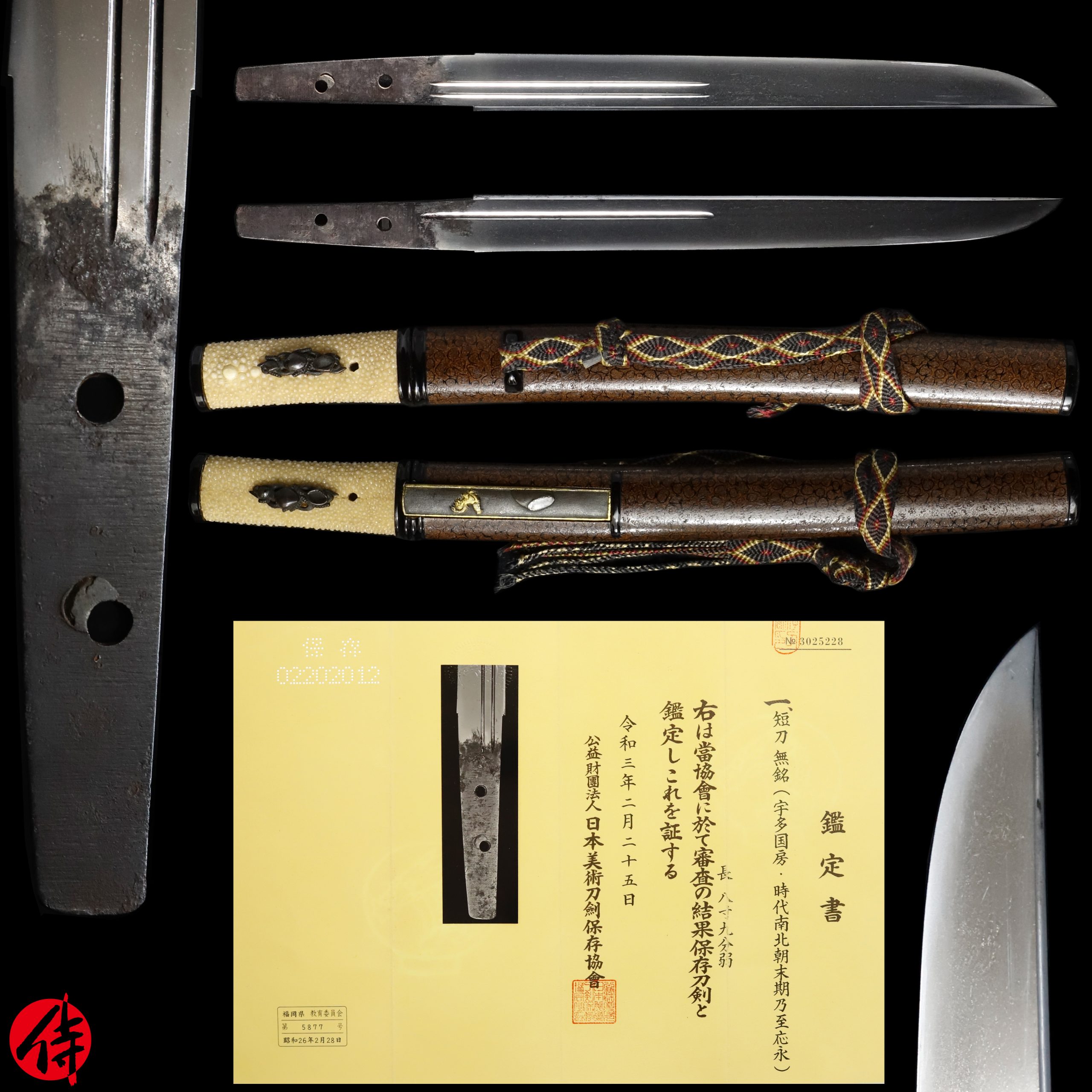
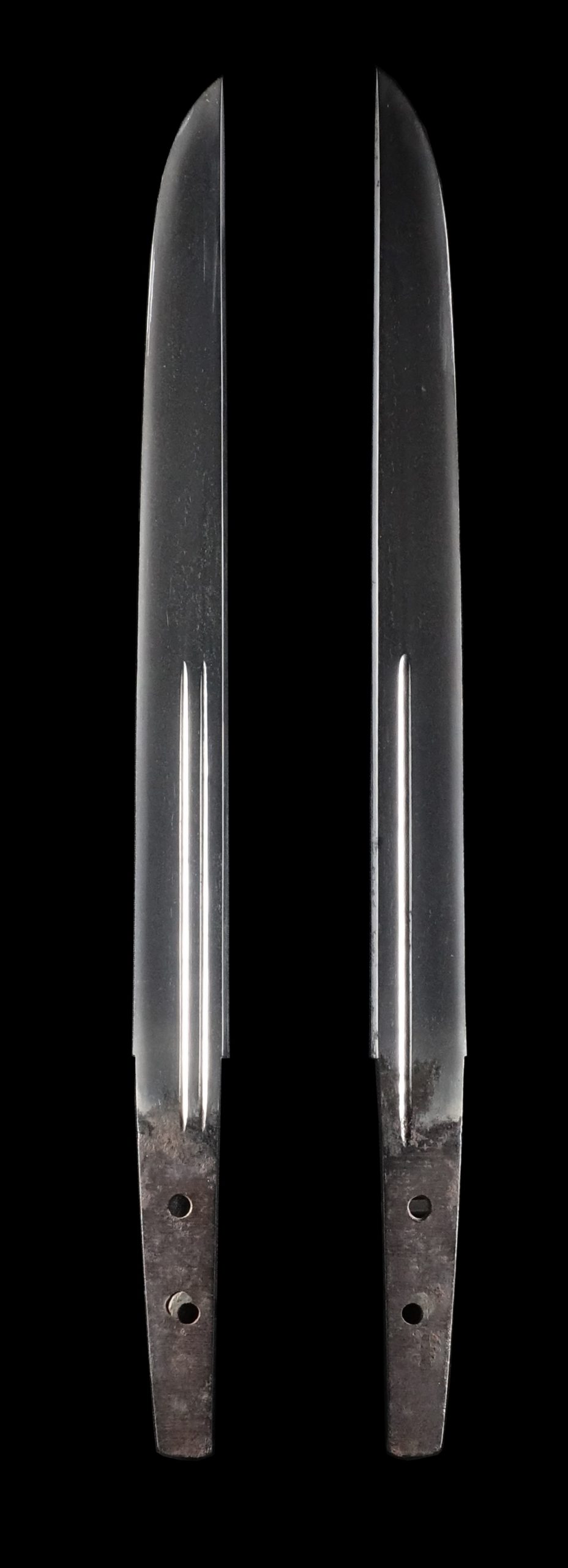
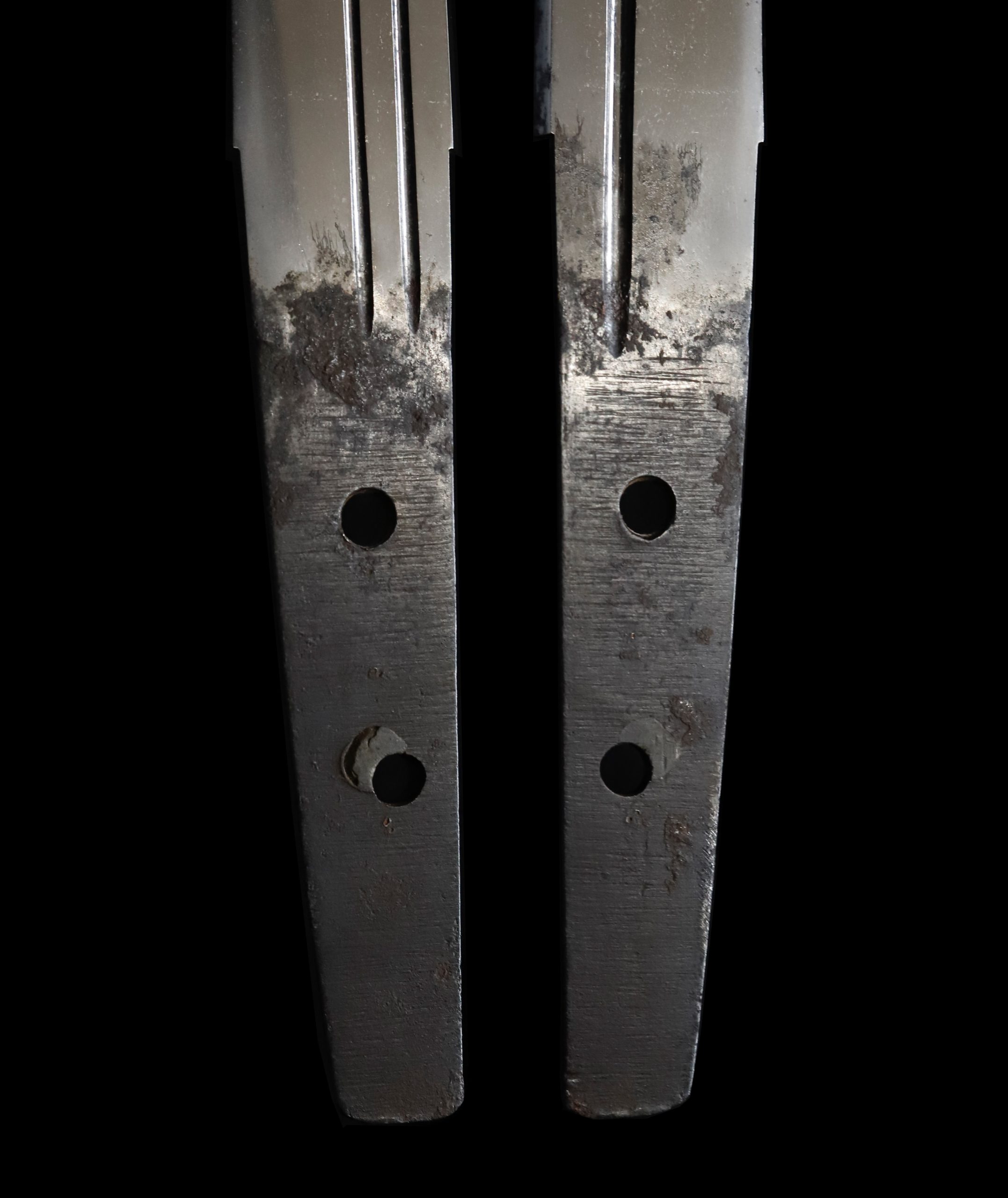
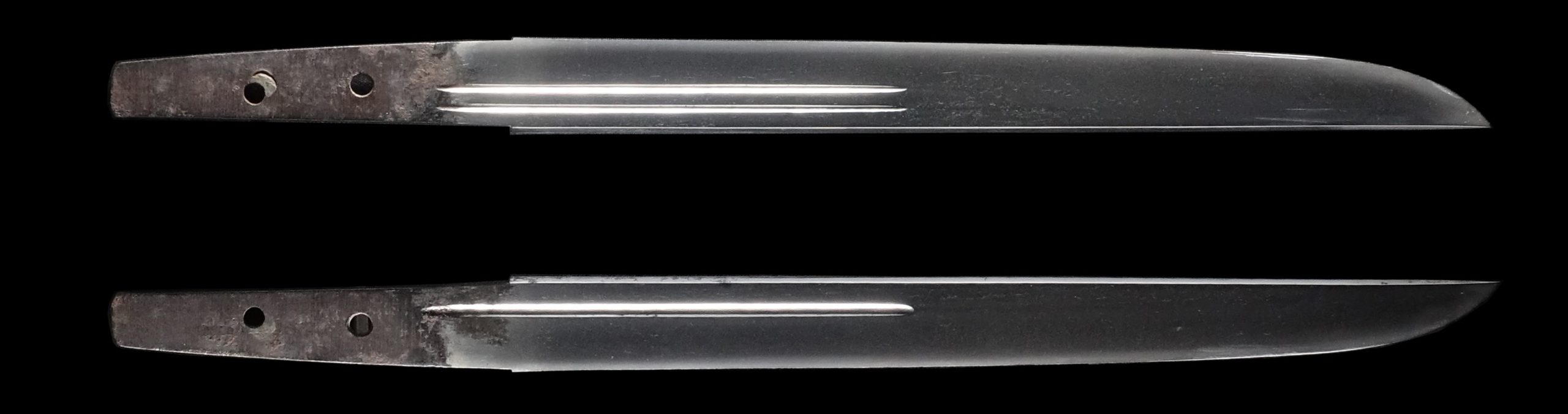
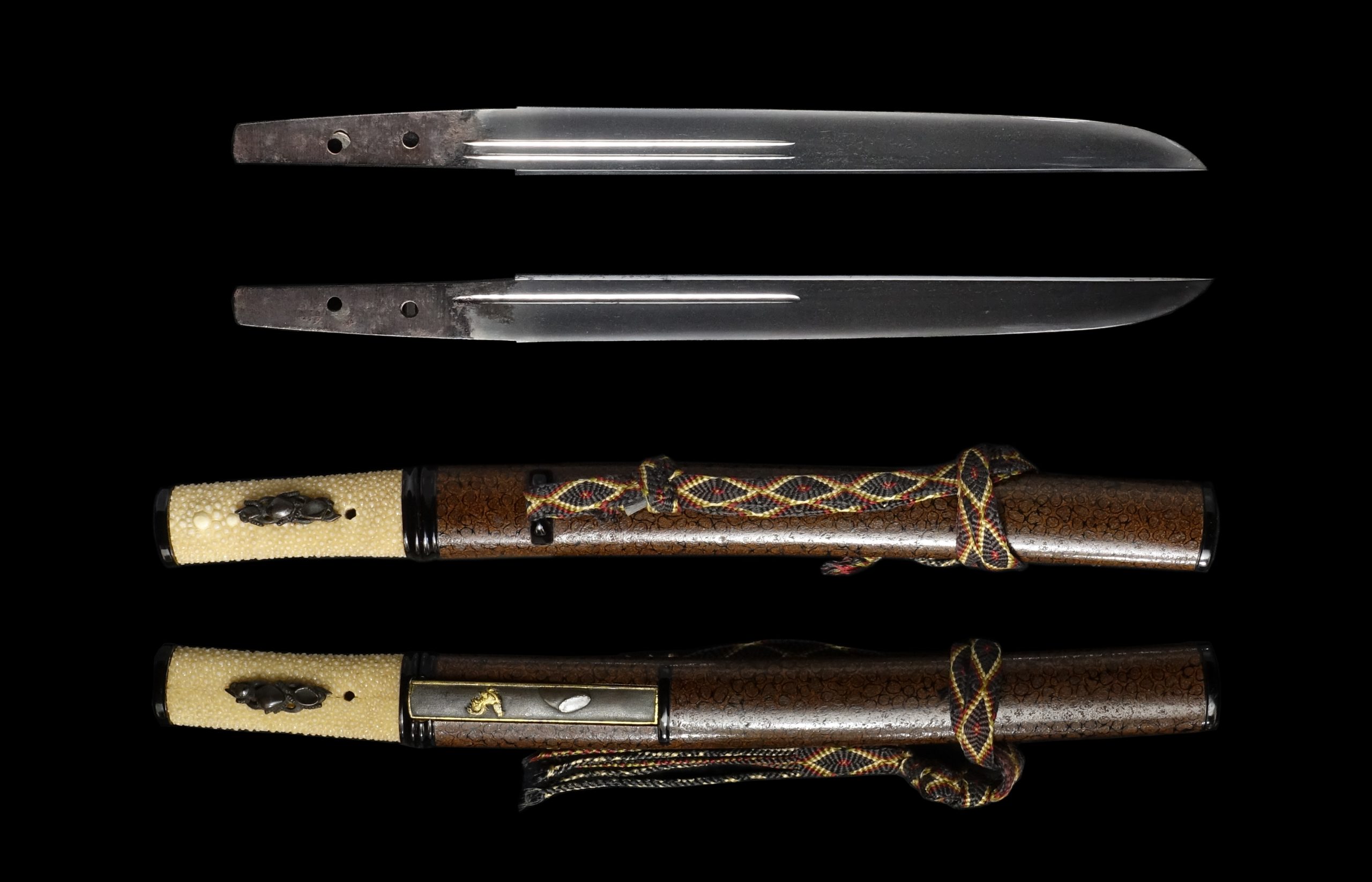
Ko-Uda (Uda, Etchū) · 越中 · 1368-1405頃
藤代 Jo-jo saku · 刀剣大鑑 上位23%
現在1点販売中
宇多国房は越中宇多派の初代の名工であり、古宇多の工のうち在銘の作を遺す数少ない一人である。説明書は、鎌倉時代末期に大和国宇陀郡から越中へ大和の鍛刀を伝えた一派の祖、古入道国光の子と記し、国房自身は越中則重に学んだと伝え、江の名を範として並べ挙げる。一派の記録は圧倒的に無銘・大磨上げで、一派としてのみ極められるため、在銘の国房はそれだけで一個の資料であり、初期の在銘国房はさらに稀である。説明書は初代の典拠を、重要美術品指定の太刀二口、すなわち日枝神社所蔵と黒川古文化研究所所蔵のものに置き、他の作は、ある重要刀剣のいうように国の字のクニ構えの中を恰も井桁の如くくずす銘字の酷似によって極める。この名の最古の年紀作は康応元年(一三八九)である。
その手は宇多派が遂に融合させなかった二様にわたり、国房はその両方を打つ。一は大和の本性で、短刀・脇指に最もよく現れる。平造・三ツ棟に僅かな内反り、僅かに寸の延びたものもあり、鍛えはよくつんだ板目あるいは小板目に流れごころを交える。これに中直刃を基調に小互の目・浅い小のたれを交え、足入り、匂深く小沸よくつき時にやや荒めの沸を交え、砂流し・細かな金筋がかかる。帽子は直ぐに小丸、尖りごころに返り深く掃きかける。茎元には倶利迦羅・素剣・護摩箸・連樋などの彫物を施し、ある短刀の倶利迦羅は一派には珍しいと評される。説明書はこれら穏やかな在銘作を本工の典型とし、応永年紀あるいは年紀作と同作と鑑し、地刃ともに健全とする。
地肌は両様の下に終始変わらぬところである。板目に杢を交え、流れごころに立つ地に地沸つき、地景入り、鍛えが小板目につまれば白け映りが鮮明に立つ。そのつまりこそ一派の中での本工固有の見どころである。宇多の二大名跡の違いを論じて説明書は、「国宗がやや肌立ったものが多いのに対し国房には地がねのつんだものが多い」[[c:1]]と記す。ある無銘の極めの太刀では、その鍛錬の優れたところを決め手として、「地がねの鍛錬がすぐれているところに国房と鑑すべき」[[c:2]]とし、地鉄そのものが極めを本工に戻すとする。
今一つは相州伝がかった手で、説明書がこれを則重に学んだことに由来させ、南北朝の豪壮な太刀に現れる。身幅広く重ね厚く中鋒あるいは大鋒、磨上げてもなお腰反り高く踏張りを残すものがあり、堂々たる南北朝の体配を示す。流れごころの板目に地景・地沸つき、これにのたれあるいは直刃を基調に互の目を交え、匂深く沸よくつき時に荒く、砂流しが頻りにかかり金筋が入り、帽子は乱れ込みに掃きかけて返る。説明書はこうした作が、越中の先達則重・江に倣った目立つ地景と豊かな沸により相州伝を想わせるとしつつ、純然たる相州伝の造込みのものはなく、極めは宇多に止まるとする。一派の作風はこの両極にわたり、個々の国房は一人の手ではなく南北朝後期から室町初期に亘る幅の中で鑑せられる。同名が数代続いたためである。
最も相州然とした作をも北国に戻すのは地鉄であり、極めはここに拠る。地がねはやや黒くかな色を帯びて処々カス立ち、潤み立つ。これを説明書は「北国物特有の肌合」[[c:3]]と呼び、北国の作に固有の肌とする。匂口は冴えるよりも沈みごころとなり、刃沸はつぶらに小づいて、同じ説明書はこれを「つぶらな沸を交えている点などには宇多派の特徴」[[c:4]]とし、宇多派の徴とする。本工の白け映りと穏やかな作の大和の働きは、より素朴な北国の工から彼を分かち、この黒ずんでカス立つ地鉄とつぶらな刃沸は、明るく冴えた真の相州物から彼を分かつ。彼は国宗と並んで一派を代表する手であり、説明書自身の評によれば鍛えのつまった方の兄であり、井桁にくずす国の字によって極めの確かめられる初代である。
収集の観点では、国房は市場の存在というより稀な初期の北国の名である。藤代の極めは上々作。国宝はなく重要文化財もなく、その記録は重要刀剣十四口と戦前の重要美術品三口、合わせて十七口の指定作を通じ、初代は日枝神社所蔵と黒川古文化研究所所蔵の重要美術品太刀二口によって代表される。来歴の知られるところでは、ある重要刀剣の太刀は大阪の梶村家を経、今一口の重要美術品は黒川福三郎より黒川古文化研究所に伝わる。説明書はある初代短刀を「数少ない初代国房の作として資料的にも貴重」[[c:5]]と評する。指定を受けた宇多の多くは、公私いずれの手にあっても伝えられて売買されることは少なく、年紀の上がる在銘の国房が世に出ることは稀であり、井桁にくずす国の字を持つ初代の一口は、収集家にとって注目すべきもの、大和の鍛刀がいかに北国に根づいたかを語る証である。
國房の位置づけを、日本刀全体および伝統・時代・時期ごとに示します。各位(随一・屈指・有数・著名)は、NBTHK および文化庁による指定に加え、三作や名物帳などの歴史的栄誉を加味したものです。
各項目を選ぶと評価方法が表示されます。
脇物 · 越中
時期区分: 古宇多· 1310–1394
現在8点販売中
古宇多は、越中宇多派の草創にあたる一群を指す。宇多派は元来大和国宇陀郡の出身で、鎌倉時代末期の文保頃に古入道国光が大和より越中国宇津の地へ来住して開祖となったと伝える。国光の子に国房・国宗があり、さらに国次らが続いて、南北朝期にかけて一派の基礎を築いた。同名は一代限りではなく、国光・国房ともに後代まで襲名する工が数代を数え、室町時代を経て新刀期にまで及んでいる。このうち南北朝期を下らぬ作を特に古宇多と汎称し、開祖国光以下、大和の根を色濃く残した最初の世代がここに含まれる。国光在銘の確実な遺品は少なく、国房も南北朝後期ないし康応元年の年紀を有するものを最古とするため、この区分の在銘作はもとより数が限られる。 作風は地鉄に最もよく現れる。鍛えは板目に杢目・流れ肌を交えて柾がかり、肌立ちごころとなって地沸つき、地景が入り、地鉄が黒みをおびて処々粕立つところに北国物の持味を見せる。映りは白け映りまたは沸映りとして立つことが多い。刃文は細直刃を基調とし、処々に小互の目・小乱れや浅いのたれを交え、小足入り、小沸つき、刃縁が細かにほつれ、喰違刃や打のけを交えて、金筋・砂流しがかかる。帽子は直ぐに小丸、掃きかけて浅く返るものが目立つ。鎬の高い造込みは本国大和の影響によるもので、大和味の濃さがこの区分の根幹をなすが、一方で越中の先達である則重や江に倣ったとみられる相州伝風の作も含み、上工になると沸が強く働き、地刃ともに変化に富む。後代の宇多が次第に北国色を強め荒みを増すのに対し、古宇多は大和物を見るような澄んだ出来に近く、模範への距離が短い点で隔たりがある。 鑑定にあたっては、黒みをおびて肌立つ地鉄に白け映りの立つ点と、刃縁のほつれ・喰違刃に金筋・砂流しの加わる大和系の働きを併せ読むことが要となる。沸の強い作は一見相州上工を想わせるが、黒く粕立つ地鉄と、輝くというより締まる匂口によって宇多に引き戻される。主要工は開祖の古入道国光と、その子と伝える初代国房であり、国房には黒川古文化研究所・日枝神社所蔵の重要美術品の太刀が遺例として著名で、「国」字のクニ構えを井桁の如く崩す独特の銘字が初代の手がかりとなる。ほかに国宗・国次、また友則・友重らの名も伝わる。在銘作が乏しいため、評価はおのずと地鉄と刃の働きによる無銘極めに多くを負い、地刃の健やかな上作は滋味掬すべき優品として遇される。伝来は寺社や旧蔵家に長く留まる例が多く、宇多物研究上の資料として重んじられている。 詳しく見る →
南北朝時代
二つの朝廷、六十年の戦、そして刀剣史上もっとも劇的な姿。幅広の刀身、延びた切先、後代に磨上げられて雄大な刀となった大太刀。相州風がこの時代の様式であった。
銘が正しい、または無銘でも年代・国・系統を確実に指摘できる、保存に値する真正の作と鑑定されたものです。
日本美術刀剣保存協会(NBTHK)は、1948年に設立され、文化庁の監督を受ける公益財団法人で、東京・刀剣博物館に本部を置きます。専門の審査員が出品作を直接審査し、美術的・歴史的価値に応じた鑑定書を発行します。NBTHKの鑑定書は、日本刀および刀装具の真正性を示す最も広く認知された基準です。
NBTHK公式サイトReturns/exchanges limited to defects caused by shipping (except willful misconduct or gross negligence by the company); customers must contact within 72 hours of receiving the product.