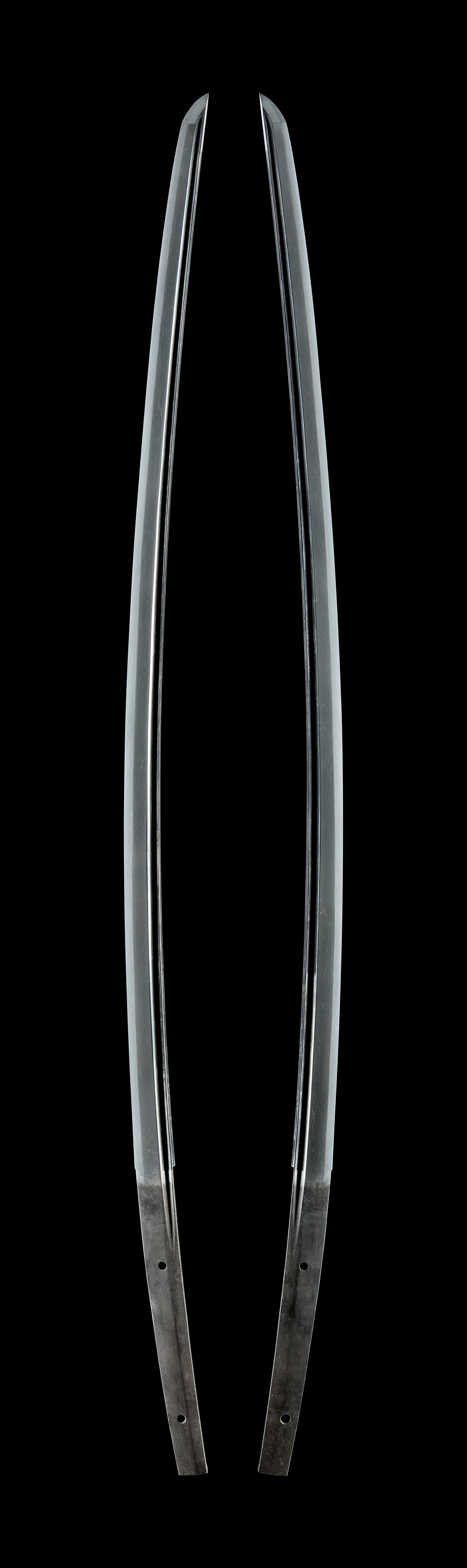
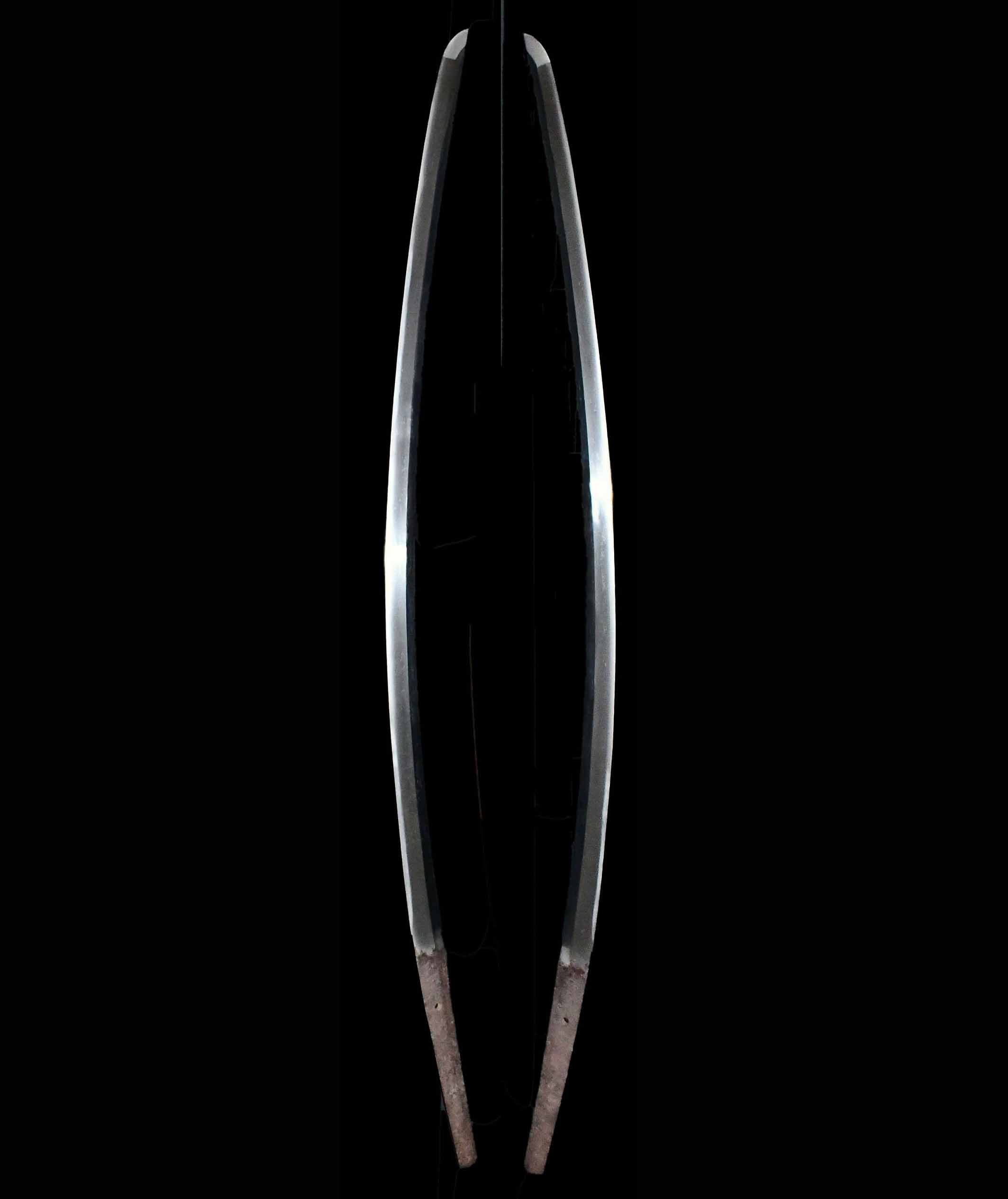
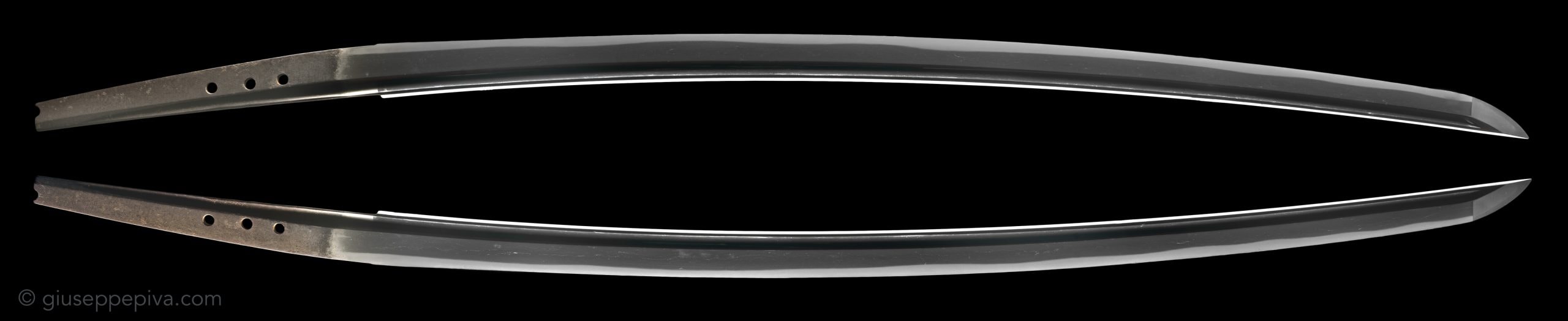
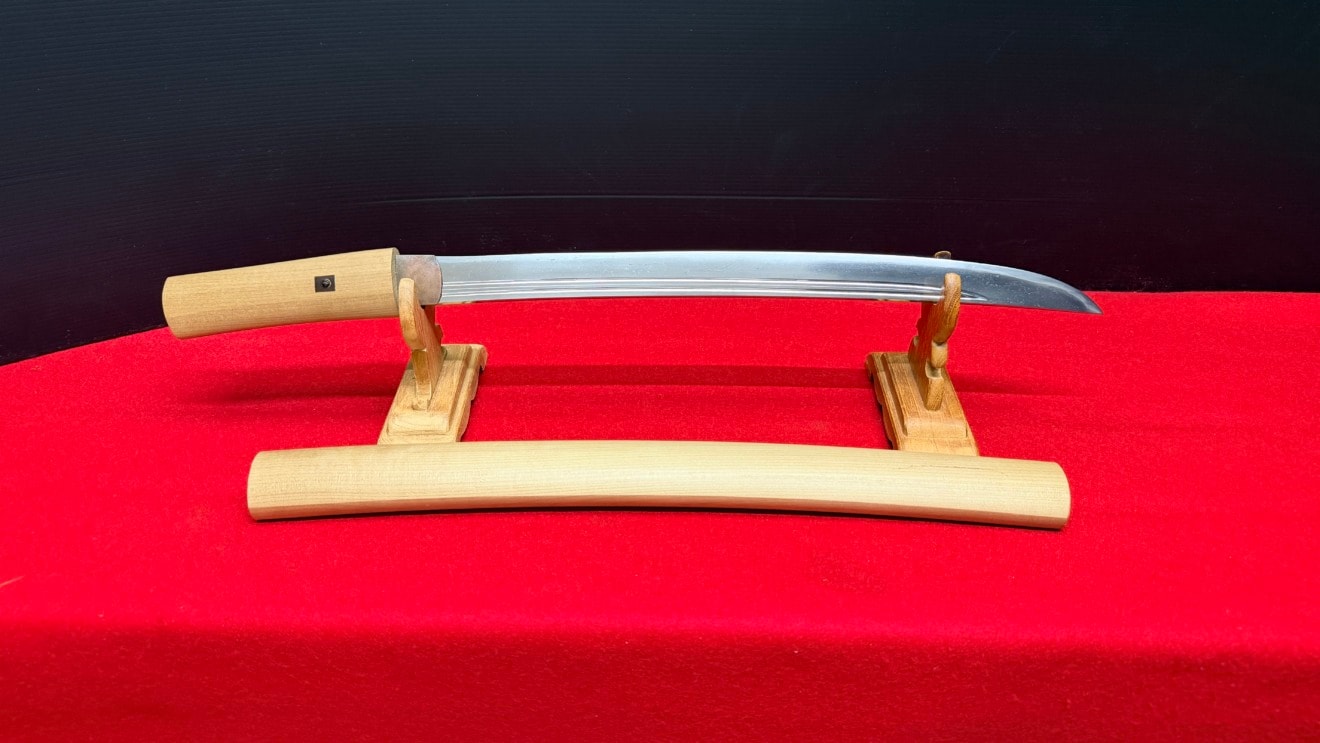
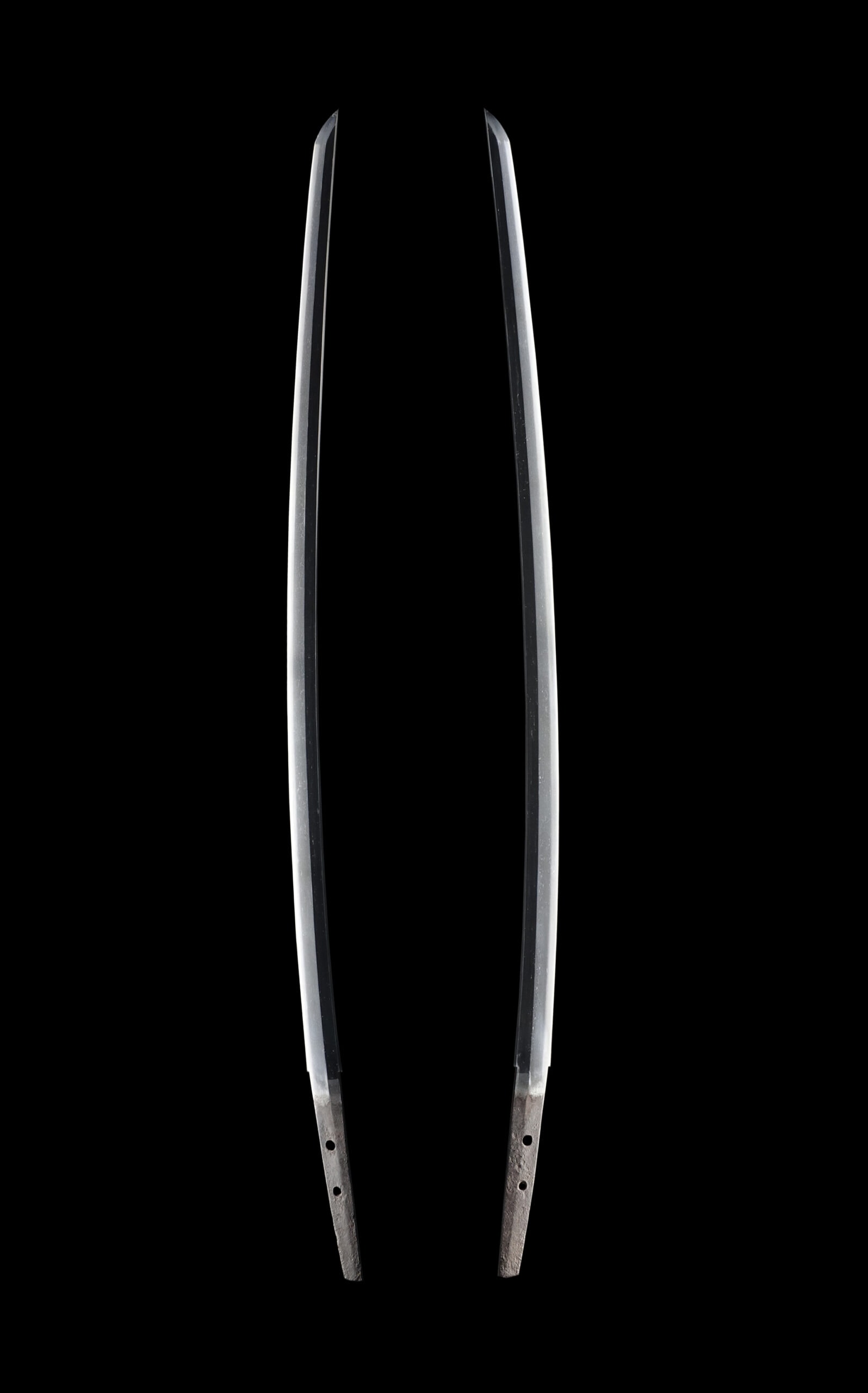
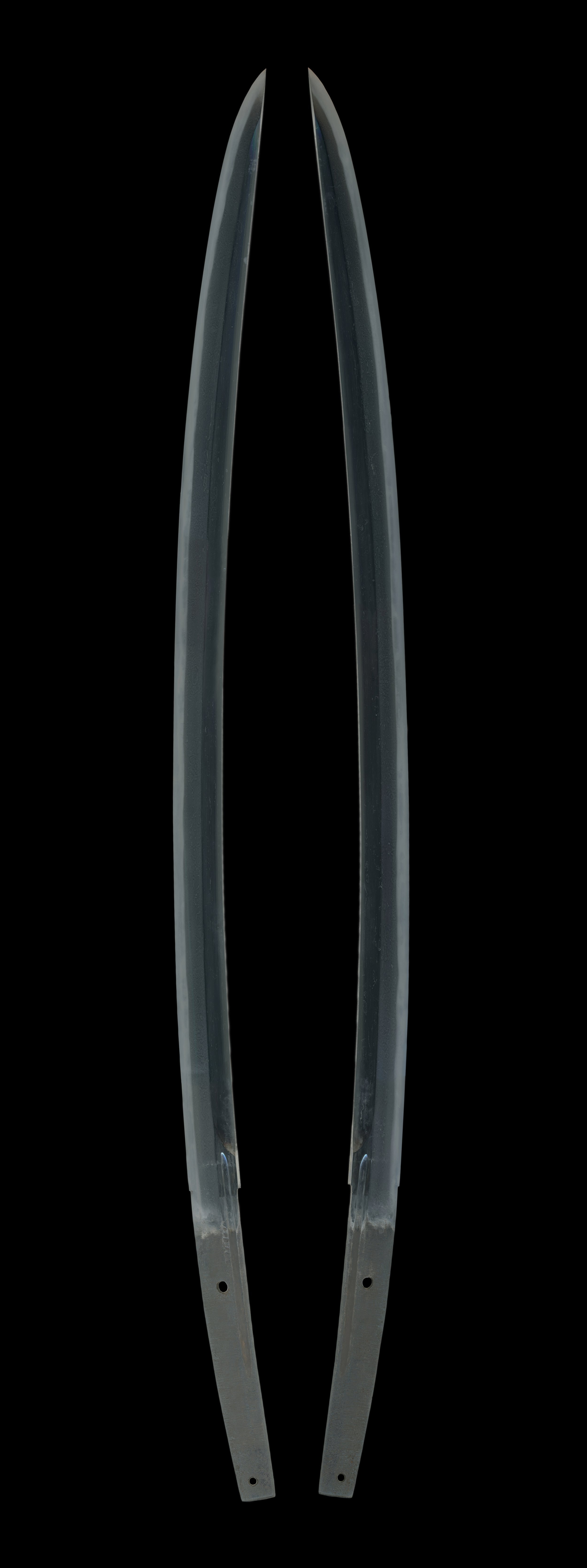
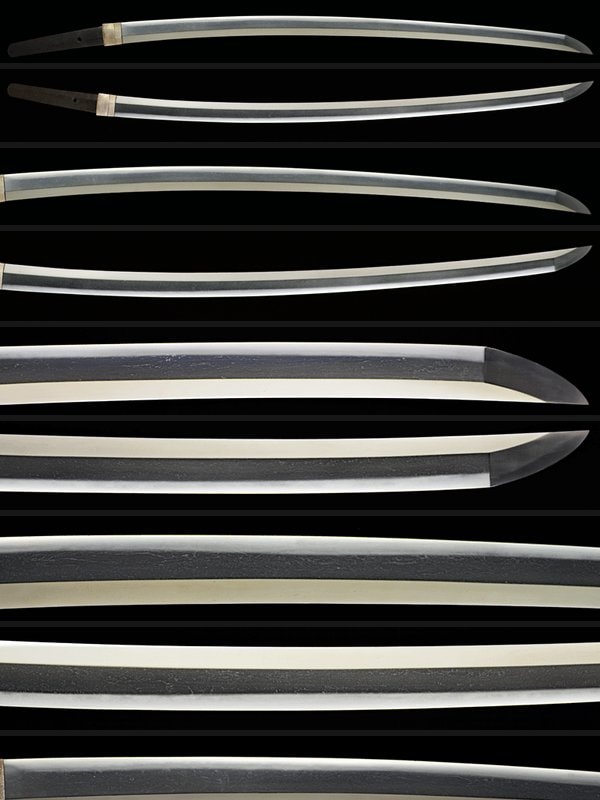
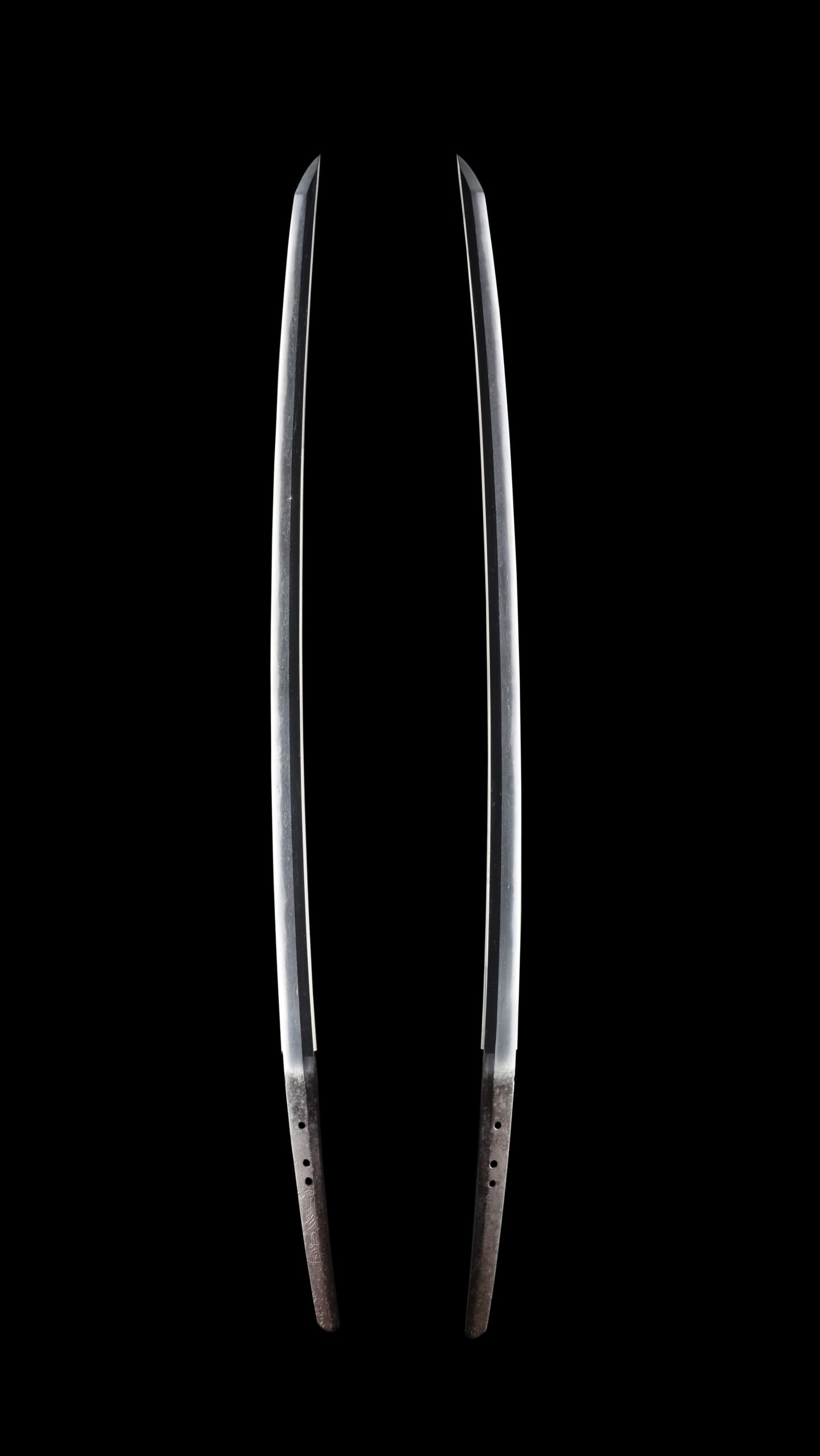
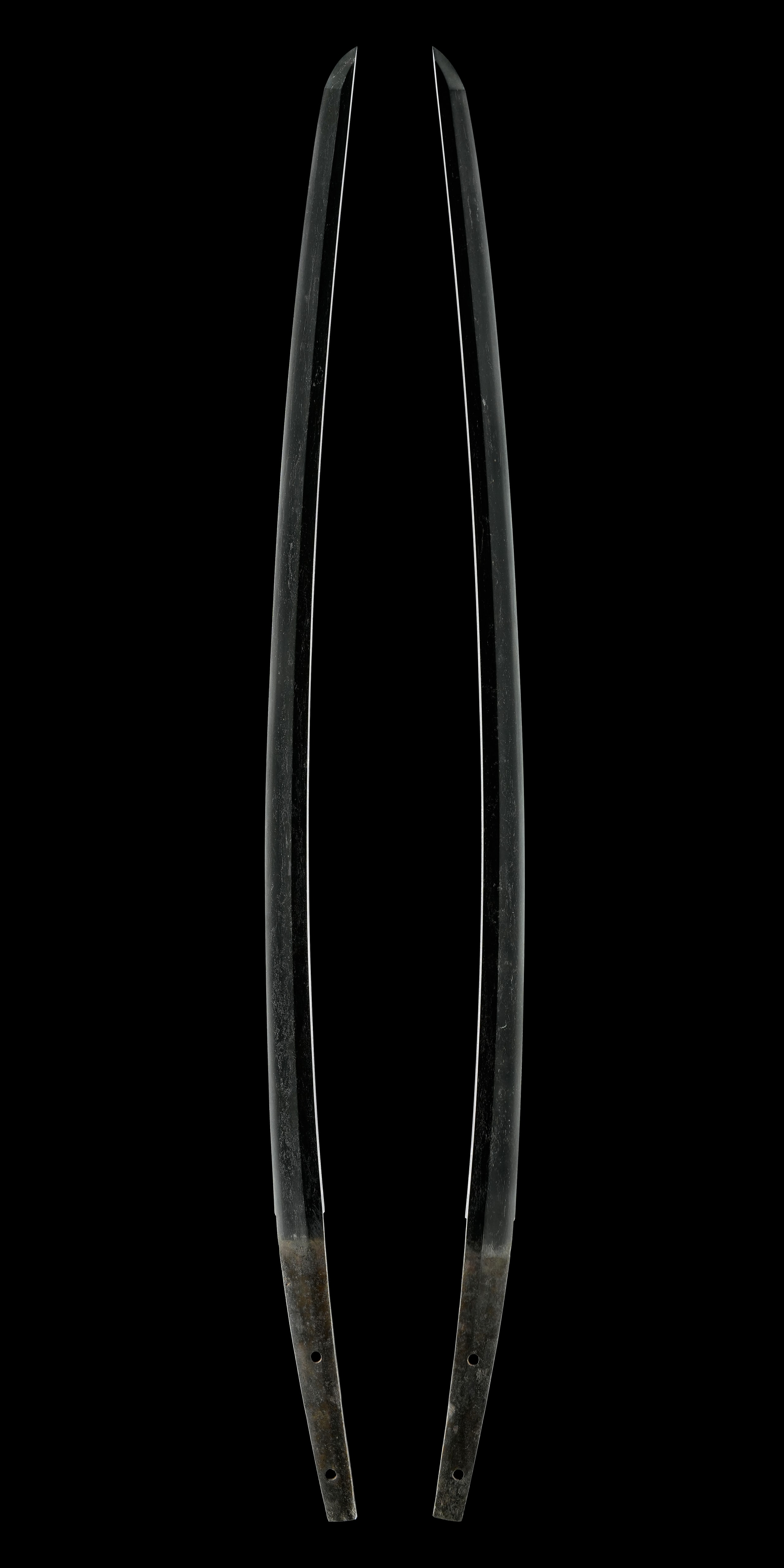
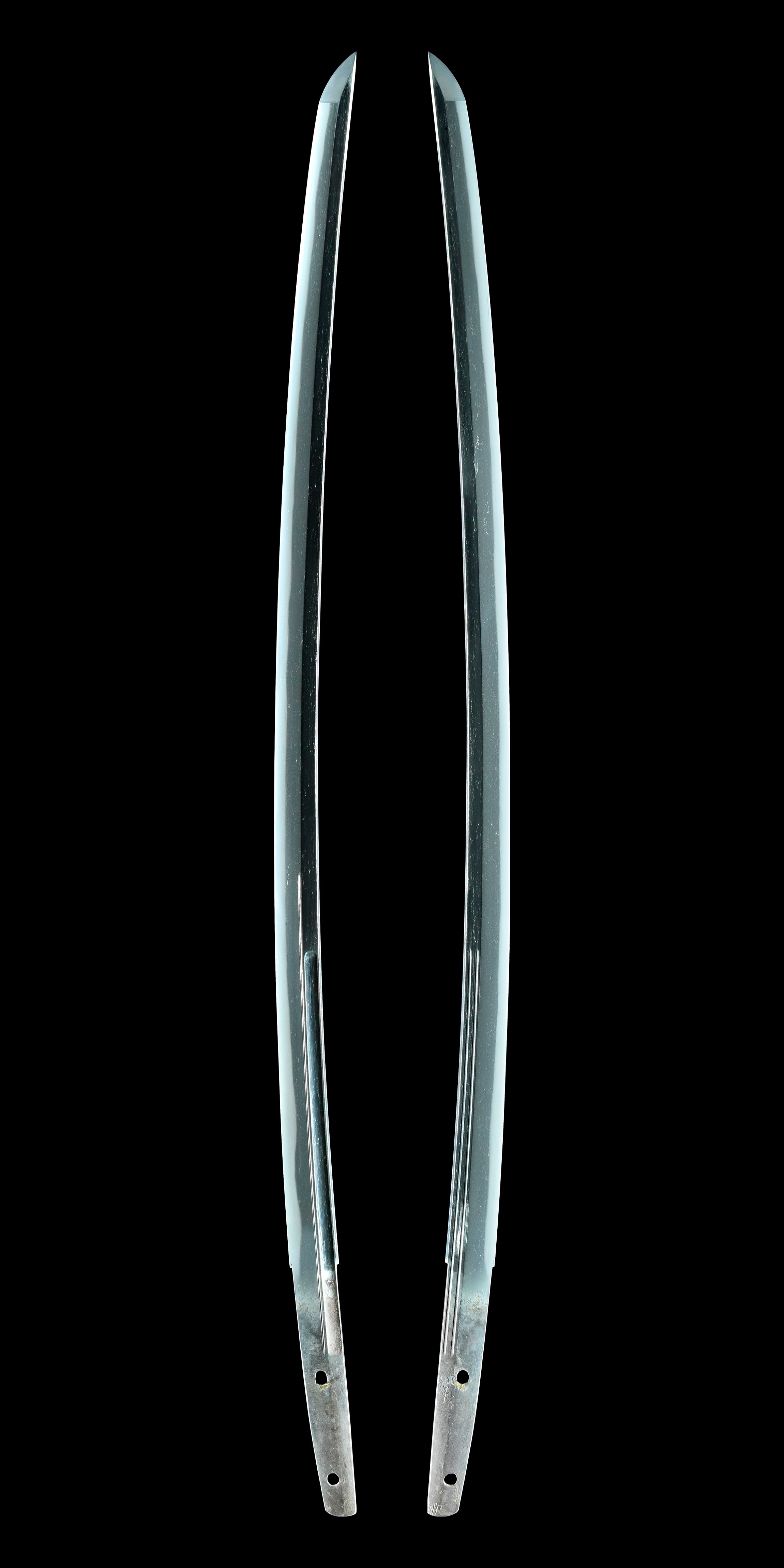
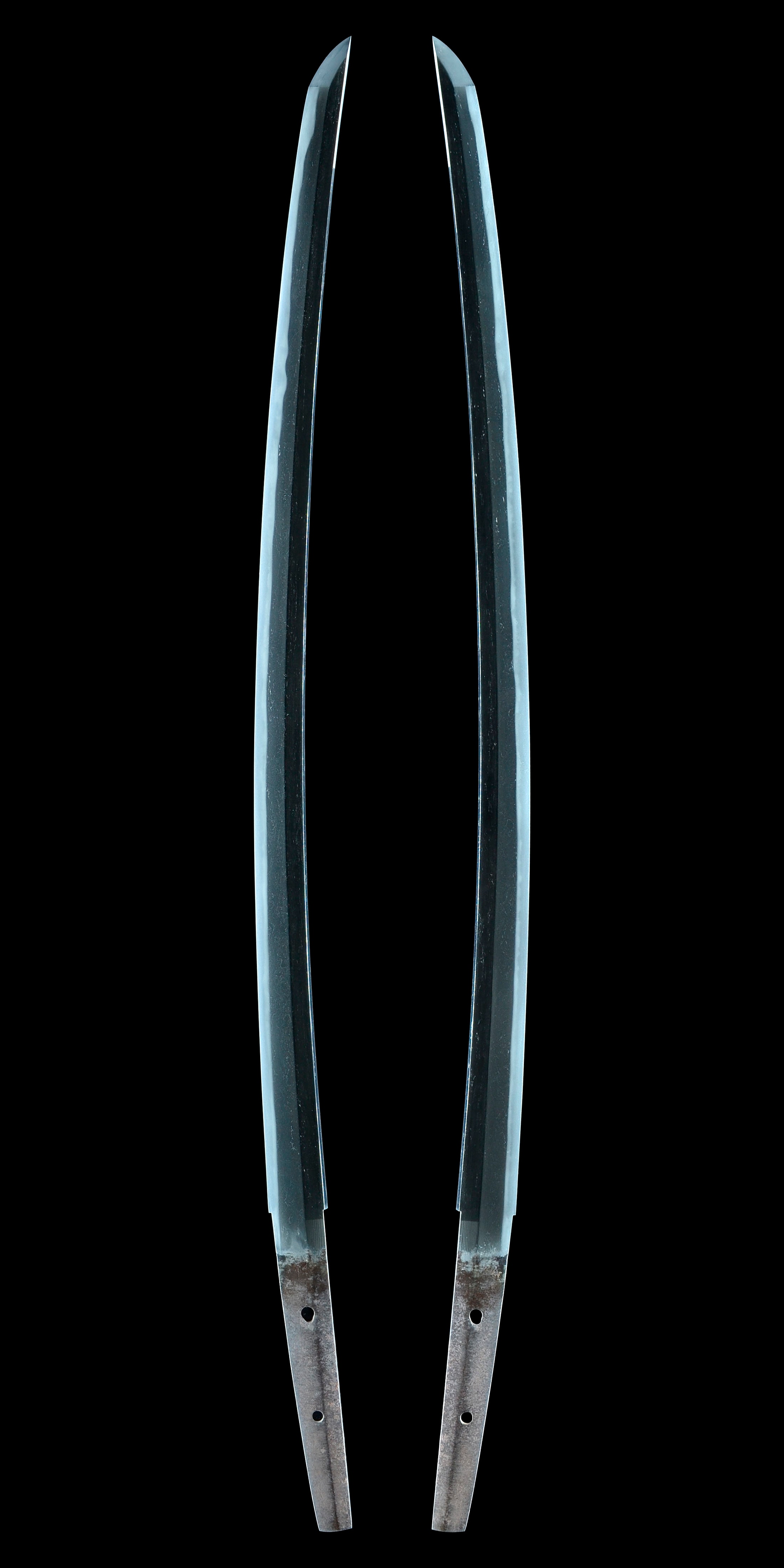
Uda Kunifusa is the first-generation master of the Uda school, and one of the very few smiths whose name survives in signed work. The published sources record him as a son of the Uda founder Ko-Nyūdō Kunimitsu, who carried the craft from Uda District in Yamato north to in the late period, and they hold by tradition that Kunifusa himself studied under Norishige, naming the smith called Gō alongside as a model. The school's whole record is overwhelmingly , , and appraised only to the group, so a signed Kunifusa is already a document; an early signed Kunifusa is rarer still. The appraisers anchor his identity on two designated Important Art Objects, one held by Hie Shrine and one by the Kurokawa Institute of Ancient Cultures, and judge further blades to him by the close calligraphic match of the inscription, in which, as one entry puts it, the enclosure of the character 国 is collapsed almost like a lattice. The earliest dated example of the name is a piece of Kōō 1 (1389).
His hand runs in two registers the Uda school never fused, and Kunifusa works both. The first is the Yamato root, seen most clearly in his and : with and a faint , several with a slightly elongated proportion, the a well-packed or with a flowing tendency. Over it he sets a mixed with and a shallow , entering, the deep with well adhered and at times somewhat coarse, and and fine running through. The runs straight into a , often pointed in tendency with a deep turnback and . At the base he carves a devotional program of , su-, and paired grooves, the on one noted as unusual for the school. The published sources read these calmer signed pieces as his typical work, Ōei-dated or judged together with dated examples, sound in both and .
The is the constant beneath both manners. mixed with and a flowing grain that tends to stand carries a well-adhering , with entering, and where the forging tightens into a stands clearly. That tightness is in fact his personal tell within the school. Discussing the difference between the two principal Uda names, the published commentary observes that 「国宗がやや肌立ったものが多いのに対し国房には地がねのつんだものが多い」, that Kunimune is more often seen with a standing grain, whereas Kunifusa is frequently seen in a tightly forged . On one judged to him, the commentary names the excellence of that forging as the deciding point, 「地がねの鍛錬がすぐれているところに国房と鑑すべき」, the quality of the steel itself returning the verdict to his hand.
The second register is the -leaning manner, which the sources trace to his study under Norishige, and which shows in his bold . These are wide in body with a thick and a chū- or , several keeping a high and even where shortened, an imposing shape. Over a flowing with conspicuous and he tempers a or base mixed with , the deep, the well adhered and at times coarse, with running conspicuously and entering, the and turning back with . The published sources grant that such blades call the tradition to mind through their prominent and abundant , modeled on the earlier masters Norishige and Gō; the entries caution that there are no purely -construction works among them, and the verdict is held to Uda. The school's manner spans these poles, and the dating of any single Kunifusa blade is given as a span, late to early , rather than to one hand, because the name continued through several generations.
What returns even his most -looking blade to the northern provinces is the , the feature the appraisal turns on. The steel tends to a dark, tone and grows kasu-datsu, hazy and standing, in places, a texture the published sources name as 「北国物特有の肌合」, the character distinctive to works of the north; the tends to sink rather than to glow, and the carries rounded, compact that the commentary calls 「つぶらな沸を交えている点などには宇多派の特徴」, a mark of the Uda school. His and the Yamato character of his calmer blades set him apart from the plainer northern smiths, while this darkened, dry-standing steel and the rounded set him apart from the bright clear steel of true . He stands beside Kunimune as a representative hand of the school, the tighter-forging brother by the appraisers' own account, the whose lattice-broken character secures the attributions.
For the collector Kunifusa is a rare early northern name rather than a market presence. Fujishiro grades him Jō-jō . He has no National Treasures and no Important Cultural Properties; his record runs instead through fourteen blades and three prewar Jūyō Bijutsuhin, seventeen designated works in all, with the represented by the two Important Art Object held at Hie Shrine and at the Kurokawa Institute of Ancient Cultures. Of recorded whereabouts, a passed through the Kajimura collection of Osaka and another Important Art Object descends from Kurokawa Fukusaburō into the Kurokawa Institute. The published commentary calls one 「数少ない初代国房の作として資料的にも貴重」, valuable as documentary material, being among the few first-generation works. Most designated Uda, in public and long-private hands alike, is held rather than traded; a signed Kunifusa of the early dated period reaches the market only seldom, and a example with the lattice-broken character is a notable thing for a collector to encounter, a document of how a Yamato craft took root in the north.