室町は刀剣業を産業に変えた。徒歩の集団戦とともに打刀が興り、長船と関は数打ち物と注文打ちを並行して産し、勘合貿易は日本刀を数万振の単位で海外へ運んだ。
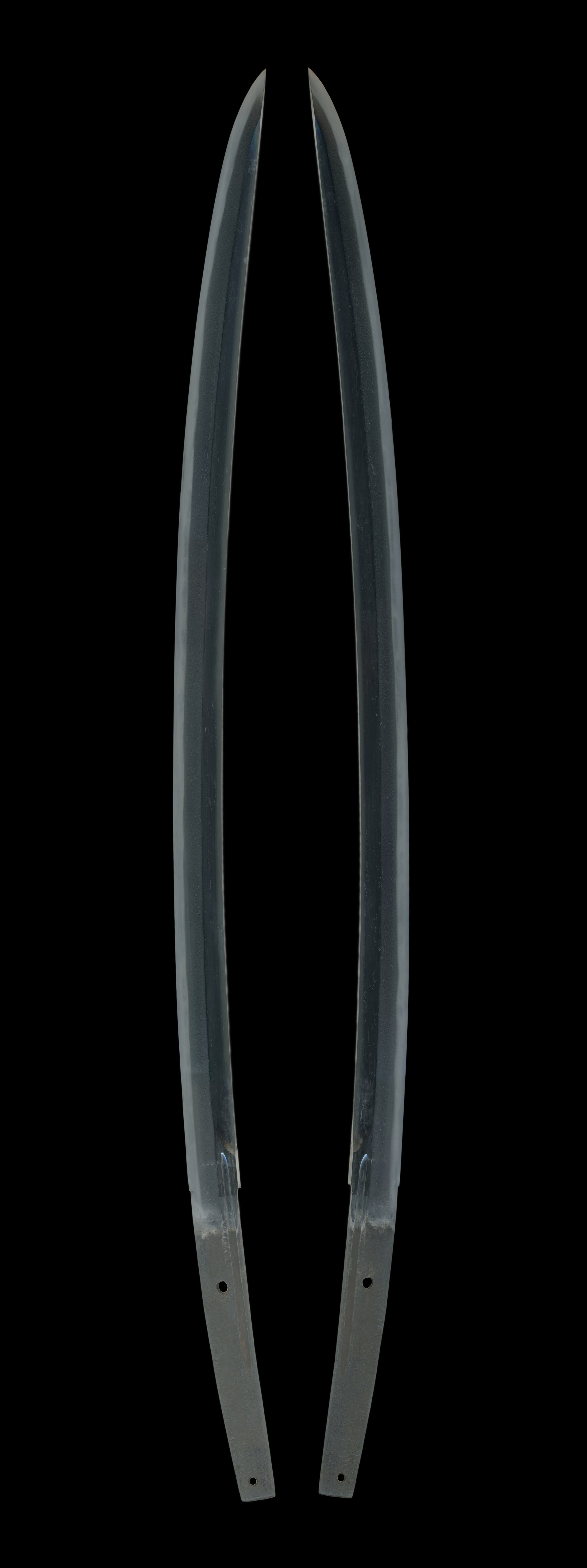
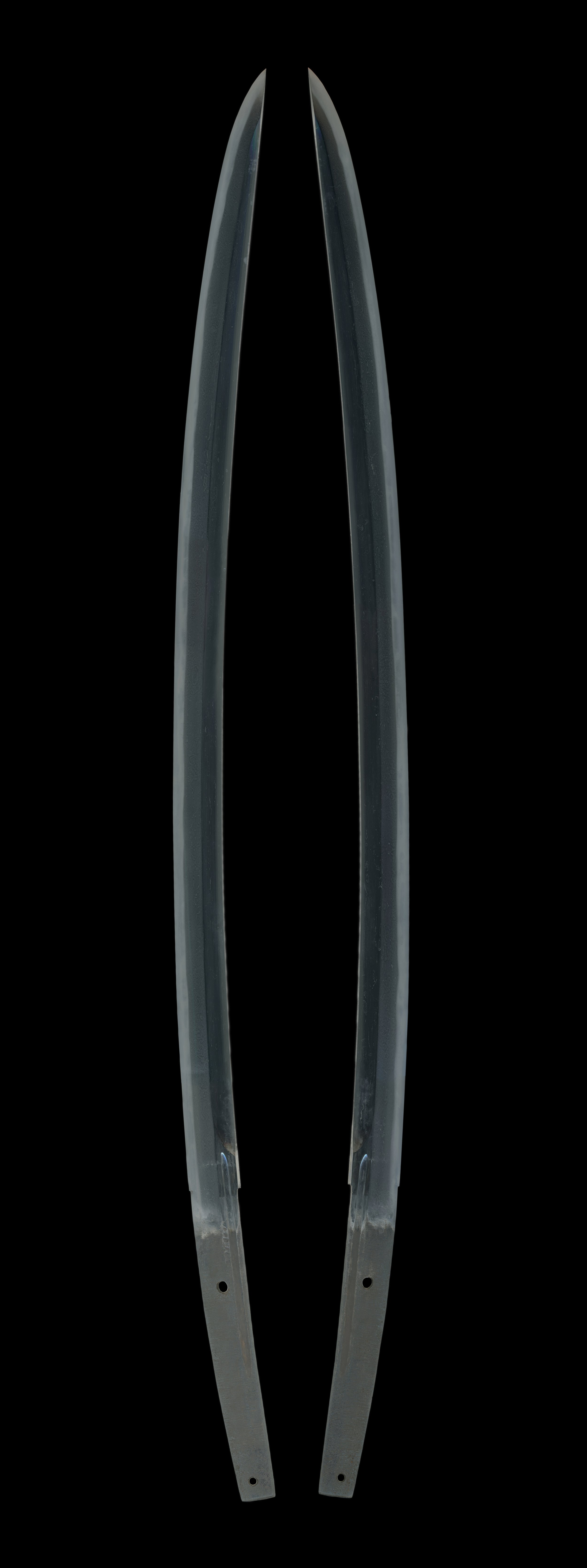
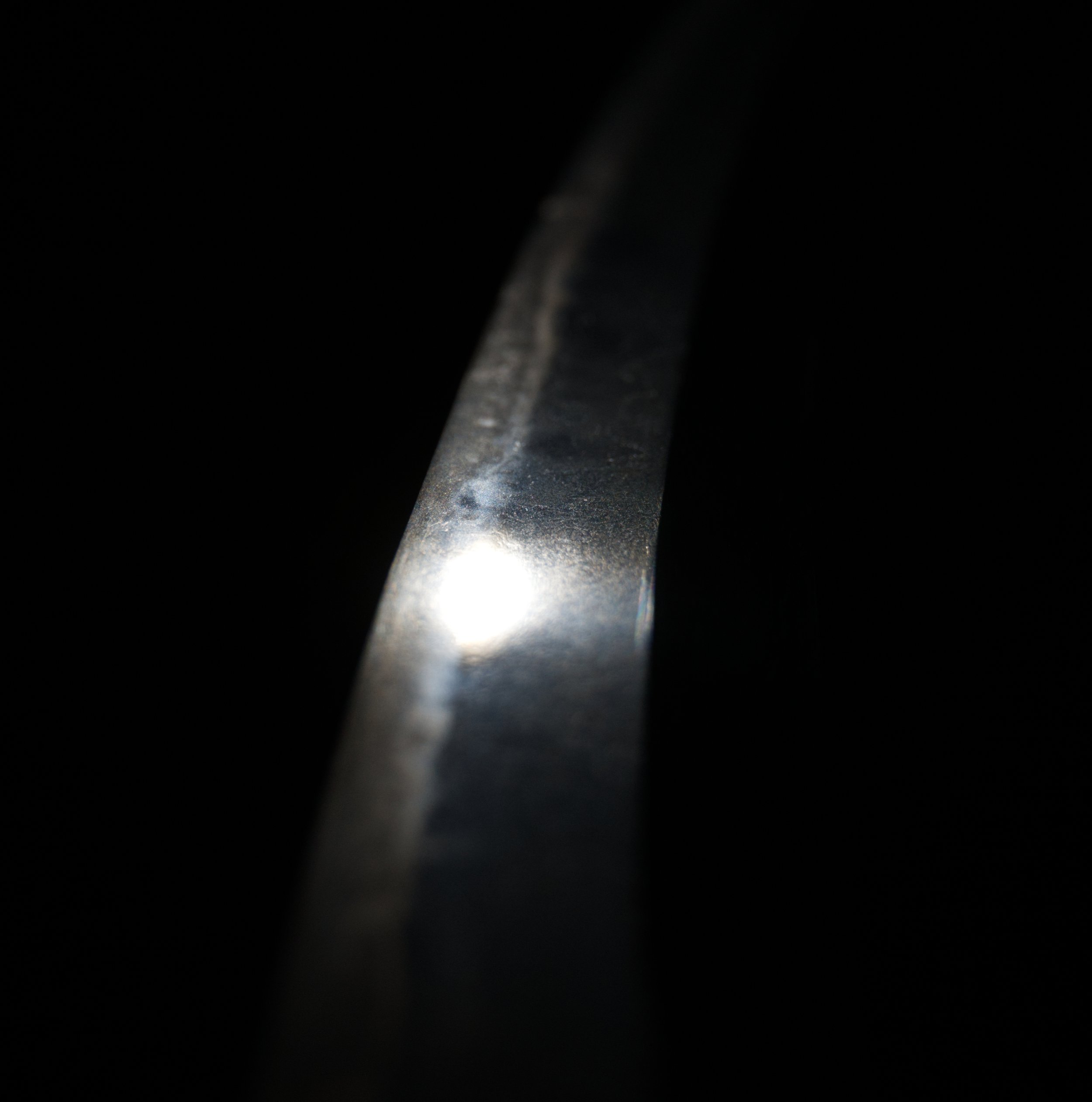
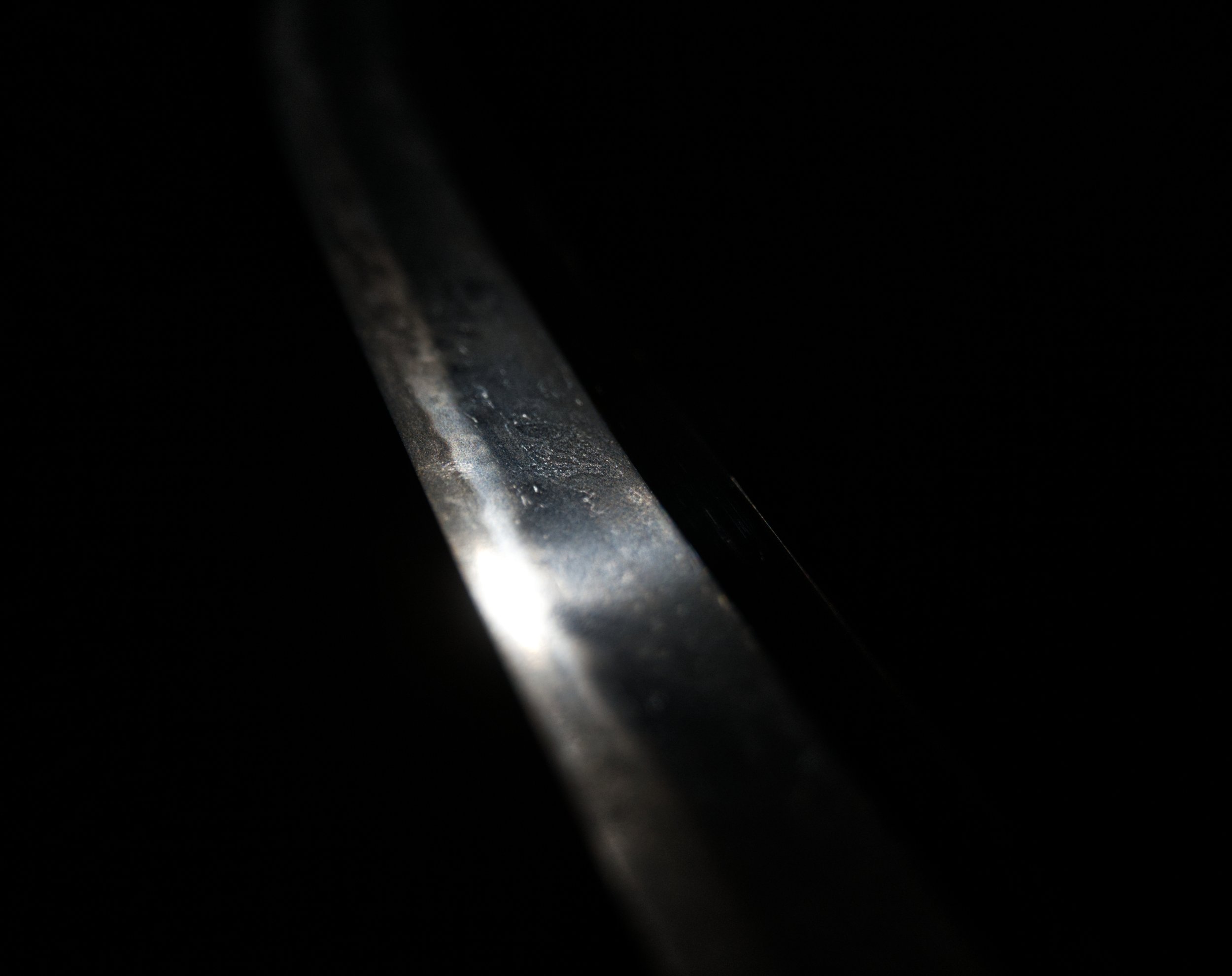
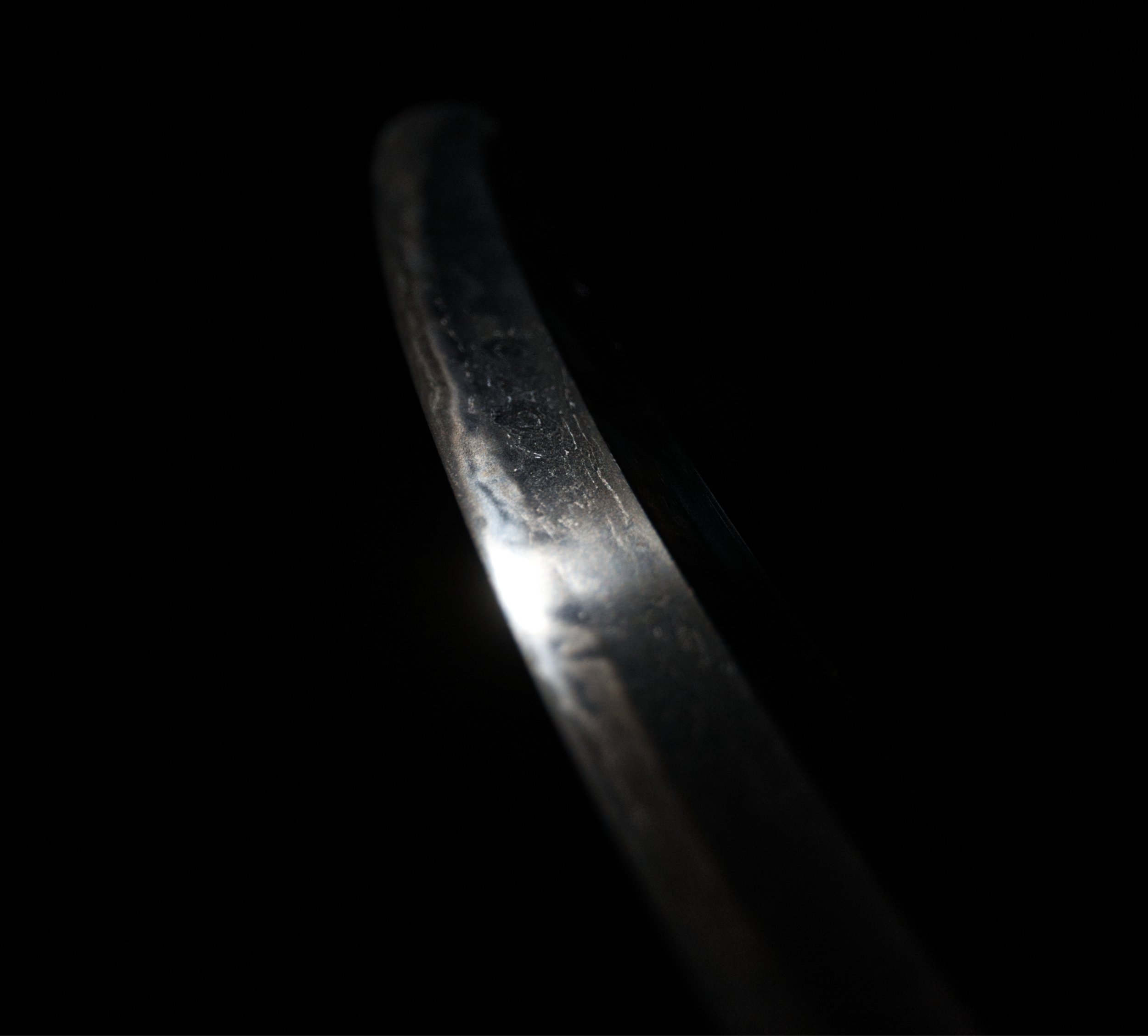
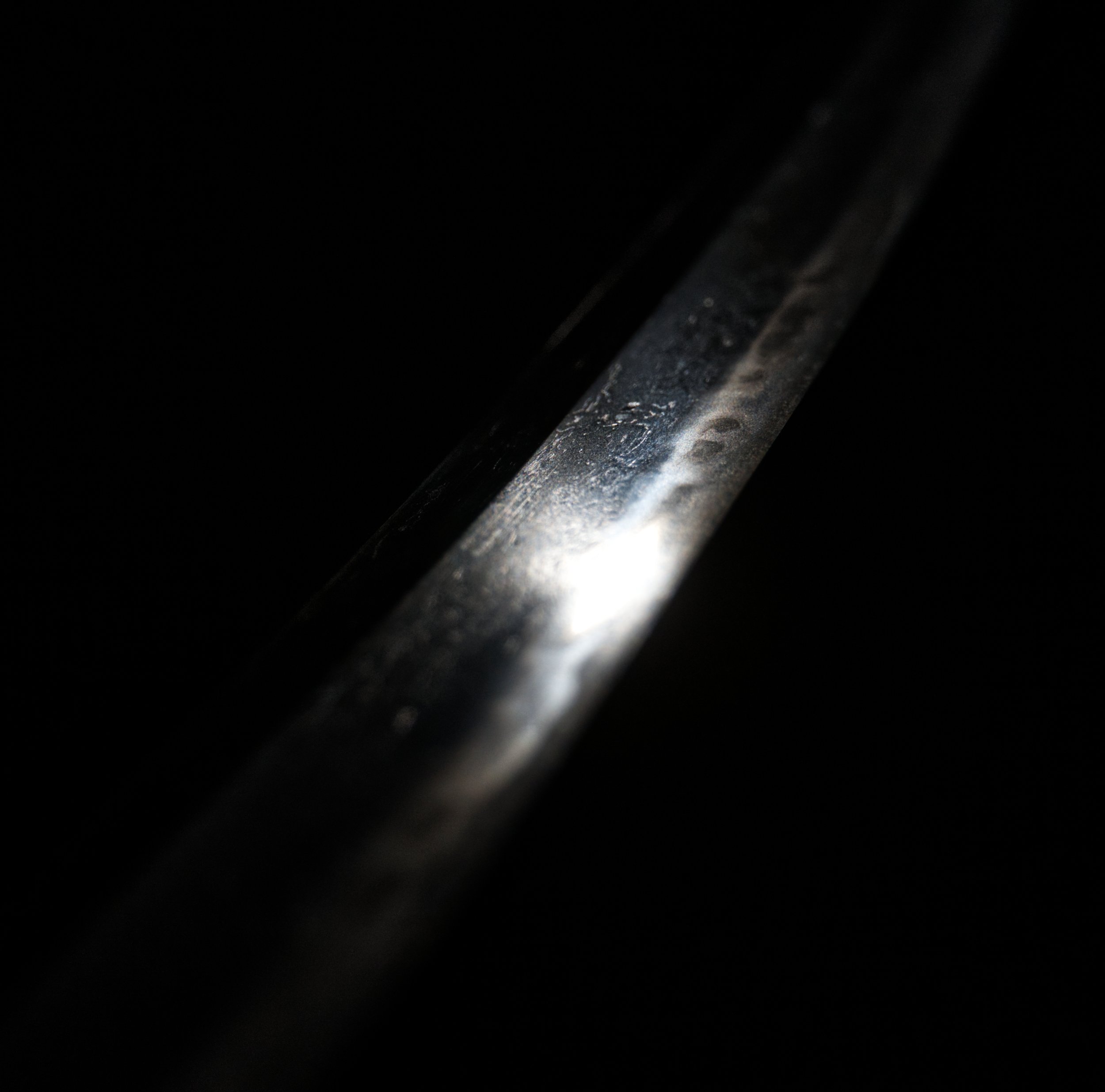
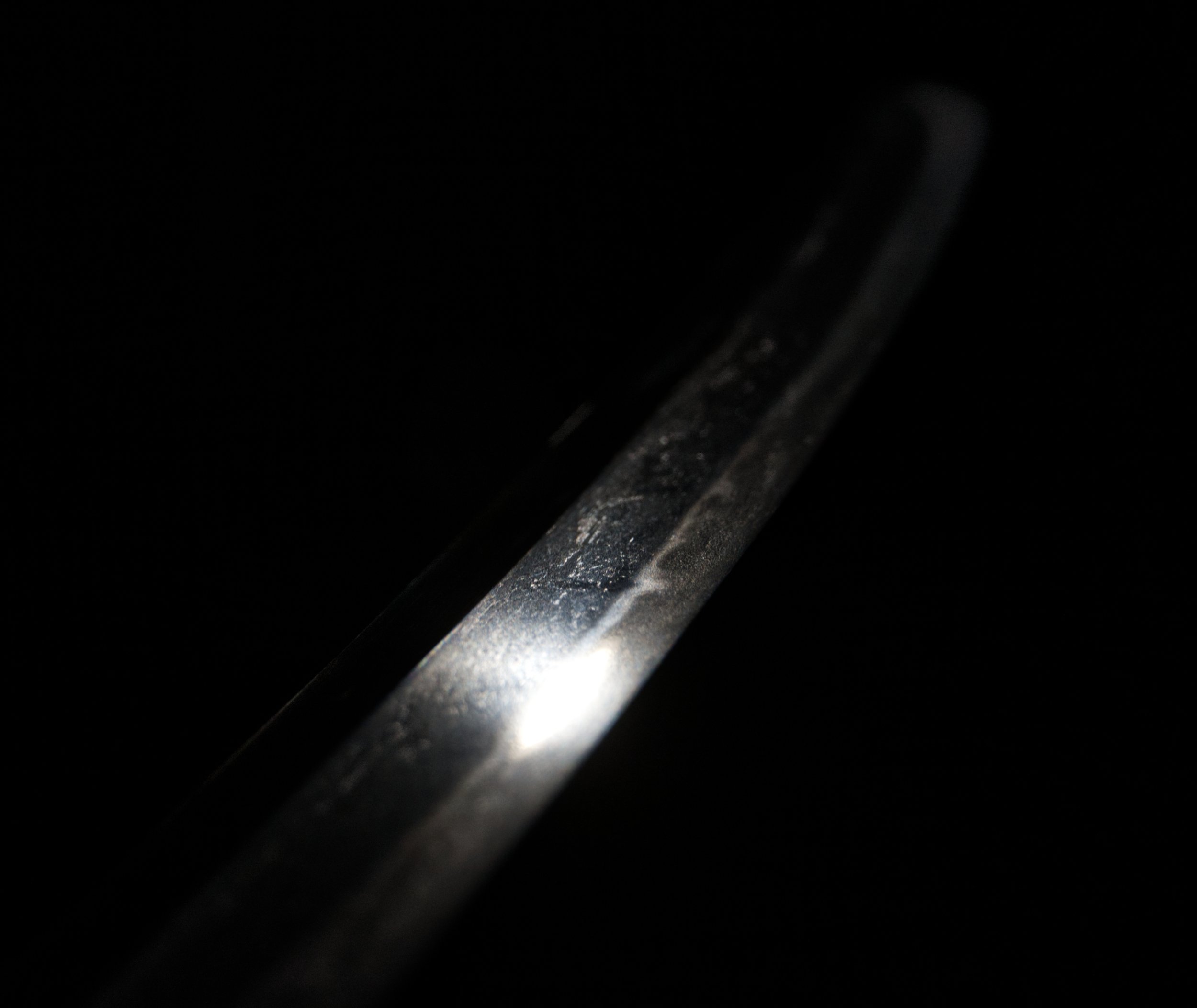
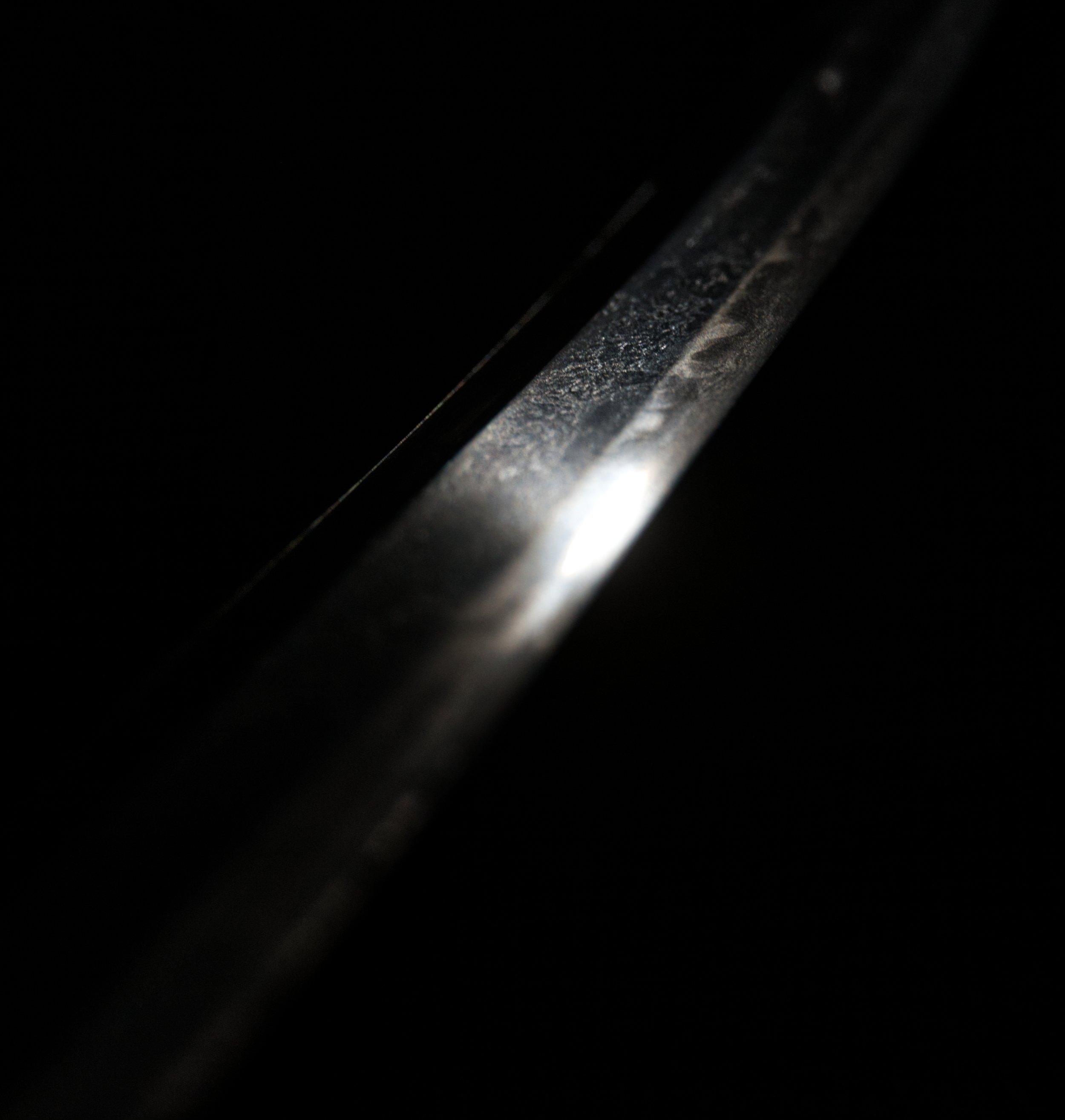
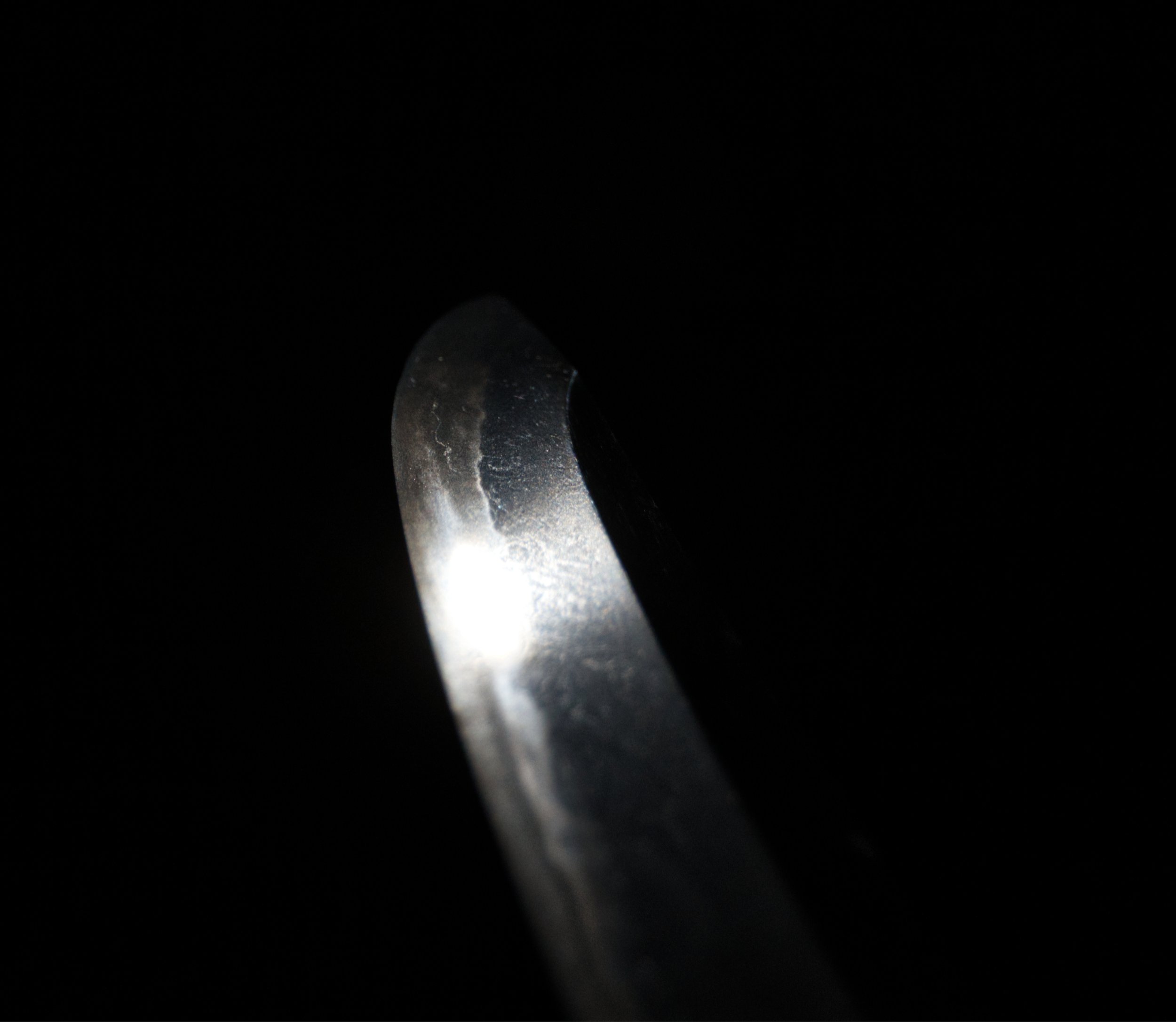
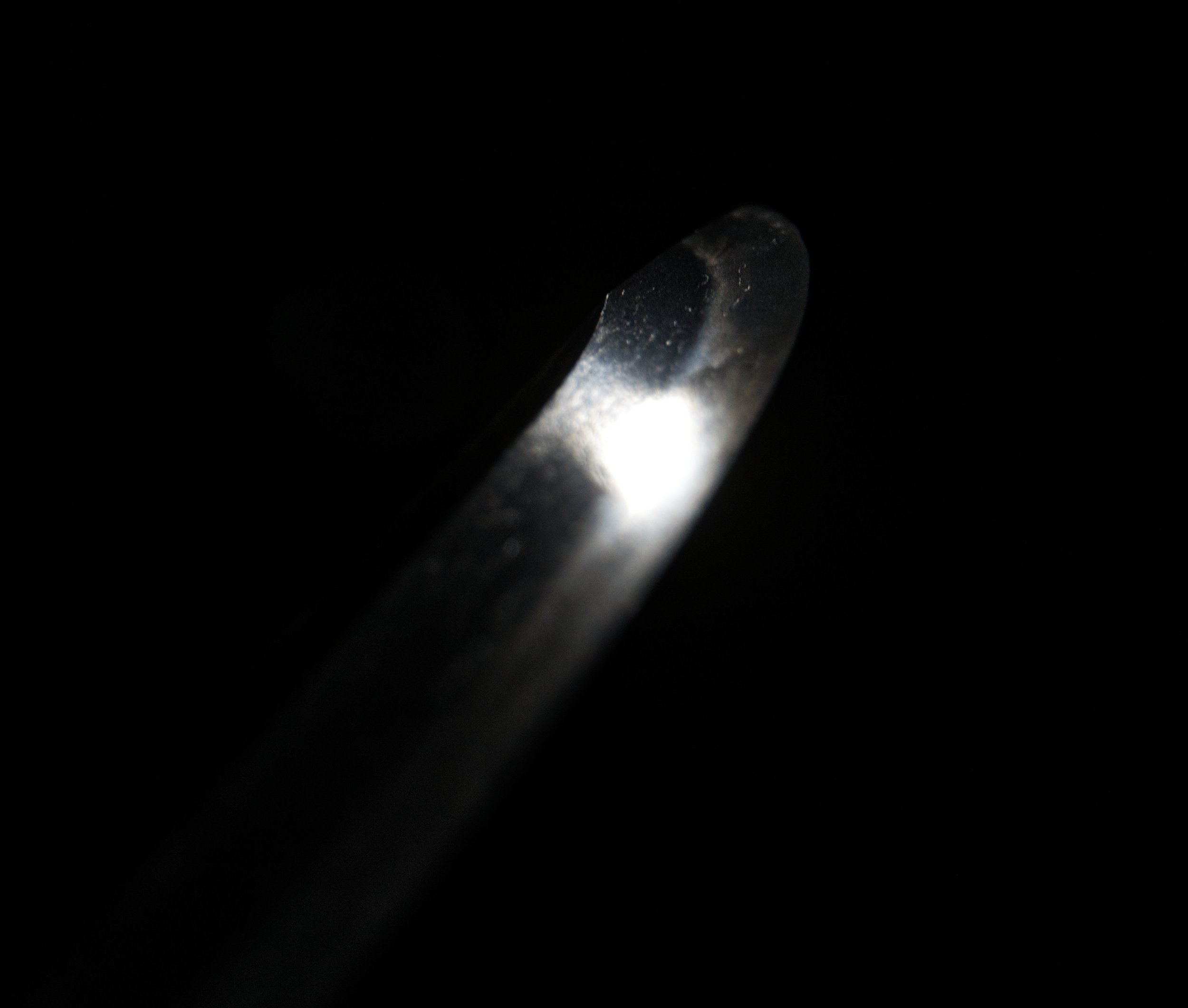
Uda Hirakuni (宇多平国)was a swordsmith of the Uda school who worked inEtchū Provinceduring theBunki era (1501–1504), in the latter part of the Muromachi period. He belonged to the long-established Uda tradition, a school whose origins were rooted in the traditions of Yamato but which developed a particularly strong affinity with the workmanship of the Sōshū tradition. The Uda school had flourished in Etchū from the Nanbokuchō period onward. Its earliest masters are generally grouped under the designationKo-Uda (古宇多), while their Muromachi-period successors are referred to simply as Uda. Hirakuni belongs to this later generation of the school and is traditionally recorded as astudent of Uda Kunikiyo (宇多国清).This is an attractive Koto-period naginata-naoshi katana, attributed to Uda Hirakuni. Originally forged in the form of a naginata, the blade was shortened and reshaped into its present katana configuration. It retains its original naginata-hi, an appealing feature that clearly speaks to the blade's former form. The hi continues past the present machi and extends down into what is now the nakago, providing a visible reminder of the blade's history and transformation from naginata to katana. The blade presents a very pleasing and characterful sugata, retaining much of the distinctive character associated with its naginata origins. The jigane is particularly interesting, displaying an active mixture of itame and masame, with areas of mokume and conspicuous burl-like formations also visible throughout the steel. The overall complexion of the jigane is somewhat dark and blackish, giving the blade a subdued and distinctly old appearance befitting its Koto-period manufacture. The hamon is based in notare, with activity visible within the hardened edge. Hataraki including ashi and yo can be observed, adding further variation and interest to the tempering.
無銘 · Uda · 室町 · 長さ 64.8cm · 反り 1.5cm


脇物 · 越中 · 1429-1441頃
刀剣大鑑 上位37%
現在2点販売中
脇物 · 越中
時期区分: 宇多· 1390–1596
現在35点販売中
古宇多が南北朝期までの草創を画したのに対し、本区分はその後を承けて室町時代を通じて継続した越中宇多派を扱う。説示によれば、宇多派は鎌倉時代末期の文保頃、大和国宇陀郡から越中に移住した古入道国光を祖とし、南北朝期の国房・国宗・国次らを承けて、同名相継ぎながら室町時代末期に亘って栄えた。南北朝期を降らぬ作を古宇多と呼ぶのに対し、その後のものを宇多と汎称しており、本区分はまさにこの後者にあたる。応永を最古とする国久、初代国光の子と伝える国宗の系、永享から天正に及ぶ国長、永享・永正の国吉、天文頃の平国・真国、さらに国清・友久ら、国の字を冠す諸工が代を重ねて活躍した。元来が大和宇陀郡の出自であるため大和気質を色濃く残しつつ、越中の先達則重や江に倣った相州伝風をも併せ持つのが、北国に根を下ろしたこの一派の地盤である。 後代宇多の作風は、板目に杢を交えて総体に肌立ち、地沸がつき地景が入る鍛えに、かねが黒みをおびて淡く白け映りの立つ点に北国の地方色が顕著に表れる。刃文は中直刃調に小互の目を連れ、小のたれや小尖り刃を交え、匂勝ちに小沸がつき、つぶらな沸を交えて金筋・砂流しがかかり、帽子は先尖りごころに小丸となって長く返るものが多い。応永頃の国久・友久のように小板目がよく錬れて精美に詰み、地刃明るく冴える優品がある一方、室町期に降るにつれて作は定型化し、身幅の割に寸の延びた短刀姿や先反りのつく姿など室町の体配を示すようになる。平国や国長には飛焼・湯走りを交えてやや皆焼状を呈し、覇気迫力に富む作もみえる。総じて、古宇多が相州上工に紛れんばかりの古色と変化を見せたのに対し、後代は肌立ちがやや粗くなり、北陸物らしい黒みのある鉄色が一段と地方色を強める点に差がある。 後代宇多を古宇多と分かつ鑑定の要点は、説示が古色の有無に置く。古宇多が来国光・国次に紛れんばかりの精良さと激しい働きを見せるのに対し、後代は地鉄の黒みと白け映り、肌立ちごころの鍛えに地方色が強まり、茎先の張る茎仕立や国の字の銘振りに見処があるとされる。主要工としては、応永頃の国久・友久を上工とし、国宗・国次・国房はそれぞれ代を重ね、文明・天文の年紀を有する作も存して時代の指標となる。能州笠師に移った国長のように、信国に通う作風を示す傍系もみえる。在銘作は比較的稀で、無銘極めや諸国に伝来した作によって同派の広がりが知られ、富山をはじめ北陸ゆかりの伝来を持つものが少なくない。 詳しく見る →
室町時代
室町は刀剣業を産業に変えた。徒歩の集団戦とともに打刀が興り、長船と関は数打ち物と注文打ちを並行して産し、勘合貿易は日本刀を数万振の単位で海外へ運んだ。
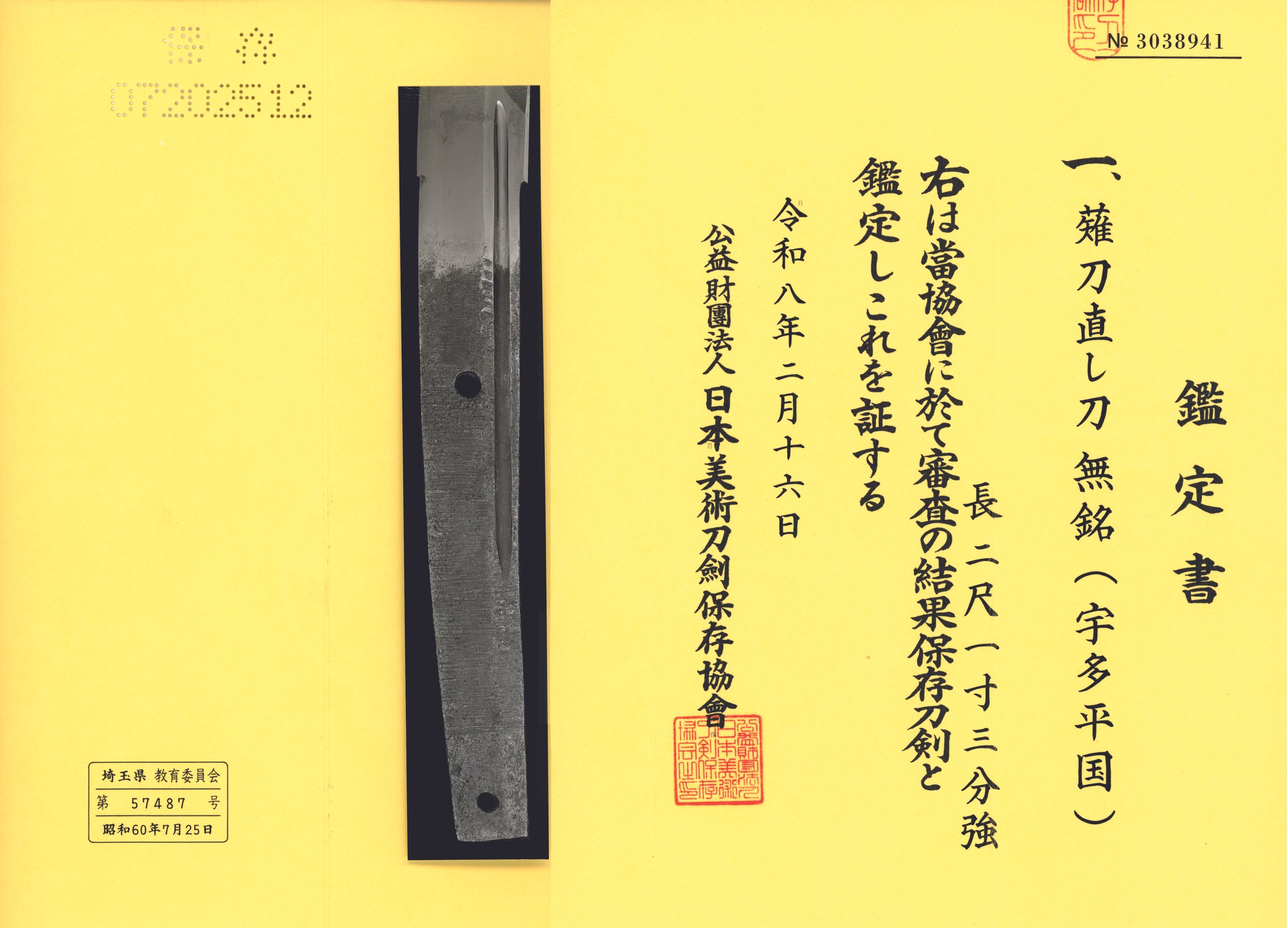
銘が正しい、または無銘でも年代・国・系統を確実に指摘できる、保存に値する真正の作と鑑定されたものです。
日本美術刀剣保存協会(NBTHK)は、1948年に設立され、文化庁の監督を受ける公益財団法人で、東京・刀剣博物館に本部を置きます。専門の審査員が出品作を直接審査し、美術的・歴史的価値に応じた鑑定書を発行します。NBTHKの鑑定書は、日本刀および刀装具の真正性を示す最も広く認知された基準です。
NBTHK公式サイトTo facilitate this, we offer a three-day inspection period. To initiate a return, you must notify us within three days of the package being delivered. Once we confirm your request, you have seven days to ship the item back to us. The item must be returned in its original condition, including all accompanying documents, certificates, and packaging materials. The buyer is responsible for covering the shipping costs and insurance for the return shipment.
¥680,000
Uda Hirakuni (宇多平国)was a swordsmith of the Uda school who worked inEtchū Provinceduring theBunki era (1501–1504), in the latter part of the Muromachi period. He belonged to the long-established Uda tradition, a school whose origins were rooted in the traditions of Yamato but which developed a particularly strong affinity with the workmanship of the Sōshū tradition. The Uda school had flourished in Etchū from the Nanbokuchō period onward. Its earliest masters are generally grouped under the designationKo-Uda (古宇多), while their Muromachi-period successors are referred to simply as Uda. Hirakuni belongs to this later generation of the school and is traditionally recorded as astudent of Uda Kunikiyo (宇多国清).This is an attractive Koto-period naginata-naoshi katana, attributed to Uda Hirakuni. Originally forged in the form of a naginata, the blade was shortened and reshaped into its present katana configuration. It retains its original naginata-hi, an appealing feature that clearly speaks to the blade's former form. The hi continues past the present machi and extends down into what is now the nakago, providing a visible reminder of the blade's history and transformation from naginata to katana. The blade presents a very pleasing and characterful sugata, retaining much of the distinctive character associated with its naginata origins. The jigane is particularly interesting, displaying an active mixture of itame and masame, with areas of mokume and conspicuous burl-like formations also visible throughout the steel. The overall complexion of the jigane is somewhat dark and blackish, giving the blade a subdued and distinctly old appearance befitting its Koto-period manufacture. The hamon is based in notare, with activity visible within the hardened edge. Hataraki including ashi and yo can be observed, adding further variation and interest to the tempering.
無銘 · Uda · 室町 · 長さ 64.8cm · 反り 1.5cm


脇物 · 越中 · 1429-1441頃
刀剣大鑑 上位37%
現在2点販売中
脇物 · 越中
時期区分: 宇多· 1390–1596
現在35点販売中
古宇多が南北朝期までの草創を画したのに対し、本区分はその後を承けて室町時代を通じて継続した越中宇多派を扱う。説示によれば、宇多派は鎌倉時代末期の文保頃、大和国宇陀郡から越中に移住した古入道国光を祖とし、南北朝期の国房・国宗・国次らを承けて、同名相継ぎながら室町時代末期に亘って栄えた。南北朝期を降らぬ作を古宇多と呼ぶのに対し、その後のものを宇多と汎称しており、本区分はまさにこの後者にあたる。応永を最古とする国久、初代国光の子と伝える国宗の系、永享から天正に及ぶ国長、永享・永正の国吉、天文頃の平国・真国、さらに国清・友久ら、国の字を冠す諸工が代を重ねて活躍した。元来が大和宇陀郡の出自であるため大和気質を色濃く残しつつ、越中の先達則重や江に倣った相州伝風をも併せ持つのが、北国に根を下ろしたこの一派の地盤である。 後代宇多の作風は、板目に杢を交えて総体に肌立ち、地沸がつき地景が入る鍛えに、かねが黒みをおびて淡く白け映りの立つ点に北国の地方色が顕著に表れる。刃文は中直刃調に小互の目を連れ、小のたれや小尖り刃を交え、匂勝ちに小沸がつき、つぶらな沸を交えて金筋・砂流しがかかり、帽子は先尖りごころに小丸となって長く返るものが多い。応永頃の国久・友久のように小板目がよく錬れて精美に詰み、地刃明るく冴える優品がある一方、室町期に降るにつれて作は定型化し、身幅の割に寸の延びた短刀姿や先反りのつく姿など室町の体配を示すようになる。平国や国長には飛焼・湯走りを交えてやや皆焼状を呈し、覇気迫力に富む作もみえる。総じて、古宇多が相州上工に紛れんばかりの古色と変化を見せたのに対し、後代は肌立ちがやや粗くなり、北陸物らしい黒みのある鉄色が一段と地方色を強める点に差がある。 後代宇多を古宇多と分かつ鑑定の要点は、説示が古色の有無に置く。古宇多が来国光・国次に紛れんばかりの精良さと激しい働きを見せるのに対し、後代は地鉄の黒みと白け映り、肌立ちごころの鍛えに地方色が強まり、茎先の張る茎仕立や国の字の銘振りに見処があるとされる。主要工としては、応永頃の国久・友久を上工とし、国宗・国次・国房はそれぞれ代を重ね、文明・天文の年紀を有する作も存して時代の指標となる。能州笠師に移った国長のように、信国に通う作風を示す傍系もみえる。在銘作は比較的稀で、無銘極めや諸国に伝来した作によって同派の広がりが知られ、富山をはじめ北陸ゆかりの伝来を持つものが少なくない。 詳しく見る →
室町時代
室町は刀剣業を産業に変えた。徒歩の集団戦とともに打刀が興り、長船と関は数打ち物と注文打ちを並行して産し、勘合貿易は日本刀を数万振の単位で海外へ運んだ。
銘が正しい、または無銘でも年代・国・系統を確実に指摘できる、保存に値する真正の作と鑑定されたものです。
日本美術刀剣保存協会(NBTHK)は、1948年に設立され、文化庁の監督を受ける公益財団法人で、東京・刀剣博物館に本部を置きます。専門の審査員が出品作を直接審査し、美術的・歴史的価値に応じた鑑定書を発行します。NBTHKの鑑定書は、日本刀および刀装具の真正性を示す最も広く認知された基準です。
NBTHK公式サイトTo facilitate this, we offer a three-day inspection period. To initiate a return, you must notify us within three days of the package being delivered. Once we confirm your request, you have seven days to ship the item back to us. The item must be returned in its original condition, including all accompanying documents, certificates, and packaging materials. The buyer is responsible for covering the shipping costs and insurance for the return shipment.
¥680,000