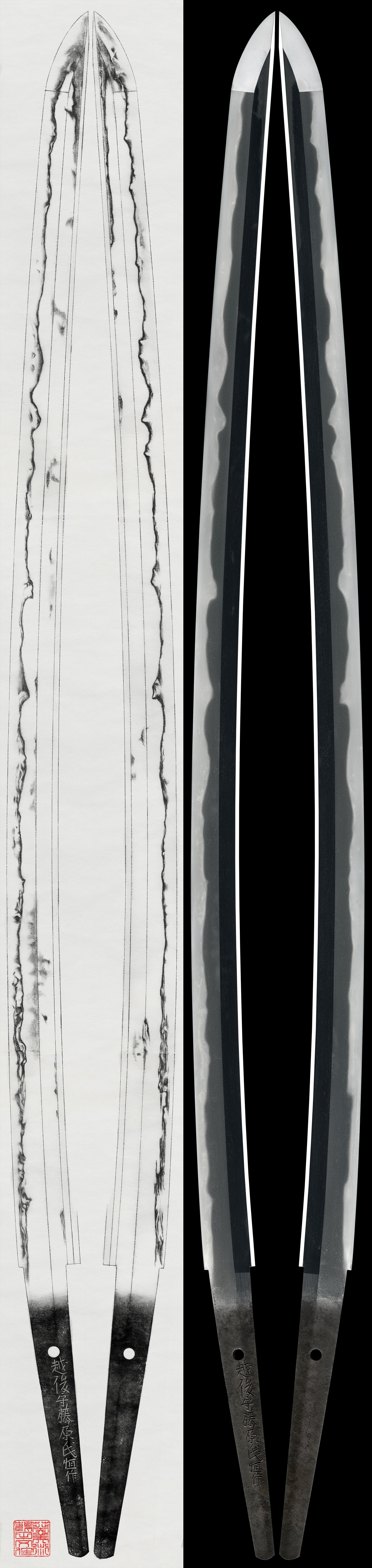
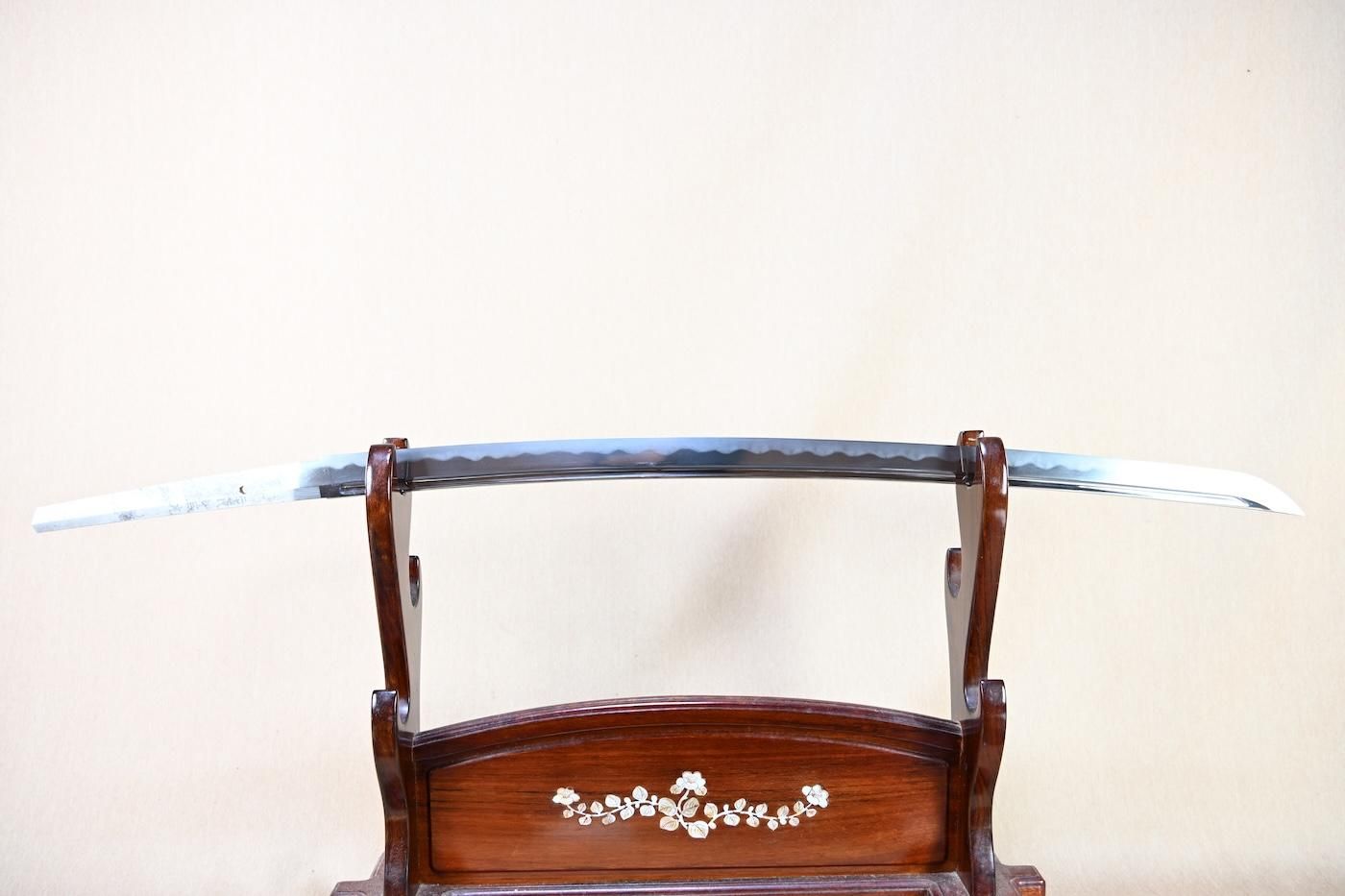
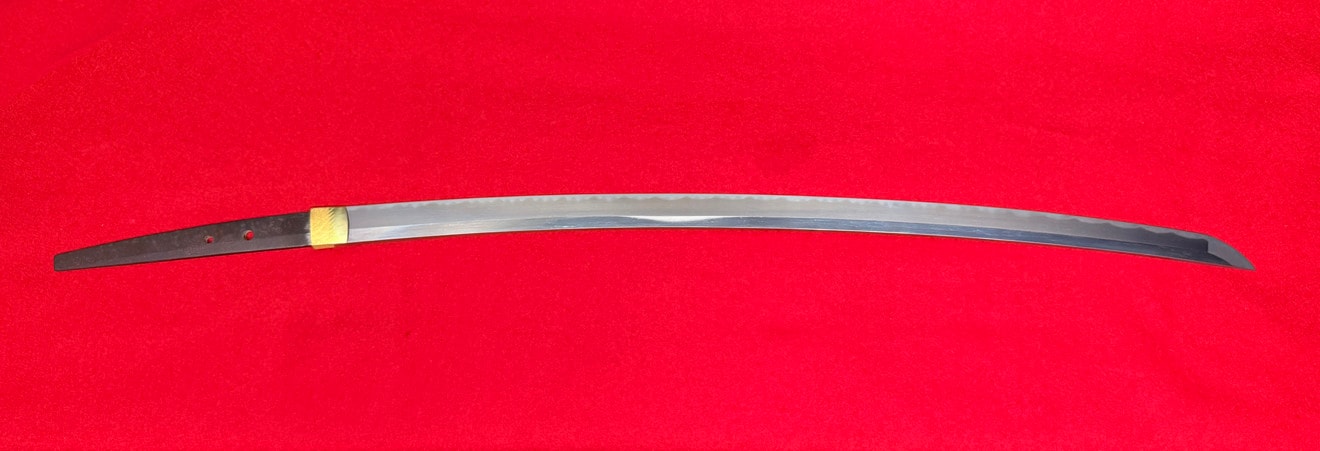
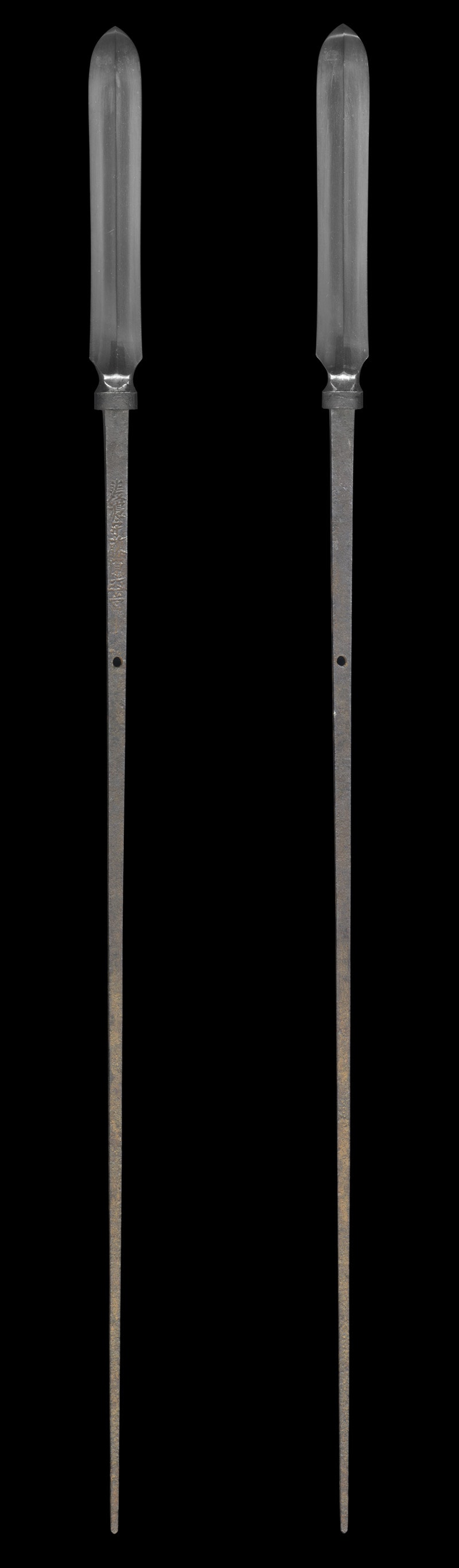
天下統一は大量の市場を閉じ、関の鍛冶は新しい富の在り処へ移った。三品の一門は受領名を得て京に、大道系は諸国の城下町に。美濃は新刀時代の最大の祖先となった。
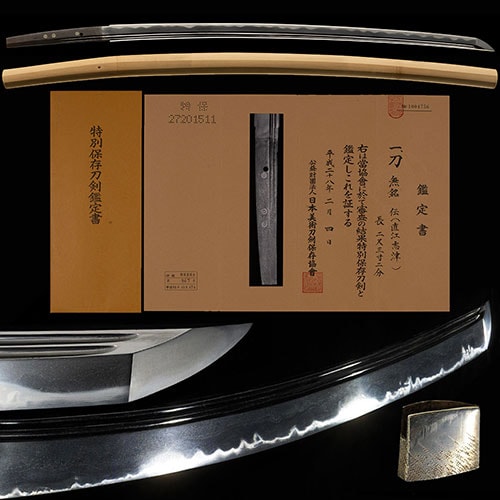
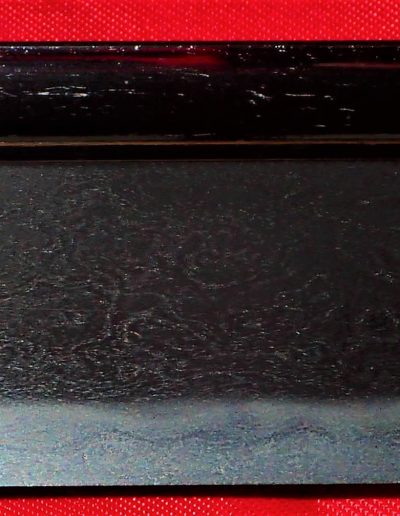
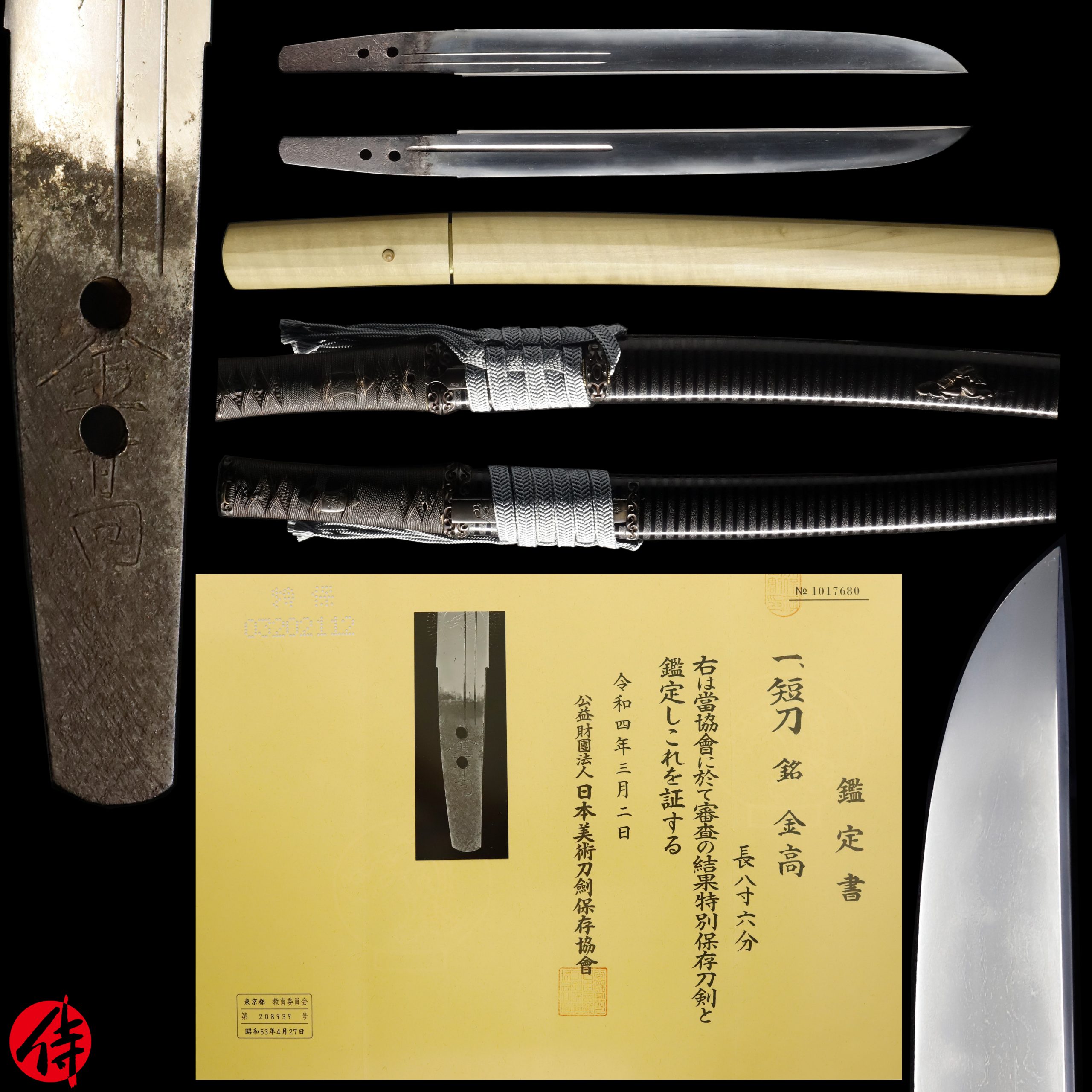
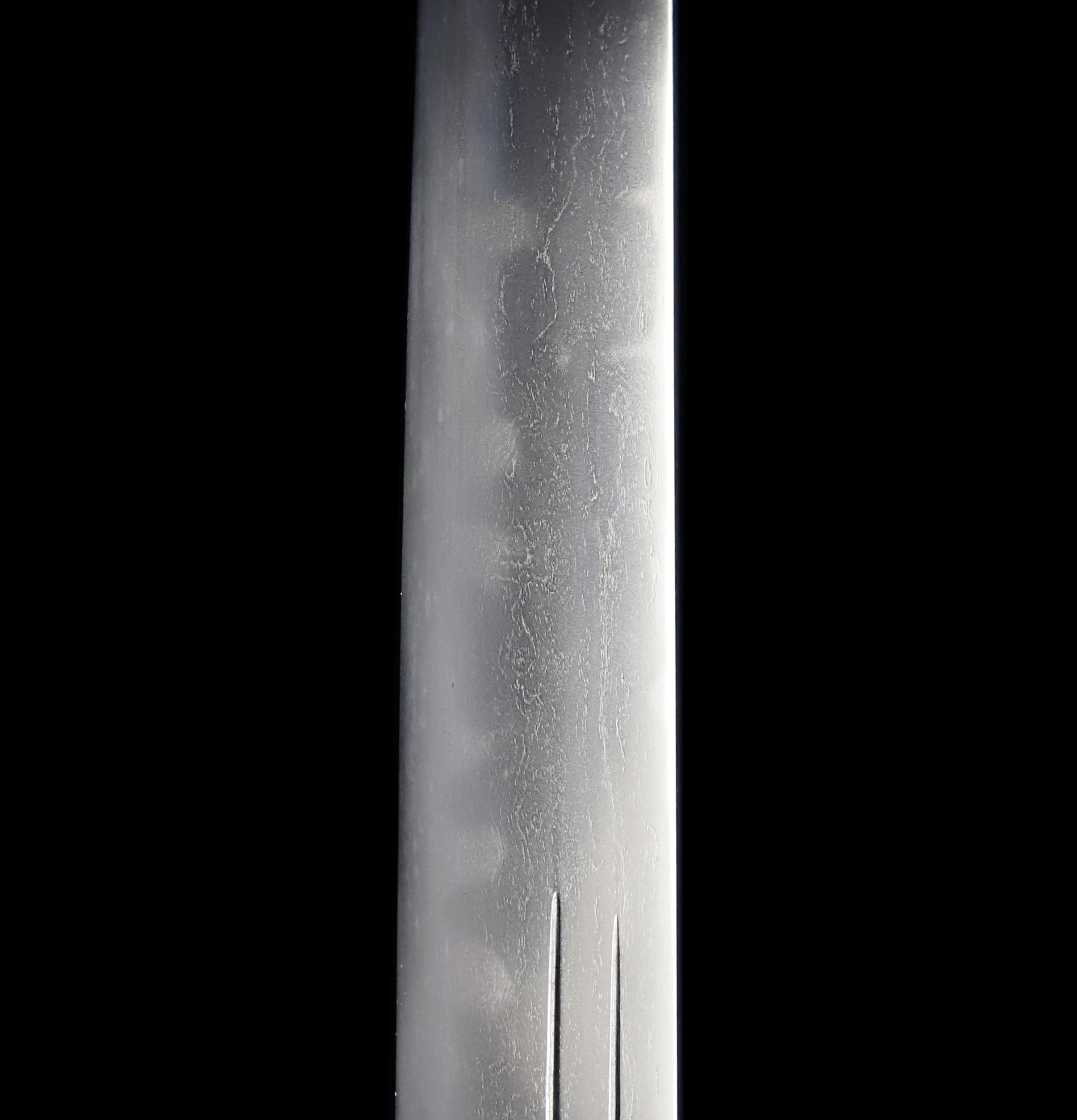
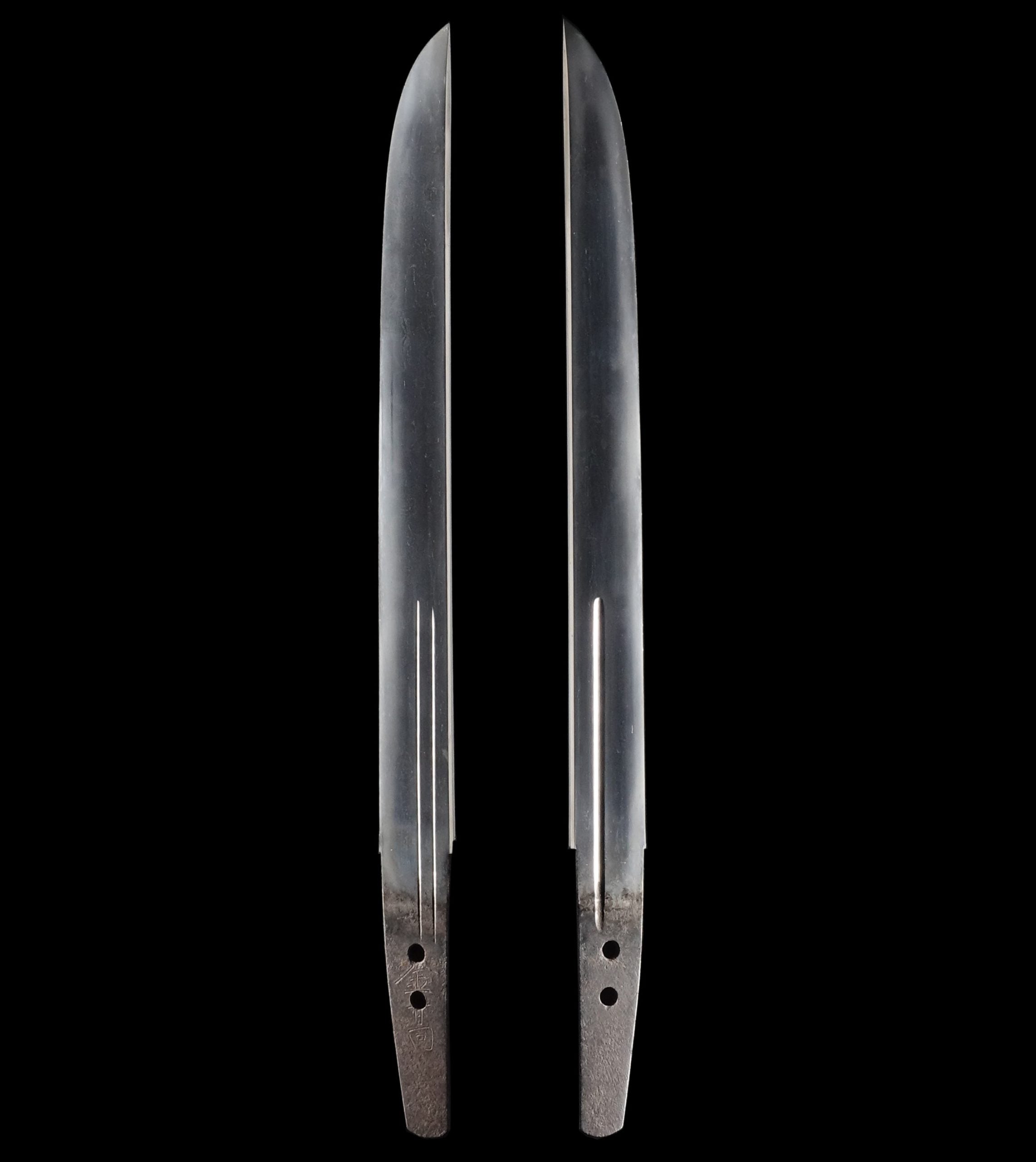
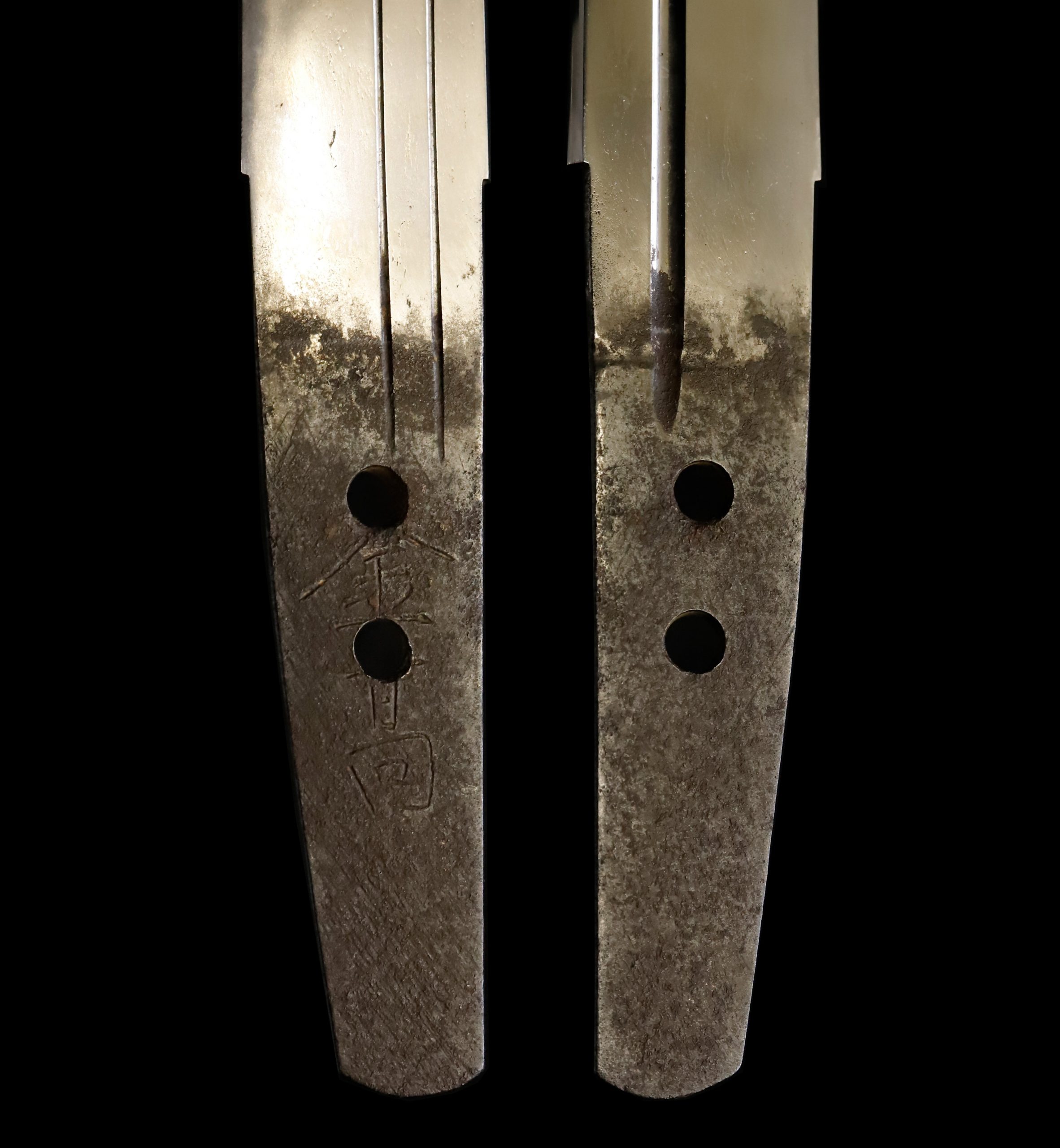
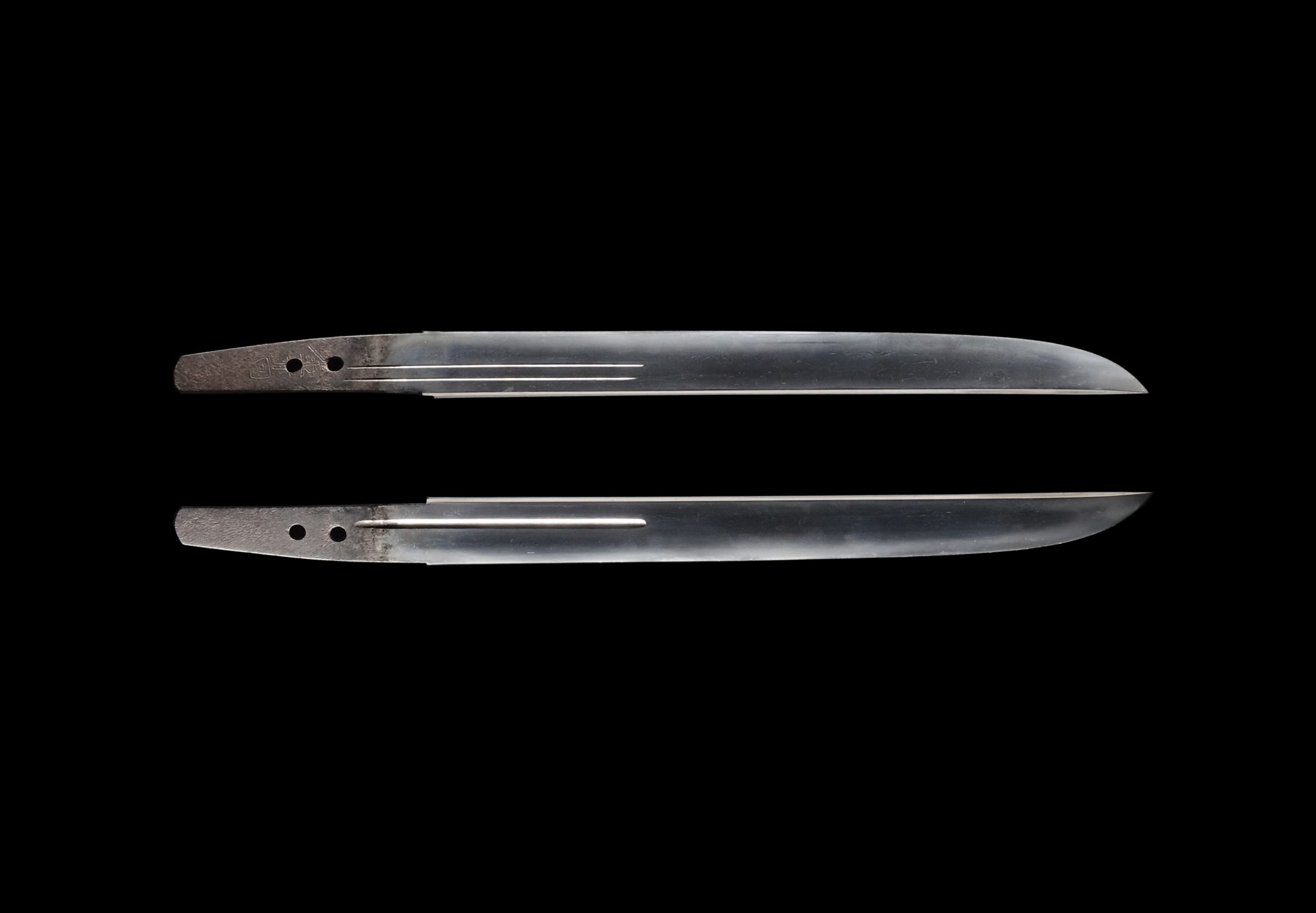
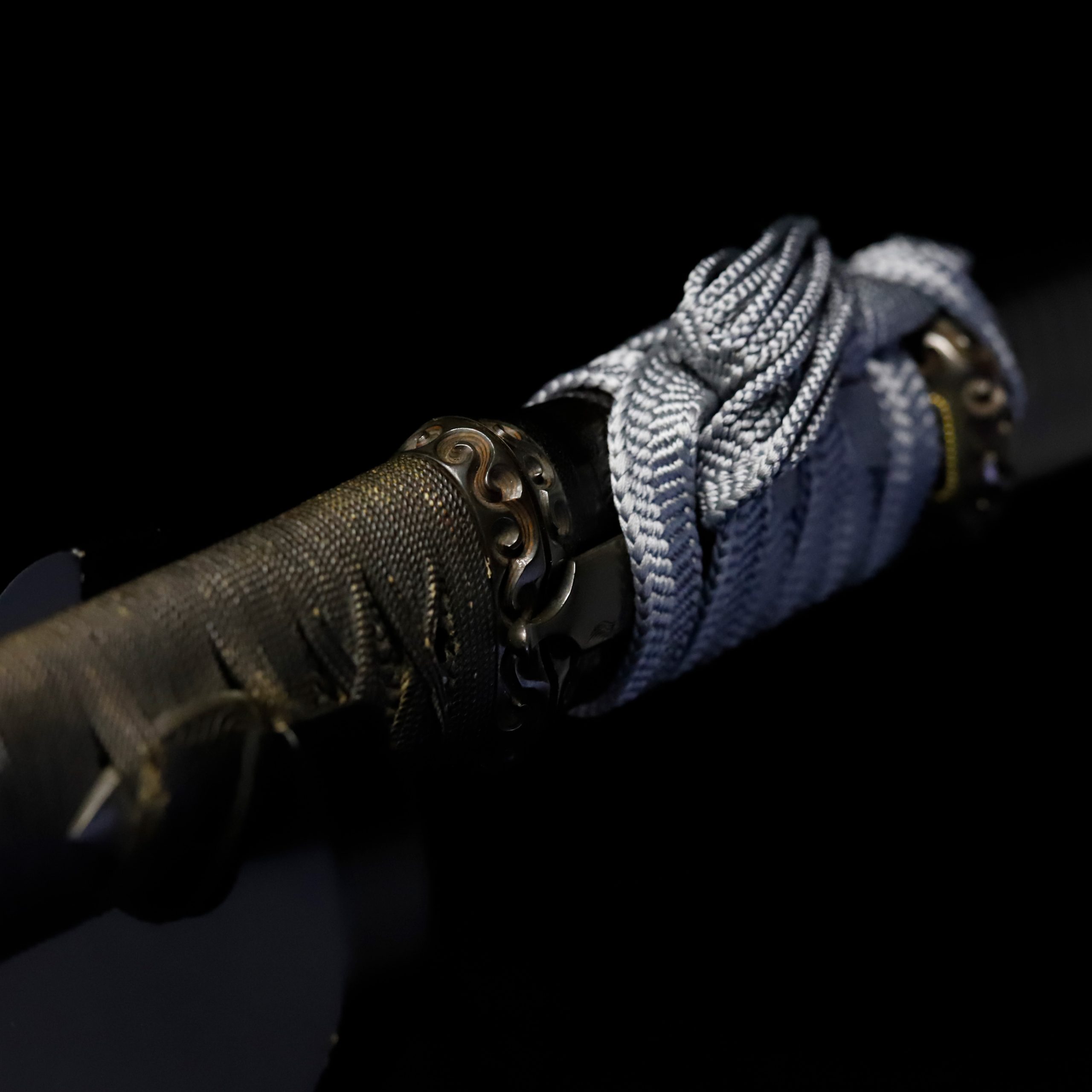
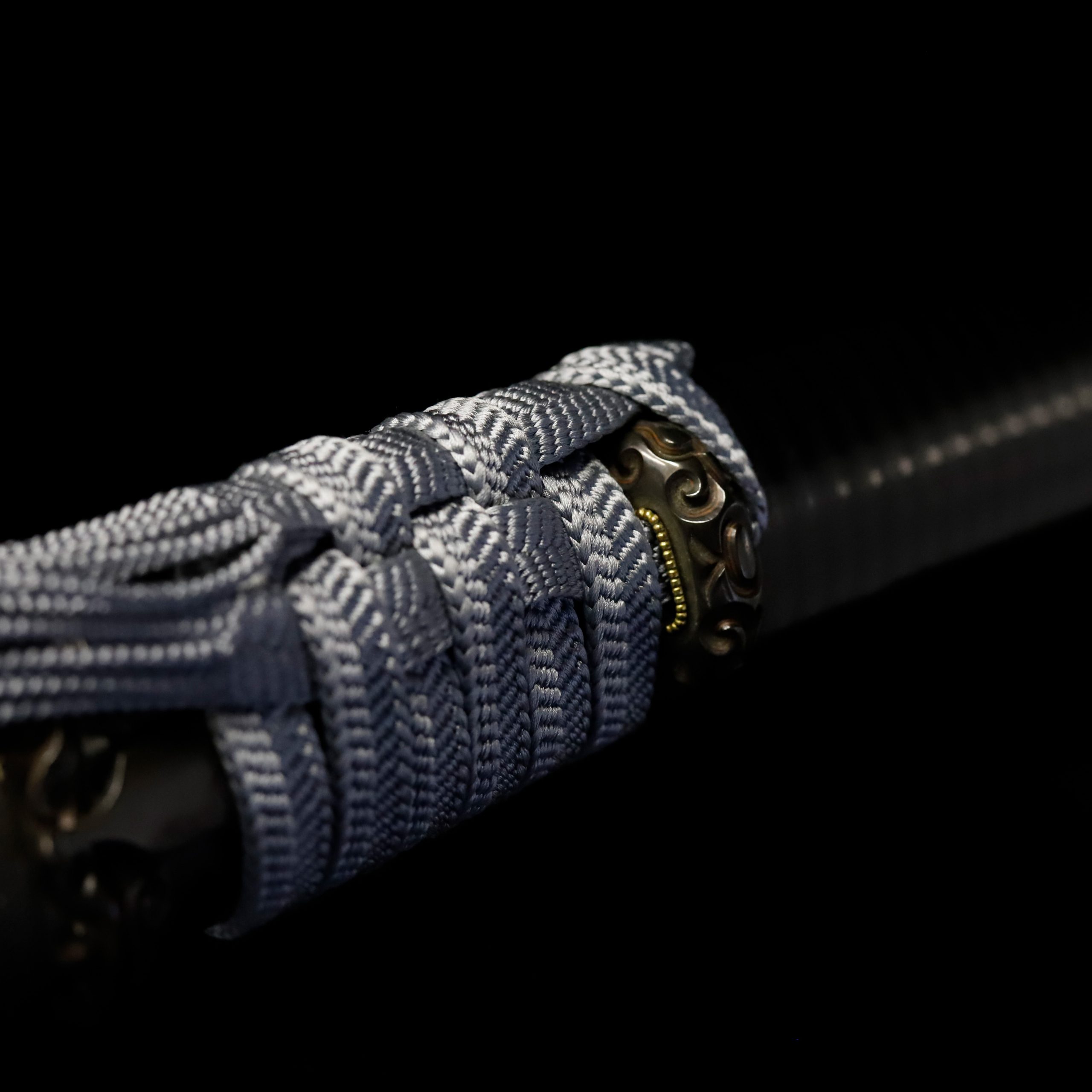
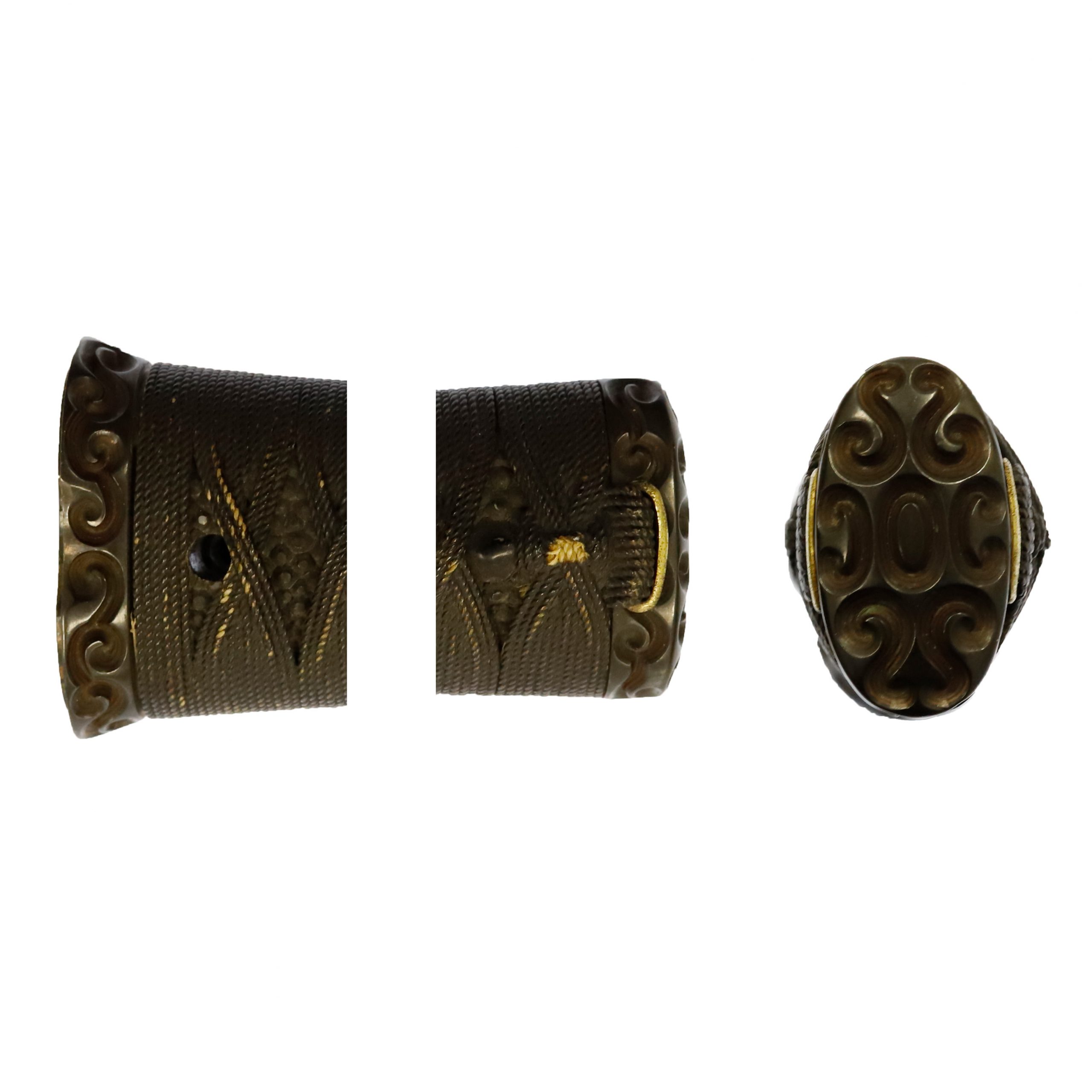
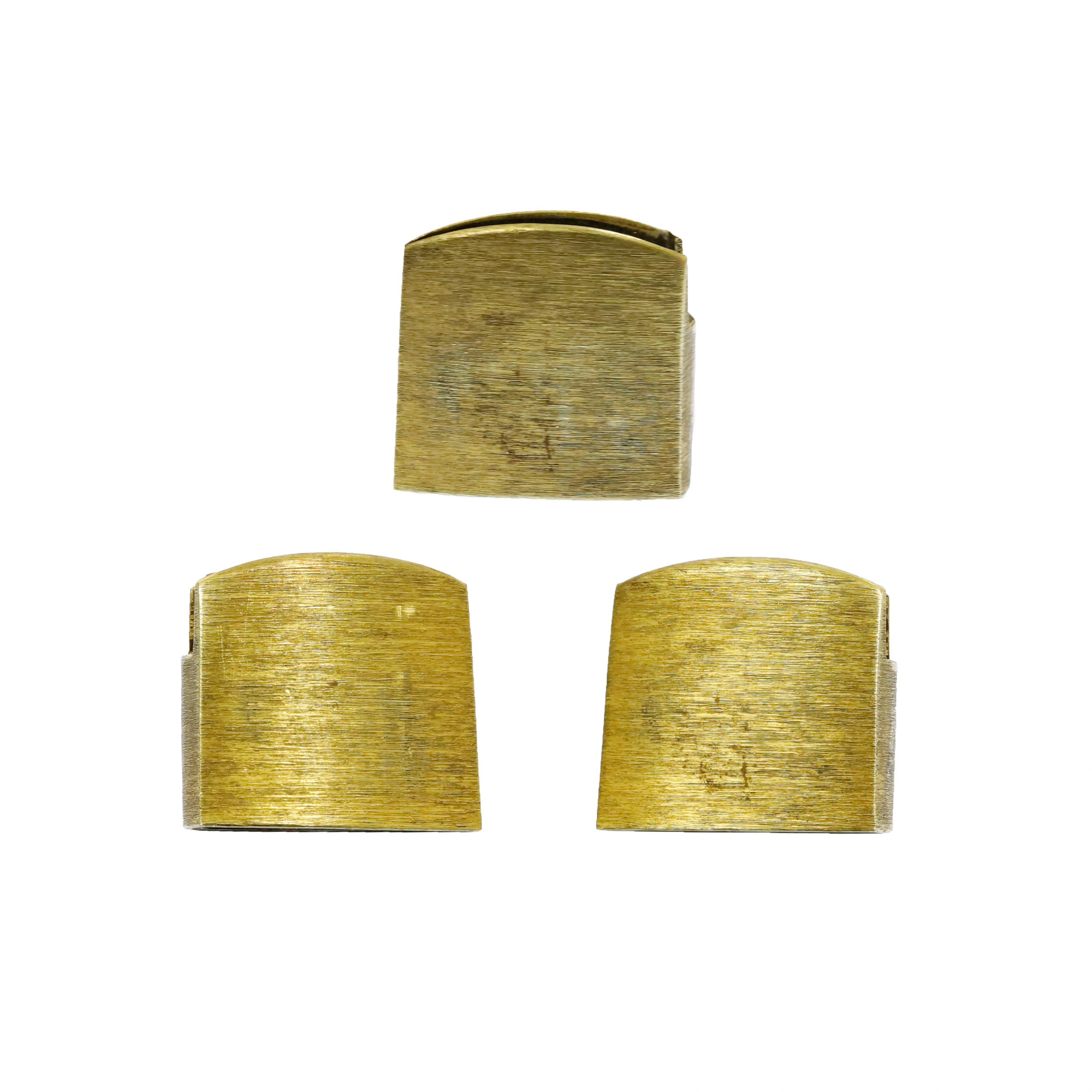
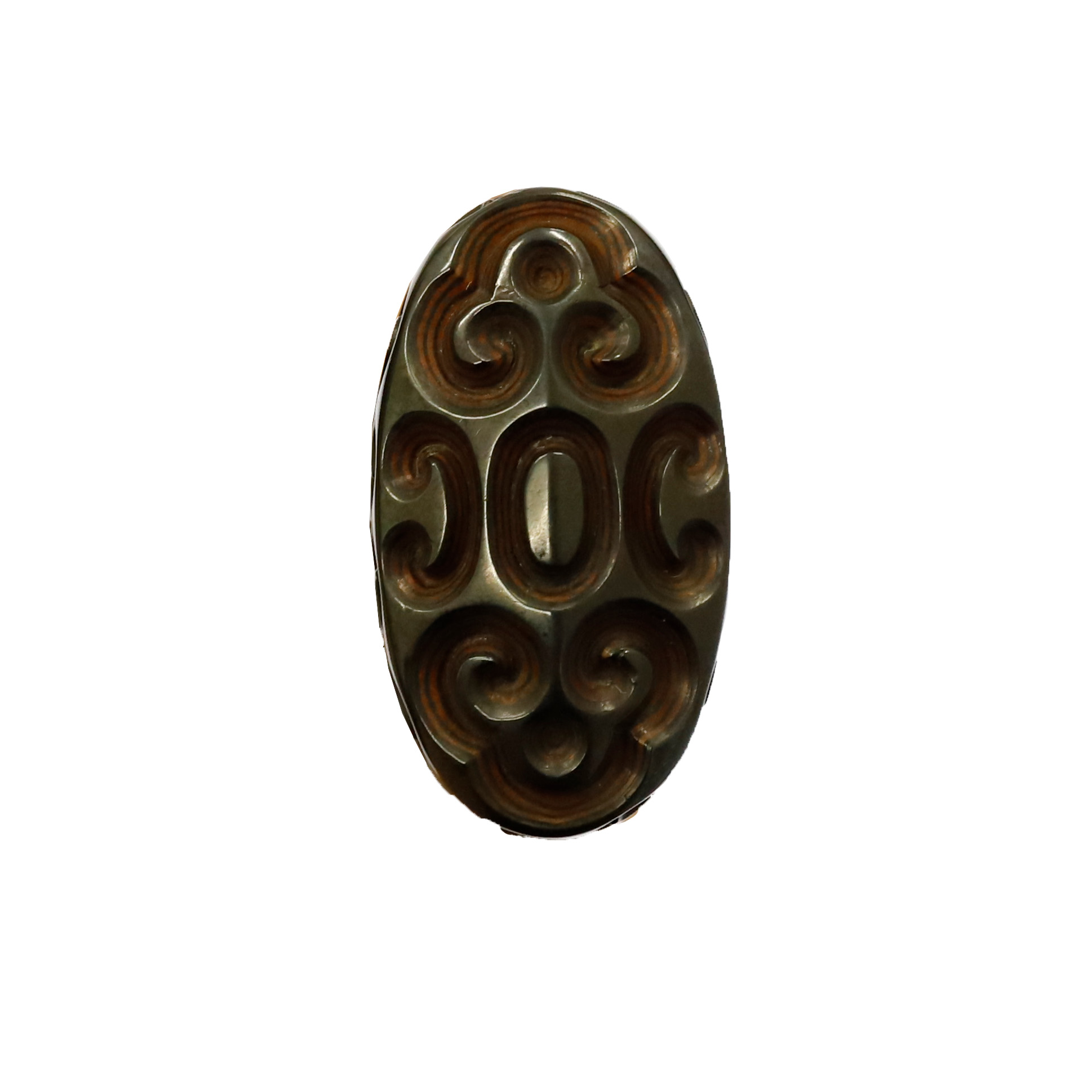
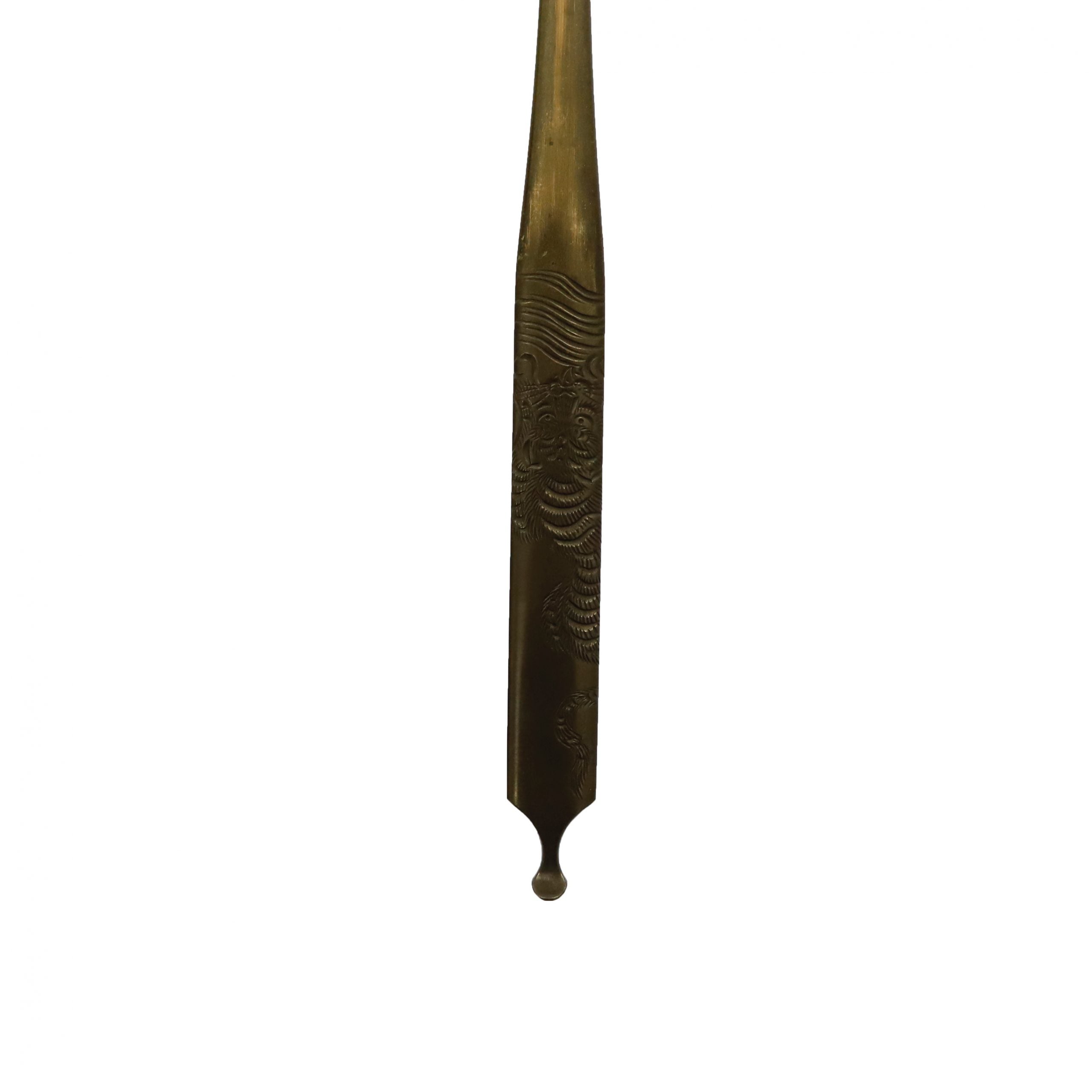
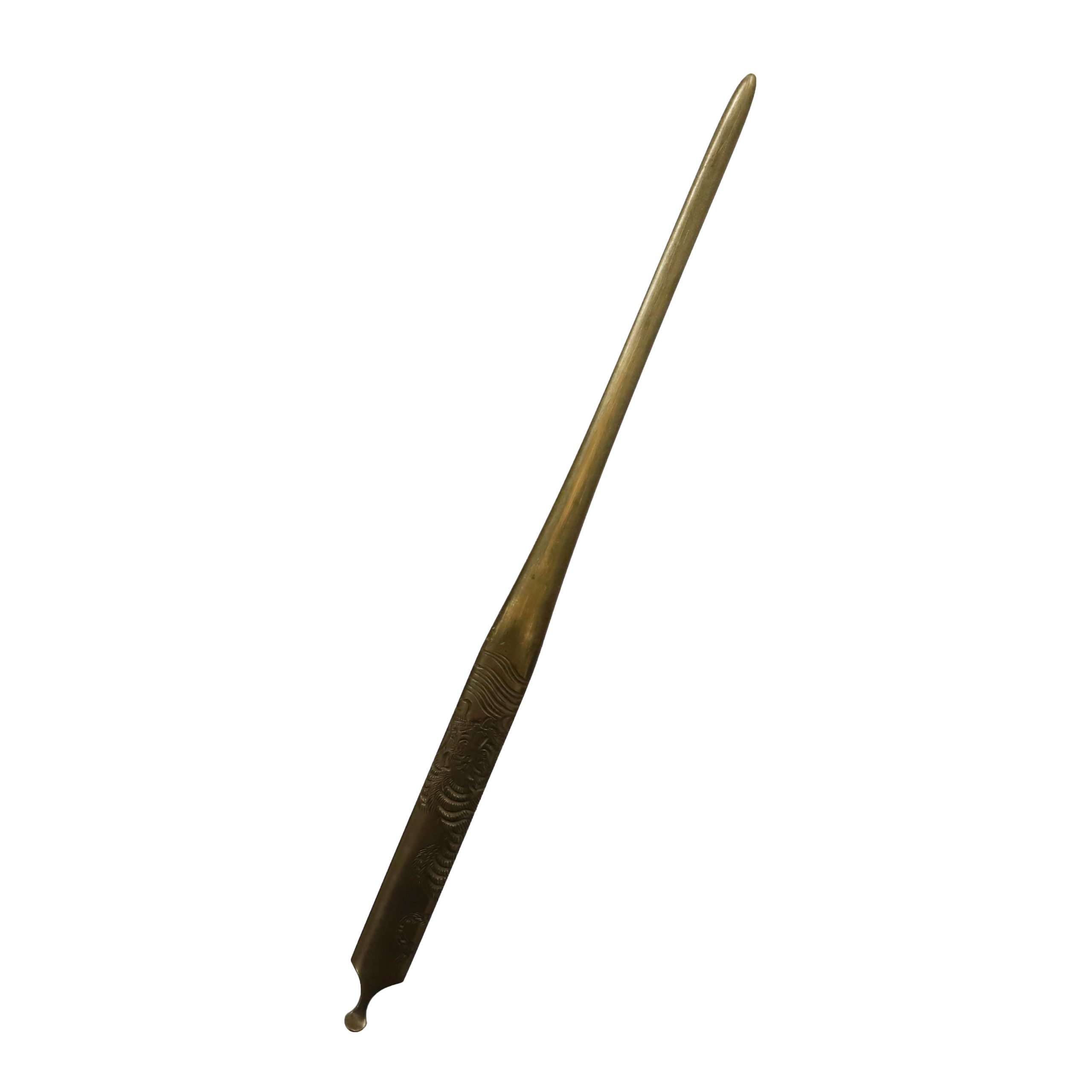
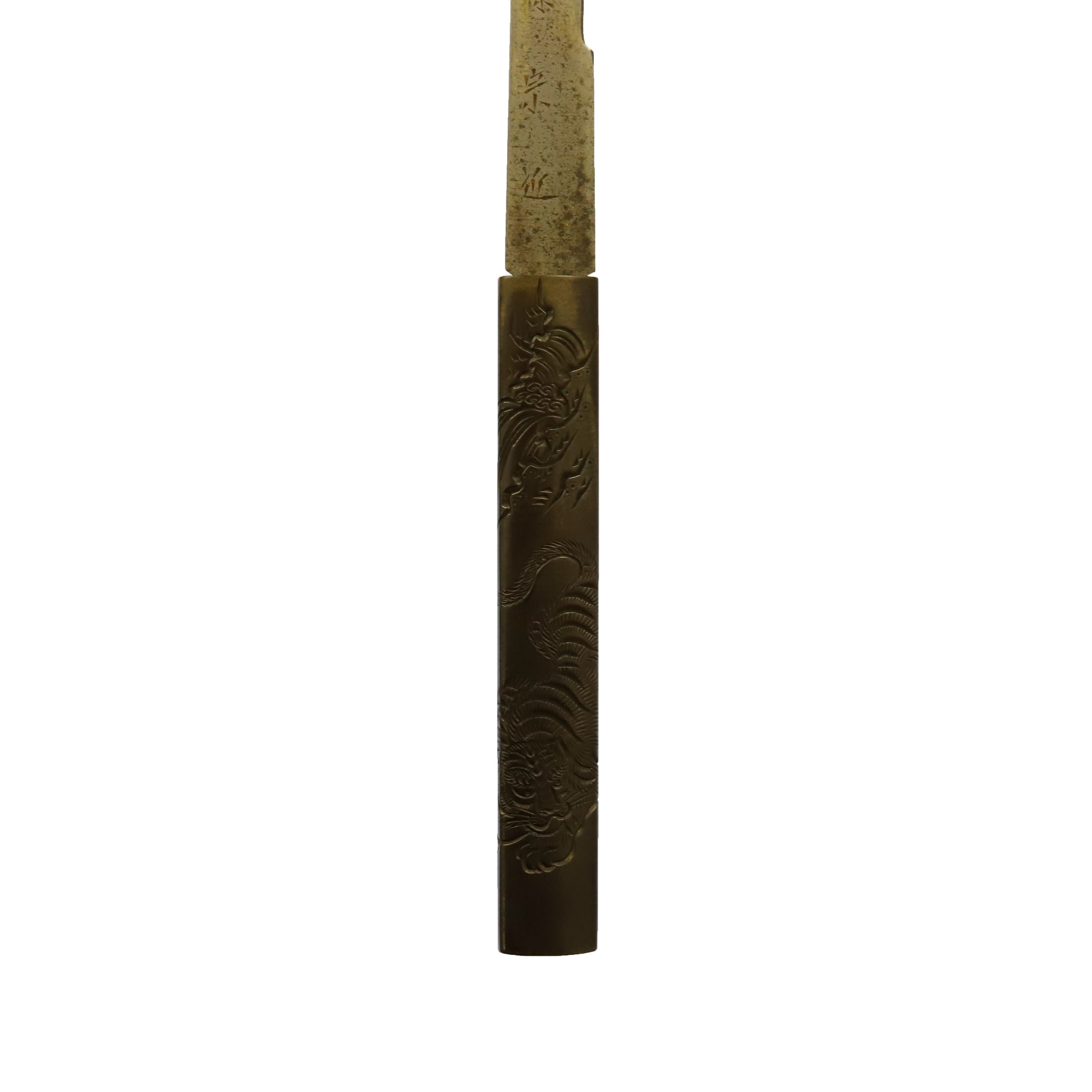
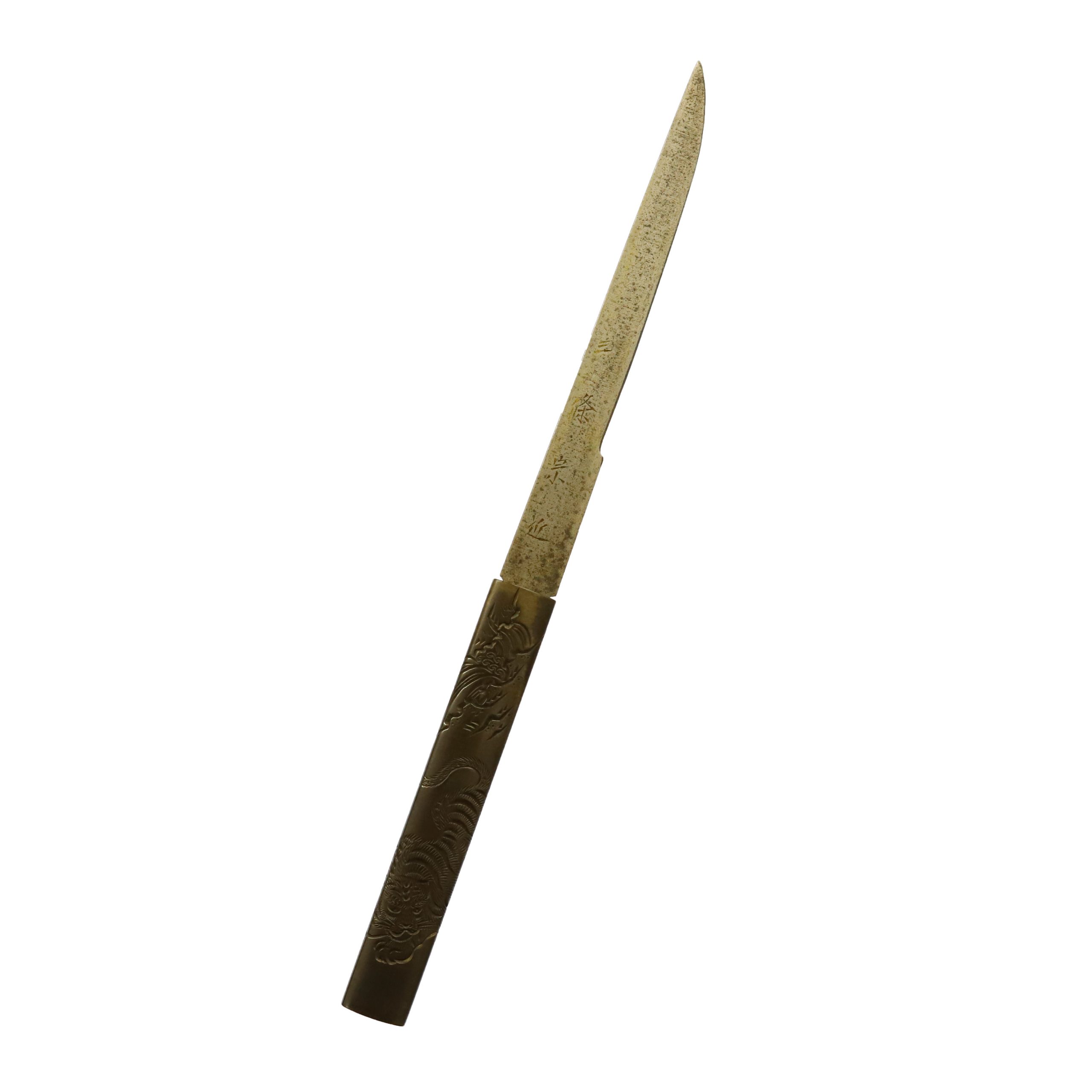
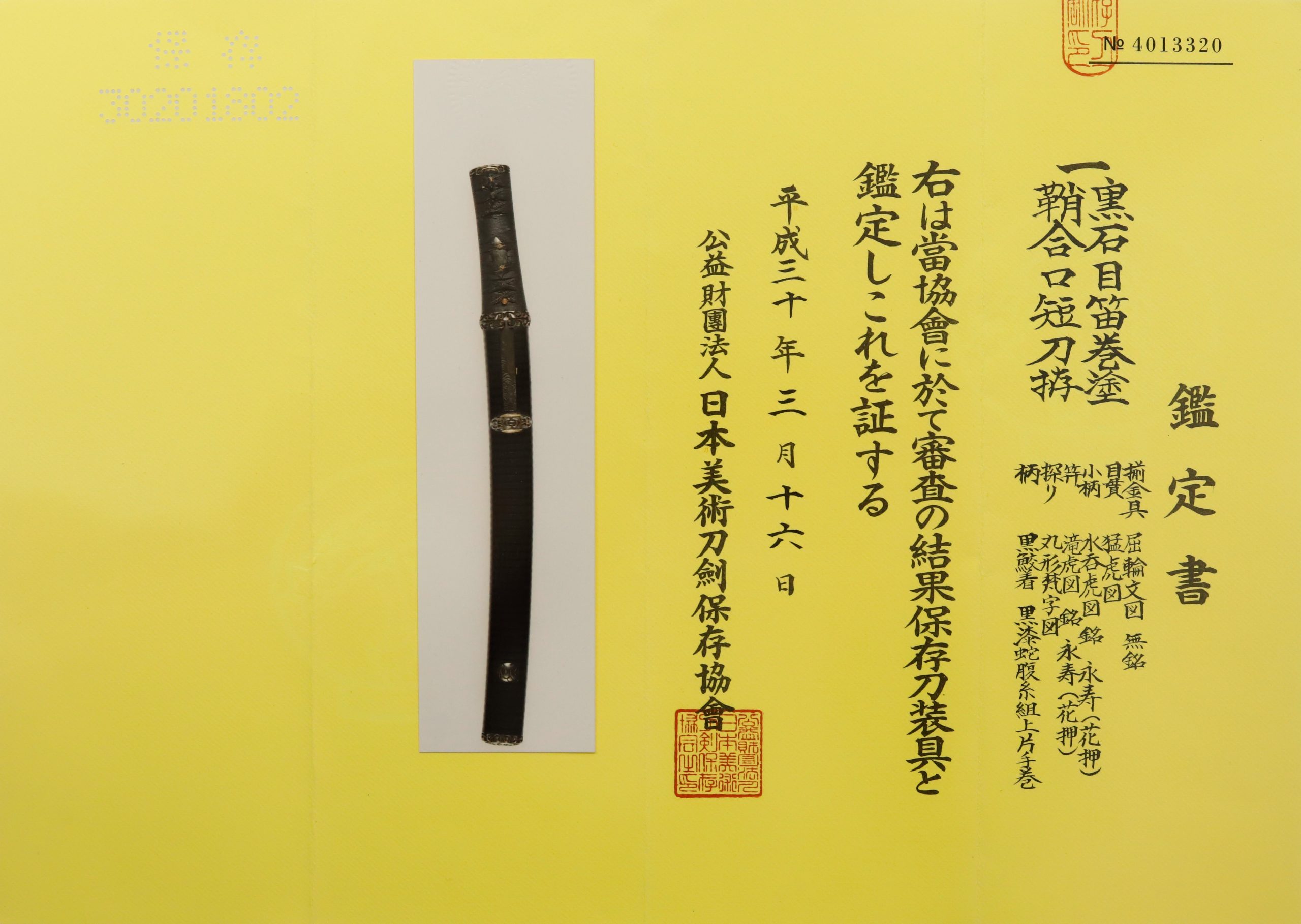
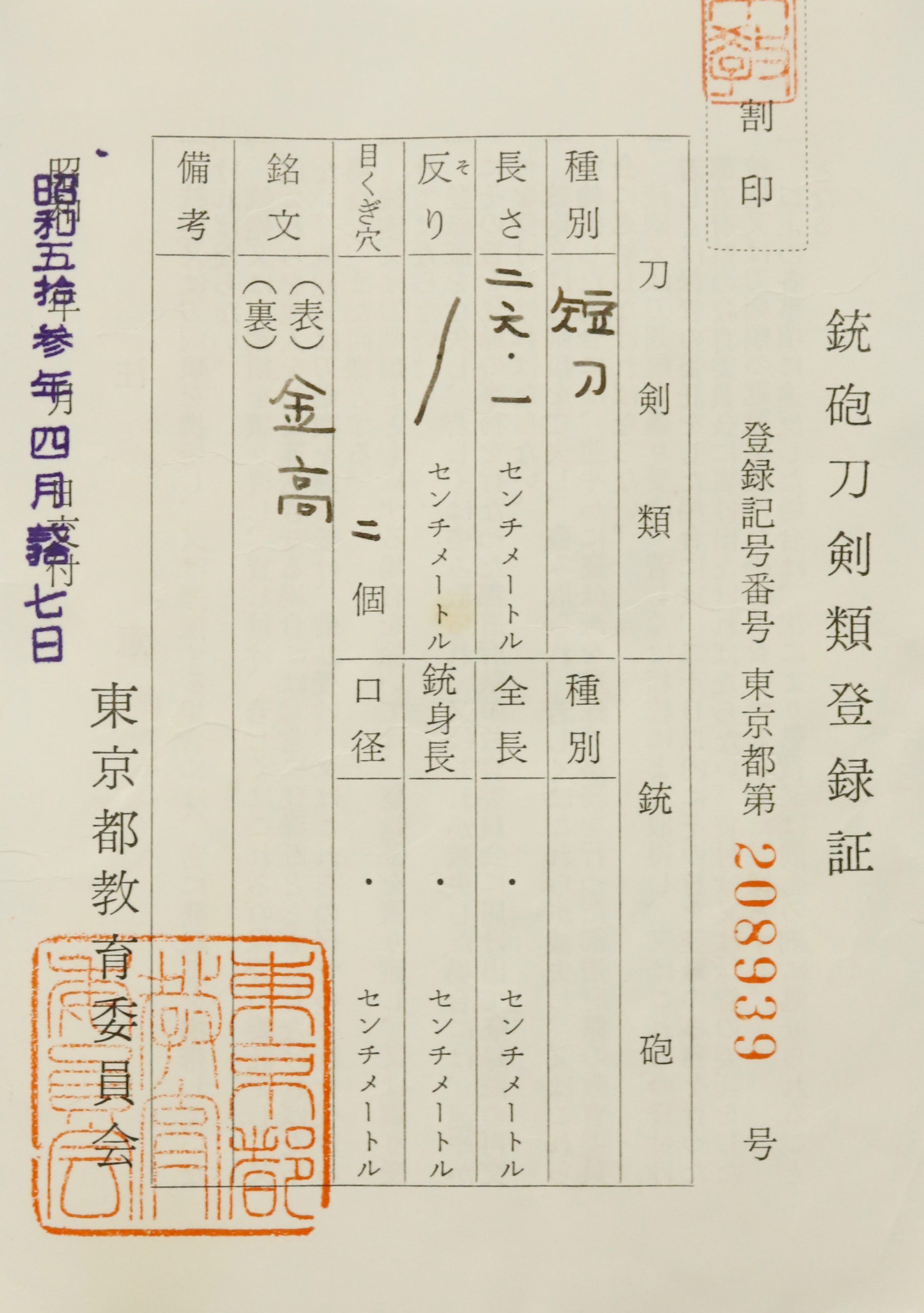
Antique Japanese Sword Tanto Signed by Kanetaka with Tokubetsu Hozon Certificate 【Description】 This Tanto was signed by Kanetaka (金高) in Mino province (Today’s Gifu prefecture) during the late 16th-early 17th century. The maker’s name Kanetaka lasted a few generations from Bunroku era (Late Azuchi Momoyama period: 1592-1596) to the Edo period. The MINO swordsmiths style, also known as MINO-DEN, basically has the TOGARI(Pointed shapes protruding from the Hamon )in a classic straight line and random temper line with some white Utsuri. MINO-DEN had its origin from YAMATO-DEN in the late KAMAKURA period(1280-1330). It flourished in the MUROMACHI period(1333-1573) and continued until the EDO period(1603-1868). Due to the high demand for weapons, MINO-DEN exceedingly prospered during Sengoku Jidai(Warring State period). And the location of Mino province beat others. Akechi Mitsuhide controlled Mino province, Nobunaga Oda ruled Owari province, and Tokugawa Ieyasu was the lord of Suruga (Neighboring areas). There was high demand from those powerful feudal lords and their retainers. Furthermore, so many wars occurred between the Kanto region and the Kyoto area, and Mino is located in the middle, making feudal lords feel convenient to order swords from MINO-DEN. The blades forged in MINO provinces also had a reputation of their practical design and sharpness. Many feudal lords demanded swords forged in the Mino province. This blade was appraised as a Tokubetsu Hozon Token(特別保存刀剣) issued by NBTHK(Nihon Bijutsu Touken Hozon Kyokai:日本美術刀剣保存協会) last December. We are are expecting to receive the certificate by mid June. This authentication paper was only given to authentic Japanese swords, especially well preserved and high quality with artistic value. Its sword mounting was appraised as a Hozon Tosogu. And it was created by using a special technique called Guri Bori (Guri engraving). 【 Blade】 Cutting Edge Length(Nagasa) : 26.1 cm( 10.3 inches) Curvature(Sori) : 0 cm( 0 inches) Hamon : The crystalline structure which forms along the cutting edge of a blade as a result of the hardening process Jimon(Jihada) : visible steel surface pattern created by folding and hammering during forging process Nakago : Nakago is the tang of the Japanese sword. Japanese swordsmiths left the black rust on the tang because it prevents red rust while the tang is in its handle. And the discoloration of the tang was created over time, and it is a great indicator for a Japanese sword specialist to estimate when the sword was forged. Koshirae: Koshirae is the mounting of the Japanese sword. There are several parts that consist of Koshirae such as Saya(Scabbard), Tsuka( Handle), Tsuba(Handguard). Fuchi-Kashira : A pair of matching sword fittings that cover the upper and bottom parts of its sword hilt. Some metal parts of this Koshirae have the same design: Guri Mon Zu (屈輪文図). The Guri (屈輪) pattern is a continuous curved line design that depicts a shape of a Warabi (蕨, bracken). According to a theory, Shouami Denbei (正阿弥伝兵衛) invented the Guri-Bori (グリ彫り) in the early Edo period. And it is said that it was the origin of the Mokumegane (木目金, a special metal processing technology unique to Japan that creates a wood grain pattern by using the difference in the colors of metals) technique. This Guri-Bori technique is a method that hollow the Karakusa (唐草, arabesque) or the Uzumaki (渦巻, spiral) patterns shape out of a layer of alternating metals of different colors, such as copper and Shakudou (赤銅, the mixture of copper and gold). On this carved part, you would see layered patterns. Tsuka and Menuki : Tsuka is the handle of the Japanese sword and Menuki is its decoration. This Menuki has a fan shape. The fan motif has been favored as an auspicious pattern that represents development and prosperity. During the Heian period (794-1185/1192), aristocrats enjoyed elegant plays with fans, and they appreciated the fan itself as a noble item. A fan has a characteristic shape, and i
 NihontoWatch
在銘 · Mino · 桃山 · 長さ 26.1cm
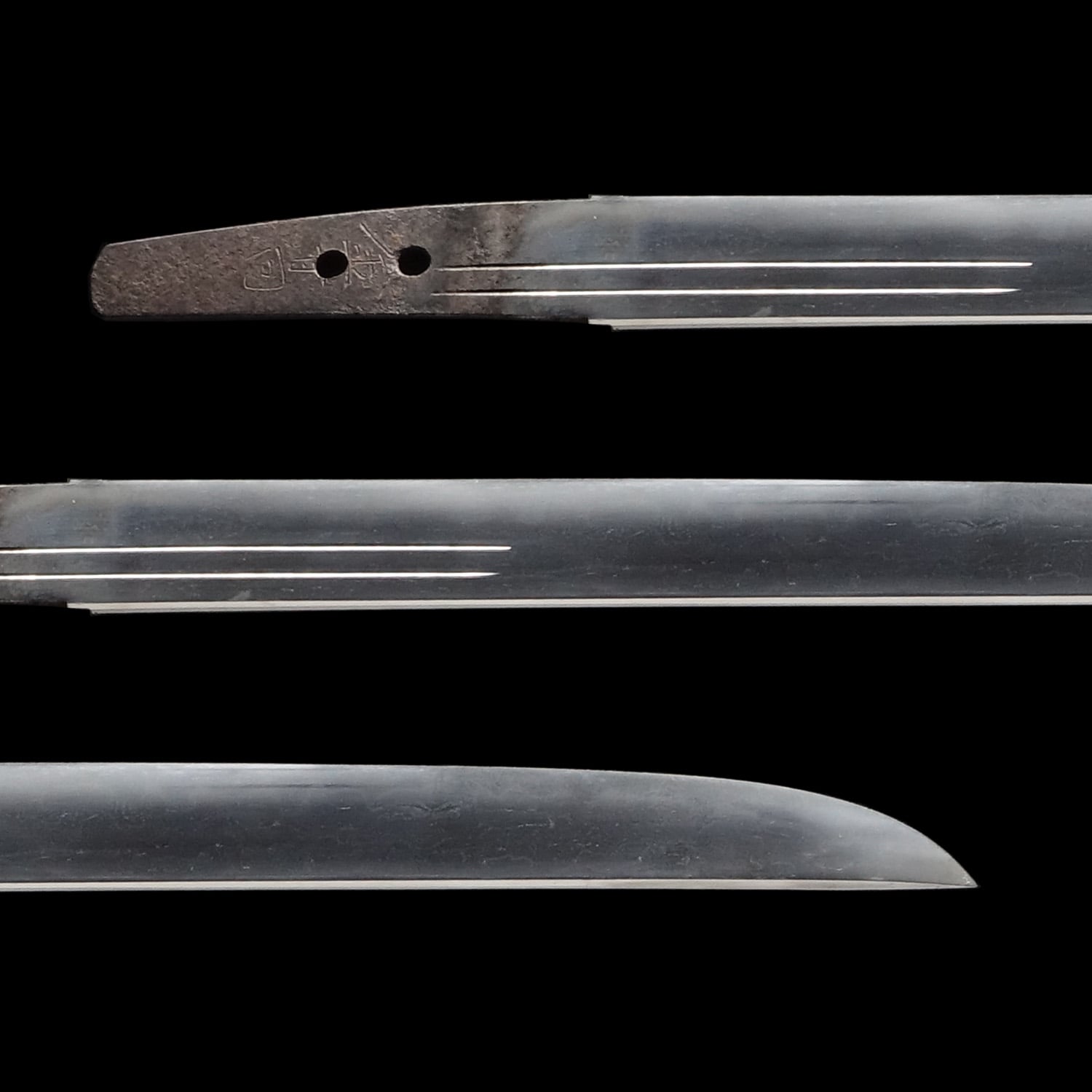
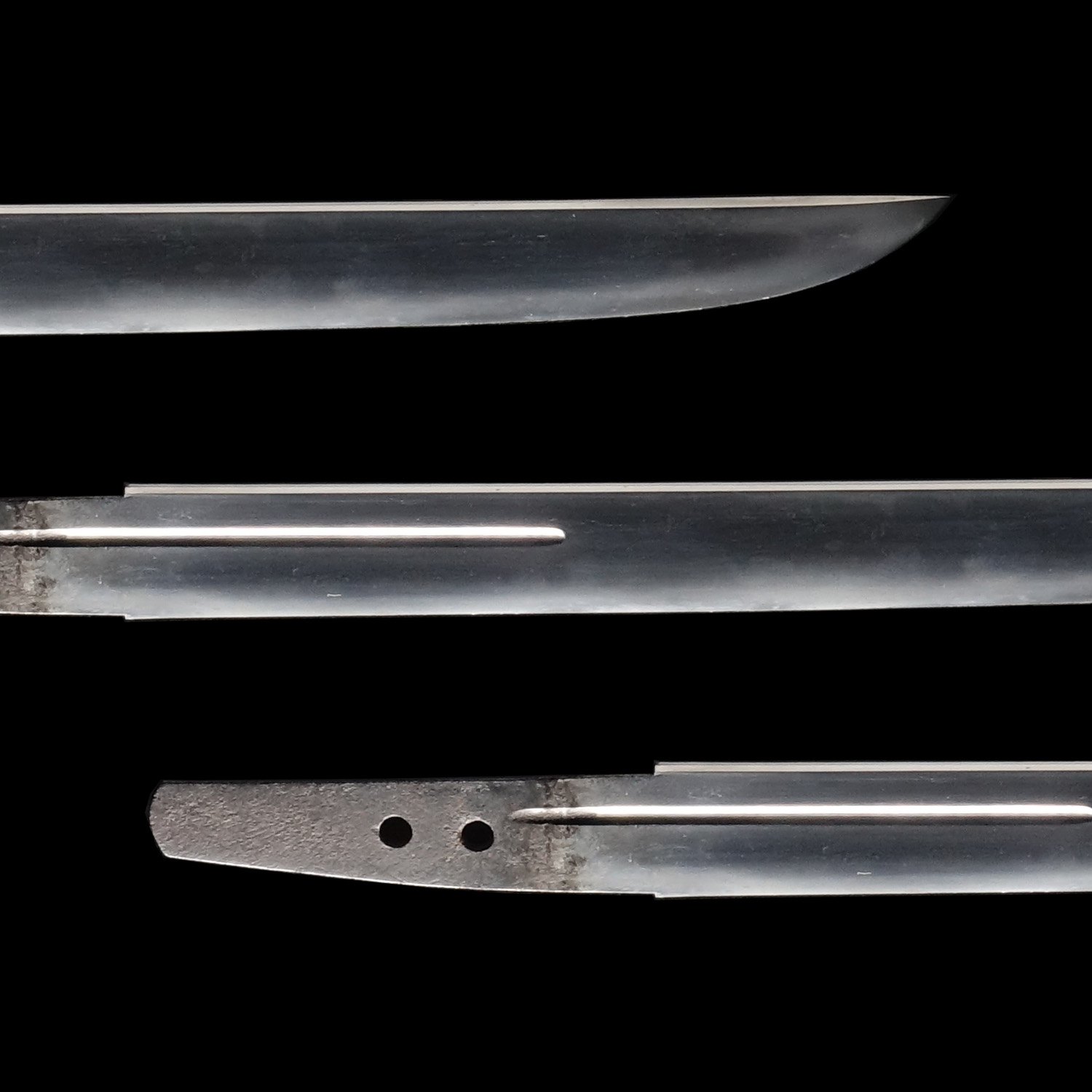
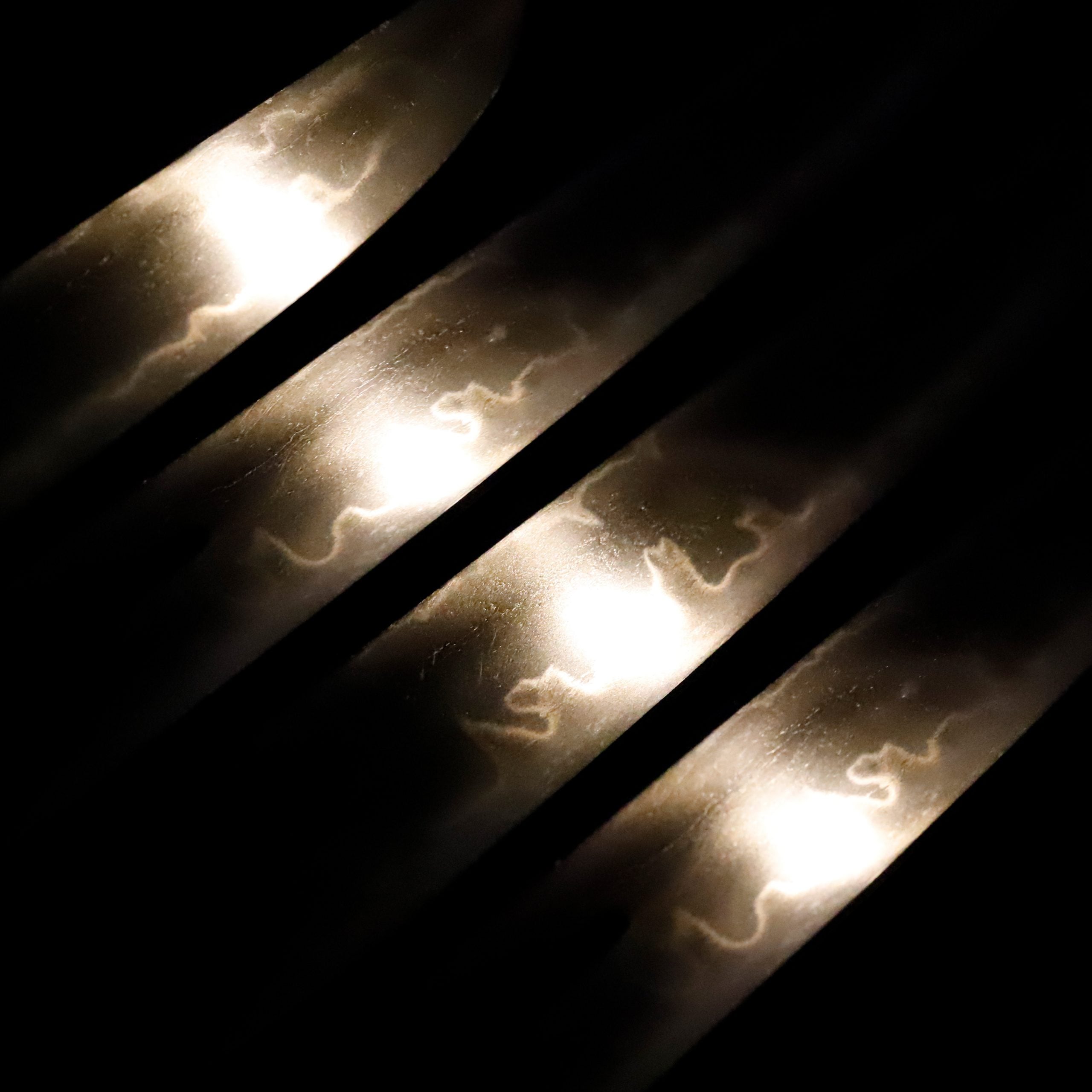
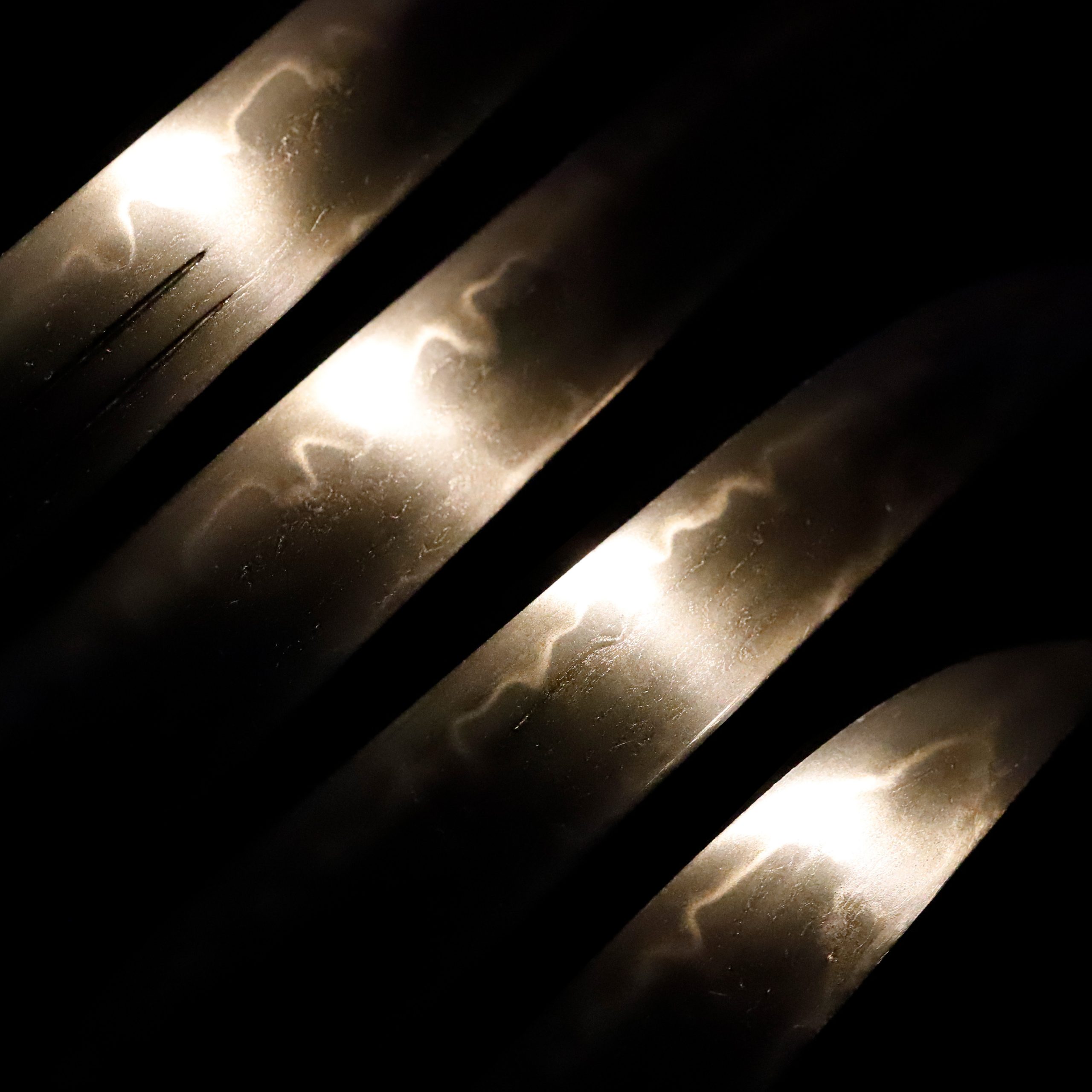
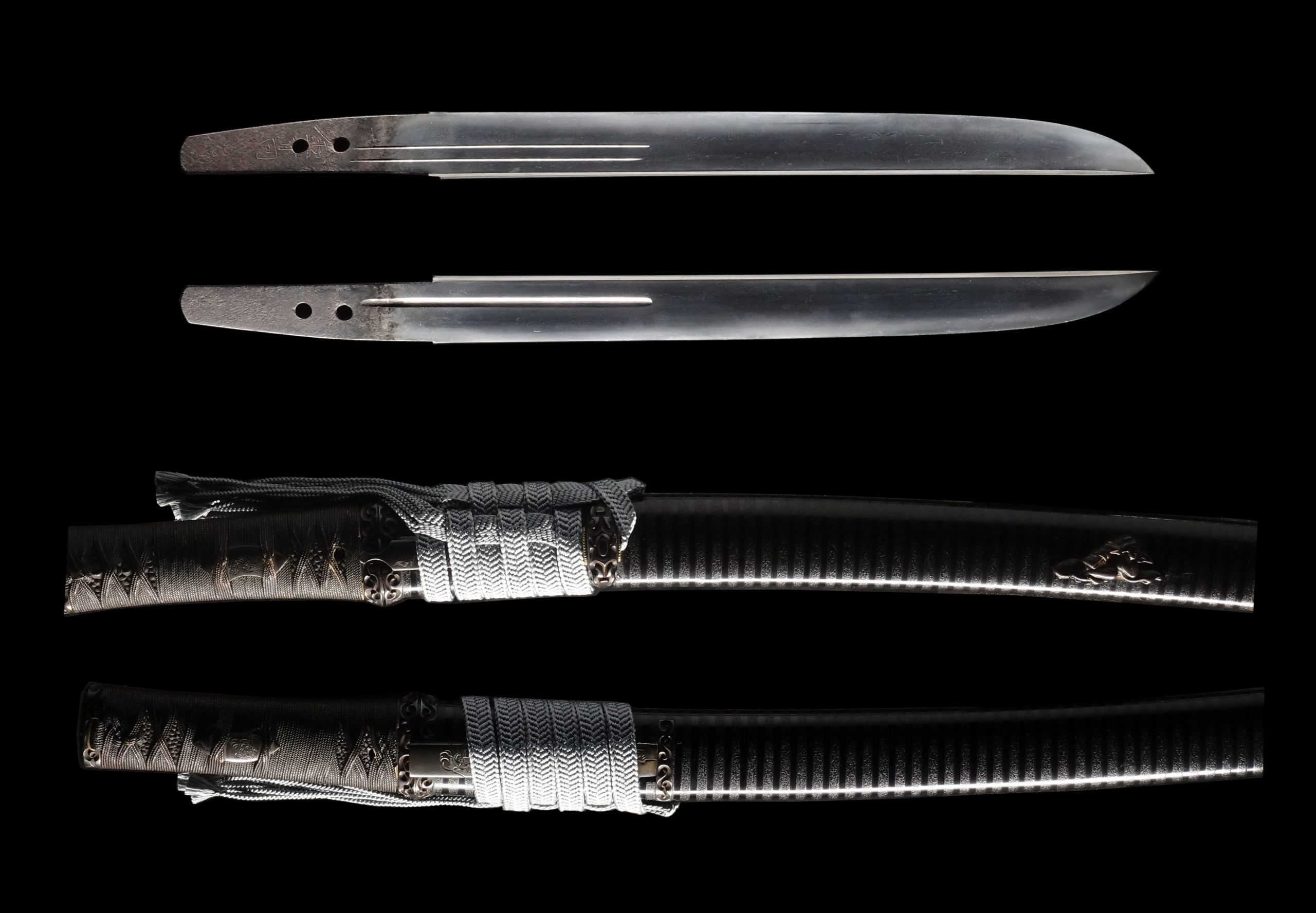
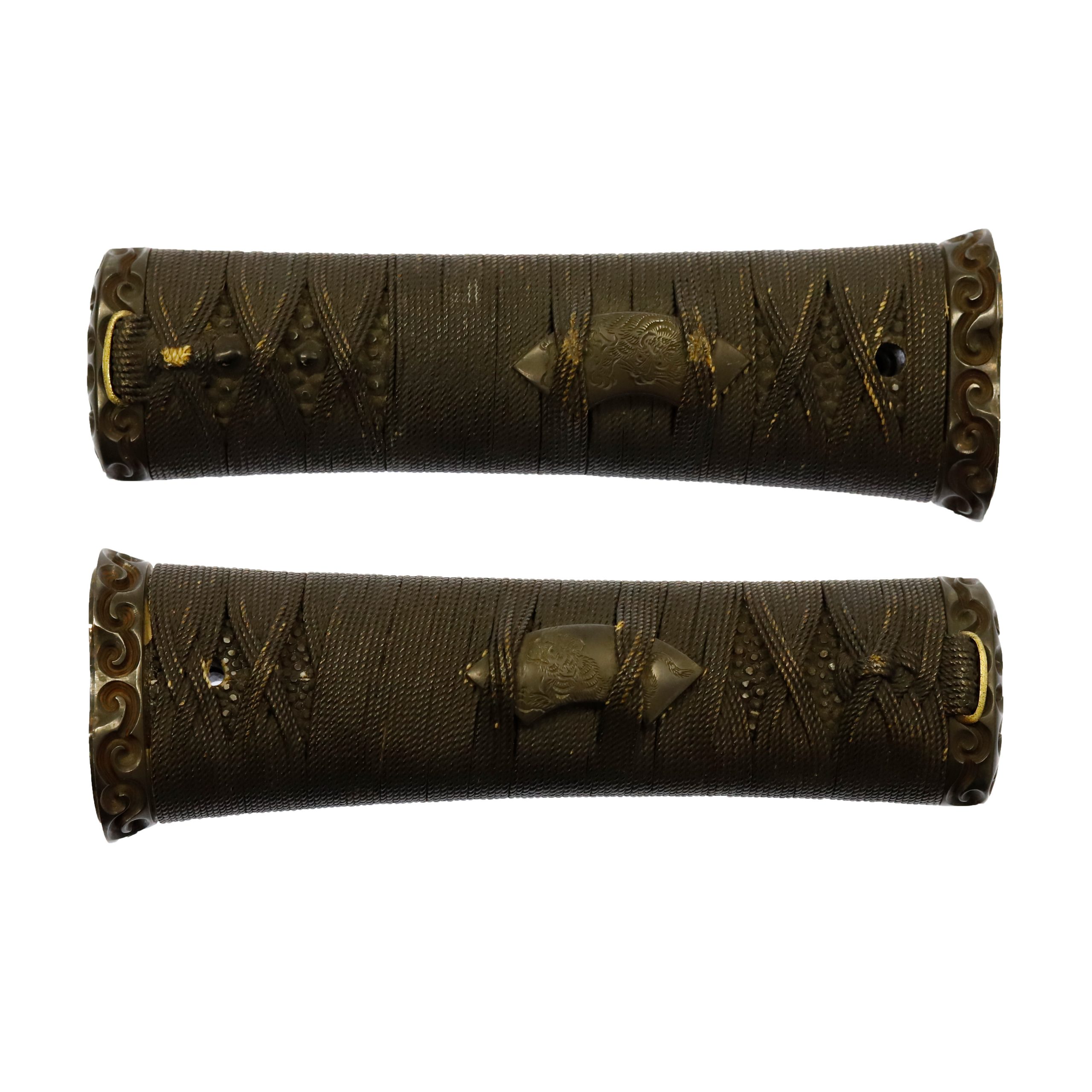
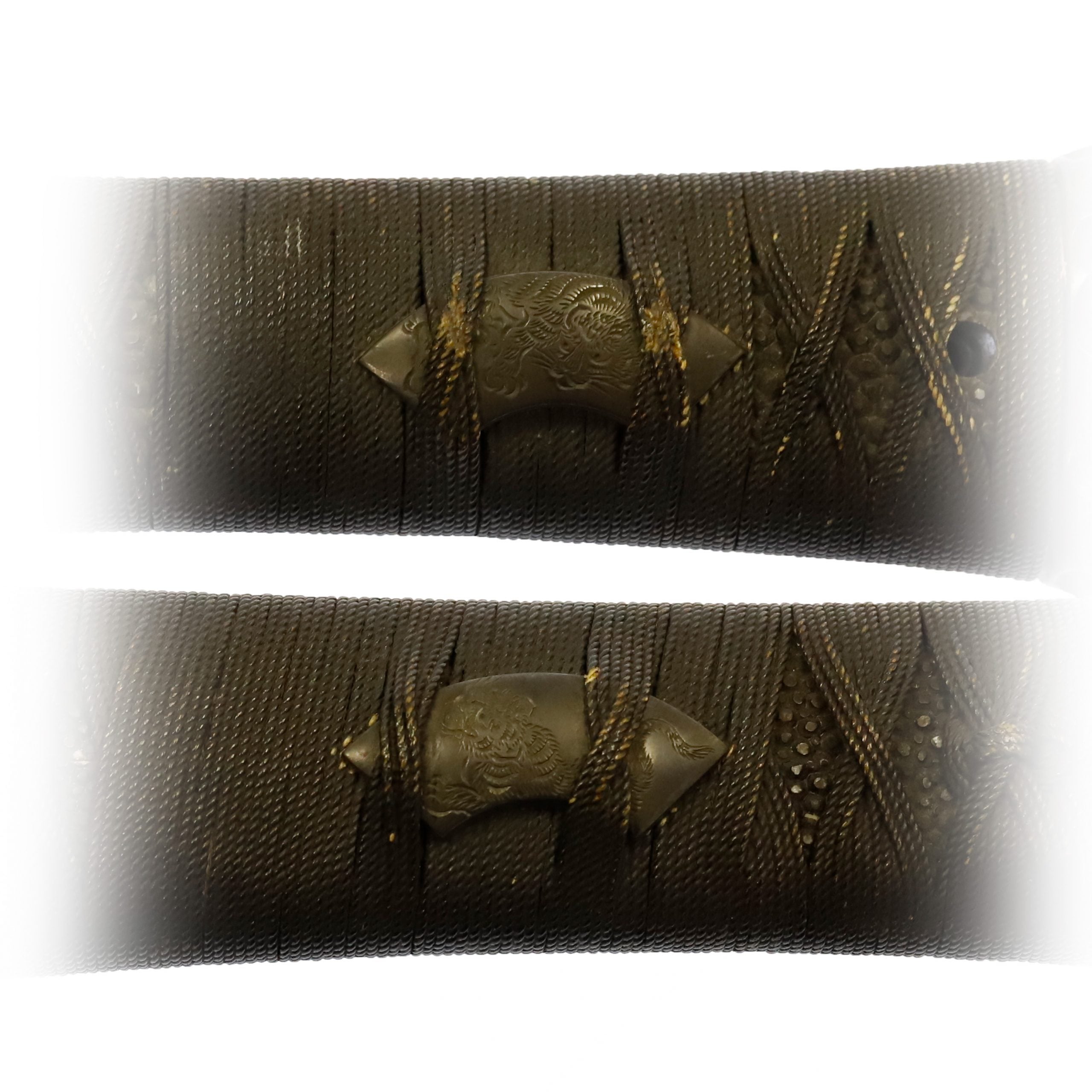
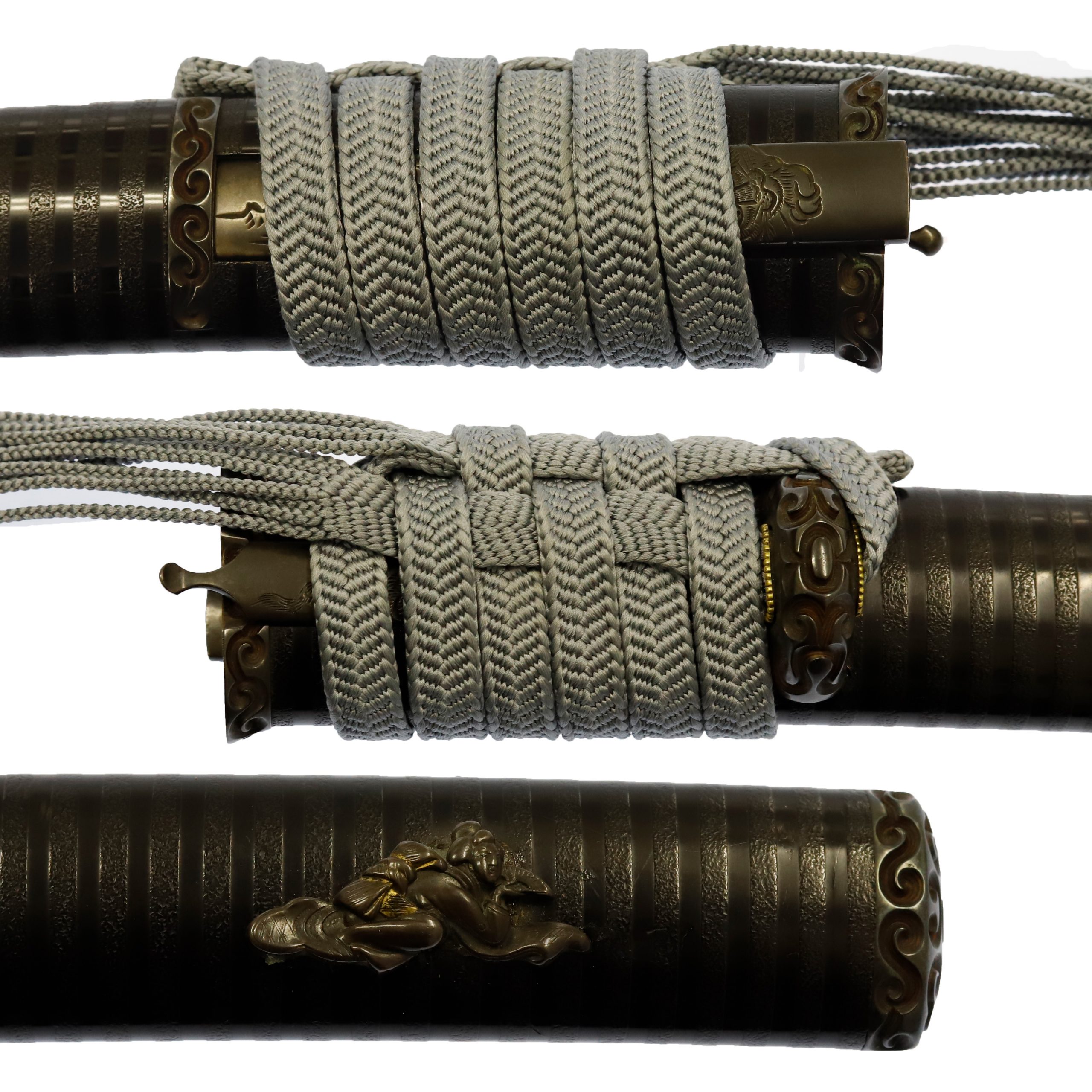
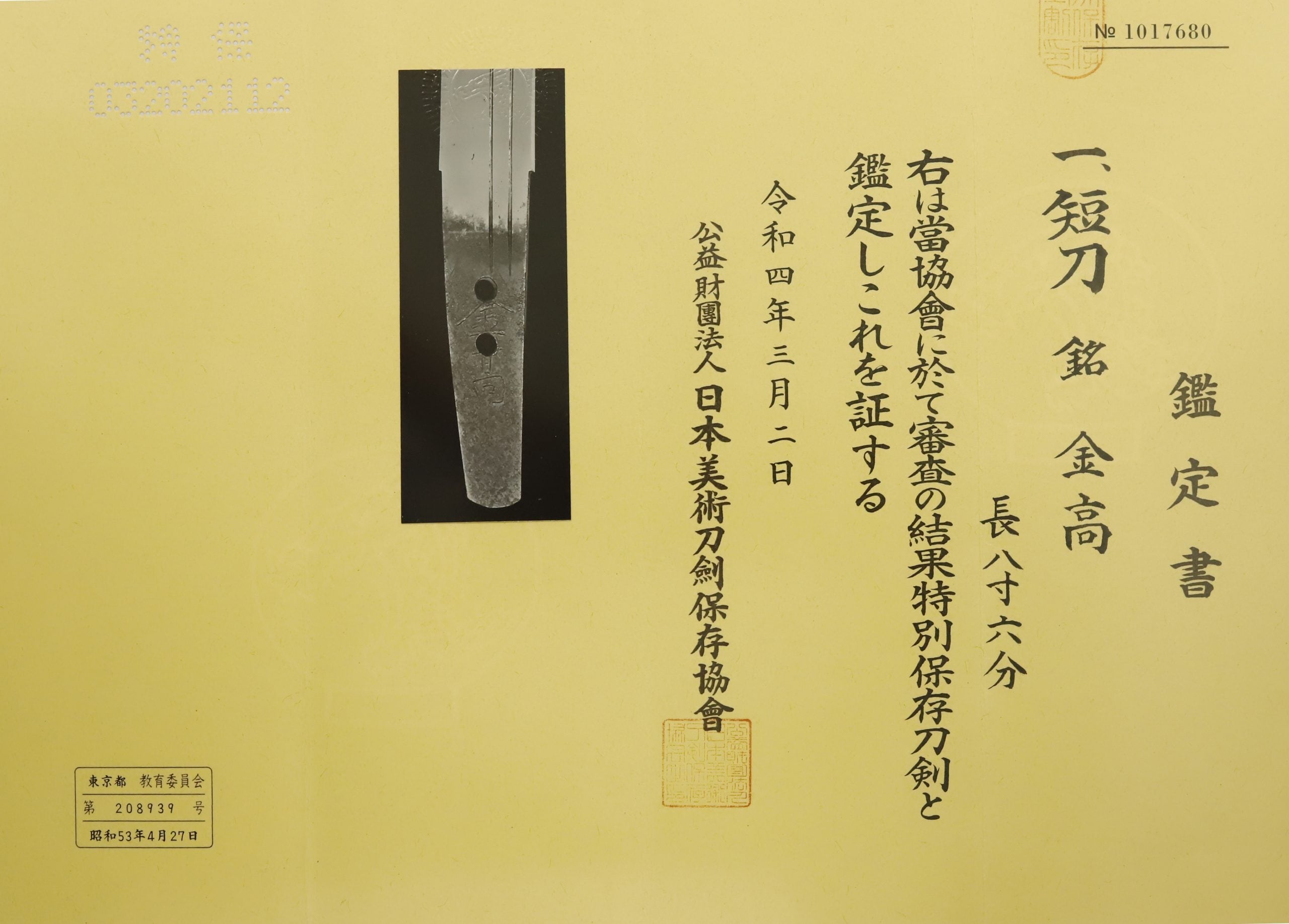
美濃伝 · 美濃 · 1592-1596頃
藤代 Chu-jo saku · 刀剣大鑑 上位76%
現在2点販売中
金高の位置づけを、日本刀全体および伝統・時代・時期ごとに示します。各位(随一・屈指・有数・著名)は、NBTHK および文化庁による指定に加え、三作や名物帳などの歴史的栄誉を加味したものです。
各項目を選ぶと評価方法が表示されます。
美濃伝 · 美濃
現在178点販売中
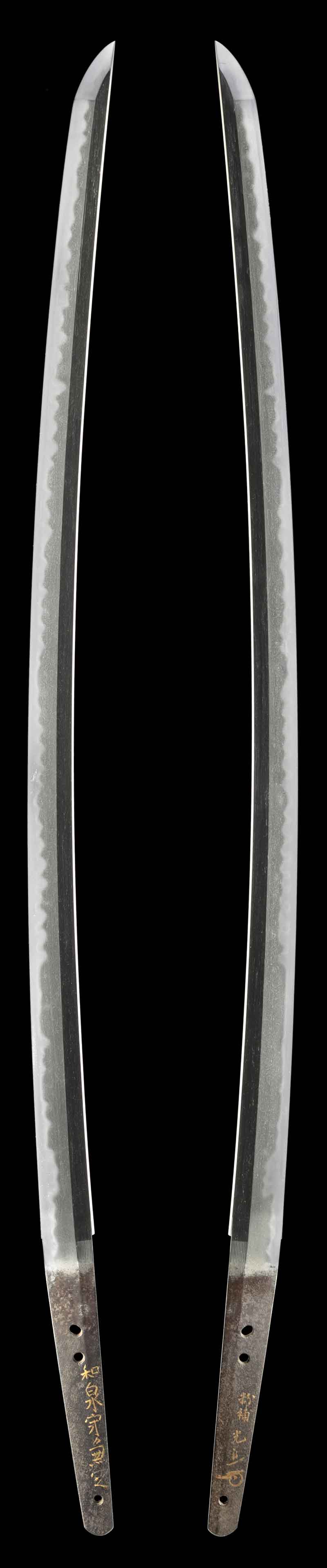
美濃国の関は、南北朝より室町、新刀期に至るまで日本刀の一大生産地として栄えた鍛冶の地である。その源流は二つに発し、説明書は金重と志津兼氏とを並べて美濃鍛冶の祖とする。金重は『古今銘尽』に法名道阿、越前敦賀の住人と伝えられ、敦賀より関へ越えて住したといい、相州正宗十哲の一に数えられて、沸の厚い穏やかな手を美濃の地鉄に持ち込んだ。兼氏に発する志津の系は、尖り互の目に走る乱調をもって、いま一つの根をなす。この二流が南北朝の美濃伝を形づくり、金行のごとく金重に続く工、室町に入って善定派の兼吉のように大和手掻の血を関に運んだ工が加わって、流れは広がった。室町後期には兼元・兼定の二名を頂点とする末関の隆盛を迎え、孫六兼元の名と和泉守兼定の受領とが、地方の量産地にとどまらぬ関の格を世に示した。大和と相州の二つの源流に、備前を意識した白け映りの地が結ばれて、美濃伝という一個の伝法が立ったのである。 関物を貫くのは、工と系統の差を越えて繰り返される美濃の共通語法である。地鉄は板目に柾を交えてしばしば肌立ち、刃寄りに柾がかり、鎬地は柾に流れる。その地に立つ映りは備前の明るい乱れ映りではなく、淡く白ける美濃鉄の靄のような白け映りで、説明書はこれを終始、備前と作を分かつ見どころとして掲げる。刃文は互の目を主調に尖り刃を交え、兼元にあっては整然と並ぶ尖り刃の三本杉となり、兼定や兼之にあっては頭の丸い互の目とのたれを交えて変化に富む。沸は乾いて締まり、匂口は冴え、足入り、砂流し・細かな金筋が刃中を走る。帽子は乱れ込んで先尖りごころとなり、あるいは丸く地蔵風に返る。これらは関の背骨をなす型であって、工により濃淡を異にする。金重・金行の手は穏やかで地が肌立ち、善定兼吉は大和の血を負って締った直刃と柾がかる板目を見せ、末関の氏房は大らかなのたれに尖り刃を折り込み、兼房は頭の丸い互の目の兼房乱れを得意とする。同じ語法のうちに、それぞれの工の手が読み分けられる。 収集家が関物を求めるのは、その鑑定が手応えを伴う一個の眼の修練だからである。映りが白く沸が乾いて締まる美濃の地刃は、備前の華やかな映りとも、山城の長く澄んだ直刃とも異なり、これを見分けることが関を識る勘所となる。主要工の格は説明書の評にそのまま現れる。孫六兼元は三本杉の創始者として名を成し、和泉守兼定すなわちノサダは、白ける板目に焼いた賑やかな美濃の刃と来国俊風の細直刃の双方を能くして、古刀期に珍しい受領を許され、刀剣書が「すぐれたる上手」と評する当代第一の手とされる。兼之は末関中最もよく練れた鍛えを見せて作域広く、永正・大永のノサダとして賞玩が厚い。これらの名は将軍家・大名家の伝来を負い、ノサダの太刀には武田信虎のために打たれた一口があり、菊花紋を切った刀は皇室との関わりを示し、徳川将軍家への献上を経た金重の短刀も伝わる。末関の氏房一門は清須・名古屋へ移って尾張新刀三祖の一を生み、古い美濃の手が新たな伝統へ移る蝶番に立った。切れ味をもって武用に応えた量産の地でありながら、孫六兼元らの最上手の作は美術的価値においても高く評され、その白け映りと乾いた沸の手を識ることが、美濃伝いかに始まり継がれたかを語る証となる。 詳しく見る →
桃山時代の美濃
天下統一は大量の市場を閉じ、関の鍛冶は新しい富の在り処へ移った。三品の一門は受領名を得て京に、大道系は諸国の城下町に。美濃は新刀時代の最大の祖先となった。
保存刀剣のうち、出来が一層優れ、保存状態も良好と認められたものです。再刃や、室町・江戸期の多くの無銘作は対象外となり、保存刀剣より高い基準が課されます。
日本美術刀剣保存協会(NBTHK)は、1948年に設立され、文化庁の監督を受ける公益財団法人で、東京・刀剣博物館に本部を置きます。専門の審査員が出品作を直接審査し、美術的・歴史的価値に応じた鑑定書を発行します。NBTHKの鑑定書は、日本刀および刀装具の真正性を示す最も広く認知された基準です。
NBTHK公式サイトReturns/exchanges limited to defects caused by shipping (except willful misconduct or gross negligence by the company); customers must contact within 72 hours of receiving the product.