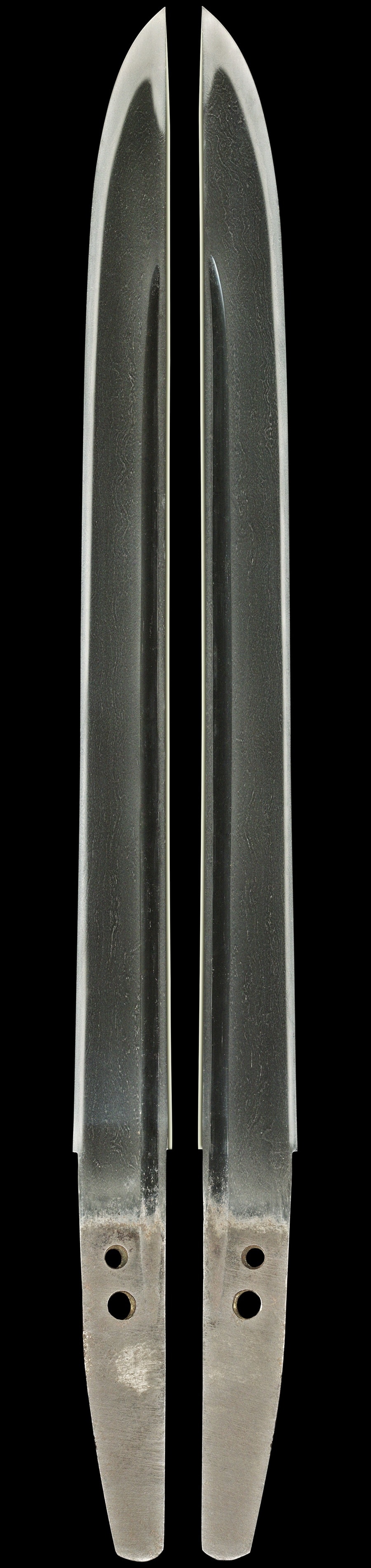
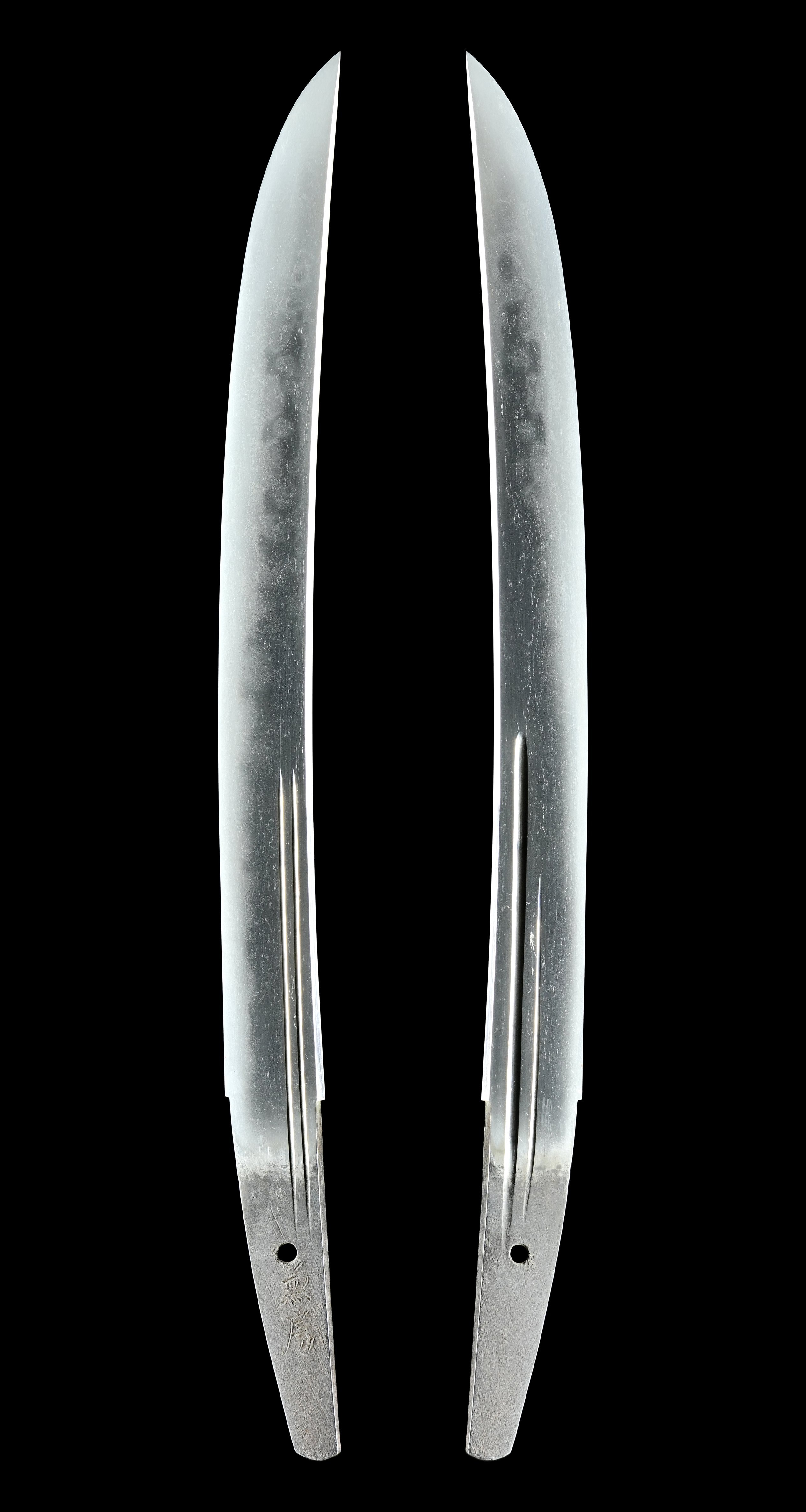
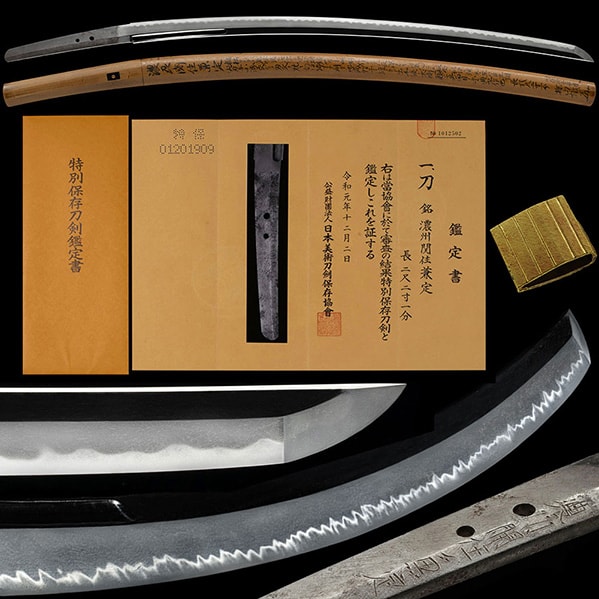
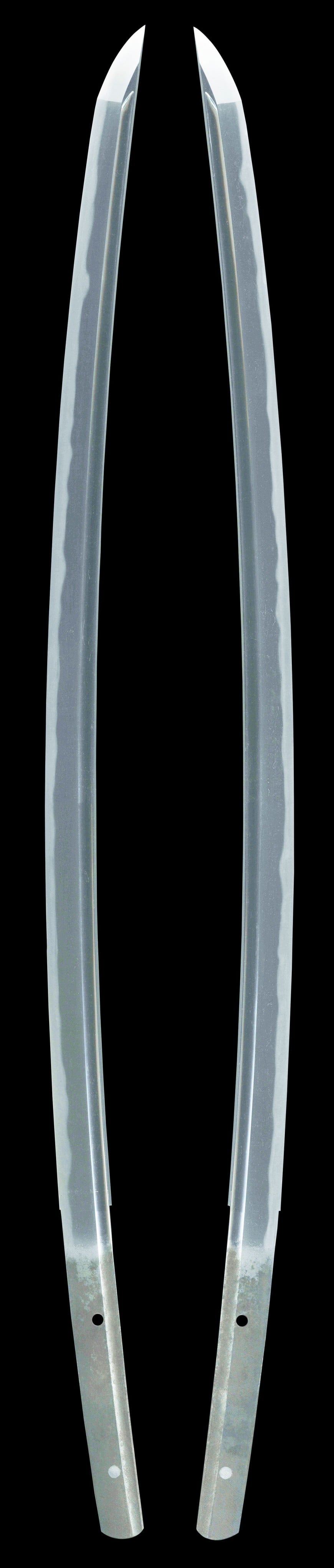
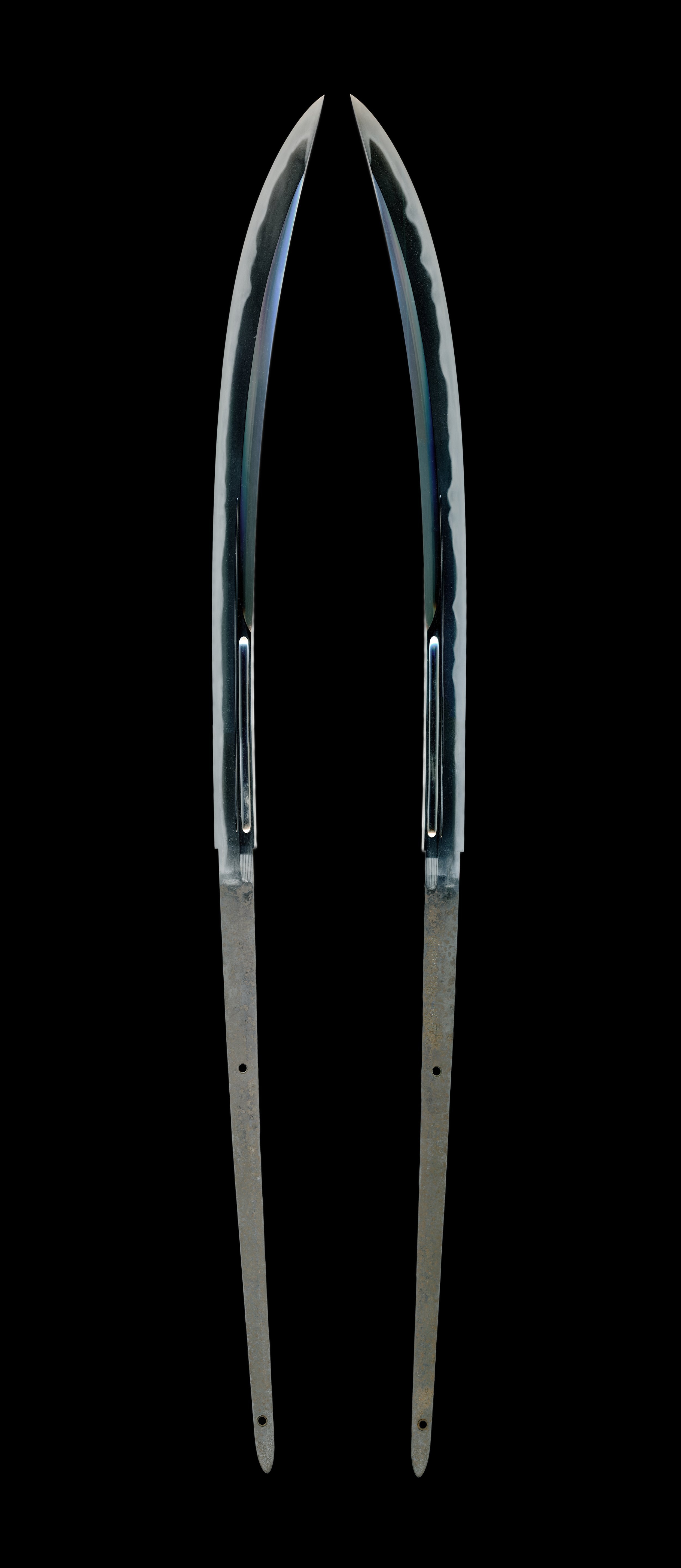
Kanenori signed his earliest surviving "Seki Kanenori" in province, and the name belongs to the late- body of Seki smiths the trade calls . The reference works on signatures place a first generation of the name about the Bunki era and a third about Tensho, and they record that the line afterward moved from Seki to Ichijodani in , where its smiths continued to sign " no ju Kanenori" into the early years of Keicho. The seven blades on record under his name fall cleanly into these two settings: a pair of -signed of about Tensho, one of them dated Tensho 7, and a larger group of -signed whose dated examples carry Keicho 5 and Keicho 12 inscriptions, so that his period of activity is established with unusual clarity for a provincial hand. The published sources judge the work outright excellent, calling the earliest piece a blade whose workmanship is superior and whose signature is valuable as comparative material. What runs through the whole, early and late, is a pure - manner the judges keep returning to: a smith who carried the style of his native province into and held to it.
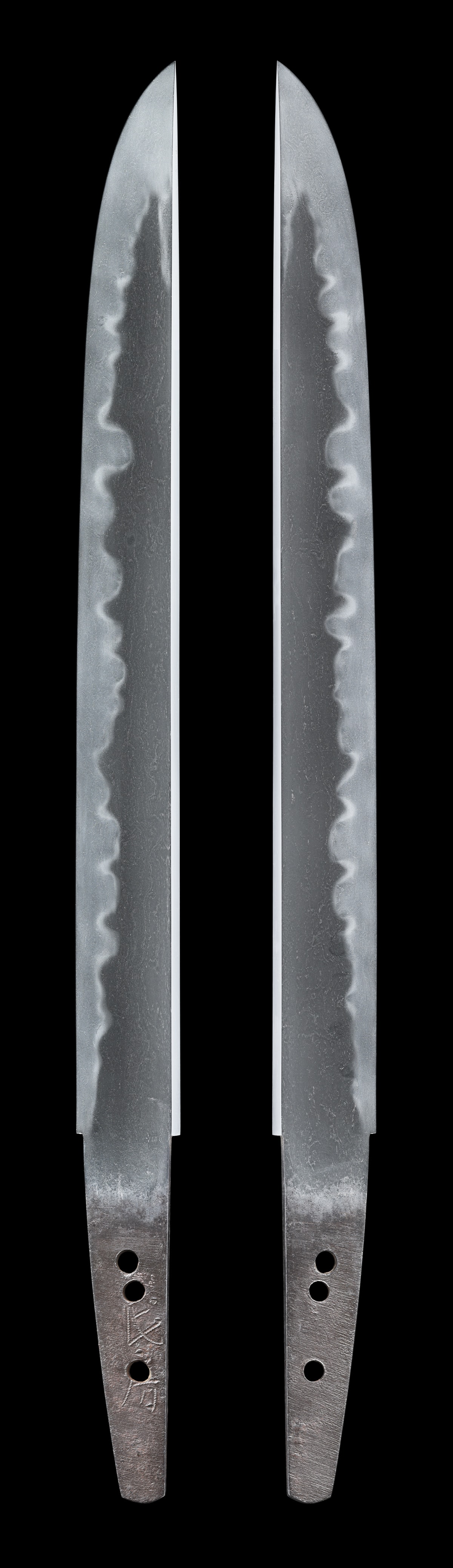
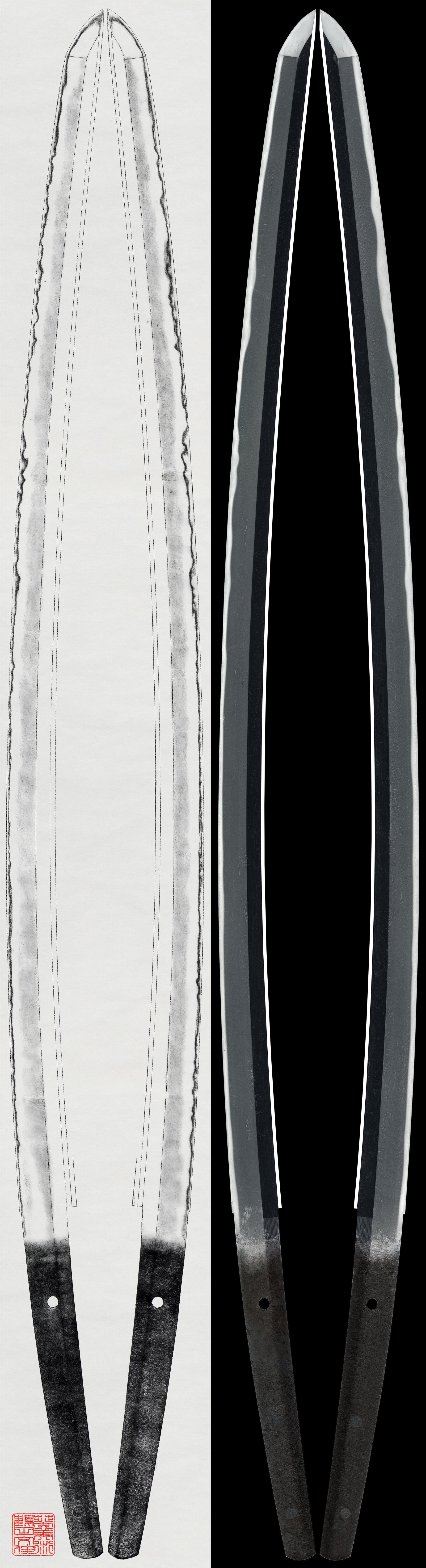
His characteristic temper is a - one built with more structure than the plain Seki . The is a series of round-headed connected and arranged into a complex, compound () figure, and into it run -, and the pointed that is the signature. On the broader blades the tempering is wide and the heads of the stand round and full, the whole reading as a deliberate, slightly ornamental compound rather than the busy of his Kanemoto contemporaries. The hardening is in that gathers unevenly into mura- in places, and the breaks into with sweeping through it and fine running in the . Above all the tends to sink rather than stand bright, a subdued finish the judges note again and again, and one that sets his work apart from the brilliant of the Keicho- mainstream he was contemporary with. The answers the temper below it: usually a turning back in , on one blade rising to a quiet with a jizo-like cast, the point swept into .
The is the open surface, never the tight of refined Kyoto or work. It is an that flows and stands, mixed with and a little , and on the it runs strongly to a -like texture, the standing out under thick with threading the steel; one Keicho 5 blade shows a faint rising from the . The construction carries the provincial stamp. These are wide with little taper from base to tip, the now thin and now thick, the deep with added and the an extended or a frank , the pared down and the standing high. The file marks of the tang are taka-no- throughout, and the judges treat that detail, with the forging and the shaping, as one of the surest marks of his descent. Of the seven blades only the unsigned Tensho-era lacks a signature; the rest are and signed, one of them in a long six-character , and two carry their date on the .
The two settings of his work are not two manners but one manner in two places, and the published record draws the line between them itself. The blades are the original , judged so well made that the catalogue wondered aloud whether the -signed pieces might be the work of his son. The blades, signed after the move to Ichijodani, the judges read as -mono retained whole: of one they write plainly that he 'tempers a -style and the workmanship is good', and of another that even after relocating to 'he strongly retains the inherited style of his original province'. Because several smiths assumed the name in with slight differences in the cut of the characters, the judges are careful not to fuse them into one biography; they read each blade on its workmanship and let the dated pieces anchor the rest, the Keicho 5 serving as the benchmark against which the others are matched in build, tang and signature.
His place is best understood through the larger movement his blades belong to. The - smiths scattered out of Seki at the close of the period, and the published sources connect Kanenori directly to that diffusion, judging his -style work close to that of Iga no Kami Kinmichi, who 'came out of and moved to Kyoto', and the group, the smiths who likewise carried the manner into the capital at the dawn of the age. What distinguishes him within that crowd is the consistency of the provincial signal: the round-headed compound , the , the flowing that runs to a -like texture and the taka-no- file marks recur from the Tensho through the Keicho ones with little dilution, so that the catalogue can call one blade the very working range of late- itself. He is not an innovator but a faithful carrier, the kind of late Seki hand whose value lies in how cleanly and how well he kept the tradition alive after it had left its home.
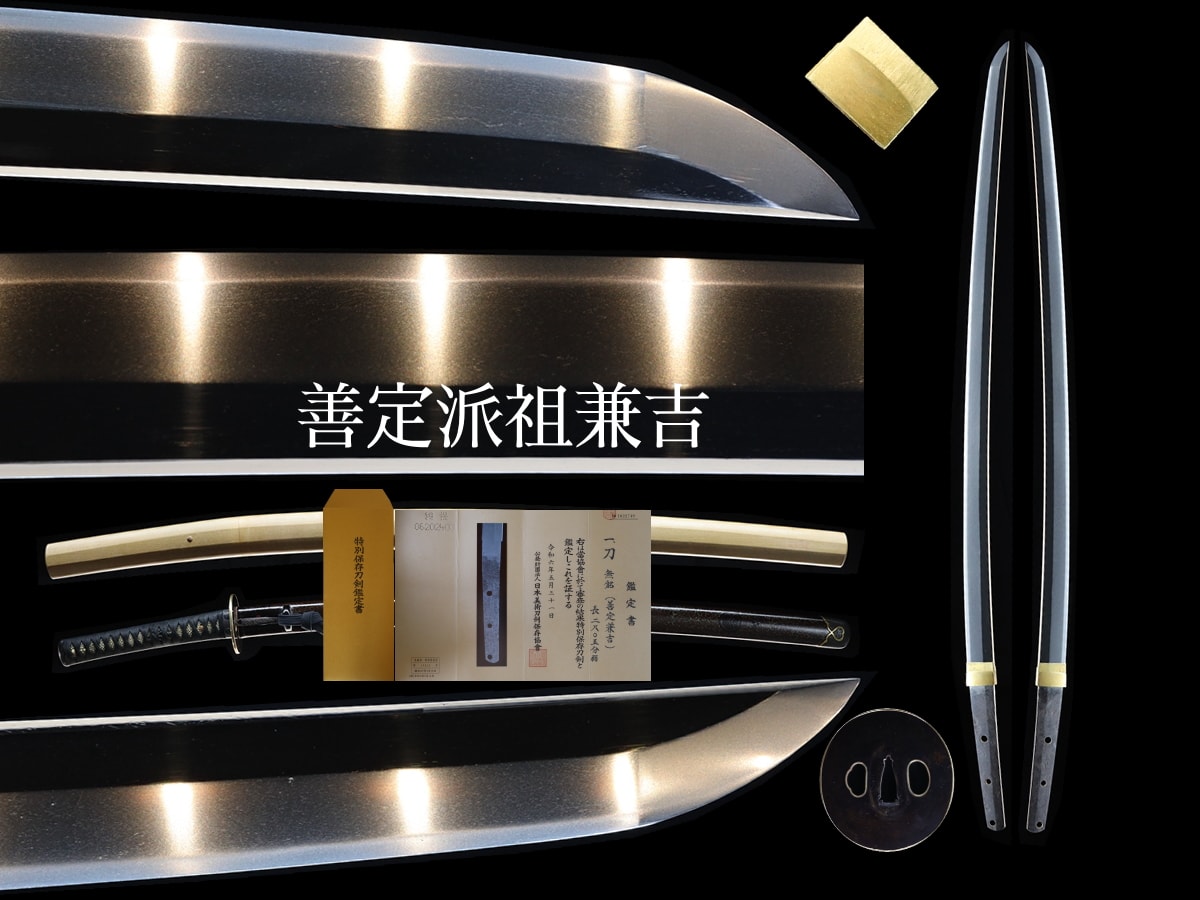
Kanenori is rated Jo in Fujishiro's ranking and sits in the middle of the Toko Taikan valuations, a sound maker rather than a celebrated one. All seven of his recorded blades sit at the level, with none raised to Special Importance and none, as befits a provincial late- name, carrying a higher cultural designation; there is no recorded provenance and no famous named blade attached to him. For a collector that makes him a quiet and attainable name within the front rank of the catalogue: surviving examples are few, as the published sources repeatedly stress, but they are not locked away in museums or shrines, and an Important Kanenori comes to the market from time to time, with patience, as a well-made and well-documented piece of - rather than a landmark one would wait a generation to encounter. The dated Keicho 5 and Keicho 12 blades carry an added value the judges single out, standing as reference material for studying a smith whose work, surviving in small numbers, is the clearest provincial record of how the Seki tradition was carried into and kept.