 NihontoWatchNihontoWatch
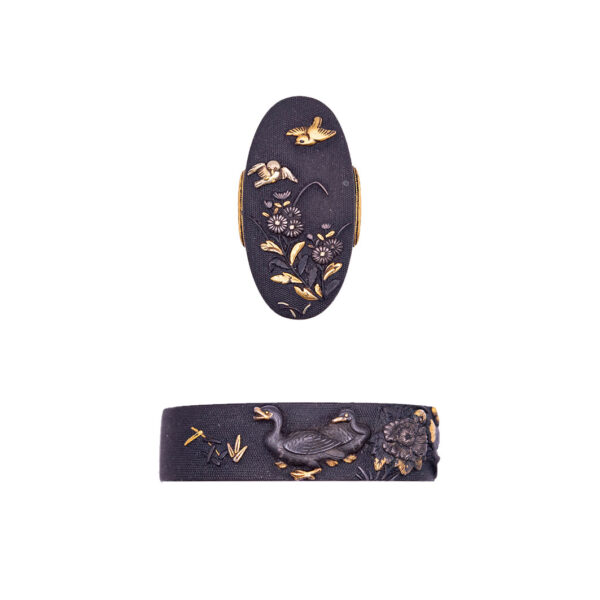
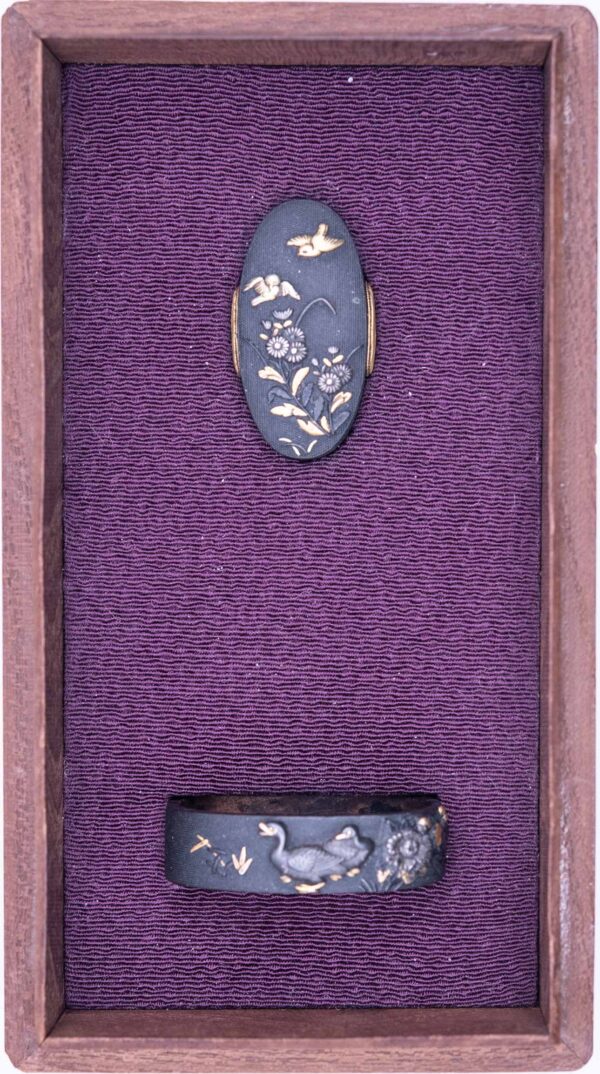
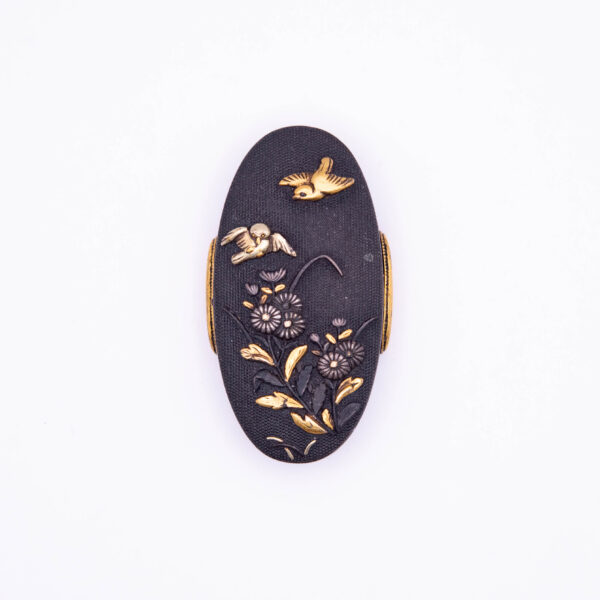
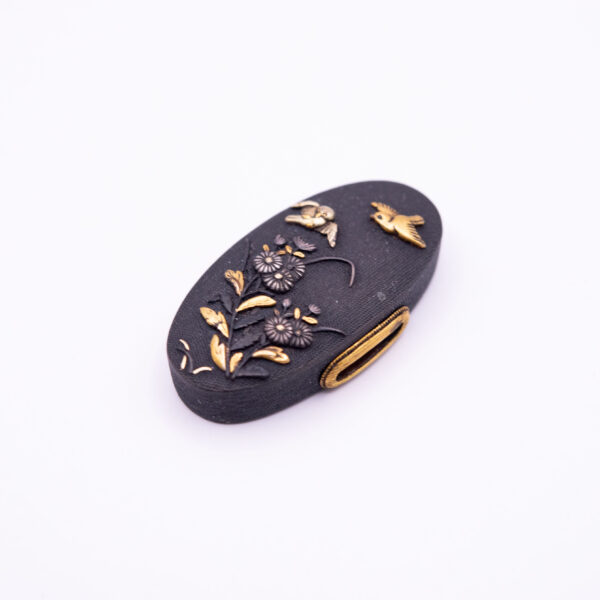
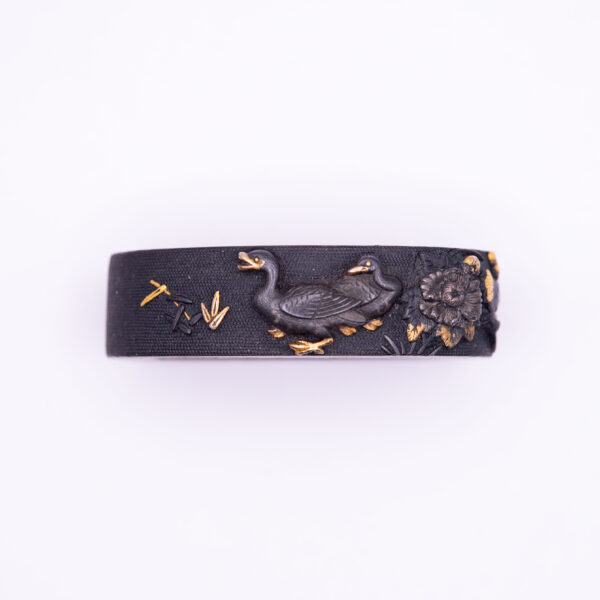
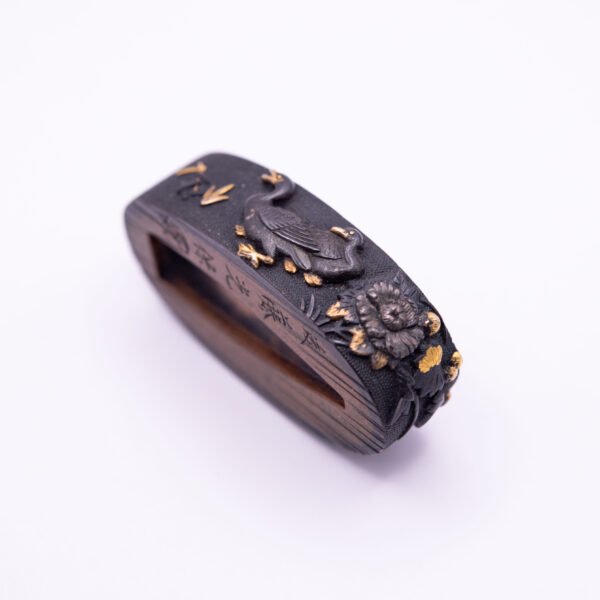
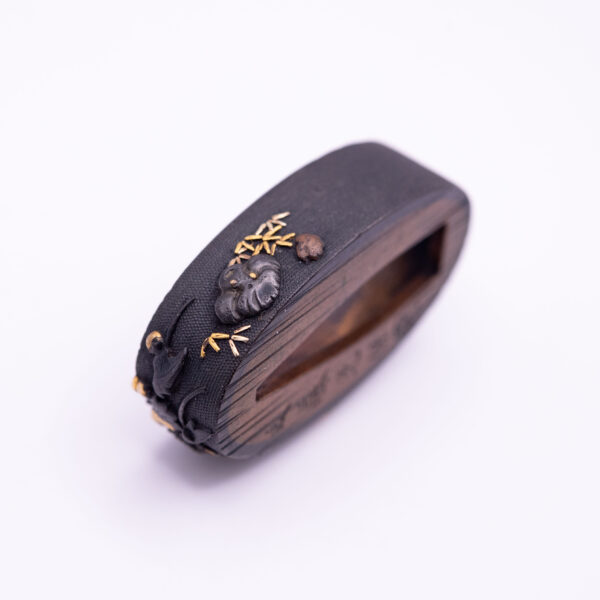
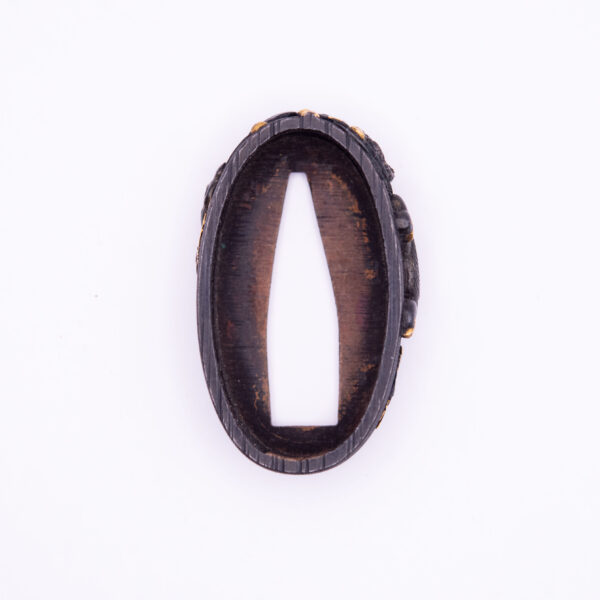
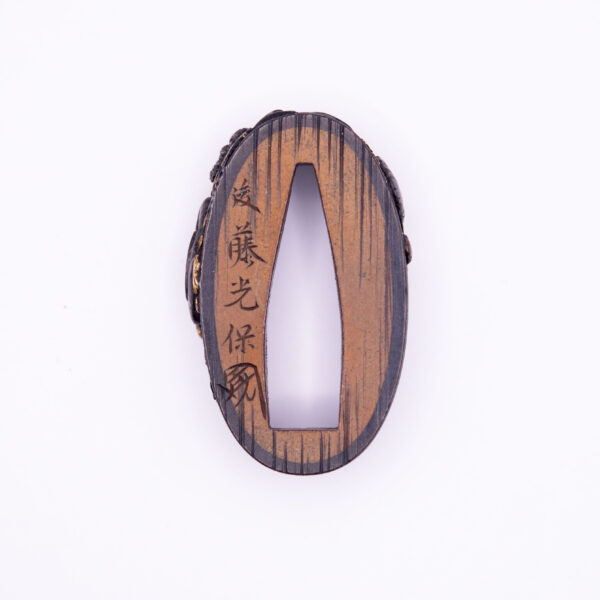
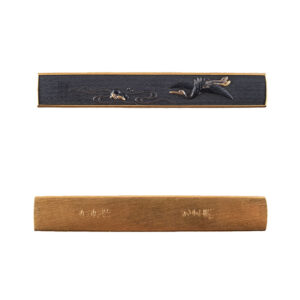
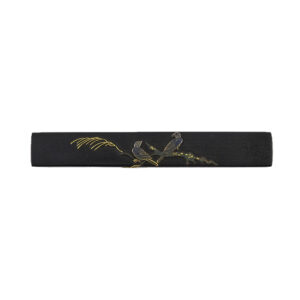
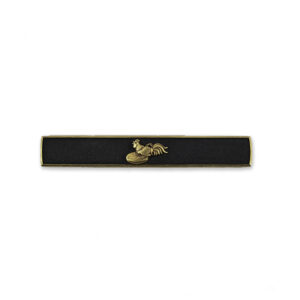
Goto Mitsuyasu (1795 – 1852) was a member of the distinguished Goto family, which served Japan’s ruling clans as goldsmiths for over four centuries, reaching seventeen generations in its lineage. He is listed in the Kinko Meikan on page 401 as a “Ryoko” (良工, skilled master), indicating both technical excellence and refined artistic sensibility. He was better known under the name ‘Benjo’ and became the fifth master of the Hanzaemon Waki Goto line. He was likely influenced by the style of Ichijo who was only 4 years older than him, as we can see in his naturalistic interpretation of flora and fauna elements. His works are known for their precision in carving and for the harmonious relationship between motif, material, and form. The fuchi depicts a serene landscape with ducks and a peony (botan). The ducks are executed in takabori high relief and made of shibuichi, with beaks, eyes, and feet delicately detailed in gold. The base is shakudō with a finely executed nanako background, lending texture and depth to the composition. The peony blossom is rendered in silver, while the leaves are in shakudo with subtle gold highlights. The piece is signed “Goto Mitsuyasu” and bears the artist’s kao (seal). On the signature side, the characteristic vertical file marks are visible—an identifying feature often found in the Gotō Ichijo school. The kashira shows two small birds, likely sparrows (suzume), above a flowering plant with several stems and leaves. The birds are executed in gold, while the ground is shakudo with a fine nanako surface. The flower petals are in silver, creating a pleasing contrast of tone and texture. The shitodome are finished in gold and neatly worked with yasurime detailing. Overall, the set exemplifies the refined harmony of naturalistic design and formal elegance—hallmarks of Goto Mitsuyasu’s artistry and the cultivated aesthetic of the later Kyoto Waki Goto tradition. Comes with a custom made box. Size: Find more items from the Goto school here: https://tsuba.info/product-category/kinko/goto/
NihontoWatch
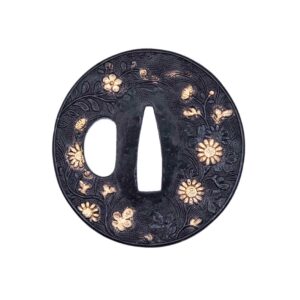
Waki Goto
江戸
在銘
販売店の記載のまま
家彫 · 山城
家彫 · Kyoto
現在72点販売中
脇後藤 脇後藤とは、刀装具製作において歴代にわたり権威を保った後藤宗家に対し、その傍系・分家にあたる諸家の総称である。後藤家は室町時代以来、足利将軍家・徳川幕府に仕え、その彫物は「家彫」と称されて市井の需要に応じた「町彫」と区別され、刀装金工の最高峰と仰がれた。脇後藤はこの宗家の血脈と技法を分かち、京都および江戸の中央のみならず諸国へとその伝統を広めた一群である。室町末期に活躍したと伝わる光乗をはじめ、程乗の次男にして理兵衛家を興した悦乗、権兵衛家の順乗、勘兵衛家の東乗・光文、半左衛門家の光正、次左衛門家の光久など、多くの名工がこの系譜に名を連ねている。とりわけ悦乗光邦は寛永十九年に京都に生まれ、加賀前田家より百五十石を賜り、勘兵衛家の演乗と隔年で加州金沢に住して門人を育成し、加賀後藤の隆盛に大きく寄与した。 作風は専ら後藤の御家流を基調とし、赤銅魚子地を高彫あるいは鋤出高彫とし、これに金色絵を施すのを本領とする。魚子地は細かく整然として深く澄み、肉置きも優れる。光乗は桐紋・鳳凰・百足などの意匠を好み、その魚子地と高彫の肉取りに後藤上三代の遺風を伝える。悦乗は龍や獅子といった後藤の掟物のみならず、滑らかな赤銅の波文地に尾鰭を跳ね上げ勢いよく海上を飛ぶ鯱を、隅々まで細緻な鏨の活きた金紋であらわすなど、一風変わった趣向の作をも遺し、小柄笄の仕立・肉置は父程乗に全く同じく、金の色あいよく彫技も傑出する。幕末に至っては、光文の七夕図に見るごとく、赤銅魚子地の高彫金色絵を蒔絵・螺鈿の鞘と取り合わせ、加賀工芸の極致と称される優美な刀装をも生み出している。 評価においては、脇後藤の作はいずれも父祖の御家流を忠実に継ぎつつ、各家それぞれに独自の意匠と卓越した彫技を加えた点が高く評価される。順乗の双龍図鐔が「後藤傍系作品中の傑出作」[[c:1]]と称されるごとく、傍系にありながら宗家に劣らぬ技量を示す作が少なくない。在銘品が比較的少ないため、その遺品はいずれも資料的価値が高く、後藤家研究の好資料として珍重される。理兵衛家の加州移住によって伝統は京・江戸の外へも広がり、加賀後藤として一地方の金工を興隆させた。かくして脇後藤は、後藤宗家の家彫の伝統を時代の好尚に応じて展開させながらその品格を保ち続けた一流として、日本刀装金工史上に重要な位置を占めている。 詳しく見る →
All sales are final and no refund will be issued. Individual refund conditions may be offered on request. For items with third-party certificates (e.g. NBTHK), a return is offered if the certificate is proven falsified and claimed within one year after shipment.