山城とは京都であり、平安の京都とは朝廷である。伝承はその筆頭に十世紀末の三条宗近を置き、その三日月宗近は後に天下五剣に数えられた。優美が先に立つのは、注文主ゆえである。
 NihontoWatchNihontoWatch
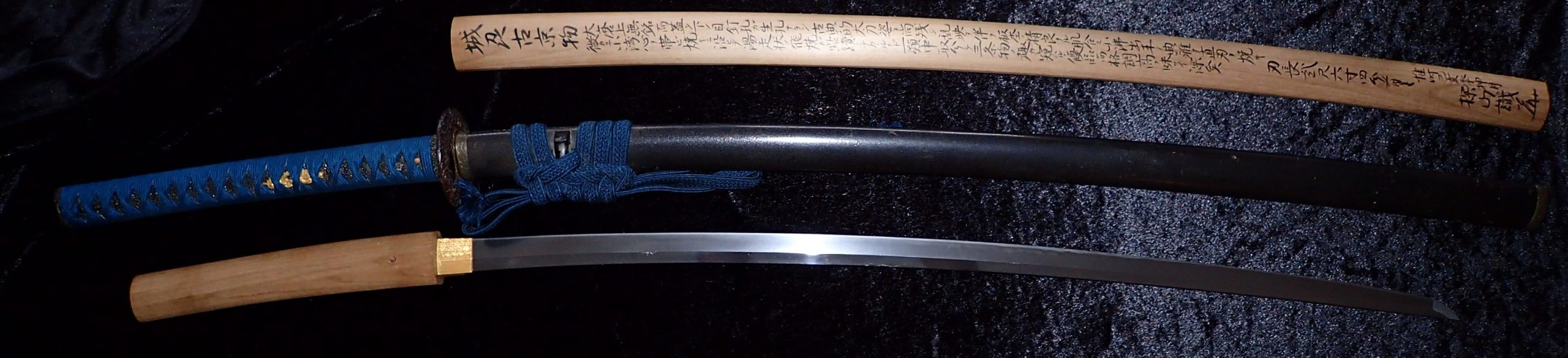
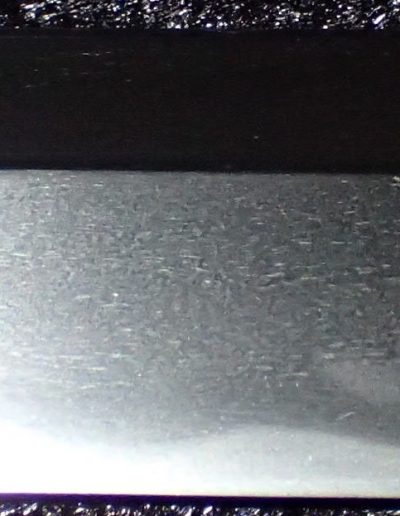
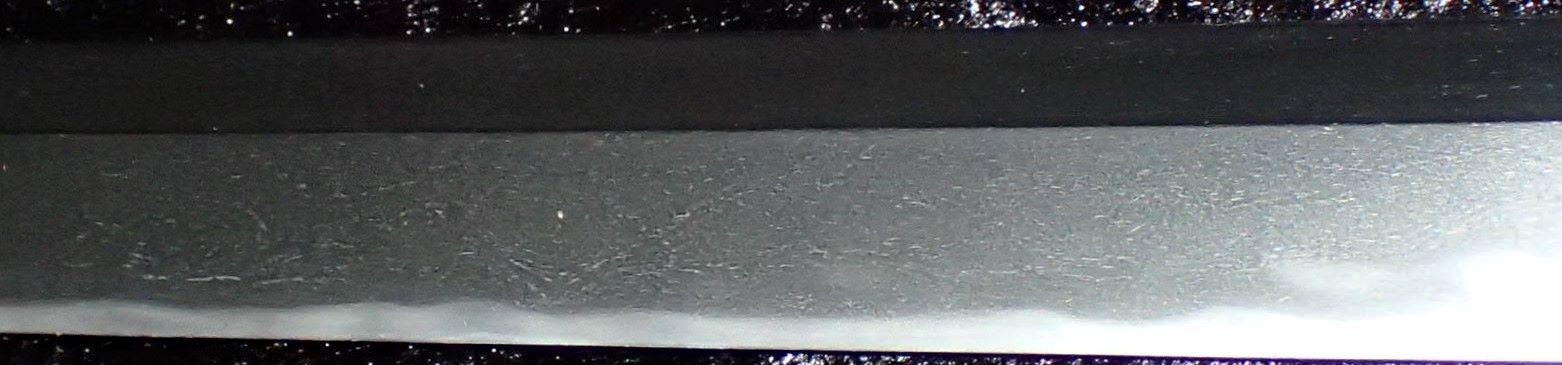
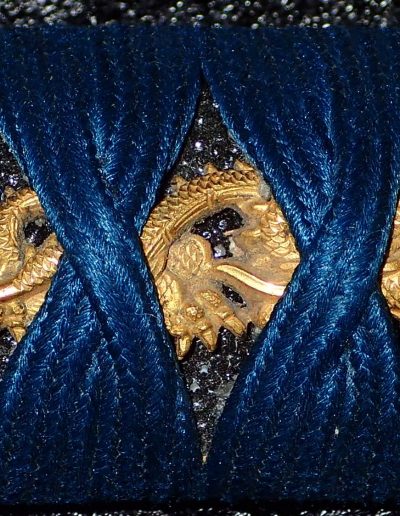
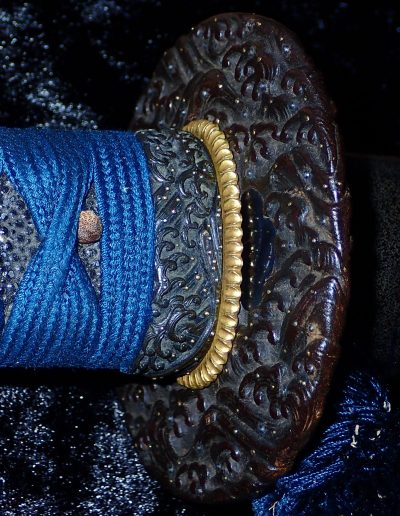
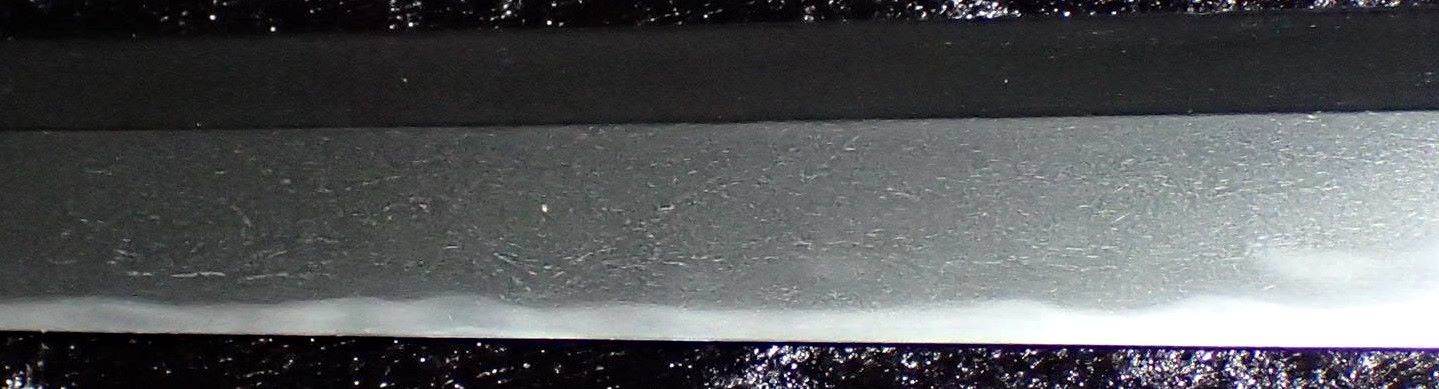
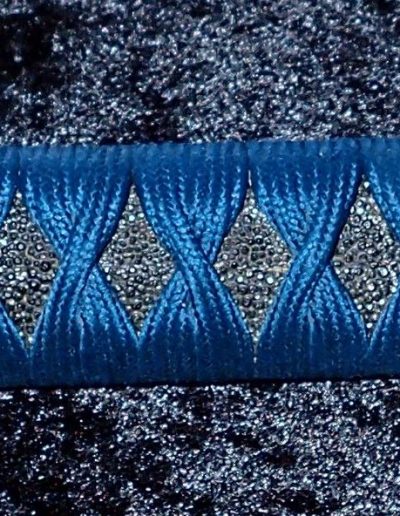
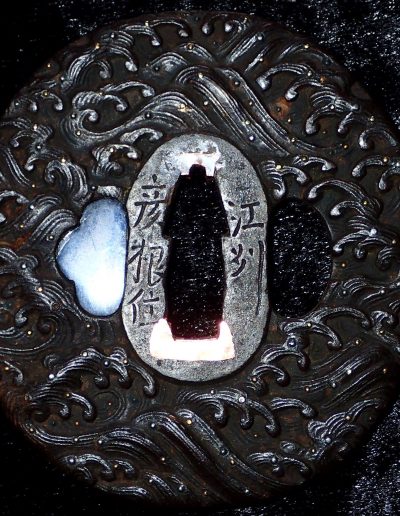
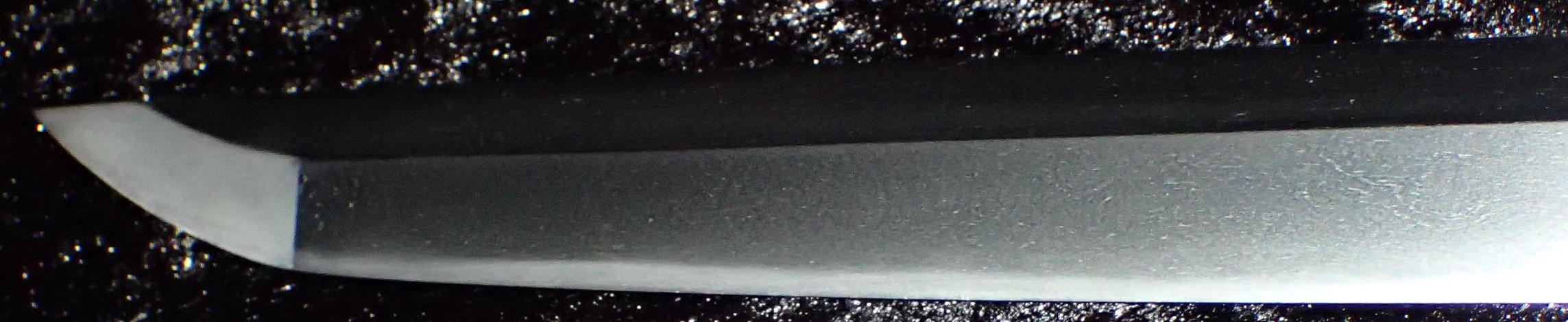
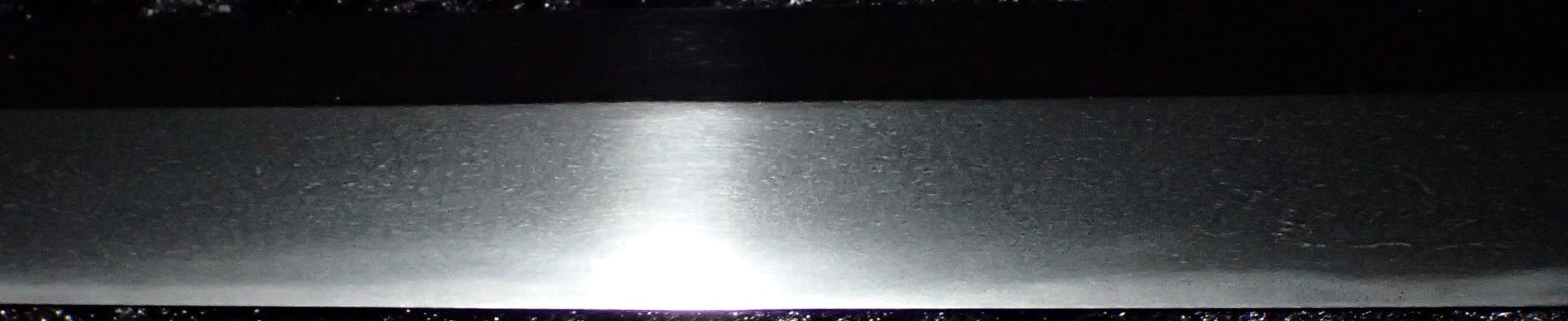
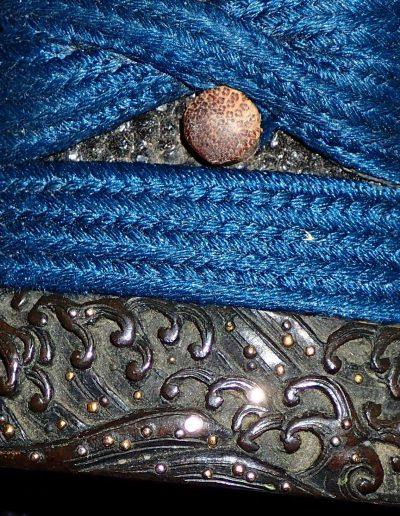
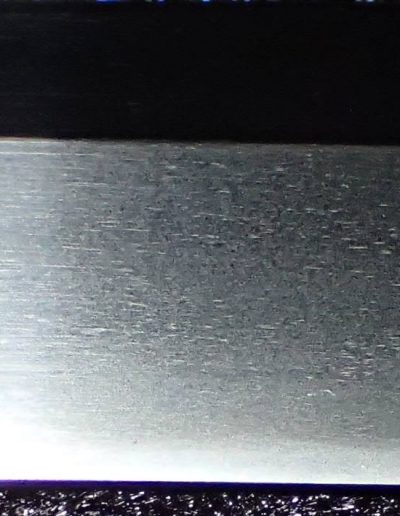
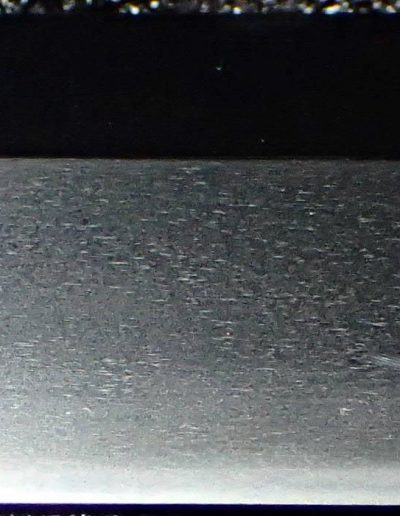
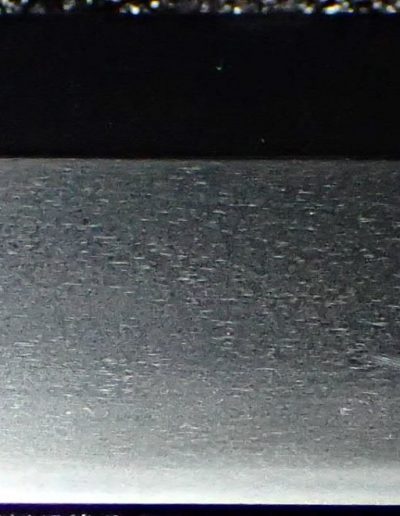
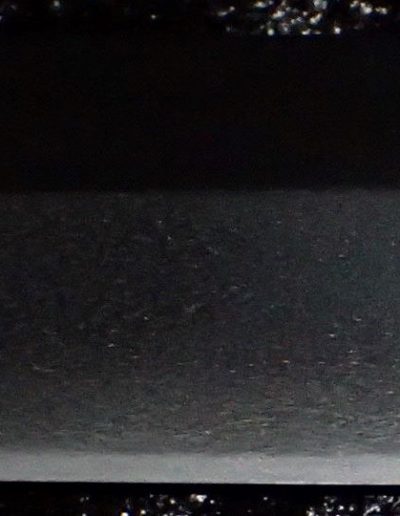
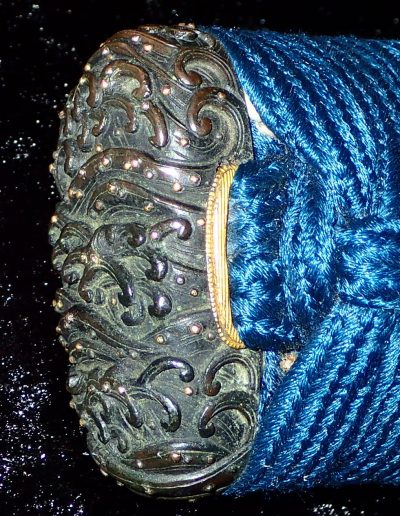
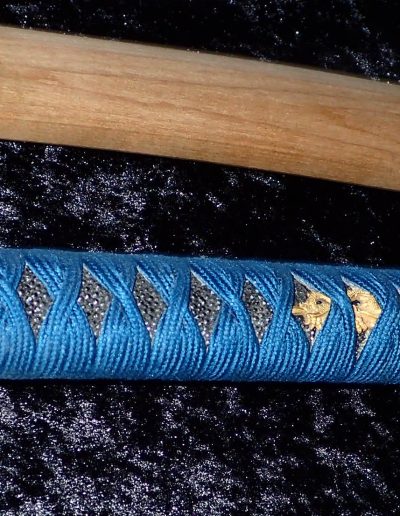
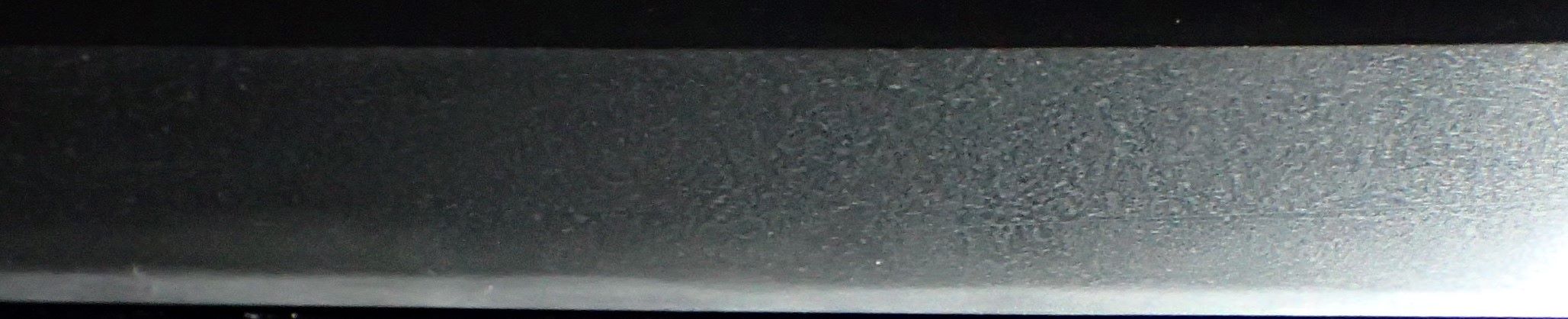
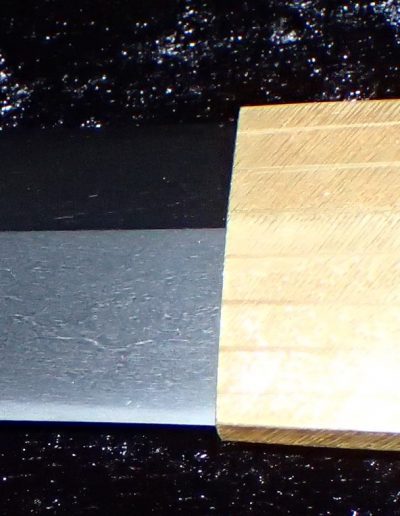
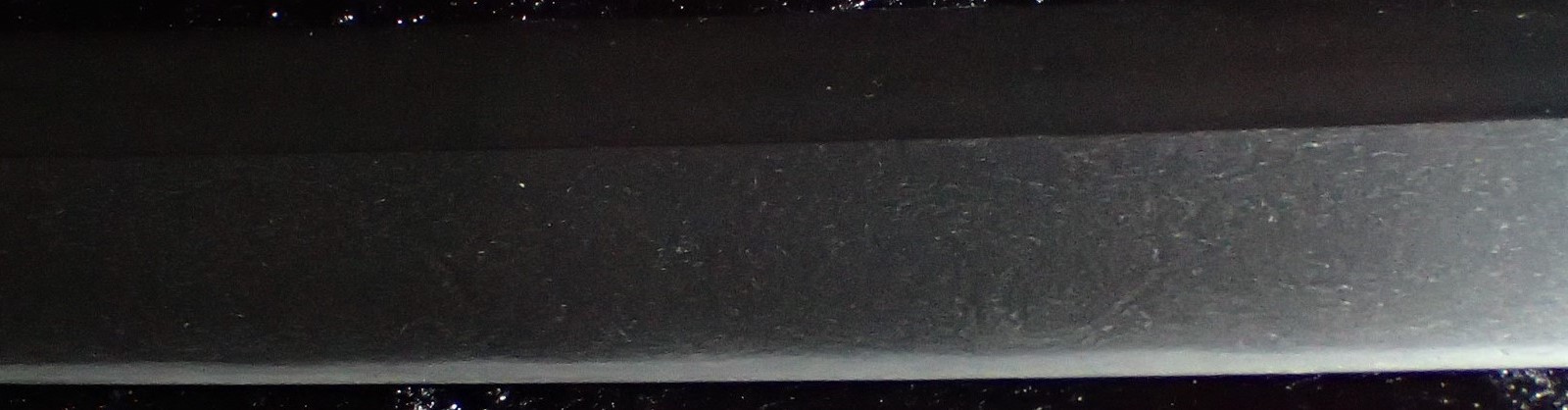
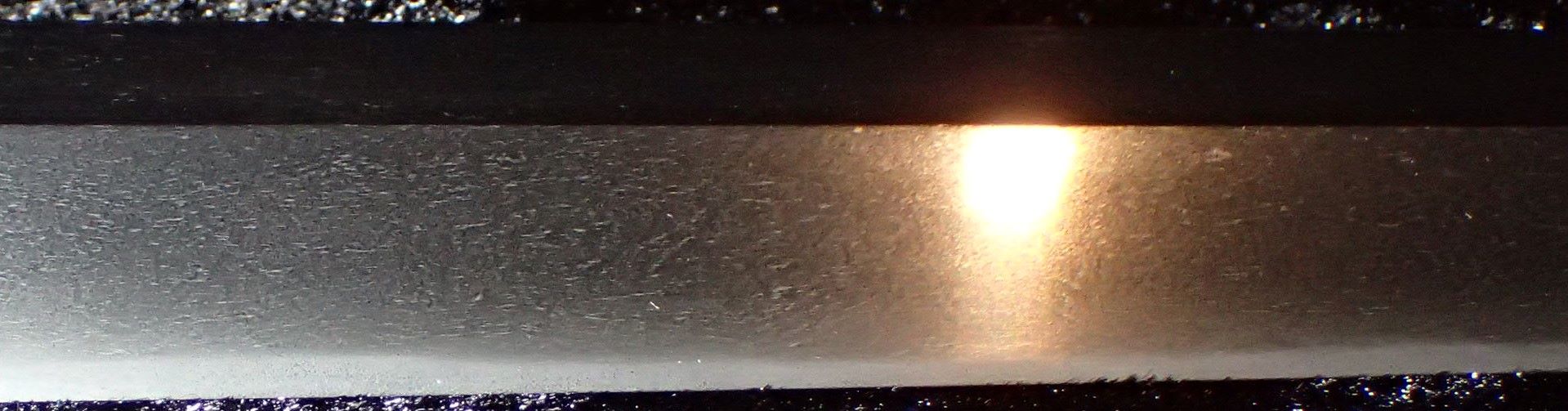
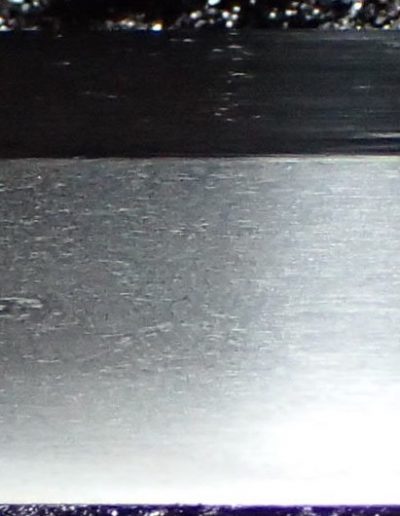
Heian Kokyo Tachi NBTHK Certificate A Magnificent rare long Heian Kyo Mono blade with classic Tachi Sori forged in an excellent Itame Hada mixed with Mokume, Suguha based Hamon with some Ko-Notare, Ko gunome in Ko- nie deki and Nijuba, with Tobiyaki floating above the Hamon that appear in a Yubashiri manner with abundant Ji Nie, The Boshi is Sugu with Hakikake,This blade is reminiscent of the Mikazuki Munechika. As Tanobe sensei states in his lengthy Sayagaki. This is a work of the Sanjo School and is a dignified and very tasteful masterwork. A very rare early example from Kyoto Sanjo school. Mounted in Koshirae with excellent high relief Wave Motif Tsuba and Fuchi Kashira. Nagasa – 80cm Sayagaki by Tanobe Sensei 城刕古京物 大磨上無銘而蓋シ下ノ目釘孔ガ生孔ナラン古典的太刀姿ヲ尚残シ乱映ヲ伴フ板杢ノ精良ナル肌合ニ小沸出来ノ典雅ナ直刃ヲ焼キ微カニ小湾心ヲ帯ビ焼キニ没ヒテ湯走状ノ飛焼ガ點續シテ カゝルナド一類中取分ケ三条物ノ趣ガ窺ハル優品而格調高ク味ワイ深矣刃⻑弐尺六寸四分有之惟時己亥季坤月探山識「花押」 Jōshū Ko-Kyō-mono Ō-suriage mumei shikamo kedashi shita no mekugi-ana ga ubu-ana naran koten-teki tachi-sugata o nao nokoshi midare-utsuri o tomonau ita-moku no seiryō-naru hada-ai ni ko-nie-deki no tenga na suguha o yaki kasuka ni ko-notare-gokoro o obi yaki ni botsuite yubashiri-jō no tobuyaki ga tenzoku-shite kakaru nado ichirui-chū toriwake Sanjō-mono no omomuki ga ukagawaru yūhin shikamo kakuchō-takaku ajiwai fukai. Hachō ni-shaku roku-sun yon-bu kore ari Koretoki tsuchinoto idoshi kongetsu Tanzan shirusu + kaō Early Kyō-mono from Yamashiro Province [This blade is] ō-suriage mumei. The lower mekugi-ana appears to be the ubu-ana and the blade retains a classical tachi-sugata. It shows a refined itame-mokume hada mix that is accompanied by an utsuri and is hardened in an elegant suguha in ko-nie-deki that tends a little bit towards ko-notare and that features uninterrupted tobiyaki above of the hardening that appear in yubashiri manner. Because of these characteristics, it is most likely that is within the group of early Kyō-mono, the blade is a work of the Sanjō School. A dignified and very tasteful masterwork. Blade length ~ 80.0 cm Written by Tanzan [Tanobe Michihiro] in October of the year of the boar of this era (2019) + monogram Following info on the Sanjo School and Munechika The Sanjô school was founded by Munechika (宗近), nickname Kokaji (小鍛冶), who is traditionally dated around Ei´en (永延, 987-989), what means he worked at about a time when Kyôto had been the new imperial capital for two centuries and roughly 250~300 years after the youngest swords in the Shôsô’in Repository had been made. So Munechika’s works are considered to be one the earliest extant specimen of a fully developed nihontô, what is a single-edged and curved blade in (as far as long swords are concerned) shinogi-zukuri, and standing in front of for example the meibutsu Mikazuki-Munechika (三日月宗近), it really looks its age (see picture 1). I say “standing in front of” on purpose because chances to study a Munechika hands on or come across one in the wild are virtually zero. All known blades are either in temple possession, imperial treasures (gyobutsu, 御物), or preserved in the Tôkyô National Museum. But the ancient, highly dignified, and graceful look of the Mikazuki-Munechika does not only go back to its age as for example Ko-Hôki and Ko-Bizen blades that date back to around the same time are so to speak more “substantial,” although being still pretty elegant at the same time. The highly dignified and graceful look of the Mikazuki-Munechika has to be seen in its contemporary cultural context as experts agree that it was most likely not made as a war sword. Of course it also has lost some substance due to the polishes that were necessary over ten! centuries but it never had been massive in the first place. At the time it was made, the good old Heian culture was at its peak. The famous Pillow Book and Tale of Genji were written when Munechika was active and the court was full of refined aristocrats for whom swords were merely symbols of their rank and obligatory accessories. Apart from one major disturbance, the rebellion led by Taira no Masakado (平将門) in 939/40, the imperial capital was quite peaceful up to the time of Munechika and although the first dark clouds were gathering over the aristocracy, there was yet no sign that the just briefly forming military class was ever becoming so strong that it takes over the entire country. It goes without saying that most of the then swordsmiths were indeed producing weapons but the largest customer base for Munechika and his contemporary Kyôto-based colleagues was the aristocracy. Accordingly and apart from the graceful sugata, a blade not only had to be masterly crafted but also had to be refined and beautiful as everything rural, rustic, and uncouth was usually frowned upon in noble circles. So Munechika’s blades show basically a soft looking and beautiful jigane with a fine ko-mokume in combination with a relative narrow suguha-based hamon that is hardened in ko-nie-deki. There are actually quite many hataraki like nijûba, sanjûba, uchinoke, ko-ashi, yô, yubashiri, kuichigaiba, muneyaki, inazuma, kinsuji, ji-nie, and chikei and the suguha is livened up by ko-midare and even subtle ko-chôji elements. Also the hada varies in density and shows here and there larger structures but all these hataraki and features are very natural, unaffected, and unsophisticated and put pointly, his blades make the overall impression of being works of one from a group of the earliest outstanding smiths that had just mastered their craft but for whom it was yet not time to experiment with forging and hardening techniques from an artistic point of view. Or in other words, Munechika would not even come up with the idea of hardening a flamboyant ôbusa-chôji even if he was probably technically capable of doing so. Munechika and his colleagues put on the clay coat how they knew it will work for the hardening process, maybe with some accentuations here and there, but the principal job in creating the hamon was left to the metallurgical – back then “magical” – interplay between steel and heat treatment. Incidentally, there is the tradition that Munechika was a court noble himself who started to forge swords as a pastime in his residence along Kyôto’s Sanjô. It turned out that he was very talented and soon took orders from his noble colleagues and even from the emperor, but just as it is the case with Masamune, there are so many legends and plays around Munechika that we do not longer know which tradition has a core of truth and which one is just pure fiction. Picture 1: kokuhô, tachi, mei: Sanjô (三条), meibutsu Mikazuki-Munechika, nagasa 80.0 cm, sori 2.7 cm, motohaba 2.9 cm, sakihaba 1.4 cm, shinogi-zukuri, iori-mune [Tôkyô National Museum] Picture 2: jûyô-bunkazai, tachi, mei: Mune… saku (宗◯作) (Den Munechika), nagasa 78.8 cm, sori 3.2 cm, motohaba 2.8 cm, sakihaba 1.5 cm, shinogi-zukuri, iori-mune [Wakasahiko-jinja, Fukui Prefecture] Picture 3: gyobutsu, tachi, mei: Munchika (宗近), nagasa 78.4 cm, sori 2.4 cm, motohaba 2.85 cm, sakihaba 1.5 cm, shinogi-zukuri, iori-mune [imperial treasure] Picture 4: Characteristic features of Sanjô Munechika’s workmanship. I have already described the characteristic features of Munechika’s workmanship above but want to point them out in detail in picture 4 on the basis of the oshigata introduced in picture 3. As you can see, there is a general trend towards more horizontal hataraki and towards a “multi-layered” hamon. Before we continue with other smiths of the Sanjô school, I want to deal with Munechika’s tang finish and signatures. The tangs of the Mikazuki-Munechika and of the gyobutsu are in kijimono-gata whereas the others are just tapering and slightly curved. Due to the age the yasurime are hardly discernible but some tangs of Munechika do show katte-sagari yasurime. If the tip of the tang is not chamfered as on the Mikazuki and the jûyô-bunkazai seen in picture 5, it is usually a shallow kurijiri. Munechika either signed with a fine and smallish chiselled niji-mei “Munechika” on the haki-omote, or with a somewhat larger dimensioned niji-mei “Sanjô” on the haki-ura side. (The jûyô-bunkazai seen in picture 2 was long thought to bear a niji-mei but traces of the character for “saku” can be seen between the top and the second, the ubu mekugi-ana. The later added upper mekugi-ana goes goes through the now no longer legible character for “chika.”) There is no definite answer so far that explains the question why he either signed with “Munechika” or “Sanjô” and why he switched between the haki-omote and haki-ura side. Also we will probably never able to tell for sure if there were two or even three generations with that name as some assume. Please note that there are actually many blades with the yoji-mei “Sanjô Munechika” going round but they are basically all ruled out as gimei. Well, and then there is the meibutsu Ebina-Kokaji on which I did a write-up a while ago here. Picture 5: jûyô-bunkazai, tachi, mei: Sanjô (三条), nagasa 78.2 cm, sori 3.3 cm, shinogi-zukuri, iori-mune [Nangû-taisha, Gifu Prefecture] Picture 6: The signatures of Munechika. From left to right: Mikazuki-Munechika, jûyô-bunkazai of the Nangû-taisha, gyôbutsu, jûyô-bunkazai of the Wakasahiko-jinja As this series is on kantei, I don’t want to just forward characteristics in workmanship and that’s it but in the case of these very early smiths it isn’t easy at all to give kantei tips as hardly any of their works are accessible anyway and as I so have to rely heavily on what is written in the references. Now Sanjô Munechika, Ko-Bizen Tomonari (古備前友成) and Ko-Hôki Yasutsuna (古備前友成) are often mentioned in the same breath when it comes to the founder generation of the nihontô that is known by name. First of all, Munechika’s and Tomonari’s workmanships are closer together than they are with the workmanship of Yasutsuna. Both Munechika and Tomonari forged a ko-mokume but that of Munechika is by trend somewhat finer whereas it stands more out at Tomonari. Also the ji-nie is more evenly distributed over the blade at Munechika than it is at Tomonari where we can also see some utsuri and jifu in turn. Yasutsuna then again mixed in some larger ô-hada structures and principally rather forged in itame than in ko-mokume. Also his ji-nie is more rough and visible than that of Munechika and Tomonari as his entire jiba is way more nie-laden than it is at the former two smiths. When it comes to the hamon, Tomonari’s ha tends more to nioi, i.e. the order goes Yasutsuna → Munechika → Tomonari in terms of the intensity of the nie. Munechika’s hamon appears with its majority of horizontal hataraki more “layered” whereas we see a hint more fully formed ko-chôji and ko-midare at Tomonari and not this “layer effect” and more sunagashi and hotsure at Yasutsuna which give his ha a somewhat more frayed appearance. Apart from that, Yasutsuna’s hamon usually starts with a prominent yaki-otoshi. But most obvious are the differences in sugata as Munechika’s blade are as mentioned very graceful and slender whereas those of Tomonari and Yasuchika are more magnificent and wide and show a way more pronounced koshizori than it is the case at Munechika. Above information thanks to Markus Sesko
NihontoWatch
出品ページに日本美術刀剣保存協会(日刀保)の鑑定書の記載がありますが、当サイトの記録にはまだありません。私たちが第三者による確認として頼りにしているのは、現在有効な日刀保・日本刀剣保存会の審査の鑑定書です。鑑定書の鮮明な写真を刀剣商にお求めになるとよいでしょう。 — Hoshi
販売中 1点












(翻訳なし)
山城伝 · 山城
現在1点販売中
三条派は、平安後期、京の三条の地に興った京鍛冶の最古層であり、鎬造の湾刀という所謂日本刀の様式が確立した最も早い時期に名を遺す一門である。その祖を宗近といい、永延頃に三条に住したと伝えて俗に三条小鍛冶と呼ばれ、山城伝の全きが出る古い京の流れの源に立つ。王城の地に営まれた鍛冶の集まりであって、その作には宮廷文化を負う品位がある。一門には祖宗近のほか、宗近の流れに連なると伝える吉家・近村があり、さらに宗近の子とも孫とも門人とも伝える兼永が京の五条に住して五条派を分かち、第二の家を成した。もっとも有銘確実の作は古来きわめて少なく、銘鑑の伝える系図をそのまま受けることはできない。吉家については有銘の作刀から見て宗近と直結することに無理があるとされ、やや時代の下る同派の工と読まれるなど、各工の年代と続柄には説明書がたびたび留保を付している。 作風を貫くのは、後の粟田口や来が完成へ向けて洗練していく古京物の祖型である。鎬造庵棟の細身で、生ぶの作には腰反り高く深く、元先の幅差が著しく狭まって踏張りがつき、小鋒ないし中鋒にうつむきごころに結ぶ古調な太刀姿を本領とする。鍛えは板目・小板目がよくつみ、つんだ作でもやや肌立ちごころに処々流れて大肌を交え、地沸が微塵に厚くつき、地景が入り、淡い沸映りが地に柔らかく立つ。この立って開いた地鉄と地に立つ沸映りこそが、つんで完成された粟田口・来の小板目より一段古調であることを語り、これを大和ではなく京の物と鑑せしめる。刃文は直刃調を基調に小丁子・小互の目・小乱れを交え、小足・葉が頻りに入り、匂深く小沸つき、砂流し・金筋かかって匂口明るい。同じ手の中にも振幅があり、宗近は細直刃調に小乱れを交えた幅の狭い刃に打のけ・湯走りを断続させ物打辺で二重刃・三重刃を重ね、吉家もまた小乱れが飛焼を伴って二重刃となり帽子までも二重ごころを帯びるなど、二重刃の働きを一派の見どころとする。兼永の五条はこれよりやや整い、静かな直刃調に交わる小丁子を一派の徴とする。 鑑定の勘所は、その古さと品位にある。すなわち地に立つ沸映り、直刃調の小乱れに宿る古香、二重刃や掃きかける帽子の古雅な働きが揃えば、成熟した諸派の明るい丁子ではなく、源にある古京の手と鑑せられる。各工は祖と隣人から分かたれて読まれる。五条兼永は宗近よりは整った刃文によって祖から分かたれ、その整った小丁子によって直刃に純化する後続の粟田口・来から分かたれる。吉家は沸の強さと明るく冴える匂口によって、同じ小乱れを焼く綾小路定利や、華やかな丁子乱れを主とする備前一文字の同名の工から分かたれる。一門の格の頂に立つのは祖宗近であり、その遺産には天下五剣の一として名高い名物三日月宗近があって、本阿弥光徳が石田三成に送った刀絵図に載るなど来歴の確かな作が伝わる。吉家の太刀は加治木島津家に長く伝来し、兼永の作は尾張徳川家に家康の所蔵と伝えて伝わるなど、その伝来は古京物にふさわしく大名家と幕府を経る。京鍛冶の最古層に連なる三条の作が世に現れることはまれであり、日本刀がいかに始まり山城伝がいかに源を発したかを語る証として重んじられている。 詳しく見る →
平安時代の山城
山城とは京都であり、平安の京都とは朝廷である。伝承はその筆頭に十世紀末の三条宗近を置き、その三日月宗近は後に天下五剣に数えられた。優美が先に立つのは、注文主ゆえである。
刀剣商の出品ページで鑑定書を確認できませんでした。日本刀および刀装具は通常、NBTHK(または NTHK)の鑑定を受けます。鑑定書がない場合、極めは刀剣商の見解にとどまり、第三者による確認は行われていません。ご購入前に刀剣商へ鑑定書の有無をお問い合わせのうえ、慎重にご判断ください。
価格はお問い合わせ