戦国の世、一派は第二の主家に仕えた。小田原の後北条氏である。その庇護のもと綱広系は打刀の時代の皆焼を鍛え続け、1590年の落城とともに新刀の時代へ散った。
 NihontoWatchNihontoWatch
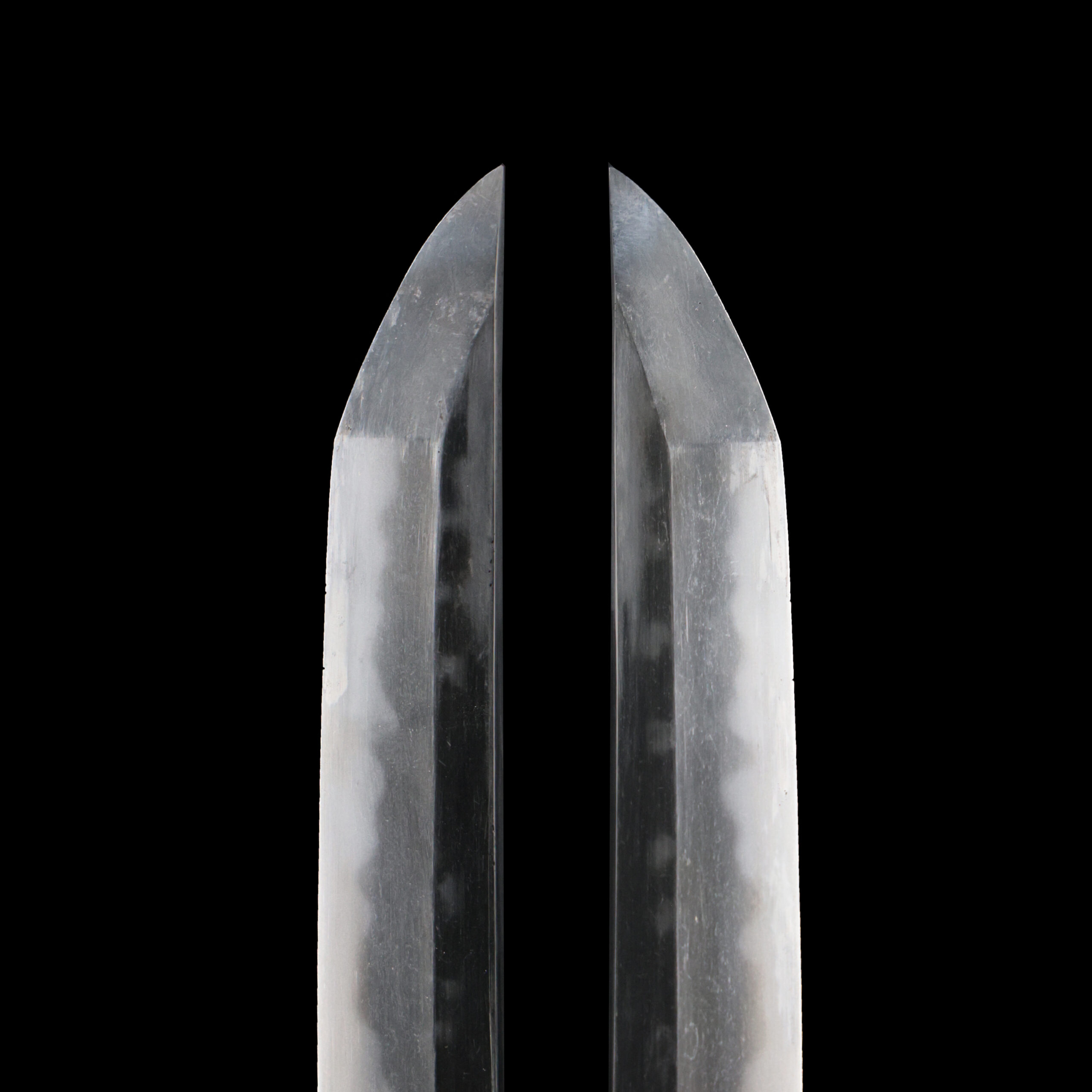
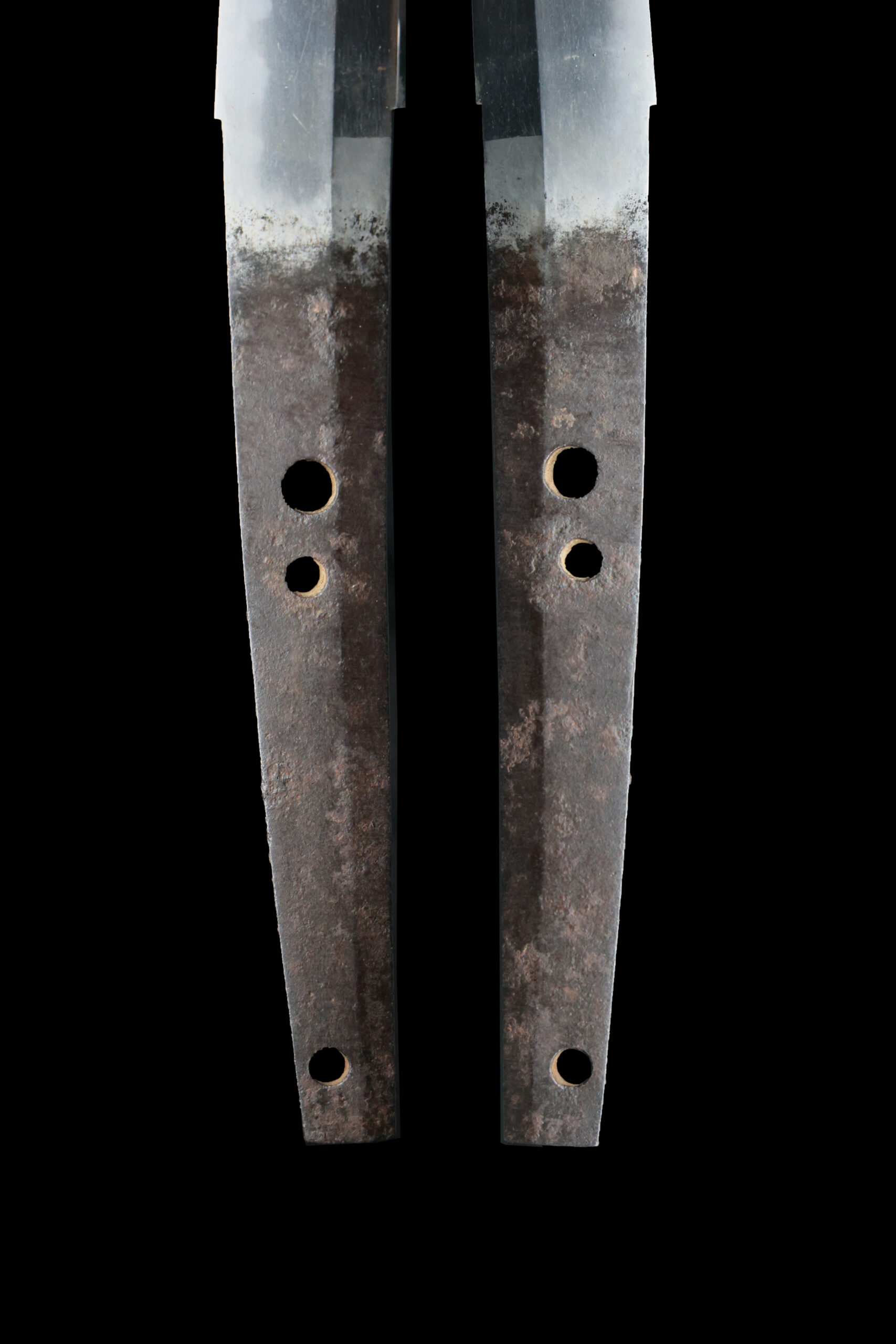
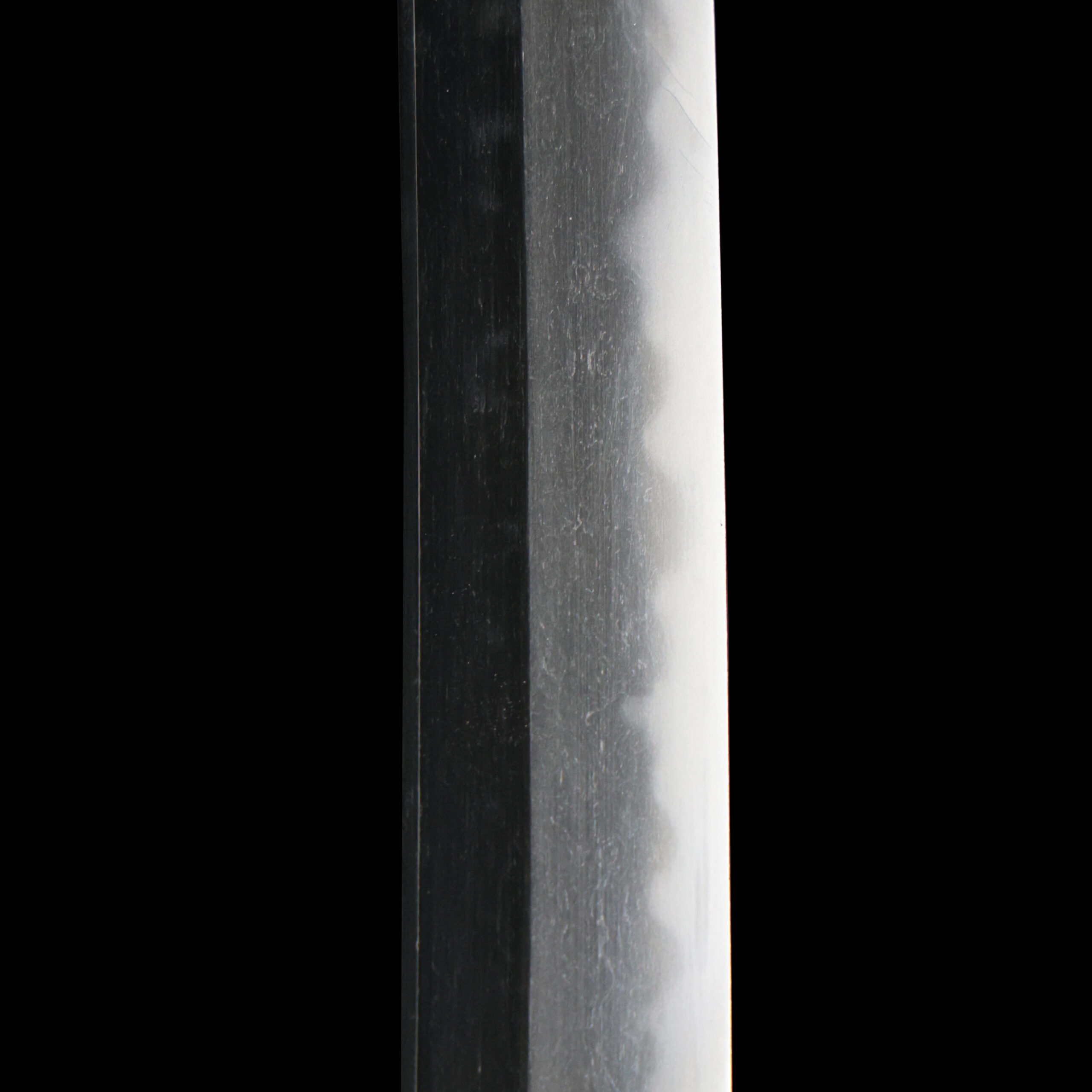
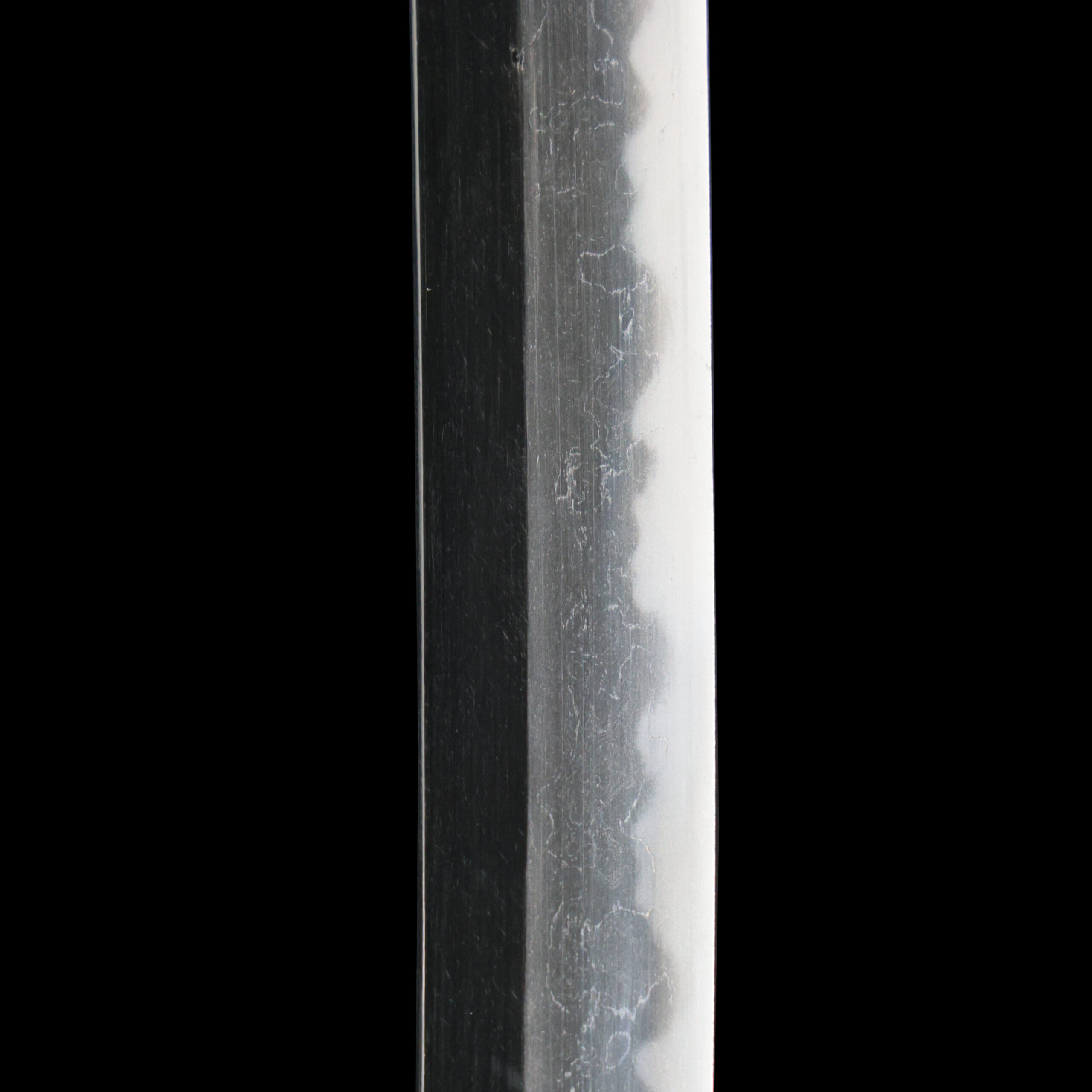
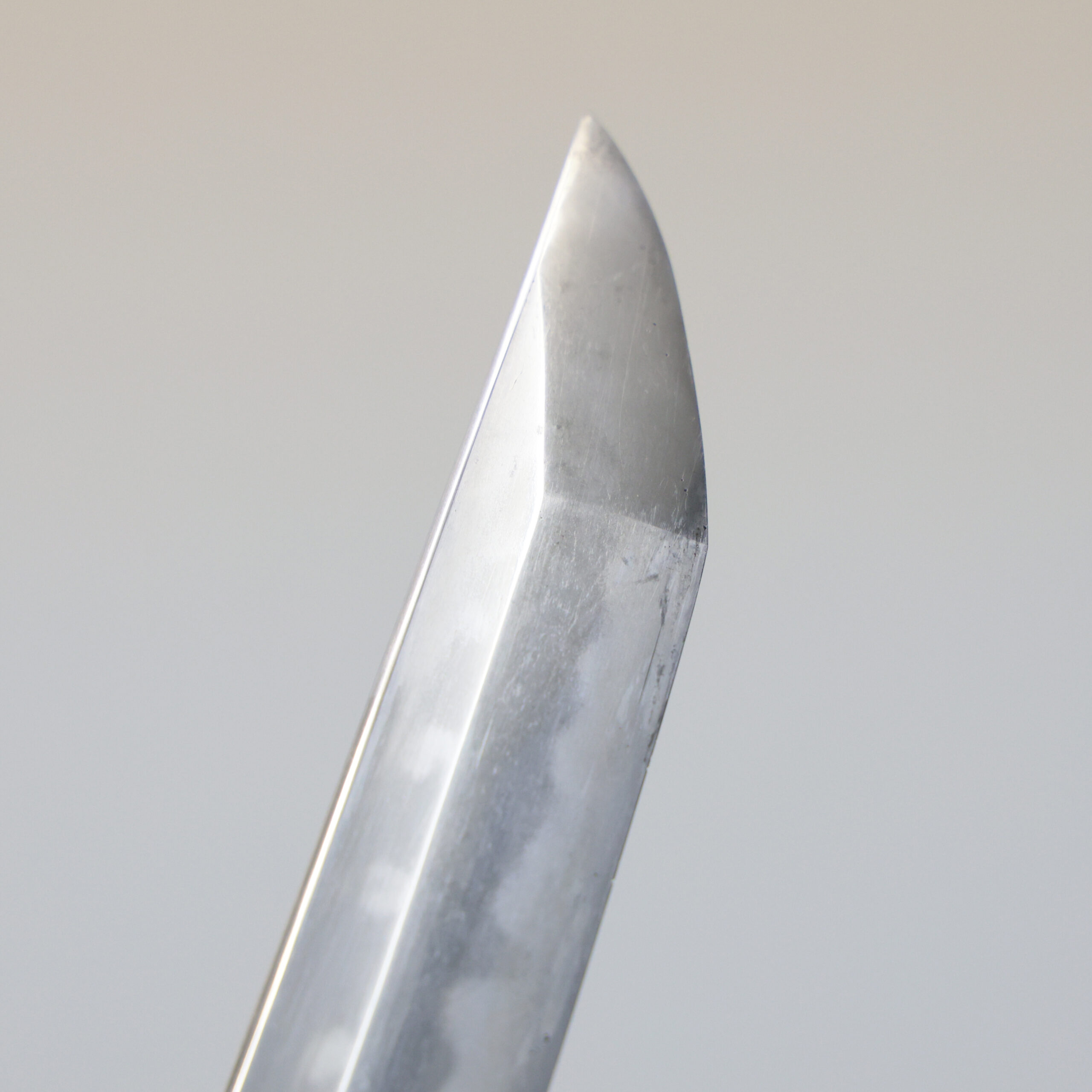
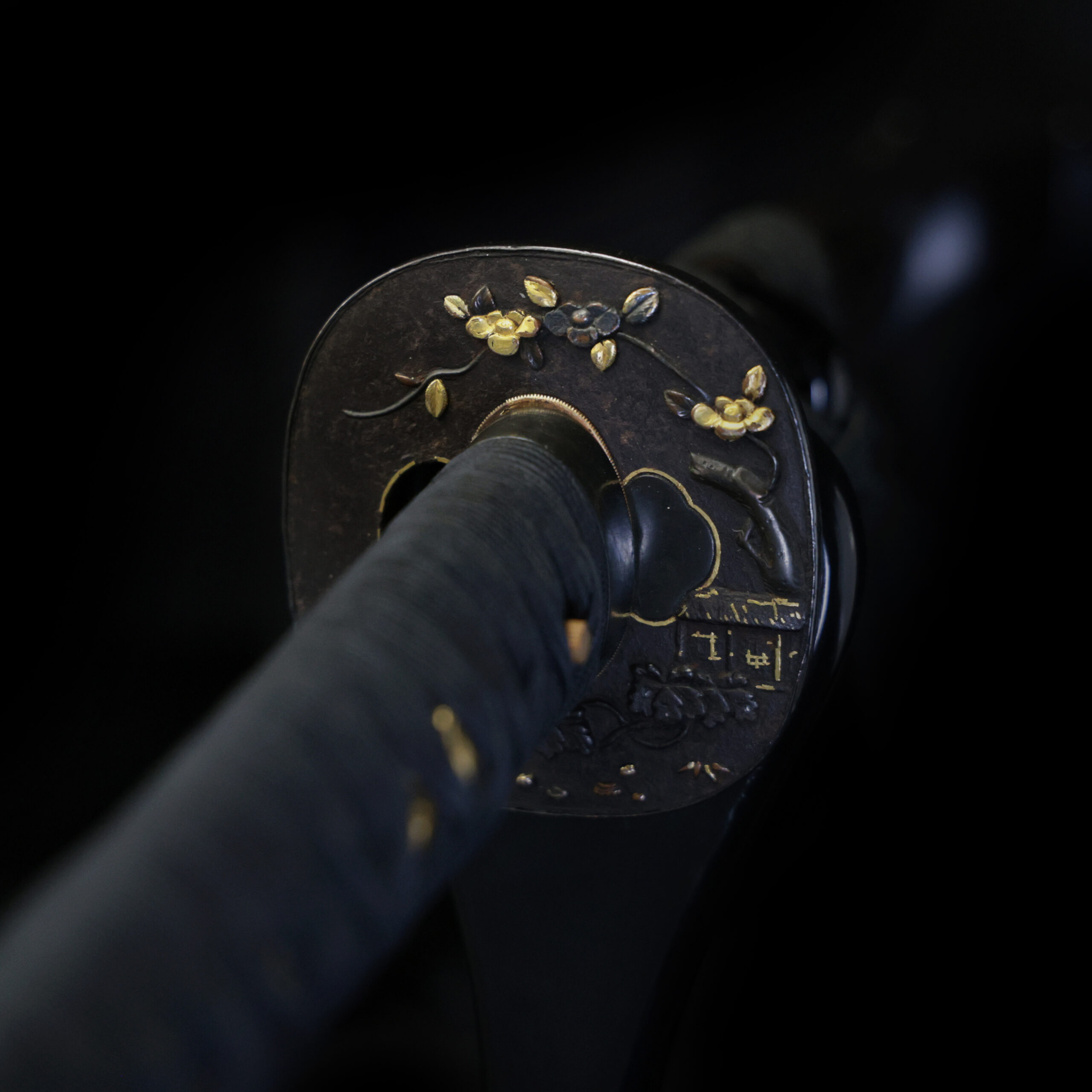
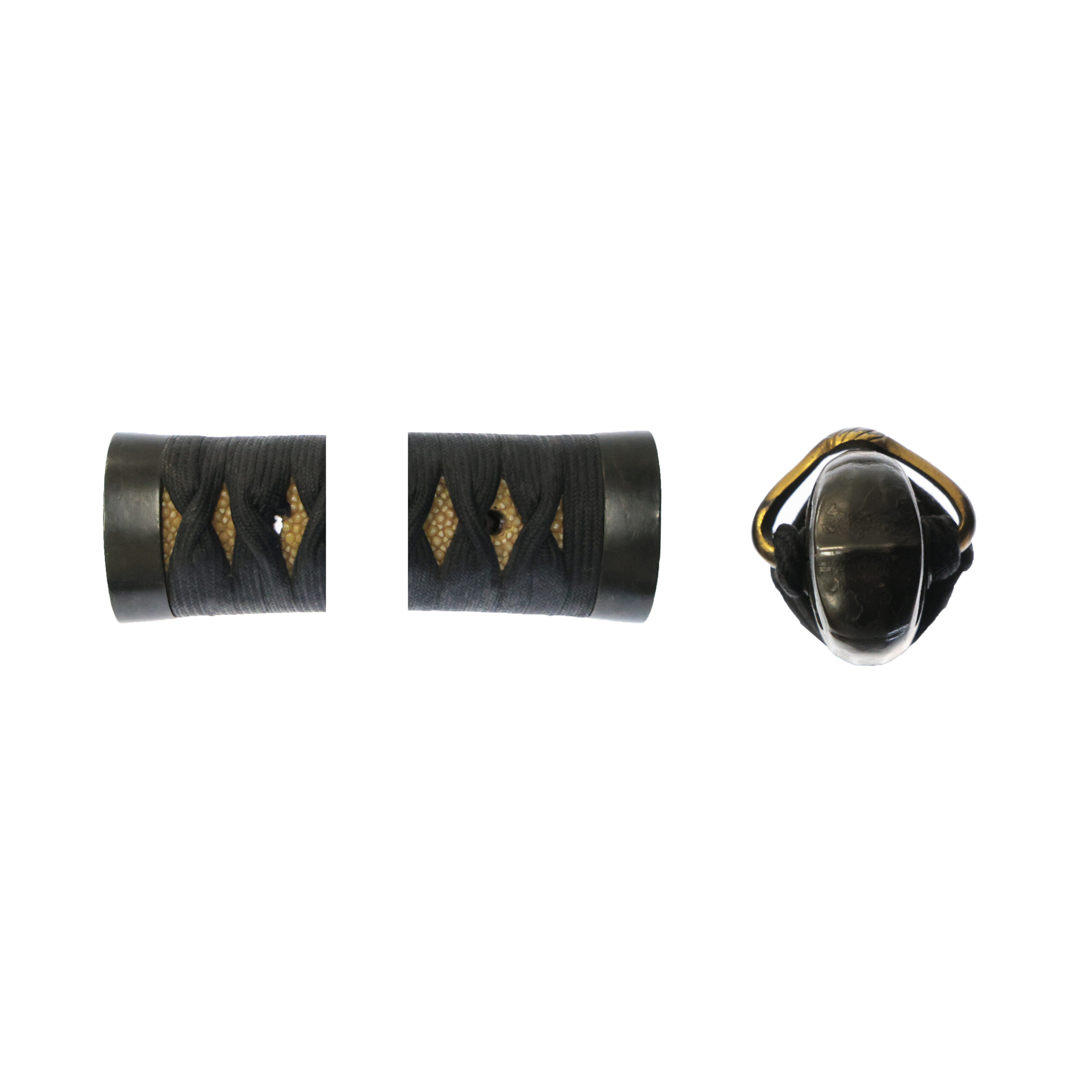
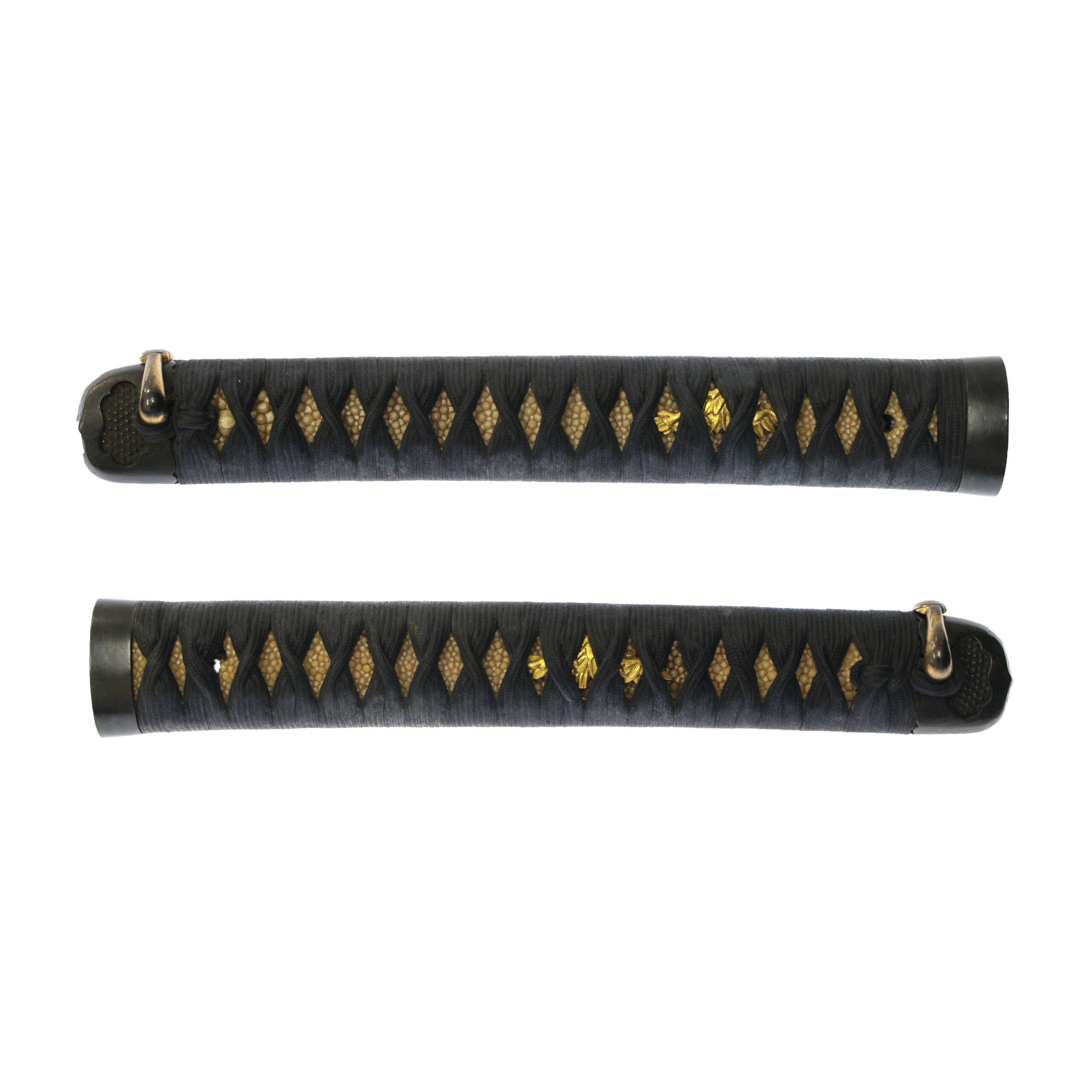
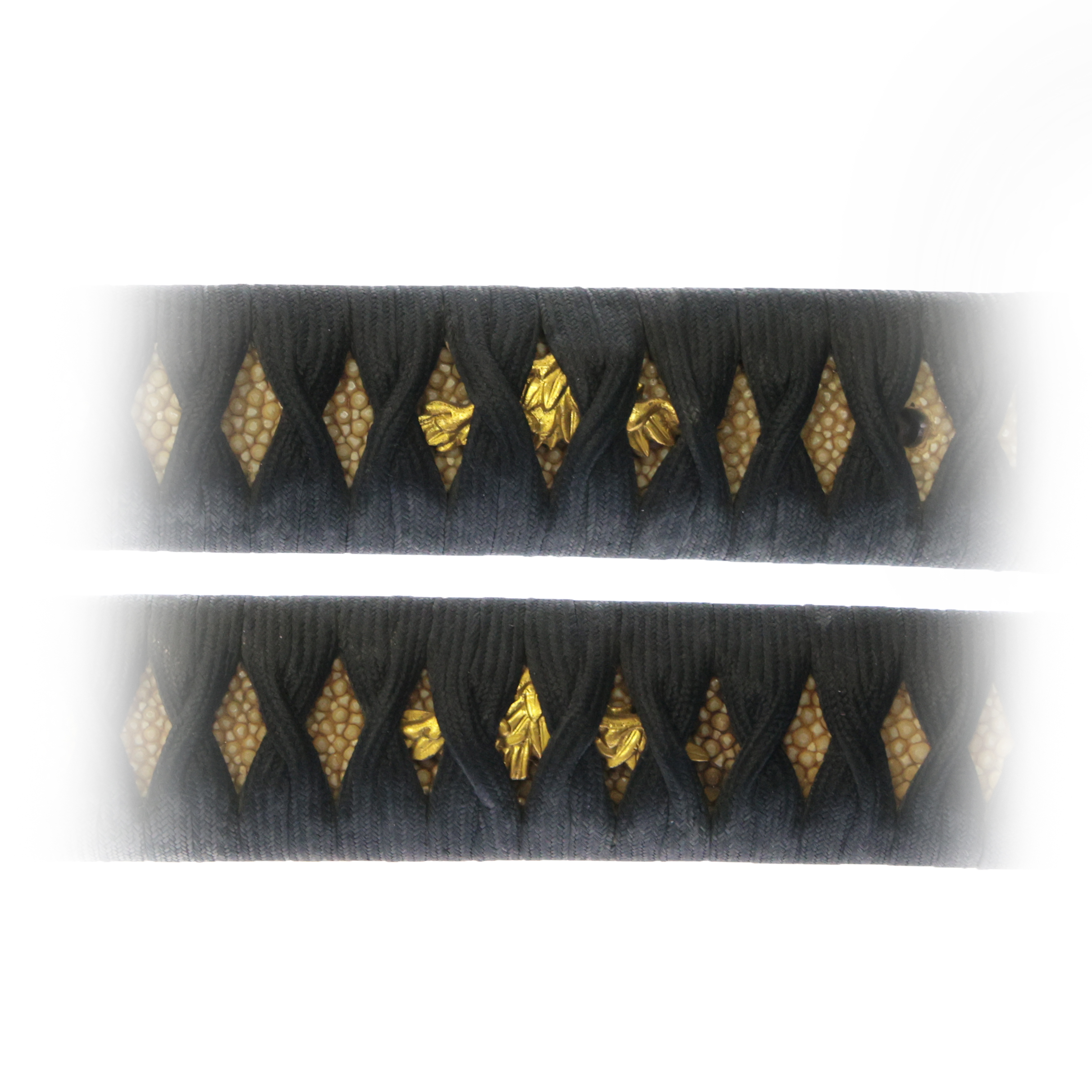
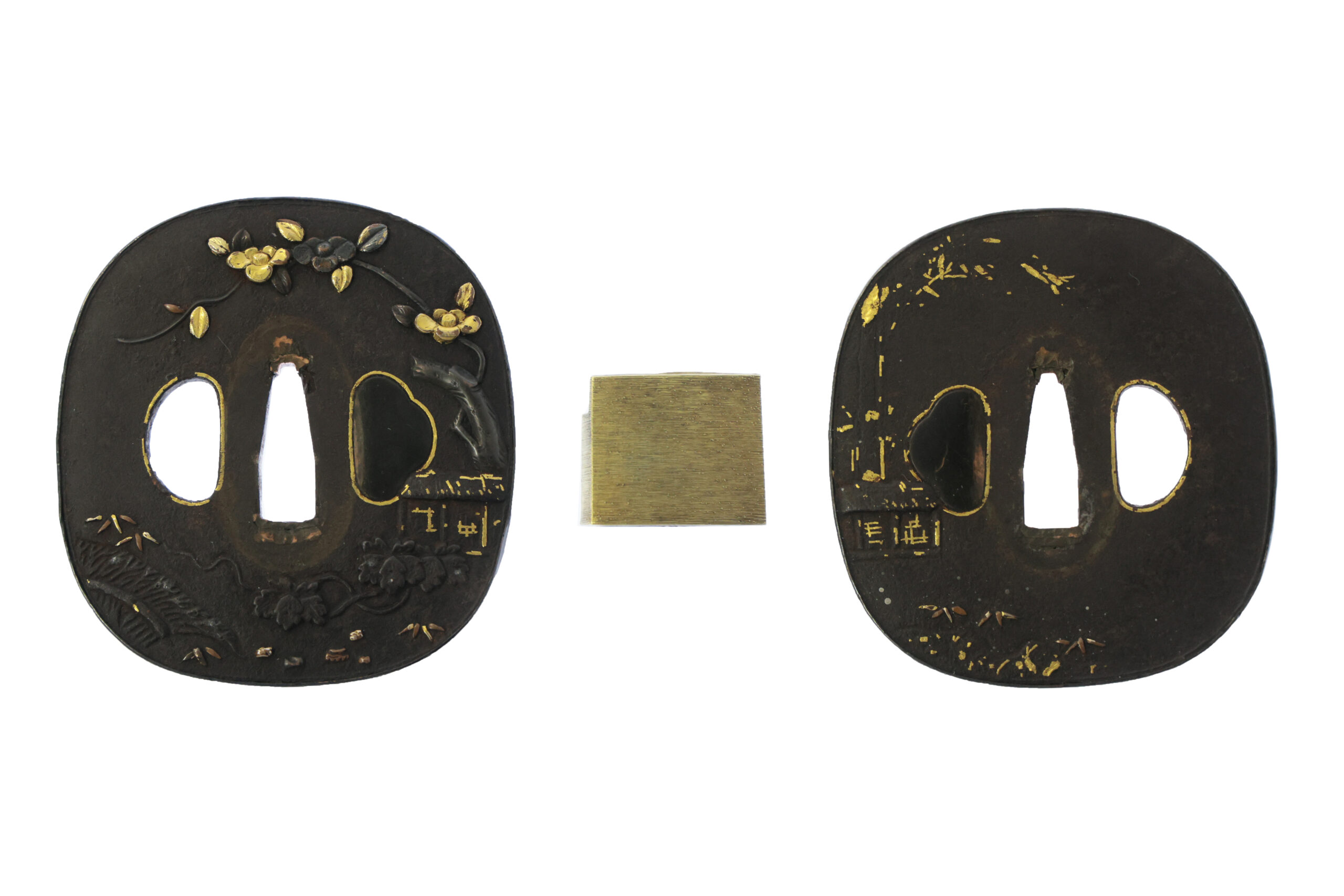
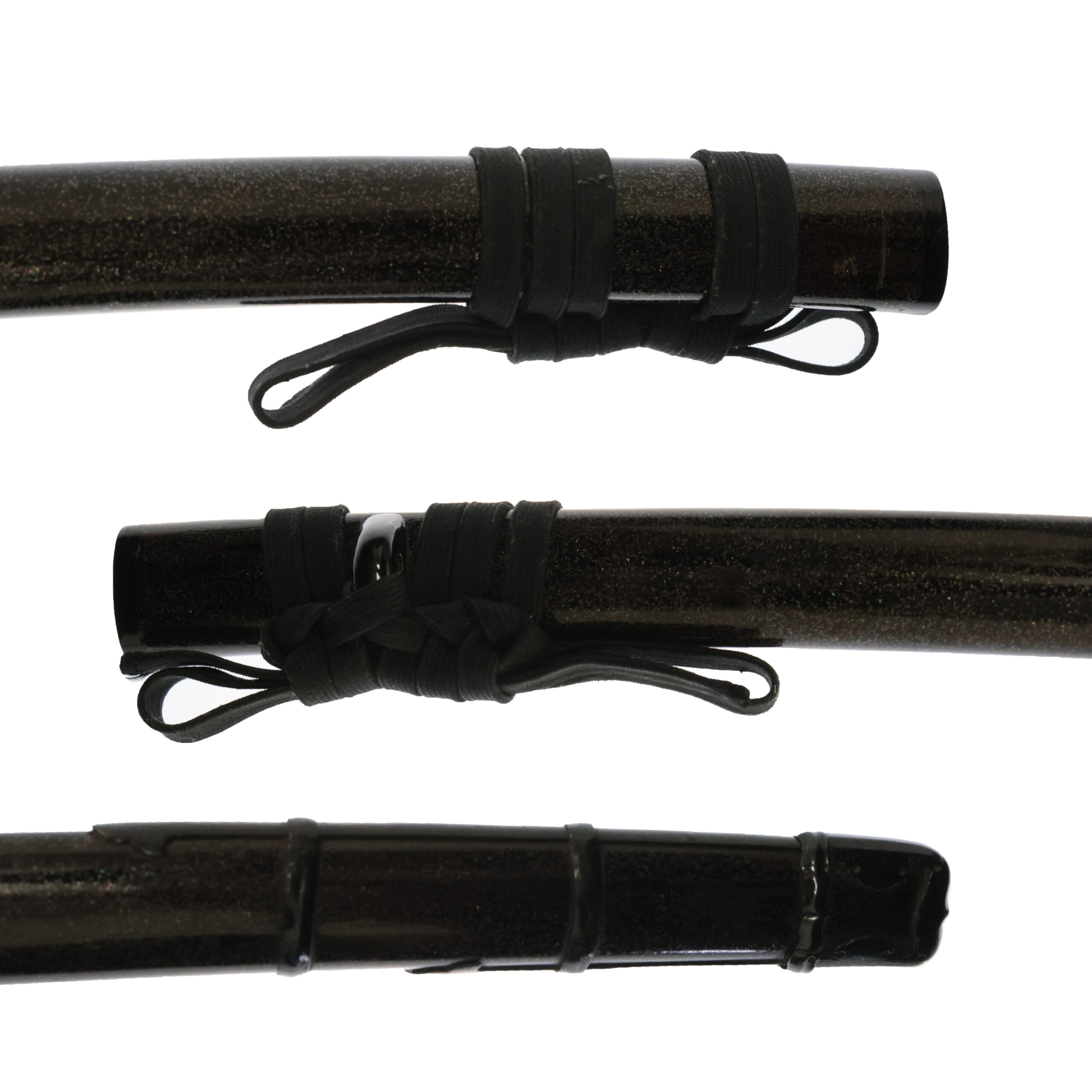
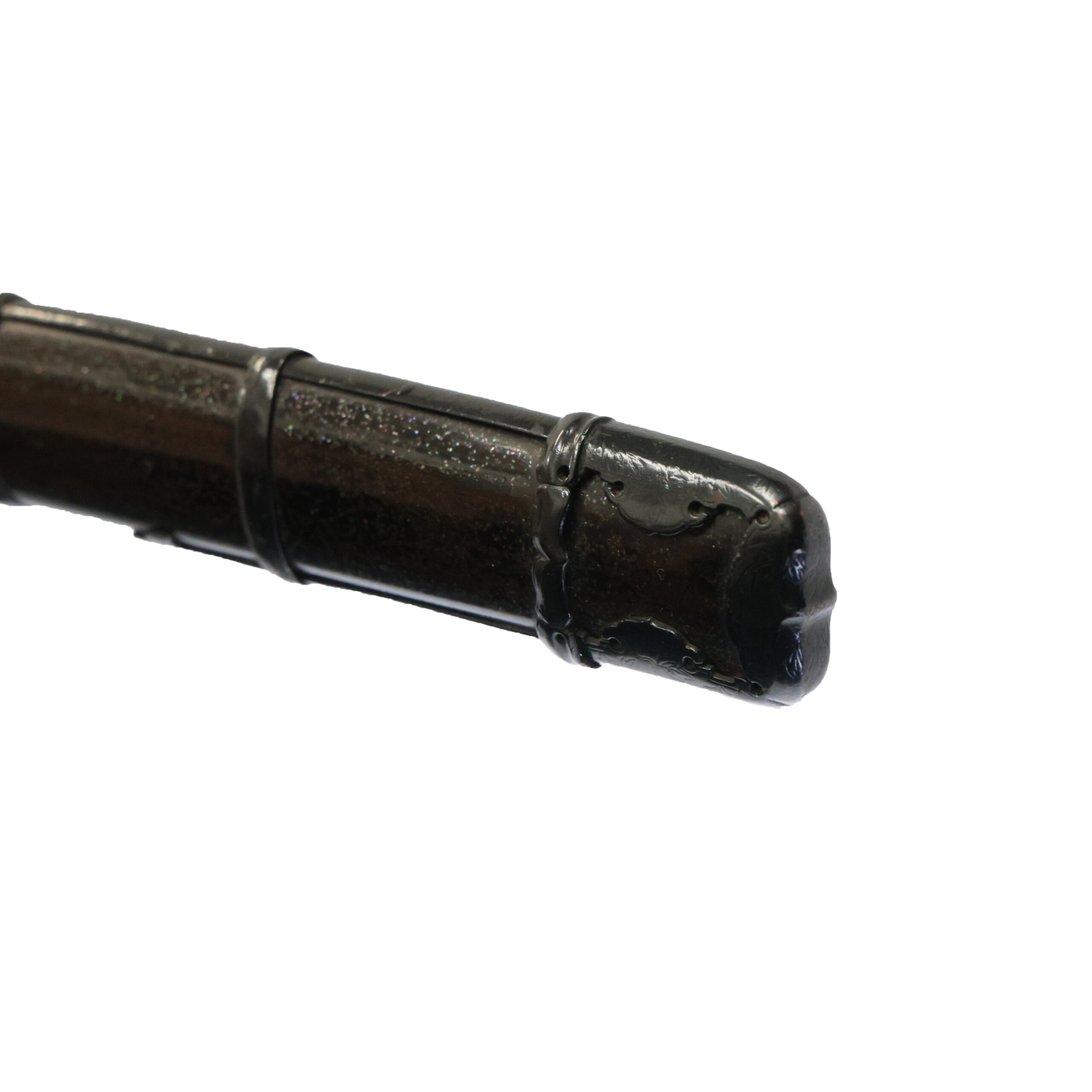
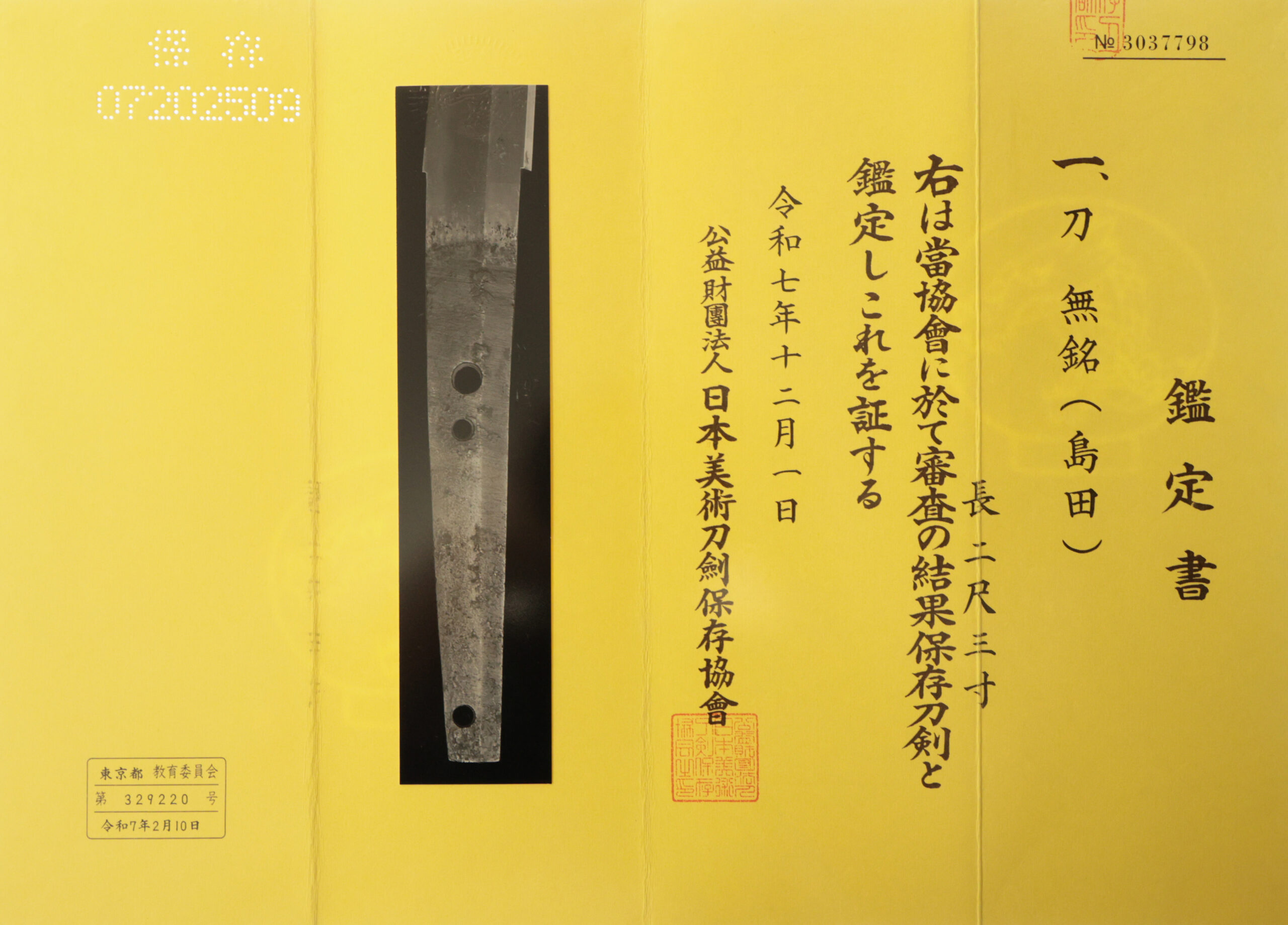
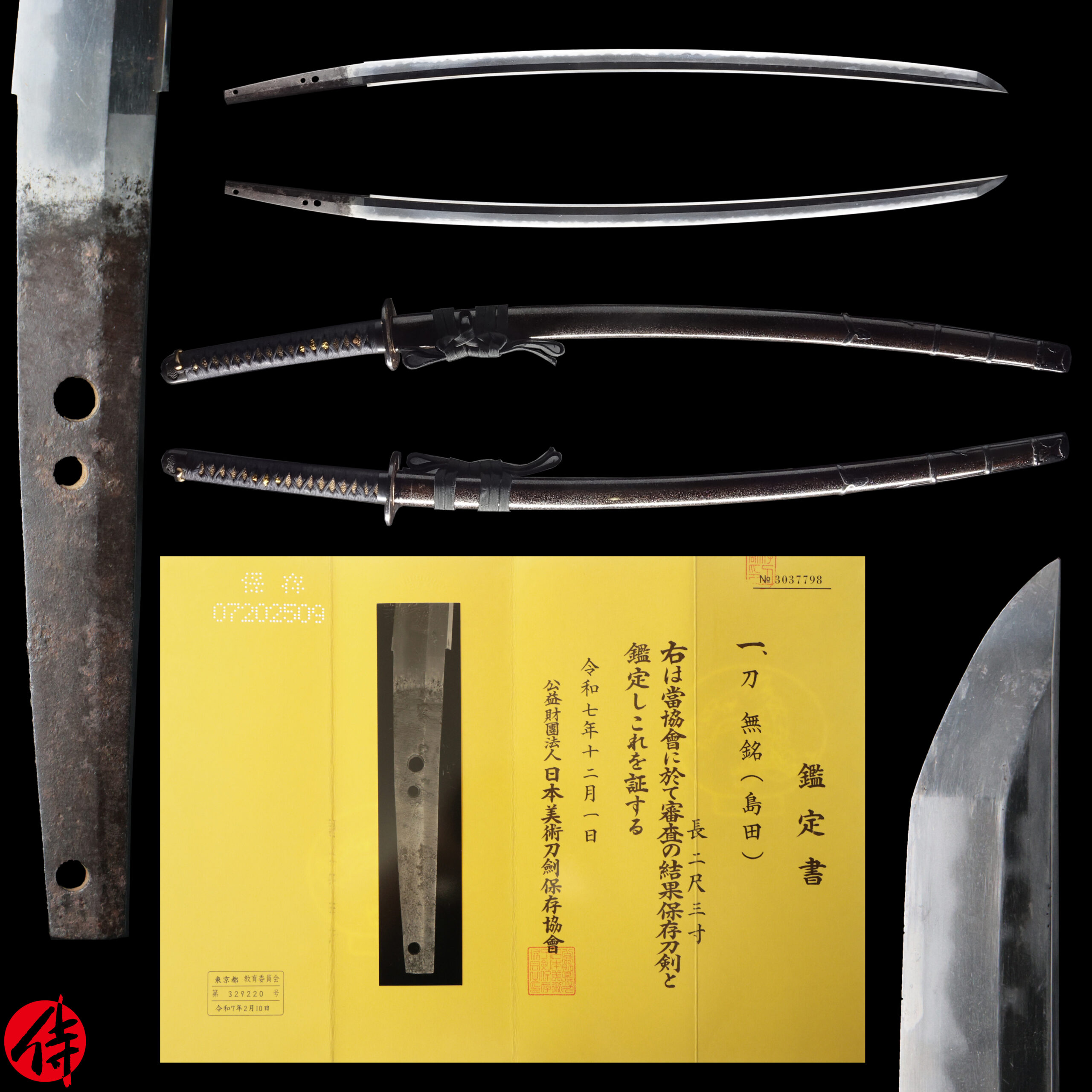
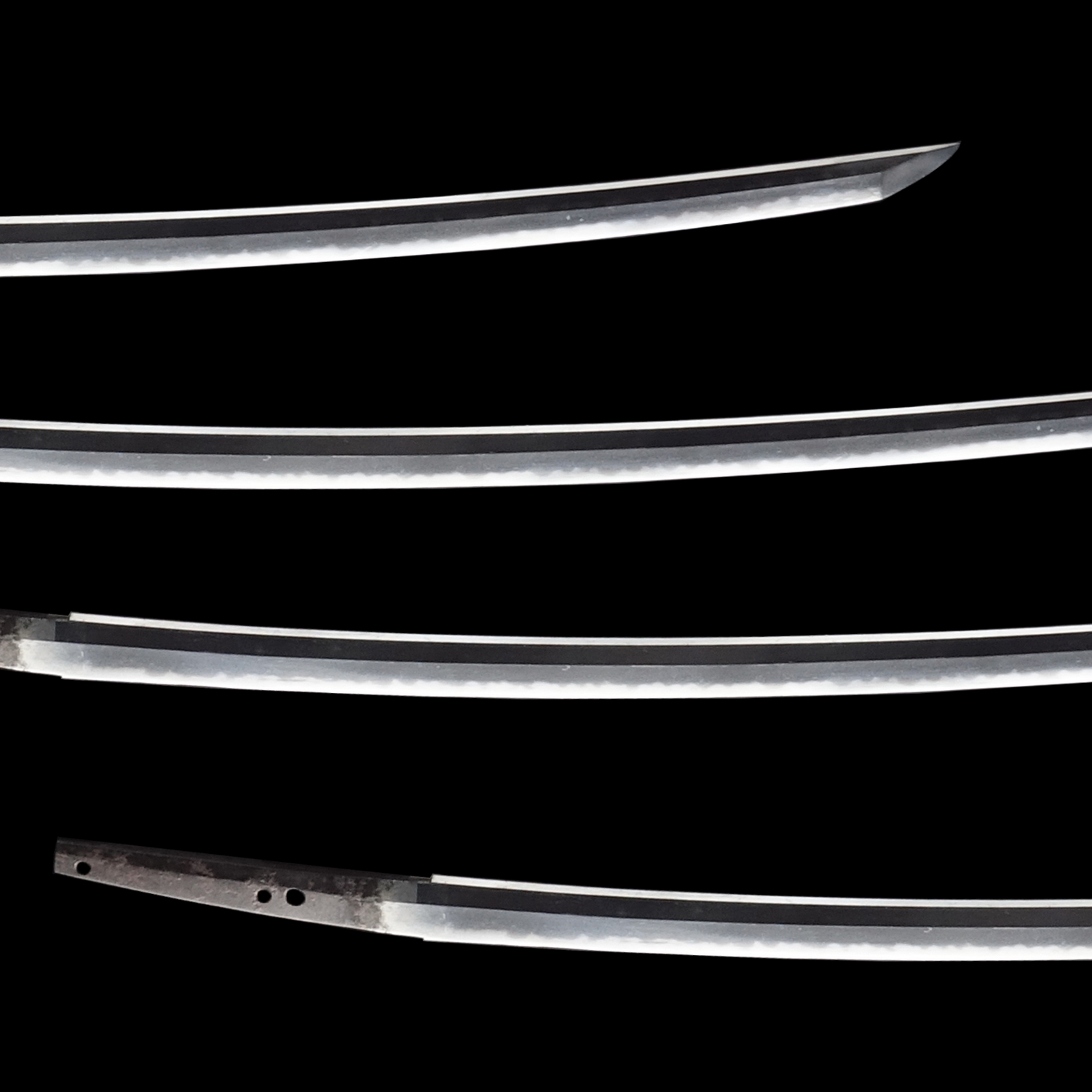
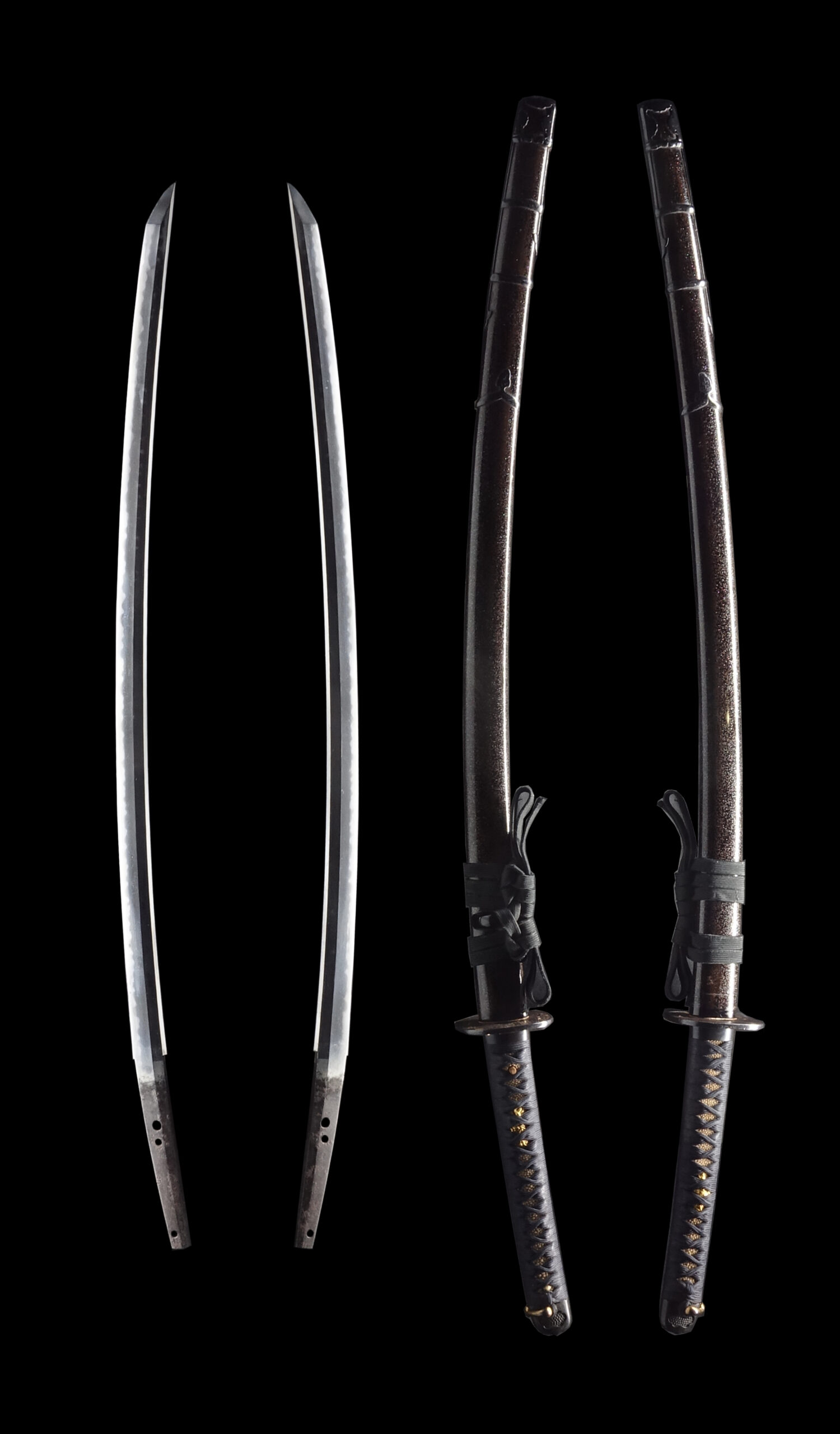
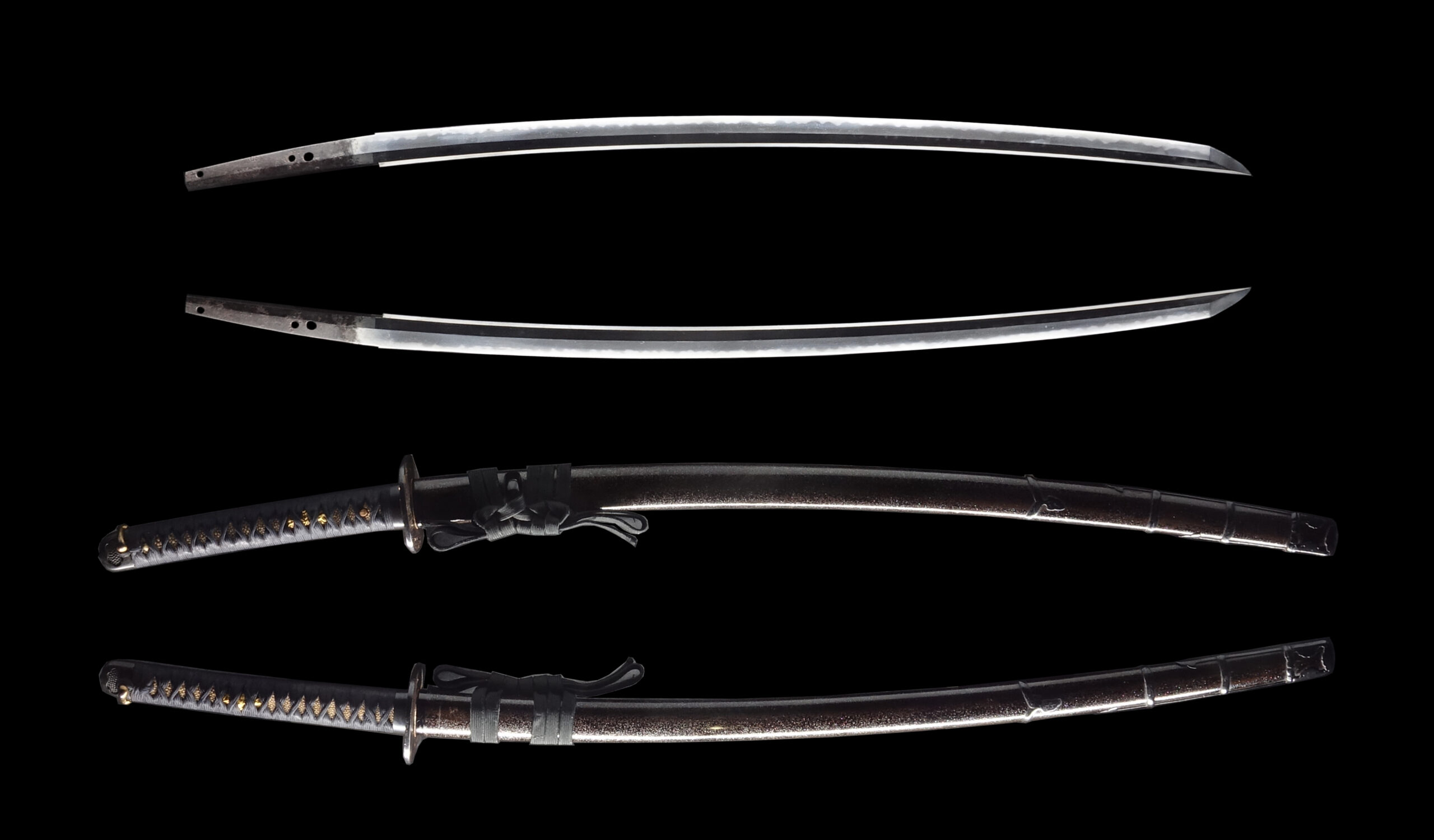
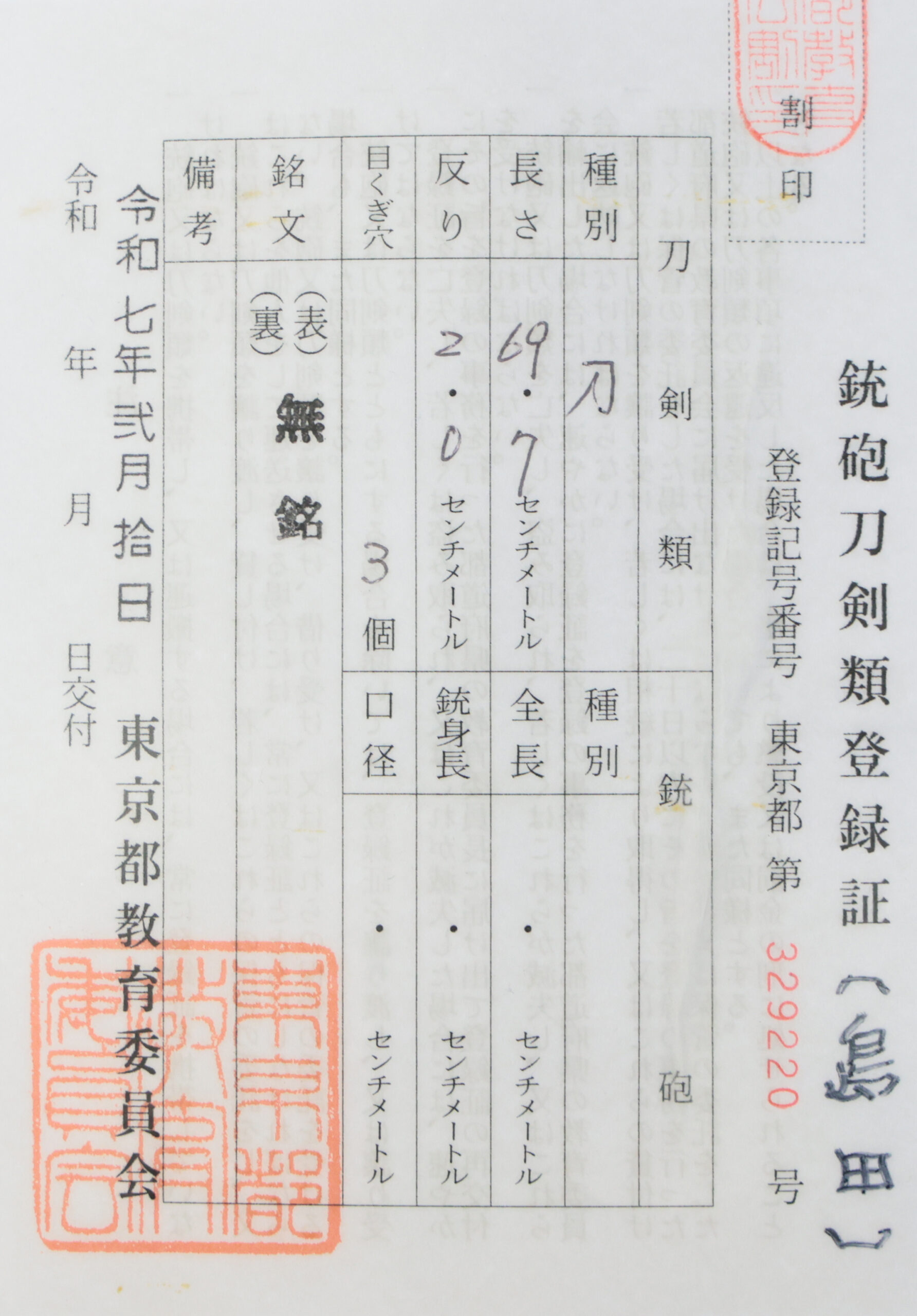
This blade is attributed to a work of Shimada school, according to NBTHK’s appraisal. Shimada school was founded by Yoshisuke (義助) during the mid-Muromachi period and lasted by the late Edo period. The group of Shimada swordsmiths resided in Shimada city, Suruga province (today’s Shizuoka prefecture). Other famous swordsmiths from this school are Sukemune, Hirotsugu, and Sadahiro. The first-gen Yoshisuke was active during the Kosho era (1455-57). It is said that the first-gen Yoshisuke was a descendant of Bizen Ichimonji Sukemune, one of the most famous swordsmiths in Japanese history. The first-gen Yoshisuke served a powerful feudal family named Imagawa. It is said that he received his maker’s name 義 from Imagawa Yoshitada. Shimada school interacted with other schools in Soshu swordsmiths living near Odawara castle in Kanagawa prefecture. The Suruga domain was vital for strong feudal lords such as Takeda, Tokugawa, and Hojo clan during the Sengoku Jidai (Warring state period: Late Muromachi period). The swordsmiths in Shimada school received many orders from these powerful feudal families. The first-gen Yoshisuke had mastered excellent craftsmanship, and it was passed down to swordsmiths in Shimada school. Soshu Den It is said that the generations of Sukemune mastered a particular sword-forging tradition called Soshu Den. Shoshu Den was born in the middle of the Kamakura period. Back then, the Yamato and Yamashiro traditions were highly developed, and there were a few renowned swordsmiths from those regions. However, the sword-forging practice was in its infancy in the Kanto area, where the Soshu region was located. At the beginning of the Kamakura government, which was established in 1185, the first Shogun, Minamoto Yoritomo, prioritized making a lot of rules to have its political stability. And he couldn’t afford to hire swordsmiths within the same region or train them. Therefore, the Kamakura government originally ordered weapons to the swordsmiths in the other areas, such as Yamato and Yamashiro. But, since the government was established, the demand for weapons increased exponentially in the government, and they had to figure out how to meet those demands from Samurai who served Kamakura shogunate. Then, the 5th head of the Shogun, Hojo Tokiyori, invited two renowned swordsmiths from other parts of Japan. They were Awataguchi Kunitsuna from Yamashiro province and Bizen Saburo Kunimune from Bizen province. And the 7th-gen Shogun Koreyasu Shino also invited Fukuoka Ichimonji Sukezane from Bizen province. It is said that those three swordsmiths played an essential role in creating the Soshu Den and making the foundation of the Soshu Den. Also another famous figure in the Soshu den is Intou Kunimitsu, an adopted son of Awataguchi Knitsuna. And Kunimitsu passed his excellent craftsmanship to Yukimitsu, his apprentice. And Masamune, one of the most famous swordsmiths in Japanese history, was an apprentice of Yukimitsu. And Masamune was the one that brought Shoshuden to nationwide fame. The tradition Masamune completed became an example of other swordsmiths who learned Soshu Den. Also, Soshu Den influenced many renowned swordsmiths during the Koto- Shinto era. One of examples is Inoue Shinkai from Osaka and Suishinshi Masahide from Edo. This blade is appraised as a Hozon Touken (保存刀剣) issued by NBTHK (Nihon Bijutsu Touken Hozon Kyokai: 日本美術刀剣保存協会). *Please note that this blade has a few black rust spots. If you would like more details about its condition, please feel free to contact us. Tsuka and Menuki We believe the theme of this Menuki is Sasa (笹:bamboo glass). Bamboos grow neatly towards the sky, and it is vital so that this motif represents nobility and strength. Besides, the bamboo breaks straight, but its content is hollow; people thought it showed innocence. According to a foreign legend, the Houhou (鳳凰, Fenghuang) eats bamboo fruits; therefore, bamboo has been considered a sacred plant. Also, as it keeps its green color even in cold winter, people thought the bamboo pattern represented eternity and longevity. Tsuba and Habaki This circular iron Tsuba features a floral motif that appears to represent Japanese apricot blossoms (梅, Ume). The flowers are decorated with gold inlay (金象嵌, Kin Zogan), a technique in which gold is set into the surface of the base metal to create decorative patterns. The warm glow of the gold adds an elegant contrast to the iron ground, highlighting the delicate blossoms. Japanese apricot blossoms begin to bloom in late winter, sometimes while snow still rests on their branches, heralding the arrival of spring. Like cherry blossoms, they have long been cherished in Japan for their delicate petals, sweet fragrance, and gracefully branching trees, inspiring countless poems. As they bloom despite the cold, they symbolize perseverance and vitality. Saya This saya features raden(螺鈿) craftsmanship, a traditional Japanese decorative technique. Raden involves inlaying or embedding thin pieces of shell, such as mother-of-pearl or abalone, into lacquer or other materials. The shimmering, iridescent quality of the shells creates a striking visual effect, reflecting light in a play of colors that range from soft pastels to vivid hues. This technique has been used in Japan for centuries, adorning everything from furniture to accessories and weapons, showcasing the skill and artistry of the craftsman. Authentication Paper They authenticated the blade on December 1st in the 7th year of Reiwa (2025). They appraised it as Hozon Touken, the blade worth preserving for Japanese society.
島田派Shimada School
取扱店 サムライミュージアム
販売中 11点

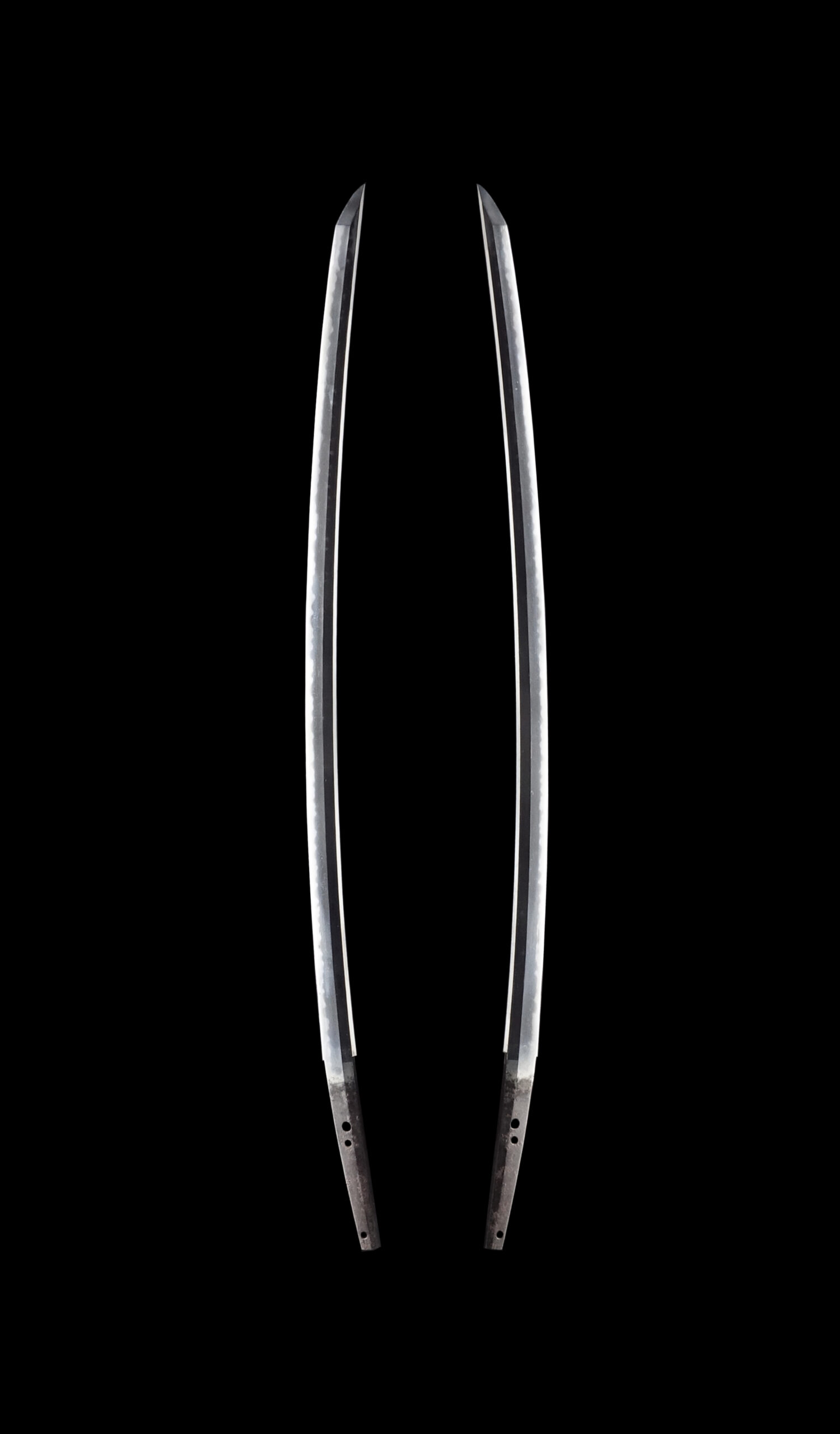
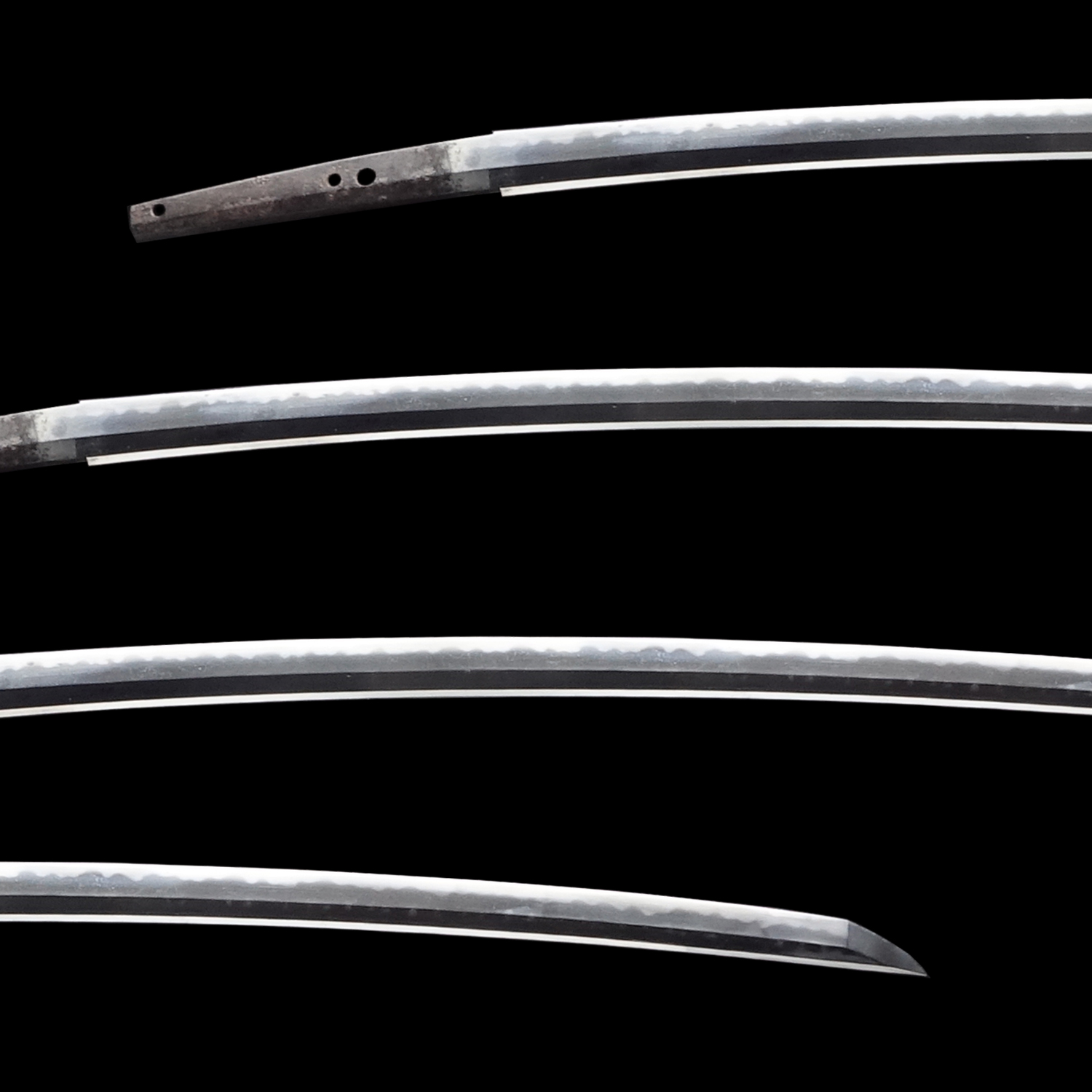
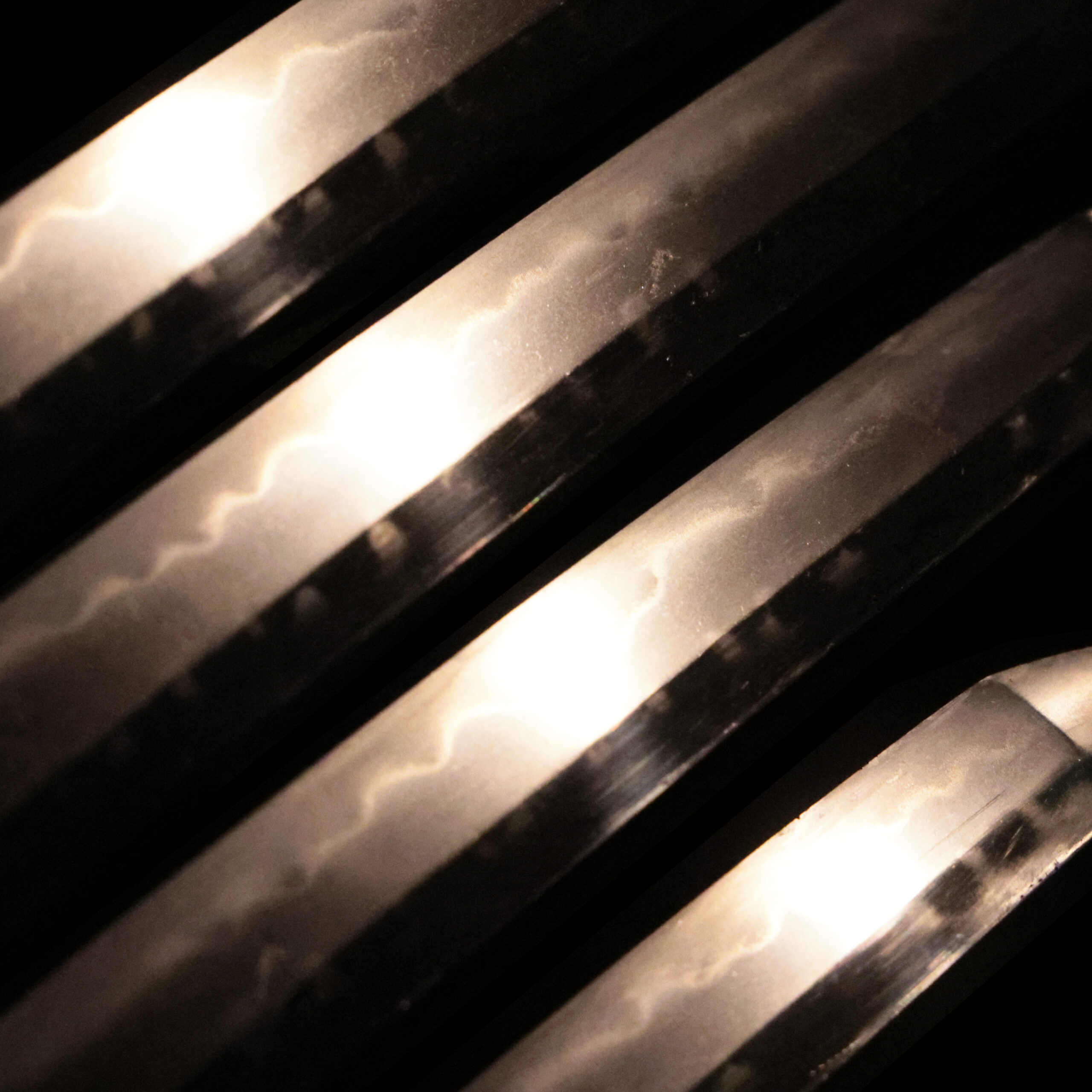
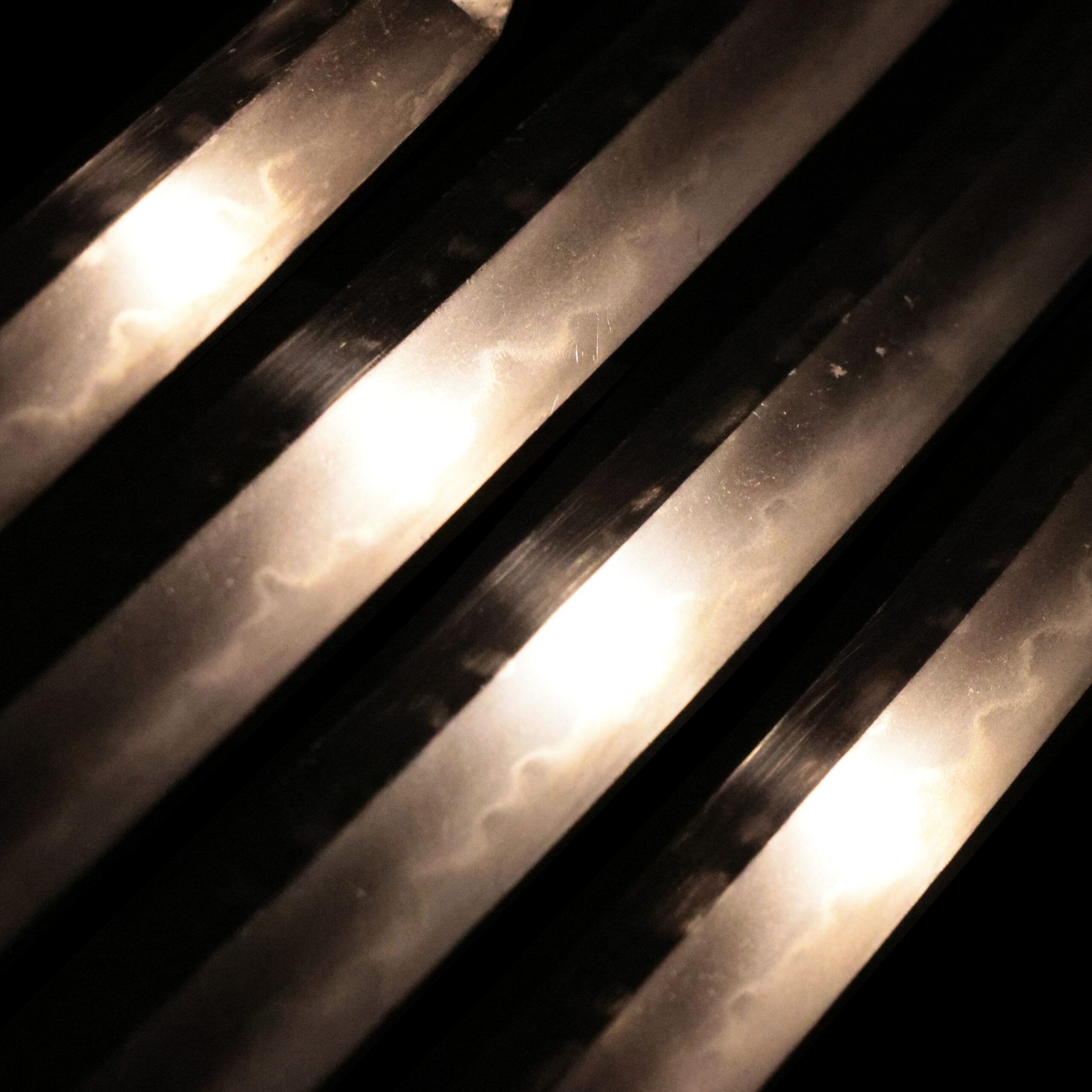
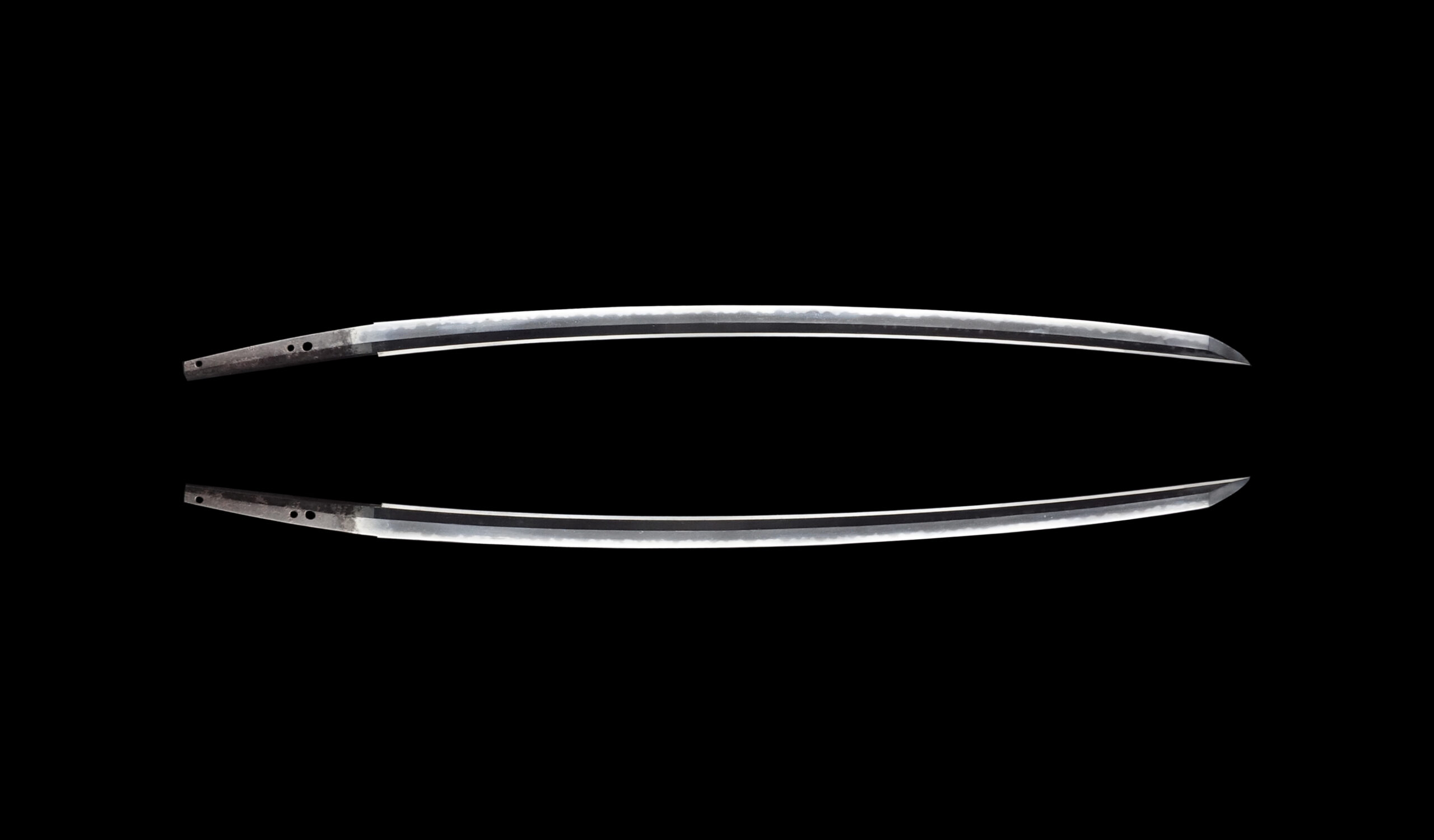
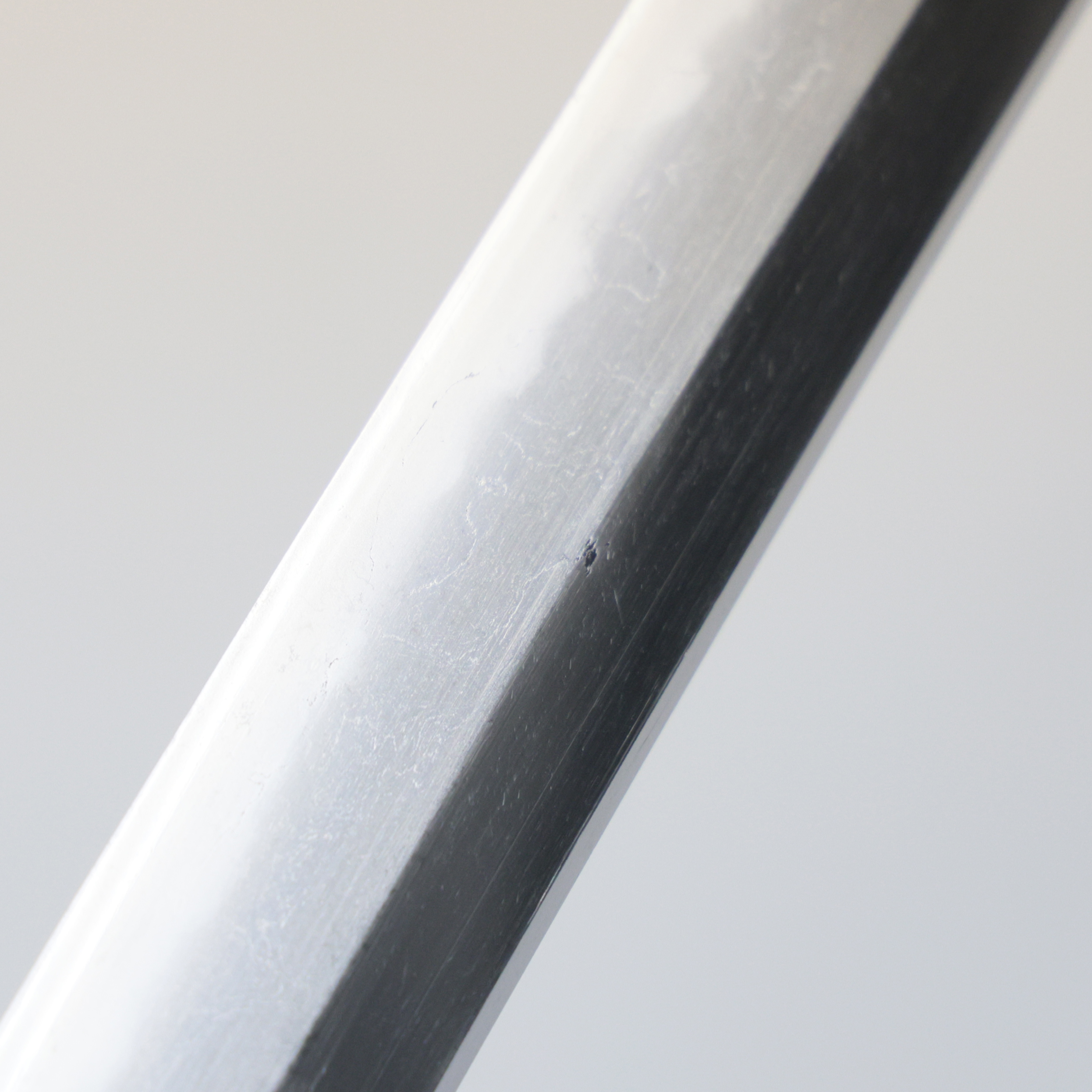
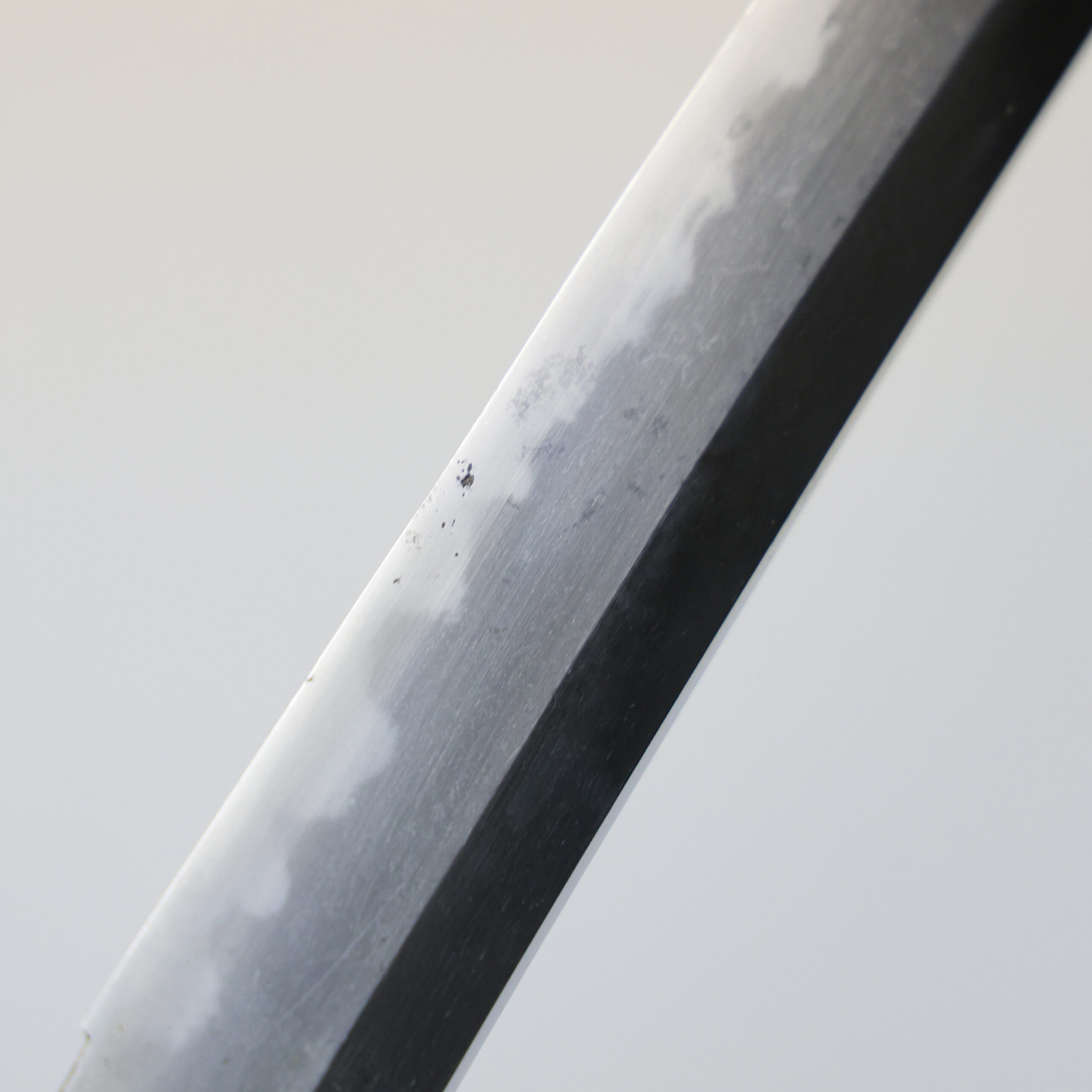
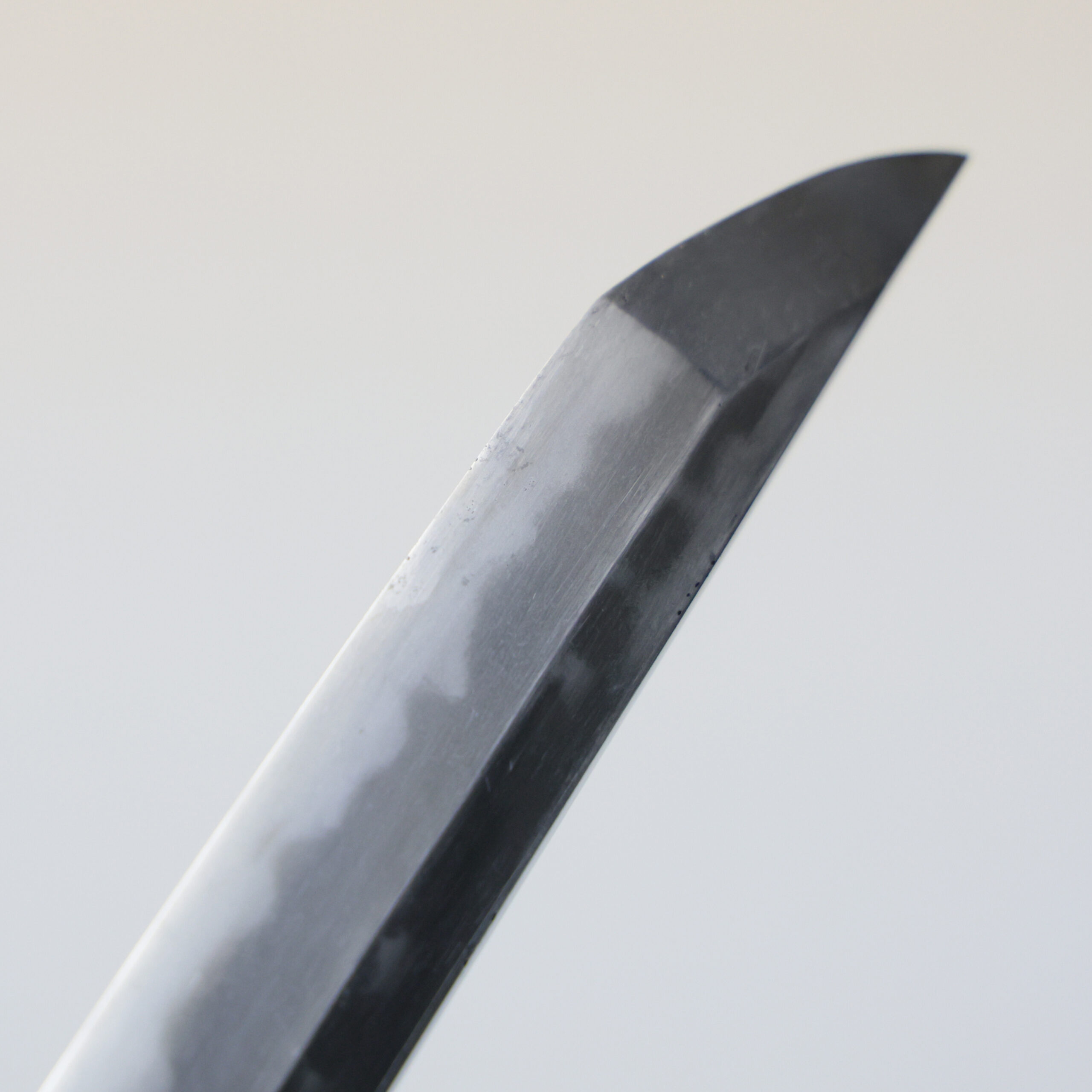
販売店の記載のまま
相州伝 · 駿河
現在11点販売中
駿河国島田の地に興ったこの一派は、室町期を通じて東海道の一隅に栄えた相州系の鍛冶群である。その主たる名は義助と助宗の二大名跡にあり、説明は義助を島田物の主流をなすものとし、助宗をその弟として室町中期に置く。銘鑑は両家の代を丁寧に並べ、義助の初代を康正の頃とし、助宗を古く文安・文亀より天文に至る連なりに据え、以後同名相継ぎて江戸期に及ぶと記す。されどこの整然たる図式は答えではなく難所であり、現存最古の有年紀作は永正二年の短刀にして、永正より古い年紀の作は遺らず、銘振りもまた各代を分かたぬゆえ、在銘の作は代を付すより一口ごとの出来によって見られる。NBTHKがその年代を量るのは、銘鑑の編年よりは茎に切る年紀によってであり、この一国の鍛冶場は、隣国相模の鍛えに強く影響され、美濃の関や千手派とも縁を結んで、その間に座した。 本派の作風はまず末相州風の沸の乱れにある。肌立ちごころに地沸つき地景の入る、流れて柾に寄る板目の地に、互の目を交えたのたれを焼き、小丁子・尖り刃を交え、沸厚く飛焼・金筋・砂流しをかける。説明は島田の作風が末相州鍛冶と深い関連があって互いに影響しあうと記す。助宗の手には一門自身のものと呼ぶ連れた互の目があり、腰の辺で箱がかったのたれとなり、匂口明るく金筋・砂流しのよく現われたものを、その特色のよく現われた作と読む。帽子は乱れに従い、小乱れあるいは尖りごころの乱れ込みより小丸に返り、ときに焼詰め、ときに掃きかけかかる。この典型に対し別貌が立ち、義助には少ない細直刃や、助宗が志津の風をねらった直刃のごとく、流れる板目に小互の目を交えた静かなる手をも焼く。地鉄は締まった備前地ではなく、流れてやや肌立ち、ときに白け立つこの板目こそが目に島田の手を告げ、刃中の沸の働きを載せる地となる。造込みは多彩にして、鎬造の刀より平造の脇指、内反りの短刀、大身槍に及び、説明は島田一門には比較的に槍が多いと記す。彫物は一門の特色を巧みに伝え、幅広の樋中に梵字と摩利支天を浮彫にし、表裏に倶利迦羅を、短刀に素剣・護摩箸を掻き、ときに珍しく透し彫をなす。 鑑定の勘所は、対比によるよりその自らの確かな見どころから引くにある。すなわち末相州の影響を受けた沸の互の目交じり湾れに砂流し・金筋を交え、流れてやや肌立つ板目に焼く駿州の手であり、直刃はその意図された例外、目立つ彫物と槍は周囲の島田工房の印である。代の判定が成らぬところで、説明はやはり作そのものに向かう。助宗においては大阪の一刀を地刃健全にして助宗の最高作と思われるものとし、永正二年の系譜に連なる十二回の刀を、現存作中最も地刃の冴えて明るく出来優れた一口とする。義助においては二十回の生ぶ茎・平造内反りの短刀を同名中の出色の一口と称え、大永の刀に見る年紀を初期諸代の編年がこれに拠るがゆえ極めて貴重とする。主要工たる義助・助宗が一派の中核をなし、広助らこれに次いで群を支える。茎は生ぶに切り、二字あるいは三字に銘し、年紀は遺るところでは銘に成し得ぬことを成して、長き連なりの中に一手を据える縁となる。物打辺の棟に打たれた切込みは、これらが室町の一国の実用刀であったことを思わせる。伝来としては、義助・助宗ともに本間による御物台帳に所載の一口があり、島田の作が市に現れることは稀である。一名のもとに分かたれぬ数代の中で、最上の刀・短刀に説明書が称えるあの冴えと健全をそなえた確かな一口こそ待つに値し、現われればそれは末相州の伝に近き、堅実な一地方の名門の佳き代表となる。 詳しく見る →
室町時代の相州
戦国の世、一派は第二の主家に仕えた。小田原の後北条氏である。その庇護のもと綱広系は打刀の時代の皆焼を鍛え続け、1590年の落城とともに新刀の時代へ散った。
銘が正しい、または無銘でも年代・国・系統を確実に指摘できる、保存に値する真正の作と鑑定されたものです。
日本美術刀剣保存協会(NBTHK)は、1948年に設立され、文化庁の監督を受ける公益財団法人で、東京・刀剣博物館に本部を置きます。専門の審査員が出品作を直接審査し、美術的・歴史的価値に応じた鑑定書を発行します。NBTHKの鑑定書は、日本刀および刀装具の真正性を示す最も広く認知された基準です。
NBTHK公式サイトReturns/exchanges limited to defects caused by shipping (except willful misconduct or gross negligence by the company); customers must contact within 72 hours of receiving the product.
¥720,000